
Podcast
Upstream
Hosted by Upstream · EN
Conversations and audio documentaries exploring a wide variety of themes pertaining to economics and politics, hosted by Della Z Duncan and Robert R. Raymond
48episodes
Episodes
Newest firstAll episodes
[TEASER] Immigration, ICE, and Working Class Rebellion w/ Cecilia Guerrero
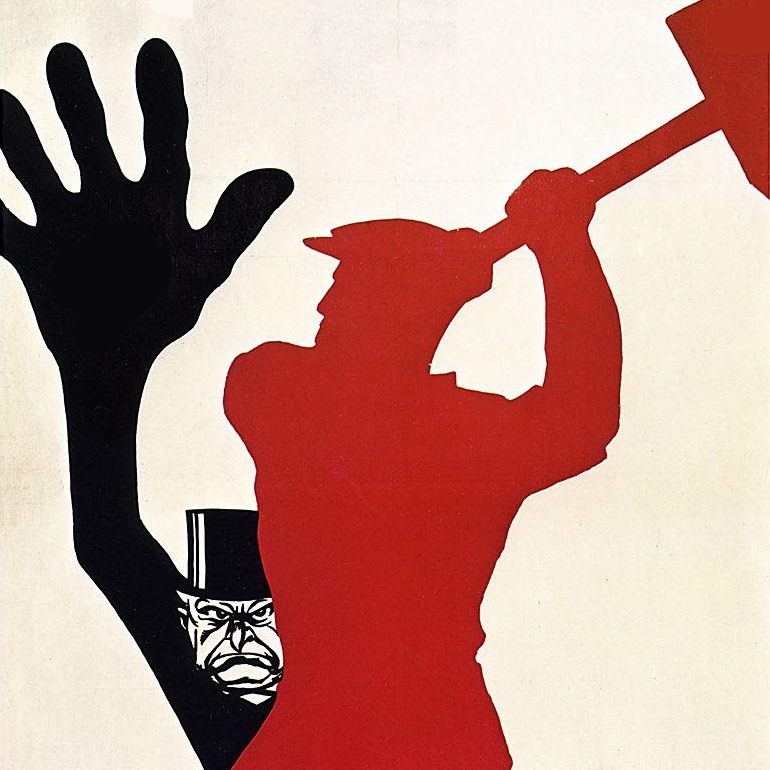
Jun 24, 202500:26:00Tap to summarizeThis is a free preview of the episode "Immigration, ICE, and Working Class Rebellion w/ Cecilia Guerrero." You can listen to the full episode by subscribing to our Patreon here: https://www.patreon.com/upstreampodcast As a Patreon subscriber you'll get access to at least one bonus episode a month (usually two or three), our entire back catalog of Patreon episodes, early access to certain episodes, and other benefits like stickers and bumper stickers—depending on which tier you subscribe to. access to bi-weekly bonus episodes ranging from conversations to readings and more. Signing up for Patreon is a great way to make Upstream a weekly show, and it will also give you access to our entire back catalog of Patreon episodes along with stickers and bumper stickers at certain subscription tiers. You’ll also be helping to keep Upstream sustainable and allowing us to keep this project going. It’s easy to get lost in the narratives that are fed to us by the very same institutions that oppress us. Whether liberal institutions or far right ones, there’s always something crucial missing—some component of analysis that’s left unaddressed, some root cause that remains misidentified or distorted. And the reason is because when it comes to the class war that we are all engaged in—whether we like it or not—the issues of class, of imperialism, and of monopoly capitalism are never, ever part of the mainstream discussion. So, what are the root causes of immigration? What do the ICE terror campaigns look like on the ground in cities like LA or Nashville? What happens when we apply a materialist lens to the conversation about mass deportations and conversation about the scapegoating of the more vulnerable groups in society? And what happens when we shift the frame from the more liberal, rights-based approach to activism to one based on unified, solidaristic class struggle? Well, we’ve brought back on the perfect guest to help us unpack some of these pressing questions. Cecilia Guerrero is Chair and Founding Member of A Luta Sigue, an organization based in Nashville, Tennessee, which incubates and trains young people and workers within advanced sectors of the working class to build and lead their own class struggle organizations. In this episode, we talk about the terror campaign being waged on immigrants throughout the country and the responses coming from working class communities who are standing up for themselves and standing in solidarity with the oppressed and exploited classes across the globe. We talk about ICE, the role that immigration plays in the imperialist global system, the attempts by liberal institutions to co-opt and neutralize our radical movements, and what the MAGA right gets wrong about the root cause of their immiseration. Further resources: A Luta Sigue Poder Popular Tennessee Drivers Union Southern Youth Solidarity Network Capitalism and Workers’ Immigration, V.I. Lenin Marx to Sigfrid Meyer and August Vogt In New York, Karl Marx Related episodes: From the Frontlines: Class Struggle and Class War in the US Southeast w/ Cecilia Guerrero The Imperial Boomerang w/ Julian Go Artwork: CPSU propaganda poster Upstream is a labor of love — we couldn't keep this project going without the generosity of our listeners and fans. Subscribe to our Patreon at patreon.com/upstreampodcast or please consider chipping in a one-time or recurring donation at www.upstreampodcast.org/support If your organization wants to sponsor one of our upcoming documentaries, we have a number of sponsorship packages available. Find out more at upstreampodcast.org/sponsorship For more from Upstream, visit www.upstreampodcast.org and follow us on Instagram and Bluesky. You can also subscribe to us on Apple Podcasts, Spotify, or wherever you listen to your favorite podcasts.
Transcribe →
Iran Pt. 1: A Socialist Introduction w/ Séamus Malekafzali [BONUS]
Jun 22, 202501:45:22Tap to summarizeAs seems to be the case with most of the countries that the United States goes to war with—much of the population here doesn’t know very much about those countries. And what they do know is usually Western propaganda, misinformation, or outright lies. This couldn’t be more true with Iran, where if it were up to our political leaders and corporate media, the story that Iran was a perfectly happy democracy that was abruptly and rudely destroyed by a rabid and power hungry group of Ayatollahs would never go unquestioned. They certainly wouldn’t want you to know about the Western backed coup of a left-leaning government in 1953, or that Iran suffered greatly during the Shah’s reign. But that’s why we’re here today—to help combat some of that propaganda, dispel some of those myths, and hopefully to provide a dose of reality to a nation whose war drums never cease to beat. And we’ve brought on a terrific guest to help us do it. Séamus Malekafzali is a freelance journalist whose work focuses on the Middle East and Global South. In this episode, Part 1 of our new series on Iran, we give a potted history of Iran from the colonial period up to the present, introducing the Pahlavi dynasty, touching on important events like the rise of Mohammad Mosaddeq and the attempt to nationalize Iran’s oil industry which was sabotaged by Western powers. We explore the rise of Mohammad Reza Pahlavi and the repressive regime he led as a Western puppet. We talk about the 1979 Islamic Revolution and the role Iran now plays as a leading state in the Axis of Resistance against US hegemony. And, of course, we talk about the ongoing war being waged against Iran by the United States and its proxy, Israel and explore the regional and global implications. Further resources: Séamus Malekafzali The Greatest Sin podcast Related episodes: Palestine Pt. 13: Al-Aqsa Flood and the Resistance Axis w/ Matteo Capasso Our ongoing series on Palestine Our ongoing series on China Upstream is a labor of love — we couldn't keep this project going without the generosity of our listeners and fans. Subscribe to our Patreon at patreon.com/upstreampodcast or please consider chipping in a one-time or recurring donation at www.upstreampodcast.org/support If your organization wants to sponsor one of our upcoming documentaries, we have a number of sponsorship packages available. Find out more at upstreampodcast.org/sponsorship For more from Upstream, visit www.upstreampodcast.org and follow us on Instagram and Bluesky. You can also subscribe to us on Apple Podcasts, Spotify, or wherever you listen to your favorite podcasts.
Transcribe →
[UNLOCKED] China Pt. 1: A Socialist Introduction w/ Jason Hickel
Mar 20, 2025Tap to summarizeThe world that we all grew up in is no longer a reality—although, in many ways, those in power are grasping onto it with the desperation of drowning men flailing, lashing out—furious, terrified, and in denial of what is staring them in their faces: imminent death. The rest of us are watching this process unfold before our very eyes—also terrified, but seemingly powerless. It's a weird time to be alive. But when has it ever not been? As we watch, experience, and feel the collapse of the state that we live within—or for those of us not currently living in the belly of the beast, the imperial world that this state rules over—it feels like an important time to explore this collapse. Specifically, it's an important time to understand what's happening in the imperial world order, and in order to do that, we must understand China. In this conversation, we've brought on a regular guest—a guest who you all know and love—Jason Hickel, to talk about China. Jason Hickel is a professor at the The Institute for Environmental Science and Technology at the Autonomous University of Barcelona, the author of the books The Divide: A Brief Guide to Global Inequality and its Solutions and Less is More: How Degrowth will Save the World. In this conversion we first take a brief dive into modern Chinese history, looking at the pre-revolution period, the 1949 communist revolution itself, the Mao period, the Deng period, and the Xi period. We analyze what the rise of China means in terms of the current world order and the implications for the United States. We tackle some common questions and dispel some common myths about China—like, is China capitalist? Is it imperialist? We analyze some current events like trade wars and Tiktok bans, and finally, we explain why it's crucial not to fall into the trap of U.S. propaganda when it comes to how we on the Western left analyze China. Artwork: Berwyn Mure Further resources: The Divide: A Brief Guide to Global Inequality and Its Solutions, Jason Hickel Less is More: How Degrowth Will Save The World, Jason Hickel "Unequal exchange of labour in the world economy," (Nature Communications) Hickel, Lamos, Barbour "Imperialist appropriation in the world economy: Drain from the global South through unequal exchange, 1990–2015," (Global Environmental Change) Hickel, Dorninger, Wieland, Suwandi "Plunder in the Post-Colonial Era: Quantifying Drain from the Global South Through Unequal Exchange, 1960–2018," (New Political Economy) Hickel, Sullivan, Zoomkawala "Quantifying national responsibility for climate breakdown: an equality-based attribution approach for carbon dioxide emissions in excess of the planetary boundary," Jason Hickel (The Lancet) Capital and Imperialism: Theory, History, and the Present, Utsa Patnaik and Prabhat Patnaik Imperialism in the Twenty-First Century: Globalization, Super-Exploitation, and Capitalism's Final Crisis Paperback, John Smith "Capitalist reforms and extreme poverty in China: unprecedented progress or income deflation?" Dylan Sullivan, Michail Moatsos & Jason Hickel Related episodes: (Chinese) Socialism vs (U.S.) Capitalism Better Lives for All w/ Jason Hickel How the North Plunders the South w/ Jason Hickel The Divide – Global Inequality from Conquest to Free Markets with Jason Hickel International Development and Post-capitalism with Jason Hickel How Degrowth Will Save the World with Jason Hickel The Green Transition Pt.1 – The Problem with Green Capitalism Listen to our ongoing series on China Upstream is a labor of love — we couldn't keep this project going without the generosity of our listeners and fans. Subscribe to our Patreon at patreon.com/upstreampodcast or please consider chipping in a one-time or recurring donation at www.upstreampodcast.org/support If your organization wants to sponsor one of our upcoming documentaries, we have a number of sponsorship packages available. Find out more at upstreampodcast.org/sponsorship For more from Upstream, visit www.upstreampodcast.org and follow us on Twitter, Instagram, Facebook, and Bluesky. You can also subscribe to us on Apple Podcasts, Spotify, or wherever you listen to your favorite podcasts.
Transcribe →
Technofeudalism w/ Yanis Varoufakis
Jan 14, 2025Tap to summarizeTechnofeudalism—you might already have some sense of what the term means, even if you haven’t sat down and unpacked it fully. A mode of production with one hand in the past and another the future—an updated form of feudal relations married to an advanced epoch of the productive forces that mark late capitalism—forces that we often associate with futuristic feats of technology. Except this is not some kind of techno-utopia—it’s really a dystopia. Is capitalism over? Have we entered into a new mode of production defined by feudal relations and the technological forces of the algorithm? Did capitalism die, before our very eyes, in 2008? These are all questions that we tackle in today’s episode with a very special guest who’s written a book about all of this. Yanis Varoufakis is a self-described anti-economist and author of many books. He was a member of Syriza and was Greece's Minister of Finance between January 2015 and July 2015, negotiating on behalf of the Greek government during the 2009-2018 Greek government-debt crisis. Since 2018, he has been Secretary-General of Democracy in Europe Movement 2025 (DiEM25) which is a left-wing pan-European political party he co-founded in 2016. His latest book is Technofeudalism: What Killed Capitalism, which we’ll be discussing in today’s episode. Further Resources Technofeudalism: What Killed Capitalism, Yanis Varoufakis Another Now: Dispatches from an Alternative Present, Yanis Varoufakis Democracy in Europe Movement 2025 (DiEM25) "How to Be an Anticapitalist in the Twenty-First Century" by Erik Olin Wright Progressive International Make Amazon Pay Related Episodes: Socialism Betrayed w/ Roger Keeran and Joe Jamison Breaking Things at Work with Gavin Mueller Cover art: B. Mure Intermission music: "No State Solution" by Zombie Giuliani Upstream is a labor of love—we couldn't keep this project going without the generosity of our listeners and fans. Subscribe to our Patreon at patreon.com/upstreampodcast or please consider chipping in a one-time or recurring donation at www.upstreampodcast.org/support If your organization wants to sponsor one of our upcoming documentaries, we have a number of sponsorship packages available. Find out more at upstreampodcast.org/sponsorship For more from Upstream, visit www.upstreampodcast.org and follow us on Twitter, Instagram, Facebook, and Bluesky. You can also subscribe to us on Apple Podcasts, Spotify, or wherever you listen to your favorite podcasts.
Transcribe →
A Winter Solstice Celebration for 2023 with Manda Scott and Nathalie Nahai
Dec 21, 2023Tap to summarizeHappy Winter Solstice! In this annual tradition, Della is joined by two fellow podcast hosts to reflect on the past year and set some intentions for the year ahead. Manda Scott is a novelist, smallholder, and host of the Accidental Gods podcast, which showcases individuals and organizations at the emerging edge of our world to set the foundation for a future we’d be proud to leave to the generations that come after us. Her latest novel, Any Human Power is available for pre-order on Amazon. Nathalie Nahai is a behavior science advisor, author and host of the podcast The Hive, which focuses on psychology, technology, and human behavior. Nathalie is the author of Webs Of Influence: The Psychology of Online Persuasion and is also the founder of Flourishing Futures Salon, a project that offers curated gastronomical gatherings that explore how we can thrive in times of turbulence and change. One of Della’s offerings in the new year is a Gaia Education course called Cultivating Regenerative Livelihoods that weaves insights from this podcast and her work as a Right Livelihood coach with practical solidarity economy tools to help us better align our work with our values and contribute to economic systems change. This 12-week online course will start on January 13th and is 300 pounds with half and full scholarships available and a 15% discount for Upstream listeners available here. Further Resources: Course: Cultivating Regenerative Livelihoods Course, Jan 13 - Apr 20, 2024, Virtual, Designed and co-facilitated by Della Duncan, 15% off discount for Upstream Listeners here: https://www.gaiaeducation.org/cart/155142-Cultivating-Regenerative-Livelihoods Poem: The Invitation by Oriah Mountain Dreamer Theory: Two Loop Theory by Meg Wheatley and Deborah Frieze Upstream: Marxism & Buddhism with Breht O'Shea Upstream: A Marxist Perspective on Elections with August Nimtz Upstream: Beyond the Clock with Jenny Odell California Doughnut Economics Coalition and positions available Indy Johar: talking about Inter-Becoming and the model of the autonomous house on Accidental Gods Alnoor Ladha and Lynn Murphy: on shifting from a Trauma Culture to an Initiation Culture on Accidental Gods Grief and Joy on a Planet in Crisis: Joanna Macy on the Best Time To Be Alive on The Way Out is In Event: Flourishing Futures Salon Event: Planet Local Summit Winter Solstice Meditation Summer Solstice Meditation This episode of Upstream was made possible with support from listeners like you. Upstream is a labor of love — we couldn't keep this project going without the generosity of our listeners and fans. Subscribe to our Patreon at patreon.com/upstreampodcast or please consider chipping in a one-time or recurring donation at www.upstreampodcast.org/support If your organization wants to sponsor one of our upcoming documentaries, we have a number of sponsorship packages available. Find out more at upstreampodcast.org/sponsorship For more from Upstream, visit www.upstreampodcast.org and follow us on Twitter, Instagram, Facebook, and Bluesky. You can also subscribe to us on Apple Podcasts, Spotify, or wherever you listen to your favorite podcasts.
Transcribe →
Black Scare / Red Scare with Charisse Burden-Stelly
Nov 21, 2023Tap to summarizeThe Red Scare — perhaps most well known through the era of McCarthyism that dominated the social, political, and legal spheres of the U.S. in the 1950s — is actually much more than just a brief window of time where communists in the United States were vilified, criminalized, and blacklisted. The Red Scare is actually much more pervasive and longstanding, originating decades before McCarthyism and stretching well into the present. And, when combined with the Black Scare — the fear and hatred of Black people in the United States — it really forms an entire mode of governance that has shaped the character, policies, and collective consciousness of much of U.S.’s 20th and 21st centuries. To talk about the Black Scare, the Red Scare, and how they work together to create a specific hegemonic atmosphere and policy landscape in the U.S., we’ve brought on Charisse Burden-Stelly, an Associate Professor of African American studies at Wayne State University, a fellow at the Charles Warren Center for Studies in American History at Harvard University, a member of the Black Alliance for Peace, and author of Black Scare / Red Scare: Theorizing Capitalist Racism in the United States, published by the University of Chicago Press. In this conversation, we discuss the history of the Red and Black Scares by looking at a few different examples of how these modes of governance overlapped and shaped both policies and people in the 20th century. We also explore how these scares have followed us into the present and how they shape and color more contemporary moments like the George Floyd uprisings, the Stop Cop City movement, or the various solidarity movements for Palestinian liberation here in the United States. Further Resources: Black Scare / Red Scare: Theorizing Capitalist Racism in the United States Organize, Fight, Win: Black Communist Women's Political Writing Upstream: The Limitations of Black Capitalism with Francisco Perez Upstream: Abolition with Niki Franco AKA Venus Roots This episode of Upstream was made possible with support from listeners like you. Upstream is a labor of love — we couldn't keep this project going without the generosity of our listeners and fans. Subscribe to our Patreon at patreon.com/upstreampodcast or please consider chipping in a one-time or recurring donation at www.upstreampodcast.org/support If your organization wants to sponsor one of our upcoming documentaries, we have a number of sponsorship packages available. Find out more at upstreampodcast.org/sponsorship For more from Upstream, visit www.upstreampodcast.org and follow us on Twitter, Instagram, Facebook, and Bluesky. You can also subscribe to us on Apple Podcasts, Spotify, or wherever you listen to your favorite podcasts.
Transcribe →
A Solstice Celebration for 2020 with Manda Scott and Nathalie Nahai
Dec 22, 2020Tap to summarizeIn this episode, we’re bringing you a special solstice // New Year's conversation. Upstream host Della Duncan comes out from interviewer's chair to be in conversation with two other baddass womxn podcast hosts — Manda Scott (Accidental Gods) and Nathalie Nahai (The Hive) to debrief all that has been 2020 and to look ahead to what is possible and potentially emerging in 2021. Nathalie is the host of The Hive Podcast, exploring our relationship with technology, one another and the natural world. She is also an international speaker and author of Webs of Influence: The Psychology of Online Persuasion. Manda Scott is the host of Accidental Gods, looking at the liminal space between science and spirituality, philosophy, politics, and creativity – working towards the conscious evolution of humanity. She’s also the award-winning author of the Boudica novels, a screenwriter, and a political activist. This episode of Upstream was made possible with support from listeners like you. Upstream is a labor of love — we couldn't keep this project going without the generosity of our listeners and fans. Please consider chipping in a one-time or recurring donation at www.upstreampodcast.org/support If your organization wants to sponsor one of our upcoming documentaries, we have a number of sponsorship packages available. Find out more at upstreampodcast.org/sponsorship For more from Upstream, visit www.upstreampodcast.org and follow us on Twitter, Instagram, Facebook, and Bluesky. You can also subscribe to us on Apple Podcasts, Spotify, or wherever you listen to your favorite podcasts.
Transcribe →
Sneak Peak: Why we need a 21st Century Labor Movement (Wilkinson & Pickett)
Jun 29, 2016Tap to summarizeInequality reduced dramatically from around the 1930s to the 1980s, when it suddenly started rising again to levels not seen for almost a hundred years. What happened? Richard Wilkinson and Kate Picket, authors of the influential book The Spirit Level, explain what happened and how worker-owned cooperatives can serve as a countervailing force to neoliberalism.
Transcribe →