
Podcast
USSC Live
Hosted by The United States Studies Centre · EN
Catch up with events produced by the United States Studies Centre at the University of Sydney with USSC Live. These events offer new insights and perspectives on topics including American foreign policy, economics, politics and culture.
13episodes
Episodes
Newest firstAll episodes
Sydney International Strategy Forum 2025 | Leading on economic security: AI and critical minerals
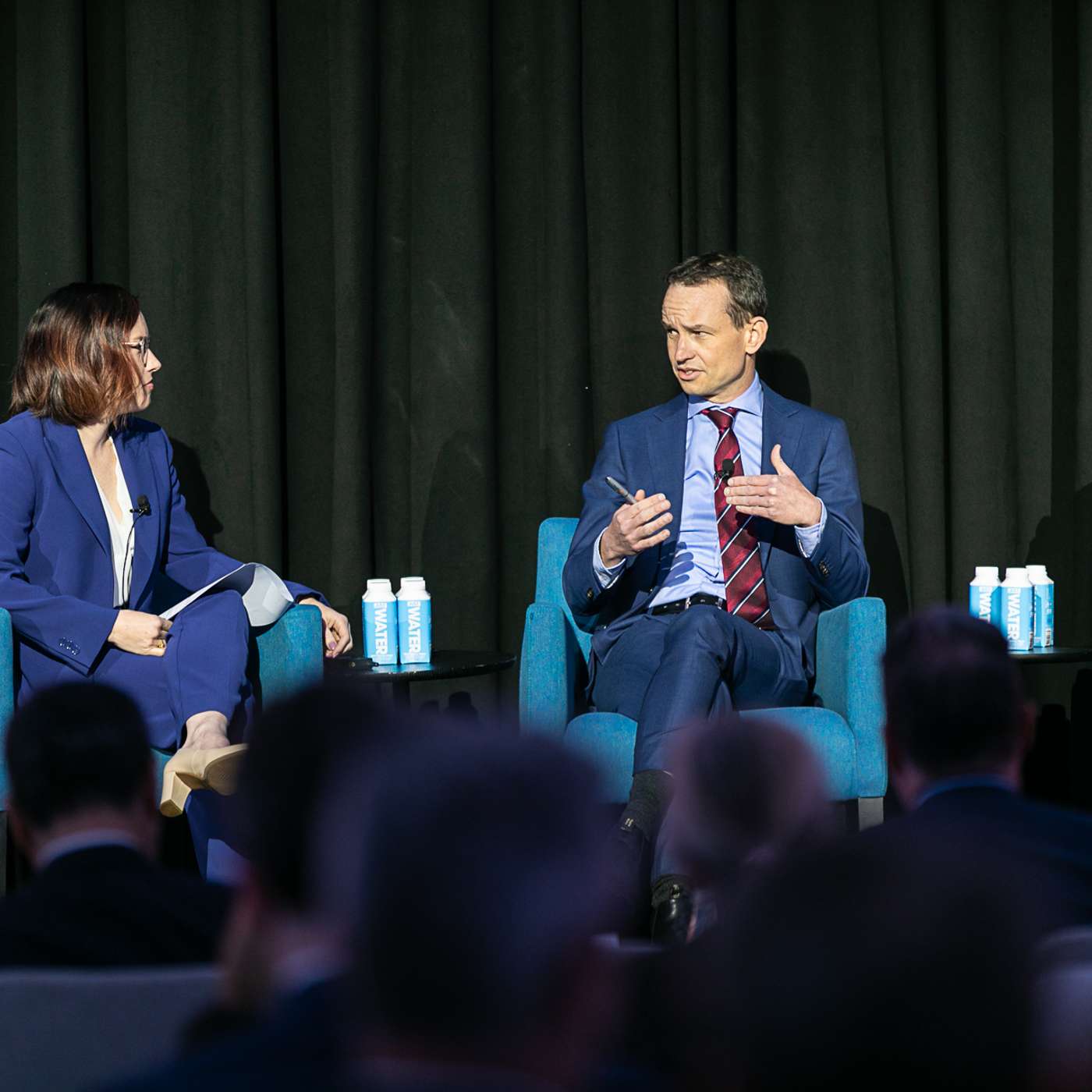
Oct 2800:47:14Tap to summarizePanel discussion at the Sydney International Strategy Forum featuring Dr Jeffrey Wilson, Director of Research and Economics at the Australian Industry Group, Yoshiaki Wada, former Representative (2016–24) in the Japanese House of Representatives, and Olivia Shen, Director, Strategic Technologies at the United States Studies Centre. Moderated by Hayley Channer, Director, Economic Security, United States Studies Centre.About the Sydney International Strategy ForumPresident Donald Trump’s first 100 days featured norm-breaking policies at a breakneck pace, often to be overturned days or weeks later. At the same time, the wars in Ukraine and Gaza have entered new eras with high-level negotiations, on-again off-again fighting and a new world order forming in real time to adapt to a changing strategic landscape. The 2024 trend of turfing incumbents has given way to foreign elections that many perceive to be a referendum on US politics.What is the future of the United States’ role in the world? How can governments and businesses plan in the midst of constant change? How should allies and partners approach security challenges in 2025 and beyond?These are the questions we tackled with international experts across government, business and academia at SISF 2025. They shared their insights on the discussions happening in Washington, Canberra and Tokyo, and what they meant for US allies and partners around the world.https://www.ussc.edu.au/sydney-international-strategy-forum-2025
Transcribe →
Sydney International Strategy Forum 2025 | Navigating disruption in trade and finance
Oct 2800:37:49Tap to summarizePanel discussion at the Sydney International Strategy Forum featuring Dr John Kunkel, Senior Economics Adviser at the United States Studies Centre, Bilahari Kausikan, former Permanent Secretary at the Ministry of Foreign Affairs in Singapore, Jo Masters, Chief Economist at Barrenjoey Capital Partners, and Ziad Haider, Partner and Global Director of Geopolitics at McKinsey & Company. Moderated by John Kehoe, Economics Editor at The Australian Financial Review.About the Sydney International Strategy Forum President Donald Trump’s first 100 days featured norm-breaking policies at a breakneck pace, often to be overturned days or weeks later. At the same time, the wars in Ukraine and Gaza have entered new eras with high-level negotiations, on-again off-again fighting and a new world order forming in real time to adapt to a changing strategic landscape. The 2024 trend of turfing incumbents has given way to foreign elections that many perceive to be a referendum on US politics. What is the future of the United States’ role in the world? How can governments and businesses plan in the midst of constant change? How should allies and partners approach security challenges in 2025 and beyond? These are the questions we tackled with international experts across government, business and academia at SISF 2025. They shared their insights on the discussions happening in Washington, Canberra and Tokyo, and what they meant for US allies and partners around the world.https://www.ussc.edu.au/sydney-international-strategy-forum-2025
Transcribe →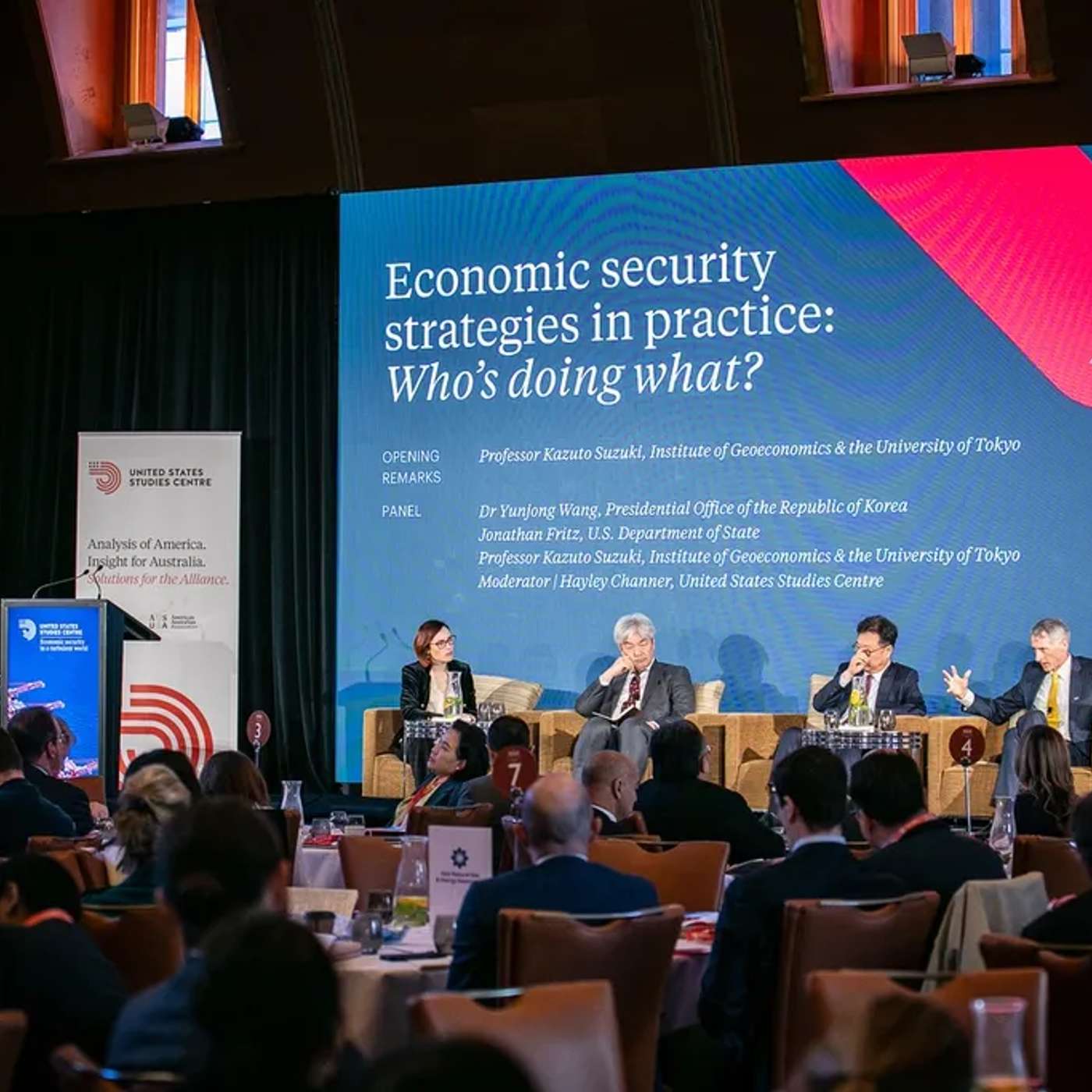
Economic security in a turbulent world | Session 2: Economic security strategies in practice: Who’s doing what?
Sep 9, 2024Tap to summarizeOn 19 and 20 June 2024, the United States Studies Centre hosted a major international conference in Sydney spotlighting the search for “economic security in a turbulent world”. Over a day and a half, the conference brought together leading policymakers, business executives and independent experts from around the world to discuss arguably the defining economic policy debate of our age – how to reconcile security and prosperity in an era of strategic competition and economic interdependence.Session 2's opening remarks were provided by Professor Kazuto Suzuki, Director, Economic Security, Institute of Geoeconomics at the International House of Japan and Professor of Science and Technology Policy, Graduate School of Public Policy, University of Tokyo. This was followed by a panel discussion moderated by Hayley Channer, Director of the Economic Security Program at the United States Studies Centre, and featuring Dr Yunjong Wang, Deputy National Security Advisor for Economic and Cyber Security in the Office of the President of the Republic of Korea; Jonathan Fritz, Chief of Staff to the Undersecretary for Economic Growth, Energy and the Environment, US Department of State; and Professor Kazuto Suzuki, Director, Economic Security, Institute of Geoeconomics at the International House of Japan and Professor of Science and Technology Policy, Graduate School of Public Policy, University of Tokyo.
Transcribe →