← Victor Davis Hanson: In His Own Words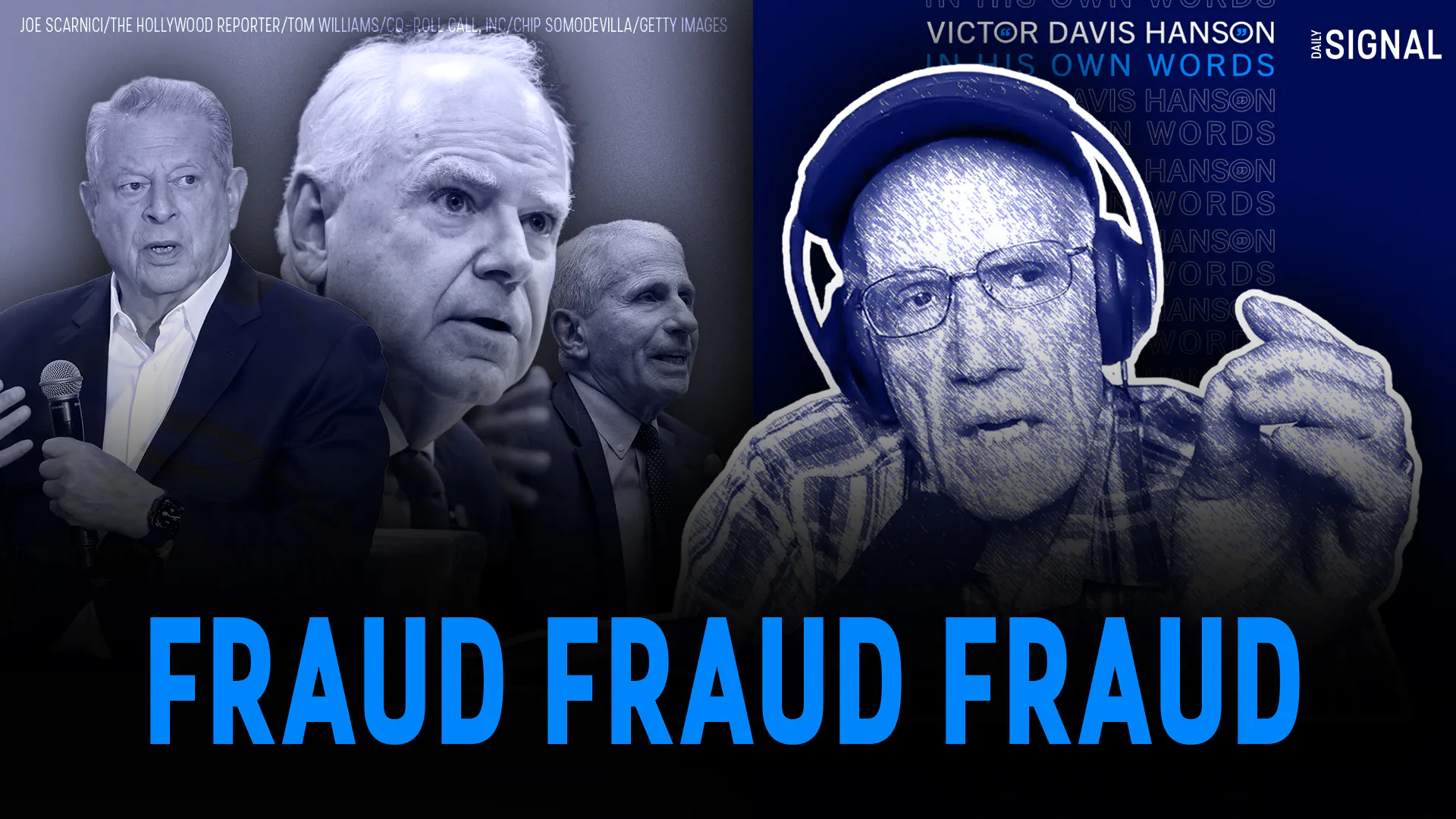
Victor Davis Hanson: In His Own Words
Victor Davis Hanson: Cole Thomas Allen Arraignment, Iran Pressure Campaign, COVID Vaccine Cover-Ups, and Athena
01:23:43
Loading summary
Transcript74 lines
- [00:01]
A
Some follow the noise. Bloomberg follows the money. Whether it's the funds fueling AI or crypto's trillion dollar swings, there's a money side to every story. Get the money side of the story. Subscribe now@bloomberg.com Cole Thomas Allen was arraigned today and his lawyers have suggested that they're going to argue he was not intending to do a mass shooting. You know, he struck me as a person with just half a plan. He planned how to get there, to get there early. He had all his guns with him. And then I don't think he knew quite what he was going to do running in there.
- [00:39]
B
Oh, he knew what he was going to do.
- [00:40]
A
I'm just saying he had a plan. In a sense, yes, he wanted to kill the administration and Trump, but he was not a professional.
- [00:51]
B
I guess I'm trying to say he thought he was. He gave a detailed critique of how unprofessional the Secret Service was and how evil it would be for him to get by them. And he almost did.
- [01:04]
A
Well, last thing, maybe speaking of science, Al Gore is out in the news again, and this time he's on the opposite side. Now he's warning of a global ice age.
- [01:17]
B
Isn't one fraudulent fortune enough?
- [01:31]
A
Hello and welcome to Victor Davis Hansen in His Own Words. This is our Saturday edition in which we do something a little bit different and that is to talk about a historical topic usually, or something current. But right now we're looking at the Greek gods. So Victor's going to look at the goddess Athena today. So stay with us for that, one of our middle segments. Before that, we'll be looking at the news. We've got lots in the news. We're going to take a mom to talk about the arraignment of Cole Thomas Allen and then maybe a little bit on the Iran war. And then we'll turn to more Covid lies and cover ups and a great article in the New York Post by Miranda Devine. So stay with us and we'll be back with those stories.
- [02:18]
B
Since the founding of America 250 years ago, many things have changed, but some things never do. The commitment of husband and wife, the importance of passing along our values to our children, the faithfulness of God. Some wonder how we can ensure America will continue to thrive as long as we keep first things first. We've only just begun. America the Beautiful.
- [02:48]
A
Welcome back. This is Victor Davis Hansen in his own words. And Victor is the Martin and Nelly Anderson series senior fellow in military history and Classics at the Hoover Institution and the Wayne And Marsha Busky, distinguished fellow in history at Hillsdale College. You can find him at his website, victorhanson.com the name of the website is the Blade of Perseus and we'd like to welcome everybody there. We are doing an overhaul of the website and hopefully we will have it up in another couple of weeks or so. So hold on for that and especially come and see it once we get the new website up. So, Victor Cole, Thomas Allen was arraigned today and his lawyers have suggested that they're going to argue he was not intending to do a mass shooting because he had only a pump action shotgun and he was not in possession of an automatic or semiautomatic. In addition, they want some leniency shown to him because he does has no criminal history and he's an upstanding member of the community. And I was wondering your thoughts on this.
- [03:54]
B
Well, he had a pump shotgun that has, I think one, it had, he fired off one chamber, one round buckshot, I think. And he had six rounds in the magazine. And as I understand it, he had a magazine pouch and a Velcro ad hoc bandolero. And altogether he may have had, I don't know, 15 or 20 shots. Only takes one to kill a person. So if his purpose was to kill the president and the top cabinet officers, he said, I think in descending, descending from the highest to the lowest authority. So why, why having six shots in a pump shotgun that would take out Trump and all five cabinet members that were there. So in addition to that, he had a automatic pistol with I think two magazines and he had one or two knives. And so his manifesto was very clear about what he wanted to do. He said that he wanted to kill Donald Trump. And his highest authorities, with the exception people are still baffled by Kash Patel. He explicitly mentioned him as exempt. People suggested that maybe, well, he's considered him DEI or he wasn't white and this guy is half African American. I don't know what the actual cause was, but he obviously wanted to kill Donald Trump and he said he did for the triad of being a rapist, which was false, and a pedophile, which was false, and a traitor, which was false. And he imbued, if you go to his social media accounts, he imbued all of this Hitler, Trump, Hitler, Trump. And he expressed it. So he's another one of these people like Thomas Crooks or Ruth or Martin who tried to storm Mar? A Lago or Tyler Robinson who tried, who killed Charlie Kirk. They're highly influenced by the progressive world. On the Internet and on social media, if you keep saying again and again, as has Joy Reid, Tim called Trump Hitler. Tim Waltz has called him a fascist six times in a public forum. If you keep doing that, or you say you're at Mexican warfare, you're at maximum warfare with Republicans, or you're Robert De Niro and Nancy Pelosi and Gavin Newsom, you say you want to hit Trump in the mouth. What do you expect these people to absorb from it? I can tell you what they absorbed in the words of Hassan Piker. They felt that they would. That somebody has to do it. He said, somebody has to do it, and you know what I mean, Kill Trump. And he said that Luigi Mangione was basically justified as conducting a social murder. So they see Trump as an enemy of the progressive project who deserves to die. And then proof of the pudding is in the eating. There's a whole. A whole melange of people on the Internet lamenting the fact that Alan missed. We only shot one round, but he didn't get inside the auditorium. So they create the climate. And then they say, it's not my fault. Trump tweets mean things. Trump doesn't say, I want to kill that person, or he doesn't say, you know, I want to go shoot them or behead them. And then when these people come out of the woodwork. But I guess Jake Tapper is called a scholastic terrorist, meaning they're just random people who pick up their antenna, picks up things in the. The atmosphere, and then they shoot. And what do they expect to happen?
- [08:06]
A
Yes. You know, he struck me as a person with just half a plan. He planned how to get there, to get there early. He had all his guns with them, and then I don't think he knew quite what he was going to do running in there. You know, he didn't seem very well. I mean, I'm not arguing that he was his idea ultimately, but, like, how he was actually going to get from outside of the venue and into and anywhere near these people that he wanted to shoot. I don't think he quite knew what he was up to, but that doesn't. I. I'm not arguing that about his court case. I'm just saying he had a plan in the sense, yes, he wanted to kill the administration and Trump, but he was not a professional.
- [08:54]
B
I guess I'm trying to say he thought he was. He gave a detailed critique of how unprofessional the Secret Service was and how easy it would be and for him to get by them. And he almost Did. I mean, he ran at full speed and he shot one round off that hit an officer in the vest. And he was lunging through the metal detector area to get into an area which would have granted him access to the ballroom. And the Secret Service apparently shot five times and missed him. They shot at Ruth and missed him, too. And in the case of crooks, people had warned, they were saying, look, look, there's a guy up on the roof. So there's a lack of vigilance or maybe a lack of training to get these near misses. And there's going to be, as I said last time, if you have three in 22 months, if you don't count the one at Mar a Lago, you're going to have three in the next, what, 32 months, what Trump has in office.
- [09:57]
A
Okay, so, Victor, let's go ahead and turn to the war in Iran. And I think the only new thing I've noticed since we talked about it is that the Iranian embassies are calling worldwide for suicide bombers. And that is a very strange thing. I was wondering if you had any thoughts on, you know, what is Iran up to?
- [10:18]
B
It's, I don't know why there's any Iranian embassy anywhere open in Europe. I'm not sure there is, but are they talking? And there's no Iranian embassy, I think now in the Arab world, so I don't know why they would even have them open and they wouldn't be threatening Russians or Chinese. So the idea that there is now a Iranian embassy anywhere in the world that's open and they're threatening people to kill with suicide attacks, it means why would you keep it open? Makes no sense at all. But they're getting very desperate. And we keep hearing the problem is that the Trump administration is having, is they keep repeating all of the wonderful things the U. S. Military has done undeniable. And they have, they have flattened at almost tolerable costs. Tolerable cost. 13 tragically dead. Five of them were from an accident. But the point I'm making is they achieved what seven other presidents said would be impossible and they wouldn't dare try. And Trump gambled to do this because he was facing the midterms and his economy hadn't kicked in yet. And had he not gone in there and stopped the long term threat that had become short term, who knows what would have happened? So he took a great risk. And now after destroying the military, he's got his boot, the American boot, on the Iranian economy. And there's a lot of disagreement on how Fast. It will implode when it has no output, economic output. It's losing $500 million a day in economic output. And it can't import. It cannot import key. Let me stop, I'll start that again. And it cannot import key electronic, technological, practical things for the Iranian economy to continue. So it's just a matter of when it implodes and we're in a great. I guess it's a waiting game. We in the United States feel that their military is no longer a tactical threat and they're being squeezed and they're blockaded and they're going to implode and either not be a menace because of that implosion for years or that that will pave the way for a change in regime. They are thinking it took them a month to erode our military and our command and control. And then we started negotiating and that gave up a couple of weeks. Then we had our blockade straight of Hormuz and that ate up a couple of weeks. Now we're just six months from the midterms and Trump's polls have gone down as the price of gas has gone up. So we have to think of something else. So now we're going to probably pull out our card, which they have said today they're going to use missiles and hit the vulnerable oil fields and storage of the Gulf. If they do that, they're counting on that Trump, and that's a bad calculation, will not go medieval on them because if he does that, then he's in a full fledged war again. When he said it would be over in a few weeks and they would lose all their bridges, all their infrastructure. He would do to Iran what Bill Clinton did to Serbia. Take out all the bridges, as I said, on the Danube, and all their electrical generation plants are what Obama did mostly to Libya. He spared some things, but he hit their TV, communications port facilities, etc. Dual use buildings. And we haven't done that yet. So they're counting on us not pressing them any further and ending the blockade. And if we don't, they're sending signals that they're going to unleash terrorism and hit the Gulf states with hundreds if they. They claim missiles. And they are emboldened because they look at the opposition in the United States, especially when it goes overseas, like Tim Waltz or Senator Murphy who says it's awesome when he lies and says that Iranians have broken the blockade. They get encouraged by that. So now it's just a question of how far does Donald Trump want to take this risk. If he wants to end the threat immediately, I mean, immediate, like this year, then he's going to have to risk another, I don't know, two to six weeks and more economic fallout and more danger to the, to the congressional majorities that he enjoys if he just says, well, I'm going to just strangle him for two weeks and then I'll turn over the blockade if the Europeans want to, or I'll leave a carrier group and then I'll go home and we'll work on the economy. That may not be enough to crack the regime or stop their missile inventories from being replenished or from them wheeling out the nuclear enrichment and saying, ha, ha, we have a bomb.
- [15:56]
A
All right, so just before we go to a message from one of our sponsors, I was wondering if you had any thoughts. The other big case is Comey has been indicted and Wednesday he surrendered himself. I was thinking, though, that it's unfortunate the only thing that they have him for is having taken a picture and put on social media 8647 in seashells. I mean, that seems very small compared to, Compared to the politicking he was doing from the FBI. FBI.
- [16:31]
B
He always thinks he's smarter by half than everybody. And he always gets out of these little jams. Like he broke the law and he memorialized a private conversation with Donald Trump on an FBI tablet and then. Which is now government property. And then he went out and leaked it to his friend to leak to the New York Times, which was. And he said it was just confidential, not classified material. And they got out that. Then he went before the House Oversight committee and lied 245 times when they asked him specific questions that were in his purview and that he had actually talked about before. And he said, I can't remember. I don't know. And they said there was a statute of limitations or the prosecutor was not duly vetted or wasn't proper. So he got off all of those things. He got off Russian collusion when an FBI lawyer absolutely lied and doctored a document for the FISA court. And he always escapes a bullet. But this time.
- [17:36]
A
Oh, go ahead.
- [17:37]
B
Well, this time he says he thought he was in that vein. He thinks, well, you know, I'm walking on the beach and I saw these letters and numbers, and believe me, as a chief, former chief law enforcement officer in the United States, I had no idea what 86 means, which started out kind of as a bar term to eject somebody 86 him and then was absorbed by the Mafia and people to kill somebody. He knew what it meant. So basically he said, I'm walking on the beach, I see something that says kill Trump. Well, nobody believed that. Everybody walks on beach. Nobody sees rocks that form a political message. But he did that so he could voice this animosis, hatred of Trump that would endanger his life and is a felony to directly threaten to kill the President of the United States. It's a felony. But he thought he could get around it by concocting this little gambit where he said it was just rocks and somebody else did it. And I just tweeted it and then when people told me what it meant, I took it down. But the problem with that is maybe Todd Blanche and the doj, the acting Attorney General and the DOJ are exaggerating, but they said it was a months long investigation. Well, it doesn't take more than a week to investigate what he did. So when they mean months long, they probably subpoenaed all of his email, all of his private, I don't know, text messages, and they have any that were not between him and his lawyer were privileged client attorney privilege. And if he said in any one of those, hey, it's really neat what I did, you know, I think we should kill Trump, or I got a way of doing this, then he's, then he's going to be convicted. Each of those felony counts is 10 years. But what I'm trying to get at, ostensibly on the surface of everything, it doesn't look like it's a very strong case because if you were going to prosecute everybody in the world, that said, I'd like to kill Trump, even though it's impossible, given the hatred of him and the social media exemptions. But he's different because he's an FBI former director. So they can focus on him and his prior history and what he said will come out. May not be anything, but it will come out. And nobody is going to believe he doesn't know what 86 is. No one.
- [20:14]
A
All right, Victor, let's welcome back a sponsor, Pure Health Research. If you want to drop extra pounds, boost your energy levels, or reduce swelling in your legs and feet, this message is for you. Pure Health Research is on a mission to make America healthy again. And two of their best selling health supplements are leading the way. First is Liver health formula. Over 100 million Americans have a sluggish liver riddled with fatty deposits. This can kill your metabolism, pile on the pounds, and make you feel tired. Liver Health Formula takes care of all that. It supports thriving liver health with special nutrients like artichoke extract and milk thistle. This is one of the easiest ways to slim down and revitalize your energy levels. Next is lymph system support. If you struggle with fluid buildup or swelling in your legs, ankles or feet, this one's for you. The natural ingredients of lymph system support help gently flush extra fluids and toxins out of your body. And right now, for a limited time, you can get 35% off liver health formula, lymph system support, and all 50 plus health supplements pure Health Research has to offer. Head over to PureHealthResearch.com that's Pure Health Research and use coupon code Victor at the checkout. That's again, purehealthresearch.com with coupon code Victor to save 35% on your order today. So, Victor, let's then turn to Amanda Devine's article in the New York Post. And she is looking at, and they're of course, investigating some of the findings. And apparently the Biden administration had, there was a senior medical officer who was part of the HHS Health and Human Services, and she was supposed to monitor data that was coming in about the vaccinations from all over the country. And she was finding things that were raising concerns about cardiac death, Bell's palsy, pulmonary infarctions and other things. And she was writing a weekly that was sent out to the agent, HHS and the cdc. And the Biden administration talked to her and then finally told her to cease and desist and stopped sending out the broader newsletter to those agencies because they didn't want people to know that the vaccines might be causing problems with them.
- [22:59]
B
Yeah, I don't think it's even a vaccine. It's a genetic engineering modification. So you get injected, as I did, like most people at Stanford to be on the campus with two injections. I had the Moderna. And basically what it does is it creates spike proteins. The messenger and RNA takes over your system and it makes these spike proteins that resemble the COVID virus. And then your body reacts to these harmless supposedly spike proteins and, and then you get immunity. But it was all experimental and it was all fraught with politics because it was it Operation Warp Speed started under Donald Trump. So he was the one pushing it. And by the time he left office, 17 million people had been vaccinated. And we were told that it was harmless even though it was experimental. And as Fauci said, again, again, you will not be infected nor will you be affecting other people. So they got this mass, I mean, I had to go to a high school. I waited, waited, waited for weeks on a list. And it was fraught with politics. The left tried to say that if you were black or you were non white, you could jump over the seniority. The rules originally were the people they had from empirical evidence that were dying were over 80, then over 70, then over 60. And the left wanted to come in there and say, this is, you know, too many old white people, will. So. And then Biden came in and he immediately glommed onto it and claimed quite falsely that no one had been vaccinated until he came and he started the vaccination, which was a complete. Another one of his complete fabrications. But then the more that they kept pounding people over the head to get vaccinated. And for example, 8,500 people in the military, many of them, you know, at the lieutenant colonel, major, captain, lieutenant level, they said you have to be vaccinated. A lot of people are. I have an immune condition where I'm very sensitive to a vaccine. The tetanus shot. I was sick for three months with one. I don't get flu shots anymore. They make. There's a lot of people who, for whatever reason, their immune system hyperreacts, you know what I mean? And it does lower the white blood count in many cases of vaccines. So when people were getting Covid shots, they thought they were instantly protected when in fact, in the process of gaining immunity, maybe your white blood count went down. So then they were flying or going out and they were getting sick. And then of course, we found out that cardiovascular problems, women were getting what they thought were breast tumors. They were benign in most cases, people. It caused inflammation. I remember when I got the second moderna, I got very, very ill. I don't know if it has any relation with the lung cancer I got in the right lower lobe from the vaccine, I don't know. But I did get Covid twice long Covid. I don't know if the vaccine weakened it my immune system, but from what we're finding out now, is that in a cost to benefit analysis, it probably not a good idea because it was billed as long as it was billed that it was 94, 93.5 effective. People were willing to put up with the risk, given the first wave of COVID was often deadly. But as the mutations kept. I mean, some of them, I never got the original one. I got the Omicron and the other one. And they were bad enough, but as they kept mutating and. And as scientists had said, given the History of virology. They knew that it would be less and less effective as a pathogen because people were getting immunity even to these variants. It didn't matter. They kept pushing them and boosters and boosters and boosters and boosters. And we were starting to find out that people were getting positive tests on psa. They were having cardiac swelling in the heart region, they were getting lung swelling, they were getting abscesses. Not a lot, but enough. And then more importantly, young men that were in good health were getting cardio problems. And Covid didn't seem to be a serious disease for people under 18. And yet we were mandatory in vaccinating babies. And at the core of all of this was Anthony Fauci. And of course, Scott Atlas, friend of our show, a good friend of mine, was warning people that in a cost of benefit analysis, shutting down the entire economy and the schools for two years was going to be not just a traumatic catastrophe, but it would ripple through the economy and the society for years. I think a lot of the violence that ensued in 2020 and a lot of the illiteracy we see with our kids today, not that it was started by this, but it was amplified by that lockdown and it destroyed the Trump administration's re election efforts. On December 2019, Donald Trump was looking at inflation at about under 2%, GDP up at 3 or 4%, unemployment down. He was just coasting to a reelection victory. And after this thing happened and they said that he, oh, he doesn't listen to Fauci, mean to Burks. He got us out of who he's racist. He called it the China. The whole thing was a disaster. And that begs the question what the Chinese were doing because. And then of course, there were two big lies that Fauci promulgated and the people around him, Burke as well, and Francis Collins, one, that the vaccination was very effective and it wasn't. I was vaccinated in late February and early March of 2020. I went to Hillsdale in August and I got Covid, and I got Covid two more times. So it had. Everybody was getting Covid despite. And maybe the first vaccination lasted for three months, I don't know. And the second thing was it was safe and a cost of benefit risk analysis. It wasn't worth, worth it unless you were, you know, 65 or 70 with Copic or lung problems, I guess, like myself. Lung problems, yeah.
- [30:01]
A
Have you seen these videos or these where Tim Waltz is giving a speech and he's saying that he is the one that's helping the Fed and the state with the fraud. What is up with that? He does he. This is my question. Does he think that the population has a short memory or does he have a short memory?
- [30:21]
B
No, he thinks we do. He called people white supremacists that were investigating it, and he blocked the federal government and said that even though they were federal funds for the most part, and he was responsible as governor for distributing them, he wasn't going to investigate because white supremacists were after the Somali community. And then he kept saying that again and again. And then when the evidence was overwhelming and Nick Shirley and those investigative freelancing Internet journalists started to go to these places and look at and show this, what was actually going on on the street. And he looked at the polls. That was an unsustainable position. So then he thought, well, since I'm partly responsible and I didn't listen to whistleblowers and maybe I'm greatly responsible, I've got to flip immediately. So then he gave a press conference praising the joint efforts of the federal government and the Minnesota, you know, Department of Welfare and law enforcement and joint rage. And then Kash Patel came and said, you're lying. There's nothing joint about them. He's a pathological prevaricator. He lied during the campaign about his history of going to China. He never was in Tiananmen Square on the day of the protest, as he claimed. He said he didn't abandoned his unit when it was redirected to Iraq. He did. He lied about his rank in the National Guard. And of course, he called Trump a fascist. Six times publicly, six times, most recently in Barcelona. And he was going. People forget that right after the election when Camilla was humiliated and she wasn't going to run, she said. And there was nobody stepping forward for about a month, oh, December, January, December 24, January 20. He was touring the country like he was the next presidential candidate. He is the most reprehensible. I don't know. That's a hard thing to say given the type of governors, but he's the most reprehensible governor, I think, in the country. Most inept. Something inexplicable about his behavior. When he goes on stage, he just gets wild and is ecstatic and he starts pointing and going crazy and I don't know what it is. He points to people. He just can't stay still. He's restless.
- [32:55]
A
Maybe there's something up in that old, what was considered the Midwest region, Minnesota, Illinois, Michigan, etc. In Michigan and And arbor. They're taking down neighborhood watch signs so that because they find that they're racists. And then just think about those. What was their Austriusko's that pushed that poor little journalist down and blew in her ear and stuff. What they're, they're crazy people.
- [33:30]
B
No, what's happening in Michigan and Illinois is they are suffering a mass flight of not all white, but mostly white upper middle class and mostly small business entrepreneurs. And they're leaving because the taxes are too high, the services are awful and the inner city is not getting better and there's crime and they're going southward. They used to do it just for the winter. Now they're doing it and they're leaving. And so what's happening as they leave those purple states? They're not even purple anymore. I mean, Michigan kind of Trump won it twice, but only by a small margin. But Illinois used to be open. You know, it's not. And Michigan is going left. And they may nominate a, a hard left Islamicist. El Said. Is that his name? He was the one that said he had to be careful what he said about the death of the Iranian supreme leader Khamenei, because it might be sensitive to his constituency. And I think he said Dearborn. So it was part of the industrial Rust Belt that globalization bi. Coastal globalization destroyed. And now it didn't have the recovery of places elsewhere like in Ohio did a little bit better. And you can drive. When I go to teach at Hillsdale, I drive. Until this happened. Health concern. I used to ride my bike to these little towns outside of Hillsdale and they're all, it's tragic. They're all beautiful brick buildings and they were 19th century powerhouse suppliers of the Great Lakes Industrial Project. And then during the car boom of the 20th century, they were really booming and they were all wiped out, Desolate, depopulated.
- [35:29]
A
Yeah. Well, Victor, let's go ahead and take a break and then come back and talk a little bit about the goddess Athena. Stay with us and we'll be right back.
- [35:37]
C
Hey, I'm Bradley Devlin and just like you, I'm a huge fan of Victor Davis Hansen, whether it's his long form podcast, Victor Davis Hansen in his own words or his short form content for the Daily Signal. Victor Davis Hansen in a few words. I always leave an episode learning something new.
- [35:52]
B
I think they forgot the 1982 Falklands War.
- [35:54]
C
And in the age of clickbait and rage bait. That's a really good feeling, right?
- [35:59]
B
The media. Thank you. You can leave now.
- [36:01]
C
Well, if you agree you might like my show, the Daily Signals long form interview podcast called the Signal. Sit down. Every week we take you behind the scenes of the biggest battles in Washington, D.C. as they happen with some of the biggest names in politics. We explore big ideas and we analyze the policymaking process from an unabashedly and unapologetically conservative perspective. And that's important now more than ever with the Trump administration back in office. Because in 2024 you sent Washington a message it couldn't ignore. It's your government and together we're taking it back. So check us out on YouTube, Spotify, Apple Podcasts, wherever you enjoy Victor Davis Hanssen or there too. And drop me a follow on X radleydevlin to stay updated with what's happening on the Signal. Sit down.
- [36:46]
A
Welcome back. This is Victor Davis Hansen in his own words. You can find Victor on X. His handle is Dhanson. And on Facebook, Hanson's Morning Cup. And there is a Facebook group that is not associated with us, but they do a great job. Victor Davis Hansen Fan Club and they do a great job with all the new stuff and also finding old stuff. So join them if you get a chance. So Victor, I'm anxious to hear a little bit about Athena and her various manifestations.
- [37:19]
B
She's a other than Zeus, she's the most dynamic of all the gods and powerful. She's the only one that doesn't have a clear two parentages. She may have been the daughter of Metis, which is thought or wisdom, but she came. There's a lot of mythologies surrounding her birth, but she sort of supposedly was swallowed by Zeus out of envy that this child would be too bright. And then he disgorged her and she jumped out of the head of Zeus fully formed. And she represents wisdom and civic militarism. And the olive tree, the foundational myth of Athens, which she fought with Poseidon. He said, I'll give you salt water, harbors and things. And she said, I'll give you the olive tree. And it was adjudicated. The olive tree was more valuable. So she got to be the patron of Athens. There's even a temple of her in Sparta. But most of the time she's connected with civilization, Civic virtue. And she has these various epithets, Pallas Athena. That word is a Greek word from palo. It means to brandish or throw or to hurl. And she always has a spear and the aegis, the shield. And believe it or not, she's a war goddess. But not like Ares, the gory God for the blood and Gore, but protecting the household, protecting the city. So she has these various epithets. At Athens she was called Athena propolis Athena on behalf of the city, or Athena Promakos and Athena at the front of the phalanx, or behead out in front of war on behalf of the defense of the city. She's most famous for the temple of Athena Parthenos at Athens. A Parthenon, that's the word. It's a second to clench it noun, but it's feminine for virgin, for virgin birth, her purity. And that was famous at Athens for being the quintessential Doric temple, the perfect Doric temple. Part of the periclean building program from 0446 downward and part of the Acropolis buildings of the Erechtheion, the Popolaea and the little temple of Nikki. But if you go there, it's got the famous Elgin Marbles or the freeze courses of the giant, the Lappets and giants. And then it's got the Metopes. And it has certain architectural refinements. The columns have a slight bulge in the middle so that they don't. They don't look, they don't waver when you look at them. As an optical illusion, the styloba, the floor has a little bump in it, so it looks perfectly normal when the eye tries to reinterpret it. So it was considered the most famous of all. And then there was the Chrys Elephantine, that's just a fancy word in Greek for ivory. Gold statue of her inside the now, so that the chambers of the temple, you could go in and look at her, and she was all with white ivory and decked out with gold. And then in addition, outside, besides the famous statue of Athena Parthenos, outside there was a huge statue with her holding a spear. And that was Athena Promakos. And it was warning people, if you come to Athens, you're going to have to deal with Athena. It's under the protection of Athena and that spear, supposedly you could see it all the way out to Aegina, 40 mile, 30 miles away on a sunny day with a glistening spear head. And so she's a chaste. She doesn't marry in most myths, she doesn't have children. And she's not the product of a normal birth intercourse between a man and a woman. So this Parthenaya, that she's a Parthenos, that she's a virgin and she eschews sexual activity. She's also the patron saint of a lot of heroes. If you look at the Odyssey, that is his patron saint, Athena, and she favors the Greeks in the Trojan War. And she's much more capable of waging war than people like Ares or Apollo. So I think you can make the argument that other than Zeus himself, she is the wisest and the most powerful of all the 12 Olympian gods. And she seems to have been an Athenian God. There's people that suggest that she was an Egyptian or Hittite or Eastern snake goddess, because she's sometimes phonic. She's related to snake worship up from the ground, but mostly her name is found on Linear B tablets. So there's the impression that she's a Greek goddess that goes way back beyond the Dark Ages, as most of them do. But she's the patron saint of Athens, and she's often after that. You know, you see her on the Tetradrochma with an owl. The owls were considered the wisest of all birds, so her emblem, or her trademark was the Athenian owl. So when you talked about currency in the ancient world, they said, how many owls do you have meaning how many coins with Athena's picture and the owl? Because that was a stamp that was pure, unadulterated, and you could trust the value of the currency from the democracy. And she's also associated with democracy and civilization and consensual government by the 5th century. And we know her in Rome as more as the God of the household and wisdom, Minerva. But she's a little different. She doesn't have that warlike aspect to the same degree that she does in Greek mythology.
- [43:51]
A
All right, thank you. So let's go to a break and get some messages, and then we'll come back and talk a little bit about political violence and the university. Stay with us and we'll be right back.
- [44:03]
C
If you enjoy Victor Davis Hansen, you might enjoy the Daily Signals flagship show, the Tony Kenneth, the same common sense perspectives you love. Weekdays at 7pm Eastern. And unlike some of the other evening shows, we work up until showtime to bring you the latest breaking news, analysis and good old American sarcasm. Thom Tillis, I'm pretty sure, might have been useful at one time as a doorstop. Find the Tony Kenneth cast on YouTube, X radio TV or wherever you get your podcasts.
- [44:34]
A
Welcome back Victor Davis Hansen, in his own words. We are a subsidiary of the Daily Signal. You can see it on my jacket here, and you can see it on Victor's hat. You can go there. They've got lots of conservative articles and podcasts and that kind of thing. So, Victor, there was a poll that was done by Skeptic Research center and it's called the American Political Perspective Survey. And in it they found they asked the question of whether violence is necessary to create social change. And here is what they came up with. In people who had just achieved a high school diploma, 23% said yes. After four years of college, 26% said yes. And then all the postgraduate, once you've got a postgraduate degree, 40% said yes. And you would think that as you learned more and more, you should start to see the world in a little bit more complex fashion. Why would they think more and more that political violence?
- [45:48]
B
Hesiod in his works and days at 700 B.C. said with material progress comes moral regress. In other words, the more wealthy and affluent a civilization is, the more leisure time for studies and contemplation. The mind will make more excuses or more rationalizations for bad behavior. Where when you're in the elemental sense and you have no margin of error, you have to follow a strict code because there's no reserve, there's no safety launching. So what that means is in the modern world, if you're going as an undergraduate, you're going to be taught by a professor and you're in this strange limbo where you're, for four years somebody has invested a quarter million dollars in you to study and talk. And study is much less than it used to be. It's mostly social interactions and therapeutic education. But the idea is you're going to take four years out of your life and be broadly educated, both with facts and the inductive method, but also with a moral code. Like the founder said, you can't have a consensual republic without moral people because these governments just represent the majority of people. The majority of people are no good, then the government's no good. And so it's no surprise to me that the university and the Rutgers poll confirmed that earlier. They said that 25% of people who identified as Democrats wanted would approve of Donald Trump being killed. I think 25% other would, would mildly or so so. But what I'm getting at is someone who was a professor for 21 years and then at Stanford in a research institute that I see and taught, you know, a lot. It's, it's kind of a la la land. So you, these kids are in this artificial environment where nothing really matters, you know, their grades, but even their grades don't matter. When they're 80% A's today and the university, there's no consequences. So you get up and you teach these kids and there's no audit. In other words, when you have a syllabus and you give it to the students and they put the description of the course in the catalog, and you tell them what's going to follow, and then you list the location and hours of your office hours, and if you violate any of that. I remember one person just went to Hawaii for two weeks and called in sick from Hawaii. I remember that. Where I was teaching. But the point is, when I would hold office hours, I'd go by, walk down the hallway, and I'd see office hours, and there was no one there. And when I would go in to teach classes, often there'd be assigned class cancel the last moment. So there was nobody who said, you can't do that. When I was a professor, finally there was a rule that you had to have a syllabus, and it had to be when it first came online. It had to be online. And we had a professor in the English department said, no, not doing it. I just come in there and I freelance. Thoughts come into my head, and you can write something out in a notebook. He mostly gave as, so they liked him. But the dean was trying to say, you can't do that. But he was tenured, so they usually get some kind of compromise. Can you just. Mr. Smith. Professor Smith. Can you just get here and write out a little thing and then my team will turn it into a. That's all I'm asking. That kind of stuff. So in that world where there's no consequences, what does it mean to approve of violence or something? You're not going to be violent. You have a lifetime job. You go to a campus. It's pretty safe, at least. Least it used to be. And there's no consequences for your behavior. And I know a lot of professors that. I never filed an incomplete grade because I was sick or because the only time I've ever filed an incomplete grade was when a student didn't complete the work due to illness. That was it. Or a family tragedy. But there was a lot of professors that just, oh, I. I'm not gonna, you know, spend my Christmas vacation creating blue books. And they just gave everybody an incomplete. And you can't do that. You just can't do that. And so if you think ostensibly I agree with you. It makes no sense that you spend four years in college and graduate school, and then the people with PhD, they should be the most moral. They read Socrates, they read Hegel, they read Kitzegard, they read Hume and Locke. Yeah, but the way they live and the way they think there's no cause and effect for them, for anything. I'm looking out the window at a guy right now. It was in my almond orchard. And he's going up and down today. He's going up and down in a four wheeler and he's looking to see how many drip hoses have been nibbled by coyotes and how many have just popped off on them, the misters. And if he doesn't find them, the pressure in the entire row diminishes and the last 10 trees will not be watered and they will die and he will be blamed. So he's very meticulous about what he does. But where he went at university and he had a degree, he wouldn't have to worry about any of that cause and effect. So. So that's why the Trump administration is trying to bring accountability to what people say and what they do. And I think anytime you say to an academic, so you have an SAT test to be admitted and you have a GPA to be admitted, and then you're supposed to finish in four years and you get a B.A. well, do you learn more or less? Do your SAT scores go up or down? What do you mean? I said, well, why don't we have an exit SAT? So part of the BA would be, oh, I got 600 on my SAT or 700 and we'll make it easy, 550. You have to get at least, I don't know, 85 percentile after four years of study. And if you mention to get your ba, you won't believe what people say. They get very angry and irate. This is racist. This is horrible. Why would you do that? Or if you say, when you come to the university and you're going to take out this huge loan, the university is going to be like a car salesman. You're going to get 20 pages of loan applications and we're going to tell you exactly what your monthly payment will be when you graduate, what the employment rate of your major is, what your anticipated income is, what your discretionary income to pay back this loan is, is. And if they would do that, nobody in their right mind would either take out those huge loans or major in sociology and psychology and gender studies. But when you don't tell them all that and then they go through just borrowing the money and the university keeps raising cost of everything because it's guaranteed. And then when they graduate, they're just assuming that, like Hunter Biden and other people, that the loan will eventually be canceled. So why would you be a fool and pay it off? That's what they're added to. There's no consequences. And they make the morality. It's all relative. And you see that with Haikon Piker when he said, basically, if I'm.
- [53:48]
A
I think it's Hasan.
- [53:50]
B
Hasan, yeah. Excuse me, Hikem Jeffries, Hasan Piker. When he said that it was a social murder, what he was saying is, I, Mr. Piker, and he went to university, can determine who is evil and who isn't. I don't have to prove it to anybody. I'll just announce somebody as an enemy of the people. And then if anybody wants to kill him, that's a moral act. And I'm sure he can cite all sorts of texts in Foucault or Derrida or somebody to bolster that argument. But what made him that way? I don't think it was. He was working in a car plant all day. He was very affluent. He drives a Porsche Targa. His parents are multimillionaires. He's a multimillionaire. And he went to university and he found that he had a niche. The name Hasan resonates Middle East, Gaza, Palestinians. Right. And he rode that to the bank. People like that. And he's a product of that moral relativism.
- [54:56]
A
Yeah. So maybe other products of that moral relativism are even more scary than that. In Oakland, there is a case against OpenAI, and Elon Musk was one of the witnesses. And I'm not so interested in the case itself as what Elon Musk said. He's testifying, and he recounted a time he went over to the Google co founder Larry Page's house and they were having a discussion about AI, and Elon Musk said Page burst out at him, you care more about humans than robots and you're a specious. And I was wondering that. Speaking of people who have had extensive education and on the scary end of the question of moral, that seems to me to be an even greater concern because that's the guy that's going to be hiring people to create logarithms that will. Or, sorry, algorithms that will affect how AI is acting.
- [56:03]
B
Yeah, well, depending on the platform you use, it's no different than the bias in Google. I kind of like it in some ways. AI, I despise when they create artificial images of me and I'm saying things I never said. You know what I mean? They have your appearance and that. Really? I spent about a month trying to tell people I didn't say that. Or we looked at advertising revenues that were going down because they were freelancing. On the other hand, when I had a diagnosis and I put the pathology report into AI, it gave me a sophisticated printout of diagnosis, treatment, prognosis by encapsulating maybe 500 peer review articles and rating them and then using that material to give you something, you know, that could say. But they also do this. They do a little tweaking you. So if you do it two or three times, they get your name. Hi, Victor, I got some bad news to tell you. You have stas. You have a bad mutation, the tumor or. But don't worry about it, the rest of it outweighs it. And hang in there. How much are you walking every day? And I type back 9,000. Oh wow, that's above. And then it quotes all this. But it's valuable if it's controlled. But the problem with the techies is until recently they all come from the left wing of the political spectrum. They all have far more money than the average American and they all work in LA LA lands like Austin or Powell, Palo Alto or Cambridge, Mass. Or Research Triangle in North Carolina. So they're not acquainted with the real world. And then the original cohort achieved a level of affluence that's never happened in the history of civilization. 11 to 12 trillion dollars of market capitalization. The value of Silicon Valley is one third the national debt debt. And these people who created this wealth, some of them are dead. Steve Jobs and everything. But they're getting older. And as they look at the power of these technologies and social media and medical research and AI, they're starting to think, well, I could be. I'm God on earth. I. I got everything I want. I can do anything I want in the world. I have such money, I can live anywhere. But I bought the yacht, I bought the 10 mansions, I got the five wives. I'm kind, bored, but maybe I should live forever. And so the next thing you know, they're, they're talking about putting their brains into robots, or I'm talking about his robotic. And robots are replacing organs and parts of your body that would wear out. And I think we're going to see in our lifetime, not my lifetime, but maybe my children's lifetime, where you're going to see these tech barons and they're going to have bronze arms or one. I mean, you're not going to know. I'm just kidding. But you're not going to know which part of them is real. They will have entire workable organs and limbs and they feel like they can be immortal. And that's I went to a longevity center to find out why I had this collapsed lung before it was diagnosed. They're very popular, especially with Silicon Valley people where you go in and they get you 10 scans and they give you 100 blood tests and they tell you exactly your genetic kind of, you know. I got this printout, I didn't even ask for it, but it said a very generous donor allowed me to go and he saved my life because that's where they found the mass that had been there for I guess a year or two. But they say things like this and it comes out of Silicon Valley. I think your general, you have a 1.3 greater chance of getting pancreatic cancer than the general. However, you have a 0.67 chance of getting prostate below the average or you are a hemochromatosis carrier and all. They have all this stuff in there and it's kind of a neuroticism because I mean it's very valuable. In my case, as I said, it was very valuable to be told you better get this checked. But it's kind of like an apple watch, you know what I mean? That I never even knew what it was. I never checked my heart rate. And now I have this heart problem after surgery. I just look at it too much, you know. Oh, I better not. I was walking, it went up to 110 and I better, they said go down, you know, keep it below nine. But then I thought, well wait a minute, what was it when I ran up the stairs at 65 years old and I was all Abraham breath A little bit. It must have been high, but you don't know it. And so these machines are taking over
- [61:14]
A
our lives and they're always very nice and making you feel good about yourself. You know why that is? Because they're going to use them as money making machines and they want you to come back and come back to open AI or whatever so they want to talk to you.
- [61:31]
B
It's very scary. I have used, if I use if somebody writes me a note and said I had mucanous adenoma and carcinoma and you better try this. And I go into grok and say is there utility with this drug or something? And then I go into something like smart news and it's uncanny. I never go to that site. But if I just happen to of the potpourri of all the news, it's kind of left wing. But the 10 out of the first ones are about lung cancer. But how do they know that they're not?
- [62:06]
A
Because smart News app is put out by Google and you did Google searches, so they're sharing the same data on people.
- [62:12]
B
But it's instantaneous. It's instantaneous. And if I go somewhere, last year I went to probably about 45 to 50 flights all over the United States. If I was in Tucson, Arizona, and I used my thing to check the weather. To this day, I will get ads that pop up for vacation homes in Tucson. You know what I mean? It's just scary. They're so intrusive. I don't know how you get away from that or what they're doing with all that knowledge, but it does seem geometric. It's not arithmetic. I know. Just as someone who for the first time has been studying cancer research. If I look at the types of lung cancer, I'm not one who's going to benefit it because my mutation is ineligible. But I was just looking at all these people who have these crass and STX STUX mutations that were incurable in 2019. And every year their life expectancy goes up by 3 to 4 months on them. Look at Ben Sass. That's so wonderful that they said he was only going to live for five months. And he's on this new immunotherapy therapy regimen. One pill a day. It's given him terrible side effects. Capillaries burst, but he's maintained it. He's a very courageous guy. And he's alive. And his tumor shrunk by 70%. That's just new. He would be dead. And I probably. I don't know what will happen to me, but. But if it comes back, maybe they'll have something that can. You know what I mean? I was reading the other day. Well, I asked Grok, I confess this in a moment of despair. I've had a cold. I said, what would happen if it came back? And Grok said, or maybe it was Claude, one of the two. It said, don't worry, Victor. It sounds very bleak because 48% and 28% and overall survival. And then after giving you the bleak news, it says, but there's new breakthroughs. You can have ablation, a needle insertion into the tumor to directly apply chemotherapy, or ablation, where you go in, identify under CT the tumor, and then instead of killing the tissues around it, you send a long needle and freeze it, the protein and kill it. Or proton beam radiation. I think I'm hoping I have a son, 43, and a daughter will be 45. And I'm hoping in their lifetime, and I'm hoping that all people that, that age will be the beneficiaries of all this new research. And a lot of it's AI. I mean, if you, if you get colorectal cancer and you want to go on the Internet and see what's going on and what you can learn about it, you'll spend hours trying to find peer review articles or you can just type into AI and it will go, it will go over 500 articles. Articles. It's unfortunate that when you actually look at them and you look at the articles, sometimes the AI misrepresents them, but generally they're in the parameters of being valuable. And that's going to help a lot of people. I don't know what a. I mean, we're going to get to a point where an oncologist or a cardiologist is going to have a patient and he's going to try to diagnose him and the patients go, excuse me, this, this, this is what's really happening. These are my chances, you know what I mean? And it'll have a grok printout.
- [66:00]
A
I think what's going to happen is the specialist will be the person that knows how to ask grok the right questions to get the answers most efficiently. So you'll still go to your doctor because they'll know how to get to what you need.
- [66:14]
B
I know, but you can imagine, and where I live in all this rural area, impoverished area, and I can tell you, I, I went when I was misdiagnosed as pneumonia. They said, get to the emergency immediately based on your ct. It wasn't pneumonia, but I went there and the X ray, they didn't know what it was, but they knew enough that it wasn't pneumonia. But they said they had to. But the nurse practitioner, I was watching her, she sat down at the console and said, possible pneumonia and symptoms and then therapy and then this particular type of shot and then the actual antibiotic to take and exactly what to do. It was all there. So, I mean, in some ways, yeah, simple things will probably replace a human. As I keep going back to. I had a wonderful general practitioner, Marshall Sorensen. He was a farmer, he was a student of my aunt at a junior college. He was a very good student too, she said, but he was a wonderful doctor. And what I'm getting at is his AI can do it in the abstract, but someone like Dr. Sorenson, over 40 or 50 years, he's seen everything, every type of twist, twisted ankle, broken leg, infectious diseases, cancer. So when he would talk to you, he was very modest and he kind of nudged you to the answer, you know, but he knew exactly if you said something like, well, I really read. And he said that's be interesting. But he knew that what a person might find out in a book barely occurs in where you live in this particular place. So he would be very polite and say, nah. And looking back, he delivered all three of my children and he was a wonderful doctor. And we need people like that. They're empirical and it's kind of difference between a contractor and an architect. Architects draw the beautiful buildings and blueprints, but they never, some of them are unbuildable. You can't build it according to it, but you need a contractor who actually said, no, that won't work, that's too big to get on the forklift, something like that. And that's what doctors I think will become, I hope, because we're losing a lot of country. I don't want to say country, that's a disparaging term. Rural doctors that are really good. When he retired, I felt like I lost my left arm. He kept me going with all kinds of twisted knees and mast cell problems and you name it. Rupt appendix. I came back and I used to get strep throats under stress at flying and everything. He would just say, come on in,
- [68:57]
A
come on in, don't worry about it,
- [68:59]
B
or we'll get it, we'll fix it. And he did fix it.
- [69:02]
A
Yeah, well, last thing maybe. Speaking of science, Al Gore is out in the news again and this time he's on the opposite side.
- [69:13]
B
Isn't one fraudulent fortune enough?
- [69:16]
A
Yeah, exactly. Now he's warning of a global ice age. So that's his new thing. But I think for our listeners, Hot Air has a great article on it. It's called More Global, so go have a look at it. But they have it on this.
- [69:34]
B
I mean, Earth in the balance and all of that stuff. There was no scientific data. It was all secondhand that he didn't do any research or anything. He said he invented the Internet, but that was dubious. And the thing was, when they started to change the word from global warming to climate change, then I knew the whole gig was up. Because what that meant at that point is our thesis that the planet is heating up and therefore at an intolerable level due entirely to man made carbon emissions. And then there were places that were cold, cold or flooding or drought. It meant that almost any natural phenomenon you could attribute to climate change, it didn't have to be warming anymore. And then when they added that little asterisk climate chaos so they could get a tidal wave. Who was the guy who said earthquakes? There was a guy on TV who said earthquakes were climate change. And then the other thing that really pulled the curtain and you saw him with his gears and levers, the wonderful and powerful Al Gore Oz was that he had this bankrupt cable company and I think Joy Behar was a news anchor woman on it. It was terrible, had no audience. But I think Gutter wanted to get influence with him because this was during the Obama period and he was all over. Remember he was at crazed Sex Poodle too. Remember that? In a hotel room.
- [71:17]
A
That was the massage therapist. Yes.
- [71:19]
B
We knew that was going to go nowhere, just like Tara Reid went nowhere with Joe Biden. But anyway, my point very quickly is that he sold this thing to Gutter, which was they gave him, I think, 50 million. It was a valueless thing. And they were espousing this hard left Islamist propaganda on Al Jazeera. Al Jazeera, yeah, that was the newspaper and the other channel. But this was something that they bundled in with it, I think. And they paid him 50 million. And he had been yelling and screaming about carbon emissions and the money for all that he garnered was all from carbon emissions from oil sales. Just like Tom Steyer is running. He has commercials every night on TV in California and he made his fortune with Indonesian coal mining and you know, offshoring his profits.
- [72:14]
A
Our crazy, not so moral leadership.
- [72:18]
B
Well, if relativism is the enemy, if you believe in relativism, then anything, whatever means are necessary for the higher utopian moral good. Good, you can justify it.
- [72:30]
A
Well, Victor, we're at the end of our show and I'm going to read a few comments. I believe this is. These are from when you and Jack were talking about Tucker and wondering about why Tucker has changed so drastically from his earlier self. Blastocyst1 says this about that. Tucker got scared after Kirk was shot and so he created this new facade. It is a self protection mechanism.
- [72:58]
B
You mean he wants to be liked by the left?
- [73:02]
A
I guess. I don't know. Yeah, maybe that's.
- [73:04]
B
He has people like Jeffrey Sachs on there. I don't know. His big turning point when he had Ted Cruz on there and they were friends and he ambushed Ted Cruz and said what's the population of Iran? And all this stuff. And at that point you saw a different side of him, that he had gone over to the dark side. I don't know, he was just, he was being obsessed with Jews and Israel and I mean obsessed. Somebody can correct me but if you took the last hundred shows that he's put on his channel and just see how many dealt with Israel or Netanyahu or Jews, I imagine it's 70%
- [73:44]
A
from Martha 5250. Our country is so blessed to have you as her citizen. Prayers for your good results. Results Friday.
- [73:53]
B
Oh yeah. I'm gonna find out tomorrow, I hope.
- [73:55]
A
Yeah. You are truly a godsend to anyone going through serious health issues as you maintain composure and humor and articulate so well what's going on and what you're having to do to fight to fight to better your health. Your intellect and logic helps me understand and weed through the lies and evil doing on our sorry and the evil going on daily in our world. You're a way more intelligent, intelligent man than me, but I'm intelligent enough to understand that you are one of the good guys. God bless you and thank you for keeping the company informed and better educated. Martha. Five, two.
- [74:34]
B
I have demons though, you know, and I got a bad cold and then all of a sudden, wow, what is it from? You know what I mean? And the older than that, I got a cold. No big deal. But when you get cancer and heart problems, your mind and plays tricks on you.
- [74:48]
A
Yeah. There's more worry about what it really could be. That's for sure. 1776 grateful. Unfortunately, Victor got the golden rule wrong. So hold on a second here.
- [75:01]
B
Do you want others?
- [75:03]
A
It was a very ancient maxim long before Jesus to do unto others as they do unto you. This is a basic human vengeance idea that is well known worldwide. That is not what Jesus said as the Golden Rule. Jesus changed it up.
- [75:21]
B
I thought I said do unto others as others should or shall do unto you.
- [75:25]
A
Okay, so here's what he says. Jesus changed it up. He added a next level requiring abstract thinking and higher intellect. I'm not sure that most of the world's population can even understand it today. Jesus must have been immensely frustrated with humanity. But he says Jesus changed it to do unto others as you would have them do unto you, not as they actually do, but as you would have them.
- [75:54]
B
I think that's in the optative mood in the New Testament, but. The point is that it's the classical. Jesus was a revolutionary. Jesus was revolutionary because it's absolutely antithetical to the classical morality. Treat your friends wonderfully and punish your enemies. Or what's the first Consul Sulla said? No better friend, no worse enemy. I think Jim Mattis, the Marine General, adopted that Sullan motto for the Marine Corps. That's an old Testament, a pre Christian idea. And Edward Gibbon, if you read the whole decline and fall through throughout, especially the early Byzantine, but as early as the third century. When he's talking about the fall, the decline, he's famous because he cites Christianity as a primary contributor to it and the Christian ethos of turn the other cheek and the abandonment of classical militarism. That said, we're going to defend the realm and we're going to punish our enemies and we're going to deter them so they never tried again. And when they were in a world of Islam or Huns or Viscos or Oskos or vandals, that Christian morality was expressed even if it was not fully followed. He pointed out the siege of Constantinople, that the people on the walls in the last, last months before the city fell in late May were asking for penance because they knew they were going to die, but for killing people. So they wanted to know whether they could go to heaven that day by taking life. Whereas on the other side of the wall the Sultan's men were being promised 72 virgins in heaven. And that was a much stronger things like that forgiven were much stronger incentives to kill people. And so the Christian ethos, I mean everybody says the Crusades and you know, all this Christian militarism, Christianity had a 2000 year fight between classical ethos and Christian morality. Just wars, unjust. And we still have it. When the Pope said that this was an unjust war, then Donald Trump and his supporters said, well, not stopping another 40,000 people being killed, not stopping the Holocaust from continuing, that's not a just thing to do.
- [78:43]
A
So if I'm reading you right, we should apply in our affairs in the Middle east, apply Old Testament morality somewhat a little bit more.
- [78:53]
B
Yes, Churchill had it best, I think he said indomitable in war and magnanimous and victory. So when I've been a big defender of Pete Hegseth because of his Herculean efforts to get the recruitment back to normal. And it's now it's up to 60,000 more than we had when they said, oh, we can't do it, kids are on drugs or obese or in gangs under Biden. And then the Pentagonists perform superbly with the bombing, 25 hour bombing, I mean in June 22nd of last year and then the Madero thing and even this one, it's gone longer than they wanted. But it's been a brilliant military. But when he frames that we're going to kill these people and we're going to take, you know, that martial rhetoric. He's dealing with a therapeutic society and also a Christian society. But that Christianity has transmogrified into a lot of people that's no longer Christian. It's just therapeutic. So they resent that. So it might be better if he said something instead of saying, well, how many ships they had? 110. You know where they are? They're on the bottom of the ocean and we're going to go get them all. If he'd said, well, it brings me no joy to say so, but when they put us in this position, we had no choice but to sink their fleet. And we wish all of the Iranians that were impressed into the navy under this horrible regime, they're not our enemies. But we have no choice because it's a choice between saving thousands of people around the world, millions, or fighting an evil regime that forces people to fight for it. And sometimes it's a moral dilemma and we're going to keep going and doing what we. I think that would win him more support. It doesn't have to be that verbose and pedantic, but something like that doesn't always have to be Curtis LeMay and George Patent.
- [80:57]
A
Yeah, exactly. Thank you for joining us on this Saturday special episode. And thank you, Victor, for all of the information. This is Sammy Wink and Victor Davis Hansen and we're signing off.
- [81:15]
B
Thank you for tuning in to the Daily Signal. Please like share and subscribe to be notified for more more content like this. You can also check out my own website@victorhansen.com and subscribe for exclusive features in addition.