← Victor Davis Hanson: In His Own Words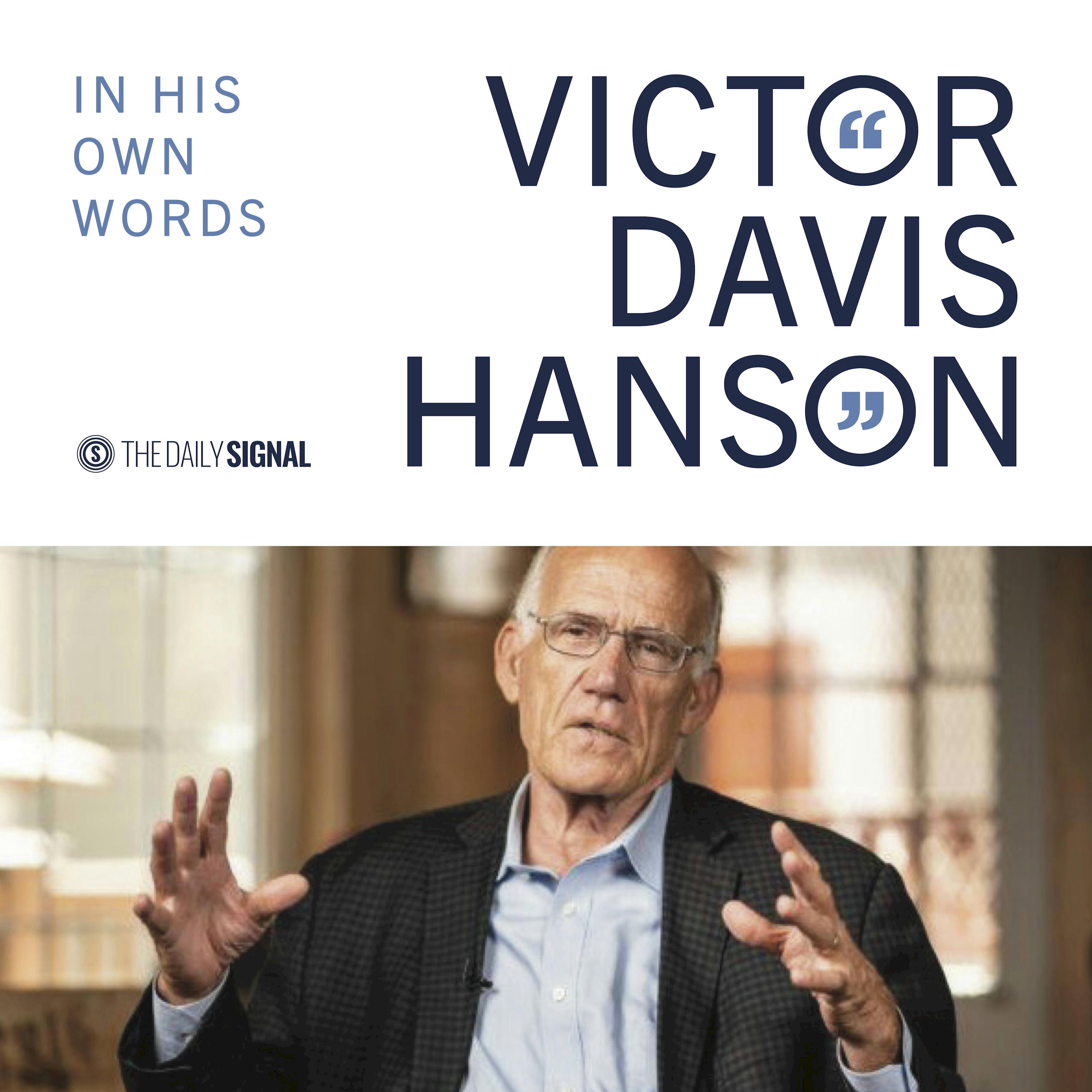
Victor Davis Hanson: In His Own Words
Victor Davis Hanson: The Fallacy at the Heart of Ken Burns' 'American Revolution' Documentary
01:27:38
In today’s Thanksgiving episode of “Victor Davis Hanson: In His Own Words,” Victor Davis Hanson and Jack Fowler take issue with director Ken Burns’ assertion in his “American Revolution” documentary series that the Founding Fathers based their ideas for democracy on the Iroquois Nations.
Loading summary
Transcript131 lines
- [00:00]
Jack
The greatest success book of all time.
- [00:03]
Victor Davis Hanson
Has just been released by the number one success coach in the world with.
- [00:07]
Jack
Over 100,000 five star reviews. It's called you'd Wish Is yous Command and it contains the missing keys to the law of Attraction and reveals the ultra secret mystical manifestation algorithm.
- [00:22]
Victor Davis Hanson
This book is available for a limited time. Visit wishbooknow.com to get your copy today.
- [00:28]
Jack
That's wishbooknow.com your charitable giving stack just.
- [00:31]
Victor Davis Hanson
Called and it wants a glow up.
- [00:33]
Sponsor/Advertiser Voice
Wren technology is used by the top institutions in the country for donor advised funds. They're the fastest growing giving vehicle for a reason. Ren just makes giving a lot less taxing.
- [00:42]
Victor Davis Hanson
Learn more at R E n I.
- [00:44]
Jack
N c.com Interesting to see these video clips. People are protesting, trying to tear down contrived walls made by the police. The people are furious, angry. Why shouldn't they be? All the murder and mayhem that these drug cartels have inflicted on the people of Mexico for decades now. And how many journalists have murdered, Mayors have been murdered. You know, people stand up, they're murdered. Who's not standing up? The President of Mexico, Claudia Sheinbaum.
- [01:09]
Victor Davis Hanson
We have a very strange relationship with Mexico. If you said to yourself, who killed the Most Americans since 1940? Japan? No. Italy? Fascists?
- [01:21]
Jack
No.
- [01:21]
Victor Davis Hanson
Germany? No. Al Qaeda? ISIS? The Iranians? Nope. The cartels? Yes. From 1990 when we first started compiling data, they've killed 600,000Americans. It's almost as many as we lost in the Civil War.
- [01:36]
Jack
Here's the headline. Socialism comes to Congress. 98 House Dems vote Against Measure to Condemn Far Left Ideology. Well, Victor, are you surprised that there were that few that voted against it? Democrats?
- [01:53]
Victor Davis Hanson
No. Some of you were going to say, what's the difference, Victor, between communism and socialism? Socialism relies on stupidity. That people will vote it in one time. Communism has to kill people and keep killing people.
- [02:18]
Jack
Hello, ladies. Hello, gentlemen. Welcome to Victor Davis Hansen in His Own Words, the stellar third or fourth version of this podcast we've been doing for five years. But here we are at the Daily Signal, Victor Davis Hansen, who is the Martin and Neely Anderson Senior Fellow at the Hoover Institution and he's a senior contributor at the Daily Signal. He's a man with the website the Blade of Perseus. Its address is victorhanson.com I will tell you later on in this episode why you should be subscribing. We are recording on Sunday, November 23rd. This episode will be up on Thanksgiving. So let us tell you. Say Happy Thanksgiving. And at the end of the podcast I'll ask Victor what he's thankful for. Lots to talk about. Victor. Claudia Scheinbaum, excuse me. The president of Mexico making excuses for why they can't do anything about the cartels. Ken Burns has a documentary, PBS documentary about the American Revolution that seems to be a little cuckoo for Cocoa Puffs in some people's opinions. Letitia James in more trouble. Donald Trump is telling the Somalis where they can go. Maybe this back to Somalia. And we have to update some commentary made on our last podcast regarding Donald Trump's position and actually your own commentary on the six Democrat senators who put out a video encouraging members of the military not to follow illegal orders. Well, since we've talked, Donald Trump has come out with some really sharp new commentary that's worth worthy of Victor's own commentary. So all that said, all that to focus on and we will get started. I guess we should get started with the, with the Trump commentary and we'll do that when we come back from these important messages.
- [04:18]
Fundraising Announcer
Freedom is on the line and time is running out. This Giving Tuesday, your help is, is urgently needed to defend innocent lives, protect Christian ministries and safeguard the future of American families. This is a critical moment to act. We have four cases before the U.S. supreme Court this term that could shape the future of freedom in this country. Real people are counting on you. Courageous clients are stepping forward to fight for justice. And your gift gives them the power to keep going. We need to raise 200, $250,000 by December 2nd. Thanks to a limited time match. Every dollar becomes $2. That means twice the impact, twice the defense, twice the hope, but only while funds last. There's no time to wait. Give now. Help protect freedom with God's blessing. We'll keep winning in the courtroom and in.
- [05:18]
Jack
We are back with Victor Davis Hansen in his own words. So, Victor, I have it up on the screen. I couldn't print it out. Let me read what Donald Trump posted on on Truth Social. This is in response now to the six Democrat senators who put out that performance art video to members of the military encouraging them not to follow illegal orders. Okay, here's what Trump wrote. The traitors that told the military to disobey my orders should be in jail right now, not roaming the fake news networks trying to explain that what they said was okay. It wasn't and never will be. It was sedition at the highest level and sedition is a major crime. There can be no other interpretation of what they said. And he had a subsequent post where he wrote, many great legal scholars agree that the Democrat traitors that told the military to disobey my orders as president have committed a crime of serious proportion. Mamia Victor, your thoughts?
- [06:23]
Victor Davis Hanson
Well, they were, they understood that. So they did not say if I remember that and I watched it twice. They did not say if Donald Trump gives you an illegal order. What they winked and nod at was the whole purpose of that was Donald Trump. But they never explicitly said if Donald Trump gives you a particular order, although later in commentary when they were asked about it and they said could you list a particular order in the past or in the present that he has given that you feel is unconstitutional? And they said no. And then I think Kelly, is that his name? Senator Kelly said Mark Kelly from Arizona, he suggested in a conversation that maybe they'd have to shoot protesters in the leg. And I think even the CNN hosted and that is an order. No. And that is reported. And did you. So the point is they had no. But Trump was right. They knew what he was saying. I don't know, maybe it's over the top, it's treason and hang or whatever he later said. But let me put it this way. Let's imagine that we are now in 2015 and Barack Obama is president and given the hot mic that he gave in 2012 when he said to Medved, tell Vladimir if he'll be flexible and give me space, since this is my last election, I will be flexible. On missile defense, people forget that was a hot mic. And they both kept their bargain. We had a very valuable project in development between Poland and the Czech Republic to create a missile defense system to it wouldn't have stopped Russia, but it would have stopped Iran. And that was the impetus for it. If they ever got a nuclear tip missile arsenal that they would not be able to threaten and leverage and blackmail Europe. Obama gave that up because he was running against Mitt Romney, who would be the nominee. And he did not want Vladimir Putin to invade as he had during 2008 under the bush. And he had been told that there was a good chance. So Vladimir Putin, he said, give me space and I'll be flexible. And they kept the bargain. So they dismantled the missile system and then Putin did not invade in 2012. He held off till 2014 under Obama's watch. But he apparently thought Obama wouldn't do anything because he basically had just that they had made a deal and he didn't do anything. So given that context, what if a conservative, let's say conservative, Mark Milley had said, let's say I am Joe Bob Smith and I'm chairman of the Joint Chiefs. And I, when I heard that, I just knew he was crazy. And so I, you know, I, I called up my Chinese Communist counterpart and I told him, if I get an, if I get a crazy order from Obama, I don't, I'm not going, I'm going to notify you first. What would the left have said? They would have impeached him or they would have brought him before. And then let's say that in the height of the controversy, six Republican senators, let's say, and we can think of veterans, let's say John McCain, who was a prisoner of war, and a lot of, there's a lot more Republican veterans than there is Democrats. Let's say there was six of them. And they cut, and they cut a commercial and it was directed at Barack Obama. And they said it was directed afterwards. And they said, you know what they were saying this man, we say that Rand Paul is one of them. He's killed an American citizen on a Predator drone strike and he's made it deal with our arch enemy, Putin. So let's cut a video. And they said, you know what I want to tell everybody in the military, if you get an unlawful order, if you get, you do not have to obey it, if you receive. And then you went on TV and you basically said, you were talking about Barack Obama. And somebody said, well, when does Obama given an illusion? Well, he hasn't, but he made a deal and he got caught in the hot mic selling us out. And the Iran deal is selling us out. Out. Haven't you seen Seven Days in May, something like that? And the left would have gone ballistic. They would have said, these people are traitors. And they would have, they had the majority. And they did for a brief point. They would have censored them. They didn't have it by that time, but they would have censored them. They would have said, you know what, all of you people who advocated that the US Military not obey an order if Barack Obama gave it. And that's the implication when they say they, they have the right to refuse. You should be disgusted. That's treasonous. And we're going to. They would. And now they're furious that Donald Trump wrote that because he's Donald Trump. It's cruder. Yes. Is it uncouth? Yes. Is it hysterical? Yes. Is it any different than what they would have responded? No. They would have been sober and judicious and used no capital letters. And on the one hand, on the other hand. But basically, unlike Trump, they would have acted. They would have gone after those people because we know they do. That's what they did to him in 91 indictments. They would have gone after every one of those senators and they would have had Mark Elias and all of these Democratic Soros funded legal groups and they would have run commercials and they would have tried to make sure they were all defeated and they would say they were treasonous because they were trying to create an insurrection against Barack Obama. Yeah, it would happen. So I have, I'm, I'm a little bit. Give him some slack because he's, I don't believe anything the left says on anything is principle. Right. And then.
- [12:51]
Jack
And weakening the concept of obedience in the military is.
- [12:58]
Victor Davis Hanson
They know. What if you told every. What if you told everybody? Student. They're not even, they don't even take an oath. You tell your sixth grade class you're the principal and you go in and say, you know what, anytime the teacher tells you to do something, turn to page 58, come up and write this on the board. If you think that that's improper, then don't do it. What would be the message? They'd all not do it. And if you're telling an 18 year old in the military that he basically has a legal degree and he can adjudicate in a nanosecond when an order violates the Constitution, do you think that that's going to be the primary motive? No, the primary motive is he might not want to do something and he's going to rely on that excuse. Well, a senator said I could do it. It's a very dangerous thing to do and they know it. And you know what? Every once in a while they tell you like the shutdown is over. Now you have Clyburn and all these people coming in and they know it didn't. It was a disaster. But he says what everybody said the purpose was. He said, well, it worked. We won those elections. We won those elections. And they're all admitting what it was for. It wasn't about health care. It wasn't at all. It was about winning, getting momentum and winning the Virginia, New Jersey, California ballot. That's what they did. And now they admit it. All of them admit it.
- [14:25]
Jack
Harry Reid, the late Harry Reid.
- [14:27]
Victor Davis Hanson
We won, didn't we? Yeah. Well, Senator Reid, don't you think that that was a lie? You had no information that Mitt Romney had squelched on his taxes. Well, it worked, didn't it? We won. That's how they think. That's innate with the left because I'm not saying the right is morally superior and the left is not. I'm just saying that the left's ideology has a narcissistic self righteous streak because it professes that it's for equality and they know that humans are private people and they like the fruits of their own labor. So the ideology that says you're going to take from this and give to that is unnatural. So they feel because it's unnatural and because it's morally superior, they're entitled to every means necessary to achieve it. And that's how they operate. And anybody who oppose him as a homophobe, racist, Nazi, you name it, but their message does not resonate with most people.
- [15:38]
Jack
Well, Victor, the people in charge can't fix a pothole, but they want you to trust them with your drinking water. Ask people in Flint, Michigan how that turned out. Lead, heavy metals, rust. Basically liquid poison straight from the tap. And that's why I use Cove Pure water purifier to keep my family safe. I don't know if you people who watching this can see, but in the background I've got my Cove water purifier. Because unlike government, Cove Pure actually does its job. America's tap water is a cocktail of heavy metals and toxins. The fallout of corroded pipes that should have been replaced decades ago. Lead exposure, by the way, doesn't just make your water taste like you're chewing on a car battery. It causes brain damage, cancer, birth defects. But sure, trust the city council with your children's brains. What could go wrong? Code Pure is the obvious fix. Their Clearwave technology removes up to 99.9% of the contaminants. Lead, PFAS, pharmaceuticals, you name it. No plumbers, no drilling. Just plug it in on your countertop and set the temperature you want with the touch screen. And it actually tastes like water. Imagine that. So don't wait around for the government to solve this. They won't. Go to covpure.com I'm going to spell covp pure because I have an accent. C O V E P u r e covpure.com v d h do that right now and get $250 off while supplies last. Take back control of your family's health and finally drink water the way it was meant to be. And we thank the good people from COVID Pure for sponsoring Victor Davis Hansen in his own words. And I use it for everything now. Coffee, ice cubes, even for plants. I even fill a dog's dish with with that water. Here In Connecticut, Victor, the water is. It's got a funk to it.
- [17:39]
Victor Davis Hanson
You need to pump your own. Ours is pumped right outside my window.
- [17:43]
Jack
Yeah, well, as I tell you, after.
- [17:47]
Victor Davis Hanson
150 years of farming.
- [17:49]
Jack
Yeah. Slight DDT taster. Victor, let's talk before the break about the. The president of Mexico. So it's interesting to see these video clips. People are protesting, trying to tear down contrived walls made by the police. The people are furious, angry. Why shouldn't they be? All the murder and mayhem that these drug cartels have inflicted on the people of Mexico for decades now. And how many journalists have been murdered, mayors have been murdered? You know, people stand up, they're murdered. Who's not standing up? The president of Mexico, Claudia Sheinbaum. I. We really can't do anything about it.
- [18:31]
Victor Davis Hanson
You know, it's very funny what's happening, and it's really reflects Donald Trump's cunning, because when he came in, he said the Mexican government is in bed with the cartels. We know that. And we know the Chinese want to weaken us. So they send them the raw product of fentanyl and then it is produced. And then we, under the guise of no border policy, under Biden, they send their people and their drugs here, and they make. The cartels make 15 or 20 billion. And Sheinbaum and her Obrador predecessor, they make about 65 billion in remittances. And they get any dissidents who feel that Mexico is a racist, exploitive country, and it is, they just take off to the El Norte instead of marching on Mexico City. And we pay all of their. The young, the immigrants who come in who are poor, they don't know English. We pay their housing, their food, their education, their health care subsidies. They free up two or three hundred dollars a week and send it back to their family, which the Mexican government will not support. And Trump looked at all this and he said, you know what I'm going to do? I'm going to finish the wall. And he's working on it, but I'm going to stop all of this illegal immigration. I'm going to put immediately he only it was only 1%, but we're going to start taxing remittances, and there's not going to be as many people draining us of our cash or crowding our social programs. And then I'm going to pressure the Chinese and have a deal where they don't send raw product to the cartels. And then I am going to start blowing up ships, boats on the high seas that are Sending drugs that they control as well in the Caribbean or Latin America. And you put it all together and the cartels are going to be really squeezed, really squeezed, because they can't make money on trafficking. And it's going to be harder to smuggle drugs by land or sea. And they're going to have trouble getting the raw product. And the Mexican government's going to be a little bit strapped because they're not going to get as many remittances. And I'm just going to take that pot and turn up the temperature and see what happens. And what's happening is the cartels are putting pressure on Sheinbaum to. Because they own her. They own. They own the government in Mexico to get tough. And they're getting paranoid. So when you have a mayor who's basically saying they're controlling the government's control, they shoot him. A popular marriage. And they're going to get even more desperate as they start to lose billions of dollars. They're going to kill more politicians. And they probably threatened the Mexican government, they probably threatened Sheinbaum. And so Donald Trump turned the temperature up by stopping drug income, by stopping illegal immigrant income, by stopping fentanyl income, remittance income, and dealing with this 170 billion dollar trade surplus that Mexico has. And Mexico's had a free ride and they know it. And now the cartels are under the gun and they're going to be. And they're going to kill their opponents. They're so desperate for the Mexican government to do something. Can't you open the border? Can't you get China to keep giving us the fentanyl and the same supplies? Can't you tell Trump not to stop our boats? We're going to start killing people and we'll see what, how it ends. But it's going to get nasty in Mexico. Really nasty. It's nasty now. It always was. But this, this is going to be nastier because it's threatening them. We have a very strange relationship with Mexico. If you said to yourself, who killed the Most Americans since 1940? Japan? No. Italy? Fascist? No. Germany? No. The North Korean Communists. And the Chinese Communists? Maybe, maybe not. How about not the North Koreans? The Vietnamese? Nope. Al Qaeda? ISIS? The Iranians? Nope. The cartels? Yes. From 1990, when we first started compiling data, they've killed 600,000Americans. That's almost as many as we lost in the civil war through fentanyl with the aid of the Chinese. But the cartels have, and they've gotten away with it. And nobody says a word about it and it's not like, well vector, if a guy wants to kill himself, is it the problem is the fault of the guy gives him the drugs to do it. It's a little bit more complicated about it's more the 18 year old kid who doesn't know anything goes to a party and somebody says hey, I got a bunch of Valium and I got a bunch of bennies or something and they're fentanyl. So that's the problem. And he's Trump is trying to do with it in a Trump fashion and it's going to get nasty. Yeah.
- [24:02]
Jack
Well, Victor, before we head to the break, let's talk about one other. Well, I think it's part remittance issue. This has to do with the Somalis. So Donald Trump, Donald Trump has ended the deportation protection for the Somalis in Minnesota. And he's from a Fox News article, President Donald Trump Friday evening said he was ending deportation protections for Somalis in Minnesota effective immediately. Quote, Minnesota under Governor Waltz is a hub of fraudulent money laundering activity. Trump posted on Truth Social. He continued, I am as president of the United States hereby terminating, effective immediately, the temporary protected status program for Somalis in Minnesota. Victor, I didn't know they had any protected status A and B, like Mexico. I think, I think the Somali, the country, Somalia's economy is largely based on remittances coming.
- [25:04]
Victor Davis Hanson
Yeah, everybody is, everybody's based on us. And that's the problem with immigration. We let in people who come in illegally and then they, they act as if they like the United States and then they, and then the left doesn't say much. And then when they create large enough constituencies and through mail and balloting and then legalization, they become a constituency that votes. They're in such numbers whether they're people in Dearborn, Michigan that are pro Hamas or the Somalis who are embezzling billions of dollars on fake programs or supporting terrorists abroad. And we saw the same thing. There's a reason why Nancy Pelosi and Bill Clinton and Hillary Clinton all gave fiery speeches in 92 and 96 at the Democratic Convention about the evils of illegal immigration and to hurt American union workers and all that. And then now if you played those, they would get so angry because that we hit critical mass with southern border illegal aliens. And now you can't touch them because they're a voting constituency. And that's what's happened with the Somalis. And Trump is saying, unfortunately, I think the number of people who are in green, expired green cards or who are being issued green cards and we gave them an exemption so they can stay here is not very many compared to the size of the Somali community. But the result of it is you give, you get Ilian Omar, who, you know, says it's the Benjamin's baby and this is a trashy country and the dictatorship here is worse than in Somalia. Well, maybe they should find out if that's true. Representative OMAR so you said that the United States is a trashy country and that dictators were worse here than your homeland. So let's just send back all the people who should have been sent back on, but they're temporary exempt and they can write you or call you and tell you which dictatorship is the worst. How's that? Let's have an experiment.
- [27:05]
Jack
Yeah, I'll contribute to that.
- [27:09]
Victor Davis Hanson
And so they always go, I mean, these targeted immigrants, they love blue states. So they knew that Minnesota is probably the most liberal state in the United States. Michigan is very liberal. And they always go to these liberal enclaves because they feel that they can use the DEI angle or the minority angle or the welfare angle or some kind of an angle that's on the left. And the left welcomes more constituents.
- [27:38]
Jack
Still think of Minnesota as the land of kind of your people, you know, Norwegians and Swedes. But that's, I think that went out.
- [27:47]
Victor Davis Hanson
With the dodo bird. I asked my grandfather that once. Why sweet. I was only, I guess, 15 or 16. He was 80. My sweetest grandfather. I said, why are they all. Because I was kind of a little bookworm and I knew that I had heard of the Farmer Labor Party in Minnesota, you know.
- [28:07]
Jack
Right.
- [28:07]
Victor Davis Hanson
Because I was watching the 1960 convention. My mom, I think, was a Democratic delegate. She went down there. She was a half delegate with another woman. And they were, I don't know if they were Humphrey or who they were delegates, but Humphrey was from the Farmer Laborers Party. So I remember about it. And he said, Frank Hansen, a great man, said, yeah, they all the, the communists went north and all the Swede normal people went south. So I guess he meant that they went to California. But he was actually, I think he was born shortly after his parents arrived in Chicago. So. But that's, that's funny. It's, you know, when you see Fargo and you hear those accents. When I go to Michigan, there's still a lot of Scandinavians. That weird accent. It's really a high pitch rather than accentuated language of Sweden or Scandinavian.
- [29:11]
Jack
Yeah, I'm going to take your word for it. All right, Victor. When we come back from these important messages. We're going to get your take on Ken Burns, who's got some new documentary series for PBS on the American Revolution. And we've got 98 Democrats who are showing some love for socialism or non disdain. Anyway, we'll get to that when we come back.
- [29:39]
Victor Davis Hanson
Discover Mercer Labs Museum of Art and Technology in New York City where creativity meets innovation. This holiday season, immerse yourself in a world of interactive exhibits, digital masterpieces and unforgettable experiences. Whether you're with family, friends or exploring solo, Mercer Labs invites you to see art and technology in a whole new light. Get your tickets now@mercer labs.com and redefine your museum experience.
- [30:11]
Jack
We're back with Victor Davis Hansen in his own words. By the way, Victor's got a website, the blade of Perseus. VictorHansen.com is the address. Check it out regularly. You're going to want to if you haven't already and you're going to want to subscribe if you haven't because you're.
- [30:27]
Victor Davis Hanson
A fan of Victoria.
- [30:28]
Jack
And twice a week he writes an exclusive ultra article for the Blade of Perseus. Once a week he does an exclusive video and there are links galore there to Victor's various appearances, the articles he writes for American Greatness, his weekly syndicated column, archives of these podcasts, links to his books. So many books. It's $65 a year, 650amonth if you want to stick your toe in the water. The blade of Perseus victorhansen.com Victor My colleague, former colleague at National Review, Dan McLaughlin wrote a long critique and a somewhat harsh critique of Ken Burns new documentary on the American Revolution. I've not seen it and I maybe I'll get to it eventually, although I, I've come a long way from being a fan of Ken Burns. His original Civil War series was terrific and he seemed to have gone. Not seems he everything since is quite woke. But Dan's headline for his article, I'm not going to read anything from it is Ken Burns American Revolution Woke series over emphasizes Iroquois the Indians influence are we. I thought that was we were about the Founding Fathers and Thomas Paine and Ben Franklin and and I guess it was the upstate Iroquois Indians that we have to thank for our democracy. Anyway, Victor, your thoughts on.
- [32:00]
Victor Davis Hanson
Well, I should say that I know Ken Burns. I've known him for 10 years. He's a friend and I see him each year and I disagree with him on a lot of things. I do say that and I think I Said it. To him, the Civil War documentary was a work of genius. Remember, it revolutionized when people. When that was broadcast, before it was broadcast, they said they're going to have still pictures, no movies. Everybody said that's not going to work. And that was the first time we saw a documentary with those older photographs, you know, sepia photographs and then that beautiful Civil War music. And more importantly, it was not melodrama propaganda, it was tragedy. He had Shelby Foot. Gosh, those were brilliant interviews. And that made him a global star because it was. If you look at that Civil War, it was all in the aspect that a 3% plantationist class that owned 90% of the slaves had sold the Confederate population of 11 states. It was about the nor. Nor the war of aggression because they were had. They were invading and these brave Southerners fought, they thought in many cases to protect states rights, this particular culture. But more importantly, they just wanted to succeed. I'm not defending them at all. I'm a strong unionist. But my point is, he said it's. It was tragic how they had to fight. And the people who had slaves were not the vast majority of Southerners they may have, but they defended them. And Shelby Foote brought that out. And then he said that it was also true that the Scots Irish heritage of Marshall Vallier and they had basically stripped the academy West Point of the top officers. So whether it was Albert Sidney Johnson or Robert E. Lee or Joe Johnson, they. When I'm not saying that Beauregard and all the rest of them were great generals, but compared to Pope and Burnside and McClellan until they got the triad of Sherman Sheridan, but. And Grant, the North didn't have. Maybe Thomas as well. They didn't have anything of that caliber. So my point is he was trying to say the south, they fought ferociously. They had brilliant generals, but they had the wrong cause. And it was sad that these people got killed for a reason other than what they thought. And you can argue whether that was it. But that brought the country together and people. And it was also. He had references to what had happened since the Civil War. One of those reenactments. He had pictures of the old veterans shaking hands at Gettysburg who had fought. Yes. And what people said he had later people. You know, it was kind of ecumenical. It was trying to heal. It wasn't. These people are 100% evil on this. And so later I reviewed the west in the old Weekly Standard, very critical review about it because I felt that that later period were melodrama, not tragedy. So I haven't seen this, so I don't feel qualified. All I know is I've read two or three reviews about it and there was this one issue that's dear to my heart and that is this canon or this myth that the Iroquois six nation tribes created the democratic model, at least one of the major ones for the Founding Fathers, that would require, and that is based on an early line in Benjamin Franklin's corpus of quotations that he mentions the six. And I think it's in the Federalist. I don't know if it's 8, 9 or 10 or what, but there's a mention. But here's the point. If you collate in the Federalist Papers the work of Hamilton or Adams and the intellectual pedigree of our Constitution, and you count up the references to this is what Cicero says. This is what the Greeks did. This is what the Roman Republic was like. This is the later influence of the Magna Corps, all of that, the Glorious Revolution, all that stuff. And you compare it to a reference to the iroquois, it's about 99% to 1. It really is. And if you look at our constitution and you compare it with two different alternatives, here's a bunch of people who have different tribes and the tribes say, well, what do you think? Well, what do you think? Well, what do you think? And you say, well, vote on it. That's not democracy or constitutional republics. I'm sorry. I think Plato has a part when he's talking about democracy in bastardized form and he says, you know, when people rob a bank and they want to split up the loot, they vote by majority vote. So five guys, they all rob a bank and they say, well, how are we going to split it up? Well, let's just split it up in five parts and we'll vote on it. Oh, they're the models for the constitution.
- [37:45]
Jack
No.
- [37:46]
Victor Davis Hanson
So the Iroquois nation did something that was practical. Not all of them did it and they should be commended for it. But it had very little if any influence on the Founding Fathers. And what were the influential texts? It was not even passages in Thucydides or Plato, especially not Plato, but a little bit in Aristotle. But most of it, almost all of it in the ancient world came from Cicero's De Legobus and philosophical works and then the Magna Carta, the idea of everybody has particular rights versus the monarchy. But. But most of all, the French thinkers and the. And the British Enlightenment, but mostly, I mean, John Locke, but. But also people like Montesquieu, who really took the ancient idea of checks and Balances and said the spirit of laws. There should be a judicial, there should be an executive and there should be a legislative. And they should each have equal power so that power can be not aggrandized. And we took the name Senate from the Latin senatus, the older. And that's why we said you had to be 30 years old. I don't know if it was originally 35 or 30, but it was older than the house. This is 25, I think. And you get a longer term. That was modeled after both the wrong. The earlier Greek, the Garusia, which in Latin became the Senate. And they had special privileges over the assembly. And then there was an executive, an archon in Greece and two consoles. And then there was tribal judicial area. There were. There was the effort in Sparta and then there were tribal court jurisdictions in. Shouldn't say tribal, but there was council, judicial councils and judges, prefects and legates and things like that. So my Pontius Pilus types. So my point is that the tripart system came from the ancient world. It was refined by Montesquieu and the read vociferously in European literature. And that's where we got our system. And to the extent that people said, hey, Native Americans, this isn't that weird. They kind of vote. Well, that was just mentioned in passing. But under the DEI aegis, all of a sudden the. The exception, the insignificant anecdote became canonized. Oh, we owe Native Americans everything because, you know, they created democracy. No, that's not true.
- [40:32]
Jack
Yeah, we do.
- [40:33]
Victor Davis Hanson
We do have democracy every day in our. Our lives. You know what I mean? It's sort of. You're out on the playground and you say, let's choose teams. Well, let's vote on how we should choose the team. That's not democracy. It's just a way of settling a dispute. And democracy involves a written constitution and checks and balances and a tripartite government and constit republic more. So they had none of that. Yeah, I'm not belittling them, but there's a political. Anybody who says that. That it was the prime. A prime influence. Influence on Alexander Hamilton or John Adams or Mattis, James Madison or George Washington or Thomas Jefferson is sorely mistaken.
- [41:23]
Jack
Ken Burns is a man of the left. Yes, yes.
- [41:26]
Victor Davis Hanson
Well, he gave a talk at Stanford graduation that was pretty fiery. The graduation not too long ago. And I know him. I mean, I. I respect his work. I really respect his work because the. I think the. The Civil War that he did was the finest documentary I've ever seen produced in America. And that's pretty good. That's pretty high praise.
- [41:49]
Jack
Yeah, I agree with that. But it's just that, you know, historians of the left thinking about our founding. So 1619, we're not going to say America is 1776, it's 1619 and it's evil. And in this case, again, I haven't seen it either. But we are sure as hell not going to take the pbs, the official government, you know, entity is going to produce something related to America 250 but what we're going to say is going to not going to recognize a bunch of old white men. We're going to talk about some. Yes.
- [42:26]
Victor Davis Hanson
And they get in very tricky territory though. And this is what the left can't figure out because I followed this Iroquois created the founding for 30 years. It came in, it was during the Bill Bennett, Saul Bellow, University of Chicago, all of that fight under Reagan.
- [42:50]
Jack
Excuse me, could you just say what it is the Iroquois Nation. Just so I know that everybody knows.
- [42:55]
Victor Davis Hanson
The Iroquois nations were indigenous people. In I guess you would say the Atlantic northern states. And there were six versions of them or tribes subgroups. And they had a council of federation in which they adjudicated common concerns by assembling. And each of the six nations then not autocratically been told what to do, but each member then weighed in and they supposedly voted under an executive. And what I'm saying is that that has been known to the founders and as I said earlier, and I'm quoting by memory now, but Benjamin Franklin compiled a book years before where he mentioned famous quotes about consensual government. And he mentioned, he said and the native the Indians also had the Iroquois Nation. And then in the foundation when they're talking in the Federalist Papers are talking about all the different. What they're trying to say is what we are doing is the right tradition in history and other people have fought for their liberty. And here's what happened in Greece, which they knew in Rome and here's what happened in England and here were the philosopher and that's about 99% of the reference. And then I think in two or three places they said even the Iroquois Nation had a conference where people voted. And somehow that got into. Wow, that gave them the idea. No, it didn't. It did not.
- [44:44]
Jack
Right.
- [44:45]
Victor Davis Hanson
It did not. It was just a passing, a few passing remarks to find support for this radical idea of constitutional government that they were introducing against a monarch. And the irony is that the left can't decide whether the foundation of this country was purely Evil or it was wonderful. But it wasn't a bunch of white men. It was Native Americans who invented our system. Well, if they invented our system, then are you going to continue and say, well, Native Americans had slaves and they torture people. So Guantanamo Bay is a legacy of the Iroquois because they torture people. And a lot of indigenous people held servile. They had servile practices and serfs and slaves. So I guess slavery came from the Iroquois, didn't it? No, they only pick and choose a certain thing. And I think what they basically said this was an evil country, but it could have been good because we had originally a Native American idea, democracy.
- [45:52]
Jack
What did you. I interrupted you before. But what was the 30 years ago bill Bennett instigation of your interest?
- [46:01]
Victor Davis Hanson
I'm talking around the mid early 90s and late 80s. Bill Bennett had written the Book of Virtue, Book of Virtues. He'd been Secretary of Education. He'd been the head of the National Endowment, I think under Reagan. Yeah, early 90s, 90s and late 80s. And then there was a group of people, scholars at the University of Chicago who. It came. There was an. Put it this way, there was a lot of controversy with the closing of the American Mind. Yeah. And the other one, Alan Bloom and Cultural Literacy by Hirsch and Bloom also and Saul Bellow, who the great novelists were at Chicago and they were giving seminars about defending. And I think one of them, I think it was Bellow said show me the African Tolstoy or Mozart. Somebody said that. And then anyway, there was a pushback against the. That Reagan. And that was the cultural revolution. That was. I was a visiting professor at Stanford in 90. I want to get this straight, 91 and 92. And then I was at the. A fellow at the center for behavioral studies. 92 and 93 at Stanford. And that was when Jesse Jackson said, hey, hey, ho ho, Western Civ has got to go. And there was a big fight to get Western civ out of the curriculum. And Bill Bennett and you know, he was a very good debater and he debated Jesse Jackson on television. I watched it and that was a big issue. And then it was kind of. It faded out because Reagan economy boomed. And then there was the, the first George H.W. bush presidency. And there was 12 years, 12 years of a reaction against the left and everybody had won that argument. And then Bill Clinton came back and he tried to. The left got empowered sort of and that was the big cultural war. And I wrote in 1998, I co wrote with John Heath something called who Killed Homer? This you know about the death of classical studies and the revival of Greek wisdom, what they had done to classics, these third world, this third World PC, what would become dei. And it got, it got a lot of hostile reaction. And they kind of the right thought we won because that died out. And then Obama came back and he did something that is the most Machiavellian thing I've ever think has happened to this country besides the open borders. He came back and said, affirmative action is not the problem or the solution. Diversity, it's diversity. Diversity, equity, but diversity. And what he meant by that was we don't have enough victims to have African Americans and there's upwardly mobile people. And we're not going to talk about class anymore because there's more poor whites in actual numbers than there are anybody else that's poor. So we're going and we're think that if you come from India and you're the wealthiest ethnic minority in the country, it doesn't matter anymore. You're oppressed. So we're going to divide the country into white and non white and we're going to call one the oppressors throughout history and one the oppressed, one the victimizers, one the victimized. And that's what he did. And all of a sudden he said our constituencies, 31, 32%, and it's a third of the country has been oppressed and they need reparations of various sorts. More affirmative action, more set asides, more, you know, no more proportional representation where we let in people who are white, 70% of the incoming class. Now it's going to be at Stanford, 20%. So that's what it was. It was diversity. And it was really crazy because that's what really destroyed the whole consensus about the black experience. Because all of a sudden people said, I can remember I was a faculty member at Cal State and I was on a hiring committee when this happened. Actually, it preceded Barack Obama, I should get that straight. It happened in the last year of the Obama administration, the Clinton administration, in 2000, because before we were told that to hire people with affirmative action, they had to be African American or Latino. And we were getting a lot of complaints from Indian Americans and other people who said Arab Americans, Asian Americans, said they should qualify and they would eventually sue. But we were told, I can remember my dean said to me, I don't care if it's a South American aristocrat, I don't care if he has blue eyes and blonde hair, as long as he has control his ars. That's what he said, as long as he can trail his, you hire him, but you are not going to hire a white male. And if you hire somebody who's Indian or somebody who's Asian, that's fine with me from now on, just so they're not white male, so I can take it to the provost. That was really radical because when I first got there, I was told that affirmative action had to be largely Hispanics and blacks. And all of a sudden and people were really angry that we're Asian. I had a neighbor who said to me, victor, I'm darker than every black person I meet. I get nothing. And I said, well, you're a multimillionaire. Well, well, you know, so that's what the legacy was of the later Clinton years, I would say from 96 to 2000. And then it was resurrected. Bush didn't stop it, George W. Bush, they allowed it to go on. And then under Obama, it really heated up his diversity. And then we were. It was the idea that you don't have to have an income, you don't have to be low income, you don't have to have any history of oppression. You can come from any country in the world and you can be Ilyan Omar, you can be Rashida Tlaib, you can be aoc, you can be from an upper middle class aoc, and you can be as white as anybody. But if you say that you're not a white person, then you are deserving of repertory treatment because you have suffered collectively from the oppressor side of the binary. And that just split the country in two. And it had no rationale to it. And everybody got. The odd thing was Jack, it kind of ended it because once people saw all these wealthy people plan to play victim or Michelle Obama on television, who's worth 150 million with four mansions, saying how that we had to pay for everything at the White House, we got on Air Force Two and if we had friends or we had to pay for it, I even doubt that. But I mean, can you imagine? Everything is free. She's worth a hundred million bucks, she's got four things. And we have to hear that she's a victim on the victimized side of the binary. And that's what killed it. Now people are so cynical. Call me racist, I don't care. Oh, you're, you're a victim. I mean, look at. Can you look at the people and that are running Microsoft or Google. They're not Anglo Saxon oppressors. They're people from a non white tradition and they're doing very well. And if it was so bad, then you wouldn't have a million people trying to. Excuse me. 2 million of people trying to enter the country illegally.
- [54:18]
Jack
Well, we began this segment talking about a documentary series, and you.
- [54:25]
Victor Davis Hanson
I can't recommend it or not because I haven't seen it, but the Iroquois thing is an old thing with me, and I think everybody knows it. All of our listeners have heard it, and they don't believe it. And I don't know to what degree I read the National Review Review. I like Don McLaughlin. Dan.
- [54:46]
Jack
Dan.
- [54:46]
Victor Davis Hanson
And he made a lot of good points. Others did, too. But I also like the Civil War. I just wish that that type of tragic approach to history had prevailed over the melodramatic.
- [54:59]
Jack
Well, I was just gonna make a final comparison to that series, the Civil War. Another great documentary. Not on the Civil War, but I don't think we ever discussed Peter Jackson's They Shall Not Grow Old about World War I. I mean, that was a good one.
- [55:17]
Victor Davis Hanson
The best thing I've ever saw, seen, excuse me, of any documentary, not in America, but anyone. Was the World at War with Laurence Olivier? Oh, yeah, you watch that on World War II. It's tragic. It doesn't. And then you see the people are in it. Curtis LeMay, Albert Speer. My gosh, they have Albert Galland who wrote the Head of the Luftwaffe at one time. They have every single person that was still alive. And it's the most engaging, riveting history of World War II. It doesn't pull any punches about the evil of the Japanese or Germans, but it shows you there were people on both sides that were noble. And I mean, on the both side, the both sides of the Axis, the Japanese and the Germans, even though they were engaged in, I think, an evil, completely evil crusade. But it was a brilliantly. It was so well done. And Olivier narrated it so well. And they had such powerful first actors in it. Yeah. And, you know, since then, when you get on a documentary, I've done some. The talking heads tend to be academics and they all think they want to have a career launch like Shelby Foots. So if you notice, they try to act eccentric or those. If I'm a talking head. And they'll say, victor, what was the Battle of Marathon like? I've done this, but I haven't done what I'm going to do right now. But if I wanted to be. Get a career like Shelby Battle Marathon, imagine that's what I would do. And they all do that. It really destroys it. They all try to be actors. And they get a.1 nanosecond and they try to get an impression. They say, did you see him on that? But Shelby Foote didn't do that. He just charmed people because he was a novelist. He was so. Well, he wrote a three volume history of the Civil War that probably maybe not the most accurate but the most readable. And he was. Gosh, he was. He wasn't pro slavery or at all. He was just talking about the tragedy kind of in a. It's almost like it was poetry the way he was.
- [57:38]
Jack
Yeah, it was, yeah. The only scholars on it, I don't know if you call them scholars who have made careers out of.
- [57:47]
Victor Davis Hanson
Tv.
- [57:48]
Jack
These ancient alien professors who have crazy hair and. Yeah, they're all.
- [57:54]
Victor Davis Hanson
Yeah, I see them. There's a couple of them. There's a trans person in Britain, a military historian. I've seen him and then I've seen some other ones and they. They try to scream and yell and all of a sudden, you know, it's kind of like I want to be Stephen Ambrose, you know. Right. And say radical things. Yeah.
- [58:14]
Jack
And plagiarize. Well, anyway.
- [58:19]
Victor Davis Hanson
Plagiarize. I mean, you would suggest that he did. Wild Blue Yonder was plagiarized. His last book, no doubt about it. And people have suggested that went back, that even the footnotes and the interviews in the Eisenhower biography were created mythical. But then of course, the Harvard. Harvard. I mean, Harvard's the most prestigious university maybe in the world. And we've had a president who communicated with Jeffrey Epstein and the president at Plagiarizer Thesis. Yeah, I want to be president of Harvard. Okay, Victor, how about you wrote a thesis called Warfare in Agriculture. Can you prove to me it was plagiarized? And have you ever contacted a convicted pedophile? Because that's what we need you to be, President of Harvard.
- [59:07]
Jack
Yeah, there's a piece in the op ed piece we're talking On Sunday the 23rd in the New York Post today that just eviscerates Larry Summers for his ongoing relationship with Epstein.
- [59:23]
Victor Davis Hanson
But we're not going to think there's anything illegal in that. But it's amoral. And the other thing about it is the problem with all these people, they play victim. And you're supposed to be sympathetic and I am sympathetic. I hate to see people's careers destroyed. But Claudine Gay and. And Larry Summers were some of the most haughty, arrogant people in the world that were unkind to their subordinates and obsequious to their superiors. To quote Isocrates about the Persians, the worst of both worlds.
- [59:55]
Jack
Look what Claudine Gay did to Roland Fryer.
- [59:57]
Victor Davis Hanson
Right.
- [59:57]
Jack
Just that alone.
- [59:58]
Victor Davis Hanson
Yeah, she picked on somebody, tried to destroy his career for nothing and other than his politics and it backed backfired and she destroyed her career. And now Harvard who says that they're hurting financially because the Trump is paying her almost a million dollars a year I guess as a reward for being a plagiarist president.
- [60:20]
Jack
Gosh, nice, nice golden parachute there. Well, Victor, we're going to do two things. When we come back from the break, I'm going to ask you about Democrats love for socialism. I think you can answer that.
- [60:35]
Victor Davis Hanson
I think.
- [60:36]
Jack
And since it's Thanksgiving, not to when we're recording, but this episode will be up on Thanksgiving. I'm going to ask you what you're thankful for and we will do that when we come back from these final important messages.
- [60:48]
Victor Davis Hanson
Hi, I'm Jim. I'm not an actor, just a guy living with prostate cancer. My wife and I face each day head on. We asked my doctor about XTANDI Enzalutamide.
- [60:59]
Sponsor/Advertiser Voice
XTANDI, 40mg tablets, treats men with prostate cancer that has spread to other parts of the body and responds to a medical or surgical treatment to lower testosterone. Xtandi may cause serious side seizure, a brain condition called press allergic reactions, heart disease that can lead to death, falls and bone fractures, swallowing problems or choking that can lead to death. Stop Xtandi and get medical help at once. If your face, tongue, lip or throat start swelling, tell your doctor at once. If you faint, have a seizure, quickly worsening headache, decreased alertness, confusion, vision problems, chest pain or discomfort or shortness of breath. Xtandi can cause harm to an unborn baby or miscarriage. Use birth control during and three months after Xtandi. Common side effects include muscle and joint pain, feeling unusually tired, hot flashes, constipation, less appetite, diarrhea, high blood pressure, bleeding, falls, fractures and headache. Visit xtandi.com to watch my story.
- [61:50]
Jack
We are back with Victor Davis Hansen in his own words. Here we are on the Daily Signals Network and you should check out the Daily Signal and subscribe to this podcast through on YouTube through their YouTube page.
- [62:07]
Victor Davis Hanson
Or I was in Bakersfield on Thursday at the Megyn Kelly and I had so many of the viewers and listeners to this podcast. It was wonderful to talk to them. They were very nice. And yeah, even though a lot of them said that they had been confused and we're still getting the old one and we'll we'll try. We're addressing that every day by various means.
- [62:32]
Jack
The other day, yeah, the other day I was at an event and a guy waited around for me. You could tell he was waiting for me. And I'm like. And I began to realize what it's about. And I just want to tell you, I listen to every episode. I love Victor. His name is Mark. Mark, an electrician in Milford, Connecticut. Great guy. And yeah, Victor, your wisdom is essential to many, many people. So give a little more. Give a little more. Here's the headline. Socialism comes to Congress. 98 House Dems vote against measure to condemn the far left ideology. So a resolution was put up. It passed 285 to 98, all Republicans voted for it. Actually, 86 Democrats voted for this resolution, but that meant 98 did not. And that is the more than a majority of their House caucus. The measure stated that, quote, congress denounces socialism in all its forms and opposes the implementation of of socialist policies in the United States, end quote. And it characterizes socialism as an ideology that, quote, necessitates a concentration of power that has time and time again collapsed into communist regimes, totalitarian rule and brutal dictatorships. Well, Victor, are you surprised that there were that few that voted against it? Democrats?
- [64:03]
Victor Davis Hanson
No. Some of you were going to say, what's the difference, Victor, between communism and socialism? Socialism relies on stupidity, that people will vote it in one time. Communism has to kill people and keep killing people. And I guess if you were a scholar, you would say the main difference is communism is a totalitarian every aspect of your lives, but specifically they own all the public property for the most part and the means of production, which Mondami said he wants to seize. Socialism says you can vote on this occasionally, but we're going to control pbs, npr, fcc, we're neo social, so we're going to control the means of communication, we're going to control the universities, we're going to control. And I mean by control, if you want to get a job with a PhD, you're going to have to have a kind of a DEI loyalty oath and say, what was my commitment to diversity? That happened. That's why 95% of faculty are left wing. We control most of the foundations and then we try to control most of the way your economic activity operate. So if I have raisins here when I pull them out, but I had grapes, I did not own the crop on the vine if I was going to make a raisin, so what that means if I pick those grapes and I put Them on the ground and they were drying at that point. I don't own them, the government does. So if I dry them and put them in boxes and I say I'm going to sell them, they say, no, no, no, no, no. 30% of those or 40, whatever they decide every year is reserve tonnage is ours, the government's. And if you don't deliver them, well, I said, okay, then I don't want to do them. I'm just going to stack them up in my yard. No, we own them in your yard. You have to deliver them. You know, you can have some for personal consumption maybe, but you cannot sell these. And we own them. So if you deliver them that we take 30 or 40% and we feed them to cattle or we send them overseas for free. And that keeps the price up. So then they get a vocabulary. That's how socialism works. And it's very hard to get rid of it because they say, you know, these people are fascist and they control the media. So when you have, I don't know how Donald Trump won because Kamala Harris had all the media on her side. Every. I'll give you an example. 24 hours before the election happened, PBS, PBS, state owned, government owned public broadcasting. NNPR, the Corporation for Public Broadcasting, they sponsored a poll, I think it was with the Harris or Harvard and it said right before we went to the polls that Kamala Harris was going to win. And the margin of error, it was beyond the margin of error. In other words, it was 4%. She had a, she lost by a point and a half. They were five and a half points off. You can't tell me that they did not issue that poll. They knew better. They knew that Donald Trump was not four points behind, but they wanted a last minute rush enthusiasm for her and a sense of dejection. Well, I don't know. I was going to vote for Trump and get out and go to the polls, but I just listened to PBS or I read about it and Trump can't win. He's beyond the margin of error. He's four points down. That's what socialism is. And it always goes one way. And so, and then it's called democratic because in theory you can vote, vote it out, but it's very hard to do when they control everything. Everything. And that's, that's, it's. And it does get it. There's the adjective that we often see, creeping socialism. Once you start down that road, it always gets more and more until, and it always collapses. Ultimately it'll destroy A country. And then it'll have a capitalist free response for a while. Then it will creep back. Yeah, because it's unnatural to share things and have the weaker get the same as the stronger. All that. But it does have something that's also innate. We're also born with a good soul in our divine imprint. And we also born with a bad soul. Envy and jealousy. And it plays on envy and jealousy and it plays on guilt. So it'll always be there.
- [68:59]
Jack
Well, Victor, again today's thanks Thanksgiving Day as this airs. And I want to say I'm thankful for your tolerating me.
- [69:11]
Victor Davis Hanson
Oh, I'm happy we've been here with National Review starting there five years plus when I was sort of driven out from my university, I called you up and said, let's do this. And we went to National Review. And then when we were what, voices in the wilderness at National Review, we moved to just the news. And then we were orphaned. Now we're with a happy home with a daily signal.
- [69:37]
Jack
Yeah, well, I'm sure there are many people who do better jobs sitting and this knows not fishing for compliments. Please don't get this but I really do appreciate having the. Amongst the many things I appreciate. I have two new daughter and no, I have a new this year, a new son in law.
- [69:55]
Victor Davis Hanson
Oh, wow. Congrats.
- [69:56]
Jack
I expect I'll have a new daughter in law next year also.
- [69:59]
Victor Davis Hanson
Wow.
- [70:00]
Jack
So. And hopefully I'll have some grandchildren.
- [70:03]
Victor Davis Hanson
But.
- [70:04]
Jack
And my. And God and my family thankful for all that. But I'm deeply thankful for being here with you and thankful for our friendship. All that said, what do you Victor, what are you thankful for and what kind of. And I'll ask you also, what kind of stuffing do you like in your church?
- [70:18]
Victor Davis Hanson
Oh, I'm very thankful that all of us won the lottery and were born in this country. For all of our faults and our efforts to try to correct that. It's the best place in the world. I think I've been to 30 or 40 different countries. I've lived abroad. There's nothing like the United States. There's nothing like the American people's generosity and affability. So I'm very lucky for that. I'm very lucky that I also won the lottery. I know everybody has faults with their parents, but I don't. I look back at my mother and father, I really worshiped them. They were wonderful. And they had wonderful. My Swedish grandfather, my Welsh maternal grandfather and my. Her. My grandmother. They were wonderful people. 19th century. I miss the 19th century accent. I Used to listen. You're going to get the dickens, Victor. Don't go out yonder, you're going to catch a cold. That kind of stuff. It was really wonderful. And then I had really good teachers in high school, in a rural high school. And I went to UC Santa Cruz. It was a complete madhouse. The university was crazy. But I just gravitated to this little group of three or four professors. John Lynch, Gary Miles, Mary Carol. And they were wonderful. And then I went to graduate school and they paid the. It was competitive, merocratic, you had to take exams. But I won a scholarship. So I went there four years and had. Didn't have to pay anything. And I got a PhD and then I came back and I thought I was a failure. But I ended up. As I look back, it was the best thing that ever happened to me to farm and meet, remeat and reacquaint myself with people I grew up with. And I'm still here. So I'm very lucky. I had wonderful children. Yeah, my two surviving children. I really worship them. And they're. They're very good kids. They're not kids anymore, they're in their 40s, but everything has been. No, I've been very lucky. My wife says you've had 10 survived. I mean I had a close call when in Iraq. Rich and I Lowry were there and the rocket came right at us. And then I had a catastrophic bike accident. I had a ruptured appendix in Libya. I've had some immune problems, but I just.
- [72:42]
Jack
You almost die in Greece also.
- [72:44]
Victor Davis Hanson
I did. I had a ruptured. That was the worst. I had a. Something called a staghorn calculus that tore apart the ureter and so the urine was bleeding into the body cavity outside the bladder. And I was infected and I couldn't get home. Six weeks. And then I had a nine hour, eight hour operation to fix it but I was very ill but I survived and I had malaria in Egypt. 100, 104. I was very ill and long Covid. Long covet twice. Yeah, I've had Covid four months in 23 and five months in 24. And then I had this collapsed lung the last eight or nine months or how. I don't know how long I've had it. Still have it but every time I've done it I never felt depressed about was always. Well, what do you think, Victor? You got a pain in your groin and you get on a flight to Libya. What do you think? You're riding a bicycle and all of a sudden the Tire is scraping, and you keep riding, and the fork collapses, and you hit your face with 150 stitches, knocked out your teeth.
- [73:53]
Jack
I came. I came across a picture of that the other day by. I found some old hard drive. I cannot believe what you look like. You look like an eggplant.
- [74:04]
Victor Davis Hanson
I still do all these things here. My lips were. It was very funny. This lip was on this side, and this. And you could have put your finger between them. And I can't feel today. If I touch the middle of my lips, I cannot feel it. These teeth are all fake. I mean, they're implants. And then I have all. I went to a dermatologist for the first time in my life, and he came back and he said, Mr. Hansen, there's some parts here, and here you have some blue and black areas. I don't know if this is a melt. I said, no, that's just asphalt. It's still there. Don't worry about it. And scar tissue. They tried to get it out, but it's still there. And then he said, you've got some strong lines. Did you always have that? And I said, well, this was all torn and this. So they kind of squeezed it together. There was a wonderful guy, a plastic surgeon. I won't mention his name. I love this guy in Visalia, California. And he. I said, after six days, I had a bad concussion, too. And they told me in the ER not to go to my tour. And I had 100 people signed up. So he said. I called him up, and I said, I don't know who did it at the er. Said, come down here. So he said, I think you got about 150 stitches. Inside your mouth was the worst part, because it was torn all the way through. And so he said, we got to find them. And then he found them. And then he said, if I were you, I wouldn't get on a plane with a concussion. And then he said, you know, he was very funny. He said, I can fix the face up. We'll just say it's, you know, like, plastic. You know, like. And he was very funny. He was a wonderful surgeon, but he saved me. He took all his stitches out. His name was. I might as well say is Sapanchek. I really liked him. He was one of the most skilled surgeons. I went back about three years later, and I had a white leukoplasia. And that can be cancerous. And he looked at it, and he said, I'm going to take it off right now. I said, okay. And then he took it Off. And he said, that's not cancerous, but we're going to send it off. And I want you to remember what I said and don't get worried. I said, well, how many have you taken? Off said, 450. And I said, how many have you been wrong about the prediction? He said, none. And he was true. And so he was just a wonderful guy. And I was very lucky. Had a lot of bad luck with my health, but I've always been able to find. I've always counted on, to quote a great play, the kindness of strangers.
- [76:47]
Jack
Yes, well.
- [76:48]
Victor Davis Hanson
And that saved me. And people are so kind. When I go in public, people come up and they're very kind. I really appreciate it.
- [76:57]
Jack
Yeah, well, you're indestructible, Victor. I have two things to do. One is I've gotten some comments from folks about who watch this on YouTube. They said, you have a picture of Victor on the wall, and I'm pointing at it now over my shoulder, which.
- [77:12]
Victor Davis Hanson
Oh, that one.
- [77:13]
Jack
Who is that?
- [77:14]
Victor Davis Hanson
Was that Roman?
- [77:14]
Jack
Glenn Roman again? Yeah. I did that of you in. In, like, 2008.
- [77:19]
Victor Davis Hanson
I met you, Jack, when I was on the cruise. And you said, hey, Victor. Roman, he likes to have a cocktail.
- [77:30]
Jack
Yeah.
- [77:30]
Victor Davis Hanson
So when you're gonna fly to.
- [77:34]
Jack
Roman lived in Los Angeles. Yes.
- [77:36]
Victor Davis Hanson
So I booked your flight, and you're gonna connect in Los Angeles and make sure you guys sit together or something. And I did it, but. And he was the one. I really liked Roman.
- [77:47]
Jack
I love him, but he can put. He's got a hollow leg. He can put it away.
- [77:51]
Victor Davis Hanson
Yeah, he can put. He. We had about six. He had about six drinks on the plane, and it didn't look like he was at all affected. And then most of the time that first met him, he gave me the Russian propaganda. He's Russian. But how much better the. The T34 was than the Sherman?
- [78:14]
Jack
Yeah.
- [78:14]
Victor Davis Hanson
And. And the Spec. I said, roman, Roman, the specs are better. Yes. But. But the Sherman ran forever. It had an airplane engine in it. It didn't heat up. It was very easy. And the T34 was unreliable. It had aluminum engine block. And yes, it had a better gun. Yes, it had better armor, but it was uncomfortable. It had no radio. We argued for six hours on the flight. He was a very loyal American. And you know what the weird thing is? To finish, we. We landed and we waited in line to get on the boat. And, like, I mean, I was.
- [78:57]
Jack
This is. This is coming to the cruise. Yeah.
- [78:59]
Victor Davis Hanson
Yes. I wasn't that much older than him, am I 10, 15 years. Is he about 16 now?
- [79:06]
Jack
Yeah, he's about 16.
- [79:07]
Victor Davis Hanson
Well, that was before my face was destroyed in that bike accident. And every beautiful young woman who came up just brush me aside. Roman, Roman. I've never seen a guy that had so much natural charisma or attraction or for women. They just, they just glommed on to. I just felt like a bystander.
- [79:30]
Jack
He's. He's so smooth. He's so, so funny. Yeah, he's really.
- [79:35]
Victor Davis Hanson
He's talented.
- [79:36]
Jack
Yeah, he said he was the national. He was national reviews cartoonist on the COVID for years. Yeah, I haven't seen him.
- [79:43]
Victor Davis Hanson
I've liked him so much. I like Rich Lau. I had a lot of good friends at National Review.
- [79:47]
Jack
Yeah, well, they still love you, so. Okay, Victor, one last thing. I. Of the many comments we got, I received through YouTube and your website and other places. I just want to read one today. And it's from Elizabeth Glickman, 2725, who writes, Victor, I left Massachusetts for 23 years for the South. Returned to Boston in 2011. Who are these people? The average mental age appears to be three. They cannot write a sentence or speak a sentence. Without 98% of the language dictated by DEI, none of them would pass my senior year exams. Leaving again. Thank you for weekly sanity. So thanks.
- [80:31]
Victor Davis Hanson
Yes. All I can say is I went to teach at Cal state Fresno in 1984, part time. I left in 2004. And I taught humanities of the Western world, Greek and Latin. And I looked at my syllabus in 2004. I looked at the syllabus I had assigned in 1980 for. Right. Iliad, Odyssey, Aeneid, Herodotus, etc. And I only had one third of the work assigned. And I looked at. I said, this isn't the same student body. It got worse and worse and worse. And people were not coming to class. They didn't know and they couldn't write. And then it was really tragic that the really bright kids at Cal State and they were just as good as anywhere, but they were. Whereas before they were 6, 75% of the class, they were 2%. Yeah. And I thought. And then I would go to the administration and they'd start, I'd say, this is not. How did this person get in? The person does not even speak the English language. Not at all. This person cannot write a sentence. I asked this person to read out loud the Odyssey because he said that he couldn't keep up with the class. And I timed him. It took him nine minutes to read the first page out loud, and there are 550 pages. And he asked me. It wasn't that. He asked me what a buckler was or wrath was. He asked me things like, what is a spear? He didn't know. And, how can I teach this? Victor, it's not your job to ask why only to do and die. Just give him the grades and give them Cs. And I said, I'm done. I was walking across campus one day, and I remember that John Racing had kind of said, sometime we'll take an interest in you and we'll give you. He did. I'll hire you. And I said, oh, I just thought to myself, I quit. So I walked in. I just. Right out of class, I went to the PERS office. I want to retire. I'm 51, 50 years old.
- [82:42]
Jack
John Raisin. John Raisin was the president at Hoover.
- [82:45]
Victor Davis Hanson
And I called him up and said, Mr. Raisian, I just retired. You what?
- [82:51]
Jack
You what?
- [82:53]
Victor Davis Hanson
I haven't got the funding. I'm getting. That was something that we were going to talk about for the next three years. I said, you're under no obligation. I just went. I couldn't do it. I can always farm or something. He said, victor, you will be an adjunct for a year or two. Come on up. He was wonderful. He was. I really loved that guy. He was one of the nicest people. But I could not take it anymore because I went to the. The president and I even said this. And the provost, I said, this is. This is not what this was. You can't ask people to teach that. And I said, the only people who are enjoying it are indoctrinating people. They're talking. You know, they're just. They're just. It was. And I wrote that university, too, but it was just.
- [83:38]
Jack
We're rightly worried about the midterm elections. But these are the things. These are the really drastic issues that keep us up at night. There are about 20 more of them like that.
- [83:50]
Victor Davis Hanson
When I came to Cal state Fresno in 84, and I'm talking about. I'm not talking about any particular ethnic group, I had Hispanic, I had black, I had Asian, and I had very poor white. I didn't have a lot of wealthy, upscale anybody. It was a commuter college. And I can tell you that I had that first year and every year since, until about 2002, I had about 10 to 15 out of 200 students that were the best students I've ever had. They were brilliant. They were geniuses. They got PhDs or JDs or MDs. Or were CEOs. And the rest of them were very good. I had some poor students, but not like the last three or four years. I would spend hours correcting their blue books. I put them in a box. I put them out my door. During the Christmas break, I would count them 54 students in humanities, 10. It took me an hour to read each one for classes, you know, And I go back. I'd go back on January 4th and now I would count them. Not one first week of class, not one person picked up their blue book. Wow. And when I retired in 2004, I was thinking, I'm going to keep these. Maybe someone will come in. I had over a thousand, two thousand of these blue books. Oh, my gosh. And I'd look at all the hours. I said, wow. I could have written three or four books because they didn't appreciate it. And everybody would. I had a good colleague, he'd come up and go, what the blank are you doing? These people, you only correct their papers if they ask you. Just give them a grade and they come in. I said, no, this is what I used to do. He said, yeah, I did too, but the times have changing, boy. Get with it. These people do not want that. And he was right.
- [85:38]
Jack
Yeah. Wow. Victor, you're a treasure my. My friend. Thankful that you're sharing all this wisdom and friendship. And folks, thanks for watching, thanks for listening and thank you everybody's website. The Blade of Perseus. Go to my site. Go to sign up for civil thoughts@civilthoughts.com God bless you. God bless America. We'll be back soon with another episode of Victor Davis and Hansen in his own words. Bye bye.
- [86:04]
Victor Davis Hanson
Thank you everybody for listening and viewing. Thank you for tuning in to the Daily Signal. Please like share and subscribe to be notified for more content like this. You can also check out my own website@victorhansen.com and subscribe for exclusive features. In addition.