← Victory Church: Paul Daugherty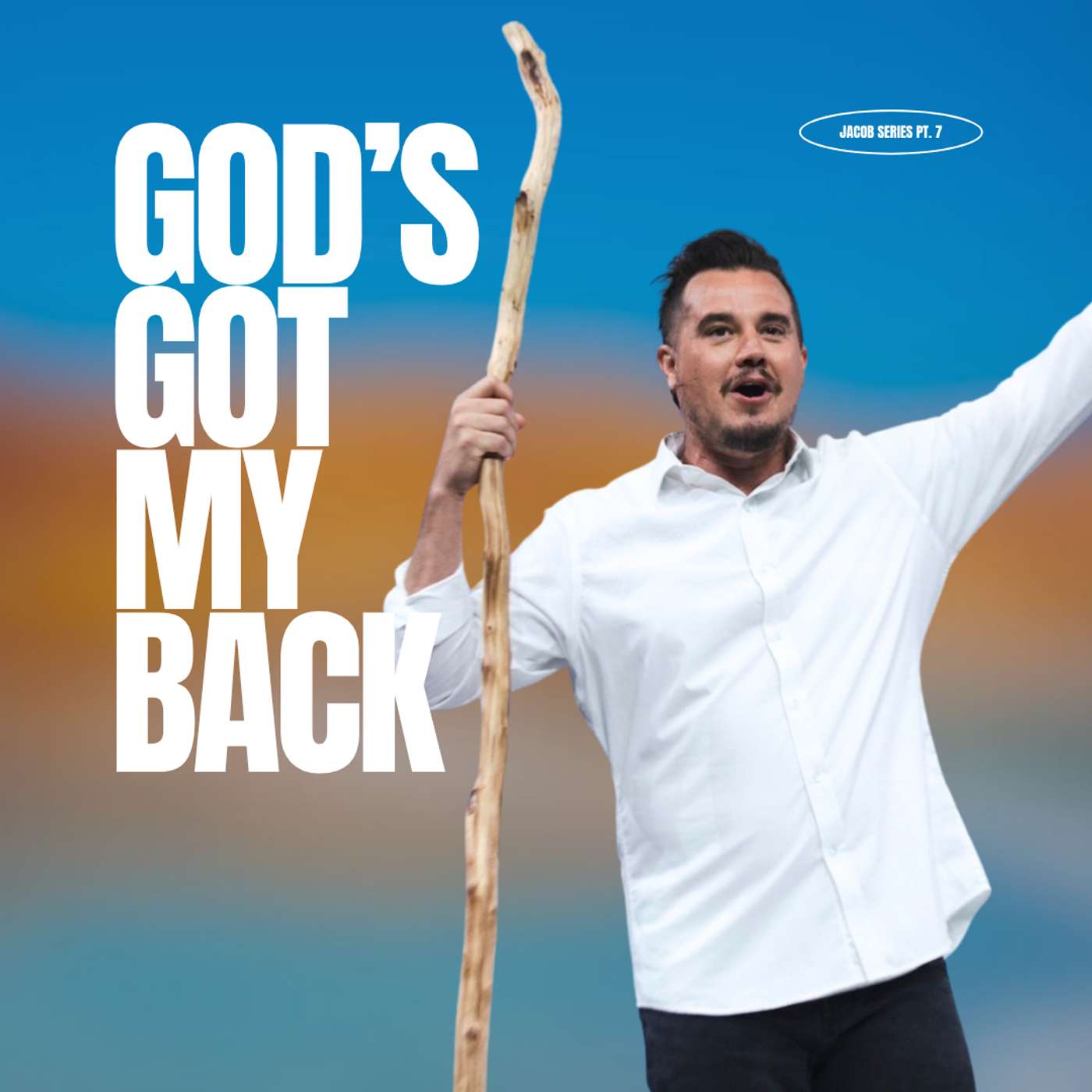
Loading summary
Transcript27 lines
- [00:01]
A
All right, if you got a Bible, go to Genesis 45.
- [00:07]
B
Whoo.
- [00:08]
A
We've been in the series of Jacob now for seven weeks, and we've been reflecting on what God did in Jacob's life, what his journey was like, what it means to you and me. And I want to welcome our online campus, our Victory north campus, Victory Manford campus watching right now. Can we give them a big hand, all those that are being a part of our church out there? We got a lot of missionaries watching this morning, too. But Genesis 45, we've been looking at how Jacob's life was marked with pain and disappointment and frustration, how he started off at a young age as a kid who felt like he was overlooked by his father. The Bible tells us that Jacob's father, Isaac, loved Esau, the brother of Jacob, more than he loved Jacob. So that right off the bat, just stirred up these feelings of, I'm not enough. If my dad likes my brother more than me, there's something that he has that I don't have. And so Jacob was constantly trying to get his dad's approval, trying to constantly win his dad's affirmation, trying to grab his brother's blessing. One time, he sold. He convinced his brother to sell his birthright for a bowl of soup. And so Jacob, oftentimes, throughout his early years, was always trying to take something that wasn't his. And we talked about how when he was 90, in his late 90s, he wrestled with God on this road as he's headed back to meet his brother Esau, who he hadn't seen for 22 years. And he was afraid Esau was going to kill him. He was afraid his past was going to catch up with him. He had tricked Esau. Many years prior to this, he had stolen Esau's blessing. He pretended to be Esau, dressed up like Esau, even put hairy, you know, skin on his arms because his brother was really hairy. And his mom had told him, you got to look like your brother if you're going to get your dad's blessing. And so Jacob finally on his way to meet his brother to see what his future is going to hold. He's thinking he's going to die by the hand of his brother Esau. God gets a hold of Jacob. The Bible says that God wrestles with Jacob, and Jacob didn't know it was God, but Jacob knew he was wrestling with something that was supernatural, and he knew it had something to do with heaven, something to do with his future. And in this wrestling match, God touches Jacob's hip. And he ends up basically getting to this place where he has a limp. And for the rest of his life he has to lean on his staff. He has to constantly lean on his staff. And it was a sign, not that God was against Jacob, not that God was trying to hurt Jacob, but that God was trying to lead Jacob from being a self reliant, successful schemer, deceiver man who would trick his way into a blessing to to being a man who leaned on the grace of God, the mercy of God. Some of y' all forgot how to lean on the grace of God. How many all need some grace in your life. How many y' all can't do it on your own. Some of y', all, you came in this morning, you were already limping on the way in the church from some stuff you've walked through. You're in good company. If you got a limp, you're in good company because Jacob had a limp. And the limp was not a sign of weakness. The limp was a sign of dependence on God. Jacob had finally learned to stop trying to fight for his own way by himself and his own strength and lean on the mercy of God, the grace of God. In that place, God changed Jacob's name to Israel. And when Jacob's name changed to Israel, you would think for the rest of the Bible that he would be referred to as Israel. But he's not. He's oftentimes interchanged with the name Jacob still and Israel. Some scriptures, he's called Jacob. In other scriptures, he's called Israel. Even after his name is changed, the Bible oftentimes still calls him by his old name. And so we were studying this whole series. Why was Jacob oftentimes called Jacob and Israel? And it's because God reminds you and me that even after we are saved, there is still a fleshly side that's still connected to us. Paul said it in Romans, chapter seven. Even though I've been saved, I'm justified. I'm set free from sin. I've been redeemed by the curse. There is still a fleshly side of me that craves to do what is not right against God, that wants to hold on to worry, that wants to hold on to pride, that wants to fight against humility, fight against surrender. And so even though Jacob is redeemed and he's now the prince of God, Israel meant, you know, one who struggled with God and overcame, now a prince, a chosen one. Somebody say, I'm chosen. Jacob was chosen, but he was still, in some cases, he was still broken he was still dealing with fleshly things. Things like not wanting to trust that God still had something great for him. Especially in this moment in Genesis 45, we're going to pick up in Jacob's life, he had lost his son Joseph. In his mind, Joseph has been dead for 22 years. When Joseph was dead in Jacob's mind, Jacob told his sons, I'm going to grieve till the day I die. I'm going to physically be here, but I'm going to be mentally and emotionally checked out. You'll see me at the dinner table, but I'm going to be a shell of who I used to be. I mean, you're not. I won't even be half the man I used to be. I'm going to be so emotionally broken for the rest of my life. Because Joseph meant everything to Jacob. Jacob was still dealing with the idolatry of children. You know, we can have idols. There's idols that are very carnal and secular, and then there's idols that are even conservative. Like, family is a good thing. God created family, but God never created family to sit on the throne of your heart. God never created like. God loves marriage. Marriage is a symbol of what our relationship with Jesus is going to be. The wedding, the marriage, supper of the lamb. But marriage was never meant to sit on the. Like your spouse was never meant to be your God, and neither were your children. And Jacob was still dealing. You don't know what an idol is until it's taken from you and how you respond. Can you still have joy even if your child is gone? Can you still trust in Jesus? Can you still have hope even after you've lost your spouse? By this point in Genesis 45, Jacob has lost Rachel. That was the wife he loved the most. He's lost Leah, and he's lost Joseph. And in his mind, he's heartbroken. He's leaning on his staff, but he's dealing with so much pain and disappointment. And he's got this weight on the inside. You know, we were driving down the highway this last week as we were getting ready to go on missions, and. And I kept seeing these signs. Weigh stations, weigh stations. They have these weigh stations off the side of the road for semi trucks to be weighed to determine if they have the right amount of weight. Because too much weight is dangerous. God never designed us to carry too much weight. Jesus says, cast your cares on me. If you're heavy burdened, if you've got a lot of cares, if you've got a lot of worry, if you got a lot of stress. Jesus says, come to me if you're tired and weary. This. This is a message to unburden yourself from some of the weight you've been carrying. Some of you are carrying too much weight. And I'm not talking about the weight you picked up on spring break, because I did too. We need to lose some of that weight, too. But I'm talking about some of the heavy weight Jacob was carrying heaviness. He was carrying heaviness. And my question for some of you that walked into church today, what are you carrying that God didn't ask you to carry? What are you carrying? What are you holding onto? It's not just too much weight that's dangerous. It's even too little weight that's dangerous. There is a weight that God wants us to walk in. It's a spiritual weight. It's not a heavy weight. It's not a heavy burden. His yoke is easy. His burden is light. But it is a weight. It's a weight of what you care for in your family, for your future, for your future children, for your spouse, for the ministry, even the weight of this church. At times, I try to carry more weight than I'm supposed to. And friends in my life, like Daniel or Jeff Guder, they'll come up to me. They'll be like, Paul, that's not your weight to carry. That's God's weight to carry. Tell the person next to you, that's not your weight to carry. That's God's weight to carry. But Jacob didn't just have a heavy weight of losing Joseph. He was also waiting on some promises from God to be fulfilled. And so he was holding his staff. He was carrying his staff. Jacob had learned to. To develop a staff of his own in the Old Testament. The staff was like a journal. And what they would do, the patriarchs of our faith, Abraham and Isaac and Jacob and later on Joseph and Jude, all these different leaders in the Bible, all these different mighty men and fathers of nations, they would journal what God did in their life, and they would start at the bottom and they would kind of get a knife, and they would carve like a ring around the bottom of the staff, and then they would carve another ring and another ring, another ring, depending on how many encounters they had with God. And you could just imagine in Jacob's life, we've been in his. In his life now for seven weeks. I mean, Jacob's staff was somewhere up to here. I mean, he had the carving of when he wrestled with God. He had the carving of when God showed up in his life, even after he was tricked by Laban, his father in law. He had the carving of when God gave him a dream of a ladder, a stairway to heaven, and angels ascending and descending to heaven. Jacob had all of these dreams, all of these moments where God had ministered to him. At this point, he's been reconciled with his brother Esau. So he has the reconciliation with his brother, but there was still room to go. And wherever he had stopped writing down, I think he stopped writing down some of the things God did for him the day that he found out Joseph died. To his mind. And this, this to me represents the space that was left for God to still do something in Jacob's life. But it was the space that Jacob had not believed there was anything left to fill in there. It was like he wanted it, but he didn't think it could happen. He was still heartbroken. And this is where we pick up Genesis 45, verse 24. Are you guys there? So it says in verse 24. So Joseph, by the way, spoiler alert, Joseph didn't die. How many? All were here last week for the longest sermon title that I've ever preached. Just your basic riches to rags, to slavery, to seduction, to prison, to the palace to riches story. And so Joseph, who Jacob thought was dead for 22 years, turned out to be alive. And not just alive, but promoted to a position of prime minister in Egypt. And he was now in a position to bless his betrayers, to bless the people who hurt him, to bless the people that broke his heart, to bless the very people that tried to destroy him. It was his brothers. And he told them, he said, listen, I want you to go and tell dad that I'm still alive. I want you to go and tell dad. And by the way, he says, don't quarrel about all these things along the way. That's a good reminder for some families today. Don't quarrel on the way home. Don't quarrel in the minivan after church. Don't quarrel with your brothers and sisters and your mom. Like Joseph was like, I know my family, my family, always getting in fights. How many all can relate to this scripture. Sometimes you're like, yes, Joseph, tell the kids, tell the siblings, get along with each other. Just get. Just turn to the person next to you and say, can we get along with each other? Come on. So Joseph tells him, he says, listen, don't quarrel along the way. And in verse 25, as they left Egypt and returned to their father Jacob, in the Land of Canaan. So Jacob's sitting there. It's a famine. He's expecting food to come back. That's all he's expecting. He's expecting. He's at the end of his life. He's 130 years old. That's a long time to live. 130 years old. He's sitting there, looking off in the distance, waiting for his sons to come back home with food. And they come back and they tell their father Joseph is still alive. The son you thought was dead. The moment where you stopped believing that God had anything great left for the end of your life. Come on. It's about to get good. It's about to get good. Come on. They were telling. They were telling their dad, Dad, I know you thought it was all over. I know you thought hope was lost. I want to title this message, God's got my back. God's got my back. God's got. Tell that person next to you, God's got your back. So they say, Joseph is still alive. And he's the governor of all the land of Egypt. Jacob was stunned. One translation says his heart stopped beating. He was so shocked in this moment, he couldn't believe it. He was still dealing with doubt. He was so overwhelmed. He said, no, you've tricked me. In the past. These were the same sons that showed him a coat dipped in goat's blood, trying to convince their dad Joseph was dead. In his mind, he's like, I'm not trusting my family. My family lies. It had run in his family, by the way. His sons weren't the first ones to lie in the family. Jacob had lied before, and before Jacob, Isaac had lied. You forgot about Isaac lying about his wife Rebecca. Because Isaac was afraid that people were going to take his wife because she was so beautiful. So he lied and said, that's my sister. But Isaac wasn't the first one to lie in the family. Abraham lied. Lying had run. Abraham did the same thing when Sarah and him were in a certain town. And he wasn't sure if the people were gonna try to take his wife. Cause she was beautiful. So he lied about Sarah. So he. In this moment, Jacob's like, lying runs in my face. They're lying to me again. The manipulation, the deception, the hurt. He couldn't believe his sons in this moment. And I wouldn't blame him. I wouldn't blame him there, but this is the part I really love here. But when they repeated to Jacob everything Joseph had told them, they start telling them about Joseph. They say, listen, listen, dad, this is what Joseph told us. I love this part right here. And when he saw the wagons, when he saw the wagons, the wagons were evidence. There was something about the wagons. The wagons represented that Joseph was not only alive, but Joseph had a purpose. Joseph had a plan. Joseph had provision waiting for them. When Joseph, when. When Jacob saw the wagons that Joseph had sent to carry him, somebody say God's going to carry me? When Jacob saw the wagons that Joseph had sent to carry him, his. His spirit was revived. Today I want to talk to you about how to get your hope back. Not, not just that God has your back, but that God wants to get you your hope back. God wants to revive your spirit again. Some of you have been heartbroken by the news of a loved one, by the news of a situation, by the loss of a job, by stuff you see on the news, by stuff you see on social media. Some of you have been dealing with just heavy stuff. But I love in this moment, when he saw the wagons, when he saw the wagon, there was something about those wagons that Jacob goes, oh, now I trust my boys. The wagon. Because in this moment, Jacob's thinking, even if my son is alive and he's working in Egypt, how am I ever going to see him? I can't even walk that far. I'm 130 years old. I've been leaning on a staff for the last few years. How am I supposed to even get to my son Joseph, when I can't even walk? Because God's going to carry you. When you can't walk, God's going to carry you. Jacob had a revelation that there is a future hope that awaits me. My eyes are set on whatever God has in store for me. And when I can't get there by myself, the same God who helped me with my limp in my past is going to help me get to my son in my future. Come on. He's going to carry me. I need your help this morning. I'm tired this morning. But he's going to carry me. Somebody say he's going to carry me. The wagons represented the grace of God. Joseph didn't have to send the wagons, but he did because he knew my dad can't get to me without those wagons. Those wagons were going to carry the weight. Those wagons were meant to unburden Jacob of all the weight he had been carrying. By the way, in the next chapter, you're going to find out Jacob's not just traveling by himself. He's traveling with 100 plus people. He's got his kids, his Grandkids, his servants, his camels, his donkeys. I mean, Jacob is bringing everything with him down to Egypt. This is a big trip. This is a big situation. Jacob was like the owner of a company, right? And he. I mean, his company was huge. His family was huge. He had a lot of people to transition in this moment. He wasn't sure how it was going to happen. But God had a plan. God always has a plan. God always has your back. When God chooses you, he has your back. And I love what happens next. It says, it must be true. My son Joseph is alive. I must go and see him before I die. So Jacob's thinking, I got one more ring left in here. I got at least a couple more. I got a couple more journal entries of what God's going to do in my future. I believe that God is not finished with me yet. My best days are not behind me. When I was sitting with my grand gran right before she passed, I was in her house right before she moved to Texarkana. Little did she know, she had three weeks left to live. And she had worked in Tulsa for over 30 plus years. Actually, she had worked in Tulsa all the days that I've been alive. She moved here when I was born. And so her son Jack, my uncle, came to me and said, you know, mom needs to move home to Texarkana to spend her final days with me down there so I can take care of her. And she's got to say goodbye to victory into Tulsa, where she had worked here all these years. So I was sitting with Gran Gran in her house as she's saying goodbye to us. And she knew her time was running out. She knew she was getting to the end, but she could still see. And she still had these beautiful blue eyes full of hope. I want to go out at the end of my life with a little bit of hope still left in my eyeballs. I don't want to be just dead on the inside. I like looking at many of y' all in the room that have walked through many years of hurts and pains and disappointments. And you still got joy, you still got hope, you still got a glimmer of expectancy. My best days are not behind me. Friends, if heaven is your future, your best days are right in front of you. No matter what. No matter what. We go from glory to glory, not from glory to defeat. So Jacob still had this hope. It must be true. His spirit was revived. He got his joy back. He got his life back. He got his hope back. And then in Genesis 46, verse 1. So Jacob set out for Egypt with all of his possessions. And when he came to Beersheba, there was something about Beersheba that stood out. This was the place that he had met God before. This was the place that his father Isaac had made a sacrifice to God. This was the place that even Abraham had made a sacrifice to God. This was a massive generational spot. This was a spot where Jacob remembered, this is where I encountered God. And so he stopped there. He wasn't in a rush to get to his son. He could have said, let's keep going. Let's keep going. Let's keep going. But Jacob understood the power of worship.
- [19:13]
B
Worship.
- [19:14]
A
He understood that with all the weight that I've been carrying and the wagon that's been holding me and all the good things God has done in the midst of all my pain, I'm going to worship God. I'm not going to be in a rush to get out of church, to be the first one at the restaurant to try to get home and watch March Madness. I want to make this moment to worship my Creator, to worship the one who brought me this far, who. Who's gonna keep bringing me where I need to go, the one who's had my back for all these years. And so Jacob stopped. Can we just take a moment and just worship God? Take a Praise break for 10 seconds. Go ahead and give him praise if he's been faithful, if he's been good, if his mercy endures in your life. Come on, take a moment to praise. Lord, we thank you for your goodness. We thank you for your faithfulness. God, I thank you that you've been with me. God, I thank you that you're with my kids. God, I thank you that you're faithful from generation to generation. So Jacob worshiped there. He sacrificed there to the God of his father, Isaac. He worshiped. Look at this. In verse one, he worships in verse one. Grand Gran told me this right before she passed. He said, paul, I'm not saying that God is a transactional God, but I am saying that God responds to your faith, that when you do something, when you give God something to work with, he responds to that. When you don't do anything, he may or may not do something by his mercy and grace. But she said, when you move by faith. This was a faith move for Jacob. He was tired. He was ready to see his son, but he decided by faith he was going to worship in this place. And I'll tell you why. Jacob was excited, but he was anxious because he was Excited to see his son to be reunited with Joseph. But he was anxious that he was leaving the place that his dad and his granddad and his God had told him. This is the land I've called you to live in. Canaan represented the promised land, the place that Jacob was thinking, my family's supposed to be here. This is my family reunion spot. Homecoming is supposed to happen in my home, not in Egypt. Egypt is a foreign place. So in Jacob's mind, he's excited, but he's. He's anxious. He's. He's ex anxious. You know what I'm saying? He's. Have you ever been excited and anxious? I get that times I get that way when I preach to y', all, I'm excited and I'm anxious. There's a mixture of it because I don't know. And I'm praying and I'm believing. And so Jacob's praying and believing. He's excited to see Joseph, but he's thinking, are we ever gonna come back to the place that God called us to live in? And so he worships in verse one and in verse two, God responds. He worships in verse one, and in verse two, God responds. He worships. When you worship, God speaks. When you offer an offering to God, God responds to your offering.
- [22:19]
B
When you.
- [22:19]
A
When you bring a sacrifice to God responds to your faith. So when Jacob made an offering to God, God responded in a dream that night, Jacob, Jacob. Now, hold up. His name is Israel, but God's still calling him Jacob. God has changed his name twice. In this series, we talk. We talked about two different times. God called him Israel, but God still calls him Jacob. Because God knows there's still a Jacob inside of Israel. There's still a you inside it. You take you with you everywhere you go. Even when you go on vacation, you still, like, if you're. If you're you here, you're gonna be you in Hawaii, you're gonna be you in Costa Rica. You're gonna be you in the next job. There's a part of you that goes with you everywhere you go. But here's the good news. There's a God that goes with that part of you too. God sees the good, bad, and ugly. Jacob is 130, and he's still dealing with anxiety. He's still dealing with a little bit of uncertainty. And so God says, Jacob, Jacob. Jacob says, here I am. And then God says to him in verse three, I am God, the God of your father. The voice said, do not be afraid to go down to Egypt. Why did God say, do not be? Because Jacob was afraid. Jacob was afraid. For there I will make your family into a great nation. It's going to get good, Jacob, I will go with you down to Egypt. I got your back, Jacob, I got your back. I'm going with you. You're not alone. You're not by yourself. I know you're leaving the place that your dad was buried in. I know you're leaving the place your grandpa was buried in. I know you're leaving the place that Leah was buried. You're leaving the place that Rachel was. You're leaving a place that is so convenient. But I want you to know I got your back. God has your back. In this next season, God's got my back. He says, I'm going with you down to Egypt. I'm going with you into a hard place. I'm gonna bring. And I love this. I'm gonna bring you back. Not only do I have your back, I'm gonna bring you back. Not only does God have my back, but he's gonna bring me back to the place that he's called me to be. And he says, you will die in Egypt, but Joseph will be with you to close your eyes. You might die in Egypt, but you won't be buried in Egypt. Your family's coming back to the place that I promised. So God was saying, I'm going with you. I'm going to be there for you. You. You're going to walk through a lot of pain, but I promise you to bring your family back to the place. So look in the next verse, verse 5. So Jacob left Beersheba. And he left with a blessing. And they carried him. They carried him. Jacob was carried to his next place. Jacob had to learn to trust in God. God still uses people like Jacob. Flawed people, flawed leaders, flawed families. God still uses people like me. And you. And I want to go to the end of Genesis 46. Let's go to verse 29. Verse 29. Jacob had journeyed all the way down to Egypt. And as they neared the destination, Joseph prepared his chariot and he traveled to meet his father, Jacob. When Joseph arrived, he embraced his father and wept. Man, can you imagine the reconciliation? A son you thought was dead, and then you're holding him for 22 years. You thought this man was dead. And they held each other for a long time. Everybody say, a long time. When I got to the Dominican Republic this last week on our missions trip, I saw a pastor I hadn't seen in a long time. And when he came up to me. He drove five hours to get to us because I had ministered there over 20 years ago. When I was a senior in high school, that was the first time I went to Dominican Republic. I was 18. And this pastor was the pastor that worked with my dad, and he worked with me. And when my dad passed away, we did a few more crusades there in 2010 and 2011 and 12. And I hadn't seen him in many years. So when I saw him, he just gives me this big hug and he just wouldn't let go. It was just a long hug. Have you ever been in a long hug with a man, man? You know what I'm saying? Like a bro. You're like, all right, we should let go. But it was one of those moments where it was like, it's so good to see you. I thought I'd never see you again. I thought I'd never see you again. I thought the last time I saw you would be the last time I saw you. And so they hug each other for a long time. And Joseph said to his brothers, I'm going to get you a job. I'm going to get you a place to stay here. I'm going to take care of you for the rest of your life. And dad, I'm going to take care of you too. Go to Genesis 47. I want to get to the end of this passage here because it's so good. Go to verse five. Pharaoh says to Joseph, now that your father and brothers have joined you here, choose any place in the entire nation for them to live. Give them the best. Give your betrayers the best. Give your brothers the best. Jesus said, when someone hurts you, when someone spits in your face, when someone slaps you, turn the other cheek. When someone asks you to go a mile, go an extra mile. The picture of Joseph is a picture of Jesus showing mercy to the people who least deserve it. It's a picture not just of forgiveness, but extravagant blessing. So he says, I'm going to take care of you, settle in the best place. And so he takes care of him. And I love this. In verse, verse 7, Joseph brings his dad to Pharaoh. And Jacob blessed Pharaoh. Israel blessed Egypt. This is interesting because Egypt is about to become a superpower that will turn Israel into slaves. And Moses will be raised up out of a generation that was murdered by the hands of Pharaoh. But Jacob blessed Pharaoh. Jacob blessed Pharaoh. And he says, how old are you? Jacob says, I've traveled this earth for 130 hard years. Everybody say hard years. He says, My life has been short compared to the lives of my ancestors. Then in verse 10, he blesses Pharaoh again. He blesses Pharaoh again. And then for the rest of his life, for the next 17 years, Jacob lives blessed and in the land of Egypt. God knows how to bless you in a hard place. God knows how to bless you in a difficult place. God knows how to take care of you even in a famine, even in a. In a season where things seem difficult. Paul said In Romans, chapter 8, verse 38, I am convinced that neither death nor life, angels nor rulers, things present, nor things to come, nor powers, nor height, nor depth, nor anything else in all of creation will be able to separate us from the love of God in Christ Jesus our Lord. Everywhere you go, God goes with you. And when God goes with you, he provides for you. He protects you, he directs you. Jacob had learned to lean and trust in God. And so then we get to Genesis. By the way, by the end of Genesis 47, Joseph had managed his leadership so well that the entire world had come to Egypt, and they had all come to Joseph. Joseph had stored up enough food to take care of not just Egypt, but the whole world. And he grew extremely prosperous. So did Jacob. So did the other brothers, the whole family, they were blessed in a famine. God knows how to take care of the church in the middle of a famine. Don't ever doubt God's ability to take care of you. So Jacob and the family lived there. And by the way, Joseph's years of blessing and increase, increase in joy and laughter were triple. The amount of the years of pain and difficulty, the. The short time of difficult trials that Joseph walked through didn't even compare to the years of joy and celebration. Your latter years are going to be greater than your former years. God wants you to end in a good way. God wants you to have a legacy of faith. God wants. God wants you to have a legacy of joy, a legacy of peace. So Joseph comes to his dad. Look at this. In verse 29, as the time of Jacob's death drew near, Jacob called for his son, Joseph. Joseph Kello, come up here. Just for a second. Pastor Joseph, this is an interesting part. He says, please do me this favor. Put your hand under my thigh. Don't do this. Joseph. Sitting. That's a weird illustration. But. But stay up here with me. We're not going to do this illustration. He says, put your hand under my thigh. Why did he say that? Jacob was an old man. At this moment, he's 147 years old. He was saying, son, I'VE been through so much pain, more pain than you can imagine. I've walked through so much disappointment. But I have been so grateful that my last two decades of my life, my last 17 years, I've gotten to spend with you and your kids and our family and your brothers, my sons. And he says, I just want you to know how grateful I am now. Will you treat me with unfailing love by honoring this last request? Don't bury me here. Don't bury me here. Don't bury me in the land that we were never called to live in. Don't bury me in a place that we were never called to inherit. Bury me in the promise. Bury me in the place that God promised he would give to us. Bury me in a place that one day God will bring you back to. Jacob was saying, God has something great in store. But I need you, by a prophetic word, I want my bones to be a prophecy. I want my death to be a prophetic statement that you are not staying in slavery, you are not staying in captivity. You will not spend future generations bowing down to Pharaoh. God will bring you back, because God's got your back. So promise me, Joseph, that you got my back, because God's got our back. And so when I die, verse 30, take my body out of Egypt, put my bones with my ancestors. Bury me next to Leah, next to Isaac, next to Abraham. So Joseph promised, I will do as you ask. And then in Genesis 48, Joseph, Joseph comes to his dad, and he understands that at this point, his dad is dying. And Joseph went to visit his father, and he takes with him two sons, Manasseh, Ephraim. Thank you, Joseph. When he brings Manasseh and Ephraim, everybody say, manasseh and Ephraim. I want the band to come out because there's a song I want you to hear that I came across. And it has to do with these two names. Manasseh was the name that Joseph named his first child that was born in Egypt. When Joseph finally got through all the pain and all of the suffering, all the difficulty, and he had been promoted as leader, and the dreams that he had were fulfilled, I want to backtrack to Genesis 41, verse 51. This is the place where Joseph named his two kids that he's about to ask his dad, Jacob, to bless. In Genesis 41, verse 51, if they have that, they can throw it up there. If not, I'll share it with you. It said Joseph named his older son Manasseh. For he said, God has made me forget all of my troubles and everyone in my father's family. Now, this is a good thing. But it's not necessarily true, because Joseph still remembers his family. Joseph still remembers his brothers. This is Genesis 41. Last week, we talked about how in Genesis 43 and 44, 45, Joseph encounters these same brothers. Joseph encounters the same people. He said, God made me forget. Sometimes you think you forgot about someone until you see them and then your heart starts going, oh, I remember everything they did to me. But Joseph wasn't talking about forgetfulness. The way that we think about it. He wasn't talking about amnesia. He wasn't talking about this. You know, I have no clue who these people are. He was talking about the healing power of God. Manasseh was not about amnesia or dementia or this forget like this, like, I don't even know who you are. Manasseh meant, God has healed me of the hurts and the wounds so that when I look at my family, I don't think about the bad things they did to me. I know their names, I know they're my kin, but I no longer relate to them based on the hurts and the wounds and the betrayal and the disposal distrust. Everybody say healing over amnesia. The forgetting that Joseph was referring to in Manasseh was not saying that I've lost the memory of the events. But I've learned to receive God's healing in the place of pain and bitterness so that there is no more poison attached to their names. There's no more hurts attached to the old ministries. There's no more rehearsing of the wounds and the deep emotional suffering that now when I look at my family, I look at them with eyes of grace and compassion and love. Manasseh was his first son. His second son was Ephraim. Everybody say Ephraim in verse 52, he named his second son Ephraim. For he said, God has made me fruitful in the land of my grief. Now, these two names are important not just for Joseph. These two names are important for Jacob. Go with me to Genesis 48. As Jacob is about to die, Joseph visits his dad. And when he gets to Jacob in verse 2, Jacob gathers his strength and he sits up in his bed. And Jacob says to Joseph, God El Shaddai Almighty appeared to me at Luz in the land of Canaan, and and he blessed me. And he said to me, I will make you fruitful, and I will multiply your descendants. I will make you a multitude of nations, and I will give this land of Canaan to your descendants after you as an everlasting possession. Now I am claiming. Look at this. This is crazy. I am claiming as my own sons. These two boys of yours, Jacob was saying, they're not just your boys, Joseph. Those are my boys. What was Jacob saying here? He was saying the same word that God gave you about Manasseh and Ephraim. God gave me, and I take that word. You know, you can receive the word that God gave someone else in the Bible and say, I received that from my family. How many have walked through pain in this room? Anyone walked through hurt, Betrayal, trials, difficulty. Yeah, disappointment. You will either go out one day from this earth still rehearsing the pain and disappointment of past wounds, of your family and friends and people that let you down, or you will go out saying, manasseh and Ephraim. God has given me healing of all my disappointments, all my hurts, all my wounds, all my pain. And God has made me fruitful, even in a famine, even in a place of my grief. I want you to just hear this song for a moment. And Virginia, wherever you are, team, wherever you are. I was listening to this song. I just typed in Manasseh, and all of these song links came up. And there was this girl who had walked through a lot of pain growing up in her father's church. And as she got older, she didn't know what to do with that pain. There was a lot of disappointment, betrayal, scandal, all kinds of things that had just caused her deep anguish. And one night, she was sitting with the Lord and she was reading this name about Manasseh and about Ephraim. By the way, you can't have an Ephraim until you have a Manasseh. You can't be fruitful in the future until you let go of the past. You can't be fruitful in a famine until you let go of all the hurts and wounds you've been holding on to. Manasseh is the first step towards Ephraim. Manasseh is that like, I can't heal others until I've been healed. I can't bless my sons until I've received the blessing of God. I can't get forward into the land of hope until I let go of the land of disappointment. God is trying to bless some of you in this future season, but you're still holding on to the past wounds. You're in an Ephraim season, but you skipped Manasseh, so you can't even enjoy Ephraim. God's making you fruitful right now, but it's not enough because you're still angry about the past past. God says, go back and have a Manasseh moment. You need to manasseh that. You need to manasseh Every situation that you keep rehearsing about the people that hurt you, the things that didn't work out, the things you're still talking about, you need to carve that in your in your staff and say, even though I walk, even though you intended to harm me, God intended it for good. God Manassa'd every situation that was supposed to destroy me. Somebody say manasseh that so this girl wrote this song. And the song is this is my Manasseh. Go ahead and just sing it out, Virginia.
- [39:37]
B
You redeem the innocence once stolen you return the years I thought were taken you rebuilding every broken home inside my heart and you made it all better this is my Manasseh you caused me to forget your goodness washes over all the pain of my past this is my Manasseh you caused me to forgive in all my broken places you're rew been written thank you for
- [40:40]
A
Somebody say thank you for Manasseh.
- [40:42]
B
Thank you. Thank you for.
- [40:47]
A
So in Genesis 48, we're going to keep singing this, but in Genesis 48, Jacob blesses Manasseh and Ephraim, he says, the same God that delivered you, Joseph delivered me. I lost my wife Rachel. He begins rehearsing to Joseph, some of the things he walked through. Jacob was half blind because of his age. He could hardly see. But Joseph brought the boys close to him. And Jacob embraced Manasseh and Ephraim, he said, these are my boys too, Joseph. These are my boys too. He says in verse 11, I never thought I would see your face again. I never thought I would hope again. I never thought I would laugh again. I never thought we'd have a family reunion. I never thought you'd be sitting at the table with me. But because of God, grace, because of God's mercy, now God has allowed me to see your children, too. So Joseph moved the boys who were at their grandfather's knees, and he bowed his face to the ground. And he says, dad, I want you to bless them. I want you to bless the next generation. I want you to before you die. I don't want you to die holding on to that blessing. I want you to release everything that you've been carrying, everything you've been holding on to. Let me say something to the patriarchs in this house. You have a blessing. You have a blessing inside you. Some of you that have been a part of victory for 40 years. You have a blessing inside you. Bless the next generation. Bless the next generation. So Jacob placed his hands on Manasseh and Ephraim. Manasseh was the oldest. Ephraim was the youngest. Joseph said, I want you to bless the oldest as the one who's going to get all the future blessing. And then the youngest can have the. The second best part. Jacob says, no, Joseph. He crosses his arms. Joseph says, dad, you don't know what you're doing. Jacob says, yes, I do, Joseph. And he puts the right hand of blessing on the younger son, Ephraim, and the left hand on Manasseh. This is a whole sermon here, but we're gonna finish the series today. I'll come back to this. This is so good. He says, the older one will serve the younger. Joseph says, dad, dad, this one needs to be blessed too. He says, he will be. They both will be blessed. They both have a purpose. And then Jacob blesses them and he speaks a fruitfulness over them. And he says, you're going to possess the land that God swore to me and to your grandfather Isaac and your great grandfather Abraham, and you're going to carry this blessing. Then in Genesis 49, he blesses the other sons and he calls out some of the sons that had lived in sin. He says, the blessing that you were supposed to have, Reuben went to Manasseh and Ephraim, the blessing you were supposed to have, Simeon went this way. But there's still a blessing for you. All these sons represented the 12 tribes of Israel. And at the end of Genesis 49, the Bible says he breathed his last. After he had blessed the kids and the grandkids, he breathed his last. And Joseph threw himself on top of his dad, weeping over his father. This shows the just the relationship of love and commitment between a father and a son. And then Joseph goes to Pharaoh, he says, pharaoh, I've got to bury my dad in the place that he. He begged me to bury him. I gotta bury him in the promised land. Pharaoh says, go. And they send all kinds of like Egyptian leaders to carry Jacob's body. It's. It's one of the largest memorial services you read about in the Bible. And it lasts for seven days. They carry Jacob, they carry his bones, they carry his body, and they lay him in a tomb next to Leah. Isn't it crazy that Leah, the unloved wife, was the one that was buried next to the. God has a way of redirecting the rejection of man. He's going to make sure you end with the season of hope. And prosperity. Through Leah came Judah, who came Jesus. But when Jacob was buried in that land, it was a prophetic word for Joseph that even if the future looks hard, even if Israel goes through seasons of pain and deep difficulty and deep regret and deep feelings of shame and slavery, God has not forgotten you. God has your back. And God will bring you back. I want you to stand your feet all over this place. After Joseph buried his dad, the brothers were afraid. And they said, joseph's gonna kill us. He's going to kill us. And Joseph said, no, you forgot. I'm not going to kill you. I manassehed everything that the enemy would have stirred up as revenge. God already gave me the forgiveness, the healing. I don't need revenge. God already paid the price. I already have a manasseh over that situation. And so the Bible says that Joseph looked at his brothers. In Genesis 50, verse 20, he says, why would I kill you? You intended to harm me, but God intended it all for good. Why would I get revenge? Brothers, I'm not going to hurt you or betray me, even though you hurt me. God used it for good. God has a way of turning all things, every say all things. He says, God set me up, you set me back, but God set me up. You tried to sell me, but God sent me. You tried to betray me, but God used it for my good, so that I could save more people. People. In verse 21, he says, Brothers, you don't have to worry. You don't have to be afraid. You don't have to be anxious. God has written a manasseh over all of your sins. The Bible says that when we repent of our sin, he cast our sin as far as the east is from the west. He remembers it no more. Isaiah says, forget the former things. Behold, new things are coming. There's a. There's an Ephraim in your future. There's a. There's a fruitful season. There's a prosperous day in your future. And so Joseph blesses his brothers. I want you to just close your eyes across this place. In the New Testament, Paul writes Romans 8:28. For we know that in all things, God works for the good. God works everything together for good, for those who love him who are called according to his purpose. This is the scripture I hold on to. This is my Manasseh scripture. I want Virginia to sing that, that chorus again. And as. As they sing it, if you need to lay some things at the altar, if you need God to just write a better future over this next season. If there's Some things you've been walking through, you need to lay down some heavy burdens, some weights. I want you to just leave your seat. Come and find a place at this altar today. God. God wants you to leave lighter than you came in. God wants you to leave with greater hope. God wants to remind you he's got your back. God wants to remind you this season is not your final chapter. It's about to get good. It's about to get better than good. It's about to be the best season yet. So we're just going to worship. We're going to open up the altar. If you need to surrender, if you need to lay something down, if you need hope today, if you need a refill of hope, if you need a refill of hope today, if you need a refill of faith today, God says, come down and receive the blessing of the Lord. Come down and receive a blessing over your future. Come down and receive a Manasseh over every situation you've been rehearsing.
- [48:05]
B
Thank you. Thank you for.
- [48:09]
A
Thank you for manasseh. God, thank you for your forgiveness. Thank you for your mercy. God, thank you for your faith. Thank you, God, that you never leave me, you never forsake me. You have my back.
- [48:21]
B
God, thank you, Lord, thank you for
- [48:24]
A
your mercies that are new this morning. Thank you for being my shepherd. God, thank you for never letting me. God,
- [48:40]
B
You ca me to forgive. In all my broken faces you're behind. Thank you for.
- [49:02]
A
I want to invite those that are here today that you just need to get right with God. If you need to surrender, give your heart to Jesus. Come and join us if you need healing today. I want to pray for those that need healing. A physical healing, a miracle in your body, maybe in your finances, in your marriage, your family. If you need a miracle today, just come and join us at the altar. I want to pray for you. There's a few more minutes. There's time. If you need to respond to Jesus today, come and join us. Yes, Lord, I release it all to you, God, God, I let go of all my fears. God, all my hurts, all my pride. Those who sow in tears will reap a harvest of your goal. God, I trust him. I let it all go. Lord, I lean on you. Lord, I trust you. God, I can't do it without you. Apart from you I can do nothing. Oh, God, in you I live and move and have my being. In you I have strength, I have faith. God, I have protection, I have provision. God, I'm calling on this God of shape.
- [50:19]
B
So thank you for. Thank you for the. You ca me to forget. Your goodness washes over all the pain of my. And this is my reassure. You caused me to forgive all my bro. Thank you for.
- [50:57]
A
As we close out this series on Jacob and we head towards Easter and the cross, I was in Hebrews and I was reading about Jesus for the joy set before him. He endured the cross and he went there for our suffering and our shame. And I backed up in the faith chapter. I was in Hebrews 11 and I was just looking at some of the heroes of our faith. And so I was looking at. It was by faith that Abraham offered Isaac as a sacrifice when God was testing him. Abraham received God's promises. And then I was reading by faith. Isaac promised blessings for the future to his sons Jacob and Esau. And then this one hit me in verse 21, Hebrews 11 and verse 21. It was by faith that Jacob, when he was old and he was dying, blessed each of Joseph's sons. It doesn't even mention his own son. He does, he does bless his own sons, but he blessed Manasseh and Ephraim by faith. Jacob, when he was old and he was dying, laid hands on his grandchildren, kids. And then it says this. He bowed in worship as he leaned on his staff. Hebrews 11, verse 20. He bowed in worship. Jacob died. Still depending on God's grace, Jacob died as a worshiper. Jacob died with his own staff. He was no longer relying on the staff of his dad. That has a double meaning. He was no longer relying on the staff of his first leader, or even his grandpa's staff. God wants you to have your own staff. God wants you to have a staff where you've developed your own encounters with God. You're no longer just thinking about your dad's encounters. You have your own memories of how God showed up. As Jacob was dying, he's holding his staff and he's worshiping his God, El Shaddai, the covenant keeping God, the faithful God. And I just imagine Jacob just bowing there. Not for a minute was I forsaken. The Lord is in this place. The Lord is in this place. Come, Holy Spirit. Dry bones, awaken. The Lord is in this place. The Lord is in. Not for a minute, guys.
- [53:37]
B
And not for a minute was I forsaken. The Lord is in this place. The Lord is in this place.
- [53:51]
A
Come, Holy spirit.
- [53:54]
B
Dry bones, awaken. Dry bones, awaken.
- [54:02]
A
The Lord is with me. The Lord is for me. The Lord has not forsaken me. The Lord goes before me.
- [54:08]
B
The Lord goes behind me.
- [54:10]
A
The Lord has delivered me from all of my troubles.
- [54:14]
B
The Lord has surrounded me with songs of deliverance.
- [54:18]
A
The Lord is in this place. Come on, just worship today. Come, Holy Spirit. God have your way. Just pray this with me. Say, Jesus, thank you for saving me, for healing me, for redeeming me. Thank you that you never give up on me. Thank you that you died on the cross for my sins. I repent. I receive your forgiveness. I confess you as my Lord and Savior. Thank you, Jesus, that just as you redeemed Jacob, you redeemed me. And I believe that the best days, the best miracles, the greatest victories are not behind me. They're right in front of me. In Jesus name, amen and amen. Come on, give God praise today.