Podcast
War Studies
Hosted by Department of War Studies · EN
Welcome to the War Studies podcast. We bring you world-leading research from the School of Security Studies at King’s College London, the largest community of scholars in the world dedicated to the study of all aspects of security, defence and international relations. We aim to explore the complex realm of conflict and uncover the challenges at the heart of navigating world affairs and diplomatic relations, because we believe the study of war is fundamental to understanding the world we live in and the world we want to live in.
If you’ve enjoyed this podcast, please rate and review us on your preferred podcast provider – it really helps us reach more listeners.
The School of Security Studies harnesses the depth and breadth of expertise across War Studies and Defence Studies to produce world-leading research and teaching on issues of global security that develops new empirical knowledge, employs innovative theory, and addresses vital policy issues.
Visit our website: https://www.kcl.ac.uk/security-studies
Sign up to our mailing list: https://kcl.us15.list-manage.com/subscribe?u=cc0521a63c9b286223dea9d18&id=730233761d
DISCLAIMER: Any information, statements or opinions contained in these podcasts are those of the individual speakers. They do not represent the opinions of the Department of War Studies or King's College London.
27episodes
Episodes
Newest firstAll episodes
A Journalist on the frontline of the 'War on Terror', Iraq and Afghanistan, 2001-2010
Jul 1501:02:19Tap to summarizeIn the fourth edition of the King’s College London War Studies War Stories podcast miniseries, hosted by King’s alumni Rupert Lane and Nick Denning (BA War Studies, 2002-2005), Ru and Nick speak to Dr. Tiania Stevens (MA War Studies, 2007-2008), who was embedded as an Australian journalist with both US and British forces in Iraq, as well as US forces in Afghanistan through the 2000s, with various news agencies. They dig into the challenges of being a non-combatant on the frontlines, a firsthand witness to combat, from explosive devices to small arms fire, where you are being protected by the teams you live with, retaining as independent a view as you can, against a reporting chain that needs stories for headlines. Tiania is now a lecturer on Journalism at the University of Sydney.
Transcribe →
War Stories, Episode 3: A Humanitarian in a conflict zone, Afghanistan and Ukraine, 2009-2021
Jun 2501:03:56Tap to summarizeIn the third edition of the King’s College London War Studies War Stories podcast miniseries, hosted by King’s alumni Rupert Lane and Nick Denning (War Studies, 2002-2005), Ru and Nick speak to Rory Moylan (War Studies, 2002-2005), who worked as a humanitarian in Afghanistan, in Mazar-i-Sharif, with first ACTED and then the International Committee of the Red Cross through 2009-2013, and Sloviansk in the Ukraine, amongst others. They delve into the complexity of operating across conflict lines as an independent humanitarian during an ongoing conflict, where risk is almost as high as that of a soldier in the same environment, yet protection depends on neutrality being respected by all sides. Rory, who is fluent in Farsi and Dari, focussed on dialogue between state, non-state actors and civilians, as well as detention centres. Further Reading: Kabul Disco, by Nicolas Wild: https://www.goodreads.com/book/show/26155829 Key Locations Described: Mazar-i-Sharif, Afghanistan; Sloviansk, Donbas, Ukraine
Transcribe →
The Helsinki Brief, Episode 3: Finland's Comprehensive Security Model
Jun 1200:49:04Tap to summarizeIn this third episode of The Helsinki Brief: Inside Finnish Intelligence and Security, Dr Paul McGarr (King’s College London) is joined again by Hannamiina Tanninen of the Finnish Security and Intelligence Service (SUPO) to explore Finland’s 'comprehensive security' model — a point of reference in international debates on resilience. They unpack what “comprehensive security” means in practice: an all-of-society approach designed to keep Finland functioning as normally as possible during crises, from major disruptions and natural disasters to heightened security threats. The conversation looks at how the model is embedded across government, the private sector and civil society — and why joint exercises, consultation and coordination are central to making it work. The episode also looks at the foundations that make this approach work in Finland — including high public trust, the welfare state, a broad-based education system and mandatory conscription — as well as the role of the National Emergency Supply Agency. Finally, the discussion considers which elements of the Finnish model might be transferable elsewhere — and which are rooted in Finland’s specific history, size and social cohesion. Hannamiina Tanninen is a doctoral researcher at the National Defence University in Finland, researching on modelling the strategic environment of the Finnish security of supply system with emphasis on defining economic intelligence and economic security in intelligence studies. She is also a visiting researcher at Imperial College London.
Transcribe →Afghanistan: 25 Years After 9/11. On the Brink of Another Crisis?
May 2700:54:48Tap to summarizeIn this episode, Colin Smith, co-ordinator of the UN Security Council’s 1267/1988 Analytical Support and Sanctions Monitoring Team, joins Tim Willasey-Wilsey, King’s Visiting Professor, Graham Aikin, PhD researcher at King’s, and Dr Paul McGarr, Lecturer in Intelligence Studies, to examine Afghanistan nearly 25 years after 9/11 and assess whether it is again becoming a base for international terrorism under Taliban rule. The discussion explores the presence of groups such as al-Qaeda, ISIL-K and regional militants, the Taliban’s internal dynamics, and how the global terrorist threat has become more fragmented and decentralised. It also considers evolving radicalisation pathways, the role of new technologies and the challenges facing Western counterterrorism policy. Further reading: 1. UN Security Council 1267 Sanctions Monitoring Team Reports: https://bit.ly/4fAnGs3 2. UN Security Council 1988 Sanctions Monitoring Team Reports: https://bit.ly/4dzibc5 3. The British and 9/11: So Near and Yet So Far by Tim Willasey-Wilsey: https://bit.ly/3RGzmzH 4. 'Not your fathers Afghanistan': Has the West taken its eye off the al-Qaeda ball? by Graham Aikin: https://bit.ly/49Jgk1O 5. Operation Enduring Sentinel and Other U.S. Government Activities Related to Afghanistan: https://bit.ly/49Azp6v
Transcribe →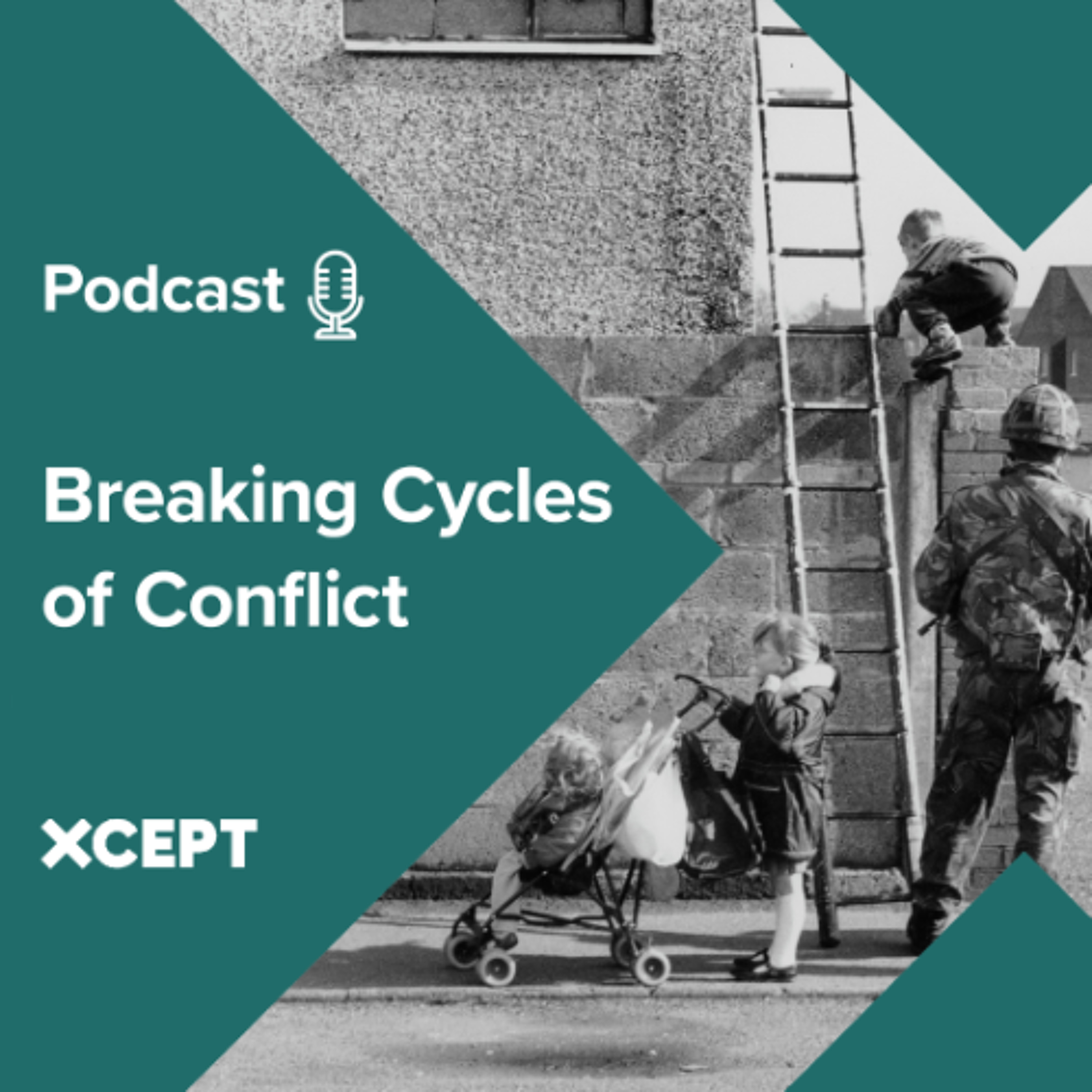
Nostalgia - Shared Histories, Divided Futures
May 801:09:05Tap to summarizeIn this episode, Dr Nafees Hamid speaks with Dr Craig Larkin (Research Lead on Memory and Conflict for the XCEPT research programme), Dr Clara Voyvodic (Lecturer in Peace Studies at the University of Bradford), and Maria El Sammak (XCEPT Research Assistant and King's College London MA student in the War Studies department) about the powerful and often divisive role of nostalgia in global politics. As populist leaders from the United States to Turkey increasingly harness nostalgic sentiment to mobilise political support, this episode explores whether this longing for the past is a harmless comfort or a driver of division. Drawing on research on “The Golden Age" of Lebanon, rebel governance in Colombia, The Troubles in Northern Ireland and beyond, the conversation reveals how collective nostalgia can foster intolerance and nativism. Together, they examine why the future can feel so precarious and whether art can help us imagine a more inclusive path forward. This episode is produced as part of the XCEPT programme, which seeks to understand the drivers of violent and peaceful behaviour in conflict-affected populations and to support practical solutions for peace. Learn more at www.xcept-research.org. Image credit: RORY NUGENT.com / Shutterstock.com. British Army patrol with neighbourhood kids in West Belfast, Northern Ireland (February 25th 1994)
Transcribe →
War Stories, Episode 2: A British Armoured Commander in Afghanistan, 2011
Apr 3001:08:42Tap to summarizeIn the second edition of the King’s College London War Studies War Stories podcast miniseries, hosted by King’s alumni Rupert Lane and Nick Denning (War Studies, 2002-2005), Ru and Nick speak to Jamie Irwin (War Studies, 2000-2003), who served with the Royal Scots Dragoon Guards in Afghanistan on HERRICK 14, with the British Army, having previously served in Iraq on TELIC 12. Ru and Nick take a deep dive into the high intensity counter-insurgency conflict in Helmand, Afghanistan, 2011, through the eyes of an armoured commander (Warthog Group). They delve into the challenges Jamie’s unit faced fighting the Taliban in the Afghan summer covering the experience ofarmoured warfare, through tactics, morale and combat, working in a hostile environment with a civilian population just trying to survive. Further Reading: 1. BBC Documentary: Fighting on the Frontline: War Wagons https://bit.ly/48uJdhG Key Locations Described: · Zumbalay, Adin Za’i, FOB Price (Gereshk), Lashkar Gah, Nad E’Ali
Transcribe →
Drawing Ukraine: A discussion with Ella Baron
Apr 200:38:25Tap to summarizeIn May 2025 Ella Baron, a political cartoonist at The Guardian, travelled to Ukraine to record and reflect on the human impact of war. In collaboration with NGO Médecins Sans Frontieres (MSF), Ella met patients in a rehabilitation centre for war veterans in Cherkasy and a mental health clinic for internally displaced families in Vinnytsia. The Art & Conflict Hub is currently hosting an exhibition of the artwork Ella produced at the Arcade in Bush House until the end of April 2026, exploring the complex marks war leaves on the human body and mind. In this episode of the War Studies Podcast, Ella discusses her work as a political cartoonist and the exhibition "Battles of the Mind" with Dr Henry Redwood, co-convener for the MA in Political and Strategic Communications, and co-lead of the Art and Conflict Hub at the Department for War Studies. Experience "Battles of the Mind" at King’s: https://bit.ly/4m33AIe You can find below the full Guardian article, and links to Ella's socials: https://bit.ly/4m6GQHv X: @ebaroncartoons IG: @ella_baron
Transcribe →
War Stories, Episode 1: A British Infantry Officer in Afghanistan, 2007
Mar 2601:26:03Tap to summarizeIn the inaugural edition of the War Studies War Stories podcast series, hosted by King’s alumni Rupert Lane and Nick Denning (War Studies, 2002-2005), Ru and Nick briefly explain what they’re looking to achieve in this series, through the use of King’s own unique resource - its alumni and their experience of war (built on King’s War Studies ‘Experience of War’ module). Ru and Nick then take a deep dive into the life of a Platoon Commander in the high intensity counter-insurgency conflict in Helmand, Afghanistan, 2007, through the eyes of co-host Nick’s own experiences, serving with the Royal Anglian Regiment in Nowzad. Ru delves into the challenges Nick’s unit faced fighting the Taliban in the Afghan summer covering the experience of warfare, through tactics, morale and combat, working in a hostile environment with a civilian population just trying to survive. Further Reading • News clip: https://youtu.be/hTH0yMuc3pQ?si=c2jC_nz2vF6Ck4_v • Press: https://www.theguardian.com/uk/2007/aug/05/military.afghanistan • Podcast 1: https://www.buzzsprout.com/961057/episodes/16085942-afghanistan-nick-denning-royal-anglian-regiment-you-want-to-feel-worn-in-and-seasoned-and-up-to-speed-as-quickly-as-you-can • Podcast 2: https://podcasts.apple.com/us/podcast/nick-denning-captain-royal-anglian-regiment/id1799202777?i=1000710546820
Transcribe →The Helsinki Brief, Episode 2: Intelligence Culture in Finland
Mar 1100:49:47Tap to summarizeIn the second episode of The Helsinki Brief: Inside Finnish Intelligence and Security, the focus is on intelligence culture in Finland, explored within the wider context of the Finnish Security and Intelligence Service (Supo) and how it operates. Dr Paul McGarr of King’s College London is joined by Hannamiina Tanninen, an analyst at the Finnish Security and Intelligence Service, to discuss the evolution of Finland’s intelligence culture, Supo’s role within the national security framework, and how intelligence practices have adapted to contemporary security challenges.
Transcribe →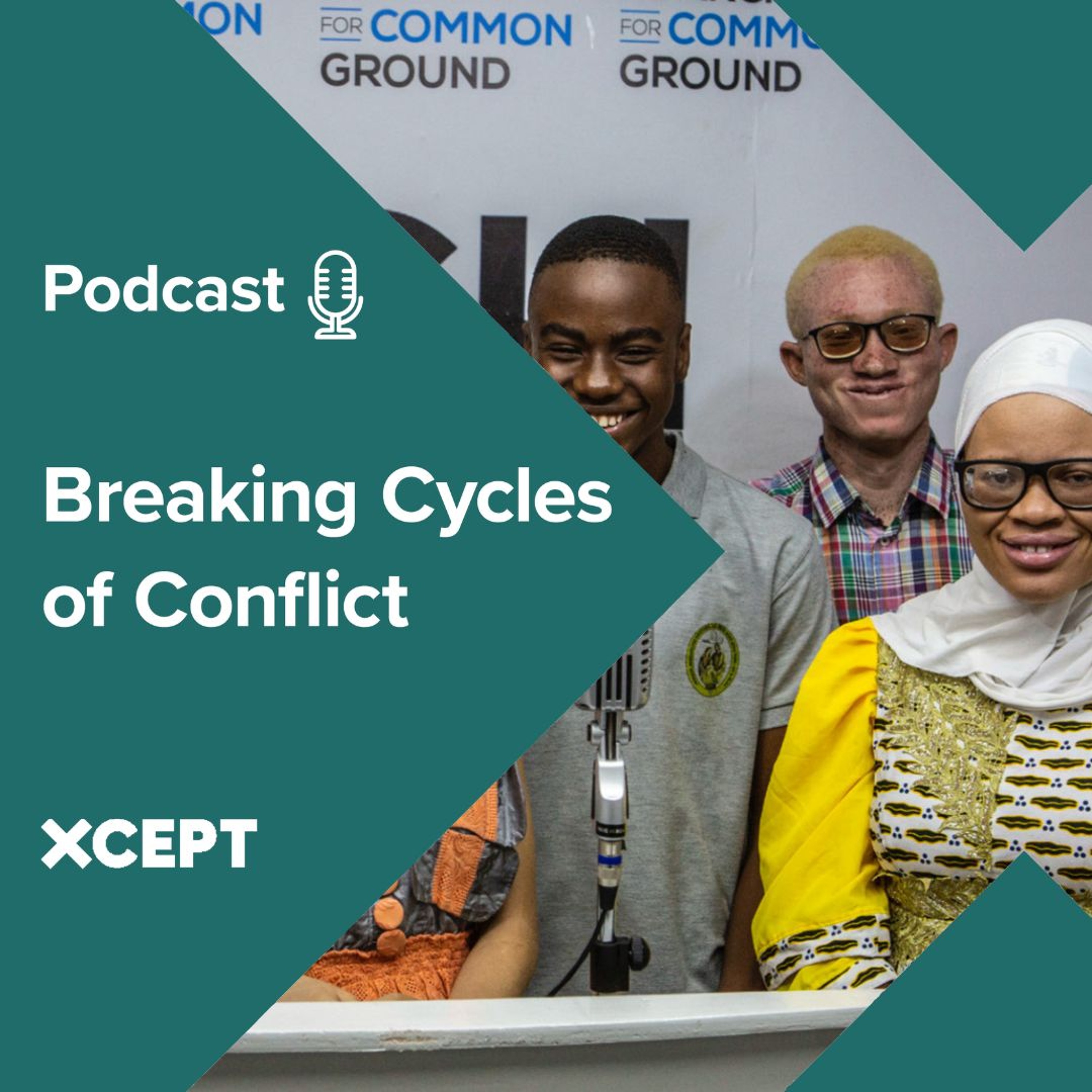
Leadership in a divided world
Feb 2500:59:33Tap to summarizeIn this episode, Dr Nafees Hamid speaks with Michael Shipler, King’s College London War Studies alumnus and Vice President of Leadership Development & Partnerships at Search for Common Ground (SFCG), the world’s largest dedicated peacebuilding organisation. With global cooperation declining and populism and authoritarianism on the rise, Nafees and Michael explore how those on opposite sides can be brought together. Drawing on SFCG’s work in conflict‑affected regions around the world, their conversation covers topics from moral injury to the use of art in peacebuilding, and why conflict itself isn’t the problem - it’s how we choose to manage it. Learn more about SFCG and their work here: https://www.sfcg.org/ This episode is produced as part of the Cross-Border Conflict Evidence, Policy and Trends (XCEPT) programme, which seeks to understand the drivers of violent and peaceful behaviour in conflict‑affected populations and to support practical solutions for peace. Learn more at www.xcept-research.org.
Transcribe →