Podcast
War Studies
Hosted by Department of War Studies · EN
Welcome to the War Studies podcast. We bring you world-leading research from the School of Security Studies at King’s College London, the largest community of scholars in the world dedicated to the study of all aspects of security, defence and international relations. We aim to explore the complex realm of conflict and uncover the challenges at the heart of navigating world affairs and diplomatic relations, because we believe the study of war is fundamental to understanding the world we live in and the world we want to live in.
If you’ve enjoyed this podcast, please rate and review us on your preferred podcast provider – it really helps us reach more listeners.
The School of Security Studies harnesses the depth and breadth of expertise across War Studies and Defence Studies to produce world-leading research and teaching on issues of global security that develops new empirical knowledge, employs innovative theory, and addresses vital policy issues.
Visit our website: https://www.kcl.ac.uk/security-studies
Sign up to our mailing list: https://kcl.us15.list-manage.com/subscribe?u=cc0521a63c9b286223dea9d18&id=730233761d
DISCLAIMER: Any information, statements or opinions contained in these podcasts are those of the individual speakers. They do not represent the opinions of the Department of War Studies or King's College London.
28episodes
Episodes
Newest firstAll episodes
Leadership in a divided world
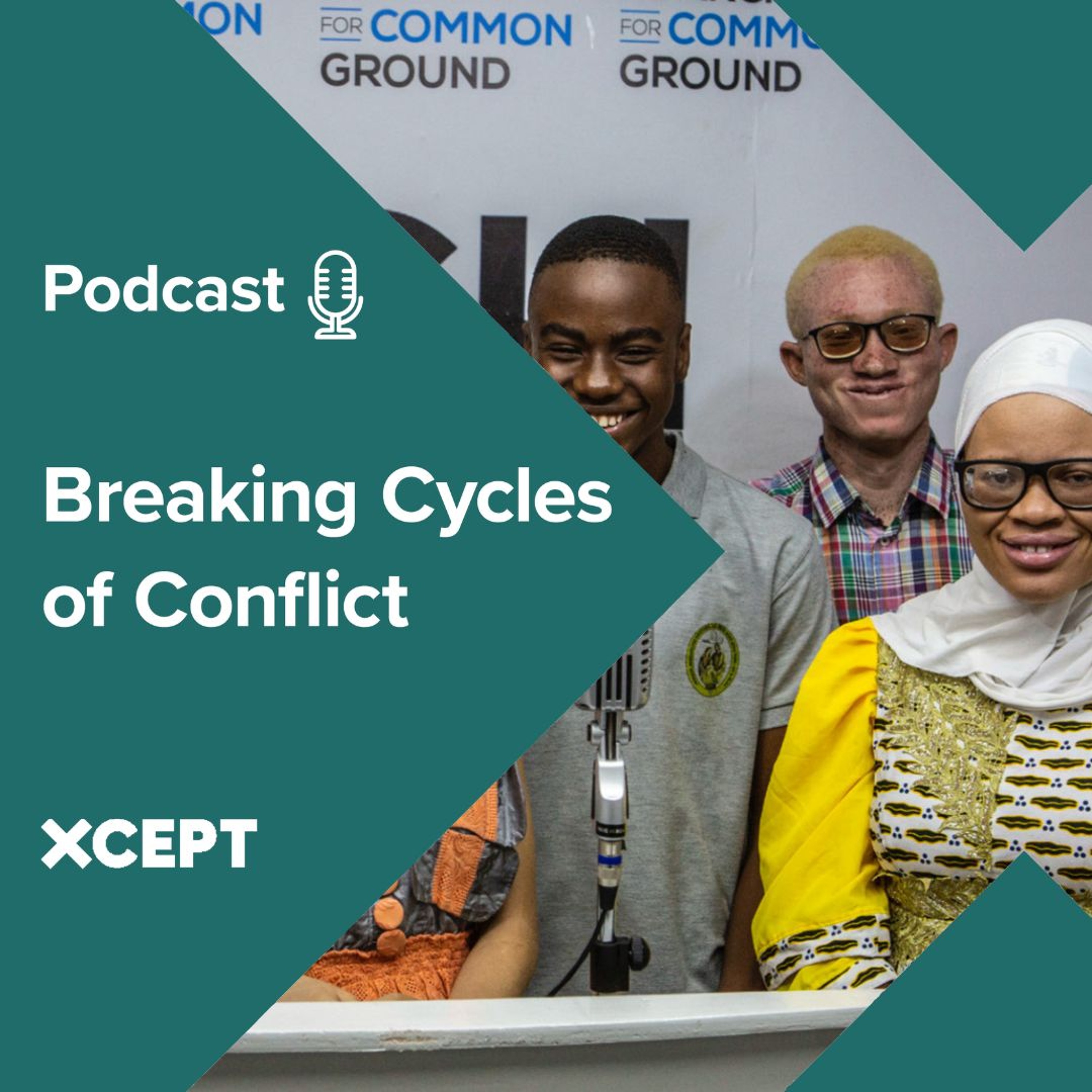
Feb 2500:59:33Tap to summarizeIn this episode, Dr Nafees Hamid speaks with Michael Shipler, King’s College London War Studies alumnus and Vice President of Leadership Development & Partnerships at Search for Common Ground (SFCG), the world’s largest dedicated peacebuilding organisation. With global cooperation declining and populism and authoritarianism on the rise, Nafees and Michael explore how those on opposite sides can be brought together. Drawing on SFCG’s work in conflict‑affected regions around the world, their conversation covers topics from moral injury to the use of art in peacebuilding, and why conflict itself isn’t the problem - it’s how we choose to manage it. Learn more about SFCG and their work here: https://www.sfcg.org/ This episode is produced as part of the Cross-Border Conflict Evidence, Policy and Trends (XCEPT) programme, which seeks to understand the drivers of violent and peaceful behaviour in conflict‑affected populations and to support practical solutions for peace. Learn more at www.xcept-research.org.
Transcribe →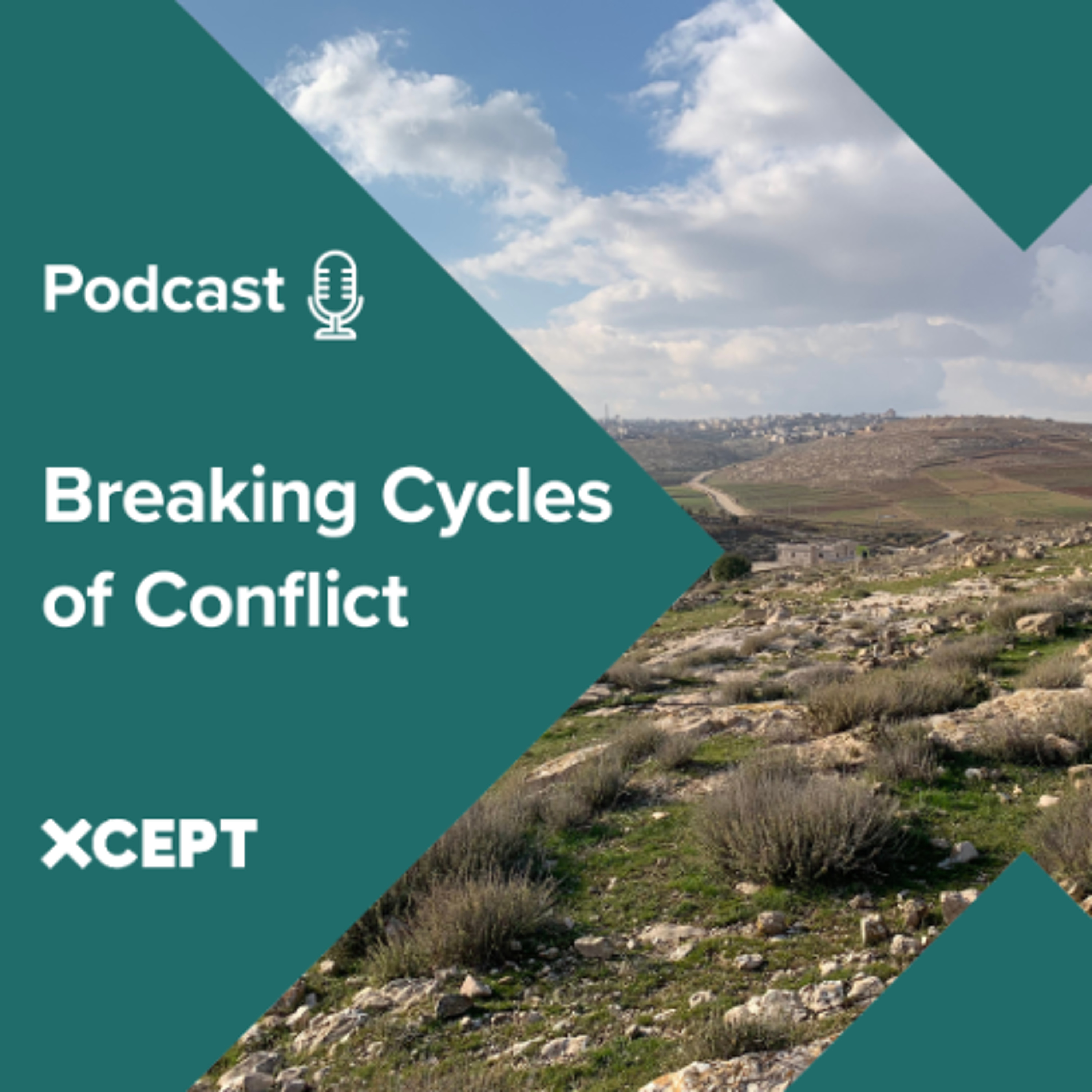
Does the expansion of Israeli settlements in the West Bank pose a threat to long-term peace for Palestine and Israel?
Feb 300:30:28Tap to summarizeDr Nils Mallock joins Dr Rajan Basra to discuss his research on the expansion of Israeli settlements in the occupied West Bank and the effect their presence has on political protest behaviour. These settlements are widely considered to be illegal under international law, but successive Israeli governments have allowed them to grow, and expansion has accelerated following Hamas' attack on 7th October 2023. In this episode, Dr Mallock explores how the presence of settlements can fuel cycles of reciprocal violence, the way in which they complicate the geographical layout of a two-state solution, and what continued expansion means for the long-term future of Palestine and Israel. Read Nils’ journal article, ‘Proximity to settlements in the West Bank shifts protest behaviour toward higher-risk actions and increases perceived collective injustice’, here: https://onlinelibrary.wiley.com/doi/10.1111/pops.70068 This episode has been produced as part of the Cross-Border Conflict Evidence, Policy and Trends (XCEPT) programme. XCEPT aims to understand the drivers of violent and peaceful behaviour in conflict-affected populations – and to find solutions that support peace. Find out more at www.xcept-research.org
Transcribe →
24 Hours at the Capitol: Nora Neus on January 6, the Far Right and American Nationalism
Jan 600:47:41Tap to summarizeIn this episode, Dr Pablo de Orellana, Senior Lecturer in International Relations, is joined by journalist and Emmy-nominated producer Nora Neus to discuss her book "24 Hours at the Capitol: An Oral History of the January 6th Insurrection". Drawing on hundreds of interviews and primary sources, Neus reconstructs the “minute-by-minute” experience of 6 January 2021 – from elected officials to frontline staff – and argues the attack cannot be understood as a one-off event, but as the culmination of a longer movement that gathered momentum after Charlottesville and accelerated through the pandemic era. Their conversation explores how far-right coalitions form and fragment; the role of social media platforms and online ecosystems in mobilisation; and the political power of mythic nationalism – from “1776” iconography to competing claims about American exceptionalism. They also examine the wider relationship between ethnic nationalism and religion, as well as the implications for future episodes of political instability.
Transcribe →
The Helsinki Brief: Inside Finnish Intelligence and Security
Dec 1700:48:49Tap to summarizeThis episode introduces The Helsinki Brief, a podcast mini-series on Finnish intelligence and security. Hosted by Dr Paul McGarr of King’s College London, the discussion features Hannamiina Tanninen, an analyst at Finnish Security and Intelligence Service (SUPO), about the role and structure of civil intelligence in Finland. The discussion covers SUPO’s legal mandate, core functions such as counterterrorism, counterespionage, cyber intelligence and security vetting, and its cooperation with domestic and international partners. The episode also addresses key security threats, including terrorism, cyber activity and state-based intelligence operations, as well as public trust, recruitment and oversight within Finland’s intelligence system.
Transcribe →
Victim-centred peacemaking: How victim inclusion shaped Colombia’s Santos-FARC peace process
Nov 2800:45:26Tap to summarizeIn this episode, Professor Roddy Brett, Professor of Peace and Conflict Studies and Director of the Global Insecurities Centre at the University of Bristol, joins Dr Nafees Hamid, Co-PI of the XCEPT research programme, to discuss his new book, ‘Victim-Centred Peacemaking: Colombia's Santos-FARC-EP Peace Process’. Professor Brett reveals how the victims’ delegations changed the dynamics of the Santos-FARC-EP peace process, transforming victim-perpetrator relations and ultimately shaping the final agreement, which was signed in 2016. At a time when the number of civilian casualties in armed conflict is rising around the world, the Santos-FARC example offers valuable insights into how to effectively involve victims in peacemaking. Professor Brett’s book is available from Bristol University Press: https://bristoluniversitypress.co.uk/victim-centred-peacemaking This episode has been produced as part of the Cross-Border Conflict Evidence, Policy and Trends (XCEPT) programme, which is funded by UK International Development from the UK government; however, the views expressed do not necessarily reflect the UK government’s official policies. XCEPT aims to understand the drivers of violent and peaceful behaviour in conflict-affected populations – and to find solutions that support peace. Find out more at www.xcept-research.org
Transcribe →A Risk Too Far: The Psychology Behind Operation Market Garden
Oct 2001:10:40Tap to summarizeIn this episode, Dr Gary Buck, author of A Risk Too Far: A Psychological Autopsy of the Planning for Arnhem, joins Dr Huw Dylan to explore the human factors behind one of WWII’s most daring operations. Drawing on his expertise in operational psychology, Dr Buck reveals how stress, ambition and personality shaped the decisions of commanders like Montgomery, Browning and Urquhart during Operation Market Garden. Through this psychological lens, the episode uncovers how bias, rivalry and pressure influenced Allied command—and how the mind can be as decisive a battlefield as any fought on land or air.
Transcribe →Inside cyberwarfare: Navigating the digital battlefield
Oct 100:45:59Tap to summarizeIn this episode, Dr Tim Stevens, co-editor of the Research Handbook on Cyberwarfare, explores the evolving realities of cyber warfare and its growing impact on global security. He discusses the challenges of defining cyberwarfare, tracing its development from early military computing to today’s complex cyber operations across a distinct digital battlespace. The conversation examines the key players in cyberwarfare—from states to non-state actors and cybercriminal groups—their motivations, tactics, and the broader consequences of their actions on critical infrastructure and civilian life. Dr Stevens also addresses the difficulties of international regulation in cyberspace and the ethical dilemmas that arise when cyber operations blur the lines between military and civilian targets.
Transcribe →
The untold story of Chinese naval officers in D-Day
Aug 2800:46:50Tap to summarizeIn this episode, Professor Andrew Lambert FKC, Laughton Professor of Naval History, Geoff Browell, Head of Heritage Collections, and Angus Hui, curator of the D-Day Hong Kong, explore the untold story of 24 Chinese naval officers who trained with the Royal Navy during World War II and took part in the D-Day landings. Angus discusses the fascinating discovery of a personal diary from one of these officers, providing a rare, first-hand account of their training, military operations and experiences. The episode also delves into the broader historical context of China’s naval rebuilding efforts during the war, the officers' contributions and their post-war journeys. This conversation sheds light on an important yet often overlooked chapter of naval history and World War II. You can find more information about the exhibition here: https://www.kcl.ac.uk/events/lost-found-in-hong-kong-the-unsung-chinese-heroes-at-d-day
Transcribe →The Spy and the Devil: The forgotten MI6 agent who changed British intelligence
Jul 22, 202501:00:59Tap to summarizeIn this episode, Professor Tim Willasey-Wilsey, Visiting Professor at the Department of War Studies, joins Dr Huw Dylan, Reader in Intelligence Studies and International Security, to delve into Tim’s new book, The Spy and the Devil: The Untold Story of the MI6 Agent Who Penetrated Hitler’s Inner Circle. They discuss the remarkable story of Baron William de Ropp—MI6’s key source inside Nazi Germany in the 1930s. Tim shares how de Ropp, a little-known Baltic German aristocrat, became responsible for over 70% of British intelligence reporting on Nazi Germany before World War II. Fluent in four languages and able to move through elite German circles undetected, de Ropp developed close ties with senior Nazis like Alfred Rosenberg—and even secured face time with Adolf Hitler himself. Tim and Huw explore how de Ropp’s intelligence work marked a turning point for MI6, transforming it from a low-level, tactical service into a strategic intelligence agency. They also explore the risks of improvisational espionage, the moral ambiguities of cultivating Nazi contacts, and how the agency learned—often painfully—how to run a new kind of agent.
Transcribe →Our Dear Friends in Moscow: Journalism, fear, and betrayal in the age of Putin
Jul 9, 202500:53:58Tap to summarizeIn this episode, investigative journalists Andrei Soldatov and Irina Borogan—both Visiting Fellows at the Department of War Studies—join Dr Daniela Richterová, Senior Lecturer in Intelligence Studies, to discuss their new book, Our Dear Friends in Moscow: The Inside Story of a Broken Generation. The book reflects on a generation of young Russians who came of age in the hopeful yet turbulent 1990s. In the wake of the Soviet Union’s collapse, many embraced the promise of reform and openness. But economic turmoil, war and terrorism soon reshaped the country, as the state moved steadily toward authoritarianism. Blending personal narrative with political analysis, Andrei and Irina explore how a once close-knit group of friends—united by shared ideals—fractured under the pressure of Putin’s rise. Some aligned with the regime; others, like the authors, chose exile. Drawing on two decades of reporting, they examine the rise of Russia’s security state and the moral decisions that shaped their generation.
Transcribe →