
Podcast
We Are For Good Podcast - The Podcast for Nonprofits
Hosted by We Are For Good · EN
The We Are For Good Podcast brings nonprofit professionals + everyday changemakers into conversations with the most innovative, heartwired leaders in social impact. Hosted by Jon McCoy + Becky Endicott, each episode unpacks fresh mindsets, practical skills + inspiring stories designed to help you work smarter, build healthier cultures + accelerate our collective impact.
Join our value-aligned community—it’s free—at weareforgoodcommunity.com.
About We Are For Good
We Are For Good is a storytelling, learning + activating community built for nonprofit professionals + everyday changemakers. Through our podcasts + media, purpose-driven activations + global gatherings, we equip for-good leaders with the connection, skills + inspiration to grow their impact. Because we believe community is everything—and together, we can create an Impact Uprising.
Learn more at weareforgood.com.
168episodes
Episodes
Newest firstAll episodes
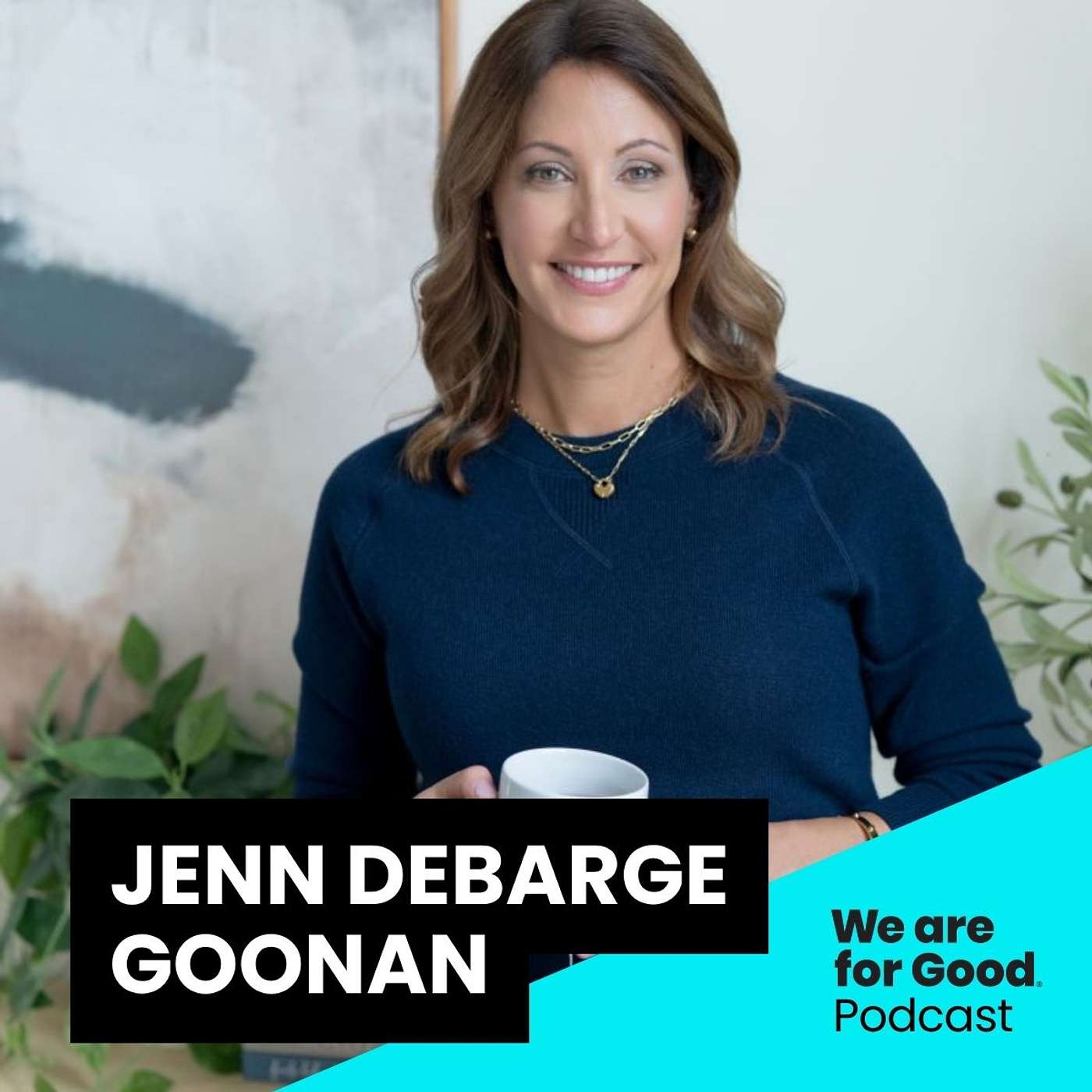
729. The 4-Step Formula to Get Your Mission Seen by Media, Partners, and Donors - Jenn DeBarge Goonan
Yesterday00:24:56Summary readyJenn DeBarge Goonan has sent thousands of pitch emails to editors, producers, and partners. She's distilled what works into four steps — and they work whether you're chasing press coverage, a corporate partner, or a major donor meeting.Jenn launched Lululemon into the U.S. market, built campaigns for Ben & Jerry's, and now runs JAG Communications, where she's spent 20 years making mission-driven work visible. 🩵In this episode, you'll hear:Step 1: Why every note has to be a one-of-one, and the 10 minutes of research that makes it landStep 2: Lead with connection, not credentials — including what to cut (the attachments, the links, the three paragraphs about your org)Step 3: Make one specific, realistic ask instead of three, and why "a 20-minute conversation" outperforms everything elseStep 4: Silence is not rejection — the "10% more value" follow-up that turned two dead pitches into TV coverageThe one-page message guide that has to exist before any of the four steps work — and how to build it this weekYou'll walk away with a repeatable formula for outreach that actually gets answered, plus the foundation that makes it credible. 🩵Episode Highlights:(2:44) From high school cheerleader to social impact cheerleader(4:48) Why passionate leaders end up sounding like word soup(5:30) The one-page message guide north star(7:22) How to build it: your ED first, then five anonymous interviews(9:43) Partnerships: find the overlap before you pitch(12:29) The 4-step formula, steps 1–3(15:33) Step 4: don't assume silence is rejection(16:41) The formula in action: two follow-ups, two placements(18:33) Social math, Substack, and the 57 million(20:23) Operation Warm: "This is my first coat ever"(22:58) One good thing: make it easy for people to help youEpisode Show Notes: www.weareforgood.com/episode/729//Join the We Are For Good Community—completely free.Join fellow changemakers, share takeaways from this working session, and keep collaborating in a space built for connection, inspiration, and real impact: www.weareforgoodcommunity.comSay hi 👋LinkedIn / Instagram / Facebook / YouTube / Twitter
Summary
728. How to Tell Stories That Fill the Hope Gap: 3 Lessons from 8 World-Changing Leaders - Jon and Becky
6d ago00:23:56Summary readyThe gap between hope and despair has grown from 4% in 2010 to 27% today. That's the "hope gap" — and it's the reason Jon and Becky spent 10 episodes sitting with eight change leaders who are filling it, one story at a time. 🩵In this series finale, they pull out the throughlines: what actually made these missions land, and what any nonprofit can copy starting Monday.In this episode, you'll hear:Why clarity is a superpower — and how to say what you do, who you serve, and why the problem is solvable in 30 seconds without losing the emotion underneathThe head-and-the-heart formula: why "factually true" and "emotionally true" aren't the same thing, and why your story needs bothHow your personal story becomes your mission story — and how to build a culture where staff, volunteers, and board members feel safe enough to share theirsThe stats that stopped the room cold — from mental health to caregiving to what social platforms serve kids in under three minutesThe "one good thing" you can steal from Sesame Street: research + education + creative production, working togetherYou'll walk away with three portable lessons and a simple challenge: find the stat, find the human, put them together, and lead with hope. 🩵Episode Highlights:How the series came together — meeting Afdhel Aziz (1:44)Story as infrastructure: why narrative shapes culture (3:10)Theme 1 — Clarity is a superpower (5:42)The stats that stop you cold (7:24)Theme 2 — The head and the heart is the formula (9:32)The Heath story: when a number changed everything (11:23)Theme 3 — Your personal story is your mission story (13:04)Building the container: safety, dignity, co-creation (16:46)Trust is the work (19:56)One Good Thing — the Sesame model (21:08)Your call to action: share your story (22:52)Episode Show Notes: www.weareforgood.com/episode/728Series Hub: https://www.weareforgood.com/hopegap//Join the We Are For Good Community—completely free.Join fellow changemakers, share takeaways from this working session, and keep collaborating in a space built for connection, inspiration, and real impact: www.weareforgoodcommunity.comSay hi 👋LinkedIn / Instagram / Facebook / YouTube / Twitter
Summary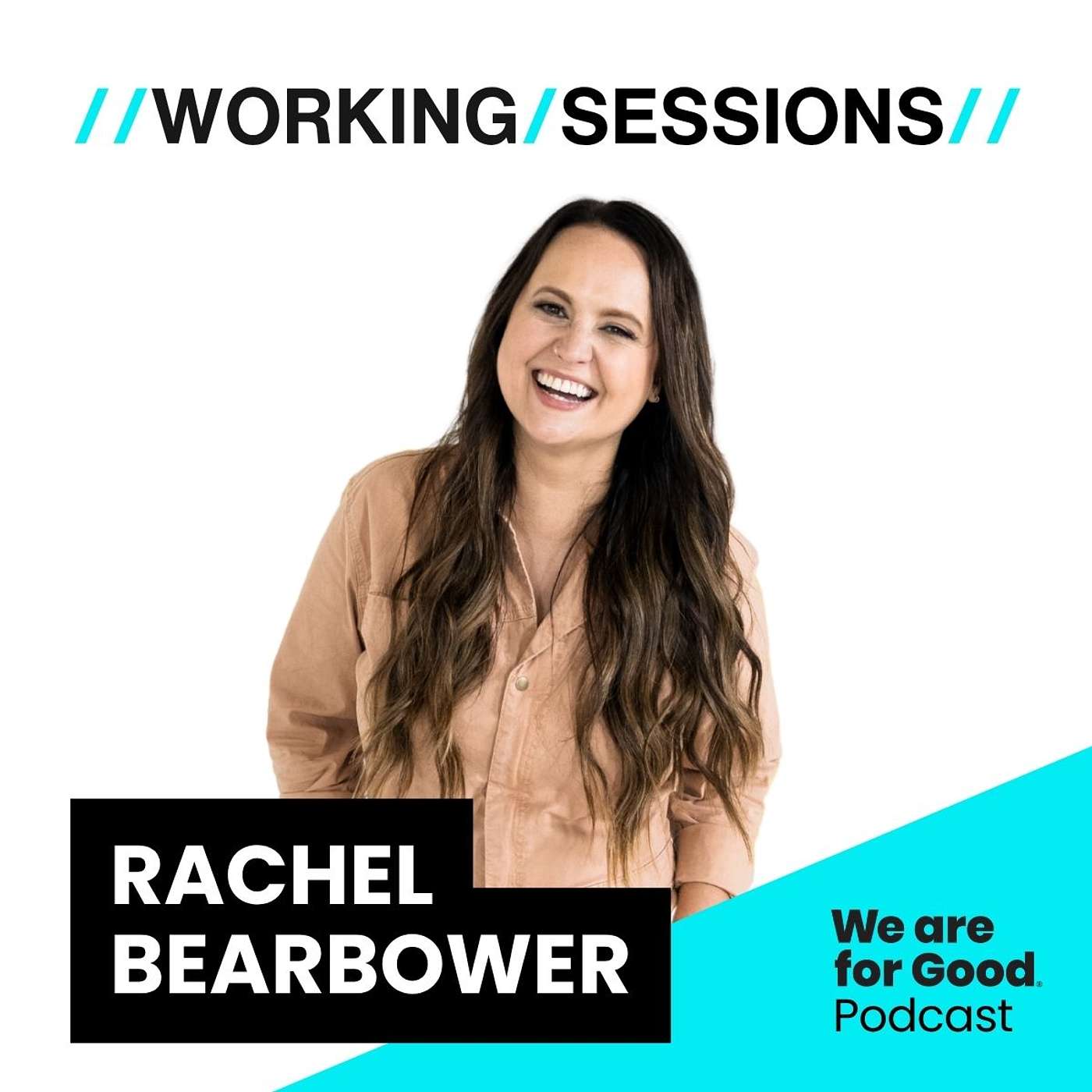
727. Working Session: The Automation Playbook That Added $200K at Year End - Rachel Bearbower
1w ago00:21:13Summary readyOne client reclaimed 15% of their lapsing donors and added $200,000 by year-end. No new campaigns. No bigger team. Just a stewardship system running quietly in the background. Rachel Bearbower built it.As founder of the Nonprofit Automation Agency, Rachel has helped clients climb from 35% to 50% donor retention in a single year, recover nearly $20,000 in lapsed gifts in 90 days, and hand 20+ hours a month back to overstretched teams — all without losing the human touch. 🤖💛In this episode, you'll hear:The exact case study behind the $200K: what a 15% retention lift looks like when you automate stewardship instead of scrambling to remember itThe five stewardship automations that carry a new donor through their first 100 days — from the instant acknowledgement to the second-gift askHow to automate a thank-you draft straight into your inbox so it still sounds like you — exclamation points and emojis includedWhy your CRM should be your single source of truth, and the quiet data-cleanup mistake wrecking your listThe one thing that has to happen before any AI tool works: clean dataYou'll walk away with a first automation you can build this week — start with the highest-leverage thing you're not doing, test it on one or two donors, then scale. 💛Episode Highlights:Meet Rachel and the Nonprofit Automation Agency (0:52)The two connected problems: retention and capacity (1:55)The five donor-stewardship automations (3:32)Thinking beyond week one: the first 100 days (7:17)Case study: a 15% retention lift worth $200K (8:09)Where to start + why your CRM is your source of truth (9:16)Keeping automation human (11:31)Tools: Zapier, native integrations, and using Claude (14:40)Your first automation today (15:38)One good thing: the DIKW pyramid and clean data (18:06)Episode Show Notes: www.weareforgood.com/episode/727Series Hub: https://www.weareforgood.com/wsl#podcast//Join the We Are For Good Community—completely free.Join fellow changemakers, share takeaways from this working session, and keep collaborating in a space built for connection, inspiration, and real impact: www.weareforgoodcommunity.comSay hi 👋LinkedIn / Instagram / Facebook / YouTube / Twitter
Summary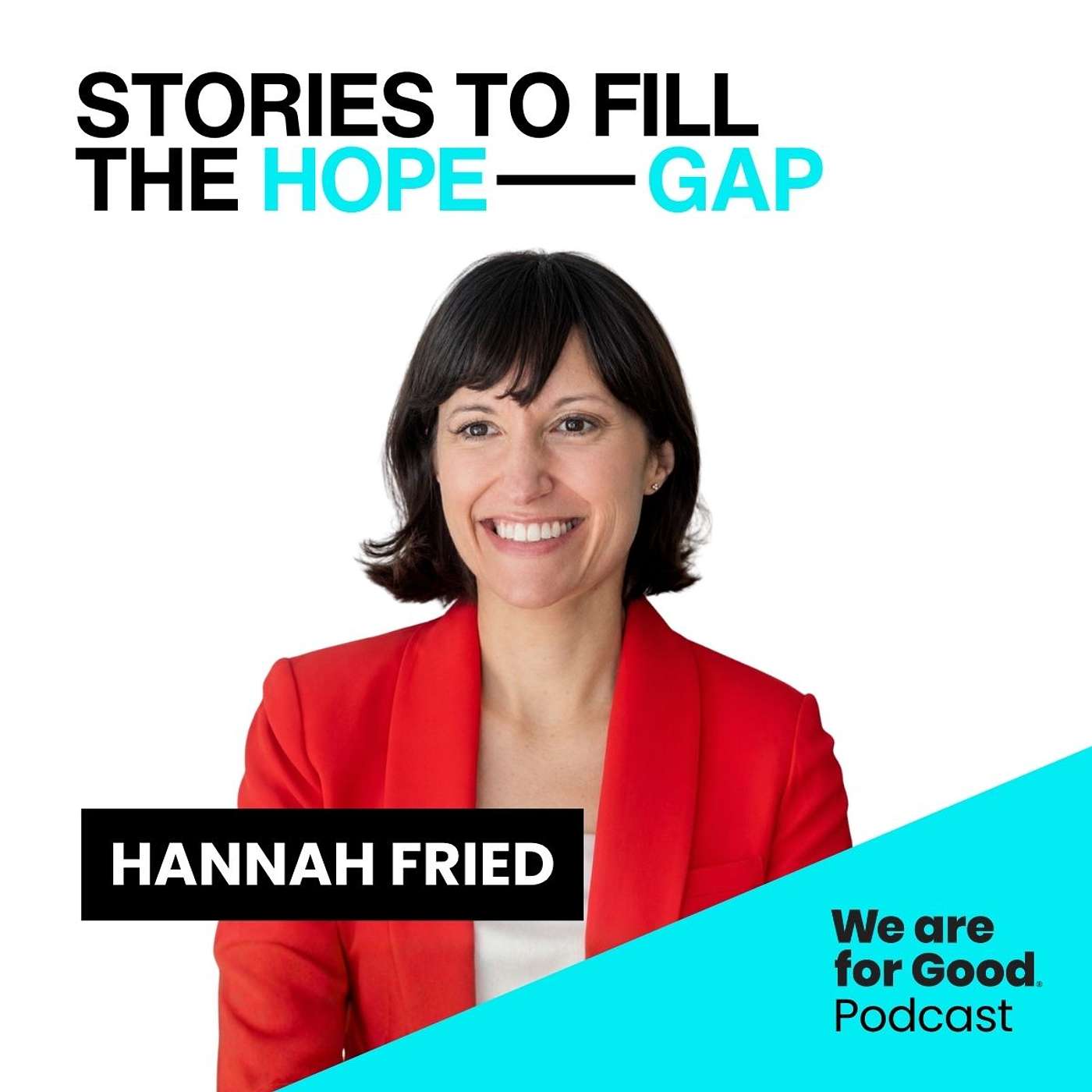
726. Stories to Fill the Hope Gap: Turning County-Level Wins Into National Change - Hannah Fried, All Voting Is Local
2w ago00:20:03Summary readyMost of us picture democracy being decided on Election Day. Hannah Fried spends her life on the part nobody watches — the quiet, local decisions made months and years before a single ballot is cast.Hannah is co-founder and CEO of All Voting Is Local, a national nonprofit working year-round in eight states to remove voting barriers for Black, Brown, and Native American communities. She and her co-founder spent years saying "somebody should start an organization" focused on the local officials quietly deciding how elections run — then realized they were the somebody. They built it from her kitchen table with no money, got incubated by The Leadership Conference, and went independent in 2022.In this episode, you'll hear:Why the decisions that make or break your right to vote — where polling places go, what hours they're open, how vote-by-mail works — get made by local officials long before any ballot is castThe playbook for turning one county-level win into a national conversation — and why story is the engine that does itWhy "it's never too late to get involved" is more than a platitude, plus the concrete ways any person can plug in this yearIf you've ever wondered whether slow, local, unglamorous, years-in-the-making work actually adds up — this conversation is your answer. 🩵Episode Highlights:Hannah's journey: from voter protection to founding All Voting Is Local (1:54)The mission: making democracy's invisible infrastructure visible (5:17)The eight states where AVL works (6:41)The Apache County win: adding polling places for the Navajo Nation (7:08)From local to national: the Day of Action in Selma & Montgomery (10:24)How to get mobilized — where anyone can start (12:39)A moment of generosity: her daughter as her greatest teacher (14:49)One good thing: keep going (17:16)Where to connect + becoming a poll worker (18:47)Episode Show Notes: www.weareforgood.com/episode/726Series Hub: https://www.weareforgood.com/hopegap//Join the We Are For Good Community—completely free.Join fellow changemakers, share takeaways from this working session, and keep collaborating in a space built for connection, inspiration, and real impact: www.weareforgoodcommunity.comSay hi 👋LinkedIn / Instagram / Facebook / YouTube / Twitter
Summary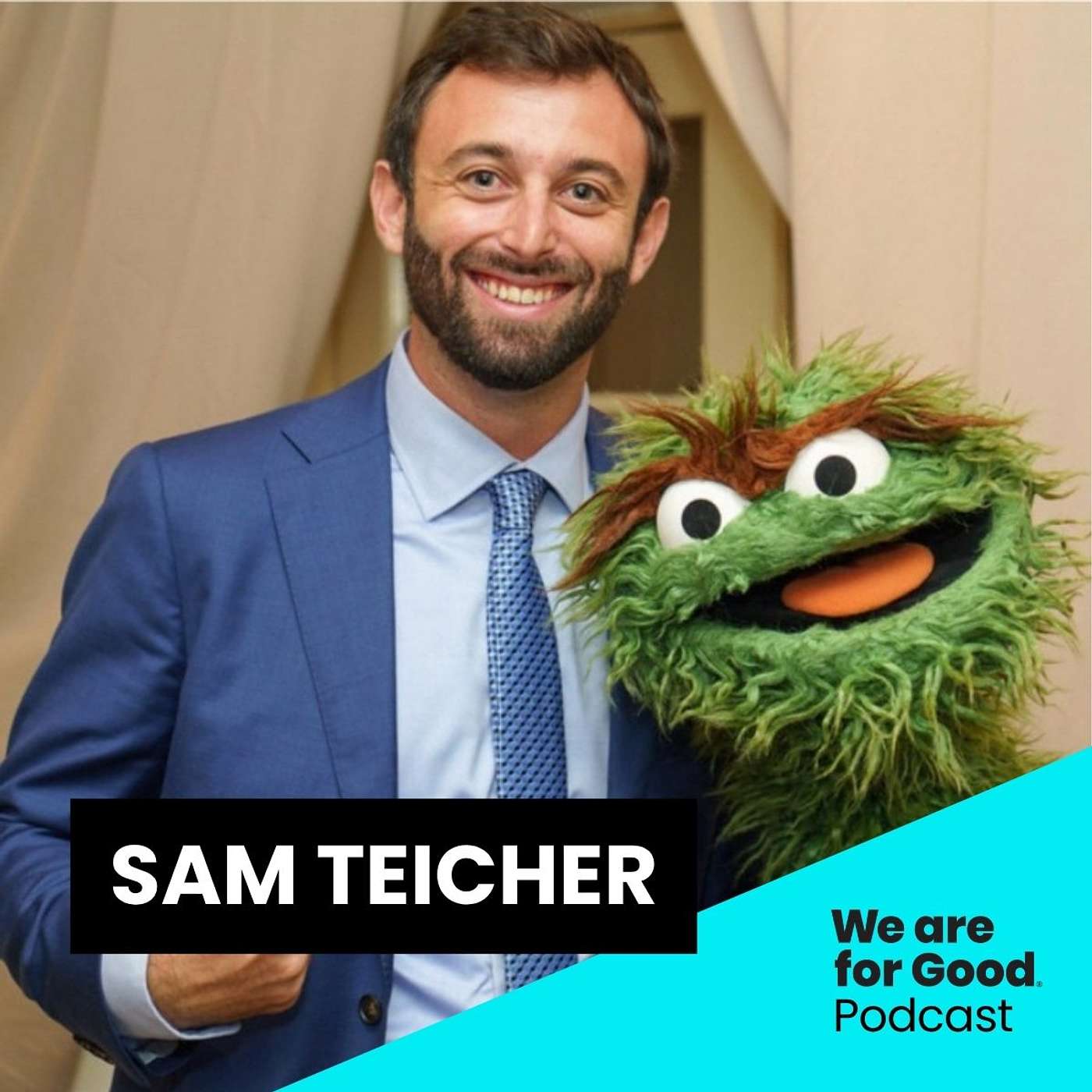
725. How to Fund, Storytell, and Scale What Feels Unsolvable - Sam Teicher, Coral Vita
2w ago00:28:40Summary readyHalf the world's coral reefs have died since the 1970s. That's the kind of number that makes a person feel too small to matter. Sam Teicher has built his whole approach around refusing to let it. Sam is the co-founder and Chief Reef Officer of Coral Vita, a company that grows coral in land-based farms and plants it back onto dying reefs. He could have built a nonprofit to do it. He built a for-profit instead — after a UN-funded project collapsed when a small, restrictive grant didn't renew — and started with just $1,000. A decade later, Coral Vita runs farms from the Bahamas to Saudi Arabia and has earned Sam the Earthshot Prize and a Forbes 30 Under 30 nod. 🌊His work is a masterclass in three things every mission-driven leader is wrestling with: how to fund it, how to storytell it, and how to scale it — when the problem itself feels unsolvable.In this episode, you'll hear:Why Sam walked away from a grant-dependent model — and what his frustration reveals about the limits of restrictive, short-cycle funding for any small orgWhy Coral Vita builds with communities (local jobs, free land for partners, on-site education centers) instead of parachuting in — and why the jobs piece is non-negotiable, not a nice side effectWhy "feel first, then think" storytelling beats leading with statistics when your cause feels too big to solveWhat "hope as a discipline" actually looks like when the odds are genuinely bad — from a self-described optimistic realistYou'll walk away rethinking sustainable funding, community-led impact, and how to keep a team going when the problem feels bigger than you. 🩵Episode Highlights:From a DC kid to a lava-rock lagoon in Hawaii: Sam's origin story (2:30)White House climate team to founding Coral Vita (4:43)What coral reefs actually are — and the $2.7 trillion case for saving them (8:54)Why local jobs are non-negotiable, not a side effect (13:06)Storytelling a problem this big without paralyzing people (16:54)Adopt-a-coral and the "optimistic realist" (18:04)What you can do right now (21:29)A moment of generosity: pink booty shorts in Samoa (24:46)One good thing: the shots you don't take (26:18)Episode Show Notes: www.weareforgood.com/episode/725//Join the We Are For Good Community—completely free.Join fellow changemakers, share takeaways from this working session, and keep collaborating in a space built for connection, inspiration, and real impact: www.weareforgoodcommunity.comSay hi 👋LinkedIn / Instagram / Facebook / YouTube / Twitter
Summary
724. Stories to Fill the Hope Gap: The Fight to Hold Big Tech Accountable - Imran Ahmed, Center for Countering Digital Hate
3w ago00:28:40Summary readyA 52-year-old man who'd spent too long online reading conspiracy theories walked up to Imran Ahmed's colleague — a member of parliament and mother of two — and killed her, screaming internet slogans as he did it. That was the moment Imran realized the online world and the offline world had quietly become the same world.Imran Ahmed is the founder and CEO of the Center for Countering Digital Hate (CCDH), a US–UK nonprofit that produces the hard evidence lawmakers, advertisers, and parents use to hold social media and AI companies accountable. 🧠In this episode, you'll hear:Why the algorithms rewarding hate and lies aren't broken — they're working exactly as designed, and what that means for your mission's messageWhat CCDH found when they opened a TikTok account as a 13-year-old girl (the numbers are worse than you think)Why social media is the one industry in America you essentially can't sue — and how that single gap created what Imran calls "technology tyranny"The STAR framework — Safety, Transparency, Accountability, Responsibility — that's giving lawmakers a simple, values-based way to regulate platformsWhy copying the outrage playbook will never work for the good guys, and what a four-star general taught Imran about winning an information war insteadYou'll walk away understanding the information environment your organization actually operates in — and why Imran still believes, without a shred of naivety, that the good guys win. 🩵Episode Highlights:Growing up in Manchester and the road into politics (2:27)What the Center for Countering Digital Hate does (7:41)Deadly by Design: what TikTok feeds a 13-year-old girl (8:51)The one industry you can't sue — and "technology tyranny" (12:43)The information environment every nonprofit operates in (18:15)Fighting an information war: a lesson from a four-star general (18:15)Moving people with data and story (21:11)A story of generosity: Mr. Haydens and Humpty Dumpty (23:10)One Good Thing (24:53)Episode Show Notes: www.weareforgood.com/episode/724Series Hub: https://www.weareforgood.com/hopegap//Join the We Are For Good Community—completely free.Join fellow changemakers, share takeaways from this working session, and keep collaborating in a space built for connection, inspiration, and real impact: www.weareforgoodcommunity.comSay hi 👋LinkedIn / Instagram / Facebook / YouTube / Twitter
Summary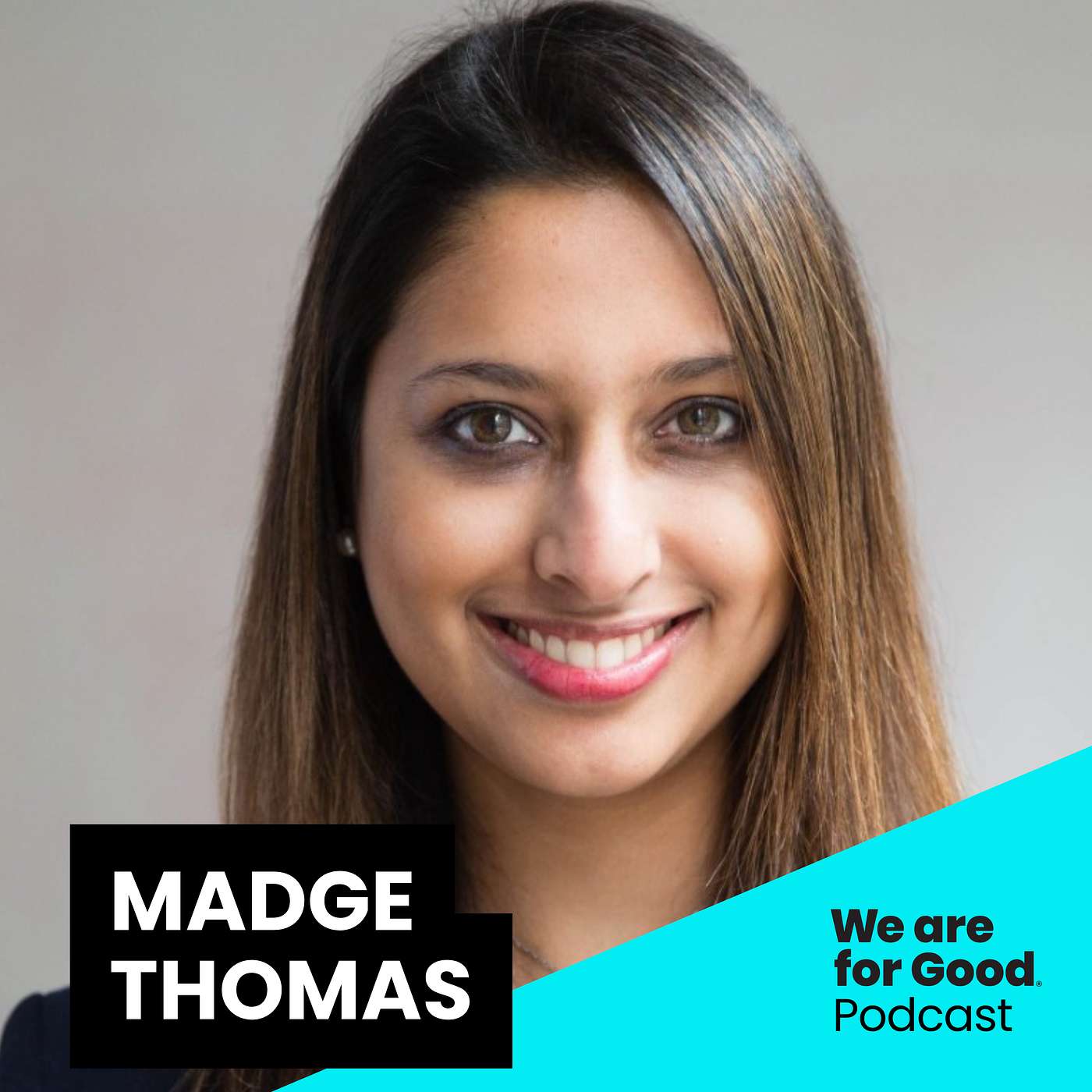
723. How American Express Is Building the Next Generation of Nonprofit Leaders (and What It Means for Yours!) - Madge Thomas
3w ago00:32:49Summary readyMadge Thomas leads a leadership academy most nonprofit professionals have never heard of — one that's quietly spent nearly two decades and $100M+ training over 165,000 nonprofit leaders worldwide. As president of the American Express Foundation and head of corporate sustainability at American Express, she's built it on a deceptively simple premise: invest in the leader, not just their programs, and the impact ripples outward — to the organization, the community, and long after any single initiative ends.Madge makes the case that the people powering nonprofits are the sector's most under-resourced asset — then shows how the Academy is changing that with funding, peer cohorts, alumni grants, and a curriculum rebuilt for this moment: AI training with Microsoft, storytelling with TED, and resilience for a shifting funding landscape. If you've ever poured everything into your programs with nothing left for yourself or your team, this episode names that tension out loud — and offers a different way through.In this episode, you'll hear:Why investing in individuals instead of just programs creates a "two plus two makes five" ripple effect that most funders never think to measureHow the Academy stacks funding, a peer cohort of ~75 leaders, and alumni grants to attack nonprofit burnout at the root — by removing the impossible choice between developing your people and running your programsWhat today's nonprofit leaders need that they didn't a decade ago, including AI training built with Microsoft and storytelling training built with TEDYou'll walk away with a new lens on where philanthropy should focus — and a reminder that you don't need a $100 million budget to start a ripple. A ripple starts with one tiny fracture in the surface. 🩵Episode Highlights:Little Madge in Perth: the values that started it all (2:28)The ripple effect of investing in leaders (4:00)20 years, $100M, 165,000+ leaders — and the stories behind the numbers (5:12)Why bet on people instead of programs? (10:12)Burnout, and removing the choice between people and programs (12:31)What nonprofit leaders need now: time, network, and dollars (15:49)AI as augmentation: building an AI-confident sector with Microsoft (20:08)Holding AI and humanity together (21:08)A moment of generosity: Mrs. Wilson and the uniforms (25:30)One good thing: start small (30:06)Episode Show Notes: www.weareforgood.com/episode/723//Join the We Are For Good Community—completely free.Join fellow changemakers, share takeaways from this working session, and keep collaborating in a space built for connection, inspiration, and real impact: www.weareforgoodcommunity.comSay hi 👋LinkedIn / Instagram / Facebook / YouTube / Twitter
Summary
722. Stories to Fill the Hope Gap: Storytelling That Turns Crisis Into Action - Dr. Lisa Hunter Romanelli, The REACH Institute
4w ago00:18:42Summary readyThere are 12 million kids in the U.S. with a mental health concern, and four out of five never get treatment — not because the care doesn't exist, but because it takes an average of 15 years for proven research to reach the providers families actually visit.Dr. Lisa Hunter Romanelli has spent her career closing that gap. As CEO of The REACH Institute — and its very first employee 19 years ago — she's helped train nearly 10,000 primary care providers in evidence-based children's mental health care, with a goal of 16,000 by 2027. 🧠 But this conversation is really about storytelling. Lisa has taken a public health crisis and made it feel solvable, and she shares exactly how she does it with donors and partners.In this episode, you'll hear:Why leading with the solution — not the broken thing — is what actually moves donors to actThe "train the trainer" multiplier model: how reaching one pediatrician reaches hundreds of kids a yearHow a single trained provider in Oklahoma City recognized a teenager's hidden anxiety and changed the course of her lifeWhere a leader 19 years into the work still finds hope — and the "whole leader" practice keeping her groundedWhy generosity shows up as far more than cash, and how to recognize every currency your community offersYou'll walk away with a more hopeful, more honest way to tell your own organization's story. 🩵Episode Highlights:Meet "little Lisa": From her mom's depression to child psychology (2:56)One psychologist isn't enough: Meeting Dr. Peter Jensen and building REACH (3:02)The 15-year research-to-practice gap and REACH's mission (5:50)Why pediatricians are the front line for kids' mental health (6:22)The story of "Mia": How one trained doctor changed a life (8:13)Lead with the solution: Telling donors a story that creates hope (10:33)Where a 19-year leader still finds her hope (11:40)Generosity beyond cash: A board member's quiet gift (13:17)One good thing: The "whole leader" and finding moments of presence (15:16)Episode Show Notes: www.weareforgood.com/episode/722Series Hub: https://www.weareforgood.com/hopegap//Join the We Are For Good Community—completely free.Join fellow changemakers, share takeaways from this working session, and keep collaborating in a space built for connection, inspiration, and real impact: www.weareforgoodcommunity.comSay hi 👋LinkedIn / Instagram / Facebook / YouTube / Twitter
Summary
721. Four Leaders on Mergers, Burnout, and Radical Honesty with Funders - Stacy Huston, Lindsey Fuller, Tammy Tibbetts, and Becky Straw
4w ago00:32:46Summary readyThe traditional nonprofit playbook is full of defaults nobody voted for: merge only when you're desperate, expect your team to run on empty, soften your mission to stay safe, and treat funders like they're doing you a favor. At the We Are For Good Summit, four leaders sat down to throw all of that out. 🧠Hosted by Stacy Huston, CEO of SixDegrees.org and a social impact strategist working at the intersection of storytelling, influence, and action, this conversation brings together Tammy Tibbetts (She's the First), Lindsey Fuller (The Teaching Well), and Becky Straw (The Adventure Project) — three leaders who each named a default they've refused to accept and shared exactly what they did instead.In this episode, you'll hear:Why a merger can be a strategic first move instead of a white flag — and the single question Tammy asked herself to know She's the First was making the right callHow The Teaching Well retained 100% of its funders three years running by being radically honest about what its team actually needsThe case for treating identity as an asset, not a liability — even while peer orgs were scrubbing their websites in 2025You'll walk away with permission — and a few tactical first steps — to question the defaults that are quietly draining your organization. 🩵Episode Highlights:Three nonprofit myths busted (1:46)Mergers as a strategic first choice (5:28)One tactical first step toward exploring a merger (8:35)The dignity of work: flipping the aid model (10:23)Doubling down on storytelling after the USAID gap (12:40)Identity as asset: leading with Sankofa (14:20)Retaining 100% of funders through radical honesty (16:26)Comfort as complacency (18:09)The "one good thing": self-care and collective care (24:21)Episode Show Notes: www.weareforgood.com/episode/721Resources Mentioned:SixDegrees.org — Stacy Huston's organization, described as "a nonprofit for nonprofits," bringing organizations together as a collective forceShe's the First — Tammy Tibbetts's organization putting girls front and center worldwideGirl Rising — She's the First's merger partner; the unified brand going forward, led by CEO Christina LoweryThe Teaching Well — Lindsey Fuller's retention-focused organization solving the school staffing crisisThe Adventure Project — Becky Straw's organization creating good jobs in Sub-Saharan AfricaLa Piana Consulting — the firm that "wrote the textbook" on nonprofit mergers; cited for the finding that 92% of surveyed merged organizations called it a success a year later//Join the We Are For Good Community—completely free.Join fellow changemakers, share takeaways from this working session, and keep collaborating in a space built for connection, inspiration, and real impact: www.weareforgoodcommunity.comSay hi 👋LinkedIn / Instagram / Facebook / YouTube / Twitter
Summary
720. Stories to Fill The Hope Gap: Why Celebration Is the Story That Changes Everything - Colby King, Kiki Arts Collaborative
Jun 2400:17:52Summary readyThe Kiki and ballroom scene, built by Black and brown LGBTQ+ youth of color in New York City, has been creating art, designing fashion, performing, and building community for over 20 years.Meet Colby King 👋 He’s the founder of Kiki Arts Collaborative, an economic development platform turning ballroom artistry into sustainable careers in arts, culture, and media through creative mentorship, job training, and internship placement. In 2025, that work earned Colby the David Prize, one of five awarded annually to the most luminary nonprofits in New York City. In this episode, you'll hear:Colby’s personal story and journey to the work he is doing today through KACWhy celebration, not charity, is the storytelling strategy at the heart of KAC's work, and what nonprofit leaders can apply to their own workWhat it looks like to build with a community instead of for it and why that distinction is at the root of everything Kiki Arts Collaborative doesYou'll walk away questioning the scarcity mindset the sector trained into all of us. You'll also be empowered with a sharper sense of how to tell stories that restore dignity instead of trading on need. 🩵Episode Highlights:Meet Colby King and Kiki Arts Collaborative (00:44)From Dallas pews to Columbia: the origin story (02:06)The mission: lowering the barrier to creative careers (05:38)"Seeing my art as art": the Inspiration Point exhibit (08:01)Charity vs. celebration: reframing the impact story (09:59)The mom who gave away her bed: generosity that stuck (11:48)One Good Thing: "take care of your blessings" (14:04)How to connect and what KAC needs now (15:43)Episode Show Notes: www.weareforgood.com/episode/720Series Hub: https://www.weareforgood.com/hopegap//Join the We Are For Good Community—completely free.Join fellow changemakers, share takeaways from this working session, and keep collaborating in a space built for connection, inspiration, and real impact: www.weareforgoodcommunity.comSay hi 👋LinkedIn / Instagram / Facebook / YouTube / Twitter
Summary