Loading summary
Transcript96 lines
- [00:00]
Glennon Doyle
I'm always looking for simple ways to make my day feel a little more meaningful and Masterclass has become my go to for that. In just a few minutes I can learn from world class instructors whether I'm waiting for my coffee or winding down before bed. One class that really stuck out with me. James Clear on building better habits, he said. You don't rise to the level of your goals, you fall to the level of your systems. That one line just flipped switch for me. For just $10 a month billed annually, you get unlimited access to 200 plus classes from the best in the world across businesses, wellness, cooking, writing and more. And with thousands of short on the go lessons across 13 categories, you can learn your way on your time. Right now our listeners get an additional 15% off any annual membership@masterclass.com hardthings that's 15% off@masterclass.com hardthings masterclass.com hardthings how would you like to feel calmer, think clearer and sleep better, all in just two minutes? Meet Truvega, a handheld device that uses gentle Vagus nerve stimulation to help calm your body's stress response. In just two minutes a session, Truvega helps shift you out of fight or flight and and into a more relaxed, balanced state. By naturally supporting your body's nervous system, you can quiet mental chatter, ease anxious feelings and promote deeper, more restful sleep. So you wake up feeling refreshed and clear headed. There are no pills, no side effects, just safe clinically backed technology developed from decades of neuromodulation research. Ready to try it out? Visit truvega.com and use code WCDHT25 at checkout to receive $25 off your purchase. Take action today and upgrade to Feeling Better every Day with Truvega. Visit truvega.com and use my code WCDHT25 to receive $25 off your purchase. Feel calmer and sleep better with Truvega.
- [02:19]
Abby Wambach
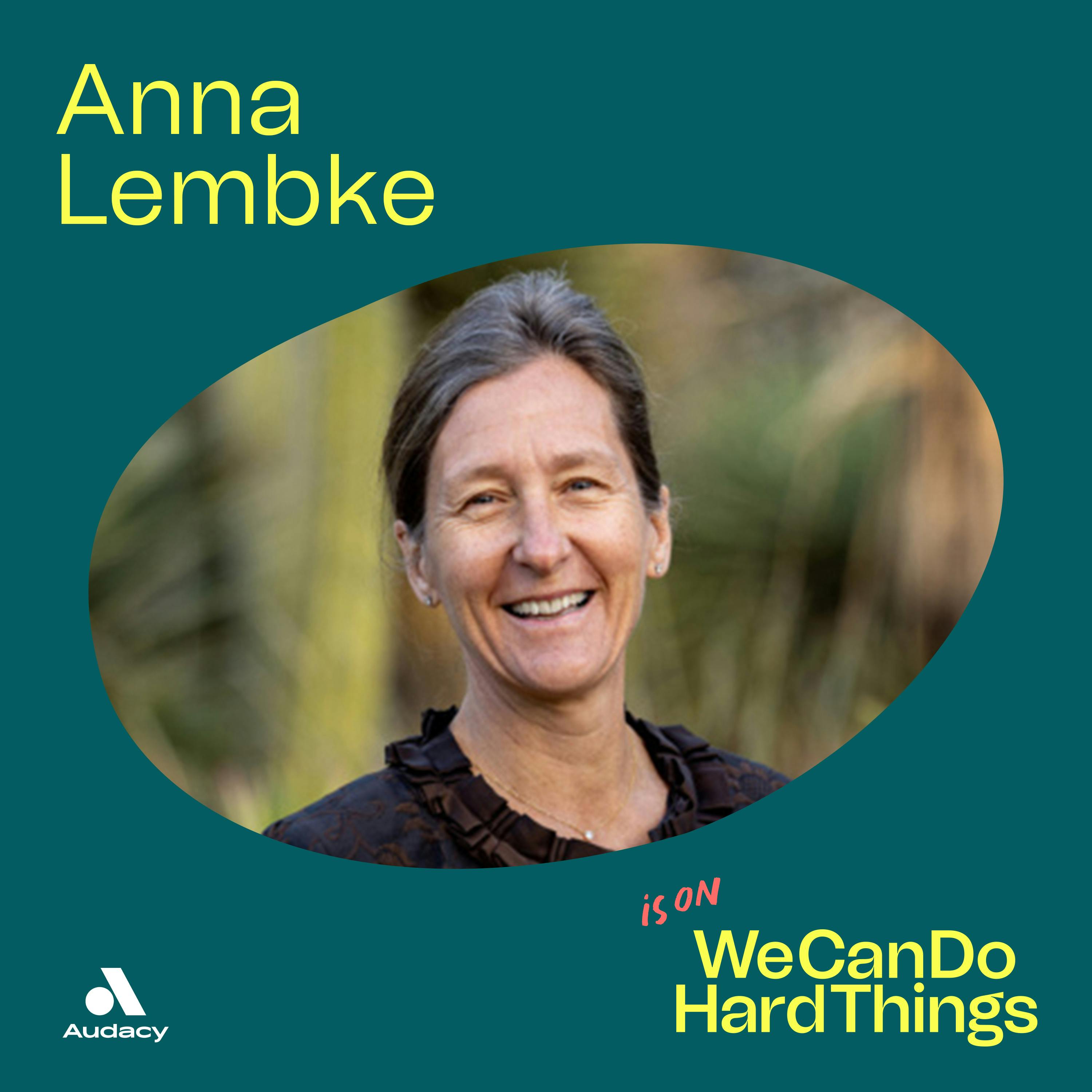
Dearest Hey Pod Squad. Welcome back to We Can Do Hard Things. By the end of this episode, you are going to understand why all of the things we're doing to make ourselves feel better are making us feel worse and we're gonna fix it. Okay? In the next 50 minutes we're gonna fix that and tell you how to actually make yourself feel a little bit better and not get tricked to do that. Is the only person who could really help us do that and her name is Anna Lembke and she is here with us. She is the Medical Director of Stanford Addiction Medicine, Program Director for the Stanford Addiction Medicine Fellowship and Chief of the Stanford Addiction Medicine Dual Diagnosis Clinic. She is the recipient of numerous awards for outstanding research in mental illness, for excellence in teaching, and for clinical innovation in treatment.
- [03:12]
Anna Lembke
She.
- [03:13]
Abby Wambach
She sits on the board of several state and national addiction focused organizations, has testified before various committees in the United States House of Representatives and Senate, keeps an active speaking calendar and maintains a thriving clinical practice. I'm tired even reading your bio, so well done. Okay, so we are trying to make sure that every single one of our episodes kind of swirls around one question, okay, that we can answer by the end of the episode. Because we have through 15 years of this figured out that every time anyone tells us a story or a problem or we tell it to each other, we're really asking one of like 20 human questions, okay? And one of them seems to be what people say to us over and over again in different variations is, how do I feel better? I just want to feel better. And what we figured out is this question is sort of revealing an underlying problem, which is we don't feel great, okay? On a regular basis, we don't feel great. And to feel better, we try all these quick consumption fixes that actually make us feel worse and on and on forever. So in your book, you start with a list of these things like drugs and food and news and gambling and shopping and gaming and texting and sexting and Facebooking and Instagramming. And you say that these are all symptoms of our personal and cultural problem. So can you tell us what our problem is?
- [04:56]
Anna Lembke
Wow. Okay. Tall order. I mean, I agree with what you said. For me, it really comes down to understanding how our brains process pleasure and pain, recognizing that pleasure and pain are co located in the brain. So the same parts of the brain that process pleasure also process pain. And they work like opposite sides of a balance. So imagine something like a teeter totter in a kid's playground when we're at rest. Hypothetically, that teeter totter is level with the ground. When we do something pleasurable, it tips one way. And when we do something painful, it tips the opposite way. Now that is a vast oversimplification. Let me just emphasize. I mean, we can experience pleasure and pain simultaneously during sex, when we're eating spicy foods, when we're watching a complex piece of art. But at its most basic level, we are wired over millions of years of evolution to reflexively approach pleasure, avoid pain. And this pleasure pain balance metaphor tells us something really important about how our brains get us to do that. So essentially, that level balance is what Neuroscientists call homeostasis. So that is our baseline level of happiness. Okay. I mean, we vary in that. Like, right, I'm at a baseline. I'm, I think, a more unhappy person. My husband is a happier person. I'm really glad I'm married to him and that people like him exist. Right?
- [06:39]
Abby Wambach
Yes.
- [06:40]
Anna Lembke
But whatever it is, that's the pleasure, pain balance that we were given. And dopamine is our reward neurotransmitter. It's not the only neurotransmitter, that is to say, brain chemical involved in that process, but it is the final common pathway for all reinforcing, rewarding, pleasurable substances and behaviors. So when we do something that is pleasurable, which we're all seeking, right, to approach pleasure and to avoid pain, when we do something that's pleasurable, that releases dopamine in the brain reward pathway. And that pleasure, pain balance tilts to the side of pleasure. Yay. The problem is that there are certain rules governing this balance. And the first and most important rule is that the balance wants to remain level and that with any deviation from a level balance or homeostasis, our brains will work very hard to restore a level balance. That process is called neuroadaptation. Okay? And essentially, when we have an increase in dopamine firing in response to something pleasurable, our brain will react by downregulating dopamine transmission, for example, downregulating dopamine production. But it doesn't just go to baseline. It goes below baseline into a dopamine deficit state. You might think of that as these little neuroadaptation gremlins hopping on the pain side of the balance to bring it level again. But the gremlins like it on the balance, so they don't get off as soon as we're level. They stay on until we're tilted an equal and opposite amount to the side of pain. That's the comedown, the hangover, the blue Monday, or just that moment of craving, right? Wanting to have one more glass of wine, smoke one more joint, watch one more Netflix episode rerun, one more chapter in my romance novel. Now, if we don't have more of whatever it is, which, by the way, for most of human existence, we didn't have more of that stuff, then the gremlins get the message, hey, my work here is done. They hop off the pain side of the balance, and homeostasis is restored. But if we continue to consume our drug of choice over days, to weeks, to months, to years, those gremlins multiply they get bigger, they get stronger. They call their friends pre. Pretty soon they are camped out on the pain side of the balance. And now we've entered into addicted brain, where we have essentially changed our hedonic or joy set point such that we need more of our drug in more potent forms. Not to tilt to the side of pleasure and feel good, but just to get out of pain and feel normal. And this is the vortex of addiction. It explains why people continue to use their drug of choice even when they can objectively see that their lives are better when they're not using it. It's why people will relapse. And it's why people describe a state of kind of constant craving, particularly when they first try to give up their drug of choice. Because when we first give it up, those gremlins that have accumulated crash down to the side of pain, and that craving feels like it will never end.
- [09:57]
Amanda Doyle
Can I stop just to make sure we totally. Okay, no. Just because that was so important and I don't want people to lose. There was a hundred things. That's so important. But let's make sure we understand the just initial seesaw or teeter totter. So you're saying. Tell me where I'm wrong about this. Our whole brains, the thing we want the most is to be even, Steven. Everything's level. That's homeostasis. We're like, in a settled place.
- [10:26]
Anna Lembke
Okay, wait, let me stop you there. Because that's not what we want. That's what our brain wants. What we want is pleasure. What we want is pleasure.
- [10:35]
Amanda Doyle
We are working on different things. Okay? So what we want is pleasure. But our brain's job is trying. Our brain is doing its job inside of us, and its job is to stay level. So when we go for pleasure, one side of the teeter totter, it goes towards pleasure. So the other side goes. It's like, oh, now the other side is up. So our brain has to dump. Has to stop the dopamine or dump something else to stop the dopamine from flowing and put it on the other side of the seesaw so that it counteracts. It's even more than the pleasure. Right? Because it's got to be that weight plus more to make it net out even. That's what you're saying, right?
- [11:20]
Anna Lembke
So for every pleasurable stimulus, right? I mean, probably not every single kind of joy, but for these kind of quick pleasures that release a lot of dopamine all at once, the brain compensates and in essence, over compensates. But with initial exposure you get, yeah, an equal and opposite reaction and then you go back to homeostasis. But with repeated exposure, that initial deviation to pleasure gets weaker and shorter in duration, but the after response gets stronger and longer. And this is really the key that there is, with repeated exposure, an emphasis on the pain side and ultimately can kind of get stuck there.
- [12:02]
Abby Wambach
Okay, so is this the reason for the like in Buddhism or is this the reason for trying to live your life with non attachment or non desire to like escape this entire paradigm of pain versus pleasure, to kind of override it and live in whatever pieces before we reach towards desire or need for pleasure?
- [12:30]
Anna Lembke
Yeah, it's great to invoke the Buddha because the Buddha's life story parallels this pleasure pain balance. You know, he grew up in a very wealthy family, he had everything provided for him and he found he was unhappy. So he went out into the world, he looked for wisdom, and at some point he pursued extreme asceticism. So he pursued pain, did not, you know, didn't eat food, did all the things that people do, and then found gradually that didn't do it either. And then ultimately had this moment of awakening, sitting under, I can't remember the name of the tree, recalling a moment in his childhood when he had been sitting under a similar tree, his father plowing in the distance, and just felt a kind of natural contentment that he was not striving for. You know, it just sort of came to him and that was his moment of realization. It's not about pursuing pleasure, pursuing pain. It's about finding that middle way. My interpretation is letting the joys come with the unfolding of experience rather than striving for them. The difficulty is that we are natural strivers. I mean, we are seeking dopamine. We are wired for that pursuit piece of it. And you know, sometimes, you know, if you think about, well, why would Mother Nature make a pleasure pain balance that makes us tilt to the side of pain? Why not just tilt the pleasure and more pleasure? Well, it's not that Mother Nature is trying to be cruel. It's that this pleasure pain balance is, is genius for a world of scarcity and ever present danger where we need to keep striving and putting out effort and suffering in order to survive, in order to get food, clothing and shelter. The problem is it's woefully mismatched for the world that we live in now, where at the touch of our fingertips, swipe right, swipe left, we get a whole fire hose of dopamine to our reward pathway.
- [14:26]
Glennon Doyle
I just want to bring this into a personal reflection and what your work has really done to change my life. I'm almost 10 years sober. I lived a life as a professional athlete, and I didn't realize that dopamine was, in fact, the thing that I was chasing all along. It was covered up by booze and attention and, you know, winning gold medals, et cetera. And one of the things that I've found so fascinating and almost it might be the most important thing that I've learned in my recovery is that learning about dopamine and the process of what the brain is going through while seeking pleasure and also experiencing pain. It's like so many of us that live with addiction have and carry this incredible amount of shame with us because it feels like, why can't I do this? Like, what is wrong with me? There's some sort of moral or something wrong with me personally. And when I read your work and have been obsessed with it, and I've just. I've sent all of the podcasts I've listened to, to all of my addicted friends, like, listen to this. Because it deshamed me, because it's like my brain, though it might be more susceptible to others for this search of dopamine. Yeah. It just took so much shame away. And I just think that your work is so important and made it feel more scientific than moral than moral. Yeah.
- [16:02]
Anna Lembke
Well, thank you for that. That's very, very moving for me. I can't really put into words, you know, how much that is really moving. And thank you for saying that. It just. It gives me a lot of inspiration to keep going in my work. So one of the ways that I think about mental illness is because the weird thing about mental illness from the perspective of evolution is if these are really maladaptive brain states or types of brains, why hasn't Mother Nature, you know, gotten rid of them? Why is it that about 10 to 20% of the population will struggle with severe mental illness in their lifetime? Why is there schizophrenia? Why is there bipolar disorder? And what I have come to believe, and this is pure speculation on my part, is that the kinds of illnesses that remain endemic in human societies are actually advantageous traits in different circumstances. So if you think about people who are prone to addiction, essentially, these are people who are willing to work harder than anybody else to get their drug of choice. And if you're looking at hundreds, thousands of years ago, hundreds of thousands of years ago, those were going to be the most valuable people in a tribe, Right. The people who were willing to run further work harder, search longer in order to get scarce resources that the whole tribe needed to survive. So I don't look at people with addiction as in some ways having that something's wrong with them. I look at them as having like bionic supersonic pleasure pain balances that are mismatched for our current environment. But on the other hand, if folks with addiction can get into recovery in this crazy hyper stimulated, drugified world that we live in, oh my goodness, those folks have tapped into some incredible wisdom that we could all benefit from. And I quote my friend and theologian Kent Dunnington who says that addicts are modern day prophets who show us who we really are. And I really love that because I believe that to be true. I like to think that I've helped people in my career, but honestly, I've learned more from my patients than I think they've learned from me.
- [18:44]
Glennon Doyle
It's an interesting time for business. Tariffs and trade policies are shifting, supply chains are under pressure and cash flow tighter than ever. If your business can't adapt in real time, you're in Trouble. That's where NetSuite comes in. Your AI powered business management suite. Trusted by over 42,000 companies worldwide, NetSuite is the number one cloud ERP bringing accounting, financials, inventory and HR into one seamless system. You get one source of truth so you can make fast, informed decisions with confidence. With real time forecasting and AI automation, NetSuite helps you predict challenges, streamline operations, and stay strategic no matter what the market throws at you. Know what's stuck, know what it's costing you, and know how to pivot fast. If your revenues are at least in the seven figures, download the free ebook Navigating Global Trade 3 Insights for Leaders at netsuite.com hardthings that's netsuite.com hardthings if you're someone who's curious about why we are the way we are, why we succeed, why we screw up, then you'll want to check out Armchair Expert. Hosted by Dax Shepard and Monica Padman, the show explores big, honest conversations with artists, thinkers, scientists and cultural icons like Alex Cooper, Brad Pitt and Monica Lewinsky, just to name a few. Together they explore everything from identity and addiction to imposter syndrome and finding your purpose. Then on Fridays, they flip the mic to the listeners with Armchair Anonymous, a listener driven series where real people call in with raw, funny and totally human confessions. From disastrous dates and family secrets to accidentally joining a cult, they've heard it all. If you love self reflection, big ideas and embracing the comedic chaos of life. Follow Armchair Expert on the Wondery app or wherever you get your podcasts and subscribe to armchair expert on YouTube.
- [20:48]
Amanda Doyle
Okay, I'm excited to tell you today about MIDI Health. If you have heard our menopause episodes, you know how passionate I feel about women having access to information about their bodies and about something that so fundamentally affects their lives. Here's the deal. If you're over 40 and you're starting to experience some of the symptoms of perimenopause or menopause, if you're having hot flashes, insomnia, brain fog, moodiness, all of this can be related to perimenopause or menopause. Log on to MIDI Health. I have done this. It is easy. In fact, I have recently been pursuing with MIDI Health hormone therapy to replace some of the hormones that are diminishing in my body. They're clinicians. They meet with you and they suggest specialized care for your health concerns. It's all through telehealth and 24.7 messaging and they call in your prescriptions to your local pharmacy. You deserve to feel great. Book your virtual visit today at join midi. That's joinmidi.com.
- [22:00]
Abby Wambach
Okay, so the problem seems to be. I have two questions. First of all, are people born with different level sets of homeostasis? Like you just said, I tend to be a person who's less happy at a normal state. My husband tends to be someone who's more happy. Is that something that's universal? That some people just have a lower level of happiness? And are those people the ones that tend to seek pleasure more and thus end up in addiction?
- [22:35]
Anna Lembke
Yeah, it's a great question. It gets to the kind of state or trait phenomenon, you know, are these inborn traits that people have, though they'll always go back to whatever their baseline level of dopamine firing is, or are these state phenomenon as a result of, you know, environmental stressors or other stressors? And again, this is speculation, but my sense is that it's both state and trait. So I do believe that some people are born with just kind of like lower levels of pleasure. And those people are often diagnosed as having mental illness. Sometimes it's episodic, right? They'll have an episode and then they'll go back. So I do think, and we do know that the risk of addiction, I mean there are many risks of addiction, right? There are poverty, unemployment, co occurring mental illness, access to your drug of choice. Those are all risks. But there is also very likely an inherited or biological risk of addiction that's complex and Polygenic, that probably is related to baseline levels of dopamine firing. We know, for example, if you have a biological parent or grandparent with addiction, you're more likely to develop addiction yourself, even if raised outside of that substance using home. So when we're trying to differentiate nature versus nurture, that's one of the types of experiments or studies that people look at.
- [24:01]
Amanda Doyle
So I'm thinking back to your see saw, where now this behavior has happened for so long over such a long period of time that the gremlins are camped out. They don't just come in to level the seesaw, they live on the pain side of the seesaw. Now when you were talking about that, is this like I'm thinking back to during my drinking days and I haven't had a drink in five years, but during that time it was, I felt so overwhelmed and so down and so like I just needed a break from all of it that I would drink, but then I, I would feel even more down and anxious and like I needed a break and therefore I couldn't not drink because that side of the cycle became even more anxious as the cycle continued. Is that part of what you're talking about? How like, so then I wasn't just drinking because I wanted to drink, I was drinking because of the anxiety that was increasing because of my drinking.
- [25:21]
Anna Lembke
Right. So you are highlighting a very important point which speaks to how this cycle gets perpetuated. So once you've changed your hedonic set point, those gremlins are camped out on your pain side of the balance. The physiologic drive to restore a level balance or go back to homeostasis is one of the most powerful physiologic drives that organisms have. And the fastest way to get there is to drink some more. Because when you drink some more, you put that something on the pleasure side of the balance and you temporarily go back up to homeostasis. So of course with alcohol readily available or whatever your drug is, you will be extremely tempted to do that because that is the fastest way to get back to homeostasis. The problem is that in the long term, all that does is add more gremlins to the pain side of your balance. So then you sink deeper and deeper and deeper into that hole. And again, this is a simplified metaphor, but it speaks to that addiction vortex and why people with addiction or whatever, wherever they are on the spectrum of compulsive over consumption, why they feel like their drug of choice is self medicating, their depression, their anxiety, their irritability, Insomnia, because in the immediate use, it can often still do that. Although what is fascinating is again, with time, that deflection to the pleasure side gets so much weaker and so much shorter that it can get to a point where it doesn't work at all. And yet the euphoric recall of what the drug used to do is so powerful that people will go back to it again and again. And one way to think about this is that we have very vivid recall, like deeply stamped into our hippocampus of initial deflection to pleasure or to pain. But we have almost no memory of the gremlins. So all we remember is the pleasure. We don't remember the pain that follows. And we also misremember the pleasure because it stops being pleasurable and yet we still want to do it.
- [27:42]
Abby Wambach
I love your term. Maybe you should title this entire episode, where are you on the spectrum of over consumption? Because it is very easy to say, are you addicted or not? Are you an addict or not? And then say, I'm not an addict. And then you're off the hook of this entire pleasure pain situation. In fact, are we not living in a culture that has figured out this pleasure pain situation in all of our brains and many people. Companies have created many variations of quick fixes for us when we feel lower than we should to reach for. There's a million different things, right, that people use. It doesn't have to be that you're a severe addict like me or Abby. If someone's listening right now and they find themselves, they don't think they're an addict, but they do know that they are on the spectrum of over consumption. They know this because every time they feel a certain way, they reach for their phone or they go to Instagram or they shop, they online shop. What is happening in that moment and what should they do differently? What is a long term fix that's not a short term worsening?
- [29:00]
Anna Lembke
Yeah, well, I mean, the long term fix is actually to restore homeostasis. And the way to do that is to abstain from our drug of choice for long enough for those gremlins to hop off and for homeostasis to be restored. But if we've been accumulating those gremlins on the pain side of the balance for years, it can take a really long time for them to get off and for homeostasis to be restored. I will often present to patients, try abstaining from your drug of choice for 30 days. It's not that I think 30 days is a cure for Addiction, that would be incredibly naive. But interestingly, on average, that is the amount of time it takes for folks to begin to get out of that vortex of craving and see the light at the end of the tunnel. Because people with addiction, when they're in their addiction, will often see only two choices. I keep using my drug and I'm miserable, or I stop using my drug and I'm miserable. What we need to offer them, and it's really a leap of faith. There's a way to stop using your drug and with time, to be not miserable.
- [30:09]
Amanda Doyle
Can you walk through those steps of like, I think it's so helpful to give people a vision of like, if you can do it for 30 days, this is what to expect. Week one, week two, week three. I mean, because it is a lot of faith. And when it starts breaking bad, people might say, well, shit, see, I knew it would be this bad. And then they stop. So tell us, like, what happens week one and week two and week three of that period of time.
- [30:36]
Abby Wambach
And let's just say it's something more benign or universal. Like you've decided you're gonna quit social media because that's something that you feel like is your dopamine razor and lower. And how might that feel if you're well.
- [30:49]
Glennon Doyle
And I just want. Before we get into that, I think it's really important to figure out, how do you know when your dopamine is when you're seeking something that's going to increase your pleasure dopamine system and get that started to unbalance your teeter? Like, how do you know what it is? What are some symptoms or things that we can be looking out for before we even get to the month of abstinence.
- [31:18]
Anna Lembke
Yeah, great, great point. Let's start there. So we talk about the four Cs, control, compulsion, craving and consequences. Out of control use would be like, I planned to only have one drink and I had four. I plan to just watch one TikTok video and two hours later I was still watching Shit. Okay. Compulsion is a lot of our mental real estate occupied with thinking about using the drug, as well as a narrowing of our focus and our pleasure spectrum. So looking forward to it all day, planning on it. If we're doing it secretly, which commonly happens, then hiding our use. And that can also start to be part of the drug itself, the adrenaline that we get from the secret life and hiding our use. So that's the compulsion and also the automaticity. Craving is interesting. Craving can manifest in different ways. People can get sudden stomach aches and feel like the only solution to my stomach ache or my nausea or my dizziness is to use. But more often, craving comes in the form of an elaborate narrative that our brains can manufacture in a nanosecond, telling us why we really should use. After all, even though we committed to not using. And it's an elaborate. It can be like, this is a stupid thing. I. I'm not really addicted. I'm in pain. I deserve this. Nobody loves me. I need a reward. This is the only way to reward myself. And these are very, very convincing narratives that get a life of their own and are difficult to get away from. And then consequences is really the heart of addiction. And often we don't see the consequences. It's harm to others, harm to ourselves, and really subtle decrements in mood and increases in anxiety that happen slowly and insidiously over time that we especially don't attribute to our drug of choice. Because when we use, we temporarily relieve those like we were talking about, right? Because we temporarily get back to homeostasis. But in the long run, we're just making ourselves more mentally unwell. The other thing to look for is tolerance, which is to say we need more of our drug over time to get the same effect or more potent forms or. Or now we have to combine two drugs together. Like, we have to smoke and watch TikTok at the same time in order to feel pleasure. Because just watching TikTok or just smoking doesn't work. So that kind of cumulative compounding of many. And like, we see this culturally, like, we used to all like to go to the movie theater, you know, I'm old enough. That's true. And watch a movie together. And then we got our devices, and then it had to be my movie. I'm going to watch my movie. And then it was like, well, just watching the movie isn't enough. I need to be watching the movie and on my smartphone and eating a cupcake and smoking a joint. And this is the cumulative effect. And then, of course, withdrawal can be a physical symptom. That's when we try to stop our drug. But the universal symptoms of withdrawal from any addictive substance are actually psychiatric symptoms. Anxiety, irritability, insomnia, depression, and craving. Again, intrusive thoughts, narratives, or physical sensations. So, Amanda, you ask, how do we prepare people for, like, a dopamine fast or an abstinence trial of four weeks? The most important thing that I tell my patients, and barring nothing else, this is the most important thing I say, you will feel worse before you feel better. But that is not the way you're going to feel for the rest of your life.
- [34:42]
Abby Wambach
Yes, that's it.
- [34:43]
Anna Lembke
When you take the pain off the pleasure side of the balance, the gremlins will crash down to the pain side. And it will take those gremlins a while to get the message that you're not using your drug of choice anymore. And then it's time for them to, to hop off of the pain side of the balance and for homeostasis to be restored not through repetitive use, but through the gremlins hopping off and upregulation of our brain's own production of our feel good neurotransmitters like endogenous opioids, endogenous cannabinoids, endogenous gaba, serotonin and dopamine.
- [35:20]
Amanda Doyle
So how long does that usually take? If we're working with 30 days. During what period of time in that 30 days do people typically stop feeling like shit and start to feel a little bit like. And what do they feel like? Like, what does that feeling feel like when it emerges? Cause it's probably not been there for a very long time. How do people describe the new emerging feeling?
- [35:45]
Anna Lembke
So the first 10 to 14 days, people feel really, really lousy. And again, it's not necessarily primarily physical, although it can be physically it's something like an opioids or alcohol, but there's just a lot of intense craving, intense dysphoria, irritability, insomnia. And then if they're able to get through that part without using, which is really hard, but if they're able to do it by weeks, 3 and 4, people just begin to notice it's not 24, 7 craving, right? Or they start to notice some lightness or just some hopefulness about the future. Now I want to emphasize that on average we see clinically that it takes 30 days to start to feel better. But for some people it might actually be a lot longer. It might be three months, it might be a year, sometimes going out to a year and a half, which is super hard because now you've got somebody like in a dysphoric state for a long time wondering like, am I ever going to feel better and is this even worth it? And that's where we can step in with counseling. Patients hope peer recovery, you know, so that they can have hope seeing other people who have made it further, who feel better. And they're not the only ones. That's very shaming as well. But also, you know, we can sometimes use non addictive psychiatric medications to help with people or the reason that medications like buprenorphine and methadone maintenance are used to treat opioid use disorder is because they allow people to return to homeostasis so they can put their energy into other aspects of their recovery and their life.
- [37:16]
Abby Wambach
Foreign.
- [37:25]
Glennon Doyle
Hey everyone, I've got to tell you about Vori. If you haven't heard of them, you're missing out. And we love this stuff. I've been living in this stuff for years. I recently got the Performance Jogger from their Dream Knit collection and let me just say it's hands down the softest, comfiest jogger I've ever worn. I use them for everything Vuori is an investment in your happiness, I promise you. For our listeners, they are offering 20% off your first purchase. Get yourself some of the most comfortable and versatile clothing on the planet@vuori.com hardthings that's V U O R I.com hardthings exclusions apply. Visit the website for full terms and conditions. Not only will you receive 20% off your first purchase, but enjoy free shipping on any US orders over $75 and free returns. Go to vuori.com hardthings and discover the versatility of Vuori clothing. Exclusions apply. Visit the website for full terms and conditions. We are supported by Ring. With Ring you can see more and do more with doorbells and cameras that help you see more to exciting features that help you know more to the app that lets you connect more. Pan around your home for the perfect view with Pan tilt indoor cams 360 degree coverage. Type what you're looking for and find it almost instantly in your recorded events with smart video search and get quick video preview alerts to know what's happening without even needing to go into your phone. I love our Ring. I get to watch our dogs when we're not at home. With Ring you can see more and do more. Learn more@ring.com Some features require a subscription and are available only on select Ring devices. Exclusions apply.
- [39:15]
Amanda Doyle
Learn more@ring.com it's the beginning of a new school year and the first day will be here before you know it. So will the classroom sniffles and sneezes that come along with it. But with Kleenex Ultra Soft tissues you you can be ready to face them. Get first day ready the right way. Whether it's the big first day feelings or preparing for the messes that come with the school year, you don't want to be caught without a tissue on hand. To help Kleenex Ultra Soft Tissues are soft and absorbent to stand up against runny noses, to keep you and your family clean and comforted. As the school year starts this back to school season, make sure to get the classroom essential that teachers and students can rely on for whatever happens next. Grab Kleenex.
- [40:06]
Abby Wambach
So this is why, this is the science of why meditation in our everyday life or especially in recovery is not just woo woo, but extremely helpful scientifically. Right? Because when I think about how hard meditation is and how important it is in my life, really what it is, is me just learning to not attach to cravings because it's really just me going, I know you wanna get the hell outta here. I know this is not pleasurable. I know you'd rather check your phone and surviving it. So that that's what we can practice outside of meditation. Right? It's like a breaking of the pleasure pain cycle.
- [40:51]
Glennon Doyle
Is it like growing in a strength of homeostasis? In a way it feels like that's like strengthening the teeter totters, the not reaching.
- [41:01]
Abby Wambach
It's like the spiritual idea of like, of Buddhism or I shall not want. That's the translation in my religion. Like, is that what's happening in meditation? Are we breaking free from the cycle?
- [41:13]
Anna Lembke
Yeah, it's a great question. What is happening in meditation? What is when we're tolerating all of the thoughts and all of the feelings and not trying to run away from them and not trying to change them? I think that's right. We're trying to figure out how do I live in a homeostatic balance and not reach for pleasure and not reach for pain? How do I just let myself be and experience the unfolding? So I think that's exactly right. And it gives us the capacity to watch these urges, to surf the urge to watch the craving, to detach ourselves from it. There's also some evidence that meditation enhances dopamine and can lead to the release or upregulation of endogenous opioids, which are pain relievers. So there you have a kind of a natural, potentially natural source of reward, a sort of healthier dopamine that's obtained not through these intoxicants that give this immediate spike of dopamine, but through effortful engagement with sequester, a bit of upfront pain that then as a secondary effect leads to joy or pleasure. And let me just say that, you know, those gremlins are agnostic to what the initial stimulus is. We know that when we press on the pleasure side, they will jump on the pain side. But it turns out that if we press on the pain side, not too hard and not too fast, but just the right amount, those gremlins will actually go on the pleasure side and we will get our dopamine indirectly by paying for it up front. And this is things like the runner's high, which is, you know, sports are initially toxic to cells, but what happens is the body senses injury in response to exercise and then upregulates feel good neurotransmitters like serotonin, norepinephrine, endogenous opioids, dopamine. Same thing with ice cold water plunge. That's painful, but it causes the body to upregulate those feel good neurotransmitters. So we're getting these good feelings by doing the hard thing first, you know, which is why this name of your podcast is perfect. I do want to emphasize, though, people can get addicted to pain, right? So the striving, you know, and like, as Abby was talking about, we've also drugified sports. Like, if you think about sports in its purest form, we wouldn't really get addicted to that. It would be completely in tune with our natural state and the way in which movement is medicine and we were meant to move. But now you take sports and you combine it with fame and money and social media, all of those performative, you know, social validation aspects, and you've got yourself a very potent drug.
- [43:58]
Glennon Doyle
Yeah, yeah. I mean, honestly. And I've just recently started calling my retirement a recovery from pro sports because there's this false story about what I was living. And I think a lot of it was just a dopamine, a craving to get the dopamine hit over and over again. And no wonder why I became addicted to alcohol and prescription pain medicine, because that was a way to keep the dopamine going. That's long after the game ended. I mean, and I'm telling you, like, this was such a relief to me because I just thought, and I look around at all my other teammates and I'm like, well, they're not addicted. What's wrong with me? I wanted to ask about how do we do it? How do we do life in a way that is, and I don't want to say normal, but healthy? How do we interact with our brains in a way that we're creating the dopamine? That's the question.
- [45:01]
Abby Wambach
Yeah. If we're not going to. If we're not going to become monks.
- [45:03]
Glennon Doyle
How do we do that?
- [45:04]
Abby Wambach
One way is monkhood, Right. Just detaching from desire completely if we're not going to.
- [45:08]
Amanda Doyle
And how do you access any joy or any pleasure without the tilt? Like, if you're playing with your kids and you're having a moment of joy, are you like, well, oh, no, the gremlins are coming. Like, is it anything? Anything that is pleasurable?
- [45:23]
Anna Lembke
No, it's not anything, right? So I think the kind of complex, deep joy that relates to being connected to other humans in a powerful and intimate way, that's healthy. That relates to having meaning and purpose in life. Those are, I think, are what we are striving for. So if you think about how to be healthy. So much of our life now is organized around engineering our own pleasure or getting a break from pain, right? When we're done with this, you know, to go get the pleasure, and I think that's where we go astray. One of the Geduncan experiments that I sometimes do, and you might want to try it, is imagine going through your whole day not looking forward to anything.
- [46:09]
Glennon Doyle
Oh, my God.
- [46:11]
Anna Lembke
Right? Which is kind of weird, right? But bear with me for a second. So, you know, like, whatever it is, that morning cup of coffee or that, you know, that person you're going to see or whatever, imagine, okay, today I'm. That. That's. And all of a sudden, everything shifts, because if I'm not projecting myself into the future towards some expectancy, I'm really forced to be right here and now. And then it takes on a qualitatively different feeling. Like, for example, if I were now looking forward to podcasts make me a little nervous. So I'm looking forward to this podcast, some part of my brain being over, so then I won't have to deal with the nerves anymore. But that's a terrible thing, because the moment I shift away from that, I'm like, oh, here I am. I'm just with you all, and there's no other place to be. And then I'm fully present, and it's a wonderful experience, right? So I think those are the kinds of shifts we have to try to keep in mind. The other thing that I would say is that I think we're taught to try to engineer these pleasures, and we're told that if we're not happy, something's wrong with our spouse, or something's wrong with our job, or something's wrong with, you know, know, our brain. But instead, if we embrace this idea that, like, life really is hard. And, you know, you started, Glenn, and you started out by saying the recurring theme in the podcast is that a lot of people are Unhappy a lot of the time. That is a truism, you know, going all the way back to Buddha that we keep running away from. But if we embrace that idea and we share it openly and we're not alone in our suffering, and it's much easier to bear. And if we organize the meaning and purpose of our lives not around striving for happiness, but around striving for meaning and purpose, however, we find that, for me, it's through values based life, trying to live according to my values, trying to do the right thing even when I don't want to. That's a good day. That's a good day for me. So I think culturally we need to really shift around what we're striving for. And Abby, you know, I'm really curious. Sports have become so central to so many young people's lives, and I love sports, and I think they're by and large really healthy. But we've also drugified sports. So even at a very young age, you know, we have this very individualistic sort of striving. You know, you got to get into college on, you got to get recruited and then this and then that. And now we have name and likeness, and we've got. What would you say to young athletes today? I mean, given what your life trajectory, you have so much wisdom. What would you say to these young athletic strivers? I'm really curious.
- [49:14]
Glennon Doyle
It's a good question. We have one in our family. We have a junior in high school. She plays soccer. And, you know, it's hard to say because so much of my life, there's so much beauty in what I was able to experience. And it also came at an incredible cost to my wellness, to my health, to my body. And I was talking about this with Glennon the other day. Like, I wouldn't. I don't know if I would change anything.
- [49:46]
Anna Lembke
Yeah.
- [49:46]
Glennon Doyle
But knowing the statistics around the probability of our daughter playing professional soccer, though she's going, she's been recruited and she's committed to a college, the statistics of her going beyond that are so low that it's like we need to broaden our children's interests deeply, the individualization of sport. I mean, every top athlete in the world at the Olympic level statistically plays multiple sports. And what it does, it gives the body a break. It allows their body to develop and move in different ways, et cetera. But, like, get interested in art, you know, make sure that there's, like, you're covering a very broad spectrum of things that they could be involving themselves in. So I don't really have a good answer, because our culture is what it is. And I understand parents. They. We all, myself included, fall victim to the pressure of not wanting your kid to be left behind, quote, unquote. But it's complicated. And I think if we take this dopamine conversation at heart, really like talking to our kids about screen time, really talking to our kids about what excites them and what they're thinking and how they're processing it.
- [51:08]
Abby Wambach
You know, I'll tell you one cool story that just happened, is that the little ones, they get on this. It is a dopamine thing.
- [51:17]
Anna Lembke
Right.
- [51:17]
Abby Wambach
The more goals, the more people watching, the more the college thing, that whatever. The winning. And I can sense in my kids a deep fear of when it goes wrong, when people stop loving them because they are human. When people. When it all comes crashing down and they're, like, holding their breath. But recently we had an experience where what happened to our kid on the field is what you just never want to happen. We'll just leave it that way. Just happened. Just didn't go well. And we watched her. I'm just gonna tell you that I thought I was gonna die. Like I.
- [51:56]
Glennon Doyle
That Glennon. She herself thought that it was happening.
- [51:59]
Anna Lembke
Watching your child. I get it. I hear you. As a mother. I totally hear you.
- [52:03]
Glennon Doyle
Yeah.
- [52:04]
Abby Wambach
And then something really wild happened, which is that she was awesome. I mean, she was horribly sad, and it was awful. And then several hours later, there was this strange relief. Relief or euphoria. And I'll just tell you, this just happened yesterday.
- [52:22]
Anna Lembke
Okay, very cool.
- [52:23]
Abby Wambach
And what I said to Abby this morning and said to Amanda because she was writing this wave with me last night was I think she just discovered the invincibility of surviving the unsurvivable. What you've told yourself is the worst, because waiting for the other shoe to drop or believing that everyone thinks that loves you, loves you because you're amazing is untenable. So you have to not be amazing. You have to fail so that you can survive it, and everyone can love you through it. And then you can breathe because, you know, all you have to do is keep showing up and doing the hard thing.
- [53:01]
Anna Lembke
Yes.
- [53:01]
Abby Wambach
And even when you are human, people will love you and hold you.
- [53:07]
Anna Lembke
Yes. And I think the key ingredient there is that she is surrounded by people who love her just for who she is and not for her accomplishments. And that is the difference between the kids who will sink and swim in this. And I also think, just speaking from personal experience, but also talking to Many peers. We as parents can get so narcissistically invested in our kids achievements that we want it more than they do.
- [53:38]
Abby Wambach
Exactly.
- [53:39]
Amanda Doyle
We're on the dopamine cycle. Our drug of choice is their performance.
- [53:43]
Anna Lembke
You got it. You got it. And it's so easy to fall into it. Like my kids will come home and it's all I can do not to say to them, how'd you do? And what did the coach say? And. And it's just so awful. It's so. I hate myself for that. I hate it.
- [53:58]
Abby Wambach
Same.
- [53:58]
Anna Lembke
Because it just like it just perpetuates the trap for them too. But anyway, we're all a work in progress.
- [54:05]
Glennon Doyle
Well. And one thing I would say to that, something that I was conscious and intentional about when our kids were getting into sports. I never wanted to say I am proud of you.
- [54:16]
Anna Lembke
Uh huh. Yep.
- [54:18]
Glennon Doyle
I say I am happy for you.
- [54:21]
Anna Lembke
Yeah.
- [54:21]
Glennon Doyle
And I love watching you. But the pride thing really trips me up because this is like the insinuation that I'm only going to be proud of you. Or like it's just a weird word that we.
- [54:34]
Anna Lembke
Oh, you're. I love it. I love it. That's such a pearl. That is such. And I have, I have said I am proud of you. And I'm done.
- [54:41]
Glennon Doyle
Yeah.
- [54:42]
Anna Lembke
Thank you. I am. Thank you.
- [54:44]
Glennon Doyle
So happy for you. Because it just puts the.
- [54:46]
Anna Lembke
So happy for you. Yep.
- [54:48]
Amanda Doyle
John has a good one for that too. My husband, he will. He never says when people say like, how'd you guys do for the team? Whatever he says, they won.
- [54:58]
Abby Wambach
They did. Like.
- [54:59]
Amanda Doyle
Cause the culture right now is we won the tournament. John's like, we didn't win anything. We're parents. The children on the field did something.
- [55:09]
Anna Lembke
Yeah. Right.
- [55:09]
Amanda Doyle
Like there's no we.
- [55:11]
Anna Lembke
Yeah. That's another good one. Very good.
- [55:13]
Abby Wambach
Yeah. I will admit that last night, and I know we have to wrap, but when all this went down, I did say to our daughter, I usually when you win, when you do all the things, I'm happy for you. I'm happy. Last night I was proud of you. Just watching you leave it all out there, not have it go as you want, hugging all your teammates, walking off the field with your head held high. Just the trying. Last night I was proud of her.
- [55:42]
Glennon Doyle
Yeah. It was in the trying. Yeah.
- [55:44]
Abby Wambach
But. Which was interesting because it was a horrific loss for them. But I just want to say that, and I think what's so cool about what you just said and how you wrapped it up for us before is that it kind of seems to me. Like, the problem is that we think there's a problem that we have to fix. Like, the problem is that there's no problem.
- [56:08]
Anna Lembke
There's just life.
- [56:10]
Abby Wambach
And it doesn't feel good sometimes.
- [56:12]
Anna Lembke
Yep. We were wired for pain and for striving. And when there's nothing really that we have to strive for, we are confused.
- [56:20]
Abby Wambach
Yeah. So that's it. It's just our brains. And it's okay to feel confused. And we actually don't have to reach for all the quick fixes because if there's not a problem, there's just life. Then it doesn't need to be fixed.
- [56:35]
Anna Lembke
Yes, exactly.
- [56:37]
Abby Wambach
We love you, Pod Squad. You can do hard Things. Bye.
- [56:41]
Glennon Doyle
Thanks, Doc, for coming on. You're the best.
- [56:43]
Anna Lembke
Oh, my gosh. My pleasure. This was very meaningful for me. Thank you. Me too.
- [56:48]
Abby Wambach
Me too.
- [56:49]
Anna Lembke
Bye.
- [56:49]
Abby Wambach
Bye. Bye. If this podcast means something to you, it would mean so much to us if you'd be willing to take 30 seconds to do do these three things. First, can you please follow or subscribe to We Can Do Hard Things. Following the POD helps you because you'll never miss an episode, and it helps us because you'll never miss an episode. To do this, just go to the We Can Do Hard Things show page on Apple Podcasts, Spotify, Odyssey, or wherever you listen to podcasts, and then just tap the plus sign in the upper right hand corner or click on follow. This is the most important, important thing for the pod. While you're there, if you'd be willing to give us a five star rating and review and share an episode you loved with a friend, we would be so grateful. We appreciate you very much. We Can Do Hard Things is created and hosted by Glennon Doyle, Abby Wambach, and Amanda Doyle in partnership with Odyssey. Our executive producer is Jenna Wise Berman, and the show is produced by Lauren Legrasso, Allison Schott, and Bill Schultz.