← We Can Do Hard Things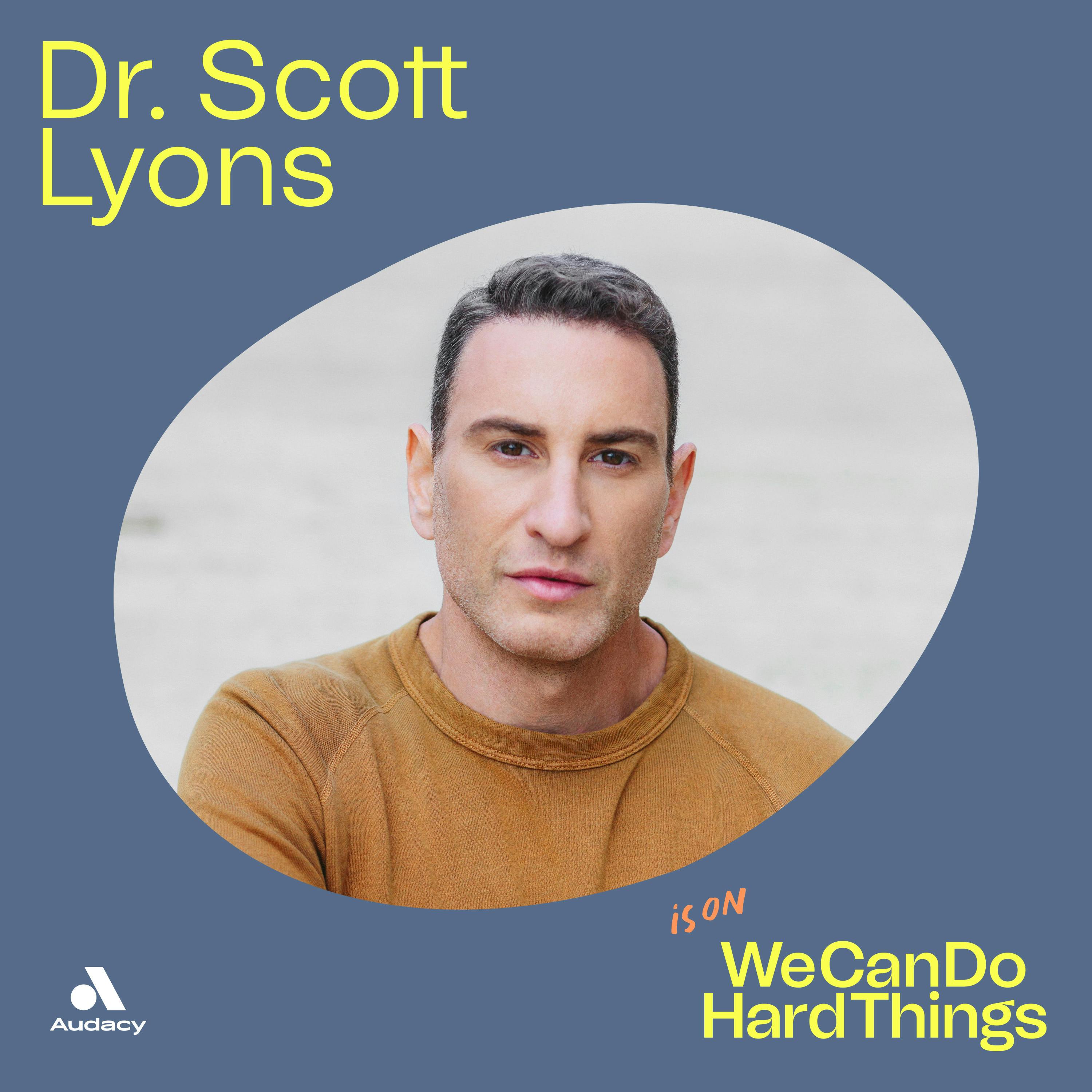
We Can Do Hard Things
Are You Addicted to Drama? How to Know & How to Fix it with Dr. Scott Lyons
00:59:49
Loading summary
Transcript248 lines
- [00:00]
Glennon Doyle
No Bull is a footwear brand for training and for daily life, built to support you in your pursuit of physical, mental and emotional strength. No Bull is known for their best in class award winning footwear. It's the shoe for everyday life. If you change up your workouts but want one pair of a stable and reliable shoe, you can trust the Noble drive to get the job done. No matter what your choice of movement is or how you choose to take care of yourself physically, mentally and emotionally, you can trust no Bull has the footwear options you need. Exclusively for We Can Do Hard Things listeners, no bull is offering 30% off your order. Visit www.nobleproject.com backslash hard things for 30% off your entire order. That's www.dotn o b u l l p r o j e c t dot com backslash hard things for 30 percent off. If you've listened to We Can Do Hard Things for a While, you know how important acceptance is when it comes to personal growth. And you know who else is big on acceptance? Discover. You see, Discover is accepted at 99% of places that take credit cards nationwide. That's a whole lot of places and a whole lot of acceptance, which is great for Discover, but even better for you. Based on the February 2024 Nielsen report. Learn more at discover.com credit car.
- [01:49]
Abby Wambach
Hi, Dr. Scott Lyon.
- [01:52]
Dr. Scott Lyons
A gay boy's fantasy.
- [01:58]
Amanda Doyle
I hope we're recording that because that.
- [02:00]
Abby Wambach
Was a great entree.
- [02:03]
Dr. Scott Lyons
I need to know something before we start. Yes. First of all, I love you all.
- [02:08]
Abby Wambach
Oh, we don't know.
- [02:08]
Dr. Scott Lyons
Oh, my gosh.
- [02:09]
Glennon Doyle
Same.
- [02:10]
Dr. Scott Lyons
Thank you for having me. I like, I'm sweating, I am nervous, but I am thriving because of this. So thank you.
- [02:18]
Abby Wambach
Well, you know, I'm always sweaty and nervous, so we are already bonded. We're trauma bonded.
- [02:25]
Dr. Scott Lyons
We are drama bonded. So I saw that you had Shira on the show and I saw how you prepared for it, which was like singing and dancing. And I'm not gonna lie, I wish I was there. How did you prepare for the drama?
- [02:38]
Abby Wambach
We don't have to, Scott. I've been preparing my whole goddamn life.
- [02:42]
Dr. Scott Lyons
Oh, my love. Me too.
- [02:44]
Abby Wambach
Yes. Truth. I did. It's interesting. Well, I heard you a while back on some podcasts and I was like, oh, I really. I related for myself, but I related for all of us. Yeah, it's so pod squad. So here's what we're doing here with this absolute love bug, Dr. Scott Lyons. So we're in this moment of what could be considered sort of a nexus of fear and drama and the unknown and everyone sort of frenzied. And because I have had so much drama in my life, I actually always see those as interesting moments, like when everybody gets so freaked out that you're almost at a breaking point. That's my time to shine. I feel like this is the moment where we can say, oh, our lives have become unmanageable so we can try a new way. I feel like we have an opening here. Right. It's like we've been in a codependent relationship with the world, trying to see if it will get okay so that we can be okay and we can finally say, oh, that's not gonna happen. The world is never going to bring us peace, so we have to find it in ourselves. And I think that you were made for just such a time as this. Dr. Scott Lyons.
- [04:23]
Dr. Scott Lyons
Thank you for making me blush a lot. You're so sweet. I think we have been in a very codependent relationship with stress. Yeah. And we have been using it to thrive in a way that is not towards our best interest anymore. Wherever, really. But it is a time to break that codependency.
- [04:47]
Abby Wambach
Okay, well, I want you to know that you have 45 minutes to break our codependency, so let's get right into this. First of all, y' all, I love.
- [04:56]
Dr. Scott Lyons
Urgency, so thank you.
- [04:57]
Glennon Doyle
Exactly.
- [04:59]
Abby Wambach
I know all the pot squatters are already in love from the last 45 seconds, but if you don't know Dr. Scott Lyons, and you should. Dr. Scott Lyons is a licensed holistic psychologist, educator and author of the best selling book Addicted to Drama Healing Dependency on Crisis and Chaos. Listen to that again. Pod Squad. Healing Dependency on Crisis and Chaos in yourself and others. Scott is also the host of the Gently Used Human podcast, a delightfully depthful and often hilarious exploration of what it is to be human, to have lived life and come out gently used.
- [05:39]
Glennon Doyle
That's great.
- [05:40]
Abby Wambach
As a renowned body based trauma expert and mind body medicine specialist, Scott also helps people to break free from cycles of pain, limited beliefs and trauma. So, Dr. Scott Lyons, tell us about our codependent relationship with stress and how we might know if we are a drama addict. First that and then if other people in our lives are drama addict. We will start with the man in the mirror. Dr. Scott Lyons.
- [06:14]
Dr. Scott Lyons
How brave. I know because I think all of us can say, oh, we know that person who. Who makes mountain animal hills, who's addicted to the gossip, the venting, all the ways in which we're stirring things up. But it's never usually us but it often is in some capacity. And I think it's helpful to kind of start with a little definition of what drama is, and then we can talk about what stress does for us, the value of it, and why we might become dependent on it. So drama's this unnecessary stress and turmoil. It's the exaggeration. It's the intensification of behaviors and emotions and stories. It's a disproportionate amount of energy and emotion and attention to what's happening versus what the situation actually needs. It's like blowing a birthday candle out with a fire hose, which I did a lot as a kid. Just so we're clear, I mean, we're not talking about the man in the mirror who's addicted to drama, y' all. I am talking about me and many of us, and I just. I want to normalize it, because we can get so caught up. And I'll talk about the ways we identify it, but we can get so caught up in the person who's doing all these actions that are so overwhelming to us and so overwhelming to the world, and we often miss what's underneath it. The why. And I'll talk about the why in a minute, but let's get to the juicy stuff, which is, what does it look like? So it's the person, like I said, who makes mountains out of molehills. They're constantly venting. They're gossiping. They're over scheduling. Over scheduling, y' all. They're busy all their time. They are constantly doing, doing, doing. And it's really hard to just be. Stillness feels like a plague, you know? And they're using language that's intense and exaggerated. They get bored when things are calm. They get frustrated when things are not at a certain level of intensity or they don't feel like they're thriving if things are not a certain level of chaos. So they wait till the last minute for things. I see a little head nod. So I'm feeling like we can relate.
- [08:38]
Amanda Doyle
To some Nicole, Universal to all of the above. We're with you, Scott.
- [08:43]
Dr. Scott Lyons
Yeah. Sometimes it's an adrenaline junkie. Right. They need that high, high, high. And it shows up in the relationships as constantly being in these relationships that have these high highs and low lows. And lord have mercy, I have done so many of those. Oof.
- [08:59]
Glennon Doyle
Yeah.
- [08:59]
Dr. Scott Lyons
And it is part of the addiction, that intermittent love. Ooh. It makes the highs feel that much higher. And when you have had such trauma in your life that you become numb, which is often the case for those of Us who've had an addiction to stress and drama and busyness, we need something above that threshold of numbness to feel anything.
- [09:25]
Amanda Doyle
Is it like a tolerance, like if you need to drink more to get drunk or you need more chaos to even have you feel anything?
- [09:32]
Dr. Scott Lyons
Totally. I used to think that I was so. I had this incredible ability to just manage stress. I was in two grad schools at the same time. I was in a really awful, abusive relationship. I was navigating an internship. I was. Had two different companies I was running. I was like, whoa, I can really handle the stress. But the reality is, is that I had such a high tolerance like others who have a high tolerance for alcohol. And until you overdose, until you have too much, you don't realize it wasn't that you have a lot of resilience, it's that you built a certain tolerance because you need more to feel more or you need more to get drunk. And I needed more stress to feel that sense of aliveness because the numbness, the malaise, the ache, the pain that I was trying to avoid was so prevalent, was so real. Wow.
- [10:26]
Abby Wambach
Okay. So, yeah, we shake up the snow globe. We shake ourselves outside.
- [10:33]
Dr. Scott Lyons
Yeah.
- [10:34]
Abby Wambach
Because when I was listening to you on a certain interview, I thought, this reminds me of the kiddos who write to me about cutting. I really get it. I understand what function that. Which. There's like this underlying emotional ache or pain that is so nebulous and confusing and untouchable that it becomes intolerable. And so the only way to distract from that underlying thing is to create something on the outside of your body where all the pain coalesces and you can see it and you can control it and you can explain it and it makes sense.
- [11:15]
Dr. Scott Lyons
Beautifully said.
- [11:16]
Abby Wambach
Is that an especially dramatic metaphor for this?
- [11:20]
Dr. Scott Lyons
We chase the drama to avoid our trauma.
- [11:23]
Glennon Doyle
Oh, shit.
- [11:24]
Abby Wambach
Oh. We love it when things rhyme. We really get it when it rhymes. I'm from the Christian community.
- [11:29]
Dr. Scott Lyons
We.
- [11:29]
Abby Wambach
We love things that rhyme. If it rhymes, we believe it's straight from God. So. Thank you.
- [11:35]
Glennon Doyle
I just wanna talk about the physiology of this.
- [11:37]
Dr. Scott Lyons
Yeah.
- [11:38]
Glennon Doyle
What's going on? What's the brain chemistry, the why of it all, like a little backdrop?
- [11:43]
Dr. Scott Lyons
I love that question. So what does stress do? We often think of stress as, like, the big, bad boogey monster in the closet that just makes us sick? Wrong. Stress does some amazing stuff for us, including pain relief. We release endorphins as part of a stress release.
- [12:00]
Abby Wambach
Wow.
- [12:01]
Dr. Scott Lyons
We are more bonded to each other through a stressful encounter. It is a social glue yes. If you've been through shit together, you grow together.
- [12:11]
Glennon Doyle
That's right.
- [12:12]
Dr. Scott Lyons
Right. There's a great study in Australia that came out that there was one group that put their hand in ice cold water and it hurt. And another group who put their hand in neutral tepid water didn't have the stress of the cold water. The group that had their hands in the ice cold water bonded better and performed better on the tasks that they were given.
- [12:36]
Glennon Doyle
Wow.
- [12:37]
Dr. Scott Lyons
Stress also gives us energy. It's like a boost. It's like taking coffee or some other type of fun stimulant. Name your stimulant of choice, but it actually does that. You get this cascade of, of hormones that give you this boost of energy. And when you're in kind of a malaise of life, when you're sad, when you're low, when you're down on energy, get stressed, and it gives you more sensation. So it goes back to that numbness. You know, one of the things about trauma is it splits us apart. It creates all this fragmentation. It fragments us from feeling ourself. It fragments us from feeling in relationship. And consequently, we are very much alone. And that pain, that lonely pain, is indistinguishable from a physical pain. It's the same neural circuitry. And we as humans are designed to find relief from suffering and pain. So how does that work in terms of the physiology of it, the brain chemistry? Let's look at endorphins. You go for that good soccer game or you go for a run, you get that high. That's an endorphic release. And endorphins are these natural chemicals in our brain that produce feelings of pleasure and pain relief and emotional warmth. Yeah, that's a big one. The emotional warmth, it gives us a sense of social bonding and emotional regulation.
- [14:09]
Abby Wambach
Oh, that's why gossip feels so good at first. Ooh, it feels so good at first.
- [14:14]
Dr. Scott Lyons
Yeah. It's an in group activity. It feels like a bonding, something special that you and I share. We'll talk about it later. But not to everyone else. No, no, I'm just kidding. It's an in group experience. It makes us feel special. Right. And so what's interesting is individuals who've experienced developmental trauma, who've had a lack of emotional nourishment or bonding, are susceptible to. To addictions because they're lacking those opioids, those endorphins.
- [14:44]
Abby Wambach
Wow.
- [14:45]
Dr. Scott Lyons
And so it leaves us more vulnerable to seek comfort from things external to us, including. And this is the crazy part, because we get endorphic, we get opioids from drugs like heroin, for example. But we also get it, and this is the wild part, from emotional stress, anxiety, fear. We actually get an endorphic response as part of stress. And it fills the void of so much of that bonding and nourishment and connection that we have been craving.
- [15:21]
Amanda Doyle
Wow, Scott, did I just hear you say that? If you've had trauma developmentally, when you're young, your baseline of those naturally occurring opioids is lower than your average person, A hundred percent. So we're just trying to bring it up to baseline.
- [15:39]
Dr. Scott Lyons
You're trying to bring it up to baseline. That is why people who've had emotional, developmental, relational trauma are more susceptible to drug addiction.
- [15:48]
Abby Wambach
Wow. So if you're out there listening and you are a person who is a gossiper, who is somebody who dramatizes everything, who's, you know, starts the thing in the room, who over schedules so that then you're too busy, who takes on stress and stress, you, you all like, that's. I am a recovering alcoholic and a food addict. And you're just addicted to the thing that's rushing through your blood because of that thing. It makes so much sense. It can be so forgiven. It's like just the same as booze or food at Right.
- [16:18]
Dr. Scott Lyons
A hundred percent.
- [16:19]
Abby Wambach
You're dependent on it. You're dependent on the chaos.
- [16:22]
Dr. Scott Lyons
Gabor Mate has this great quote that says, don't ask why the addiction, ask why the pain. And I continued with that and go, let's not just ask about the pain. Let's evaluate what gives us relief from that pain and not shame it.
- [16:49]
Abby Wambach
Okay.
- [16:49]
Amanda Doyle
I'm excited to tell you today about MIDI Health. If you have heard our menopause episodes, you know how passionate I feel about women having access to information about their bodies and about something that so fundamentally affects their lives. Here's the deal. If you're over 40 and you're starting to experience some of the symptoms of perimenopause or menopause, if you're having hot flashes, insomnia, brain fog, moodiness, all of this can be related to perimenopause or menopause, log on to MIDI Health. I have done this. It is easy. In fact, I have recently been pursuing with MIDI Health, hormone therapy to replace some of the hormones that are diminishing in my body. They're clinicians. They meet with you and they suggest specialized care for your health concerns. It's all through telehealth and 247 messaging, and they call in your prescriptions to your local pharmacy, you deserve to feel great. Book your virtual visit today at join Midi. That's joinmidi.com okay, if you were fixing.
- [17:57]
Abby Wambach
Your bra straps, fussing with digging wires, or battling your bra during this podcast, stop right now. You'll want to hear this. Those bra problems. Those bra blems you thought you had to live with, ThirdLove has solved them. They take the frustration out of bra shopping and make it easy to get what you want, whether it's ultimate cleavage, a smooth look, or stopping your shirt buttons from pulling. They feel amazing too, with a perfect fit in over 60 sizes, including half cups that you won't find anywhere else. With half cups, you're never stuck between two sizes that don't fit. And real women test every style before it's given the green light. And their bras don't just look great, they're made from top quality materials for comfort and support, whether you're a double A cup or an H cup. So stop settling for bad bras. Now's the time to treat yourself and get your problems solved. Save $15 on your first order with code PODCAST15@thirdlove.com as a small business owner.
- [18:56]
Glennon Doyle
I've learned that hiring isn't just about filling a role. It's about finding someone who's the right fit for your team, your culture, and your mission. And let's be real, when you're running a business, you don't get to clock out at 5. That's why I use LinkedIn jobs when I log off for the night. LinkedIn is just getting started putting my job posts in front of qualified candidates, backed by deep insights and smart targeting. The last time I was hiring, I posted a job for free using their new job description tool, and within days I had applicants who were not only experienced but genuinely aligned with my business values. It made the whole process smoother and way less stressful. And when I shared the post with my network and added the hashtag hiringframe to my profile, I doubled the qualified applicants. Post your job for free@LinkedIn.com hardthings that's LinkedIn.com hardthings to post your job for free. Terms and conditions apply.
- [20:05]
Abby Wambach
Dr. Scott, if stress is bringing us all of these things, yeah, what's the promise in quitting? I understand why I had to quit drinking because I kept getting arrested and people were very upset with me all the time and I kept almost dying. Okay, so I feel bad for people who have this sort of addiction because they don't get arrested. It's like this sort of Addiction is applauded a little bit because you're serving people. So why do they need to quit? What will happen?
- [20:35]
Dr. Scott Lyons
There are significant social consequences. That's the nature of any addiction. They might be more invisible at times, but if you look at those of us who've had an addiction to drama or stress or busyness or chaos, however we want to say perpetuates the loneliness that's feeding the addiction to begin with.
- [20:56]
Abby Wambach
Whoa.
- [20:56]
Glennon Doyle
Boom.
- [20:57]
Dr. Scott Lyons
Sure, you know it's lonely. It's lonely because the thing that we crave most, which is that bonding, which is that connection, which is the healing of that separate and fragmented nature of ourselves, is so terrifying to contact. Because the moment we come into relationship with someone else or ourselves, we're coming closer to the very thing we have been trying to avoid. Because the senses, we will drown in the pain of it.
- [21:27]
Abby Wambach
Yeah. So it's just basically saying constantly, look an eagle, look an eagle, look an eagle. That's what it is. It's an avoidant strategy.
- [21:36]
Dr. Scott Lyons
Yeah.
- [21:36]
Abby Wambach
You're avoiding your own shit.
- [21:39]
Dr. Scott Lyons
You are avoiding your own shit because you probably did not ever have the support, the time, the space, the resources to attend to it in the first place. And now it's too hard to get those resources of support and time and space because it feels too vulnerable to even connect with those types of resources or people that could provide them. Because the consequence is it is potentially more harmful. What we perceive as safe for those of us who have an addiction, and especially an addiction to stress, does not feel safe. Relationships do not feel safe. Settling calm, relaxed doesn't feel safe because we're at the mercy of the next potential threat.
- [22:27]
Abby Wambach
Oh, my goodness.
- [22:29]
Dr. Scott Lyons
Yeah, it's sad.
- [22:30]
Abby Wambach
It is sad. It's like every addiction, it's sad. You're doing it to get something that you feel and think you really need and then you realize that it's not the thing because it's blocking us from the connection and the peace that we really do want.
- [22:44]
Dr. Scott Lyons
Yeah. And it is harmful. I mean, when you talk about, like, you know, you might not get arrested for an addiction to stress, but it is creating a toxic system. You know, that constant pouring of cortisol in your body after a while shuts you down. It did to me. Ended up in the hospital for weeks.
- [23:06]
Abby Wambach
Tell us your story. How did you come to all this?
- [23:09]
Dr. Scott Lyons
Oof. I grew up in a house of chaos. There was addiction and abuse, and it became my norm. It makes sense that I lived in New York for 20 years because that high, fast paced, drama filled city felt like home. It was a repetition compulsion. I was looking for the familiar. And, you know, for me, the currency of love in my house, how you got love. And this is a question I always ask people. What was the currency of love in your household? How did you know your value and your worth? For me, it was by doing. The more I did, the more I achieved, the more I got love or attention. But not just that. When I was sick or things were wrong is when I would get the most attention.
- [23:58]
Glennon Doyle
Whoa.
- [23:59]
Abby Wambach
I get that.
- [24:00]
Dr. Scott Lyons
It was never when I was just being.
- [24:05]
Abby Wambach
Yep.
- [24:06]
Dr. Scott Lyons
And so I learned that being wasn't the way that you would get love. It was by doing and by perpetuating wrongness or challenge or stress. And I did that in my relationships unintentionally or I sought relationships that could never settle or rest.
- [24:25]
Abby Wambach
Hmm.
- [24:26]
Dr. Scott Lyons
And at a certain point, I collapsed. I was doing so many things because I again, I built that tolerance up. And it was like, applauded, like you said. People cheered me on. Like, I can't believe how much you've done at such a young age.
- [24:40]
Abby Wambach
Yeah.
- [24:41]
Dr. Scott Lyons
And at a certain point I went into cardiac arrest and collapsed.
- [24:46]
Abby Wambach
Wow.
- [24:46]
Dr. Scott Lyons
And it was such a wake up call for me of going, this is not sustainable. And of course I went into cardiac arrest because I'm dramatic.
- [24:56]
Amanda Doyle
Sure, you just have a nervous breakdown. Like the rest of us could have.
- [25:00]
Dr. Scott Lyons
Had a nervous breakdown. But no, I had to go to the polar extreme to, like, figure my shit out. You know, it's one of those things where, like, I still get annoyed. But it's so true that pain is such a catalyst.
- [25:15]
Abby Wambach
It's such a catalyst.
- [25:17]
Dr. Scott Lyons
And if you're already numb to a pain, you have to keep upping the level of it to get to the point where it knocks you down. To become the catalyst you need to change. Yeah.
- [25:27]
Abby Wambach
And that's the moment.
- [25:28]
Dr. Scott Lyons
That's the moment.
- [25:29]
Abby Wambach
That's the breaking point. Right. Is that we're all in a heart attack. When you're talking about that. I'm thinking about my third grade classroom. And it's so interesting because if drama addiction, I guess the way you're describing it, it could be just stress achievement related. That's this one type of drama addict. Just so much stress, taking on so much. I'm over scheduled, I'm over busy. That sort of stress. But it feels to me like there's a different type that is in my class, the ones who got attention by acting out.
- [26:01]
Dr. Scott Lyons
Yeah.
- [26:02]
Abby Wambach
Right. So you, like, it's overachievers or underachievers and both of those types of people get all the attention, Whether it's in a classroom or in the world. None of us celebrate the 60% in the middle who are just being so. Of course, we wouldn't know how to celebrate that in the real world. We consider that boring.
- [26:24]
Dr. Scott Lyons
Yeah.
- [26:25]
Abby Wambach
So interesting.
- [26:27]
Dr. Scott Lyons
And attention is the. The main commerce that we exist in now. We live in an intentional economy. And it's how marketing works. It's how we try. Even on social media, even if we're not running a company, we are our own brand seeking attention. And all the world's the stage for it. And there's this competition of attention. And the scariest part of it is the thing that captures our attention most is a stress response that induces awe, anger, or fear. And so what are we being awe, anger or fear. And we are being rewarded. So we get that dopamine hit when we get the attention. But how are we capturing and maintaining people's attention? What is the cost to them and what is the cost to ourselves?
- [27:18]
Abby Wambach
It helped me very much to hear you talk about the process of how it gets us and starting with like the revving. I think about the revving every day now because I used to think revving meant go. Now I know for myself that revving means stop. So can you talk to us about how it happens in our own bodies?
- [27:40]
Dr. Scott Lyons
Yeah. So we might start with seeking stimulus or creating situations that induce kind of a stress. And we call that and activation. So we're essentially releasing all this energy into our body. It's hormone related, it's nervous system related. And we're revving ourselves up. We're preparing for action. Essentially. That's what's happening in the physiology.
- [28:05]
Abby Wambach
So give us an example. Talk to us about. That's when somebody comes to you and starts talking shit or you start to get mad at somebody. Like what might happen?
- [28:13]
Dr. Scott Lyons
Yeah, Like I'm at a grocery store, I'm waiting in line and I'm noticing it's just taking too long for me.
- [28:21]
Abby Wambach
For me.
- [28:22]
Dr. Scott Lyons
And we're all nodding. This is relatable. This is relatable. And we're in line and then we're going. They're talking too much and I'm so busy. They're not appreciating my time. And I'm just building narratives and stories that rev me up that get. Build this stress response. And I have all this energy and kind of know where to go. So often it becomes this explosive catharsis. We start yelling at someone. We deposit that energy onto another situation or thing. Totally avoiding ourselves and our own causation of that. And that revving can also be like, why are you continuing to watch the news past the point to which you have received enough? And you keep downloading and getting more and more stimulation, more and more drama, more and more violent images. You've heard the story once, do you really need it again? That's a form of revving. What is it doing for you?
- [29:25]
Abby Wambach
And since I've heard that term, I always think about revving partners. So whenever I get revved many times a day, Pod Squad, think about your revving partners. You know exactly who you can call. Who is the person who will rev you right up, who will get in there, who will say absolutely that mfer. It can be a person, it could be Instagram, it could be your own brain, Old stories, the news. And then you think about the person you wouldn't call the rain on your parade, the person who's not like, Abby would be my non revving partner. I would call her and she'd be like, what's the big deal? And I'd be like, well, that sucks, this is over.
- [30:10]
Amanda Doyle
I guess then you could rev on her because can you believe this bullshit?
- [30:14]
Abby Wambach
She doesn't even know what the big deal is.
- [30:16]
Dr. Scott Lyons
So Abby is clearly not your drama bonding partner in this situation.
- [30:20]
Abby Wambach
Right? Right.
- [30:21]
Dr. Scott Lyons
And it's such a great example of like those who we call or those who we hang around to, drama bond and co rev together. And we do see that on the Internet. We do see that on social media. All time. You're leaving a comment. How are you participating in the conversation? And what does that do to your nervous system? What does that do to your sense of peace and ease and calm? Does it promote it or does it move away from it?
- [30:48]
Abby Wambach
So Scott, is that all to build up the energy? That's to build up the co revving is to build up this adrenaline. And then what's the next stage? Because I know what the next stage is. What's the next stage?
- [31:03]
Dr. Scott Lyons
Well, in that stage is also when you're getting the pain relief. I want to hang out there a little bit longer because there's some benefits and there's some reasons that we talked about. Like you get the pain relief, you get the endorphic high, you get the sense of connection, but then comes the catharsis explosion. What do we do with all of that that we've revved ourselves up with? And it's explosive. Almost always it's explosive. I see you cringing a little bit. Tell me what's Going on my love.
- [31:35]
Abby Wambach
Well, I can feel in my body this process that you're saying.
- [31:37]
Dr. Scott Lyons
Yeah.
- [31:38]
Abby Wambach
I know it well. I know the moment comes. I think it's half excitement, it's half fear, and then reaching out to get corroboration, to justify my own fear, to justify my own judgment. Then I get all that energy or whatever build up in my body, and then. I know what you mean. It has to go somewhere. And then I do something or say something regrettable.
- [32:02]
Glennon Doyle
Yes.
- [32:02]
Abby Wambach
And then I feel eventually ashamed.
- [32:07]
Dr. Scott Lyons
Yeah.
- [32:08]
Abby Wambach
And that is the whole process for me. So there is that phase too, which is the.
- [32:13]
Dr. Scott Lyons
There's the withdrawal process, which is often it comes with a little shame. For a moment, we feel like we have this sense of peace, which is false.
- [32:22]
Abby Wambach
Yes.
- [32:23]
Dr. Scott Lyons
It's collapse. And collapse. It is collapse. It is not generative. A relaxation response is generative. And meaning we're building more energy in a collapse, we are literally just going down. And after that catharsis, that explosion or the panic attack, it shows up in different ways. Right. If we don't know how to express it or deposit it or throw it at someone or say that regretful thing, it might just show up as anxiety and a panic attack that takes us down.
- [32:54]
Glennon Doyle
You talk about there's some positive effects of what's happening in the body physiologically and, you know, obviously, like emotionally between people bonding.
- [33:04]
Dr. Scott Lyons
Yeah.
- [33:04]
Glennon Doyle
Is it ever good? Is there like a limit or a. An amount, a minimum that we can be like, we're good. Cut it off.
- [33:12]
Amanda Doyle
Yeah. You get five doses of drama a day. After that, it is too much.
- [33:18]
Glennon Doyle
Yeah.
- [33:18]
Dr. Scott Lyons
I love this drama diet. I'm here for it.
- [33:21]
Glennon Doyle
Yeah.
- [33:22]
Dr. Scott Lyons
You know, I think it's going to be different for different people, but essentially I think the ideal is that you don't need these sources to feel alive. You don't need these sources of stress and strain and bad relationships or toxic relationships or the news to feel some sense of relief and avoidance. I mean, if we're truly more healed, then we're not chasing all of these other stimulus. We actually produce it.
- [33:50]
Glennon Doyle
Got it.
- [33:51]
Dr. Scott Lyons
Our baseline has maybe not all the ups and downs, but it has energy and sustainability and adaptability. We know the right amount of attention and energy and emotion. We need to be in the world, to be in the dance of life. And we have flexibility. What we're talking about here is a lack of flexibility. We need the extremes to feel alive. We need the extremes to feel a sense of pain relief. We need the extremes to feel connected to people because we actually don't have Any other choice.
- [34:23]
Glennon Doyle
And I would also argue, because I'm also sober almost nine years now, and I have had to adjust that baseline and I have to maintain it. But because I'm doing it in a sober way, when I'm actually developing those actual physical. The chemicals and the feelings that I was chasing with alcohol and prescription drugs, I actually am experiencing them a little bit higher than baseline because I'm doing it in a healthy and intentional way. It gives this boost, if that makes any sense. I don't know.
- [34:59]
Dr. Scott Lyons
It makes all the sense in the world. If addiction of any sort is your spice of life, when you take it away, when you take away the amount of stress, when you take away the drugs or the pills, it will feel like life is boring. That's part of the withdrawal. And often in the withdrawal is where we get bored and closer to the pain. So we keep using. But if we can sustain and tolerate the discomfort of the withdrawal, the boredom, life starts to, like, fill in. We start to fill in back to ourselves where we've been booted out, dissociated from, and we start to feel the nuances, the taste, the spices of light that don't require to dump in the whole thing of salt and pepper to feel and taste anything of life.
- [35:46]
Abby Wambach
That's right. That's right. It starts to fill in. That really tracks for me at first. It's boring, though. Let's stay there for a second because it's so boring. Let me give you an example. One of the ways that I identify with this is like the talking shit thing. In our family, that's a thing. We bond. I can picture us around like, a. The kitchen island or a table, and, like, we can get started on somebody. It's like our family's protection mechanism or something. I don't know. Okay, So I have identified this like a year ago as an issue, okay? And I am an instigator of it in my family, okay?
- [36:32]
Amanda Doyle
I identified as an issue because I am the issue.
- [36:35]
Abby Wambach
I am the issue. I have taught it like a religion to the masses of my family, okay? But, Scott, now, honestly, because of you, I understand the revving. I don't want this in my life because it's all just a version of gossip. It's like, yes, it makes you feel good for one second, and then it's icky. It's like a fake bonding, and then it's icky. And actually, it makes you feel connected for a moment, but it makes you actually supremely disconnected because nobody trusts you. So I do not want this in my life.
- [37:08]
Glennon Doyle
Yeah. As soon as you walk out of the room, you're like, is she talking shit about me now?
- [37:11]
Abby Wambach
Of course. But it's hard to break, because when I feel the revving now of it's time to talk shit, it's time for a character assassination of someone. I have this thing I do now where I say, so if one of my kids comes and says, did you see that thing that she did? Or did you hear what she said? I say, yeah. I mean, I guess my most generous interpretation of that is, I have noticed.
- [37:38]
Glennon Doyle
You'Ve been doing this.
- [37:40]
Abby Wambach
And, Scott, I love that. I feel like the Dalai Lama when I say it. But do you know what happens?
- [37:49]
Dr. Scott Lyons
What?
- [37:50]
Abby Wambach
It's like the room was inflated with energy. My kid's face is like this. And then it's just like, I feel it. They're like, all right. Then there's like a silence. Nobody wants to respond to anybody's generous interpretation of somebody. And then the conversation is over. But I feel like it's building trust in a huge way. Like, it shifts. You can see a little flicker in their eye of like, wow. Boring, but cool.
- [38:22]
Amanda Doyle
Well, it probably also changes the entire experience. Cause if your whole family knows that as soon as someone leaves the fun is going to be talking about the thing, then you spend the whole time looking for the thing you're going to talk about.
- [38:35]
Dr. Scott Lyons
So. Well said. You're seeking the crisis, the chaos, the stress to sort of be the fuel for relationality in that way.
- [38:43]
Abby Wambach
Oh, yeah. Which makes you never trust that person with yourself.
- [38:47]
Dr. Scott Lyons
No.
- [38:47]
Abby Wambach
Because you think they're doing it to you also.
- [38:49]
Dr. Scott Lyons
I mean, did you trust yourself in a way of kindness when you were doing it?
- [38:53]
Abby Wambach
No, not at all.
- [38:56]
Glennon Doyle
But my question is, like, what's the deeper. Why all of us families? I think it's a familial thing, especially when we're parents now. It's like, I think it's our greatest secret. We never talk about this dream that, like, our kids think that we have the best family. And I think that all parents in the world share the same secret belief, but you would never say it out loud. And so I think that in support of that secret desire.
- [39:21]
Abby Wambach
Ah, yeah.
- [39:22]
Glennon Doyle
We want to create an environment where if a kid comes in and tells a story about another family, we can go straight into demonizing them just to keep perpetuating the idea that we have everything figured out over here.
- [39:37]
Dr. Scott Lyons
It's that in group mentality again. And it releases oxytocin. Yeah. So correct. By demonizing others, it creates more of an in group bonding. And that's the desire. Right? And that's actually what happens and it's the consequences are we create probably a not so safe environment in some ways.
- [40:08]
Amanda Doyle
Hey everyone. Summer is just around the corner and May is packed with reasons to celebrate. Whether you're grilling in the backyard, celebrating your graduation, or enjoying a long weekend with friends, getting the perfect spread for those sunny days doesn't have to break the bank. That's where Whole Foods Market comes in. I love how they make it easy to kick off the season with fresh produce, grilling essentials and so much more at prices that just feel right. I'm talking about things like their no antibiotics ever, ground beef, juicy boneless chicken breasts and those irresistible 365 organic salad kits. Plus keep an eye out for those bright yellow low price signs all over the store. I spotted a few yesterday and it's such a relief knowing I'm getting the best quality at a good, great price. Their House Brand 365 by Whole Foods Market is everything you need to host without stress. From organic condiments to chips, salsa and sparkling water. And of course you can shop in store or online for these amazing deals. So whether you're planning a big get together or just grabbing a few snacks for a sunny day, Whole Foods Market has you covered. Let's get this summer started right. Save on May celebrations with great everyday prices at Whole Foods Market.
- [41:11]
Abby Wambach
People talk a lot about spring cleaning, but let's talk Bombas spring socks because this time of year gets busy and the right socks can actually make a difference. For my spring walks, I grabbed a few new pairs of Bombas athletic socks and they seriously changed the game. No blisters, no slipping, just sweat wicking supportive comfort from start to finish. They're the perfect walk companion and for everyday stuff. Walking the dog, running errands, actual spring cleaning. Bomba socks hold up, they're cushioned, they stay put, and the arch support is no joke. Bombas started making socks when they learned that they're the number one most requested clothing item in shelters for people experiencing homelessness. So thank you for shopping with Bombas. You've helped donate over 150 million essential items. Now that's a lot of socks and a lot of kindness. Head over to bombas.comhardthings and use code hardthings for 20% off your first purchase. That's B O M B A S.com hardthings code hardthings@ checkout.
- [42:16]
Amanda Doyle
I have been using Bokeh for a few months now. And it is a feel good part of my daily routine. Bokeh is this toothpaste that doesn't feel like toothpaste. It feels like a sort of little delight. The flavors there is this flavor called lemon lavender. It's so refreshing. It's a little bit surprising. And it makes brushing your teeth feel more like a moment of self care and spa than chore. They use this thing that is a fluoride alternative that's inspired by nature and backed by science. It's actually a mineral your teeth are made of. So it helps strengthen and protect your enamel in a gentle way. And if you have teeth like mine, which chip, if you're even looking at them, this is the way to go. For a limited time, Bokeh is offering listeners 15% off its best selling toothpastes on Amazon and Boca.com with code Glennon15. That's Glennon15. Make the switch to Boca. For the whole family.
- [43:21]
Glennon Doyle
We have one child who we've tried very hard to get her to come to the dark side.
- [43:26]
Abby Wambach
We have.
- [43:28]
Dr. Scott Lyons
I love you. Go on, tell me more.
- [43:29]
Glennon Doyle
She just really, she just will not engage. She will just be quiet. And then if we say something or someone says something that is like bonkers, she'll be like, guys. And it kind of snaps us all out of it.
- [43:43]
Abby Wambach
She's just like, we could have so much evidence, Scott. It can be so obvious that this.
- [43:47]
Dr. Scott Lyons
Person is so juicy.
- [43:48]
Abby Wambach
And she'll be like, I like her. Like, God, she's freaking awesome.
- [43:53]
Glennon Doyle
Yeah.
- [43:54]
Amanda Doyle
I think something that might be under this whole phenomenon, and I notice in myself, I wonder if it's related to drama in general. Do we say those things when people leave? Because we are trying to identify where we end and someone else begins, where our boundaries are, where our values are. But we're doing it inversely. Instead of saying, this is who we are and saying, I'm not gonna let that happen to me, we're saying that person is bad. So it comes out in this way of, I'm going to so thoroughly defend myself against all of this without actually defending myself, because I'm keeping myself in it. But I'm talking about it as if that was defending yourself from it.
- [44:38]
Dr. Scott Lyons
I love that. I mean, there's this way in which we're talking about, like, how are we living our values versus demonstrating or showing them in maybe a negative light. Like by saying, these are our values, by saying these people are wrong, these people are bad, as opposed to actually living the value of, like to say, this family, that family over there, they're all toxic. They don't have any sense of family dinners at night and they watch TV past 9pm and as opposed to saying, here's what we believe in and here's how we're going to embody it and live it in a way of being, oh, cool. And that's such a different mentality. And I will say the former is more the drama when we're really focusing on the negative as opposed to. And other people and things outside of ourselves instead of how we are and how we want to be.
- [45:31]
Abby Wambach
It's everywhere. Like, I know that's a micro example of it, but if you think about Pod Squad, the whole world, your whole feed is just what we just discussed at our table. Everything is what did she do? Everything is shame based or politically or, you know, everything is built to get us revved up because somebody else did something that is shame based. Right.
- [45:56]
Dr. Scott Lyons
So dehumanizing. And we can only dehumanize other people if there's a certain level of fragmentation and dehumanization within ourselves.
- [46:05]
Glennon Doyle
Oh, that's really good.
- [46:06]
Abby Wambach
That's unfortunate. That's really good.
- [46:08]
Dr. Scott Lyons
Super unfortunate. Hurt people. Hurt people.
- [46:10]
Abby Wambach
Yeah, yeah.
- [46:11]
Dr. Scott Lyons
Traumatized people traumatize. Not with intention, but this is what happens. It seeps out in our behaviors and the way we interact in the world. And it is a responsibility within ourselves to not only look at our own healing, but how do we participate in the systemic healing so that that pattern stops.
- [46:30]
Glennon Doyle
Yeah.
- [46:31]
Abby Wambach
What do you think about true crime, Dr. Scott Lyons?
- [46:34]
Glennon Doyle
Oh, shit. Be careful with your answer.
- [46:36]
Amanda Doyle
Don't be careful, Scott. Give her everything that's coming to her, Scott.
- [46:40]
Dr. Scott Lyons
First of all, I love this tension. It's giving me life. Don't hate me. What is true? Climb. I don't watch that much television.
- [46:50]
Amanda Doyle
Oh, my God, you're so healthy.
- [46:53]
Abby Wambach
Okay, so to me, it feels like the pinnacle of this, which is that these are shows, podcasts or shows where you come to them on purpose, you turn them on, and they tell you a story that is so horrific and harrowing and murderous. And that is how people watch the murder.
- [47:17]
Dr. Scott Lyons
Yeah.
- [47:18]
Abby Wambach
As some sort of calming mechanism they.
- [47:22]
Amanda Doyle
Are to satiate the appetite for the mutilation and killing of women that is voracious in this country.
- [47:31]
Abby Wambach
Right. So what is that? Just the epitome of drama addiction or what is it?
- [47:36]
Dr. Scott Lyons
Yeah, I mean, we're. We're raising our cortisol levels. We're getting to this place of deep activation. And if it is our baseline, we are hitting normalcy. And that to us, feels safer. That's the thing is, what creates some false sense of safety? If we're at a level of high vigilance and high activation, not only does it feel familiar, because we always choose the familiar hell over something that's more of a calm newness, but it soothes that part of us that says stay vigilant, stay aware, stay awake, so to speak. And if we get that high, that rush, then maybe we can go, okay, I got it. I had that big catharsis. I said that awful thing. I watched that intense show. Now I can rest.
- [48:28]
Abby Wambach
Oh, that helps me understand that better. Thank you. Because I always judge that. But that helps me understand. It's just people trying to feel safer because they're used to that level of.
- [48:39]
Dr. Scott Lyons
They're trying to create normalcy. They're trying to reinforce normalcy. And, you know, there's a study that was done after the Boston bombing that I find so interesting, which is that those who watched four hours or more in the replay of it showed more signs of post traumatic stress disorder than those who were there. Wow.
- [49:03]
Abby Wambach
Oh, my stars.
- [49:04]
Dr. Scott Lyons
And so I continue to say to people, how much are you consuming and at what cost? How much do you truly need to see something, to know something before it affects you? And that's part of the challenge. And the problem is, so much of our technologies and our media has usurped our attention, has taken it from us that we no longer have the capacity to monitor and evaluate that question that is about our health.
- [49:36]
Abby Wambach
Damn, that's intense.
- [49:38]
Dr. Scott Lyons
I'm a little intense, love.
- [49:40]
Glennon Doyle
Yeah. I'm curious to know, like, if there are any for, like, the JV drama addict, the person who's just listened to this for the very first time, and they're just wondering, where do I begin?
- [49:53]
Abby Wambach
Yeah.
- [49:54]
Glennon Doyle
Are there any, like, initial beginner steps that we can take?
- [49:58]
Abby Wambach
Yeah. Because we don't know life without it. What does life look like without this? What does healing look like?
- [50:03]
Dr. Scott Lyons
No, it's so true. If we grew up in a stormy environment, then how do we know anything but the storm? And I think the first thing we can do is start to recognize where are we contributing to our own level of pain and suffering? And that's such a hard question and such an unfair question, but it's one that is absolutely needed. And sometimes when we can't do that, we can start with just a simple list of going, where are the things that are easeful in my life? And if that's hard for you, that's good information. And if you can't marinate in that list of good things. Also good information. If it feels like the moment you start to rest, to relax, to take a bath, to walk through a garden, to make a list of nice easeful things in your life, and you get distracted so easily. Welcome to the club, my loves. You got a little JV addiction of drama happening.
- [51:04]
Abby Wambach
Cool.
- [51:05]
Dr. Scott Lyons
And no shame. That's what I want to say is basically what you will eventually get to, is what is underneath that? What is underneath? The avoidance and the distraction. The ways in which you have been trying to maintain equilibrium in your life, but consequentially created a whole a lot of hurt at the same time.
- [51:28]
Abby Wambach
What are the people in your life like who are not addicted to drama?
- [51:32]
Glennon Doyle
Ooh, this is a good question.
- [51:34]
Abby Wambach
What are they like to be with? What do they do? Just, we've got to give people a vision of what life could be, to go through the pain of letting go of something, right? So what's the hope?
- [51:47]
Dr. Scott Lyons
I can talk about it from my own experience, too. And the people in my life who aren't addicted to dramas, like Abby. I call Abby, like, every day now.
- [51:57]
Glennon Doyle
I can't wait to get your number.
- [51:59]
Abby Wambach
You guys are gonna be so boring.
- [52:01]
Glennon Doyle
We're gonna be so boring.
- [52:03]
Abby Wambach
Life is fine.
- [52:05]
Dr. Scott Lyons
This is gonna sound so weird, like a psychedelic trip, but I was walking down the street. I just moved and I was walking and I was in a garden. I stumbled upon a garden, and I was like, oh, wow. The whiteness of this flower is just so stunning. It gives me so much sense of life and beauty. And I could never have stopped before. Especially when I lived in New York. Everything was a hustle and a sense of urgency. Even when I had nowhere to go, I was rushing. And to be able to find the moments where I could literally. I turned on some music and danced the other day, and the first time in years I was like, this is just easeful. Or I had a half an hour break in my wild schedule, and I just turned off my phone and just kind of hung out, did some breathing, and then did nothing. And I was like, whoa, this is fucking boring. But it is also gives me a sense of zest again, that sense of liveness in a way that's not synthetically created through stress and chaos and drama. It's like, life does feel rich. Life feels full. I feel full. You will feel full. All that sense of emptiness and loneliness that comes with the fragmentation of trauma. You get to come home and fill yourself back with you and the relationships that begin to emerge because you're home. To be in Those relationships, ah, they are deep, they are satisfying, they are fulfilling. They are what it means to be alive. And that is the promise.
- [53:53]
Glennon Doyle
And that's, I think, so important to hear that, especially with, like, teenage daughters and young men. Son, the high school years are so dramatically unbelievable, and it kind of wires them in a way to have this, like, elevated baseline. Right. And.
- [54:13]
Dr. Scott Lyons
Yeah.
- [54:14]
Glennon Doyle
And so, like, just staying in touch with your kids and trying to, like, bring down those dramatic, you know, vent sessions that they bring home after high school or even middle school. It's like wild how dramatic it can be. It's just like, this is such a helpful conversation.
- [54:29]
Abby Wambach
It's like drama addiction is like porn.
- [54:32]
Glennon Doyle
Yeah.
- [54:32]
Dr. Scott Lyons
Yeah.
- [54:33]
Abby Wambach
It's like once you get addicted to porn, you can't enjoy beautiful sex. It's like we had this air freshener. It was like the Rocky Mountains. Or the mountains. It was like this disgusting air freshener in our car. It smelled like synthetic. I don't know. And we got to the mountains. Remember we went to the mountains and our youngest was like, this doesn't smell like the mountains. That's like trauma addiction. It's like this fake synthetic thing that you get used to and then you miss the real thing.
- [55:08]
Dr. Scott Lyons
Yeah. Heroin is a replacement for the endorphins, for the opioids that give us a sense of bonding. Is it a true sense of pain relief and bonding? No, because it's momentary and it doesn't give us the satisfying sense of what it is when we actually come into true relationship with ourself and another human being or human beings, which does take away that pain so often.
- [55:37]
Amanda Doyle
So when we're in recovery, Scott, and we are building that up and creating our own non dramatic life experience, are we able to level up? Even if we have had that developmental trauma, are we able to level up so we're no longer operating at a deficit of the opioids in our brains? Like, we can do that through recovery.
- [55:58]
Dr. Scott Lyons
Yes. And it takes time. It takes a rebuilding of what safety means.
- [56:03]
Abby Wambach
Yeah.
- [56:05]
Dr. Scott Lyons
That's a big one. Oh, my gosh. It wasn't until more recently, after a really bad breakup and I was surrounded in this group of beautiful humans. And I just started crying and I couldn't stop. And these were strangers and they all just held me and the goodness of their heart. And it was like the first time in my life that I actually felt an embodied sense of safety. And I didn't know that I didn't have it until I had it.
- [56:40]
Amanda Doyle
Damn.
- [56:41]
Dr. Scott Lyons
And the depth of it. And for the first time in My life just following that. I didn't feel alone because I had this, and I could feel it. I mean, this wasn't too long ago, but it was a while ago. And, you know, it takes time to rebuild. It takes time to find pauses in the reflex of seeking the revving and the ways we do it. And it takes time to get to underneath the revving, into the trauma, into the content of what it was that is causing this pain and the subsequent numbing that had to come from it. And it takes time. This is one of the trickiest ones to give up our identity around the addiction.
- [57:28]
Glennon Doyle
Bam.
- [57:28]
Abby Wambach
Yeah.
- [57:29]
Dr. Scott Lyons
You all know that one.
- [57:30]
Glennon Doyle
Yes.
- [57:31]
Abby Wambach
That rings true.
- [57:33]
Dr. Scott Lyons
Identity is the repetition of being. That is the definition of identity. And if our repetition of being is feeling like we are a victim to the world, that the world's coming at us, but it's not with us, it is hard to give that up. And it takes time to go, who am I? And that time, that liminal time where we don't know who we are, we are absolute potential. And that is terrifying.
- [58:03]
Glennon Doyle
Yep.
- [58:05]
Abby Wambach
That's so hopeful.
- [58:07]
Glennon Doyle
Yeah.
- [58:07]
Abby Wambach
So hopefully. And it's bless their hearts. Their hearts. Bless their hearts.
- [58:13]
Dr. Scott Lyons
Bless all hearts. Bless your hearts.
- [58:15]
Abby Wambach
I can't imagine this, but, like, it does make me feel. Because we think of those kinds of people as look at me type people.
- [58:23]
Dr. Scott Lyons
Yeah.
- [58:24]
Abby Wambach
But actually, they're not at all. They're saying, look, an eagle. Because they don't want to say, look at me. They don't want to be seen.
- [58:32]
Dr. Scott Lyons
Yeah. People think it's about attention. It's not. It's about sensation. To feel alive. And the attention they get actually can't be received, not to the depth to which they are repairing the deficit of those endorphins and those opioids.
- [58:48]
Abby Wambach
Yeah. Dr. Scott Lyons, you are so important. You are so important.
- [58:54]
Dr. Scott Lyons
I love you all.
- [58:55]
Abby Wambach
Oh, this is so beautiful. I think it's gonna help so many people.
- [58:58]
Glennon Doyle
Yes.
- [58:59]
Abby Wambach
You all go to. We're gonna leave all the information for you. Go get Dr. Scott Lyon's book. I have it. It's wonderful. Go read all of his work and just keep that vision of the walking in the garden and really appreciating a white flower for the first time as the vision for why this is all worth it. You're wonderful. Thank you, Dr. Scott.
- [59:19]
Dr. Scott Lyons
Thank you, my loves.
- [59:21]
Glennon Doyle
See you next time. Pod Squad by.
- [59:29]
Abby Wambach
If this podcast means something to you, it would mean so much to us if you'd be willing to take 30 seconds to do these three things. First, can you please follow or subscribe to We Can Do Hard Things. Following the POD helps you because you'll never miss an episode, and it helps us because you'll never miss an episode. To do this, just go to the We Can Do Hard Things show page on Apple Podcasts, Spotify, Spotify, Odyssey, or wherever you listen to podcasts and then just tap the plus sign in the upper right hand corner or click on Follow. This is the most important thing for the pod. While you're there, if you'd be willing to give us a five star rating and review and share an episode you loved with a friend, we would be so grateful. We appreciate you very much. We Can Do Hard Things is created and hosted by Glennon Doyle, Abby Wambach, and Amanda Doyle in partnership with Odyssey. Our Executive producer is Jenna Wise Berman and the show is produced by Lauren Legrasso, Allison Schott, and Bill Schultz.