Loading summary
Transcript205 lines
- [00:00]
Glennon Doyle
Summer break is full of fun, but for many kids, time away from school can also mean a drop in reading skills and added stress on their mental health. That's why Macy's is proud to support two incredible organizations, Reading is Fundamental and NAMI, the National alliance on Mental Illness. Now, through September 14th, you can join us in helping kids and young adults get ready for their best school year yet. Donate at checkout in store by rounding up your purchase or make a donation online. Every contribution supports reading programs and access to vital mental health resources. It's easy to give and it makes a real difference. Together, we can help students stay strong, confident, and prepared for the year ahead. Learn more and give today@macy's.com purpose did you know the average bottle of water.
- [00:54]
Abby Wambach
Contains 243,000 tiny particles of plastic?
- [00:59]
Glennon Doyle
Yeah, it's shocking, especially with recent research showing microplastics in our bodies and even our blood. That's when I knew it was time to ditch plastic and get a water filter that actually works. I switched the LifeStraw home water filter dispenser and haven't looked back. It's the only water dispenser that filters over 30 contaminants, including bacteria, PFAS and yes, microplastics. And it actually makes your water taste good. I've noticed a big difference. No more weird taste, no more guessing what's in our water, and we're skipping plastic bottles now, which is great for the universe.
- [01:31]
Abby Wambach
Plus, for every product sold, a child.
- [01:34]
Glennon Doyle
In need receives a year of safe water. That's more than 11 million to date.
- [01:39]
Abby Wambach
Skip the plastic, go with LifeStraw.
- [01:41]
Glennon Doyle
Your body and the planet will thank you.
- [01:44]
Abby Wambach
Use Code hard things for 25% off.
- [01:47]
Glennon Doyle
Your first purchase of a LifeStraw home product@lifestraw.com and say goodbye to microplastics forever.
- [02:06]
Amanda Doyle
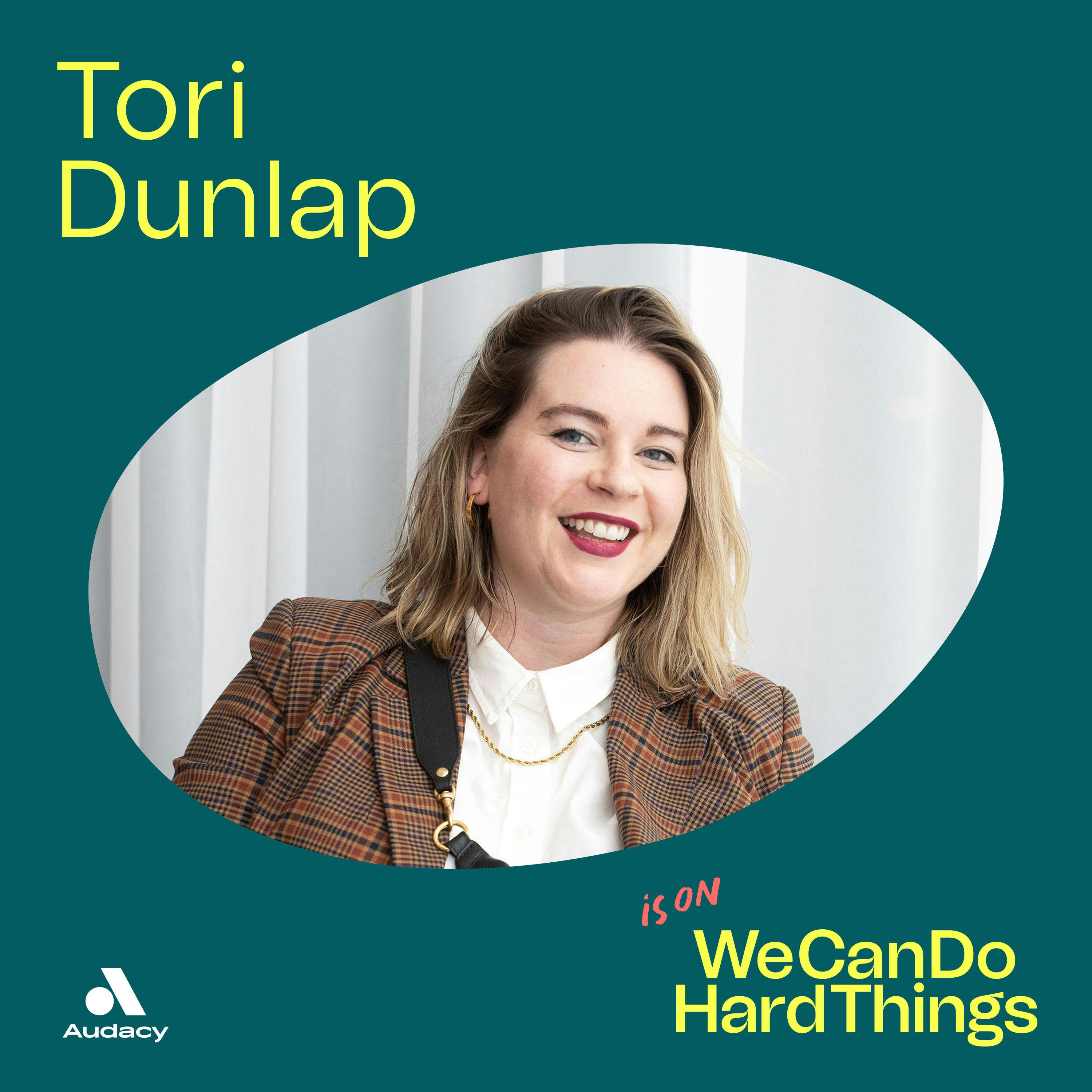
Tori Dunlap is the author of the Instant New York Times Best Selling Book Financial Feminist, host of the number one business podcast Financial Feminist, and co creator of treasury, an investing education platform that has over $82 million invested in. She has helped over 5 million women negotiate salary, pay off debt, build savings and invest and really, as you'll hear in this episode, sort of change their entire stories that they have around money. Because I am so terrified to talk about money. This is the first conversation I think I've ever had publicly about money. So sweatily. Let us jump in.
- [02:47]
Tori Dunlap
Tori, I'm so excited to meet you. Hi everybody.
- [02:53]
Amanda Doyle
Tori, what a genius.
- [02:54]
Abby Wambach
When we got to the part in your book with the Glennon and together Rising Shout out. We were like, what? It was so exciting. We were texting each other, like, ah, that's so exciting.
- [03:02]
Tori Dunlap
I can't cry this early. This is. My goal, is to get through this interview without crying. Yeah. I'm so excited to be here. Thank you for having me.
- [03:09]
Amanda Doyle
We're really grateful.
- [03:10]
Guest Speaker
I'm really grateful for you. Big fan. I follow you. I listen to all your advice. You're wonderful.
- [03:15]
Tori Dunlap
That's very sweet. Abby, do you know that you and I have met? I'm about to tell the most embarrassing story that's ever happened to me. Okay, so, Abby, you and I have met. It was 2019. I was in my early 20s. I was with my mentor in Seattle, and we were about to hear Liz Gilbert speak. And this has been. Yeah, I've seen her a couple times. I met her in college very briefly, and told her, you're who I hope to be when I grow up. And she goes, no, you're who I hope to be when I grow up. Which is the.
- [03:41]
Amanda Doyle
Sounds great.
- [03:41]
Tori Dunlap
It is. And there's this woman sitting next to us, and this person in the audience comes up to this woman and goes, oh, my gosh, I'm so sorry, but can I have a photo? And this person gracefully says, of course. And my mentor, who's so sweet, she's like my second mom. And she's so curious and so kind, but had no idea who this woman was, and goes, hi. I'm sorry. Like, who are you? And she goes, oh, I'm Abby. And my mentor goes, what do you do for work? And Abby goes, ah, I used to play soccer. And this woman in front of us whips around and goes, she used to play soccer. This is Abby fucking Wombach. And just goes on and on, like World Cup Olympia. And both of us, who don't know a lot about sports are like, oh, my God. And I pull out my phone and I do the quick, very subtle, but not so subtle Google. And I'm like, abby, oh, oh, oh. And then someone comes and gets Abby and is like, abby, Liz would love you to sit in the front row. And I think Glenn and you were maybe there, and both. Both of us are just like, shit. Okay, that's.
- [04:48]
Unknown
All right.
- [04:48]
Tori Dunlap
So, Abby, you and I have met, and I had the most embarrassing moment in my life, where at the time, I had no idea who you were. And now, of course, I'm absolutely obsessed. And so I just. Yeah, it was so embarrassing. It was the moment of, like, well, okay, that was pretty cool. And I didn't appreciate it. For what it was in the moment.
- [05:07]
Amanda Doyle
Well, that's a beautiful vortex. Liz, Abby, Tori, all in the same place.
- [05:13]
Guest Speaker
Come on.
- [05:13]
Tori Dunlap
Well, and how humble is Abby? Oh, I play soccer. I used to play soccer.
- [05:20]
Guest Speaker
It's hard.
- [05:21]
Tori Dunlap
Oh, man.
- [05:22]
Guest Speaker
It's hard to be in those situations because, first of all, we were all there for Liz, and I do remember this interaction, actually. Yeah. And. And these are like, the kind of weird moments because I'm there as a fan, like.
- [05:37]
Tori Dunlap
Right.
- [05:37]
Guest Speaker
Honestly, Liz Gilbert's one of my favorite authors. She's one of our best friends. So, you know, it's one of those things that. And it's always actually quite fun to be like, oh, I'm Abby. And somebody else be like, wait a second, you don't. It's like a fun little game that I like to play with people because.
- [05:54]
Amanda Doyle
You know, they're going to Google it later and go, oh, shit.
- [05:57]
Abby Wambach
Yeah, yeah, yeah, yeah.
- [05:58]
Tori Dunlap
Look it up later.
- [05:59]
Abby Wambach
I love it.
- [06:00]
Guest Speaker
Yeah.
- [06:01]
Abby Wambach
Well, speaking of not knowing things, this is a great segue, or segue, as Glenn likes to say. We're very excited for this conversation, Tori and I loved your book. And one of the things that I love about your work and I think is so different and important is that you just dive straight into the story, under the story, the one that is unconscious in us, but makes us avoid thinking about or talking about or even facing our money issues. And so what I thought was so helpful is. And what we want to focus on with this is that all of the practical advice in the world doesn't work until you have unearthed and, like, emotionally unpacked what your emotional barrier is to money. And so I. That's what we want to kind of focus on today because it just is precursor to all of that. If we want to change our financial situations, we have to unpack what is happening in our relationship to money. So I want to give two scenarios, real life things, dynamics that might be happening in our lives. And can you. They're unrelated to money, but I feel like maybe these are things that happen in people's lives. And can you help us understand why our money relationship is like these things and help us unpack that kind of emotional money stuff?
- [07:27]
Tori Dunlap
That sounds great.
- [07:28]
Abby Wambach
So scenario one, you are venting about your relationship. Your friends keep telling you, you need to have that one conversation with that person or you need to break up with that person. You know, they're right. Of course they're right. They've always been right. But you can't do it. You can't have the conversation. You can't break up with them. So you keep doing the same thing over and over, and the cycle continues forever and ever. Amen. Scenario 2 I know that I feel better when I exercise. When I move my body. I know it's in every aspect of my life. I don't do it, Tori. I don't do it. There's something happening that one cannot understand, but I don't do it. And instead, I just shame myself for infinity for not doing the thing that I know I should do to make myself feel better. How are these things like money, Tori?
- [08:16]
Tori Dunlap
In a lot of ways, this is the thing that I want everyone to understand about my work. It's very easy to see what I do. Okay, finance expert, you know, personal finance. And go, okay, that's a niche thing. It's not at all. All of us have to interact with money, and the problem is very few of us want to do that. So the first example you gave is what we call the ostrich effect, which is barrier. Our head in the sand, acting like our problems don't exist and expecting our money to just magically get better because we're so terrified to look at it. And the second one is, I know I would feel better if I looked at my money. I know I would feel better if I took some strides to get there. But again, it feels so uncomfortable. And what we're really talking about and what I know you all talk about on your show a lot is this feeling of shame. And it's so wrapped up in how we view money, how we view our relationship with money, Whether we think we're good with money or not. We believe somehow that we were either born with the good with money gene or born with the bad with money gene. Right. We think that we should just naturally know how to save money or how to pay off debt. And we don't understand it's just a skill, like learning a new language or learning an instrument. But we see it as a moral failing, especially as women. And so then if we're starting there of. I already feel shame for not knowing enough. I feel stupid. I'm not good with math, so I'm not good with money. All of these things prevent us from being able to have an honest conversation with ourselves about our spending or looking at our debts. And then the shame cycle just continues. We then spend more money to try to make it okay, and then we feel shame about that spending. So it is not easy. But I also have to. And we'll talk about this, I'm sure, but I have to Convince everybody listening that it's not about whether you have an economics degree or not. It's not about being good with math. It's actually about emotions. And most women are very, very good at understanding their emotional triggers about how they feel about what they want. And we're actually extremely good with money once we start to understand the basics of it.
- [10:29]
Abby Wambach
Yes. Okay. Your whole look into the emotions of money, can we just work through some of that? I don't know if you want to start with kind of like our money imprint or work up to it, but the ideas about money that we have, especially as women, like that even the wanting of money is selfish and ick.
- [10:52]
Tori Dunlap
Yeah.
- [10:52]
Abby Wambach
If rich men are powerful, rich women are conniving. Can you give us some of those emotions and how they play out?
- [11:01]
Tori Dunlap
Yeah. I'll give you an example that I found in the research. I'm going to use the gender binary here because it's easier just to explain here. When we grow up as children, stereotypically, what kind of toys are boys given? They're given trunks, Legos, trucks, things to build. Right. They are told that their like value to society is in their own ingenuity, is in their own critical thinking, their own ability to be resilient. Right? Okay, The Legos get knocked down, we build them again. What are girls given?
- [11:32]
Guest Speaker
Dolls.
- [11:32]
Tori Dunlap
Dolls, kitchens, Easy bake ovens, a bridal veil. We give a literal child another child to take care of. Wow, like, that's insane. We say to a four year old girl, here's your dolly and you're going to be mama to a dolly. And so we tell her that her value to society is in how giving she is, how selfless she is to someone else. How if you give of yourself, society, people will like you more. So as we grow up and we're internalizing these narratives, what then starts to happen when women say, you know what? I am deserving of more money, or I do want to play bigger and I do believe that I want to be rich, I want to have more money. Society realizes she's not playing her role. She's not playing her role of being so selfless to the point where she's giving everything and putting herself last. So society then weaponizes that altruism and goes, you should just be grateful, right? Your boss tells you you should just be grateful that you have a job at all. When you go to ask for a raise, the Instagram comments tell you you should just, why aren't you humble? Like you should just sit down because the patriarchy realizes you're no longer controllable. The patriarchy's worst nightmare is an uncontrollable woman who has money.
- [12:54]
Guest Speaker
Amen.
- [12:55]
Tori Dunlap
And I fucking love being the patriarchy's worst nightmare. That's the feeling I want for every single woman on this planet. But even as a child, we're getting these narratives, which is, money is only there so that you can take care of your kids or so you can pay your people properly at your company. It's not for you. And like, I love being a woman and I love that I have altruism baked into my bones. But the expectation for men is not the same. So we have that narrative that starts when we're very, very young. We've all heard that it's impolite to talk about money. We are more likely, statistically to talk about any other uncomfortable topic. Sex, death, politics, religion. We will talk about anything before we'll talk about money. And that is another patriarchal narrative meant to keep us plain, small. Because if we don't talk about money, I have no idea that Chad, who got hired two years after me and has the same degree I do, is making $20,000 more. And I have no idea that my best friend is also in debt and is also financially struggling. But I feel so much shame for it. So there's that narrative going on too. And then, Amanda, you were saying, which I think is the worst one. Men are allowed to pursue wealth. That is something that is not only conditioned, but it is worshiped. And yet the pursuit of wealth for women is greedy, gauche, bad.
- [14:19]
Abby Wambach
It's probably not hers anyway.
- [14:21]
Tori Dunlap
Right? Right, right. It's daddy's money, it's your husband's money. You didn't earn that money. And it's because, again, when you start to believe, maybe I am worthy of money, maybe I am worthy of all of these things and I don't have to put myself last. The patriarchy panics. And it's not about money, really. It's not about a government stack of government issued paper. Like, I don't want that. That doesn't give me anything. I want the options that money can buy me.
- [14:48]
Guest Speaker
That's right.
- [14:49]
Tori Dunlap
I want the ability to be able to leave unsafe relationships or situations and have money be not the reason I can't leave, but the reason I can. I want it to be able to give me the ability to donate to causes I believe in and to start a business and to go to therapy and to travel and to be well rested. So that is my whole idea of this work, is it's not niche. It's not just Excel spreadsheets. It is literally the tool to complete and total freedom for women.
- [15:22]
Guest Speaker
Bam.
- [15:24]
Amanda Doyle
It's interesting that with women it's so outside of the story of what makes you worthy to pursue money. Like what makes you worthy is to not pursue money and only pursue whatever goodness is. And men. It makes me sad for men too actually. And that I don't usually say that totally, but because if they're only worthiness is pursuing money, so there's a double edged sword of it. It's like, what if you're a dude that that's not your gift or whatever, Then you're. It's equally horrific for everybody.
- [15:56]
Tori Dunlap
Yeah. I mean, I found this crazy. This crazy stat that in heteronormative relationships, when the woman in the relationship makes more than their male partner, they will lie and say they make less.
- [16:10]
Amanda Doyle
Yes.
- [16:10]
Tori Dunlap
And when the man makes less, he will actually lie and say he makes more. Like patriarchy hurts men just as much as it hurts women. And I think this is why we have a society that worships the pursuit of wealth for men and stockpiling and hoarding and demands constant selflessness at the expense of yourself for women. And I'm fucking sick and tired of it.
- [16:36]
Amanda Doyle
Wow. Yes.
- [16:38]
Abby Wambach
This starts like you said so early. You know, you mentioned the toys and stuff. I was blown away to learn that our beliefs about money are imprinted. Like we adopt them and keep them unless we change them from the time that we're seven years old. Yeah, in the second grade. So most of us, unless we have thought really critically about the stories that we are holding about money, are holding the same beliefs we had in the second grade. Okay. I'm excited to tell you today about MIDI Health. If you have heard our menopause episodes, you know how passionate I feel about women having access to information about their bodies and about something that so fundamentally affects their lives.
- [17:34]
Glennon Doyle
Here's the deal. If you're over 40, 40, and you're starting to experience some of the symptoms.
- [17:40]
Abby Wambach
Of perimenopause or menopause, if you're having.
- [17:43]
Glennon Doyle
Hot flashes, insomnia, brain fog, moodiness, all.
- [17:46]
Abby Wambach
Of this can be related to perimenopause or menopause, log on to MIDI Health. I have done this. It is easy. In fact, I have recently been pursuing with MIDI health hormone therapy to replace.
- [17:59]
Glennon Doyle
Some of the hormones that are diminishing in my body.
- [18:02]
Abby Wambach
They're clinicians. They meet with you and they suggest.
- [18:05]
Glennon Doyle
Specialized care for your health concerns.
- [18:07]
Abby Wambach
It's all through telehealth and 247 messaging and they call in your prescriptions to your local pharmacy.
- [18:14]
Glennon Doyle
You deserve to feel great. Book your virtual visit today at join Midi.
- [18:19]
Abby Wambach
That's joinmidi.com here's the deal. It's time to make summer more about.
- [18:26]
Glennon Doyle
What you want to do instead of what you have to do. And that's where Hellofresh, a meal delivery service, is a total game changer. I've been using it recently and I'm genuinely impressed. I tried this crispy herb crusted fish.
- [18:44]
Abby Wambach
Chimichurri and a grilled cheese with sun.
- [18:47]
Glennon Doyle
Dried tomatoes and frankly it's like a.
- [18:50]
Abby Wambach
Good mix of total comfort food while.
- [18:54]
Glennon Doyle
Also feeling a bit fancy. Make your summer enjoyable and delicious by signing up for HelloFresh@hellofresh.com HardThings10FM and get 10 free meals with a free item for life. That's HelloFresh.com HardThings10FM for 10 free meals.
- [19:14]
Abby Wambach
And a free item in every box.
- [19:16]
Glennon Doyle
HelloFresh.com HardThings10fm one per box with active subscription. Free meals are applied as a discount on your first box.
- [19:24]
Abby Wambach
New subscribers only.
- [19:25]
Glennon Doyle
Varies by plan.
- [19:28]
Unknown
Summer is finally here and I am all about feeling my best inside and out. That's why Symbiotica has become a total staple in my daily routine. I started using their supplements last year when I hit a point of just feeling sluggish, mentally foggy, bloated and honestly just not like myself. I wanted something easy and consistent and I found that in Symbiotica I take their magnesium L threonate every single evening and it completely changed my sleep and focus. For reals. During the day I reach for liposomal glutathione. I swear it's the reason my skin has been glowing and digestion's been smoother. It's one of those habits I don't have to think about anymore. It's just part of my morning and nighttime flow. Taking Symbiotica supplements is one of the easiest ways I've found to stay consistent with my health goals, even during a busy summer. Go to symbiotica.com glennon today to get 20% off plus free shipping. That's C-Y-M B I O T I K A.com glennon to get 20% off plus free shipping.
- [20:38]
Amanda Doyle
How do we know what our story is?
- [20:40]
Tori Dunlap
It's a great qu Glennon. Thank you. Okay, here we go. We're going to do an exercise if you guys are willing. Yay.
- [20:46]
Guest Speaker
I love this.
- [20:47]
Tori Dunlap
What is your first money memory? What is the first time you remember thinking about money?
- [20:54]
Amanda Doyle
Okay, One time I forgot my lunch in elementary school. I think I was in like second grade. And I went to the grocery store with my mom after school and I saw this, like plastic covered sandwich at the deli, which we never would have bought a freaking plastic. That's like for the Rockefellers and shit, right? We would not have the groceries. My parents were both teachers. The grocery store. We knew exactly what we were getting. We had to stay under a certain number. And I said, I'm mom, can I just please have that sandwich? Because I was so hungry. And she said, okay, you can have that sandwich. And I was like, what?
- [21:35]
Tori Dunlap
This is the height of luxury.
- [21:36]
Amanda Doyle
Yeah, height of luxury. It felt so loving. It felt so. And that, I don't know what, but that is my first memory of, oh, my God, my mom's going to buy me that $4 sandwich.
- [21:49]
Tori Dunlap
So how do you think that influences the way you look at money now? Or maybe the way you looked at money before you unpack some stuff?
- [21:57]
Amanda Doyle
Hmm. Well, I'm gonna say it makes me wonder about, you know, all of my food issues so that I think money and food and people are tied together. For me, I think maybe, like, money can be love. I have a lot of scarcity about money, a lot of scarcity. And like, I'm scared of it being out of control. I'm scared of wasting it. I'm scared of. I have a lot of fear around money. I haven't talked about money. I think, you know, I've been talking out loud to people for 15 years, 20 years, and this is my first money talk ever. So I don't know what it says, but that's my imprint.
- [22:39]
Tori Dunlap
Anybody else want to go? I'm curious. I'm playing therapist.
- [22:42]
Guest Speaker
Yeah. So I have like two distinct memories and they're kind of related. My father was self employed. He had his own business. And so at the end of every night, he would take the money out of the till and wad it up and bring it home in his pocket. And there was a sense, ironically, like when I was a kid, when my dad, we'd go to dinner or something, he would pull out this huge wad of cash. But it was just the business's money, right?
- [23:10]
Tori Dunlap
Yeah.
- [23:11]
Guest Speaker
And so I always had this like, thought like, oh, when I get older, I want to carry around a huge wad of cash. Which is weird to think about when you're a little kid. And then I remember going to a friend's house and their dad, we, we wanted to walk to the, to the candy store. But none of us had any money. And their dad pulled out a huge wad of cash. And I remember correlating this joyful walk to the candy store, cuz he gave us like five bucks each. And at that time, five bucks was like, you know, I felt like I had a million dollars in my hand.
- [23:48]
Tori Dunlap
Yep.
- [23:48]
Guest Speaker
And so I just remember being like, that is what I want. I'm going to for sure have a wad of cash to be able to give to kids because it was like this, this most joyful thing. And we went and we got all the, like the little, little raspberries and the Swedish fish. And so a lot of my connection. And ironically, once I got into a family and had children, my desire to spend money on joy things ramped down a little bit because I had a responsibility for a family. So I had to be more mindful of that. And I'm kind of in the process of working through that right now to get back to just, hey, let's figure out like what we can spend on joy stuff. What are the experiences I want to be able to have or give to our children? So that's like my first memory about money.
- [24:39]
Tori Dunlap
Well, it sounds like that wad of cash meant safety.
- [24:42]
Guest Speaker
Yeah. And power.
- [24:44]
Tori Dunlap
Right?
- [24:45]
Guest Speaker
Yeah.
- [24:45]
Tori Dunlap
And the flex of being able to pull out of water bills and be like $5. Sure.
- [24:50]
Guest Speaker
Yeah. Yeah, totally. Yeah. And my dad never had any insecurities around money. And then, you know, interestingly enough, like things happen throughout the whole of a. Of a person's life. But I just remember that there was an energy that he and that friend's dad who pulled out that money. The energy and vibe, masculinity.
- [25:10]
Amanda Doyle
Is that the energy inside?
- [25:11]
Guest Speaker
Yeah, that's what I was like that. I know that that is something that I want. I want to be able to have that energy of. Of safety, of. Of power, of freedom, in a way.
- [25:22]
Tori Dunlap
Yep. Amanda.
- [25:24]
Abby Wambach
I have two also. I remember sitting in a car. We had this like white, tiny hatchback car that my dad drove that he had to start with a screwdriver. Like, there was no key, it wouldn't start. So he would put in a screwdriver to start it every morning. And we had in the. In between. I remember sitting in the passenger seat watching him start the car with the screwdriver. And in the console, like between the two, he had a rotary phone because this was just around the time where people were starting to get like those bag cell phone things. And he thought it was so obnoxious that people were Doing this. That it was like a. A show of, like, wealth and privilege. That, like, people had these bags with these phones in them, that he put a rotary phone there, and when we would pull up with our screwdriver car at a red light, he would, like, pick up the rotary phone.
- [26:27]
Amanda Doyle
Yes.
- [26:28]
Abby Wambach
To mock them that they had the phone. So this idea of, like, only losers need to, like, show that they have money. There's, like, value in being able to make do with what you have. And, like, kind of like a mocking suspicion of people who have money. And then the other memory I have, Glenn, I wonder if you remember this.
- [26:55]
Tori Dunlap
I don't know.
- [26:56]
Glennon Doyle
I was probably, like, in third or.
- [26:58]
Abby Wambach
Fourth grade, but you wanted to borrow my. One of my sweaters to wear to school. And I remember, and my mom gave this to me last year, so I know that I didn't just make this up. I have it in my office. I wrote up a contract for her borrowing of the sweater. I kid you not. I should go get it from my office. It had collateral.
- [27:23]
Amanda Doyle
Yep. Interest.
- [27:24]
Abby Wambach
It had interest. It had collateral. Her collateral was her upcoming that weekend babysitting gig. So she was putting on the line that collateral if she didn't return my sweater in a particular time. And then it was, like, quote unquote, notarized with a. With a dinosaur stamp. Yeah, dinosaur stamp was at the end, and Glennon had to sign it, and I had to sign it. And I just remember feeling like, okay, I can be in control of a situation. We can make this work for us. And there's an upside. Hey, if she loses my sweater, I'm going to get her nine bucks from babysitting.
- [28:01]
Amanda Doyle
And in your own defense, it was a pink forensic sweater with a roll top neck.
- [28:06]
Abby Wambach
See, I didn't remember anything about the sweater, but that makes sense.
- [28:08]
Tori Dunlap
Yeah. Well, and it was official with a dinosaur stamp.
- [28:11]
Abby Wambach
So, yeah, you can't go back in a dinosaur stamp.
- [28:14]
Tori Dunlap
Absolutely not. Yeah. So, I mean, thank you all for sharing. And I think anybody at home can do this. You can start to understand maybe some of the beliefs you have or maybe some of the misconceptions you have about money. For me, I grew up with really financially educated parents because they both didn't have a lot, especially my dad. And so they were like, okay, we're gonna teach her about money. And it was one of the best gifts I got. And so when I was probably five, I wanted to go see Annie the musical. I majored in theater. That should prove to you that you don't have to be good with Math to be good with money. And I really wanted to go see it. And I had an Altoids tin. And my parents told me, you're going to save up your money so you can buy a ticket. Now, tickets were like $22 or whatever. And I did. I was not going to save $22. It was the act of, hey, if you want something, you have to save for it. So I got all my quarters and my pennies that I found on the ground in a tin. And then the day had come and I was so excited. I remember being in the backseat still. I remember this. And we were driving, and I remember about halfway to the theater that I'd forgotten my tin.
- [29:19]
Guest Speaker
And I was like, oh, no.
- [29:21]
Tori Dunlap
And I start bawling in the backseat. And my mom's like, what's wrong? And I was like, I forgot my money, so I'm not gonna be able to go. And my mom was like, you're fine, we're cover you. That was the plan the whole time. But it was okay, if you want something, you have to save for it. And I internalized that. And I, you know, went through all of my life going, okay, we're gonna budget for things we want and we're not gonna spend frivolously. But then the interesting thing with growing up in educated household is that anything that wasn't 9 to 5 job with a 401k with a stable paycheck felt like a risk. So even in, you know, a very positive, financially educated household, when I was on the precipice of quitting my job to run my business, I had already saved my first hundred k. I was on Good Morning America, the business was making money, and yet I had my very well meaning parents in my ear going, yeah, but what about your health insurance? What about your 401k? What about your stable paycheck? And so that like, even in positive situations, the money story can start to creep in in a potentially negative way. And if I would have done what my parents wanted and stayed in my job, I'd be living a very, very different life right now. And I joke with them all the time like, hey, aren't you glad I didn't take your advice? But that's the interesting thing is that even, like the positive memories or the positive narratives around money can sometimes be, okay, well, we're going to save everything we can, but then you end up not spending any sort of money. And Abby, it kind of sounds like that's what's happening, where it's like, okay, I'm Going to keep the money because we have to protect our children, we have to protect the life we've built. But then in doing so, you know, you might forfeit all of the incredibly fun experiences. And we see this a lot with people who have had some sort of trauma in their childhood is they either spend money and willy nilly very crazy or the opposite of that, which is they hoard all of it. And they don't allow themselves to have any sort of leeway because they're so afraid that the other shoe is gonna drop.
- [31:21]
Guest Speaker
Right, right, right, right.
- [31:23]
Amanda Doyle
If we all have the wrong stories, is there a right story? Like, what are we replacing all of these? Because I certainly have. I mean, Amanda, when you're saying that, I'm like, oh my gosh, the amount of times that Abby and I have talked about like unearthing my idea that rich people are bad, like that is what I. And I accidentally taught my kids that before I made a lot of money. So now I'm trying to undo that story for everybody.
- [31:52]
Abby Wambach
And it's hard.
- [31:53]
Amanda Doyle
Tori, when Abby came into the family, she had a fancy car, okay? So our child used to say, you can't pick me up in that. Abby had to sell the car because our kid was so humiliated that our family would have a rich car. So she had to sell her car.
- [32:15]
Guest Speaker
I sold it, I sold it.
- [32:16]
Amanda Doyle
The child wouldn't get in it. And so I had to real quick, like undo all the story. So my question is, what's the best money story that we should be shooting towards?
- [32:26]
Tori Dunlap
I'm gonna give you a non answer answer, which is I don't want anybody out there to be like, my money story is bad and then feel shame about that too. That is one of those, that is actually completely uncontrollable. And that is a good chunk of personal finance, really, is that we've been made to believe that, you know, our money is 100% in our control. Our financial futures are 100% in our control. They're not. It's about 20% personal choices and 80% systemic oppression, racism, ableism, sexism, homophobia, a trillion dollar student debt crisis, stagnating minimum wages, a lack of paid family leave federally in the country. So I first have to acknowledge for folks that if you don't have a good money story or if you grew up with these narratives that I talk about in my book of I'm not going to talk about money because that's impolite. I. Rich people are shit. So I don't want to be rich. I'm going to actively push away wealth. That's not your fault. That is social conditioning. So when we talk about if there is a right money story, I do think that so much, of course of money is emotional, but that when we look at money, it feels like it's either moral or immoral. Again, that stack of government issued paper has some morality to it and it doesn't, it doesn't. What we do with it is where the morality comes in. We know plenty of rich people who are terrible human beings who exploit people and who pursue getting wealthy just to get more and more and more and more. And we also know plenty of rich people who are doing incredible things with the money and incredible things with their platform and with their power. Nothing bad happens when women have more money. Nothing bad happens when women have more money. And so I don't want that stack of government issued paper that doesn't get me anything. Again, I want the options and the choices that money affords me. Women are more generous when we have money. Women are more powerful when we have money. We are able to control our own destinies, to create opportunities in our communities. It is so incredible to see the messages I get from women that say, I left my 10 year marriage, that he was abusing me every day and I couldn't leave because I didn't have money and now I can and I took my daughter with me and I left. That's a real story from our community. Or I have my first thousand dollars and it doesn't feel like a lot, but wow, I feel so much more powerful and confident in every aspect of my life now because it's about giving ourselves options and choices. So the right money story, and I'm putting that in quotes, is the one where you feel like you have ownership over your money rather than money owning you.
- [35:34]
Guest Speaker
If you're someone who's curious about why we are the way we are, why we succeed, why we screw up, then you'll want to check out Armchair Expert. Hosted by Dax Shepard and Monica Padman, the show explores big, honest conversations with artists, thinkers, scientists and cultural icons like Alex Cooper, Brad Pitt and Monica Lewinsky, just to name a few. Together they explore everything from identity and addiction to imposter syndrome and finding your purpose. Then on Fridays, they flip the mic to the listeners with Armchair Anonymous, a listener driven series where real people call in with raw, funny and totally human confessions. From disastrous dates and family secrets to accidentally joining a cult, they've heard it all. If you love self reflection, big ideas and embracing the comedic chaos of life. Follow Armchair Expert on the Wondry app or wherever you get your podcasts and subscribe to armchair expert on YouTube. It's an interesting time for business. Tariffs and trade policies are shifting, supply chains are under pressure and cash flow tighter than ever. If your business can't adapt in real time, you're in Trouble. That's where NetSuite comes in. Your AI powered business management suite. Trusted by over 42,000 companies worldwide, NetSuite is the number one cloud ERP bringing accounting, financials, inventory and HR into one seamless system. You get one source of truth so you can make fast, informed decisions with confidence. With real time forecasting and AI automation, NetSuite helps you predict challenges, streamline operations, and stay strategic no matter what the market throws at you. If your revenues are at least in the seven figures, download the free ebook Navigating Global Trade 3 Insights for Leaders at netsuite.com hardthings that's netsuite.com hardthings Jenna.
- [37:40]
Unknown
This may surprise you, but I am not a doctor.
- [37:43]
No, you are not.
- [37:44]
However, I do love their scrubs.
- [37:46]
I already know what you're talking about. Figs, right?
- [37:50]
Yes. I mean I recently went for a checkup and everyone was wearing figs and I was like you guys look cute, you look stylish, comfortable. And I'm really happy they're a sponsor because we get to talk about how great they are.
- [38:02]
They really are. So here's a little info on Figs. The company was co founded by two business women and best friends a lot like us.
- [38:10]
Amanda Doyle
I love it.
- [38:11]
Tori Dunlap
Totally us.
- [38:12]
Unknown
And they make the highest quality scrubs out there. Figs are wrinkle resistant and really durable, but still super soft and breathable and just really comfortable. They come in a bunch of different styles too and they even make loungewear.
- [38:26]
So if you work in healthcare, know someone who does or just want to try out some seriously comfy essentials, head to WearFigs.com right now. You can get 15% off your order with code FIGSRX. That's WearFigs.com promo code FIGSRX at checkout for 15% off your first order.
- [38:53]
Abby Wambach
When we think about proven, proven diets don't work. Yeah, because you're not listening to your body and all you're doing is restricting and so it's going to come back around. Talk to us about the messages that women get about budgeting being deprivation and why that is a huge pile of horseshit.
- [39:18]
Tori Dunlap
This is my favorite thing to talk about. Okay, two things. One, women are told that the reason they're not rich is because they spend money. Right? You have a shopping addiction. It's the manicures, it's the lattes, it's the Taylor Swift tickets. Right? That's the reason you're not rich, because you spend frivolously. Notice how frivolous spending is never about NFL season tickets.
- [39:40]
Amanda Doyle
Mm.
- [39:41]
Tori Dunlap
It's never about golf clubs. It's never about video games. It's never about power tools. It is never about the stereotypically masculine things. It's about the stereotypical feminine things. Right. The reason you're not rich or the reason you can't buy a house or the reason you don't have a million dollars is because you spend frivolously. So already there's a double standard for men's spending versus women's spending. And my second point is that the advice for men, the financial advice for men, is actually really, really good advice. Even if I went and Googled, right. Financial Advice for Men, 2025. This advice is going to be expand, make more money. Negotiate your salary, Bring in a bonus at work. Invest your money in the stock market so it can grow. Start a business, invest in real estate. That is the advice for men. Make more money. Expand. Become the biggest, baddest, fullest version of yourself. What is the advice for women?
- [40:35]
Amanda Doyle
Get smaller.
- [40:36]
Tori Dunlap
Shrink.
- [40:37]
Amanda Doyle
Shrink. Yes. Control yourself.
- [40:40]
Tori Dunlap
Exactly. The reason you're not rich is because you overspend on lattes. So if we were to actually take that advice. One, it's not good advice. You cannot budget your way, frugality, your way out of your financial situation. So if I did cut every single thing that brought me joy, that's a limited amount of money, when your earning potential is, in theory, limitless. So that's one, just bad advice. But two, it also makes you hate your fucking life.
- [41:11]
Amanda Doyle
Yes.
- [41:12]
Tori Dunlap
And it. It deprives you of joy. And the things that a lot of women like, have as hobbies or ways to connect with other women. And, like, I'm not a conspiracy theorist, but that's not an accident.
- [41:25]
Amanda Doyle
No.
- [41:25]
Tori Dunlap
Like, it's not an accident that women are told, stop spending money. Right. Control yourself, shrink, hate your life. And that's how you're going to get rich. The math doesn't work, and it also fucking sucks.
- [41:39]
Abby Wambach
It also ruins the cyclical effect that starts when you start to get money and enjoy money. You want more money. When the only thing. When this model of deprivation eliminates the only upside of money, you stop trying to pursue money because you're not getting an upside of It.
- [41:58]
Tori Dunlap
There's no happiness. You're like, why am I doing this? This doesn't feel good. And you said diet. And that's what I bring up in my book is 99% of diets don't work because the more you tell me I can't have fried chicken, the more I want fried chicken. And like, that's not willpower. That's literal psychology, which is, if you take it away, I want it more. And also, that's not sustainable. That's not consistent. There's a reason why every diet is called a crash diet. Right. It's not a lifestyle, it's a diet. And it's the same thing with spending. And I actually see a lot of people do this. They'll go on. No spending months or no spending years. I think, you know, of course, learning how to mindfully spend is really important. I have a whole chapter about it. But you can't tell yourself to not spend money because you're more likely to sabotage yourself later. You're more likely to go on a spending binge. Right. And it's also just not fun. Like, I am not the personal finance expert who's going to tell you you can't spend money. That's not any fun. You can have both. You can take care of your finances, you can save money and you can invest and you can pay off your debt, and you can also have nice things. And that equation doesn't have to be, I never enjoy my money ever again.
- [43:11]
Amanda Doyle
Yeah. It's just interesting as a wider thing that whether we're talking about sex or leadership or work or money, that the bucket of advice to men is always do these things. And the bucket of advice to women is always don't do these things. It's just always a list of don'ts, which is absolutely. Goes against human nature. Like, men do and do invest, do lead, do speak big dog, women don't buy the latte, don't be too loud, don't have sex, don't. It's just so fascinating.
- [43:47]
Tori Dunlap
It's really about, like, don't enjoy your life. Don't have any sort of joy. And we've had a couple folks on my show who have talked about, like, the good girl trap. Right. That's what this is. And I know you all talk about this a lot. Like, it's the same thing with money. And it's controlled. It is control. And when you start to have your own money, you get to control your own life. Like I was saying before, I am uncontrollable if I'm not happy on a date. I can throw down my credit card and I never have to see that person again. If I don't like my job, I can quit because I have the money to quit. Like, I never have to be in a situation that doesn't respect me anymore. Money allows me to fully be the person I want to be, and it allows me to show up for myself, to show up for my community, and it allows me to exercise my self worth because I never have to stay in a situation that doesn't respect me.
- [44:45]
Guest Speaker
Can I give an analogy? That happened to me all the time, like playing soccer.
- [44:50]
Tori Dunlap
Yeah.
- [44:51]
Guest Speaker
So there's like so many different components of, like, when you're playing the game that matter and that you have to train. But one of the things that I realized that throughout my career that was like, inhibiting me from being the best Abby I could be was fitness. And so I was like, okay, what I'm going to do for the rest of my career is all I'm going to do is I'm just going to, like, work so hard on fitness. Because then when I was in the game, I wasn't having any thought or stress or worry about, can I make that run? There was no question. So, like, the correlation between this and money for me is like, when we are experiencing our lives, if we are stressing or wondering or in confusion about this thing, that kind of really does offer us this, like, entryway into a calm, contented, loving, beautiful life. It can sabotage the whole thing if you're just fucking stressing, like, oh, can I have this thing? And it's a seed that's been implanted in you by the system.
- [45:59]
Amanda Doyle
But you're saying it's so fascinating because you're saying your energy, you were like, I don't have to think about whether I have the energy I need to get my job done on this field.
- [46:07]
Guest Speaker
That's right.
- [46:08]
Amanda Doyle
And then money is like, I don't have to think about whether I have the energetic resources I need to get my work done on this earth. Like, it's the same. But Tori, how do you deal with. I'm with you. You are ahead of where the world is. So my question is, when you stop believing this thing about women and you start to say, it's okay, I want the power, I want the money. I'm gonna do what I need to do. The world still doesn't feel good about that. Like, the world hates you and they don't even know why. They're just like, there's something about her, like, we don't like her. I remember starting to feel so bad about myself when I started to become financially successful because I would watch myself on stages or in interviews, and the second anyone started to mention my success, I would immediately bring up my philanthropy every time. And it was unconscious until I saw it and I was like, oh, my God, I'm doing the thing where I know that the world will not accept a woman who does well unless she's also doing good.
- [47:12]
Tori Dunlap
Yep.
- [47:13]
Amanda Doyle
And so immediately, as soon as anyone mentioned it, I would say, oh, God, I gotta, like, earn my right to exist by bringing out my various duplicates. Yeah.
- [47:23]
Tori Dunlap
You have to justify it, right? Yeah.
- [47:25]
Amanda Doyle
So, like, how do we deal with a world that will despise the fact that we are beyond that idea?
- [47:32]
Tori Dunlap
I want to give the metaphor too, that most listeners have probably experienced, which is you buy something nice for yourself and people go, oh, that looks really nice. And you go, I got it on sale. Right. My sister does that all the time. That's the version, I think, that most people experience. It's the same thing for me. It's like, oh, my business made this much, but I gave this amount to charity, or I paid my people this, or I'm charging this rate because I have a team. Right. There's always a justification. I don't know if I have an answer for you.
- [48:05]
Amanda Doyle
That's honest.
- [48:06]
Tori Dunlap
No one likes a cheetah Glennon. Like, no one likes a woman who is uncontrollable and who is embodying the fullest version of herself. But I will say that every time I do it, every time I show up as the biggest, baddest, fullest version of myself, there are always people in my Instagram comments sometimes in my life who are like, what are you doing? Like, again, be humble, play small. But also there's all of these women who go, finally, like, finally I can own what I want. Finally I can like who I am and like my choices without any sort of justification. And it's a constant battle. It's a constant fight. It is. I will never fully know, of course, how much sexism impacts my work on a day to day basis. I will never know that. But I know that I get passed over for opportunities because I am not as palatable as someone else. I know that men who say the exact same things I do get the opportunity over me because it's easier to hear all of this out of a man's mouth. Like, I know all of this.
- [49:19]
Glennon Doyle
I don't know.
- [49:20]
Tori Dunlap
I don't know the answer. I think you just have to do it anyway.
- [49:23]
Guest Speaker
I think that we need to create a force, a mass of women who start to get really comfortable without being liked. This idea that we need to be likable and accepted by the world is just bullshit, right? Because here's the thing, you might walk into a room full of men and if your bank accounts are the same, they probably won't like you. But guess what they probably will do. They might actually respect you. There's a respect that I have felt because, likening it to soccer, when I walk into a room, I get male privilege. Not just because of the way that I look and the way that I present, but because I actually do something better than them at their game or I did. And so that is something that I was always able to know that I was getting peer to peer respect from men in the athletic space. And I think it probably will be the same.
- [50:22]
Amanda Doyle
That's why rich lesbians confuse the shit out of them. Rich lesbians is like, they don't. Their brains explode. They're like, where'd you get it?
- [50:30]
Abby Wambach
But that's reinforcing the same binary. When are we gonna stop worrying about whether men respect us?
- [50:37]
Guest Speaker
That's right.
- [50:37]
Abby Wambach
Who gives a fuck? That's the same. That's the not being liked and not worrying like we're gonna win so that they respect us. We. No, when are we going to be like, where is my source of self respect? Where is my internal. I can walk into any room because I don't give a flying fuck whether the men or women or whoever. Because I've got my back. Because I know I can take myself out of this room or into any room I want. Because I have figured out a way to bypass all of those shitty consolation prizes on the way to taking care of myself self and having my own self respect. Because I don't have to ostrich. I don't have to hide from anything in my life. I know my finances, I know my worth, and I know how to take care of myself.
- [51:24]
Guest Speaker
That's good. I like that.
- [51:26]
Tori Dunlap
Well, and again, money allows you the ability to do that. I'm in a room of men. This happened the other day. Oh my God. I was at an entrepreneurship dinner and I was one of two women. And it was like, you know, 40, 50 men. And this man starts asking me what I do, which is my favorite question. Because I'm like, oh, you're going to hate this. Here we go. I teach women to be good with money. And he's like, oh. And then basically Asks me for the next 25 minutes if that's really needed. I walked. I was just like, I'm not doing this with you. I, like, thought we were gonna have a nice conversation. It was very clear we weren't. And I was just like, I was gonna leave. Like, I don't have to be in that room. I don't have to earn his respect. I don't fucking care. And I think that money allows you the ability to do that. It allows you the ability to exercise your self worth. You get to walk at any time. You get to leave at any time and go to a situation that does respect you. But Abby prompt something for me, which is, we can't do the tearing down other women in 2025. Like, we're done with that. Because that sometimes is the worst. If we want to create a system and a collective that does allow women to unabashedly pursue money and allow them to be the fullest, best version of themselves, men are going to say, shit, fine. We cannot have women do it too. Because some of my worst comments are not from men. They're from women. Because the women haven't done their own work to see that I am a mirror for them. So when I show up in a bikini and I like myself, when I talk about my accomplishments, when I talk about how much money I've made, it feels like an attack. Unless you've done the work, it's not an opportunity. It feels like an attack. And I just need women to support each other. I need that because we are. Glennon, you asked, how do we solve this? I think that's it. That is what we have to solve, which is seeing other women as inspirations and as motivation. Not as a threat, not as an attack.
- [53:27]
Amanda Doyle
What do people do first if they're listening to this? Because we could talk for six more hours, and I'm so annoyed that we're not going to be able to already. But, like, what would your advice be for them today if they listen to this and they're like, I'm going to make one step towards more money, more power, more agency, more knowledge, whatever it is. What do they do?
- [53:51]
Tori Dunlap
I'll give you three quick ones. One is to un ostrich yourself. So get yourself a down comforter cocoon, and, like, look at your money? It's going to be painful. It's probably going to be a little scary, but. But you know the horror movies where you can't see the monster and you never see the monster? That's scarier than a horror movie where you know what the monster looks like.
- [54:10]
Amanda Doyle
Yeah.
- [54:11]
Tori Dunlap
And that's what happens when you don't know what's going on with your money. It's like driving a car and you have no idea how much gas is in it. You don't have a gas gauge anymore. And that's what happens when you're driving through life and you don't know what's going on with your money. So make it something you can look forward to, take out from your favorite restaurant, like have an actual date with your money. Sit down, look at your money, look at the lay of the land. And so we can then start to understand what the plan is from there. So that's the first thing. Second thing is that you need to understand again, you don't have to stop spending money, but I do need you to stop spending money on shit you don't care about. We don't want your hard earned money to go to things that you actually don't really like, when it could be going to things that absolutely light you on fire. And so we have a practice in my book to assign your three value categories. These are the three areas in your life where you get the most joy. So for me, mine are travel, food out. I love going to good restaurants and nesting. But really plants, you can kind of see it behind me. But I have about 50 plants in my house and I love them and they're my babies and that's where I spend my money. So identifying these are the areas in my life where I want the majority of my spending to go. And then you can start to understand, oh, am I spending my money on things I don't really like? Or is my spending aligned with my values? And then you don't have that guilt of spending money because you're like, I know that I'm gonna get a lot of joy out of this. I know that. These are things that I absolutely love. And the last thing that anybody can do is automate your savings. So set up an automatic transfer from your checking account to your savings account. Maybe that's $200, maybe that's $20 a month. But we wanna get in the habit of starting to save and also doing what we call in the industry, paying yourself first. So setting aside that money, that as soon as your paycheck hits, the money's already gone to your savings. You don't have to think about it. It's saving on autopilot. And you can set that up at any bank and just start with a little bit of money and increase it from there.
- [56:00]
Abby Wambach
Can I offer two things from your book that I thought were so helpful in the framing and they're about the things that you talked about. You talk about really like a mindfulness practice of your money, paying attention to what is happening in your body when you're spending money. So this idea of like money as self, we think it's self care. Like, I just, I want that manicure because it makes me feel good. And maybe it does, maybe that is your value. And you will find out by paying attention to yourself. But often it's like what you're calling self soothing. Like, I just had a fight with my partner. I just got a snarky comment from my boss, I feel like shit. And so I went to click on that thing that it wasn't really. It was more of a soothing than a caring for yourself.
- [56:49]
Tori Dunlap
Yeah, it's bubble baths or face masks. Right. And we think that self care. Self care is hard shit. Self care is going to therapy and eating a salad when you don't want to eat a goddamn salad and going to the gym because you know it's going to make you feel better. And it's also looking at your money. And we have a whole chapter about that. And I appreciate you bringing it up because I think that is one of the lies we've been believing because self care has been commodified. It's been, you know, put under capitalism where it's, oh, we just need this face mask or this massager or this like technic device that we bought on TikTok and it'll solve all our problems. And that's self care. No, that's self soothing. Self care is the hardship that actually makes your life better, but feels pretty uncomfortable in the moment.
- [57:28]
Amanda Doyle
I mean, do you remember when, sister, when we used to call, or I think I used to, or maybe dad did used to call, how I would go to Target or any of these like home stores and I would buy all this shit, but I couldn't really afford it, so I would bring it all home and. And then the next day I would return it all. And we called it my bulimic shopping because it was an exact replica of I'm self soothing by binging and purging. And so I was acting out this thing that was not actually healing in any way. It's just so interesting how it can be just exactly correlated to the food and the money thing.
- [58:03]
Abby Wambach
I also think there's like the soothing and the self care. It's like, Abby, do you remember when you were first starting to get Together with Glennon. And we were talking about money and you were like, but work so hard for this money. And I just love that feeling of when I get something I want and it gives me this zing. And so why would I work so hard for the money and never get the Zing? And so do you remember when we sat down and we looked and we set up bank accounts and I was like, you will have the Zing. This Zing is going to be unlike any Zing you ever had. Like, you take this money and you put it in the account and then.
- [58:39]
Amanda Doyle
You check it every day.
- [58:42]
Guest Speaker
Yeah.
- [58:42]
Abby Wambach
And it's gonna be a Zing. That out Zings all of the purchasing things.
- [58:46]
Guest Speaker
Yeah, Yeah. I mean, that completely changed my life because mine too.
- [58:51]
Amanda Doyle
Mine too.
- [58:52]
Guest Speaker
Because I was like, I only got the Zing when I got the money in the checking account. And then I spent it on something. So I'd save up and I'd spend it on something. And then sister was like, yeah, but I've got a different zinger. It's a better zinger, and it's going to go deeper. And so now I get that zing. When I look at my savings account and I see how hard we're working and I see a future, a safety in the future that we might want one day. That was life changing. Sissy.
- [59:24]
Abby Wambach
So it's not giving up the Zing.
- [59:26]
Amanda Doyle
No.
- [59:26]
Abby Wambach
It's replacing it with something that is an actual taking care of yourself zing.
- [59:33]
Tori Dunlap
Yeah. The dopamine works the same way. Right. So we get a hit of dopamine whether we spend money or whether we save money, it actually. It's the same brain chemical. It fires the same way. However, usually when you save money, the guilt isn't there and the shame isn't there. Whether if you're spending money to try to make yourself feel better, the guilt and the shame is right around the corner. That's right. And again, we're not shaming you for spending money, but we do not want to spend money on things that we actually don't care about and that we don't give a shit about. And I want you to have something to show for your hard work. Right. I want you to have something to show for all of the time you're spending working really, really hard at your job or really, really hard in your business. And that is my biggest fear, is that when women do start making good money, I want you to have something to show for it. I want you to not only be able to spend money on the things that you love, but also take really good care of yourself. Set yourself up well financially so that you can start investing, so you can start creating generational wealth for you and for future generations. Like, there's something so powerful about that, too. After the ESPYs, about. Just, like, that's what we're talking about here.
- [60:40]
Guest Speaker
Yeah.
- [60:40]
Tori Dunlap
Like, I went into a completely different retirement than all these men, and I didn't know how I was going to afford my rent. Like, that's what we're talking about. It's like, you didn't have the opportunities that you should have had because of money. And so, like, I just think about that all the time.
- [60:56]
Guest Speaker
Yeah.
- [60:56]
Tori Dunlap
Of, like, if you want to look at one particular example of, like, how money can completely change somebody's life, you were at the top of your game, and you were not getting compensated in the same way.
- [61:05]
Guest Speaker
Totally. Like, and I've been in all the rooms, like, throughout the end of my career, I was in all the biggest rooms. I met with all the most popular and wealthiest CEOs in the world and talked with all of the most successful people that, you know. And I just remember feeling like, oh, I'm not the same as them. I had this feeling of, like, less than. Because I knew that my bank account just was not even. Not even what anybody would even imagine my bank account to be. It was the difference of that. And so, actually, at the time, and Glennon knows this, I was like, fuck this. I. I'm gonna make the most money as I that I possibly can now. And I've been able to make more money now in my retirement than I did times, like, 20 than I did as a women's soccer player. And people are, like, blown away when they hear that reality.
- [61:58]
Tori Dunlap
And nothing bad happened when you got more money, and nothing bad happened when you got more money, and nothing bad happens. When women have more money, nothing bad happens. They're more generous. They take care of themselves, they take care of their communities, they give to causes they believe. Like, it's just nothing bad happens.
- [62:14]
Amanda Doyle
But it's so interesting that you just keep saying that, because that is how it feels. It feels like something bad's gonna happen. Like, when you're taught. When you're taught that, you actually feel, like, I'm flying too close to the sun, I'm wanting things I shouldn't want. There is an in your body feeling of something bad's gonna happen. So I'm just. I think it's so cool that you keep saying that. It sounds like a simple thing, but I think it's in a spell or an anti spell of some sort. It's really cool.
- [62:47]
Tori Dunlap
I appreciate it. Thank you for having me. And I would be remiss. Thank you both. I have Untamed and Wolf Pack on my desk. And Glennon, I have a really difficult relationship with my mom and Untamed one, I don't think I do the work I do now. If I hadn't read Untamed. And the second thing is, like, I wanted to please my mother so badly that I gave so much of myself away. And the moment I started doing the things that I wanted to do, it was really hard on our family. But I felt so free. I felt so free. And so I just really appreciate the work you all do. I listen to this show every week and it's such a joy and an honor to be here. So thank you. And I couldn't do it at the beginning because I was going to be a wreck. So thank you.
- [63:36]
Amanda Doyle
Sorry.
- [63:37]
Unknown
Thank you.
- [63:38]
Guest Speaker
Awesome. Keep doing the shit. Keep doing your work and we'll be watching you all the way.
- [63:43]
Abby Wambach
As Sonya Renee Taylor tells us what we have shame around, we avoid. And we are avoiding thinking about our money because of shame. So everyone go check out Tori's her first hundred K. The book Financial feminism, the investing tool that is wild Treasury. Let us get rid of our shame. Yes, no shame. We are going to look at our stuff without shame and we are going to take care of ourself and there are ways to do it. So Tori is your girl. Check it out. Thank you for talking with us, Tori, and thank you for your work.
- [64:21]
Unknown
Thank you.
- [64:22]
Tori Dunlap
Thank you for your work. Thank you for having me.
- [64:29]
Amanda Doyle
If this podcast means something to you, it would mean so much to us if you'd be willing to take 30 seconds to do these three things. First, can you please follow or subscribe to We Can Do Hard Things? Following the POD helps you because you'll never miss an episode. And it helps us because you'll never miss an episode. To do this, just go to the We Can Do Hard things show page on Apple Podcasts, Spotify, Odyssey, or wherever you listen to podcasts podcasts and then just tap the plus sign in the upper right hand corner or click on follow. This is the most important thing for the pod. While you're there, if you'd be willing to give us a five star rating and review and share an episode you loved with a friend, we would be so grateful. We appreciate you very much. We Can Do Hard Things is created and hosted by Glennon Doyle, Abby Wambach and Amanda Doyle in partnership with Odyssey. Our executive producer is Jenna Wise Berman, and the show is produced by Lauren Legrasso, Allison Schott and Bill Schultz.