← We Can Do Hard Things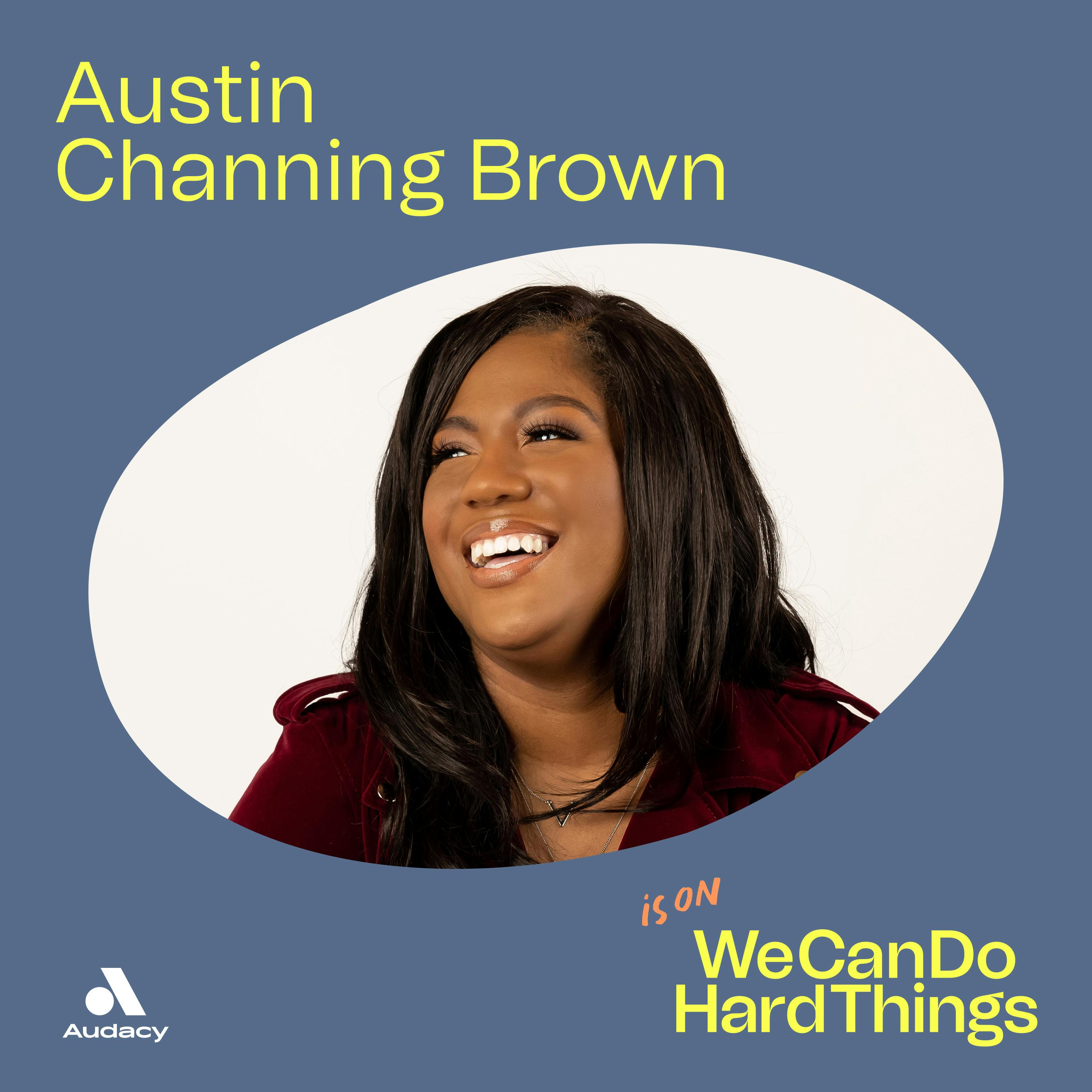
Loading summary
Transcript221 lines
- [00:00]
Glennon Doyle
As summer winds down and fall winds up and life is crazy and the last thing you need to be worried about is what to wear. I need to remind you about my Go to Quince. Their pieces are that perfect blend of elevated and easy I've been living in their distressed denim shirt dress. Am I looking cute in an actual dress? Yes. Is it secretly denim? Also yes. Does it look great but also not touch my skin? Is it under $50? Yes, yes and yes. Also because bathing suit shopping is just another reason to cry. I need you to please do yourself a solid and peruse Quince's bathing suits. All summer I wore their Italian V neck bikini top and Italian high rise bikini bottom each for under $25. Elevate your fall wardrobe essentials with Quince. Go to quince.comhardthings for free shipping on your order and 365 day returns. That's Q U I N C E D.com hardthings to get free shipping and 365 day returns. Quint.com hardthings I'm always looking for simple.
- [01:05]
Abby Wambach
Ways to make my day feel a little more meaningful and Masterclass has become my go to for that. In just a few minutes I can learn from world class instructors whether I'm waiting for my coffee or winding down before bed. One class that really stuck out with me was James Clear on building better habits. He said, you don't rise to the level of your goals, you fall to the level of your systems. That one line just flipped switch for me. For just $10 a month billed annually, you get unlimited access to 200 plus classes from the best in the world across businesses, wellness, cooking, writing and more. And with thousands of short on the go lessons across 13 categories, you can you can learn your way on your time. Right now our listeners get an additional 15% off any annual membership@masterclass.com hardthings that's 15% off@masterclass.com hardthings masterclass.com hardthings.
- [02:17]
Amanda Doyle
Austin Channing Brown is an author and speaker providing inspired leadership on racial justice in America. She is the New York Times best selling author of I'm Still Black Dignity in a World Made for Whiteness. Arisa's Book Club Pick, her latest book, Full of Myself, Black Womanhood and the Journey to Self Possession is available now. Okay, Pod Squad, first of all you should know that before we begin, our guest today is one of my favorite people on the entire planet.
- [02:51]
Austin Channing Brown
True.
- [02:52]
Amanda Doyle
Is that not true?
- [02:53]
Austin Channing Brown
That's true.
- [02:54]
Amanda Doyle
That is true. So the person who is here is the artist, the justice champion, Austin Channing Brown.
- [03:05]
Austin Channing Brown
Hello, my loves. I'm so glad to see your faces.
- [03:09]
Amanda Doyle
It's been too long. Austin has a new book out. The world is very lucky. Okay. And Austin's new book is called Full of Myself, and it is, I think, the book for right now. The book for right now. It is the liberation story of a woman reclaiming her full humanity in a world trying to keep her from that. And I sent Austin an email this morning asking her if I could open up the interview with this story. So when I got an early copy, that's the best perk of my job. I sat down on the couch, as Abby knows, with my dogs and my tea, and I didn't move from the first page until the last. Everyone else carried along with their day around me.
- [03:59]
Austin Channing Brown
We did.
- [04:01]
Abby Wambach
And so did she.
- [04:02]
Amanda Doyle
Yeah. Because your writing just blew my mind in this book, which you know, because every 10 minutes I would stop and text you pictures of your own pages with just like, wtf? Question mark, question, question. And you're like, please. Okay. So because of my love for you and because of my lifelong attempt to re embody myself, I related so freaking deeply to this book. And so after I finished the last page, I wrote you and told you that.
- [04:32]
Austin Channing Brown
Mm.
- [04:34]
Amanda Doyle
And you wrote back in true Austen fashion with a very loving email that said something like this. That's wonderful, honey, as you do say to me. And you said something like, I definitely believe there's healing and learning in this book for everyone, but can you, Austin, share with us what was the but in that email?
- [05:02]
Austin Channing Brown
Yeah, I think it's really easy to read this book in the genre of self help. Right. Self help for women. My publisher would actually love it if I would just get on here and say, this book is for all women.
- [05:18]
Amanda Doyle
That's my job.
- [05:19]
Austin Channing Brown
They'd be very happy with me. But the truth is, this work is just as connected to my justice work as everything else that I've done. And for me, the work of becoming full of ourselves is still justice work. Right. There was a whole era of women's self help books that in their introduction said, listen, I know patriarchy is a thing, and I know racism is a thing, and I know homophobia is a thing, but we're not going to talk about any of that. They set the expectation right from the top that even though we know there are all kinds of injustices in the world, we're not gonna talk about any of that. And this book is the opposite. I want to frame what it is we're experiencing as women, as black people, as marginalized people, as queer people. Right. That we are not just timid, we are not just lacking self confidence, we are not just quirky. Right. That becoming full of our is a justice issue. We have to swim against the status quo in order to become full of ourselves.
- [06:34]
Abby Wambach
Yes.
- [06:35]
Austin Channing Brown
And that I do not want to get lost in any conversation I have about this book. Yeah.
- [06:41]
Amanda Doyle
Before we move on from the email, I just sat with it because, you know, you were saying to me that's this is great, like, I hope this helps you with your eating disorder treatment also.
- [06:50]
Austin Channing Brown
Yeah.
- [06:51]
Amanda Doyle
It's for black women and it's about black women. And it was so kind and so beautiful. And I just felt like this email is proof of Austin's being full of herself. Like in the behind the scenes moments, I imagine you felt something in your body when you read that email. This is what I wanna get to your embodiment in that moment.
- [07:10]
Austin Channing Brown
Yes. Because it's really important. Well, first of all, I have gone through all kinds of eras, seasons in my justice work. Right. Who I was when I was doing this at 21 is not who I am at. Right. And one of the things that I have been convinced of or is sort of my lifelong desire to prove with my work is that the world has so much to learn when black women are centered. So often when we do racism work, in particular racial justice work, we center the white folks in the room. We try to make sure that you all can catch up. We try to answer all your questions. We have tissues prepared for you. Right. Like everything gets centered around you and your experience. Experience. And over the last few years, my deep desire has been to see what happens when we censor the voices of black women. And I am convinced that everybody in the room actually learns more when black women are able to have a conversation amongst ourselves with others present. Right. Than would happen if I just tried to communicate to you and you alone. And I think that is what I'm subtly, not subtly, trying to show with this book. I am thrilled that you read it and thought, oh my God, me and my own embodiment. Right. Is being spoken to in this moment. But I don't want to lose the fact that you are also queer. Right. I don't want to lose the fact that you are also a woman living under patriarchy. I don't want to lose the fact that for years, instead of being called a writer, you are called a blogger. I don't want to. Do you know what I mean? Like, I want to bring all of the ways that all of you have had to swim against the status quo to the forefront. And I hope it touches things personally, but I want it to be able to travel with you on your journey in the totality of your humanity.
- [09:23]
Amanda Doyle
So is the difference then we're having this conversation. And what a white lady like me might do in those moments is say, okay, let's all talk about our different embodiments. And then you go, and then I'll go. And then we'll find how they're the same. Right. Because P.S. that was my first version of the scenario.
- [09:45]
Austin Channing Brown
So, so great.
- [09:48]
Amanda Doyle
I'm learning so much. Second, the second version of that is you just keep talking and if I will find myself somewhere in there, but you just keep going.
- [10:00]
Austin Channing Brown
That's right. That's right. And by doing that, you actually uncover more.
- [10:05]
Amanda Doyle
Yes.
- [10:07]
Austin Channing Brown
Right. You make connections between your Ed. Your ED does not become a quirk of yours.
- [10:13]
Amanda Doyle
Yeah.
- [10:14]
Austin Channing Brown
It does not become this individualistic failure of yours. Right. Your ED is connected to the expectations of a nation that does not like women. Right. And so that tie to justice work, that tie to systems, that tie to the status quo, that matters.
- [10:36]
Amanda Doyle
Yeah.
- [10:37]
Austin Channing Brown
To the work that you're doing and the way that you understand yourself. Mm.
- [10:42]
Amanda Doyle
Okay, can you talk to us now about what it means to empty yourself for people who are listening right now and are saying, okay, wow, that was the beginning of an interview. Now. Now they're with us, Austin.
- [10:57]
Austin Channing Brown
We're like, wow.
- [10:58]
Amanda Doyle
Yeah. Now tell us what you are talking about. Take us all to a moment.
- [11:03]
Austin Channing Brown
Okay, so one of the first stories in the book is about me being fired. Just ruined what little self esteem I still had at the moment. Okay, friends, my whole life, I have been the good girl, right? I have been the girlfriend that parents love more than the boyfriend loves me. Do you know what I mean? Like, I am the straight A student. I'm the right. I do not fail. And yet I was sitting in this mega church where I was on staff, being told, being listed, listed the number of ways that I was failing before being fired. And I could feel myself getting smaller and smaller and smaller because I had worked so hard to empty myself. I had worked hard to be a person who was a cultural fit.
- [11:59]
Amanda Doyle
What does that mean?
- [12:03]
Austin Channing Brown
So at the job I worked at, all the women did not sound like this. They sounded like this.
- [12:09]
Amanda Doyle
They sounded like me.
- [12:10]
Austin Channing Brown
That's right.
- [12:11]
Amanda Doyle
Okay, okay.
- [12:14]
Austin Channing Brown
Right. And so every morning, they would greet each other, not like, hey, Glennon. Which is what I would do. Right. They'd be like, hi, and without even thinking about it, friends, not on purpose, not like consciously trying to fit in. I would model back what they were doing.
- [12:36]
Amanda Doyle
Yeah.
- [12:36]
Austin Channing Brown
Right. And so I no longer talked like this. I found myself talking like this all the time. And I didn't even notice it until my husband was walking with me one day and he heard me do it, and he was like, who is that? And I said, I don't know. Damn good question it. I have no idea who that is. Right. Because I didn't hear it happening. I was the fish in water.
- [13:06]
Amanda Doyle
Yes.
- [13:08]
Austin Channing Brown
Right. But there were expectations that I would change the way that I speak, that I would change hair, that I would change my look, my dress. Right. There were expectations that I would think like them, that I would support all the opinions, that I would use my blackness to pat them on the back for any justice adjacent. I can't actually call it justice work. Justice adjacent work. Right. But the expectation was that I would use whatever marginalized status I had to support them without the expectation of being supported in who I am.
- [13:55]
Abby Wambach
Oh, my God, that is fucking good.
- [14:00]
Austin Channing Brown
Right?
- [14:00]
Amanda Doyle
Yes. You became a cultural fit.
- [14:06]
Austin Channing Brown
Except I couldn't do it, which is why I got fired. Right, right, right. There were some things that was happening subconsciously, but when I got put in a room and was asked to defend our community, not talking about Trayvon Martin and George Zimmerman, I couldn't do it.
- [14:28]
Amanda Doyle
Right, right. And that was the moment.
- [14:32]
Austin Channing Brown
That was the moment. That was the moment I knew I was going to be fired. That was the moment.
- [14:35]
Abby Wambach
And this moment happens to all of us.
- [14:38]
Austin Channing Brown
Yes.
- [14:39]
Abby Wambach
And the question is, do I want to belong to this community or do I want to belong to myself or do I want to still keep belonging to myself? Because this is the shit that happened as the only queer one on a lot of my teams growing up.
- [14:53]
Austin Channing Brown
Yes. And that.
- [14:54]
Abby Wambach
It comes down to a moment.
- [14:57]
Austin Channing Brown
Yes.
- [14:58]
Abby Wambach
But we are so quick to stop belonging to ourselves and stick to the belonging of the community. How did you, A, realize that moment was happening and B, decide, okay, I belong to myself and my integrity first.
- [15:14]
Austin Channing Brown
That's right. A couple things. One, I want to say that that is such a. A major aha. Because most people skip over it when they get to that moment. There is no pause.
- [15:28]
Amanda Doyle
Right, right.
- [15:28]
Austin Channing Brown
There is no pause to even ask the question, who am I going to belong to in this moment? And usually what happens is all the perks of belonging become more important. That's right. The promotion, the leadership development, the increase in money, the invitation to. To the, I don't know, golf trip. Yacht thing, whatever. You know what I mean? Right. But it comes with perks. Right. And so often we prioritize those perks over belonging to ourselves. Right. And so I think, in all sincerity, what was really helpful for me was to have a different community to belong to.
- [16:19]
Amanda Doyle
Of course.
- [16:20]
Austin Channing Brown
Yeah. So within this larger structure, I have my own multicultural team who is trying to lead justice work. We are putting on workshops, we are leading trainings. We are talking about the culture of our church. We are talking about what we would like to see change. And now I have a responsibility to them, not just to myself. Right. I already have a community of belonging to.
- [16:47]
Amanda Doyle
That's right.
- [16:47]
Austin Channing Brown
And often when we try to start doing justice work, we try to do it as an isolated being. And it's a quick way to burn out. It's a quick way to become isolated. It's a quick way to become depressed. I tell everyone, when you enter into justice work, the first thing you should be doing is not speaking up. The first thing you should be doing is finding your community.
- [17:14]
Amanda Doyle
Yeah. You told me that a decade ago.
- [17:16]
Austin Channing Brown
Yep. Who are you doing this work with?
- [17:18]
Glennon Doyle
Because that's a defense. From what I hear from you, finding your community basically defends you and makes you immune to the threat of the withdrawal of belonging in community. If you're not going to follow the rules over here.
- [17:36]
Austin Channing Brown
Yeah. What essentially happens is you become proud of being the troublemaker.
- [17:41]
Amanda Doyle
Yeah, exactly.
- [17:41]
Austin Channing Brown
Right. You're not even seeking belonging in the community. Yeah. That isn't the goal. You don't care about the yachts. You don't care about the golf trips. You don't care about the leadership development. You've already made peace with not getting the promotion. Right. At this point, you do kind of want to hold on to the job because Benefits. Right. But your sense of belonging is not at all wrapped up in this place. Right. Your sense of belonging becomes rooted in this community of people who do see your full humanity and are willing to fight alongside you.
- [18:14]
Amanda Doyle
So you're like a Trojan horse, almost. You're a Trojan horse. You're in there, but you're like the Jesus thing. I am in this world, but I am not of this world.
- [18:22]
Austin Channing Brown
Exactly.
- [18:23]
Amanda Doyle
My loyalty is not here. My loyalty is out there. I am here actually to fuck all this up.
- [18:31]
Austin Channing Brown
That part.
- [18:32]
Amanda Doyle
Yeah.
- [18:33]
Austin Channing Brown
Most of the time we don't know that going in, though.
- [18:35]
Amanda Doyle
Right, Right.
- [18:36]
Austin Channing Brown
Because there's the really pretty mission statements and there's the. Right. Everybody knows the language, or at least they used to, you know, when it was for, like. Right. When it was cool when it was trendy, right? And so you would. You would get sucked in, right? Because you would be like, oh my gosh, I see what you could become. And you believe in this too great. And then you discover that the true desire, right, is that you would empty yourself, that you would use your marginalized identities to applaud them. Right? And when that doesn't happen, you need a place that you already belong to. Yeah.
- [19:26]
Abby Wambach
What does the future hold for business? Ask nine experts and you'll get 10 answers. Bull market or bear market? Rising or falling rates? Inflation up or down? Can someone please invent a crystal ball? Until then, over 42,000 businesses have future proofed their business with NetSuite, the number one cloud ERP bringing accounting, financial management, inventory, HR into one fluid platform with one unified business management suite. There's one source of truth giving you the visibility and control you need to make quick decisions. With real time insights and forecasting, you're peering into the future with actionable data. Whether your company is earning millions or even hundreds of millions, NetSuite helps you respond to immediate challenges and seize your biggest opportunities. Speaking of opportunity, download the CFO's guide to AI and machine learning at netsuite.com hardthings the guide is free to you at netsuite.com hardThings netsuite.com hardthings it's the.
- [20:33]
Glennon Doyle
Beginning of a new school year and also the classroom sniffles and sneezes that go along with it from home to school and back. Stock up with Kleenex Ultra Soft Tissues. Start the school year off the right way by preparing for the messes that come with it. You don't want to be caught without a tissue on hand. To help. Kleenex Ultra Soft Tissues are soft and absorbent to stand up against runny noses to keep you and your family clean and comforted. As the school year starts this back to school season, make sure to get the classroom essential that teachers and students can rely on for whatever happens next.
- [21:10]
Austin Channing Brown
Grab Kleenex how would you like to.
- [21:13]
Abby Wambach
Feel calmer, think clearer and sleep better all in just two minutes? Meet Truvega, a handheld device that uses gentle vagus nerve stimulation to help calm your body's stress response. In just two minutes a session, Truvega helps shift you out of fight or flight and and into a more relaxed, balanced state. By naturally supporting your body's nervous system, you can quiet mental chatter, ease anxious feelings and promote deeper, more restful sleep. So you wake up feeling refreshed and clear headed. There are no pills, no Side effects. Just safe, clinically backed technology developed from decades of neuromodulation research. Ready to try it out? Visit truvega.com and use code WCDHT25 at checkout to receive $25 off your purchase. Take action today. Upgrade to feeling better every day with Truvega. Visit truvega.com and use my code WCDHT25 to receive $25 off your purchase. Feel calmer and sleep better with Truvega.
- [22:22]
Amanda Doyle
Can you take us to the micro of that? Because that is freaking perfect. The incredible part of this book in particular is that you have always been a genius at explaining to us the macro of what's going on in this book. You're taking it into the moment and into the body and explaining how it happens moment by moment in a way that we can feel it in your body, which is the genius part of this book. Because in a moment of fascism, the only way to resist is by being fully in your body. Right? We know this. Yes. Let's take it to the moment where you walk into your white church. If you Austin, don't bubble yourself up. If you don't wipe up your voice. If you don't become. Let's just say you dared to say hello.
- [23:14]
Austin Channing Brown
That's right.
- [23:16]
Amanda Doyle
Tell us what would happen for real.
- [23:18]
Austin Channing Brown
Yes. Well, let me tell you what does happen. Because the moment my husband said that, I was like, shit, Right? I was like, that has got to stop immediately. Right? Right. And what happens is I get a performance review that says, you don't seem happy here. Right. I get pulled into an office and my supervisor says, you know, Lisa said that she had an interaction with you, and you just weren't very gracious. You know, like, I just really. I really think you need to open your heart and just, you know, be more gracious to people who are really trying. You know, I get called names, Right. I get called troublemaker is. Is number one. And I'm so sorry that I can't think of, like, one that I was actually called. But I definitely remember being told that I was suffering from group think. Right. There were things that I was suffering from. Right. That were problematic in the way that I was thinking and the way that I was seeing. And that's what the status quo does when you do not meet the status quo. It has names for you.
- [24:24]
Amanda Doyle
Yes.
- [24:26]
Austin Channing Brown
It turns you into a problem. You are the problem. And if you would just be kinder, nicer, more bubbly, and it depends on the culture that you're in. Right? Right. That was one culture. But there was a whole nother white culture that I found myself in that was the opposite. It was very, like hippie, very, let's all do everything together. Let's eat together, let's work together, let's go to church together, let's live in the same neighborhood, let's live in the same house. Right? And I was like, I won't do all this. That seems like a lot. That seems like an awful lot of togetherness. You know what I mean? Yeah. Right. So white culture can definitely change. Right. It isn't that it's the same everywhere. The problem is that it thinks that it's always right. And therefore if you don't conform to it, then you are wrong. Not what you're doing is wrong. In the words of June Jordan, you are wrong. And you have to say to yourself, wrong is not my name.
- [25:27]
Amanda Doyle
Okay? So one version of this is you're sitting with your coworkers and you dare to tell them that you actually don't think that Hillary's going to beat Trump. We're in like our hopeful, positive, of course this is going to all work out vibe.
- [25:45]
Austin Channing Brown
Yeah.
- [25:45]
Amanda Doyle
You dare to say, I don't know about that.
- [25:50]
Austin Channing Brown
Yeah. I'm living in the Midwest. I'm looking at a lot of banners, I'm looking at a lot of flags. I'm a black woman on the Internet. The people at your picnic, your Sunday dinner table are saying something real different in my DMs. Okay. They're tweeting something real different to me. Right. And so I'm, yeah, I'm having this discussion with co workers who I love and adore and trust. Very encouraging, loving environment. But when I say, I, guys, it's summer of 2016. And I'm like, I think he's gonna win. And laughter. Full body, red faced laughter. Now I have experienced laughter that was mean, right? Laughter that was like laughing at me. This didn't feel like that, but it was that. My notion, my assessment was funny.
- [26:52]
Amanda Doyle
And negative. It was negative, Austin. Oh, listen, you wrote this sentence, which I just put the book down. You wrote, black people, especially black women, are told we have an attitude problem when what we actually have is insider information.
- [27:12]
Austin Channing Brown
Oh.
- [27:13]
Amanda Doyle
Like if your publishers don't put that on a billboard in Times Square, they're not doing it right. This is a sentence and a half. Tell us more. What do you mean by insider information?
- [27:25]
Austin Channing Brown
I know white people better than white people know white people. And white people really don't like that because white people really want to be able to hide. Right they really, really want to be able to hide. And my radar. Right. And by mine, I mean the radar of black women. Right. To be like, something's problematic here.
- [27:57]
Amanda Doyle
Yeah.
- [27:57]
Austin Channing Brown
Something's off here. Even if it's as simple as you have opted into the belonging of the status quo.
- [28:06]
Amanda Doyle
Right.
- [28:07]
Austin Channing Brown
That what black women are not saying is, oh, actually, white women are wrong. Right. Oh, actually, you are wrong. What we are saying is all of this is wrong, and even you are not being honored by it. There is actually a better way that we could do this. But you don't believe that I know what I'm talking about.
- [28:30]
Amanda Doyle
Yeah. And is it like. Is there a version of it that's like you can only know someone by how they treat someone who has less perceived power in a culture than you? Because, like, for example, our kid said to us recently, what do you think of so and so was a parent in the community? And I said, it doesn't matter what we think of them because they treat us a certain way because we're famous. So I can't tell you. I can't tell you what that person is like. I will never be able to tell you. Ask somebody else's parents. Is it like that? It's like people. We put on an act for each other, and then the mask comes off. When you're with anyone who has less perceived power, and that's why you have insider information.
- [29:11]
Austin Channing Brown
It is who that person is could fluctuate. Right. Sometimes it's perceived power. Sometimes it's a belief that everyone here is the same, that there is no outsider. Right. So there's a person of color in the group. But we thought everybody here was white. You know, ultimately, it is virtually impossible not to be who you actually are. And you can put on a facade and you can wear a mask, and you could try your damnedest to appear something, but until you start to work toward being that person, we can all see you. Mm.
- [29:56]
Amanda Doyle
Well, that's unfortunate.
- [29:57]
Abby Wambach
It reminds me of. It's like the bully on the playground doesn't think they're a bully.
- [30:04]
Austin Channing Brown
That's right.
- [30:05]
Abby Wambach
You know, like.
- [30:06]
Austin Channing Brown
Right.
- [30:06]
Abby Wambach
The person in the friend group who's the. Doesn't think that they're the. It feels like this. It's like when you are in the outside looking in, you see it all. When you are in the inside, you can't see everything.
- [30:24]
Austin Channing Brown
That's right. Yeah. And how much more freeing is it, right, to be in the group that says, austin, you are a little bossy, and I can be like, I know. What is that? About. Right. Because now we're not confused. There's no mask. And now I make a decision, am I going to work on it? Right. Or in our friendship group, are we all just gonna, like, laugh at me and turn into action, you know? Exactly. But there are so many people who are so afraid of going to that place where the biases exist, where the places in us that is selfish and that can be mean and that is frightened and that is scared and has all these hurts and all these wounds. It is so much easier to just not go there. Right. But it's also keeping us from both our full humanity and the ability to recognize the full humanity of other people. Yep.
- [31:25]
Glennon Doyle
It made me think of this, Austin, when you were talking about how, you know, you're always the good girl, you don't fail, you get straight A's, you achieve, you know, give me a challenge, I achieve it.
- [31:36]
Austin Channing Brown
That's right.
- [31:37]
Glennon Doyle
And you are in this moment, and I'm wondering if you can take us back here where you are asked to read a reading for the service, and you're doing it, and you're being critiqued left and right. And a little bit more of this, a little bit less of that, a little bit. And then you say, under those watchful eyes, it dawned on me that my best would never be good enough. My best was not what they were looking for. They were looking for their best wrapped in my body.
- [32:09]
Austin Channing Brown
That's right.
- [32:11]
Abby Wambach
Oh, my God.
- [32:12]
Glennon Doyle
Their definition of good, their definition of right, their definition of leadership. I could see it so clearly, and I had no desire to reach it. I did not want to be rhythmless.
- [32:24]
Austin Channing Brown
Yes.
- [32:25]
Glennon Doyle
Tell us about that. At every level of these, there's this, like, incredible political, worldly betrayal.
- [32:32]
Austin Channing Brown
Yes.
- [32:33]
Glennon Doyle
And there's also this. Feels this. When I read that, I felt so heartbroken for you. It felt to me like you arrive at this moment, you've done everything right. You're ready to. And you realize doesn't matter.
- [32:50]
Austin Channing Brown
Nope.
- [32:51]
Amanda Doyle
Tell us what it means to be out of rhythm.
- [32:55]
Austin Channing Brown
Okay, so I'm so sorry. This is, like, very churchy today, friends.
- [33:00]
Amanda Doyle
I don't feel like it is.
- [33:02]
Austin Channing Brown
Okay, great. I just feel like there's a. I just feel like white church, black church just offers a lot of rich opportunities. Talk about how we got here. Fertile ground, if you will.
- [33:13]
Amanda Doyle
Let's.
- [33:13]
Austin Channing Brown
Fertile ground. Let's do it. There's lots here. The garden is plentiful. So if I was at a white church, right. And I heard someone preaching on Exodus, on Moses, right. It would probably sound like. And Moses really Struggled with his own leadership, you know, and he had to work up the courage. He needed a good partner in Aaron, you know, but he was ultimately able to stand up to the king and set everybody free. Right?
- [33:51]
Amanda Doyle
Yeah.
- [33:51]
Austin Channing Brown
And that would probably be a really good sermon. Fiery. But if. Right. But if we win, if we went to the black church, it was sound something like this. And Moses set the people free. Despite what the king said, despite what the king wanted, despite the systems and structures, despite slavery, despite hardship, the people were free. Are you free today? Do you believe in freedom today? Do you believe in tearing down the system today? Right. Sounds completely different. Do you hear the difference in rhythm?
- [34:35]
Amanda Doyle
Yes.
- [34:39]
Austin Channing Brown
There is a literal difference in cadence and rhythm, in voice and pitch. Right.
- [34:48]
Glennon Doyle
And embodiment.
- [34:49]
Austin Channing Brown
Embodiment. And I love the way I have learned to do it. That doesn't mean the other way is wrong. It just means when you invite me on stage, this is the way that I am going to do it. This is what I bring. This is the whole point of diversity. This is to experience a different kind of spirituality, a different way of understanding the Bible, a different way of reading, a different way of being, and hopefully speak to a different part of the audience. Yeah.
- [35:31]
Abby Wambach
Because like, your way is you.
- [35:34]
Austin Channing Brown
Yeah.
- [35:34]
Abby Wambach
And when you do, you. You give me permission to do me.
- [35:39]
Austin Channing Brown
Yes.
- [35:40]
Amanda Doyle
That's why they can't have it.
- [35:41]
Austin Channing Brown
That's why they can't have it.
- [35:44]
Amanda Doyle
It's bringing too much freedom. And it's like, well, DEI didn't work is the line now. But that's cause we didn't try it.
- [35:53]
Austin Channing Brown
Yeah. There was no I.
- [35:54]
Amanda Doyle
There was no I.
- [35:55]
Austin Channing Brown
At what point was the equality? Did I miss the equality? We didn't allow. That was the inclusion. At no point did I feel included. Friends.
- [36:02]
Amanda Doyle
We didn't allow them to bring their full selves. We allowed empty shells of people that we would fill up with our way. We didn't allow people to bring their full selves and mess with the rhythm enough to create something new.
- [36:16]
Austin Channing Brown
We just did the D. That's right. Good. That's all we did. And now I'm standing on stage, which is usually my happy place. Right. I love being on stage. I love a microphone. I'm in my happy place being told that the way my body would do this naturally, even as something as simple as reading a Bible verse, which I've been doing for a really long, right is wrong, that I cannot get it right. And Amanda, you're absolutely right. For me, it was clear as day that I did not want to reach the standard being set. For me, the standard was actually beneath me. My own standard was actually higher. My own standard was harder. My own standard required more bravery. My own standard, right, would have been what was different and unique and potentially really valuable to my community. And I didn't want it. I didn't want it. I love myself and I love the history, right? I love the legacy. I love the deep spiritual connection that I have to my own community when I am fully embodying it, even without all of them being present, right? In fact, it feels like more of a gift because there are also individuals in this audience who haven't been able to experience it in years. And here I am and I can offer them this gift.
- [38:04]
Glennon Doyle
You know what's even worse than having 10,000 symptoms like brain fog, fatigue, hot flashes, anxiety and no sleep that dramatically alter our sanity and quality of life? It's having all of those symptoms and being constantly dismissed and undermined and told it's just part of aging or worse yet, that we're overreacting. 75% of women seeking care for menopause related issues never get treated at all. It's exhausting, isolating and infuriating. And it's unacceptable. It's time for change. It's time for Mitti. MIDI offers expert personalized insurance covered virtual care for women in midlife. Their clinicians actually listen from hormone therapy to lifestyle coaching, their holistic, data driven approach is tailored just for you. And MIDI is the only women's telehealth brand covered by major insurance. That means real care, really accessible. Ready to feel your best and write your second act script? Visit join midi.com today to book your personalized insurance covered virtual visitors. That's joinmitty.com midi the Care Women Deserve have you noticed that your family wants dinner every single God given night? It doesn't matter that you've served it the last 12 nights. Here we are at 6:30 and they're asking for it once again. It's unrelenting and it's unforgivable. You've probably heard of hellofresh, but if you haven't tried it lately, you're missing out. It is the answer to our problems. I used it a while back and liked it. But this summer I came back and they've leveled up. They've doubled their menu. You can choose from a hundred recipes each week. I just made the chickpea tikka masala the other night. So easy and the flavors were next level. Also, did you know that they have ready to eat meals now? I'm Talking zero labor. The best way to cook just got better. Go to hellofresh.com hardthings10fm now to get 10 free meals plus a free item for life. One per box with active subscriptions. Free meals applied as a discount on the first box. New subscribers only. Varies by plan. That's hellofresh.com hardthings10fm to get 10 free meals plus a free item for life. Hello friends. As you know, back to school season, meaning back to crazy bananas. Life season is officially here. And speaking of bananas and over scheduling, I've been leaning hard on my Whole Foods Market runs right about now to keep everything on track. Between packing lunches, planning quick dinners in the 13 minutes we have together, and just trying to stay sane during busy weeks, they've seriously come through. One thing that's been a total game changer is the365 by Whole Foods Market brand. I started picking up their frozen waffles and breakfast sausage and all kinds of things like that for the hectic mornings. And this is like magic because the kids get a good breakfast, we all get out the door on time. It's a win, win, win. And for lunches, they have organic granola bar, multi packs and they have reduced sugar, juice boxes, bagged apples, all the things that are fast, easy and you feel good for them to be eating. Explore so many ways to save on back to school finds at Whole Foods Market. What happens to people who are in that situation, who don't have that self love, who don't already have that sense of the fullness of them because it's gotta be happening a million times a day in a million places, being told you'll never be good enough.
- [41:35]
Austin Channing Brown
Yep.
- [41:37]
Glennon Doyle
What happens if you don't have that?
- [41:38]
Austin Channing Brown
Yeah.
- [41:39]
Amanda Doyle
Because that really means you'll never be us enough.
- [41:42]
Austin Channing Brown
That's right.
- [41:43]
Amanda Doyle
Right.
- [41:44]
Austin Channing Brown
That's right. And by the way, it's true. And so what usually happens is burnout. Or like me, you get fired or you change yourself so much you don't recognize yourself anymore. Right. Like Abby said, you begin to choose belonging over choosing yourself. Or you get to a point where you have to get out and you know that you have to get out. And everything becomes about figuring out how do I extricate myself from these spaces.
- [42:12]
Amanda Doyle
And Austin, in reading the gorgeous way that all of this unfolded in the book, it was like you were understanding that this was happening to you in the structure you were in at that job. And it was like all the alarm bells and you figured it out. You're wise enough to know oh, my God. I'm being separated from myself. I am dissociating to stay in this group. I am. But then the really tricky part comes when you refuse to dissociate, which is that you are stuck in your body, which begins the real healing. Because what's in your body is your trauma.
- [42:45]
Austin Channing Brown
Yeah. And it feels horrible. It's angry. I am sad. I am woozy. I feel sick to my stomach. I like, I feel horrible. And yet that feels more honest.
- [43:01]
Amanda Doyle
Yeah.
- [43:01]
Austin Channing Brown
Than pretending that I've been okay. Because I haven't been okay.
- [43:08]
Amanda Doyle
So then we get to that moment. You're in the misery of the reclamation, which is half misery, half freedom. And you go to therapy.
- [43:17]
Austin Channing Brown
There's a lot of tears. Yeah, there's a lot of tears. There's a lot of therapy. On the other side, there's new decisions.
- [43:26]
Amanda Doyle
Tell us.
- [43:26]
Austin Channing Brown
Right. There's new decisions. So one of the interviews I have afterwards is to be a resident director at college, which means I will be responsible for roughly 418 and 19 year olds who are away at college for the first time, living in a dormitory. So as you can imagine, during that interview, there are a lot of situational questions. Okay. What would you do if someone put a frog in the community bathroom? What would you do if two college students started arguing in the middle of their dorm? What would you do? Here's a real situation that I had. What would you do if one of your students, who really loves animals, decided to rescue a dead squirrel and put it in her mini fridge so that she could bury it appropriately at a later date? You know what I'm saying?
- [44:18]
Amanda Doyle
Like, situations, inevitable.
- [44:20]
Austin Channing Brown
Thanks. Inevitable situations. Friends FAQs, if you will. One of the situations they give me is what would you do if a group of students were drunk? If athletes were drunk outside the dormitory at 3am making all kinds of noise. And I know that the answer I'm supposed to give, right, this question is about confidence and this question is about not avoiding conflict. That's why this question is being asked. If I give the answer, I'm going to cower in my bed and pretend I don't hear it. I'm not getting the job. Right?
- [45:00]
Amanda Doyle
Yeah.
- [45:01]
Austin Channing Brown
The right answer is, well, of course I'm going to get out of bed. I'm going to confront the students. I'm going to make sure everybody is safe. I'm going to take their IDs, I'm going to confront the situation. But I am a black woman. I am five, six. And we are talking about me being outside at 3am on a predominantly white campus. They didn't say male athletes, but I assumed male athletes who are not sober. This sounds like a terrible idea to me. Right. But now I have to make a decision. And when I give my honest answer, which is what I would like to do. Here's what I would like to do. As a black woman who's going to confront drunken male athletes at 3am I would like to call security, have them meet me and confront the students along with folks that they will easily recognize as authority figures. Me and my pajamas does not seem like the best idea. Right. But that's not the answer they're looking for, and I know it. And so I have this moment where I have to decide, am I going to empty myself right now and give the answer that I'm supposed to give, or am I gonna risk losing this job by giving the honest answer and prioritizing my safety, not just the safety of the students, but prioritizing my own safety as a black woman on a predominantly white campus? And in order to still get the job, I need the people at the table to not say, oh, but our students would never. Oh, but our. Our student body is. They're just so wonderful. It would never be that way just because you're black. Mm.
- [47:10]
Abby Wambach
Or they say in their head, like, maybe you answer that honestly. And they say, well, then we're just gonna hire a white person.
- [47:18]
Amanda Doyle
Right.
- [47:18]
Austin Channing Brown
Hello. Right. Or they say, that's unfair.
- [47:21]
Abby Wambach
Yep.
- [47:22]
Austin Channing Brown
Right. Which is where we are in America right now. So expecting one of my white male co workers who runs a different dorm to go out there and confront the students, That's a different standard than me asking for security. So. So that's inherently unfair.
- [47:37]
Amanda Doyle
Right, Right.
- [47:40]
Austin Channing Brown
And the inability to tell the difference between fair and just. Yeah.
- [47:45]
Amanda Doyle
Can you tell us the difference between fair and just?
- [47:47]
Austin Channing Brown
That's good. Right. Well, so in this. I don't. I don't have, like, a definition for you, friends, but in. In this. Right. Fair is to expect everybody to do the same. Same level for the same reward, but just. It takes into account this complex system that we actually live in.
- [48:05]
Amanda Doyle
Yes.
- [48:05]
Austin Channing Brown
And in the complex system that we actually live in, we have to acknowledge that there actually are, in fact, people who are racist, that those who are racist are probably more likely to be so. When they are drunk. And that we are putting a black woman in a dangerous situation. A potentially dangerous situation. Right. And to ignore that reality, to ignore that possibility, that would be unfair.
- [48:34]
Amanda Doyle
Yep. And that's insider information that you have.
- [48:38]
Austin Channing Brown
That's insider.
- [48:39]
Amanda Doyle
That's insider information that's. Let me see if these people think they know white people better than I do, because I'm going to tell them what would happen out there, and we're going to see if they know or.
- [48:47]
Austin Channing Brown
If they go, do you know?
- [48:49]
Amanda Doyle
Right, right, right, right. So then what happened?
- [48:51]
Austin Channing Brown
I got hired.
- [48:52]
Amanda Doyle
Yes.
- [48:53]
Austin Channing Brown
I got hired.
- [48:54]
Glennon Doyle
Which story did you tell Austin? Which answer did you actually give the people?
- [48:57]
Austin Channing Brown
Oh, yes. I absolutely told them that I would not feel safe doing this by myself. And I made sure to actually answer the question. Like, this is not about fear of confrontation. Right. I. But I am a black woman, and I need you all to recognize what that means for me on this campus. Right. And not only did they give me the job friends, they were consistent in that support my entire time working there. And this is actually a really important point for me because it is a really strange thing to say that one of the best workplaces I ever had was at a predominantly white. Predominantly white, teeny, tiny Christian college. Were they historically German? I don't know. But. Right. Like, this is not the place that should be one of the best places that I ever worked. Yeah. Because I existed on a team that could see me, that honored me, that celebrated me. My second week on campus is when Ferguson exploded. And my teammates, who I have known for two weeks, bring me dinner because they say, austin, we recognize that you are not only working right. At this new job with all these new. Right. Doing trainings and whatnot, you are also paying deep attention to what is happening in Ferguson. And we at least want to make sure you don't have to think about what to eat tonight. Mm hmm. Right. And I share that because there are probably other places on that campus, y', all, where I would not have felt safe, where I did not feel safe.
- [50:52]
Amanda Doyle
Right, Right.
- [50:52]
Austin Channing Brown
There were many other communities on that campus where I could not have worked. But it feels really important to say that that department, that staff, was able to create so much safety for me. That is one of the best places that I ever worked.
- [51:12]
Amanda Doyle
So safety. So this is the beginnings of you figuring out. I mean, when you went to therapy after all this time, and you were really struggling with some painful childhood trauma.
- [51:24]
Austin Channing Brown
Yeah.
- [51:25]
Amanda Doyle
And your beloved hubby, Tommy, he confesses to you and the therapist that he really wants to save you from your pain. And tell us what your therapist says to him.
- [51:39]
Austin Channing Brown
Yeah.
- [51:40]
Amanda Doyle
And then how you do it, because I want everybody who's listening to get some breadcrumbs of, like, how this reclamation of self begins.
- [51:51]
Austin Channing Brown
Yeah. So we're on a zoom Right. But I can see her leaning into the camera, and she's smiling. She's got this big smile, right? And she says, tommy, that's so sweet. Like, that's. It's just. It's amazing. But Austin is gonna save herself. And she's, like, still smiling. She's like. And Tommy is like, wait, what? Meanwhile, I am like. Like, my brain is exploding, right? And so she starts laughing because she's seeing two completely different reactions from us. Like, wait, what? And I'm like, can I do that? Is that an option to save myself? And the truth is, is that saving of myself has had to happen slowly. It has had to happen one decision at a time. It has had to happen with realizing the inherent risks of that embodiment. Right? I could have lost that job. Right? That was a risk. I had no idea if they were going to say yes or no, that it comes with inherent risks of rejection moment by moment by moment, right?
- [53:19]
Amanda Doyle
What do you need to feel safe? Because your therapist kept saying to you that part of reclamation is asking yourself, what do I need to feel safe? What is that today?
- [53:31]
Austin Channing Brown
I think this is one of the parts of the book where, like, I can give stories all day long, but the answer for me is probably gonna be different than the answer for you. Right? And what it is that we're focused on, you know, what I needed to feel safe in that job, is a completely different question from what I need to feel safe from. Childhood trauma when I walk into a bathroom, right? That context matters. The level of trauma matters. Right. The kind of trauma matters. And that is what makes being full of ourselves so damn hard. Yeah, it's so hard because we're doing it on multiple levels. And that is actually a really important component to this book, Right? Because I am also talking about motherhood, and I am talking about being pregnant, and I am talking about childhood trauma. And I am. Right? Because as. As a black woman, what is often assumed is that my life is easy except for racism.
- [54:43]
Amanda Doyle
Just that one little part. It's just over.
- [54:45]
Austin Channing Brown
Just that one little thing.
- [54:46]
Amanda Doyle
On Tuesday morning, I would just totally.
- [54:47]
Glennon Doyle
Isolated from everything else. So it'.
- [54:49]
Austin Channing Brown
Fight exactly on the side. It's on the side. And if I would just stop playing that card, like, everything would be great. Right? And what I wanted to say in this book is that actually black women are also not only struggling with grief. We are also struggling with ed. We are also struggling with depression. We are also struggling with grief. We are also struggling with childhood trauma. We are also trying to raise families. We are al. Right. We also have all these other things that are happening and an unjust system on top of it all. And so the risk of becoming full of ourselves. Right. The risk of not emptying, the risk of full embodiment is frightening and freeing. But it's moment to moment. Right. I wish that I could be like, okay, well, we're gonna like, do this mantra really fast. Everyone do this mantra trouble before you fall asleep and your life is going to change. Right. It doesn't work like that. It really is in the decisions. Am I. I love the way that you put this, Abby. Am I going to remain true to myself and to the community who knows me and loves me and sees me? Right. Or am I going to let go of myself in order to belong to this status quo which will I value?
- [56:17]
Amanda Doyle
Oof, Austin. Oof. This book is what's needed in the moment. And I take your point about who this book is about and who it's for. And I understand, but I am stubborn. So I am also going to say.
- [56:40]
Austin Channing Brown
I do think it's for everyone. Yeah, Right. I do believe it's for everyone. I believe it's for everyone because it's centered and marginalized. Right. In a marginalized body.
- [56:53]
Glennon Doyle
That it's not in spite of it, it's because of it. That is such an important point. Because it's like you can get on the dartboard, but if you're right in the center, if you're in the bullseye, then it's like radiates out to the whole thing.
- [57:07]
Austin Channing Brown
Exactly.
- [57:08]
Glennon Doyle
And that's what you're saying. If it's true here, it's true all the way through.
- [57:13]
Austin Channing Brown
Yes. Yeah. And this is the problem with a lot of other, like, self help women kind of books. Right. Is that there is a level of privilege and a level of bias and a level. Right. That does not radiate out. Right. And so people who are marginalized pick it up and they're like, I got nothing. Like, this does not apply to me. This is not my situation. I don't have access to any of this. These are not decisions that I could make. These are not options that are open to me. Right. And it becomes a really limiting experience. Maybe a great read, but a limiting experience.
- [57:50]
Amanda Doyle
Well, that's why it's called self help. It's not US Help.
- [57:53]
Austin Channing Brown
Right, Right. It's expressly for the self.
- [57:56]
Amanda Doyle
We're like, we're not actually trying to help. Damn everybody else. Your book is us Help is all I'm saying.
- [58:08]
Austin Channing Brown
I hope so. I really hope so.
- [58:10]
Amanda Doyle
It's so beautiful.
- [58:12]
Austin Channing Brown
And I think it's crucial, right, that you don't give up your ground on your own justice work. Yes, you could, all three of you could opt into whiteness and just live there. You could. But you know the pain of marginality. You know it, you have felt it, you have experienced it, you have been harmed by it. And so when you can sink into that work of your full humanity as justice work, right. I just think it makes it more possible to free yourself, to save yourself, and for that freedom to radiate out to those around you.
- [59:02]
Abby Wambach
What a dream.
- [59:03]
Amanda Doyle
I think we'll end on that.
- [59:04]
Abby Wambach
You are.
- [59:07]
Amanda Doyle
Go get this freaking book, okay? Go get full of myself. You will not regret it. You can thank us later. Austin, you're a genius. You're a prophet. I am so deeply grateful that you're my friend. I love you so much.
- [59:28]
Austin Channing Brown
Same.
- [59:30]
Amanda Doyle
We love you, POD Squad. I'll talk to you after you've read the book and not until then. If this podcast means something to you, it would mean so much to us if you'd be willing to take 30 seconds to do these three things. First, can you please follow or subscribe to We Can Do Hard Things? Following the POD helps you because you'll never miss an episode. Episode. And it helps us because you'll never miss an episode. To do this, just go to the We Can Do Hard Things show page on Apple Podcasts, Spotify, Odyssey, or wherever you listen to podcasts and then just tap the plus sign in the upper right hand corner or click on follow. This is the most important thing for the pod. While you're there, if you'd be willing to give us a five star rating and review and share an episode you loved with a friend, we be would so grateful. We appreciate you very much. We Can Do Hard Things is created and hosted by Glennon Doyle, Abby Wambach and Amanda Doyle in partnership with Odyssey. Our Executive producer is Jenna Wise Berman and the show is produced by Lauren Legrasso, Allison Schott and Bill Schultz.