← We Can Do Hard Things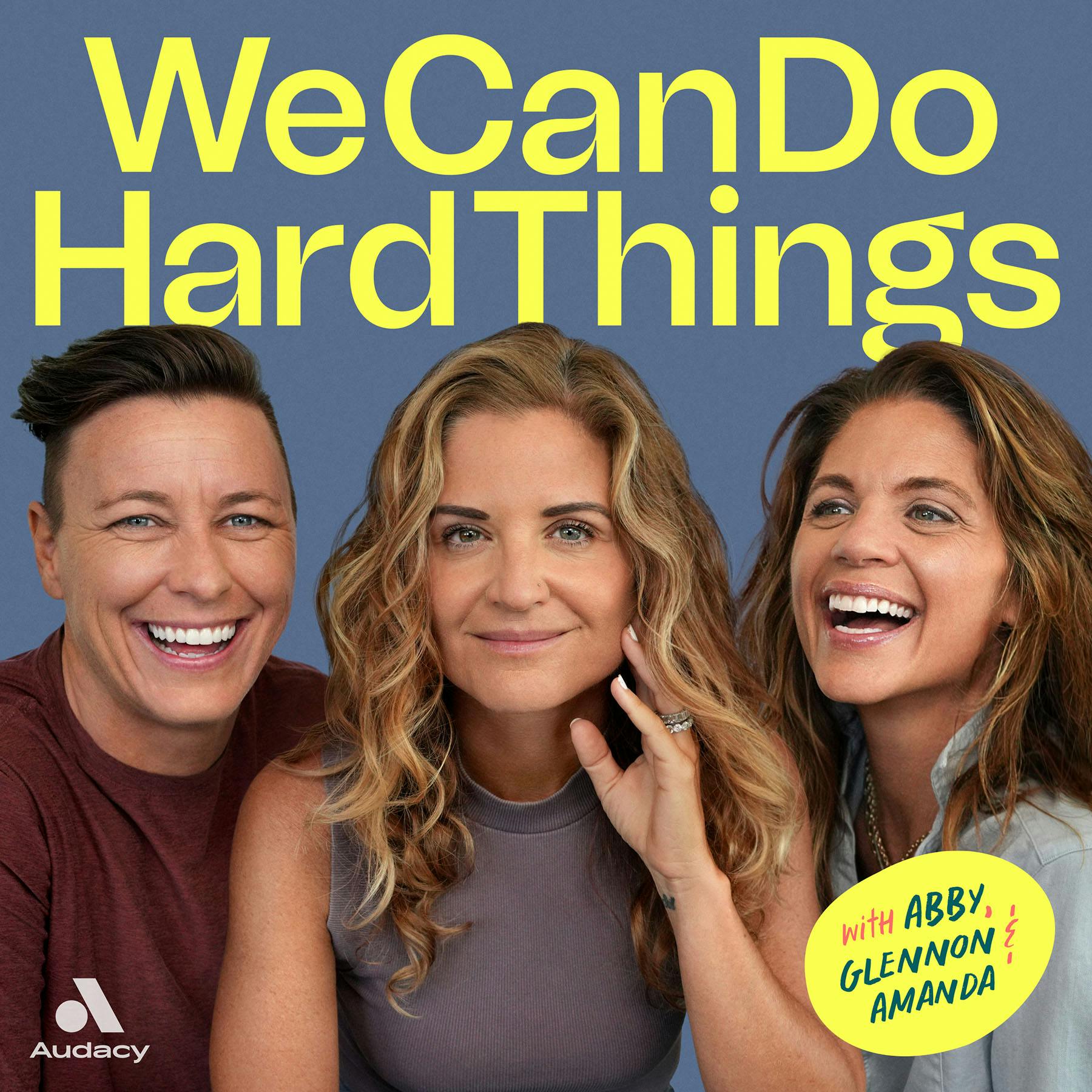
Loading summary
Transcript143 lines
- [00:00]
Glennon Doyle
Today's episode is brought to you by alma. Finding the right therapist can be hard. I know this from experience. Some of the challenges include sifting through hundreds of options or no options at all, not being able to understand therapy approaches, specializations, degrees, or being assigned a therapist without really getting to test the waters. But it's easier to get started with ALMA because with Alma you can browse the directory without creating an account or sharing payment information. I actually really appreciate that you can filter your search by your needs and preferences, such as anxiety, relationships, gender more. Over 95% of therapists at Alma accept insurance, including Aetna, Cigna, UnitedHealthcare and many others. And you can book a free consultation call, which I also really appreciate. With any therapist you're interested in seeing. These 15 minute calls give you a chance to see if they're a good fit for you. So you can find somebody you really click with. ALMA can help you find the right therapist for you. Not just anyone. Visit hello Alma.com/hard things to get started and schedule a free consultation today. That's hello a l m a.com/hard things.
- [01:11]
Sponsor Voice
This is a message from sponsor Intuit. TurboTax Taxes was waiting and wondering and worrying if you were going to get any money back. Now Taxes is matching with the TurboTax expert who can do your taxes today. Who gives your taxes their undivided attention as they work on your return while you get real time updates on their progress and who will find you every deduction possible and file every form, every investment, every everything with a hundred percent accuracy. All so you can get the most money back guaranteed. Now this is Taxes get an Expert now on TurboTax.com only available with TurboTax Live full service real time updates only in iOS mobile app. See guaranteed details@turbotax.com guarantees.
- [02:18]
Glennon Doyle
Okay, welcome to We Can Do Hard things. We are very excited today because on the podcast we have a sporty spirit spice.
- [02:31]
Abby Wambach
It's my kind of day.
- [02:32]
Glennon Doyle
Okay.
- [02:33]
Abby Wambach
And your kind of day.
- [02:34]
Glennon Doyle
Yeah. And I'm not gonna. Exactly.
- [02:36]
Abby Wambach
Yeah.
- [02:36]
Glennon Doyle
This. That's why we love this person. Because we feel like she's half you and half me.
- [02:41]
Abby Wambach
That's right.
- [02:41]
Glennon Doyle
She's someone we can agree upon. Right?
- [02:43]
Kristen Press
What a compliment.
- [02:45]
Glennon Doyle
Okay, tell real quick before we introduce who it is. Okay. It's Kristen Press, which everyone already knows by that introduction.
- [02:53]
Abby Wambach
I always love that we try to like surprise and hold the secret because.
- [02:57]
Glennon Doyle
I talk about her all the time.
- [02:58]
Abby Wambach
They know because it's already in like the podcast.
- [03:01]
Glennon Doyle
That's right. That's Right. So tell me, before we bring her on, can you tell the story that you told me the first time you ever met Kristen?
- [03:10]
Abby Wambach
Yes. So this is my. One of my first memories of you, Kristen. And I remember we got room together, and I don't remember what country we were in, but we were in a different country. And I walked into the hotel room, and you were on the bed with your back straight up against the headboard, and your eyes were closed. And I looked at you, and I.
- [03:33]
Glennon Doyle
Thought, what the is she doing?
- [03:36]
Abby Wambach
Is she okay? What's happening right now?
- [03:40]
Glennon Doyle
And, like, because you had never seen anyone meditate.
- [03:44]
Abby Wambach
Well, she was meditating.
- [03:45]
Glennon Doyle
Right, right, right, right. Obviously, yeah.
- [03:47]
Abby Wambach
And it was the first time I had seen somebody do that in real life in the National Team environment. So I think I tried to be quiet, checked your pulse first, and that was impossible. So eventually you came to, and I think I probably asked you about it and was super curious because I think I've always been very curious in that spir. And what happened next was actually quite interesting because it kind of developed an intimidation. I was, like, intimidated by you because you had this part in you that you were exploring that I wished that I could explore in myself.
- [04:33]
Glennon Doyle
And because she wasn't asking you for advice, she was looking inside herself. That's what drove you nuts. Did you know that you have always intimidated Abby Wambach?
- [04:44]
Kristen Press
No. This is news to me. New to me. I have definitely startled quite a few roommates with my meditation practice, especially early on in the National Team, because I'm pretty quiet. So I didn't tell people I was going to meditate. They just found me that way. But this is news to me that I ever intimidated you, because I quite certainly was going through the same thing on my end, but maybe for different reasons.
- [05:11]
Abby Wambach
Yeah, I just thought it was so cool for such a young kid to come into the kind of environment like the National Team and to actually do your own thing. It was super common for all of us, myself included, to just assimilate and just do whatever anybody else was doing and just try to do it harder and more. I just love that memory of you. And it kind of solidified this deep respect, even though, you know, people don't understand this about the National Team, like, we are close, but we're also competing against each other for, like, time on the field. And that time on the field has repercussions in lots of different ways.
- [05:53]
Glennon Doyle
Pod Squad, just think about that, okay? You're like, you're hanging out with your best friends in a room and then somebody blows a whistle and is like, everybody run and one of you has to win.
- [06:04]
Kristen Press
Like imagine we don't have to imagine. We lived that. I still live that.
- [06:11]
Abby Wambach
Yes.
- [06:12]
Glennon Doyle
It's so wild. Okay. Kristin Press is a two time World cup champion and Olympian. I'm sorry, just imagine racing all of my friends as well as a leading forward at Los Angeles Angel City fc.
- [06:26]
Kristen Press
Woot woot.
- [06:27]
Glennon Doyle
An entrepreneur and advocate for inclusivity, Kristen, along with her U.S. women's national teammates, Megan Rapido, Tobin Heath and Megan Klingenberg, launched their company Reink, a purpose driven global lifestyle brand. A leader both on and off the field. Kristin was one of the key players leading the charge for the Equal Play Equal Pay campaign to highlight the pay discrepancy between the women's and men's national teams, which led to the new agreement and to her role as player representative for the U.S. women's National Team Players Association. Kristen Press, welcome to we can do hard things. You do a lot of hard things.
- [07:04]
Kristen Press
Thank you for having me. I am so happy to be here and thanks for that very lovely introduction.
- [07:11]
Glennon Doyle
So Kristin, you weren't always just spirit spice. You used to be stressy spice.
- [07:16]
Kristen Press
You know me.
- [07:16]
Glennon Doyle
Yeah. In college you actually talked about being miserable playing soccer, that you used to cry on the field, that you constantly felt like you weren't good enough. Can you take us back to that time and talk to us about what playing soccer was like for you then?
- [07:32]
Kristen Press
Yeah. I have so many thoughts from your story, Abby, just swirling in my head of where to begin. But to go back to the beginning, I grew up in Southern California, which is a hotbed for women's soccer in a very competitive family and I'm a middle child. So I was vying for the attention of my parents my whole life and soccer was the way that I thought I was going to get that. And I think many people experience in sport this idea that if you win a game you'll be satisfied or if you score a goal, then your parents are going to be satisfied or it'll help their life or their relationship. So I think my introduction to sport was in a really quite toxic and quite pressure ridden environment where I thought that my worth and my value was dependent on my performance. It's the typical sports story. I think so many people go through that, but it didn't work for me. It didn't work for my well being. It didn't work, didn't make my parents happy ultimately, but it also didn't allow me to be my best. And so Actually, the better I got, the worse it was for me. And that was all the way through college. And through college, I saw some of my teammates start to make the national team. We obviously experienced this huge boom in women's soccer where it became really important, and there was, like, glory to be had. And so with that, the pressure of, like, getting a scholarship and going to college and scoring in college got. The pressure got bigger and bigger. It was make the national team be the best player. And so the closer I got, the worse it was. And that was my experience in college. And I started seeing some of my teammates on the national team. And I started to feel for the first time in my career that I wasn't reaching those dreams, that I wasn't able to be the best player, that I wasn't getting that call up. And I was drowning in that. And I think both my parents were so invested in my career that they began to drown in this idea of I wouldn't be happy unless I got there. And then I was feeling like they wouldn't be happy unless I got there. And actually, this is how my meditation practice was born. My little sister also played up to college soccer, and she had a lot harder of a time than I did. Struggled with mental illness, hated soccer, got sick when she played. So much anxiety. So in her own journey, she went to meditation to try to find a way to cope with the stresses of her life, and started a Vedic meditation practice and then convinced our whole family we should all do it together. How my family is. So we all go to this guru to learn how to meditate. Yup. And now my sister's a meditation instructor, so this is her whole life. That's when I found my meditation practice. And, of course, so much applied to sport. The meditative nature of letting things go, letting thoughts come in and go out, it's like, so applicable when you're on the field. Like, you miss a shot, let it go. And just like, training your brain to be focused, it was really applicable to me in, like, a concrete way. But ultimately, what happened is, like, once I started to let go in a larger sense of these dreams, of these accolades, of these needs, need to succeed, I started playing white butter, and it was like a breath of fresh air. Also, at the same time, the women's league that was then folded, so there was no place for me to play. I was out of college, and I went to Sweden, where I was putting a huge distance between all of those expectations and all of the people who had expectations and me and those two things. Happened at the same time, learned to meditate, started playing just kind of for the love of it, and gave up on my dream of making the National Team. Just like said, it's never going to happen. But the current coach for the national team was in Sweden, and I was there for two months before I got my first call up. And so it was in my mind, I always say it was the scenic route to the National Team.
- [11:52]
Glennon Doyle
So hold on. So pod squad, listen, she goes to Sweden, she's like, screw it, the league folded. So I'm just going to go to Sweden and actually have joy playing and play like you say, like no one's watching. And the national team coach happened to be watching because she is Swedish.
- [12:10]
Abby Wambach
Yep.
- [12:11]
Glennon Doyle
Holy crap. Okay. So then she calls you and is like, actually, you are going to be on the national team. Surprise, surprise.
- [12:17]
Kristen Press
And you're like, shit, I wish it was all that easy. It was. She called and said, you have a small snowballs chance and hell of being on the National Team, but you're going to get a chance. And what I was waiting for was that chance. And so I think that's the reason that when I came into the National Team, I came with this determination to stay true to myself because I knew that the traditional competitive pressure, that type of culture of American sports did not get me to the National Team. So it wasn't going to keep me on the National Team.
- [12:56]
Abby Wambach
Whoa.
- [12:56]
Kristen Press
And so it was actually quite hard socially because it's easier when you fit in and when you follow. And as a young player kind of being like, I have to be me, that kind of put a divide between me and a lot of people off the field. But I knew it was what I had to do to be well and to be successful.
- [13:19]
Glennon Doyle
So besides meditating, what are you talking about when you say I had to be true to myself and that causes divides?
- [13:26]
Kristen Press
I think it was just overall approach to training, to what I thought made me tick, to putting myself in environments that were right for me, even if it made other people uncomfortable. Like meditating in my room with a roommate that's actually quite uncomfortable. Doing my own recovery when the group was doing something else. And me feeling like this worked. And I actually remember Abby, I have a memory of you asking Lauren Chaney Holiday, who was my friend on the team, one of my first friends on the team, like, oh, does Kristin just like being alone? And she told me that you said that because I was always off kind of doing my own thing. And I think that that is what made me feel like I had to do that, to be there. But then there was a little bit of dissonance between how I was behaving and what was expected for a new player on the team. Because I'm entering this group where everyone's amazing and they're at the top of their game, and there's so much to learn from them. And there was this little sense of, like, does she not think she needs to learn from us because she's doing it her own way?
- [14:33]
Abby Wambach
Yeah. I remember that when I walked into the room and I saw you meditating, that was in and around the same time that I was reading Susan Cain's book Quiet, because Becky Sauerbrun was also on the team, and she's like this raging introvert, and I couldn't connect with her. I felt like me and her were like oil and water, and I was trying.
- [14:53]
Glennon Doyle
Me and you.
- [14:54]
Abby Wambach
Yeah. Yes. It's ironic. Very ironic that I've married a raging introvert. But I just think that I hope you know that what you did was you freed so many other people to come into that environment and to feel a little bit. Maybe not fully, but a little bit more confident in, like, doing their thing. And so you see some of these players expressing themselves in all the kinds of ways. And I actually deeply believe, Kristen, that you are a really big revolutionary when it comes to that, because it's so much harder to do what you did than to do what I did, where I just stepped in and I was like, okay, mayhem. I'll do whatever you want. How do you want me to jump? I'll do it. I just want you to know that there's so much respect there. Even if there was a feeling of dissonance or disconnection at times, there was. For me, at least, I can speak for myself. I always respected the hell out of you for making that choice, because I knew that it was a harder road, maybe a more lonely road, too. So I think it's really amazing and.
- [15:57]
Glennon Doyle
It'S hopeful to all of us who are. I mean, there's so many times we talk on the podcast about how do we introverts, sensitive people, spirit spices, how do we function inside of cultures that are so American, like, so cutthroat and churning and, you know, even capital, like, all of it. Just. So, Kristen, I want to ask you. You talk about how you were in a cycle when you were young, about trying to impress your parents that you thought they'd never be happy unless you were great. They thought you wouldn't be happy unless you were great. You Talk about the pursuit of greatness that your family had. Do you believe in the pursuit of greatness? And what are the downfalls of chasing greatness? Would that be a theme of your chosen family? The family you have one day? Would you choose chasing greatness as a family value?
- [16:56]
Kristen Press
100%. But I think it depends on your definition of greatness, because I kind of hear. I hear a little bit of your answer in your question.
- [17:08]
Glennon Doyle
The answer is no, Kristin. So you've already failed.
- [17:14]
Kristen Press
But I think for me, the pursuit of greatness, while it caused anxiety and stress and it caused me to lose myself, it's also what caused me to find myself again. And it pushed me out of my comfort level, to be true to me. And ultimately the old cliche like the journey's the destination, but that's only true if you're trying to get somewhere. And that's, for me, the pursuit of greatness. And I can take my injury right now, where there's this idea that a successful recovery is a speedy recovery, or there is an idea that I need to get to a certain place, I need to get back, I need to do these things, these milestones, and I reject that. I reject that it needs to be a speedy recovery. I reject that I need to be on this certain pace. But in order for me to find value, it's in the intention of my journey. And my journey is to grow and to get better every day and to be well and then to share that as I can with other people around me, as an energy, as like a lifestyle. And if I was satisfied with where I was, where, you know, I can't run currently, like, I can't do things if I was satisfied that that's not peace. So I think it's that intent to be moving, to be growing, that is greatness. And I think it is helpful to have a target. And I am very goal oriented. Every day I write down like, this is my goal for the day. This is what I want to achieve. And I just have to be able to have peace when I don't get there. But I don't ever want to stop writing down that goal. I don't ever want to stop pursuing greatness. I just want to balance that with acceptance of what ultimately happens.
- [19:15]
Abby Wambach
I think that's so interesting because so many people in the world probably believe that spirituality and this desire for greatness can't be put together right like that they're mutually exclusive. But I think what you're saying is that there's more nuance to that in that not just like your recovery, but you can be a multitude of things. You can have a path, spiritual or not, and also want to chase this kind of excellence and greatness that you get to define every single day. Right. I think that that's really interesting.
- [20:04]
Glennon Doyle
We have a very exciting trip coming up.
- [20:06]
Abby Wambach
Oh, I can't wait.
- [20:07]
Glennon Doyle
Pod Squad. We are going to stay in Park City in a big house with all of the people who we worked with to produce Andrea Gibson's documentary, which is called Come See Me in the Good Light. Okay. So we've been working on this documentary all year, and it's going to Sundance. Yay. Yay. And we all wanted to stay together. And so Abby and I found this big, beautiful house that all the. I mean, I think it's pretty much all lesbians. Mostly all lesbians. It's going to be a very gay, cozy house. We all want to have our own spaces, but we all want to feel connected.
- [20:42]
Abby Wambach
Yeah.
- [20:42]
Glennon Doyle
So we went with Airbnb. If you're traveling with family or friends this winter like we are, consider an Airbnb. Those extra rooms and a full kitchen make all the difference. And if you're going solo, you can still find a place that feels like your own little sanctuary no matter where you are. So next time you're planning a winter getaway, give Airbnb a try. Trust me, it's an experience you won't regret. If you've ever thought you can't find a bra that's functional and comfy, think again. I'm a big fan of thirdlove. I have some of their bras and they also have great athleisure. Heavy on the leisure. I know our producer Lauren has some leggings from there that she absolutely loves. They started this brand to make bra shopping way less frustrating. So they're trying to tackle all of the typical BR blums we all deal with, like having straps that actually freaking stay in place. Designed right in San Francisco, their bras go through a ton of testing on real people before they hit the market. Plus, they offer a perfect fit promise and an easy 60 day return policy so you can shop with confidence. They even invented half cups. Amazing. So you don't have to choose between sizes that just don't work. Plus, you can visit their virtual fitting room to find your perfect fit fast. Time to get your problem solved. Use code PODCAST15 for $15 off your first order@thirdlove.com I don't know about y'all.
- [22:06]
Sponsor Voice
But after the holiday rush, I can get a little glum. That's when I love treating myself to something special. But I do not break the bank. And that's where Quince comes in. May I please have the honor of introducing you to the Comfort stretch trench coat at Quint. The average retail on this beauty is $228 but Quince's version with 5 star average reviews is under 100 bucks. What I love about Quint is how they make everyday luxuries so affordable. All their pieces are priced 50 to 80% less than other high end brands because they partner directly with top factories, cutting out the middleman. Plus Quince only works with factories that prioritize ethical responsible manufacturing. Treat yourself this winter without the luxury price tag. Go to quince.comhardthings for 365 day returns plus free shipping on your order. That's Q-U I N C E.com hardthings to get free shipping and 365 day returns. Quints.com hardthings.
- [23:18]
Glennon Doyle
Do you have any advice? Because there's a lot of parents that listen. We are now part of soccer land with children so we spend all of our life on the sidelines of the soccer and it's a slow hell. The parents are unbe believable. Kristin like you may have experienced some of this in your lifetime but like we actually started bringing blow pops to sidelines sideline and just shoving them in parents mouths when they started screaming. Just like going down the sideline just we would call it start sucking to stop sucking. Like just put the lollipop in your mouth and it will remind you to shut up. It's amazing to see parents lose themselves. I do it too. Do you have any advice for how to parent children who are pursuing greatness without having them feel like their worth depends on it or their relationship or their connection with their parents depends on it. Anything you wish would have happened or do you ever think about that?
- [24:15]
Kristen Press
Yeah, I can only give parenting advice from the perspective of the child obviously. But I think it was somewhere along the line I felt like I was forgotten about. And at one point it was Kristen wants this so we want this. And then I think that I was cut out of the equation. It was like we want this. And it wasn't until my mom got sick that she and I were able to to overcome that struggle in our relationship. And I have a memory years before my mom was sick where I was working in my spirituality, on my meditation practice, working with a few people. And the theme of this journey that I was on was surrender and it helped you identify what it was that you wanted the most and then you had to let go of it. And this was. I was already on the national team, so I was an adult. And I remember in a hotel in the national team, getting on my hands and knees every morning and saying, I surrender the need for my mother's approval. And because, like, as a full grown adult.
- [25:34]
Glennon Doyle
Oh, yes.
- [25:35]
Kristen Press
Still needing to know that. Like, still needing to feel that it was for her, that I was playing for her. And I almost lost my own love of the game because of that. And, you know, through that time, I shared that experience with my mother, and it was like we both had this aha moment where one day I was like, on my Anthony's and I got up and I was like, what if I'm wrong? What if she hasn't forgotten about me? What if she actually already loves me and accepts me? What if she actually thinks I'm amazing and I am the one who's like, miscalibrating and I'm projecting all my own fears on her and I'm saying, she forgot about me. She has these goals for soccer, but what if that's me? And it just hit me that my mom already accepted me. And it kind of hit her that I didn't need some of these things that she thought I needed. And we both were able to move on from that. So it's a really roundabout way of giving advice, but I think the key to it is acceptance and showing all people that you care, whether they're your parent or your child or your friend or your lover, that you accept them for who they are. And meeting people as full people, not just as career people. Because ultimately that's what my deepest need was, to be accepted by my mother. And I thought that that meant for so many years I had to be a great player. I had to be on the national team. I had to do these things. But it really has nothing to do with that. It has to do with, you know, who you are, like, what's at your core, what you're striving for, and, like, what that means to the other person and what it means to the world.
- [27:23]
Abby Wambach
Dang.
- [27:25]
Glennon Doyle
Tell us. So, you know, you've done your career differently. You do things differently in Pod Squad. You just have to watch the soccer game and just.
- [27:34]
Kristen Press
Just.
- [27:34]
Glennon Doyle
If you just watch her on the field, it's just different. Things are. It's just. I don't know, she just, like, floats and flits about and then somehow the goal, the ball goes in the goal. Okay, so you just have to Watch her. But it's different. And another thing that's different is I watched how you did grief differently when you lost your mother, who you love so, so very much. You actually signed with Angel City and then took a mental health break, right?
- [28:05]
Kristen Press
Yes, I did.
- [28:06]
Glennon Doyle
I didn't even know why at the time. I was just like, that's the coolest thing I've ever heard. But can you tell us why and what you did during that time?
- [28:16]
Kristen Press
Yeah. So a big part of it was the emotional journey that I went on with my mom. She was healthy one day and then, like, deeply sick the next and had about three months where she was very sick, and then she passed. And in those three months, I feel like we lived 30 years in terms of our relationship and our conversations. And a big part of it was acceptance of each other and this fear that we both had that the other person didn't love us or didn't respect us or didn't accept us. We went through that. And my mom cared so much about me and about soccer. She just loved it, and she was so invested. And actually, I was with the national team in Spain in January of 2019, and I scored in that game in Spain, and I got back on a flight the next day and flew home. And my mom had brain bleed when I was on the flight, and I actually never saw her again. And as soon as I walked into the hospital room where my family was, my dad said, the last exchange I had with your mom was showing her your goal. And she was so happy. So that kind of gives you a sense of how deeply tied my whole family to my career, that it meant so much to my dad, that that was his last interaction with my mom. So that was January 2019, and I had missed a lot of camp when my mom was sick, and it was a World cup year, so I took a little bit of time, and I just went straight back into it. And we were preparing for a World Cup. We had our pay equity lawsuit. There was just so much happening. And I am a very emotional person. I am very dramatic. So I process things, like, in big ways, in big moments. But I'm generally not sad. I'm generally not, like, mopey or tired. I just, like, have these outbursts of emotion, and then, like, I bounce back. And so that's kind of how I was dealing with my grief. Like, it was, like these big, dramatic moments, and then I'd, like, get back to practice and get back to life. And that went through the World cup and all the way, honestly, for years it went on, like, through Covid. It went on through the Olympics. And I started to think, why did my grieving experience look so different from my sister's or from other people's? And there's this, like, weird comparison that happens, which isn't fair, but kind of can't help but do it. And I was like, this doesn't feel right. I reflected on it, and I was like, I never took a break. I never processed. I never stopped. And I didn't feel like it was killing me, but I felt like I was missing something, some sort of, like, next step, some sort of clarity, and almost like a growth in my relationship with my mom that I saw in front of me. And.
- [31:30]
Glennon Doyle
Wow.
- [31:32]
Kristen Press
Obviously, the period of playing soccer through Covid was really hard and difficult, and the Olympics was really special and difficult. And it was like all this pressure was, like, just, like, mounting on me. And I've always kind of done it my own way. I've always been on the national team in my own way. And I remember when I had this revelation that it was like, I've done this consistently since 2012. It is now 2021, and I need some perspective, and I need time to grieve. And my relationship with my mom is so tied to soccer. I need to not have soccer to understand where that leaves, like, me and my mom. And, yeah, you're probably catching on to this. I feel like my relationship with my mom is ongoing, and it's something that I have to do, cultivate now. So it was like, I need to have my relationship with my mom without soccer for this period of time. In that same moment where I was like, I'm going to take four months off. I also had this feeling of competitiveness, that it was like, I can do this. I can show a good way. I can help release some of this pressure that I'm sure other athletes are feeling. And I will come back, and I will be better, and it will be a good thing for the world to show that you can do this. That was last fall, and I then spent four months traveling and living my best life. I became a pilgrim, and I went on El Camino de Santiago, and I just walked everywhere. I traveled all these places, and I really worked on my relationship with my mother, my relationship with myself, my identity without soccer and where all those pieces fit. And I think I had this fear because I had such a toxic relationship with soccer for so long that I would never want to come back. And I never felt like that the whole time. I was like, this is this Moment, and there will be another moment. And now it's like, an interesting thing to reflect on because obviously, I came back for a few months and then had my first major injury. And so there's this feeling of this probably never would have happened if I hadn't taken four months off. Like, I can just say that I don't. I don't have a lot of regret. I'm not that type of person. But I just think that's the facts. But the question is, like, did I gain more anyway? Did that help me prepare? Did that help prepare me for this. For this next journey? And, you know, I think in so many ways, the way I grew. Like, I imagined myself so often just taking step after step on El Camino with nothing to burden me, but just taking the next step. And the simplicity of that and the profound effect it had in its most basic form of living, just letting your foot kiss the ground, that's all you had to do. I feel like it shaped like everything that I am from, like, this point forward, and it prepared me for so much, but it came with a big risk of my place on the national team, my ability to compete at the highest level, a little bit of fear of maybe I never even liked this sport, and I just did it for somebody else. What if that was my revelation?
- [35:02]
Glennon Doyle
What if I realize I hate it?
- [35:04]
Abby Wambach
That's, like, worst.
- [35:04]
Glennon Doyle
That's why most people don't stop their lives, Kristen. That's why most of us don't stop our lives, because we're afraid of thinking.
- [35:10]
Kristen Press
That's probably my biggest fear was that I would realize I hated it and never want to go back.
- [35:16]
Abby Wambach
And then the universe is so beautiful, giving you. And I know that maybe you're not here yet, but as soon as I heard you got injured, I thought, oh, this is going to be interesting to see how she processes this. It's like the universe's little joke. Like, ooh, let's see how you handle this little bit. I'm going to show you, give you an opportunity to even question it even a little bit more, like. Cause what the fuck did you not learn on the El Camino that you still.
- [35:46]
Glennon Doyle
It wasn't a long enough hike, Kristen. Listen, we've had Cheryl straight on. We'll hook you up. You just need a longer hike.
- [35:53]
Kristen Press
I mean, that's exactly. Exactly how I reacted. I was like. I had this plan. I was gonna leave soccer, and then I was gonna come back and show everyone, of course, and then it just got blown up in my face, and I was like, No, I already did the hard part and now the hard part's ahead of me. So it is. It's the twisted nature of life.
- [36:23]
Sponsor Voice
The Apple Watch Series 10 is here. It has the biggest display ever. It's also the thinnest Apple watch ever, making it even more comfortable on your wrist whether you're running, swimming, or sleeping. And it's the fastest charging Apple Watch, getting you eight hours of charge in just 15 minutes. The Apple Watch Series 10, available for the first time in glossy jet black aluminum. Compared to previous generations. IPhone xs are later required. Charge time and actual results will vary.
- [36:53]
Glennon Doyle
When was the last time you really thought about your oral care routine? Bokeh is on a mission to inspire more mindful oral care. And it all starts with their proven ingredients and feel good formulas. It's not just about clean teeth. It's a full body experience. Because when you take care of your mouth, you're taking care of your whole body. I start using this stuff and it is actually a damn delight. All of these different flavors. Like, why did toothpaste decide it has to only be one flavor? Boca's secret ingredient is nano hydroxyapatite, NHA for short. It was first used by NASA astronauts in space to help rebuild their teeth. And now it's in Boca's toothpaste to restore yours. Bokeh is non toxic fluoride free and free from parabens, SLS and artificial flavoring. For a limited time, Bokeh is offering listeners 15% off its best selling toothpastes on Amazon and bokeh.com with code Glennon15. That's Glenon15. Make the switch to non toxic bokeh for the whole family. Can you talk to us about what you mean when you say, my ongoing relationship with my mother? My whole heart just like jumped when you said that. Can you just tell us what you mean and how that shows up in your life and what you're doing and what that relationship is?
- [38:16]
Kristen Press
Yes. So when my mom passed, I got really good advice from a family friend. And he said to me, reflecting on his own experience of losing his mother, that the moment that she died, she was with him forever. And while he was alive, you have to go physically see people, but when someone's no longer alive, you never have to travel to see them. They're always there. That articulation is exactly what my experience has been. It's hard. Relationships are really hard when people are alive. And you have to do these things to make sure you feel like you're prioritizing them, making Them feel loved, all these things. And I was like. It was just completely gone. Like, I never had to get on a flight. I never had to make a phone call. My mom was just always with me. And because of this journey that she and I went on, I felt like I learned what I call Stacy 2.0. My mom's name is Stacy, was Stacy 2.0, which was like, a mother that didn't care about me as an athlete. She just cared about me as a human. And that's who I met, and that's the person I get to continue to cultivate a relationship with. So sometimes when things are going wrong or hard and I feel like, oh, I've failed, and I've let these people down. I'm like, no, no. And I can even look up to the sky, and I'm like, my mom is here, and she doesn't care about this. That was, like, something I learned that was wrong, and I've now unlearned it. I have this relationship with my mom that's growing because I can still revert to those old pathways where I'm like, I missed the go. My mom must be disappointed. And now I'm trying to cultivate this new pathway that is, you know, when you're omnipresent and when you're transcendental, which I think is what happens in a way, when you pass. There is no, like, limited human nature. And so I get to experience this relationship with my mom where I know 1000% she's proud of me, that she accepts me, and I get to live my life with that freedom, and I get to talk to her in a way that I often couldn't when she was alive because I had fear of, you know, fear of my flaws, fear of her flaws. And now, like, the fear is gone because she sees me at my worst. There's no hiding from her. Like, you know, when you're a kid, you're trying to hide everything from your mom. There's no hiding anymore. And that's the relationship that I cultivate. And it's a daily thing that a conversation with my mom and a understanding of each other.
- [40:55]
Abby Wambach
Oh, my gosh. It's like.
- [40:56]
Glennon Doyle
It's one of the most beautiful things I know.
- [40:58]
Abby Wambach
I'm, like, crying over here because so many people I know, especially in the LGBTQ space, struggle in many ways or have struggled with their parents and the approval of their parents, and I'm just so afraid. I've been so afraid of, like, when my parents die, that there will be, like, all this stuff that's undone and like what you've just done is like make me feel so much less afraid of that because of your experience. Like, that is such a life giving.
- [41:33]
Glennon Doyle
No more human nature. That's so good. No more fear. No more all of that gone. And just pure love.
- [41:40]
Abby Wambach
Took my breath away.
- [41:42]
Kristen Press
And also love also.
- [41:43]
Abby Wambach
I just want to say this. When you stepped away from the game, much like Simone Biles did from the Olympics, the pod squad might not know how revolutionary that is in sport. To say no, my mental health is going to take priority over this team, over this country, over this medal or whatever it is. And I think you and Simone show that it's possible to step away and come back. I just remember feeling so jealous. Whoa. They get to take care of themselves fully. And that was. I mean, it was always an option. I just never took it. And I just think that it's another way. You've shown your courage to take that relentless pursuit for me, your relentless pursuit of your own personal greatness.
- [42:33]
Glennon Doyle
That's what it was.
- [42:35]
Abby Wambach
Is just so rare.
- [42:37]
Glennon Doyle
So, Kristin, you've already solved death for us, so could we just get. I want to move on to another one. I just feel like we have like 20 more minutes. We can solve a couple other things. Because if we can solve death, the rest has to be easy, right? Okay. I mean, for real death. Sweating has still been a problem until now.
- [42:54]
Kristen Press
I know.
- [42:54]
Abby Wambach
I'm like, sweating how much? That was profound.
- [42:56]
Glennon Doyle
So I want to talk to you about suffering because I have heard and read you say that you do not choose to suffer. Right. That you are unlearning suffering. And what I want to say about that is that that is blasphemy in this country. Okay. That it is the religious way, the capitalistic way, the parenting way, the romantic love way, the sports way, the American way, that the more you suffer, the more you earn, no pain or the more you. Right, right. No guts, no glory, no pain, no gain. When we talked about this, Abby said no. I fully believed when I was playing, if I suffer the most, I will be the best. So you think that there's another way? You said there is a general consensus in sports that you just suffer, you push through it and keep going, and that's what makes you tough. But I believe in my heart that there's another way. Can you tell us what's the other way?
- [43:52]
Abby Wambach
Yeah.
- [43:53]
Kristen Press
Yeah.
- [43:54]
Glennon Doyle
Great.
- [43:56]
Kristen Press
My own philosophies.
- [43:57]
Glennon Doyle
It's amazing.
- [43:58]
Kristen Press
Like I know anything. I'm like, oh, sure. I can tell you about this. You can just disclaimer I know nothing about anything.
- [44:05]
Abby Wambach
But, no, you fix death. So you do know something.
- [44:11]
Kristen Press
But I think there's a fine line between discipline and suffering. And I do think that suffering is a part of life, but with acceptance, the suffering isn't actually suffering. I think it's discipline. So that's where it's a little bit tricky. So when I think about sport, the consensus of, you have to run to your sick, you have to give up so much, that's like an endless suffering. And when I think of myself on the field, and I, like, put myself on the field emotionally, there's this unpleasant thing that happens to many athletes when they're not in flow state where you're playing, but you're also watching a movie of yourself playing, and it's a highlight reel of all your mistakes, and it's very distracting from the actual playing. And I think there's a lot of decisions that you can make on and off the field as a human, as an athlete, so that your whole life is more aligned in a way that's blissful. And I actively work towards a flow state where playing soccer would be the most blissful and joyous thing that I ever did. And I believe that if I loved it, if I'm laughing, if I'm smiling, that's when I'm at my best. And there's this belief that you want it so bad, and that's what motivates you. But what if that's not what motivates you? Like, the trophy? What if it's something much bigger than that that you're working towards? Because what happens? And I mean, everybody knows this. You win the trophy, you get the medal, and you feel empty inside. And so it's like this big laugh in your face moment where you're like, I worked so hard to get here, and I'm still not where I want to be. And so the letting go of that fixed goal is the letting go of the suffering. And it's like working towards acceptance and bliss. And there's this quote, I think it's Buddha says, someday you'll tilt your head back and look at the sky and you'll just laugh because everything is exactly how it feels it should be. And it's this idea that life is perfect. We just are missing it. We've put all these barriers and expectations and unhealthy routines between us and the perfection, but the perfection is still there. And I think sport is a way that actually breaks down those barriers, because no matter what relationship you have with sport, there is always Moments that great athletes, people who run humans, they find that bliss. They find that transcendence, they find that flow, and it kind of helps you dip into it. I can imagine dancers, like, all different types of people, artists, these creative forces help you find that. And my hope is that there's, like, the more times you find that space, that flow, that ease, that joy, then the closer it gets to you, so you can keep finding it more and more. And the more I find it, the better I'll play, for sure. So if you want to, just do it to get to the next place, like, you probably, like, missed the mark, but, like, it becomes something that you can train. And that's when I. When I walked on El Camino de Santiago, it was like I was able to find that state of presence every day, you know, for a week. And then when I left, it was then my job to find that place in a regular life. Like, when I have other things to do, when it's not that simple, when I go back on the field, like, how can I access that state of joy and flow? That's not to say my life is without suffering, but I do believe in this reality that can exist. That's bliss.
- [48:07]
Abby Wambach
It's so far different than the average pro athlete's way, where it's numbers, heart rates, repetitions, how many sprints you can do, how many calories you're expending. Like, all of that stuff feels so countercultural, what you're trying to create for yourself. Are you trying to, like, show this way to the people around you on your team?
- [48:31]
Glennon Doyle
Are you a spirit spice evangelist, or do you keep your spirit spice to yourself?
- [48:37]
Kristen Press
Maybe a little half. Because I think I. I'm still on my way. I still have so much to learn, to get to understand before I feel, like, satisfied with it. I guess maybe you never feel satisfied. It's like a giant catch 22. But I think the people that are closest to me, they know it because they know my hurt and my journey and how I had to let go of that to get here. So in that world, there's, like, no other option than for me to go deep into my sense of spirituality. But what you said, Abby, is, like, so important because it's still about numbers and sprints. It's still there. But, like, there is this way to do it that is intertwined with acceptance. And, like, a very simple example is, like, running. You're going to run so hard, you know, whatever it is, box, box your mile, and it's going to physically, like, hurt. It's going to burn, your muscles are going to burn, you're going to get sick. And that's something you have to do whether or not you want to be a spirit spice or. Or not. Like, it's just part of the job. But you can actually have your brain focus on certain things, like certain parts of your body. So sometimes when I'm doing hard cardio that's unpleasant. I like, do a body scan. So I like, I'm running and I'm like, okay, what does my toe feel like? And I'll like, scan each part of my body and just that simple shift of awareness away from like, whatever part of my body is really hurting, it makes it so that it doesn't hurt. It's like literally like a magic trick. I try to tell people this. You can just focus on something else, stay in tune with that, and. And you can still do the suffering. But for me, now it's discipline. Like, now it's the discipline of doing the work and it's the discipline of doing the training of your brain so that you know your life is like, in the direction that you want it to be.
- [50:35]
Abby Wambach
I like that.
- [50:35]
Kristen Press
You gotta try it. Body scan, little body scan, mid exercise.
- [50:40]
Abby Wambach
I used to just count for some reason when I was in like, the depths of it. I just count out loud so that I could. I wouldn't think about it. So maybe.
- [50:49]
Kristen Press
Yeah, exactly.
- [50:50]
Abby Wambach
So something.
- [50:51]
Glennon Doyle
Kristin, you helped lead the charge for racial and gender justice in the nwsl. So I just think it's super important to. Sometimes when we talk about spirituality or any of this, people tend to think either. Or if you're talking about the spiritual world, you are not boots on the ground involved in justice work, which is just couldn't be less true here. Once again, this is an and both situation for Kristen. So you said the revolution is not about what you say or post. Instagram and TikTok, they're going to have problems with that. Kristen, it is about the inner work you do today and every day to fuel a lifetime of activism. The work starts within. How does racial justice start within?
- [51:42]
Kristen Press
This thought has come up so many times while we're talking. I believe that the thing you can do to help the world is to help yourself and to cultivate peace and energy, because I believe in that energy exchange. That's my spirituality. And so in order to help others be well, you must be well yourself. And that's where the two things get tied. And I think there is a place for anger and frustration and all the things that come, I think, with Activism and fighting against status quo structures. But I think there's also a place for, like, a break and a place for cultivating your own sense of being grounded so that you can go again and fight again. And I think that they're actually really intertwined. And when I think of my identity as a black woman, I think so much of my understanding about race came from this place of fear and a place of anger and a little bit of confusion and insecurity that comes from fear and anger. I think that that's when it goes back to inner work, like me understanding my identity, my family, my history, how I came to be, what is my purpose. There's a lot of guilt, I think, that goes into activism. It's like, I'm not doing enough. I'm not contributing. I should be doing this. Look what that person's doing. And that's balanced by knowing yourself, being grounded, knowing your truth, knowing that can't all get solved in one day, and just being accepting of taking that next step. For me, that's looked like reading our players association so that we could take some power back from the federation and fight for equality. And it's looked like having to have really hard conversations with reporters about coaches that were treating people unfairly. And that takes a strength that can only come from being well and being me and being you. And I just think that that balance is important. And I think, you know, it's actually crazy to think that people think justice, fighting and spirituality are at odds, because for me, they're exactly the same. And it's like your belief in a greater good is, like, why? How you get through the work. It's how you do the work. It's your why at the end.
- [54:36]
Glennon Doyle
So you said energy exchange. And the way that works is your spirituality. Can you tell me what you mean?
- [54:44]
Kristen Press
Yes. So I think every person that you interact with, you just have an energy exchange. I think people who are really good at it, like, you don't even have to be in the room with them, and you feel the presence, and there's just like a so simple, like a warmth that you feel, like something that makes you at ease. And I think that that's like an idealistic version of, like, the best form of a human. It's the human that lifts their head back and laughs because everything's perfect. But I think that that's something that we all are working towards. Like, ultimately, like, what I want to do on this earth is just like, leave it a little happier, leave it a little safer, and you can think really macro. And you're like, okay, then I have to change this policy. But it's like you can also just make someone feel safe in a moment. And that's the energy exchange. And I think that we are a collective. I believe in like, oneness. I believe that, like, my well being is tied to your well being. And so the more well that I am, the more well that you are. And in that humanity, like, we can all move in the same direction if we're in that interchange of energy. I think that that's special. And it's also like, very motivating for me because when I have an interaction with someone, especially when I'm being my introverted self, I feel like, oh, I want to protect me or I want to keep this for me, or like, this is my boundary. And those are things that are important. But there's something that's just so life giving to me to just know that like a smile or just a warmth, it's contagious and it can lift somebody and that person can then spread it on. And in that way, like, simple moments can have massive impact.
- [56:28]
Glennon Doyle
Yeah, the idea of, like, change the world, but the world is often just the world that's within your fingertips. Like just the world around you. So beautiful. If we are suffering and we're like, all right, I'm just gonna do a body scan. Okay. And then it won't be suffering, it'll be awareness. But my question is, how do you know when you're in a situation that's the wrong kind of hard? Like, you shouldn't be just body scanning, you should be body leaving? How do you know? Have you ever been in a situation where the answer was not acceptance? The answer was end this. Because people are always asking us about that. I think it's one of the best questions. How do you know when to dig deep? And how do you know when to quit digging?
- [57:17]
Kristen Press
Wow, I love that question. I'm puzzling over it. And I'm thinking of environments that I've been in that were not safe or good. And I'm like the type of person where I have really high standards. So I speak about spirituality and acceptance, but I have a really high standard for things I don't put up with a lot. I came from a tough family, so I never feel like if something is triggering or unsafe, I never attach that to the same place where I'm trying to understand myself better, you know, like, those are two separate things. But if I think like an unsafe soccer environment where things are going wrong, we've all seen an end of your salt. It's happened in all phases of our career. I do think that I have to accept it to fix it. I don't have to accept it to live with it, but I accept it to fix it. Because when you're volatile or when you're overly emotional, then, like, that's not the best place to make progress. And so in order to have the conversations, the hard conversations and do the work, I have to be able to have processed the bad parts of it. But I do think that to some degree, that comes naturally to me. I make boundaries and I stick to them.
- [58:46]
Abby Wambach
Give us an example of, like, boundary setting, because that's a big topic of this conversation. And in my marriage, I'm still learning.
- [58:55]
Glennon Doyle
Yeah. What are some of your boundaries in friendship or in relationships with other people? How do you teach people how to treat you?
- [59:03]
Kristen Press
I have. I mean, the most severe example is like, I have a relationship where I will only interact with this person while the sun's up because the sun goes down. And it's a scary situation, and it's a relationship that I've been dealing with my whole life where I have felt unsafe. And it wasn't until two years ago, and it worked with a therapist, that this idea came about. Like, I don't have to put myself in that situation, even though it's a person that I love dearly and I have to see and I feel guilty when I don't and all of those things. But I think that has been a revolutionary boundary for me because it's like, I love that I can still love this person within the way that I can. And my boundary doesn't mean that I don't love them. It actually allows me to love them. Because if I was going to see this person at night, I would not love them.
- [60:03]
Glennon Doyle
Yes. Boundaries are good for relationships. Yes. That's beautiful. I love that only during sun hours.
- [60:12]
Kristen Press
The sun goes down and I'm out.
- [60:13]
Glennon Doyle
Out. I love it. I want to talk about the 2015 ticker tape parade because I read something that you wrote about that that was so beautiful. It really feels like the way that you describe it that you experiencing that first ticker tape parade led to the equal pay settlement. Because you say that you stood there and you looked at the people celebrating you and how many people were in those streets because they cared that you won. And then you compared that to how you were being treated and paid and it didn't align and you had an awakening.
- [60:52]
Kristen Press
Yeah.
- [60:53]
Glennon Doyle
Wow.
- [60:54]
Kristen Press
No, that. I mean, you just said it exactly how I experienced it. I think in 2015, I had no idea what the magnitude of that tournament would be. And when you're in a World championship, Abby, you know better than me. You're in isolation, you're in a bubble, and you're like, heads down, like, just trying to get through to the next game. And then you come out of this experience. And that in itself would be a whole podcast because it's like really mentally hard. But you come out and you, like, open your eyes and you're like, oh, yeah, something else other than my World cup exists. But what happened was we opened our eyes and our lives had changed. And we, like, went into the tournament as, like, somewhat well known people, and we came out as, like these beacons of hope for people. And that was a complete surprise for me. You know, I didn't know that that was going to happen. I had no idea. And I think people who had played in other world championships probably knew, but I was like, what the heck? How did this happen? I didn't even know anyone was watching, you know, like, other people in the stand. And then we had that ticker tape parade, which was like the perfect picturesque setting of, like, so many people crying and cheering. And it's like the absolute best part of sport coupled with the hope of equality and, like, those two things coming together. And it was like a moment, it was like a reckoning where I was like, well, we're extremely valuable in this moment from, like, a complete business sense. Of course, the reason that it was impactful to me, totally separate, but I was like, hey, a lot of people want something from us right now. Like, we have a huge value in our market. Why aren't we being compensated that way? And I think that's what started this re upping up our players association to take back power, because it was this knowledge of our own value. And I think that's what the world does, is they try to hide your value from you so that you don't know. And in this moment, there was no hiding it because there was thousands of people throwing tiny pieces of paper at us. And that was enough to know that we deserved better.
- [63:14]
Glennon Doyle
Oh, my God, it's so good.
- [63:16]
Abby Wambach
It makes me remember. I actually talked to Glennon a lot about this in terms of post retirement guilt and the consciousness that we have now. And seeing you all come to settlement with U.S. soccer, I just remember feeling like I didn't do enough. I just accepted such mediocre standards for so long, and I've had to actually do a lot of Personal work in accepting that part. Because I do think that there is a role we all play on this spectrum in this continuum of justice. But I can't help but look back and go, oh, I just took such minimal. I mean, we have this conversation all the time about business. She's like, abby, you are worth more than this. You can actually go back and say, no, I could go on and talk about this forever. But I just. There was nobody that was more proud and more happy for you all because it almost needed us old folks, us old OGs needed to not be in the team for you to actually get this accomplished. Sometimes the old does need to go out for the new, to be able to step into a new paradigm. And you all did that so well.
- [64:33]
Kristen Press
But, you know, I feel like we all feel that we haven't done enough. And I think, like, from the outside world, a settlement was such a massive accomplishment, but there is so much work to be done. So the same feeling that you're expressing, like, I absolutely still feel it. The way I always talk to people about it is like, when you join the U.S. women's National Team, you're handed a torch because something happened long before I was on the team that made that team just a symbol of hope for people. And that comes with great responsibility. But you're handed this torch and you carry it as hard, like, as high and as far as you can, and then you hand it off. And our any success we had was built on the work that you did. And same will be of the next generation. And I think that that's, like, kind of a drag on, like, fighting for justice and activism in general, that it's so riddled with guilt. I wish we can all be rid of that because, like, in my own life, I think all the time, like, I'm not doing enough, but that I know it's wrong. I try to fight it. I'm like, I'm doing what I can. That's something. But it's so true. And I think it, like, paralyzes people and makes them afraid to do anything, to do what they can, because it will still feel like it's not enough.
- [65:57]
Glennon Doyle
When you think that you're not doing enough, do you think of your mom? When you're thinking of something that you know is not true, that, you know, somebody who loved you without human nature would not believe, does that help you to have an actual relationship with someone who is free of all human bullshit so that you can get fixed out of it?
- [66:19]
Kristen Press
Yeah, yeah, yeah, I think that's true. I think that I'll have these thoughts, and then it's not even that conscious, but it's just like, I can even just think like, mom. And then I'm like, ah, there. And it's just like this reminder that something's bigger than, like, this small thing that I'm feeling that you feel it, and it feels so big, but it's not the end.
- [66:39]
Glennon Doyle
Yeah.
- [66:39]
Kristen Press
And, like, now my mom just, like, represents that for me, so it kind of like pulls me out and gives me some perspective. So. Thanks, Mom. Keeping me going.
- [66:48]
Glennon Doyle
Okay, Kristen, press with that. We're gonna end our next right thing. I just think. I'm thinking already about the beginning of this conversation and about how much suffering we could be saved from if we would communicate more with our people. Like, if you're a parent and you've got a kid, don't assume that they know that you love them just without any of the achievements. Tell them, tell them, tell them. Tell them. I'm going to today. And also, let's just do what Kristin does and just do our best to make the world a little bit happier and a little bit safer, even if it's just the people in the room we're in.
- [67:22]
Abby Wambach
Well, let me tell you, my life post soccer has gotten exponentially better. I know that in my heart, I probably wanted to be more like you and work on the full humanity of myself. I was afraid that it would distract from the soccer, so I did the opposite. I just did all soccer. And then now I'm just fully into my humanity. The fact that you're so ahead of that game makes me know that your retirement is going to be filled. You are not going to believe how much joy you can experience without this other thing that became so much of who you are, the thing that you spent most of your time doing. I keep telling all. All the players who are still playing, I'm like, just you wait. It gets.
- [68:06]
Kristen Press
Just wait.
- [68:07]
Abby Wambach
It gets so much better.
- [68:09]
Kristen Press
Yeah, the other side.
- [68:11]
Glennon Doyle
Yeah, the other side. Kristin, you're a dream. We adore you so much. We will see you at the games. Love you.
- [68:18]
Kristen Press
See you at the game.
- [68:19]
Glennon Doyle
Bye, POD Squad. If this podcast means something to you, it would mean so much to us if you'd be willing to take 30 seconds to do these three things. First, can you please follow or subscribe to we can do Hard Things. Following the POD helps you because you'll never miss an episode, and it helps us because you'll never miss an episode. To do this, just go to the We Can Do Hard Things show page on Apple Podcasts, Spotify, Odyssey, or wherever you listen to podcasts and then just tap the plus sign in the upper right hand corner or click on Follow. This is the most important thing for the pod. While you're there, if you'd be willing to give us a five star rating and review and share an episode you loved with a friend, we would be so grateful. We appreciate you being very much. We Can Do Hard Things is created and hosted by Glennon Doyle, Abby Wambach, and Amanda Doyle in partnership with Odyssey. Our Executive producer is Jenna Wise Berman and the show is produced by Lauren Legrasso, Allison Schott, Dina Kleiner, and Bill Schultz.
- [69:34]
Kristen Press
It.