← We Can Do Hard Things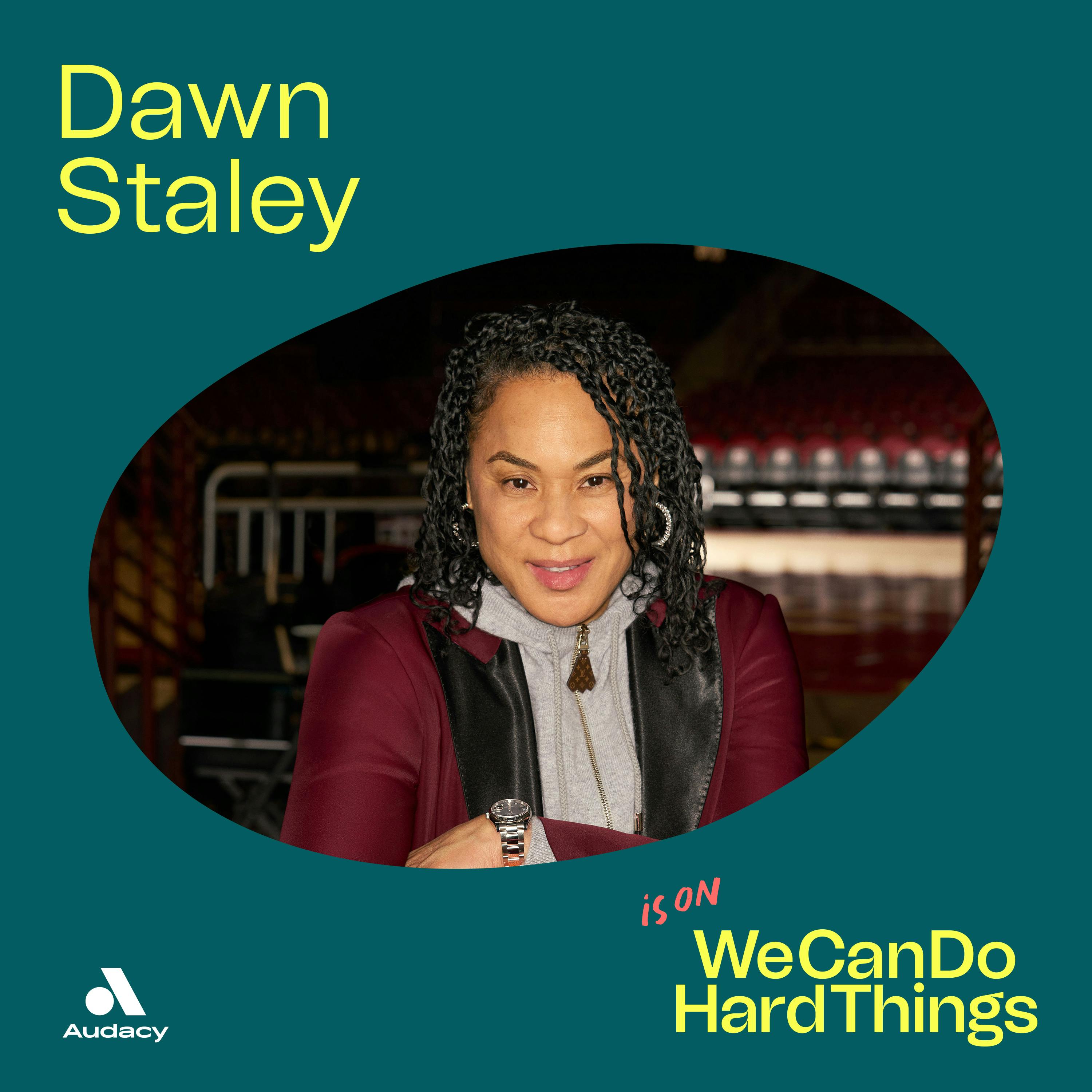
Loading summary
Transcript92 lines
- [00:00]
Glennon Doyle
I'm always looking for small ways to upgrade my day and that's exactly what Masterclass has become for me. I can learn from the best minds out there in just a few minutes, whether it's in line at the coffee shop or winding down at night. I took James Clears class on building habits and wow. I mean, obviously he's a big time author and one of the biggest takeaways I got is that you don't rise to the level of your goals, you fall to the level of your systems. I've actually implemented a morning habit stack and I feel way more productive without burning out. With plans. Starting at just $10 a month, billed annually, you get unlimited access to over 200 classes from the world's best thinkers, creators and leaders. Right now, our listeners get an additional 15% off any annual membership at Masterclass.com/hard things. That's 15% off at Masterclass.com hard things.
- [01:02]
Abby Wambach
Masterclass.com hardthings Hey friends, hope you're hungry because summer grilling season is in full swing. I've been loving it. Whether you're hosting the neighborhood barbecue or just bringing something tasty to the party, Whole Foods Market has everything you need at prices that honestly surprised me in a good way. Last weekend I stocked up on no antibiotics ever chicken thighs and some sustainable salmon burgers from their 365 by Whole Foods Market line. So good, juicy, flavorful and affordable. I also grabbed a few organic salad kits, tortilla chips and zesty salsa. And of course, the staples that make the world go round. No sugar added ketchup and organic mustard. And because the sweetness of summer needs coordinating treats, pints of ice cream, organic cake cones and sparkling lemonade. I use Whole Foods Market for summer get togethers. Just look for the yellow, low price and sale signs to save without ever compromising on quality. You can even shop online for pickup or delivery. It's super easy. There are so many ways to save on summer grilling favorites at Whole Foods Market.
- [02:15]
Amanda Doyle
Today we have Coach Dawn Staley. Oh my God. As everyone on the planet knows, Dawn Staley is the NCAA national championship winning head coach of the University of South Carolina Gamecocks women's basketball team. A three time Olympic gold medalist and a Naismith Memorial Basketball hall of Fame inductee. She is from North Philly, which means she can do anything. Her new book, Uncommon Basketball North Philly, My Mother and the Life Lessons I Learned from all is available now. Welcome, coach.
- [02:53]
Dawn Staley
Okay, but I'm gonna get a lot of street cred for coming on your show, like, it's up. It's up. It's up, my friends. It's up.
- [03:02]
Glennon Doyle
Yes.
- [03:02]
Amanda Doyle
We feel the exact same way about you coming on our show.
- [03:05]
Glennon Doyle
That's exactly right. Okay, so, dawn, we have a lot in common. And one of the things that I was stuck, struck by is being the youngest of a big family. Your attachment to maybe socks. For me, socks are still, to this day, probably my most prized possession, because it was like hit or miss. If you got two of the same socks growing up, it was like Hunger Games, but socks were the prize. Okay, so I must know, as you are also the youngest of a big family, what is your relationship with socks? Now? I have to know.
- [03:46]
Dawn Staley
You know what? I very rarely wear socks. Isn't that crazy?
- [03:53]
Amanda Doyle
Yes.
- [03:53]
Dawn Staley
What? Like, seriously, very rarely do I wear socks. Wow.
- [03:59]
Glennon Doyle
So do your feet not get sweaty?
- [04:02]
Dawn Staley
Well, sometimes. But then I have a collection of sneakers that I could just get another.
- [04:12]
Glennon Doyle
So you wear sneakers like the rest of us wear socks.
- [04:16]
Amanda Doyle
Wear socks.
- [04:18]
Glennon Doyle
That's good.
- [04:19]
Dawn Staley
Not quite, but I can't remember the last time I wore socks, and it was because I wore some moccasin shoes and it was winter. But I still don't wear, like, all of our games. Like, I have no socks. I do get criticized a little bit with our players because I don't have any stocks.
- [04:40]
Glennon Doyle
I love that. All right, we're going to have a big conversation around stuff that we read in your book and other things that we've seen on the television with you on the sidelines coaching South Carolina. I mean, get out of here with how awesome you are on the sidelines. But I just want to start off by talking a little bit about uva. You went there for college, played basketball there. And when you were getting recruited, there was a time where you didn't want some of those coaches who were recruiting you to come to your house. And your mom said something to you that you never forgot. What was it?
- [05:17]
Dawn Staley
My mom said, never be ashamed of where you grow up. I don't know if I was ashamed, so to speak. I'm really private. I don't want to give people the most sacred things of me. And I do believe my neighborhood was that. And I think it was more so of sharing that intimacy with other people, because I love my neighborhood. Like, I adore all the people that I grew up with. I loved growing up in the projects. I did the camaraderie. Everything was like a big family, especially in the block that I grew up in. I mean, some of the surrounding areas might have been A little sketchy, but what we had, I didn't want to share. So I was a little bit selfish with that because I would say my mother. Our house was immaculate. Very, very clean. My mother. And I'm going to probably date y' all, right? My mother changed, like, you know, the paneling that you put on the walls? She changed that, like, every season. Like, I could go to sleep and wake up. And my mother has changed the entire house around, and it looked like a different house. Like, very tidy, very neat. So it wasn't that I was ashamed of where I grew up. It was more of everybody can be a part of the greatness of the projects.
- [06:48]
Amanda Doyle
I love that because your mother was my hero on page five of the book. And I actually stopped reading and read a passage to Abby in the very beginning because I was having an out of body fantasizing moment. Can you tell us what your mother would do if she came home and the dishes weren't done?
- [07:11]
Dawn Staley
Listen, listen. Y' all gotta understand. It was five of us, right?
- [07:15]
Amanda Doyle
Yes.
- [07:15]
Dawn Staley
Five of us in the house. We each had a week to wash the dishes, right? I hated dishes. I would really pay my brothers the $10 allowance that I would get to wash my week. Right? Of dishes. Now, it was probably my fault because I paid them and it's my week. And if they didn't wash the dishes on my week, I wasn't washing them, right? So I would walk past them, look at them, and keep on going. And then everybody would do the same thing because we all hated washing dishes. And then my mother would come home after cleaning somebody else's house, right? Her kitchen needed to be clean so she could cook for us. And then she see last night's dishes. And when I tell you, you know, let me see if y' all understand this part of it. Florida. Evans. Good times.
- [08:18]
Amanda Doyle
Of course, the dam.
- [08:20]
Dawn Staley
Dam, Dam. Well, you could have did a hundred dams, because every single thing in that sink, my mom crashed out. In these young people's terms, she crashed out on those dishes and left them there for us to clean up and for us to fend for ourselves. As far as dinner, I just know.
- [08:42]
Amanda Doyle
That every mother listening right now is just having a sacred moment of celebration.
- [08:47]
Dawn Staley
So she reduced us to just only eating with paper plates, which is what you deserved.
- [08:57]
Glennon Doyle
So I want to talk a little bit about your mom because I can imagine the coach and the player you were had a lot to do with her. Can you tell me, like, what leadership ideals or principles do you still employ in your current life because of Your.
- [09:15]
Dawn Staley
Mama, My mother really was the sweetest. Like, the sweetest. She would give her last to anyone. To anyone. But my mother had a short fuse for injustice or a short fuse for anyone she felt like was being taken advantage of. Whether it was her, whether it's a stranger, like, she would speak her mind, even though she had nothing to do with the situation. It was just the mere fact of she felt like somebody was getting taken advantage of. And I'm going to give you an example of we would go Christmas shopping, right? We go to the mall. And my mother didn't drive. So one of us was driving, and if we turned our blinker on to go into a parking space and somebody zoomed in a parking space, now she would make us park behind the car and wait for the people to come back out after shopping so she could get off of her chest what that person did. So for me, I'm probably not to that degree, but to the degree of this. Now, I travel a lot. Like, I got a lot of freaking flyer miles. I go to places and I got so many mileage that I got status. I got status. So I get to go to the line, the first class, the priority line. And there was an instance where I'm in the front of the line and there's somebody in the back of the line. This man was in the back of me. And the service woman was like, sir, can I help you? Right? Like, I don't know if they were calling me sir.
- [11:12]
Abby Wambach
You didn't know what to be offended.
- [11:14]
Dawn Staley
About, like a man either. But he was calling a guy behind me. And I'm looking around like. And then the first question she asked me, are you first class? And I said, yes, I'm first class. And then she was like, okay, come up. And then I had to tell her, this is very my mom, like. And I told her, no, actually, I'm nicer than my mom, right? I said, you're not going to mess my day up. I told her, I said, you're not going to mess my day up. So her service was nice after that, but I just told her that I'm just going to keep a cool head and you're not going to mess my day up. Because it was early in the morning. So it's things like that that because of my mother, I can't let it go. And it's actually not for me. It's for the next person. So it's not for me. I'm going to get through, I'm going to get by, but it's for the next person that, you know, you assume doesn't have the status to be in that particular line.
- [12:18]
Amanda Doyle
I love that the standing up for yourself is standing up for the next person. That is it.
- [12:25]
Glennon Doyle
I think that that's so important. And it reminds me of the story when you were at UVA and the dean called you in and said some things to you. Can you tell us a little bit about that story?
- [12:38]
Dawn Staley
Well, remember, I am shy by nature. Everything about me. I didn't talk a whole lot. I'm the youngest. So you don't really get an opinion. You don't. You just gotta sit there and just kind of listen, observe, and you sharpen those skills. Because I was a great listener, I was a great rules follower. But uva was incredibly hard. I almost got kicked out of Virginia because I had a bad first year. Bad first year. And at Virginia, we don't say freshman, sophomore, junior. We don't say that. We say first year, second year, third year, fourth year. So I had a really bad performing first year in the classroom. So my coach, Debbie Ryan, you know, she set it up real nice. She set the alley oop real nice. The only thing I had to do was reach up and dunk it. So she set this meeting up with the dean. And the dean was the person that was going to decide whether or not I stay at UVA or I had to take a year off just from inadequate academics. So I'm shy. Like, I'm really, really shy. And I go in and sit down in front of the dean. And I'm like, no eye contact, none of that. So the dean is saying her piece. You know, what types of things can you do to help yourself? What kind of mechanisms, Right? And I'm not really saying anything. And then she says, you're gonna have to conform to the way we do things here. And then, you know, like, conform. I'm from North Philly. We got our way. I don't conform to anybody. That's my bubble talking. That's not, you know, me actually using words. But people who don't talk a whole lot, we do talk with our expression. So I probably just scrunched my face up and just listened. And then when I walked out of there, I know that dean stamped, kick her out. She's not ready. She can't handle the rigors that she can't handle how we do things here. And she can't live up to the standard of uva. So Debbie Ryan, thankfully, she knew the type of fighter I was. She knew that I just needed a Little bit more tapping into the very thing that to this day, when my back is against the wall, you know, I fight. And I had to use competition to increase my ability to learn, grow, acclimate, conform to the ways in which you had to at uva. So Debbie got me another chance and I just started competing with my classmates like I was out there on the court. And then it made sense to me after that. Like the very things that are you, we tend to forget when we're going through something that's new and difficult. But when you really think about it, I'm the most competitive person you'll ever meet. But I never looked at my teammates as the opposition. So when I started to do that, I started to utilize the resources to get the results that I needed to get in the classroom. And I started utilizing the tutoring at uva. I found out that I couldn't really listen and take notes because it's hard. So I got somebody to take notes for me because that was a resource that I used. And then I would just listen to the professor's lesson. So it was just all of those things, like if I keep making the same mistake on the court, I'm going to watch film to see why I'm making that mistake and how I could do things differently. It's the same in any other difficult situation. For me, it was academics, but also college. It's a system that you have to learn, like talking to your professors, showing interest in your academic status. I know that from experience, but I certainly know it and just finishing my 25th year of coaching foreign.
- [17:07]
Abby Wambach
It's an interesting time for business. Tariffs and trade policies are shifting, supply chains are under pressure and cash flow tighter than ever. This means businesses need to adapt in real time. That's where NetSuite by Oracle comes in. Your AI powered business management suite. Trusted by over 41,000 companies worldwide, NetSuite is the number one cloud ERP bringing accounting, financials, inventory and HR into one seamless system. You get one source of truth so you can make fast, informed decisions with confidence. With real time forecasting and AI automation, NetSuite helps you predict challenges, streamline operations, and stay strategic. No matter what the market throws at you. Know what's stuck, know what's costing you, and know how to Pivot fast. It's one system, full control. Tame the chaos with NetSuite. If your revenues are at least in the seven figures, download the free ebook Navigating Global 3 Insights for Leaders at netsuite.com hardthings that's netsuite.com hardthings I think.
- [18:11]
Amanda Doyle
That I know more than anyone on this entire planet that having the right therapist to talk to can make a life changing therapy difference. That's why I think ALMA is so cool. Alma connects you with real therapists who understand your unique experience. You can use their directory to search for someone who specializes in the areas that matter most to you, whether that's anxiety, relationships or anything else. And what stands out to me about ALMA is that 97% of people seeing a therapist through ALMA say their therapist made them feel seen and heard. You know, I love that that level of connection isn't something you can get from scrolling through online advice or following social media. It's about finding someone who truly understands your journey and is dedicated to helping you make progress better with people, better with Alma. Visit hello Alma.com hardthings to get started and schedule a free consultation today. That's hello a lma.com hard things summer's.
- [19:17]
Glennon Doyle
Here and honestly, I want to feel good. I want to feel clear, energized and confident in my skin. And that's why Symbiotica has become a total staple in my summer wellness routine. Last year I hit a wall. I felt sluggish, foggy, and my digestion was just off. I wanted something simple but effective. A friend introduced me to Symbiotica and now it's part of my daily ritual. Everything's in liquid form so it absorbs fast and actually tastes really good. And I have a new favorite. Symbiotica just launched Shilajit Liquid Complex. I've taken it in the morning instead of coffee and it's like flipping a switch. I feel so alert and my mood is instantly lifted. Plus it's infused with Brazilian honey and Peruvian cacao. Tastes so good. Be the first to try Symbiotica's new Sheila Jeet Liquid Complex at symbiotica.com Glennon and get 20% off plus free shipping. That's symbiotica.com Glennon for 20% off Symbiotica's new Sheilajit Liquid Complex okay, I have to talk more about what you said a little bit about the competition because it's fascinating to me in my own experience with that word and that experience and what it's about. Have you done any like real thought and analysis on yourself as to why you're so competitive? Like, where does that come from?
- [20:49]
Dawn Staley
Well, I think very early on I'm the youngest. Like everything was a competition in my household because I had older siblings and it's a Pecking order. I didn't tell y' all this, but my oldest brother and myself, we share the same birthday. Like, I don't even have a birthday on my own.
- [21:10]
Amanda Doyle
Oh, no.
- [21:12]
Dawn Staley
Right. So I think it just comes from being the youngest, right? And I think it comes from being a girl that played a boy sport. Like, I was the only girl in my neighborhood that played basketball. I played tackle football. I played baseball. Like, everything the guys were doing, I was doing. And it came with ridicule. It came with perception of you not being good enough. I'm working twice as hard as them, twice as hard to be accepted. And then because of that, I had a burning desire, an insatiable desire to. To be better than them. So that stirred my competitive juices so much that it became, like, really who I am. It really is still who I am. And I navigate from my competitiveness. Like, I sit here and we lost Damn near about 30 to UConn, right? Like, I really can't believe it. Twice. Like, with a talented team. But then you have to put things in perspective. I know what that felt like. Like, I know what it felt like to be dominant, because that's what they were. They were truly dominant. Like, you, when you've been there before and you've been on the other side of it, you understand that sometimes the synergy they took into the tournament, it was just their time because it was just our time, just last year. And then you have to get better. Like, they got better players. They got healthy, and you got to tip your hat and respect that dominance. And if you've never experienced that dominance, which a lot of talking heads on social media, they've never experienced dominance to respect it. They start taking stabs at our players, like, they're not good enough. They start taking stabs at me, like, I can't coach. Like, I got out coach. Like, it's. It's all of these things when it's more about respect. And they had an incredible run, that no one was beating them in this particular year.
- [23:33]
Glennon Doyle
I think that that's so fascinating, and I want to talk a little bit about that, that this idea of competitiveness, like, the ultimate form of competitiveness, is to be truthful and honest in the respect when you're dominated. Yes, that is next level. Can you talk a little bit about that? Like, how do you come to that understanding with being so competitive?
- [23:56]
Dawn Staley
One, you understand it because you've been on the other side of it. Two, it's the very thing that drives you to get better, like, to never feel what you felt and do something about it. I'm sitting here today. I spent this past weekend entertaining recruits to get better. Like to get better. If we win a national championship. I don't know if we have who we have on campus this past weekend. I don't know because we're probably preparing for a parade. We're probably doing so many other things except trying to get better. And although I don't stay drunk off of our success because I always want to get back and continue. But during this time is where teams who aren't the number one team in the country who didn't win the national championship, this is the time that you get better.
- [24:58]
Amanda Doyle
Are you more comfortable in that getting better time or the post mountain, like the climbing or the mountaintop? Because when you're talking, I'm thinking about in your book, when you talked about post gold medal, how did you feel after you won the gold medal? Abby and I talked about this for an hour after that part in the book.
- [25:18]
Dawn Staley
Relieved. When I got my first gold medal, I mean, it was the only thing that I wanted to do as a child was win a national championship and win a gold medal because that's the only time that I saw women play live on television. So those two things were my goals. And since my friends who grew up in the projects again, we really didn't have anything besides ourselves and pride. Right. So I would verbalize that that's what I wanted to do. And then my good friend would antagonize me that I wasn't good enough. You're never going to do that. And it wasn't a friendly, playful manner, but the really competitor in me probably wanted to stab him in those moments. Right. But I used it to make good decisions to increase my chances of actually accomplishing those things. And when I did get my first gold medal at 26, that's my lifelong dream. And I got it at a fairly young age. And then once I got it, I'm like, I went into a short. Like I didn't know what to do. Yeah, I didn't want to do anything else. So I went into a period where I never felt like this before. When you win stuff, you want to be greedy. You want more, and you want more, you want more. But for me, it was like, what do I do now? And then I had to go right into like the abl. Cause there were two leagues that started after we won the gold medal in 96. And I couldn't get myself to play. I couldn't get myself to practice. And this Is my love. Like basketball is the very thing that I absolutely love to do. And I don't even know where to turn besides, just don't do it. I don't feel like it, so I'm not going to do it. I didn't talk to anybody. Like, you know, nowadays you have mental health specialists and coaches and all of these things. And when you grow up in the projects and when you're from North Philly, that's taboo. Like, you don't go tell your feelings to anybody. And I did it. But I got through because I looked at Lisa Boyer, who's been coaching with me for the last 23 years of my 25 year coaching career. She was my coach at the time and she was very accommodating and she allowed me the space to just kind of decompress. And then it got to a point where I'm like, I'm letting her down. My teammates who are with the Richmond Rage at the time, I'm letting them down. They expect me, they need me, they want me, and then I'm not there for them and they're going through training camp and I'm here just not being able to get myself together. So when I started thinking outward instead of inward like me, me, me, me, I started thinking about them, them, them and team, I kind of snapped out of it. And then once I got down there, you know, it was like putting on an old shoe and I was back. I snapped out of it.
- [28:42]
Amanda Doyle
It's that team thing. I wonder how individual sport athletes recover from post.
- [28:47]
Glennon Doyle
Well, it's happened to me, Dawn. You know, I'm also a gold medal winner. And after I won, I gave myself the anthem to celebrate and then I'd step off and I just felt down. It's like the post Olympic gold blues. They call it gold medal syndrome. And it's literally a phase because there's this huge lead up to the Olympics, a huge prep. The whole tournament feels like another world. And then you reach your goal, you get this gold medal that you dreamt of your whole life. And for me, I want to ask you this. Like, it didn't give me the thing that I was in search of. Yeah, it was fun. I loved it. I wouldn't give it back, but I was in search of something else. Is your competitiveness and your desire to win, Are you searching for something there and have you found it? If you are searching for the most.
- [29:44]
Dawn Staley
Part, I've never really been selfish about winning. It's always been for other people. Like, I really took with me to the Olympics in Atlanta. My hood. Like, I took my hood. I took North Philly into the Olympic games. And there's something about that pressure. That pressure. Not even the pressure of, you know, the country, Although you get super patriotic when you're playing an Olympic game. Super. Like, ultimate. Like the ultimate. Right. But for me, I was bringing in, like, I felt like I had to do this for all the people in North Philly. Like, my hood, my projects, everybody that was tuned in to watch wanted. Like, I couldn't let them down. We had to win. And that was pressure in itself. And then every time that I experience this, it's always for someone other than me. And I do think basketball. It's a debt that I'll never be able to repay it for all it's done for me. And, like, my. You know, in Philly and my players and my coaches and everybody that's helped. Like, I feel like I can never check off that debt because it touches so many lives. You know, I don't have any kids, but my nieces and my great nieces and my nephews and everybody that comes behind us, they're gonna see something different. Yeah. And they're gonna strive for something different. And then everybody that is from my hood, they felt what I felt because I allowed that every. You know, if I go back to 96. I know I talked about North Philly. I know I talked about where I was representing just everybody in my basketball journey, because everybody that's in your basketball journey has touched you, good or bad. Like, you got haters, you got doubters, you got supporters, you got the myriad of people that contributed to the moment. And I'm so appreciative of all of them. All of them.
- [32:06]
Amanda Doyle
Beautiful.
- [32:06]
Glennon Doyle
I want to talk a little bit about coaching and, you know, you played professionally for many years and started coaching with Temple. I want to talk about, like, your coaching philosophy. And early days, you had mentioned that you were putting process before people, and I thought that that was really interesting. Can you talk about what that means?
- [32:28]
Dawn Staley
Like, I never wanted to coach. I was so much a player that although I had some great coaches, none made me feel like I wanted to be them. Like, none of them made me feel like, you know, to me, the gratification was in the people who are actually doing it. Like, the players. And then I was asked to turn Temple women's basketball program around, which I was asked two questions, right? Two. One was, can you lead? And then I'm like, can I lead? Like, I mean, I was the captain on every team. That I really, I played for. So, I mean, I can lead. And then the next question that this AD asked me, and I was just meeting with him because it was Temple, it was North Philly. They knew I was coming back because I was training with the 2000 Olympic team. The final four was in Philly. So I felt I had to go meet with him because he asked one, because I'm from North Philly, two, three. He knew I was going to be there. And then I sat down with him. He asked me those two questions. Can you leave? And then he said, can you turn Temple women's basketball program around? To me, that sounds like a challenge. And I'm drawn to challenges. I'm super drawn to challenges. And he stunted me with that because I wasn't taking that job. I'm a player. Like, I'm about to play in the Olympics in Australia, Sydney. And then he said, well, can you come down the hall and meet some other people?
- [34:16]
Amanda Doyle
Right?
- [34:16]
Dawn Staley
I'm like, sure, I'm here. Like, so I walk down the hall, he sits me at the head of a conference table with like 10 or 12 people sitting around this table. And they're like asking me all these questions like, where do you see yourself in five years? I said, planning a wnba. And they're asking me all these career questions, y' all. I was on an interview and I didn't even know it. They were interviewing me for the job. Now, granted, I'm 29 years old. The only interview I've had is a tryout.
- [34:56]
Amanda Doyle
Right, right, right.
- [34:58]
Dawn Staley
So I'm just being as frank as can be. Cause I'm ignorant. I didn't know what was happening. So, no, I don't see myself as a coach. No. I don't see myself like John Chaney, who was the legendary coach. No, I don't see myself like that. I'm just, y' all. Two weeks later, I took the job.
- [35:18]
Amanda Doyle
Oh, my God.
- [35:18]
Dawn Staley
I took the job for this reason. Because I thought about young people. Like, I thought about their experience being 18 or 22 year olds and how my experience as an Olympian, because it's utopia for me to represent the United States in the Olympic Games. Like, you have teammates who only think about winning. Right. Only thing, they don't care who gets what attention, what spotlight it was. We did it together. We had fun. We had knockout drag out arguments trying to get better. We would compete at the highest level. We would sharpen each other's iron, and we would let nothing come in between us and gold. Like, nothing. So I bottled all that up. And I'm saying, if I can help young people come together like that in a game that we love, why not? Why not? Again, I made decisions based on. Not me. Like, I was good with playing. I'm good. Let me play this out. But I started thinking about young people, all the players there at Temple, and how I could help change the trajectory of their life and their perception of their life, and to give them something that basketball gave me. Like, I was so prideful. I was so, like, competitive. Like, I had a place to put all these things, and I wanted to give that to somebody because it felt so good that I know I want people to share in that feeling, and look what happens. I think I get more gratification from coaching than they probably get from playing for me. And again, it's that old. That basketball thing where it's the gift that keeps on giving, and I'm not trying to. I only had one goal as a coach once I started coaching, really started coaching, and that is I want to be in a hall of fame for coaching. The only goals I had were those Olympics national championship, and then when I played long enough to know that there was a Naismith hall of Fame, selfishly, I wanted to be in the hall of Fame. And now, selfishly, I want to be in a hall of fame as a coach because one, it allows me to just kind of give the credit to all the players and coaches that I coach with, like, because it's not me as a coach. Yes, my name will go in, but you know how many people were all hands on deck for that to happen? And it's a way for me to pay homage to them. So coaching found me. Like, really, it really did find me because I didn't seek it out. But again, my heart took me to that place.
- [38:38]
Abby Wambach
Okay, I'm excited to tell you today about MIDI Health. If you have heard our menopause episodes, you know how passionate I feel about women having access to information about their bodies and about something that so fundamentally affects their lives. Here's the deal. If you're over 40 and you're starting to experience some of the symptoms of perimenopause or menopause. If you're having hot flashes, insomnia, brain fog, moodiness, all of this can be related to perimenopause or menopause, log on to MIDI Health. I have done this. It is easy. In fact, I have recently been pursuing, with MIDI health, hormone therapy to replace some of the hormones that are diminishing in my body. They're clinicians. They meet with you and they suggest specialized care for your health concerns. It's all through telehealth and 247 messaging and they call in your prescriptions to your local pharmacy. You deserve to feel great. Book your virtual visit today at join midi that's joinmidi.com y' all. The gorgeous new weather is here and you know what that means. We are talking linen, poplin, gingham, Tencel, all those soft easy fabrics that make us happy to be alive. And I want to tell you that you can get the highest quality, ethically sourced, honestly priced pieces in these beloved materials. At Quint's I picked up their 100% European linen fitted tank for under 40 bucks, Tencel jersey fit and flare dress for under 50 bucks. They are super breathable, super high quality and look so cute. Plus they are upping their game in shoes and bags and jewelry with pieces that feel super special but are easy and practical for everyday wear. Give your summer closet an upgrade with quint. Go to quints.comhardthings for free shipping on your order and 365 day returns. That's Q-U I N C E.com hardthings to get free shipping and 365 day returns. Quints.com hardthings owning a small business means.
- [40:47]
Glennon Doyle
Wearing all the hats all the time, including recruiter. That's why I rely on LinkedIn jobs. It works as hard as I do. I've used LinkedIn to find some of the best people on my team. It's easy to post a job, share it with my network and get a steady flow of qualified candidates all in one place. I especially love the new feature that helps write job descriptions. Huge time saver. And when you post on LinkedIn, you're not just getting resumes, you're getting insightful candidates. Based on LinkedIn's data, 72% of small businesses say LinkedIn helped them find high quality talent. And I totally get why. You can even boost your post for more visibility or add a hiring frame to your profile pic, which actually helps you get twice as many qualified applicants. More than 2.5 million small businesses use LinkedIn for hiring because it works. Post your job for free@LinkedIn.com hardthings that's LinkedIn.com hardthings to post your job for free. Terms and conditions apply.
- [41:59]
Amanda Doyle
It's so clear that all you do is in service. And there are moments in our lives where in order to be of service for the next person or others, we have to stand up for Ourselves, like you did in the airport, like your mother did at the meat counter, which we're gonna have to get to. So can you tell us what you knew you had to do after you saw Sedona Prince's video during the COVID bubble? Tell us what the video was and then what it was a catalyst for you to do at usc.
- [42:35]
Dawn Staley
So during COVID all the teams that made the NCAA tournament on the men's side and the women's side, we all played in the same city. And, I mean, social media is. It was prevalent back then in 21. And what we saw was a. I mean, it was LA Fitness at the men's tournament. Like, seriously, it took LA Fitness, plan it right smack in the middle of the men's city and where the tournament was being held. And then where we were. I mean, literally, it was just a yoga mat and, like, two barbells and a stand. Like, it wasn't even a full barbell stand. It was just, like, two dumbbells and stone. A Prince who was, you know, probably very savvy when it came to, you know, TikTok and Instagram, and she put it on her account, and there was an explosion of the comparisons, the. Everything that was lacking on our end. And then they started putting out, you know, what they got as far as gifts and what we got. It just didn't sit right with me. And I'm not knee jerk. I really am a processor. So I try to sit with it and see if it's a look, sound, or feel like, you know, this is. It's a lesson in a book where if something looks, sounds, or feels off, I gotta address it.
- [44:11]
Amanda Doyle
Yes.
- [44:12]
Dawn Staley
And if something looks, sounds, or feels great, I'm gonna promote it and encourage it.
- [44:18]
Glennon Doyle
So. Good.
- [44:19]
Dawn Staley
So I didn't knee jerk it the next day. I felt like I had to address it, you know, and just writing an open letter about the disparities in the men's and women's game. And then us coaches started to get together and talk about how we fight this, how we prevent this from ever happening again. And we had to amplify it. We had to get in our platforms and lift our game up, coach by coach. And then I got back home, we ended up going to the Final Four and losing in the semifinals. And then I went back home, and it was time for me to renegotiate my contract, you know, processing things. I'm like, I'm fighting nationally, you know, for equity in our sport. And yet, at the time, I was probably the most successful coach on campus, the men's coach that was here had not had the success that we had. But when you look at his raises, not his salary, men are going to. It's just normal that they just make more than you. It's just a normal thing. So we get used to that. Right? We get used to that. But then when you see the success that he had and the success that I was having and he was getting more of a raise and I was getting more of a raise, I'm like, I can't be out here fighting on a national level and I can't even get it straight here on our campus. So I asked my agent to step down, let me do something a little bit different, because my ask is a lot different than a normal raise. And he didn't want to step down. He wanted to give it a shot and fight. But we had been through this renegotiations for probably five or six times by then. And they always get to a point because you build up rapport with my agent and ad and they always get to a point where they're like, oh, we don't have any more money.
- [46:24]
Amanda Doyle
Yup.
- [46:24]
Dawn Staley
Like, okay, okay, I'll settle. Right. So. But this time I told him what I wanted to do. I wanted equal pay, not equal raises for success. I want what he's making. Yes, right.
- [46:38]
Amanda Doyle
Yes.
- [46:39]
Dawn Staley
Right. So I hired a lawyer, local lawyer, Butch Bowers. And Butch believed in it. He said, you're the best coach on this campus. You deserve this. And he's speaking the same language I'm speaking. And then it didn't hurt that he was kind of best friends with the chair of the board. Like they're besties, they vacation together. He knew all the legislators, he knew everybody. He knew all the players. So he started the negotiation process with our AD and installed for a long time. I mean, we started in April and we finished in October.
- [47:25]
Glennon Doyle
Wow.
- [47:25]
Dawn Staley
Right? It took that long? It took that long. And it went back and forth. And throughout the process, you know, the AD would. We had a really good relationship. You know, he would call for something else. But then we got into the negotiations and I think they were probably at just a million dollar raise, right? And he's like, you're going to leave all that money on the table? And I said, I'm not going to leave it on the table, but if you're going to give me a million dollar raise, you're not far off from where we need to be. Right. And we're not even supposed to be talking because he needs to be talking. To the lawyer, not me.
- [48:09]
Amanda Doyle
Right.
- [48:10]
Dawn Staley
You know, but he had to bring it up. And I just, you know, we went back and forth and back and forth. And I told them, I was like, you can actually look good from doing something like this from a national level. But I also know that when you're in the room with your peers, like other ads, you know, he could probably be the one that they're saying, man, why you do that? Why you start. Why you start this trend? So there's the pressure of that. I understood that. I really did, you know. But when you look at the type of success our program was having, you can make a case for it. Like, you can make. Is it an anomaly? I don't know. But you know how to talk, to talk, you know, to make yourself still look good and still make yourself feel like you're still one of the boys in the room. Even though you did this, you opened the door for such things to happen. And then finally the president got involved. They got to the place where it was equal pay, and we made a big stink out of it, which was good, because during that time, the women's soccer team, the national team, was going through their thing. And during the negotiation of mine, you know, there was a special cnn. I watched and sat, and they gave me more power to continue my fight. They did. To see their fight, you know, to see your fight. Like, it gave me, like, this is what I'm supposed to be doing. And I feel like it was a selfish act on my part, but again, I was comfortable. I was making a lot of money, but it's really not for me. It's for the next coach.
- [49:55]
Amanda Doyle
That's right.
- [49:56]
Dawn Staley
It's for the next sport. It's for what we should be getting for our successes. And they always bring up revenue like, you're not revenue producing. Says who? No, we don't get $2 million a year every time there's a tournament going on. The men get that. Each school participating school in the NCAA tournament, they get $2 million, right? Units is what they call them. But you can't tell me. I walk every day and my walk path takes me all around this campus, right? And if they knew how many students come up to me and tell me that they came to school because of watching women's basketball. That's tuition, right?
- [50:42]
Amanda Doyle
That's right.
- [50:43]
Dawn Staley
You can't tell me that we have sellout crowds, Right? Concessions, cost. It all costs. You can't tell me we're not revenue producing, Right? We are revenue producing. You can't tell me the amount of impressions that our school gets because we're in the Final Four for the last five years. Right. I know. Because every time that we go to a Final Four, board members want to come. You know, the president is always there. They're holding meetings with donors that more money's coming in to entertain at the Women's Final Four. So we are revenue producing. And I just think it's really hard for people to swallow, like on this campus today. On this campus today. I know there's a lot of animosity towards me for how much I make.
- [51:41]
Amanda Doyle
Really?
- [51:41]
Dawn Staley
Yeah. I know there are people that make it really hard for us to get the things that we need to get because they don't feel like I should be making the type of money that I'm making. And it's a shame. It really is a shame. Because, you know, they got daughters like you got daughters, and you feel this way. You don't feel like your daughter should get what her worth is or what she deserves because of the successes. I really don't get it. I don't throw it in people's faces. I don't. But I do stand up and I do speak out on injustices, inequities, inequalities, that I hope that if there are women on this campus that they can speak up for what they deserve. Professors on this campus are female that are doing just as much or more than their male counterparts should be paid as such. And I hope I've set that example to where everybody will be brave enough. You know, sometimes you do have to risk it all.
- [52:46]
Amanda Doyle
Yeah.
- [52:46]
Dawn Staley
Like I was willing to risk it all. And I will say this. In my negotiations, if they weren't going to give me the raise, then give me a zero buyout. It's a fair trade. Because I know my worth. Don't not give me what I'm worth and hold me to. You know, buyouts are like three times more than what you make. And you can tell your value by your buyout.
- [53:16]
Amanda Doyle
Ah, interesting.
- [53:18]
Dawn Staley
Yes.
- [53:19]
Amanda Doyle
So you're coaching them then, though you're not on the court, but you are teaching them through your own personal struggle with the school what they do next in the next place, in the next room they're in, where some man tells them there's, we don't have the money. It's just. So you're a 360 coaching them how to be in the world, how to step in the world. It's so beautiful.
- [53:43]
Glennon Doyle
Yeah. I just want to say, from this house to yours, what you do, how you do it. The emotion you bring to the sidelines is important. And standing in, like, your complete self all the time and bringing so much joy to people. And also being an activist just by living and breathing and being the person you are is just so important. And I know it's tiring at times because, gosh, can't we just play ball? Can't we just play ball and not have to deal with all this shit? But unfortunately, we're in positions that are us. Taking space is just an act of protest, in a way, an act of revolution. And you are a walking fucking revolution, sister. I am so grateful that you came on this podcast to talk to us today.
- [54:37]
Dawn Staley
Thank you. And thank you. Your platform reaches so far, and you, unapologetically, you all keep doing what you're doing. You inspire us. You give us stamina to continue to do what we do. And I really appreciate you all. And thank you for my extra street cred for being on the podcast.
- [54:58]
Amanda Doyle
Back at you.
- [54:59]
Glennon Doyle
Back at you. Yeah. Thank you for the extra street cred. Amazing.
- [55:03]
Amanda Doyle
All right, everybody go pick up Uncommon favorite whether or not you play basketball.
- [55:07]
Glennon Doyle
That's right.
- [55:08]
Amanda Doyle
It will help you in every room you're in, Know your worth and live through service. Your mom would be so proud of you right now. Coach Staley, thank you for everything.
- [55:18]
Dawn Staley
Thank you.
- [55:19]
Glennon Doyle
See you next time, Pot Squad.
- [55:27]
Amanda Doyle
If this podcast means something to you, it would mean so much to us if you'd be willing to take 30 seconds to do these three things. First, can you please follow or subscribe to We Can Do Hard Things? Following the POD helps you because you'll never miss an episode. And it helps us because you'll never miss an episode. To do this, just go to the We Can Do Hard Things show page on Apple Podcasts, Spotify, Odyssey, or wherever you listen to podcasts. And then just tap the plus sign in the upper right hand corner or click on follow. This is the most important thing for the pod. While you're there, if you'd be willing to give us a five star rating and review and share an episode you loved with a friend, we would be so grateful. We appreciate you very much. We Can Do Hard Things Things is created and hosted by Glennon Doyle, Abby Wambach, and Amanda Doyle in partnership with Odyssey. Our executive producer is Jenna Wise Berman, and the show is produced by Lauren Legrasso, Allison Schott, and Bill Schultz.