Loading summary
Transcript143 lines
- [00:00]
Glennon Doyle
Y' all, the gorgeous new weather is here and you know what that means. We are talking linen, poplin, gingham, tencel, all those soft easy fabrics that make us happy to be alive. And I want to tell you that you can get the highest quality, ethically sourced, honestly priced pieces in these beloved materials. At Quince, I picked up their 100% European linen fitted tank for under 40 bucks, Tencel jersey fit and flare dress for under 50 bucks. They are super breathable, super high quality and look so cute. Plus they are upping their game in shoes and bags and jewelry with pieces that feel super special but are easy and practical for everyday wear. Give your summer closet an upgrade with quints. Go to quints.comhardthings for free shipping on your order and 365 day returns. That's Q U I N C E D.com hard things to get free shipping and 365 day returns. Quints.com hard things Father's Day is coming.
- [01:04]
Abby Wambach
Up and if you're looking for a gift that sounds thoughtful, meaningful and actually gets used, Masterclass is it Imagine giving your dad the chance to dive into something he's always been curious about. Whether it's learning how to grill like a pro with Aaron Franklin, sharpen his business mindset with Howard Schultz, or even explore the science of well being with Dr. Lori Santos. She's been on our pod. I gave my dad a Masterclass annual membership and he got totally hooked on Dr. Santos's class. He's always been big on self improvement but now he feels like he actually has tools to make real lasting changes in his day to day life. For me, I've been loving the class by Malcolm Gladwell on storytelling. Our listeners always get great discounts on Masterclass of at least 15% off any annual membership@masterclass.com HardThings See MasterClass's latest deal at least 15% off@masterclass.com HardThings masterclass.com HardThings.
- [02:18]
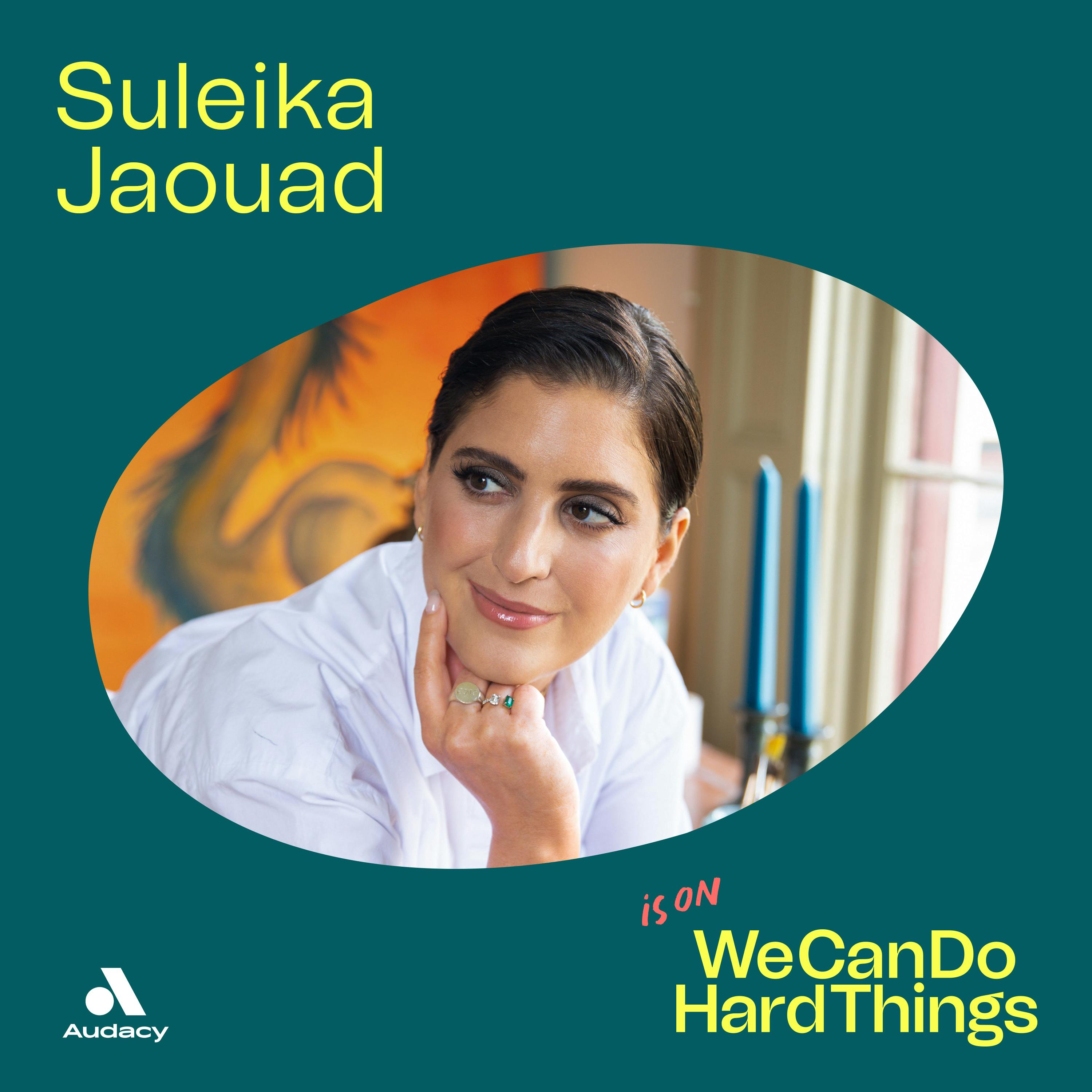
Suleika Jaouad
Hi.
- [02:21]
Amanda Doyle
Hi friend. I love seeing your face.
- [02:24]
Suleika Jaouad
Aw I love seeing yours.
- [02:27]
Abby Wambach
Hi Abby Hi Suleika, how are you?
- [02:30]
Suleika Jaouad
I'm great. I'm so happy to see you both. Same Glennon. Are you wearing a blanket or a sweater?
- [02:38]
Amanda Doyle
So Suleika, I wear only sweaters like this. I need to be in a blanket all the time. So this is a huge cardigan. Feels like the best I can get to a socially acceptable portable blanket.
- [02:53]
Suleika Jaouad
I love it. I had my blanket off camera because I was worried I looked like a shivering babushka over here. But I'm just going to bring it back out, cuz.
- [03:01]
Abby Wambach
Yes.
- [03:02]
Amanda Doyle
Yeah, I think we. We do what we must and. Exactly. I had a security blanket, my D, until I was in college, and then I brought it to college with me, and then it got kidnapped and stolen and never returned to me. So.
- [03:15]
Abby Wambach
Wait, hold on. You. You called it my D?
- [03:19]
Amanda Doyle
It was called my D. That's sweet. I don't know why.
- [03:21]
Suleika Jaouad
I have a lot of questions.
- [03:22]
Abby Wambach
Me too.
- [03:23]
Amanda Doyle
Yeah? Yeah. I don't know why. Blankie, maybe. I couldn't say. I don't know why. But it was called my D and it had a part on it that we called the piece. And the piece was the part where the silk kind of matched with the fabric. And I would obsessively rub this certain place on the piece. And so at one point, my sister and I shared our security blanket.
- [03:44]
Suleika Jaouad
Wow.
- [03:45]
Amanda Doyle
Yes. And then one time, we were in a hotel room and I was in one bed and she was in the other, and we were fighting because the blanket was stretched across. And so my dad came and cut the blanket down the middle. So then there were two halves.
- [03:59]
Suleika Jaouad
Wow.
- [04:00]
Amanda Doyle
We are really derailed. Suleika, I'm sorry.
- [04:03]
Suleika Jaouad
Okay. I have so many questions. Do you still have a severed blanket? Did you replace it? Does she still have her half? Do you fight over the remaining half?
- [04:12]
Amanda Doyle
So she, like a normal person, lost her connection to the D, and she, by the time she was nine, it was gone from her life. But mine remained very important to me. So important that my dad, before I went to college, thank God, cut a little piece off the piece, put it in a frame, and it said, in case of emergency, break glass.
- [04:38]
Suleika Jaouad
Wow.
- [04:39]
Amanda Doyle
Right. So I still have that, but that's the only part of my D. The point is, this is why I wear a blanket.
- [04:45]
Suleika Jaouad
Okay, can I just derail us one step further?
- [04:47]
Abby Wambach
Yes, please.
- [04:48]
Suleika Jaouad
Have you heard about Victorian mourning rings where, like, people used to have, like, a little, you know, cutting of hair or a scrap of fabric, and it was embedded in their rings? I think you need your own Victorian emotional support ring that has a scrap of the D in the ring.
- [05:07]
Amanda Doyle
Okay, wait, can you tell me why did they put the fabric inside their rings? I don't understand.
- [05:12]
Suleika Jaouad
So it was like having a piece of the person they loved. They were mourning R, like a lock of hair or whatever, and it was, like, trapped in amber or some. Some jeweler who may or may not be listening to this is going to tell me I've gotten this completely wrong.
- [05:27]
Amanda Doyle
Oh, yes, they will.
- [05:28]
Suleika Jaouad
Was to preserve the fabric or to Preserve the piece of hair and make it into wearable art.
- [05:34]
Amanda Doyle
Well, that is what my dad did without knowing. That's so cool. Well, first of all, this is Suleika. And everybody knows who Suleika is. The author of the New York Times bestselling memoir, Between Two Kingdoms. Zulaika wrote the Emmy award winning New York Times column and video series Life Interrupted. And she is also the subject, along with her husband, John Batiste, of the Oscar nominated documentary American Symphony.
- [06:00]
Abby Wambach
Beautiful.
- [06:01]
Amanda Doyle
Good lord. A visual artist. I mean, if you all could see what I'm seeing right now behind Suleika. She's in this room with her paintings behind her. Her paintings are stunning. Her large scale watercolors are the focus of several upcoming exhibitions which just. Okay. She is also the creator of the isolation journals, which everyone in the country knows about, a weekly newsletter and global community. And her latest book, the Book of Alchemy, which has been attached to me at the hip. A Creative Practice for an Inspired Life is available now. But before we get into Suleika, as, I mean, I believe, and Liz and I have had many talks about this, I think a lot of people believe this, but I believe you are one of the great creative forces of our time. Not just in like what to do with words and paint, but like what to do with life. And because of that, people take you very seriously. So I would like to introduce the Pod Squad to Suleika in human form. Two ways.
- [07:09]
Suleika Jaouad
I'm scared.
- [07:10]
Amanda Doyle
Well, I was thinking yesterday about the last time I saw you in person. Do you remember where we were? We were. I had.
- [07:15]
Suleika Jaouad
How did I forget?
- [07:16]
Amanda Doyle
Yes. So I'm going to tell you my perception real quick. And then I want you to tell the Pod Squad how you ended up in that tiny hotel room in my town. My understanding is that Liz needed a new dog. Oh, You, Suleika, are some sort of force pulling together humans in need of small dogs with small dogs. So we can get into that in a minute. You somehow found a dog for Liz, but the only thing was it was all the way across the country in California. So you and Liz flew across the country to meet this tiny, small two pound dog, and then you were supposed to stay at my house with this dog, but the dog had fleas. So you ended up in a hotel room and I came to you there. Is that right? And how did this happen?
- [08:06]
Suleika Jaouad
Okay, so Liz, about six months prior to that whole boondoggle of a weekend, said to me, I think I'm ready to have a dog. She took care of my dog. When I got sick three years ago, my dog sadly died. During that time in her care, it was horrible. And also a great comfort to me to know that he got to have his final days in the care of one of the greatest embodiments of love I think the world has ever known. But because of this, and because it was slightly traumatic, since the only thing worse than a dog that does not belong to you getting sick in your care is a dog dying in your care. I had always said to Liz, if and when you are ready for a dog, like, I will make that happen. So she tells me she's ready for a dog. And Liz being Liz, and because she knows herself so well, she didn't just know that she wanted a dog, she knew exactly what kind of dog she wanted. And so she told me that she wanted a dog that was older than 2 years old because she didn't want to deal with a puppy, but younger than 5 because she didn't want to have to go through the experience of a dying dog again anytime soon. It had to look like my old dog, but have fewer behavioral issues, which is totally fair. It had to be a female because she had already picked out a name for it. Pepita. It had to be small enough to travel with, but athletic enough to go on walks in the woods with, and on and on and on. And I was like, cool, cool, cool. This might take me a minute, but I will search to the ends of the earth to find this little Pepita. And so that's exactly what I did. And after six months of trolling Petfinder like a fiend and, you know, following every rescue account on Instagram, I found a dog that matched that exact description, except that it was likely going to be imminently adopted. And it was on the other side of the country. And so I called her. It was maybe about 8pm and I was like, we have to get a plane ticket leaving at 4am we're going to Los Angeles and we're getting our dog. And so that's what we did. And yes, the dog did have fleas. We did end up in some strange motel. And it was the best 24 hour trip of my life. And Pepita is even better than described. And so this has become my weird new side hustle, which is matchmaking humans to their perfect canines. So my services have officially been announced and nothing makes me happier.
- [10:55]
Amanda Doyle
Get ready. Get ready. I feel as if, and I'll put a pin in this and move on, but I feel as if we should do something here, like somehow Create. I'm asking the universe to show us the way of matching humans with small tiny dogs. Allow us to be the bridge universe.
- [11:12]
Suleika Jaouad
Yes, please, please. How can we be of service?
- [11:16]
Amanda Doyle
Okay, secondly, I would like to tell the pod squad about the last text exchange that Suleika and I had. So I've never done this before, but I'm going to read part of it right now. So I'm sitting in my home and I am dealing with the fact. So let me give you the context for when I received your text. I was dealing with the fact that I we have a book coming out and that I had once again lost my damn mind. That somehow pre launching anything into the world. Pre media, pre whatever. No matter how hard I try to stay connected to myself, I go, I'm gone. And so the version of this is I was sitting in my house trying to figure out why I had dipped back into my eating disorder. So then I get your text and your text says, tips for staying sane in the lead up to book launch. Mine is six weeks out and I'm already. And then just a bunch of emojis with faces exploding.
- [12:13]
Glennon Doyle
Okay?
- [12:15]
Amanda Doyle
So I say no. I have no tips, only solidarity. I have lost my mind again. I do not handle the shiny things well. You say, here's my question. Does anyone handle the shiny things well? Then you go on. I say, why does this all feel so bad? You say, I'm living the dream, at least my version of it. And yet I've never felt more racked with anxiety and insomnia and self doubt. Then you say, I would stop it all, but I have two warring selves. The one who wants to live a quiet life on my couch with my beloveds, and the good girl who wants to get as many gold stars as possible. Because how else will I know I am worthy and loved and important in doing a good job at my one wild and precious life? Okay, lots more funny stuff which I'll bring up later, but can we talk about. I have never talked to anybody about why, Sulaika, do creatives who love to make art somehow end up miserable in the promotion of the art? What is happening there? What do you think?
- [13:27]
Suleika Jaouad
Okay, I have been thinking about this so much. I'm so happy to get to talk about it. Because I think there's so much shame, especially when you feel like you're living your quote unquote dream. And if your experience of that dream does not sync up with what you thought it should be or what the world thinks it should be, then there's Just this cognitive dissonance. Yes, but part of that is comparison. And the reason I texted you is because I was in a cab heading home and just in a full on spiral of insecurity and anxiety. And I open my phone and what pops up but your gorgeous interview on the Today show where you were announcing your book tour. And I was like, wow, Glennon looks so poised, so calm, so grounded. How does she do it? Like, what is wrong with me that I am losing my goddamn mind over here? And so my text to you was a genuine one. I was like, tell me your secrets. And I cannot tell you how hard I laughed and how much relief I felt when it turned out that you were having your own version of losing your goddamn mind. But that sense that somehow people are handling things better, that they're doing it with more grace, that they're experience of self remains intact despite all of the feedback coming from the world like that, for me is part of where that cognitive dissonance starts to happen.
- [15:04]
Amanda Doyle
I am so amazed by that. I mean, that Today interview, Suleika, first of all, I had to wear these huge pants and a huge sweater because I was so emaciated that I was scared to show anything. I mean, that Today show segment in which you saw me as posed and grounded and doing this well, was a low for me. Like a deep low. Wow, that's crazy. What are we projecting? Like, how do we do it then without projecting this false? I mean, I had. Let me just. I had this one moment at the GLAAD Awards, which I decided I want to go to this. I have things I want to say to the kids and, you know, but every time I go to a place when I'm at a low in my body, everyone tells me how amazing I look. And that is very hard for me. So I don't want to go out. But this time, Suleika, I was. Abby's laughing because she's like, oh, shit. So this woman came up to me, it was a reporter person, and she said, I was in this gown and shit. And she said, you look amazing. What is your secret? And I said, oh, my secret is I have a severe mental disorder called anorexia and I starve myself and I can't get out of it. And I think one of the reasons is we have these ideas of what looks amazing and what doesn't. This isn't amazing, this is unhealthy. And she was like, oh, shit, sorry, sorry, I shouldn't have said anything. Go ahead. What do you think of that?
- [16:32]
Suleika Jaouad
No, I have had a very similar experience. And I do think it contributes to the very thing that we're talking about, which is I relapsed. I have leukemia again. Relapsed twice in the last three years. And I have lost over 60 pounds since reentering chemo in the last seven months. And the skinnier I get, the more and more people walk up to me and say, you have never looked better in your life. What is your secret? And I say to them, chemotherapy. I highly recommend it. And there's just an immediate pause and, like, absolute terror that flashes across people's eyes. But it's exactly that. Our sense of self is distorted because we do that distortion to ourselves. But it's because we're constantly being bombarded with that expectation that distorting ourselves, whether that means starving yourself or arranging your face with makeup or filters to look like an exaggerated and improved version of yourself, is the better version of yourself. And whatever true version of yourself that actually exists, the anxious one, the pimply one, the one that doesn't look the way you may feel it should. That version is best kept for inside the house.
- [17:57]
Abby Wambach
Okay, I. I want to dig into, like, this for you, too, because I don't experience this like you said.
- [18:03]
Amanda Doyle
I know.
- [18:04]
Suleika Jaouad
Yeah. I was about to ask you.
- [18:05]
Abby Wambach
Yeah. I don't. I've been in the public eye for a long time and released things, and, you know, I was in New York City releasing the same book. Our name is on the same book. And I'm, like, fired up. I'm like, God, we've been working so hard on this thing, and now the world gets to see it. And it almost feels like, to me, like, a relief. Like, oh, the hard part's done. Now I just get to, like, celebrate it. I'm curious, the both of you, because I know I kind of know Glennon's answer, but I want to talk to you about it. Salika. Like, are you good? You're an artist. Is it a skill of yours to celebrate your art after its completion?
- [18:48]
Suleika Jaouad
So. And maybe this is a key difference. For me, the celebration is the making of the work. And that's not to say that it's always fun. Like, I have lots of, like, head banging against the desk moments, but I love it. That, for me, is where my joy is. And there's a reason I picked a modality of creative expression, be it writing or painting, that allows me to be alone in my house for many hours and days and weeks. And so that process of being in conversation with the self and with the work I love that nothing brings me greater joy. And there's like this sacred privacy to it that makes me feel really safe. That makes me feel like I can be a little kid who can experiment and play and make big glorious mistakes and have fun. And the second I start to think about the public gaze of that work, the second I start to imagine what it might look like to put that work out in the world, that's when it all goes south for me. So I don't know what that is. And like, Liz talks about how, you know, creative work comes in seasons. There's this season of ideating and researching and outlining, and there's the season of actually making the thing, and then there's the season that we're both in of sharing it with the world. And I don't know why I haven't figured out. I'm not clear yet. I mean, I have some guesses. Intersection of capitalism and creative work is a tricky one. But I, I don't know how to hold on to that relationship to my creative work and that relationship to myself when I invite the world in.
- [20:45]
Amanda Doyle
Me neither. And it's something about like, the art that we do in private is like an excavation of insides. That's the point, right? And then this part is nothing about that. It's all suddenly the outside. You cannot excavate your insides in a three minute segment. You cannot get it true enough. If I were being true in segments or in whatever, I would just be sitting there quietly listening.
- [21:16]
Suleika Jaouad
Totally.
- [21:17]
Amanda Doyle
That's true for me. But like, nobody wants me to do that. I have to be a show of myself. Like, I have to become this other avatar for the art. And also to me, the skills feel unrelated. That's what bothers me. It feels like if somebody's beautiful at baking cookies and then they bring their cookies and someone's like, okay, now the next part is you have to become a Navy seal. Those are different skills, right?
- [21:46]
Suleika Jaouad
Completely different skills. And the era of being the writer in the log cabin who lived in quiet hermitage, those days are gone. Now to be a creative, to make your creative work your profession, you're expected to build a platform and to figure out a way to have your own distribution channel and to figure out how to synthesize your inside into talking points that ultimately, hopefully will lead someone to do a thing, be it, you know, buy a ticket to a tour or buy a book. And all of that to me has always felt so bad. And I, yeah, I think like you, I pour all of my heart and my soul into my work. And so anytime anyone asks me and I have this actually in the book, like this horrifying moment where someone says what are you writing about? Or what is it that you do? I immediately want to like fall through a trap door and disappear because I don't know how to give a pithy little sound bite of an answer.
- [23:08]
Glennon Doyle
I have been using Bokeh for a few months now and it is a feel good part of my daily routine. Bokeh is this toothpaste that doesn't feel like toothpaste. It feels like a sort of little delight. The flavors there is this flavor called lemon lavender. It's so refreshing, it's a little bit surprising and it makes brushing your teeth feel more like a moment of self care and spa than chore. They use this thing that is a fluoride alternative that's inspired by nature and backed by science. It's actually a mineral your teeth are made of, so it helps strengthen and protect your enamel in a gentle way. And if you have teeth like mine, which chip if you're even looking at them, this is the way to go. For a limited time, Bokeh is offering listeners 15% off its best selling toothpastes on Amazon and bokeh.com with code Glennon15. That's Glennon15. Make the switch to Bokeh for the.
- [24:06]
Amanda Doyle
Whole family I've always been picky about bras. If it's not comfortable, I am not wearing it. That's why I've been a fan of ThirdLove for years. Their fit and their fabrics. They just get it. But now they've raised the bar even higher with their new temp sink bras and undies. It's the first ever collection made with thermos regulating fabric designed to keep you at the perfect temperature all day long, which is important for freshly menopausal women like me. I've been wearing mine non stop. Whether I'm running errands, working from home or out for the day, I don't have to think about overheating. The fabric adapts to my body before I even notice I'm getting warm. And of course it still has everything I love about thirdlove. Over 60 sizes including exclusive half cups. So the fit is always spot on, the support is amazing and the materials seriously soft but still super durable. Every piece is wear tested on real people and thoughtfully designed to solve real life comfort issues from back smoothing to added lift and everything in between. Visit thirdlove.com and use code podcast15 for $15 off your order.
- [25:12]
Glennon Doyle
Father's Day is just around the corner and Macy's is making it easy to celebrate with their Father's day sale happening June 11th through the 15th. You get 25 to 50% off. Great gifts for all the great dads in your life. There's some really good stuff there. From men's sportswear, shoes and tailored looks to gadgets, bar wear, grill wear and activewear, there's something for every personality and price point. I'm deciding between three items@macy's.com all of which are at crazy discount that every dad would love. Stylish sunglasses, sneakers and travel backpacks. If the dad in your life is like my husband, sunglasses, sneakers and backpacks are where they express 90% of their style. So get to Macy's and give them a style boost. Whether you're shopping for self care or something high tech, Macy's has you covered. Need a little inspiration? Check out the Macy's gift guide@macy's.com to find thoughtful ideas for every kind of dad. Stylish, sporty, tech, savvy, or all of the above. Celebrate Father's Day right with something he'll truly love. Only at Macy's.
- [26:21]
Abby Wambach
Okay, can I just like ask a few follow up questions to both of you?
- [26:25]
Amanda Doyle
Please, please fix this for us, Abby.
- [26:28]
Suleika Jaouad
Yeah, fix it. We need your help. Or just do it for us.
- [26:31]
Amanda Doyle
Yes, that's it. I had that idea. Why can't there be somebody else that does this? We do our thing and then somebody else becomes the marketing avatar, not us.
- [26:39]
Abby Wambach
But why then why can't you go on to the Today show segment and do it exactly how you want it to be done?
- [26:48]
Amanda Doyle
Because I think I'm scared that what Suleika is saying about the comparison is actually truer than what I'm saying. I'm saying I'm just a sensitive being who wants to make art. Okay, if that were true, then why can't I just go on these segments and out there and just be that? Just listen, just be. No, I think it's. I'm scared. I am treating this moment as a question. You don't do that. You don't walk around to the world going, are you my mother? New York Times list. Are you my mother? Amazon? Are you my mother? Instagram likes, like you don't ask the world with every second you step into it if it loves you enough. Do you feel like I just do.
- [27:30]
Abby Wambach
That for my mom? Your actual mom?
- [27:32]
Amanda Doyle
I know my mom loves me, so I gotta ask everybody else, do you feel that way? Is there Just like, is it the comparison? Insecurity, Feeling afraid I'm not getting the right attention? Like, is that actually part of it?
- [27:45]
Suleika Jaouad
I think it's part of it. I also think that, you know, the messaging from all corners, especially in the United States, is that we are our work, we are our resume virtues, you know, like the traits and qualities that make us appealing in the modern marketplace. And we are steeped in a culture, I believe, that is so obsessed not just with productivity, but, like, a very toxic kind of productivity that, like, if the world does not see me as good or whatever, you know, insert adjective that I think I should be, then I don't believe myself to be so. And I know that this is flawed thinking. I. I've done enough work on myself to understand why. Obviously, you know, conflating your identity and your sense of self worth with your job and the way that you appear to the outside world is deeply unhealthy and problematic. And yet it's in these high pressure moments where there is publicity and where things feel amped up that I feel like I regress back into that little kid who was the kid of two immigrants who wanted desperately to honor the sacrifices my parents had made for me to assimilate, to not stick out in a bad way, to be considered good and worthy of belonging. And so whatever that is, it comes out for me in these moments and these seasons where I do have to show myself to the outside world.
- [29:31]
Abby Wambach
Is there also a mindset that maybe you both could try to embody in that? I don't know. I see it happening to you, and I want to so often to, like, give you the extroversion or, like, the not care what anybody think idea, but, like, the way I think of it, no, I don't want to go and get on a plane five days in a row to go to a book tour, and then a week later do it all over again. Like, that's a lot for me, having traveled so much. But I think about it in, like, there are things about this process that I really am not gonna like and I'm not gonna enjoy. And I know that. I know when I was training for the world Championships and World Cups and Olympics, I never wanted one time to do extra sprints, but I knew it was a part of the whole and the bigger idea of what we're trying to do. Is it possible to just have some of these things that you really don't like to do, but do it anyway? Is that just part of the same bullshit culture and, like, the productivity issues that we are coming from.
- [30:39]
Amanda Doyle
I'm just afraid that there's something inherently not right and real in it, so that it doesn't matter how many little tweaks we try to make or how many ways we change our mindset about it. I have never had anyone tell me that my writing makes them feel more alone or worse about themselves. But the holograms we send through the media, the Today's show segments, the showing up here, the red carpet, the Instagram images, all the holograms of capitalism, the amount of people that have told me that, just like you did, those parts make them feel bad. There's something wrong with it.
- [31:18]
Suleika Jaouad
Hmm. There's something wrong with it. The commodification of self is not. There's nothing natural about that.
- [31:24]
Abby Wambach
Yeah.
- [31:25]
Suleika Jaouad
The fact that whatever messages we've internalized make it such that you can walk up to somebody who is an unhealthy weight, either from an eating disorder or cancer treatment, and genuinely believe that you're paying them a compliment because you genuinely believe they've never looked better. That's what's wrong. And the Pavlovian part of our brain, right. Like, when we get positive feedback, we want to do more of it. It feels good. It's the same reason we know that, you know, social media is addictive and we're, like, chasing those light counts. I mean, I remember John is so much better at these things than I am, because. And I confess this to Glennon, when I'm in that spiraling place, I will literally go on Goodreads and filter for the one star reviews.
- [32:09]
Amanda Doyle
Yep.
- [32:10]
Suleika Jaouad
I know this is not smart. I know this is not good for me. Liz calls it very wisely. I think digital cutting, and that's what it feels like. But John says when I was sharing this with him, he said something that struck me. He said, not only do I not read the negative reviews, but I believe the positive reviews are just as dangerous. Because, again, it's that Pavlovian part of the brain where if someone tells you this was brilliant, naturally the instinct is to do more of that thing. And the second you start creating art from a place of wanting to feed whatever outside feedback you're getting, you've lost the ability to actually hear your own intuition and to be in relationship with your creative work.
- [32:53]
Amanda Doyle
To me, it's attachment theory by art.
- [32:56]
Suleika Jaouad
Yes.
- [32:57]
Amanda Doyle
It's attachment theory that I have experienced. Attachment theory as it creates an infant into a child. It creates a baby writer into. I will look at you world and you tell me what makes you like Me. And I'll do more of that. I'll amplify that part of my personality. And just like a child and a parent, if you show me with your face or your comments what you don't like about me, I will shrink those parts of myself. It's the right.
- [33:25]
Suleika Jaouad
Yeah.
- [33:25]
Abby Wambach
It's the need for belonging.
- [33:26]
Amanda Doyle
It's the line I sent you, Suleika, in our text thread, which was like, I had just been to an Al Anon meeting and I sent you a screenshot of what someone said. Someone said, my higher power is whatever look is on your face. Face.
- [33:40]
Abby Wambach
That's good.
- [33:42]
Suleika Jaouad
My higher power are the one star goodreads reviews.
- [33:45]
Abby Wambach
Yeah.
- [33:45]
Suleika Jaouad
Which is so sad. But Abby, to your point. Yes. There are things about it that are wonderful. Right. And that's why we do it. Whether it's the one conversation that you have with someone you know on your way out from whatever event that you're doing where they share something and it sparks some train of thought and you go home and you feel furiously write something in the notes app on your phone and whatever it is, you know, like, I have those experiences all the time. I'm not such a masochist that I put myself through this over and over again because I could have just chosen to have a different job and to do my creative work on the side just for myself.
- [34:27]
Abby Wambach
I think that you both are right, though I might be coming from more of a place of misbehavior. In a way. What you said really hit me like the commodification of an identity. I've been doing that since I started playing soccer. And then I started to monetize that. And so, like, literally my body was monetized. I was literally paid for doing things with my body. And so it is way easier for me to be in relationship with corporate sponsors to attach myself to the corporate capitalistic engine. And so this thing doesn't feel as unnatural to me as it does to, I think probably a more true through and through artist like you both are. And so it makes sense to me. I just wish it wasn't so hard for you, but I'm glad that it is because it means that you're really true to the art. It's like Glennon would say all the time, like, I wrote a book and then I have to talk about the book thing that I wrote. Like, I meant what I said in the book.
- [35:34]
Amanda Doyle
And I already thought really hard about the best words. They're in there. I just have to make up less good words to say about the Good words I worked really hard on. Can you just read it?
- [35:46]
Suleika Jaouad
If you wanted to do it in a one sentence sound bite, you would have done that instead of writing hundreds of pages. Okay, I. I think what you said is, it's making me think of so many things, but what it's making me think of is the fact that when we talk about creative work, whether you're a musician or a visual artist or a writer, there's this kind of faux thing we do where it's, you know, you're not actually supposed to talk about business. There is no MFA program that I know of that offers a class in the business of writing or in the marketing of writing. Not only is it not part of the conversation, but there's like this response of like, you're not a true artist if you care about those things. So what we're actually expected to do is to figure out how to do those things on our own via study and comparison of other people who appear to be doing it well, to figure out how to make it work for yourself. Because you're being asked to do these things, right? It's not just self imposed. You're asked to do a book tour, you're expected to promote your book, but it's not acceptable to talk about your creative work and to talk about business within creative fields. They're regarded as an opposition to each other in part because they are. But. But the business of it isn't. And so, yeah, there's this omerda of silence, I think, around the realities of marketing and publicity of creative work and what that takes and how to do it. And nobody talks about it. Nobody talks about how hard it is and what it does to your insides. Nobody has once sat me down and explained to me how I might do it. I've just kind of figured it out again by, by watching people who I believe do it very well and do it better than me. And then ultimately the conclusion that I arrive at is, I hope I'm doing okay at this. And why am I so scared right now? And why do I feel so confused and insecure about this?
- [38:04]
Amanda Doyle
Yep. I wonder if there's a different way. I really believe there's a different way. Like, I am suspicious of the whole endeavor. I just feel like, why do we sit down and believe in this, like, magical power of art? There's a magic in it. We all know you call it alchemy. Like there's a magic that goes on when you pour your. Is it God? Is it a muse? Is it. Who knows? But there is magic. But then we don't trust the magic to go out and do whatever it needs to do. It's like we believe in it at the desk and then we get to a meeting with a bunch of marketers and nobody believes that the art will find its way. We all have to allow capitalism into our bodies. Like, that's how I feel. I feel like I'm being colonized all of a sudden. Like my body is being used now to sell the art. But I just wonder if there's a different way. Like if what I'd actually like to do is just make the art, be in real community with the people who are in real community with the art, and then go make more art. Is there a whole nother group of people that could do whatever needs to be done or not?
- [39:08]
Suleika Jaouad
What I would love is to banish for myself. Everyone can do whatever they want. No more author photos. I don't want my face on my book. I don't want my face on tv. Like, can I make the thing and allow other people who enjoy doing these things or who are the experts at it to go out and do the marketing publicity stuff? And if I want to and if it feels fun, this feels fun. For example, yes, do it my way. But is there a way for you as the individual, to not be commodified and for the work to do what it needs to do?
- [39:44]
Abby Wambach
Okay.
- [39:45]
Amanda Doyle
I hope all the publishing houses are listening to this. Hi, we're waiting for your proposal.
- [39:50]
Abby Wambach
Yeah.
- [39:50]
Suleika Jaouad
Yes.
- [40:01]
Glennon Doyle
Hey, friends. Hope you're hungry because summer grilling season is in full swing. I've been loving it. Whether you're hosting the neighborhood barbecue or just bringing something tasty to the party, Whole Foods Market has everything you need at prices that honestly surprised me in a good way. Last weekend. I stocked up on no antibiotics ever chicken thighs and some sustainable salmon burgers from their 365 by Whole Foods Market line. So good, juicy, flavorful and affordable. I also grabbed a few organic salad kits, tortilla chips and zesty salsa. And of course, the staples that make the world go round. No sugar added ketchup and organic mustard. And because the sweetness of summer needs coordinating treats, pints of ice cream, organic cake cones and sparkling lemonade. I use Whole Foods Market for summer get togethers. Just look for the yellow low price and sale signs to save without ever compromising on quality. You can even shop online for pickup or delivery. It's super easy. There are so many ways to save on summer grilling favorites at Whole Foods Market.
- [41:00]
Abby Wambach
Let's Be honest. Finding supplements you actually trust these days, it's a challenge. So many are packed with fillers, vague natural flavors and ingredients I can't even pronounce. Taking care of your body shouldn't feel like decoding a science experiment. That's why I've totally fallen for Symbiotica. They're changing the game with clean science backed supplements that actually feel good to take and my body loves them. One of my staples right now is the magnesium L threonate. It's this creamy vanilla flavor that helps me wind down in the evening. I just squeeze it straight from the pouch. No pills, no mixing, just go and their liposomal vitamin C obsessed. It tastes like a creamsicle. Go to symbiotica.com glennon to get 20% off plus free shipping. That's C Y M B I O t I k a.com glennon for 20% off plus free shipping have you ever.
- [42:03]
Glennon Doyle
Had that moment when your kid asks you for homework help and you're thinking, how am I 47 years old and not able to do fifth grade homework? We have all been there. Or maybe your child's ahead of the curve and you're feeling like they're totally unchallenged. Whether they're falling behind or racing ahead. IXL learning can make a real difference. IXL is an award winning online learning platform covering math, language arts, science and social studies for every grade from Pre K through 12. It's interactive, supportive and gives feedback that actually motivates kids to keep going. The best part, IXL is proven to boost grades. IXL is used in 96 of the top 100 school districts in the U.S. make an impact on your child's learning. Get IXL now and we can do hard things. Listeners can get an exclusive 20% off IXL membership when they sign up today. At ixllearning.com we can visit ixllearning.com/we can to get the most effective learning program out there at the best price.
- [43:13]
Abby Wambach
I do want to talk literally about your work. I really want to talk about your book.
- [43:18]
Amanda Doyle
Okay, I just. I want to ask you one question about one sentence in your introduction, which I just want you to tell us everything you meant by this. Here's the sentence and it's about your practice of journaling, which made me laugh so hard. When you are frustratingly trying to explain your work about journaling to a group of, you know, elite artists and they glaze over and you want to say you could use this practice. You, especially you. I mean that. Okay? You're trying to explain how the gravity, the importance of this practice and what it does in your life. You say if you are in conversation with the self, you can be in conversation with the world. What does that mean in relation to your journaling practice and what you are teaching the world to do in those times?
- [44:14]
Suleika Jaouad
So I think it's probably pretty obvious from the last however many minutes we've been talking that I'm a people pleaser, I have a type A personality. I want to do a good job. And so the place where I go to actually figure out what I want and to figure out how to be in conversation with myself without all the external chatter has always been the journal. It's like this rare space where you can show up as your most unedited self. It's not grammatical or beautiful writing. It can be sentence fragments, it can be lists, it really doesn't matter. It can be doodles. And so for me, this has always felt like a sacred container where I can do all the puzzling out and where there is no wrong way for me to do it, no wrong or right way for me to be. I can just be my goopiest, messiest self. And I kind of do think of the journal as a sort of chrysalis. And it's nobody's business what is happening in there. It's not even my business. But I get to enter into whatever unfolding and whatever becoming is happening without caring about what's going to come of it and where it will lead me. And so even though I've been a lifelong journaler, from the time I could hold a pen, I was also the person who would just sort of get a beautiful new journal, write maybe in the first couple of pages with the best of intentions, and then leave the rest blank. And then of course have to get a whole new journal. Because that journal was ruined because I hadn't finished it.
- [46:03]
Abby Wambach
That's right.
- [46:04]
Suleika Jaouad
And so it wasn't until I got diagnosed with leukemia when I was 22 and found myself stuck in the hospital and really lost and in a low down place and not feeling at all creative and at all motivated to journal, to do anything, to even see friends. My friends would come and visit me in the hospital and I'd pretend to be asleep because I felt like I had nothing, nothing to offer the world. I had nothing positive to say. I wasn't my shiniest self. I was like my most laid bare, vulnerable, broken down self. That I started to use the journal differently. And I did this 100 day project where the Only thing that I committed to is that I was going to write every day, even if it was just a word. So I knew I had no excuse not to do it. And I was doing it, most importantly, in community with my friends and my family. And I needed that extra push to make sure that I was going to stick through it and not just do the first couple of pages. And so, in the course of keeping this daily journal, which I had never done since so consistently, I started to write about all of the things that I couldn't talk about with my friends and family. I was writing about infertility and menopause, both of which were results of the chemotherapy. And at the age of 22, 23, it was not exactly a topic of conversation that was popular amongst friends of my age. I was writing about shame. I was writing about grief. I was writing about anger. I was writing about all of it. And even if what I was writing felt heavy afterwards, I not only felt this sense of lightness, but I felt this sense of feeling deeply connected to myself, because I wasn't stuffing all of these feelings down and just trying to shut up whatever unsavory emotions or thoughts were roiling around inside of me. And what happened is that inevitably, after I'd finished writing my pages, it would spark all kinds of conversations that I wouldn't have had with my friends and family. I talked to them about the shame. I started talking about the anger and the fear and the grief, and they, in turn, started to talk to me about their own versions of whatever that was. And so, even though it seems counterintuitive, because journaling is something you do privately, I actually do think of it as very connective and relational in that way. Do you, too, keep a journal?
- [48:57]
Amanda Doyle
I would say that I do. I was thinking about this while reading your book, that my journal is the computer. It's just whatever I've written recently on the computer. But it makes perfect sense to me. And maybe this isn't true for everyone, but it feels like there's many of us who cannot show ourselves to other people. We can't show ourselves to other people until we show ourselves to ourselves. Right?
- [49:22]
Suleika Jaouad
Exactly.
- [49:22]
Amanda Doyle
And that feels like a step in realness, because if we just go outward before going inward first, we just become those holograms that we're always seeing on the Today show and the whatever we just become. What are we even showing to each other? We're showing to each other the version of ourselves that culture is telling us we should show each other. But when we dive inside, first and find out what's really there. We know what to bring out to show other people that is real and that will connect us to them.
- [49:52]
Abby Wambach
I do not. I don't keep a journal. And I have much. Like, you start one, not finish it, get a new one, the whole thing. And I'm toying with this idea that over the summer, I'm gonna get one of those, like, light phones or change my iPhone to an actual, like, very basic version where it's just text and phone, like, no email, no social media on it. And in the thought process of doing this with myself, I thought, oh, well, you're gonna have a lot more free time, and what will you do to fill that time? And I think that journaling would be a good practice to start doing. Oh, that feels so hard. Sorry.
- [50:38]
Suleika Jaouad
It's hard. I mean, I'm interested in the time thing, right? Because much like meditation or anything else, there's, like, mountains of research that show why journaling is good for us. And yet, like, time is the thing that always comes up. Like, I don't have time for that. And I do my own version of that with all the other things that are good for us that I know I should be doing. And whenever I think that to myself, I do actually look at my phone and see how much time I've spent on my various apps. And that is an immediate fact check for myself about the time thing. But I think similarly, I imagine to exercising, because I do not exercise, it's only in the consistency and in the development of that muscle that you start to reap the benefits of it and that you then just naturally want to keep doing it because it feels good and because it's yielding something. And so I think what unlocked it for me with the 100 day project was not having any rules, not saying I have to write three longhand pages, whatever, whatever it was. Like, one word is more than enough. I just have to do it consistently. If it takes me 10 seconds, if it takes me two hours, whatever it is, I just have to do it. And it was only in enforcing myself to do it that way, because prior to that, I wanted to not only to, like, at least write one page, ideally three, but I wanted to do it with beautiful handwriting or I needed to light my candle or whatever it was that I thought journaling should look like. And who has time for that shit? And certainly who has time for that shit every day? And so I think I've had to lower the bar to entry. And as I'm saying all of this, I'M like, maybe I should apply this to actual physical exercise, which I have yet to ever do consistently. I'm like, one. One pushup sounds actually hard to me. One. Something. I don't know. I'll figure it out later.
- [52:43]
Abby Wambach
It's the practice of it, though. I get it because, I mean, I'm very much practiced in the art of working out, and I don't never once do I want to go do it. Is journaling very similar? Like, are you, like, excited to journal or are you always like, oh, I don't like that feeling of like, oh, I gotta do that. It feels like homework.
- [53:02]
Suleika Jaouad
Yeah, sometimes I'm excited, and sometimes I have absolutely zero desire to do it. And sometimes by the end of it, I still have zero desire to do it. But often, especially when I'm feeling resistant to it, that's when I arrive somewhere interesting and needed. And sort of the reason that I wrote this book is that I think part of what made it feel discouraging or frustrating for me was that I felt like, especially when I was stuck in my life, I would get stuck in the exact same thought loops and my journaling and I was rehashing the same old things or worse, just kind of cataloging my day, and it would be this, like, episodic, like. And then I did this, and then I saw, and I was just kind of bored with the sound of my own voice. And I felt like I wasn't getting anywhere interesting. And so the idea of a prompt is something that I previously would have said absolutely not to. It would have felt like homework to me. And where I arrived at the prompt was honestly from a place of feeling bored with my journaling, of dreading returning to it and needing to shake things up a little bit. And so one thing that I never resisted is reading a short essay or story, because that, for me has always been what feels kind of kaleidoscopic. It just, like, twists the barrel of my perception, and the light falls differently. And even if I don't like what I'm reading, having something to respond to creates new energy. And my synapses start to fire differently, and I end up somewhere new. And so, you know, this book has a hundred essays and prompts from some of the most creative people I know, and I'm using the word creatively, but they're the essays and prompts that I've returned to again and again, either because I actively resisted them and because they ended up leading me somewhere new, or because they're sort of my go to prompt for tapping into My subconscious for getting to that place where I can follow the thread of my intuition without having any idea where it will lead me. But my very first unofficial prompter was actually John. When we were early on in our relationship, when we were dating, we knew we liked each other a lot, but we had a lot of questions, some of them about each other, but most of them just like angsty questions around marriage and partnership and the future and blah, blah, blah, blah, blah. And we were both also in a period of our lives where we were traveling a lot and we'd get on the phone and do the thing of, like, how was your day? And how was your day? And it, we just felt really disconnected and it felt like there was never time to actually have those deeper conversations around the questions and anxieties that we were having. And so John had the idea, since we both journal, that instead of writing in our respective journals, we were going to use that time to write each other a letter. And so I would write him a letter in my journal, snap a photo, send it to him. He would write me a letter in his journal, snap a photo and send it to me. And it was so interesting because I would begin my letter to him thinking that I wanted to talk about one thing, and I'd end up in a whole different terror of, you know, ideas and thoughts and feelings that would never have come up in that quick 15 minute phone call from the airport terminal. And so, in a way, he was my first prompter, reading his letter, responding to it or not, but writing a letter back, that, for me was when journaling started to feel really exciting and dynamic and unexpected.
- [57:18]
Amanda Doyle
That's so beautiful. You used it as connecting right from the beginning to your person. When we go out into the world and do this thing where we're trying to convince people that whatever we do is important, is there an extra level of difficulty because of what you do and because you're in a woman's body? When I was reading in your book the parts where you're sitting in rooms with fancy creative men or humans, and then they ask you what you do and you need and want to bring up journaling, but it suddenly makes you feel like a little girl with braids going, but I also think journaling is important while you do your important things, like, that's how I always feel. I always feel like it's like a bunch of fancy people and aww, the girl who's going to talk about feelings. And I want to be like all of you people you don't even know, like what you said you need this more than. Is there a measure of trying to convince the world that only values like outer exploration, outer space, that perhaps literally, yes, they would do well to also explore their inner space. Is the resistance to journaling, where we call it laziness or do we don't have enough time, really a resistance to sit with who we are as human beings? And in that way, could it be the most important exploration on Earth and the most scary one?
- [58:36]
Suleika Jaouad
Absolutely right. It's the reason people are quick to dismiss women who write memoirs as narcissistic and navel gazing. I think there is this sense that to talk about feelings, to spend time journaling, not in a pretty diary with a little lock, but to actually journal, to live in pursuit of an examined life, which to me is a very serious thing and a very rigorous thing. But I think especially as a woman who's talking about these things, it's easy to feel like you're going to be dismissed as somehow unserious. And to me, it's the very opposite. Like nothing could be more serious than being in conversation with the self before you've stepped beyond yourself to figure out how you're going to be in conversation with your family, with your colleagues, with the world. That's where it all begins. It has to start with the self.
- [59:40]
Amanda Doyle
Amen. Well, I want to tell you this one little moment I had with your book yesterday. I. Because I go hard.
- [59:48]
Suleika Jaouad
I know you.
- [59:49]
Amanda Doyle
I know we're supposed to read it one thing at a time. I read the whole thing all the way through.
- [59:53]
Suleika Jaouad
You're not.
- [59:53]
Amanda Doyle
There's a hundred prompts. Start at the beginning. It was just so exciting. I felt that kaleidoscope thing the whole time. But I'm gonna do it again, one at a time. But one of my favorite moments was opening it. And you all can't see this, so I'll just describe it. So there's. I know. So there's a book jacket.
- [60:10]
Suleika Jaouad
There's a secret.
- [60:11]
Amanda Doyle
If anybody. Just please trust me. Podsquad when I tell you the parts of getting your vision of a book into real life are low. So many. And it is very difficult to make anything as close to your vision as possible. Especially when logistics come into mind when the jacket falls off. Suleika's incredible book of alchemy, which the COVID is just this intensely gorgeous, kind of like peacocky, beautiful cellular situation. The actual hardcover, I've never seen this done before. Is so gorgeous. And it has the exact same pattern. And then I just smiled when I saw it. Because I've never seen a actual hardcover this beautiful. And I just imagined you going, oh, no, no, that has to be special too.
- [61:00]
Suleika Jaouad
Like, that part had to feel special.
- [61:02]
Amanda Doyle
Yeah.
- [61:03]
Suleika Jaouad
I wanted it to be a secret, and if someone were ever to remove the jacket or not, but if they were to discover this little surprise that's beneath it. And I wanted it to feel like a sacred old book, something that you can return to as many times as you need to.
- [61:21]
Abby Wambach
It's beautiful.
- [61:22]
Amanda Doyle
It does feel that way. Suleika, beautiful job. I do feel like this conversation is proof that we can do it our way.
- [61:28]
Suleika Jaouad
Yes, I actually do. I have felt fully in my body, fully comfortable. I haven't once thought to myself, how did I sound? Or did I get that right? Or was that like a good, pithy, deliverable? To that question. I've just had fun and I adore you both. And I think the work that you're doing is just life changing. And so keep doing it your way, please.
- [61:52]
Abby Wambach
You too.
- [61:53]
Suleika Jaouad
We need it.
- [61:53]
Abby Wambach
You too. I'm gonna start journaling. Okay, this conversation has changed my mind. I'm gonna start using. Can I. So the idea is I haven't read.
- [62:01]
Amanda Doyle
Your book, but you're gonna use it. Ready?
- [62:03]
Abby Wambach
Read the prompts.
- [62:04]
Amanda Doyle
And they're short.
- [62:05]
Abby Wambach
Then I'll do like a hundred of these in a row.
- [62:08]
Suleika Jaouad
Exactly.
- [62:08]
Amanda Doyle
Will you do it? Why don't you just. You promised yourself 20.
- [62:11]
Abby Wambach
No, I don't. I go hard.
- [62:12]
Amanda Doyle
She goes hard. Also.
- [62:12]
Abby Wambach
I go hard.
- [62:13]
Suleika Jaouad
She goes hard. The other thing I want to say is there's no wrong way to do it. You can read the whole book. You're not meant to necessarily pause and do it each way. You can also do it in community. I did a journaling club in my living room the other day with my friends where we read one essay and prompt journaled for 10 minutes, and I told everyone we're not going to read what we wrote. This is journaling. It's private. I would never do that to you. And then we just talked about what came up and we learned things about each other that we have never talked about, that we never knew. And so, yeah, do it communally. Do it by yourself. Do it as a hundred day project, or just read your way through and use the prompts as thought prompts until you're ready to actually crack open a spine of a notebook.
- [62:58]
Abby Wambach
Beautiful.
- [62:59]
Amanda Doyle
Thank you, Suleika. Everybody go get the book of Alchemy and be an inner explorer of inner space.
- [63:06]
Abby Wambach
Suleika Jawad, you are the best.
- [63:08]
Amanda Doyle
The best. We love you. POD Squad. Go forth. Be real, not a hologram. Bye.
- [63:14]
Abby Wambach
See you next time.
- [63:19]
Amanda Doyle
If this podcast means something to you, it would mean so much to us if you'd be willing to take 30 seconds to do these three things. First, can you please follow or subscribe to We Can Do Hard Things? Following the POD helps you because you'll never miss an episode, and it helps us because you'll never miss an episode. To do this, just go to the We Can Do Hard Things show page on Apple Podcasts, Spotify, Odyssey, or wherever you listen to podcasts and then just tap the plus sign in the upper right hand corner or click on Follow. This is the most important thing for the pod. While you're there, if you'd be willing to give us a five star rating and review and share an episode you loved with a friend, we would be so grateful. We appreciate you very much. We Can Do Hard Things is created and hosted by Glennon Doyle, Abby Wambach and Amanda Doyle in partnership with Odyssey. Our Executive producer is Jenna Wise Berman and the show is produced by Lauren Legrasso, Allison Schott and Bill Schultz.