← We Can Do Hard Things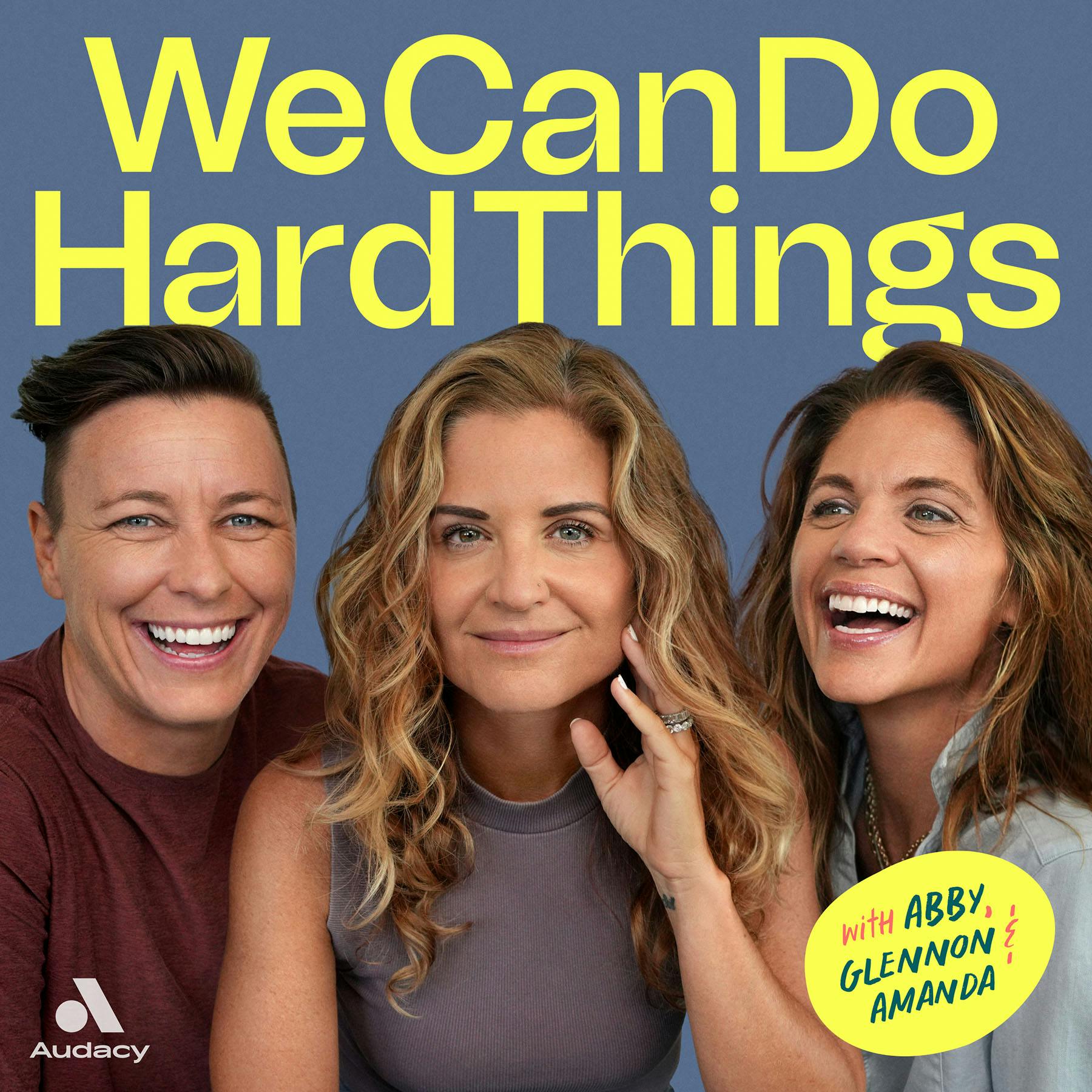
Loading summary
Transcript245 lines
- [00:00]
Glennon Doyle
Okay, y'all. So I often have to make these presentations to show the kind of work that we do to partners or people outside of our business. That was always very tricky for me because I didn't know what the hell I was doing until Allison, our wonderful team member, taught me about Canva. Canva is a platform that helps you simply and easily make presentations that are beautiful and simple and easy even for someone like me without any design experience. You start with this stunning template and then you can drag and drop graphics, add eye catching charts, and incorporate animation even to really make your slides stand out. And what's even better is that if you're short on time, you can generate slides and text in seconds with a prompt, keeping you on task without juggling multiple apps. And if you're working with a team, collaboration is a breeze. You'll love the presentations you can easily design with key Canva. Your audience will too love your work with canva presentations.
- [00:59]
Sponsor
@Canva.Com we all want the things we want. But while I want really high quality things, I also really don't want to overspend for them. This is why I love Quince. Quince offers a giant range of beautiful, high quality clothing, accessories and household necessities in the most luxurious materials. But here's the best part. Everything is priced 50 to 80% less than what you'd find in similar luxury brands. Because we're still smack dab in the winter. I recently picked up a gorgeous 100% organic cotton boyfriend crew sweater. It's in this beautiful agave color and it is the coziest. Give yourself the luxury you deserve with quints. Go to quintessential.comhardthings for free shipping on your order and 365 day returns. That's Q U I N C E.com hardthings to get free shipping and 365 day returns. Quince.com hardthings.
- [02:17]
Glennon Doyle
Okay, welcome to we can do Hard things. We're just going to just begin cuz Abby and I just got in a huge fight. Abby?
- [02:27]
Abby Wambach
Wait, are you serious?
- [02:28]
Glennon Doyle
Yeah.
- [02:28]
Amanda Doyle
No, we didn't get into a huge fight, but she's been a little bit on edge this morning. She literally shushed me a little bit ago because I came back from workout and oftentimes my volume is a little higher Anyway and so just recently as we sat down, I said are you upset with me? And she said no. What did you say?
- [02:47]
Glennon Doyle
I said no, I'm not upset with you. I'm freaking the fuck out. I'm having a Nervous breakdown. Because we're about to interview Amy and Emily, and I can't stop thinking about it. I have dressed up as if I'm going to a ball. Like I have. I haven't dressed up for two years. Like, what's wrong with me? I said, we have to just start this. We have to start it because I'm so. I don't run away. Okay.
- [03:09]
Abby Wambach
Why are you nervous? Yeah.
- [03:10]
Glennon Doyle
Oh, well, that's a good place to start. I don't know. I'm nervous because if there are two people in the entire world who have meant more to me artistically, there aren't any more people who are me. See, I'm doing great. I'm crushing it and completing sentences. So when I was getting sober, I was 25, and I had just decided that my feelings were too much to feel, so I just numbed myself out forever. And then I found out I was pregnant. So I had to figure out how to human. And I still thought I couldn't feel my feelings or I would die. So I was freshly sober. And when I got sober, I was almost dead. I was like, in a very bad place. And I used to practice being human. I would start one of your songs. I would allow myself, like the four minutes of one day, Indigo Girl song. And I would lay on my bed and allow myself to feel feelings for those four minutes. And for the first month, two months of sobriety, that's. I would say you don't have to feel any other time. Just those four minutes. And do you think that I have spent a single day of our lives, like since I got sober for 20 years without listening to you all? Not one, every day of my life?
- [04:31]
Emily Saliers
Wow.
- [04:32]
Amanda Doyle
You both are the background in our life and. And our children's life.
- [04:35]
Glennon Doyle
So do you think we should tell the people who we're talking to and about. Yes, today we are talking to and having a double date with the most important duo of Abby and I's lives, Emily Saylors and Amy Rae. The Indigo Girls, who together make the most important music of our lifetime. One of the most successful folk duos in history, Amy Rae And Emily Saylors, aka the Indigo Girls, has recorded 16 albums and sold over 1514 million records. That sounds impressive, but I bought 14 million of them. Committed and uncompromising activists, they work on issues like immigration reform, LGBTQ advocacy, education, and death penalty reform. They are co founders of Honor the Earth, a non profit dedicated to the survival of sustainable native communities, indigenous environmental justice and green energy solutions. Their latest record, Look Long Love, is A stirring and eclectic collection of songs that finds the Indigo Girls reunited in the studio with their strongest backing band to date. Welcome to We Can Do Hard Things. Amy and Emily, thank you for saving our lives and being here today.
- [05:49]
Emily Saliers
Oh, man, it's an honor. It really is for us.
- [05:53]
Abby Wambach
Yeah, totally. Such an honor. And. Wow, what a story.
- [05:58]
Emily Saliers
Yeah, I was gonna say, Glennon, like, if you were trying to have an introductory course into Feeling Feelings, I would have picked, like, Barry Manilow instead of the Indigo Girls because we're, like, so intense, you know, and emotional and.
- [06:14]
Abby Wambach
Wait, you know, Barry Manilow is so intense.
- [06:17]
Emily Saliers
Well, I mean, it just would be like a. Like a gentler introduction into real feelings.
- [06:23]
Glennon Doyle
That's curious to me, because I feel like, at that time, I had never heard music that honored the complication of being a woman. Like, you were really honoring the complication of life. Listening to light stuff or reading light stuff makes me feel worse because I feel like, oh, I guess everyone else is fine and not sorely. Right.
- [06:47]
Amanda Doyle
And I think what probably was bringing you into the depths of your addiction was this cover or the costumes that you had to keep putting on. And Glennon talks a lot about going to our first meeting and finally listening to people telling the truth for the first time. And I bet because they speak so much truth in their music, and I bet that that was such an attraction to you.
- [07:13]
Emily Saliers
Well.
- [07:13]
Glennon Doyle
And then when I told Craig that I was in love with a woman, the first words he said to me, I was married. The first words he said to me was, is this what all the Indigo Girls have been about?
- [07:27]
Abby Wambach
Oh, my God.
- [07:28]
Emily Saliers
Is that a compliment or a sting?
- [07:30]
Glennon Doyle
I don't know, but it was, right? I was like, I think it is.
- [07:34]
Amanda Doyle
Holy shit.
- [07:36]
Abby Wambach
All those husbands.
- [07:37]
Emily Saliers
All those husbands and boyfriends.
- [07:39]
Glennon Doyle
Yeah.
- [07:39]
Emily Saliers
Poor guys.
- [07:41]
Glennon Doyle
Poor guys. So how did you find music in each other?
- [07:45]
Abby Wambach
We knew each other when we were young, like, 10, 11, a year apart in elementary school. But I think the way we really found music in each other is high school chorus. Right, Emily? Yeah. And then we decided that we would get together. We became friends with, like, a group of friends that were, like, cross grades that all had the commonality of chorus. And we were gonna do, like, a talent show. We got together in my mom's basement, and we started learning cover songs. And for me, that harmony was, you know, kind of blew my mind. And I didn't know how to sing harmony yet. I was in the choir at church, but I just would just do exactly what my choir director told me. I didn't understand, like, how do you write the part? You know? So Emily was already doing that, and her family was already singing in harmony with each other. I found it in the harmony, like, in the ability, like, in Emily's keen sense of harmony. And then just the naturalness of how it just comes out. I was like, oh, wow. That's the magic of music, of this thing. Which was, you know, for a high schooler, 16, 15 years old, it was intense.
- [09:00]
Glennon Doyle
Wow. This is a completely random question, but you know how when you're in elementary school or high school, you always feel like people that are the year older than you are cooler your whole life? Like, if I meet somebody right now, I'm 46, and they were a senior when I was a sophomore, so they're 48. I automatically think they're cooler. So, like, do you still think Emily's cooler than you because she's older than you?
- [09:20]
Emily Saliers
Oh, God, don't ask her that question.
- [09:23]
Abby Wambach
I do. I think she, like, I think you always have the dynamic that you set when you're young together.
- [09:29]
Glennon Doyle
Yes.
- [09:30]
Abby Wambach
So Emily's always, like a year older, better at this, better at that, all that stuff. Bigger hit songs, whatever.
- [09:37]
Emily Saliers
You know, we have to promise to be, like, completely transparent in this interview because I am such a dork and Amy is so cool, you know, like, so that's like, wow. But there is that. There is the tier system in school where you just like, if you even get to hang out at the lunchroom with someone in an older. You're flying. You're high, you know, because it's like, look at me with an older kid in the upper grade. Yeah, but we. Yeah, we're pretty close in age, though. Like, Amy almost catches up to me, but not quite. And then I've always had a respect for her wisdom and her vision for things, how to make things happen. And. And also, if you see me crying, and I may cry emotionally, but I just tried false eyelashes.
- [10:29]
Glennon Doyle
No, you did not.
- [10:30]
Emily Saliers
Yes, I did. Look at my eyeball.
- [10:32]
Glennon Doyle
Okay. What?
- [10:34]
Abby Wambach
In the scene.
- [10:35]
Glennon Doyle
This makes me feel good for some reason.
- [10:38]
Amanda Doyle
This is the best thing.
- [10:40]
Glennon Doyle
Emily, tell us the story right now.
- [10:42]
Emily Saliers
Okay.
- [10:43]
Abby Wambach
It's a phase she's in. She's doing false lashes and fractal guitar effects.
- [10:48]
Emily Saliers
And my eye is. Yeah, it's true. And we'll get to the fractal later.
- [10:52]
Abby Wambach
It's like a new level for Indigo Girls.
- [10:54]
Glennon Doyle
Did you do this yourself? Did you go? Did you know?
- [10:57]
Emily Saliers
I went. I'm going to tell you. I went to a professional and who advised me where to go was none other than Carrie, Amy's life partner.
- [11:06]
Abby Wambach
Oh.
- [11:08]
Emily Saliers
And actually, she's really great, but, you know, I'm a redhead, and I'm. I'm compromised, and I. I'm sensitive and I don't know. I don't know what happened, but. So I have blonde eyelashes, you know?
- [11:24]
Glennon Doyle
Right.
- [11:25]
Emily Saliers
And I. I like to wear mascara. This is so.
- [11:28]
Abby Wambach
Should we talk about it? It's awesome.
- [11:30]
Glennon Doyle
I think it's the best thing. It's just the best thing that's ever happened.
- [11:33]
Abby Wambach
It's so dimensional.
- [11:34]
Glennon Doyle
Yeah.
- [11:34]
Emily Saliers
Okay. So, yeah, this is me dimensional, huh.
- [11:39]
Abby Wambach
So she's always been the femme.
- [11:44]
Emily Saliers
All things being relative. That's probably true. But. Yeah. So I like to wear mascara. I don't like my eyelashes to be invisible, but putting on mascara is a drag.
- [11:56]
Glennon Doyle
Yep.
- [11:57]
Emily Saliers
And then I started to watch. I watch a lot of women's college basketball, and I started to notice that all those young women are wearing false eyelashes.
- [12:09]
Glennon Doyle
Yes.
- [12:10]
Emily Saliers
Like, but those gals can carry them, like, an inch long. Yeah. So I was like.
- [12:14]
Glennon Doyle
Right.
- [12:14]
Emily Saliers
I was like, I can't do that. But that's cool. That. That looks good to me. So I went and Carrie gave me this recommendation, and at first, I got the mascara look.
- [12:26]
Glennon Doyle
Okay.
- [12:27]
Emily Saliers
Which is very nat. You know, they have to place single eyelashes on each lash.
- [12:32]
Glennon Doyle
I know this. Well, Emily, I've lived this life. I've lived this life.
- [12:37]
Emily Saliers
We'll talk about you later, though.
- [12:38]
Glennon Doyle
Oh, yeah. Oh, yeah. I look.
- [12:39]
Emily Saliers
So anyway, this next time, I was like. I said to her, let's just up the game a little. What can you offer? Not like the basketball players, but that's a little bit fuller. And now I. My eye is killing me, and I just cry all the time out of my left eye.
- [12:55]
Glennon Doyle
I'm just gonna send you an email after this with all the answers to this.
- [12:59]
Emily Saliers
Okay? Okay, good.
- [13:01]
Glennon Doyle
So you two were born a year before we even had the word transgender. Five years before the Stonewall riots, 10 years before any out queer person ever held political office. You came of age during the HIV AIDS epidemic, which they were then calling the gay plague. The world you came out in is so different than the world that I came out in. And that difference was created in part by you, which is so wild. How are people who came out when you did different than people who come out now? Like, what is the difference that you feel and see?
- [13:36]
Emily Saliers
That's a good question.
- [13:37]
Abby Wambach
There's some things that are similar. I'll say. Like kids that are in certain areas of the country or live in certain families or go to certain Churches really still have the roughest time ever. So that's a similarity. But the difference would be, I feel like, access to language, for one thing. We didn't know what the word gay meant really, when we were kids. We were like, is that bestiality? Like, what? You know, because we were in suburban south. Now when you come out, you understand that there's sexuality and there's gender, and that's different. And you understand, you have the grasp of all these things about gender dysphoria, gender fluidity, bisexuality. Trans issues are in the forefront, which they should be. And so for me, I think for the most important difference, the thing that helped me the most when I got older was all of a sudden having all this language to talk about where I was at, you know. And I also think you can reach out through the, you know, Internet and find some mentors. I mean, when you're suffering, you don't have anybody to turn to, you know, where you live. Yeah, you don't have any role models. There's so many role models and there's so much information. Emily's probably got some.
- [14:58]
Emily Saliers
I agree with everything you've said. And because through the Internet or through community groups that can focus on queer community, I think maybe people who are coming out don't have to deal so much with the self hatred and self homophobia that I'll speak for my own self that I still deal with, you know, because I think the more you have a community out there, especially if you have access, and I'm not talking about kids in a rural or any, you know, super evangelical Christian or any kind of household, that makes it as difficult as it ever was. But for kids who have, like, where I live, it's. It's pretty progressive and there's, you know, queer alliances and even kids who are, you know, lean more towards heteronormative are belong to these groups. And so there's more of a sense of, I have a place where I can be. When I was coming up, all I heard was, you're different. You'll never be validated. What are we going to do with this ban? When we got signed, we can't, like, you know, sell their sexuality as women and all these things. And, you know, I still am unraveling that. So I think that's a difference too. Like, some of the young people I know who come out are just. They're so overjoyed and happy and they didn't have to fight this dark internal battle.
- [16:22]
Amanda Doyle
I have that with Glennon. I have like a Lot of internalized homophobia that still lives in me today. And Glennon grew up with straight privilege and has always been fighting for gay rights. For the longest time she was marching at gay pride parades before I was. And I just think that that's so interesting. Like, I look at her and sometimes I think, not fuck you, because I would never say that. But like, really, like you just got here and you feel free. And I've been keeping myself in this homophobic cage for so long. I don't know, I just think it's really interesting. And you know, you both have said that you were a little scared of your own gayness, which is different than.
- [17:11]
Glennon Doyle
Being scared of homophobia.
- [17:13]
Amanda Doyle
Yes.
- [17:13]
Glennon Doyle
What does it mean to be scared of your own gayness?
- [17:17]
Abby Wambach
Well, it's internalized homophobia. It means you're scared of what you really are and sometimes you don't want to face it. And I think when you're young, you don't really know what it means and how to talk about it and all that. But I would say, Abby, that we may have that self hate thing, but Glennon, one of the things about you is that you went through this very compacted experience of like falling in love, you know, getting sober, falling in love, and having to really fight for what you really wanted to be. And I often think that people who have those intense fights feel a sort of freedom that you don't feel the same way when you have this graduated experience like we've had over the years of like trying to unravel everything, knowing we were gay, not. And it not being this compacted experience when all of a sudden you have this relief of like, oh my God, I'm finally free. I didn't realize I'm celebrating who I am, you know, and for us, it's kind of like we were just not able to celebrate for so long, you know, that we got conditioned to that. Like, that's just. We were taught that you don't celebrate it for, I mean, year. I mean, just. Even if our parents didn't teach us that, like Emily's parents didn't teach her that she shouldn't celebrate that. You know, they were progressive and my parents were not happy with it at first, but they're awesome. They were awesome later in my life. But, like, you just get the sense from something, you're just conditioned, you know, everybody knows that society is like, you know, trying to tamp you down all the time, no matter what you are.
- [19:06]
Emily Saliers
It's interesting though, what you said, no.
- [19:08]
Glennon Doyle
Matter what you are.
- [19:08]
Emily Saliers
Yeah, Abby, about, you know, talking to Glennon about this and straight privilege. I have a crystallized fear deep in me because my wife does not identify as lesbian and she never had a girlfriend. And it's terrifying to me that she would go back to a man even though we're married and committed and everything, you know, but those fears are so primal. And that fear comes from not feeling good enough as a gay person, you know, and she respects the fact that she's had straight privilege, but she will, you know, she identifies as queer but not lesbian. And so, you know, she would love who. Whomever she loved. And it's. I. I can't get out of that fear yet. You know, I don't have much time left. I feel like sometimes to get. Get out of that fear, that's how deep they are, you know, you could take them to your grave.
- [20:00]
Glennon Doyle
What do you think? Do you feel that way about me?
- [20:03]
Amanda Doyle
Not, no. Because I know how you feel about men in general.
- [20:07]
Glennon Doyle
Yeah, she knows for sure. I'm not going back to a man. I might be alone for the rest of my life.
- [20:11]
Amanda Doyle
I think that you have been in a cage for so many seconds of your life that it doesn't matter to me. I know that we are going to be together forever. And of course, I have that fear in general because of my own unworthiness complex that I've built over the course of my life. But I do think that for you, you need to have the freedom to not put yourself into another box.
- [20:47]
Glennon Doyle
Right. Because then I'd have to get out of it if sometime it feels like painting myself into a corner.
- [20:52]
Amanda Doyle
Well, it's the same with gender too.
- [20:54]
Glennon Doyle
Gender.
- [20:54]
Amanda Doyle
Everything is gender. Either very confusing.
- [20:58]
Glennon Doyle
Ye. But my thought experiment, you all is like, when we try to figure out like, well, what are you? We still have these conversations. Is like, okay, if I had to be on the Bachelorette, and they were like, you got to pick your people that are going to be here. Sorry. Like, you got to pick your people. I would choose, say, okay, women can be there and non binary people can be there. That's who I would choose. So that is something, right?
- [21:27]
Amanda Doyle
That is something. I mean, we were watching Hacks a couple of weeks ago and this non binary person came on the screen and she said, that is a beautiful person. And I looked at her, it was like, it was the first time that I was like, wait a second, that's my lane. You're not allowed to talk about other people who are in my lane. Like, what the fuck? She looked at me and she's she's like, she saw my like sincere concern. She's like what? Oh no, I don't. No, no, I. You know. And was trying to back out of it.
- [21:59]
Glennon Doyle
Yeah. But what.
- [22:01]
Emily Saliers
Wow. Wow. Wow.
- [22:03]
Abby Wambach
Yeah.
- [22:03]
Glennon Doyle
Still figuring it out. Still figuring it out. Because. Because I didn't.
- [22:07]
Emily Saliers
We all do. Has any can you trace back in your life and see where this might have been blossoming in you early on? Or do you feel like because of your negative experiences with men that sort of shaped your vision towards loving women in a deeper way?
- [22:36]
Sponsor
This is a message from sponsor Intuit TurboTax Taxes was waiting and wondering and worrying if you were going to get any any money back. Now Taxes is matching with the TurboTax expert who can do your taxes today. Who gives your taxes their undivided attention as they work on your return while you get real time updates on their progress and who will find you every deduction possible and file every form, every investment, every everything with a hundred percent accuracy, all so you can get the most money back guaranteed. Now this is Taxes. Get an Expert now on TurboTax.com only available with TurboTax Live full service real time updates only in iOS mobile app. See guaranteed details at TurboTax.com guarantees what.
- [23:33]
Amanda Doyle
Does the future hold for business? Ask nine experts and you'll get 10 different answers. Bull market or bear market? Rising or falling rates? Inflation up or down? Can somebody please invent a crystal ball for me? Until then, over 41,000 businesses have future proofed themselves with NetSuite, the number one Cloud ERP. With this unified business management suite, you gain a single source of truth that provides the visibility and control you need to make quick decisions. Imagine having real time insights and forecasting at your fingertips, allowing you to peer into the future with actionable data. When you're closing the books in days, not weeks, you can focus more on what's next instead of looking back. Speaking of opportunity, download the CFO's Guide to AI and Machine Learning at netsuite.com hardthings the guide is free to you at netsuite.com hardThings netsuite.com hardthings what if.
- [24:33]
Glennon Doyle
I told you the most important part of spring cleaning is the sock drawer? Yep, you heard that right. It's time to ditch the worn out pairs and refresh your collection with Bombas. First up, if you're looking to kickstart a new walking or running hobby, Bombas Blister, fighting, sweat, wicking athletic socks are your secret weapon. They'll take you from that first mile all the Way to your first marathon. And if you have a wedding to attend this spring, Bomba's dress socks are perfect for loafers, heels, and any fancy shoes you're rocking. I love wearing my Bombas merino wool socks. They are so, so comfortable. It feels like I'm walking on clouds. And their underwear feels like nothing. While giving you all the support you need, Bombas is going international. Enjoy worldwide shipping to over 200 countries. Head over to bombas.com hardthings and use code hardthings for 20% off your first purchase. That's B O M B-A-S.com hardthings code hard things for 20% off your first purchase bombas.com hard things and use code hard things. So a couple things. This is a complicated conversation. All right. Sometimes when I get on the interwebs and start talking about, like, fluidity and choice and whatever, usually someone calls, like, Brandy calls me and says, slow down. You're not allowed to talk like that. Well, actually, in reality, she just called and said, let's talk this through. Tell me what you're thinking and I'll tell you what I think. And her points were very well, you know, she. There are people smart in the. In. In churches and in places where when you start talking about, maybe I don't identify with born this way, maybe there is a fluidity and maybe there's choice involved. Then the people who are sending their kids to conversion therapy use that as an excuse. Like, it's like the people from the Bible belt need the excuse that God made you this way in order to allow their children to be who they are. So I get all of that, but.
- [26:38]
Abby Wambach
Yeah, but you. That's. There's anything and everything that can be used in bad ways. Like. Don't worry about that.
- [26:45]
Glennon Doyle
Okay. Yeah, well, here's the thing.
- [26:47]
Abby Wambach
You just gotta speak your truth to power.
- [26:48]
Glennon Doyle
I've never told anyone this before, including Abby, but since Amy and Emily are here, I'm gonna tell you, this is exciting. So I'm sweating again. So I remember being very, very young. Like 12, 13, maybe younger. And finding Playboys. Yes. And being like, wow, okay. I know.
- [27:21]
Amanda Doyle
I'm so happy.
- [27:23]
Glennon Doyle
Okay, well, I don't know what it means.
- [27:25]
Emily Saliers
Well, wait, what do you mean by wow?
- [27:28]
Glennon Doyle
Just being like, I understand why people like this magazine. This is very interesting and beautiful.
- [27:40]
Amanda Doyle
I wonder. Cause this might been around. Been around the time that you started to delve into bulimia.
- [27:46]
Glennon Doyle
Yeah. I mean, so then I shut down all of my sexuality and body and almost killed myself and married A bunch of men and then. But, yeah, it's interesting, right?
- [27:54]
Amanda Doyle
You just married one man. Yeah.
- [27:56]
Glennon Doyle
It felt like so many.
- [27:57]
Emily Saliers
Oh, wait.
- [27:57]
Abby Wambach
Are you a bunch of men?
- [27:59]
Glennon Doyle
I was. Yes. I was.
- [28:01]
Emily Saliers
Okay, so you can't discount the influence of the church.
- [28:03]
Amanda Doyle
Yeah.
- [28:05]
Emily Saliers
To, you know, the greatest woman that ever lived was a virgin. And then you carry on from there.
- [28:11]
Amanda Doyle
I was named after her.
- [28:13]
Glennon Doyle
Yeah. Do you know that the original meaning of the word virgin had nothing to do with sex? And the original meaning was to belong to oneself.
- [28:23]
Abby Wambach
Ooh. So that changes that.
- [28:27]
Emily Saliers
I didn't know that.
- [28:28]
Amanda Doyle
So that changes that. I love that.
- [28:30]
Glennon Doyle
Yeah.
- [28:31]
Emily Saliers
But is these im. The influence, the power of these systemic, like, structures that affect us, the church, social norms, binary thinking, fear about, you know, fluidity in so many ways. You take a step back and look at the power of those forces on us. It's. It's very, very. That's why we need community. Because together, you know, together we can navigate that, tackle that, and affirm our validity as human beings, our dignity. So that's why we need community.
- [29:10]
Amanda Doyle
I loved church when I was three, I knew all of the church songs. I stood on the pews with my hands on the back of the. The pew in front of me. I was loud. I was into it. And then over time, as soon as I started to, like, feel my sexuality coming to the surface, I hated myself. You know, like, I felt that shame, and I embodied it in my cells, in the molecular makeup of who I am. And then I get to be 16 years old, and this is actually the first time I ever acknowledged outwardly, not with words, but with action, to my mom. We were in a store, and Yalls CD was at the checkout line, and I picked up your cd and my sister Laura, who's a little bit older than me, she's 10 years older than me, and she's gay. I came out first, but she listened to you all. And I grabbed the cd and I said to my mom, can I buy this? Can you buy this for me? And she said, yeah. And that was, like, one of the most important moments of my life. It was like me taking ownership of myself.
- [30:22]
Glennon Doyle
So you were trying to tell her something, too, right?
- [30:24]
Amanda Doyle
Yeah. I mean, I didn't come out to her for, like, six years after that, but still, it was. It was like, one of the most important moments of my life, and y'all were a big part of it.
- [30:34]
Glennon Doyle
Do you all think there's room for the conversation of choice and fluidity? Do you feel like there are forces in the world? Adrienne Rich used to say, I'm a lesbian for political reasons. Or, you know, the second wave of feminism would they. They used to say that, oh, God, liberation is the goal and lesbianism is the way, or something like that. There have been where being a lesbian by choice, not in a way that it was like, I would be different if I could, but I was born this way because there's some sort of apologetic, like, vibe. It's not like, I would be different, but I'm gay. Like, no, this is the best life. This is the best choice. This is on purpose, kind of. Do you feel that that's dangerous to the conversation, or do you believe.
- [31:27]
Abby Wambach
I guess it's the. But, you know, in the context of the second wave, it was a political statement, like separatism was, you know, like, we need a safe space. Men are doing a lot of harm. And politically, we need to be liberated from that power in order to be ourselves, actualize who we really are. And I think lesbianism was used as a term equated with separatism. Right. So I think it's like, totally, like, maybe a different context than, like, now. I don't know what the science is, but I know that I feel like you. You can be born in many different ways on the spectrum of who you're attracted to. Right. So if you're born kind of in the middle, your nurturing can. Might push you one way or the other, maybe. Or you can be taught that it's not cool to be in the middle and that's a sin too. Or your gender can be forced on you when you don't feel that gender. There's, like, so many circumstances. I guess I feel like things are more fluid than we know, you know, But. But I think the political movements are like second wave. I think they were making a point, you know, which is so different from now.
- [32:51]
Glennon Doyle
Yeah.
- [32:52]
Abby Wambach
I think it's still relevant. Don't you think, Emily? I don't know.
- [32:55]
Emily Saliers
Yeah, I mean, I think, you know, there was a time when identity politics became very, very important, you know, as a way to separate from the powers that be. And I also think that. And this is just my opinion, but in order to enter a sexual relationship, it's not really a choice like you. If. If somebody of the same sex makes you feel good or anybody makes you feel good, or you have a connection through your body, you don't really go, okay, now I'm going to like this. You know, I think the choice is more if you decide to enter into a committed relationship or can anybody Elaborate on that.
- [33:34]
Glennon Doyle
I know being open to it at all. Like, because the choice is to shut down. You could shut it down. I shut it down for a long time. So the choice is to shut it down or not. That makes sense.
- [33:43]
Abby Wambach
But I also think it's a weird sort of thought process. But I think like when you come up with like I came up with feeling at some point the bubble was burst and I was like feeling self hatred about having. Being so masculine, right. Completely separate from who I was attracted to. Right. And I became unfree because I was like, oh, now I hate myself. Great. You know, just physically hate my body, right. It has nothing to do with who I want to go out with. And then I became attracted to women. But the self hate, you know, I could be. It's a weird. I don't even know how you unwind it. You know, in our generation, but we had so much self loathing that when you found this safety with a woman and you found this love and you're in love and you're sexually attracted too. But also for me, I was attracted to men as well, but I felt completely unworthy of that. You see what I'm saying? Like the self hate of my body and the self hate of me not being a good enough woman and. But wanting also to kind of be a guy, that kind of fluidity did not go hand in hand with having a boyfriend, right. So I. So I think there's something unraveling to be, to be done for the total freedom that you might want to feel like you can be completely attracted to the opposite sex, you can be attracted to the same sex, you can be attracted to people that are genderqueer, whatever you want. There should be nothing limiting you that has to do with you not liking yourself and thinking that you're unworthy.
- [35:23]
Amanda Doyle
That's right.
- [35:23]
Abby Wambach
And for our generation, it's so different from the young generation now. Like my nephew's bisexual. He's just like, I love who I love. You know what I'm saying? And he's a six foot, you know, like big guy, you know, like actor big guy, Ren fair, stage fighting. And he's just like, men are beautiful, you know, I'm like, oh my God, I love you like you. That's what I wanted to be. And I had a boyfriend for a while who, who I really loved after I had a girlfriend, but I didn't wanna marry him, so I had to just tell him that. And I loved him so much, but I knew that it was not where I wanted to be. Right with him and everything. But I felt so. I just didn't feel like I was also worthy, you know, Even though he didn't. He was like, I love the way you are, you know, I love lesbians. Whatever. You know, whatever he meant.
- [36:18]
Glennon Doyle
Yeah.
- [36:18]
Abby Wambach
I love masculine women is what he meant, right?
- [36:20]
Glennon Doyle
Yeah, yeah.
- [36:21]
Abby Wambach
But I didn't love masculine women. Ah, wow. But then I have friends where the couple is like, a masculine woman and a feminine guy.
- [36:31]
Amanda Doyle
Right.
- [36:31]
Abby Wambach
A femi guy. And some of my friends will be like, oh, they should just be gay. And I'm like, no, they're. They actually, like, can't you open your mind? Like, they're in love with each other. It's not. They're not covering up being gay.
- [36:43]
Glennon Doyle
Right.
- [36:44]
Abby Wambach
They actually love. This is who they want to be with. And I think we even. Even us as gay people get stuck in that place of like, well, if you're this way and that way, you must just be in the closet, you know? And it's like, no, actually there's feminine straight men, you know, and masculine straight women. Yes.
- [37:03]
Emily Saliers
I remember when Ani came out as bisexual or whatever she would term it now. And, like, the lesbian community just lost their shit because it's like, we only have so many of us and we've lost one of our own. You know, I remember that. You know, I didn't feel that way, of course, but I understand that. That fear. And so identity. We're so wrapped up in identity. And I think it's probably a primal thing, like knowing your place in the tribe and are you gonna go out and pick the berries or are you gonna, like, draw on the cave wall or what? You know what I mean?
- [37:39]
Glennon Doyle
Yeah.
- [37:41]
Emily Saliers
You have to be able to recognize your place in your tribe or else you're.
- [37:44]
Abby Wambach
You're fucked.
- [37:45]
Amanda Doyle
Yep.
- [37:45]
Emily Saliers
So I think a lot of this, like, focus on. It's not all, because the more I say this and think about it as I say it, but there is a lot to do with, where do I belong in a tribe? And it's very, very compromising and fear inducing to think that you either you don't belong or you've lost someone who you thought belonged. You know, goes way, way back in that part of your brain.
- [38:09]
Amanda Doyle
And my goodness, Amy, what you just said, I'm more masculine. I have more masculine tendencies. And so, of course, no straight man who would want to be with women would ever want me. So it felt like this is the way you articulated. That was like the most true thing that I have heard about my own gender and sexuality. And how they are in relationship to each other, that it's like, well, I can't be. That nobody will want me over here. So of course then I'll just, I have to be gay.
- [38:40]
Glennon Doyle
Interesting.
- [38:41]
Amanda Doyle
Because.
- [38:41]
Abby Wambach
And it's not. Yeah, but to say. And it's like when we say that, people say, oh, you're just, you know, that's dangerous to say that because then it's like saying you really want to be straight and if you just felt better about yourself, you could. But that's not the point.
- [38:55]
Amanda Doyle
No, it's not the point. It's like I want to be everything if I want to be everything. You know, like I have had sex with dudes and it wasn't like the worst experience of my life.
- [39:05]
Glennon Doyle
We think that I'm gayer than she is because I was like, well, actually it was the worst experience of my.
- [39:09]
Abby Wambach
Life.
- [39:12]
Glennon Doyle
Every time I tried. Okay, if you were fixing your bra straps, fussing with digging wires, or battling your bra during this podcast, stop right now. You'll want to hear this. Those bra problems. Those problems you thought you had to live with, ThirdLove has solved them. They take the frustration out of bra shopping and make it easy to get what you want. Whether it's ultimate cleavage, a smooth look, or stopping your shirt buttons from pulling. They feel amazing too. With a perfect fit in over 60 sizes, including half cups that you won't find anywhere else. With half cups, you're never stuck between two sizes that don't fit. And real women test every style before it's given the green light. And their bras don't just look great, they're made from top quality materials for comfort and support, whether you're a double A cup or an H cup. So stop settling for bad bras. Now's the time to treat yourself and get your bra blems solved. Save $15 on your first order with code PODCAST15@thirdlove.com hello all. It's Women's History Month and we are all about supporting women creators, brands and causes. And Macy's is making it easy to do just that. They're celebrating all month long by continuing their year round support for women owned and founded brands like Sunday Riley, Anastasia, Beverly Hills Fashion Fair, Patricia Nash and Katy Perry. Some fun things to try. How about the Sunday Riley CEO glowface Oil or a new work tote? I'm looking at the leather hobo from Patricia Nash. Such a great find. Macy's is also partnering with Girls Inc. To help girls grow through mentorship and you can make a difference by donating easily through their in store roundup or online donation campaign. So join us from March 1st to March 31st and visit Macy's.compurpose to shop and support these amazing causes. Let's celebrate Women's History Month and make a difference together.
- [41:22]
Amanda Doyle
As a small business owner, I know firsthand that the grind doesn't stop when you clock out. My business is always on my mind. So when it's time for me to hire, I need a partner who works just as hard as I do. That's where LinkedIn jobs comes in. I was able to post the jobs for free and within no time I was connecting with a pool of qualified candidates. LinkedIn even helped me craft the perfect job description and provided insights to help me choose the best fit. What's even better, LinkedIn allows you to share your job with your network and get two times more qualified candidates by simply adding an AT hiring frame to your profile picture. I can tell you from experience, LinkedIn makes hiring a breeze. If you're a small business owner like me, I highly recommend LinkedIn jobs. It's why over 2.5 million small businesses are using it today. Find your next great hire on LinkedIn. Post your job for free at LinkedIn.com hardthings that's LinkedIn.com hardthings to post your job for free. Terms and conditions apply.
- [42:30]
Glennon Doyle
So, Amy, do you identify as a woman? Because you've said in the past you're half and half, which by the way, just makes sense to me.
- [42:38]
Abby Wambach
I don't identify as. I mean, my pronoun is she, but I don't. But that's just because I fought so hard to honor the woman inside me. I identify as a masculine female probably is the closest thing to it. But I really. But when I see my inner self, it's very much a guy, you know, like I know, but I've. But I know society has influenced that for so long as I was coming up that I have this benefit of the doubt that I give to the fact that I probably have misogyny drilled into me at an early age.
- [43:14]
Emily Saliers
Right.
- [43:15]
Abby Wambach
And so I'm just trying to welcome that feminine right, and just be. Identify as a she. But I can theoretically see the idea of like transitioning to a guy and what that would mean. But it doesn't work for me. For some reason I, I've thought about it. It doesn't work for me and I think it's because I could not really feel completely a guy either. And so I don't want to go through all that just to get on the other side of it and be like, well, shit, I don't really feel like a guy either.
- [43:45]
Glennon Doyle
Here's another costume I'm in.
- [43:47]
Abby Wambach
Yeah. I just think it's all so mixed up inside me that I have to just be like, no, no, this is just who I am. Like, this is what you get. And I gotta just learn to love that.
- [43:57]
Amanda Doyle
Yeah.
- [43:57]
Abby Wambach
You know, and I have friends that have transitioned and they're so completely who they are, you know, that I'm like, yes, that's. That's like the prime example of like, what, what. When it works, you know, and when you become the true being reflected on the outside that you feel in the inside. Right.
- [44:16]
Glennon Doyle
Yeah.
- [44:17]
Abby Wambach
And it's amazing to see that and it's joyful and I celebrate it, but I don't think I could get there.
- [44:22]
Amanda Doyle
Do you love or hate the fluidity of that for you?
- [44:28]
Abby Wambach
Well, theoretically, I love it, but the 12 year old in me hates it, you know, or the 14 year old, I guess.
- [44:39]
Glennon Doyle
And because we all want to belong somewhere, that's why people want to know your identity. Who do you belong to? But then who do you belong to automatically creates an enemy. It's like if you're in something, the only reason to be in something is to know who's not in that something.
- [44:55]
Abby Wambach
Right. Well, you can look at it differently, though, because true tribal thought from an indigenous perspective doesn't have to be that, you know, like, we. I think that's a white perspective of what tribal is, honestly. And I think you just have to look at tribe as. This is my community of people that work together to create something and help each other. And there are other communities over here that do the same thing. And sometimes we get together and have a party and try to achieve something even bigger. It's just functional. Like, you have to have these tribes that are, you know, situated in some way that's convenient to really help each other out and really be there for each other and build something and create your life and have a journey, and then these. These other tribes are just as worthy. And it's not us and them.
- [45:40]
Glennon Doyle
That's so beautiful. You're so right. That's just all whiteness.
- [45:43]
Amanda Doyle
That's good.
- [45:44]
Glennon Doyle
So, Emily, you're sober, right?
- [45:48]
Emily Saliers
Yes. Sober, yes. Thank God.
- [45:49]
Glennon Doyle
Yeah, I know. Tell us about how you got sober. Did you have a rock bottom? Like, what was that decision and process for you, like?
- [46:01]
Emily Saliers
Well, I have alcoholism on both sides of my family, both sets of grandparents. I mean, my grandmother on my dad's side. Died when he was 5. So I don't know. But all the other grandparents were alcoholics, and so I was sort of aware of that. Like, my parents were very moderate with alcohol growing up. There was no, like, alcohol is evil and you should never have it or anything like that. So I always had that in the back of my mind. But that was destined to be alcoholic, and I didn't know it. But, like, when we played bars and stuff, and we did shots from the stage, this is like when we were, I don't know, babies. And drinking was such a social part of what we did for work, you know? And then I had a very social life. I thought I was an extrovert. I was really just an alcoholic. I was not an extrovert.
- [46:52]
Amanda Doyle
I bet that might be me, too.
- [46:55]
Emily Saliers
Oh, my God. I was just, like. I thought I was so funny and so charming and so attractive, but I was just drunk, you know, I did have a rock bottom. And the truth is that Amy, she knew I was alcoholic, and she came to me, I think, at least two times and maybe three. And this is funny, but I always liken it to the way Peter denied Jesus, like, three times. It's like, when I look back on it, it's very deep that I lied to Amy. Those. I don't have a problem.
- [47:25]
Abby Wambach
I really.
- [47:25]
Emily Saliers
I mean, I love to drink, but I. It's classic. I was a liar. All alcoholics are liars.
- [47:30]
Glennon Doyle
Yes.
- [47:31]
Emily Saliers
And then my body broke down, and I would say that I was pretty close to death. Very shortly, both my mother and my little sister, who had addiction and eating disorder, she died when she was 29 or 30, and they were both dead. And towards the end of my drinking, I started dreaming about them every night. And they were like, no, come. Come on. And I got to the point where I was like, oh, my die. Okay, that's cool. Or that's fine.
- [48:06]
Abby Wambach
Whatever.
- [48:07]
Emily Saliers
And so Amy can attest to how terrible it was when I was drinking. All the excuses I made, my irresponsibility, not showing up. But I was terrified. I think all alcoholics are terrified to admit that they're alcoholics. Like, I had a friend who went into the program way, way before I did, and she gave me my first blue book. And she was like, and I don't really want to talk about the program because that's, you know. Anyway, she gave me that book, and it was, like, on fire. I wouldn't touch it. It sat there on a little altar. But it was. And then. And I was like, oh, well, I'm not like that. It's classic. And then I started reading the stories because I just could not. It' to see personal best. You can't stay away from it, you know, Got to read the stories eventually. And then I was like, ah, I can't relate to that. But then at the end, like, everybody knew I was just fucked up and dying and Amy was going to quit the. The band and, you know, everything was falling apart for me, and I tried to hide it so much, and you just can't. And then in the end, there was an intervention. And actually Amy wasn't at that intervention because I think that my wife knew that I wouldn't be able to be honest. I was so vulnerable to Amy and to my best friend who was not at the intervention. And I know that. That. I believe that that hurt you, Amy, because you had a lot to testify to and to. And. But I don't think in that moment I had the courage, strength. I was so bitterly rageful and angry. But I had an intervention in there. I thought I was going to get on a plane and go to some shows. We had shows booked. I had my bags packed. All of a sudden, there's a knock on the door. It's my dad and my sister and our manager and the leader and a friend of mine who I was trying to get sober with, who. Who was just incredible, like, sobriety angel to me. And then I was like, okay, well, okay, well, this is great. But I got to get on a plane. And they're like, no, there's no plane. You're going to go to this hospital and they're going to check out your body to make sure you're okay, and then you're going to go to rehab. But prior to this, I knew I was alcoholic. I was. I'd go over to, like, my sister's house and go, I'm an alcoholic, so I have to drink. Okay? And then I would, like, make them pour me a bourbon. I have to drink. I'm an alcoholic. But that was my way of, like, slowly admitting. And then this intervention happened. And then I. Because prior to that, I had called this rehab center and I talked to this guy. He was like a brother in the. In the Catholic community. And I was always drunk when I called him, like, okay, yeah, what's it like? And what do you do? And I'm sure he dealt with people like me all the time. And I decided I would go outpatient for 30 days. That's what I would do. But then the intervention happened. They take me off to the hospital. I'm okay. I don't have any other addictions. And then I'm off to rehab. And I stayed there for three months. And I couldn't have gotten sober without it. I tried, but I had such privilege and such access and such false pride and shame. I didn't know the shame I had until I got sober. And I couldn't bear to tell anybody that I was an alcoholic.
- [51:48]
Glennon Doyle
Yeah.
- [51:48]
Emily Saliers
So the change that happens between finally admitting it and getting help, because I truly believe I couldn't have gotten sober without rehab. And now the fact that I can talk about it openly is just. It's kind of miraculous to me. And then Amy and I went to therapy after that together. Amy could. Yeah.
- [52:08]
Glennon Doyle
So then through your anger.
- [52:10]
Abby Wambach
Once. Once or twice. Once or twice.
- [52:12]
Glennon Doyle
How did that happen?
- [52:13]
Emily Saliers
Yeah, I think twice.
- [52:15]
Abby Wambach
Twice.
- [52:15]
Emily Saliers
So, Amy, you can talk about that experience, but I can tell you that in sobriety, well, it's the hardest fucking thing I've ever done. I shouldn't have pride about it, but I'm kind of proud I've stuck to something this long and done the work. It's so hard sometimes you just want to. You just want to get out, you know, quickly, and you can't anymore, and you have to sit through a lot of discomfort. And the other thing I'm learning now is I lost a whole chunk of my development, intellectual development, my evolution as a human being. I just deprived myself of that in that time that I was drinking so hard. So now I'm. I feel a lot of catching up and I feel a lot of, like, unworthiness because I'm behind and things like that. So that's now. But to be sober, to wake up feeling good, to know that you're not self destructing, to know that you can be like, now I'm accountable to Amy, responsible to us and to all the people and to my family. I never would have had my wife. She would have left me. She was going to. Or my child. And all the most beautiful things in life have come from sobriety.
- [53:31]
Amanda Doyle
And Amy, was it hard for you? Because this is like your best friend, your business. What was it like going through that from your perspective?
- [53:44]
Abby Wambach
I mean, it was so super rough. But, you know, I have to say, to start out with it, it is a huge achievement to get sober, I think, and huge. Everyone that gets sober like that should be proud of it. I know you're taught, you know, humility and all that stuff, but. And I had stopped drinking when I was about 30, which it. And I didn't do a program or anything. I mean, people that I went to Al Anon with are always saying, you should have gone to aa. And I was like, But I stopped dreaming because everybody I knew was dying and too drunk. And Emily was drunk all the time. And I just needed to differentiate, you know? And I had moved to the mountains and was drinking alone every night. And my best friend Tanner, she said, well, we're both going to just stop drinking at the same time. So we made this pact. And. And I think I just never. I just. I have alcoholism in my family, but I don't think I have the. I mean, I'm addictive to some in some degree, but it was just easier for me. I understand the monumental task of getting sober that Emily was up against. And I think it's a miracle, honestly, because I saw her before that and I. And I had that vision of, like, I'd rather die than not be able to drink is what. Is what I heard from her over and over again, you know, in action, in word, in everything. And so for me, towards the end, it was just like chaos. And, you know, I was afraid every morning that I'd wake up and hear that she had died in the middle of the night. Like, you know, just the. The tour bus was crazy because Emily would fall out of her bunk or, you know, things would happen that were just unmanageable and crazy. And I went to Al Anon, actually, to help me just stay in the band, you know, for. For a couple years. But I think the thing that was the hardest thing for me about all of this was that I would talk to my manager, I would talk to Emily's friends. No one believed me. For years, no one believed me. So I think that's the only thing that bothered me about the intervention, because I was like, wait a minute. I'm the only one that has been talking about this. And all of a sudden, you guys have a wake up call. Like, this should have been done three years ago. Like, what is. And everybody was fighting me on it, even our manager, who I was like, russell, I swear to God, you're not out here, but you need to be. This is we. This. She is not going to survive this. And you are enabling it by just letting us carry on. And you're making money off of us. Like, you need to stop. He was, like, in full denial, right? And I was like, no one would listen to me, right? And so that was the hardest thing. Cause I thought I was crazy. And instead people would be like, ah, you know, you don't drink, so you don't understand. You know, we know you're not a partier, so you just can't, like, deal with it. And I'm like, I'm not a partier because I can't deal with that.
- [56:46]
Glennon Doyle
Right? There's a reason I'm not.
- [56:47]
Abby Wambach
And someone's gotta keep it in the control. I mean, I really just was like, when Emily gets sober, I'll start drinking again. Because then, you know, I don't need to be, like, in control of the situation anymore. Cause I think I felt like, wow, someone needs to be sober right now. Because it is like a mess, you know? And I think our audience, you know, was never really aware of it, but it's like stuff was just going downhill. And our music was. The shows weren't as good. And after the shows was always like a potential scene outside the tour bus, you know? And so I was just like, oh, my God, no one understands what's going on but me. It just felt like not even the people in our crew, you know, because everybody was just partying, right? And so for me, it just felt like I felt a little crazy, you know, and insane. But I also knew after learning, you know, going to Al Anon and stuff and doing my own work, that I was like, part of the problem too. Because I'm just. I just kept being confrontational, right? Instead of, like, letting Emily find her own answers in her own way, I was like, judgmental, Judgmental, Judgmental all the time, right? Which is kind of my def. It's like my go to anyway. Because, like, the way I was raised was by people that were judgmental, some people. So I contributed in so many ways to that shame and that constant thing. Because I would just be like, well, I'm going to be in the band anyway, but I'm going to be judgy all the time. When what I should have just done is like, walk away, you know, I should have just walked away from it. Because it's like, it doesn't help to just make someone feel shame over and over again, you know? And so we were all in our own little system of, like, bad stuff.
- [58:30]
Glennon Doyle
Family. Yeah, family.
- [58:32]
Abby Wambach
It was family. And I didn't want to leave it. But at some point I had decided and I was like, I'm just gonna. I can't do this anymore. Cause it's just enabling. This whole system is being enabled by me continuing to play in the band. Because it's just like. It means that everything can just feel normal all the time. We're making A lot of money. We're. You know, you can sleep all day and then sing your gig and then get drunk and then sleep all day and, you know, all that stuff. And at the time, I also had, like. Oh, my God, I had just gotten through this terrible bout with endometriosis, and I had, you know, weighed 20 pounds less and couldn't eat anything and had. And that, you know, that's endometriosis. Stress is, like, a contributor to that. You know, I was losing organs, you know, so.
- [59:11]
Glennon Doyle
That'll do it.
- [59:12]
Abby Wambach
You know, it was. It was a crazy time. That feels crazier when both of us are just inside this time, and we both know it's. It's going crazy, but no one else on the outside does, right?
- [59:24]
Glennon Doyle
Yeah.
- [59:24]
Abby Wambach
So we're just kind of in our own little world trying to, like, muscle through. Everybody's making money off the Indigo Girls, and we are, too, you know, and it's all. It all becomes like that absurd to me, you know, like that absurd. Like, we're not playing music for joy right now. We're playing music because it's all we know how to do to survive, you know, in every way, spiritually, you know, your soul and all that stuff. But I think that's just what we all do. We all get in denial about different things. And it had to happen the way it happened, I think, or it wouldn't have been such a great recovery.
- [60:00]
Glennon Doyle
That's right.
- [60:00]
Abby Wambach
You know, because now it's like, you know, we fought and Emily fought really super hard. People that I know that have gotten through it, I'm just blown away by their. By their strengths, you know, like, people I know that were addicts and heroin addicts or, you know, meth addicts or whatever, and I see them recover, and I'm just like, oh, my God, that's so hard.
- [60:23]
Glennon Doyle
It's a miracle.
- [60:24]
Abby Wambach
Like, how did you do that? You know, I can't even stop eating chocolate.
- [60:29]
Emily Saliers
I want to hear about Yalls experience, too, if you don't mind.
- [60:32]
Glennon Doyle
Oh, with sobriety?
- [60:34]
Emily Saliers
Yeah. With alcohol and sobriety and.
- [60:37]
Glennon Doyle
Yeah. You know how you're constantly looking back on your life and, like, I feel like everything's just an episode of, like, I see dead people. Like, somebody changes perspective. I look back on my life, and I'm like, wait, what? I need to write another memoir. So I don't know. I feel like I was probably suppressing sexuality. That's what I think. Became bulimic when I was 10, and that just morphed into alcoholism, and I got Sober when I was 25. And it was a miracle, too. I mean, when I hear you guys talking, it reminds me of me and my sister. Although Amy would be my sister and I would be Emily. And it is. It was so bad that every day feels like a miracle. Now it's like. It's like when a winter is so freaking dark and then spring comes and you're like, I feel grateful for it because it reminds me of what you were talking about before Amy. When there's, like a intense fight for something. Like my intense fight for being free sexually and then feeling so empowered by it all the time. That's how sobriety felt to me because I fought so hard for mental health. I walk around most days like, holy shit, I am vertical.
- [61:57]
Abby Wambach
Everybody else.
- [61:58]
Glennon Doyle
Everybody else needs other things.
- [62:00]
Amanda Doyle
I know. And it's so, like, we're vertical. It's so cool. Because she got sober 20 years ago.
- [62:05]
Glennon Doyle
We're not on the lamb.
- [62:07]
Amanda Doyle
She still feels this way. This is a 20 day.
- [62:11]
Glennon Doyle
Like, if I get. I'm not going to jail again, like, most likely.
- [62:15]
Emily Saliers
I know. Blue lights.
- [62:17]
Glennon Doyle
Exactly. I'm like, I'm sober. Act sober. Act sober, Glenn. And I'm like, no, I am sober. I don't act sober. How do sober people act? But I want to just talk about spirituality a little bit, because you brought up spirituality, Amy. And in one of my favorite songs, which Abby and I have spent the week trying to figure that out, we. It's impossible to decide in second time around, you talk about being God fearing lesbians, which is like, I don't know why, just that hits. Okay, so from. From your lives right now, from your perspectives right now. Who is this God? Do you still believe in a God? Who is this God for each of you? And are you still afraid of her?
- [63:03]
Abby Wambach
Great question. You go first, Emily.
- [63:05]
Emily Saliers
Oh, my God.
- [63:08]
Abby Wambach
Okay.
- [63:09]
Emily Saliers
I don't like the word God. I don't like any type of language that tries to describe what this thing is. That's beyond human comprehension, any of that. So there's not really a word for what I believe, but I believe in. It's more like. Of. It's more like a holy spirit. And it's. I believe in science, and I believe in the presence of something that is not of the physical world, that's in relationship to the physical world and to all of us. I believe in regeneration and, you know, energy isn't lost. And I just feel like there's an incomprehensible relationship between energy, spirituality, and the physical world, which is so awesome. And I know that I got help outside of myself, not only my community and people, to get sober and to any struggle I have in my life. I know that when I engage in the relationship with this spirit, I'm able to get help, I'm able to get wisdom. And I have almost an unshakable belief, except if I'm sick, if I get covet or something, or what happens in the world, or if children are shot in schools, then I'm like, I don't know if I really believe this. And then I just have to get back centered. But so that's my belief. There is something. It is more powerful, wise, incomprehensible than any of us can know. And it's not because I have to believe it. It's because it has shown itself to me in my life and in other people's lives.
- [64:51]
Amanda Doyle
Amy.
- [64:55]
Abby Wambach
I. It's. I don't really mind if people say God or whatever word they want to use. It doesn't bother me because I think we all have constructs that we need to live. You know, Joseph Campbell, the myth and all that stuff. But, but I agree with Emily that I don't. It's so limitless. It's a great mystery. I think the light, you know, is within all of us, as the Quakers say. And we all have it. So whatever you call God is within us. But my friend Katie Pruitt, the songwriter, was asking, she's a recovering Catholic and she was like, you know, where do you find the divine? And I was like in, in nature, in science, as Emily does. I mean, I think science is like a freaking miracle. I find it in looking in the stars, you know, and NASA and looking at like the Jet Propulsion Lab and JPL women that do all that research. And I just, I find it in Krista Tippett, in people that have, that are in touch. I find it, you know, there. But nature is my main thing. I was raised Methodist though, and so I have this construct that I still adhere to quite a bit and cling to. I mean, I still have a relationship with my Jesus, you know, who is, I guess, non binary maybe and just call Jesus. I don't know, I just, I have a southern built in filter that's like a southern thing where you go to church three days a week, but all the time you're interpreting it your own way in order to gather what you need to be strong, you know. I loved as Abby I loved. I loved youth group, I love Friday night skating, I love Bible school, I love Wednesday night supper. It's all like, I love it. I never don't love it, but I was taught some pretty bad things as well. But the good stuff has stayed with me equally. So I'm still kind of a churchy person sometimes. And I hope the Methodists can get their shit together and start welcoming gay people into the true Methodist Church. I think curiosity is a divine thing, you know, I think. I think our spirit, I think our great mystery and our God, whoever that is, whatever that is, what energy it is, reveals itself in our curiosity, you know, so that's the beautiful thing that we have in common with animals too, you know, like, dogs are curious, people are curious, you know, ants are curious. Whatever. Curiosity binds us together. And then, you know, my partner, Carrie, she always. Whenever things really bad happen or someone's having a really hard time, she always. She says, like, something that's really comforting. I don't know if it's true, but. But it's comforting. She always says, remember, they have their higher power, you know, Everyone has their higher power. Those kids that died, they have their higher power power, you know, in other words, we see what's in front of us in our little boomfelt world, you know, what we only have, but we don't see this bigger thing of the souls of those kids or all this stuff. And it. It's not comforting when you lose somebody, but it's the wisdom of, like, that, as Emily says, you know, the long view and like, just letting that comfort you sometimes, you know, is okay. Even in the face of, like, really hard stuff, you know, so you too.
- [68:23]
Glennon Doyle
I mean, I think the themes of this hour and the themes of my life, which have been freedom in faith, freedom in sexuality, freedom in sobriety. You too have been my community in freeing myself in all three of those areas. And I know that you don't know me as well as I know you, but you've walked me to freedom in all three of those areas. And I will be grateful for you forever. I will continue to listen to you every single day of my life. And we love you.
- [69:02]
Amanda Doyle
We love you very much. You've brought so much love and joy into our lives.
- [69:08]
Emily Saliers
I feel the same way about y'all. Feel the same exact way. Just. You're just like your lights in the world. And you're. You're so human. Your fallibilities and your vulnerabilities and your. But you just keep shining yalls lights. And it's moving to me. It's not my false eyelashes. I feel moved, you know, it's like, thank you for that.
- [69:31]
Abby Wambach
Yeah. Thanks for all the work y'all do. I mean, y'all are. Yeah, y'all are mentors to a lot of people and you do a lot of great work and it's. I'm thankful for it. I really am.
- [69:42]
Emily Saliers
Me too.
- [69:44]
Glennon Doyle
Thank you both. And I just forgot that we also have a POD squad listening, so also thank you, Pod squad. I literally forgot that.
- [69:52]
Amanda Doyle
Yeah, we need to wrap it up.
- [69:53]
Glennon Doyle
Okay. Okay. Bye. We'll be back next time. Bye.
- [69:57]
Abby Wambach
Love you.
- [69:58]
Emily Saliers
Bye.
- [69:58]
Abby Wambach
Bye. Foreign.
- [70:03]
Glennon Doyle
If this podcast means something to you, it would mean so much to us if you'd be willing to take 30 seconds to do these three things. First, can you please follow or subscribe to We Can Do Hard Things? Following the POD helps you because you'll never miss an episode, and it helps us because you'll never miss an episode. To do this, just go to the We Can Do Hard Things show page on Apple Podcasts, Spotify, Odyssey, or wherever you listen to podcasts, and then just tap the plus sign in the upper right hand corner or click on follow. This is the most important thing for the pod. While you're there, if you'd be willing to give us a five star rating and review and share an episode you loved with a friend, we would be so grateful. We appreciate you very much. We Can Do Hard Things is created and hosted by Glennon Doyle, Abby Wambach, and Amanda Doyle in partnership with Odyssey. Our executive producer is Jenna Wise Berman and the show is produced by Lauren Legrasso, Allison Schott, Dina Kleiner, and Bill Schultz.