← We Can Do Hard Things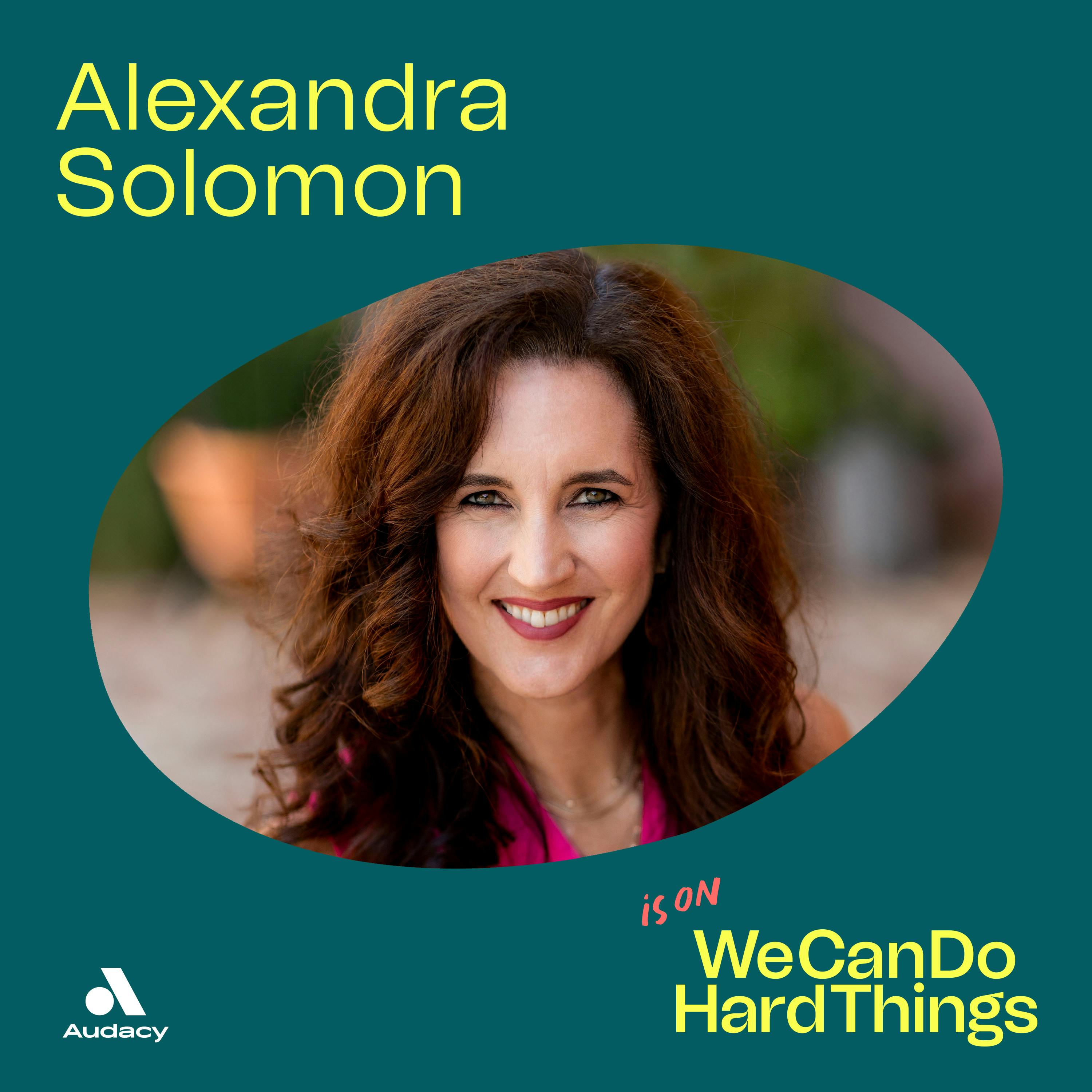
Loading summary
Transcript151 lines
- [00:00]
Glennon Doyle
Summer break is a time for fun, but it can also be a challenging time for kids. Many lose valuable reading skills over the summer months and some may struggle with their mental well being. That's why Macy's is proud to support Reading Is Fundamental and nami, two nonprofits dedicated to helping children and young adults prepare for their best school year yet. Now through September 14th, you can join us in supporting these important causes. Donate at checkout in store by rounding up your purchase or make an online donation@macy's.com purpose your support helps provide critical reading resources and mental health support for kids and teens across the country. Let's work together to help every student head back to school with confidence and the tools they need to succeed. Donate today@macy's.com Paul Purpose I think that.
- [00:59]
Abby Wambach
I know more than anyone on this entire planet that having the right therapist to talk to can make a life changing difference. That's why I think ALMA is so cool. Alma connects you with real therapists who understand your unique experience. You can use their directory to search for someone who specializes in the areas that matter most to you, whether that's anxiety, relationships or anything else. And what stands out to me about ALMA is that 97% of people seeing a therapist through ALMA say their therapist made them feel seen and heard. You know, I love that that level of connection isn't something you can get from scrolling through online advice or following social media. It's about finding someone who truly understands your journey and is dedicated to helping you make progress better with people, better with Alma. Visit helloalma.com hardthings to get started and schedule a free consultation today. That's hello a l m a.com hardthings welcome back to We Can Do Hard Things. Today we have one of our all time favorite guests Wise just buckets of wisdom, but also compassion and goodness and juiciness.
- [02:27]
Amanda Doyle
Dr. Alexandra Solomon is internationally recognized as one of today's most trusted voices in the world of relationships and her framework of relational self awareness has reached millions of people around the globe. A licensed clinical psychologist in private practice, couples therapist, speaker, Author and professor, Dr. Alexandra Solomon is passionate about translating cutting edge research and clinical wisdom into practical tools people can use to bring awareness about what the hell, curiosity and authenticity to their relationships. She is the host of the Reimagining Love Podcast and author of Love Every Day Taking Sexy Back how to own your sexuality and create relationships you want and loving bravely 20 lessons of self discovery to help you get the love you want. She is also a friend of the Pod 3. Thank you for being here, Dr. Solomon.
- [03:22]
Abby Wambach
And now sister is gonna tell us what the hell we're talking about today. Go.
- [03:28]
Amanda Doyle
Okay, Here we go. Dr. Solomon came back because we need her, apparently every week to help us. And what we're talking about today is something that all of the studies show is one of the most cited reasons for marital conflict, and that is career, work issues, the way that takes place in your relationship. So if you feel like your partner's work is killing your relationship, if they keep telling you your career is sabotaging the marriage, whatever it is, if you have ambitions outside the home, how does it affect the intimacy inside the home? This is a tale as old as time. Dr. Solomon, tell us what's happening. What do you see out in the therapy world of what is happening with this?
- [04:27]
Abby Wambach
Yeah. And what's the presenting symptoms? Like two people sit down in a room with you, what do they.
- [04:31]
Amanda Doyle
A couple walks into a bar. What happens?
- [04:34]
Dr. Alexandra Solomon
They plop down on the couch. A lot of times it shows up. The way that you're describing it, Amanda, it's like they're working too many hours. There's no boundary between work and home. And why aren't they trying to do more with their careers? Oftentimes it's what we call, like the suffering Olympics. Like, whose job sucks more, who's trying harder, who's got. So this kind of like, back and forth, like, cross complaining. But I want to make sure that we acknowledge, like, right off the bat that the heart of my work in this area is not analyzing, like, the macro. There are macro systems that create. Right. Deep inequality. Income inequality is real, unfair, unsafe, unsound. Working conditions are real. So I want us to have this conversation, like, kind of inside of that, which is hard, Right? Because it feels there's a layer of privilege here to talk about the intersection of family of origin dynamics and our internal stuff and our relational stuff that all gets activated around work in a way that I don't think we're talking nearly enough about. So I'm excited to talk about that. But it feels real important to acknowledge that the backdrop of which is that lots of facets of work are. There's baked in, unfairness and oppression baked into the system as well.
- [05:52]
Amanda Doyle
It's such an important point because if you are a black woman coming home from work every day and you have the baseline level of stress of being a professional, overworked person, and then you are also bearing at the same time the stress of knowing that you've just had three, 13 microaggressions you were passed over for a promotion, you're getting paid, you know, two thirds of what the white dude at the top is being paid. That is a significantly increased amount of stress to bring home to the family unit. That's a real impact.
- [06:26]
Dr. Alexandra Solomon
That's a real impact. That's a real impact. There's so much research that shows that the arrow goes in both directions. Work stress comes home when conditions are unfair, stressful, da da da. That comes home and plays out and impacts relational dynamic, but then also goes the other way too. When there are problems at home. Those travel with us into the workplace. There's a study that found that like when a member of a team is going through a divorce, you know, the team's productivity drops by X percent. Because of course, right when we're not in our best place personally, that's going to affect how we show up. So the arrow goes in both directions. And our feelings about work and how we show up at work, we bring ourselves with us, you know, we bring our patterns, our tendencies, our old wounds to work with us. And that shapes, Right? So yes, there are microaggressions, there are unfair practices, and there's the us variable. You know, the way that we feel like we have to be, the way that we're afraid to be. I talk a lot about how our family is a system. We grow up in this family system. Okay, but what else is a system? The workplace is a system. And so I invite people to think about, you know, the feelings that you have about your boss or your supervisor oftentimes will activate and replicate the feelings you had about your parent. That's about how you feel vis a vis an authority. The feelings you have about your colleagues are going to activate your sibling dynamics.
- [08:02]
Abby Wambach
Unless we are really complicated and you just only work with your wife and your sister, consider yourself activated.
- [08:09]
Dr. Alexandra Solomon
That's right. That's right. And then when you become a leader in your field, when you become a supervisor, when you become a boss, okay, well now you have this massive reckoning with power, right? And you are going to be triggered around the, the ways in which you saw power be like you now are sort of like the parent of the family, you know, and you have people reporting to you. There's caregiving, there's favoritism. I think there are ways in which we would do well for ourselves to sort of map onto our workplaces old stuff and old patterns that have to do with how we felt when we were little in our family system.
- [08:48]
Amanda Doyle
I've never thought of that. And even like how you try to get appreciation and attention and validation in the workplace or, like, why it feels so absolutely extreme and vital to some people and why people are like, my boss doesn't like me and I don't give a shit. Is that, like, family of origin stuff where you're, like, so desperate for people to affirm you or not?
- [09:13]
Abby Wambach
Sissy. Did you just say you've never thought about. I just have to stop.
- [09:18]
Amanda Doyle
No, I just. I'm thinking of my, like, my law firm stuff. I clearly thought about family and the dynamic of this. I'm picturing, like, going to my.
- [09:25]
Abby Wambach
Oh, okay. Like, I read that you have types of couples that come into your offices. What are these types? And when it comes to, like, family systems who are thinking, one of our biggest issues is career. Like, what do they mean? What are these types of couples that are. How will the pod squatters find themselves in this?
- [09:44]
Dr. Alexandra Solomon
I've sort of laid out three different types of couples. One couple is like the slasher and the traditionalist. So the slasher is the person who is an artist, slash coach, slash yoga instructor.
- [10:00]
Abby Wambach
Oh, slash.
- [10:01]
Dr. Alexandra Solomon
Okay. Their job has a few different elements to it.
- [10:05]
Amanda Doyle
Okay.
- [10:07]
Dr. Alexandra Solomon
And then the traditionalist, you know, they have one paycheck from one company. They do one thing. They are a lawyer. They are, you know, a teacher. They are a nurse. Like, that is their one job. And I think when a couple is partnered across that difference, there are opportunities for misunderstanding, tension, polarization, resentment.
- [10:33]
Amanda Doyle
Is that a big one? Yes. Okay.
- [10:35]
Dr. Alexandra Solomon
That's what I. You know, when we're talking about these dynamics around work and intimacy, it is so often, like, the side effect of tension poorly managed is resentment. Resentment and feeling deeply misunderstood and unappreciated.
- [10:51]
Amanda Doyle
Tension poorly managed is resentment.
- [10:54]
Unknown
It's good.
- [10:55]
Abby Wambach
Okay. Yes, it is. Dr. Solomon.
- [10:59]
Amanda Doyle
Double click.
- [10:59]
Dr. Alexandra Solomon
That's good. Upvote.
- [11:03]
Amanda Doyle
Okay, and what's the second group?
- [11:05]
Dr. Alexandra Solomon
So the second group are the coaster climber couple. So here we have somebody who's like, they're doing their thing, they've got their job, they're coasting, they're really content with the work they're doing, the way they're doing it, they're fine. And the climber is that person who, when they get the promotion, they maybe take one breath, have one sip of champagne, and then they're figuring out what the next one is. And the coaster and climber. There's beauty in both ways of being right. There's beauty in just having a job that you do, and there's beauty in looking for the next and the next and the next. But couples really easily get polarized around that. The one who's coasting feels like the climber is this, like, hyper competitive capitalist. Da, da, da, da. And the climber feels like the coaster is just not doing anything. You know, what are you really doing? And then the third type of couple is the meaning maker and the money maker. You know, when a couple has come together and for one partner, their work is really centered around meaning and purpose, and for the other partner, their work is centered around like it is a paycheck, they find meaning and purpose elsewhere. There's a psychologist who found that there's three work orientations. You either have a job or you have a career, or you have a calling. And somebody else then came along and studied that when a couple is mismatched on this variable, they're more likely to be in conflict. And when one of them experiences job loss, the whole relationship is far more at risk. If, let's say, one of them has a job and one has a career, and the person who has the career loses their job, the relationship itself is more at risk. Why? Because I think when we have a difference in our relationship that we don't fully understand, when we haven't made space for appreciating that a calling is not better than a career, a career is not better than a job. These are just different ways to do labor in the world. This is not a hierarchy. There's not better or worse. But when we are different from our partner and we don't have language for that difference, when we don't have appreciation for that difference, the conditions are so ripe for judgment, for fear, for shame, for blame, for things to go downhill.
- [13:35]
Amanda Doyle
Okay, can we understand that? So if they're mismatched, meaning one person has a calling, one person has a career.
- [13:42]
Dr. Alexandra Solomon
Yeah.
- [13:43]
Amanda Doyle
And then I'm already mismatched, so I'm already at risk.
- [13:47]
Dr. Alexandra Solomon
Yes.
- [13:48]
Amanda Doyle
Then one of the people say the person with the career loses the job, then that whole relationship is at risk because the person with the calling doesn't understand what it means to the person with the career to lose their job or the person with the career. Like they just can't relate to each other in that loss, they can't relate.
- [14:11]
Dr. Alexandra Solomon
To each other in their loss. And each of them is going to project their way of being onto the other one rather than being able to center their partner. Okay, you've lost your job. Let's start from square one. We have to understand what your job means to you in order to understand the nature of the loss. What's scary about the loss, rather than projecting like, okay, if I lost my job, my core fear would be, I'm not gonna have enough money and things are going to get unsafe. But for my partner losing their job, the core fear might be loss of identity and feeling like I don't. I'm not valuable. Who am I even anymore? So rather than assuming, like, job loss sucks and just kind of putting a blanket statement over that, it's so important for people to, like, unpack. Why does this job loss in this moment in your life suck for you specifically?
- [15:05]
Unknown
Hmm.
- [15:06]
Dr. Alexandra Solomon
Because if we don't ask that question of our partner, we're going to rush in with our own narrative, our own assumptions, our own fears.
- [15:15]
Amanda Doyle
So even outside of the job loss, that suddenly makes sense of these dynamics, because how you're treating your job. We both have jobs, but one has an apple and one has an orange. And I'm saying, why don't you peel that apple before you eat it? It's like, I'm telling you to treat your job the way I treat my job. But they have wholly different meanings in our lives.
- [15:41]
Dr. Alexandra Solomon
Yep.
- [15:41]
Abby Wambach
When I think about these two types of people. So if you're a coaster and a climber, a mini maker and a moneymaker, it's coincidental and interesting that I would imagine a lot of these people find each other and they're together. Right. And of course, that would create conflict. Of course it would. Not even necessarily in a negative way, just that would arise. But wouldn't there also be even trickier conflict if you had a moneymaker and a moneymaker or two climbers? It feels like this sort of conflict would be almost less tricky than if we didn't happen to partner up with people who were different than us.
- [16:22]
Dr. Alexandra Solomon
Yeah. Yeah, for sure. One of the ways I see that playing out is, like, people who've perhaps, like, met in their training program, they met in college, they met in grad school, and so they sort of, like, launched their careers together. And so part of the attraction and part of the draw was we're same. Like, we're the same, we're in the same world. And maybe we're competitive, but there's also a lot of admiration. There's a lot of familiarity. I get what you're doing, you get what I'm doing. And then if one of them, for example, steps off the money making track and moves into the meaning making track, it's like this reckoning of. Wait a minute. It used to be so easy for us. We spoke the same language. We kind of I understood your world, you understood my world. And there can be this loss and this fear around what bonds us, like what bonds us together if we aren't doing the same thing in the same way. Which of course happens so often, right? Somebody makes a career change or, you know, has a baby and they figure out a childcare situation, that's different. But I don't think we make enough space to talk about the loss of.
- [17:24]
Abby Wambach
That.
- [17:29]
Dr. Alexandra Solomon
Foreign.
- [17:36]
Unknown
We talk a lot about resilience and what it really means to support one another. For healthcare and wellness professionals, that's the job day in, day out. Doctors, nurses, dentists, chiropractors, therapists, they're the ones who show up for us. So it's just as important that they feel supported too. That's why we partnered with Figs for too long. Scrubs were an afterthought. Not anymore. Fig scrubs are thoughtfully designed in innovative fabrics made to meet the demands of the job and look good doing it. There's a full range of styles and go to colors, plus limited edition drops that bring a little joy into the everyday. If you work in healthcare or wellness, or love someone who does, these are the Scrubs use code FIGSRX for 15% off your first order at wherefigs.com I'm always looking for small ways to upgrade my day and that's exactly what Masterclass has become for me. I can learn from the best minds out there in just a few minutes, whether it's in line at the coffee shop or winding down at night. I took James Clears class on building habits and wow. I mean, obviously he's a big time author and one of the biggest takeaways I got is that you don't rise to the level of your goals, you fall to the level of your systems. I've actually implemented a morning habit stack and I feel way more productive without burning out. With plans starting at just $10 a month billed annually, you get unlimited access to over 200 classes from the world's best thinkers, creators and leaders. Right now, our listeners get an additional 15% off any annual membership@masterclass.com hardthings that's 15% off@masterclass.com hardthings masterclass.com hardthings it's the.
- [19:35]
Amanda Doyle
Beginning of a new school year and the first day will be here before you know it. So will the classroom sniffles and sneezes that come along with it. But with Kleenex Ultra soft tissues, you.
- [19:46]
Glennon Doyle
Can be ready to face them.
- [19:48]
Amanda Doyle
Get first day ready the right way.
- [19:50]
Glennon Doyle
Whether it's the big first day feelings.
- [19:52]
Amanda Doyle
Or preparing for the messes that come with the school year. You don't want to be caught without.
- [19:57]
Glennon Doyle
A tissue on hand to help Kleenex.
- [19:59]
Amanda Doyle
Ultra soft tissues are soft and absorbent.
- [20:02]
Glennon Doyle
To stand up against runny noses to.
- [20:05]
Amanda Doyle
Keep you and your family clean and comforted. As the school year starts, this back to school season makes sure to get the classroom essential that teachers and students can rely on for whatever happens next. Grab Kleenex. These binaries that you have here. I'm inferring, maybe unfairly, that one would seem to make more money, for example, the moneymaker in these dynamics. How much conflict in relationship is a result of that piece? Because you'd think that might be a bigger piece. And I'm just so curious if the actual conflict is around, like other things we bring back to the relationship other than like, I'm mad that I work so hard and I make a lot of money and that your job costs a lot of our familial time but doesn't net that back to the family. Like, is that as big as a factor as one would would assume?
- [21:08]
Dr. Alexandra Solomon
It really is. It really is. And I think when couples get locked, I mean, money is such a huge topic. My gosh, it is like, I think part of why it's so huge is it has this illusion of being quite simple. You know, it's like dollars and cents. And it feels, I think it's sort of similar to like numbers on a scale or all these things where it has like the illusion of being able to be contained and understood and quantified. But there's so much emotion and, and chaos and loading kind of underneath it. And so, yeah, for heterosexual couples today, in one half of marriages, he out earns her and in one half of marriages she out earns him. That's great. That's so great. So neutral, right? Because who cares? Like, you know, families need money to be brought in. But think about the thousands and thousands and thousands of years of meaning we have. And so oftentimes in that situation, she's got, you know, if she's out earning him, she's got people in her corner, you know, her family or her friends whispering about what's he doing over there, you know, and he's got his own, potentially his own narratives about being a provider. And I, you know, I'm always talking about, like how being a provider is about providing so much more than a paycheck, providing, you know, stability.
- [22:28]
Unknown
Do you have any research on which couples are happier or stay together more in terms of the income from male. And for the heterosexual couples, the male earns more or the woman earns more.
- [22:42]
Dr. Alexandra Solomon
It definitely is a risk factor when she out earns him. But only because of cultural messaging. Right. Like, there's nothing inherent about that. Right. But it does mean that couples need to collaboratively and creatively figure out how to push back against notions of how it should be, you know?
- [23:02]
Amanda Doyle
Well, and the fact that we have evolved to allow women to make more money so they can take on the male role in that way, but we have not yet evolved so that males take on the women's role of compensating within the household and the unpaid labor to pick up that burden. So it's like you can make more money and bring it home. We will allow that to happen. But you will still work an average of 5 hours more in unpaid labor in the home every day, Weak. Notwithstanding the fact that your partner makes less. That's upsetting enough to the gender system, the fact that you're making more. Don't further topple the cart by requiring that he in any way accommodate this new economics by doing more at home. So I. I think that's actually like a major. At least in my local world, where that dynamic is happening and it's invisible with the like, you make more, nobody knows. But the actual. The things we see happen in the house still happen as if we are living in a very traditional home.
- [24:12]
Dr. Alexandra Solomon
Right. That's why Eve Rodsky's work around this is so important. All the conversations we're having about invisible labor and gender divisions of labor are so essential. But, Amanda, you're speaking to a really interesting point, which is the way in which women may be almost like colluding with this, because it's like the story is. It's enough of a blow to his ego that he earns less than me. Let me at least protect him by acting like we are otherwise a quote, unquote, normal family. So then we're depriving men, but in. By doing this, we're depriving men the opportunity to just feel deeply proud and grounded in everything that it takes to run a home, to parent. You know, it's like we're reinforcing, which I think happens a ton in patriarchy. We're reinforcing this idea that he couldn't possibly be expected to step into a sense of pride in this way of being that being a provider of emotional stability, of family stability. Like those are beautiful ways of providing.
- [25:14]
Abby Wambach
It feels like to me that it's something that is cultural and Starts very early. Like, when I'm listening to this, I'm thinking about something that Gloria Steinem said, which was like, we've been telling girls that they can do anything and they can be like boys since the beginning of time, but the world will not change until we start telling boys, you can do anything, you can be like girls. Like, and I mean that in quotes, of course, like the. That girls can take on any role that has been traditionally thought of as male. Boys can take on any role that has been traditionally thought of as girl, including caretaking, including nurturing, including changing diapers, including all of this. And it's like, if you want to test out that notion, just think in your body for a second how you feel when you see a little girl being bossy and leading. You feel good. And then think about in your body about a little boy in front of a small kitchen holding a doll. And then everybody shrinks back. And so this is a cultural thing that will not change in grownups until we can accept it and celebrate it in children. Because those couples are just acting out that man. It's shame based. And I actually have plenty of friends who I would say they think this is true that I've seen with my own eyes that are the boldest, biggest leaders in their career spaces. And the bigger they are in their career spaces, the smaller they are in their marriages, the less they use their voices. When I'm in circles with them on couches, I see them deferring. It's because they are so afraid that the world's gonna perceive their marriage in a certain way and that's gonna upset their husband and that in public spaces they get smaller.
- [26:47]
Amanda Doyle
So are these regardless of gender, the slasher and the traditionalist, the coaster and the climber, the meaning maker and the moneymaker. Have you identified them because they often match up together, or have you identified them because they are particularly, like, fraught or both?
- [27:04]
Dr. Alexandra Solomon
I think both. I've identified them because I want couples to have language then for how to talk about it. Like, for example, the slasher and the traditionalist. The traditionalist is, you know, holding onto the family's health insurance, you know, kind of holding that while the Slasher's, you know, trying to make a go of this side hustle that can the side hustle become something more. And I think the slasher has got kind of their own self doubt narrative playing of can I really do this? And how much do I need to be apologizing to my partner versus thanking my partner, you know, and so I want to just have a way for couples to be able to talk about that, for the traditionalist to really be so proud of what it takes to hold center while your partner pursues their dreams or makes a go of it, while also feeling really proud of, like, that there's nothing wrong with working a job. And if the traditionalist is feeling some flashes of envy that the slashers over there are following their dreams, what are the ways in which the traditionalist might need to be also inviting in new experiences, hobbies, passion projects, rather than just getting polarized? And the slasher feeling like, I'm the unpredictable, unreliable dreamer and my partner is the stick in the mud, you know, pick up whatever, nine to five, same job. I think that there's so much. There's so much more richness there, and I think there's a potential for this couple to together hold the idea that we do need to dream and, you know, be grounded in reality like that they're both holding a really important facet of relational life and of personal life.
- [28:40]
Amanda Doyle
What's the dynamic of the coaster and the climber and the meaning maker and the moneymaker? How do they feel about each other, or what is their insecurity in the relationship vis a vis each other?
- [28:53]
Dr. Alexandra Solomon
The coaster, Even if they in some moments feel really sure of the way that they're doing their work in the world, they may fear or they may pick up on, or they may hear directly from their climber partner. They may just fear that they're not enough. Like, are you disappointed in me? Is my career enough? Can you talk about my work in the world with pride? Even though this is the work I've been doing for a number of years and I don't particularly have a desire to do more. Can you still feel proud of me? Why? What are the ways in which you're proud of me? And the climber may feel like, you know, their core fear might be that, like their partner, just like that, can I be bold? Can I be ambitious? And can that be respected rather than seen as, you know, greedy or grabby or focused on the wrong priorities?
- [29:44]
Unknown
I want to kind of ground this question in the bigger conversation we're having around, like, when work and love collide, how to integrate our working lives with our love lives? And so often we are actually spending more time working than with our partners and our families and our spouses. What are some ways you have found in couples work that can help, first of all, bring awareness to maybe some of these frameworks that we've kind of rolled out? Number one, and number two, what are some things that we can do to help establish this connection between work and love? Because we need the work and we also need the love, and both are important. I'm not saying work is more important, but it is an important function in the way that we live our lives.
- [30:41]
Abby Wambach
So, like, how do healthy couples do it?
- [30:43]
Unknown
Yeah, right.
- [30:44]
Abby Wambach
What's the healthiest things you see?
- [30:46]
Dr. Alexandra Solomon
Right. Yeah. In the best of all worlds, we feel audacious in our work because we have the security and safety and, like, boosting of a partner at home. So in the best of all worlds, there's tremendous flow between those worlds. And you're right that that's maybe a place that we touch and move away from and touch and move away from. And in this context, in this moment, there's tons of research that shows, like, we're working way too many hours. The boundary between work and home is super diffuse. Even more so now with many people working from home and with technology. So there is so much responsibility on couples to create boundaries in a world that otherwise wouldn't have them. So, yeah, I have couples that will just put their phones in a part of the. Like, even if it's just for an hour. Right. Like phone free time. They have a couple that goes to a particular part of their house, you know, for a conversation on a regular basis. And then that part of the house, no phones are welcome. Like, just really being intentional about that. But then also that deeper level, Abby, I think it's like looking at the ways in which our ambition is both a reflection of our gift and a reflection of our wound very often.
- [32:01]
Abby Wambach
Say more about that, please.
- [32:04]
Dr. Alexandra Solomon
My surface level story might be I have to burn the midnight oil. I have to do more. This project is due, my boss is demanding, or I have to reach this next threshold. And the world is going to continue to reinforce that. And I'm good at it, and I can do it, and I can do it well. But is there also that young part of me that is scrambling for, like, am I enough yet? Am I enough yet? Is this good enough? Right. So is our drive, is our ambition driven in part by a way in which we haven't just. We continue to struggle to, like, rest comfortably in our wholeness. And I think around work stuff, it can be so tricky because the world affirms hyper productivity. It can be really hard to see and get in touch with those layers that have to do with older wounds.
- [32:59]
Abby Wambach
What is the coaster's wound?
- [33:02]
Dr. Alexandra Solomon
I think sometimes the Koester's wound can be a fear of Being bold. If you got slammed as a kid for your ideas, your little kind of splintery edges, the ways in which you were unique, if those things were slammed or shamed or put a dimmer on, then risk taking feels real scary.
- [33:22]
Unknown
Yeah. Failure also, you know, you've tried some things before. Failure happens, and you're like, meh, that's fine. I'm just gonna coast.
- [33:29]
Dr. Alexandra Solomon
Hmm.
- [33:30]
Amanda Doyle
So our work then is about our ambition. Our ambition is about our wounds and our desires. So how do we determine it? Seems like the way to be in a relationship that has healthy stuff with work is to get clear on you individually being healthy with your work and knowing what you're doing there.
- [33:57]
Dr. Alexandra Solomon
Yeah. Because if my partner is criticizing me for working too many hours and all I can do is say, you don't get it. This job is so hard. Da, da, da, Then we're going to be caught in a cycle. We're not going to get very far. Right. The more they complain, the more I justify. The more I justify, the more they complain. And then eventually, like, disengage, give up, you know, disconnect. But if I can peel back a layer and get a bit more vulnerable and talk about, gosh, when I end up feeling like all eyes are on me, I have to perform, it feels the way I felt when I was a little kid. And maybe I do still stay up and work, but at least I've given my partner a window into me. I feel more accessible. I feel more real to them. I've invited them to be in a place of compassion, you know, rather than judgment.
- [34:44]
Amanda Doyle
How much of what happens in our relationships over work have to do with, like, us kind of preemptively justifying our work stuff or, like, trying to insulate our work things from criticism by, like, preemptively criticizing another person?
- [35:04]
Dr. Alexandra Solomon
Right.
- [35:05]
Amanda Doyle
If the Coaster is worried about being seen as, like, kind of lazy and complacent, that might make a lot of sense that they would call the climber a greedy, like, money hungry capitalist, because they're insulating themselves from that. What do you see with couples that way?
- [35:25]
Dr. Alexandra Solomon
Yeah, like a projection process. And I get. And getting ahead of it. Yeah. It's so easy to finger point in an attempt to bypass or get ahead of criticism. Yes. It feels really effective. You're trying to shut the other person down, like, get them before they can get you. And that's, I think, where people miss. Because each of these ways of being can feel like the right way of being. Right. For somebody who's highly ambitious, that feels like the right way to be. For somebody who has given the middle finger to ambition, that feels like the right way to be. That feels really liberated and really subversive. You know, so each person has a whole narrative that justifies and backs up their way of being without recognizing that in the context of our relationship, let's not do that. Like, let's not be that way. Let's figure out how to honor that. This is complicated for both of us. My struggle with ambition is tied to my long standing fear of failure. My attachment to my ambition is tied to my long standing belief that I have to be excellent so that my family feels okay about themselves, which is a lot of where my ambition comes from personally. Then it invites us into a really different kind of a conversation. Foreign.
- [36:52]
Unknown
It'S an interesting time for business. Tariffs and trade policies are shifting, supply chains are under pressure, and cash flow tighter than ever. If your business can't adapt in real time, you're in Trouble. That's where NetSuite comes in. Your AI powered business management suite. Trusted by over 42,000 companies worldwide, NetSuite is the number one cloud ERP bringing accounting, financials, inventory and HR into one seamless system. You get one source of truth so you can make fast, informed decisions with confidence. With real time forecasting and AI automation, NetSuite helps you predict challenges, streamline operations, and stay strategic no matter what the market throws at you. If your revenues are at least in the seven figures, download the free ebook Navigating Global Trade 3 Insights for Leaders at netsuite.com hardthings that's netsuite.com hardthings Summer.
- [37:57]
Is finally here and I am all about feeling my best inside and out. That's why Symbiotica has become a total staple in my daily routine. I started using their supplements last year when I hit a point of just feeling sluggish, mentally foggy, bloated and honestly just not like myself. I wanted something easy and consistent, and I found that in Symbiotica I take their magnesium L threonate every single evening and it completely changed my sleep and focus for reals. During the day I reach for liposomal glutathione. I swear it's the reason my skin has been glowing and digestion's been smoother. It's one of those habits I don't have to think about anymore. It's just part of my morning and nighttime flow. Taking Symbiotica supplements is one of the easiest ways I've found to stay consistent with my health goals, even during a busy summer. Go to symbiotica.com Glennon today to get 20% off plus free shipping. That's C-Y-M-B-I-O-T-I-K-A.com Glennon to get 20% off plus free Shipping.
- [39:01]
Life is hard, but when it comes to sleep, that's hard too. Enter the Chilipad by Sleep Me Chillipad is a water based mattress topper that lets you customize your sleep temperature from a crisp 55 degrees Fahrenheit to a cozy 115 degrees Fahrenheit so you can finally fall asleep and wake up feeling refreshed. Chilipad funnels a thin layer of water underneath you as you sleep, achieving active and consistent temperature control. Plus, you can schedule automated temperature changes too. Visit www.sleep me hardthings to get your chili pad and save 20% off with code Hard Things. This special offer is available for we can do hard things listeners, and only for a limited time. Order it today with free shipping and try it out for 30 days. You can return it for free if you don't like it with their sleep trial. Visit www.sleep s l e e p.me hardthings to try Chilipad and finally make sleep the easiest thing you do.
- [40:12]
Amanda Doyle
I was reading in your research or research that you had shared how incredibly fluid all this stress is, like forward and backward and around, and that they were showing how if my partner is having trouble in work or has like a work stress related thing that physiologically, emotionally everything my body experiences their work stress and like from all of these different physiological markers.
- [40:51]
Dr. Alexandra Solomon
That's wild.
- [40:52]
Amanda Doyle
And then I bring that into my workplace and then the loop just constantly keeps going. If a person is listening right now, they know that their couplehood has stress with one or both or either conflict among their jobs. What are actual ways you can start having the conversation to try to like soak up some of that stress and take it out of your relationship so that you're not just continuing to flood.
- [41:20]
Dr. Alexandra Solomon
Yep, yep. That study you're talking about like blew me away. It really was. It was a longitudinal study that found that the partner of the person who had it's called person work mismatch. You're doing a job that doesn't suit you very well and you've done that job for years and years and years. If you have poor person work mismatch or you have a person work mismatch, your partner's health is at risk. Right? Because it's a grind. It's a grind to live with somebody who comes in the door every day and they're suffering. So what I want couples to do to the best that they can, because this is hard, is make their home a haven. You know, make their. I'm thinking about the example you had given Amanda at the top of the show about imagining a black woman who's had 13 microaggressions of the day, and she comes in her home. I want her home to be her exhale. I want her to be able to look in her partner's eyes and just have her partner be like, I get it. I got you. You know that. Then at least they're able to put that somewhere besides the space between you and me. It's the serenity prayer. Right. They may not be able to change some parts of this, but can they accept and can they protect. I love when couples ask this question, like, how do we protect our relationship from the impact of X here? You know, a job that is not serving one of us. How do we protect us from the impact of that?
- [42:48]
Abby Wambach
Hmm.
- [42:49]
Amanda Doyle
And what are some of the creative ways you've seen that people do protect their relationship from this? Like, is it by just naming it, talking about it? Because I'm imagining, like, that sounds awesome to walk in the door, but when both people are walking in the door carrying that stress, who's making the sanctuary?
- [43:07]
Abby Wambach
The woman? Do we have not done this yet.
- [43:10]
Dr. Alexandra Solomon
We're both a lady in this relationship.
- [43:13]
Abby Wambach
Sanctuary, you go to home goods and you put a sign in your kitchen that says, relax.
- [43:20]
Amanda Doyle
This home or something.
- [43:22]
Dr. Alexandra Solomon
Everyone relax. For my partner and I, it's walking like, it is, like, literally, like, getting into our bodies and going for a walk. What helps you all with, like, kind of just putting work where it needs to go. What are practices that you've.
- [43:35]
Abby Wambach
Yeah, I'm thinking about this because we have a really special situation in our work and our lives. I mean, I think about this endlessly. I don't have a separation. All the most important people in my life are also the people that I work with. And I'm not. I'm talking about my sister. I'm talking about my wife. I'm talking about my daughter. My daughter has a music career. Like, maybe the most important thing in my brain right now is, like, that's beautiful, but also a freaking challenge and a half. And where are the pockets where. We're not talking about work. I mean, last night, my sister reached out to say something about, like, an emotional thing about our family, and I was like, oh, my God, we're talking about Something that's not work. That was amazing, and that doesn't happen. And with Abby and I, we were.
- [44:19]
Unknown
Just doing a couple session, and one of the things that Glennon was able to express super lovingly, I heard it, and I didn't get scared, was that, like, she really wants to miss me. And we're so in each other's lives all the time that there isn't that experience of. So, you know, I go surfing more now and I go to the gym, and I give the time that we spend together a little bit of space so she can miss me. I don't have that same problem that she does.
- [44:49]
Abby Wambach
Also, I just want to be clear. I didn't say that I said some things. And the therapist. Oh, yeah, Reiterated I didn't come to a meeting and say, I need to miss you. Get the hell out of my face. Like, it was looking forward to, sometimes.
- [45:01]
Amanda Doyle
I can miss your ass.
- [45:02]
Abby Wambach
But it is an issue for people who work together.
- [45:04]
Dr. Alexandra Solomon
It's like, oh, 100%.
- [45:06]
Amanda Doyle
Or the people that all work from home, even in the same. By each other. Like, everyone works together now, even if they don't work together, even if they're not.
- [45:14]
Dr. Alexandra Solomon
Right. That's right. That's right. But that framing, what a beautiful framing. Like, I want to miss you. Yeah, that's so much easier to hear than, can you maybe go somewhere? Can you?
- [45:23]
Unknown
And this is a little helpful tidbit for folks who might share the same experience. When I left that session, I really listened to what the therapist said, because really, what Glennon was saying is, like, I really want to miss you. And that is better than, like, we're always around each other and, like, we don't have any space. And I could go down the road of, like, oh, my God, she doesn't like to be around me. But the truth is, is we are always around each other, and she really does. And I also think that there's a part of me, too, that really wants to miss you.
- [45:53]
Abby Wambach
I remember the therapist saying, because love is looking at another person. You look at another person and you think, there you are. I love that person. But when you're not individuated at all, you never have that moment.
- [46:07]
Unknown
Yeah.
- [46:07]
Abby Wambach
You know the therapist that said, it's like that moment where you are at a party where I was like, okay, stop there. Like, I'm not. That's not gonna help. I guess I'm gonna have to activate.
- [46:16]
Dr. Alexandra Solomon
My imagination of this world, you see? Speak.
- [46:18]
Abby Wambach
But she said, it's like that moment where you're at a Party and you look up and you see your person walk in the room and you're like, ah, that's my person. But that moment requires a separation in the first place.
- [46:33]
Amanda Doyle
Yeah. That you not be in the same room for one minute.
- [46:35]
Abby Wambach
If we were at a party, we would be in the corner on the couch together, you know, so anyway, I guess we could do a whole episode on working together with people. But I do wonder if, especially with so many people working from home now and always being on top of each other, that maybe there's an energetic move from. The answer is making home a sanctuary for us. The answer might be going outward and doing things together that are. We go for walks. We try not to talk about work. It's outings based as opposed to like sanctuary of home right now in.
- [47:12]
Dr. Alexandra Solomon
Yeah.
- [47:12]
Abby Wambach
Yep. Yeah.
- [47:14]
Dr. Alexandra Solomon
I also. You're talking about this togetherness, separateness thing, which is again, so real for every single couple. And couples have different sizes of buckets. You know, if, like, Abby, you were saying that, like, you don't necessarily feel that need for space in quite the same way Glennon does. It doesn't mean you love Glennon more than she loves you. It means you're just different. But my gosh, we load those differences up with so much meaning. The one that wants more togetherness feels like, why don't you want more? And the one who wants more space with things, you know, we add all these layers to it. So I really, I love that you brought that example up and that there was a way of kind of holding it differently without going into the very real fears that can get activated when we take the difference and say that there's a better or a worse, one is right, one is wrong. And what does this mean about us? And you know all of that.
- [48:04]
Unknown
Well, don't worry. I have gone down that road and I think and I have teased Glennon every once in a while, like, I actually think that I like you more than you like me. And drives her bonkers.
- [48:15]
Dr. Alexandra Solomon
We have that. And Todd has no upper limit that he's found yet of time that he could be with me. And I need so much alone time. And I think that he does feel that way to him in some moments. It feels that way. And again, it's like that acceptance, change, you know, kind of a thing too. Right. Like, can you have different needs and not add the additional layers of what if and what if and what if? And that's the thing about liking and loving is we never. There's no metric. There's no metric for how much I love you versus how much you love me. There's no metric for it, but I think we do. We try to find these metrics and these elements of proof because it makes us feel so freaking vulnerable.
- [48:55]
Unknown
Totally.
- [48:56]
Abby Wambach
I like the idea of letting go of the idea that the one who needs solitude is less loving. I do think that that labeling the need for solitude or the introvert or the whatever as the one who loves less, I think I could live without that frame because I don't feel that at all. Like, I just think that there are some people who feel like they exist more when they're in relation to other people.
- [49:24]
Dr. Alexandra Solomon
They exist.
- [49:25]
Abby Wambach
They feel their existence. And I think that there are people who feel their existence a little bit more easily when they're in solitude. And that really has to do more with self love and the way that you get it, as opposed to loving the other person or not.
- [49:39]
Unknown
That's good, Glennon.
- [49:40]
Abby Wambach
Thanks, babe.
- [49:40]
Unknown
I hear it. I really hear that.
- [49:42]
Dr. Alexandra Solomon
That's good.
- [49:43]
Amanda Doyle
Well, it's like you fill yourself up and bring yourself back to a relationship. That's how you do it. Right.
- [49:52]
Dr. Alexandra Solomon
And the whole thing is dynamic.
- [49:54]
Abby Wambach
Right.
- [49:54]
Dr. Alexandra Solomon
So you may be in a season of your relationship where Glennon feels like she likes Abby more than Abby likes, you know, like, it made, like, these. These things I know my husband will be like, during this decade, I liked you more than me. And then during this decade, you liked me more than I liked you. Like, he'll kind of look at that big macro picture, like, chart it out in ways that doesn't ultimately matter. But it is interesting that there's, like, the little cycle of a day and there's like, the big cycle of the decade looking across the world.
- [50:19]
Abby Wambach
That's the sweetest. I love that.
- [50:21]
Amanda Doyle
I find that so liberating. And so because you're like, yeah, we can have that little dynamic going on 10 years. But that's a beauty of, like, a very long relationship.
- [50:31]
Dr. Alexandra Solomon
Like work.
- [50:32]
Amanda Doyle
Someone's going to come. Your performance report is next week, and you're out of here. You know, that's a nice space. When you're talking about that research you did about the job mismatch and like, all we've been talking about, about, you bring yourself to the relationship and then things show up because your stuff and their stuff equals your collective stuff. If the person who's partnered with the job mismatch person has that much physical, emotional stress, then the existence of a job mismatch with the person directly has to be incredibly stressful. How much do you See, with all this job stress has to do with kind of like a martyring of people to jobs that they think they should have or maybe that they actually really do need to have to take care of their families. So I guess I'm asking, like, some of these dynamics could be a problem because you love your job so much and the other person's resentful of that. But how much do you see is just that people are in jobs that they're miserable in and therefore they're miserable in their relationships.
- [51:44]
Dr. Alexandra Solomon
Well, the way you're saying it, I think is like a really potent gateway into this conversation. Because it's like, listen, babe, I know that you can, you know, we wouldn't say martyr, but like, I know that you can keep doing this job that really does not suit you and does not fit you. But if the price that we pay for you continuing to do that is also my health is at risk, we have to look at this a little bit differently because the price, it's not just your choice about your body and your time and your energy. You're making a choice that has ramifications for me as well, which I think is such a hard thing about being in a long term relationship. Right. Is that the choices that one of us makes has impact on both of us. But there's a way in which that conversation becomes a bit more neutral when we can cite the research. The research shows that it's not good for you to be in a job that truly doesn't suit you, but it also isn't good for me to have a front row seat to your suffering in this way, day after day, week after week, month after month. So what might be possible here?
- [52:49]
Abby Wambach
Yeah, and I'm an al. An honor. And it feels to me like it's in those situations. For people who are listening, I can tell you from personal experience that it's probably. You got to claim your own experience. So instead of going, and like, this is bad for you, you really gotta, like, be like, I can't watch, I can't. It's affecting me. Right. Taking your own responsibility. Yeah, yeah, yeah, yeah, yeah.
- [53:17]
Dr. Alexandra Solomon
It is a drain on our relationship to bear witness day after day to somebody's, you know, kind of complaining over and over again about their unhappiness, you know, and we all have a limit on how much empathy we can offer without also then asking, okay, so what might you be able to do differently here? So I think some of us can then get, you know, if our partner is being martyry about their own unhappiness I think we can get a bit. Marty, also about, I guess I gotta give more sympathy. I guess I gotta give more empathy. I guess I. Well, you know, Glenn, into your point, like, there's a way that you have to take care of yourself too.
- [53:54]
Amanda Doyle
For people who are having marriage issues who haven't yet identified that career is the source of conflict, because sometimes it is so insidious, you don't really know. You just feel like. I remember for me, before we started working on all this stuff and are in a great place now, but like, I remember just being so baffled by any of it. Like, I don't understand how to do this right, but I do understand how to do my work right. I know how to check things off the list and have success over there. So I felt like a draw to go do that because it was like orderly and made sense. And relationships are so much more complex and harder to know if you're doing it right, that that is a dynamic that would happen sometimes. I'm just wondering if there's any things that you see that are like, might want to pay attention if this is happening or just ways into starting this discussion that don't feel threatening to either side. If you already know it's an issue.
- [55:00]
Abby Wambach
I think that's a really good question. What are some red flags? Work might be killing your relationship or work might be if. If you are a person who's listening and you don't know if work is hurting your marriage or hurting your relationship, how would people know?
- [55:15]
Dr. Alexandra Solomon
Yeah, some of the indicators that work is hurting your relationship is that you and your partner spend the vast majority of your time and energy talking about work. That the quality of that conversation between the two of you is like a cross complainy. You know, this happened at work. Yeah, but listen to what happened at my work. Yeah, but listen to that sort of suffering Olympics where there's a ping pong game back and forth about who had the worst day or you're not gonna believe this, versus I think couples can have productive conversations, right? And where in a productive conversation I turn to my partner and I say, I'd love to run something by you from work. I may even say I would love some problem solving or I would love you just to be a sounding board, like really getting specific about what would be helpful to me in this moment. So I'm taking responsibility for what I'm bringing to my partner about work. I think also that feeling that I'm pulling away from my partner so that I can work and it's not just like, if there's a little part of me whispering like, you don't actually have to do that work thing right now. It may be that it is that you are deriving a lot of competence from your work. In a moment when your relationship feels confounding, upsetting, confusing, it's another one. I mean, certainly one would be if you feel like in conversations with your work colleagues, you are talking about your relationship and your partner in a way that you wouldn't want your partner to hear you talking about them, that's another indicator that there's a something going on at a deeper level that is positioning you. Work versus relationship. Right. The way we want to feel is that our work life and our love life are sort of informing and fueling and supporting each other. So times when it feels like my work is at the expense of my relationship, that's another like, blinking indicator light that something is off.
- [57:10]
Amanda Doyle
That is such a good myth too, to bust. Because we always view, like, work and family as this zero sum, like if one gets more, the other one gets less. But the research is showing that the better one is, the better the other one is, and vice versa. If your family is suffering, your work is inevitably suffering. If your work is suffering, your family is suffering because of that loop that goes back and forth. So that's really helpful because I think America has this weird, like, gonna have to sacrifice over here to make that one better thing, which doesn't seem like the research bears out.
- [57:46]
Dr. Alexandra Solomon
Yeah, yeah. And just psychologically, as an individual, we are stronger when we have places of self expression in our work and places of connection in our love life. Like, they each kind of serve a part of ourself to make us feel really whole as a human. And work doesn't have to be paid work. It could be your volunteer work, it could be your creative work. However, that looks. But just having parts of you that you get to nourish that are about you and parts of you that you nourish that are a part of the we that you're cultivating with your partner. Beautiful. In terms of resources, Amanda. Also, we've got a bunch of stuff that we've prepped and created for the Pod squad on the website. So that would be another way in because I think it is really important for couples to have neutral conversation starters. So we've got sets of questions and ways of thinking about, like, how are you as a person interfacing with your work in this moment? And those are ways of inviting you and your partner to have a different kind of conversation rather than figuring out who screwed up. No conversation between partners ever goes well when it's like the goal of this conversation is to figure out who's screwed up, who's done worse, you know, who's at fault. So these are resources to help the two of you get shoulder to shoulder and look together at these multi layered, you know, just tensions that we have to hold, these paradoxes that we have to hold in our relationships, that we get to hold in our relationships.
- [59:06]
Abby Wambach
You are saying that if you are a person who has found yourself in this conversation in any way and you want more and you want a way to enter into these conversations in a way that's going to disarm both of you and get you to a better place, you have created conversation starters. So where will people find this?
- [59:23]
Amanda Doyle
We'll put it in the show notes, but it's DrAlexAndRasolomon.com correct?
- [59:28]
Dr. Alexandra Solomon
Dr. Yeah, hard things.
- [59:32]
Abby Wambach
That's so great.
- [59:33]
Amanda Doyle
Alexandrasolomon.com hardthings that's fantastic. Thank you for doing that for us.
- [59:41]
Dr. Alexandra Solomon
Well, you're welcome. Thank you. That's my Love language. Resources are my love language.
- [59:45]
Amanda Doyle
There's so many of them over there. I've been paddling my way through them and they're beautiful, as are your books. We're so, so grateful for you coming here and thanks for coming back again this time and just really grateful for your work and very thankful that you share so much time and wisdom with us.
- [60:03]
Abby Wambach
Thank you, POD Squad. We love you. Bye bye.
- [60:05]
Unknown
See you next time.
- [60:11]
Abby Wambach
If this podcast means something to you, it would mean so much to us if you'd be willing to take 30 seconds to do these three things. First, can you please follow or subscribe to weekly and do Hard things? Following the POD helps you because you'll never miss an episode, and it helps us because you'll never miss an episode. To do this, just go to the We Can Do Hard Things show page on Apple Podcasts, Spotify, Odyssey, or wherever you listen to podcasts and then just tap the plus sign in the upper right hand corner or click on follow. This is the most important thing for the pod. While you're there, if you'd be willing to give us a five star rating and review and share an episode you loved with a friend, we would be so grateful. We appreciate you very much. We Can Do Hard Things is created and hosted by Glennon Doyle, Abby Wambach, and Amanda Doyle in partnership with Odyssey. Our executive producer is Jenna Wise Berman and the show is produced by Lauren Legrasso, Allison Schott and Bill Schultz.
- [61:14]
Dr. Alexandra Solomon
SA.