← We Can Do Hard Things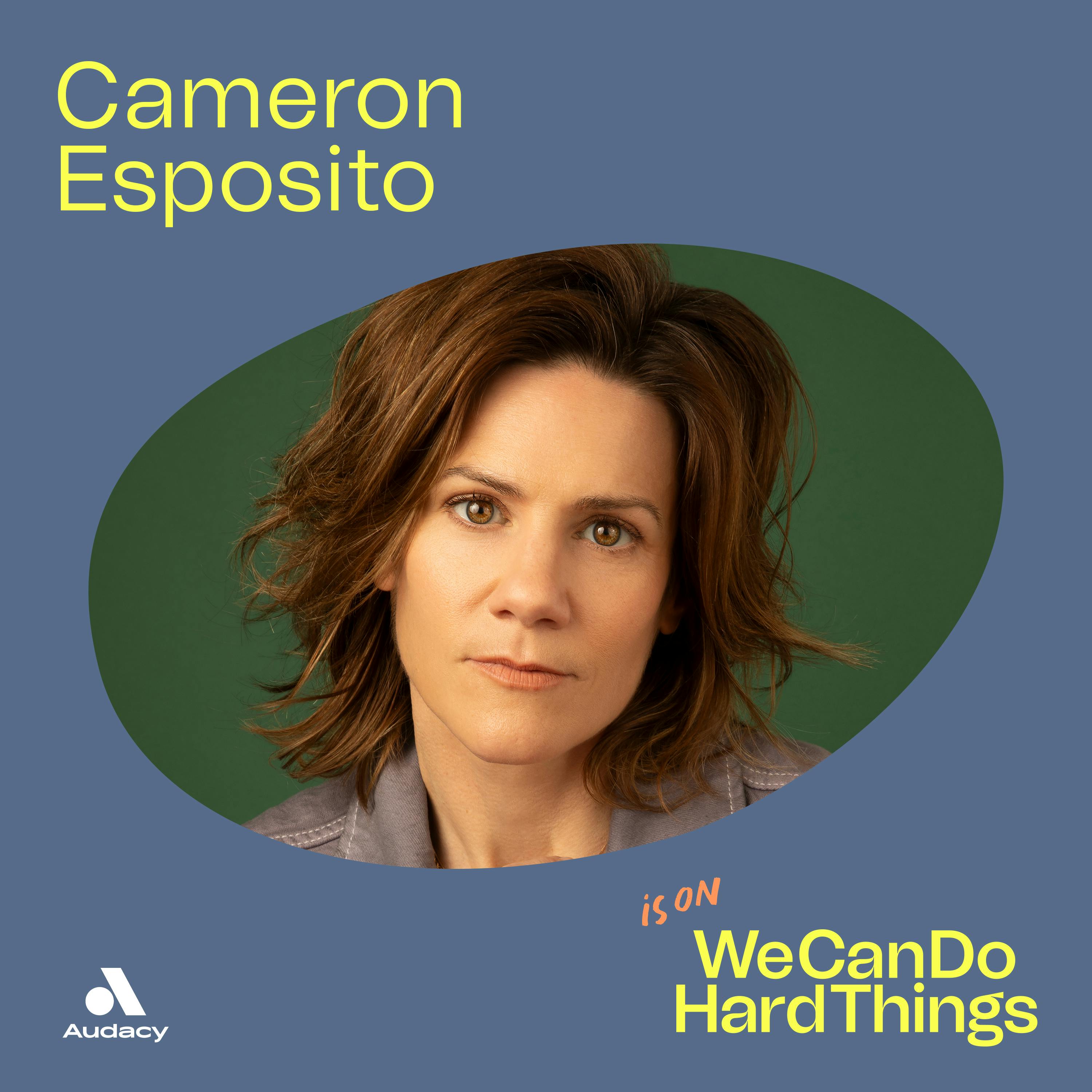
Loading summary
Transcript185 lines
- [00:00]
Glennon Doyle
Let's be honest, finding supplements you actually trust these days, it's a challenge. So many are packed with fillers, vague natural flavors and ingredients I can't even pronounce. Taking care of your body shouldn't feel like decoding a science experiment. That's why I've totally fallen for Symbiotica. They're changing the game with clean science backed supplements that actually feel feel good to take and my body loves them. One of my staples right now is the magnesium L threonate. It's this creamy vanilla flavor that helps me wind down in the evening. I just squeeze it straight from the pouch. No pills, no mixing, just go. And their liposomal vitamin C obsessed. It tastes like a creamsicle. Go to symbiotica.com glennon to get 20% off plus free shipping. That's C Y M B I o t I k a dot com Glennon for 20% off plus free shipping.
- [01:03]
Abby Wambach
Hey friends, hope you're hungry because summer grilling season is in full swing. I've been loving it. Whether you're hosting the neighborhood barbecue or just bringing something tasty to the party, Whole Foods Market has everything you need at prices that honestly surprised me in a good way. Last weekend I stocked up on no antibiotics ever chicken thighs and some sustainable salmon burgers from their 365 by Whole Foods Market line. So good, juicy, flavorful and affordable. I also grabbed a few organic salad kits, tortilla chips and zesty salsa. And of course the staples that make the world go round. No sugar added ketchup and organic mustard. And because the sweetness of summer needs coordinating treats, pints of ice cream, organic cake cones and sparkling lemonade. I use Whole Foods Market for summer get togethers. Just look for the yellow low price and sale signs to save without ever compromising on quality. You can even shop online for pickup or delivery. It's super easy. There are so many ways to save on summer grilling favorites at Whole Foods Market.
- [02:13]
Cameron Esposito
Oh my goodness. Cameron. Okay pod squad, you know our guest today. We are here with Cameron Esposito. Cameron Esposito is a stand up comic, actor and writer. A nationally and internationally touring headliner, Cameron has released three specials including the culture shifting rape jokes and three albums the award winning same sex symbol amongst them. As an actor, Cameron has been seen on Netflix, Max Prime Video, Hulu and many more as as well as in big budget movies and Sundance indies. Cameron is the author of the bestselling book Save yourself. You freaking love that book about growing up very religious and very gay. And hosted the long running podcast Query. So good. Cameron Esposito released their newest standup special, 4 Pills, about being diagnosed with bipolar disorder at 40 on comedy streaming service Dropout. To broad acclaim. It was featured in Variety, the LA Times, and People. So despite all of these fancy, fancy things, Cameron is also our personal friend. Personal friend, yeah.
- [03:17]
Amanda Doyle
And somebody who wears a sweatshirt, you know what I mean? Just a cash crew neck.
- [03:22]
Cameron Esposito
Which is what I do say to people when they say, what can you tell me about Cameron? And I say, well, they wear sweatshirts.
- [03:29]
Amanda Doyle
Yeah, that's right. Good, thank you. I mean, one of my top credits. But thank you for reading all that. It's always nice to hear right. When you're also slightly like, humiliating. Yeah, yeah.
- [03:42]
Glennon Doyle
That's such an interesting thing because when somebody reads a bio of my life, I should be like, fuck, that's amazing. Look at me, I've done stuff, but I'm always like, thanks.
- [03:56]
Amanda Doyle
Yeah, of course, yeah, of course, of course. What a nightmare.
- [04:01]
Cameron Esposito
Well, it's also like bios read as. How many things did this person have to keep doing to try to feel worthy of their place on this planet?
- [04:10]
Amanda Doyle
Oh, sure, yeah.
- [04:11]
Cameron Esposito
The longer the bio is, the more desperate the God sized hole is likely inside the person.
- [04:16]
Amanda Doyle
Well, I mean, for me it's also like about cobbling together a living, you know, because I've done creative work for my whole adult life and I've had success with diversifying what I do so that I can, you know, support my family and support myself. And I think maybe that that is something that's changed a lot in the last. Well, like during my time as an entertainer, people kind of used to do one thing, but that's not what's expected as you both know as bestselling authors and then also podcast hosts and everything else you are. It's a different world.
- [04:52]
Cameron Esposito
Yeah.
- [04:52]
Amanda Doyle
For some reason people think I know how to do a bunch of stuff, but I don't with no training. So that's fine, I'll do it. Absolutely. I'll sign that contract and figure it out as I go.
- [05:04]
Cameron Esposito
But that sounds familiar.
- [05:05]
Amanda Doyle
I think people used to have like, you know, I think they used to go to acting school or whatever. I think they still do. I think some people still do.
- [05:13]
Cameron Esposito
Do they? I've heard that people go to writing school.
- [05:15]
Amanda Doyle
I think so.
- [05:16]
Cameron Esposito
They go to writing school, they learn how to write.
- [05:18]
Amanda Doyle
Yeah, yeah, yeah, they go to writing school, they go to acting school, they go to like directing school.
- [05:22]
Cameron Esposito
Yeah.
- [05:23]
Amanda Doyle
Or you just have bipolar disorder and you're like, I Can do anything I want.
- [05:27]
Cameron Esposito
Okay. Speaking of.
- [05:28]
Amanda Doyle
Yes?
- [05:29]
Cameron Esposito
We had a funny text exchange the other day where I told you I don't know anything that's going on about your mental problems. Because my mental problems are such that they cause me to be very narcissistic in dealing with my own mental disorders and keep me sometimes from looking outside. So a lot has been going on with you. Here's what we know about this and then we want you to tell us everything. Although we did watch your special, which we absolutely loved. And we will get to.
- [05:55]
Amanda Doyle
Oh, thank you.
- [05:57]
Cameron Esposito
What I know is you went away to film a movie.
- [06:02]
Amanda Doyle
TV show.
- [06:02]
Cameron Esposito
A TV show, Sorry, a TV show? Yeah, very big TV show. What was it called? Everyone loved it. What was it called?
- [06:08]
Amanda Doyle
It's called A Million Things. It's a big network drama. It was on abc. You can watch it on Hulu now.
- [06:13]
Cameron Esposito
Right. And you had a big part in this big fancy show and then you went away.
- [06:17]
Amanda Doyle
That's correct.
- [06:18]
Cameron Esposito
And some shit went down and I don't even know what that shit was. All I know is that for a while your partner, who we love, was staying at our home. We were just tending to each other's hearts. Fast forward, here we are. So can you tell us your version of what went down and explain to us?
- [06:39]
Amanda Doyle
Yeah, I mean, this is sort of what. For folks who would like to have an experiential understanding of a manic episode and what bipolar disorder is like, this is what the special is about. And it's also something that happened in my real life, so about three years ago. So I had. I did get this job, got this big job like four and a half years ago or four years ago or something. And it was very exciting. I was hired to not just be on a network drama which is outside of my training and perceived skill set, but also the character was meant to be like an attractive sort of sought out person. And you know, I had. I've been on TV a bunch and there's like a comedic, like the person that's like walking through the background being like. Or, you know, doing standup or being on a panel. So I was expected to be funny and I was expected to be a little funny in this show. Like there were funny things written for me. But I was also expected to be able to be emotionally present, cry, and then hold space of being somebody that ABC's owned by Disney. So it was like Mickey Mouse is like, you're attractive enough to be a queer person with short hair on television. I found that very overwhelming because that's not necessarily feedback that I'd gotten previously in my life. And also, this was during the pandemic, and I was living in Vancouver, so there were. The borders were very difficult to pass. And I just am giving this whole background because I was really isolated and noticed this increase in energy and ideas and risky behaviors that persisted for, like, 18 months, which is an extended time to be in a state like that. And, yeah, my wife was staying with you, Katie, who we love, eventually, because I think it just got really scary, you know, it really got scary. And after trying to talk to me about what was going on, she eventually realized that she needed to just take care of herself, which I so respect. What awesome behavior. And also it gave me the motivation to take myself to rehab. And so, you know, we can kind of pick up the story there. But rehab is the best. And I got diagnosed with bipolar disorder shortly afterward and am now medicated and have been living with this new understanding and also this, like, really positive shift that also makes my job a little more difficult to do. That's it.
- [09:13]
Cameron Esposito
Tell us about the diagnosis. So one thing I love about the special is you can feel it. The way that it's filmed, the way that you do it. You can actually feel the goal. The goal was achieved.
- [09:25]
Amanda Doyle
It sounds like.
- [09:26]
Cameron Esposito
Agree. I really think it's achieved. I thought it was very cool. Very cool.
- [09:30]
Glennon Doyle
Feel the mania.
- [09:31]
Cameron Esposito
You can feel it and then feel the pressure.
- [09:33]
Abby Wambach
Yeah.
- [09:34]
Cameron Esposito
You go back and forth.
- [09:35]
Glennon Doyle
I was like, yeah, but can you.
- [09:38]
Cameron Esposito
Explain to us what that feels like? Like, my dream for this episode would be that somebody would be like, oh, yeah, like, feel seen in this. So tell us what it feels like. When they asked you what the checklist. How does one know that one might have bipolar?
- [09:56]
Amanda Doyle
There's actually not that much that you can read or digest about this experience, at least that I could find. You know, it's like there's like, four things, right? And so when I first was diagnosed, and this is special, but, like, I met with a psychiatrist, got, like, 100% on the diagnostic test, which was a series of questions, and I was like, okay. And we could talk more about what those specific symptoms are. But the thing that I'll say that really stuck out to me was the phrase goes through life as if driven by a motor. And when I first read that, I did not understand what that could possibly mean because I've always just been living inside my own brain. And, you know, I did know that in my life, people had had a hard time keeping up with me. I didn't Think that meant anything. I think I thought, what is going on with everybody else? Like, get on my level. But being medicated, I feel that I'm having an experience that's a little bit closer to what might be a normative set of brain chemicals. And I'm shocked to understand the difference in energy and thought patterns. And this is just. The goal is not to be cured. So, like, it's not. I'm not gonna have this massive change. But even just this understanding that people can slow down. I used to, for my whole life, I would use this phrase, I'm very calmed up instead of calm. I just didn't know how to describe it, which nobody has ever said before. But I'd be like, I'm just very combed up. And I think, you know, the thing that the goal with a special. Because I. I think when we talk about mental illness, it's like so vague and there's so much distance and because, you know, I do this job that's words. It's like. It's just a description. But the really cool thing about being able to film it that you're alluding to is that the special sort of starts with some camera angles that we're used to, a bit of something a little far away. And then over time, it progresses to these shots that are like, up the nose while I'm on stage, which are, you know, know, meant to be like a little stressful or exciting. And then it eventually cuts to me alone, wearing the same outfit, but it's all white and the room is all white. And that's intercut with the showroom. And it really is meant to.
- [12:26]
Cameron Esposito
Show.
- [12:26]
Amanda Doyle
The audience, like, the stasis that somebody with bipolar disorder might be in. And then what it feels like to get very excited and sort of be out of control. And then the other side of that, which you're right, is depressive, but it's also medicated. Because what I hope it feels like is the performative part of myself has dropped out a bit. And I'm kind of experiencing life with myself, which was previously impossible for me to do actually.
- [13:05]
Cameron Esposito
What does it feel like to be propelled by a motor all the time? What is a day being propelled is the motor mania? And how does that manifest in a day? What was it like for you?
- [13:17]
Amanda Doyle
I think sometimes it was mania, and other times it was just like. You can be somewhere on a spectrum between people who have more depressive tendency and people who have a more energetic or manic tendency. And I'm on the more energetic or manic Tendency side of things. So, I mean, what life has looked like for me over the. I mean, when I first started as a comic, the goal is, like, you basically stay up all night and then get up in the morning, and all night you're running around doing, like, five shows. I would. I lived in Chicago at the time. I would ride my bike everywhere with, like, a backpack on and two bottles of Pepto Bismol strapped into the water bottle pockets on either side and do five shows and then get up in the morning and be a nanny and be really able to be present with kids because, again, they're actually full of energy or. Right out of college, I had two jobs. One working professionally at a school, one working professionally in comedy. And I worked 80 hours a week. Like, not 80 hours a week on my own, but, like, in community, you know, at a theater and then at a school, which requires so much energy. And then later, as I started to go to bed earlier, it meant getting up at like, 4 or 5 in the morning and having 97 ideas for, you know, things I could do in my business. And then when this, like, particular episode was really intense, I was going to, like, two or three hot yoga classes in a row. Just to try to calm up. Yeah, Just to try to calm down. Right. Just to try to be able to sit still. That is extreme. I don't know if you've ever done hot yoga, but it's, like, meant to exhaust you. Yes. You know, and I would do a class that was like, yoga based. And then I would do a class where it's yoga based and you're doing weights. And then I would do a class where it's like, yoga based and you're doing bar stuff. I mean, that's too much. It's like, way too much.
- [15:11]
Glennon Doyle
Yeah. Like, in the yoga studio where they, like, so T2 is probably our limit.
- [15:16]
Amanda Doyle
You know, I think that that's wild when you have different teachers, you know, and like, the. When the front desk staff turns over.
- [15:25]
Cameron Esposito
It's kind of like how I used to go to different convenience stores to buy my wine, so nobody knew that I was buying the same bottles.
- [15:31]
Amanda Doyle
Exactly. But I mean, even that. It's not like I thought this was weird or. Or like I was trying to hide it necessarily. I think I was just trying to cope.
- [15:41]
Cameron Esposito
Yeah.
- [15:42]
Amanda Doyle
And I was also, like, doing things like smoking weed. Like anything that is a depressant or anything that de. Escalates.
- [15:51]
Cameron Esposito
Sure.
- [15:51]
Amanda Doyle
I was adding stacking on top of each other and still, like, had almost no need to sleep. It was wild. It's like being stuck on a roller coaster. It's, like, very fun at the beginning. And then, like, that's the thing. Going through life as if driven by a motor. I think I felt like a passenger sometimes, but I didn't know that because I thought that was. This is what we were all doing.
- [16:16]
Cameron Esposito
Right.
- [16:17]
Amanda Doyle
You know, I don't know. I mean, earlier in your lives and behaviors you've had, did you identify at the time that those behaviors were unusual? Were you able to do that when.
- [16:28]
Cameron Esposito
You said in the special that they gave you a list of symptoms and then they were your personality? That is the experience that I had. Even just my recent anorexia diagnosis, like when they sat across from the little zoom and read the list of symptoms, I had a very, very sad, destabling moment. Not just because I was being diagnosed with something, but because I thought that all of those things were what made me who I was. I thought I made up those things that they were my personality. And to have them just completely pathologized was a very strange experience. I really related to that. No, I just thought that was life.
- [17:08]
Amanda Doyle
Yeah. Thanks for telling me that.
- [17:19]
Cameron Esposito
You know that feeling when you're traveling and you stumble into a neighborhood cafe and suddenly feel like you're actually part of the place, not just visiting? That's why I love staying in Airbnbs. It's not just a place to sleep. It's how I get closer to the real version of wherever I'm going. When I travel, I want to feel like an insider, not a tourist. I want local. I want authentic. I want the side streets, not the souvenir shops and the experiences, that's where the magic happens. Whether it's a historic walking tour, a cooking class with a local chef, or a yoga session in a secret garden, you get to meet people, check, try something new, and actually connect with a place.
- [17:57]
Glennon Doyle
Speaking of, we're hosting an Airbnb Original experience at the Angel City FC match on Saturday, June 14th at BMO Stadium. You'll get insider access, connect with other fans and watch with me and Glennon. And one of us knows the game inside and out. It's gonna be something really special. Check out our experience and more@airbnb.com experiences. On this show, we talk a lot about resilience and what it really means to support one another. For healthcare and wellness professionals. That's the job day in, day out. Doctors, nurses, dentists, chiropractors, therapists, they're the ones who show up for us. So it's Just as important that they feel supported too. That's why we partnered with figs. For too long, scrubs were an afterthought. Not anymore. Fig scrubs are thoughtfully designed in innovative fabrics made to meet the demands of the job and look good doing it. There's a full range of styles and go to colors, plus limited edition drops that bring a little joy into the everyday. If you work in healthcare or wellness, or love someone who does, these are the scrubs. Use code FIGSRX for 15% off your first order@wearfigs.com it's an interesting time for business.
- [19:18]
Abby Wambach
Tariffs and trade policies are shifting, supply chains are under pressure and cash flow tighter than ever. This means businesses need to adapt in real time. That's where NetSuite by Oracle comes in. Your AI powered business management suite. Trusted by over 41,000 companies worldwide, NetSuite is the number one cloud ERP, bringing accounting, financials, inventory and HR into one seamless system. You get one source of truth so you can make fast, informed decisions with confidence. With real time forecasting and AI automation, NetSuite helps you predict challenges, streamline operations, and stay strategic no matter what the market throws at you, know what's stuck, know what's costing you, and know how to Pivot fast. It's one system, full control. Tame the chaos with NetSuite. If your revenues are at least in the seven figures, download the free ebook Navigating Global Trade 3 Insights for Leadership at netsuite.com hardthings that's netsuite.com hardthings.
- [20:25]
Cameron Esposito
So you're on a roller coaster being driven by a motor and you're the passenger. That is so helpful to me to understand visual. You talk about this in the special, but like one of the crossovers I see between your and mine is that we both had disorders whose symptoms are often celebrated by the particular culture we're in. Okay, so nobody says to me, you know what, you're just a little too thin, too disciplined. Just not something our culture's gonna say until you're dead. So for yours, having a million ideas, like having so much energy, being able to do 80 hours of work is in some ways a capitalistic dream.
- [21:02]
Amanda Doyle
Correct.
- [21:03]
Cameron Esposito
What was the negative feedback? What is it like for somebody to be partnered with a person who's stuck on a roller coaster and not in charge of the movement? What were you getting from your family, friends?
- [21:15]
Amanda Doyle
Yeah, I mean, yes, that is a big thing that is true is that of all the mental illnesses, bipolar disorder is the one where people will take these huge Risks, they'll become inventors, they'll go to space, they'll become politicians, really successful musicians. Because the identification of risk is. The lack of identification of risk is a part of it, which is so interesting. So people that might take these risks where other people are like, I don't know how you could possibly start your own business or have this kind of idea. It's just not have the same relationship to risk. And you're right also to point out the. I totally understand and relate to in terms of eating disorder pathology, that this is something people love. I mean, like look at TikTok or whatever, like if you get trapped in the wrong algorithm, you know, I also had a very active eating disorder in my teens. And TikTok knows that, you know, because that's based on like the amount of time that you might pause on a particular video. And I've had a couple times where like my algorithm went very far in the direction of like bodybuilders. And I was like, oh, I am still like telling on myself to a conglomerate corporation who might be whatever, you know. And that was really interesting to find out. And you know, to answer your question about friends and family, I think that one thing that, you know, my wife Katie and I, you saw some of the things that she was experiencing during this time. And I think like in terms of fear or worry or hurt, you know, and pain. And I think the big thing is that I wasn't there for 18 months of our marriage. I mean, a manic episode, you can forget what happened. I mean, there's certainly things I remember, you know, there's certainly things I was present for and just chemically not being present, that's been. I think the biggest thing to work through in our marriage is that she remembers and lived through some things that I lived through in my body and mind. It's not like it was, you know, it was challenging on my end, but she like was there physically and spiritually in a different way. And maybe that's true for sort of anybody that has a partner that might have like any sort of addictive issue. Even somebody who's going through extreme grief, you know, something where their experience of life is locked into, you know, a chemical, brain altering experience that. I mean, you mentioned narcissism earlier. It's like just this abject focus on self that I think happens to so many of us. And then for the partner it's like, well, okay, I guess I'm just alone, either temporarily or permanently in this marriage or even just as in this relationship. This Parental relationship. So how do I cope with that? Do I still want this person in my life? Am I willing to wait around? Am I? You know, I think that's a huge, huge question. Do you relate to that? I saw you have, like, a reaction.
- [24:43]
Cameron Esposito
Yeah. And it makes me feel for all of the people who love anybody who struggles with mental health in any way, because there's, like, the time when it's all a mess and you're all dealing with it like it's a battleground, and then maybe the person recovers, and the person who was there and witnessed all the messages still walks amongst debris that the other person doesn't even know consciously exists.
- [25:10]
Amanda Doyle
Totally.
- [25:10]
Cameron Esposito
And that person loves and is so forgiving and so beautiful and knows that that person was, quote, gone, so can't blame the person for it. And yet that remains, and that person holds it alone. It's really incredible. Everyone I've ever loved, I'm sure, has experienced that.
- [25:28]
Glennon Doyle
Yeah. I mean, it's interesting because I've gone through. Just recently, my brother passed away, like, a year and a little bit ago, and I've been through recovery. And a lot of my experience was so important to have a person in my life like Glennon, going through this last year of witnessing me. It's this weird thing that, like, I kind of know that, like, I'm not all the way here. Like, I'm partly in heaven. I'm partly trying to reach a different realm in a way, through this grief. And so I can imagine when you get back to your house and Katie's. Your wife has moved out, I can imagine you'd be like, okay, I have to go and get help. I need this help in a way, because she was, like, your witness to this unfolding in a lot of ways. And I guess what I want to ask is, like, at the time, you didn't know bipolar was the thing. Maybe it was drugs and alcohol. I don't know exactly what brought you to the rehab. It's just like, you were like, something's not right.
- [26:42]
Amanda Doyle
That was it.
- [26:43]
Glennon Doyle
Okay.
- [26:43]
Amanda Doyle
I just knew something was not right. I could, like, feel it in my chest. I felt like I was gonna have a heart attack.
- [26:49]
Glennon Doyle
Huh.
- [26:50]
Amanda Doyle
And that's what it was. I was like, this cannot be right. Like, this is not. This cannot be right. But I also didn't think I needed to go to the hospital.
- [26:58]
Glennon Doyle
Huh.
- [26:59]
Amanda Doyle
Yeah. And you know, what I want to add to what you just said also, is that life is lonely, and life is also powerful in this experience that we have. I think in Any relationship where I had this wild experience over the summer that I think you two are a little bit aware of, because I think you texted with Katie during this time. But I got super sick. I got, like, this wild foot infection that turned into a whole body infection and, like, almost killed me. And when I was the sickest, I had a contagious infection, so I had to be downstairs in our house alone. And Katie and my mom, who was living with us at the time, could come down with, like, gloves and masks on, and they couldn't really stay down there. And I had that. It was like an incredibly freeing spiritual experience, actually, because the witness to this was me. Like, I was the one who was there with me. And I think I thought that, like, you know, it's this thing of, like, we come into this world and we leave this world alone. I think that that. That loneliness, it's like a huge fear of mine, right? Abandon alone. And, you know, I think what I realized is that I am such good company and such a strong witness to my own experience. And I think that's also true for anybody who loves. I guess what I'm trying to say, Abby, is like, your brother dies. You are the, like, Glennon is the witness. And also, you are the witness, like, the sole witness, right? Because we can't totally share that experience with someone else. And the same thing for, you know, eating disorder recovery, someone can watch that and be there with you, and that growth can come in a relationship. And also, like, at the end of the day, going to bed, it's like this very powerful experience of, wow, I was there with me. I didn't know. I hadn't really tracked my life that way. And it was, like, life changing, actually, to be like, oh, wow, that is so cool, because I get to carry that with me.
- [28:53]
Cameron Esposito
God. It's that moment in the special where you're like, people have always asked you how the hell you stand up on a stage in front of all of these people, and you're like, how the hell do you sit in a room by yourself?
- [29:06]
Amanda Doyle
Totally. Yeah. I did not have access to that. I did not have access to that. I mean, literally, look at the job I chose. Like, kind of like you said earlier, I just chose. I chose a job where. I mean. And I look at the time in my life when I really started doing standup professionally because I had done improv, and improv is like, I'm a goofy penguin. You know, like, it can be really fun, but you're not, like, having. It's a different thing When I started doing stand up, I had just come out. My family was freaking out because I was raised so Catholic. You know, they were really worried I was going to hell. An actual place with fire, you know, And I had told, like, one friend that went terribly. And so then, like, the next thing I decided to do was like, okay, well, what if I just tell hundreds and thousands or thousands of people at the same time? Like that, like, somebody's gonna be into this, you know? And I. I also was so afraid of that interpersonal rejection that I buffered myself. You know, if you're on stage, you always get to win. Kick people out. You're always funnier. You're literally amplified. Everybody else is supposed to shut up. You know, it's like the best plan if you're like, don't reject me. You know, and so I love that I chose this job that, like, saved my life. And now medicated and older and, you know, in this beautiful marriage with supportive friends, I get to do the opposite, which is. Yeah, like, talk to people without microphones. I mean, we're talking microphones now, but if we weren't, that'd be okay too.
- [30:36]
Cameron Esposito
Yes. How is that going?
- [30:38]
Glennon Doyle
It was.
- [30:38]
Cameron Esposito
So my favorite part of the whole special is you discussing how you chose to be medicated, which has meant that you are present with yourself but you believe is making you not as good of a comic or harder for you. Tell us all about that. It's fascinating.
- [31:00]
Amanda Doyle
Yeah, thanks for asking about that. It's interesting. I feel like I'm just a different comic. And I would be interested to hear sort of your experience with this as well, both of you. Well, I mean, for me, the medication that I take, it causes brain fog and cognitive delays. And that is weird. It's a weird experience. I'll be talking about something. I'll be mid sentence. I have no idea what the fuck I was talking about. Which is actually a difficult symptom to have if you're a stand up comic.
- [31:29]
Cameron Esposito
Fair.
- [31:31]
Amanda Doyle
And also I have found that audiences are okay with it. Like, I will have notes, I will just openly ask what was I talking about? And then people will want to jump in. And it's kind of a fun thing. It's like Mad Lib. We're building it together because I know what to say next, or I know how to interact with the audience, but I can't do it by myself the same way that I used to. And I even have had the experience of like sitting on a stool now as opposed to pacing the stage. Yes, that right Away People like this, this transformation. I suppose maybe like any artist, I could just treat it as evolution, but it is fucking hard when something you've been doing for 20 years is just now different. I mean, did in terms of the podcast. I mean, I guess maybe there's two moments. Transitioning from being a writer to a podcaster, you know, I don't know how that felt to you. Or transitioning from experiencing life one way, getting this new diagnosis, and then you're talking about your life in a different way.
- [32:37]
Cameron Esposito
Oh, I relate almost precisely to. To what you're saying, because for me, it's been a little bit different in that mine has been from going to being completely dissociated all the time. That's how I survived public life in any way. I was never present, ever. I memorized things. I mean, when we first met, Abby walked into the little gym we had where I was, I had written down all the answers to everything anyone would ever ask me on the untamed year long. Every TV show, every whatever tour. I wrote it all down. Then I read every single answer. Now, please understand. Also the ums and the. The moments where I would pretend I was in the moment. Okay, memorize them. Oh. Then I would read them into a phone, and then I would get on the elliptical for hours with my own voice in my head memorizing these things over and over again. So by the time I had to hit a stage or a TV show or anything, I was not there. I sent a talking doll on and I would pull the string and she would say the things. And so that is how I protected myself. I was. I'm an incredibly sensitive, very introverted person who had to become a hologram of herself. And so I just became a hologram. Wow. So what also helped me with that was all my medication. So I have had the absolute reverse experience of you. I have had to unmedicate myself because of my unmedicated being. I cry all the time. Now I am unable to perform, which makes a segment or a minute. I can't do it. I can't not be embodied, which makes me much less successful at marketing myself. Makes me much less to nail a talking point, to nail a thing. I can't nail anything anymore.
- [34:34]
Glennon Doyle
I mean, I will beg to differ on that front.
- [34:37]
Cameron Esposito
But I can be human. I can be human. Like every time I'm watching a movie and I start crying or I'm in a. I feel like the Tin man from wizard of Oz. I'm like, wow. Yeah, I have a heart.
- [34:49]
Amanda Doyle
Oh, my God. This is so interesting. I mean, look at our little sneaky ways. Good job. Because I was on tour with you, I saw you take questions. So good job. Sneaky.
- [35:03]
Cameron Esposito
Thanks.
- [35:04]
Amanda Doyle
Good job with those ums.
- [35:05]
Glennon Doyle
Yeah, yeah.
- [35:07]
Amanda Doyle
Sneaker rooney. For me, you know, kind of as you're saying, it was such an opposite experience because I. For me, I think what I've had in my life is like eternal presence on stage because there's so much stimulation from an audience, from lights, from the requirement to speak for an hour and give people their money's worth. It's like perfect. It's like a perfect thing. And there's like some loss there because that's the thing. I can't. I can do it in a different way. I can have this presence where I'm being vulnerable. Right. But the magical chemical presence is limited by my mood stabilizers. And yeah, again, it's like, I love a coping mechanism that lands us in the right place and helps us survive until we hopefully heal that a little bit. But, like, what a fucking genius move. This is why musicians and comics that have this brain chemistry then put themselves in this position because it's like, it feels right. It's like the only time it was just like, you're like so locked in. Like, actually what I'm saying is, do not give me any questions in advance. Don't literally never, I mean, have never gone on stage with things written down in full sentences. Not one time I write on stage. So like, eventually everything's memorized, but I don't start with jokes that I've pre written. That's never been true.
- [36:38]
Cameron Esposito
But like, what is that presence? Is that you? That's the thing. That's what I'm trying to get at and what this special is like.
- [36:43]
Amanda Doyle
I. I see what you're saying morphing.
- [36:45]
Cameron Esposito
This idea of like, okay, but like, who is Cameron? Because presence to me means. And that's just what it means to me right now, changes all the time, but it means I'm just gonna decide that however I am in this moment is good enough and that there's no performance tied to it. So what's the difference between stage presence, this magic you're talking about, and. And like the presence you feel when you're sitting with a good friend and you're not proving anything to anyone and you're not performing and can you not perform and feel alive?
- [37:19]
Amanda Doyle
Sure. I mean, I think something that really helps me is like going to the gym, things like that, in terms of getting some of that locked in. I think when I'm with friends. I actually just kind of feel relaxed most often, which is weird. I don't really know how to process that experience. And so I'm like, laughing and stuff and having a good time. And in terms of making life worth living, I think that it's odd, right? Because I don't think of my brain as separate from me. Those chemicals are me because everybody has chemicals that are them. And it's this relaxed feeling is, I think what like, life is. It's just that I get access to this other. I mean, it's drugs. We all do drugs. We don't know what we're doing. Right. When we have like a really amazing meal or like even capsaicin, which is like the active ingredient in hot sauce, is, like, actually addictive. Like, it lights up our addiction centers. And then you need more and more hot sauce. Hilarious, right?
- [38:23]
Glennon Doyle
I did not know that.
- [38:24]
Amanda Doyle
Yeah, true.
- [38:25]
Glennon Doyle
I'm actually in withdrawal right now.
- [38:26]
Amanda Doyle
I love hot sauce.
- [38:28]
Glennon Doyle
I know. I do too. I'm in withdrawal right now. We don't have Sriracha. And the last two lunches that I've.
- [38:32]
Cameron Esposito
Had have been like, this is recovery you're in. Yeah.
- [38:36]
Amanda Doyle
It's like, I don't know that I need to remove all that from my life. Right. And the chemical thing of relaxation and downtime is beautiful. It's just that, like, that hyper presence thing. I think it's actually also spiritual, to be honest. Like all the chemicals. Because I say in the special that mania releases in the brain the same chemicals as cocaine. So I don't know. Like I said, my medication doesn't cure that experience. So that will just always be part of my life. And I don't really know what other people are doing.
- [39:13]
Cameron Esposito
Right.
- [39:14]
Amanda Doyle
I don't know.
- [39:25]
Cameron Esposito
Okay. If you were fixing your bra straps, fussing with digging wires, or battling your bra during this podcast. Stop right now. You'll want to hear this. Those bra problems, those bra blems you thought you had to live with, ThirdLove has solved them. They take the frustration out of bra shopping and make it easy to get what you want. Whether it's ultimate cleavage, a smooth look, or stopping your shirt buttons from pulling. They feel amazing too. With a perfect fit in over 60 sizes, including half cups that you won't find anywhere else. With half cups, you're never stuck between two sizes that don't fit. And real women test every style before it's given the green light. And their bras don't just look great. They're made from top quality materials for comfort. And support whether you're a double A cup or an H cup. So stop settling for bad bras. Now's the time to treat yourself and get your bra blms so solved. Save $15 on your first order with code podcast15@thirdlove.com hey everyone, I've got to.
- [40:27]
Glennon Doyle
Tell you about Vori. If you haven't heard of them, you're missing out. And we love this stuff. I've been living in this stuff for years. I recently got the Performance Jogger from their Dream Knit collection and let me just say it's hands down the softest, comfiest jogger I've ever worn. I use them for everything. Vuori is an investment in your happiness, I promise you. For our listeners they are offering 20% off your first purchase. Get yourself some of the most comfortable and versatile clothing on the planet@vuori.com hardthings that's V U O R I.com hardthings exclusions apply. Visit the website for full terms and conditions. Not only will you receive 20% off your first purchase, but enjoy free shipping on any US orders over $75 and free returns. Go to vuori.com hardthings and discover the versatility of Vuori Clothing exclusions apply. Visit the website for full terms and conditions. Father's Day is coming up and if you're looking for a gift that sounds thoughtful, meaningful and actually gets used, Masterclass is Is it? Imagine giving your dad the chance to dive into something he's always been curious about. Whether it's learning how to grill like a pro with Aaron Franklin, sharpen his business mindset with Howard Schultz, or even explore the science of well being with Dr. Lori Santos. She's been on our pod. I gave my dad a Masterclass annual membership and he got totally hooked on Dr. Santos's class. He's always been big on self improvement, but now he feels like he actually has tools to to make real lasting changes in his day to day life. For me, I've been loving the class by Malcolm Gladwell on storytelling. Our listeners always get great discounts on Masterclass of at least 15% off any annual membership@masterclass.com Hard Things see MasterClass's latest deal at least 15% off at masterclass.com Hard Things masterclass.com.com Hard Things I want to touch something that you talked about that there might be a loss of the performer that you used to be. And how are you handling that now in the place you're in? I mean, what would you call the place that you're in right now because. Are you in recovery?
- [42:57]
Cameron Esposito
Yeah.
- [42:58]
Amanda Doyle
I mean, I guess I would just say I'm receiving appropriate and helpful mental health care and medicated, you know, I'd say things like that, I guess. You know, I mean, again, this is a symptom of bipolar disorder. But it is so hard, you know, shifting like that is so hard. And I like when things are hard. So when I think about my life, I. I must have signed, like, a contract before my little soul was sent down here, because I have been afforded a lot of opportunities for learning, and I happen to be open to that. Not always at first, maybe kicking and screaming, but also like, fuck, yeah. I mean, I just. I don't know. I guess I move in that direction, and then the next thing unfolds. Does that make sense?
- [43:49]
Glennon Doyle
Yep. That's how we live our life.
- [43:51]
Amanda Doyle
Yeah, it really is. Yeah.
- [43:54]
Cameron Esposito
Yeah.
- [43:54]
Glennon Doyle
Kicking and screaming and then like, oh.
- [43:57]
Amanda Doyle
Oh.
- [43:57]
Cameron Esposito
I always think about that. I'm like, I am either in a very remedial group or a very advanced group. One or the other is the batch I'm for.
- [44:11]
Amanda Doyle
I don't know. I signed some sort of contract with the universe. I believe that, and I love it. I wonder what will happen the next time I'm here is like, I'll just be like, this time I get a break. You know what I mean? Like, the next time I'm like, I don't want to learn anything. I want one job. I want to marry young, you know, like Steven, and forever. I don't know. Maybe that's what will happen. But, yeah, this time around, I chose, like, hurdles. That's the. That's the track and field specialty that I currently have.
- [44:39]
Glennon Doyle
So do you still want to keep going hard?
- [44:41]
Amanda Doyle
Like, in different ways? I just have a brain that wants to learn again. Like, it. This is just, like, chemically, what's happening. So, like, for instance, I'm gardening a lot right now, and poor Katie is, like, about to lose her fucking mind. She has to tell me, like, we're not allowed to talk about gardening after this time of night, because I. I've been, like, identifying all the plants that are around our house or in our neighborhood. And then I plant stuff, and then I, like, stare at it. One of our neighbors doesn't love us so much, and I think part of the reason is that they think I'm looking in their house often, but I'm really just looking at their garden. Then I realized I had to move on, move along.
- [45:22]
Cameron Esposito
That's the thing about bipolar, too, right? Is like, Having these big interests that soak you up completely. What else? Give us another little. You might be bipolar.
- [45:32]
Amanda Doyle
If. Okay, sure. So some of the symptoms I've had that are very funny. Yeah. So too much confidence. So do you notice you're way more confident than some of your friends? Huh. I wonder. Religious fervor is one. So are you. Have you started your own cult and then, like, again, business risk? Are you trying to go to space and also take over the government through your friendship with a president? Just something to wonder about. And charisma is one. You get some feedback about. Having a lot of charisma. How much do you sleep? Three hours. Then you get up, you put a headlamp on, you go garden.
- [46:19]
Cameron Esposito
Again.
- [46:20]
Amanda Doyle
I think my neighbors are like, what is going on over there? Whatever. So, yeah, those are some of the symptoms for me and God. What other. Oh, I mean, another one that is very, very common is hypersexuality, which we don't talk about a lot and again, is rewarded in this culture. So that can just kind of mean, like, are you, like, presenting yourself in a sexy way more often than most people do you have a high sex drive that everybody you're in relationship with comments on things like that.
- [47:01]
Cameron Esposito
If you're going to space and you're taking over the world, your. Your relationship with the president and you also have 24,000 children.
- [47:08]
Amanda Doyle
Oh, I forgot about that detail. And by the way, I will just say I'm not. You know, we don't call somebody. But this particular person has said that it was said to him that he should get checked out for this thing. He said that publicly. So then when he said that, I said, huh?
- [47:25]
Glennon Doyle
Well.
- [47:29]
Amanda Doyle
But there are also so many people that are open about. About this that, you know, you can, like, look at the creativity, or at least I can. And I really like Chapel. Roan is really open about this and, you know, the creativity, but also the, like, exhaustion that she talks about around public appearance, things like that, you know, that hyper presence can really take a toll. I also find that I have, like, auditory sensitivity, so it's, like, hard for me to be in. Like, planes are a fucking nightmare for me. So thank God I chose a job where I have to constantly be on the road.
- [48:03]
Glennon Doyle
Why is it like that weird hum that gets me?
- [48:05]
Cameron Esposito
Remember in the special when she said during the movie she has to get up like 12 times to investigate a noise that's like six streets away?
- [48:11]
Amanda Doyle
Also, like, can I tell you, this is the honest truth, and you're not gonna believe this, but, like, you Know the headphones that they pass out on a plane? Right. They're like, not the headphones people bring. And then people use them for the in flight entertainment system. Do you find that you can hear everybody's headphones?
- [48:29]
Cameron Esposito
No.
- [48:30]
Amanda Doyle
Like, I'm talking about, are you ever on a plane? And you go, what is somebody watching 20 aisles back from me? And you can't stop paying attention to it. No, because that's great.
- [48:44]
Glennon Doyle
That's terrible.
- [48:46]
Amanda Doyle
So it's like, helpful. I take a little extra medication now and wear sunglasses and like a low hat and noise canceling headphones. And that helps me to be in an environment like that.
- [48:55]
Cameron Esposito
That's incredible. But it speaks to the other thing you're talking about, which is like, it's not. There's something spiritual about it too. I'm saying that it's real, like this hyper presence that's connected to everybody else's hyper presence. This more going on. You're breathing through the roots. And then the other people in their trunks, which you just have to watch the special.
- [49:15]
Glennon Doyle
There's more going on.
- [49:16]
Cameron Esposito
There's something going on.
- [49:17]
Glennon Doyle
Yeah.
- [49:19]
Cameron Esposito
That is real.
- [49:21]
Amanda Doyle
I absolutely think that that is true. Well, you know, obviously you both know that I am so interested in philosophy and spirituality and organized religion from like a study perspective. And it was said to me when I was an undergrad theology major that God is between. You know, there's no, like, God without between. And that also is something that really stuck with me. And again, just in terms of some of the opportunities, I feel like this too many brain chemicals has afforded me. One is again, if you're having hyper presence and you're really feeling that between in such a real way, that is virtual. It's very cool. It's why people meditate. It's like why we even go to group fitness classes and all that stuff. There's so much to community. And I feel like that's something that this has afforded me is like just a little extra awareness of that experience. And again, sometimes it's too much.
- [50:18]
Cameron Esposito
Right.
- [50:18]
Amanda Doyle
And they want to like, murder everybody for their extremely low headphones that they're listening to. But. Yeah. I mean, is that possibly what we're all doing here is.
- [50:28]
Glennon Doyle
Yeah.
- [50:29]
Amanda Doyle
Attempting to be connected.
- [50:31]
Glennon Doyle
Yes. I'm curious because, like, was it hard for you to accept this diagnosis or.
- [50:38]
Cameron Esposito
Was it a relief?
- [50:40]
Amanda Doyle
Yeah, that's that one.
- [50:41]
Cameron Esposito
Yes. You're like, oh, this is because you're like, I know this moment very well. Which is like, something's wrong. I don't know what it is. And Then somebody hands you what it is, and it makes you feel such a relief that somehow feels like, oh, it's not just all my fault, it's a thing.
- [50:59]
Amanda Doyle
The all my fault thing is pretty intense. Yeah, right. Because there are some decisions that I've made in my life that had some pretty big consequences on other people. And what I can do is take responsibility for those decisions and stay medicated and stay with support so that I don't make risky choices that scare the shit out of other people or hurt them. So that's one thing is like, attempt. Because guilt and shame, that doesn't really help anybody. You know, nobody that I feel guilty toward is like, oh, thank God, now I have this, like, person who has an albatross around their neck that will make eye contact with me. You know, I think we can. Well, at least for me, I've just been attempting to turn that into being a mature adult and taking responsibility. The fuck was I talking about? What was the other question?
- [51:49]
Cameron Esposito
That it was a relief. That it was a relief. Oh, God, it was such a relief. Yeah.
- [51:53]
Amanda Doyle
I've had this experience two times in my life when I realized that I was queer. And then when I got this diagnosis where I was just like, oh, my God, finally some help in understanding. Prior to this, I did know there was something. I was like, am I on the autism spectrum? I just didn't know what it was. But, yeah, this has just been. It's, like, been so awesome also because. Well, I guess the final thing I'll say is that it also gives me some relief in the things in my life where I couldn't keep something going that somebody else, like, I got too excited about a job. And then that excitement didn't necessarily help that job or I couldn't handle the particularities of a particular friendship. And so then that friendship went away. And I think when I look back at my life, I also think, oh, stuff was, like, kind of hard for me. And then I can have a little bit more. It just helps.
- [52:57]
Glennon Doyle
That's great.
- [52:58]
Cameron Esposito
The special is going to help a lot of people. And it's the good kind of help, which doesn't feel like helping. It feels like entertaining fun. It doesn't feel like help you nail it.
- [53:05]
Amanda Doyle
Thank God. Thank God.
- [53:07]
Cameron Esposito
Accidental help. It's like you got a big candy bar and somebody just sneaked a teeny bit of broccoli in that you can't even taste.
- [53:17]
Amanda Doyle
That's it. You know, like, that's the thing, right? Why. Why do we have humor? What is the point of Comedy. And it is definitely to, like, just inject a little bit of knowledge and understanding in some other bullshit that hopefully is giggles. Giggles.
- [53:33]
Glennon Doyle
Well, more than anything in that doc, it made me happy to hear that you're laughing. That you're, like, literally having a good old time. Like, good old chuckle.
- [53:42]
Cameron Esposito
Every once in a while, you're laughing, I'm crying. This has got to be the right direction.
- [53:46]
Amanda Doyle
It's the best. Yeah, it's the best. Well, I guess that's what I'm saying. Like, by feeling a little more relaxed. I don't know if that's what you're also describing. I don't know. I just also. I, like, go into every room and be either, like, trying to punch everybody or, like, seduce everybody or, like, top everybody or, like, make everybody laugh. It was just like, dude, come on, man. So now you're with. Sometimes I love people you're with.
- [54:13]
Cameron Esposito
You're between.
- [54:14]
Amanda Doyle
Yeah.
- [54:14]
Cameron Esposito
You're doing the thing. You are a monkey.
- [54:17]
Amanda Doyle
Also, laughter is a sign of submission. Like, even in our. In our monkey mind, when primates are submitting, they show their teeth. And when we're laughing, we're like, just. Yeah, we're allowing that we're going to be with. We're, like, allowing that somebody else could be funny or crying again, submitting to feelings and, like, do I need to be the boss all the time? Maybe, but I don't think that's helpful to me.
- [54:44]
Glennon Doyle
Yeah. So good.
- [54:46]
Cameron Esposito
We love you. Can I ask you one more question?
- [54:49]
Amanda Doyle
What does it feel like to cry?
- [54:51]
Cameron Esposito
Well, for me, it has always felt like I had, like, a dam inside me. Like, I could feel something welling up. But then there was, like, this wall that shut it back down, which I appreciated. Like, when you say a thing you need until you don't need it. For me, it's usually I have a thing that is a survival technique for me that eventually tries to kill me. Like, that's what it is.
- [55:15]
Amanda Doyle
Yeah, man. For real.
- [55:17]
Cameron Esposito
And if it didn't actually try to murder me, like, if someone didn't sit me down and say, you're about to die, I would never get rid of it. So I have been lucky to have those moments several times in my life where a professional has said, so here's the thing. The thing you're using to save your life is the murderer. It's my favorite thing about this realm of my recovery. I feel like when I cry now, like, in front of my kids, like, they can't believe it. It just happens all the time. And they've Been my kids for my whole life, and they've never seen it. And so it makes me feel seen. It makes me feel like, oh, I see crying as the way that other people get to see our insides. And what moves us and what moves us is who we are. So nobody was ever allowed to see who I was because nobody ever knew what was moving me. So it feels like there's a part of me that thinks, oh, nobody's known me until now because they can see on my face and my body what is moving me from the inside. Which is a lot of things, it turns out, right? So it's exciting. It's a version of being with myself, I guess.
- [56:31]
Amanda Doyle
I love that. Abby, are you good at crying?
- [56:34]
Glennon Doyle
Yes. Yeah, I can cry. I mean, I can't cry, like, on the spot, but when something feels sad or joyful or wonderful, the tears are just. I'm the crybaby of the family.
- [56:48]
Amanda Doyle
Yeah.
- [56:48]
Glennon Doyle
But Glennon, it's been really interesting to watch because, like, from my perspective, when she started crying, I was like, oh, my God, what is that? Like, the world is ending, so something is really wrong in there. But it was just like she was just having a moment, so we've all gotten used to it. It's good to know you.
- [57:08]
Amanda Doyle
Yeah, I hear you. I mean, this is. I love that. I'm so happy for you, Glennon. And, you know, I'll say that just relates a much, right? Cause this is. I'm in my second marriage. I loved my ex spouse so much, and we're friends now, and also we're both comedians. And so we connected by, like, basically having, like, a frown on, but like, being. Being extremely funny back and forth. And what an awesome gift, right? Like, for somebody that was being understood only that way at that time. I feel so much gratitude for that. And it's like a public experience. And then one thing that I just wasn't able to do is, like, have a private experience the same way. And so that's really, you know, what is different in my marriage now a lot, because of my availability. And like, we laugh so much at home. Did you know you can make jokes at home? Who is even listening? There's not even an audience. Not even record it. We're goofing around. It's just the two of us. Our dog can hear, nobody else. What a.
- [58:09]
Cameron Esposito
What a waste, Cameron.
- [58:10]
Amanda Doyle
What a freaking waste. What am I supposed to do with this? How do I sell this?
- [58:15]
Glennon Doyle
Yeah. Yeah.
- [58:17]
Amanda Doyle
What is this? Happiness? What is the monetary reward?
- [58:23]
Glennon Doyle
Alrighty.
- [58:24]
Cameron Esposito
Okay, everybody go see the special and we'll talk about it offline because you're going to want to talk about it. We love you, Pod Squad. Cameron, thanks for this. Absolutely loved this.
- [58:33]
Amanda Doyle
Thank you so much. What a beautiful interview. And thanks for everything you've shared. You're the best.
- [58:38]
Cameron Esposito
You're the best.
- [58:39]
Glennon Doyle
See you next time. Pod Squad.
- [58:47]
Cameron Esposito
If this podcast means something to you, it would mean so much to us if you'd be willing to take 30 seconds to do these three things. First, can you please follow or subscribe to We Can Do Hard Things? Following the POD helps you because you'll never miss an episode, and it helps us because you'll never miss an episode. To do this, just go to the We Can Do Hard Things show page on Apple Podcasts, Spotify, Odyssey, or wherever you listen to podcasts and then just tap the plus sign in the upper right hand corner or click on Follow. This is the most important thing for the pod. While you're there, if you'd be willing to give us a five star rating and review and share an episode you loved with a friend, we would be so grateful. We appreciate you very much. We Can Do Hard Things is created and hosted by Glennon Doyle, Abby Wambach and Amanda Doyle in partnership with Odyssey. Our executive producer is Jenna Wise Berman and the show is produced by Lauren Legrasso, Allison Schott, and Bill Schultz.