Loading summary
Transcript171 lines
- [00:00]
Glennon Doyle
It's hard to find a great mentor who can help me level up my dream mentor, Amy Poehler. So I was really excited when I heard she had a class on masterclass. With Masterclass you can learn from the best to become your best. It's the only streaming platform where you can grow with over 200 plus of the world's top experts. For just $10 a month, an annual membership gets you unlimited access to every single instructor. One of the classes that really stood out to me was James Clear's course on Building new Habits. I had been struggling with consistency and his practical advice helped me create a daily routine that's actually sustainable. Plus, every new membership comes with a 30 day money back guarantee. Right now our listeners get an additional 15% off any annual membership@masterclass.com hardthings that's 15% off@masterclass.com hardthings don't wait. Start learning from the best today.
- [01:06]
Abby Wambach
Looking for a new bra? Try Third Love. I've tried ThirdLove bras and they really do fit well. My producer Lauren also loves their sports bras and leggings. She says the ThirdLove sports bra is one of the most supportive sports bras she's ever had and and the leggings are her go to for walks and working out. I love that they offer over 60 sizes of bras including ones you just can't find anywhere else. Honestly, those half sizes are a game changer. I used to dread bra shopping, but thirdlove takes the frustration out of it. They solve all of your br blems, the ones we all deal with, and make sure every style is put to the test by women and people with breasts. Plus they've got those half cup sizes I've mentioned so you're never stuck between two sizes that just don't fit. Their bras are made with top quality materials so you get comfort, support and a perfect fit no matter what size you wear. Take advantage of their Black Friday sale up to 50% off site wide. Plus don't miss daily deals like $35 T shirt bras and wireless bras starting at just $15. This sale is too good to miss, so visit thirdlove.com now and get your problems solved. Dearest Pod Squad, I cannot believe that we recorded this episode a week before the election because I cannot imagine any person or topic I need to hear from or about more than Trisha Hersey on how to escape the Matrix. That is what today is about. It is a conversation about how to live in oppressive controlling atmosphere and still find ways of being free and joyful and full of life. This conversation is a gift and it is right on time.
- [03:00]
Glennon Doyle
I'm going to listen to it over and over again.
- [03:02]
Amanda Doyle
It's the trickster energy that she says. We live in this world, but they can't have us. We can't let them just take us and have us. We are going to live with trickster energy to keep our joy, keep our dignity, keep our life force through all of it.
- [03:18]
Abby Wambach
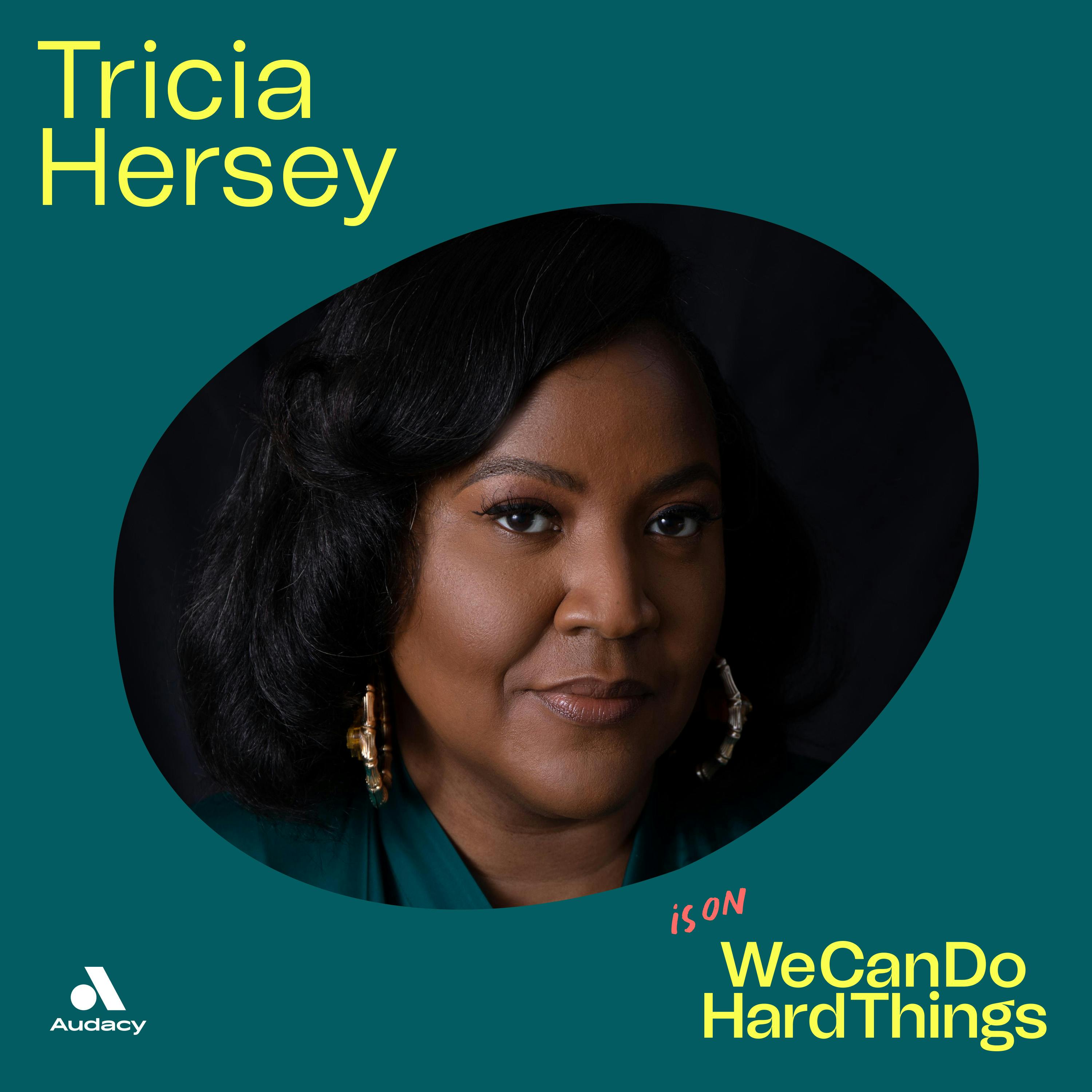
Yep. Let's go. Hi, Pod Squad. You know, podcasters are often saying this. A conversation will change your life. And that annoys me. But this time it is true. This conversation, if you open your mind and heart enough, could change your life. Okay. And the reason why is because the conversation you're about to hear is from Tricia Hersey. I'm going to read to you part of her new book, which will let you know whether or not this conversation is for you. Here we go. Are you exhausted? Are you waiting for permission to slow down? Are you waiting to save up enough money and time off from work to fly away to an expensive retreat in another land? Are you waiting for the powers that be to create policies that are drenched with care and room for you to get off the grind? Are you feeling guilt and shame when you rest? Are you hoping for deliverance from pushing through at all costs? Are you waiting for permission? I have felt like I am waiting to add more life to my life for so long. And I have felt like there's a part of me that is dormant because I am so busy adulting that I have forgotten how to human and that I live off of a list and that that crushes the magic in my life, that I might be making a living, but I have forgotten why life is worth living. The woman who you're about to hear from has taught me and so many millions of others how to live in this world where we are in the talons of so many things. Capitalism, racism, misogyny, all of it, all the isms, hustle culture too, and also find pockets of freedom that change our life. Today. She's going to talk about how to do that using something called trickster energy, which when you think of a trickster, it's just a being that lives in the same world you do and still finds ways to subvert, resist, revive, create magic. We are going to talk about how to create magic in our lives, and we're going to do that with thee. Tricia Hersey, who is a multidisciplinary artist, the theologian, escape artist, and Founder of the NAP Ministry, she is the global pioneer and originator of the Rest as resistance and rest as reparations frameworks. And she collaborates with communities all over the world to create sacred spaces where the liberatory, restorative, and disruptive power of rest can take hold. Trish's work is seated within the soils of black radical thought, sematics, afrofuturism, womanism, and liberation theology. She is a Chicago native who believes in daydreaming, porch sitting, and poetry. Her latest book, We Will the Art of Escape, which will live forever in my living room, is available now. After this conversation, please also go back and listen to our prior spellbinding conversation with Trisha, episode 139. It's called no More Grind. How to Finally Rest with Trisha Hersey. By the end of this episode, I want you to be able to channel one place in your day, in your life where you will find this magic of which Trisha speaks and I know is real. Welcome, Trisha Hersey.
- [07:02]
Trisha Hersey
Hi. Look. Oh, my. Look at the books behind you. Wait, turn around. It's so cute.
- [07:08]
Glennon Doyle
Of course.
- [07:10]
Abby Wambach
It's my escape manual Display.
- [07:14]
Trisha Hersey
A display item.
- [07:16]
Abby Wambach
So good, Trisha.
- [07:17]
Trisha Hersey
How are you guys doing?
- [07:19]
Abby Wambach
I'm delighted because you are a very important person to me. So this is an important hour for me, and I'm really grateful that you offered us one of your hours ago.
- [07:30]
Trisha Hersey
Yes.
- [07:31]
Abby Wambach
Thank you.
- [07:31]
Trisha Hersey
I'm so excited. Yeah. I was like, I want to talk to them again. Can we do that? So, yeah, I'm excited.
- [07:37]
Amanda Doyle
I was listening yesterday back to our original conversation we had.
- [07:42]
Trisha Hersey
Yeah.
- [07:43]
Amanda Doyle
And I was like, that was amazing. I mean, I was really impressed by us.
- [07:48]
Trisha Hersey
Hold on.
- [07:48]
Abby Wambach
Mostly you. Yeah.
- [07:50]
Trisha Hersey
No, it was a community. It was a great time. I remember it so much. And just think about that. That was what, 2022. It seems like a whole century has went by. Can you believe it? Like, I don't even understand, like, when I think about 2020 and then now, like, just the Pandemic era world, I'm very confused most times of what year it is and what's going on. I can't believe it. That's two years ago. And now here we are about to get into 2025. So.
- [08:16]
Abby Wambach
Yeah, but, Trisha, that's because you're escaping. You're not in the regular timeline anymore. No, no, I am not. No, you are in a different time.
- [08:24]
Amanda Doyle
You are in the time, but not of the time.
- [08:26]
Trisha Hersey
Yes. Which I want to talk about, which is so great and inspiring, but it's also quite challenging to live In a. A world like an outlier like that. That's the new thing that I've been deepening into. Like, the idea of kind of feeling like something's a little different about how I'm living and then not being able to connect with people around you, because every single person around me hasn't really begun the process of dismantling grind culture in their life. And so people are always like, why don't you get some mentors? Some people who are, like, doing things like you and some people who are doing business like you. So you can have. I have a mentor was telling me this. I'm like, I don't know anybody. Everybody I know is, like, all my friends who are, like, entrepreneurs and doing work that is really amazing. They're, like, working 80 hours a week. You know, they're like, just. They're in it, and they want to, like, start it. And I understand it to be, like, this lifelong process, but I've been really thinking about the idea of loneliness. You know, I've been thinking about the idea of this public health issue of loneliness and what it means to be connected, but not connected. And I've been thinking about actually volunteering at a senior citizen's home that I used to be a chaplain at. You know, I went to seminary to be a chaplain, and so I was an intern there for years. And so all my friends were, like, 80 and over, and they would, like, hang out with me all day. They had time to sit and play bingo, watch Lifetime movies, go on walks, go to the park, like the children, the animals, and then the ones who are retired.
- [09:57]
Abby Wambach
Ashley Blaine Featherson, Pod Squad. We're back with Trisha Hersey. And if you have not listened to our first episode with Trisha Hersey, you must go back and listen. If you haven't, it's okay. We will also have Trisha introduce herself again to you. If you are someone who doesn't know her yet, and if you are someone who doesn't know her or her work yet, I'm excited for you because to me, in my last couple years of trying to figure life out, Trisha and her work have been just in my mind and heart every single day.
- [10:41]
Trisha Hersey
Wow. Wow.
- [10:43]
Abby Wambach
Truly. Truly. And in this moment where we are all feeling caught, stuck, trapped in the talons of something or other, where we feel in some ways we have lost the life in our life and the humanity in our humanness and the magic and the freedom of life, you are helping us all learn to see why we feel stuck number one. And then how to escape. And not in a binary way. Right. In sort of this magical little tastes of freedom and liberation and joy and magic.
- [11:23]
Trisha Hersey
Yeah.
- [11:24]
Abby Wambach
So first, can you, Tricia, tell us, for somebody who doesn't know your work yet, how would you want them to hear who you are and what you do?
- [11:37]
Trisha Hersey
Thank you so much. Yeah, that's a good question. I think for someone who has never heard of my work, I would always wanna say I'm an artist. Like, I'm most proud of being an artist. I'm most proud of more than being a theologian, an activist, you know, a writer, an author. I am an artist. And I've been an artist since I was a child. And I think artists will save the world. I think artists are saving the world. I have a son who's 17 years old. When he was in my womb, I prayed over him every day. I want him to be an artist. I raised. I want to raise an artist. My first baby, I want to bring an artist to the world. I would read James Baldwin to him and play jazz music. And I was like, the world needs more artists. They need someone who thinks like the way an artist thinks. Someone who can have vision, who can push back. So I think that's who I am. My work is liberation work. I'm just. I'm an experimenter. I think my work is merely things that I'm curious about that I want to lean into, that I feel like have helped save my life. And I'm just really curious about how to disrupt. I'm a disruptor by birth, you know, I want to disrupt what? Anything. Any narrative that's speaking to us that says that we aren't enough, that says that we aren't divine, that says that everything we have is when we came into the earth and we're a miracle. And so anything that's against that, I'm trying to pull it down, you know. And so whatever way I can do that, you know, through writing, through the NAP ministry, through poetry, through raising an artist, a son, you know, all of these things. I want my work to uplift humanity, to be something that just makes you curious. I just want someone to cock their head a little and be like, hmm, I don't know about. You know, something's a little off about that, you know, like, just. I want to be on the numbers and be like, I raised my hand and said, hey, that's not right. You know, I want that to go down in history. That I actually raised my hand and was like, ah, nah. All of the stuff that you are saying about Us is not true. The patriarchy, ableism, capitalism, all that stuff. It just feels wrong to me. And I want to be in the archives to say Trisha said something about it, even though it may have not come down in her lifetime. She was like, uh, no, absolutely not. And so that's my work, I think, in a nutshell. Mm.
- [13:57]
Abby Wambach
When you start the NAP ministry, talk to us about your grandmother in her chair, your father. What made Trisha start going, huh? Wait, What? This doesn't feel right. Like, Trisha, my entire life has been in my face like, wait, this doesn't feel right. So what didn't feel right? And what did you feel like people needed to see and to escape?
- [14:25]
Trisha Hersey
Yeah, specifically. That's a good question about the NAP ministry, because the NAP ministry is one of my newest projects. Like, I've been an artist since I was, like, a working artist doing projects, creating things since I was probably, you know, 15, 16 years old in high school. And so this is the newest project. And so for the NAT ministry, what started to come to be, I think it's really a cocktail, a beautiful cocktail of everything I've ever done in my life, to being a poet, to being a writer, being raised by an actor. My dad was a community organizer and activist, union organizer, a preacher. Growing up in the Black Pentecostal Church, you know, having that spiritual foundation, My grandmother being a refugee from Jim Crow terrorism, me being her favorite grandchild. She told me I was her favorite. So I, like, sat up under this woman all the time. She was my boo. Like, that was me and her. And so being up under her and watching how she moved and navigated the world she was in, and then just always being encouraged to be an artist, always being encouraged to write. And so poetry would be my first influx into art. And then from there, it turned into plays and performance art and theater and all these things. But the NAP ministry came to be when I started to really be like, I can't do this. It's the pace. When I began seminary, when I began theology school in 2013, not even the first semester, first two weeks when we got those first syllabus, and I was trying to keep up, I was like, I don't know. I was sitting on the side of the. On the porch on these little steps near the psychology building, on the phone with my husband, crying like, I don't know what I've got myself into. I don't think I can do this. He's like, school literally started two weeks ago. I'm like, I know you don't see these syllabus, I don't know if I can keep up. Like there's 500 pages to read a week per class, so there's like thousands of pages. We have a six year old baby. How am I gonna get him? I can't afford it. What are we gonna do? And so I just stayed with it. And the more I stayed with it, the more I was like, this is an unsustainable pace. I won't be able to keep up with this. And then I think what made it so beautiful is what I was studying. I was studying cultural trauma. That was like, my main reason is like I was in the archives studying the idea of what trauma has done to us as a culture. So I was really looking at Jim Crow terrorism survivors, like interviewing people who had survived Jim Crow and studying plantation labor in the South. You know, reading the ideas of what was happening around our bodies, the semantics of slavery and what it did to our bodies and our minds. And then I was studying that. At the same time I was exhausted, I was having headaches, I was not feeling well. Mentally, I couldn't keep up. I was poor. I was super broke. Another thing about academia doesn't look at adult students. So you're like, literally, I used to work a job. Now I have to be in school full time because they didn't have online back in 2013. Now everything is online. I could have done it at home and I would have been perfect. But I had to be on campus from 8 in the morning until 6pm every day. So trying to juggle that and not working and I just started to be like, I can't keep up. When I was studying slave narratives and reading what was going on in their bodies and I just said, I wonder what it would feel like if they could arrest it. I thought to myself, man, if they even had a moment during those two 20 hours of working, what could it have felt like? Well, I'll try. So I just started experimenting on my own body. It was just me really being at the point of where I'm going to die. If I keep up with this pace, I'm physically not going to feel well. If I fail out, I'll just fail out. I really got to let the chips fall where they may moment. I hope no one gets there because it's not a pretty place. I hope that we can start the moment of like working before that. But if I fell out of school because I'm sleeping class, so be it. I trust myself. If I can't get this together, I Trust myself. I just had to deeply trust myself, my ancestors and what I could trickster and maneuver and be, you know, in and figure out and be very subversive. So it was an experiment. I thought. I never knew it would actually work. I didn't care if it failed. I was okay with that. I just knew I was going to lay down and so I just started napping everywhere. And I think I did that immediately. I felt better. I was like, oh, I can make it to class today. I feel like I can do it. I was just. It was like a day by day thing. And it just kept going. It kept going. Things started to make sense. Dreams started to happen. My brain started to rest. I was getting better grades. I started to have dreams about my grandmother coming to me. She's an ancestor now. She was laying me down to take naps with her while I was dreaming. It was just like these magical things. I was taking naps on the couch, waking up with the book on my chest, reading, waking up and going to take a test and getting A's on it. I was like, I didn't even finish reading that. But maybe osmosis work, I don't know.
- [19:19]
Abby Wambach
Like the brain, whatever's happening, brain level, I get that.
- [19:22]
Trisha Hersey
Scientific wise, I'm understanding neuroscience in so many ways that you need that moment. And I think it was just a let the chips fall where they may moment. And I just use everything that I had from all that past. And I just said, I'll experiment. And being an artist, I'm not afraid to do that. That's why I want to be an artist. Because artists aren't afraid to experiment. They aren't afraid to try things, they aren't afraid to see what could work. They actually get joy from that and they actually feel most activated when they're experimenting.
- [20:02]
Amanda Doyle
What does the future hold for business? If you ask nine experts, you're going to get 10 different answers. That's one more than the experts you asked. Because nobody knows. Bull market or bear market, rising or falling rates, inflation up or down, you be the judge. No one knows the answer. And there's no crystal ball until that happens. Over 40,000 businesses have future proof themselves with Netsuite by Oracle. It's the number one cloud erp with its unified business management suite, you gain a single source of truth that provides the visibility and control you need to make quick decisions. Imagine having real time insights and forecasting at your fingertips, allowing you to peer into the future with actionable data. When you're closing the books in days, not weeks, you can focus more on what's next instead of looking backward. Speaking of opportunity, don't miss out. Download the CFO's guide to AI and machine learning at netsuite.com hardthings. It's free and packed with valuable insights. That's netsuite.com hard things fall is here and let's be honest, Fall season is the best clothes season. We're talking about soft, huggable clothing and not huggable that it touches you. Huggable in that it feels like a blanket on top of you. We've got football games, cozy fires, warm sweaters from Quince. My most recent purchase from there is their 100% organic cotton cropped cardigan. I liked it so much I got in Camel first. Then I got an alabaster. How do they make it so inexpensive when it's such high quality? They partner directly with top factories and cut out the middleman so they can pass the savings on to us. Plus they only work with factories. They use safe, ethical and responsible manufacturing practices so you know you're getting the best for you without sacrificing your values. Get Cozy and Quinces high quality wardrobe essentials go to quince.comhard things for free shipping on your order and 365 day returns. That's Q U I N C E.com hard things to get free shipping and 365 day returns. Quince.com hard things I will never forget one of the most fun, easy, non stressful Thanksgivings we ever had. And it is a time that Glennon decided forget it with all of this wild, wild preparing and never enjoying. Let's go on up to Whole Foods and get the entire Thanksgiving dinner. And I mean everything. We didn't know that you could order ahead at the time so we just went through like the hot plate section and literally just filled up a bunch of these little bins and brought that home. Like sliced turkey pieces. Yeah, it would have been better to know everything about Whole Foods Market at that point because what you can actually do is order this ahead. They have brine turkeys that are perfect for frying, giving you that crispy golden goodness we all crave. They have organic spiral cut bone in ham, all of the sides, all of the delicious desserts. You are the perfect toast. And why are you the perfect toast? Because you're relaxed. Because Whole Foods did the food. Get your holiday party started at Whole Foods Market. Whether you need the whole feast, just the bird, or a couple of sides, Whole Foods Market has you covered just Remember to place your order online by November 26th.
- [23:29]
Abby Wambach
So, Pod Squad, let's review what just happened. Tricia went seeking God and found grind culture even in. Oh, my gosh, seminary, Right. She went in seeking peace and clarity and the beauty of God, and instead found grind culture even in. Oh, my God, it's terrible. And then decided, wait a minute. What if instead of trusting this outer structure that's telling me I have to keep hustling, what if instead of that, I go inside and I trust this yearning and longing inside of me that is saying, I need to rest. I need to rest because connecting that with ancestors. Tell us about what you used to see your grandmother do in her chair.
- [24:14]
Trisha Hersey
She would rest her eyes every single day. She worked two jobs. She was raising eight children and dozens and dozens and dozens of grandchildren. She was suffering from ptsd, you know, deeply poverty deep. And so she, in between jobs, with her uniform still on from the one job about to go to the next one, she would sit on her couch and close her eyes and rest her eyes for 30 minutes to an hour every day. It could be babies jumping off of tables, running in and out the house. She held space like a. A silent little force there on that couch and just closed her eyes. And she told me she was resting her eyes. She wasn't sleeping. I thought she was asleep. She said, every shut eye ain't sleep. I'm resting my eyes. I'm listening. She would say, I'm listening to God. Sometimes she would just say, I'm listening to the universe. But this listening, like, what was. What was the downloads that were happening, what was she hearing? What was helping her to be able to make space and make a way for herself in a world that really wanted to crush her and didn't love her? This black woman refugee from Mississippi, Jim Crow, Terra. She left to come to Chicago. And so I uplift the people during a great migration. The millions who migrated from the south and went to the north to the west as the ultimate tricksters, as the ultimate escape artist. My grandmother was a deep escape artist. Literally, you know, getting on a bus and traveling from Mississippi up to Chicago, knew one person or aunt who had went before, didn't have a job, didn't know anybody there, didn't want to leave Mississippi. She told me she was like, I love Mississippi. I had a farm there. That's my home. I loved it. But when you're watching lynchings happening, when you're under the terror of this Jim Crow, deep, deep racial terror, what is the choice? And so she decided to leave. Many stay. And I'm also grateful for the ones who decided to become escape artists and tricksters right in the South. But millions and millions left. Like, that's the largest mass escape of people in our history in the United States. And so my grandmother was one of those magicians, you know. And so she landed in Chicago and she rested and she gardened and she prayed and she made a way to raise these eight children and grandchildren and still reclaim her body as her own. Like, she held space for that. What a beautiful model, I think.
- [26:41]
Abby Wambach
And since grind culture, capitalism, racism, all of the isms are all made of lies, if we do not find that magical place, if we do not become escape artists, if we do not return to whatever we call it, God inner self inside, we will never hear the truth. Because if we stay outward all the time. Now, what is so beautiful about and especially in your new work, oh God Journal? This can be perceived as a binary. Like, what do you mean I don't have time to take a nap? What do you mean I can't not work. I either work or don't work. I either nap or don't nap. I either. And this is not Pod Squad. This is not what Trisha is talking about. Trisha is an effing genius. Trisha just spoke at the Nobel I don't know party. What the hell was that? Okay, Trisha knows this is not a binary. What Trisha is talking about is, while we are in this world, while we are stuck inside this world, how do we find the magic portal each day just enough to have magic in our lives. Okay, Trisha, the more I think about you and this trickster energy that people artists, I mean, of course you want artists to be your first thing, because in all of those other categories, theologian, those are all structural. Artist is the only one that's totally trickster, that's totally individual. I see it everywhere now, Trisha. I see the trickster energy.
- [28:26]
Trisha Hersey
Good.
- [28:27]
Abby Wambach
In so many different places, people.
- [28:31]
Trisha Hersey
Really?
- [28:32]
Glennon Doyle
Can you explain trickster energy?
- [28:34]
Trisha Hersey
Yeah. And tell me who you're seeing. Like, let's get into this.
- [28:38]
Amanda Doyle
Yes, but that's a good point, Trisha. For people who have not yet read, we will rest.
- [28:44]
Trisha Hersey
Yes.
- [28:44]
Amanda Doyle
Tell us what the trickster energy is, and I'm gonna set you up with two of your pages to introduce you. Introducing trickster. Okay.
- [28:53]
Trisha Hersey
Yeah.
- [28:54]
Amanda Doyle
I am the trickster. Assigned as the debt collector by my ancestors resting to reclaim the dream space stolen. Pay up. And I am the trickster, the one who squinted her eyes, cocked her head, recognized the lies, peeped the scam. Who's a trickster? What's a trickster? What are we escaping from?
- [29:20]
Trisha Hersey
The way I love to think about a trickster is they come out of this ancient tales and fables and myths. You see them in many cultures, African tricksters, and you see them in African American cultures. Like these have been myths and legends and ancient stories and tales have been told for thousands and thousands of years. This idea of this person who was resourceful, you know, I think about Anansi the spider and the African trickster, these African tales, like, I think about Brer Rabbit, you know, when you think about African American tales that you heard these stories as young, this resistance in the face of oppression, these trickster values that are like shapeshifters. They're like using their intelligence to disrupt, to be mischievous. They're like really outcasts. They're like messengers in a lot of ways. I think about the idea of a trickster being someone who saw what was going on, peeped it, but didn't immediately say that they held that inside to be able to start using it. You know, I think about Harriet Tubman on the Underground Railroad and all the people on the Underground Underground Railroad. I uplift my favorite trickster of all time in this book, Henry Box Brown. When this book came to be, my editor was like, you thinking about writing a new book? What we thinking about with the new book? What are you thinking? I was like, I don't know exactly what I'm thinking, but I have to talk about Henry Box Brown. A lot of people have never heard of this beautiful trickster, this man who mailed himself in a box. Every time I say it, I just can't even understand. Like, he mailed himself in a box for 27 hours. It mailed itself inside of a box to an abolitionist office in Philadelphia from Virginia. And then I found out later I've been really researching him, that he then went on once he came out of the box and was in Philadelphia to become a magician, a real life magician, a performance artist, a theater maker who toured all over Canada in these different Personas and created like real magic and like almost like a Houdini type magician figure. I was like, I don't know what the book gonna be about. Have to talk about this man. Like, this is the ultimate trickster to me. I think about these people who like, are questioning authority. They're finding whatever they can. They're using the inner power and humanness in them to say, wait a minute, there's something that I see that's Happening, they always are disrupting things that are toxic. It's always. They're pushing back against things. These values that they disapprove of, these values that everyone in the culture loves. They're saying that value is wrong, you know? And so for me, the trickster, the whole NAP ministry itself is a trickster experiment. From everything that I thought about when I thought about the nap ministry, people think the nap ministry just came. I just wanted to be online being cute and fun. Like, I literally planned out what I was gonna roll out when I thought about the nap ministry. The idea that I'm a nap bishop, that alone is just ridiculous. You know, I'm this black woman who named herself a bishop, this Bishop of Ras. You know, I used to have a costume where I would wear this bishop outfit and I would walk in on a bed. You know, this whole performance art idea of bringing people in. I wanted them to say, oh, there's this woman who's calling herself a bishop. She's talking about lay down. And as soon as I got them, as soon as they was like, this sounds cute, I'll come and get a pillow. And I just started going crazy about capitalism. Just call everybody an agent of white supremacy. You need to. You know, I just started just, like, laying in on slavery and just all of the dark things that no one wants to talk about. But I pulled them in. Well, here's some lavender oil spread. I was spraying lavender all over people at events, and I was putting them on pillows, and then they would wake up from the event like, oh, how do you feel? Like, oh, my gosh, I haven't had a nap like that, and I haven't napped in 10 years. I'm like, oh, yeah. Do you know why you haven't napped in 10 years? Capitalism. And I would just go on for 45 minutes about the history of capitalism and white supremacy and why we gotta get free. Like, I do this all the time. I get booked by lots of people from corporations who want me to come and talk about burnout. Would you come and talk about burnout? Yeah, of course.
- [33:27]
Amanda Doyle
So when did they hit that zoom?
- [33:30]
Abby Wambach
They are not wise.
- [33:31]
Trisha Hersey
Oh, the reason burnout exists because you're exploiting your work.
- [33:34]
Abby Wambach
Exactly.
- [33:35]
Trisha Hersey
There's no such thing as burnout. And they're like, that wasn't what you put in the outline. You know, so it's like, I want to use this as a way to bring people in and then educate for people to begin to open up. They have to feel what it feels like to have been Manipulated by a system. And they only do that by actually resting their bodies. And so the idea of putting somatics with education, idea of community rest events with, like, actual talk backs, nap talk where people can talk about what happened. The idea of looking at dreaming and looking at daydreaming and as also a form of resistance, bringing people in so that we can begin to open them up. And I think napping and resting is the ultimate way to do that. It's the ultimate way to get people to see for their own selves. I want people to see for their own self. I don't want people to have to think I'm their leader. See for your own self. Your body is telling, Your body knows. Your body's screaming that this is an assault that's happening on you. If you could just listen. The way is already there for you. And so that's what I wanted. I wanted them to think they had a leader and a bishop. But then the bishop is just like, I am not the leader of this. Your body is the leader.
- [34:43]
Abby Wambach
So let me give you some examples of trickster energy that I have witnessed since being steeped in your work.
- [34:51]
Trisha Hersey
Tell me.
- [34:52]
Abby Wambach
Well, we have a kid who's been on the path of all the fancy education and all the things.
- [34:58]
Trisha Hersey
Okay, okay.
- [34:59]
Abby Wambach
Was talking to him recently, and he said, I think I want to, for a long while after I graduate, work at a coffee shop.
- [35:08]
Trisha Hersey
Okay.
- [35:09]
Abby Wambach
And I said, okay, tell me more. And he said, I think I want to find a way where my body can do good service work, but my mind is still mine.
- [35:19]
Trisha Hersey
Mm. Ooh. He said that?
- [35:22]
Abby Wambach
He said, I don't want to rent my mind out. I don't want to rent my mind out to some company, to some whatever, to someone. I want to have my mind be mine. I want to go through my day doing service with my body, but I want in my mind to be able to be. He's a writer. To be creating, to be dreaming, to be imagining all day long. I want my mind to stay my own.
- [35:43]
Trisha Hersey
That's good.
- [35:44]
Abby Wambach
That's some juxtaposition energy. Recently, we had Gillian Anderson on the podcast. She talked about how she and her husband, at the end of a day, will get under the duvet, and it'll just be the two of them under there, and then she'll just start cackling with joy. And what is that? Under the duvet is the only place together where they're not in the talons of somebody who is bossing them around.
- [36:07]
Trisha Hersey
Just protective space.
- [36:08]
Abby Wambach
Yeah, yeah, yeah. I have a Friend who is what you would think of as famous and productive and bossed around a lot. And she has decided she will only take direction from the voice that speaks to her first thing in the morning, which she calls God. And she will only do what that voice tells her during the day and nothing else, no matter who else tells her what's important.
- [36:32]
Trisha Hersey
Love it. That's radical. That's so radical because, oh, I love it.
- [36:38]
Abby Wambach
Mine are a little bit simpler, which is Trisha.
- [36:42]
Trisha Hersey
I love a simple.
- [36:43]
Abby Wambach
I go to my yoga class to just sit and breathe and everyone starts doing hard things and I feel pressured to do the hard things they're doing.
- [36:52]
Trisha Hersey
Right. Right.
- [36:53]
Abby Wambach
But because I don't want to look stupid. But then I remember I am there as a trickster for my magic and I do not do what they tell me. I just sit there and do easy things.
- [37:04]
Trisha Hersey
You lay on that mat and do your stan child's pose for the whole time.
- [37:07]
Abby Wambach
Yes, yes, exactly. I feel like that's trickster energy, right?
- [37:12]
Trisha Hersey
It is. It's really the energy that's associated with just doing what you feel is necessary for your survival and success. Not listening to what the values of the dominant culture, what the community is saying to you. Like the dominant culture is saying, keep going, don't listen to your body, Push, burn the midnight oil. If you burn out, that's fine. And for us to say no, I'm going to say no to that. That is deep, deep energy of escape. It's like you are an escape artist. You're an artist, a person who's beginning to understand. You can create your path for escape. You can do that on your own, in your own little small ways. Like, I love indigenous and cultures always talk about these ideas of temporary spaces of joy and freedom. We understand them to be temporary because we aren't foolish. We see what we're in. We see that we're living in empire, you know, that this is all around us. We don't have to wait for Empire to begin to change its mind. People always ask me, I was just on the panel, they were like, what do we do while capitalism is still blazing around us? Do we just have to wait for capitalism to fall before we can get our rest? I said, wait. What? Wait for what? Like, I'm not waiting for nothing. Capitalism may never fall in my lifetime, but that doesn't mean I'm not now in the moment with the life that I have right now, finding ways to disrupt it. My work is just simply a disruption. I'm not attempting in any way to Try to, like, think that this is the end all, be all. It is simply a disruption. And a disruption is so powerful. That's what a trickster energy is. It's an energy of disruption. It's my ancestors slowing down working when they were in those cotton fields. Like, there's these work slowdowns they would do where they would just tell other people secretly, today, we're just going to all slow down working. We ain't going to go as fast, you know, meet me over here behind this barn, and we're gonna, you know, come up with a way. We're gonna, like, go see if we can escape the underground railroad. The fact that it's an underground railroad. Like, it's so brilliant to me that these different posts that they were finding Harriet Tubman reading the stars, reading astronomy, to be able to know which way was the right way. Like, the COVID of the book is actually the Big Dipper in the North Star. It's all about, follow the stars, follow the light. I dedicate the book to my son, to Harriet Tubman, to other tricksters who see themselves as more powerful than the systems. If you just follow the light, whatever that light may be, you know, the inside light in your heart. My ancestors following the literal lights of these stars to know that this was way north. This is how we get to Philadelphia. This is how we get to Canada. This is how we get the hell up out of here, you know, this is how we get our freedom. How do we follow the light in ourselves when it's been so dimmed by the world around us telling us these lies, telling us we aren't enough? I think the idea of enoughness is, like, just key to this work. Many people say, no one's ever told me that I'm enough, like, in their entire lives. Adults, like, I always think that I have to do more, be better, keep pushing. And we're killing ourselves with this unattainable idea of enoughness.
- [40:20]
Abby Wambach
Okay, y'all, the holidays are coming. How do we, in fact, make the Yuletide gay? How do we, in fact, make the Christmas merry? I think we do it by having limited family togetherness.
- [40:36]
Trisha Hersey
Okay.
- [40:37]
Glennon Doyle
Family togetherness, but also apartness.
- [40:39]
Trisha Hersey
Right?
- [40:39]
Abby Wambach
Both sister. How do we do that? How do we love our families with, as our friend Prentice would say, the distance between which we can love them and ourselves at the same time? I think it's Airbnb.
- [40:49]
Amanda Doyle
I think it's Airbnb, and they should just pay Prentice to use that as their tagline. So, y'all, we are getting an Airbnb, which we're so excited about during this holiday trip to California with my family. It's so fun, really, because it isn't just functional. It also is like a mini vacation within our family visit. So we got this precious, precious, tiny little place that's right on the beach. Alice is so excited because she can run out, run in without even telling us, which is her plan. So next time you are planning a getaway, try Airbnb. Trust me, it's an experience you won't regret. Missouri is so awesome because it has fine jewelry, like, really nice stuff, and the quality is consistently excellent. What I love about it is the range. The range is wild all the way up to, like, diamond tennis necklaces for many thousands of dollars. So there is something in between for everyone who you're looking to buy gifts for or for yourself. What I'm very into at the moment is Mejori's Duet rings and huggy hoop earrings. It's called Duet because they have silver and gold both in them. And it's so fun because I can wear my pieces that have a lot of sentimental value to me, like my gold necklace and my silver bracelet. And the duet brings it all together like they're having a lovely little conversation and no one is left out. So start stacking your own favorites. Head over to Missouri.com or visit a store near you.
- [42:26]
Glennon Doyle
I just wanted to ask a question, because I think a lot of folks who are listening to this right now are probably wondering the same thing I am.
- [42:33]
Trisha Hersey
Tell me.
- [42:34]
Glennon Doyle
I have too much hustle in me, for sure. And I am definitely trying to figure out how to kind of escaped the hustle culture that I have labeled as my survival. Yes, I have labeled it as my survival. And Glenn and Tricia, you guys were talking a little bit earlier about trusting yourself. And I think one of the issues I'm feeling right now is that I think that there's safety in letting somebody else decide in the hustle culture. So I guess my question is, are there any kind of steps that I can take as like, a beginner of how to trust myself in the beginning phases of trying to get outside of hustle culture and capitalism?
- [43:17]
Trisha Hersey
Yes. When I think about trusting yourself, like, this is something I've been trying to teach my son, you know, from a very young age. I keep saying to him this idea of intuition. He's like, mommy, what's intuition? You know, what does that mean? And I was like, it just means this idea of what's the kind of the first things that you hear Just listening and being able to say, even if you don't listen to it, but you just acknowledge that you. I heard it, and I'm gonna go the other way. You know, I heard that I should. I need to calm. I need to slow it down. I need to stop her.
- [43:47]
Glennon Doyle
I heard it, okay?
- [43:48]
Trisha Hersey
You don't have to immediately follow it, but just. I think the more that you could begin to say to it, I hear you, okay? And right now, I'm just not ready to kind of follow what you're saying, but I do hear you. I think that allows for it to begin to almost strengthen itself. You know, it needs to grow a little bit more. It's like, I hear you. I'm feeding you a little bit of water. I hear you. But I'm still finna go and do what I want do. I'm going to still. I tell it to my songs. I said, you can listen and it's going to say something. You can ignore it, and that's fine. But I want you to acknowledge it. It wants to be acknowledged. It wants to be like, yeah, I think the intuition to me is the Holy Spirit, this guide in your life that's trying to guide you and tell you right or wrong. But I'm at a point now where if I don't listen to it, I just expect something to just fall apart, you know, it just happened to me. I just was like, yeah. I said everything kept telling me, the girl, don't do that. I was like, nah, I want to do this because I feel like I want to do it. And then it just automatically just started. Every day, it was like another block fail. I would get a call like, oh, that fell apart. Oh, it just kept. It was literally three, four times in a row. It kept falling apart. And I finally acknowledged it was like it fell apart. And things do sometimes fall apart, but I acknowledge the falling apartness of it and saw it as a lesson. I think some people hear their intuition, don't acknowledge. They just say they don't even think it exists. They don't even feel like it's there. They just keep going on their own understanding of things, on their own hustle, on their own survival methods that they've learned because of whatever in their life, the trauma, how they were raised, their lifestyle, their childhood, whatever it was that had you to be like, I have to hustle to survive. Which is real talk. It's real. Like, I understand the idea. It's very scary to not listen to that because for so many, it is a true thing. I Tell that to people all the time. I'm not out here telling you, thinking that poverty isn't a real thing. And straight up, being out here without anything is not real. In a culture that we live in, it almost pushes you to the point where you have to feel like you have to keep going. If I stop, I'll be homeless, I won't have money, I'll die. No one else will support me. The community is not here. Like, we're in a place right now. We are so individualized and trained that way that we believe that and it's true. It could possibly be true, but I just want people to acknowledge that the intuition is even saying anything to you. Just to be like, I hear you. I want to come back and ask, is that helpful to you?
- [46:03]
Glennon Doyle
Yeah, I do take a nap every day. So I've participated a lot in this no show.
- [46:07]
Trisha Hersey
Nice.
- [46:08]
Glennon Doyle
However, I am starting to think about what a quote unquote, retirement life would look like.
- [46:15]
Trisha Hersey
How you're gonna finish out. Yeah.
- [46:17]
Glennon Doyle
And it's hard to extract myself from income earning because it's just, like, such a lifeline, right, for me and for my family. And I'm having quite a bit of trouble with the idea of not earning income any longer. That's something that brings me quite a bit of stress. And yet there's something that's also still calling me to it. And I can't figure out which to listen to. It's like, yes, this for sure. And also I'm scared for sure.
- [46:48]
Trisha Hersey
I understand that. Yeah. We opened up talking about the binary. I talk about that in the first book. I said, people, when I talk to them about this work, they was like, that sounds so sweet, Trisha. And this is what they'll say to me. They was like, that sound good, girl, but I gotta work to eat. I'm like, oh, my God. I did not say don't work. So I want you to eat. I want you to, like, really have a good life. That's not what I'm saying. But because we've been trained on a binary, it doesn't have to be that way. Like, I want to open people up to the idea of flexibility and this nuanced thinking that 10 things can be true at the same time, you know, or infinite things can be true at the same. And there's no tension around it. There's no controversy. And it takes a while. It takes deep healing work to really center into that. I'm not. Not there. Because I still catch myself on the binary a lot of times because We've been trained that way. This is the curriculum we got from the time we were born. From the time you were a baby. Your parents, whatever they were on, they taught this, the schools, religion, everything in your life got you to now to where you're like, I could never think about, you know, thinking in a different way. But, yeah, it isn't the idea of either or. It's like all those things. And I want people to be scared. I want people to say, I'm frightened. I was terrified of all of this. I was terrified of the idea of people thinking like, well, how am I gonna take a nap, girl? When I gotta. Like, I'm in poverty. I come from a legacy of poverty. I'm the first person in my entire family to go to college. So I feel like it's even a richer for me as a black woman coming from a legacy of enslavement. My, you know, sharecroppers, I had answers who were enslaved on plantations to be telling people to go lay down. Like, I'm gonna lay down. They're like, who do you think you are? You know, like, lay down. Like your whole entire family built the whole legacy of this world. And so I understand the scariness. And I think, to me, it's the idea of pushing back by deepening to our intuition, by deepening to the light, just like acknowledging and letting it grow and letting us be in community with each other in that. And I think that this work is opening up our ideas around what it means to slow down and what that looks like in everyone's life. It's going to be different for everyone.
- [48:53]
Abby Wambach
It's different, but it's the same. What I think is so interesting about your work is that there's some kind of exchange like this where, like what Abby just said, like, what if I can't do that? And it becomes very intellectualized and we can get into that spinning, we will never win there. Because you're right in that brain space, which is all your conditioning. You can't beat capitalism. You can't ever have enough. You're right. You can't never. Yeah, but there's another place to go is what you're saying. Your brain will never convince you that you can stop, but there's another place you can go. And it reminds me very much of in spiritual traditions when Jesus just keeps saying, okay, just taste and see. Yes, I'm not arguing anymore.
- [49:36]
Trisha Hersey
Yeah, just. You gotta see. Yeah. Mm.
- [49:38]
Abby Wambach
Just taste and see. And then I won't have to argue with you anymore. Because if you taste this, it will change who you are. And that's why Tricia invites us to this thing, take a nap, do the thing, and then actually doesn't have to argue with us anymore. Because my experiences, when I find these third magical places, which I am more and more committed to, as Abby knows, every single day.
- [50:04]
Trisha Hersey
Yes.
- [50:05]
Abby Wambach
Even when it means I say no to a million other things that any sane person would be saying yes to or doing. There is some magic there that changes who we are cellularly. It makes me less useful to capitalism. Yes, but more likely to save the world, more likely to feel deeply connected to other human beings. The world won't allow us to experience that connectedness because it needs us to be okay with killing each other, to be okay with not caring about each other, to be okay with getting ours and not in this magical place. There is something that happens that connects me so deeply to that I can no longer be violently careless. Yeah, there is something that's happening where she is inviting us to. And when we say there is a binary, I can't do it. Whenever I tell myself that, I think of the story you tell about Harriet Tubman and I say, glennon Doyle.
- [51:06]
Amanda Doyle
Yes, exactly.
- [51:07]
Abby Wambach
I need you to decide if what you are saying, Glennon Doyle, is that your job is more important and stressful than Harriet Tubman's.
- [51:15]
Trisha Hersey
Right.
- [51:17]
Amanda Doyle
While the bloodhounds are running after her, you can't rest today on a random Tuesday because you had too many emails. But Harriet Tubman sat down and rested.
- [51:26]
Trisha Hersey
And prayed while the blood hen swept her. Yeah, it's like. It's like when you deepen into the history, it's almost like the choice has to be made. Like, you gotta start making some real, like my son would say, some real gangster decisions. Like, you gotta really start deepening to the idea, what am I gonna choose? Who do I wann? What do I want my heart and soul to feel like? What do I want? Like. And I love what you said about capitalism. Well, you'll never be able to get out of your mind thinking about that. Like, don't stay there. People are always here. We gotta get into our heart, into our body. That's why this work could have never been possible without the collective napping experiences that is the work. The work isn't the IG pages, not the books. The work is me rolling out the yoga mats, the blankets, the pillows. When I was tired and didn't have $25, I was just rolling them out, borrowing yoga mats from people around me and my mom and pillows and just inviting people to come rest with me in Atlanta in these little local free spaces. And people were coming. Sometimes it would be one person, sometimes it would be 10. And they would just lay down, they would all go to sleep, and they will all wake up in tears. I've never done an event, I've done thousands. Someone didn't wake up in tears bawling, because that is the somatic work, that is the spiritual work. You got to taste and see this. You have to lay down with us waking up having dreams, people having the same dreams. Like this portal that rest provides, it is a literal portal. So the more we go there, the more we're going to wake up, the more we can allow ourselves that freedom, this moment of freedom dream. And I love daydreaming. I love slowing down in any way possible that allows that intuition, that voice to come together. And so the work really is these collective rest events. And I want people, even if they can't ever come to an event, that they do these in their homes, that they have home nap events. You know, people are replicating this work.
- [53:13]
Amanda Doyle
All over the world.
- [53:13]
Trisha Hersey
You know, I give videos and links from people all over who are doing rest events out at parks, doing it at home, yoga studios. Like, it's. They're happening all over the world. And so when people wake up, they're like, I haven't taken a nap ever in my life. The last time I took a nap was when I was in preschool. When they have preschool nap time, you know, no one has had a collective moment where they can rest and feel care with each other. This moment of care, this deep community care of someone laying next to you, breathing and sleeping, that is the work. I'll never stop doing that. I'm going on my book tour coming up in November for my new book, We Will Rest. And I'm going to be doing collective daydreaming activations with live musicians and sound healers who are going to be coming with music and we're going to be together. People need to feel what is happening. Because when you come from there, when you feel that, that's the radical work, that's the trickster work to bring people together in a world that is so divided, to lay their eyes and close themselves and feel a moment of deep care. You don't need to go to a retreat center. You don't need to pay thousands of dollars. I'm anti all of the retreats. I don't like. I see it so much online. I want to say right now, do not stop it. This is not to make capitalism and consumerism and tourism industry more rich. Close your eyes right now in this chair, like my grandmother who was sitting on her couch. Lay down in your bed. Go to a neighbor's house, go in the backyard and put some camping tents out. Invite people over. Like, bring people together to experience what it feels like to be cared for. To experience what it feels like to be a trickster. To lay your eyes and close your eyes on capitalism's clock is the ultimate escape. Like, to say, you know what? I could be doing an email right now, but instead I'm napping with my friend right here. We're going to intentionally rest together. That, to me, is the ultimate radical form of protest. And I want people to see it just as being that simple and that powerful, that we don't need all this extra. You know, when I always say I'm nervous about something, I feel afraid of this. Because you care. You care about your life. You care about your legacy. You care about, you know, your living and who you can share your life with. Of course you care. But capitalism doesn't care about you at all. It hates your guts. White supremacy hates you. Patriarchy hates you. It doesn't care about you. So who are you going to care more for? Who gets to the deepness of that more? I feel like I want to give a little bit more to myself and my community than to the system. And so if I can shift that a little bit, even if it could just happen a little, I don't need it to be the full, understand. I need it just to shift. I need people to cock their heads. It's a veil lifted. And that's enough for me. That really is. If one person cocked that head and said, you know what? I'm going to rest my eyes. I know I'm better than what the sisters have told me. I know that I don't belong to them. I know that my body belongs to me. That if they can do that, that's enough for me. That's all I need, really. That's all. I need one trickster to join me. I need one escape artist with me. And that's enough. It's one is enough.
- [56:08]
Abby Wambach
And the third place, the napping place, the trickster energy, for me, probably because of my nervous system. It's not a nap, actually, and maybe it will be eventually. But for me, it's when I stop and turn all the lights out and breathe consciously. I just breathe consciously, pay attention to my breath. I feel like no one I've ever explained this to understands what I'M trying to say, but I know that you will, is that I paint now. And what is true about my painting, and I don't mean this in a self deprecating way, I'm just saying it's not good. It's not like anything that anyone will ever be like, wow, you should take that widely. And what is important about that to me is that is one of the reasons why it feels safe to me. Because so many things about artistry can be quickly hijacked. By Captain there's this story in this book I Love by Jenny O'Dell which reminds me of a different version of your work. But there's this tree that was in Oakland and when the foresters came and wiped out all the trees in the area. And it was so tragic. But there was this one tree that was left because it was so crooked that it couldn't be used as a material to build something else. And so the inherent flawless of the tree and its uselessness to the loggers is what made it survive, saved it.
- [57:34]
Trisha Hersey
Yeah.
- [57:34]
Abby Wambach
And my painting is useless to the loggers. And that's what makes it feel safe to me. No one is ever gonna take it. It is just for me. And so that is trickster energy become useless.
- [57:47]
Trisha Hersey
Yes. People need to know that you don't have to be in service to a system like this, a system that hates you. You can begin the trickster energy to begin to deepen yourself when you're almost away from where you're so useless that you're not even of service to it. I don't want to be in service to it. I'm a part of it because I'm in it. I live here. I have to eat, I have to pay bills. But I want to find other opportunities and spiritual ways that I can disconnect from that energy. And you do that by being in community. Capitalism doesn't want us to like, care for each other. That's why my dad, as a union organizer, was doing a lot of his work secretly. You know, he was in the house doing secret union meetings. My mother would be in the back cooking for everybody who was there. They were secretly working on how they were gonna, like, go up against these huge corporations that were treating their employers like nothing. And so I understood the idea of underground and secret. My dad would be like, we can't tell nobody about this. The brothers are coming over tonight. He was working with the International Brotherhood of Electrical Workers. So electricians in Chicago. He was one of the union captains there. And they will always be thinking of ways to go underground and trick and how can we come from different ways? And my mother back there feeding and I'm in the room listening, like, what are they up to? You know, making their signs and who was going to help this person if they lost their job? Who will be able to help pay their rent? You know, like, they actually work together around this idea. We might lose our jobs, but we're going to. Like, no one is going to go across that line because we union strong and employees matter. And so this idea of deep community, of seeing what other people need and how we can help each other, we won't make it without that. Doing this alone and just trying to, like, figure this out alone is just more of the same. Like, it has to be done in deep community. If I fall, there needs to be a soft space available to me. And I want my work to really feel like a soft space to land that you feel like you're not being unreasonable. You know, that's why I really wrote the new book. I wrote this new book so that people don't feel like they're being unreasonable. I want you to be like, you're not being unreasonable, that you're exhausted and you're tired, that you want to take a nap. That's not an unreasonable thing. It's okay that you feel that way. So, yeah.
- [59:55]
Abby Wambach
It's also. I hate when we have to end with Trisha.
- [59:58]
Glennon Doyle
Yeah.
- [59:59]
Abby Wambach
The new book also has the trickster energy on every page.
- [60:03]
Amanda Doyle
Yes.
- [60:04]
Abby Wambach
Like, it feels like the medium of it is the thing.
- [60:08]
Trisha Hersey
It is.
- [60:09]
Abby Wambach
And so it unlocks it in a way that regular prosecutor can't.
- [60:14]
Trisha Hersey
Can I do.
- [60:15]
Abby Wambach
Right. And I appreciate that so much.
- [60:17]
Trisha Hersey
The art, all of the drawings.
- [60:19]
Abby Wambach
Yeah.
- [60:20]
Trisha Hersey
Every page feels like it. I love this drawing of this woman in flight.
- [60:24]
Amanda Doyle
Oh, God.
- [60:26]
Abby Wambach
Well, you know what? That drawing is your work and it's resurrection. Your work is, to me, is all about resurrection. It's about. Yes, we are in this world where we are told we have to earn a living. Think about. But there is a part of us that we get to resurrect that is our humanity. That is magic. And we can visit it each day.
- [60:47]
Trisha Hersey
Yes.
- [60:48]
Abby Wambach
Mostly when we find any minute where we are useless.
- [60:52]
Glennon Doyle
Yeah.
- [60:52]
Trisha Hersey
Yes.
- [60:53]
Abby Wambach
Find a time to be useless.
- [60:55]
Trisha Hersey
And I'm really wanting to get people more radicalized and more deep into the idea that no one's going to do this for you, that you don't have to wait, that you can close your damn eyes right now, that you can, like, you know, be in community with other people and that the Idea of escape really is a spiritual practice. I want people to lean into the idea of the spirit, like, working within us. We can't do this by ourselves by just trying to figure it out with our little exhausted, tired brains. You know, our brains are so fragile. I just came from a science conference two weeks ago, and I was blown away by the neuroscience of what's happening to our brain when we don't sleep. We're literally damaging our brains to the point we can't even think straight because of lack of chronic sleep restriction, which is literally not even a long time. It's five days without more than five hours of sleep a day. So if you sleep less than five hours every day for a total of five days in a row, your brain is already showing signs of deep damage. So much is happening to our brains. We don't rest. Like, the sleep science stuff really blew me away. And so when I heard that, I was like, wow, no wonder we're like this. No wonder we're so exhausted. And mental health crisis is so rich. And we're so dis. Disconnected from our bodies. Because to not sleep really puts us in a very precarious situation biologically in so many ways, but spiritually, I think it's even worse.
- [62:17]
Abby Wambach
Okay, and next time. Next time, I'm going to beg you to come back. And then I want to discuss what happens next. Because when you employ a lot of trickster energy into your life and you start to see that everything is just the fucking Hunger Games and you are in the arena.
- [62:38]
Trisha Hersey
Yeah.
- [62:38]
Abby Wambach
And then you start to change a little bit. And then you start to feel very lonely because you don't have anyone to play with you because everyone's still in the Hunger Games.
- [62:47]
Trisha Hersey
That's what I'm thinking about for my next book. Really deep into the idea of relationships. Yes. With this platonic family, romantic community. Like, what is left behind when we have a Hunger Games mentality around all the exhausted ones.
- [63:04]
Abby Wambach
Yeah. How do the tricksters do when they're together? Like, what does a community of tricksters look like? Because what you said before we started recording that, I'm like, wow. You said, you know, I don't know. I've been thinking about just going to volunteer at the local. I think what you said, the citizens home.
- [63:20]
Trisha Hersey
Yeah, the retirement center.
- [63:22]
Abby Wambach
And I told Abby recently, the only thing I can think of that makes sense now is I think I'm just going to call the local elementary school and ask them if they need help with the kids, like, reading. That's what I used to do with my life. That is literally the only thing that makes sense to me right now.
- [63:39]
Trisha Hersey
I know. They're the ones I wanna be around, too. The children and the elders and the animals. Those are the three people I think are gonna help lead the new movement that we're trying to create in our own exhausted brains. So, yeah, I'm really excited about this new book. I'm so proud of it.
- [63:55]
Amanda Doyle
You should be proud. It's gorgeous.
- [63:57]
Trisha Hersey
Thank you.
- [63:58]
Amanda Doyle
If you're. You're being useful, you're being used. Yes. That's what's happening.
- [64:04]
Glennon Doyle
Damn it.
- [64:05]
Amanda Doyle
So if you feel uncomfortable, feeling useless, at least you can be like, at.
- [64:09]
Abby Wambach
Least I'm not being used.
- [64:11]
Trisha Hersey
Please.
- [64:11]
Abby Wambach
Yes. Okay, here's the book. Rest is Resistance. This is the first one. To me, this is like the why, why? And then we will rest. The Art of escape is the how. It's like, here's theologian Trisha. Here's mystic Trisha. Okay.
- [64:24]
Trisha Hersey
Yes, Yes, I love that. That's a great. I love that. You should do book reviews.
- [64:29]
Abby Wambach
Like, this is her and Podsquad. I think just go get these books and then just talk to us about where you find your trickster energy. I want to know. I want more trickster energy in my life. I want more. I want to find more ways to go to this third place. I want to know how you do it because I want more of it in my life.
- [64:47]
Trisha Hersey
So.
- [64:48]
Abby Wambach
And, Trisha, thanks for being our bishop. You're.
- [64:50]
Trisha Hersey
I'm your bishop. Bishop. Yeah. I'm so excited. I can't wait. You guys are in LA, right?
- [64:56]
Abby Wambach
Yes, we're in LA.
- [64:57]
Trisha Hersey
Okay. I'm gonna be coming to LA in 2025. I'm gonna email you guys.
- [65:00]
Abby Wambach
Please do.
- [65:00]
Trisha Hersey
I want to see you. We got to get some lunch or something.
- [65:02]
Glennon Doyle
I want to come take a nap.
- [65:04]
Trisha Hersey
Come take a nap. Yes. I'll host a little nap thing for you. But I really. I'm going to be there already looking at my calendars. I'll be out there.
- [65:11]
Abby Wambach
Send us those dates. I would so love to meet you.
- [65:13]
Trisha Hersey
I would love to meet you. I love speaking with you guys. Thank you so much for your time. Thank you for having me on. I'm just so grateful. Out of all the things I was like, I have to do them again as I'm getting on this publicity run. You know how it is.
- [65:25]
Abby Wambach
Yes, we do know how it is. Okay, Pod Squad, I'm gonna end with this. When you send Trisha an email, you will get an auto reply that says, basically it says, I'll get back to you whenever I'm gonna get back to you. But then it says, trust the divine timing of our connection.
- [65:45]
Trisha Hersey
Yes, it does.
- [65:48]
Abby Wambach
Email trickster energy.
- [65:49]
Trisha Hersey
It does.
- [65:50]
Amanda Doyle
I wish I had that line back when I was dating terrible men.
- [65:53]
Abby Wambach
Yes.
- [65:54]
Amanda Doyle
Trust the divine timing of us never seeing each other again.
- [65:57]
Trisha Hersey
Yes. Let's trust it. Let's please trust anything. Let's trust that.
- [66:02]
Abby Wambach
Okay, Pod Squad, we love you. Go get all of Trish's work. Go forth and be tricksters. We love you.
- [66:07]
Glennon Doyle
Thank you.
- [66:08]
Trisha Hersey
We will rest, guys. Bye Bye.
- [66:16]
Abby Wambach
If this podcast means something to you, it would mean so much to us if you'd be willing to take 30 seconds seconds to do these three things. First, can you please follow or subscribe to We Can Do Hard Things? Following the POD helps you because you'll never miss an episode, and it helps us because you'll never miss an episode. To do this, just go to the We Can Do Hard Things show page on Apple Podcasts, Spotify, Odyssey, or wherever you listen to podcasts and then just tap the plus sign in the upper right hand corner or click on Follow. This is the most important thing for the pod. While you're there, if you'd be willing to give us a five star rating and review and share an episode you loved with a friend, we would be so grateful. We appreciate you very much. We Can Do Hard Things is created and hosted by Glennon Doyle, Abby Wambach and Amanda Doyle in partnership with Odyssey. Our executive producer is Jenna Wise Berman and the show is produced by Lauren Legrasso, El Alison Schott, Dena Kleiner, and Bill Schultz.