← We Can Do Hard Things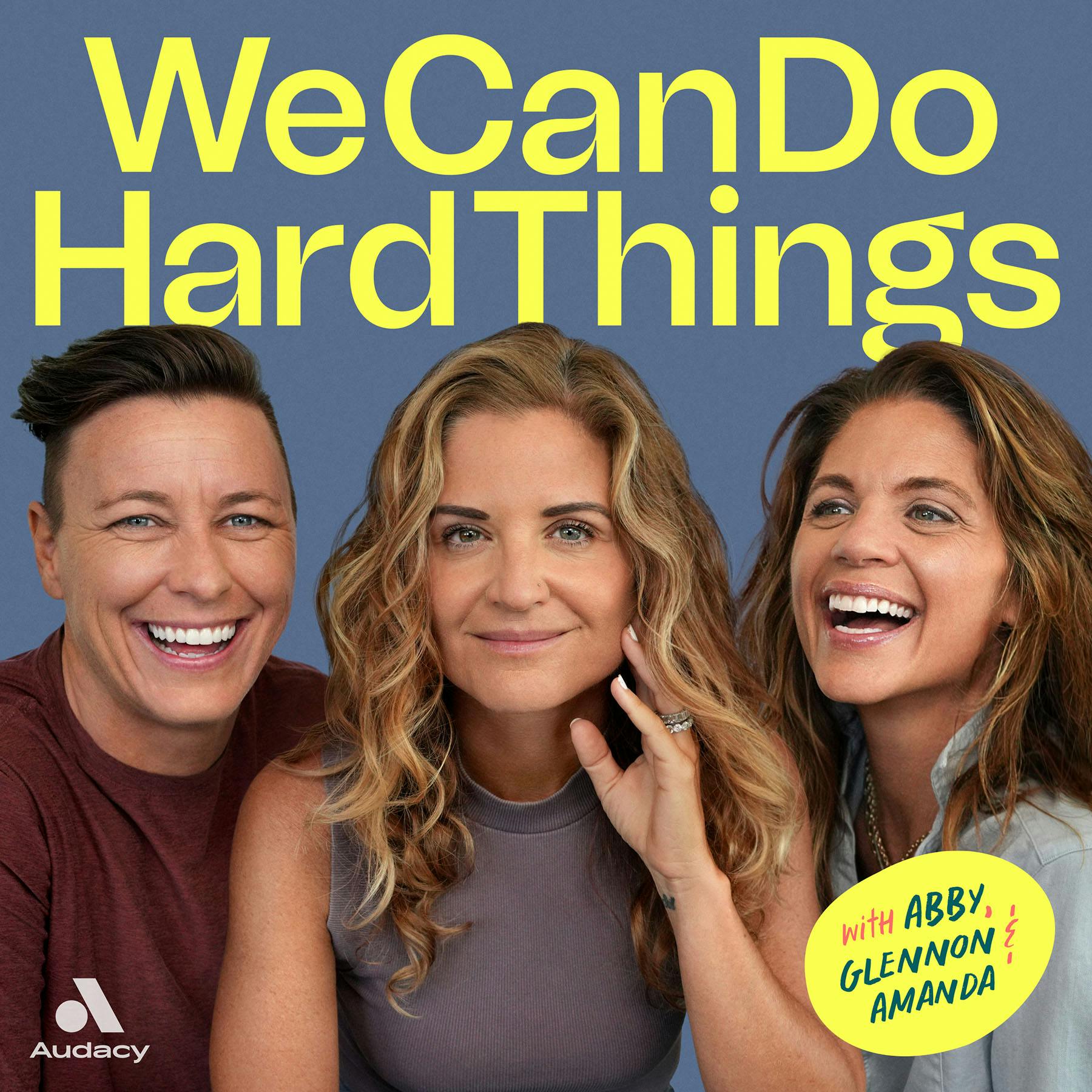
Loading summary
Transcript148 lines
- [00:00]
Glennon Doyle
I don't know about y'all but after the holiday rush I can get a little glum. That's when I love treating myself to something special. But I do not break the bank. And that's where Quince comes in. May I please have the honor of introducing you to the Comfort Stretch trench coat at Quince. The average retail on this beauty is $228, but Quince's version with five star average reviews is under 100 bucks. What I love about Quince is how they make everyday luxuries so affordable. All their pieces are priced 50 to 80% less than other high end brands because they partner directly with top factories, cutting out the middleman. Plus, Quince only works with factories that prioritize ethical, responsible manufacturing. Treat yourself this winter without the luxury price tag. Go to quince.comhardthings for 365 day returns plus free shipping on your order. That's Q-U I N C E.com hardthings to get free shipping and 365 day returns. Quints.com hard things this is a message from sponsor Intuit. TurboTax Taxes was waiting and wondering and worrying if you were going to get any money back. Now Taxes is matching with the TurboTax expert who can do your taxes today. Who gives your taxes their undivided attention as they work on your return while you get real time updates on their progress and who will find you every deduction possible and file every form, every investment, every everything with a hundred percent accuracy all so you can get the most money back guaranteed. Now this is Taxes get an Expert now on TurboTax.com only available with TurboTax Live full service real time updates only in iOS mobile app. See guaranteed details@turbotax.com guarantees.
- [02:16]
Abby Wambach
Hey y'all. Today's episode is my favorite episode we've ever done. Probably the conversation that has meant the most to me maybe on or off the pod in a long time. It's also deep and funny and will help you see the world in your life in a different way, you won't end this episode without being a new person. It's also got some stuff in it about death, about illness, about suicide, ideation. So if hearing people talk honestly about those things hurts, you don't listen. And if it helps you listen, today's conversation is with Andrea Gibson. Andrea Gibson is one of the most celebrated and influential spoken word artists of our time. Best known for their live performances, Andrea has changed the landscape of what it means to attend a poetry show. Andrea's poems center around LGBTQ issues, spirituality, feminism, mental health, and the dismantling of oppressive social systems. Andrea is the author of seven books, most recently you Better Be Lightning. So, Pod Squad, welcome to We can do hard things. I need to tell you how this conversation that you're about to hear began. Maybe a couple months ago, I was struggling in my recovery, just having a moment that I was just stuck and nothing was getting better. And I was talking to my doctor, who's a amazingly wise and world renowned eating disorder specialist. Okay. And I was telling her that the problem was that in any of my therapy sessions, which were wonderful, I just felt like nothing was true enough. Like we were just like scratching the surface of something and I couldn't get to the truth of things. We're talking about eating strategies and I need to talk about, like, are we sure that we should be doing life at all? And so she was quiet for a while. Cause she's heard these sort of ideas from me. And then she said, glennon, what I want you to do is I want you to find the poet Andrea Gibson. And at first I thought, well, fuck, this is the world renowned doctor and the only idea she has left for me is poetry. And does this mean that I'm fucked? Right? But of course, my entire insides went, huh. So that afternoon, I ordered every book of Andrea Gibson's. And I think on the first page of the first book, I understood exactly why my doctor prescribed Andrea Gibson's poetry. I felt for the first time in maybe ever that somebody was telling the truthiest truth, that somebody could be hilarious and light and beautiful and also acknowledge how fucking brutal and beautiful love and loss and all of it is. And Abby and I went on away for my birthday vacation. And can you tell.
- [05:55]
Amanda Doyle
Yeah.
- [05:56]
Abby Wambach
What happened there? Well, first of all, hi, Andrea. Andrea's here.
- [06:01]
Andrea Gibson
Hi. Hi.
- [06:03]
Amanda Doyle
We love you.
- [06:04]
Andrea Gibson
I love you.
- [06:06]
Amanda Doyle
So Glennon didn't tell me about this conversation. She just was reading these books and we were on the on vacation. And once in a blue moon, Glennon will be reading a book and just go. And I feel scared. I'm like, what? Like what? What's going on? She's like, it's just so beautiful. And so this was happening countless times during our vacation when she was reading your poetry. And so it prompted me to get online and look you up and figure out who this person was. And I dmed you a picture of what was happening at our, like, yes, my wife reads while we eat on our birthday trip.
- [06:51]
Abby Wambach
I don't even remember Abby being on.
- [06:53]
Amanda Doyle
Vacation with Sandria and so what set off was, you know, DMs back and forth and here we are in this conversation right now.
- [07:02]
Abby Wambach
What ended up happening for us is we got an email and you explained to us what had been happening in your life when the day that Abby DMed you the picture of me reading your poetry. So do you want to share that part of your experience with us?
- [07:19]
Andrea Gibson
Yeah. Yeah. So the day that Abby wrote me, I had just gotten the results of a scan back saying that, that the I got. Two years ago, I got diagnosed with ovarian cancer and I had been in treatment for it for the last two years, but I was doing a three month follow up scan because I was technically in remission. And the day that Abby wrote me, I had got the results of the scan saying that the cancer had returned and it was in my liver. And so that all happened at once. But I didn't say that to Abby. And I think a few days later y'all contacted me to be on the podcast. And, and so I had to tell you at that point that I had just gotten this news. I was pretty certain that what the doctors would say, I still hadn't spoken to my doctor. I had read everything on my medical portal and I was pretty certain that meant that I would go in in a couple of days and they would say that the cancer at this point is considered incurable. We don't have a treatment that will help you, that will make you live. We have some options, some medical trials that could in like 30% of individuals prolong your life. And so all of that I wrote you and I said I want to come on. And then I, I have to presence that that would be something that I'd be talking about and it would just be, I, I, I couldn't even imagine trying to come on and pretending that that hadn't happened.
- [08:59]
Abby Wambach
In the email you said one of the things that you were, this was amazing that this was like your second sentence, but you said you were trying to figure out how and when to talk about it because you have such a following of young people, lots of people who struggle with all different kinds of mental health issues, which we also have here in our house and in our pod squad, and that you were trying to figure out how to talk about it in a way that, well, that wouldn't scare the shit out of everybody. Right?
- [09:32]
Andrea Gibson
Yeah. Right before I got diagnosed, I had decided to write a newsletter called Things that Don't Suck. And then, and this is two years ago and a couple weeks later, I got diagnosed. And I thought, shit, I'm supposed to write about things that don't suck with this happening. But it was perfect. My therapist had always told me the only thing we have control over in this life is where we put our attention. So I thought, perfect, perfect time to put my attention on what I love about this world, what I am so grateful for. And it was already kind of naturally happening. As soon as I got diagnosed, I had this experience where it's so much to get into. I don't know if now is the right time, but I had. I guess I'd call. I'm going to try not to be shy about what I called it, but a direct experience of the divine. I grew up in the Baptist church and then when I came out as queer, I got sort of angsty and left that all behind. But I'd always had a relationship, I thought, with God in the way of God being love and whatever connects us all. But when I got diagnosed for the first time in my life, I genuinely surrendered to what was. And that wasn't about giving up for me. Like I went into high active mode in regards to taking care of my body at that time, but surrendering for me felt like trusting the universe. And as soon as I did that, it was almost like I caught this wave that I recognized as a wave that we are all supposed to be catching throughout our lives of just of trust in whatever comes our way and not thinking of the challenges as not God. And something in that moment just opened up and I felt for the next 11 months was almost in a constant state of bliss. So anyway, the journey I have been since I wasn't able to perform, I'm usually on tour most of the year. I just decided to share it all online and share it in my newsletter. And I was mostly sharing what I was discovering about joy. I was living in a state of astonishment and awe. And I credit the fact of my mortality with being the seed of that bliss. And so I was sharing all along. And I knew it was hard for people in some ways, but I also wanted them to see what was happening in a positive way. How much healing was coming into my life from this thing that was supposed to be the opposite of healing. But each time at this point, this would be the second time that I would have to tell folks because I had to tell them. One time I had a recurrence and that was very hard. I had to cancel the whole world tour. And this time felt almost like it was going to be almost impossible to do. And I was really scared. I am really scared for the youth that follow me, especially a lot of my career. I've written about mental illness and suicidality. And so I know a lot of folks navigating that stuff come to my work. And so I was concerned about just saying, okay, y'all, it's back. And this time they're saying, there's not much we can do. But I thought that if I spoke to y'all about it, I could give it a richness of just more of the truth. Just more of the truth about it all. About the loving relationship that I have been trying to form with my mortality for the last two years and how my hope throughout these last two years wasn't about living, though I would love to live. My hope was about doing this time with a wide open heart, which I. I have done. And there's nothing in my life that I'm more grateful than the fact that whatever blessed me with the capacity to do this with an open heart, that feels like the greatest gift of my life.
- [13:34]
Abby Wambach
The way that you do talk to us in your art about suicide, I want to say, when I talk about suicide, everybody freaks out, because there just seems to be this idea that if we don't talk about it, no one will think of it. And the way that you talk about it with such honesty and such an open heart definitely makes me want to live. Not the other way around. It makes me want to live. It makes me feel less alone and less terrified. And I can only imagine that the way you're doing this will do the same for the world. But your love for all of us is so evident. Sometimes I can't watch you on Instagram, and it feels like. So there's this part in the Bible where I fuck up every Bible story, so just don't correct me. Nobody knows, all right? It's like a bunch of people are like, God, let us see you. And God's like, all right, I can't do that, because you'll freak the fuck out. But I'll just let you see where I just was. And so that's how I feel. I can read your books because it feels like that's where God just was. But looking directly at you feels like there's so much God pouring out of you presently that it's alarming to me. I find you alarmingly alive.
- [15:32]
Andrea Gibson
My halo is spinning above my head right now.
- [15:34]
Abby Wambach
You know, it's not halo.
- [15:36]
Andrea Gibson
My halo is my bling.
- [15:38]
Abby Wambach
It's bliss. It's aliveness. What was it like when you read that? First of all, I can't believe you read it in a medical portal, but how.
- [15:47]
Amanda Doyle
Yeah, that's something.
- [15:48]
Abby Wambach
Shit.
- [15:49]
Andrea Gibson
Reading it in the medical portal has been an empowering thing for me the last months because when I got news of my last recurrence at that time I was having my partner read the news for me or take the call for me, and I realized that that was excruciating for me because what I would do was I would see the news on her face and then I would see her take three or four seconds to try to process how she would tell me. And I realized I couldn't do that to her anymore. The pain of seeing it on her face first was too hard for me. And I also, there was something that has been disempowering about having a doctor tell me. So that has been the route I have taken. But when I read it in the medical portal, I could feel my heart just pounding through my chest before I opened it. And when I opened it and I saw it, I never in my life felt my whole being quiet so quickly. It was like all the fear poured out of my body and I immediately went to grief. And one of the things that I've learned these last two years is I've lived my life with so much anxiety and so much panic and so much fear and watching that go away in these last two years, which was wild because I was such a hypochondriac. I mean, a really intense hypochondriac. I wouldn't eat nuts on an airplane out of fear that I would suddenly develop a nut allergy at 32,000 Fe. Like it was. It ruled my life.
- [17:24]
Abby Wambach
And you've run out of planes. You've run out of planes. You're panicking. Poems. Oh, my God, they make me so planes.
- [17:34]
Andrea Gibson
Turning around on the Runway to deboard me.
- [17:37]
Abby Wambach
Andrea goes online just to make sure she hasn't accidentally posted nude pictures of themselves and rereads emails 12 times just to make sure there's nothing in the email that could later incriminate for a crime they have not committed.
- [17:52]
Amanda Doyle
Yeah.
- [17:53]
Andrea Gibson
Yes. Like, absolutely all of these things, all of those things I would do. But when I got diagnosed, all of that, all of that stopped. And the first thing I realized that my whole life, there was grief underneath that anxiety that ultimately under all of that was a fear of not being connected, a fear of dying because of fear of losing everyone because that I loved. So anyway, I've not had a lot of fear through this time. And so I read it. I see how everything in my body calms down. I go to grief. And over the next three days, before I talk to my doctor, I probably spent about eight hours solid every day singing Leonard Cohen's Hallelujah at the top of my lungs. I just sang it over and over and over, except I would take breaks every now and then to scream, to scream, you are not going to break my fucking spirit. To everything that hurt. Like, I would just walk through the house screaming, you are not going to break my fucking spirit. Then I would dance to Ain't Nothing Going to Break My Stride, which is such a great song. People think it's so nerdy, but it's so good. And I was surprised. The thing that I was surprised by, and I think the thing that I've wanted to share is that my whole life I had this terror. My whole life I had this. This idea that as soon as I got news like this, that I would just be in a cave, all curled up and devastated and having no access to joy. And the thing that I've learned through these last two years is, God, I wasted so much time fearing the emotions that I would have in the future. And that fear that I had in the past is far more than what I'm experiencing right now. It's the present moment is far more doable than the future or the past. And so that happened. And then when I got in the doctor, I'm not someone who has historically been a big fan of western medicine or big pharma or any of that. I've had a lot of questions about that. But when I first got diagnosed and they said, do chemo, I. I was like, this is what I'm doing. I'm going to just listen to what they to do. And doing that has kept me alive for two years. And so I don't want to throw all of that out. I. I respect it. I have loved my doctors. I've had two women oncologists at this point, and both of them I loved. When I left my other doctor, it was almost like going through a breakup, because I just love, adore them. But when I got into the appointment, it was so disheartening. It was like, these are your options. You can try these clinical trials. They'll work in some people. Or you can just choose, kind of live out the rest of your life and not, you know, be a cancer patient. And I don't want to say it's definitely terminal right away just because they're saying it's incurable. For many people, they can still do treatments over time that can keep you alive for a while. They just come with pretty harsh side effects and some of them can be frightening. So my partner and my best friend are in that room with me. My partner is crying. I'm trying to almost wrestle my best friend because she's so mad at the energy of all the, what she's calling doom. And but I just is like, I was like, this is part of it. I have to take this in and I have to hear this. And I also have to sit here with compassion for this woman who is having to share this news with me and the nobility of a job like that and taking that on. And yeah, I felt a lot of love for her and, and then I walked out and I said, that is, and I know the odds that this is probably what's going to happen. And also, I believe in miracles and magic. I believe in alternative treatments, even though western medicine doesn't. My doctor will say it's not going to do anything. And, and so far she'd be right because I get a lot of feedback from people saying, you should try this, you should try this, you should try this. And my life is, I've been doing many of those treatments alongside of chemotherapy, which I think is why I had such an easy time with chemo. It struck me how easy it was through these last two years. I felt stronger and healthier in my body than I think I have since I was a teenager. So that's it.
- [22:46]
Amanda Doyle
What does the future hold for business? Ask nine experts and you'll get 10 different answers. Bull market or bear market? Rising or falling rates? Inflation up or down? Can someone please invent a crystal ball? Until that happens, over 40,000 businesses have future proofed themselves with NetSuite, the number one Cloud ERP. With this unified business management suite, you gain a single source of truth that provides the visibility and control you need to make quick decisions. Imagine having real time insights and forecasting at your fingertips, allowing you to peer into the future with actionable data. When you're closing the books in days, not weeks, you can focus more on what's next instead of looking backward. Speaking of opportunity, download the CFO's guide to AI and machine learning at netsuite.com hardthings the guide is free to you at netsuite.com hardThings netsuite.com hardthings as parents.
- [23:46]
Glennon Doyle
We all want to set our kids up for success. But it's not always easy. Maybe you've got a kid struggling with a particular subject or they need help with homework, or it takes you 67 hours to find the online database where the assignments live. God help us. All of these situations are where IXL learning comes in. IXL is an online learning program designed to help kids understand fully subjects like math, language arts, science and social studies. They adapt to each child's needs with positive feedback to keep them engaged and motivated. One subscription covers Pre K through 12th grade, making it easier to use for all kids, no matter age or level. Make an impact on your child's learning. Get IXL now and we can do hard things. Listeners get an exclusive 20% off IXL membership when they sign up today. At ixcellearning.com we can visit ixllearning.com we can to get the most effective learning program out there at the best price. This podcast is brought to you by Kleenex Lotion Tissues. You can't predict sick days, but with Kleenex lotion tissues you can be better prepared for them while helping keep your skin healthy. Whether it's a surprise sneeze or a stuffy nose, it's always good to have something gentle on hand. Kleenex lotion tissues moisturize to help prevent skin irritation while you're battling those unwanted cold and flu symptoms. It's extra care when you need it most. With lotion built into every tissue, Kleenex lotion tissues helps keep your skin moisturized and healthy with every wipe, and for those cold winter days, keep relief within reach. Grab Kleenex lotion tissues to help avoid the added discomfort of irritated skin during the cold and flu season. I mean, why not have one less thing to worry about when you're not feeling your best? We all know life is unpredictable, but if you can be prepared for that time of year when germs are going around by making sure you've always got Kleenex lotion tissues at the ready for whatever happens next. Grab Kleenex.
- [25:57]
Abby Wambach
How is your partner?
- [26:03]
Andrea Gibson
So I have always said that Meg, we've been together for eight years and I've always said that anxiety is a foreign language I have to translate for her. She does not know how to worry. She doesn't know how.
- [26:16]
Abby Wambach
It feels irresponsible, doesn't it? It's irresponsible and reckless. That kind of behavior.
- [26:20]
Andrea Gibson
It is irresponsible. What are you doing? Like, what are you doing wasting your life not worrying.
- [26:28]
Amanda Doyle
You chose us for a special reason.
- [26:31]
Andrea Gibson
And so she really hasn't worried much throughout these last two years. She's like, it is not right in front of us, right now that you are dying. And also, it's not right in front of us right now that you're suffering. And because I wasn't. I wasn't suffering. I'll tell you when I did suff. When I got the common cold. People make T shirts. People make T shirts that say, fought cancer. I got the common cold right after chemo, and it lasted 11 weeks because my immune system was so weakened at the point I wanted to make a T shirt that said, fuck the common cold. My partner. My partner, she is heartbroken right now. She is in a lot of grief, and she's sort of floaty in a way that maybe I was in the very beginning, because from the very beginning, I thought, this is very likely to kill me. And I had just written a book where I wrote a book. And I thought to myself, I want to write about people in this book in the way that I would if I never got a chance to speak about what I think about people again. Like, I want to write people in their full humanity. Because I was watching our world sort of come to a place of. This is, you know, people are bad or good, right or wrong. And I wanted to write something more whole. But my partner, she's wonderful. And it's been mostly us for two years. I have a gigantic community of friends. But for some reason, this time has been very insular, the most insular time in my life, partially because of the pandemic, because we had to be more quarantined than other people because I was at risk. But she's been incredible from the beginning. She was the one. When I initially woke up from surgery, she was sitting right beside me. She was sitting beside my mom, and she was the one that told me I had cancer. And she said it so beautifully. I wrote a poem about it. I said, anyone who thinks poetry is frivolous has never had to have someone tell them something unspeakably hard, beautifully. And. Yeah, and. But right now, we're a little floaty. And she more than me and grieving and also keeping our hearts open to miracles. And also, you know, I wrote this thing. I wrote this thing on our wall downstairs that said, no regrets. Like, if I have a short time to live, I'm not about to spend that time dying. I'm going to spend it living.
- [29:26]
Abby Wambach
And what does that mean to you? What does spending time living look like?
- [29:32]
Andrea Gibson
It used to mean something very different to me. It used to mean just going out and doing everything and seeing everyone and having every conversation. But for me, it means opening my Heart to gratitude, opening my heart to. To love, and mostly being present. Like, for right now, you know, I'm sitting here. Nothing in my body feels bad. Like, if somebody told me I had cancer, I'd say, no, no way. Nothing in my body feels bad. And so that is life. Like that, right now, in this little second. This is my entire lifespan in this moment. And I can fill it with. With worry, thoughts. I can fill it with just stories about what's unfair. I refuse to do that to my life. I refuse to. I refuse to spend the end of my life, no matter how much time it is, whether it's two months or it's 20 years, I refuse to spend it not loving my life. And that doesn't mean not feeling. My therapist taught me years ago that you can't shut yourself off to grief without also shutting yourself off to joy. You have to think of it like a kink in the hole. You stop the flow of sadness. You stop the flow of happiness at the same time. So I'm crying about twice an hour, and then I'm bursting into laughter. So it's. It's feeling it all to be open to this moment and to the aliveness of this moment.
- [31:03]
Abby Wambach
You've had a fascinating journey with the divine, with God. What is your relationship with God like these days? And what do you think about God?
- [31:14]
Andrea Gibson
I try to think about God, but that never works.
- [31:18]
Amanda Doyle
Wow.
- [31:20]
Andrea Gibson
I try to think about God. I try to, you know, sit down and write about God, and it just. It never happens. I used to think God or the divine or source or whatever you want to call it, the consciousness within us all. I don't even have a name, but I guess I use God easily these days, which I. Which I didn't before, but is the most vital thing in my life. And when I was having the experience right after I got diagnosed, I had thought what the biggest things were, were, you know, human love and all of that human connection. And that's enormous, and that's part of it. But it is the most important thing in my life. It is the most eternal. It is also the relationship in my life that makes me show up to the people in my life in a way that I respect. And I wasn't having that consistently before this experience. And so that's why initially I couldn't say, this is just a disease. It was also medicine. And I'm trying to think if there are any words, but whenever I tried to think about it, it almost. It escaped. It runs away. It runs away in my thoughts, but it's an experience, a sensory experience and an emotional experience of being absolutely loved and feeling that I am immensely and completely loved every moment of my life and always have been. And everyone I have ever encountered has been, too. And I think that was the thing that was so healing, because when you have trauma in your history, what it does is it sort of undoes your sense of being unconditionally loved. And when this came in, this knowing, all of a sudden I knew that I was unconditionally loved. And it almost felt like it just washed through me and. And started immediately healing all these wounds. And then in that sense of feeling just unconditionally loved. It was so easy to unconditionally love everyone I was around.
- [33:45]
Abby Wambach
What are your feelings about Christianity and Jesus these days?
- [33:51]
Andrea Gibson
You know, I've always been a big fan of Jesus.
- [33:53]
Abby Wambach
Yeah. Big fan. Oh, I worship the guy. Yeah.
- [33:56]
Andrea Gibson
Yeah, he's Brad. So they have changed so much over the years. You know, even when I was really angry and angry at the church and coming out and I wrote about it once, I said I had to kill my own God to fall in love for the first time. That's what it felt like. I'm like, I'm going to kill my God so I can love this woman. And so I sort of let. I didn't identify as a Christian, even though I went from the Baptist church to a Catholic college. I was playing for the lady monks, which is just wild. So it's so fun. It's so queer.
- [34:31]
Abby Wambach
It really is.
- [34:32]
Andrea Gibson
Lady Moore. And for a long time through, like, you know, as I was a young activist, I had Jesus as a role model, as a revolutionary, you know, and I was writing poems about Jesus being a revolutionary. But now when all of this happened, every time I would go to some Buddhist text or watch some. Something about online about consciousness, it was so consistently people were. The Buddhist folks were leading me back to Jesus and talking so much about how the teachings are very, very similar and how the teachings of Christ have been misinterpreted and to sort of in. In many ways undo our own sense of the God within us all. And now, yeah, I love Jesus. Meg, who is like, not really a Jesusy person, has. I have to listen to stuff all night right now to sleep. And so she's like, I hear we were listening to Jesus last night. And I'm like, ye, yeah, we were.
- [35:34]
Abby Wambach
So what is that? The need to keep the listening? And what are you listening to at night? Is it scary to fall asleep?
- [35:41]
Andrea Gibson
I've been doing it for about 17 years now where I couldn't sleep without some sort of sound happening. And it actually started during the time in my life when I had just gotten Lyme disease and I was terrified and really, really sick. And I had nights that I was worried I wouldn't live through the night. And so I started at that time and I have ever since just like sort of some soft television sound happening. And now it's just, you know, videos of people talking about near death experiences or the life of Buddha or all of it.
- [36:15]
Abby Wambach
Yeah, you know, I had neurological. I guess I have it. I had neurological Lyme disease for years. And I remember calling my sister one night in the middle of the night and being like, I don't think I'm going to make it through the night. Like Lyme disease, that is. You wrote your last book in response to the world feeling like the world was dividing people up into good and bad. What is your idea of what makes a good person or a good life? Do you believe in good people and bad people? Because there's a line, I'm just going to quote your poetry badly back to you all day because I do have a lot of it memorized. But do you remember the line I read to you on vacation that was like, there are no good people and bad people. There are only people who are dedicated to healing their own brokenness or their own wounds. Do you know what I'm talking about, Andrea?
- [37:06]
Andrea Gibson
I do know that line. I'm trying to think if I remember it, but no, I don't believe in good and bad people. The definition for myself for a long time is, are you trying. Are you trying to be kind? Are you trying to be generous? Are you trying to make the world more beautiful? Are you trying to care for yourself and those around you? And I say trying because I have experiences of times in my life where I tried to be kind and I couldn't be. Like, I couldn't get there. Whether it was, I mean, when I was sick with Lyme disease and I had. Was so sick and all these bugs in my brain, like my, my anger response was so quick. And also have people in my life who have particular mental illnesses where they try to not be snappy and they, they cannot. Or I'll see people in line in the grocery store and they just start screaming at the cashier. And I am not someone who's willing to say that's a bad person. I almost always assume there's pain there. I don't think there are many weapons that are more dangerous than our Wounds. And I think we live in a really wounded world. And so for me, I want the people in my life to be people who are committed to health and people who are committed to the health of our world and improving it. But in regards to good and bad people, I think no, but that doesn't mean there isn't a lot of horrific shit going on. A lot of people that are just treating people horribly. I don't want to deny that, but I don't think that I can at the core say I believe people are.
- [38:53]
Amanda Doyle
Good or bad triers and not tryers.
- [38:56]
Abby Wambach
No, I love the art of trying. Some people just not trying is the trying. Can you tell us about your sister?
- [39:04]
Andrea Gibson
Yeah, I would love to. My sister and so she's part of the reason that my whole big pharma like issues with some of that. But my sister is wonderful. And my sister is 10 years younger than me. So when she was born I had this love for her that wasn't like a sibling love, it was, it was like I felt almost like her parent. Even though my parents were great parents to her, but the age difference, I had that sort of parental love, which it was like, you know, if you die, I'll die because, you know, you are, you're my baby. And so when she was 14, she got addicted to Oxycontin. And, and I think a lot of people know this at this point, but that pharmaceutical company specific went into communities where people were in pain and people were struggling. Communities where people typically worked hard, hard working class people. And they specifically put that drug in those areas of the country. I grew up in a poor area of the country with lots of really working hard, working class people. And so the whole town, I mean it was this cute little town and then all of a sudden everybody is addicted. And so my sister, that happened, she was the happiest kid I had ever known. And then all of a sud she's not. And that addiction lasted 13 years. It was very painful for the family. And the whole time I'm just looking at her and thinking this. There is so much joy that lives beneath this person. I mean I thought of my, my parents as serious. I'm serious. My mom always used to say I'm a deep thinker and that it concerned her. But my sister, when my sister was born, we were all like, yes, bring some joy into this place. Because she was just, she was so light hearted. And then that all went away. But underneath I always knew. And then she, I think it seven years ago now, she got clean and she has been in recovery for seven years now. And. And she got off of it. God, that's a miracle. And. And it was amazing to get my sister back. And then it was almost like she was immediately that kid that she was. Because I remember her calling me and saying, andrea, do you know Mom's eyes are green? And for all those years, she had not been able to see clearly. And then she also called me right when, even though she was still, like, sick from getting off all this stuff, she called me another day, so excited because she had split ends on her hair and she could see them. She's like, do you know that your hair splits? And I was like, yes, I do know. But it was just all this clarity of vision coming back to her. And, you know, I know how that story goes, but I'm going to say I believe her. She's like, I will never go back. Because the joy was so abundant, she couldn't believe what this world had for her and what it had awaiting. And then she started this whole hat project. She didn't have any money, and so she just. For any time I had, like, a birthday or something, she just started crocheting me hats. And so I was like, what can she do with these? Like, And I figured out if you cross. If you cross the E out of the word hate, it spells hats. And it was around. The maga hats were all over the place. And I'm like, laura, okay, this is what we're gonna do. You are going to. You're gonna make a bunch of hats, and we're gonna put these labels on it, and you're gonna sell them. And so she's been doing that for. She's been doing that for five years now, I think. Yeah. Selling her hats. Yeah. And she's so happy, and she. She loves her life.
- [43:07]
Abby Wambach
And how are your parents and how are you all discussing all of what is happening now? How is your family doing?
- [43:18]
Andrea Gibson
My aunt died of ovarian cancer. My mother's sister died of ovarian cancer 20 years ago or so. And what's fascinating about that is neither she nor I had genetic ovarian cancer. It's. So my aunt died. And after my aunt died of ovarian cancer, my. My grandma, who I love so much, died of a broken heart. And so as soon as I got diagnosed, one of my biggest fears was that the family would play out in that same way that I would die, then my mom would die of a broken heart. And for that reason, I chose to not tell my family. And most of My friends, what the doctors were saying all along, which was this cancer is likely to come right back. I didn't tell them, like, for example, I have a chemo port in my chest. And so I'd be celebrating the end, you know, a clear scan, while also having the doctors say, don't take out the chemo port. And so I wasn't sharing that stuff publicly because also there was a. A chance, like, there's always a chance that I wasn't going to get it again. And so I didn't want other people to carry that burden as well. So my folks are in a little bit of shock right now, and I told them. And then I also realized in God, to quote myself, I hate quoting myself. And. But sometimes, I'll tell you, if ever my friends are having a bad day, I constantly quote myself to them just because they're so embarrassed for me. They. They. It makes them happy. So I'll say, do you write the.
- [45:09]
Abby Wambach
Little dash Andrea Gibson at the end?
- [45:11]
Andrea Gibson
Yeah, yeah, yeah, I do. Absolutely. No, I actually, I usually go dash your favorite poet, but I wrote years ago, I said, even when the truth isn't hopeful, the telling of it is. And I realized that for these last two years, my folks have made decisions based on assuming that this definitely wasn't going to come back. And so, you know, we may have seen each other more and stuff like that. And so. So I don't really believe in regrets. I mean, my only regrets in life are the ones where I've hurt other people. But still, I'm questioning that at this point because all these things that were supposed to make my life worse, that were hurts and challenges, they made my life more rich at this point. So I don't really know. But my folks are. They're going through it and they're sending me, you know, beautiful messages every day. And my mom and I are similar in that we both get a lot of joy and peace from being out in the garden. And so we'll. We'll talk about the garden. But, yeah, I would say that of all the grief I feel through this, very rarely does it have to do with my own self. It's about the people who love me and my parents especially, probably because of my grandma, but my grandma's been with me through this whole thing. Oh, and my dad. You know, when I tell you about. I also believe in the realm of miracles and magic. When I first started going through chemo in the very beginning, I lost every hair on my body to chemo. I mean, every hair. Y'all it's creepy. And. Except for my eyebrows. I kept my eyebrows, but I didn't tell anybody. I wasn't talking about the fact that I still had my eyebrows. And then my mother called me up one morning and said, you'll never believe what happened this morning. And I said, what? And she's like, your father woke up with his right eyebrow missing. And my dad has been missing his right eyebrow ever since I started chemo and kept my eyebrows. And so I also live in those worlds, in those realms, and who knows what is what. But I. I guess it's the. The science of love, maybe. I'm not sure. So that's how they are.
- [47:37]
Abby Wambach
Yeah, that's how they are. When you and your partner talk, like, what do you decide to do? Do you find yourself living any differently day to day? Do you make plans differently? Are you even in that spot? Or you're still floaty?
- [47:55]
Andrea Gibson
I think one of the strangest things is you expect that to be what happens. Like, even when you were writing back and Glenn in your email to me was so kind, and it was just like, we can do anything. We don't have to do this podcast. And I think one of the strangest things is you expect everything to just stop, or you expect to want it to stop, but life is still life. And I remember early on when I was talking about my potential death all the time, Meg said to me, you know, baby, you're not a narcissist, but your death is. And it was so true. And then at that time, I thought, oh, yes, it is. And so. And then I sort of. I'm like, I'm going to branch out a little bit. And since then, it's the world. And also because I have felt a little bit as if I am not quite in the world the same way. Ever since I was diagnosed, I feel like I'm in kind of a different realm. And now as I get this news, and I'm thinking, okay, it could be that I die soon. There is part of me that wants to be even more worldly of like, oh, this. This humanness, like, all of it. So I'm just like, I want to do regular things. You know, we have house projects, and I want to do house projects. You know, I guess other people want to go hikes in Switzerland. I want to paint the closet doors. But mostly it's because I've learned in these last two years how much. How much of the richness and the joy and the awe of this life is in such simple, simple things. Like, I Got your email. And I just was running around the house saying, meg, I love people. I love people. I love people. And then I was like, what am I going to do without people? One of the other things that happened right after my diagnosis a few days ago was I noticed I was hanging my head for the first time in two years. And I said to Meg, I'm like, do you notice I'm hanging my head? And she said, yeah. And I said, it's because I don't want to look up at everything I love. I was afraid to love. I was afraid to love as much as I love right now because I've never in my life loved this much. And it's. I am so aware of how much courage it's taking in me to look up and to love and to acknowledge how much there is to love. And Meg, oh my God, I am bombarding her with I love you, I love you, I love you. Your dreamboat. Your dreamboat. And then also we'll just be going on doing something normal. And then also we're just. Just gripping each other. Like, gripping each other. And. But when my grandma died, I asked her if there was anything. And I've talked about this in different ways, saying it was a friend because I was worried about making my family sad, but it was my grandma. And I asked her if there was anything that hurt about being dead. And she said only that the people who are living don't know that we're not only still with them, but we're more with them than we were before. And Meg's a worldly person. You know, all this stuff that I'm into is kind of woo woo for her. And. And I just get in her face, like, at least every three days. And I said, you better know, I'm more here. You better know. You better know one more year. If I die.
- [52:00]
Abby Wambach
Do you two have conversations about afterlife? And if so, are they completely different since you're the woo woo one?
- [52:09]
Andrea Gibson
Yeah, I'm trying to turn her woo.
- [52:11]
Abby Wambach
Woo, but it's not working. I work on it too, over here.
- [52:14]
Andrea Gibson
Yeah, yeah, yeah, I know. I've heard some. Some of that stuff.
- [52:21]
Amanda Doyle
I'm woo woo curious.
- [52:22]
Abby Wambach
Yeah, she's.
- [52:23]
Andrea Gibson
Yeah, yeah, curious. You are? Oh, yeah, she is, definitely. She is, Yeah. I think when stuff like the eyebrow happens and. And also when she's forced into it, when the doctors are like, there's no hope, Meg's like, well, I'm gonna go woo woo now. Because the woohoo people say there's, you know, say there's Hope.
- [52:43]
Abby Wambach
No atheists in the foxhole. I believe they say yes.
- [52:46]
Andrea Gibson
Yeah. Yes. Yes. You know, we have talked about it. We have talked about it a lot. And one of the interesting things is we talk about it in regards to writing because she is a writer and she has always had this fear of not writing everything that she wants to write or creating all the art that she wants to create before she dies. And I don't have that fear at all. And the reason is, and I guess I didn't know this until my diagnosis, but as soon as I was diagnosed, I felt like I could see and feel how energy worked. I felt certain that there was nothing this world needs that I could take with me. I full heartedly believed that everything in me, the energy of any poem would just scatter like a seed and bloom in somebody else's pen. And I feel that anything I have to say, anything I have to give, I have full faith. That's how energy works. Like, my death would not deprive this world of anything. People wouldn't be. Wouldn't know it was coming from me. Like, I think I'm sitting here with this. I'm sitting here with this thing of thimbles, which is my grandma phase thimble collection that I inherited when she died. And when she died, I would put these thimbles, like 10 of them on my fingers and type poems. And we were making art together. And I think almost all art is made by the dead and we don't know it.
- [54:35]
Glennon Doyle
Okay, I'm excited to tell you today about MIDI health. If you have heard our menopause episodes, you know how passionate I feel about women having access to information about their bodies and about something that so fundamentally affects their lives, here's the deal. If you're over 40 and you're starting to experience some of the symptoms of perimenopause or menopause, if you're having hot flashes, insomnia, brain fog, moodiness, all of this can be related to perimenopause or menopause. Log on to MIDI Health. I have done this. It is easy. In fact, I have recently been pursuing with MIDI Health hormone therapy to replace some of the hormones that are diminishing in my body. They're clinicians. They meet with you and they suggest specialized care for your health concerns. It's all through telehealth and 24.7 messaging and they call in your prescriptions to your local pharmacy. You deserve to feel great. Book your virtual visit today at Join midi. That's joinmidi.
- [55:40]
Amanda Doyle
We just Got this package from Symbiotica and I'm so excited. I've used their liposomal glutathione and the vitamin C and they're my favorite products by far. The liposomal form gets it into your system and actually gets it to the places that you need it to be. So that especially during the winter times and the colds and all the things, I just need my system and my immune system to be, like, strong and capable of going outside and not worrying about getting sick. And that's what Symbiotica is giving me. It's giving me for real belief in my body.
- [56:13]
Abby Wambach
I know it's real. Just to Symbiotica. Thank you for making my wife so happy.
- [56:17]
Amanda Doyle
High quality holistic wellness right at your fingertips. Be present and feel your best. For life's most memorable moments, go to symbiotica.com Glennon for 20 off your order plus free shipping today. That's symbiotica.com Glennon For 20% off your order plus free shipping.
- [56:43]
Abby Wambach
When you think about all the people who follow you in the same way that I follow you now, for truth, for love, for hope. When you think about what you want them to get from you right now, like, what do you want them to hear from you right now?
- [57:07]
Andrea Gibson
A few things that I just wanted for myself that I didn't have until these last years. One was a loving relationship with my mortality. And I think people get a little fearful of that because they think that's what's going to create more suicide, I think it would do the opposite, actually. A loving relationship with mortality, which does not mean joyful, like you're thrilled to die, it means a respect for it. Because I think our mortality is what makes this life rich. Think about it. Whatever your favorite food is, if somebody said you can eat this every single minute for the rest of your life, like, yuck. Like you don't want anything forever. I remember being really young in church and hearing that hell was burning for eternity. And I remember the kids in my Sunday school class, like, getting terrified of the burning. I remember freaking out about the word eternity. And I knew at a young age that anything happening forever would be hell. But what I didn't know at that time, which I've learned this year, is that applies to living too, that if we were to live forever, that would be hell. There is something that makes this life beautiful and that is the brevity of it. So that's one thing. Another thing is to look for this. Because I have spent my entire career encouraging people to have their feelings, like, don't push down your feelings. Open up to them all. That is where, in my experience, like, I would have, if I would get depressed, I could. I could. And I know this, and I don't want to negate the fact of clinical depression and meds, all of that. I'm pro meds, But I would get more depressed if there was something I wasn't allowing myself to feel. And I thought, I am allowing myself to have all my feelings. Why aren't I fucking happy? And I realized that the feeling I was putting, pushing down was joy, that I was afraid of that feeling. And there were a certain number of things that led to that. And some of it was how I was relating to our culture, how I was relating to activism. Growing up in activist communities and thinking that if you weren't devastated, if you weren't despairing, if you weren't enraged, then there was something about you that was heartless. And some people respond to the world in really vibrant ways because they're furious or because they're grieving. For me, I am much better. And I have far more to offer the world when I am joyful. And so I learned that I was pushing down my joy, but I also had to learn how to open that up. And for me, the opening up of that included a few things. One, I heard this thing that said, and I don't know who said it, life is difficult, but it stops being difficult if you expect it to be difficult. If you expect it to be difficult, it stops being as difficult as soon as I realized that all these things that were coming my way were life coming my way, were God coming my way. Even if I wanted to call it the Devil, everything coming my way was God, and everything was coming to in service of my spirit. As soon as I figured that out, whoa. I had so much more access to joy because I wasn't fighting with my life. The other thing I started doing was I read this book by Michael Singer called the Untethered Soul to actually figure out what had happened to me. And then, then he sort of had written it all out. And I just relax, relax my body. And when something comes through that's painful, I let it move through. Because I think that our wounds, our traumas are in the way of our natural energy of life and astonishment and joy and wonder and curiosity. The other thing is the undoing of shame, something I call double suffering. I realized that my pain about my pain was worse than my pain. I realized that the stories I would tell about whatever so Say I would feel a physical pain or I would be sick at the time, then I would double. On top of this, all these stories about being a burden. How about everybody's life is better than my life? I used to have a lot of shame around Lyme disease. I was closeted about it for a lot of years. And that part, the hiding of it, it hurt almost as much as what I was going through itself. So anything to give yourself the love to not double suffer, to go with it without the stories that hurt. And one of the stories that hurt the most is a story that you're alone in what you're going through. That was the one that always hurt me. And then finally something that I heard that helped me so much. And this was years ago, but it didn't resonate until this year. I think I heard Pema Chodron say it. She said, if you want to have an easier time in life, you can cover the whole world in leather so it doesn't hurt when you walk or you can make leather shoes. And that's something that I have been learning because I think I had a lot of my focus outwardly for a lot of years of like, okay, I want to make the world safer for my queer community. I want to make the world safer for myself. So I'm going to do all of this stuff on the outside to try to get the world to be a safer place. At that time, there were ways I was abandoning the building of my own shoes. And so I'm not saying to stop trying to make the world better, better. I'm saying we have to really understand the importance of doing both of those things at once. Because even right now I see is what we're doing with trans and non binary communities of saying we have to do all this activist work, we have to do all this stuff to change this legislation. And yes, we do, we do. And also at the same time, are we building communities where we are teaching each other inner resilience so we are not completely undone by the way the world shows up? Of those things have to be happening at the same time and people need to know their strength. I didn't know I'm 47 years old. I didn't know my strength until I was 45 years old. I wish I had spent my life knowing my strength and to trust, you know, trust your strength. My friend Ethel, she's in her mid-70s and she, she's one of my just most constant teachers and she was telling me this story that when a butterfly is trying to make its Way out of a cocoon. It is a real struggle. Like, I didn't know this. It's really hard for a butterfly to get out of that cocoon. And it can look really. Just really bad. And so humans, when they witness it, they often try to go and peel open the cocoon to help the butterfly out. But if a human does this, the butterfly has far less chance of thriving because the struggle was crucial to its thriving. And so we have to figure out the balance of when to really show up for each other, communities that show up for each other, and then also communities where we're knowing how to teach each other our strength. We're saying, you can get out of that cocoon. I know you can. And, yeah, and that's a. That's a thin line, a balance to figure out.
- [64:41]
Abby Wambach
You talk about showing up for each other. Talk to us about your friendships. Your friendship seems so strong and so utterly beautiful. I just keep thinking about your best friend trying to fight the doctor, which makes me. My heart swell. How is that best friend doing? How are your friends showing up? What feels good to you when a person shows up or one of your friends? How are you receiving people? I can imagine there's a lot of friends. And what doesn't feel good grab you out of this cocoon right now?
- [65:13]
Andrea Gibson
Yeah, yeah, yeah.
- [65:15]
Abby Wambach
How is that going? And who are your friends and how do they love you?
- [65:19]
Andrea Gibson
So I have all different kinds of friends. Like, so many different kinds of friends. Some of them are really, woo, woo. Some of them are Christians, Some of them are Buddhists, Some of them are atheists. Some of them are straight edge. You know, all of it. I have the whole marriage of people and people who are scream, this sucks, I hate this for you. And people are like, this is God. All of that mix of stuff. And I feel like I have the best friends in the world. And it depends on the day and how they're doing. I have four people who I call my best friends and who they call me their best friends. And those four people are going through it right now pretty hard. And it's helpful for me when they tell me that because it helps me to help right now. I think that's also part of the reason why I wanted to do this my whole career. When I started writing about anything I'd been through, whether it was sexual assault or anything, I thought, oh, I read a poem about it and it helps people. Then that thing didn't. Didn't feel like a wound in my life in the same way. And so I still. It Feels I need that from my friends. You know, my friend came over the other day and she's going through a lot of relationship troubles. And I'm like, I don't want to talk about cancer. What can we talk about? About this very big thing going on in your life. Because these things are still very big. You know, we have this idea culturally that cancer trumps everything.
- [67:10]
Abby Wambach
But the common cold also sucks.
- [67:13]
Andrea Gibson
Common cold. God, it's terrible. My friends, they're just wanting to be around me all the time. I'm still having. I'm still in a place where I'm wanting most of my time to be alone or with me. Just yesterday I reached out to my whole larger friend group, which was like 120 people. And those 120 people are close friends.
- [67:41]
Abby Wambach
You know, I don't doubt that.
- [67:42]
Andrea Gibson
And so I, I'm thinking of ways to have them all come visit. And they're also helping in, in, in the ways where I'll say this because I imagine there will be people listening to this who are going through cancer or other medical things. One of the mistakes that I think that I made in the very beginning of my treatment was not understanding that I was the one in control, that I was the one that was making the decision to do chemo. And so now I'm at this place where I'm like, it is all mine. Like, I am making from now on whatever I choose. These are my decisions. And that's empowering to me. But part of that is also my friends are on my team with them. And I'm like, okay, so I have like three friends right now researching this one alternative treatment. Three friends researching the side effects of this one chemotherapy drug that I'm considering doing. So they're all helping in those ways. And then another friend is organizing a number of my friends to come over and do this breath work thing on Saturday morning so I can learn how to breathe, which is actually something I don't think I've ever known how to do. That's hard.
- [68:58]
Abby Wambach
We just did a breath class. Intense.
- [69:00]
Andrea Gibson
Oh, did you. What did you think of it?
- [69:02]
Abby Wambach
We had such a woo woo reaction that I'm embarrassed to talk about it. Really?
- [69:08]
Andrea Gibson
Please do though, please.
- [69:09]
Abby Wambach
I mean, Angie, they just tell you to start breathing a certain way and that something will happen. So you're like, okay, this is going to be a long 45 minutes. And then you start breathing in this specific way. And then the next thing I knew, I'll just speak for myself. My hands started to clench and not be Able to unclench. So that's something physical that happens. And then they call it the claw. The claw, Right. And it feels very weird. And then I started having visions. I started having visions that were so beautiful and inevitable. Stuff that I saw that I was like, of course. So first I saw a tunnel. Okay. And there were the faces of all the people I loved around the tunnel. And P.S. there were people. Faces that I was like, I don't fucking love that person. And then I was like, oh, my God, I do.
- [70:11]
Andrea Gibson
Clennon, this has given me chills. I have a story to tell you after this, but please keep telling me because this is so serendipitous. I keep telling.
- [70:20]
Abby Wambach
So it was all the people that I love. And I will tell you that there was an. A whiff of and are responsible for. That wasn't in words. It was just an idea. Like, these are the people you are responsible for. So this kind of explained the extra few faces that I was like, what in the fuck are you doing in my tunnel? Okay. But then afterwards it made sense, like, oh, of course. I do love those people. I saw this love in them that they were unexpected. And then after the tunnel came this vision of myself. P.S. this was before I started really, really got into recovery for anorexia. And it was myself, but like, 20 pounds. This is too much information. But it was like I was 20 pounds heavier and very at peace and beautiful. And that should have scared the shit out of me because my whole life I've been scared to death to get bigger. And it was just this vision of my future self. And then, Andrea, it was so joyful, all of it. And that was it. Those are the only things that mattered. And when I'm saying the words, this feels much less profound. But when I'm telling you that was all that mattered. It was this. These people and this self. This love of these people and this peaceful, whole, less fearful self.
- [71:33]
Amanda Doyle
And then what happened?
- [71:35]
Abby Wambach
And then I could not stop laughing. And there were a ton of other people in this class, Andrea, and they were having experiences.
- [71:44]
Amanda Doyle
I was bawling, and here she was laughing.
- [71:46]
Abby Wambach
I was laughing like I was in a comedy club. Like, you know when you're somewhere, like, in church, and they say, don't laugh, and so then you laugh harder. And it went on for 15 minutes.
- [71:56]
Andrea Gibson
Yeah, I love that.
- [71:58]
Abby Wambach
Tell me your story.
- [72:01]
Andrea Gibson
So I know exactly what you're talking about with the claw. Because my friend sent me a video the other day, and she's like, so this is the breath work that we're going to do on Saturday. And so you might want to try it out. And I'm like, okay. So I sat down and I'm doing it, and all of a sudden and I'm doing it alone, and my hand starts doing this, and then I stop and I text her, and I'm like, if this thing is happening, also, I can't feel my face or my feet. And she's like, okay, so you might want support. You know, this might be something that's healthiest to do. Guided because. And I said, you know what? If it were any other time in my life, maybe, but if I am afraid of this, then I'm not going to be able to die. I'm like, I'm going for it. So anyway, I kept doing it, and the claw was happening. It was so intense. And then in the middle of that, I realized. So I'll back up and say the only way I could tell that I have cancer is I have a small tumor on my liver that I can feel. I can feel nagging up against my rib. And when I feel into that, I can think, okay, as you start to grow, that's going to be hard. You know, that's going to be painful. The doctor had already tried to offer me pain pills for it, which, because of my sister, I'm phobic of. So I'm pushing that away as far as possible. But as soon as that started happening, I. Where I'm. I'm feeling all of this stuff and my hands are crumbling. All of a sudden, I realized something I hadn't done, which was I hadn't ever loved the cancer. And I could feel in my whole being how badly I needed to do that. And it was so amazing because ever since then, and I believe this is the source of any moment of joy I have right now is that whenever I feel this, you know, I'm pressing on my side right now as I'm saying this. I send love, and I can feel it. And I talk to it, and I'm like, who are you? And what that has done to me, it has put me in a state where I'm not in fight or flight. Because this thing that is there to send it love, and when I send it love, then I all of a sudden realize that there is nothing in this world I can't send love to. And then I feel empowered. So in my just few minutes of doing that with curl. So the curled hands thing is a thing. I love hearing that. So maybe Saturday I'll see the portal with all the faces yes. What did you see, Abby?
- [74:49]
Amanda Doyle
So I had a little different experience. Mine was. It was, I would say, godly experience, where I, like, saw my parents, and they don't really listen to this show, so I don't feel bad about saying this. I love you, though, mom and Dad.
- [75:09]
Abby Wambach
I love you, too.
- [75:10]
Amanda Doyle
That God was kind of like, oh, sweetheart. Talking to me like. Like, I. I gave you to ordinary people and they were never going to understand you. And so I just started weeping. And I don't mean to sound like, arrogant or anything, but I have always felt so different than my parents and so unlike them. Not that I am special and they're ordinary. It's just there was just this very big difference in the way that we approached the world and life. And that was the first real understanding. Like, I've. I consciously have, like, understood it in my. In my brain, but I never. In my spirit, because there's a. There's a disconnect. They're my parents. I felt, like, almost dishonorable by even thinking that. So I had the permission, I feel like, in this experience to say it's okay that we're different, you know?
- [76:13]
Andrea Gibson
Yeah.
- [76:13]
Amanda Doyle
I don't know, but it was profound.
- [76:16]
Andrea Gibson
Yeah. I feel that way with my folks, too, and. And the way I think it is, I'm just weirder. I'm weirder than my folks.
- [76:23]
Amanda Doyle
Yeah, I definitely am weirder.
- [76:25]
Andrea Gibson
But that's amazing that you had two beautiful experiences that were different like that. And I've been in that situation before, and in my 20s, when I would take psychedelics where I'd be laughing and somebody was sobbing and. But it somehow works in that state.
- [76:39]
Abby Wambach
It does it. Because you realize how the same they are. They're both awe. Yeah, right. Laughing and crying are both awe.
- [76:48]
Amanda Doyle
They're an expression of something in you. And for me, a fear, like a trauma, a worry, something was getting released. And for you, it was an awareness coming more to your forefront.
- [77:02]
Abby Wambach
Well, isn't laughing kind of like a. Oh, she laughs at the days to come. That's like an old biblical thing. It was a release of fear. And the release of fear makes you laugh.
- [77:12]
Amanda Doyle
I am amazed by you and your willingness to. Come on. I think that bravery is not the right word here. And you going through what you're going through right now. I have an intense fear of death. And so I was terrified to come on and talk to you about this for a lot of reasons. It's, like, so confronting, and. And you are just wonderful to talk to. And I think that you have so Much to teach us.
- [77:44]
Abby Wambach
Are you afraid that people will be afraid to talk to you?
- [77:52]
Andrea Gibson
I wasn't, but I think that I realized since telling people that it surprised me that of the fear. I think that there's fear right now in some of my friends to talk to me. But I think, Abby, one of the things that I want to add because of that fear, fear of death. You know, I used to. I used to see the word oncology. I mean, even in my 20s, and I would start to have a panic attack if I saw that word. And one of the things that I think I'll say is that there doesn't seem to be. At first, I thought I was having a very unique experience. And what I've learned is it's not very unique. I was in a cancer group with people, and there was this woman in there who was saying that whenever people ask her if she's out of the woods, she says that she'll never be out of the woods. That there's something beautiful about the woods, that when she finds herself getting further away and further into remission, she almost finds herself putting saplings in her path because there is something that happens. Okay, so I don't know if y'all have ever. Have you taken psychedelics? I'll just tell you.
- [79:02]
Abby Wambach
I have taken psychedelics. Relics, but not like. Like just in fraternity basements and stuff.
- [79:08]
Andrea Gibson
Yeah.
- [79:08]
Abby Wambach
Not with any help, like a medical or guidance or attention or.
- [79:12]
Amanda Doyle
Yeah.
- [79:13]
Abby Wambach
Safety or. Right. So let. It was a different lifetime.
- [79:18]
Andrea Gibson
Yeah. So if you think about it like that, I've experienced this experience like that where you're thinking about death from the perspective of somebody who's not confronting it directly right now. And there is something that comes along with the actual confronting that holds you in a way that you can't imagine being held right now that I couldn't have imagined until I was there. And I think that's something that is important to share that, like this, what I'm experiencing is not in any way unique. The joy that I found in these years isn't unique. And not that other people aren't going through other things. Like, for some people, it's so rad that they spend the whole time just screaming and raging because maybe they haven't expressed their anger their whole lives. And, like, now they're doing that. Like, there's not one right way to do it. But I think the thing that I have learned that I think it's probably very common, that the thing in reality often is less terrifying than what we imagine in our minds.
- [80:22]
Amanda Doyle
What do you think happens in death? What is your belief on death?
- [80:26]
Andrea Gibson
That. So when I was in the state of bliss that I was in, when I felt completely surrendered, at that point, I felt certain that what I was experiencing was very similar to the death state. I felt this. This overwhelm of peace. And the thing that left me was need. I stopped needing. And what I mean was, like, even in my relationships, it was. They were no longer in my life because I needed them. They were there because I loved loving. And so what? I'm not certain I do. I believe we are eternal. I believe right now we have, like, our consciousness is eternal. And so we have our running minds. And it's really easy to convince myself that my mind is like in house. How if I don't have my feelings or my mind, how will I have consciousness? But I've tapped into those states at various times. I think of it as a wildly expansive state. And also. I have no idea. I have no idea. But I feel that we are all eternal.
- [81:50]
Abby Wambach
And so that's the like. Like the want and need to do all the humany, bodily things. Now, because I think we think of it being a very spiritual experience to be facing mortality in a. I don't know the way you are. We're all facing mortality, but like, this, that. It's a very spiritual experience. But it seems like maybe it would be a very bodily experience. The spiritual experience could be for later. And now you're like, I want to paint, I want to hug. I want to do all these things that this body will do.
- [82:30]
Andrea Gibson
Oh, yeah. Yes. But also my personality. Like, when I got diagnosed, I felt like all of a sudden there was a separation where I was watching Andrea walk around, and I thought, that character is entertaining and. And really funny. And I became so much funnier because I. I'm almost watching myself from a distance. And I was so entertained by the personality of Andrea. And I was like, what a weirdo. And. Yeah. So just watching personality and humor and laughing and then also the grief. And that's something that I'm just right now, like, really diving into the holiness of. Of wow. And I think that I had always been afraid that it would. It would destroy me, that it would be too much. And it isn't too much, but it's. It's a lot, and it's precious because it's. It's how much I love this world. It's how much I. I love everyone in it. I have a friend that's a squirrel. It's how much I love Love the squirrel. I even love the birds that have decided to make their nest in my basketball hoop. And so I can't play right now, and I desperately want to play. I love them, too.
- [83:51]
Abby Wambach
So the real truth is that when I was talking to my therapist about the problem I was having, what I actually said to her was, I feel like all we're talking about is everything but the truth, which is that we're all going to die and all the people we love are going to die. How are we not all freaking out every single day? How?
- [84:14]
Andrea Gibson
I know.
- [84:15]
Abby Wambach
And that's when she was like Andrea Gibson.
- [84:24]
Andrea Gibson
Yeah. You know, you would think it would drive us insane, that thing. And may maybe it is, but maybe it's just the perspective on it. And I know that, you know, to think about just dissolving, it's like, whoa. But it throws your eyes open. Like, when you think about that, it doesn't shut you down. You know, you're just like, whoa. And I imagine birth feels the same. I've never given birth, but that just, I think of those two things similarly, of this. Whoa. What is this? This life. What is all of this? I'm having another hot flash. I'm so excited.
- [85:09]
Abby Wambach
Is there any way we could get you to read a poem?
- [85:12]
Andrea Gibson
Yes, you asked me to read one, and I, I, I have one here that's actually going to argue with everything I just said. Wonderful. Or unless you have a specific poem.
- [85:21]
Abby Wambach
I know I would just have to have you read all, every single one of your books that I carry around. Like I told you, like, some people who have heart problems have to keep their aspirin closed. I can't just keep telling your books.
- [85:33]
Andrea Gibson
That's so sweet. Thank you for telling me that. So this poem I actually wrote years ago, and I wrote it when I was really sick with Lyme disease and I was really struggling to make peace with the body that I was living in. And it is not actually maybe what I believe spiritually, but my therapist told me that in some spiritual communities, they believe that when they die, the soul actually longs for the body. And she told me that when I was in a lot of pain and I imagined my soul longing, I couldn't wrap my head around it. So when I can't wrap my head around something, I try to wrap my heart around it by writing a poem. And so this is called tincture. Imagine when a human dies, the soul misses the body actually grieves the loss of its hands, and all they could hold misses the throat. Closing shy, reading out loud on the first day of school Imagine the soul misses the stubbed toe, the loose tooth, the funny bone the soul still assumes asks why does the funny bone do that? It's just weird. Imagine the soul misses the thirsty garden cheeks watered by grief misses how the body could sleep through a dream what else can sleep through a dream? What else can laugh? What else can wrinkle the smiles? Autograph Imagine the soul misses each fallen eyelash waiting to be a wish misses the wrist screaming away the blade the soul misses the lisp, the stutter, the limp the soul misses the holy bruise blue from that army of blood rushing to the wound's side When a human dies the soul searches the universe for something blushing, something shaking in the cold, something that scars sweeps the universe for patience worn thin, the last nerve fighting for its life the voice box aching to be heard. The soul misses the way the body would hold another body and not be two bodies but one, pleading God doubled in grace. The soul misses how the mind told the body you have fallen from grace and the body said erase every every scripture that doesn't have a pulse. There isn't a single page in the Bible that can wince, that can clumsy, that can freckle, that can hunger. Imagine the soul misses hunger, emptiness, rage. The fist that was never taught to curl curled the teeth that were never taught to clench clenched the body that was never taught to make love made love like a hungry goat digging its way out of the grave. The soul misses the unforever of old age, the skin that no longer fits the soul misses every single day the body was sick the now it forced the here it built from the fever. Fever is how the body prays, how it burns and begs for another average day. The soul misses the legs creaking up the stairs misses the fear that climbed up the vocal cords to curse the wheelchair. The soul misses what the body could not let go. What else could hold on so tightly to everything? What else could hear the chain of a swing set and fall to its knees? What else could touch a screen door and taste lemonade? What else could come back from a war and not come back but still try to live, still try to lullaby when a human dies, the soul moves through the universe trying to describe how a body trembles when it's lost, softens when it's. When it's safe. How a wound would heal given nothing but time. Do you understand? Nothing in space can imagine it. No comet, no nebula, no ray of light can fathom the landscape of awe, the heat of shame, the fingertips pulling the first gray hair and throwing it away. I can't imagine it. The stars say. Tell us again about goosebumps. Tell us again about pain.
- [90:53]
Amanda Doyle
My hand hurts. We were holding hands so tight.
- [90:55]
Andrea Gibson
Right.
- [90:55]
Abby Wambach
Sorry. The claw.
- [90:58]
Andrea Gibson
The claw.
- [91:00]
Abby Wambach
Wow, Andrea, you make me love the world.
- [91:06]
Andrea Gibson
You do, too. You both do. I'm so grateful for all you do.
- [91:10]
Abby Wambach
And, yeah, I know that you have 140 friends, but if you ever feel like, you know, you're accepting applications.
- [91:21]
Andrea Gibson
Okay. It's an extensive one. I'll send it your way after.
- [91:26]
Abby Wambach
Thank you. Thank you for this gift.
- [91:30]
Andrea Gibson
Thank you so much for doing this. I felt a little nervous for you. I knew I was throwing you into a very vulnerable conversation, and I just. I knew you were perfect for it. So thank you. I can't thank you enough.
- [91:45]
Amanda Doyle
You are fucking awesome.
- [91:47]
Abby Wambach
Yeah. This is the conversation I've been waiting to have my whole life.
- [91:50]
Amanda Doyle
I'm just very profoundly impacted by you and your work and conversation.
- [91:56]
Abby Wambach
Squeeze Meg for us.
- [91:58]
Amanda Doyle
Yeah.
- [91:59]
Andrea Gibson
Oh, I will. Yeah, she loves you all. I will squeeze her.
- [92:05]
Abby Wambach
I'll be waiting for the application POD Squad. Thank you for being with us and we will see you next time. Go out there and be a body today. Bye.
- [92:14]
Andrea Gibson
Bye.
- [92:20]
Abby Wambach
If this podcast means something to you, it would mean so much to us if you'd be willing to take 30 seconds to do these three things. First, can you please follow or subscribe to We Can Do Hard Things? Following the POD helps you because you'll never miss an episode, and it helps us because you'll never miss an episode. To do this, just go to the We Can Do Hard Things show page on Apple Podcasts, Spotify Audience, Odyssey, or wherever you listen to podcasts, and then just tap the plus sign in the upper right hand corner or click on follow. This is the most important thing for the pod. While you're there, if you'd be willing to give us a five star rating and review and share an episode you loved with a friend, we would be so grateful. We appreciate you very much. We Can Do Hard Things is created and hosted by Glennon Doyle, Abby Wambach, and Amanda Doyle in partnership with Odyssey. Our executive producer is Jenna Wise Berman, and the show is produced by Lauren Legrasso, Allison Schott, Dina Kleiner, and Bill Schultz.