Podcast
Weekly Podcasts
Hosted by University Church of St Mary, Oxford · EN
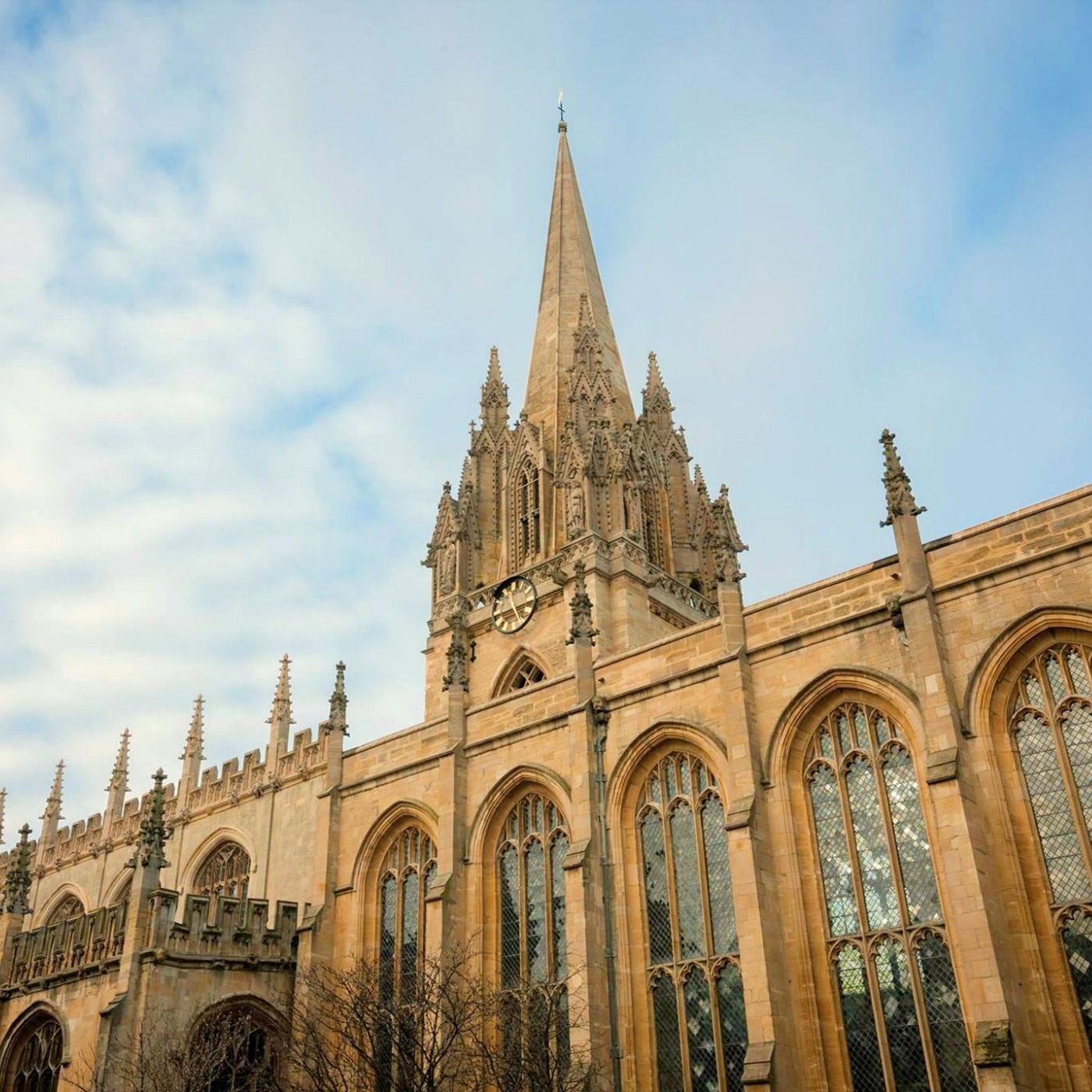
The University Church of St Mary the Virgin is a vibrant, welcoming, and inclusive church within the Church of England. Standing in the very centre of Oxford, it is the spiritual heart of the oldest university in Britain. With dignified liturgy and beautiful music, it has been a place of Christian worship for over a thousand years. Today we strive to be a community of faithful Christian witness and intelligent debate, unafraid to engage with the modern world.
10episodes
Episodes
Newest firstAll episodes
Politics and the Common Good
Jun 22, 202100:13:37Tap to summarizeThe Common Good is an ideal we appeal to as citizens, but what does it mean in a distinctively public and political space, a space guaranteed by laws and even by force if necessary? Is there a way of thinking about the common good as a political concept, and how might Christians be involved in this? In this podcast, I am joined by Paul Billingham, Associate Professor of Political Theory at Oxford, to discuss the Common Good in our political and religious life.
Transcribe →
Four-Dimensional Eucharist - Bampton Lectures 2021
May 5, 202100:10:39Tap to summarizeAn interview between the Revd Dr William Lamb, Vicar of the University Church and the Revd Canon Dr Jessica Martin about the upcoming Bampton Lectures 2021. The Bampton Lectures have been delivered at the University Church since 1780. The Bampton Lecturer this year is Dr Jessica Martin, who has been Canon Residentiary at Ely Cathedral since 2016, after 6 years as Priest-in-charge of a multi-parish benefice in South Cambridgeshire. Before that, she was Fellow in English at Trinity College, Cambridge, where her research focus was on early modern piety and the early history of literary biography. Dr Martin’s title for this year’s Bampton Lectures is Four-Dimensional Eucharist. She will be thinking about the eucharist both as sacrament and as ritual theatre, and asking some unusual questions of it. She will be considering its physicality in a time of increasing online presence, the abiding Christian tension between presence and absence it already contains, and its efficacy in a modern culture which veers unstably between scepticism and enchantment. Her range of reference will be wide, reaching from fantasy genres and virtual reality to Eucharistic theology and the anthropology of ritual. The first two lectures on Tue 11 May, will be livestreamed on our YouTube channel. The last two, on Tue 18 May, will be a hybrid event, in the University Church and livestreamed on our YouTube channel. Register here: https://www.universitychurch.ox.ac.uk/content/bampton-lectures
Transcribe →
Common Good Podcast
Apr 26, 202100:14:47Tap to summarizeThe ‘common good’ is a powerful and evocative phrase, drawing us towards those aims and ideals that we share together. We hear politicians and leaders invoke it – and we often pray for it in church. But what the common good might mean is far from straightforward, especially when we know that all human beings are unique and there are many different ideas of what is good and fulfilling. Given this complexity and diversity, how do we find what is common, how can we come to agreement on things that matter to us, but without sacrificing our individuality? And what role can churches play in helping – or hindering – the search for the common good? This term we will be exploring these issues in a series of podcasts and discussions, starting this Wednesday at 8pm on Zoom and continuing on 24 February and 10 March. This week, I will be joined by Mariëtta van der Tol, who is a constitutional theorist and Alfred Landecker postdoctoral fellow at the Blavatnik School of Government. She was also recently Licensed as a Lay Minister in the Church of England. To start the series off, Mariëtta and I have recorded a short podcast. In it we talk about approaching the 'common good' through a genuine conversation about the kind of society we want to live in, and we discuss why it’s so important to include all members of society in that conversation.
Transcribe →
Reconciliation and the Common Good
Apr 19, 202100:10:54Tap to summarizeOur second podcast, on ‘Reconciliation and the Common Good’ is an interview with Matthew Murphy, a recent history graduate and now an intern to the bishop of Coventry. Coventry cathedral has had a powerful ministry of reconciliation since the end of the Second World War and Matthew explains why this is still important today. We discuss the ways in which practices of reconciliation can contribute to a broader understanding of the common good, and the role of Christianity in this.
Transcribe →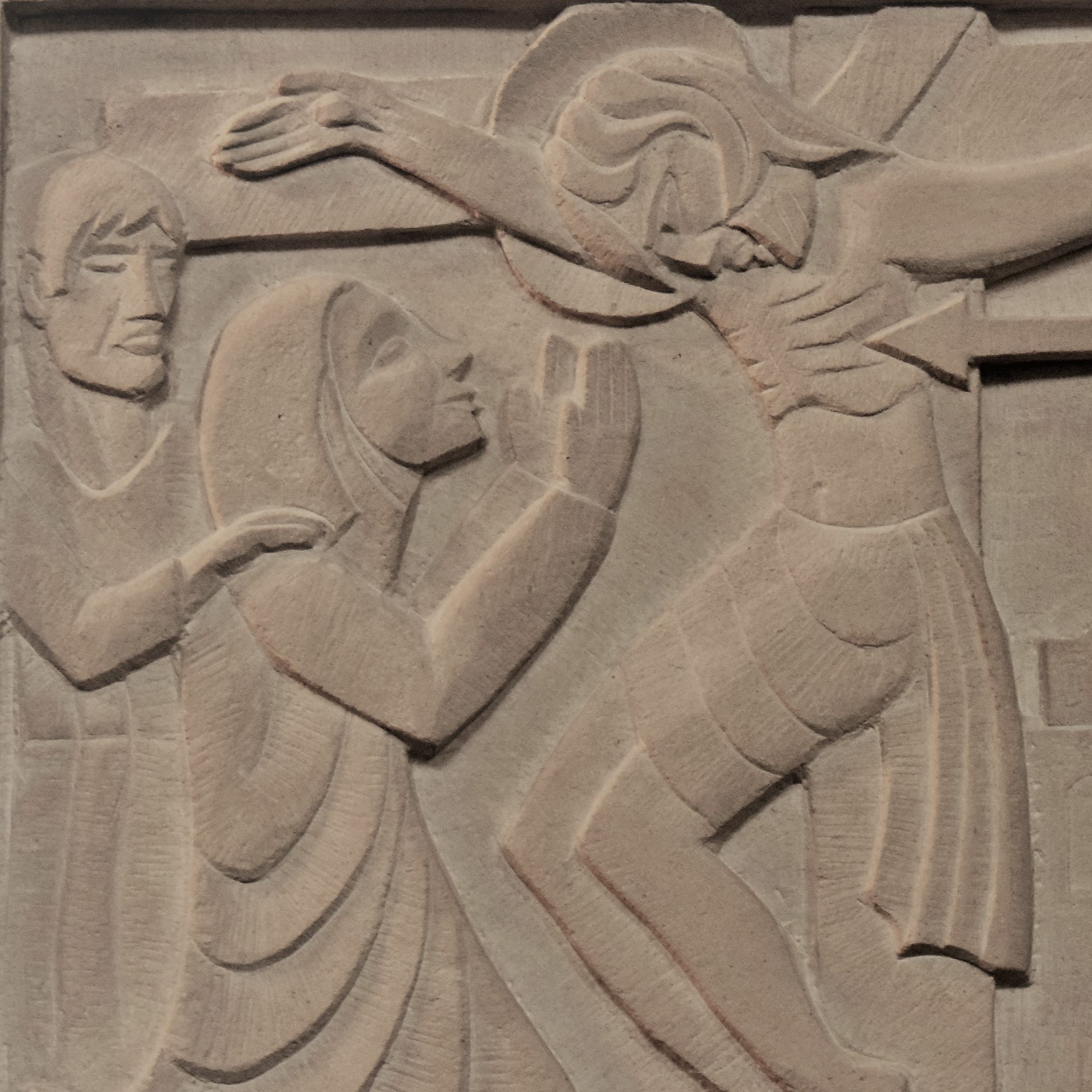
Stabat Mater, Palestrina
Apr 2, 202100:11:44Tap to summarizeThe University Church Choir sings Palestrina’s Stabat Mater. In this medieval hymn, we contemplate the grief of Mary standing at the foot of the cross. On Good Friday, these words challenge us to reach out in compassion to all those whose hearts are broken.
Transcribe →
Father, into thy hands I commit my spirit
Apr 2, 202100:09:13Tap to summarize‘Christ’s Seven Last Words’ is a production of the University Church in Oxford, featuring Professor Graham Ward, Regius Professor of Divinity, which will be released each evening throughout Holy Week. In this seventh and final episode, Professor Graham Ward reflects on the words, ‘Father, into thy hands I commit my spirit. Music sung by the University Church Choir. Sound design by Ana-Maria Niculcea As I said, there is one final step, one final last word. It is not in the Gospel of John, just as the cry of dereliction and abandonment – “My God, My God, why have you forsaken me!” – is not in John, nor in Luke. Though it is Luke that records the final deliverance from suffering and the final word: “Father, into thy hands I commit my spirit.” This committal is a profoundly Trinitarian act: the Son returning His life to the Father through the Sprit. It shows that all the Godhead is involved in the crucifixion, as all the Godhead was involved in creation and its redemption, the incarnation and the resurrection. We overhear a voiced intra-Trinitarian prayer that reveals the operations of a love that is sacrificial surrender. It is a surrender into silence, for the Word now falls silent. But in that prayer, as in that silence and through that final deliverance, there is a reconciliation. If, citing the psalm, the earlier words of Christ’s forsakenness by God invokes the abyssal difference and distance between creation and its uncreated Creator, then with this prayer there is an incomprehensible crossing of that difference and distance. Something is deepened about God being with us, first announced in Emmanuel and the Bethlehem birth. This is not a departure from that presence: God is with us through the whole of Holy Saturday and the silence of the Word. The death of God, here, is not the abandonment of the world to its own wretchedness. It is rather the bringing of the world into the plenitude of that presence. This is the dilation of God for a new birthing. As the resurrected Christ in Matthew’s Gospel says, “I am with you always.” He is not with us materially, except in and through the work of the church as the body of Christ, the distributor of the sacraments, the proclaimer of the Word down through the tradition and its continual meditation upon the Scriptures, and its work among the sick, the poor, the imprisoned and the oppressed. Christ enters an eternal rest, which is also our eternal rest. But the labouring of His presence remains, and we are participants in that labouring: the body has to be taken down from the cross, the dead have to be buried, the bereaved have to be comforted, new creatures will be born, new joys registered and the rearing and formation of these children begins. What remains, what will always remain, even on the day of resurrection, is the drama and gravitas of the cross. It remains as a perpetual memory, returning almost like trauma, with every suffering, persecution, betrayal, hostility and domination. It is the meek, Jesus tells us, who will inherit the earth. And meekly He completes that salvation, known in God since the foundation of the world. He bows His head. “Father, into thy hands I commend my spirit.” And, according to Matthew, at “that moment the curtain of the Temple was torn from top to bottom. There was an earthquake, the rocks split, and the graves were opened.” This upheaval is a beginning, not an end.
Transcribe →It is finished
Apr 2, 202100:08:24Tap to summarize‘Christ’s Seven Last Words’ is a production of the University Church in Oxford. For more information, visit www.universitychurch.ox.ac.uk’ In this sixth episode, Professor Graham Ward reflects on the words, ‘It is finished’ Music sung by the University Church Choir. Sound design by Ana-Maria Niculcea It is in the silence that we hear Christ’s fifth word from the cross: “I thirst”. We know what it is for a human being to thirst, taking even sour wine to moisten parched lips. A physiological account might be given here of a dying man, his arms pinned back on a cross in the heat of the day. But in contemplating the cross on Good Friday we are not trying somehow to get back to an event in the past and feel sorry, either for ourselves or even Jesus. Most especially, in reflecting upon the cross, we are seeking to enter more deeply into the work that Christ came and did on and through His crucifixion. If we grieve for our waywardness and tepid forms of love, then we are moved so we might be formed more deeply by Christ and conform more closely in imitation of Christ, like the beloved disciple. So, what is it for God to thirst? My answer follows from the gathering in that I spoke about with the penitent thief and the birthing of a new community with the interchanges between Christ, his mother and John. God longs to take into Godself, into the body of Christ, the whole of creation. The thirst is for righteousness: to turn the sour wine offered on a sponge into a new eucharistic vintage. This is a strange incorporation of all things into himself, a birthing that takes place by returning all that has been given life into his body. Coming to Jesus at night, Nicodemus asks “How can a man be born when he is old? How can he enter again into his mother’s womb?” The great reversal of life and its processes as we know them, begins on the cross as we die with Christ to be born again in Christ into eternal life. Everything in redemption turns upon this incorporation; the satisfaction in God of the thirst that “all may be one even as we are one”, as Jesus prays earlier to the Father. “I in you and you in me.” Nothing but everything can quench this thirst in God for that which came from God out of nothing and its reconciliation. In the quenching of that thirst is the final overthrow and judgement of all violences, hatreds, enmities, jealousies, angers, oppressions, fears – everything that would tear apart the body of Christ, everything that put Christ on the cross from the moment his ministry began; for Luke and Matthew, from the moment Christ was born. God thirsts for our salvation. God longs from the cross for our approach. God in Christ draws us to Himself by being strung up as the crucified one, the one who lays his life down that we might have all our own longings, lustings, thirstings, desirings and lovings reformed by the love and longing of God for us, because, ultimately, what we thirst for is what God thirsts for: that we might be one.
Transcribe →I thirst
Apr 1, 202100:06:34Tap to summarize‘Christ’s Seven Last Words’ is a production of the University Church in Oxford, featuring Professor Graham Ward, Regius Professor of Divinity, which will be released each evening throughout Holy Week. In this fifth episode, Professor Graham Ward reflects on the words, ‘“I thirst’ Music sung by the University Church Choir. Sound design by Ana-Maria Niculcea It is in the silence that we hear Christ’s fifth word from the cross: “I thirst”. We know what it is for a human being to thirst, taking even sour wine to moisten parched lips. A physiological account might be given here of a dying man, his arms pinned back on a cross in the heat of the day. But in contemplating the cross on Good Friday we are not trying somehow to get back to an event in the past and feel sorry, either for ourselves or even Jesus. Most especially, in reflecting upon the cross, we are seeking to enter more deeply into the work that Christ came and did on and through His crucifixion. If we grieve for our waywardness and tepid forms of love, then we are moved so we might be formed more deeply by Christ and conform more closely in imitation of Christ, like the beloved disciple. So, what is it for God to thirst? My answer follows from the gathering in that I spoke about with the penitent thief and the birthing of a new community with the interchanges between Christ, his mother and John. God longs to take into Godself, into the body of Christ, the whole of creation. The thirst is for righteousness: to turn the sour wine offered on a sponge into a new eucharistic vintage. This is a strange incorporation of all things into himself, a birthing that takes place by returning all that has been given life into his body. Coming to Jesus at night, Nicodemus asks “How can a man be born when he is old? How can he enter again into his mother’s womb?” The great reversal of life and its processes as we know them, begins on the cross as we die with Christ to be born again in Christ into eternal life. Everything in redemption turns upon this incorporation; the satisfaction in God of the thirst that “all may be one even as we are one”, as Jesus prays earlier to the Father. “I in you and you in me.” Nothing but everything can quench this thirst in God for that which came from God out of nothing and its reconciliation. In the quenching of that thirst is the final overthrow and judgement of all violences, hatreds, enmities, jealousies, angers, oppressions, fears – everything that would tear apart the body of Christ, everything that put Christ on the cross from the moment his ministry began; for Luke and Matthew, from the moment Christ was born. God thirsts for our salvation. God longs from the cross for our approach. God in Christ draws us to Himself by being strung up as the crucified one, the one who lays his life down that we might have all our own longings, lustings, thirstings, desirings and lovings reformed by the love and longing of God for us, because, ultimately, what we thirst for is what God thirsts for: that we might be one.
Transcribe →
My God, my God, why have you forsaken me?
Mar 31, 202100:08:31Tap to summarize‘Christ’s Seven Last Words’ is a production of the University Church in Oxford, featuring Professor Graham Ward, Regius Professor of Divinity, which will be released each evening throughout Holy Week. In this fourth episode, Professor Graham Ward reflects on the words, ‘“My God, my God, why have you forsaken me?” Music sung by the University Church Choir. Sound design by Ana-Maria Niculcea Nowhere is the solitude of Christ more pronounced than in his fourth words from the cross: “My God, my God, why have you forsaken me?” You leave the world naked, stripped to the very core of who you are, because our deaths are most poignantly and particularly our own. No one else can experience our deaths; only us. Whatever the stories surrounding Mary’s death, whatever the rumours among the early church that John “would not die”, mentioned in the closing pages of the Gospel, they and they alone will experience their isolated deaths. We can watch another person die, hold their hand, close their eyes, but we cannot die for them. Here we leave to memory all our assumed importance, for some even our dignity. As Christ did also. But we die in Christ and, as the words to the penitent thief disclose, we will be with Him - having passed through the termination of our time in the world. But the dereliction remains real. Yes, in this cry from the cross, Christ is citing a psalm, even fulfilling a psalm, but here we are also overhearing an exchange between Father and Son. We are interlopers of an inner Trinitarian address, the meaning of which we cannot grasp. Some unimaginable abyss opens within the Godhead and we can only gasp at its depths. They are incomprehensible and we cannot go there into an exchange far, far more profound than the interchange between Christ as his mother. It is not a matter of gender, though the language is gendered. It is a matter of origin: of the only begotten and the one who begat him (to use language that sounds antiquated, but I know no other). Something is opened for us, some new and awful intimacy in Trinitarian relations, quite different from the prayers to God that Jesus utters as part of the Farewell speeches recording in John’s Gospel or the agony in the garden of Gethsemane. Abandonment? How can that be possible? It is something about love’s encounter with death that gathers into that cry the cries of all those who must die with words on their tongues and faith in their hearts. A moment of panic? Is that possible? A night descends far darker than any night we can experience on earth, like the night from out of which creation itself was birthed. “Do not go gently into that good night… Rage, rage against the dying of the light”, Dylan Thomas wrote. But here the words of Christ are forked lightning illuminating, momentarily, the vast chasm between God and creation. It is far, far more vast and dark than the suffering of being crucified, mocked, and violated by others – all the consequences of sin. But there is a passage beyond and into being “with me in paradise”. There is a passage through this dark abandonment. Is Christ as mediator going before us, opening some stargate into oblivion? The ‘Why’ in this fourth of Christ’s seven last words articulates this unanswerable question, while upon its answer lies every possibility of meaning to our lives and for our redemption. We are humbled by it; ashamed by our own ignorance. We are silenced.
Transcribe →Woman, behold your Son
Mar 30, 202100:09:44Tap to summarize‘Christ’s Seven Last Words’ is a production of the University Church in Oxford, featuring Professor Graham Ward, Regius Professor of Divinity, which will be released each evening throughout Holy Week. In this third episode, Professor Graham Ward reflects on the words, ‘Woman, behold your Son’. Music sung by the University Church Choir. Sound design by Ana-Maria Nicu With Christ’s words of a welcome into paradise to the penitent thief, something new begins at the very apex of Christ’s suffering: a new gathering. Following the Last supper there is a great fragmentation. The embryonic church receiving the first eucharistic sacrament is scattered, not sent out into the world. But now Christ gathers at the cross, his body upon that cross, a new community. “You will be with me” opens a new inclusion within himself, and new incorporation and shared identity. This is now extended in this third of Christ’s words: “Woman, behold your son…behold your mother.” This is a rich few words, dense with mystery for an understanding of church. I can only touch upon what is manifestly manifold here. For, at its heart, it is the birth of the church that is spoken of. In her bereavement and loss, Mary, who gave birth to God with us, is given a new son by her son, and John, as disciple, is grafted into the genealogy of the divine. But there is something further. The disciple interchanges with the Christ. He takes upon himself, though not upon his own authority but through the Word of Christ, an adoptive sonship. He becomes an imitatio Christi, a modelling of Christ in the world, a new birth not of the will of the flesh, but through the love of God. He becomes protector, nurturer. Here is something profound, and by profound I mean something that is to be contemplated over and over that we might understand ourselves as hidden with Christ in God. This profundity is signalled by the repetition ‘behold’. For with ‘behold’ comes the command, the demand, to gaze into and reflect upon both the mystery of the incarnation and the mystery of redemption – simultaneously. To the mother of God is revealed the meaning of the incarnation, understood prophetically in the Magnificat: that the Messiah came to redeem through the birthing of a new community. To the beloved disciple is revealed the meaning of redemption: to live as Christ in the world, incorporated into God through His Son, Jesus Christ. And at the very centre of that beholding stands the cross, the suffering of Christ by the world, for the world (all those people, powers, and institutional dominions that put him there). The work of salvation begins, not by taking either Mary or John out of the world, but placing them both within the very brokenness and violence of that world which the crucifixion brings to light. And the means by which this interchange, identification and newly birthed gathering takes place is love: of mother and son, of son and disciple, of son and mother. The identification is not just with the glorified and raised up Christ. The contemplation of ‘behold’ is not just an entering into the mystical and beatified body. The identification upon which we are commanded to contemplate is also with the suffering and humiliation of Christ crucified. “From that hour the disciple took the mother into all that was his own” and Christ is left alone.
Transcribe →