Podcast
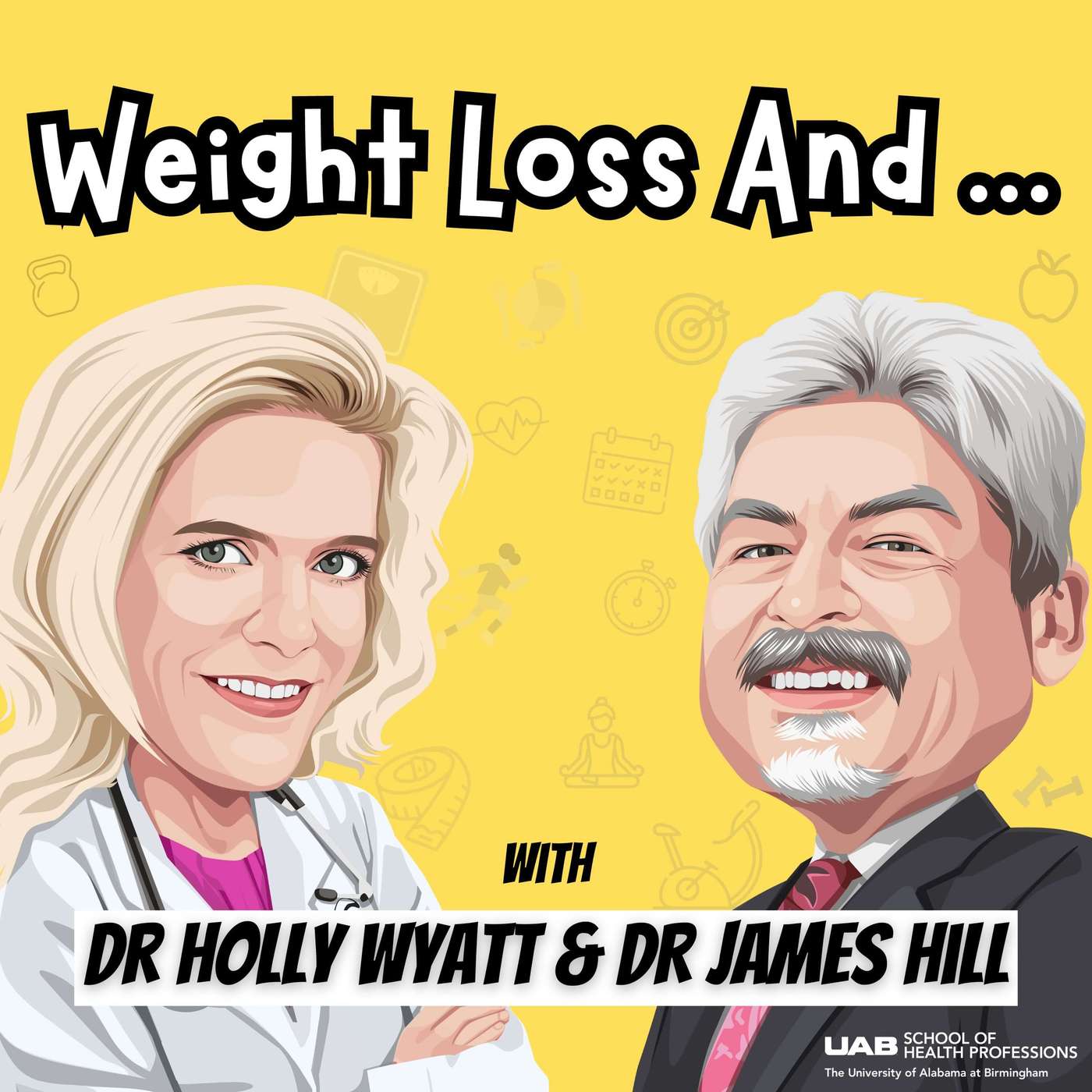
Weight Loss And ...
Hosted by Holly Wyatt & James Hill · EN
Your go-to hangout for everything weight loss… and beyond! “Weight Loss and…” is brought to you by the University of Alabama at Birmingham (UAB) and hosted by seasoned experts in weight management, Dr. James Hill and Dr. Holly Wyatt.
We’re your friendly guides through the maze of weight loss, but with a fun twist. We’re not here to preach the latest fad diet or promise a miracle workout. Instead, we’re all about embracing the journey, acknowledging there’s more than one way to hit your health goals, and having a good laugh while we’re at it.
We get it: weight loss can be tough, and sometimes pretty serious business. But why can’t it also be enjoyable? With a side of humor, we’ll bring you science-backed insights, real-life stories, and some hard truths. (Spoiler alert: there’s no magic answer - but that doesn’t mean we can’t find what works best for you.)
“Weight Loss and…” is your inclusive space to explore, question, and learn — and to feel part of a community along the way. This isn’t just about shedding pounds. It’s about gaining perspective, building better habits, and enjoying the ride.
So if you’re up for honest conversations about weight loss - spiced with a little science and a whole lot of fun - pull up a chair, plug in those earbuds, and let’s see where this journey takes us.
43episodes
Episodes
Newest firstAll episodes
The New Science of Food Noise and Its Impact on Weight Loss
2d ago00:42:39Tap to summarizeFor years, patients kept telling Holly the same strange thing: it wasn't the number on the scale that changed their life, it was something quieter, something they'd never had words for. They just didn't think about food anymore.Now that experience has a name, and for the first time, a way to measure it. Food noise has gone from an offhand comment on social media to one of the most talked-about concepts in obesity science, and Holly and Jim are back to unpack how far the research has come since they last covered it.Join Holly and Jim as they revisit food noise with fresh eyes. You'll hear how a handful of scattered patient stories turned into a full-blown scientific movement, what the newest validated tools can actually tell us, and why this "invisible" part of obesity might reshape how we think about treatment for years to come. Along the way, Holly and Jim get personal, sharing their own honest (and sometimes surprising) answers to whether they experience food noise themselves.Discussed on the episode:How an unexpected side effect of GLP-1 medications turned into a full-blown scientific mysteryThe difference between food noise, hunger, and cravings, and why it matters more than you'd thinkTwo newly validated tools researchers are using to measure something patients have described for years.A surprising decades-old study that raises the question: is food noise really new?A science-backed framework for understanding where food noise comes from in the brainWhether food noise could predict who regains weight, and who doesn'tThe big philosophical question: could reducing food noise become a treatment goal, even for people who don't need to lose weight?Holly and Jim's own personal, no-holds-barred answers to "do you have food noise?"What might happen to food noise if you stop taking a GLP-1 medication, and whether that means treatment "failed"
Transcribe →20 Questions That Will Change How You Think About GLP-1s
1w ago00:46:12Tap to summarizeGLP-1 medications are the single most requested topic on the show, no contest. But with so much noise on social media, in doctors' offices, and everywhere in between, sorting fact from fiction has never been trickier. Some of what's out there is spot-on. Some of it is dangerously wrong.So this week, Holly and Jim are flipping the format. Instead of another lecture, they're putting GLP-1 knowledge to the test with a 20-question quiz covering everything from the basic biology of these medications to the questions doctors themselves don't always get right. Grab a pen, keep score, and see how you stack up.By the end of this episode, you'll have a clearer, science-backed answer to the questions you've been too afraid to ask or too confused by conflicting headlines to trust.Discussed on the episode:The surprising truth about what GLP-1 medications are actually doing to your body (hint: it's not what most people think)Whether feeling less hungry is really a sign the medication is "working"Why a stalled scale might be the most normal thing that could happen to youThe dosing myth that even well-meaning doctors sometimes get wrongWhat "success" really looks like when two people lose very different amounts of weightThe truth behind "Ozempic face" and hair loss and whether the meds are really to blameWhy almost everyone on a GLP-1 could benefit from one specific type of healthcare providerWhat to actually do (and not do) if you're eating less than 800 calories a day and still feel fineThe real answer to "can I ever come off the medication?"Why those "natural GLP-1" gummies and supplements deserve a healthy dose of skepticism
Transcribe →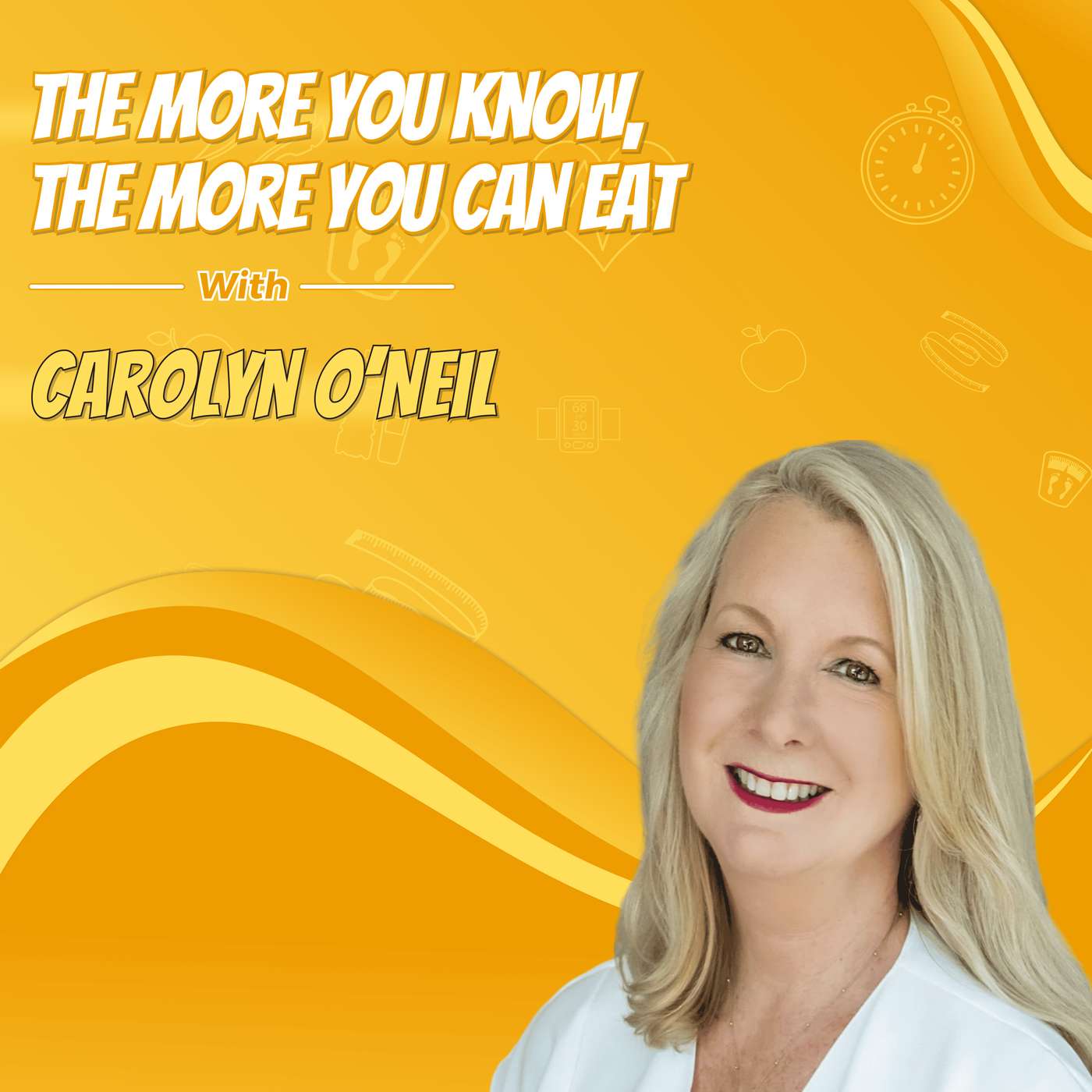
The More You Know, The More You Can Eat with Carolyn O’Neil
2w ago00:54:52Tap to summarizeWe've all felt it: you decide to eat healthier, open social media, and within minutes, you're drowning in contradictory advice. Eggs are back. Butter's healthy. Seed oils are toxic. Never eat after 7pm. Wait, only eat between noon and 6pm? By the end, you're left wondering if anyone can just tell you what to eat.Join Holly and Jim as they sit down with award-winning food journalist and registered dietitian Carolyn O'Neil to unpack why nutrition advice feels so exhausting and contradictory. With decades spent translating nutrition science for CNN and beyond, Carolyn has made a career out of turning "pie in the sky" science into "pie on the plate" advice people can actually use. In this conversation, she shares how to separate real science from clickbait, why food doesn't have to be the enemy, and how her philosophy of "the more you know, the more you can eat" can transform your relationship with food.Whether you're confused by conflicting headlines, navigating a GLP-1 journey, or just trying to enjoy a family celebration without guilt, this episode is packed with practical, joyful wisdom from one of the most trusted voices in nutrition communication.Discussed in the episodeWhy the two biggest buckets of nutrition headlines are "this will kill you" and "this will cure you," and why it's often the same foodA simple media literacy trick for telling real science from a misleading headlineWhat really happened in a viral study on omega-3 supplements and brain healthWhy the "Mediterranean diet" is more romanticized than most people realizeHow to keep the joy of eating alive while on a GLP-1 medicationThe restaurant industry's surprising response to guests eating lessA simple framework, "the three M's," for personalizing your approach to healthWhy "shop the perimeter of the store" might be terrible advice.Carolyn's rapid-fire answers on the most overhyped nutrition claims, misleading headlines, and her favorite food city in the worldA practical tip for enjoying food-centered family traditions without overeating or guilt
Transcribe →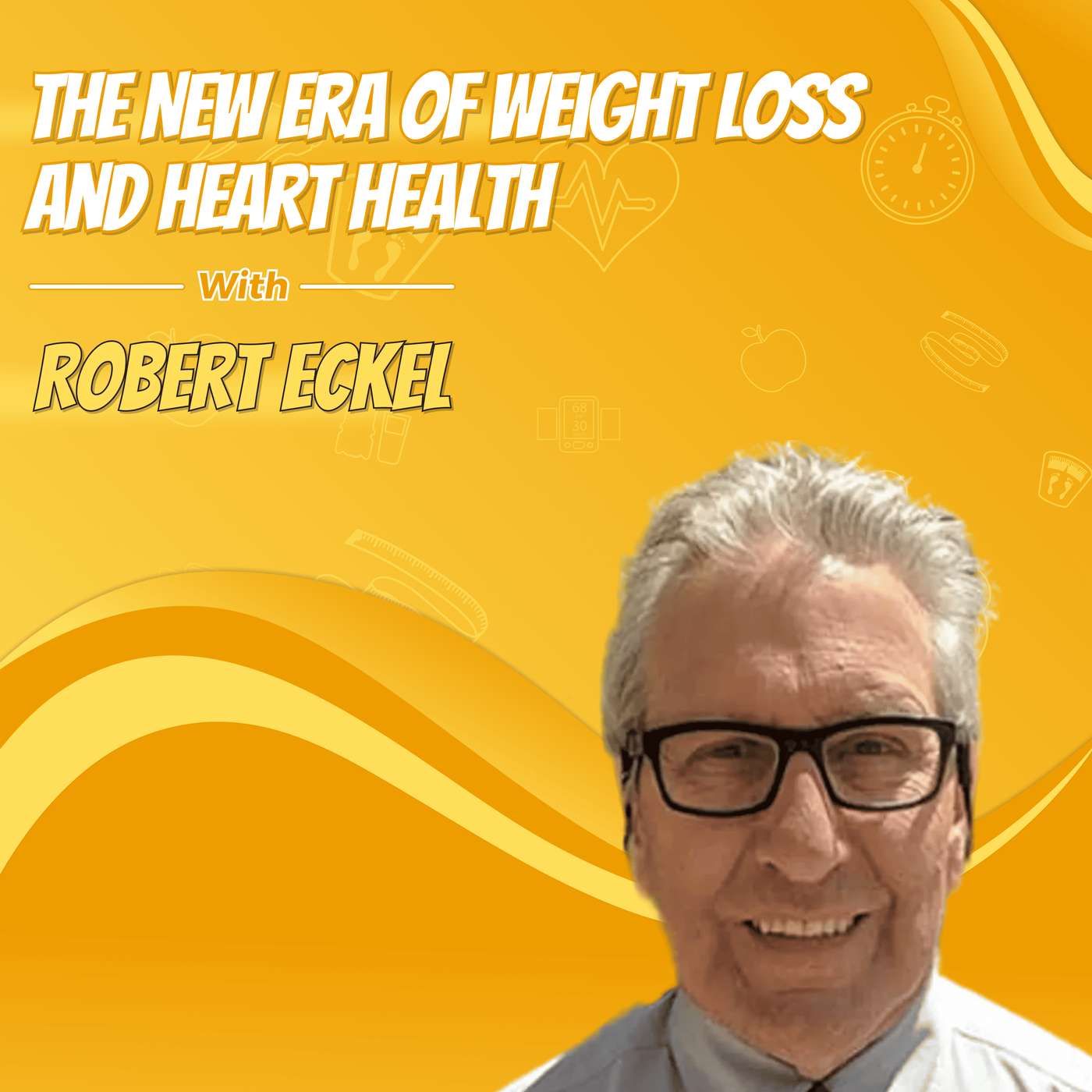
The New Era of Weight Loss and Heart Health with Robert Eckel
3w ago00:50:56Tap to summarizeCancer is the disease most people fear. But heart disease is the one that actually kills the most Americans, and most people never connect it to their weight. For decades, obesity was treated as a bystander to heart disease, a risk factor at best. That thinking has changed dramatically, and the data behind that shift is stunning: we now have a medication proven to cut major cardiovascular events by 20% in people with obesity.Join Holly and Jim as they sit down with an old friend and true legend in the field, Dr. Robert Eckel, Professor Emeritus at the University of Colorado Anschutz Medical Campus. Bob is the only person to have ever served as president of the American Heart Association, the American Diabetes Association, and the Obesity Society, a hat trick that connects heart, metabolism, and weight in a way no one else in medicine can claim. He's been in the room for four decades of major turning points in this field, from the earliest meetings on obesity science to the current GLP-1 era.In this episode, Bob walks Holly and Jim through the science, the skepticism, and the surprises behind the biggest shift in obesity treatment of their careers and answers real listener questions about medications, guidelines, and what patients should actually be asking their doctors.Discussed in the episode:The pivotal trial that's changing how cardiologists think about weight loss drugs and how its results stack up against statinsWhy the outcome researchers expected to explain the benefits of these medications may not be the real story at allThe surprising history of how "obesity" and "heart disease" became connected in medical thinking, and who had to make the caseWhat your body's "set point" really is, and whether staying on medication long-term can actually change itA candid take on whether the weight-loss drugs might be helping or quietly working against long-term behavior changeReal listener questions answered, including when a cardiologist won't prescribe, what "not overweight enough" really means, and whether weight loss "worked" even after a heart attack.Bob's own vulnerable reflections on his career, a decision he'd make differently, and what still keeps him "rewired" in retirement
Transcribe →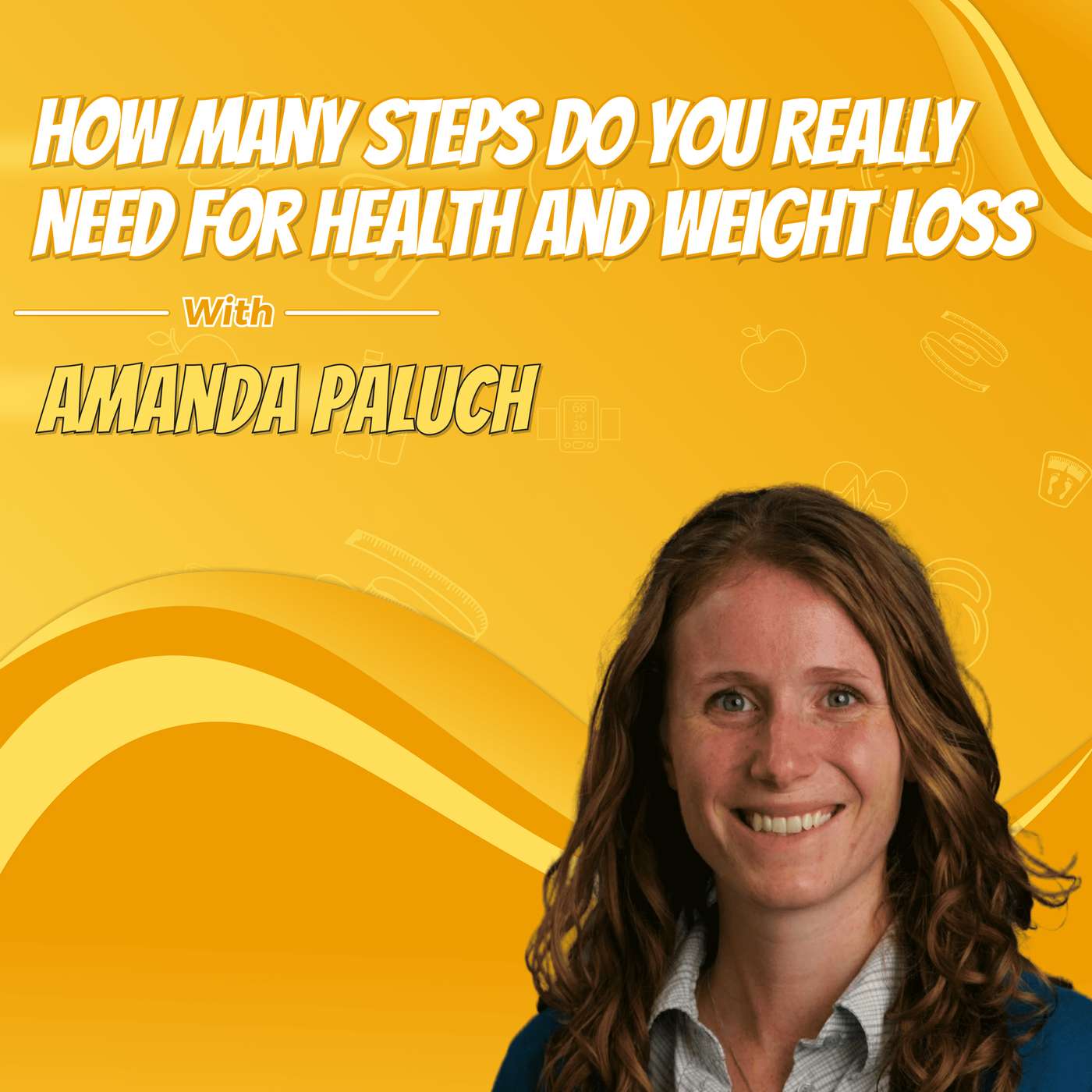
How Many Steps Do You Really Need for Health and Weight Loss with Amanda Paluch
Jul 800:42:33Tap to summarizeFor decades, one number has ruled the world of fitness: 10,000 steps. It's on your watch, your phone, maybe even tattooed into your daily to-do list. But what if that number was never based on science at all?Join Holly and Jim as they sit down with Dr. Amanda Paluch, Associate Professor of Kinesiology at the University of Massachusetts Amherst and leader of the Steps for Health Collaborative, an international research consortium pooling data from over 125,000 adults to answer one deceptively simple question: how many steps do you actually need? Amanda pulls back the curtain on where the 10,000-step goal really came from, what the data shows instead, and why the "right" number might depend on how old you are. Whether you're chasing a step count, recovering from mobility limitations, or navigating GLP-1 medications, this conversation will change the way you think about your daily walk.Discussed in the episode:The surprising 1960s marketing origin of the 10,000-step goal (hint: it has nothing to do with health research)Why the "right" step goal may look different depending on your ageThe step range where most of the cardiovascular benefit shows up (it's lower than you'd think)Whether walking pace matters as much as total volumeHow do steps fit into the GLP-1 conversation?What the research says about step counting becoming an unhealthy obsessionPractical advice for people with mobility limitations who feel like step goals are out of reachRapid-fire answers on walking vs. running, treadmill vs. outdoor steps, and moreA simple mindset shift for anyone having a "low step day"
Transcribe →
How Hype and Common Sense Shape Our Eating Choices with Tamar Haspel
Jul 100:52:35Tap to summarizeFor 40 years, every time nutrition has found a new villain, the food industry has handed us a new label to go with it: non-fat, no GMOs, gluten-free, no seed oils, and now, non-ultra-processed. We have more experts, more studies, and more food rules than ever before, so why does standing in the grocery aisle still feel like such a guessing game?Join Holly and Jim as they sit down with Tamar Haspel, the James Beard Award-winning Washington Post columnist behind Unearthed and author of To Boldly Grow, to pull apart the ultra-processed food debate and ask whether today's labels are actually helping us eat better or just making us easier to market to. Tamar doesn't just write about food from behind a desk: she gardens, fishes, raises chickens, and runs an oyster farm on Cape Cod, and she brings three decades of reporting, real skepticism, and zero patience for diet cranks to the conversation.You'll hear why the food world keeps repeating the same mistake, what a cage full of B.F. Skinner's pigeons can teach us about our relationship with food, and what's really driving overeating once you strip away the marketing.Discussed on the episode:The decades-old pattern that explains why every new food "villain" feels eerily familiarThe bizarre pigeon experiment that reveals why we're so convinced certain foods are "good" or "bad" for usWhy a bowl of crushed cereal proved more about overeating than years of processed-food headlinesThe blunt case for why "everything in moderation" might be the most useless diet advice out thereThe one-sentence grocery store rule that could replace almost every food label you've ever side-eyedHow GLP-1 medications could end up reshaping the entire food industry, not just individual waistlinesThe "healthy" nutrient claim, Tamar says, is wildly overrated and the snack everyone blames for something it's not even guilty of
Transcribe →The Science and Realities of Long-Term GLP-1 Use
Jun 2400:50:15Tap to summarizeLosing weight on a GLP-1 medication can feel like magic until the scale stops moving. For almost everyone on these drugs, there comes a moment when the rapid progress slows, then stalls completely. Is the medication failing? Has your metabolism adapted? Did you do something wrong? For most people, that moment feels like a problem. It isn't.Join Holly and Jim as they unpack one of the most misunderstood parts of the GLP-1 journey: the shift from losing weight to keeping it off. You'll discover why a stalled scale is actually a sign the medication is doing exactly what it's supposed to do, and why "maintenance" is a completely different physiological state than "weight loss." One that comes with its own rules. Along the way, you'll pick up science-backed (and some still-unanswered) guidance on nutrition, muscle, bone health, and motivation for the long haul, plus a clear answer to a question Holly says she gets all the time: Are they against staying on these medications long-term?Discussed on the episode:Why hitting a plateau on a GLP-1 is good news, not a sign the drug has stopped working.The blood pressure pill comparison that reframes what people call "drug resistance"Why nutrition may matter even more, not less, once weight loss stopsWhether you actually need to exercise to keep weight off on a GLP-1 (the honest answer might surprise you)The bone health risk in younger women that's getting far less attention than muscle lossWhy are dose-tapering and switching strategies being called the "Wild West" of GLP-1 careA New York Times claim about these medications "rewiring the brain" and what that could mean long after you stop.How to find motivation once the scale refuses to budgeHave a question or a success story? Send it in. Holly and Jim read every one, and they're especially looking for listener stories about navigating weight loss maintenance.
Transcribe →
The Hidden Influence of Community and Environment with Christina Economos
Jun 1700:49:49Tap to summarizeWhat if the biggest obstacle to your health isn't your willpower, it's your zip code? Most of us have been raised to believe that weight and health come down to personal choices: what you eat, how much you move, how disciplined you are. But what if the deck has been stacked against millions of Americans before they ever make a single decision?This week, Holly and Jim sit down with Dr. Christina Economos, Dean of the Friedman School of Nutrition Sciences and Policy at Tufts University, to explore one of the most important and most overlooked dimensions of the obesity epidemic: the environments we live in. With decades of groundbreaking research behind her, including the landmark Shape Up Somerville study, Dr. Economos makes a compelling case that lasting health change can't happen one person at a time.And with GLP-1 medications reshaping what's possible for individual weight loss, the conversation has never been more urgent. Does community still matter when we have powerful new treatments? Dr. Economos has a clear answer, and it just might change how you see your own role in the bigger picture.Discussed on the episode:The landmark study that proved community-wide obesity prevention actually works in the real world, and the surprising ripple effect it had beyond the children involved.Why your zip code may predict your health outcomes nearly as powerfully as your geneticsThe hidden forces in your neighborhood that are quietly shaping what you eat and how much you move, often without you realizing itWhat a food environment assessment in the Mississippi Delta revealed perfectly captures the challenge millions of Americans face dailyWhy fixing schools alone won't fix childhood obesity, and what actually needs to happen insteadThe honest answer to how much of the obesity epidemic is biology versus environment (hint: it's not a clean split)The key ingredients, Dr. Economos says, every successful community health intervention must have, and the #1 mistake researchers keep makingHow GLP-1 medications and community health are more connected than you might thinkWhat "spark plugs" are, why every successful health movement has had them, and whether you could be oneReal U.S. communities that are getting this right and what they're actually doing differentlyPractical steps anyone can take right now, even if your environment is working against you
Transcribe →The Rise and Fall of Popular Diets Over 100 Years
Jun 1000:46:39Tap to summarizeIf you've spent years hopping from one diet to the next: low fat, then low carb, then keto, then intermittent fasting, you're not alone, and you're not failing. The truth is, the diet world has been cycling through the same promises, the same villains, and the same disappointments for nearly a hundred years. And most of us never stop to ask why.Join Holly and Jim as they do something they've never done before on the show: step back and take a decade-by-decade look at almost 100 years of dieting history. From the 1930s to the GLP-1 era of today, they trace how we went from counting calories to carnivore diets and what it all actually taught us (or didn't).This one is equal parts fascinating, a little humbling, and surprisingly fun. Whether you're a diet history nerd or just someone who's tired of starting over, this episode will change the way you think about every diet you've ever tried.Discussed on the episode:The three-category system Holly and Jim use to classify every diet, and why one category might describe your current eating planThe diet from the 1930s that your favorite wellness influencer is basically still selling todayWhy the decade that got everyone obsessed with fat-free foods may have actually made obesity worseThe weight loss medication that came before GLP-1s, and the dramatic reason it was pulled from the marketWhich diets from the last 100 years actually have the science to back them upThe rapid-fire verdict: best diet, biggest mistake, and most underrated program of the centuryWhat GLP-1 medications are changing about the way we think about diets, and why Holly has one big worry about where this is all headingJim's closing thought that reframes everything you think you know about why diets succeed or fail
Transcribe →
Why Dietitians Matter More Than Ever with Maha Tahiri
Jun 300:45:06Tap to summarizeMillions of people are now taking GLP-1 medications and losing weight, but is eating less the same as eating better? The answer, according to today's guest, is a resounding no. And almost nobody in medicine, food, or public health is talking seriously about what happens when appetite disappears, but nutritional needs don't.Join Holly and Jim as they sit down with Dr. Maha Tahiri, a nutrition scientist, food industry strategist, and founder of Nutrition Sustainability Strategies, for one of the most eye-opening conversations in the GLP-1 era. Maha has spent decades at the crossroads of nutrition science, public health, and food innovation, and she's now helping companies around the world rethink what it means to nourish a consumer who's eating dramatically less. Her new company, S2B, is building a strategy for the GLP-1 era and beyond, and she's asking the questions that urgently need answers.This episode will change how you think about GLP-1 medications, food, and what it truly means to be well-nourished.Discussed on the episode:Why eating less on GLP-1s does NOT mean you're eating better and the nutritional crisis hiding in plain sightThe alarming statistic about how many GLP-1 users are falling short on fiber, protein, and key micronutrientsWhy Maha calls what's happening to GLP-1 users "medically induced malnutrition" and why that phrase should get your attentionThe one behavior Holly says is now more important on GLP-1s than ever before (not what most people expect)Why fiber deserves its own strategy and why lumping it in with protein is a mistake.The three phases of GLP-1 use that should shape everything you eatWhat a strange debate in Botswana had to do with Maha's entire career pivotThe unexpected food category that's actually thriving because of GLP-1 usersWhy the food industry may owe pharma a thank-you and what it needs to do with its second chanceThe role AI is now playing in nutrition advice, and why Maha thinks that's actually good newsMaha's rapid-fire picks: the most underrated nutrient, the most overrated trend, and the one food she'd put in every kitchen.
Transcribe →