← We're Out of Time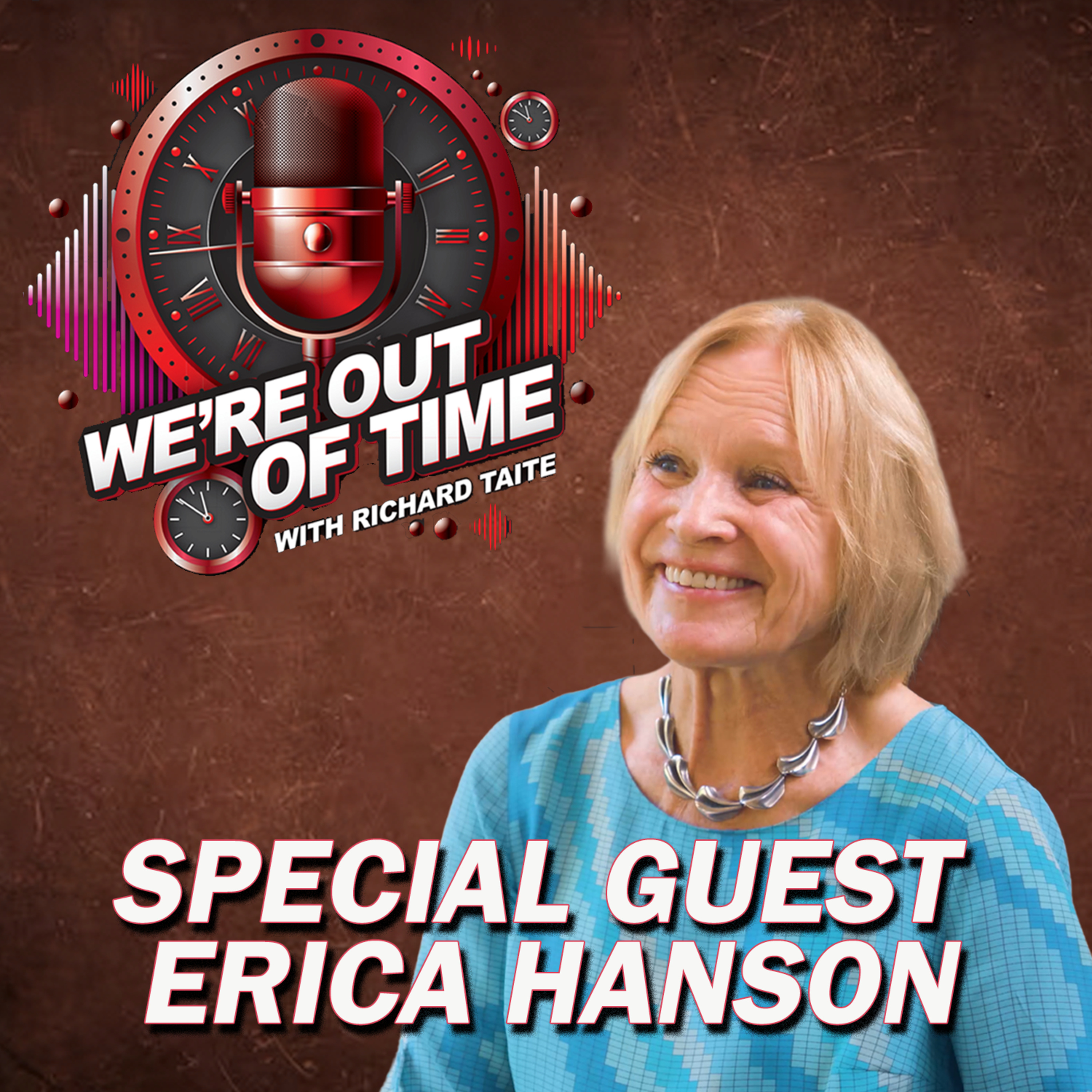
Loading summary
Transcript183 lines
- [00:00]
A
Documentary producer Erica Hanson joins the we're out of Time podcast.
- [00:04]
B
I thought this has to be one of the most important stories that I'll be given the opportunity to tell. There's a huge moral responsibility when you tell someone's story to get it right. I think of myself as a fairly well informed person. And then I thought, you know what? How did I not know that this was a national crisis? You know, it's very rare in our business that we have the opportunity to tell a story that might truly make a difference, that could raise awareness, maybe even save a life. You be a well known, very wealthy celebrity, you could be in the suburbs, you could be in the city. It's anybody.
- [00:39]
A
The we're out of Time podcast team extends heartfelt thanks for helping the show reach number two in Apple Podcasts mental health category and number 68 overall among top shows. Your support means more than words can express. Thank you for listening to the we're out of Time podcast with Richard Tate. If you haven't already, please follow the podcast rate and review. And if you're getting value out of we're out of Time, share it with someone else.
- [01:00]
B
You know, if someone has a problem with substance use disorder, please call one call placement, that's 888-831-1581. And if we can't help you, we'll make a referral to someone who can. Please, we're out of Time.
- [01:16]
A
Erica Hansen, thank you for coming by today.
- [01:18]
B
Thank you for having me.
- [01:20]
A
I really appreciate it. I just saw your documentary. Okay. Which was fantastic. What's the name of it?
- [01:29]
B
Fame and Fentanyl.
- [01:30]
A
Fame and Fentanyl, which was excellent, by the way. But what I want to know more than anything is what inspired you to tell this story now.
- [01:40]
B
Yeah, well, I was A and E approached me about doing it. Kendall Shrew Stories had developed the idea and I, when they described what they wanted to do, it really resonated with me because one of my closest friends lost her 19 year old son, I think, back in 2016, from synthetic opioids. And I was just devastated because I didn't know anything about it back then.
- [02:06]
A
Right.
- [02:07]
B
And then the more I learned about this, I thought this has to be one of the most important stories that I'll be given the opportunity to tell. And it really was. And I learned so much and I think of myself as a fairly well informed person. And then I thought, you know what? How did I not know that this was a national crisis?
- [02:32]
A
Not your fault, you know, not your fault. I was in the Treatment business. And fentanyl wasn't even a thing. I mean, it was like next to nothing when I left in the middle of 2018, the beginning of 2018, so it hadn't really taken hold yet. It wasn't like everything else. Okay. So it was only after I. And I'm in the business. I sold the fight. I sold what was regarded as the finest treatment facility in the world at the time.
- [03:10]
B
Yeah.
- [03:11]
A
Okay. And I wasn't. I didn't have my finger on the pulse of it because it wasn't really a thing yet. So you can let yourself go for that.
- [03:21]
B
Thanks. You know, when I started working on this, I have. My son's 26. And I called him and I said, so what was. Tell me about fentanyl in college? Like, what was your awareness? And he said he wasn't into drugs, but he said, I had friends that use fentanyl test strips. And I had no idea. And so when I.
- [03:42]
A
Which don't work, by the way.
- [03:43]
B
Yes, exactly. I was going to say that, yes, that is not a solution. I mean, it's a tool, but it's not a solution.
- [03:49]
A
That's correct.
- [03:50]
B
And I think when I started to work on it, the other thing that really stood out to me and is it's not just someone at all who's struggling with addiction who become a victim of fentanyl. Fentanyl can impact anybody.
- [04:07]
A
It actually does. It affects. And there was somebody in the. In the documentary, and I forgot who it was, he said, and I never heard anybody say it but me, he said, and it's not really the fentanyl users, Right, that are dying here because they know how to use it. It's more. And I'm paraphrasing because this is what I say, it's typically the students going out on the weekends that don't have the tolerance, don't know how to use it, and those spray day students who are dying just socially.
- [04:47]
B
Yeah. And you're friends with Matt Capilouto, is that right? Or, you know, Matt Capilouto.
- [04:52]
A
I was to Matt Capilouto by my friend Nathan Hawkman. And Nathan would call me a couple times a year, maybe three times a year, before AI, before ChatGPT or any of those things. And which I assume is why I'm not getting calls anymore. But he would call me three times a year, whether he needed to or not, and say, so what's going on with the fentanyl? Tell me what's going on. And we'd sit there and have the conversation. And one Day he called me and he said, hey, I want to introduce you to somebody. His name's Matt Capilouto. Let me tell you what this is about. And he told me about his daughter Alexandra. And I didn't know Matt's name until maybe six months ago because I didn't want to know it.
- [05:51]
B
Interesting.
- [05:53]
A
His name was Alexandra's dad.
- [05:56]
B
Oh, yeah. So for Matt, as you know, and as a mom, I just couldn't believe that a young adult who was struggling with anxiety or depression would order what they think is, is Percocet over Snapchat and die.
- [06:15]
A
Well, they do it because. And I, I know I'm interrupting you. No, but the reason they do it is because they're called painkillers, but they work better on emotional pain than they do on physical pain. Right. But this is the reason, this is the primary reason why I started this podcast. Because Matt, I loved him so much when I met him, and I was so heartbroken for his daughter that I started this podcast. And, you know, it's the number two mental health podcast in the country right now on Apple. And I've never seen a podcast. I've never listened to a podcast. Okay. And the reason I. And I just don't have the time. Okay. But I had to do this because it felt, I felt the pull, you know, that's all.
- [07:04]
B
No, and I felt that when I spent time with him and his family. And, you know, there' swe also, even though the title of the documentary is Fame and Fentanyl, we spent time with families of well known individuals. Michael K. Williams sister Angus, Connor Cloud's uncle and close friends. A young woman, Katie Gallagher, very talented fashion designer. This another terrifying use of Fentanyl as she died because fentanyl was used as a weapon in a crime in New York City in 2022, a crime ring. And they incapacitated people with fentanyl and five of them tragically died, including Katie. So I think that's the other thing. It's not as though a lot of the people that are dying from fentanyl use drugs. You know, Katie wasn't a drug user. Alexandra turned to Percocet for her own issues and I think and took a half a pill. Half a pill. And that I just didn't realize. And when you think about it, more than 70,000 people a year, even though.
- [08:19]
A
The numbers are now it's about 100 or it was at its height. It got to be like, what, 112 opioids.
- [08:26]
B
Yeah. And I remember, you know, I spoke to A lot of experts, law enforcement agents, and Ray Donovan, who was the former chief of operations, the DEA said, you know, this is a national security crisis, and it's going to.
- [08:40]
A
I've been saying that for years.
- [08:42]
B
Really? Yeah.
- [08:43]
A
Yeah. Well, it is. Of course it is. The military is completely infested with it. Completely. Okay. Because I treat three people a month like clockwork for free. And they're always saved for veterans and active military, so. So there's zero chance that this isn't terrorism, because these guys come in, half of them swearing up and down. They're not taking fentanyl. And they are. They're testing positive for it. Right, sure. Because think about it. If. If I was another superpower like China, which. Why wouldn't I. Go ahead. The precursors are coming from there. They go to Mexico and then they come here, and they're distributed through gangs. And one of the mandates, evidently, is, let's get the military. I mean, you want your military loaded if you're going to fight them.
- [09:38]
B
Wow. It's almost. That's sort of. Ray was saying how it's really destabilizing America intentionally.
- [09:46]
A
And. Because think about it this way. This is the most. But China is the most buttoned up, surveilled country in the world. And you're going to tell me they don't know what's going on and who's doing it? That's. That's not even. I don't even have an ear for that.
- [10:04]
B
Yeah. I think the other. The other thing that really struck me in doing this was Michael K. Williams. And I happened to have spent time with him producing a podcast. And he was the first guest that Joaquin Dean, who founded Rough Riders, I had done a documentary series on Rough Riders, and so wa interviewed Michael K. Williams, and it was so moving. Him talking about his struggle with addiction and how his faith and spirituality helped him in recovery. And then for five days later, for him to have passed away from fentanyl poisoning just was heartbreaking.
- [10:50]
A
Look, if you're struggling and you're having a moment of struggle, or if you've just come out of it, but you're not stabilized. Right. You're going to come on a podcast and show your best face. Right. And it's just really hard. It's almost never where you get somebody who comes on vulnerable and says, I'm struggling right now. Okay. Because they don't want to look bad and they feel shame over it.
- [11:20]
B
Right? No, that's a good one.
- [11:21]
A
That's why it's horrific. This thing's Killing everybody.
- [11:25]
B
And also Ice T. You know, he and Coolio. Ice T. I thought he would be perfect for doing this podcast.
- [11:34]
A
Absolutely.
- [11:35]
B
And I'd worked with him before on another. Actually, another series, Hip Hop Treasures, where we filmed him and Coolio because they go way back back. And Ice was a real mentor to Coolio when he was coming up on the West Coast. And that, I think, ended up was probably his. That was his last appearance, you know, before he passed away. And for Ice, I think he really. He said, you know, I can use my fame to help bring awareness to this crisis in the same way that Jelly Roll did when he testified in Congress.
- [12:09]
A
You know, I love that guy. We're trying to get him on the podcast. What's going on, dude? You. We're gonna love each other. Come on.
- [12:18]
B
He's amazing.
- [12:19]
A
He is. He's amazing. Yeah, he's an amazing person.
- [12:23]
B
Yeah, he's really extraordinary and a really powerful communicator. And he said something when we were shooting with him in New York, and it's a small team, and we all deeply cared about this story, and we were talking about it, and he said, you know, it's very rare in our business that we have the opportunity to tell a story that might trul. Make a difference, that could raise awareness, that could maybe even save a life.
- [12:51]
A
If you don't do that, and you have the ability to do that, and you've got children or, you know, someone who. Who you love or who's passed away, and you don't do that, you're a. Yeah, that's okay. I mean, that's just the reality of it. Okay. These people that have. I have a father that is the most elegant man and his son. Another reason why I came on this thing, why I did this podcast. And instead of telling people his kid died of a fentanyl overdose, he told them that he died of a heart attack, because what will the neighbors think?
- [13:36]
B
Oh, that sense of a stigma.
- [13:38]
A
I won't even speak to him.
- [13:40]
B
Wow. You know, it moved me deeply that these families would spend time with me because it was very painful to relive, but they did that, and it took a lot of strength. They did that because they didn't want to see somebody else lose a loved one. And it. Katie Gallagher, that her mom. I'll never forget it. She said, Katie would have said to her mom, this is a crisis. You've got to do something about it. And she said, I had to speak because they can't speak. They don't have a voice now. And that took a lot for her family, for, you know, Michael K. Williams sister Michelle Chambers. Not easy to.
- [14:29]
A
I couldn't do it. There's no way. If that happened to me, I'm crawling in the casket.
- [14:36]
B
Wow.
- [14:36]
A
There's no way. I don't know who these people are or where they got strength to do this, but they are better people than I am, for certain.
- [14:47]
B
Well, you know, to that point, Matt said, don't underestimate the strength of a grieving parent. And he. I mean, he's so impressive. He's taken this tragedy and turned it into something, you know, advocacy that's so powerful to make a difference so that there are better laws.
- [15:08]
A
He was so impressive to me that I flew people out and in one day did a PSA with all these parents who have lost their children to fentanyl. And I ran it for 13 months at the Capitol up there, and we spent at least a hundred. And we spent well over 15 grand a month, I think. Okay. And. But it was super targeted right around the Capitol, so there was no way anyone who walked into that building didn't see this thing 25 times in 13 months. Now, these people don't feel any shame.
- [15:55]
B
Right.
- [15:55]
A
So I don't think that made a significant difference, but one layer upon another, you know, it was a thing. And the way I set it up was they didn't know that wasn't a California spot. Right. So when you're seeing something over and over and over again.
- [16:18]
B
Yeah.
- [16:18]
A
You think everybody's seeing it. So at a certain point, and, you know, it's not going away, and these parents aren't going away because it's murder. Their children have been murdered.
- [16:29]
B
Murdered.
- [16:29]
A
Murdered. Because what's. If you're poisoned.
- [16:33]
B
Yeah.
- [16:33]
A
Then you've been murdered. If there is no. There's no reason. If you get something on the street, it is a fact now.
- [16:43]
B
Yeah.
- [16:44]
A
That it's got fentanyl. If it doesn't have fentanyl in it, it was a mistake.
- [16:49]
B
Right. Is that. Yeah. The statistics are staggering, I think. And I think I could be. I think in New York City, 80% of illicit drugs have fentanyl and 98% of heroin have fentanyl.
- [17:02]
A
That's right.
- [17:03]
B
And. And I. The other day, this is the other thing. I was talking to some young kid in their twenties and telling them about this. I showed them the trailer, and it was so interesting. They said, oh, we don't. We don't do drugs. It's too risky. You just don't know. You can't experiment like Even back in the day, when I was in college, people would experiment.
- [17:23]
A
We had. We had that rite of passage.
- [17:24]
B
We could do that. You can't do that now. You just never know. It's just terrifying. And it could be anything, right, Molly, Cocaine. I mean, anything.
- [17:35]
A
It's in all of it. Yeah, it's in all of it. If you're not getting prescriptions from a doctor, a script, and then gone to a pharmacy that is not online, Right? Not online, pharmacies online or a breeding ground for selling fentanyl.
- [17:57]
B
Yeah.
- [17:57]
A
You cannot do it. So if you get it in a pharmacy, okay, with a script from a doctor, you're gonna be okay. If you don't, you're gonna die. And it's not if it's when.
- [18:11]
B
That's a perfect way to put it. It's not.
- [18:12]
A
If it's not, you can use it. And you don't even have to give me credit for it the first three times. And I make everybody do that.
- [18:19]
B
And you know what I think, too, when it struck me when the DEA's campaign of one pill can kill. It really seems like that is getting through. And the importance of education, awareness.
- [18:34]
A
Look, it's got to be all of it. It's got to be all of it, okay? It's a holistic approach to this thing. Okay? First of all, we do have a federal law that works. Any state in the union that does not adopt the federal law on fentanyl poisoning and dealing, their federal funding should be completely eliminated for the entire state.
- [19:10]
B
And only half, isn't it? About half of the states have death by dealer statutes. Yeah, not that many.
- [19:15]
A
I mean, and how often? I mean, seriously, it's just. It's repugnant. And these people have children, but they'd rather stay in office because they've got a stupid electorate. Okay, that. That is. That doesn't understand the issue. They don't even understand it. Come on.
- [19:36]
B
I was shocked by that, too. And how hard it is to bring a dealer to justice, to convict. I think Matt had said only 2% of dealers are held accountable.
- [19:49]
A
That's why you need the federal law. So that there's nothing. So there's nothing to investigate. It's just assumed. Okay, if you're dealing fentanyl, you're done.
- [19:58]
B
Yeah.
- [19:59]
A
You're poisoning our children. It's an. It's an illegal activity. So if an illegal activity leads to a death. Okay, why is this hard?
- [20:08]
B
Yeah, exactly. Okay. And I think, too, I just had no idea how powerful that drug is.2.2 milligrams it's like. That's like powder on the tip of a pencil.
- [20:23]
A
It's a piece of rice.
- [20:24]
B
It's tiny.
- [20:25]
A
Yeah.
- [20:29]
B
It'S. But.
- [20:31]
A
But the problem is, is the way they make it, right. It's not scientific. So in a pill, it's either time released or there's certain. Whatever a certain amount. Scientifically, when in, in. In Mexico, when they're making it, right. They got a guy in a big vat doing this with an oar, you know, churning it, right. It's. Think, think stepping on grapes in that big vat making line. You know, I always think of Lucille Ball stepping on the. Right, on the. On the grapes. Yeah, Right. And that's how I look at this thing.
- [21:11]
B
Right.
- [21:11]
A
It's just. You're gonna die. It's. There is no discussion about it. And the problem is they all know there's fentanyl in it. They're hoping you don't die, because if you die, okay, then there they've lost a customer. Right, Right. However they're filling it in because they want you more addicted, to have.
- [21:38]
B
Build up that tolerance.
- [21:39]
A
Not just to build up the tolerance, because drug addicts don't like being 2/10 high. They like being 12/10 high. Okay. And if you're doing heroin and you're doing heroin that's laced with fentanyl and then you get some heroin that isn't. You're not even high.
- [22:03]
B
Oh, I see. Oh, right. Yeah.
- [22:05]
A
So you become dependent and then this is the only dealer you can go to because he's got the best stuff and you don't know why you're getting that high.
- [22:15]
B
I was so. I spent a day with Angus Connor Clouds.
- [22:22]
A
You spent a day with Angus Kahn?
- [22:23]
B
No, no. His friends. Angus Connor Cloud, the young actor on Euphoria who passed away, and his friends, one of them was in recovery, had been clean for quite a while. But he was describing to me because he had used fentanyl in the past in heroin. And he said, it is like a blanket. He said. And once you feel it's. He said, I felt so safe and warm and I'm always was trying to get that feeling again up. Now he's been clean for quite a while, but was he shooting it? I don't know, to be honest. But I hadn't really talked to someone about why. But just to your point, you know, why would you go back? Why? Trying to get that feeling of the first high again. And it's, um. I'm sure it's ultimately very risky because you could kill yourself trying to do it.
- [23:14]
A
Every time.
- [23:15]
B
Every time.
- [23:15]
A
Every time. And they're just trying to get well, right? They're just trying to get well. And believe it or not, doctors are a huge part of this, too, because you can put somebody on prescription opioids for longer than five to seven days, and now it's got you. You don't have it. And if you were using drugs at any point, okay, illegal drugs, and you can't get more of. You can't get another script from a doctor you're looking just because you're violently ill. And the doctors only get about one week of addiction medicine treatment in. In medical school.
- [23:56]
B
Really?
- [23:56]
A
They don't know anything. They don't know anything about addiction. Zero. Nothing.
- [24:02]
B
That's shocking.
- [24:03]
A
Of course it's shocking. The public doesn't know that. And then when they say, oh, the doctor gave it to me, so it's okay. Now they're addicted because they've been put on it too long, and now they're looking, and then they die. This is a bit. This is. This needs a holistic. I've got an entire holistic plan, okay. To hit it on every level. And the good thing about it is this president. I call him the fentanyl president, President Trump. Okay. He's hitting just about everyone. And the ones that he hasn't hit, I guarantee you, he just hasn't gotten to yet.
- [24:36]
B
Oh, interesting.
- [24:37]
A
Sure.
- [24:38]
B
The. Which I. The other thing I learned is that this is sort of. The experts sort of described this as the third wave of the opioid crisis.
- [24:45]
A
Right.
- [24:46]
B
You know, and first, as you said, oxycode was Purdue. Purdue Pharma.
- [24:51]
A
That's right.
- [24:52]
B
Then if you couldn't get the prescription drugs, you'd turn to heroin.
- [24:56]
A
What happened was early the. The Purdue OxyContin you could crush and snort and smoke. They did something to it where it just fell apart if you crushed it. Right. It was this technology that did that. And then people were like, well, I can't take them and get high enough. I got to go get heroin so I can shoot it. And here's another scary thing for the viewers. You know what feels the best?
- [25:26]
B
What?
- [25:27]
A
To get as close to death as humanly possible without actually dying. That's why you had all those heroin overdoses before the fentanyl issue even. So this has just exacerbated it, because that's the goal, to get it. And that's why. And the way they died pre fentanyl was they overshot the mark. Why this is important is because now they're always overshooting the mark.
- [26:00]
B
Oh, wow, that's terrifying. That is very scary. You know, the other thing I didn't realize until that everyone should have Narcan always. And I didn't know that.
- [26:13]
A
Right.
- [26:14]
B
And so that, in fact, we filmed with Wa, you know, Wa, who founded Rough Riders, who did the podcast with Michael K. Williams. He, before he founded Rough Riders, who was in the street, he was a hustler, but, you know, he left that behind and went into the music world. But he's very involved in the community, and we filmed him in his community. They give out Narcan and Yonkers. And, you know, that was something that I didn't know that I should have Narcan, because you never know what you could come across.
- [26:43]
A
The converts are the greatest. And by convert, I mean somebody who is using drugs, slinging drugs or whatever in the community then goes and gets their lives together. And now. And then they know people who have passed. See, if you don't know somebody that you loved who passed a Fentanyl, you just. You're not in it. It doesn't affect you.
- [27:08]
B
Isn't it amazing, though, when I. How many people. If. If I. Anyone. I said that I'm doing a document on fentanyl. Every person knew someone or knew of someone, a mother whose friend had lost. The reach is extraordinary.
- [27:26]
A
Yeah.
- [27:27]
B
And it doesn't discriminate.
- [27:29]
A
It doesn't. And it's not even six degrees of separation.
- [27:33]
B
Yeah, it's closer. Right.
- [27:34]
A
Way closer.
- [27:35]
B
So it's astounding. And I think that's the other thing. Not discriminate. You could be a well known, very wealthy celebrity dealing with it. You could be in the suburbs. You could be in the city. It's. Anybody.
- [27:52]
A
It's horrible. All right, let's move on. What's the role of fame and Fentanyl, your documentary, what do you hope it does with prevention and awareness?
- [28:05]
B
Well, I really hope that by doing this documentary, we can help raise awareness about this crisis, that someone will learn something and realize that life, just as you said, that if you take a drug that's not that you didn't get from a doctor, you are at risk, great risk of it being tainted with fentanyl. And two, I really. I appreciated so much these families taking the time to share their story, and that's why they did it. And. And they, you know, they lost loved ones that lived very full lives, and they took the time to do this so that perhaps somebody else's life would be saved. And so that's what I hope for this documentary. And. And I think the fact that we profiled people that are well known, people that are, you know, live in the suburbs, everyday Americans from all walks of life, that it touches everybody.
- [29:11]
A
I hope A and E really markets this thing like they've never marketed anything before.
- [29:20]
B
When I think of my friend who lost her son, she's one of my closest friends, and the grief was so palpable for so many years.
- [29:30]
A
I want to hear about him.
- [29:32]
B
I don't think I saw her laugh and smile until last year.
- [29:37]
A
How long ago was it?
- [29:38]
B
2016.
- [29:39]
A
Will you tell me about him?
- [29:43]
B
He was lovely. He was full of life and adventurous, and I adored him. I knew him since he was a baby, and he, I think, struggled with addiction and some other issues and was about to go into rehab and didn't get there soon enough. You know what my struggle with my friend's son's death was? I. Because there's been a lot of addiction in my. In friends and family over the years that I've been involved with or exposed, you know, has impacted my life. And I thought, how did I not get on a plane as soon as it became clear that there was a serious problem to go support her and him? I just struggle with that so much.
- [30:35]
A
You didn't go right away.
- [30:36]
B
Yeah.
- [30:36]
A
The reason you didn't go right away is because it was so heartbreaking. You didn't. You didn't know whether to give her her space or what. And you didn't know how to make her better.
- [30:46]
B
Yeah.
- [30:46]
A
That's the only reason you didn't go, I think.
- [30:48]
B
But, you know, also. Well, thank you for saying that. But when I think about all the different kinds of stories I've had the opportunity to tell in my life, I've done many stories and music and just a wide range, this one. And I think I speak for everyone on our small team, from the editors to the everybody people that filmed it with me, we all cared so deeply. And it is. When you're spending. You would know better than I do. When you're spending time with someone who's lost a child, it just tears you to pieces. And when you think of the impact of addiction or victim of a crime or an accidental overdose, it's a real tragedy.
- [31:44]
A
Yeah.
- [31:47]
B
The good news is the numbers are going down. But still has a long way to go, though.
- [31:53]
A
Listen, the numbers are going down. The president's doing a great job, but unless there's a federal law. Okay. And there's treatment in place, and I've got ideas about that. And prevention in place. I've got ideas about that. You know, Fentanyl Fathers has people going into high schools. Okay. And it's going to make a huge difference. But indoctrination works both ways. If you can indoctrinate toddlers. Okay. Or slightly older than toddlers to hate America, Okay. Then you can do the same thing for good over here and start indoctrinating our children, starting in first grade. Okay. You know, I was thinking maybe this commercial. You know, I've got kids and they're young, and so I remember. And the first thing we started watching was Caillou. Do you know what cartoon that is?
- [32:50]
B
No.
- [32:50]
A
The viewers know, the parents know. Okay. The Caillou was this little boy who's bald and he was Canadian. And there was always a message in every show. Okay. And I was thinking that something like that for grades one, and then the next thing, what they were watching in grade two, and something like that. And every year you have two semesters in school. So the very first thing you do is you show the video and you have a conversation about it. Very first thing at that. In every grade. And you do this at the beginning of every semester. Okay. And if you.
- [33:34]
B
Really young, like, start young.
- [33:35]
A
Yeah. You start conditioning these people really young. Hey, let me ask you a question. We're probably the same age.
- [33:40]
B
Yeah.
- [33:41]
A
Okay. When you were a kid, you said the Pledge of Allegiance before school.
- [33:46]
B
Yeah.
- [33:46]
A
Okay. So did I. Is there anybody our age out there saying death to America? Is there?
- [33:55]
B
Interesting.
- [33:55]
A
The answer is no.
- [33:56]
B
Yeah.
- [33:56]
A
It was rhetorical. Okay. We can condition ourselves to be. To do the right thing, but now we're conditioning ourselves to do the wrong thing.
- [34:09]
B
I. That's. You know what? It's so interesting about you. I was going to ask you that in. Because of your expertise. Do you. Do you feel that that is a huge step forward? If you could start drug awareness at a very young age, like elementary school.
- [34:25]
A
If you want to see an end to this thing in 10 years.
- [34:28]
B
Because I think it's too late. When it's middle school or high school, it is.
- [34:32]
A
You get them all the way through. Listen, I just watched your thing and I called my daughter immediately.
- [34:42]
B
Really?
- [34:43]
A
Yeah. Now she was sleeping, but I called my ex and I said, I want to see both kids right now. Go in the room and take a look at her.
- [34:52]
B
Wow.
- [34:53]
A
That's what that thing does to me.
- [34:56]
B
That's powerful.
- [34:57]
A
And there wasn't anything I learned in that video. I loved it for the masses, and I loved it for the people that need to know. It was beautifully done, but my whole world is this.
- [35:12]
B
Yeah.
- [35:12]
A
Okay. And it even affected me.
- [35:16]
B
Wow. It was. You just gave me the. Thank you.
- [35:19]
A
It's the most. It's beautiful. You did a beyond beautiful job. You're going straight to heaven.
- [35:26]
B
Oh, well, you know, that means a lot to me. A lot to me. And that's why when I tell a story, it's like, I have friends who are like Seal Team 6 guys, when they do something, they're all in. And when each of us worked on this story, I always. We were all in all the time, because it is such an important story to tell. And I also. There's a huge moral responsibility when you tell someone's story to get it right. And I felt that. That deeply for the families that trusted me and the team to tell their family story and their journey and their what and why they're doing this for their loved one. So thank you for saying that. Means a lot to me.
- [36:16]
A
I'm not judging. I'm just reporting. So finally, what I wanted to ask is, what would your message be right now to parents, Right. Regarding this fentanyl crisis?
- [36:31]
B
Oh, that is such an important question. And it's what a couple of the moms said to me. You don't think it could be your child, but it can be your child. You know, that one time of using an illicit drug, for whatever reason, it can kill you. And you think it could never happen to your child, but it actually could. And it doesn't mean that they're a drug addict or anything. They might have just tried for the first time, or like Katie, who was a victim of a crime, she didn't use drugs, or Matt Capilouto's daughter. It's. You think it can't happen to you, but it could. And so dealing with the fentanyl crisis to me is so important to this country and to all the families.
- [37:26]
A
Where can people view the Fame and Fentanyl documentary?
- [37:33]
B
It'll be on A and E on Monday.
- [37:36]
A
Monday, what's the day?
- [37:37]
B
Monday the 25th. August 25th, at 9 Eastern, 8 Central. And then it'll be on Demand and on their website. And there's also a resource page that it directs you to. So you know of organizations where someone can. And all the families that I spent time with, the foundations that are connected to them as well. So. And for example, Katie Gallagher's foundation, Angus Connor Cloud, their Oakland School of the Arts, is building a park in his name. So there's all those resources for people.
- [38:15]
A
To learn more about that's fantastic.
- [38:18]
B
Learning about this is so important for our country, for our families, for our loved ones. I learned so much doing this documentary, and I hope that. I hope it can make a difference.
- [38:34]
A
Thanks for coming.
- [38:35]
B
Thank you.
- [38:37]
A
See you next Tuesday.