Loading summary
Transcript83 lines
- [00:02]
Narrator/Host
ACAST Powers the world's best podcasts. Here's a show that we recommend.
- [00:10]
Brooke Devard
Hello hello, it's Brooke Devard from Naked Beauty. Join me each week for unfiltered discussion about beauty trends, self care, journeys, wellness tips and the products we absolutely love and cannot get enough of. If you are a skincare obsessive and you spend 20 plus minutes on your skincare routine, this podcast is for you. Or if you're a newbie at the beginning of your skincare journey, you'll love this podcast as well. Because we go so much deeper than beauty, I talk to incredible and inspiring people from across industries about their relationship with beauty. You'll also hear from skincare experts. We break down lots of myths in the beauty industry. If this sounds like your thing, search for naked beauty on your podcast app and listen along. I hope you'll join us. Now more people than ever can bring in their bill for a better deal at Verizon. Got AT&T or T Mobile. We got you Xfinity or Spectrum. You too. So tell your friends, your family, your quirky neighbor. Jeff, grab your megaphone and yell it from the the rooftop. Get a better deal at Verizon because chances are anyone in shouting distance is included. Bring in your at&t t Mobile, Xfinity or Spectrum bill and we'll give you a better deal on the best network Come by Verizon today. Best Network based on RootMetric's best overall mobile network performance US 2nd/2025 all rights reserved. Must provide recent Consumer Mobile bill in the name of the person redeeming the deal. Additional terms, conditions and restrictions apply.
- [01:24]
Narrator/Host
ACAST Powers the world's best Podcasts. Here's a show that we recommend.
- [01:32]
Brooke Devard
Do you want to know the best part about being married to a woman? That there's no man involved. I mean, true, but I was gonna say that it's a sleepover every single night with your best friend. Oh yeah, that part's cute too. I'm Taryn, she's Cami. We're married. And staying up is our weekly pillow talk out loud with you. We're giggling, we're gossiping, we're arguing. Classic marriage stuff. Just having fun being wives while we navigate growing up and building a family together. Then our sleepover grows. Our listeners call the Pee Pee Hotline with their own gossip, burning questions, late night spirals, all the stuff they'd only tell their best friends. So it's a private sleepover, but you are invited. Staying up with Taren and Cami. New episodes weekly follow wherever you listen.
- [02:11]
Narrator/Host
ACAST helps creators launch, grow and monetize their podcasts everywhere. Acast.com.
- [02:30]
Narrator/Documentary Voice
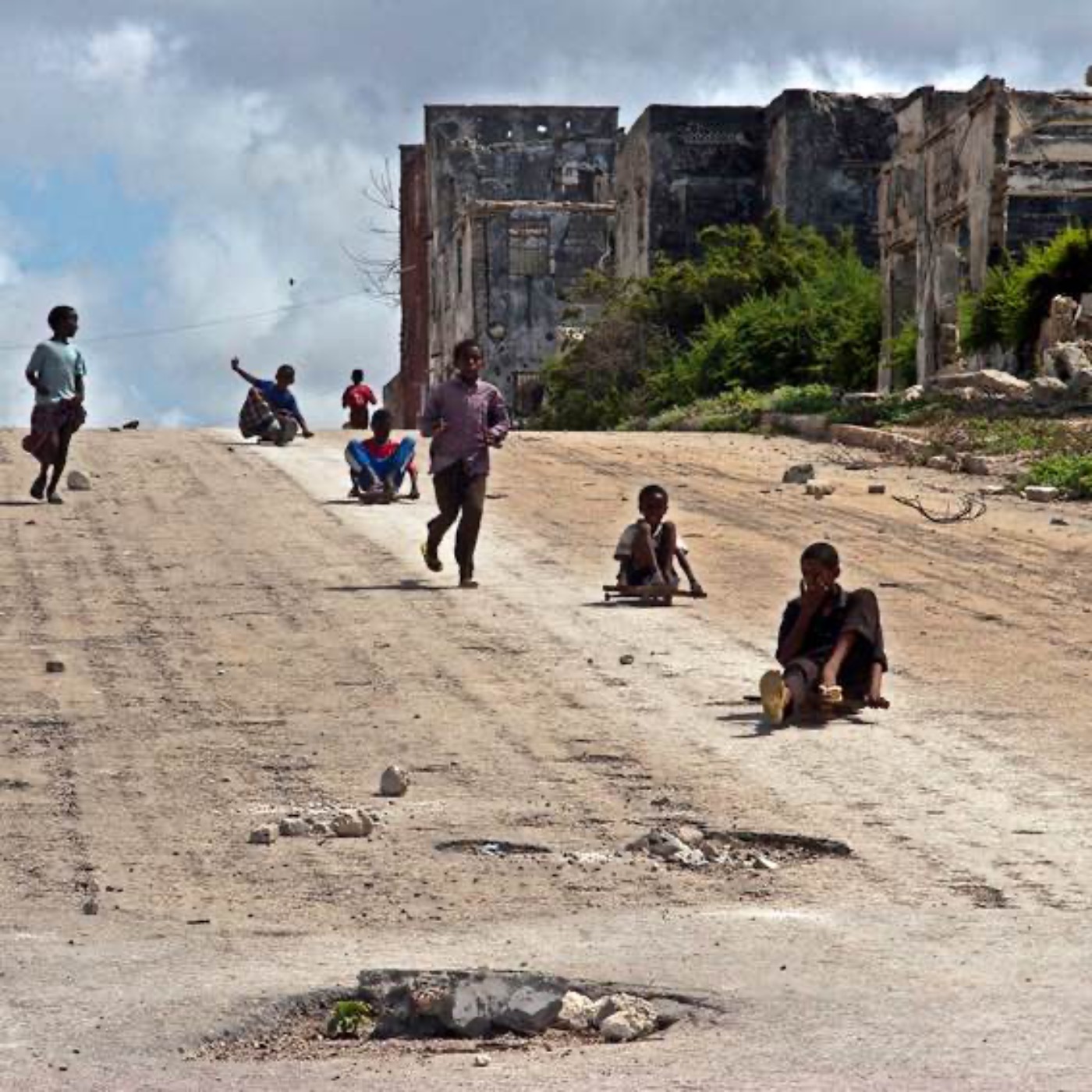
It's too. 2008 in Somalia, Nigel Brennan and Amanda Lindhout just had their world ended in an instant. A car stopped, guns raised. And just like that, two journalists who had gone to Somalia to tell other people stories became one. What Nigel and Amanda were now facing is something most of us will never experience, but something that is actually far more common across the world than most people realise. Between 20 and 30,000 kidnapped for ransom incidents are reported worldwide every year.
- [03:09]
Narrator/Host
If I get what I'm wanting after 24 hours, all of them, they will be killed.
- [03:16]
Narrator/Documentary Voice
This is our 27th day in captivity.
- [03:19]
Narrator/Host
So far we have been provided with
- [03:21]
Narrator/Documentary Voice
adequate food and water and facilities and
- [03:25]
Narrator/Host
so we are unharmed and in reasonable physical health.
- [03:29]
Narrator/Documentary Voice
Mentally, we are under great stress and threatened. And experts believe those figures are merely the tip of the iceberg. Because one of the first instructions kidnappers usually give is do not tell the authorities. Nobody knows how many cases never actually get reported at all. Some kidnap experts estimate that only 11% of kidnapped victims are freed without a ransom being paid. And when a ransom is paid, only around 40% of those taken will return home. Of everyone taken hostage for ransom around the world, in war zones, conflict regions, in countries where life is cheap and foreign nationals are seen as a walking paycheck, only a fraction will make it home in one piece. And the ones who do are often changed so profoundly by what had happened to them that the person who comes back is not quite the same person who was taken. Nigel and Amanda were now part of those statistics, bundled into a vehicle, disappearing into one of the most lawless countries on earth with no guarantee that anyone would ever find them. Thought that finding them would even be enough. Their 15 month nightmare had only just begun.
- [04:42]
Narrator/Host
Moon in the sky.
- [04:44]
Brooke Devard
I'm looking at the moon in the sky. This shouldn't come as a surprise, but I can't sleep.
- [05:00]
Narrator/Documentary Voice
Chapter 4 if the ransom isn't paid in 24 hours, we'll execute you.
- [05:10]
Narrator/Host
The car was just pounding up and down and I had Amanda on my lap, so I was sort of bracing my hands on the roof because it was that rough. And then the guy beside me is like, mobile phones, mobile phones. The two drivers, Abdi and Amanda, basically handed their mobile phones to them and mine was in my pocket, in my, like my ass cheek pocket. And I couldn't get to it, so I just didn't do anything and left it there. And we drive along following the car in front and Again, it's hard with time frames and I guess when you're under such stress. But it felt like about 10 minutes we were driving for, going in through little villages and then back out into sort of bush cross country. We stop. Amanda's then basically ordered from the vehicle and she's put in the front car. And at that point I was sort of expecting us to go in two different directions and was quite concerned that we had obviously been separated from one another. Cars again continue to take off and move forward at high speeds. Drive for another five, ten minutes, I'm assuming, and then we stop again, and then I'm taken out of the vehicle. So Abdin. The two drivers are left. I'm put into the vehicle with Amanda. So there's obviously a guy driving and then there's another man who introduces himself as Ahmed, who speaks fluent English, says pretty much that I don't need to be concerned that they are part of the Somali mujahideen and their leaders are aware that we are in the country and they obviously want to meet us to understand what we're doing in Mogadishu.
- [07:14]
Narrator/Documentary Voice
Did any outs of you believe that whatsoever?
- [07:18]
Narrator/Host
I guess there was part of me that was sort of wanted to a little bit. But look, I think that that was sort of, you know, evaporated very quickly once we pulled up in a small little village and there was a bit of confusion between the people that had taken us. And then finally they opened these large, large metal gates to a compound. So pretty much everyone in Somalia has these massive 12 or 14 foot high walls with razor wire and stuff like that on them and big metal gates. And when those gates opened, I could see inside, and then there were more guys with mask faces and guns and stuff like that. It's just like, okay, so this is obviously been well planned.
- [08:14]
Narrator/Documentary Voice
When they arrive, the pair are bundled into where they would be being kept for now anyway, because over the course of the next 15 months, they would be moved time and time again, in fact over 11 times to different houses and makeshift cells. But for now, this was where they'd stay. There were three rooms inside the building, side by side with an outside toilet. Amanda and Nigel would be kept together and placed in the very end room. As soon as they arrive, Amanda asks to use the bathroom. It's a strategic move because the day prior, the pair had been out with the African union forces. And Amanda had numerous photos on her camera of the soldiers, photos that she feared might be seen by their captives as reasons for violence. And she wanted to try and get rid of them as quickly as possible.
- [09:02]
Narrator/Host
They obviously thought she was trying to hide something. So when she got back into the room, they came in and like, I was. They walked in and they basically told me to close my eyes and obviously which I did, listening to what they were telling me to do. And they then put their hands down Amanda's breasts and down her pants, which she screamed at. And it was just like, okay, this isn't just a meeting. This is more sinister for sure. And then from then it was, I guess over the next few hours,
- [09:36]
Brooke Devard
you
- [09:36]
Narrator/Host
know, was fortunate at that stage to have a packet of cigarettes and was smoking like an absolute fiend because I think in a stressful time, it was just like, this is going to calm me down. It probably didn't. They came in, they wanted our passports, they wanted our cash. And it was interesting. The one thing that I did do the morning before we left when I did have that, I guess, intuition, I was carrying my passport and I was carrying almost 2000 US in my. In currency. And I actually said, I'm going to leave this at the hotel. And I put it in the manager's office. But they're like, where are your passports? They're at the hotel. Where's your cash? It's like, we don't have any cash. Obviously I had my camera bags with two digital cameras and a film camera and lenses and those sorts of things. They weren't interested in that. I still had my mobile phone in my back pocket at this stage and was thinking about, do I try and call someone? Obviously just completely full of fear too, that, you know, if I get caught with that, then what are the ramifications for it? And then maybe an hour after we got to that compound, they came in and they looked at me and they were like, mobile phone. And I was just like, yep,
- [10:47]
Narrator/Documentary Voice
don't have to ask me twice.
- [10:49]
Narrator/Host
But yeah, those first, you know, few hours were really intimidating. Having masked gunmen sort of come in and point AK47 heavens at you. And. And look, the room that they put us in was, you know, a dilapidated old sort of lean to with a. With a dirty old stained mattress. And it was just like this. This looks sort of like Bangkok Hilton, but worse.
- [11:21]
Narrator/Documentary Voice
It's all happening so fast. Just out of nowhere. You now all of a sudden you've been taken. You don't know where you are, you don't know who these people are. Does anything go through your mind or is it happening so fast that you don't really have time to think?
- [11:32]
Narrator/Host
No. Like Amanda and I are obviously talking and we're like, have we been kidnapped? Like, shit, we've been kidnapped. Like, I think it is that, but I still think there's that. I think even that trauma response of, is this real? Is this actually. Is this happening? Is this a dream? Am I going to wake up back in the hotel and this is just something I'm foreseeing in my future or. But it was, yeah, like, we were obviously talking to one another. And because I can remember the room was it. It was sort of a pink painted color. And Amanda's like, this is a good sign. Pink's my safe color. And it's just like, oh, my God. What? So that was sort of, you know, there were funny things like that. And it wasn't until, look, later that evening when, you know, they had come in during the day and what do you want? Water? Cigarettes? Are you hungry? It's just like, yeah, what do you want to eat? And I was like, I don't want any meat. Can you get tinned tuna? And that's what I ate for the. For over a hundred days, morning and night. So tin of tuna. Morning. Tin of tuna at night with a bread roll and sometimes some pasta or something. Like.
- [12:53]
Narrator/Documentary Voice
Their first night in captivity, four men would come into the room. One being Ahmed, the man who'd been in the vehicle with them when they were kidnapped. Another man, who called himself Adam and would be the group's negotiator when it came to ransom money. There was an older gentleman referred to as Captain Yaya, and another guy who remained masked and it would seem would be acting as the more intimidating member of the group.
- [13:17]
Narrator/Host
He used to come in. In that. That first day. He would sit there and just stare at us for like, 40 minutes and say nothing. It was just like, okay, this is awkward, but yeah, they came in and basically said, who are you? What are you doing in. In Somalia? And we explained who we were, where we're from, that we're freelancers. They then very quickly said, we believe that your spies working for the transitional government, which Amanda and I basically laughed at, and said, you know, if you've got the Internet, which I'm sure you do, even in Somalia, like, if you do a simple Google search, you'll find information about us and you'll see that we're telling the truth and stuff. So they disappeared for 20, 30 minutes, something like that. And then they came back and they said, look, we believe that you are journalists, but unfortunately, Nigel, because you come from Australia, and Amanda, because you come from Canada, Both of your countries are at war with Islam at the moment because they have forces in Iraq and Afghanistan. Therefore, we are going to basically hold you for ransom and we're going to demand money from your governments.
- [14:32]
Narrator/Documentary Voice
So, of course, we've touched on government ransoms in our previous story with British journalist Sean Langan, when we spoke about the fact that the UK Government does not negotiate with terrorists for the simple reason that they believe that should they start doing so, then their citizens become a much greater target for these types of groups. And Australia is no different, as is Canada. And Nigel and Amanda knew this, but their captives seemed to believe otherwise and stated plain and simply that if they didn't pay, there would be grave consequences.
- [15:05]
Narrator/Host
We said to them, like, neither of our countries will pay. And they said, every government pays. Every single government in its. The world will pay for a citizen. They'll just do it under the table. It's like trying to not argue with them, but trying to get that point across that in this case, they were wrong and there was no way that the Australian government or the Canadian government were going to pay cent for either of us. And they said, look, we're not interested in money from your families. We only want money from the government. We're not going to involve your families at all. And I think, you know, some of the, I don't know, humor that's involved in the kidnapping. When they said to me, what's. What's the number for the Australian government? It's just like, no, I've got no idea. Like, Google it. And that was the. I guess the. The crushing point where they're like, well, who? We need a phone number? And it's just like, well, the only phone number I see your family is my mum and dad's landline.
- [16:04]
Narrator/Documentary Voice
And they don't even know you're in Somalia.
- [16:06]
Narrator/Host
And they have no idea that I'm in Somalia.
- [16:08]
Narrator/Documentary Voice
Oh, dear me.
- [16:10]
Narrator/Host
But they said, we're basically going to demand a ransom, and if it's not paid within 24 hours, we'll execute you. What makes a leader worth following? What should you really care about in your job? As technology is changing so quickly, is it just gonna be about machines talking to other machines? I mean, should you quit your job and start something on your own, what would that take? What does success and risk look like when we're all at the starting gate together? These are the questions we answer each week on Lead Human with Jack Myers and Tim Spengler. Join us each week and subscribe at your favorite podcast platform and YouTube. We'll tell stories, we'll hear from some of the best and we'll try to figure this out together.
- [17:08]
Brooke Devard
Now more people than ever can bring in their bill for a better deal at Verizon. Got AT&T or T Mobile. We got you Xfinity or Spectrum. You too. So tell your friends, your family, your quirky neighbor, Jeff, grab your megaphone and yell it from the rooftop. Get a better deal at Verizon because chances are anyone in shouting distance is included. Bring in your AT T Mobile, Xfinity or Spectrum bill and we'll give you a better deal on the best network. Come by Verizon today. Best network based on rootmetrics. Best overall mobile network performance. US 2nd half 2025. All rights reserved. Must provide recent consumer mobile bill in the name of the person redeeming the deal. Additional terms, conditions and restrictions apply.
- [17:41]
Narrator/Documentary Voice
Chapter 5. If you become Muslim, then we wouldn't be able to kill you. I mean, hearing those words would be insanely sobering, I would imagine.
- [17:53]
Narrator/Host
Ah, like, I think like even trying to contemplate that. Or is. Is this a bluff? Is this true? I've then got thoughts of, you know, Daniel Pearl running through my head and other journalists who'd been executed and it's just like, am I going to end up as like a propaganda video for the world to see? Which was terrifying. Like, not only scary, but, you know, obviously if my family would have to sit and watch that, that would just be soul destroying.
- [18:26]
Narrator/Documentary Voice
The situation is as serious as it can be. Nigel and Amanda are now stuck in a foreign country being held hostage by a group that says if they don't get their money within 24 hours, they will be dead. The reality of their situation hits home even harder later that evening.
- [18:45]
Narrator/Host
You know, that later that night we're allowed to actually leave the room and sit outside on a mat outside. And it was dark and sitting outside smoking and talking to Amanda and obviously the. The guys that had taken us were listening to the BB World Service in Somali and I can remember hearing Australian, Canadian journalists kidnapped. And it's just like that. There's, there's the hand grenade that I've just lobbed into my family's home. Literally just lobbed a hand grenade and someone's gonna have to jump on it.
- [19:18]
Narrator/Documentary Voice
How is it in the news so quickly?
- [19:21]
Narrator/Host
I think whether a juice was made aware and I guess, you know, obviously very few Westerners in Mogadishu and when two Westerners go missing, that would be fairly hot news, I would reckon.
- [19:33]
Narrator/Documentary Voice
Obviously you're now sitting there not only with the fear of, you know, becoming one of these videos and death, but I'm assuming quite a bit of guilt.
- [19:40]
Narrator/Host
But I don't think that it sort of kicked in at that stage. But it was like, you know, Mum and dad had had sold their, the family farm in, in 2005 and it had set them up for a comfortable retirement. At that stage our group hadn't informed us what they were asking for. It was only days later they found out that they. The initial demand was US$3 million for the two of us. And I knew that would basically decimate my, you know, my parents retirement fund was also, you know, very aware that Amanda's family were incredibly poor. They did not have the financial means to pay a ransom. Not that my family had the financial means, but they did have money and investments and property and stuff like that. But I think the realization that if I was going to get out alive, it was going to be my family were going to not only just have to pay for me, but they were going to have to pay for Amanda as well.
- [20:48]
Narrator/Documentary Voice
So the deadline comes and goes and of course no money is handed over. However, Adam from the group comes back to Nigel to inform him that he's spoken with Nigel's sister and that the money was going to take some time to organize. So they're planning on moving them to a more permanent location, one they said was more comfortable. They say that the most stressful part of kidnapping is simply the unknown. Not knowing what will happen to you, where you might be moved to, what the kidnappers might do to you in the form of violence and torture if they will let you go home at all. Nigel says their situation had an extra element of the unknown and that was the personalities of the men who had taken them.
- [21:28]
Narrator/Host
But I guess when you live with 13 hostage takers, I think the longer it went on it was. It was like living with 13 schizophrenics because you just didn't know what you were going to get on any given day because people's moods and things like Ramadan, when people are obviously fasting and people get cranky, so someone that you thought you had a relationship with could, you know, basically just scream at you or slap you in the face. So it was weird. But I think, look, in those first few days it was just trying to, I think for me come to terms with reality. It's just like, is this reality? Is this actually happening? Just the complete disbelief that was occurring in my mind. And obviously it was great from my perspective, being kidnapped with another Person. Just having that connection with another human being, I think is, you know, having to do that by yourself would have been incredibly difficult. But just, you know, having Amanda there so that we could talk about things. We could, I guess, try and surmise what was happening, Trying to bolster each other's spirits, those sorts of things, and then trying to get an understanding of who our captors were as well. Like trying to start to get to know them. Even the young guys who used to bring our food, One of them, one of the young guys, Jamal, who really was like 6 foot 3, dark as the night, had the widest teeth on the planet, Massive, big smile, he spoke English. And, you know, I started up a. I guess a relationship with him. Not a friendship, but a relationship. So I started talking to him about who he was and what he wanted to do with his life and those sorts of things and just trying to show general interest. And for me, it was about trying to make myself a valuable asset, too. Like, trying to get people to like me so it maybe would be harder for them to kill me. Maybe that's a stupid idea, but that was, like, my survival mechanism sort of kicking in.
- [23:30]
Narrator/Documentary Voice
Well, Nigel, it actually wasn't a stupid idea at all. You see, what Nigel was doing deliberately, consciously, strategically, was something that hostage psychologists and crisis negotiators have studied for decades. And the evidence suggests he was absolutely right to do it. The instinct to humanize yourself to the person holding you captive is not weakness. It's not naivety. It's one of the most intelligent survival strategies a hostage can employ. Research on civilian abductees has found that those who sought to build reciprocal relationships with their captors through conversation, acts of care, finding common ground, did so as a deliberate strategy to reduce the harshness of their captivity. The logic is straightforward. It is significantly harder to hurt someone you know, harder to execute someone whose children's names you know, whose dreams you've heard, whose faces have become familiar rather than foreign. By asking questions about their lives, families, ambitions. Nigel was not making friends. He was making himself A person. Not a commodity, not a paycheck, a human being. There's actually a quote from one of the original Stockholm bank robbers, the incident that gave us the term Stockholm syndrome. It speaks directly to this. Years after the robbery, reflecting on why he hadn't harmed the hostages. He simply said, they made it hard to. They made us go on living together day after day, like goats in that filth. There was nothing to do but to get to know each other. That is exactly what Nigel was counting on. Hostage survival research consistently shows that those who come through captivity intact tend to contain their hostility, maintain routines, seek flexibility where they can find it, and crucially, mask any hostile reactions to their captors rather than act on them. Nigel wasn't just surviving day to day. He was thinking ahead, Building something, however fragile, however one sided, that he hoped might one day save their lives. And in fact, they did something even more and would play up to the group's extreme religious ideology.
- [25:50]
Narrator/Host
Even, you know, in the. In the first week or so, asking for a, you know, both Amanda and I asked for english versions of the Quran, which the group were, like, quite excited about, us wanting to read the Quran in english. And then after a few days, they said, well, you know, if you become muslim, we wouldn't be able to kill you. But if you don't become muslim, then the outcome will probably be we'll get a ransom and then we'll execute you. And it's just like, I don't really have much chance.
- [26:25]
Narrator/Documentary Voice
No, I mean, I mean, it's the best recruitment technique I've heard of so far. I mean, you know, I mean, I don't think too many people are going to argue with that one.
- [26:35]
Narrator/Host
Amanda and I sort of talked about that, and it's just like, well, we don't really. It doesn't feel like we have an option. So again, here's a survival technique that we convert and we become muslim. And perhaps that allows us some. Some basic privileges.
- [26:58]
Narrator/Documentary Voice
So it's worth pausing here to acknowledge what this moment actually was, because in other hostage situations, in other conflicts, conversion has been used as a weapon against captives at all of psychologically pressuring and humiliating. There are accounts of hostages being offered food, better conditions, small mercies in exchange for renouncing their faith. Many have refused at great personal cost because to them, their identity was the last thing that remained entirely their own. However, Nigel and Amanda made the opposite calculation. They weren't people of strong religious conviction being asked to abandon something sacred. They were two people in an extraordinarily dangerous situation, looking at every available lever that they could pull to stay alive. And religion, specifically the deeply held religious ideology of the men holding them, was a lever. The psychology behind this is well understood. Hostages who sought to build reciprocal relationships with their captors through shared experiences, through acts of alignment, did so as a deliberate strategy to reduce the harshness of their captivity. Shared belief, or the appearance of it, is one of the most powerful bonds that exist between human beings. If your captor believes you are now in some sense a brother or A sister in faith, the calculus of whether to hurt you shifts. However, Nigel does say that the decision also did come with a number of downsides.
- [28:29]
Narrator/Host
Like, I don't understand anything about Christian religion, let alone the Islamic religion. And I think I'd read maybe five pages in and was like, I want to convert. And they were super excited about that. And we went through the whole, you know, saying the profession of faith and doing what you've got to do to become Muslim. And. And afterwards, there was lots of high fives within the group. They were really excited that we'd become Muslim. And it was like, okay, now you're Muslim. And it's just like, okay, what does that mean? Like. And they're like, well, you got to pray. You obviously have to wash all of those things. Which. Not that they really taught us how to do those things, but there was this expectation now, as a Muslim man and a Muslim woman, that we would have to basically pray five times a day and do all of the things like fasting when Ramadan and those sort of. When those things came around. But it was the day after we had converted. I got to speak to my sister Nick, back in Australia. So I think it was day 11. I got to speak to Nick. So I was informed that I'd be talking to my sister. I was told to write a script of what they wanted me to say. I was brought a phone with a couple of. Of guys sitting around me pointing guns at me just to ensure that I didn't go off script. And, you know, to hear my sister's voice was. Was both beautiful and heartbreaking because I, like, I knew that I was, you know, causing so much trauma for them as well, which was, you know, that's where the guilt and shame started to kick in. It's just like, you know, you're a muppet. Like, you really didn't think about the consequences of your actions at all, like, and what that meant for your family by going into Somalia and being kidnapped. Not that I ever thought that I would get kidnapped. That's the. That wasn't even in my thought going into Somalia. But I think with that guilt and shame, you know, comes a form of depression, too. It's just like, it's hard not to sort of head into the darkness and think the worst thing of, I'm going to end up here dying. I'm going to end up financially destroying my parents, you know, even having ethical dilemmas of do I want my family to pay a ransom? Like, I'm 35 years old. I've Had a pretty good run. It's been a good 35 years. Do I ethically feel it's okay for my parents to be paying this money so that the white guy gets to go home? Like, what is that money going to be used for? So I would. I was, I guess, having these arguments with myself, which may sound strange, but it was. It was this thing of like, well, is that fair that the white western guy goes home because he has money, and then that money gets used for buying weapons, and then innocent people are being killed in Somalia with those weapons? Like, is that fair? And is that not fair at all?
- [31:31]
Narrator/Documentary Voice
The stress, guilt, and depression would begin to spiral for Nigel in those first few weeks in captivity. But thankfully, Amanda was there and able to bring him out of it and focus his mind on the situation and just how they were going to get through it and out the other side again.
- [31:47]
Narrator/Host
That's why I was. I was really grateful to have Amanda there because I started to even get angry with her because it was like, you were the one. This was your idea, you know, not wanting to take accountability of getting on the plane myself. Like, she didn't drag me on the plane. I walked on there, you know, quite freely open will. But it was just like you were the one that suggested coming to Somalia. This is your, like, not saying that to her, but this is in my thought process. So I was sort of withdrawing from her and not really speaking to her.
- [32:16]
Narrator/Documentary Voice
And.
- [32:17]
Narrator/Host
And look, she gave me a fairly stern talk around the two week mark and just said, look, we actually need to work together because I'm struggling as well, and I need your support, and I think you need my support. And probably from that point on, we sort of worked as this, well, sort of oiled peer support network between the two of us. So we spent a lot of time in the room. Like, we're allowed to go out twice a day for 15 minutes and. And sit in the open air, which was sort of fairly daunting when guys are standing around pointing AK47s at you. I think I'd actually just prefer to go back to my stall where there's a toilet, and I basically got a little bit of privacy. And we were never locked in rooms through the whole ordeal. Like, our doors were just shut. But even, you know, I guess, with complete boredom of nothing to do, I created like a backgammon board. So I used, like, I got a couple of panadol and carved dice and obviously put numbers on them so that we could play. And we used cotton tips as little pieces and we drew up a board and stuff like that so we could actually, we were playing games and you know, even famous faces, things like that. Amanda liked to play the food game, which I didn't like so much.
- [33:42]
Narrator/Documentary Voice
Just fantasizing about what you would eat.
- [33:45]
Narrator/Host
Yes. What would you. What, what would you eat if you could right now? She's like, this is not a fun game I taught you. Or even as time went on, she's like, okay, let's have a bet. What date do you think we're going to be released?
- [33:59]
Narrator/Documentary Voice
Oh, deary me.
- [34:00]
Narrator/Host
But it kept us entertained. But, you know, and that, that we sort of, we, I guess for the next six weeks we're working together really well and obviously, you know, just talking about life and just going into minute detail about things that we'd done in life and stuff like that and getting to know each other better and our families and those sorts of things. And then around the two month mark, things sort of. That's where things changed.
- [34:45]
Narrator/Documentary Voice
Nigel and Amanda's captives apparent excitement that the pair had chosen the religion of islam would seemingly be short lived. And in fact, it would enable them to remove the one thing that was keeping Nigel focused. Amanda.
- [34:57]
Narrator/Host
And that was, that was, you know, fairly scary because it was like, well, where are they taking her?
- [35:02]
Narrator/Documentary Voice
Although the pair had been separated, they would find ways in which to communicate.
- [35:05]
Narrator/Host
And I can remember Amanda walked past my room and pushed it open, just flicked a note in and she said we can leave messages for each other in the bathroom in this spot.
- [35:14]
Narrator/Documentary Voice
Communications that started out as simple messages of support and love to those around the discussions of escape.
- [35:23]
Narrator/Host
The next morning, thinking about it, I sort of said to Amanda, I think we need to seriously consider an escape. If they've killed our three colleagues who have been muslim their entire life, what are they going to do with a couple of whities who have literally converted for five months?
- [35:36]
Narrator/Documentary Voice
Next time on what I survived.
- [35:38]
Narrator/Host
Moon in the sky.
- [35:40]
Brooke Devard
I'm looking at the moon in the
- [35:42]
Narrator/Host
sky this shouldn't come as a surprise
- [35:46]
Brooke Devard
but I can't sleep. War in my mind I'm trying to fight a war in my mind I don't know who's the winner tonight but it ain't me. Hey, honey, it's mom. Did you know if we switch to verizon, we can get four phones for $0 plus four lines for $25. Call me back. Me again. That's just $100 a month for four lines on unlimited welcome plus four phones. No trade in needed. Call me. It's mom. America's Best Network Verizon. That's the one we're talking about. I'll send you text America's Best Network
- [36:35]
Narrator/Host
based on RootMetric's best overall mobile network performance US second half 2025 four new
- [36:39]
Brooke Devard
lines and a limited welcome and autopay.
- [36:41]
Narrator/Host
See verizon.com for details. Acast powers the World's Best Podcasts here's the show that we recommend. Do you like being educated on things
- [36:54]
Brooke Devard
that entertain but don't matter?
- [36:55]
Narrator/Documentary Voice
Well, then you need to be listening
- [36:56]
Brooke Devard
to the Podcast with Knox and Jamie
- [36:58]
Narrator/Documentary Voice
Every Wednesday we put together an episode dedicated to delightful idiocy to give your brain a break from all the serious and important stuff.
- [37:05]
Brooke Devard
Whether we're deep diving a classic movie, dissecting the true meanings behind the newest slang, or dunking on our own listeners for their bad takes or cringy stories, we always approach our topics with humor and just a little bit of side eye. And we end every episode with recommendations on all the best new movies, books, TV shows, or music.
- [37:21]
Narrator/Documentary Voice
To find out more, just search up
- [37:22]
Narrator/Host
the Podcast with Knox and Jamie wherever you listen to podcasts and prepare to
- [37:25]
Narrator/Documentary Voice
make Wednesday your new favorite day of the week.
- [37:31]
Narrator/Host
ACAST helps creators launch, grow and monetize their podcasts everywhere.
- [37:37]
Brooke Devard
Acast.com A Rich Life isn't a straight line to a destination on the horizon. Sometimes it takes an unexpected turn, with detours, new possibilities, and even another passenger or three. And with 100 years of navigating ups and downs, you can count on Edward Jones to help guide you through it all. Because life is a winding path made rich by the people you walk it with. Let's find your rich together. Edward Jones Member SIPC.