Loading summary
Transcript50 lines
- [00:04]
A
Hello, this is a call from Junior, an incarcerated individual at Airway Heights Correction Center. This call is not private. It will be recorded and may be monitored. You may start the conversation now.
- [00:17]
B
What's going on, buddy?
- [00:18]
A
Shoot. I got some good news.
- [00:20]
B
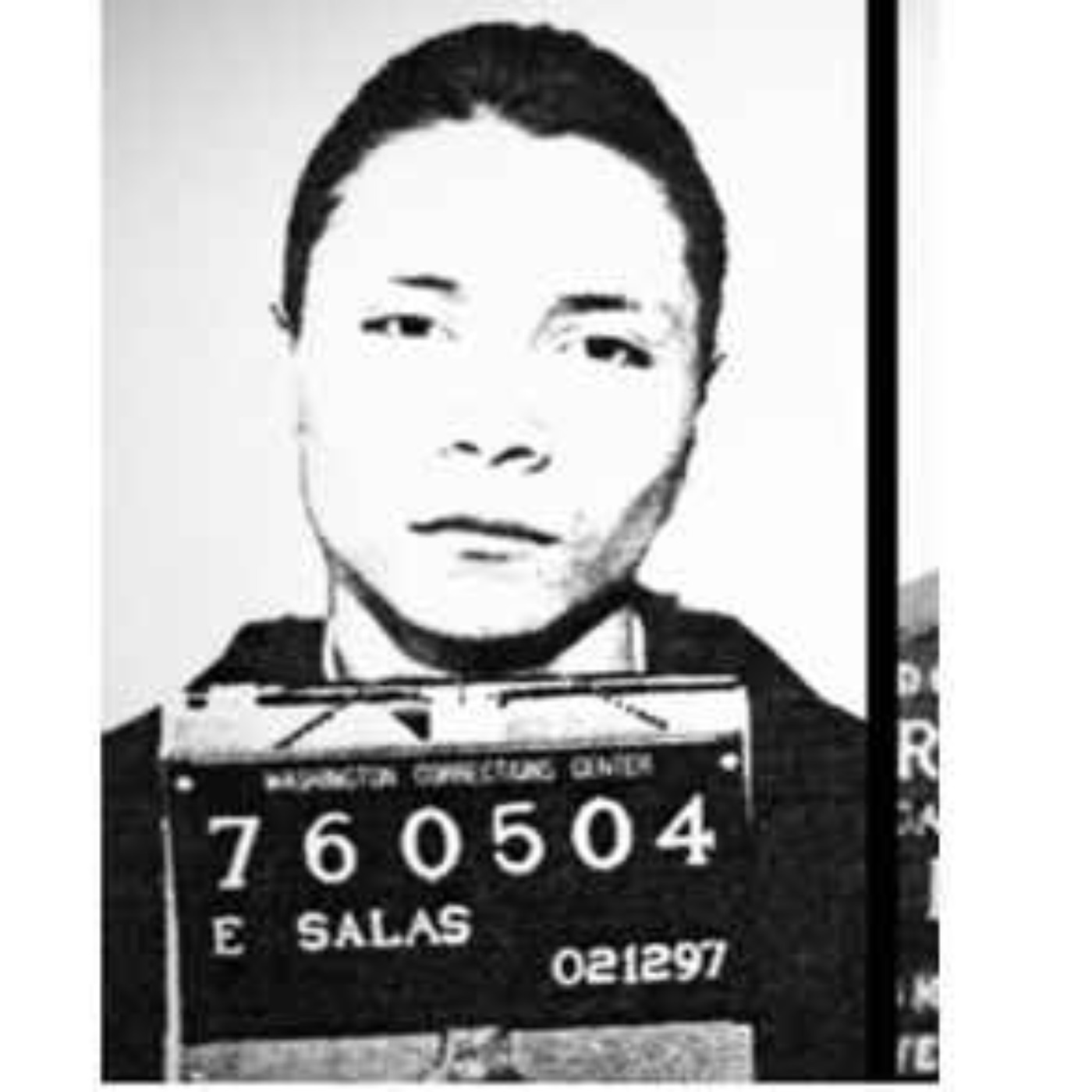
I know, man. I saw. I've seen the article and your sister sent me a message and she's like, have you seen this? Hello and welcome back to one minute remaining. My name is Jack Lawrence, the host and creator of this show. Today we have a catch up with Evaristo Salas Jr Jr was convicted of a murder at just 15 years old and has been fighting to clear his name ever since. After over 27 years of fighting and now in his 40s, Junior has finally been given an incredible lifeline. So for those who are part of our private Facebook group, which is open to you all right now, you'll know. Recently I posted an article about a decision that has been made by the Court of appeals. A decision that has finally gone in the favour of Junior Salas. So many months ago, Junior and his legal team went back to court with an entire smorgasbord of new evidence that was never made available to his defence team at the time of his initial trial. Proof that the truck in which the murder had taken place had been not only cleaned, but repaired and then sold by the victim's girlfriend just four days after the crime had taken place and before the police had even had a chance to examine the truck for more evidence, as well as the fact that the victim's girlfriend had undergone hypnosis prior to her identifying Junior as the shooter, as well as this evidence that not only the lead detective had paid his informant in this case, but also that that informant had then recanted his statement stating that his evidence was false. Yet still with all of this in front of the judge from Yakima county, he essentially just dismissed it all. Junior's legal team requested that the judge move to subpoena all three of these individuals so they could be questioned on all of these matters that had not been disclosed at Junior's original tr. Again, the judge just denied the request. Junior's next move was to appeal this decision and take it to the Court of Appeals. Three independent judges would sit and listen to both sides arguments and went away to make their ruling. And just last week came back not only in Junior's favour, but also to call out that previous court's decision and the judge's comments in this ruling as improper. So I just want to give you the heads up here that Junior's Phone line. This particular day wasn't great, but we work with what we've got when it comes to the American prison system.
- [03:15]
A
The last hearing I went to a couple months back, they overturned that ruling of that judge and pretty much granted us everything we wanted in that hearing and a little bit more. So they, they gave us basically subpoena power and they subpoenaed the Sergeant McGuire, they subpoenaed the Ophelia, the informant and then the mother of the victim. They had to testify. It's not going to be like a mini trial. They have to testify to, for the witness Chef testified to why she destroyed the evidence of the car, that kind of stuff. And then Brevard being a white, you know, paid in informant and everything, and the foreman, you know, recanted it and everything. And so he's going to testify about that and then the mother is going to testify about the witness being hypnotized. Prior to that, the judge specifically said, or the judges specifically said that they need to focus only on those issues. You know, and I think he was speaking more to the prosecutor than he was to us because those are the issues we asked for. And then the wording too in the brief or the, the order that they sent out was, was pretty much directed at that judge from Yakima County. They kind of hammered him on certain things about the things he said and they said how improper it was to say those kind of things. It was kind of a long list of things that, that how he kind of didn't follow any of the procedures that he's supposed to follow. They pushed back on that and on top of that they sent it back to Yakima County. They granted me a reference hearing with subpoena. These people in there basically ordered them to have to come to testify if they can't get out of it or nothing. Gave a timeline of when to do it. They have to do that by September 1st and then once the judge hears all that on the appointed a new judge in Yakima county to hear it and once that just hears that, he has to kind of develop a fact finding thing and then forward that to the court of appeals and then they're going to decide on whether to grab mayor and be trial or vacate the conviction.
- [05:02]
B
The court of appeals has stated that these three witnesses, Ophelia Gonzalez, Detective Ravad and his snitch must take the stand and answer these questions. They have been subpoenaed by. They have no choice but to be there or find themselves in some serious hot water. I mean, this is. This is massive, dude. This is just. This is amazing that they've. The fact that they've subpoenaed those people and said, you have to come here and answer these questions. You have no option in this. You have to be here and you have to ask these questions. That's huge.
- [05:32]
A
Yeah. And they said they'll provide them with lawyers if they need lawyers, if they can't, can't afford them for themselves. And this is big because like I said, the. That detectives been dodging us, you know.
- [05:41]
B
Oh, absolutely.
- [05:43]
A
He has to sit there on the stand and then. And it's a little ironic if you think about it, because now the wheels have turned in the other direction.
- [05:50]
B
Absolutely. Now he's on the stand having to answer some questions.
- [05:52]
A
I can't imagine what he's going to say. But if his beers off. We have numerous different statements that he's given that of course my lawyer is going to call him out of those things, you know, and he's going to. He's going to be under oath. So you can't sit there, you know, kind of say anything different than what he's already said or try to change it this. Because then we can catch him in all these lives.
- [06:10]
B
He is going to be sweating bullets.
- [06:12]
A
Oh, yeah, exactly. And that's why he fought so hard not to be a part. Which is strange because in the last hearing, when we basically asked the judge to order that, the judge was like, I'm not doing that. He didn't even care. Like, basically didn't even listen to us. But the prosecutor response was, well, he doesn't. My client doesn't want to come. What you was talking about, the detective doesn't want to come. And if he comes, he won't speak unless he has a lawyer present. Which is really strange for a detective to say that, you know, I mean, unless there was something he was trying to hide.
- [06:39]
B
What's even more amazing about this decision is that a time frame has been placed on when this needs to be completed by all too often, courts and prosecutors will drag their feet and decisions and hearings can be delayed and moved and delayed again. Meaning you just never know when you might find yourself back in court, but not in this case. Are you going to be able to be there when this all happens.
- [07:01]
A
So I have the option to actually head to the Yakima county, but. Or have a zoom meeting from here. So I told the lawyers, let me have it here, because the transfer over there is just a big old hassle. I kind of lose my Spot my job here and even my room or myself. And that, that county jail is horrible, you know, so it's like, yeah, yeah. Unless I have to.
- [07:21]
B
Yeah. And I'm assuming that you won't get a chance to talk though. It's. They're purely just going to be cross examining these, these three witnesses.
- [07:27]
A
Yeah, I think that's the case. I might be able to request, maybe be able to make a statement right before the judge decides what he's going to do, whatever. So I'm going to talk to my lawyers about that's the case. I'm definitely going to try to speak, you know, if they allow me to. I'm not sure if they will though.
- [07:40]
B
The other thing I think is fantastic is they put a date on this. They said, you need, we, we need to have an answer by September.
- [07:46]
A
Well, I think that that was me and my lawyers spoke about too. My lawyer is like, they never do that.
- [07:50]
B
Yeah.
- [07:50]
A
But my guess, my lawyer is like, I'm assuming they did that because you've already been in prison for over 27 years. And I mean, I mean, how long are they going to drag this out? The fact that the court of appeals retained jurisdiction over the case is big too, because they never do that. They usually allow the trial judge to decide and then, and then they specifically stated that, that they're supposed to send that fact finding, you know, information to the court of appeals and then the court of appeal is going to decide on whether they kicked the conviction.
- [08:18]
B
But again, again, that's exactly what, that's the way and that's the way it should be because all that's going to happen. If they were to leave the, the decision in the hands of that judge in Yakima county, who's no doubt mates with the other judge and you know, everybody else, you know, prosecutors and unfortunately it seems like you don't get a fair decision. And so for the fact that they're holding onto it and they're saying, well, no, we'll make the decision. You do all the, the work and the investigation, send us the findings and we will make the, the ruling.
- [08:43]
A
Yeah, I mean that, that was like the extra thing that they added on. That's what we were hoping for. The fact that they maintained it. They basically, like I said, they basically just gave us everything and they also kind of, they highlighted the statements that seemed improper. What the judge was saying on, on the order and in the ruling. Some of the things he said were just one of the statements of the judge was to my lawyers. Well, I don't think the court of appeals is gonna care as much as you think they will about this, you know, and they highlighted that in the response, you know, said how improper that was, you know.
- [09:13]
B
So what can happen from here? Well, Junior says he doesn't believe that the court of appeals has the power to completely exonerate him. But what they can do is order a new trial based off this undisclosed evidence. They could turn around and say, you know, give you a new trial. There's no way surely the prosecutor going to come back and say, no. Yeah, okay, we'll take this back to trial when you've got less than three years left, surely.
- [09:35]
A
Yeah. And if they even decided that. So my most likely because the way he's been kind of operating the procedure prosecutor turn, he's just been dragging everything out and just kind of just letting it go as long as it can. Which is horrible if you think about it. I mean, I mean I have even on this sense I got less than three years left, you know, but he's still dragging as much as he can because that's the only hand he has to play.
- [09:58]
B
Yeah.
- [09:59]
A
So if they were to grab me new trial, I was getting sent back. As soon as they grant us that, that or they came my commission to grant me the trial, I would ask for a 60 day speedy trial.
- [10:07]
B
Yeah.
- [10:07]
A
Just right off the bat. And the only thing option he can do is probably just drag it out to the day that we start, you know, or we start that initial, you know, process of going to trial. And that's what my lawyer thinks. Well, he'd be foolish to even try because there's, it's just, there's so much, there's so much wrong about this case and even the judge might just dismiss it right off bat. But to take it to that point, I know it's like the only thing he's probably going to do is just try to drag it up into that point, which is horrible. But that's what he's been doing since the get going. And so I hope not. I hope that once they vacate my conviction and we go back where they remind me for their trial, that right there he just says, you know what done his dad.
- [10:47]
B
So when, when you mean when we say vacate your conviction, that's not an exoneration, is it? That's just. Well, can you explain the vacate conviction? What that, what that would mean?
- [10:56]
A
Yeah, the vacate conviction is not an exoneration, which is horrible too. They're not saying by vacating my conviction that oh you know, you're exonerating, they have to actually use that wording in order to exonerate you. So vacating my conviction would mean that they vacate the decision of the jury and the trial and they pretty much. The conviction is gone, and then they remand for a new trial. And so such as the prosecutor, attorneys I would have. That's why. So if they were to actually exonerate me, then I'd probably just be released. And I don't know if they can even. I don't think they can even do that. Their court deals can even do that. I think the only option they have is to vacate the conviction in the remand for new trial. Because the whole system is based on your due process rights and all that kind of stuff, you know, and whether you had a fair trial. I mean, so it's a strange, you know, part of the American system.
- [11:46]
B
So I mean, say obviously, best case scenario, they come back and vacate the conviction and order for a new trial. You know, obviously the prosecutor, we would hope would turn around and say, well, you know, we're not, we're not going to retry this case. Obviously that's, that's brilliant. You get to go home. But obviously, ultimately we need here an exoneration. So then once you're. Once that conviction's vacated and you're out of there, would your plan be then with your team to go for that exoneration?
- [12:11]
A
Yeah, our next step would be somehow, some way, you know, go for that exoneration in one form of another. That's what really matters to me. I mean, for them to just make it my conviction, dismiss it. They're not taking any responsibility. No, it's just. Okay. Yeah, yeah. Okay, man, you're out of here.
- [12:27]
B
Yeah.
- [12:27]
A
27 years is gone. I'll never get that back. But just having it on record that I was exonerating, kind of, that's. That would be my ultimate goal right there. The exoneration would be acknowledging, acknowledged by their part, saying that we wrongfully convicted you. It's just another step that would give me, you know, a certain amount of. I would say, you know, justice or I mean, you know, when someone does something wrong to you and they acknowledge that they did that wrong to you. Yeah, that gives you closure to a certain extent. And I think that's what that would do for me.
- [12:56]
B
Of course, as we've learned by now, you never want to count your chickens before they hatch when it comes to the American legal system. But this decision certainly gives hope that finally, people are looking at these incredibly glaring issues in this case and saying that they need to be addressed and people must explain themselves. So we're going to take a short break, but when we come back, Junior recently had an experience that he hasn't had in over 27 years, and I want to share it with you next. So, as you probably already know if you've been following this story, Junior is in a work camp. After getting himself out of the gang life in prison improving and making positive changes, he was sent to a lower security facility where they do work outside of the prison walls. He recently joined the prison firefighting team. Junior is housed at Airway Heights Correctional Centre, which is actually situated in a stunningly picturesque part of the United States. From the prison yard, you can see Mount Spokane, which during the winter is covered in snow, and in summer it is lush with green forest. However, this also means it's highly susceptible to bushfires. And of course, as part of the prison's fire service, it is up to Junior and his team to go and fight those fires. And it's a job he's been loving.
- [14:33]
A
It's been great. I actually went to two fires yesterday and they were actually out by the time we got there. One of them was 20 some acres and then the other one went to a seven. But a crew had went there the day before and then they kind of mopped up and it was pretty much out. And then the second we went to, we actually got lost on the way over there in the mountains, which was freaking great. We drove down these other different roads
- [14:52]
B
and I was like, keep going, keep getting lost. Junior and I speak via email quite regularly. He updates me on how things are going and what he's been up to. And recently he sent me an email about an experience he'd had one day up in those mountains that made me smile and really put things into perspective. Now, again, the phone line wasn't the best this day that we spoke, but I really wanted to share this with you.
- [15:22]
A
Yeah, that was quite an experience. You know, from the prison, I can see the mountains off in the distance. Mount Spokane is the most prominent feature out there because it's the highest, you know, and there was times that I would sit there and I would just stare at it and kind of imagine that I was amongst the forest. And I'd never been to that place, so I never knew exactly how it looked. So my imagination would kind of run wild about, you know, things that were up there. I can, you know, begin to imagine this.
- [15:47]
B
Finally, one morning, all that day, dreaming about those mountains was about to become reality as Junior and his team were tasked with heading up those mountains to do some controlled burns. The excitement for Junior begins from the moment he's in the fire truck heading up the mountain. These trucks are not what prisoners would usually be transported in. They're just normal fire trucks with windows that you can wind down. And, of course, that's exactly what Junior does on the drive to the mountain.
- [16:16]
A
And so I was heading up to this place, and the air is blowing in my face, and I can. I can already smell the mountain air and the pines. And the forest is getting thicker and thicker as we get closer and closer. And then it's like. It's just a wavy, windy road, and we're just. We're going pretty fast, and the air starts to get fresher and cooler. It was kind of a hot day, but up there, it was kind of cool. And so here we are. We pull over to the side and do our little safety brief that we always do, and what's expected, what we need to watch about. We get dressed up. We get our fire gear or our cutting packs on, so we head up the side of this. I mean, this Mount Spokane is just steep. It's like, you know, a 50% grade. And it's like you're climbing almost most of the time. And the footing, you actually kind of have to dig in with your tool to kind of build your footing to climb up it.
- [16:58]
B
So these crews use bladder bags full of water. This helps them ensure that the fires don't get out of control. Junior is watching a tree burn as he suddenly runs out of water and needs to head off to the creek to refill it. And this would lead Junior to a moment he hasn't experienced in decades. Complete solitude and peace.
- [17:31]
A
I ran out of water, and I was thinking, well, this tree still goes up. So I figured I had to race down to this green. I ran down the ridge and then into this creek, which is pretty far away from the main group. This creek, it was beautiful. It was clear, it was fresh, it was cold. I couldn't take as much time as I wanted to, but I didn't need to because those moments felt like it was eternity. And I kind of took it all in, kind of get my hands into it, splash it on my face, and. And I sat there, and I just kind of enjoyed the moment, kind of soaked it in, And. And I remember thinking at that moment, it's like, you know, all these years I spent looking up here, and so when I went down and experienced that, you know, I kind of just listened to it, that absorbed it and kind of makes you not only lose track of time, but almost forget all the past suffering struggles that you've been through. And. And I took it all in and I enjoyed it. And I made sure to remind myself, you know, what it felt like to kind of experience both sides of that, the other side from inside of prison. Looking up at that mountain and hoping that you know, or wondering what it would be like to be amongst the trails and the forests of that area and then actually be there. It was a beautiful feeling that came over me. It was a feeling of excitement and just to be able to enjoy that by myself. I'm so used to being surrounded by things I can't do and being able to see the things I can't do. In prison. They have all these red lines everywhere that pretty much state out of bounds, big black or red letters saying that you cannot go there. They're just everywhere you go there you get infracted and all that kind of stuff. And then you got the prominent fence that kind of pretty much knocks you off, away from everything else. But here I stood and the natural beauty of the world of this forest and there was no fence, there was no one to tell me you couldn't go there.
- [19:57]
B
When I first read Junior's email that he sent me where he was explaining the freedom that he felt in that moment by that creek, it put a huge smile on my face and made me think about how often I take these things for granted. How we all probably take these things for granted. We spend our days worrying about things like money, work and the day to day stresses in life. And we could all learn something from Junior. Here's a guy who's grown up in a concrete box surrounded by chaos, fences and bars, strict rules and regulations. His entire life has been controlled and here he is after 27 years sitting by a creek with his hand in the water, just immersed in that moment right there. Well, it's not long now and until we hopefully can bring you more great news in the case of Evaristo Salas Junior. Fingers crossed, you know all this will be behind you very, very soon. You can get on with your life. We'll get you over here in Australia. I've already floated the idea of you and I going on a bit of a speaking tour around Australia and New Zealand and I've got a hell of a lot of people very excited about that, that possibility. So would love to do that with you at some point down the track.
- [21:32]
A
Oh, yeah, definitely. Well, I'm really looking forward to that, you know, and then we definitely will make it happen once all this passes, you know, because like I said, the world is a. Is a beautiful place, you know, Australia, New Zealand. Those are really gorgeous places. And I've watched a lot of the travel channels, so I've been there physically, but definitely on tv. You have one minute remaining.
- [21:53]
B
I bet you can't wait for it to have a phone call where you don't get hung up on by an automated system.
- [21:58]
A
Him. Yeah, definitely. Definitely. Me and my. My fiance always talk about that, too. You know, she's like, nah, I just cannot wait.
- [22:07]
B
All right, brother. Have a. Have a good night, my friend, and I'll talk to you soon.
- [22:09]
A
Okay, Good talking to you. And I'll talk to you soon, too. See you, bro.
- [22:13]
B
Bye.