Loading summary
Transcript96 lines
- [00:01]
Mom
Hey honey, it's mom. Did you know if we switch to Verizon we can get four phones for $0 plus four lines for $25 a line. Call me back me again. That's just $100 a month for four lines on unlimited welcome plus four phones. No trade in needed. Call me. It's mom. America's best network Verizon. That's the one we're talking about. I'll send you text.
- [00:22]
Evaristo Salas Jr.
America's best network based on RootMetric's best overall mobile network performance US second half 2025 four new lines on a limited welcome and autopay. See verizon.com for details.
- [00:30]
Mom
A better help ad. Hold on one second, I just need to. What if you had a room where no one interrupts? No notifications, no expectations, just space to talk with BetterHelp Therapy happens in a space that's yours. Visit betterhelp.com randompodcast for 10% off your first month of online therapy. There's never been a better time to get outside and experience the benefits of nature, discover nearby trails and explore the outdoors with alltrails. Download the free app today and find your outside.
- [01:18]
Evaristo Salas Jr.
And the judge actually pushed back on it. He was like, so you're telling me that if we got an innocent person in prison then because the finality case is done, they have 25 year goals. It doesn't matter anymore.
- [01:37]
Jack Lawrence
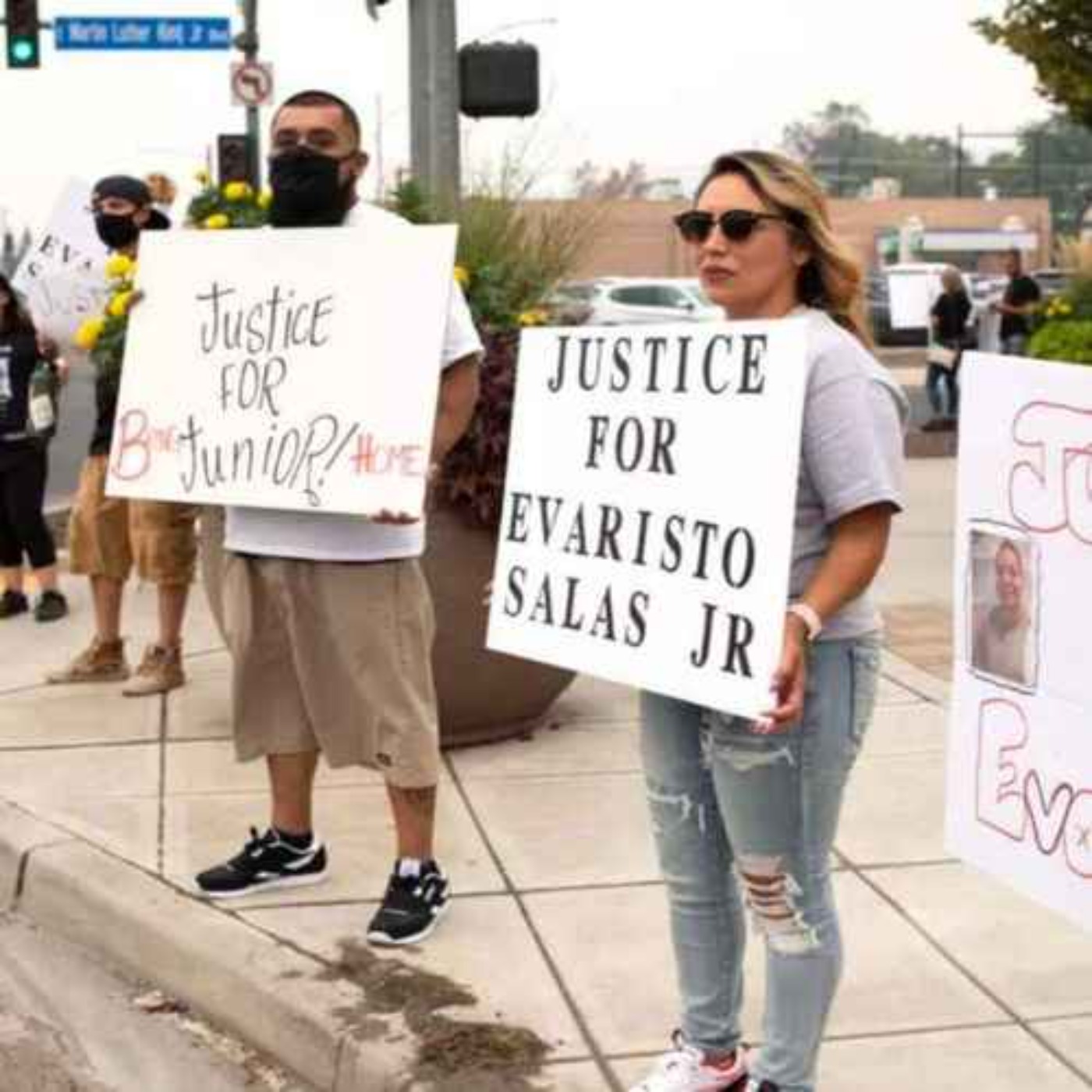
Hello and welcome back to one minute remaining. My name is Jack Lawrence, the host and creator of the show. It was only just recently that we wrapped up the story of Evaristo Salas Jr. Convicted of murder at 15, now 42, with less than three years on his sentence to serve, he continues to try to clear his name. Well, today is a quick catch up as Junior recently had a development in his appeal with the federal courts. How have you been, buddy? What's been happening?
- [02:11]
Evaristo Salas Jr.
Pretty much been the same. I've been training for this wildland firefighter job for the last couple. Couple weeks. Well, a couple months, actually. Two months now. Yesterday we did our little physical training where we had to do three miles in 45 minutes and we had, we couldn't run. We had to walk with the 45 pound pack on our back. So I got it done in 33 minutes.
- [02:31]
Jack Lawrence
Oh, there we go.
- [02:32]
Evaristo Salas Jr.
Yeah, it was pretty grueling though, you know, I mean, I had been training for like two months now. So I've been running a lot. I've been doing a lot of exercise. I do a lot of cardio anyways, but I, I kind of upped it. A little more, so I can kind of, you know, be prepared for it. I'm glad I did because it was. It was a. It was definitely a task.
- [02:46]
Jack Lawrence
So how many guys. How many guys go for those positions?
- [02:50]
Evaristo Salas Jr.
So all together is going to be about 15 of us trained, and there's only about maybe 13 or 14 positions. So we'll see how it goes.
- [02:59]
Jack Lawrence
Fair enough. And then. So if you do. If you do get in, do you do regular training and stuff like that as well?
- [03:05]
Evaristo Salas Jr.
Well, yeah, as soon as they hire me on crew, which they may do next week or the week after, pretty much just waiting for that because I'm done with everything. The other class isn't done yet, but we're done with everything. And if I get on that crew, then before fire season starts, about May, depending on the year, whenever, sometimes earlier, sometimes a little bit later, prior to that, we go out and we plant trees up in the mountains, or we clear brush and burn the brush, and we kind of keep the forest kind of healthy in certain areas. But once we hit the fires, we'll be running up those mountains, fighting those fires. There's fires all over this place every year. And we'll be out of the unit sometimes 16 hours a day, and just come back just asleep, shower and then eat and head out and then hit those. Start building those fire lines and attacking the fires, you know, so. And they pay you good money. So we'll get $22 an hour when we're on fire season. So you can make anywhere in 20 or 30 days, you can make four to $8,000.
- [03:55]
Jack Lawrence
I was going to ask what's sort of the incentive other than obviously, you know, doing a good thing and fighting fires? I was going to say, what's the sort of incentive to join? But obviously that pay is a great incentive.
- [04:04]
Evaristo Salas Jr.
Yeah, exactly. So if I. If I get a couple months of that, I can put that. And then, you know, provide for my fiance, my little boy, or I can put it aside for when I get out.
- [04:13]
Jack Lawrence
So, as we've spoken about in the past during Junior's story with him getting out in less than three years, if he doesn't, of course, get out sooner on an appeal, there's an entire world that he isn't used to, but he says he's been studying up on all the new technology as much as he can.
- [04:30]
Evaristo Salas Jr.
Well, I got a book called Eiffel for Dummies to teach me how to use. I've been reading that. And then I got Internet for dumb music, and then I got social media Marketing for Dummies. That's the way I have to learn everything. Because I had literally had no access at all to any of that stuff.
- [04:47]
Jack Lawrence
Yeah, I mean, that's the whole thing, isn't it? People on the outside take this sort of stuff for granted because we've grown up around it. But you, 15 years old, you were moved away from all that stuff. Cause, I mean, I remember when I was a kid, we didn't have the Internet. So, I mean, I remember when it first came in. But for you, I suppose it's all foreign.
- [05:05]
Evaristo Salas Jr.
Yeah, it's definitely all foreign. And then I had. When I worked out, I had this job in the CI and I worked my way up, all the way to working in the office as a clerk, as an inventory clerk. So they gave me access to the newer programs, you know, the Word and Excel and those kind of things. And then other programs that we're doing, I had to learn that on the job, kind of experience. Had books on the side that I would read, other people would help me. And then they had programs years ago at Walla Walla, like Photoshop, you know, Illustrator. I tried to take those as much as I could. But the problem with that is that in Washington State Penitentiary, there's so much lockdowns and riots and stabbings. You can't function because you're always on lockdown. I mean, these are 30 day lockdowns, 40 day lockdowns. They do sweeps, take people to the hole. And it's just. You can't really function under that. Mostly everything came from books. Every single thing I've learned about out there came from books.
- [05:55]
Jack Lawrence
So you've read a lot since you've been incarcerated?
- [05:58]
Evaristo Salas Jr.
Yeah, I mean, I got a love for reading. I mean, like no other. You know, I got an appetite for. I studied like Western philosophy. I just love philosophy.
- [06:06]
Jack Lawrence
Yeah.
- [06:06]
Evaristo Salas Jr.
And then I went off from Western philosophy to, you know, religion, the whole history of religion, you know, the beginning of Christianity all the way up.
- [06:13]
Jack Lawrence
Yeah.
- [06:14]
Evaristo Salas Jr.
Then I read a little bit of Islamic history and then Buddhist. And I read like, I spent like two or three years just reading, studying Buddhist books and samurais and Eastern culture, and it was just a beautiful culture. And then I kind of just bounced around and just, you know, read a lot of wisdom books and. And I loved it. I'm strange because I was the type of person that would love to just read a textbook. I don't even know where that comes from, but I could literally sit there and just read it. Like, when I was a kid, I used to Just read through the science book and just. I just got a lot of, lot of non useful information that I roll around with in my mind all the time.
- [06:46]
Jack Lawrence
That's most people in life though, Varista. I think most people have just got useless facts in their heads.
- [06:51]
Evaristo Salas Jr.
Really. Yeah, exactly. It was funny too. For years I used to. So they would allow you to kite the light bear and you would get like, you know, pick a subject. So I say, okay, I want to. And I study all like Mesoamerican history, American history. I studied all that stuff until like there was really nothing to read them. I already pretty much knew it all. But when I was in isolation, I would send a, you know, like, you ride a little kite or we call it kites. It's like a little, little paper requesting as a request form. And you just ask the library if they can send you information on this, on that. And so they would just print it off the Internet, little packets and just send it to me. And I did that for years and I had stacks of this stuff, you know. And one day I looked at it and it was just a big old box full of stuff. And I'm like, why do I got this stuff? I'm literally never going to use this stuff. And I was thinking to my head, well, maybe someday somebody's going to need it. And I'm like, no, I got to get rid of this stuff. So I started just handing down to the people.
- [07:40]
Jack Lawrence
One question that I've got on our OMR Facebook group during Junior's story was when he's released, what job might he do when he gets out? So I asked him, have you, have you thought about what, what job you would do on the outside?
- [07:57]
Evaristo Salas Jr.
I did actually. The last, I would say the last five, six years I've been trying to study everything I can. Well, I first I started with the. I was thinking about going to electronic electrician, but the problem with that is that they don't have any classes here for that.
- [08:12]
Jack Lawrence
Right.
- [08:13]
Evaristo Salas Jr.
I got. I need hands on experience.
- [08:14]
Jack Lawrence
Yeah, yeah, yeah.
- [08:15]
Evaristo Salas Jr.
And then I was like, well that's, that's probably not gonna work. And then I was like, okay, well, home building, you know, building houses. And they had a program here called Home Builders. I took that course, but it was only like a. I think like six months, eight month course. It was great. I love that we actually built this house, you know, a little mini house in this little shop and everything from top to bottom. But the problem after that there's nothing more to do. So I know I was going to forget it.
- [08:37]
Jack Lawrence
Yeah.
- [08:38]
Evaristo Salas Jr.
So I was like, well, I got into computer programming. They have no classes on that at all here in this. This prison, but I could get books. And so the job that I had, they had books on computer programming. And I had this one guy that kind of knew all that stuff. And so I was kind of just watching what he did and asking him questions and then trying to figure all these things out. And then I was like. I was talking to one of my. One of my friends. He had a guy now, he did like 20 some years, and he got into networking and computer refurnishing, all that kind of stuff. And he's like, look, he goes, unless you want to spend hours in front of a computer just writing computer code. Which is cool, but I mean, it's pretty boring, you know? I mean, why don't you get into kind of networking and building the computer networks and all that? I was like, the problem is I don't got any books. You know, they're really expensive. He goes, man, I got a whole stack of books. Matter of fact, I'll send you all these books. And so he sent me three books. One's, they're actually the textbooks on how to become certified in it. And so they're pretty. I mean, heavy books or textbooks. So I started studying that, and I was thinking, well, I want to get into that because it's. It's universal. So it's pretty much the same in every country. Travel the world.
- [09:47]
Jack Lawrence
Yeah.
- [09:47]
Evaristo Salas Jr.
And, you know, the network is the same. You know, the computers are kind of the same. And so that's what I've been studying right now. But when I got out here, I haven't touched the book for, like, four months. I got to get back into it, you know. So.
- [09:58]
Jack Lawrence
Yeah, you mentioned traveling. What's the situation gonna be like for you when you do get out with travel?
- [10:03]
Evaristo Salas Jr.
Well, the hope is. So I still have my stuff. We're still fighting in the courts.
- [10:06]
Jack Lawrence
Yeah.
- [10:07]
Evaristo Salas Jr.
The decision will come whether to grab me a new trial, you know, throughout the conviction, all that kind of stuff. We pretty much gave them everything we could.
- [10:13]
Jack Lawrence
Yeah.
- [10:14]
Evaristo Salas Jr.
And it's up to the court of appeals to decide. So if that goes good and they, you know, vacate my conviction, and then they dismiss this or dismiss, there's a whole lot of obstacles that have to get past for that to happen. Yeah. But that would make it easier for me to travel because then I'd have no prior conviction. But if I got to do this whole time and it drags out and I'm still Fighting out there that's going to bar me from a lot of different countries because I have a felony conviction and then one for murder, you know, I mean, so, I mean, I don't get up there like, oh, watch this documentary. I didn't do it. Yeah, yeah, yeah. They won't issue me a visa. So that's been playing in my mind, you know.
- [10:50]
Jack Lawrence
Junior then said something that truly floored me and shows just how insanely difficult it could be for him on the outside if he doesn't get exonerated of his charges.
- [11:01]
Evaristo Salas Jr.
Not only that, but they gave me, they hit me with a fourteen thousand dollar fine when I was convicted because of interest. That is ballooned into 80,000.
- [11:10]
Jack Lawrence
What?
- [11:11]
Evaristo Salas Jr.
And I owe that. Yeah, I have to pay. So when they hit you with the fine, they hit you with like, okay, so they hit me with the, the hospital bills, all those kind of core costs and all that stuff. And then they put it on you and then it gains interest. It never stops gaining interest the entire time. So now it's up to $80,000. And there's no way, I mean, I'm getting fresh out of prison. They're gonna start garnishing my checks as soon as I get out there. And so it's like, it's one obstacle after another. So there's so many different things in play I'm hoping for to be fully exonerated or at least vacate my conviction. Then I can fight and try to get fully exonerated. But if that doesn't happen, I have to go through this process of getting out. It's gonna be really kind of hard out there for me, you know, and that's why I'm trying to do the best I can to position myself so that I'm not stuck in this box where I can't get a job or do this. Luckily for Washington, well, Washington state is a pretty liberal state. So they have a lot of programs that will help, you know, ex felons or felons. And that's why I'm heading to Seattle, because the NSS project set me up with a job. I did a lot of programs here. In the main, I facilitated classes on different self awareness programs trying to help the inmate population. I built programs. Right now I'm actually developing a gang intervention class with two other guys and we're trying to set that up within the prison and then kind of transition it when I get out and start living out there, you know, So I want to kind of, when I get out, get into that kind of field. And the Innocence Project already has, you know, a branch of their reentry and everything that kind of deals with that kind of stuff. But first I'll have to get. Probably start from the bottom and just. I don't even. I told him, I don't care what job I get. I'll clean toilets. I don't care. I just need something to start with so I can get established and then I can work up towards this, you know, towards my goals, you know.
- [12:53]
Jack Lawrence
Yeah.
- [12:53]
Evaristo Salas Jr.
Which is not gonna be easy. No, it's gonna be very hard. But I got it. I can do it, though.
- [12:58]
Jack Lawrence
Well, yeah, I mean, for someone like yourself, I think, you know, who's been through what you've been through, I don't think there's anything that you can't, you know, take on. So, you know.
- [13:06]
Evaristo Salas Jr.
Yeah, I told my fiance one time, I said, when. When you've dealt with the things I've dealt with, you know, everything else seems pretty. Pretty simple after that because I realized what level of existence I can actually live and survive so out there, even though if I'm struggling mentally, I can make it because, you know, the things I've been through, so.
- [13:27]
Knox
Hey, this is Knox from the podcast. The youth mental health crisis is growing and social media is a major driver. Kids are spending up to nine hours a day on screens, often unsupervised. And studies show a direct link to anxiety, depression and even suicidal thoughts. That's where Gab comes in. Gab offers safer phones and watches for kids with no social media. Tailored to every age, offering the right tech at the right time or tech in steps. From GPS tracking enabled watches for younger kids to phones with parent enabled apps for teens. Each device allows kids to more safely grow their independence. Visit gab.com getgab and use code getgab for an exclusive offer. That's gab g a b b.com getgab gab tech and steps independence for them. Peace of mind for parents.
- [14:14]
Mom
Could AI help you do more of what you love? Workday is the AI platform for HR and finance that actually knows your business. We help you handle the have to dos so you can focus on the. Can't wait to dos. It's a new workday.
- [14:28]
Knox
Here's a tip for you. There's a podcast out there with fans waiting to be your next customer. They tune in every week. They trust the host and that host wants to talk about brands like yours in their own words to their audience. The problem is you just haven't been introduced yet. We're Acast where that introduction happens as the world's largest podcast marketplace, we let you browse shows, see who's listening, and book, host red sponsorships or run your own ads, all from one platform. Transparent pricing, real time data, complete control. Start advertising on podcasts by visiting acast.com advertise.
- [15:13]
Jack Lawrence
So on the subject of the charges and his attempts to clear his name, after a very disheartening hearing in the local court of Yakima county where this all happened, Junior and his team took his case to the next level, the federal court system, where a panel of three judges take a look at the case. And it would seem finally that people starting to question elements of his case. Now, I spoke to your sister the other day and she mentioned that you had a court case recently and it seemed to go well.
- [15:46]
Evaristo Salas Jr.
I wasn't allowed to actually be present or be a part of it, but I was able to see it, to watch it. And so they actually took me down to the main institution right here and I was able to watch it on, on the zoom. And it was. There was three judges. Two of them were pretty. I mean, they pushed pretty hard on the prosecutor attorney because the prosecutor was arguing not to tr. He was basically saying it. Well, he started out with saying that, you know, the, the case is over, everything's done on it. There's no reason he can't bring up things 25 years later. And the judge actually pushed back on it. He was like, so you're telling me that if we got an innocent person in prison, then because the case, the finality case is done, it happened 25 years ago, it doesn't matter anymore. Oh, I love that. And so it was questions like, yeah, they hit him back. You know, they kind of pushed back. And then the other judge was like, so isn't it ironic that you're telling us now not to believe this informant, but he was your, you know, your star.
- [16:34]
Jack Lawrence
Yeah, yeah, yeah, yeah, Right, Yeah, yeah.
- [16:36]
Evaristo Salas Jr.
It was the obvious. Obviousness. They were hitting him back and he was like, whoa. Well, you know, yeah. And then the other judge hit him hard with that. The other judge goes, so. So basically the, the response of the prosecutor when he, when he responded to our, our brief, he responded by saying that this informant's not trustworthy. He's this, he's like the whole two or three pages of how terrible this informant is. And then he listed every crime that he's been convicted of.
- [16:57]
Jack Lawrence
This guy was one of the backbones of their case.
- [17:00]
Evaristo Salas Jr.
Exactly. So he starts naming it off and judge goes, oh, he Goes, what? Did you convict him? And he kind of. The prosecutor started kind of to ask. He goes, no, no, I got a list right here. So he started naming all these things. And he goes, so when did this start to happen? Did it start happening after he testified? And then the prosecutor goes, oh, yeah, that's good. And he goes, no, the judge stopped him, right? No, no, it didn't. Because apparently, for your own paperwork over here, he started months and years before he even testified that he already had these crimes. So now you're telling me that he's telling. He's telling a lie now? And he goes, what about the judge? He goes, did the judge believe the informant before? And then the prosecution was like, yes, he believed him before. And he goes, no, no, no, hold up. I'll tell you what the judge says. The judge says. He goes, I don't know if he was telling the truth then and lying now or lying now and telling the truth then, because I don't know what the truth is. And he goes to the prosecutor, he goes, you mean to tell me that we have somebody in prison for 25 years now and the judge doesn't even know what the truth is? For me, that was encouraging because the judge prior to that, the one in Yakima county, it was like he didn't even hear us. Like we weren't even there. And the. And the cross attorney was pretty much sitting, you know, like, he was so confident. To me, it was. It was encouraging because like I said, these questions doesn't necessarily mean that, you know, they're citing, but at least.
- [18:18]
Jack Lawrence
No, they're finally. They're at least challenging. They're challenging him. They're actually going, now, hold on a second. What you're saying to us is not to trust this guy, whereas he was the backbone of your original case. So what is it? Do we trust him or do we.
- [18:31]
Evaristo Salas Jr.
Not exactly. You know, and the other judge said it the way she said it was, isn't it? It's ironic now that you're telling us not to, but then, you know, and it seems so odd that he's fighting so much against this person. But prior to all that, during trial, he. They were pumping him up. Up as being this concerned citizen, and he's doing what's best for his society and all this kind of stuff, you know, but when he. When he recants and all sudden, you know, tell the truth about what actually went on now, nobody should trust him.
- [18:55]
Jack Lawrence
It's infuriating. And it's. It's purely because it doesn't fit the narrative. As soon as it doesn't fit the narrative, then it's like, oh, well, he can't be trusted.
- [19:02]
Evaristo Salas Jr.
I would understand if that was just a small portion of the case. But that person right there created everything else because everything followed him. They were the reason why they brought my picture up. They were the reason why that, you know, they talked to affiliate, all that kind of stuff about he started everything. It started with him. And if the essential, the foundation of what they started on was a lie and that puts everything else in jeopardy, that means that, well, what about this other stuff? You know what I mean? And then the other judge was like, they didn't have the information about the truck being this. Or truck being, you know, you know, destroyed evidence, all that kind of stuff. And he tried to push back. And he was like, well, his lawyer knew that the truck was sold. And he goes, she goes, well, don't you think that the jury needed to know? Couldn't that, you know, add certain questions or her credibility if they had this information? Apparently they didn't have it. And so he. They were pushing back pretty hard. One of the judges seemed pro state. She kept, you know, kind of answering his questions and pushing back on things and that kind of stuff. But two judges seem to be pretty open. And one of the judges mentioned, you know, innocent person in prison two different times. You know, to me, that was. That was really encouraging because like I said, I don't know if it's because the first judge was so, you know, pro state or on their side that he didn't push back on nothing. And then these judges, you know, push back a little that it seems makes it look even better. But for whatever reason it was, it was just encouraging to see that because if they're asking those kind of questions, then at the very least they're actually looking at the, you know, the case in a kind of objective kind of way.
- [20:25]
Jack Lawrence
That is the most frustrating thing is where we're all sitting here going, hold on a second. Why are we not pushing back on these things? Why are we not at least asking the questions? So at least two judges are seeing some sense and saying, hold on a second, answer this for me.
- [20:38]
Evaristo Salas Jr.
Exactly. And he couldn't. He couldn't answer them because they're. They're. So how do you. I mean, if it's so. And that's why he stayed trying to. The prosecutor stay trying to argue the finality because, you know, that it doesn't matter anymore because it's 25 years memories. And he tried to Just not even talk about that. And the judge was right when he pushed back, when he said, look, if a guy's in prison for something he didn't do, we're just supposed to basically say. We're supposed to ignore that because 25 years passed.
- [21:04]
Jack Lawrence
Yeah. Just because it's been a long time. Oh, it's been forever. Let's not worry about that. Just move on.
- [21:08]
Evaristo Salas Jr.
Exactly. And he called him on it, and he couldn't really answer.
- [21:11]
Jack Lawrence
The amount of cases that I talk about, and I talk to people and they tell me, well, you know, it's like another guy I'm talking to, like, some shell casings were found in his backyard, but they were just picked up in. The detective apparently picked them up in his hand and put him in his pocket. And that became evidence, like, key evidence in this murder. And I'm like, going, how is no one. How is no one going? Hold on a second. Where's the chain of custody for this evidence? Why are you just picking up this evidence with your hand and no one questions it? And you're pulling your hair out going, why is nobody questioning this right now? Am I insane? And it's like, with your story. Why is no one questioning the fact that this guy's come out and lied? The fact that this truck was cleaned? So at least we have two judges that have started questioning and asking why and asking to. Asking for explanations.
- [21:56]
Evaristo Salas Jr.
And they did it to my lawyers, too. But we had that stuff so we could explain. Wasn't hard to argue, because we could say, okay, this is what we got. This is how we got it. This is where it came from. And there it is. And for him, it was like he was just, you know, trying to.
- [22:09]
Jack Lawrence
Because. Yeah, exactly. Because there's no way of explaining why all of us. Simple questions. Like, you said to trust him. This was one of your key witnesses. You said to trust him. That's what started this whole thing in the first place. And now you're saying not to trust him. So. Okay, so why? And the only way. The only explanation for that is because, well, he's changed his opinion, and it doesn't fit our case. So we're telling you now just not to listen to him because it works against us. That's the answer that he should be giving.
- [22:34]
Evaristo Salas Jr.
Yeah, exactly. The worst part about it is that they're. It's like. For me, it's like they're defending a position which, to a certain extent, I think they know is a lie or they know where they mess up, but they're doing it simply out of the. Either it's prestige or they don't want
- [22:48]
Jack Lawrence
to look at it, they want to save face.
- [22:49]
Evaristo Salas Jr.
But they're fighting it. Yeah, yeah. They're fighting against something that they're supposed to be protecting. That's truth. You know, why would you sit here and hold on to something simply because you don't want to look bad or, you know, you hold us to everybody else to these standards that, you know, the law this, the law that, and then yet when truth is staring in your face, you're arguing for the lie, you know, which is horrible.
- [23:08]
Jack Lawrence
You know, and I mean, I had this very discussion with. I spoke with the gentleman. What's his name? I completely forgot a blank to his name now. But he came and visited you in prison. He was part of the Wrong man show. Ira Todd.
- [23:20]
Evaristo Salas Jr.
Oh, yeah, yeah, yeah.
- [23:23]
Jack Lawrence
And we had this very discussion about these people just basically locking people away and not wanting to reverse their decisions purely to save face. And it's purely for their own ego, their own reputation, and they're willing for someone to spend the rest of their lives in prison for something they didn't do just to save face.
- [23:40]
Evaristo Salas Jr.
Exactly. It's horrible. You know, when did justice become about that? You know,
- [23:50]
Jack Lawrence
The ultimate question, how long before we might get an answer on what's next for Junior? I know when it, when it comes to these things, it's sort of, how long's a piece of string? But any idea on how long before we get a decision?
- [24:03]
Evaristo Salas Jr.
So the. It's either six or nine months. That's. That's the. What I was given the average. So I think I'll probably get a. I'll probably hear something about it maybe late this year, early next year. And typically I go with the. So if they say, tell me more, six to eight, six to eight months or six to nine months, I always go, well, probably nine months or more. And that's just my way of thinking, because it typically goes longer.
- [24:24]
Jack Lawrence
Yeah. One thing I've sort of learned, I think, from, from doing what I do is that although longer is frustrating, it sometimes better because it means they are taking their time to really look at everything and to, you know, if it happens real quick, quick, then sometimes it can be a case that they're just rubber stamping and saying denied. Whereas if they, if it takes longer, it means they're actually really looking into this. This case and the situation.
- [24:47]
Evaristo Salas Jr.
Yeah, that's true. That's true. That's what the lawyers are saying, too. So. And so I just told my family I Told my sister them, look, you know, we've been waiting a long time, but, yeah, we're here now. We're just all we need to do. It took us that long just to get it in front of them, you know, and that in itself was a victory. So let's just wait and see, you know, and in the meantime, I'm doing positive stuff, you know, I'm working towards, you know, good things, you know, and I'm gonna be all right. So I'm good. You know, it sucks. It's horrible, the ones that happened today, but let them make decision. Clouds come in turn from white to gray then fade to within they fall down to the ground just to be reborn again the cy. Be. Thank you for everything, Jack. I appreciate it. I'm grateful. And like I said, my family and my fiance really, really appreciate. Really like the. The podcast. And I got to listen to it,
- [25:58]
Jack Lawrence
too, so I'm glad.
- [25:59]
Evaristo Salas Jr.
It was great. I don't know why this s keeps ling through my fingers. I don't know why the clouds, they always seem to linger. All I know is when it's your time to go, you go. Yeah, what I found no coming back around. People come and people go so it's old. I should have known. But when you're young, you think that some are invincible. Sighs Call. Begins.
- [27:28]
Jack Lawrence
And that's where we'll leave it for now. But of course, we will stay up to date with Junior and his case, and we'll bring you news as soon as we get it. One minute remaining is a mash pumpkin production, produced, hosted and created by Jack Lawrence. Editing and sound design by Jack Lawrence and Dom Evans. This show is part of the Acast Creator network.
- [28:01]
Mom
Now more people than ever can bring in their bill for a better deal at Verizon. Got AT&T or T Mobile. We got you Xfinity or Spectrum. You too. So tell your friends, your family, your quirky neighbor, Jeff, grab your megaphone and yell it from the rooftop. Get a better deal at Verizon, because chances are anyone in shouting distance is included. Bring in your at&t. T Mobile, Xfinity or Spectrum bill and we'll give you a better deal on the best network. Come by Verizon today. Best network based on root metrics. Best overall mobile network performance. US Second Half 2025 all rights reserved. MUST provide recent consumer mobile bill in the name of the person redeeming the deal. Additional terms, conditions and restrictions apply. Could AI help you do more of what you love? Workday is the AI platform for HR and finance that actually knows your business. We help you handle the have to dos so you can focus on the can't wait to dos. It's a new work day.
- [28:47]
Jack Lawrence
Okay, caller one wins courtside seats to tonight's game. What?
- [28:52]
Evaristo Salas Jr.
I won floor seats.
- [28:53]
Jack Lawrence
You did? I've been calling for 13 months.
- [28:56]
Evaristo Salas Jr.
Wait. Chris. Yes.
- [28:57]
Jack Lawrence
I finally did it. What are you going to wear?
- [28:59]
Evaristo Salas Jr.
Men's Warehouse.
- [29:00]
Jack Lawrence
They've got today's looks for any occasion. And I need to look like a celebrity.
- [29:03]
Evaristo Salas Jr.
Don't want to stick out. Exactly.
- [29:05]
Jack Lawrence
They've got Chill Flex by Kenneth Cole,
- [29:07]
Evaristo Salas Jr.
Joseph Abboud, and a tailor at every store for the the perfect fit. Congrats. You can stop calling now. Not a chance.
- [29:12]
Jack Lawrence
Get any look for every occasion at Men's Warehouse. Love the way you look.