Loading summary
Transcript58 lines
- [00:02]
Acast Announcer
ACAST powers the world's best podcasts. Here's a show that we recommend.
- [00:10]
Taryn or Cami
Do you want to know the best part about being married to a woman? That there's no man involved. I mean, true, but I was gonna say that it's a sleepover every single night with your best friend. Oh, yeah, that part's cute, too. I'm Taryn, she's Cami. We're married. And staying up is our weekly pillow talk out loud with you. We're giggling, we're gossiping, we're arguing clothes. Classic marriage stuff. Just having fun being wives while we navigate growing up and building a family together. Then our sleepover grows. Our listeners call the pee hotline with their own gossip, Burning questions, late night spirals, all the stuff they'd only tell their best friends. So it's a private sleepover, but you are invited. Staying up with Taryn and Cami. New episodes weekly follow wherever you listen.
- [00:49]
Acast Announcer
ACAST helps creators launch, grow and monetize their podcasts everywhere. Acast.com.
- [01:06]
Narrator (Jack Lawrence)
Jamie Hull had just done something that most people will never do in their lifetime. He's jumped from a burning aircraft and he survived. But survival, as Jamie was about to discover, is not a single moment. It's not the instant your feet hit the ground. It's not the moment the flames go out. Survival, real survival, is everything that would come after. Think about who Jamie Hull was when he walked onto that airfield in Florida. He was fit, strong. By any measure. He was in the physical peak of his life. He'd completed The Cambion Patrol, NATO's toughest military patrolling exercise. He'd passed P Company, the selection course for the British Parachute Regiment that breaks the majority of the people who attempted. He'd even put himself through SAS selection. He had chosen again and again to walk towards the hardest things available to him. And he'd come out the other side. However, every single one of those challenges had one thing in common. He chose them. He signed up. He showed up at the start line of his own free will, knowing what was coming, having trained for it, having decided that this was something he wanted to conquer. What was waiting for him now was. Was something else entirely. He hadn't chosen this. He hadn't trained for this. And yet, in the strangest, most brutal way imaginable, his entire life had, in fact, been building towards this exact moment. Every log he carried, every mile he ran, every fight that he had, he refused to stop. He refused to give up. The question now was whether any of it would be enough. Could Jamie fight? Could he come back. And what would coming back even mean or look like for a man whose body had been so completely changed by fire? My name's Jack Lawrence. Welcome to what I survived.
- [02:59]
Song Singer
Moon in the sky I'm looking at the moon in the sky this shouldn't come as a surprise, but I, I can't sleep. War in my mind I'm trying to fight a war in my mind I don't know who's the winner tonight but it ain't me.
- [03:30]
Narrator (Jack Lawrence)
Chapter 3 Do you have an insurance policy? At approximately 20ft above the ground, traveling at around 40 kilometers an hour, Jamie jumps from the wing.
- [03:42]
Jamie Hull
And if you like, the rationale for doing it was purely and simply. It was literally that fight or flight survival, absolutely instinct. And it was a case of cockpit is a blazing inferno. I'm getting the hell out of here. And the other side of it was, I guess the flip side of thinking about it was the solution to do that came to me as a no brainer because I was a very well trained, very well versed and practiced paratrooper. I trained and I jumped like all over the world. And I'd done a lot of parachuting year on year, recalibrated with the training. We had to, we had to renew the jumps ticket every year. So I'm not having to do that every year. I did a lot of parachute work and a lot of ground training. A lot of repetitive, you know, at the time it seemed banal, anal, you know, the RAF taking us back in for repeat course every, every year and you have to repeat jumps weekends every year just to kind of re. Recalibrate, re qualify. And so for me the, the, if you like the impetus and the, the knowledge or the, the instinct to jump and snap feet and knees together, hands in the air and make that good old fashioned British army parachute exit position was, was actually instinctive and it was an easy executed maneuver given the fact that the cockpit was on fire and I was going to get the hell out of there and I was going to jump because I had that option and I knew how to jump. But the damage was done.
- [05:12]
Narrator (Jack Lawrence)
He hit the soft rain soaked grass and he survived the impact. As the plane continued on without him
- [05:20]
Jamie Hull
again I had a clean jump. The body was kind of tight, feet and knees together took the impact but my legs buckled on impact with the grass. Relatively soft ground because of recent torrential rainfall that had swept through over the lunchtime period. I'd gone back up in the afternoon, remember for that second flight. So I knew the ground was relatively Soft, and it was. But the sharp Florida razor grass was exactly that.
- [05:45]
Narrator (Jack Lawrence)
Assuming at some point the pain did kick in or the, the adrenaline sort of.
- [05:48]
Jamie Hull
Oh, the pain kicked in big time. So when I rolled around on the ground, having jumped, smash smashed in secondary impact, then rolled around in the grass to smother the flame because my right shoulder was still on fire and my right scalp, I remember that much, patted it all out and then I managed to crawl away some distance, probably only 15, 20ft tops by now. I'm probably, I think the distance being about 70ft. I then quickly got myself into fetal position and I caught glimpse of my own aircraft in the distance, actually still airborne. So it happened like really rapidly, all of that. And the aircraft was still gliding in for those last moments on a very gentle, shallow kind of trajectory or glide. And I caught glimpse of that and I. And she was so probably the height of a man, say roughly 6ft above the ground. So the prop was that height above ground. She was nose heavy, left wing down when I caught glimpse and, and, and she was approximately 70ft away. So the, probably the length of say two London double decker red buses. Yeah, that's all she was distance away. And I caught glimpse and I watched my own aircraft physically pile in, crash land. I remember this horrible, loud, ugly, crashing, crumpling noise where she piled in, almost deafening from the crash. Then there was a delay of some 8 to 10 seconds and then there was an almighty boom. And I was just outside the fire radius of that explosion, but not, might I add, not the shockwave. So that shockwave kind of reverberated through me and back again and it literally sucked out all the, the, the air from the void of the atmosphere. As an explosion does, it sucks out all the oxygen. And I couldn't breathe. And like literally for a few seconds I just, I was fighting for breath and, and I just could not, I couldn't get it in. And then luckily that, that vacuum sort of refilled from the, the subsequent aftermath of the explosion. And then suddenly I could get air into my lungs again and I'm fighting for breath. I tried to crawl desperately away to make more distance. That was the instinct, just a natural instinct. I managed to get maybe 15, 20ft tops. And that was when I was just utterly spent. I mean, I had nothing. I was like a man on the edge then. I had nothing left. I had a bilateral nasal fracture, nose bone, supraorbital eye socket fractures above both eyes fractured, inadvertently ruptured my colon, large intestine, lacerated my liver. Which was now hemorrhaging and bleeding also internally, profusely, My liver bleeding so colon, large intestine, liver, multiple facial fractures, multiple lacerations to my face because of the sharp scrape of the Florida razor grass. So I, I ripped all the way through the right side of my nose, through the alar, through the lip from that sharp Florida razor grass, and had to have like reconstructive surgery all the way through there because of that secondary impact. Hyperextended index finger on contact with the ground. That pushed back, hyperextended and fractured clavicle, collarbone fractured, two ribs fractured.
- [09:25]
Narrator (Jack Lawrence)
His body has been shattered in so many places. Bones, internal organs, all taking a battering. But of course, that wasn't even the worst of it. Jamie had been sitting in a burning cockpit for roughly 45 seconds. 45 seconds doesn't sound like a very long time. That was just five seconds. Now imagine 40 more while being burned alive or while trying to land an airplane.
- [09:57]
Jamie Hull
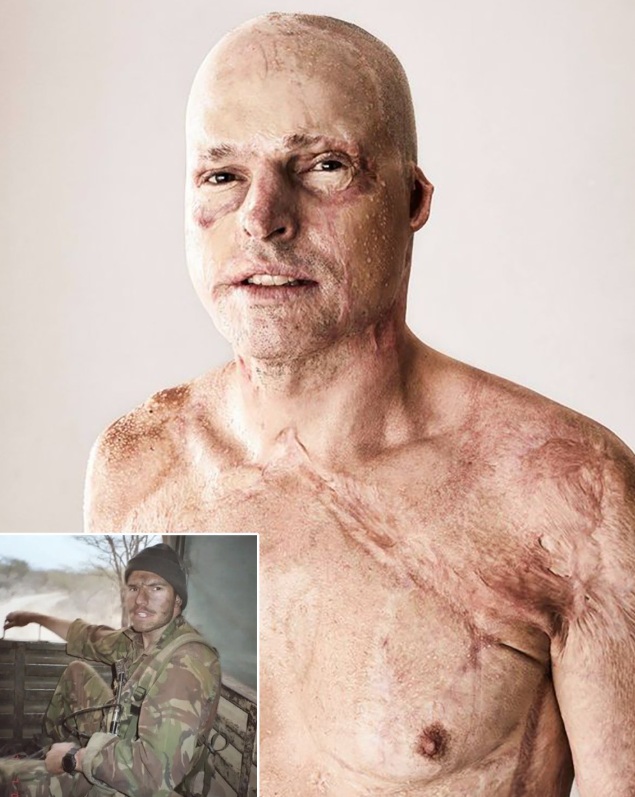
So I was for the record, 63% 3rd and 4th degree burn. As I already mentioned, 4th degree burn down to the bone, both tibia, shin bone exposed. Because of depth of burn in the cockpit where it had started and built up, I estimate that I took 45 seconds of flame, approximately 45 second of burn. The majority of it was to lower limbs and then some to the upper body. But when I got onto the wing momentarily and turned my body to the left, my right side of body was therefore exposed to the right, to the backwash rather, of the propeller still. So where the propeller was winding down, that fanned the flame as I left the cockpit. And I got this really right side dominant burn from the backwash of the prop. And which is why I've got this kind of on one side, I've got complete loss of hair. And surgeons had to more or less completely cut off my right ear because it was so badly burned. I've got a little bit more hair and ear on my left side because it was in the, the leeward portion of the wind from the backwash of the prop. So that was what they call mechanics of injury and how it had occurred. But I got away with all of it by the skin of my teeth. The problem was the damage was really done.
- [11:11]
Narrator (Jack Lawrence)
And this is where the next stage of survival begins. Because really, Jamie should have died that day. He knew it. He was a trained medic. He knew the chances of his survival were slim to zero. And now not only would he need to come back physically, but also mentally as he almost immediately begins to process what his new life might look like.
- [11:42]
Jamie Hull
And then I remember I got up onto my knees to sort of survey the burning wreckage. It was just. It was just hideous. It was indescribable. And that was when the pain sort of washed over me. The tsunami washed over me. A tsunami of pain. In other words, head to toe, every sort of like, nerve ending, if you will, just shot to. Shot to pieces. But the pain was literally off the charts. There is no word for it. Indescribable. And I started screaming blue murder. That was the first reaction. Just all the blasphemy under the sun. And. And then literally, I kid you not, just a few minutes later, just a few short minutes of hideous torture, there was a switch in my mind, you know, cognitively speaking. And the second reaction that I sustained, it went from like, abject anger to the most hideous grief imaginable. And I remember that the grief was just off the charts. I mean, sobbing grief, I can't even describe that to you. It was the most grief that a man could possibly summon in. In a moment because I knew that my life was. I knew it. Remember, I was that, like, badged, yeah, SF guy.
- [12:56]
Narrator (Jack Lawrence)
Yeah.
- [12:57]
Jamie Hull
Like moments before, on top of the world, flying around. The life that I'd built and everything that I'd been fighting for and everything that I'd worked so tirelessly for was totally destroyed. And the chances were I wasn't going to make it. I knew that much. Because the irony was, the perverse irony of all of this was that I'd been. I specialized as a medic not only in my role as the police, in the police force, I specialized as a. An operational sort of medic within the police. I also specialize as a patrol medic with the sas. And I did a brilliant course at Hereford. The medical card are there. And then did my clinical attachment in Basingstoke Accident and Emergency Department in the south of England. And I'd done this, you know, I'm not joking. I'd done all this work like only a year before. I was a highly qualified medic, you know, the equivalent of a state paramedic and license to, you know, to. To give the drugs required to a soldier on the battlefield, morphine, antibiotics, etc. Etc. You know, as par for my specialist role with the. The group, with the unit.
- [14:01]
Narrator (Jack Lawrence)
So although his experience told him that the likelihood of him surviving was very slim, it was also his experience and his knowledge and all his training and everything that he put himself through, through those years of arduous challenges with the armed forces that would Likely save his life. But again, as he lay there in the Florida heat with his aircraft not far away, engulfed in flames, it was touch and go when it happened.
- [14:30]
Jamie Hull
This was before the ambulance arrived on scene and before the helicopter got there. I'm hanging on for, you know, every thread of life that I can possibly muster. And you talked about fight earlier on. Every fight that I have ever had. Him talking about the Cambrian patrols, the PEA Company, special forces, selection, you know, whatever. As a kid, nothing came close to how hard I had to hold on. So in a way, everything that I ever fought for in the build up, in my early years, in my early life almost prepared me for that one moment. At least that's how it felt. Because when I had to fight on that day, boy, did I have to fight. Did I have to hold on? Jesus H. Christ, did I have to hold on? I mean, I. I can't describe to you how much I had to hold on. And I did hold on. And I didn't think I was going to be able to hold on much longer, but luckily it was a case of. And the sirens grew louder and they came to me and
- [15:30]
Narrator (Jack Lawrence)
emergency services make it to him just in time. Time. But of course, time was something they had very little of in order to get him stabilized. And so a helicopter was brought in and took him straight to hospital. And on arrival at emergency, one of the doctor's very first questions.
- [15:48]
Jamie Hull
And I remember the doctor, you know, can you. Can you confirm some details for me? Can you confirm your name? I told him my name. Can you confirm your date of birth? Sir, I told him my date of birth. Do you have an insurance policy?
- [16:05]
Liberty Mutual Spokesperson (Doug)
And Doug, there's nowhere I wouldn't go to help someone customize and save on car insurance with Liberty Mutual, even if it means sitting front row at a comedy show.
- [16:15]
Liberty Mutual Spokesperson's Partner
Hey, everyone, check out this guy and his bird. What is this, your first date?
- [16:18]
Liberty Mutual Spokesperson (Doug)
Oh, no. We help people customize and save on car insurance with Liberty Mutual. Together. We're married. Me to a human, him to a bird.
- [16:25]
Liberty Mutual Spokesperson's Partner
Yeah, the bird looks out of your league.
- [16:26]
Liberty Mutual Spokesperson (Doug)
Anyways, get a quote@libertymutual.com or with your local agent.
- [16:30]
Liberty Mutual Jingle Singer
Liberty, Liberty, Liberty, Liberty.
- [16:36]
Narrator (Jack Lawrence)
Chapter 4. With Will and determination, you can still achieve. As Jamie lay there, broken bones, internal bleeding, burns so severe his shin bones were visible. One of the very first questions was essentially, can you afford the care that you're about to receive? Now, if you're listening from the UK or Australia, that question may have just stopped you cold, because in those countries, that question basically doesn't exist, you arrive at hospital conscious, unconscious, on fire, and the first thing anyone is concerned with is keeping you alive. The bill is not your problem. It's not anyone's problem in that room. The National Health Service in the uk, Medicare in Australia means that emergency medical treatment is simply provided, full stop. No forms, no coverage checks, no conversation about how you're going to pay for the skin grafts. Of course, in the United States it works differently. Health care is not a universal right. It is in most cases, something you purchase. Health insurance is the mechanism through which most Americans access medical care and without it, the cost of treating severe burns, the surgeries, skin, grass, the imperial intensive care rehabilitation, can run into the hundreds of thousands of dollars and for some, into the millions. Jamie was in a foreign country and he'd just jumped from a burning aircraft. The lower half of his body had sustained burns that would later be assessed at over 60%. And somewhere in that chaos, someone needed to know whether he was covered. And some might say for very good reason, especially when Jamie tells us just how high that bill would climb.
- [18:21]
Jamie Hull
Just to give listeners an indication of how bad it was and the gravity of what I was up against, the surgeons and the specialists, 24, seven around the clock, they had to put me in drug induced coma. The insurance cover on that had to fork out some just shy of US$2.8 million. And bearing in mind that's nearly 17 years ago. It's a lot of money because that gives you an indication of what they had to do for me really in terms of the care and the surgery. I had a lot of surgery, upper and lower eyelid grafts. I had a human donor skin, pig skin, synthetic skin, my own skin, where they'd had to script me, you know, buttocks, abdominal section, parts of my back that were still viable, but remember, I was 63%. That leaves 37% viable. Not all of that is even viable viable. They can't take it from genitalia. Yeah, so. Or rather they won't because of, you know, for obvious reasons. But. But yeah, there's not a lot of viable skin when you get burnt to the gravitate, to the gravitas that I was burned in order to, I mean, what they have to do, they have to punch holes in the good skin, what they strip with skin graft to perforate it in order to stretch out the skin and make it larger to cover the greater areas of total body surface area that have been damaged. That's how they do it. So it's kind of very Specialist techniques of perforated skin that they stretch out to cover the areas and, and again, there's only a limit to what they can use time and time again, if you like to, to, to re harvest to allow your body to heal so that they can re harvest and regraft it. In other words, they can only do that like three, four times, times tops. In other words, the integrity, the quality of your skin diminishes and then, you know, you'd be a permanent infection risk, so you might not recover from that, in other words. So hence why they use human donor skin, pig skin, synthetic skin. And I had a lot of that as well.
- [20:21]
Narrator (Jack Lawrence)
After six months in hospital in America, eventually Jamie was in a stable enough condition in which they were able to transfer him back home.
- [20:33]
Jamie Hull
So I'm one lucky fella. I'm one lucky guy. I mean, it was like you could say on one hand, Jesus Christ, that guy's, you know, some bad luck. But no, I view it differently because I had to develop the mindset, right, and I had to learn to accept it. So I view it very, very differently. So I view it as, I was the luckiest guy on the goddamn planet on 19 August 2007 when it happened. I was the luckiest guy on planet Earth to come through that and to be able to hold on and not least for those emergency services to rock up when they did, because trust me, if they'd have been five minutes later, I would have perished.
- [21:11]
Narrator (Jack Lawrence)
How long did you spend in hospital in Florida?
- [21:14]
Jamie Hull
Six months. Drug induced. So I was round the clock to 24:7 at my lowest ebb in this drug induced coma, I hit rock bottom. As in, when I talk about rock bottom, I'm talking about what a doctor's take on rock bottom is and where, you know, a medical professional. So the medical consultants there understood that when I hit rock bottom, I had renal failure, kidneys were backpacked up basically, and they were giving my, giving me dialysis for about two months. Renal failure, septicemia, bouts of extreme septicemia that I was barely able to fight back from. They were giving me some of the most last resort antibiotics on the planet. You know, I'm talking about stuff that, you know, your family doctor doesn't prescribe, very last resort stuff. I mean, stuff that can kill you, you know, it can render you blind, deaf, cardiac arrest. But these are last resort antibiotics that they, they pull out of the bag when the, hits the fan and that you might not pull through. But okay, we'll give, we'll give this a Whirl. And if, if he fights through this, then he's got a fighting chance. And that's what they do. So I was on all the heavy stuff at one stage I had only one lung. It was operating on about 50% capacity of clear lung volume to, to, to get the oxygen in. And I was being also intubated in the process because I wasn't breathing for myself. So they were breathing with an intubated tracheostomy into the neck and a machine was basically doing the business for me. So I was full scale intensive care for that six month period. Even a yellow tube, I've got images of this, a yellow tube into the, what they call nasogastric tube, feeding you into the stomach cavity so you can get the nutrition that you require to sustain Life. You know, 24, seven again for that six month period. So that was me and, and I mean I was, I was a sorry state for, for six months of my life. I was an absolute, you know, life on a thread as, as I called the title of my book because I was, I was life on a thread.
- [23:24]
Narrator (Jack Lawrence)
He may have a positive outlook on the events of that day now, but of course it's taken some time for him to come to terms with what happened. And of course he had some very, very dark times.
- [23:37]
Jamie Hull
1 1/2 years in, in truth, I didn't think I was going to be able to hold on any longer. I felt like a boxer in the ring. I was not on round 12, you know, taking the punches, still knowing that the whistle was going to go and I was round 4137 and I, you know, I just, I didn't think I was going to do it anymore. I didn't think I was going to be able to keep up the pretense of the scrap. It was just that hideous what I was going through all the time, you know, repeat surgeries. I mean in truth I went through 64 surgeries under over the course of seven years of my life. 64 from orthopedics, that's bone sort of surgeries to general surgeries and multiple skin grafts, like I've mentioned this, human donor skin, pig skin, etc, but it's not
- [24:20]
Narrator (Jack Lawrence)
just the physical stuff, it's also the mental, you know, because huge, hugely huge mental, you know, battle that you would be facing constantly, daily basis by, I'm sure I'm assuming minute by minute.
- [24:33]
Jamie Hull
Yeah, really hard. I mean I've often said this and I don't hide away from that. And the truth is, like I said two Years of hospital, another year at home, like with district nurses and so on. So three. Three years, I would suggest, until I physically healed. So the wounds closed in, right, that, you know, I mean, I look like a piece of red meat sort of steak, you know, that had just been pulled out of the refrigerator. You know, my wounds had a lot of. My skin had so much healing to do, and it took years. Three years physical healing, like I said, but five years of, like, acceptance and. And the mental healing for years, I. I couldn't accept it. I mean, I'd. I'd grieve the old me. I'd grieve me in terms of the athlete, what I was capable of, the fact that I'd lost my. My job, my role, everything about my former self. I grieved so much, you know, I remember that. And I constantly, you know, it felt like I cried for five years, basically. You know, I mean, I'm not ashamed to admit that, you know, as a grown man, you know, in a form of special forces and etc. Etc. But yeah, I cried a lot in the early years because it was a lot of grief, you know, and that's all part of the acceptance. But eventually, I guess I learned to kind of develop a thicker skin, you know, not just in the physical sense, but sort of mentally. And I learned to take it all on the chin and realize, well, shit, man, you can't turn the clock back. Got to adapt. You've got to move forward, and that's what major trauma leaves you with. And if you're going to be smart about it, you've got to realize that life can only move in one direction, and that is progress. But that's not just the physical like we've touched on. That is still the mental side of it as well. And so the acceptance is tremendously powerful. Once you fully learn to embrace, once you fully learn to accept, then remember again, with will and determination, you can still achieve. And that was me.
- [26:54]
Narrator (Jack Lawrence)
A large portion of Jamie's recovery was learning things all over again. Learning to eat, to write, and learning to walk again. And he contributes walking with a large part of not only his physical but mental recovery,
- [27:20]
Jamie Hull
But it wasn't enough for me to just learn to walk. I had to learn to walk to the best of my ability. So I learned to walk in the hospital room and then, you know, get to the ensuite toilet, bathroom facility and back again to the bed. I learned to walk around the nurse's station. I left the ward, then I'd walk down the corridor and then Before I knew it, I was doing a laugh at a hospital. And then when I went home, I'm walking in the local area. And then in the local area, I walked around, you know, to the end of my mother's, because I lived with my mum at the time for the support. And she lived in this small cul de sac, right? And it was only, you know, we're talking 50 yards long, but I'd walk the length of the street and back again. And then I'd go back to the house because I was exhausted. And then of course, I'm thinking, okay, well, I've done the street, I'm going to do a couple more streets, go around the block. And then I'd develop. I'm using the local area, and then I'm doing eight miles a day. Why do I do eight miles? Because it harked back to a military test called a combat fitness test. I wanted to get back to doing the 8 miler. But once I develop myself and I'm doing 8 miles, I'm doing 8 miles not once a week, once a month, I'm doing eight miles a day.
- [28:30]
Narrator (Jack Lawrence)
And the walking continued, continued to not only help him build in strength physically, but mentally and eventually would take him back to his old ways of challenging himself as much as possible.
- [28:43]
Jamie Hull
And then I got challenged by a friend of mine to do the London Marathon. So I built myself up to power walk. I was never going to be a runner again because of my legs and the disability and the nerve damage. But I got the opportunity to do London Marathon. I power walked my way around. It took me 8 hours, 30. Made me feel great about myself once again. And then a friend of mine got some contacts with the New York Marathon office. And just randomly, we were offered a couple of places to go there because they'd heard about my story from London Marathon. I thought, I've got to give it best effort. So I did New York in 707, seven hours, seven minutes, finishing in Central Park. And I mean, I was exhausted each time I did this, but I felt elated, I felt good about myself, right? And then finally I did a third marathon. I only ever did three to prove to myself, and really that was what I was doing. But the third one was significant because I came back to London. I did it for a wounded service military charity, which I'm now an ambassador for here in the UK and I have been doing this for about 11 years or so called Help for Heroes, a wonderful charity. And they've supported me in many ways. And I raised some monies for them and raised awareness. That year, this was in, I think it was 2013. So my third marathon in London and my very best effort pulled it out of the bag and I trained for this as well. 6 hours 15 power walking, like literally like I'm going like an effort, you know, one of them Duracell battery bunnies you see on the adverts for that to get that time, 6, 6, 15. But it was a wonderful thing to self that is to be able to achieve that and to feel good about myself. Remember, it's all about the, the feel good factor, the confidence, the self esteem. And remember I'm trying to find myself remembers the new version, of course to 2.0.
- [30:33]
Narrator (Jack Lawrence)
Yeah.
- [30:33]
Jamie Hull
And that's what it was all about.
- [30:43]
Narrator (Jack Lawrence)
Jamie Hull is truly an inspirational character. A man who hasn't let tragedy get in the way of achievement and a man who was unwillingly thrust into a life threatening situation and managed to walk away. However, as we know, as much as there are many people who find themselves unwillingly in these life or death death situations, there are of course those who actively place themselves into them, not necessarily with a reckless abandonment, but sometimes for a higher purpose.
- [31:13]
Undercover Reporter
And then we start driving towards the streets in Punyang and suddenly outside Punyang, and in the end we just ended up in an area that didn't look like a place you wanted to go.
- [31:27]
Narrator (Jack Lawrence)
Mr. James would be the alias of one man who was most certainly placing himself willingly into an incredibly dangerous situation. A situation that would see him going undercover to document the black market dealings of one of the most brutal regimes on planet Earth, North Korea.
- [31:49]
Undercover Reporter
Before this conversation, it's important that people understand when, when you fly into North Korea, you fly into a black hole. Your mobile phone stopped working the Internet. You have no contact on the Internet. You have, you have lost all contact to the outside world.
- [32:07]
Narrator (Jack Lawrence)
Next time on what I Survived.
- [32:10]
Song Singer
Moon in the sky. I'm looking at the moon in the sky this shouldn't come as a surprise but I can see sleep war in my mind I'm trying to fight a war in my mind I don't know who's the winner tonight but it a me.
- [32:48]
Liberty Mutual Spokesperson (Doug)
And Doug. There's nowhere I wouldn't go to help someone customize and save on car insurance with Liberty Mutual, even if it means sitting front row at a comedy show.
- [32:57]
Liberty Mutual Spokesperson's Partner
Hey, everyone, check out this guy and his bird. What is this, your first date?
- [33:01]
Liberty Mutual Spokesperson (Doug)
Oh, no. We help people customize and save on car insurance with Liberty Mutual together. We're married. Me to a human, him to a bird.
- [33:08]
Liberty Mutual Spokesperson's Partner
Yeah, the bird looks out of your league.
- [33:09]
Liberty Mutual Spokesperson (Doug)
Anyways, get a quote@libertymutual.com or with your local agent.
- [33:13]
Liberty Mutual Jingle Singer
Liberty Liberty Liberty Liberty
- [33:18]
Acast Announcer
ACAST powers the world's best podcasts. Here's a show that we recommend.
- [33:25]
Molly Graham
A lot of work advice. Sounds good in theory, but falls apart when you actually try to use it. I'm on a mission to change that. I'm Molly Graham, a company builder and the new host of Work Life, a podcast from ted. I've spent my career inside fast growing companies, and one thing I know for sure is that work is messy. In this new season, I'm excited to share my conversations with founders, operators and creatives about the real story behind their shiniest successes. The lessons that no one ever posts on LinkedIn. Listen now on Work Life. Wherever you get your podcasts, ACAST helps
- [34:01]
Acast Announcer
creators launch, grow and monetize their podcasts everywhere. Acast.com.