← What I survived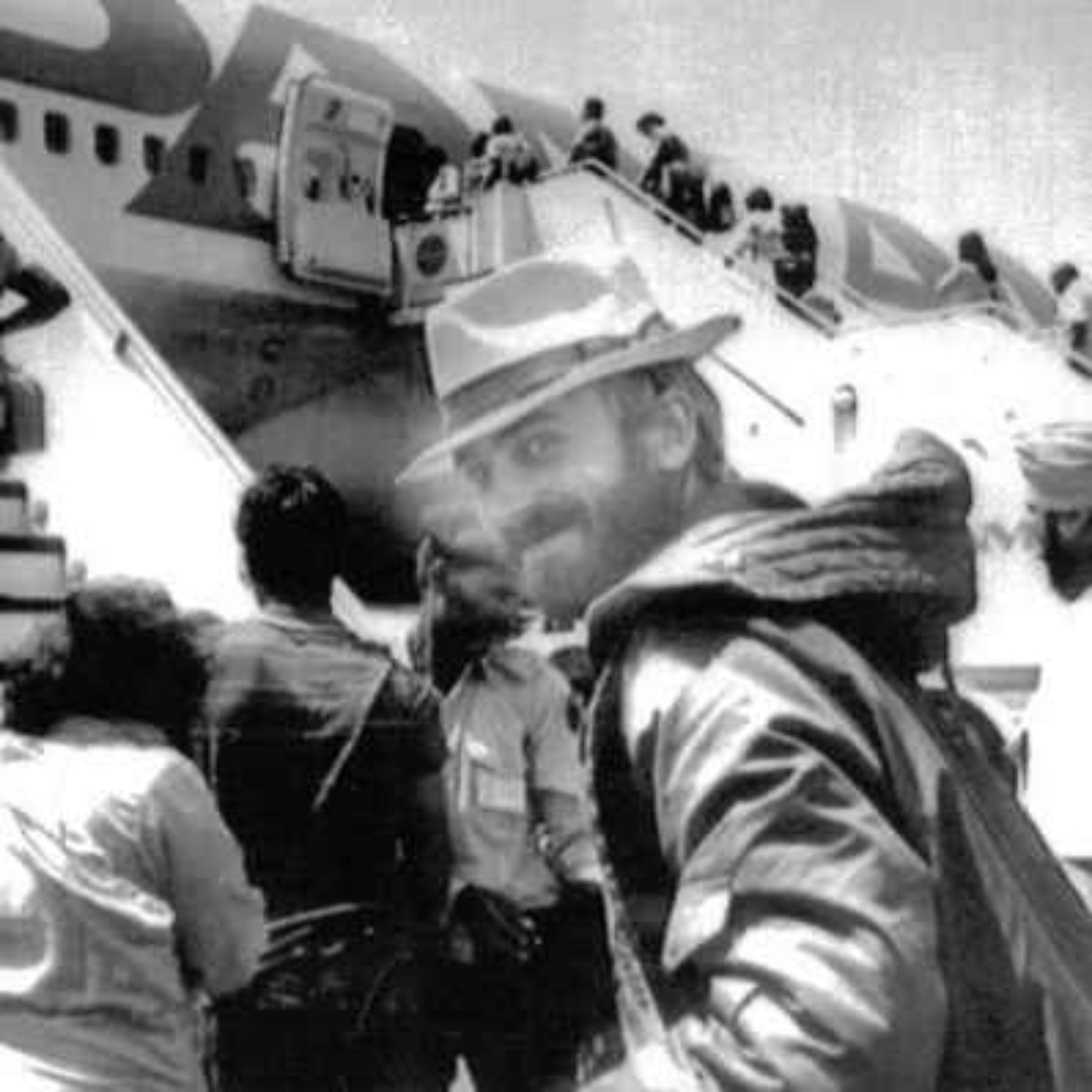
What I survived
Pan Am Flight 73: The 1986 Karachi Hijacking P2
00:31:11
Make any sudden movements, you will be shot.
Loading summary
Transcript55 lines
- [00:00]
Progressive Insurance Advertiser
This episode is brought to you by Progressive Insurance. Do you ever find yourself playing the budgeting game? Well, with the name your price tool from Progressive, you can find options that fit your budget and potentially lower your bills. Try it@progressive.com, progressive Casualty Insurance Company and affiliates. Price and coverage match limited by state law. Not available in all states.
- [00:19]
Chase Sapphire Advertiser
The day begins at the Chase Sapphire Lounge by the club at Boston Logan Airport. You get the clam chowder in San Diego, it's Tostadas n New York. Espresso Martini. It's 10am why not? It's the quiet before your next flight, the shower that resets your day, the menu that lets you know where you are. This is access to over 1300 airport lounges and every Sapphire lounge by the club. And one card that gets you in Chase Sapphire Reserve now even more rewarding.
- [00:44]
Progressive Insurance Advertiser
Learn more@chase.com Sapphire Reserve cards issued by JP Morgan Chase bank and a member FDIC subject to credit approval Few things
- [00:50]
Comcast Olympic Games Advertiser
are as uplifting as the greatest moments in sports, and nothing brings us together quite like Team USA at the Olympic Winter Games. From NBCUniversal's iconic storytelling to the innovative technology across Xfinity and Peacock, Comcast brings the Olympic Games home to America, sharing every moment with millions. When Team USA steps onto the world stage, we're not just watching, we're cheering together. This winter, we're all on the same Team Comcast, proud partner of Team usa.
- [01:23]
Michael Thexton (Narrator/Survivor)
And I said to him, I said, please don't hurt me. My brother died in the mountains. My parents have no one else. Please don't hurt me.
- [01:33]
Narrator/Documentary Voice
There are moments in our lives that feel utterly mundane as we're living them. A different choice at breakfast, taking the stairs instead of the lift, turning left instead of right, staying home instead of going out. Small moments that for most of us mean really nothing at the time. However, if you look back at your life now, maybe the partner you're married to, the job that you have, maybe an accident you found yourself in, you can think back to those mundane decisions that maybe led you to where you are and think, what if Some call them sliding doors moments. A split second when our life could have gone one way or another and we chose or fate chose for us the path that led us there. For Michael Thexton, you could possibly point out a number of these sliding doors moments, moments that he could never have known would lead him to a life or death situation. However, one of the first came just after he'd finished his pilgrimage to say goodbye to his big brother in the mountains of Pakistan. Exhausted, hungry and desperate to get home to his family, he would receive the perfect excuse to leave the expedition team early.
- [02:49]
Musician/Singer
Moon in the sky I'm looking at the moon in the sky this shouldn't come as a surprise but I can't
- [02:59]
Narrator/Documentary Voice
sleep
- [03:02]
Musician/Singer
War in my mind I'm trying to fight a war in my mind I don't know who's the winner tonight but it ain't me.
- [03:20]
Narrator/Documentary Voice
Chapter five. They were looking in the wrong place.
- [03:24]
Michael Thexton (Narrator/Survivor)
When I got back to the edge of civilization, which is not particularly civilized, in northern Pakistan, a town called Skadu, which really is. It's the edge, the edge of nowhere. There was a bunch of letters. I thought I'd been forgotten. Our correspondence had not got up to base camp. There were 12 letters waiting for me. And one of them said, we're looking forward, you being back at work, you know, teaching, accountants. And I worked out the. The days when they said that I was expected to be teaching. And that was the day that our flight was getting home. Oh, dear now, which was sort of a week later. But we had a very cheap flight that had a layover in Egypt. And I have to say I needed very little excuse. I want to see my family. I want a soft bed. I'm done here. You can't really imagine. Again, it's hard to remember how hard it was. I mean, we'd all been fantasizing about decent meal. We were very cheapskate expedition in deciding what provisions to take with us. Our quartermaster, I guess you'd call them, they said, well, what do the porters eat? We'll have that. And by the time we realized that really wasn't enough, we were a long way from a shop. And so we'd spent two months up the mountain or six weeks up the mountains, eating rice, dal and chapatis and precious little else. And we were just desperate for a decent meal. And I had lost probably a fifth of my body weight, 35 pounds, maybe, something like that. I looked like a complete wreck. And I had never been ill. I was the only member of the expedition who never got any sort of diarrhea and vomiting. Most. Most of them got something. Well, everybody got something at some point, but I never did. And yet I was emaciated.
- [05:25]
Narrator/Documentary Voice
So once back in Skardu, Michael and a couple of others got on a flight to Islamabad in northern Pakistan, and then would spend the night in an area called Rapinda, where Michael set about trying to get himself a flight home as soon as possible.
- [05:39]
Michael Thexton (Narrator/Survivor)
And I spent the morning going around all of the Airline offices desperately seeing if I could get home for work quicker than the rest of the expedition. And there was, there was one ticket. You know, basically I, I, I know for, for a fact that I, I'd been in, I'd been in British Airways, I'd been in Lufthansa, I'd been in Swiss Air. In the Pan Am office there was a woman who said, yes, I've got one ticket from Karachi tomorrow morning that'll get you to Frankfurt. Then you'll have to negotiate a flight to London. But you know, I thought Frankfurt's the right continent. So she sold me this ticket, which is a business class ticket. I mean it was astonishing how much I spent on that. It was more money than we had spent on the whole of the expedition's food for the whole of the previous two months. But I wanted to get home.
- [06:28]
Narrator/Documentary Voice
So that was it. He was booked for a flight home, packs up his kit. For the first time in some weeks he's on his own.
- [06:36]
Michael Thexton (Narrator/Survivor)
But I mean it's a very strange thing also that I then said goodbye to the rest of the expedition that day. And these are people that I've been, you know, living in the pockets of for the last two months to suddenly be on my own and have to get myself from A to B without somebody telling me where to go. And you know, a couple of porters carrying my luggage. It was, that was a very strange thing. And so a couple of them came with me in the taxi to Islamabad airport to get a connecting of an internal flight down to Karachi. Then I got an airport bus to the airport hotel. The person in the Pan Am office had booked me a room for the night. And then I was supposed to, you know, get myself down to the airport again for three o' clock in the morning.
- [07:22]
Narrator/Documentary Voice
Panicked that he wouldn't receive his early morning wake up call from the hotel reception. He sits up all night fully clothed in bed, waiting for the sunrise, much like he feared. No call came but he was awake and it was time to start his journey home. Little did he know at the time, but sleeping through an alarm would have been the best possible outcome.
- [07:49]
Michael Thexton (Narrator/Survivor)
I had these two big kit bags that, with expedition gear in that we were trying to get home, managed to get rid of those. I'd got the Expeditions film which in those days, you know, those days was not a little thing, it was a 15 kilo hand luggage bag, you know, full of cassettes of tape. And that was precious to me. I was carrying that as hand luggage and trying to make it not look any heavier than it was supposed to be. And I had, I had two cine cameras around my, around my network. I borrowed these from Pete's friend Jim Curran. And so I was making, making a film as well as being the base camp manager and, you know, everything else I was, I was wearing, I was wearing this red duvet jacket that I Is quite appropriate at Erdogas, but it's pretty eccentric in Karachi airport and a battered Panama hat that had seen better days and my mountaineering boots because just too much luggage, you know, what you can't put in the kit bags or put in your hand luggage you have to wear. I went through the security. What they did do was they searched everything very thoroughly. They get everything out of this 15 kilo hold all. There's nothing in there that shouldn't be there, apart from probably about 10 kilos. But, you know, it was quite a struggle to get it all back in again. And I mean, these days, of course I. I tend to pay more attention to the security in airports, but on that day there was a rumor afterwards that they'd had a warning and maybe that was why they were taking everything very seriously. But unfortunately they were looking in the wrong place.
- [09:30]
Narrator/Documentary Voice
By 1986, despite of the world was anything but calm. Pakistan was still under the rule of Muhammad Z Haqq, a military dictator who'd taken power in a coup nearly a decade earlier. Political opposition had been suppressed, dissident silence and the country governed under martial law for much of that time. But that year, something had begun to shift. After years in exile, opposition leader Benazir Bhutto had been allowed back into the country. Newspapers were filled with speculation. Was this the beginning of political liberalisation or simply a calculated move by a regime under pressure? The uncertainty was palpable. Northern Pakistan, already volatile, sat at the crossroads of regional conflict. The Soviet war in neighboring Afghanistan was still raging. Refugees, fighters, weapons and ideologies flowed across borders. Intelligence agencies, militant groups and foreign interests all overlapped in ways that were rarely visible. But always felt there was a sense that things could tip at any minute. Military presence was normal. Checkpoints were common. Armed soldiers were part of the landscape. For locals, it was life under constant tension. For visitors, it was quite unsettling. You didn't need to understand the politics in detail to feel that something wasn't stable.
- [10:47]
Michael Thexton (Narrator/Survivor)
I was reading the news for the first time, but there was an article about Pakistan and it said that the military dictator Zia ul Haqq had allowed the opposition leader Benazir Bhutto to come back into the country. And it was speculating about the fact that this was political liberalization and there might be trouble. And I can remember reading this and thinking, well, as long as the trouble doesn't happen in the airport in the next half hour, it's not my problem, you know, I'm not coming back.
- [11:20]
Narrator/Documentary Voice
As Michael mentions, even the newspapers would reflect it. Headlines speaking of power, control and change. But beneath the optimism was an undercurrent of danger. Promises of reform existed alongside threats of unrest. Hope and fear sat side by side on the same page. So when Michael stood there about to board a commercial flight, reading those headlines, it was a reminder of where he was, of how quickly normal life in this region could be disrupted. However, of course, what he could never know was just how quickly this disruption would become very much his problem.
- [12:00]
Michael Thexton (Narrator/Survivor)
There are people sort of standing by the. The plate glass windows looking out for the plane. It was a little bit late, but it came in a beautiful cloudless day, not hot, because it was, you know, still only about 20 to 6 in the morning. And it parked itself a little distance away. And then buses came and took away a few people who had flown from Mumbai to Karachi and had no idea how lucky they were that they were getting off this plane in Karachi and then took economy class passengers out to the plane. And then a couple of little buses drove us out and air at the front of the plane, two mobile staircases going up to the front, two doors first and business going up the. The front staircase. Economy going up the second staircase. And at the bottom of the staircase, there's people in uniform. There's a, you know, sort of Pan Am official. There's a soldier, a soldier with a Lee Enfield.303 rifle, looking very business like. You know, he's got this sort of beret on that's just so. And a magnificent mustache and creases in his trousers and so on. And he's there to stop anybody doing anything. But I gave him, you know, no thought at all. I just walked past, up the stairs, top of the stairs. Flight attendant looks at my boarding pass, says, yes, 13B just back here. And in between those two doors on that port aisle, where I just come in, four rows back, there, is the largest seat I have ever seen, you know, on a plane or off a plane. And nobody in 13A between me and the window. So I'm getting sort of twice as much room as I've paid for. And so I put the big bag on that seat and opened it to get a book out. And then I was Going to sort of see where I could get rid of the bag. And I had my hands in the bag looking for a book. And again, you know, I can still. I can still put myself in that moment and remember I was thinking, I've caught the plane. What can go wrong now? Never think this, you know, never think this because. Because something might. And, you know, in that. In that position, standing in the aisle, hands in the bag. I heard a noise.
- [14:32]
Narrator/Documentary Voice
Now, but no to Michael as he's settling into his nice big business class seat. Not far behind him were four hijackers. Zayd Hassan Abd al Latif Safarani, known simply as Mustafa Jamal Said Abdul Rahim or Fahad Muhammad Abdullah Khalil Hassan, or simply Khalil, and Muhammad Ahmed al Munawar. As Michael says, the first he was aware that something was happening was when he heard this commotion. As he looks in the direction of where the noise is coming from, he sees a man wrestling with one of the flight attendants.
- [15:16]
Michael Thexton (Narrator/Survivor)
He was dressed as a Pakistani civilian. He had. He had a sort of baggy cotton shirt on and baggy cotton trousers. He had little round glasses, mustache, and a gun. He had a handgun and his arm wrapped around the flight attendant's neck. She had a telephone in her hand, you know, pressed against her mouth. She was obviously saying something to somebody about what was going on. But he was struggling and shouting something, and there was the sound of gunfire.
- [15:56]
Narrator/Documentary Voice
Michael, almost transfixed by what was going on, was frozen, staring at what was unfolding in front of him.
- [16:04]
Michael Thexton (Narrator/Survivor)
You know, I didn't sort of think of ducking or going to help or running away or just stared at him, completely nonplussed by what was happening. And then there was a noise in the door that I'd just come in by, turned around and. And there's a man in uniform. And to my untrained eye, it was the same as the uniform of the man I'd seen at the bottom of the stairs with the rifle. And this man had a big rifle, except this was a Kalashnikov, not a Lee Enfield rifle. And this man was shouting, get down. Get down. Again, my initial ridiculous thought was, this man is on my side. Even in that moment, I was trying to tell myself, this is not my problem. I tried to tell myself, this is something to do with Benazir Bhutto, but that's a Pakistani man. And I guess at a deep subconscious level, I don't want to think that that man is an Arab, because if this is a Pakistani problem, it's probably not my problem. And maybe what's happening is there's a rioting crowd of Benazir Bhutto supporters outside and one of them's got on the plane and the security is now, you know, come to protect us now. I just walked up the steps. I hadn't seen a rioting crowd approaching. You know, this was just a sort of ridiculous thing, but trying to, to make sense of a situation that had just gone out of control very, very quickly. And the man in the front doorway, he was then shouting at the flight attendant who just showed me my seat and said, it said, close the door, close the door. Now. That's okay, because the problem is outside. He's protecting us from the outside. But then he, she wouldn't. She. She sort of froze and he threatened her with the gun and. Okay, I'm less happy about that. That doesn't sound right. So she reached out, closed the door, and then he said to her, where is the captain? What is up these stairs?
- [18:32]
Progressive Insurance Advertiser
This episode is brought to you by Progressive Insurance. Fiscally responsible financial geniuses, monetary magicians. These are things people say about drivers who switch their car insurance to Progressive and save hundreds. Because Progressive offers discounts for paying in full, owning a home, and more. Plus, you can count on their great customer service to help you when you need it. So your dollar goes a long way. Visit progressive.com to see if you could save on car insurance, Progressive Casualty Insurance company and affiliates. Potential savings will vary. Not available in all states or situations.
- [19:05]
The RealReal Advertiser
So you're running out of closet space. The good news, you don't need to stop shopping. You just need to start selling with the RealReal. The RealReal is the world's largest and most trusted resource for authenticated luxury resale. Whether it's that mini bag that can't even fit your phone or those boots you never fully broke in, the RealReal handles everything from photography and copywriting to shipping and pricing. So you can just sit back, get paid, and make room for things that actually feel like you. And with 10,000 new arrivals every single day from top designers like Prada, Celine, Louis Vuitton and Loewe, all for up to 90% off retail, you're bound to find something perfectly on brand to fill that extra closet space with. Plus, right now, you can get an extra $100 to shop when you sell for the first time. Make room for what feels like you. Go to therealreal.com to start selling and get your extra hundred dollars to keep shopping@thereal.com that's therealreal.com terms apply
- [20:04]
Comcast Olympic Games Advertiser
day or night. VRBoCare is here 24, 7 to help make every part of your stay seamless. If anything comes up or you simply need a little guidance, support is ready whenever you reach out. From the moment you book to the moment you head home. We're here to help things run smoothly, because a great trip starts with the right support. And, hey, a good playlist doesn't hurt either.
- [20:37]
Narrator/Documentary Voice
Chapter six. Ladies and gentlemen, if you make any sudden movements, you will be shot. So the aircraft that these men had chosen to take over wasn't obscure, it wasn't unfamiliar. It was a Boeing 747, one of the most recognizable commercial planes in the world. By the mid-1980s, most people knew its basic layout. The wide body, the long cabin, and the distinctive upper deck at the front. The upstairs, where the pilots for this iconic airplane sat. That set the 747 apart from almost every other aircraft in the sky. A simple few minutes of research would have told you that. And yet, when these men stormed the plane, it quickly became clear how unprepared they really were. They didn't know what the upper deck was. They had to ask the flight attendant, what's upstairs? They asked where the captain was. They moved through the cabin, not with confidence, but with questions. This didn't appear to be some sort of coordinated takeover. It was confusion playing out in real time. The cockpit on a 747 isn't exactly hidden. It's not a secret. But these men didn't seem to know where to find it. This uncertainty can be almost more terrifying because a lack of planning doesn't make a hijacking less dangerous. In fact, it makes it far more volatile. When people don't know what they're doing, decisions become reactive, emotional, and unpredictable. Michael could tell almost instantly this wasn't a group executing some sort of rehearse plan. This was a situation spiraling inside an aircraft filled with hundreds of people led by men who hadn't even taken the time to understand the space that they were trying to control.
- [22:23]
Michael Thexton (Narrator/Survivor)
If you've seen enough bad films, you sort of start to think if you've. If you've seen, you know, Die Hard and Air Force One and things like that, you think that terrorists have a criminal mastermind who sort of planned this operation to the nth degree, but to actually not even know where the cockpit is on a jumbo jet is amazing. Now that they had come up with this plan, they'd been in the country for a couple of weeks. They'd scoped out the airport, realized that they couldn't go through the terminal building. So they had made up some security guards uniforms and just sort of driven up to the plane and run up the steps, brushing aside the soldiers. But they didn't know where the pilot sits on a jumbo jet.
- [23:11]
Narrator/Documentary Voice
However, there was a positive to this lack of planning because it would, in fact be crucial to ultimately saving many lives, as what it did was allow time for the pilots to react.
- [23:29]
Michael Thexton (Narrator/Survivor)
So the flight attendant at the second door shouting warnings into her intercom. I did. I heard from the flight engineer on our plane afterwards. I spoke to him and he said that she'd shouted these warnings. He'd said, gosh, she says it's a hijack going on, you know, and they had a discussion and they said, you know, well, what do we do? Which is interesting and what is more interesting, which I, I don't think would happen now, the flight engineer said, well, I'll go and have a look. And so he left the cockpit, he got an axe out of the emergency equipment, which is somewhere there, and, and went downstairs carrying an axe. And upstairs in the, in the, in the, in this extra business class seating, there are seven passengers of flight attendant who presumably think, oh, flight engineer has got the axe out. You know, oh, he's come back up the stairs a lot quicker than he went down. What do we do now? You know, I have to say, you know, an important piece of learning. At the first sign of the axe, I am going to open a door and leave. You know, I feel that the axe is never a good thing to see on a plane. But he went back into the cockpit, shut the door, he said, she's not wrong. He told me that they had a vote on it. And again, that's extraordinary. Lots of different stories put out by people who are, I guess, probably trying to avoid liability. And as to what the policy was, whether there was a policy, whether it was left to the pilot's discretion. But they had a vote, and he said it was two to one that we should immobilize the plane and leave. It's the only way of immobilizing the plane. And they got stick for it. And I, you know, I've seen the pilot interviewed and you could see it. It was hard. I mean, that's what he said. It was hard leaving the plane knowing that he was putting his cabin crew in the front line, knowing he was abandoning his passengers.
- [25:25]
Narrator/Documentary Voice
We'll get to it. But ultimately, it saved everybody's lives, really.
- [25:28]
Michael Thexton (Narrator/Survivor)
I mean, you know, save everybody's lives. Absolutely. You know, I sort of feel the vote of 2 to 1, probably, possibly the captain was the person who voted to stay, because, you know, partly there, there'd be this sort of nagging feeling, you know, I'll never hear the end of this. You know, I'll always be the guy who ran away. And yet it was the right thing to do, which I think therefore makes him the bravest man to have done that, knowing that it would always haunt him.
- [26:01]
Narrator/Documentary Voice
So, as the pilots jumped from the plane, making their way back to the terminal on foot, incredibly, no one at the terminal was even aware of what was unfolding on the plane. And there were more passengers trying to get onto the plane.
- [26:14]
Michael Thexton (Narrator/Survivor)
And so they arrived at the terminal building and there's a busload of economy class passengers trying to persuade the security guard to let them go and join in. Know they're saying, well, we want to board. You know, here are our boarding passes. And then the pilot, co pilot and flight engineer come the other way. So excuse me, and just sort of go through. And they whisper to Sardi, we think somebody's hijacked our plane. And they, oh, dear, you know, better go up to the control tower. And so the idea of a sort of instant response to a crisis is impossible. Crises, crises are difficult. And there was just confusion to start
- [26:57]
Narrator/Documentary Voice
with, with confusion outside of the plane starting to build into a crisis. Meanwhile on the plane, it was just as confusing as well as chaotic. Michael says that all sense of time, really for him has just been lost to the sheer absurdity of what was unfolding. However, on board, an air hostess named Sunshine, who would go on to undoubtedly save many lives, was remaining calm as well as cunning. In order to buy them all more
- [27:24]
Michael Thexton (Narrator/Survivor)
time, she volunteered to show one of the hijackers where the cockpit was, you know, because she saw that he was up, agitated, and he's saying, where is the pilot? So she said, well, the pilot's upstairs and take my man to the cockpit. So she went upstairs. By the time she got the top of the stairs in front of the hijacker, she realized that she needed to give the pilot time to escape. And so she went and stood on in front of the door, knocked loudly on the door and said, pilot, Captain, there's a hijacker out here, would like to talk to you. There's a hijacker out here, Captain. And she denied having a key. So, I mean, she did have a key. She could have opened the cockpit door, but she was trying to give the pilot time. And eventually the guy pulled her out of the way. Kicked in the door and stepped inside. And Sunshine said he didn't look up. You know, people don't look up. So he see the empty chairs. I've always loved to thought that maybe they left their jackets on the back of the chairs or something. And he said, where is the captain? And she said, I don't know, he was here, I'm sure he was here. And she said that they spent a couple of minutes searching the cockpit, you know, sort of open cupboards, and they went back downstairs and said, we can't find the captain, Went back upstairs with the leader who noticed the open hatch. Then he's got to change his plan because he wanted to fly somewhere immediately and now he hasn't got a pilot. So then they came back downstairs. So all of this must have taken some time. I can't remember, I was just sort of frozen still. And then they said, everybody up, everybody back. And in this changed situation, they needed to clear the front of the plane so that they have a sort of secure area to control the situation from. And so, you know, here I am on my first ever business class flight. I'm being downgraded quite early on. And like a good civilian, I picked up my hand luggage and walked with it down the aisle, one hand up, one hand holding the hand luggage. Because it, you know, it's, it's more important to me than my life, this hand luggage.
- [29:34]
Narrator/Documentary Voice
Yeah.
- [29:35]
Michael Thexton (Narrator/Survivor)
Ah, ridiculous. Absolutely ridiculous.
- [29:37]
Narrator/Documentary Voice
So everyone is quickly ushered to the rear of the plane into economy. With the number of passengers having not made it onto the flight, there were a few spare seats dotted around. Michael spots one and maneuvers himself towards it. As he does so, he notices the emergency exits of the wing, making a mental note of it for later on should he have an opportunity to escape. He wants to know exactly which way to run. He climbs into the economy seat, now much smaller space, with his oversized luggage crammed in with him.
- [30:16]
Michael Thexton (Narrator/Survivor)
And so, you know, with handling to my feet, my, my knees are in my chest and my hands up in the air and people sat in the aisle because there weren't chairs for everybody. And we had this strange moment or extended moment where I was thinking, this is very frightening, but people get off hijacks, you know, I was telling myself, stay calm, make yourself inconspicuous, do what you're told, people will go home. I could be one of those people now. Making myself inconspicuous in a large red duvet jacket is, you know, it's a bad start, but so what I had to do, what I felt like could do I could. I sank as low as possible in the seat. I brushed the panama hat off my head so it was in my lap. And so now they could only see my hands above the seat. And I told myself, it will be all right. And I think what a couple of other things about. There were some announcements. There was an announcement by a female voice that I immediately realized was one of the flight attendants. And she said, ladies and gentlemen, the group responsible apologize for any inconvenience caused. Their argument is not with you. They do not wish to hurt anyone, but if you make any sudden movement, you will be shot. And this was an extraordinary thing. I mean, and through the day they made announcements. They were always made by the flight attendants. They always started, ladies and gentlemen. And sometimes it was, ladies and gentlemen, we're going to bring around some coffee. And sometimes it was, ladies and gentlemen, if you do this, you will be shot. But it was always in the same tone, the same polite, calm tone, which I think kept everybody calm. It was an extraordinary performance. And when you find out, as I found out, you know, many years later, that this was incredibly inexperienced cabin crew, they, they had all been recruited in Mumbai. They were all Indians. They'd been recruited the previous year. Some of them had had flown eight times, nine times, a handful of times. And this was what they had to deal with.
- [32:38]
Narrator/Documentary Voice
One of the crew members that day was a young woman named Napur. In a later interview she would state, the hijack is far from over for me and my colleagues. Some of us passengers and crew alike are still struggling with the skeletons of the past. Trying to fix the puzzle of incidents, sequences, people who were involved in the chain of events. Pan AM Flight 73 and its 394 passengers and 13 crew were now being held hostage on the tarmac of Karachi airport. A plane that was full of many nationalities, nationalities that included Europeans and Americans. Michael admits that in a very brutal way he felt comforted by, by the fact that the Americans would likely be the focus of the hijackers.
- [33:38]
Michael Thexton (Narrator/Survivor)
Attention, everybody looking around, I mean, I, I looking around thinking, who, who's in front of me? This is a very brutal thing to think, but it's very comforting. I. Sitting next to me were two people who looked to me to be North American.
- [33:52]
Narrator/Documentary Voice
That was until an announcement was made over the planes intercom.
- [33:58]
Michael Thexton (Narrator/Survivor)
And so the next announcement was, ladies and gentlemen, will Mr. Michael John please come to the front of the plane.
- [34:06]
Narrator/Documentary Voice
Next time on what I survived.
- [34:09]
Musician/Singer
Moon in the sky. I'm looking at the moon in the sky. This shouldn't come as a surprise But I can't sleep War in my mind I'm trying to fight a war in my my mind I don't know who's the winner tonight but it A.
- [34:43]
Narrator/Documentary Voice
AI
- [34:44]
FIN AI Advertiser
is transforming customer service. It's real and it works. And with fin, we've built the number one AI agent for customer service. We're seeing lots of cases where it's solving up to 90% of radio real queries for real businesses. This includes the real world complex stuff like issuing a refund or canceling an order. And we also see it when FIN goes up against competitors. It's top of all the performance benchmarks, top of the G2 leaderboard, and if you're not happy, we'll refund you up to a million dollars, which I think says it all. Check it out for yourself at FIN
- [35:13]
Progressive Insurance Advertiser
AI this episode is brought to you by Progressive Insurance. Do you ever find yourself playing the budgeting game? Shifting a little money here, a little there and hoping it all works out well. With the name your price tool from Progressive, you can be a better budgeter and potentially lower your insurance bill too. You tell Progressive what you want to pay for car insurance and they'll help you find options within your budget. Try it today@progressive.com progressive casualty insurance company and affiliates price and coverage match limited by state law not available in all states Packages by Expedia.
- [35:44]
Narrator/Documentary Voice
You were made to occasionally take the hard route to the top of the Eiffel Tower.
- [35:50]
Michael Thexton (Narrator/Survivor)
We were made to easily bundle your
- [35:51]
Narrator/Documentary Voice
trip Expedia Made to travel flight Inclusive
- [35:56]
Michael Thexton (Narrator/Survivor)
packages are ator protected.