← What I survived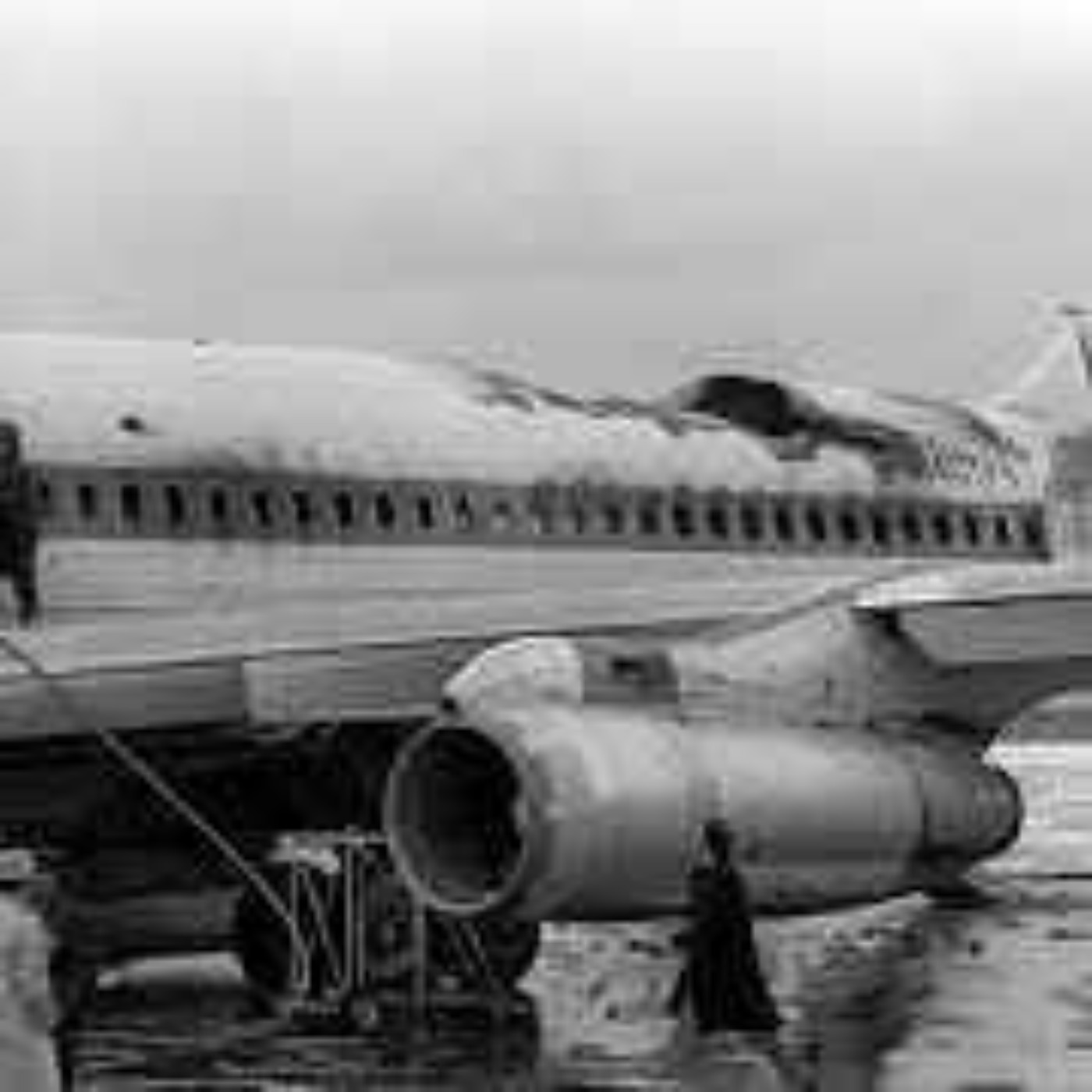
What I survived
Pan Am Flight 73: The 1986 Karachi Hijacking P4
00:31:20
It's good to hear your voice, I remember you well
Loading summary
Transcript71 lines
- [00:00]
Podcast Narrator / Advertiser
This episode is brought to you by Progressive Insurance. Do you ever find yourself playing the budgeting game, shifting a little money here, a little there, and hoping it all works out well? With the name your price tool from Progressive, you can be a better budgeter and potentially lower your insurance bill too. You tell Progressive what you want to pay for car insurance and they'll help you find options within your budget. Try it today@progressive.com, progressive Casualty Insurance Company and affiliates. Price and coverage match limited by state law not available in all states.
- [00:29]
Spanish TikTok Promoter
Seguramente estas manejando entrenando oasindo tarreas ahora mismo tip rapido TikTok noy solo entretenimiento a y encuentro concejos practicos para la vida real descarga TikTok ahora.
- [00:44]
VRBO Advertiser
At vrbo, we understand that even the best of plans sometimes need a little support. So we plan for the plot twists. Every booking is automatically backed by our VRBO Care guarantee give giving you confidence from the very start. Whenever you need help, it's ready before your stay, through the moments in between and after your trip. Because a great trip starts with peace of mind and maybe a good playlist. But we've got the peace of mind part covered.
- [01:24]
Narrator / Documentary Host
We all carry something we can't put down. Maybe it's something someone did to you, something that was taken. A moment where the world revealed itself to be more cruel, more random or dangerous than you wanted to believe. A grudge, an anger. A hurt. And once you know that, once you've seen it, felt it and survived it, you have a choice to make. You can let it boil inside you. Let it become the lens through which you see everything else. Let the person who hurt you continue to hurt you year after year, long after they've even forgotten your name. Or you can do the harder thing. You can talk about it until the words lose their venom. You can look directly at what happened and refuse to let it own you. You can even, and this is the part that seems impossible, try to understand the person who did it. Not forgive, necessarily. Not forget, but understand. When Michael Thexton came home from pan AM Flight 73, he would have to make a choice about what to do with what had happened to him. However, before that choice, he first had to survive what was about to be an explosive end to a siege that had lasted over 15 hours.
- [02:47]
Song Singer / Musician
Moon in the sky I'm looking at the moon in the sky. This shouldn't come as a surprise, but I can't sleep. War in my mind I'm trying to fight a war in my mind I don't know who's the winner tonight but it ain't me.
- [03:16]
Narrator / Documentary Host
Chapter nine. You could tell something was going to happen.
- [03:21]
Michael Thaxton (Hijack Survivor)
I was actually asleep on the floor, curled up on the floor. And the guy with the young aggressive one woke me up by kicking my feet. He said, up, up. Move, move. I picked myself up and stumbled back down the aisle again towards the economy class.
- [03:40]
Narrator / Documentary Host
As Michael walks towards the rear of the plane, he notices that it's far darker and stiflingly warm as the ground power unit that is used to power the plane while on the ground was slowly shutting down.
- [03:52]
Michael Thaxton (Hijack Survivor)
That's not supposed to run for 15 hours or whatever. However long we've been there. It. It had broken down. And so the plane was on battery power and they. All the electrics were failing very quickly. So the, the air conditioning had gone, the lights were going, the music had. God bless it stopped. And so I went through into the economy class. Everything was exactly as I had left it. I had sort of got this idea during the day that maybe they'd let the women and children off. But no, everybody was still there. Everybody was looking very scared. I saw a different seat, a window seat this time again, a few rows in front of the wing exit. And I went and slipped in there and got down low and I thought, I'm back with the others. I stand a chance. This is amazing, but you could tell that something was going to happen. No, it was very tense. It got completely dark, completely quiet. And when the lights were completely out again, people say that there was sort of. The hijackers were shouting things to each other. I don't remember that. I only remember bang. And thinking, is that hand grenade? Surely a hand grenade would be louder than that. And then unmistakably automatic gunfire from the front of the plane just a few yards away.
- [05:26]
Narrator / Documentary Host
The leader of the group had taken his weapon and unloaded an entire magazine into the first few rows that were filled with terrified passengers. Then more machine gun fire coming from the very back of the plane. It was utter chaos on board as the terrorists had reached their breaking point and the mission had changed. And all that was left for them to do was try and kill as many people on that plane as they could.
- [05:55]
Michael Thaxton (Hijack Survivor)
And then the leader has changed his magazines. Let's go. The second magazine into the front of the plane. And then from the back of the plane, there are apparently the marks or the evidence of six hand grenades thrown among the passengers.
- [06:14]
Narrator / Documentary Host
The noise was deafening as grenades and machine gun fire competed against the screams and cries of people trying to avoid the bloodshed. When all of a sudden Michael says in his mind, everything fell eerily quiet.
- [06:32]
Michael Thaxton (Hijack Survivor)
And I lifted my head enough to see on the far side of the plane. Door shaped blackness. No, it was different color of black and it was door shaped. And I thought, I felt for the man beside me. I said, they've got a door open, we gotta go. And he pushed me back and he said, no, no, keep down, keep down. I wasn't having this. I mean I was. I knew it would be fueled up to fly to Frankfurt. I thought it would burn. And I said, no, it's on fire. You could smell smoke in the air. I said, we've got to go. And so I pushed him out. He made his way to the far side, the starboard wing. I saw that the port wing exit was also open. And I got out. Apparently I'm about the only person who got out that way. I don't know what, you know, somebody must have opened the door because I didn't. But there was no chute.
- [07:19]
Narrator / Documentary Host
Every time you board a plane, you hear it, that call from the flight attendants as the door closes doors to automatic. It's background noise, usually part of the ritual of flying, like the seatbelt demonstration and the safety cards you never read. Most passengers don't even know what it means. Well, it means the emergency slides are now armed. So if those doors are open, the escape chutes deploy automatically. It means in an emergency there is a way out. But pan AM Flight 73's doors were never set to automatic. When the hijackers stormed the plane, it of course had not gone through any of the pre takeoff procedures. They were still commencing boarding. So this meant the doors remained disarmed. So when the shooting started, when the chaos erupted and the passengers desperately tried to escape through the emergency exits, there was nothing on the other side. Just an over 20 foot drop to the tarmac. And Michael standing on the wing in the dark.
- [08:26]
Michael Thaxton (Hijack Survivor)
There's no way in God's earth I'm getting back on that plane. And so I thought, I'll, I'll slide off the back of the wing. I'll dangle from my fingertips and it can't be very far from that to the ground. Surely, you know, it was dark and there's nothing to hang onto on the back of a jumbo jet wing. You know, I, I can, I can tell you that you probably will never find that out from experience. And so I went off the back of that wing at some Speed. And there's a moment in the area thinking, well, this is taking a little longer than I was expecting, you know, because it's a long way down. It's like jumping off the roof of a house, not, not, not out of the upstairs windows. It's, it's a long way to the ground. But again, luck, you know, here am I, 35 pounds underweight, as fit as I'd ever been in my life, wearing mountaineering boots. There are people who had taken their shoes off on the plane to be comfortable during the day, didn't put them back on again at the end and they were jumping off the wings in bare feet and there were some nasty injuries from that. I landed in a heap on the ground, scratched my elbow on the tarmac, picked myself up and ran away again. I can remember looking back at the plane as I was running away from it thinking, I'm going to wake up in a minute, I'll be back on the plane. This is the dream, but that's the reality. I can't possibly not be on that plane.
- [09:47]
Narrator / Documentary Host
Thankfully, he wasn't dreaming and he was running to the first building he could see. And as he got closer he spots a number of people who had also managed to escape and more began to congregate.
- [09:58]
Michael Thaxton (Hijack Survivor)
And somebody said, oh, follow me. And we ran through a gap in the buildings and found ourselves in an enclosed courtyard, know like a, a nightmare with the bogey men behind us and we all piled into a store cupboard through a doorway. I must have been burst in because I ended up sitting against the back wall with a little flight attendant sitting on my feet. And she turned to me and she said, I am very sorry, I am pissing in my panties. And I said, help yourself, you know, no problem. And we sat there, I don't know, for half an hour, hour, some time listening to noises which we could not interpret outside, but basically not really wanting anybody to come and knock on the door, particularly anybody in a security guard's uniform. But eventually somebody came and hammered on the door. We opened the door and it was the real army and, and they took us back to the terminal building which was ch.
- [11:02]
Narrator / Documentary Host
The Pakistani officials had been putting together a plan to storm the plane. However, everything had suddenly kicked off before they were ready to go. They prepared for this scenario of going in guns blazing, but seemingly hadn't planned for what they were going to do with the hostages when they got them off the plane. All of them having just been through what was undoubtedly the most terrifying experience of their life, were now sort of Just milling around, not quite sure what to do or where to go.
- [11:30]
Michael Thaxton (Hijack Survivor)
Three of the hijackers tried to mingle with the passengers and were picked up and taken aside. Basically rescued from a lynch mob because the passengers recognized them even if nobody else did.
- [11:44]
Interviewer / Podcast Host
Yeah.
- [11:46]
Michael Thaxton (Hijack Survivor)
Eventually I met up with a couple of other Englishmen, one of whom I recognized from his passport photograph, which I'd been looking at all day and thinking, why is he. He not where I am? And the three of us went off in a taxi to the Sheraton Hotel and spent the night there, where I was able finally to place a phone call to my parents and say, I'm alive. You know, don't know if you have any idea that I might not be, but I did get through a message around about midnight, Pakistan time to them to say that I was okay.
- [12:34]
Podcast Narrator / Advertiser
This episode is brought to you by Progressive Insurance. Do you ever find yourself playing the budgeting game? Well, with the name your price tool from Progressive you can find options that fit your budget and potentially lower your bills. Try it@progressive.com Progressive Casualty Insurance Company and affiliates Price and coverage match Limited by state law not not available in all states.
- [12:53]
Spanish TikTok Promoter
Nuevo en TikTok puede qute sor prenda TikTok shop esta lleno de productos variados y es cuentos in esperados Fazil de explorar Fazil de encontrar Buenas ofertas Descarga TikTok Aurora Pausar rapida esto mesor Los consecos mas util es que recivo ahora novien and the expertos sino de gente comun and TikTok lo que funciona lo que no cimbueltas descarta TikTok y comprehalo.
- [13:26]
Narrator / Documentary Host
Chapter 10 it's good to hear your voice. I remember you well.
- [13:31]
Interviewer / Podcast Host
What's the sort of aftermath from something as horrific as that? You know, I can't even imagine even wanting to get anywhere near an airplane again for a long time. I mean, obviously you want to get home, you don't want to be there anymore. You've got to get back on an airplane. I mean that must just be terrifying to think you have to get back on a plane.
- [13:51]
Michael Thaxton (Hijack Survivor)
So Sunday we. We. The Saturday that was a Friday Saturday was spent sort of talking to the world's press who arrived and putting ourselves back together. Amazingly, the getting my hand luggage back. The. The local consul's office was sort of trying to get stuff out of the plane and give it to people that belong to I got my passport back. And then on Sunday morning, there was a rumor that. That Pan Am had sent a plane. No, it was everything very disorganized still. And so somebody had laid on a bus and the people in the Sheridan went to the airport and. And there was this lot, these long lines of people trying to check in, but basically, you know, nobody had a ticket. Quite a lot of people didn't have their passports. Nobody had any luggage. Quite a lot of people weren't there because they were injured and there were 20 dead. There were people who didn't want to go anywhere. They were perhaps going back to Mumbai. But there were a lot of people who were going to try and continue this journey to Frankfurt. And we were all frightened, and we hadn't got our, you know, papers. And the world's press walking up and down the lines interviewing people.
- [15:15]
Narrator / Documentary Host
Eventually, after about three hours, Michael and the rest of the passengers were checked in and led to the plane that would be taking them home. Another pan American Airlines 747, eerily sitting in the same spot that they had been held captive only hours before.
- [15:34]
Michael Thaxton (Hijack Survivor)
And we got on the plane and I went upstairs, and I was now sitting in the upstairs bit behind the cockpit, sitting next to the flight engineer from our. The original flight. And I mean, a couple of details. You know, they made an announcement saying, ladies and gentlemen, there will be free drink for everybody. And I thought two things. First, I paid for free free drink. You know, I'm really unhappy about that. I have had a drink for, you know, two months. I cannot basically be so pissed that I didn't fall over in front of the British press. I can't do that. So I had. I think I had one drink on the entire journey home. But then they made an announcement. Ladies and gentlemen, you know, we know that, you know, some of you are injured, and if anybody's frightened or hurt, we have doctors on board. The story was that the plane took off. Somebody downstairs, you know, leaned back to. To relax, and three doctors rushed forward to try and revive him, you know, and that probably meant that he had. May have had a heart attack.
- [16:44]
Narrator / Documentary Host
Needless to say, it was certainly not a relaxing flight. And Michael says he never felt truly safe until such time as he arrived back in London and he was greeted by a rather grumpy British police officer. And he simply thought, I'm home.
- [16:59]
Interviewer / Podcast Host
So, I mean, there is that relief of being home, and you've come out of this with your life obviously intact, which is fantastic. Was there any remnants from that moving forward? You know, was There any issues that you dealt with?
- [17:12]
Michael Thaxton (Hijack Survivor)
Absolutely. I probably thought about it every day for two years.
- [17:17]
Narrator / Documentary Host
Wow.
- [17:19]
Michael Thaxton (Hijack Survivor)
That it would not, not. Wouldn't be sort of in fear and trembling. I mean, except occasionally sort of loud noise went off. It would just always be running through my mind. And that took probably two years before that that stopped. You know, these days I don't think about it at all, you know, for weeks on end.
- [17:37]
Interviewer / Podcast Host
Until someone like me calls you.
- [17:39]
Michael Thaxton (Hijack Survivor)
Until someone like you calls me. But, you know, which, but I mean, the thing, I think the thing that was that I was very lucky about because I had been central. Everybody wanted me to tell the story, including not just the journalists who want the blood and guts and exciting bits. But it's not about the, you know, how it started and how it finished. It's about thinking you're going to die for 12 hours.
- [18:06]
Narrator / Documentary Host
Yeah.
- [18:07]
Michael Thaxton (Hijack Survivor)
And, and seeing no possibility that anything else will happen. And that has an effect. But people who deal with crises wanted me to tell them the story and they wanted all of that, you know, so I, I spent years talking to people who trained cabin crew, talking to people who trained commandos, talking particularly to police negotiators who, you know, stand outside these scenes with a megaphone. And the interesting thing about that was I, I would do this talk with one of the other people who was on the plane and we would sit there and tell this story at the end of week one of a two week course. And the people in the class would sit there just sort of open mouthed because they had spent week one on the theory. And this was suddenly sort of saying, oh my God, you know, this is, this is what it's about. It was just to make it real for these people. And, and that there was, I did this, this course happened at Hendon Police College in, in London four times a year and I did 93 of them in a row. And so, you know, there was a time where if you were in a siege in, in the uk, you would be helped out by somebody who had heard my story. But it's, it's, it's been a little while since, since the last time I went there, but. Because I got to talk about it, you know, that was sort of my psychiatric.
- [19:32]
Interviewer / Podcast Host
Yeah, I mean, my, my other show, I talked to men and women who are incarcerated in the United States and a lot of them retell these horrific stories that they've been through and a lot have said the talking actually helps and to actually kind of relive. And I suppose you, as you said, you probably relive this story more than anyone on that plane. So you've been able to sort of get it off your chest, essentially.
- [19:54]
Michael Thaxton (Hijack Survivor)
Absolutely. And I think, you know, that was particularly brought home that in 2001, the Pakistanis released the leader on parole. They deported him, and he was immediately picked up by the FBI and taken to America, where they proposed to put him on trial. I mean, he was released in September 2001, just after 9 11. Very bad time for a hijacker of an American plane to be at large in the world. And so George W. Bush was able to say, well, we've caught this guy and, you know, we're going to put him on trial.
- [20:31]
Narrator / Documentary Host
In 2003, the American authorities would get in touch with those who were on board that flight in 1986 to inform them that the ringleader would be going on trial in the United States. And would they first like to write a victim impact statement. And secondly, did they agree with the death penalty? Because this was the punishment the man was facing.
- [21:01]
Michael Thaxton (Hijack Survivor)
I don't approve of the death penalty. You know, I always had a. I think it's. It's wrong and barbaric. But for many years I had thought in his case I would make an exception because what he did was so horrific that the only thing that would recognize how serious it was would be the death penalty. And then they asked me, as if my opinion mattered, and that's a different sort of question. And I said, well, having thought about it deeply, again, I don't think he should have the death penalty because that would make him a martyr.
- [21:35]
Narrator / Documentary Host
By 2004, he would go to trial. And Michael, as well as the others from that day, again are contacted.
- [21:42]
Michael Thaxton (Hijack Survivor)
2004 came around and they said, we're going to put him on trial. And the judge has asked for witnesses to be in the court. Will you come to Washington and sit there in the courtroom and tell us your story? And again, I had to go. It was almost like having to go to Broad Peak to say goodbye to Peter. I had to go and see him.
- [22:07]
Narrator / Documentary Host
The courtroom was packed that day. There was around 25 people who were on the plane or relatives of people who had died that day. And of course, Michael was also there.
- [22:18]
Michael Thaxton (Hijack Survivor)
People like Veer after Oga, who was the first to speak, Sunshine, who was the second to speak. And a lot of them had never spoken about it. The last six people to speak, all members of the same family. A mother who'd been on the plane with her two tiny children, a father who'd stayed at home in America with two other children. And Mrs. Hussein, the last witness to speed, she spoke, I think, for two and a half hours, and she had never spoken about it before to anybody, not to her family. She said, when we were asked to make these victim impact statements, we emailed them to each other, even though we live in the same house. And, I mean, it was, it was raw and it was brutal. Watch what she had gone through and what all these other people. And I realized, you know, how lucky I had been to have been able to speak about this so many times to people who were interested in it. And, you know, and I, I, I felt much more at peace with the whole thing than all of these people. And he was given a sentence of 160 years, which is, you know, almost medieval somehow. And the logic of it is that you be eligible for parole after a third of your sentence. So they said three life sentences plus 25 years. That means you've got to be dead before you're eligible for parole. Nevertheless, he does have parole hearings. I don't know how they work that out. And every time he has a parole hearing, the Department of Justice turns up to object to it and say, no, he's supposed to be here for life. And that is where he is. He's in a federal prison in, in America. And the others, his colleagues, when they found out what had happened to him, they were all eligible for parole as well in Pakistan. But they said, for a while, actually, we'd rather just stay here. We'd rather be in a Pakistani jail than in an American one. And then Pakistan and America fell out of love with each other a bit, and they were quietly released. And nobody is absolutely sure exactly where in the world they are. They still have a price on their head,
- [24:39]
Narrator / Documentary Host
and that was that. The man who had held a gun to Michael's head in the doorway of a Boeing 747 who had killed innocent people, was essentially given his own death sentence. But his wouldn't be carried out in a split second. His death sentence would continue until the day he died behind bars. In situations like these, survivors are left with unanswered questions that linger for years, sometimes forever. Why? Why did you hurt me? Why did you kill my brother, my sister, my mother, my father? Or in Michael's case, why didn't you kill me? Why didn't you shoot me in that doorway, as you had the man just moments before? Why didn't you pull the trigger when you had every reason in your mind to do so? These questions tend to haunt survivors. They echo in quiet moments. They shape how you see the world, how you sleep at night and how you move through your life. But most people never get the answers. But in another incredible turn of events, Michael would get the chance to ask those very questions to the man who once stood behind him with a gun to his head.
- [26:07]
Michael Thaxton (Hijack Survivor)
Yeah, yeah, this was. This was this extraordinary thing. At the beginning of the pandemic, somebody got in touch with me and said, we're making a film. We're going to make a documentary about this hijack. That was one of those sort of weird things in the pandemic. You know, I had odd dreams. I thought, that's got to be a dream. Who on Earth in 2020 is going to make a film about a 1986 hijack? But it was so. And over the next couple of years, I had various. I was interviewed by the television crew and so on. And then one day the director came to me and he said, look, he said, this is. This is for you to think about, but I have been in touch with the terrorist in his American jail. And, and he has said he would talk to you if you wanted to ask him questions, you can talk to him on the phone. And again, you know, I thought about it a lot, but I had to say yes, you know, I. I guess I have questions. I. I have questions that I want to ask him. And I didn't think he would answer them honestly.
- [27:10]
Narrator / Documentary Host
In the immediate aftermath of what had happened and in later trials of these men, they, in fact denied shooting anyone. They made up some cock and ball story that it was the Pakistani commandos who stormed the plane and unleashed a hail of bullets and explosives Claims that, of course, were utter rubbish, as the commandos never even got the chance to board that plane at all. So they had always denied wrongdoing. But nonetheless, even though Michael didn't think he would get the answers he was after, he was going to ask the questions.
- [27:40]
Michael Thaxton (Hijack Survivor)
And so, you know, this extraordinary thing that, that I'm standing in my own kitchen holding the director's mobile phone in my hand, waiting for a phone call. And. And the phone rang, and it's. It's Zayd Safarini. And he said. He said, mike, it's good to hear your voice. I remember you well, I said, look, Zayd, I don't know how long we've got, but I have some questions. Is that okay? He said, oh, anything, anything. I said, well, why didn't you shoot me at the end? You know, why did you put me back with the others? And he said, oh, it was, it was what you said about your Brother, he died or something. He said it touched my heart. And I thought, just sit aside, man. And over the years, you know, I'd had a number of theories about this, you know, and the main one I, I'd always thought was the fact that, you know, they called for a Brit and they, they expected some rich, fat Westerner to come forward. They got somebody who looked worse fed than any of them and they just sort of. They, they, they couldn't find the enemy that they were prepared to hate. But the idea that he had actually taken any notice of what I said about my brother at the moment when I thought he was too busy and remembered it 12 hours later and remembered it more than 30 years later. It's not literally true to say that my brother saved my life, but it's sort of poetic like that. That was the, you know, the circularity. It began with Pete.
- [29:23]
Interviewer / Podcast Host
Exactly.
- [29:24]
Michael Thaxton (Hijack Survivor)
And they did.
- [29:25]
Narrator / Documentary Host
Yeah.
- [29:25]
Interviewer / Podcast Host
And obviously, you know, we've spoken about this, you know, in talking about it and all this, and you don't think about it anymore, I suppose. Would you consider you've come away from it quite unscathed?
- [29:36]
Michael Thaxton (Hijack Survivor)
Well, you know, I wouldn't. I couldn't have it differently. You know, I wouldn't recommend it to anybody as a way. But it's, it's a part of my life. It's a very big part of my life really, that I was the man who was hijacked. I was the man, the man they didn't shoot. And it has affected me in so many ways. You know, I have a. I have a very well developed sense of proportion. There are things that matter and things that don't matter. And I can always tell myself, you know, I shouldn't be here, therefore I, I shouldn't be annoyed at what this minor inconvenience.
- [30:18]
Interviewer / Podcast Host
And sort of lastly, I mean, you know, speaking about your brother, it started with your brother and it kind of ended with your brother. Have you ever thought what he may have thought of all of this craziness that came out of his little less adventurous brother ending up in this incredible situation?
- [30:34]
Michael Thaxton (Hijack Survivor)
He would have been surprised. He had a wicked sense of humor. He would have thought it was all quite funny. I mean, one of the things that's quite nice is to be able to introduce my children to the uncle they never had and also my nephews and nieces, because he would have been. He would have been a wicked uncle. But this enables them to see who he was.
- [30:59]
Interviewer / Podcast Host
Well, I was going to say it's kind of, in a way, it's been I suppose a nice way to memorialize him I guess. His memory.
- [31:08]
Michael Thaxton (Hijack Survivor)
The peak exter memorial expedition. Yeah and he's certainly got his memorial, didn't he?
- [31:13]
Narrator / Documentary Host
Was. Michael Thaxton survived a situation that was completely out of his control. He was in the hands of men from. From another country with a different culture and who spoke another language. But thankfully it was a situation that would end after hours. But what if you find yourself in another country where you don't know the culture, you don't speak the language and your ordeal could see you stuck not for hours, days, weeks or even months, but years.
- [31:59]
Baz Hulse (UK Worker in India)
In our countries you can get a lawyer first before you make a statement or you make a. You know there you've got to make your statement. And they was writing stuff down in Hinder and I don't know what they're writing.
- [32:10]
Narrator / Documentary Host
Baz Hulse was an everyday blue collar worker from the UK and he would find that out firsthand while he was finalizing the details of having his own dream holiday home in India. It soon turned into a nightmare.
- [32:25]
Baz Hulse (UK Worker in India)
I was only sentenced after three years, eight months. And that was a fast trial.
- [32:29]
Narrator / Documentary Host
Holy shit.
- [32:31]
Baz Hulse (UK Worker in India)
That was a fast trial. Lap apparently Jack.
- [32:34]
Narrator / Documentary Host
A nightmare that would last 10 years.
- [32:38]
Baz Hulse (UK Worker in India)
There's 220 men in at a time. Deary me, six toilets, only three work and a stink. And you know, a few early fans and you can imagine the heat. Yeah, it was very, very hard to adapt.
- [32:51]
Narrator / Documentary Host
Next time on what I Surv.
- [32:56]
Song Singer / Musician
Moon in the sky. I'm looking at the moon in the sky this shouldn't come as a surprise, but I can't sleep. War in my mind I'm trying to fight a war in my mind I don't know who's the winner tonight but it ain't me.
- [33:31]
Fin AI Advertiser
AI is transforming customer service. It's real and it works. And with fin, we've built the number one AI agent for customer service. We're seeing lots of cases where it's solving up to 90% of real queries for real businesses. This includes the real world complex stuff like issuing a refund or canceling an order. And we also see it when FIN goes up against competitors. It's top of all the performance benchmarks, top of the G2 leaderboard. And if you're not happy, we'll refund you up to a million dollars, which I think says it all. Check it out for yourself at fin.AI.
- [34:01]
Podcast Narrator / Advertiser
this episode is brought to you by Progressive Insurance. Do you ever think about switching your insurance companies to see if you could save some cash? Progressive makes it easy. Just drop in some details about yourself and see if you're eligible to save money when you bundle your home and auto policies. The process only takes minutes and it could mean hundreds more in your pocket. Visit progressive.com after this episode to see if you could save Progressive Casualty Insurance Company and affiliates. Potential savings will vary. Not available in all states by order
- [34:28]
Peaky Blinders Trailer Narrator
of the Peaky Blinders Academy Award winner Cillian Murphy returns alongside an all star cast including Rebecca Ferguson, Tim Roth, Sophie Rundle with Academy Award nominee Barry Keoghan and Emmy Award winner Stephen Graham. In Netflix's upcoming film Peaky Blinders, the Immortal Man Tommy Shelby must face his own demons and choose whether to confront his legacy or burn it to the ground. Peaky Blinders the Immortal man is in select theaters March 6 and on Netflix March 20. Rated R.