← What I survived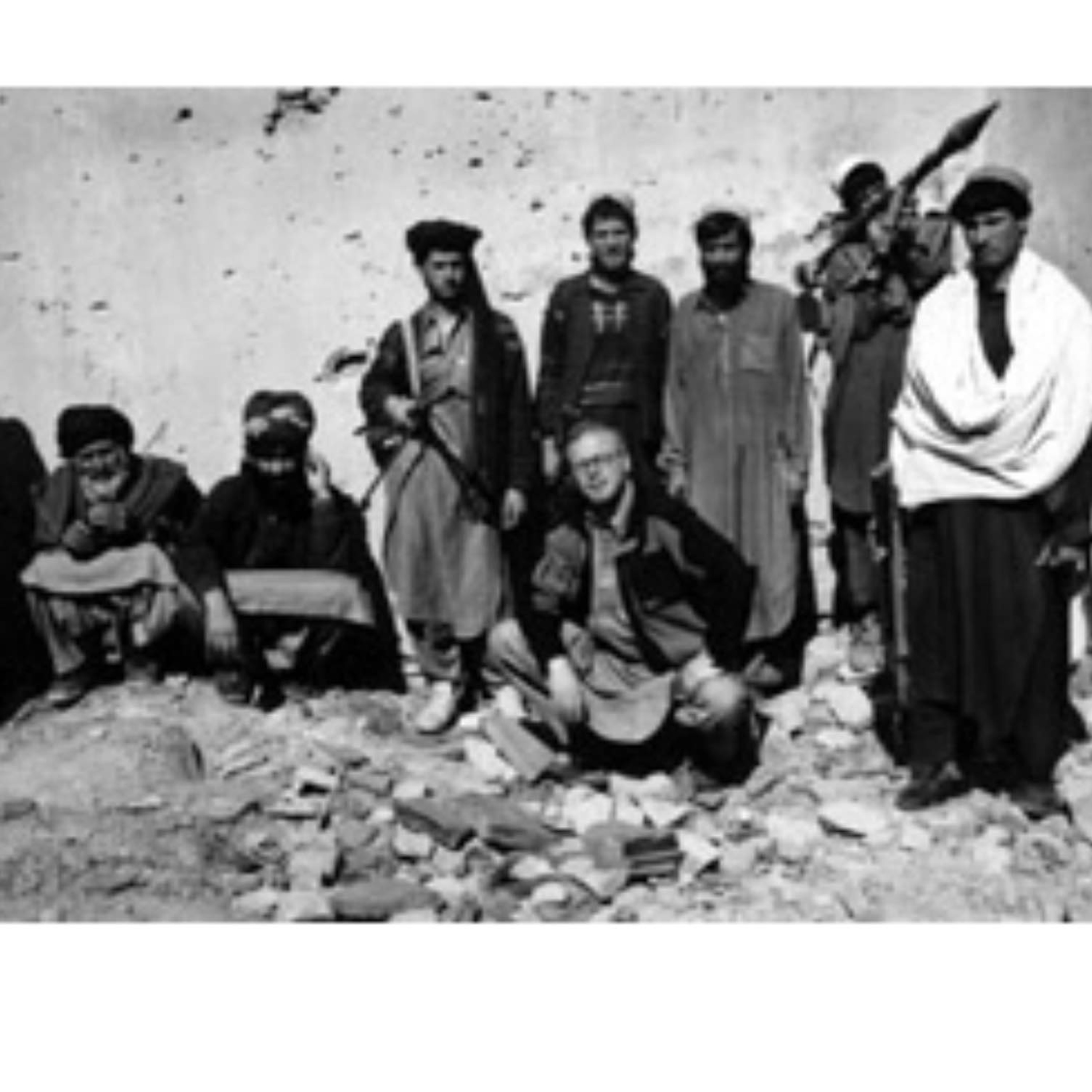
Loading summary
Transcript32 lines
- [00:00]
A
This episode is brought to you by Progressive Insurance. Do you ever think about switching your insurance companies to see if you could save some cash? Progressive makes it easy. Just drop in some details about yourself and see if you're eligible to save money when you bundle your home and auto policies. The process only takes minutes and it could mean hundreds more in your pocket. Visit progressive.com after this episode to see if you could save Progressive Casualty Insurance Company and affiliates. Potential savings will vary. Not available in all states. When it comes to managing money, forget the hype and look at the results. Bill has a trillion dollars of secure payments powering our BillPay tools. Instead of just moving money, Bill is powering the financial operations of nearly half a million customers. So stop the guesswork and start scaling with the proven choice. Ready to talk with an expert? Visit bill.comproven to get started and grab a $250 gift card as a thank you. Terms and conditions apply. See Offer page for details.
- [00:57]
B
Let's be completely honest. Are you happy with your job? The fact is, a huge number of people can't say yes to that. Too many of us are stuck in a job we've outgrown, or one we never really wanted in the first place. But we stick it out and we give reasons like what if the next move is worse? And I've put years into this place and maybe the most common one? Isn't everyone miserable at work? But there's a difference between reasons for staying and excuses for not leaving. It's time to get unstuck. It's time for Strawberry Me. They match you with a certified career coach who helps you get from where you are to where you want to be, either at your existing job or by helping you find a new one. Your coach helps clarify your goals, creates a plan and keeps you accountable along the way. Go to Strawberry Me Career and get 50% off your first coaching session. That's Strawberry Me slash career.
- [01:58]
C
The war on terror wasn't just dangerous for those carrying weapons. It was deadly for civilians, journalists and aid workers alike. And between September 11, 2001 and 2008, the Middle east and South Asia became a graveyard for Westerners who'd ventured into conflict zones, many of them trying to help, trying to tell the truth, trying to rebuild what war had destroyed. Documentary filmmaker and journalist Sean Langan wasn't naive. As a filmmaker who'd spent years covering these regions, he knew exactly what could happen to Westerners in the hands of terrorist organizations. He'd seen the headlines. He'd watched the news reports. He knew the names. It started with Daniel Pearl. In February of 2002, the Wall Street Journal reporter was in Pakistan chasing a story about a terrorist. When he was kidnapped in Karachi. He thought he was going to interview an Islamic scholar. Instead, he was taken by militants connected to Al Qaeda. Weeks later, a video emerged showing his beheading. It was one of the first times the world witnessed this particular brand of horror. Then came Nick Berg. In May of 2004, a 26 year old telecommunications contractor from Pennsylvania who'd gone to Iraq looking for work. He was kidnapped, held in an orange jumpsuit and beheaded on camera by Al Zarqawi's group. The video was posted online. The message was clear. This is what happens to Americans in Iraq. That same year, in September, Kenneth Beagley, a British civil engineer working on reconstruction projects in Baghdad, was kidnapped along with two American colleagues. Both Americans were beheaded within days. While Bigley was held longer, appearing in videos, chained in a cage, pleading for his life, begging then Prime Minister Tony Blair to save him. His family mounted desperate appeals. Muslim leaders called for his release. But none of that mattered. In October 2004, he too was killed and his body never recovered. Just weeks after Bigley's murder came Margaret Hassan. An Irish born aid worker who'd lived in Iraq for 30 years. Married to an Iraqi, spoke fluent Arabic. She dedicated her life to helping Iraqi civilians, working with CARE International, bringing medicine to children, rebuilding hospitals. She was beloved by the Iraqi people. Hundreds of them took to the streets demanding her release. Even prominent insurgent groups condemned her kidnapping. But it didn't save her. She appeared in videos, tearfully pleading, saying that these might be her last hours. She begged not to die like Mr. Bigley. However, in November 2004, she was murdered. This wasn't some distant abstract threat. This was a reality for people going into these places. Shawn knew all of this. He was a journalist. And now he finds himself in the same situation, hoping desperately for a different outcome.
- [05:03]
D
Moon in the sky I'm looking at the moon in the sky this shouldn't come as a surprise but I can't sleep War in my mind I'm trying to fight a war in my mind I don't know who's the winner tonight but it ain't you.
- [05:32]
C
Chapter 5 Escape is not an Option. In our previous episode, Shaun and his fixer had been placed in a room and were told that they were not allowed to leave. They weren't being held captive. It was all just precaution to ensure they hadn't been followed. However, Sean's fixer was Nervous, not a great sign. But he himself was remaining positive and doing his best to convince himself and his fixer that all was fine. However, that facade would come crashing down when the commander of the group comes into the room.
- [06:10]
E
Now, the commander, he had to charm of the devil because he'd be very charming, but he was like a sociopath. I discovered. He came in the next evening like your avuncular uncle at Christmas, bringing lots of Christmas gifts. And he had a big box and he sat me down, he put his arm around me, said, look what I've brought you. And he was pulling out the box like big family size shampoo from know made in Pakistan, big family size chocolates and toffees. And you'd be, look at this. And I've also got you this. And I'm thinking, how long am I here for this supposed interview? But that shampoo, like that's like a giant family pack. And I'm being very slow, like why is it what the size of those peanut they were like pulling bags of. And in the meantime he just from his surely pulls out a sheaf of papers and hands it to my fixer who's reading this scroll. You know, it's like ancient Greece. He's reading the scroll. His face just was drained of blood and white as he's reading. But just meanwhile the commander still saying, don't worry about him. I've also got you toffees from Iran. I like Iranian toffees. Apparently knows why. And I'm like, jesus, what's happening? And then finally, after showing me all these wonderful gifts, what a nice man he was, he just gets out, he says, right, read that and you got some questions to answer and walked out. And I turned to my fixer and I'm like, what, what's the saying? He reads out this and it's an official Taliban headed notepaper. By order of the Emir Sirajkani, you're here by charged was working for foreign enemy governments. And I go, fuck, we've been kidnapped. And my fix is looking at me like, I still don't get it because we've been accused in that letter of being charged with being spies working for foreign enemy governments. And he looked at me, I, I it hit me like, we've been kidnapped. He went, sean, you know, we're dead. And we went into a tailspin of panic and adrenaline which lasted two days where you're trying to figure out how to escape who you over? Was it the muller? How'd you get out of there? And you're running around in circles like you. Like balloons filled with gas, buzzing around the room, not sleeping, pacing around the room. And I remember my fixer for two days, not sleeping. And you're not really thinking properly because the metal, physically, literally, the walls are closing on you, but metaphorically as well. You know, my fixer wife had given birth two days before this trip. She got these pressures, like, oh, my God, my newborn son didn't even name him, you know, My fixed name is Sammy. I was avoiding saying his name. But my fixer Afghan, who'd been my trusted friend and fixer, Fixers, we use that phrase. It's not derogatory. My fixer is my companion, but my producer, my translator. And you can't operate as a foreign journalist in these parts of the world without someone by your side. And they're more important in my eyes than an executive producer or director. Producer, you know? Yeah.
- [09:39]
C
The two men are now trapped in a room, having been told essentially that they've been handed a death sentence, one that will likely see them suffer the same fate as so many before them. Of course, the first thing that comes to mind in that sort of situation is, can we escape?
- [09:56]
E
We're really just stressed out, and you're thinking about escape. You don't know. Escape is not possible if very quickly it dawns on you, the constant noise, and you're in the mountains. So when you have gunfire and artillery fire, it's not heavy or two, but there's artery. It rebounds. There's the reverb and the echo in the mountains. It's a really disturbing sound. And it was pretty constant fire. And that's the Taliban, Al Qaeda training camps. And we realized we're surrounded by. And we'd seen the checkpoints on the road up there before. We were blindfolded near the house. We. As I was describing, I was driving through a market. It's just covered in fighters. I mean, they're like hundreds million. And they had checkpoints. And the locals wouldn't be friendly either. So you're very aware that there's. Even if you got out of that farmhouse, that compound, which had armed men in, you'd be immediately, you know, look at me. You know, I can't speak the language. Hopeless situation. So I pretty much realized escape wasn't an option.
- [11:09]
C
Okay, so time to get a little bit nerdy and sciencey here, because what happens to the body in times of high stress, even impending death, is fascinating when you're in extreme danger, when your life is genuinely threatened, your brain doesn't function the way it Normally does, the prefrontal cortex, the part of your brain responsible for rational thought, planning, language, decision making, essentially shuts down. It goes offline. And there's a reason for that. It's too slow. When you're facing a life or death threat, your brain can't afford the luxury of careful reasoning. It can't waste precious milliseconds weighing options, considering consequences, forming coherent sentences. Those higher cognitive functions take time and energy that you simply don't have. So your brain makes a choice. It floods your system with stress hormones like dopamine, cortisol, and those chemicals that essentially tell your prefrontal cortex to shut down. But here's where things get even stranger and remarkable. When you're in a life threatening situation, your brain doesn't just shut down the prefrontal cortex and hand control over to the amygdala, which is part of the limbic system. And it's the emotional processing center of the brain. So when we talk about fight or flight, it also does something fascinating with memory retrieval. The same stress hormones, the cortisol, the adrenaline that impair your ability to think rationally, can actually enhance certain types of memory retrieval, particularly in these cases, memories related to survival. Your brain essentially goes into search mode. It's scanning your entire memory bank for anything, any. Anything at all that might be relevant. Prior experiences with danger, information you've learned about similar situations, stories you've heard, articles you maybe read. It doesn't matter if you consciously remember them or not. Under extreme stress, your brain can pull up semantic memories, factual knowledge, learned information that might give you an edge. And that's exactly what Sean says was happening to him.
- [13:20]
E
Very quickly, other things started happening. I had total recall of my entire life. You know that saying, the drowning man sees their life flash before them? I. I saw my entire life, but it didn't flash because I wasn't drowning. So I could pause. I could. I just had to give myself a prompt, like, okay, my first day at kindergarten, at infant school. And I would see myself there, see what I was wearing. Now, I. It was a great pleasure actually seeing your whole life later on less so. It was like Scrooge Christmas Carol where you see the ghost of Christmas past. Because I saw the first day I met my girlfriend who became my wife, what she was wearing. You know, I saw my best friend, who I became a journalist, his first day at school, when he came into my school and I saw him. You realize everything in your life, what you think is forgotten is still there in this memory. I sat down, I named every teacher I'd ever had from the age of five if you ask me. Now I'll get two names and that is the brain knowing its body's it's dying. I don't know what it needs. I'll just give it everything.
- [14:34]
A
This episode is brought to you by Progressive Insurance. Do you ever find yourself playing the budgeting game? Well, with the name your price tool from Progressive, you can find options that fit your budget and potentially lower your bills. Try it@progressive.com Progressive Casualty Insurance Company and affiliates Price and coverage match limited by state law not available in all states. With almost half a million customers and over a trillion dollars of secure payments, Bill isn't new to intelligent finance. It's the proven way to simplify bill pay and maximize cash flow. Want to learn more? Visit bill.comproven for a special offer.
- [15:10]
F
The Bleacher Report app is your destination for sports right now. The NBA is heating up, March Madness is here, and MLB is almost back. Every day there's a new headline, a new highlight, a new moment you've got to see for yourself. That's why I stay locked in with the Bleacher Report app. For me, it's about staying connected to my sports. I can follow the teams I care about, get real time scores, breaking news and highlights all in one place. Download the Bleacher Report app today so you never miss a moment.
- [15:43]
C
Chapter 6 Becoming the Gray man. And one of those things the brain gave him was the memory of a book he'd read called Bravo 2 0, which is a true story of a British special forces soldier who was taken hostage, as well as another article he'd read about these types of situations and how they talk about you needing to become what they call the gray man.
- [16:08]
E
And I remember going back to my first film about western backpackers kidnapped the tourist. A Norwegian tourist was beheaded and the reason I read the FBI reports was he'd been quite confrontational with the captors during the captivity and it accused them of being un Islamic. So when it came to deciding who which of these backpackers they behead to send a message, they chose this guy being a bit difficult and that's why they talk about being the gray man, to not stand out. The other thing I read somewhere that was priceless help me was it's much harder to kill a fellow human being than a label. Much easier to kill labels is than a fellow human being. So step one for any hostage is to impress upon your captors that you're a fellow human being, not just a foreigner, non believer Journalist, spy. And so that was what I immediately did. Didn't think of escape when the. The people of this house, it was like a Pashtun family house, had been told we were foreigners, unbelievers, and spy. It was like the movie. They kind of kicked open this wooden door, throw not through, but just shoved a tray of food on the ground. And the first day I stood up and I. Again, this is where, when you ask and things, I. I was being glib, but in fact, my 10, 15 years, I'd picked up a lot of very useful experience, Experience which all came to play. Everything I'd learned, not even aware I was learning how to behave, how to be polite. Among Muslim culture, Afghan culture, all just naturally, I had it to hand. I was, like, on stage acting out a performance. So I stood up. I know the Afghans don't like weakness, so I wouldn't show fear, but I would stand up politely say, good morning, Assalamualaikum, Peace be upon you, when they came in. And that was my way straight away to get through this, was to try and not be killed and to bond with my captain.
- [18:15]
C
So although these memories were flooding into his brain and some of them were trying to help him survive, there were other areas of his thoughts that he would need to shut off. One of those was the obvious elephant in the room, the very real possibility that this could all end with him becoming yet another propaganda video on the Internet. But he couldn't think about that because,
- [18:35]
E
as he says, it's not going to help you survive. And in fact, a few things happened. My fixer went the other way. He had a mental breakdown. He was sure he would be killed, and he fell apart very quickly. Now, where that was, ironically, a help to me is, you know, if you're with mates when you're young, if a mate's very drunk or puking up or losing, it actually sobers you up. Well, having my cellmate, fixer, translator, good friend, have a mental and physical breakdown, you know, when he lost hope and faith, his body went very quickly. That helped me anyway. That helped me just become. That forced me to be the strong one and to keep him in shape and to force him to exercise and wash. And so that was actually a fortunate thing. It helped me because I didn't have time thinking about my being beheaded or fear not seeing my kids. The other thing, funnily enough, you put out your head like an execution are your children. And you become very good at cauterizing emotions. So I wouldn't think about the possibility of Being beheaded. At the same time, I had two photos I'd hidden from the Taliban. I kept them hidden in my boots of my children, in. If I looked at my children one minute, it filled me with hope. If I carried on looking, it broke me, like more than a minute, it would almost break me. And I start crying, like, what kind of father am I? They're going to suffer their whole life. So I realized, bit like the execution, I had to put that away out of my mind. And I would take out my son's photo once or twice a week, look out for one minute and put back in the shoe. But to get through this ordeal, you couldn't think about what might happen in death, but you couldn't think about the good things too much in life, like your children, because you didn't want to think about if you were killed, the suffering you'll cause them.
- [20:37]
C
One other thing that Shaun would rely heavily on in captivity to keep him going was routine. We all know how important routine is in our day to day lives. For all of us, as soon as we're out of routine, we lose it. We feel off balance, disjointed, not quite ourselves. Well, of course, Shaun was in a situation that was mentally taxing enough. And one of the most important ways to try and stay on top of it was to create a new routine.
- [21:03]
E
Because if you sit there in a cell, scratching off the days, like in the movies, yes, time can kill you, cause madness, because you don't know when you're going to survive. Released, killed, not knowing, passing of time. In a room that's dark, after there was a little bit of light would come in through the window above where they boarded it off. But by the afternoon it'd be dark. And I'd read somewhere that if you break time down into routine, it. You control things and it passes much quicker rather than if you're waiting to be killed. So I would get up in the morning, exercise, shower with a bucket, shower, pray, think of my friends, and then exercise and plan how to bond. And routine keeps you going.
- [21:56]
C
Part of his routine was an escape. Every single morning. Not a literal one, of course, but a mental one.
- [22:05]
E
They would bring in tea, so I'd have green tea. I would sit the back of this cell, there was a small hole, and if I crouched at the back of the room and I'd have my green tea and a cigarette, I could look out and there was an apricot tree. I could see the bush of an apricot tree, but if I squinted, I could see beyond the fields. Sometimes you see the women working the fields and beyond that the snow capped mountains, the Hindu Kush. And I would sit there as a routine and I would escape every day. I escaped into reverie and drift, let my mind drift off, escape from that, confines that cell back to childhood memories. You know, I had, I was blessed with lovely summer holidays as a child in Portugal. And I would drift, let my mind drift off to a happy place. This is my safe place. And I think this is what the brain was doing, giving you total recall. It's to kind of comfort you with childhood memories, if you're lucky enough to have good childhood memories and love and to find ways of surviving. But I would spend the morning thinking of my childhood summer holidays in Portugal and that gave me the strength to come back into the room and deal with whatever was happening. You know, even at one point someone was filming me and I thought, fuck it, they filming me for one of those jihadi videos before. But you're, you're now capable of dealing with anything because you've got this strength. You're of, of draw, you're drawing on. Then with my loved ones cut off, I've never felt such a strong connection. I could feel them, see what they were doing. And a lot of it's based on. You're so focused, you've got no outside stimulus. So with no social media, you're in dark. I never, I was never bored. Ironically, you know, I get bored quickly in London. No television, no books, not bored. And you're having this meditative, deep state. Intense. Now, knowing that you could be beheaded, having the sword of Damocles hanging over your head at any moment you could die. Focuses the mind and the emotions. So it was intense spiritual connection to family, loved ones, friends, and then through them or through to life. You know, knowing life could end gives you an incredibly exquisite, acute sensitivity to the pleasures of life. And my God, you know, when you feel it, it can't really explain it now, but it's like, I think it's like the secret of life. When your granny tells you as a child to eat up your vegetables because there's people less fortunate and people are hungry. You don't get it. When you're living there with your life and risk and the door could be kicked open, you could be beaten up, oh my God, the pleasures of life and how lucky we are, which I've never lost you, you cry with the intent how wonderful this world is.
- [25:06]
C
And on top of this morning routine, he also had one in the evening with his two Small children back home.
- [25:13]
E
I would every night I knew the time in London. So when it was 5pm in London, it was about 9pm there I knew was my kids bath time, they were three and four. So I would close my eyes, kneel by the bed and so I would pitch myself and I could see my children washing and within seconds I could feel their skin beneath my hands and I could hear them squeal. So every night I bathed my children and I could feel them and I tucked in my arms and it was just real. But it was other moments where I would see a friend I hadn't thought of for a while. But I remember seeing a female friend's face light lit up by candle. Months after my release, this woman said to me, I said oh, it's weird, I was thinking about you. She goes, oh. When I was at Lourdes in France was that shrine that holy shrimer, people going to pray. She goes, I lit a candle for you. And it was. That came up quite a lot where I was thinking of someone who was thinking of me because I. They knew I'd been kidnapped. So to. I've never to contrary counterintuitively, but it makes sense for anyone who's gone through it in that moment of darkness and captivity and waiting to be beheaded. I've never felt so alive and so in love with life and my loved ones and so connected what was happening back, back home.
- [26:43]
C
Did you ever. Did you get a sense? I mean you had a radio. Did you ever hear anything about your own situation on that radio?
- [26:50]
E
So strange. So I knew. So my fixer was being at the beginning. We were listening. Why aren't we in the news? I mean, you know, it was newsworthy Western journalists kidnapped. And it was driving us nuts. Like because it was a fear. Wasn't you want to be on the news? It was no, it's a fear that no one's talking about you kidnapped and they hadn't and so wouldn't even be looking for us. There's something that they call it a news blackout. In the 1960s, 70s, 80s, kidnappers was always on the news. Slowly they realized in the west that gives oxygen. Kidnappers, terrorist movements around the world want that. So not giving them that, that was part of that thing. So news blackout became the news all new all TV agencies, governments. Now if someone's kidnapped, they have a news blackout. So in fact there was no news. But I, I figured that out there must be a news blackout because the running joke was how many journalists do you have to know before you could Get I knew all the foreign terms. We're a small traveling bunch to go around the world's war zones. And I was like, hell, I mean, if I don't make the news, they're not doing their job. So there was a news blackout. Later on I found out, of course, you know, the government's doing its thing. Channel 4, I've written a security protocol before you go off to war zones in very dangerous situations. You write like, if the worst comes to worse, here are people I'd like you to call. My family. But I'd mentioned some journalists and Afghans could you call, who in fact were proven proved quite instrumental, had managed to make contact with the Taliban, start negotiations. A female reporter I know from the BBC, the Taliban had sent her a message. So it was a lot happening. And then also I found out the British Special forces were planning a rescue mission. We're actually training for it in Helmand. Yes. SBS Special Boat Service. My ex wife was getting involved because there was a split between the Foreign Office. Governments and journalists don't trust each other. Government's like, give us all the information, you know, Channel 4 is saying no because their fear is they might want to kill terrorists as a priority, not rescue.
- [29:04]
C
Yeah, yeah.
- [29:05]
E
And obviously ransom payments. Yes. So the Western official position is we
- [29:11]
C
don't pay, we don't negotiate with terrorists. It's long been the official stance of the United States and the United Kingdom. The logic is simple. Pay ransoms and you fund terrorism. Make concessions and you create an incentive for more kidnappings. But not every country follows that policy. While the US and UK held firm, other Western nations, France, Spain, Germany, Italy took a different approach. They did negotiate, they did pay ransoms, and often their citizens would come home. The consequences of these different policies became brutally clear with ISIS. Between 2013 and 14, the group captured around 20 Western hostages. European governments reportedly paid millions in ransoms. Many of those hostages were released. American hostages like journalist James Foley and British hostages like aid worker David Haines were not. They were executed. Of course, it's impossible to say whether negotiations would have saved them. ISIS have propaganda goals beyond money. But the pattern was stark. Countries that engaged got their people back more often than not. Countries that refused often didn't. For Schorl Langen being held by the Haqqani network in 2008, the stakes were just as high. He was British and back home, the question wasn't theoretical. It was life or death. The government stance was still the same. We don't negotiate. However, luckily for him, the company he was working for at the time were prepared to negotiate. Although it didn't exactly go very smoothly.
- [30:51]
E
Evaxis the AK47 points it at me. He says, don't these foreign fuckers get it? We kill people.
- [30:59]
C
Next time on what I Survived
- [31:03]
D
I'm looking at the moon in the sky. This shouldn't come as a surprise, but I can't sleep. War in my mind I'm trying to fight a war in my mind I don't know who's the winner tonight, but it ain't me.
- [31:36]
A
This episode is brought to you by Progressive Insurance Fiscally responsible financial geniuses, Monetary magicians. These are things people say about drivers who switch their car insurance to Progressive and save hundreds. Visit progressive.com to see if you could save Progressive Casualty Insurance Company and affiliates. Potential savings will vary. Not available in all states or situations. Over 90 of the top 100 US accounting firms trust Bill to handle bill pay processes. Why? Because our tools are built on over a trillion dollars of secure payments. We're not just moving money, we're powering financial workflows for half a million customers. That's a level of expertise you just can't fake. Ready to talk with an expert? Visit bill.comproven to get started and grab a $250 gift card as a thank you. Terms and conditions apply. See Offer page for details.
- [32:29]
F
The Bleacher Report app is your destination for sports right now. The NBA is heating up, March Madness is here, and MLB is almost back. Every day there's a new headline, a new highlight, a new moment you've got to see for yourself. That's why I stay locked in with the Bleacher Report app. For me, it's about staying connected to my sports. I can follow the teams I care about, get real time scores, breaking news, and highlights all in one place. Download the Bleacher Report app today so you never miss a moment.