Loading summary
Transcript81 lines
- [00:00]
A
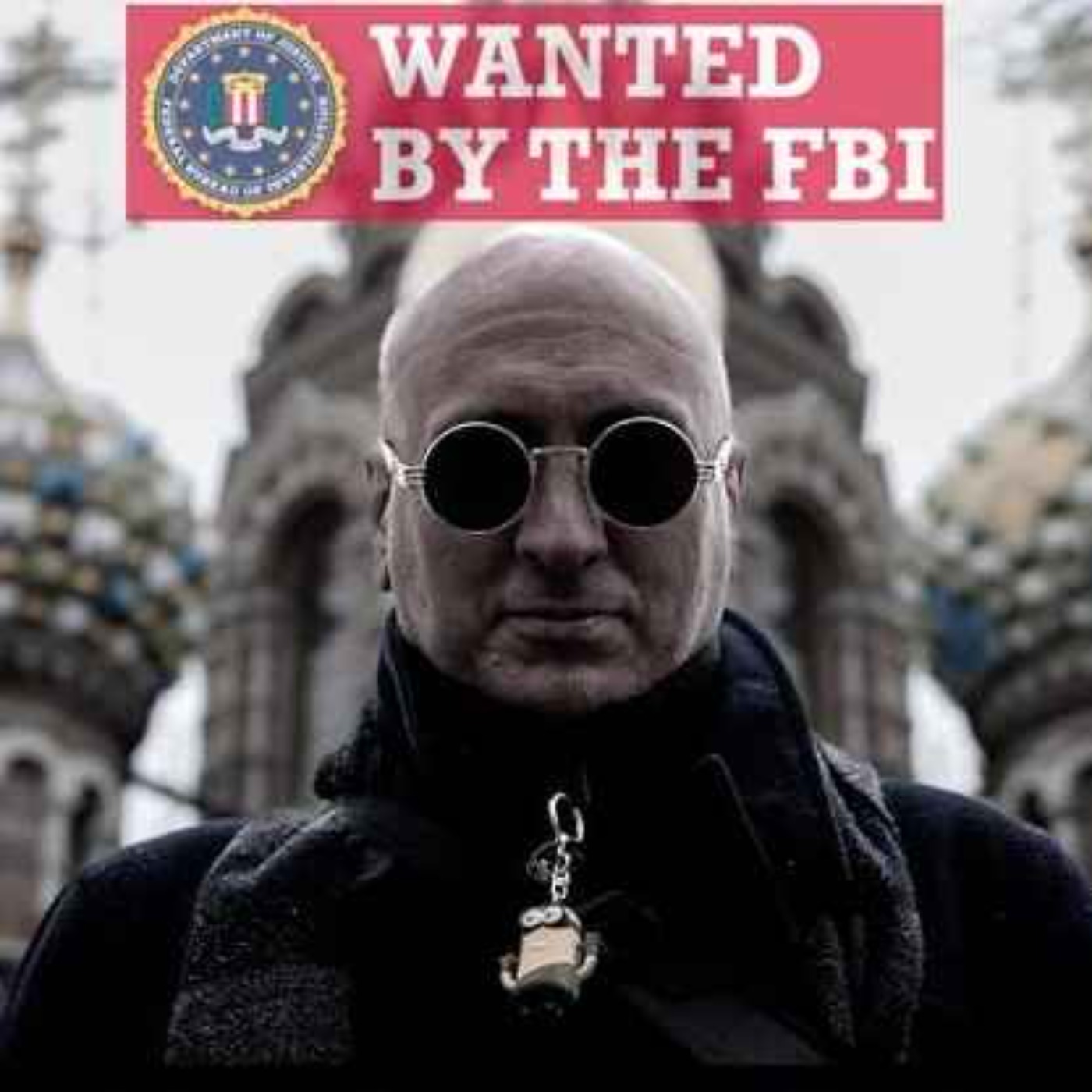
Hello, Legends. Before we get into the episode, just a quick heads up if you have completed season one of what I Survived. Firstly, thank you for the incredible support for the show and all the lovely comments. I truly appreciate it. I'm madly working on season two, which will be out for you very soon. In the meantime, though, I have just dropped listed as season two in what I Survived, a previous show that I created a couple of years ago called Wanted. The entire show is there for you to binge while you wait for season two of what I Survived. Chad Hauer is a wanted man. He lives on the island of St. Kitts in the Caribbean. And before you panic and think I've just blown his cover, the FBI are well aware of where he is. And in fact, he says that someone from the US Government one day showed up at his front door to try and take his son back to the United States. This was all while he was being detained in a Bulgarian prison. What was that like? What was that like being shipped off to a Bulgarian prison? I mean.
- [01:03]
B
Oh, it sucked. There were cockroaches like crazy. We couldn't sleep because the cockroaches crawled all over us.
- [01:08]
A
My name's Jack Lawrence. Welcome to Wanted.
- [01:12]
C
I'm a wanderer of the soul before the end I plan to behold But I know I'll lose myself along the way what's gone is gone what's past is past Let me leave what belongs in the past.
- [01:47]
A
Chad's being detained by Bulgarian authorities who are acting on an Interpol red notice sparked by Chad being placed on the FBI's wanted list, accused of kidnapping his own son. Son. And as soon as he's detained, he ends up meeting with someone from the US Embassy.
- [02:05]
B
So the first contact I had was even before I was in Bulgarian prison on the very first day when they arrested me. They were holding me, and I wasn't even arrested yet. But they had me in the police station. And, I mean, I couldn't get to the police station, so I was detained at that point. And one of the first questions they asked me was, do you want us to call the US Embassy and see if they'll give you any assistance? And I flat out told them no, because the US Embassy is the reason I'm here. I said, they're not going to help me. And I have dealt with a lot of US Embassies around the world for renewing my passport, my wife's visa and things. And most Americans think that the US Embassy is like some sort of international tourist, American citizen help center. They're not. So I dealt with a lot of these embassies before and I just knew they weren't going to help. They were after me. They came to me maybe three or four hours later and said, the US Embassy is here to see you. And I'm like, I mean, I told you not to call them. I have nothing to say to them. And she says, well, just go talk to them. So I'm like, okay. We go to the police chief's office. And in the police chief's office is a dude from the US Embassy. Now he was, I can look up his job title, but I believe he was an rso, a Regional Security Service officer. And they use these people commonly within the embassies. He's got a background in intelligence and interrogation and that kind of stuff. He has a background in degrees and these sort of things, but the guy wasn't the brightest guy in the world. He says, can we ask you some questions? And I said, well, I'm, you know, I don't have a lawyer here, but I'll talk on some very limited subjects. And he started asking me questions like, you know, where, where's the child at? And I said, I'm not going to tell you right now. It's not relevant. So forth. And he would ask me a series of questions and he'd come back to, where is the child? And he just kept always bouncing back. This is like Interrogation 101. Just keep repeating the questions and try and surprise them. You, you get them calm and then you stab them back and see if they'll slip up. And at one point he goes, is he with your parents in Tennessee? Well, that's what I knew. He, I mean, I suspected he was full of crap, but now I knew he was utterly full of crap. My parents have never lived in Tennessee. My dad's dead. So at that point I was like, okay. And the thing is, when he came in, he hit a manila folder. It was about an inch thick and it was full of papers, right? Now mind you, this dude has shown up like within two or three hours of me being detained, okay? So he's had almost no notice of who I am or what I am or anything. He got this thick file folder, so. So I'm to believe that within two or three hours he has an inch thick folder on me. I mean, the embassy, what he said. And he ran us through a jet printer or the embassy's had this file on me just waiting for me to show up in Bulgaria.
- [04:27]
A
Eventually, after getting nowhere, the US Embassy employee gets up and Leaves. Not long after that, another employee would arrive.
- [04:41]
B
Anyway, so she came in, she says, hi, you know, I'm Deborah and I'm Consular Services. And the funny thing is, when she came in, I didn't know if she was trying to play good cop to Woody's bad cop. So she was pretty friendly. She brought me a list of lawyers and just said, is anything I can do? And I said, well. And she had a form. She's like, if the press contact says, can we release anything? And I signed, yes. I signed yes to family. I named my mom. I gave my mom's phone number. And then I said, but don't tell my mom right away because her dad just died that morning. So right before I got arrested, yeah, I had gotten a message. My grandfather died. You know, let's not bug her yet.
- [05:13]
A
Yeah, that's all she needs.
- [05:15]
B
But I gave her the names of some other family members and so forth. And so then basically she left. I spent the night in. In a jail, in a drunk tank. And then the next day, they took me to the first Bulgarian prison. I.
- [05:40]
A
Chad's passports are now seized. At that time, he had his US and Caribbean passports as living in St. Kitts, he'd become a dual citizen. Not that a passport would be much use to him at this moment, as he was off to one of the many prisons in Bulgaria that he would be staying in.
- [05:57]
B
So they seized my passport. Then also, when I got to the prison, the guards, they nicknamed me, they gave me a nickname right away, and it was the American Taliban, you know, and they would ask me what I did, and I told them, I explained them, I said, well, my ex wife, I have custody, my son, and she's a liar. And they're like, there's no way the Americans, they're not going to send one of their own to this prison. Even if the Americans arrested you go to the other prison, not this one. I'm like, oh, great. And so it took me several days, but I realized that the American embassy had been telling the Bulgarian government just all kinds of nonsense about me. Like they were in the newspapers too. So the Bulgarian government, of course, they had been primed to think that they had caught like 007 or something. I don't know what they thought they caught, but they thought they had this big fish.
- [06:46]
A
So did they just throw you in with other people or did they keep you separate from the rest of the inmates?
- [06:51]
B
Well, the prison I was in was initially, it was a pretrial prison, so we had even less rights than the normal Prison. So there was no mixing it all. We were locked in our room 23 hours a day. It was a room designed for two prisoners, but there were four in the room. There was no heat. Nobody spoke English in the prison. Even so, one of the. One of the other cellmates spoke a little bit of English, but not a whole lot. None of the guards spoke English. We were locked in 24 hours a day, and the only time we were allowed out was to go into on the roof. They had these rooms without a roof, and so they'd lock you in a room without a roof, and you could walk around in a space the same size as your room and get some sunshine. But I was there in the winter, so there was no sunshine. And halftime, you go up, it was raining, and you're. Now you're standing in the frigging rain. Anyways, in the winter or snow, it was raining or snowing, it would mix. And even during that one hour, they still just took you with your own room.
- [07:40]
A
While in prison, Chad would end up being separated from the Bulgarians and placed in a cell with other foreigners.
- [07:46]
B
And he says, I'm going to put you in a room that the. The guys that are in there, they're kind of clean because he says, some of the rooms here are pretty nasty. Yeah, but these guys are fairly clean. And so I, you know, those are the only three that in that prison. But then I was transferred, so I was with other prisoners and prisoner buses, other prisons. But that's the one I was in the longest in initially.
- [08:02]
A
Right.
- [08:02]
B
And so the senior guy, Vardo, was the oldest. I think he was in his 40s, maybe 50s. He had been held in there almost two years before his family even knew where he was. Because once you get in, you can't make phone calls out.
- [08:15]
A
And I was going to say, did you get a chance to make any calls?
- [08:17]
B
Well, in my case, I had Deborah from the US Embassy coming to visit. So she had made some phone calls, but otherwise there were people sometimes for years before anybody knew where they were. And he was in there, like, almost two years.
- [08:28]
A
So how long did you spend in that prison all up?
- [08:31]
B
Well, that one was a few weeks. I don't remember exactly. It was a few weeks,
- [08:39]
A
You might think. Why is Chad putting himself through all of this? Why not just go home to the US and clear everything up? Well, initially, this was, in fact, the game plan.
- [08:55]
B
The reason I started the fight, extradition was I was able to get some news from the outside, and I found out that the day I was arrested, they had already released. So the minute I said they could talk to press, so I was thinking, press is going to find out America arrested in Bulgaria, right?
- [09:09]
A
Yeah, absolutely.
- [09:10]
B
They should have written the question instead of, are we allowed to talk to the media? It should have been, are we allowed to propagandize and release our own press releases and beat the crap out of you in the press? My mom found out because I was on the morning radio, the television, front page of all the papers. My youngest brother is 14. He was getting ready to go to school. And it comes across the radio. Local man arrested in Bulgaria on kidnapping charges to be extradited back in the United States soon. That was what came across the radio. It never mentioned that it was my son. Never mentioned I had custody of him. Never mentioned any of this stuff. Just international kidnapper. And so I got news of what they were doing to me in the press, and I was like, no, yeah, right.
- [09:50]
A
When you knew something really bad was happening. While stuck inside the prison, Chad is fighting to try and get the Bulgarians to allow him out. But the US Embassy, he says, kept pushing back.
- [10:04]
B
So what would happen is we. We asked for me to be transferred to the better prison, and the US Embassy objected. And so we. We asked. I had friends in Bulgaria, and I had developers that I used to work for, and I've been to Bulgaria before, so it was my first trip. I had friends help me with. With the lawyers and the logistics and getting money from my wife and giving to the lawyers and that kind of stuff. And we kept asking the Bulgarian courts to let me out and just, you know, hold my passport and let me go stay with him. Him and his family and the US Embassy kept objecting, but eventually we succeeded and they. They let me go. But then what would happen is the US Embassy would file more stuff against me, and every time they file something new against me, they would come rearrest me again. And then I'd be in prison, and then I'd get let out, and then I'd get arrested, and then I'd get let out. And so it was this bouncing effect that lasted for about three months.
- [10:45]
A
Chad is finally out a step in the right direction. However, he's still stuck without a passport. The Bulgarian police were holding his Caribbean one, and the U.S. well, the U.S. had gone a step further.
- [10:59]
B
Yeah. The FBI agent brought me a letter to the prison. She made a special trip to the prison to deliver me a letter to inform me that the Department of State had revoked my US Passports because I had two of them at the Time and they weren't allowed and I wasn't getting them back. And we also asked them not to destroy them because they had evidence of my whereabouts from all the stamps in them. And they still destroyed them even after we told them that it would be destruction of evidence to destroy my passport. They could have just withheld them, but no, they destroyed it. The next problem was they had my Caribbean passport and the local police were holding it in Sofia, the US Government, since they convinced them I was a terrorist and it was fake, and I had this fake passport, they opened a new investigation into me for entering Bulgaria on an illegal passport.
- [11:36]
A
Chad is now in Bulgaria without a passport and no way to leave, all while the US try and fail to have him extradited.
- [11:45]
B
The problem was, even after my extradition was denied not once but twice, because my extradition was denied and the US Embassy appealed it. So then I had to go to prison again and wait like another month or two until the. They basically fast tracked it to like the. Not. Not the Supreme Court, but the highest federal court and a panel of three judges turned on my extradition again. And you could see the U.S. embassy sent lawyers every time. So I'm like, okay, extradition denied. I'm ready to go. Let's go home. And the Bulgaria is like, no. Because what happened was the federal government of Bulgaria, from the Attorney General, Administrative justice, they're like, go home, you're free. No problems. But the local police were holding my Caribbean passport and had put a passport block on me in the passport system as well. I'm nearing. I entered Bulgaria on a three month,
- [12:33]
A
three month entry, so you can overstay your visa welcome now.
- [12:36]
B
And they're basically telling me you're overstaying soon and we're gonna come arrest you the first day you expire. And we know where you're staying. They told me that. And so now I'm talking to you.
- [12:47]
A
They won't let you leave. He's now looking at another arrest and potentially more time stuck in a Bulgarian prison. So he begins to come up with a contingency plan. Now's the time to start thinking about escape.
- [13:11]
B
Now, I was not trying to do anything illegal. I just wanted out of the country. But we were planning for the scenario in which I would not have any passport, no identification, and they'd already told me they were coming to arrest me on day 91. We started putting together plans to get me out of Bulgaria and back to the Caribbean. Now Bulgarian kids are almost on the opposite sides of the planet. And so we Started spending a lot of time going down to the Black Sea because I know how to sail. And so my first instinct was sailboat. I had about five different plans in place. The simplest plan was to get me on a boat to Russia, across the Black Sea, like Krasnodar. And then from Krasnodar, I could take a trainer plane to St. Petersburg and meet up with my wife's family. And then my wife, we could go back to Russia or sort it out. My wife is a Russian lawyer. We found this small port, small cargo port on the Black Sea that was, like, down the side of a cliff and was not very busy and was mostly fishing boats, but got some small cargo boats from Russia. And so we were talking to this. We just go make friends with these guys. Sometimes we come with some, like, rakia, which is kind of like the Bulgarian equivalent of vodka. Just start chatting up. We're like, so my buddy here, you know, he's got this situation, and a lot of times they start telling the story, like, oh, yeah, I read about you in the papers. A lot of them were all too willing to help me out. So I need to get onto a cargo ship, but I don't have a passport, and I was hoping that possibly if I paid some kind of fee, you might take a long bathroom break or something. And in pretty much every place we went, they're like, yeah, so this. This harbor master, he's like, well, it'd be too obvious if you just leave straight out of here and so forth. So he says, there's this ship that goes back and forth to Russia. I've got the schedule and everything, and I don't want to do it because I don't get in trouble here. So here's what we can do. I know the captain. You know, for this much money, when he leaves next time, he'll go out and he'll wait, like, 14 miles offshore. And then I have a fisherman buddy who will take you out, and then you'll get to Russia, and he'll. He'll get you in, and then you take care of the rest. And we're like, okay, we got that plan in place.
- [15:16]
A
Another plan did involve Chad hopping into a helicopter being dropped in the water near a waiting ship. However, the pilot came back with one glaring issue.
- [15:25]
B
When you leave, we have to file
- [15:27]
A
paperwork, and we come back, we got a missing person. Yeah, you're one guy short.
- [15:32]
B
Everything what happened, and when we tell them you jumped out of the helicopter in the ocean, they're going to ask some questions.
- [15:40]
A
That idea is off the table. Chad's passport. It's still being held by a very determined local Bulgarian police officer. Chad has his suspicions that someone was offering this officer incentives to hold onto it until one day he would get a call to tell him he needs to go and he needs to go now.
- [15:59]
B
We get the phone call because we've been communicating back and forth with the district attorney and she was just like, I don't know what's going on. She says, I'm meeting so much resistance. She says, you are free as far as the federal government of Bulgaria is concerned. Currently you are free to go, but I can't get your passport. And then she's like, I've made a request to get your passport. I can't get it. But then she finally calls and she says, listen, I can't give you a whole lot of details, but I've removed your name out of the passport system. But it's not going to stay out of the system very long. They're going to notice and it's going to get put back in, so you need to get out.
- [16:28]
A
He wastes no time and races to the location in which the District Attorney has told him he has a brief window in which to get his passport and get out of the country. To which he does. You might be sitting there thinking the same as me. All this over a custody dispute. Why on earth is the US Government and its agencies wasting so much time and resources over this? It just doesn't make sense.
- [16:55]
B
Let's say that just pretend that I am guilty of custodial interference, of withholding him or whatever they say. Can you name anyone else the US has tried to extradite three times and failed. If you put Snowden, Assange and Kim Dotcom together. I've been tried to been extradited as many times as those three combined.
- [17:11]
A
So we're going to take a short break and when we come back, if you thought this crazy story couldn't get any more insane, well, get ready to come further down the rabbit hole.
- [17:22]
B
Some stupid, I don't know, low level CIA agent had a wet dream and thought that I could turn my wife's parents or something.
- [17:28]
C
I'm a wanderer of the soul before the end I plan to behold But I know I lose myself along the way what's gone is gone. What's past is past. Let me leave what belongs in the past.
- [18:09]
A
Chad Howell is a wanted man. He's on the FBI's wanted list and has an active Interpol red notice against his name. All for the apparent Abduction of his son, who I might add is now a grown man who has appeared on many US television shows to do interviews saying that he has enormous. No way been kidnapped. Not only that, but he has been to the US Embassy in Barbados more than once to renew his passport. So why on earth have the US Government and their agencies, such as the FBI, placed so much manpower into this? Well, Chad has a couple of theories
- [18:47]
B
and where this fits in is remember I was hitting five or six countries a week sometimes. And so maybe not five or six, but three or four. Easily three or four countries was not unusual in a week. If you read books written by like former the CIA recruitment officers, there's one on TikTok and she talks about things they did in recruiting. And this actually goes back to even the OSS before the CIA and so forth. And there's a movie called the The Catcher who Was a Spy. And there was this baseball catcher who traveled throughout Europe during pre prior World War II and they recruited him to spy because he was traveling. Yeah.
- [19:16]
A
Good cover.
- [19:17]
B
Far easier to recruit somebody who has a cover.
- [19:19]
A
Yeah.
- [19:20]
B
Then it is the recruit somebody and make one up.
- [19:22]
A
Yeah.
- [19:22]
B
So I became a targeted individual. And there were three recruitment attempts. But one of them I knew was a recruitment attempt because he was pretty. It was clear about it. The other two, at the time I didn't realize. But then later I realized what they were and I thought they were just those countries trying to recruit me. It was only later that I realized that the three countries that tried to recruit me are all close US allies. And the CIA does things typically with deniability. So they could have been trying to get them to recruit me on their behalf or something. I know how crazy this sounds, but why were they trying to extradite me three times? Why do they want me in custody?
- [19:52]
A
Yes. Okay, I know what you're thinking. CIA, FBI, recruitment, spies. This is all starting to sound like a Tom Clancy novel, but it's actually far from fiction. It's reported that the FBI and CIA will swarm conferences. And in fact, a former FBI agent has said that foreign intelligence officers try to collect Americans at these conferences. As do they. The CIA is involved with conferences in various ways. It sends officers to them. It even hosts them through front companies. And it will even mount sham conferences to reach potential defectors from hostile countries. The CIA monitors upcoming conferences worldwide and identifies those of interest. Chad was a frequent attender of conferences overseas in his capacity as an employee of Microsoft. He talks me through one of these encounters.
- [20:54]
B
The recruitment attempts. Basically. I don't remember which order they came in, but the one in Pakistan I remember was in 2007. So that trip, I was in Islamabad and it was really cool because when I would travel and I was also like a government liaison, they would send me in to talk to governments and tell them about the new Microsoft technology and talk to their tech people and get their tech people to get excited. But I also talked to the high level people and I didn't make the final decisions. I was just basically there to, you know, to evangelize the technology and talk to technical people. And so I would often fly into these countries, they'd be like, I'd literally get a phone call and they're like, can you go to Saudi Arabia next week or tomorrow? The government wants to meet you. And this was one that I got in a call and they're literally like, hey, can you be on a plane in like a day or two and go to Islamabad? And so I got this reputation. I started my job got bigger and bigger because I was willing to go to places that nobody else was going because I like culture, I like people, I want to see it. So I remember I was meeting with the Central bank and there were some members of cabinet there as well. Towards the end of the trip, one of the guys that had been kind of hanging around and really never identified himself because everybody else was like, yeah, I'm this person, I'm a member of Cabinet, I'm the technical director, I'm the chairman or whatever. And there's this one guy that just kept hanging around. And I got the inkling that he was basically somebody's security and I didn't know who. But the thing is, he wasn't like off to the side. He was always with us, but he would never engage in any technical conversations, right? So he was like blended. And it was very clear that he was some kind of security. And I suspected that he was isi. It turned out he was. So later on, towards the end of the trip, he approached me and I'd seen him in the hotel a couple times too. He'd been waiting. Like I'd go to the hotel and he'd be sitting in the lobby. But one time I was coming back and he just says, excuse me, can I talk to you for a minute? And I'd already known him because he'd had dinner with us and spent several days and he's basically, would you ever think about moving to Islamabad? And that's kind of a strange question to ask a foreigner. And I'm like, well, you know, I never really gave it a thought and I just was always polite, you know, I wasn't going to be rude, anything. And he's like, no, seriously. And he's like, yeah, you could get a house here and we pay you this much. And they always made these huge job offers that were, you know, much bigger than I was making Microsoft. And Microsoft, I was already making six figures, so it wasn't like I was making a small amount of money, right? And you know, they're making these offers like, you know, look, $600,000 a year, house expenses, maids, whatever you want. And it was like, what would I be doing? Well, you'd be doing the kind of stuff you're doing right now. You'd be helping the government of Pakistan. And then he's pretty much clear. He's like, yeah, with information and stuff. And he did. Later I made it clear he was from the isi, but he never told me what I want to do. And I was like, well, thanks for the offer. I'll think about it. And then that was it.
- [23:17]
A
But why, Chad? Why would the US want to recruit this high level Microsoft employee?
- [23:23]
B
And the theory is that, and this is, I have to be very careful because I know how crazy this sounds. Somebody in the US government thought that I had or could get access to a foreign country's military secrets. And so that they wanted to get me into custody and get me to get access to these. And they'd be like, well, you got this whole case, but we'll let it go if you work for us. And that's what the three recruitment attempts were. And I kept turning them down. And then they're like, well, screw it, let's just make an offer he can't
- [23:51]
A
refuse, then get you extradited back to the US on these charges, get you in a prison over there and say, well, look, well, we can get you out. This, this is fine. We can clear all this up for you. Just all we need you to do is X, Y, Z.
- [24:02]
B
If you read the books by CIA recruitment officers or even history release documents, they've done stuff like this all the time.
- [24:14]
A
Yes, I know. I hear you. Again, it's getting crazy. Government, military secrets. What's going on? Well, Chad has ties to Russia. In fact, he married into the country. And not only that, but his new family had links to the Russian military.
- [24:33]
B
In 2001, I moved to Russia and I lived in a city initially that used to be a closed city, which foreigners are not allowed. And I married a Russian citizen and her parents worked in the factory which makes Russian military planes. And they had not only access but direct knowledge of systems on those airplanes because they were senior engineers, both of them.
- [24:56]
A
Yeah.
- [24:57]
B
And so the working theory is, and there is some evidence to support this. I cannot prove this, but if you look at everything else that's been in my case, this is most probable, especially with the amount of smoke and the things I have pointing towards this. Is that some stupid, I don't know, low level CIA agent had a wet dream and thought that I could turn my wife's parents or something. Can I prove it's all connected to that? Well, no, no, but the other theories are far less. I mean, the. What, this is just some bumbling mistake that the four embassies in the entire US government has doubled, quadrupled down on. What's the possibility of that?
- [25:34]
A
And it's definitely not to do with some custody battle with your wife and the FBI just wanting to get your son back for your wife.
- [25:40]
B
And.
- [25:40]
A
And by the time. And he's an adult now anyway, and he's already said that I was. Yeah, he's an adult. So why are we continuing on? If this is just a custody thing, why is this continuing on? He's 27. He's a grown man. He can turn home, he can return home whenever he wants. It's not like you're keeping him locked in a dungeon, for Christ's sake, like it's. It's insanity.
- [25:59]
B
Missing poster was still listed on the Internet. Yeah, until last year. They said they needed a court order to remove his missing poster from the database. He did news interviews on US television station saying I'm missing. He would call them and he'd be like, take me out. And they'd be like, no, we need a court order. So do you know how we got him taken out?
- [26:15]
A
Was it your viral TikTok?
- [26:16]
B
Viral TikTok and I tagged the national center for Missing and Exploited children and within 24 hours they blocked me and took down his poster.
- [26:23]
A
So for now, Chad is still stuck in St. Kitts. He lost his dream job at Microsoft and is a man who is in desperate need of medical treatment. Treatment he can't get in St. Kitts. He's reached out on many occasions to the US government to try and get everything to cleared up.
- [26:39]
B
We've offered. I've offered to turn myself and go to trial and they refuse. The thing is, and that's September of last year. We had. We forced it in federal court and they refused to go to trial. They're not saying they're denying me a trial. But what they're doing is they're not agreeing to go to trial without delay. And see, the US Constitution does guarantee you a right to a speedy trial, but it doesn't define what speedy is.
- [26:55]
A
No, no, no.
- [26:55]
B
It could be a couple of years
- [26:56]
A
in prison over there.
- [26:58]
B
Oh, there was somebody in Erie county that was eight years. And the judge is like, yeah, it's a speedy trial. Eight years. And you want me to go up there if they have such a strong case against me? First of all, they haven't been able to satisfy even three extraditions. And isn't 17 years enough to gather the evidence? Why can't they, if I'm willing to go to trial, why won't they go to trial? If they would just simply say, we will give you a trial within the statutory 70 days, then, you know, but they won't even do that.
- [27:22]
A
The main reason Chad needs his speedy trial is purely due to his medical condition. If he was to land back in the US Tomorrow, he would be immediately taken into custody, jailed, and he believes left there for any number of months or years before going to trial, where he would have even less access to any medical care or help. So for now, he is just hopeful that this story will get enough media and public attention that it will force the government to drop its apparent case against him so that he can head back to the United States to get the medical care he so desperately needs to save his life. You can find out more about Chad's story and how you can help from the links in the show notes of this episode. While researching Chad's story, I became fascinated about this world of wanted men and women. And it was while reading article after article that I stumbled across an image. An image of a man being led to an aircraft by men with balaclavas and machine guns. A man they call Wild Bill Jameson. Officials in Panama claim they have a serial killer in their hands, and one of his victims was Sherilyn Hughes of St. Petersburg. They say the motive was money. An American man who claims to have worked as a hitman for a Panamanian cartel. After doing a bit more digging, I managed to get a message to Bill in his prison cell in Panama. And then one day, my phone rang. Here he is. Hey, man. What's up, brother? How you doing, Jack? With the help of modern technology from inside a jail cell in a third world country, this is the story of the man they call Wild Bill.
- [29:13]
B
And I said, if they want a criminal, I'm going to show them the best damn criminal there is. And that's what I did.
- [29:20]
A
Next time unwanted I'm a wanderer of
- [29:24]
C
the soul before the end I plan to behold But I know I lose myself along the way what's gone is gone what's past Past is past Let me leave what belong in the past.