Loading summary
Transcript177 lines
- [00:00]
Host of What I Survived
Hello Legends. Before we get into the episode, just a quick heads up if you have completed season one of what I Survived. Firstly, thank you for the incredible support for the show and all the lovely comments. I truly appreciate it. I'm madly working on season two which will be out for you very soon. In the meantime though, I have just dropped listed as season two in what I Survived a previous show that I created a couple of years ago called Wanted. The entire show is there for you to binge while you wait for season two of what I Survived.
- [00:30]
Brooke Devard
Hello hello, it's Brooke Devard from Naked Beauty. Join me each week for unfiltered discussion about beauty trends, self care journeys, wellness tips and the products we absolutely love and cannot get enough of. If you are a skincare obsessive and you spend 20 plus minutes on your skincare routine, this podcast is for you. Or if you're a newbie at the beginning of your skincare journey, you'll love this podcast as well. Because we go so, so much deeper than beauty. I talk to incredible and inspiring people from across industries about their relationship with beauty. You'll also hear from skincare experts. We break down lots of myths in the beauty industry. If this sounds like your thing, search for naked beauty on your podcast app and listen along. I hope you'll join us.
- [01:13]
Verbo Care Announcer
Support is available 247 with Verbo Care. We're here day or night, ready whenever you need help because a great trip starts with the right support.
- [01:29]
Acast Announcer
ACAST powers the World's Best Podcasts here's the show that we recommend.
- [01:37]
Pace Case
Hi, I'm Pace Case.
- [01:38]
Bachelor Clues
And I'm Bachelor Clues.
- [01:40]
Pace Case
We host Game of Roses, the world's best reality TV podcast. We're covering every show on reality TV at the highest level possible. We we analyze the Bachelor, Love is Blind, Perfect Match, Vanderpump, and anything else you find yourself watching with wine and popcorn.
- [01:54]
Bachelor Clues
We break down errors, highlight plays, MVPs and all the competitive elements that make reality TV a sport. And we interview superstar players like Bachelorette Bristow and Big Brother champion Taylor Hale.
- [02:06]
Pace Case
If you want to know so much about reality TV, you can turn any casual conversation into a PhD level dissertation. You definitely want to check out Game of Roses.
- [02:16]
Acast Announcer
ACAST helps creators launch, grow and monetize their podcasts everywhere. Acast.com
- [02:26]
Bill (Wild Bill)
Things happen the way they happen for a reason. I'm thankful I don't. I don't regret being put in prison. Actually, if you want the truth,
- [02:38]
Narrator
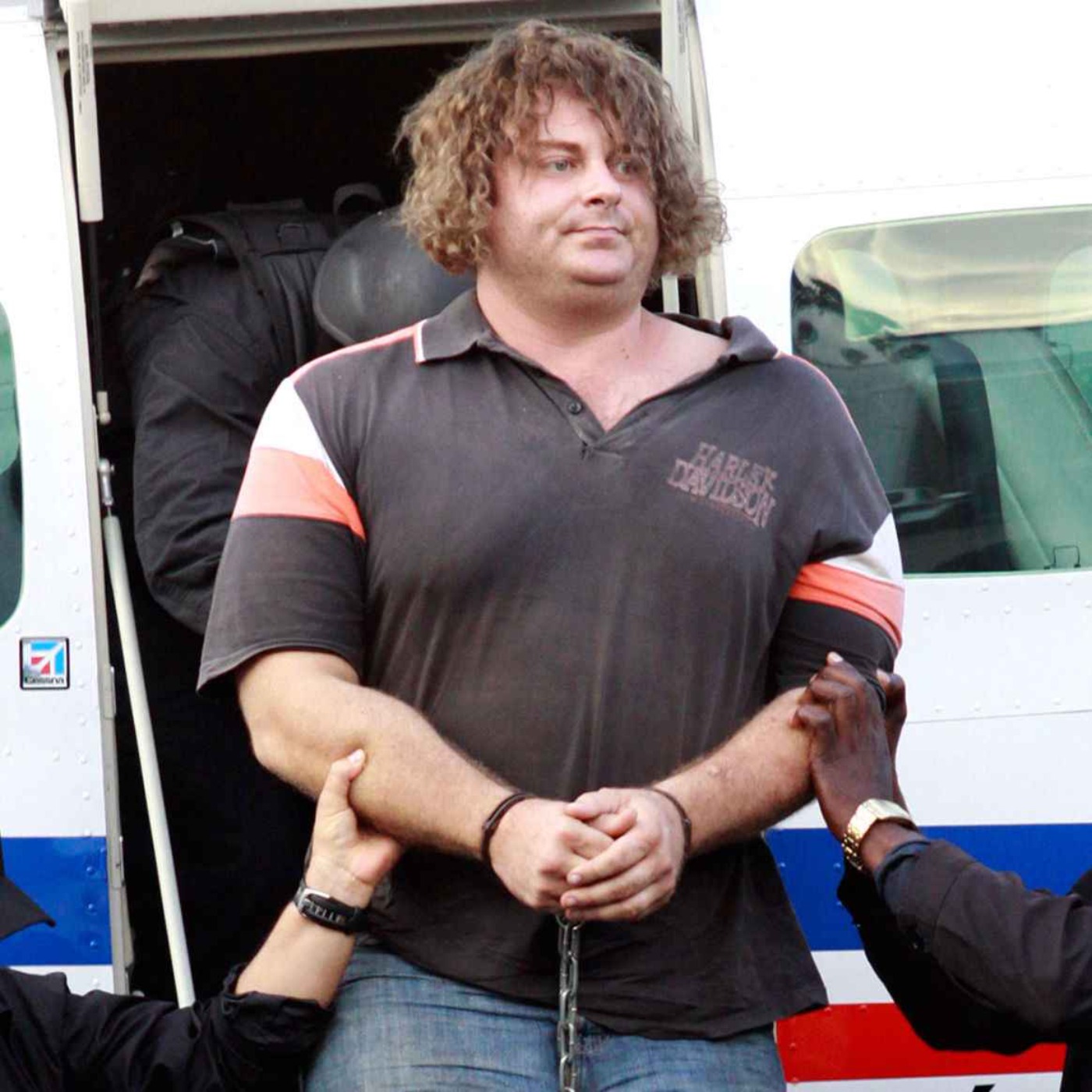
This is part three of the story of a man who was once one of America's most wanted men until his arrest in July of 26, 2010. Arrested for the killing of five American expats in Panama, killings he would later confess to. However, he would contest the prosecutor's version of events, stating that these killings were all contract killings ordered by drug cartel associates. This is the story of Wild Bill as told by the man himself from his prison cell in Panama. My name's Jack Lawrence. Welcome to Wanted.
- [03:16]
Poet/Singer
I'm a wanderer of the soul before the end I plan to behold But I know I'll lose myself along the way what's gone is gone what's past is past Let me leave what belongs in the past.
- [03:43]
Narrator
So in our previous episode, Wild Bill had discovered that life working as the Costa Rican elite's baseball bat was very lucrative. And he was enjoying the fruits of his labour, shall we say, as he was living at an exclusive country club overlooking the 17th tee. But like with most of Wild Bill's life, trouble wasn't far behind.
- [04:04]
Host of What I Survived
And a late night call that he
- [04:06]
Narrator
would receive one evening would set him on the path to having to go on the run.
- [04:10]
Bill (Wild Bill)
I got a call in the middle of the night. I was in my home on the 17th green in the Cataria Country Club and I got a phone call that
- [04:18]
some guys were in deep trouble and they needed some help, some advice.
- [04:22]
And so for one thing or another, these guys had come up with a body. You know, they'd killed somebody and not on purpose. And so the question then became, what do we do to get rid of the body? So I went to where they were and checked out the situation and I said, well, this is what we should do. We should do this, this, this and this. And they said, no, that's disgusting.
- [04:45]
They didn't want to cut the body up because they found that disgusting.
- [04:49]
And I said, well, I'm not going
- [04:50]
to cut the body up because I
- [04:51]
didn't do the killing. And I'm not going to involve myself that deeply in your crime. Do you know what I'm saying? I mean, I'm not going to involve myself, I'm not going to take care
- [04:58]
of it for you because they're not
- [05:00]
going to pay me either. These were other bad guys. These were not. These were other bad guys like me, other organized criminal associates working for my bosses. So I just went as a favor to like, try to cover their ass, so to speak. And, you know, one hand washes the
- [05:17]
other in that world anyway, and we're
- [05:18]
all friends and I really do like to help out. And so I went, but I said,
- [05:22]
well, I'm not going to get the
- [05:23]
hacksaw out and take care of this for you.
- [05:25]
You're going to have to do it yourselves. And this is how you do it.
- [05:27]
And they said, no, we're going to do this other thing with it. We're going to go bury it in this place. And I said, that's a bad idea. It's a terrible idea. Don't do that. Do what I told you. And they didn't. They wouldn't do it. So I said, well, I'm leaving. I'm not. I told you. You asked me for help, I've come to give help. You don't want my help, I'm leaving. So I left. And that was the last I heard about it in about a long time. Went by maybe six months and six months later. I mean, I'd done a million jobs and really risen in the underworld of Costa Rica. Now, remember, I'm in Costa Rica as a fugitive, right? I'm a fugitive from the United States. And my paperwork, I have some false
- [06:02]
paperwork and stuff, you know, for when
- [06:05]
the cops stop me or something. And a cursory investigation about me would be, well, I would come back fine, but like an in depth investigation about me is going to produce problems.
- [06:15]
I mean, if we get to the point where they take fingerprints or something,
- [06:17]
I'm in deep shit. So it turned out that they found the body, the cops somehow found the body, and the body got disinterred on accident. And the police were called and the boys were all arrested and somebody ratted, I don't know who, and my name came up in it. Nobody accused me of killing anybody, just the fact that I was an accessory. And my contact at the O I Hota, which is like the Costa Rican version of the FBI, called me and said, hey man, they've issued a warrant for your arrest. You gotta get the fuck out of here. So it was unfortunate I had to leave Costa Rica because of that. Now, since that time, that has all been settled and arranged, my participation in that crime was just as an advisor. And so when those guys all went to jail, that my.
- [07:05]
The arrest warrant expired on me, because that's how that works there. I didn't. I never got charged.
- [07:23]
Narrator
So much to his disappointment, it was time yet again for Bill to skip town. But this time he couldn't just disappear to another part of Costa Rica. This time he was heading south to Panama.
- [07:44]
Bill (Wild Bill)
So I had to leave. So I went to Panama, which I had visited a couple of, you know, a couple of times. And I used to work out of.
- [07:50]
But I never.
- [07:50]
I never went to the Chitiqui Province of Panama. And everybody told me that that's where the gringos are. That's where the Americans and the expats are going, because they have everything. They have the ocean, they have the mountains. It's, like, supposed to be the best place. And also I went there because I didn't know anybody. I thought it'd be a good place to start over. So I went and I rented a small house and began to look around. Now there's an expat city, a city of just foreigners.
- [08:15]
I mean, like, there are obviously Panamanians there, but.
- [08:18]
But the majority of the people walking around are people from outside of Panama, foreigners from the First World. It's called Boquete, which means, like, bouquet of flowers, Boquete. And it's way up in the mountains, right next to an adornment volcano. Beautiful. So beautiful, this town.
- [08:35]
I went.
- [08:36]
I just fell in love with the place. I'd never been. I'd worked in Panama a long time,
- [08:40]
but I'd never been there.
- [08:41]
So, I mean, and there's money there, like, real money there.
- [08:43]
You know, it's really an expensive. It's almost like Beverly Hills or something.
- [08:46]
Narrator
As Bill says, Boqueta truly is a stunning part of the world. Sitting almost 4,000ft above sea level, small population of just 19,000 people, 60 kilometers away from the Costa Rican border, it was the perfect little slice of paradise for a man like Bill to disappear. But what to do now in his new home? Well, it would be another chance encounter that would see Bill quickly find his new vocation.
- [09:14]
Bill (Wild Bill)
And I sat on a park bench at the park and met this big fat guy named Gustavo. Don Gustavo. Don Gustavo was a man who was a big wheel in Noriega's government when
- [09:26]
the United States invaded.
- [09:27]
And he began to tell me stories about how he lost a leg in the invasion. He got his leg blown off and he had, like, a peg leg, you know, prosthetic, but, like, literally like a peg leg, though. I mean, I'm not talking about, like, I found something that looks like a leg. It was like, literally like a peg. Like, it looked like a pirate. But he was a big fat guy, and he walked. He waddled when he walked because of that peg leg. And Don Gustavo had built this huge, like, office complex right there on the park. And the park is beautiful. It's like a perfectly pristine little park right in the center of town. And he asked me what I did, and I just. Off the top of My head.
- [10:02]
I said, well, I'm a psychiatrist from the United States and that's not true
- [10:04]
at all, obviously have no psychiatric training at all. And he's like, why don't you rent one of my offices and set up a practice here? That's what he said. I said, maybe I'll do that. What will you rent me one for? And he said, 300 bucks a month. So I said, well, think about it.
- [10:19]
Narrator
Bill does more than think about it, because Bill has seen his opportunity. So he heads home to study up and of course get some qualifications.
- [10:30]
Bill (Wild Bill)
I went back to my house and I bought two books online. I bought a primer of Freudian psychology and a primer of Jungian psychology. So I read Freud's theories, I read Jung's theories. And I mean, I know this is like the basics of psychoanalysis, but I felt that I could pull it off, that I could bullshit my way through it. So the next day I printed myself up some documents, some, like some bullshit diplomas from universities in the United States that no longer exist. I found universities that failed, that were no longer open and nobody could check my credentials.
- [11:03]
And that was my thought anyway, that
- [11:05]
anybody ever tried to check, they wouldn't be able to check because the universities are no longer open. And I printed me up some things and I went in and I rented a place and hung my shingle on the wall and opened up a psychiatric practice. I bought a black leather couch and a black leather chair and set up in there.
- [11:26]
Narrator
Dr. Bill is all set and ready to go. Now all he needs are some clients.
- [11:36]
Bill (Wild Bill)
In Boquete, there's what they call a gringo meeting at the Panamante Hotel. Every Sunday. Every Sunday at like 11 o' clock in the morning, there's a brunch where all of the American expats come. And it's primarily an American thing, but like there are like a lot of other people too. You know, there's guys from England, Ireland,
- [11:55]
Germany, folks from there.
- [11:59]
But Maybe there's like 250, 300 people come to this gringo meeting. So I introduced myself, like, hi, I'm Dr. William Reese is what I called myself. I'm Dr. William Reese. Called me Bill opened up a psychiatric practice. You can find it there. North Panama. Mental Health is what I called it. And I had this beautiful little office
- [12:16]
set up, air conditioned, nice little office right there on the thing.
- [12:18]
So immediately from that meeting I picked up like eight different people that wanted
- [12:22]
to set up, wanted to take, you
- [12:23]
know, I gave them my phone number and I had a Cell phone, you know, And I gave them my phone number and just set up meetings there. So all of them were like middle aged, middle to late aged women. And here's the thing, what happens in Panama a lot is that the Americans moved down here as a couple. And the old man who's 60, moves down with his wife, who's also 60 or 55. He begins like affairs immediately, almost immediately. And the women are really upset about it. And that was 90% of my business.
- [12:59]
90% of my business were women who
- [13:01]
came in who were unhappy because their husbands had discovered the Panamanian girls or had discovered playing golf and have left them there and they have nobody to talk to. And literally I would just sit there and say, I think I actually was a pretty good psychotherapist, if you want the truth. Because everybody, like they recommended me to their friends, people would come. And the nice thing about it wasn't just I was making really good money. I was doing 150 bucks an hour in 2006. This is 2006, end of 2006, first part of 2007, I was making 120 bucks an hour, 150 bucks an hour. And I got invited to all the parties again.
- [13:36]
Narrator
Bill had fallen on his feet, found himself surrounded by rich people who were loose with their money. He's back enjoying the high life and, and all the trappings that come with it. Women, alcohol and parties.
- [13:47]
Bill (Wild Bill)
I went to this place called Valle Escondido. Valle Escondido, which means Hidden Valley. It's very exclusive. You can't hardly get in there. You have someone that have to invite you, but a bunch of guys, a bunch of old retired guys had a poker club that played poker there in the clubhouse every Thursday afternoon. So I started playing poker there. Cause one, I like to play poker. And two, was a great place to
- [14:08]
go and smoke cigars and just be
- [14:10]
a, be a hotty toddy badass, you
- [14:13]
know, like the biggest of the best.
- [14:14]
And so I would go there and
- [14:16]
everybody, you know, would defer to Dr.
- [14:17]
Reese as Dr. Bill and smoke cigars and drink liquor and play Texas hold' Em poker. So we were playing Texas hold' Em poker one night and we'd all heard the rumors that Mel Gibson was staying
- [14:30]
at a villa on the inside of a Escondido.
- [14:33]
And we were actually, everybody was talking about, have you seen him? Have you seen him? Have you seen him? So we're playing poker and in walks Mel Gibson and sits down to play poker too. And so he sits down and everybody
- [14:46]
starts to attack him with questions and asking him about the passion of the
- [14:50]
Christ and this and that, and there's nothing. And you could see in his face that he was like, fuck. You know, he was like. He wanted to sit down and just be like a normal guy. I could tell he just wanted to. Just wanted to play poker and smoke a cigar and be cool. That's what he wanted to do. So I. Dealing in. I said, hey, boys, why don't y' all shut the fuck up and let it take this rich bastard's money?
- [15:10]
That's what I said.
- [15:11]
And he looked over at me and smiled, and he said, who are you? I said, I'm Dr. Bill. Dr. Bill Reese. And he shook my hand. He said, thanks, Bill. And so we started playing poker. We played poker about an hour and a half, and he got up and left and patted me on the shoulder when he left. I know he was. I think that he felt thankful that I allowed him just to be a normal guy for a little while. Funny that he was sitting next to one of the most infamous assassins in the history of Central America and had no idea. And I didn't know it then, either. I wasn't. I wasn't an assassin yet.
- [15:38]
Narrator
Well, it would seem Bill is set for life as Dr. Bill, listening to the problems of married retirees and hobnobbing with the occasional celebrity. What could possibly go wrong? Well, as we've learned already by now, where there's Bill, there's trouble. And eventually the ghosts of his past would soon catch up with him.
- [16:00]
Bill (Wild Bill)
But one night I was at the bistro. Is an infamous or famous. I don't know if it's still there or not. I've been in prison for a long time. But the bistro was owned by a lady named Lorelei, an American woman, and she was a nut.
- [16:13]
She was a really nice person, very,
- [16:14]
very, very colorful person. And she owned this really nice upscale restaurant and bar right on Main Street. So I was there one night. It was karaoke night, but I wasn't
- [16:28]
singing, which I often did sing and
- [16:31]
often love to sing. I wasn't singing, but I was sitting back again, smoking a cigar and having a drink. And in walked an army, like maybe six associates from the cartel from which the same cartel that I used to work for when I was a human trafficker. And they walked in on purpose. They were there for me and sat down, and the man who was directly my boss sat down with me and explained to me that they were unhappy that I had ran out on them. And they knew that I owed them a favor because they didn't kill me. They didn't kill me because I ran
- [17:08]
away, I think is why they didn't kill me.
- [17:11]
But now they knew where I was and what I was doing, and they were unhappy that I wasn't working for them anymore. And our association was one in which that you couldn't leave once you join. It wasn't like.
- [17:26]
It wasn't like Costa Nostra in the United States either.
- [17:28]
We're talking about a really loose organization of people. It's not like, not very well organized at all, actually. But basically they, basically what the conversation was. We own your ass because you killed one of our people. We know about it. We know where the body's buried. So you're going to do what we say. I was devastated because I was enjoying my life. I had a good life. I thought I could pull that shit off forever. I thought I would just. I was gonna walk off into The Sunset as Dr. Bill Reese. You know, I was really excited about it and sad that the cartel was there to pull me back in and destroy the lives that I built.
- [18:21]
Narrator
We're gonna take a short break, but when we come back, Bill explains the cartel, how he would become entrenched in it. And the go to guy when someone needed to disappear.
- [18:31]
Poet/Singer
What's gone is gone. What's past is past. Let me leave.
- [18:52]
Acast Announcer
ACAST powers the world's best podcasts. Here's a show that we recommend.
- [19:01]
Jameela Jamil
What if you laughed all through your commute or if you heard the funniest story while at the gym when. Well, now you can. I'm Jameela Jamil, and guests on my new podcast, Wrong Turns share their most mortifying and hilarious disaster stories. I'm talking people like Mae Martin, Bob the Drag Queen, Katherine Ryan, Jake Johnson, Margaret Cho, Simon Pegg, Penn Badgley, and so many more. So listen, wherever you get your podcast. Wrong Terms, where dignity goes to die.
- [19:31]
Acast Announcer
ACAST helps creators launch, grow and monetize their podcasts everywhere. ACAST do.
- [19:41]
Bill (Wild Bill)
So let's talk about the cartel. What was a cartel? You know, when we think of cartel,
- [19:44]
we think of Pablo Escobar and so on and so forth like that.
- [19:49]
And I use the word cartel because
- [19:50]
we're in Central America and mafia organizations are known as cartels. But this organization wasn't a cartel. And inspected. They moved only drugs. They did move drugs, but they also did human trafficking. They also trafficked arms.
- [20:04]
The most lucrative thing you can do
- [20:05]
illegally in Central America and South America is, is to traffic arms, because arms are like 1,000% profit. Cocaine is only about 200, 250% profit. But the cartel, what was it? What was the association? It was more like a federation, a very loose association of members who each one did something. There was a drug trafficker, there was a killer. That was me. There was a human trafficker, there was a lawyer who did dirty paperwork, There was a fraudster who did, like, Ponzi scams.
- [20:39]
Everybody had something to do.
- [20:40]
Narrator
So Bill was working with this cartel, but says he wasn't exclusive to the organisation and he would also do freelance work for other criminal entities who required someone with his, shall we say, skill set. Not only was he moonlighting with these other organisations, but he also found a lucrative opportunity in, ironically, hunting people just like him.
- [21:03]
Bill (Wild Bill)
One of the things I did was
- [21:03]
I would hunt fugitives, literally hunt them like people just like me, actually, who had committed crimes somewhere else and were stashed away with a large stack of cash. And I would. I'm not saying this is a good thing. I'm just telling you what I used to do.
- [21:18]
I would.
- [21:19]
I would hunt them and when I would find someone and find that they
- [21:22]
were a fugitive, then I would kill
- [21:24]
them and it consumed their life. Take all their property, take all their money, take all their stuff. Another thing that I used to do, and I did this regularly, was hunt
- [21:32]
contracts on people who had run from
- [21:34]
the Mafia in the United States. I had a good contact back in Florida and another one in New Jersey, and those guys had contracts out on a lot of people and they would. And a lot of those guys would run, especially to Costa Rica, and I
- [21:45]
would hunt them down. The contracts I would always look at,
- [21:48]
when there was a new contract up and the people thought that they were in Central or South America, they would send me the information and I would keep my eyes open and very often I would run across that person and collect on the contract. That's how I worked. The cartel wasn't. I started off as just a worker and through a comedy of errors, I
- [22:07]
did a job once and after the
- [22:11]
job was done, I was going to call and collect. It was a Mafia job in the United States, just like I told you I was telling you about. It was a job where a man had ratted on. I don't want to say who. I don't like to talk about things from the. So we'll leave the things ambiguous. A man had ratted on associates from Florida that had been in the 1990s, and he'd put quite a few people
- [22:31]
away and the DEA gave him a
- [22:34]
New identity made him a new person. He had located here in Central America somewhere. I won't say again. I'm actually serving time for this murder. So, I mean, I can talk about it, but I don't want to be disrespectful of the dead. Anyway, so I did the job. And then I found inside the house a safe with $600,000 in cash in it. So from one day to the next, I went from being a worker to being a patron, one of the. One of the members of the cartel
- [22:59]
with that amount of money, that made
- [23:01]
me a very powerful man from one
- [23:04]
day to the next.
- [23:05]
And so that's really how I made my bones in the cartel, if you will.
- [23:09]
I remember when I did that job. I did that job, and I walked
- [23:12]
away with $600,000 plus the property. I ended up with the property as well. And I.
- [23:17]
Because when I made the money, the
- [23:19]
Italian mafia in the United States didn't give a shit what happened down here. They didn't want any property or anything down here. And so I told them that I didn't want them to pay me the contract. I wanted them to help me to get hooked up with a lawyer. And that's really how I got in. The Italian Mafia spoke for me. And I say Italian, not like the Godfather.
- [23:42]
The guys I talked to that there
- [23:44]
were actually Italians, like Italian Americans. And so. And we'll leave it there. We won't go any further than that so that they won't. So that they won't cut my head off Here in prison,
- [24:00]
Narrator
Bill has now cemented himself as a player in this world, which apparently ruffles some feathers. But he says he simply used violence, or at least the very real threat of violence in which to stop things getting out of his control.
- [24:15]
Bill (Wild Bill)
I had this huge island property. I had a farm, a working farm
- [24:18]
that was producing, you know, 60, $70,000
- [24:20]
a year, paying for my living expenses very nicely.
- [24:23]
Had a crew who now belong to me, so to speak. I mean, like, I had a plantain and chocolate plantation. Chocolate is an actual fruit, if you didn't know that. I went from, you know, one day being just a lackey that somebody sends to beat the shit out of somebody to being like el patron. And I don't think that I was ready for that. I'll be honest with you. I didn't handle it very well. I went overboard with it. I really, you know, started to believe my own.
- [24:48]
And so, anyway, so I rose up
- [24:49]
into the group here and kind of stuck my head up above the sand. There and said, I'm not taking orders from anybody anymore because now I give the orders. And several of the guys didn't like that. And they're like, we're not open for another member, so on and so forth. And I said, well, then I'll fucking kill you, and then you won't have to worry about it anymore. And everybody says, no, welcome, Bill.
- [25:09]
Welcome to the group. You know, So I didn't. I didn't take over.
- [25:13]
I wasn't a leader. There was no leader. It was a consortium, you know, it was a group of men who consulted one another when it was necessary. There was no taxes paid one to another, none of that sort of shit. It's just like if you needed a drug trafficker, you used this guy. And if somebody else tried to come in, we all ganged up against that person, something like that. And that's one of the reasons why.
- [25:32]
The reasons why they accepted me was pure violence.
- [25:34]
They didn't have a choice because I would kill you if you didn't accept me.
- [25:39]
But anybody else that tried to get
- [25:40]
in the group, like let's say another
- [25:41]
drug trafficker, stuck his head up and said, I'm gonna be in the group too.
- [25:44]
Well, they would send me to kill that guy.
- [25:49]
I remember there's a movie where Daniel Day Lewis played Bill the Butcher in
- [25:54]
Gangs of New York.
- [25:55]
And he says something to the effect in that movie, I have stayed alive through the spectacle of violent acts. And that stayed with me. So even here in prison, during my time in prison, once every couple of years, I try to just beat the ever living shit out of somebody. It's a shame, but it's really effective because, you know, it actually happened late last year.
- [26:15]
And so.
- [26:16]
But every couple of years you have
- [26:18]
to do something like that, even in the criminal world especially, and to maintain. So, like when somebody disrespects you or something, to kill them in a public way was the way I maintained order with the rest of the group. The group can't begin disrespecting their maton, their killer.
- [26:40]
Narrator
His wealth begins to increase, but instead of putting money aside, he was spending it hand over fist. As fast as it was coming in, it was going back out. Flash boats, brand new cars, living the high life, wanting for nothing.
- [26:55]
Bill (Wild Bill)
That high existence would come back to haunt me.
- [26:58]
Because if I had been smart, I would have just walked away with the $600,000 and lived happily there ever after. Because my living expenses back in those days before the $600,000 event were very low. But I figured now I'm in the
- [27:13]
game and these big money deals are
- [27:16]
probably going to come along several times a year.
- [27:19]
And they did.
- [27:20]
And so I just began to spend the money. Instead of saving it, I just spent it like a drunken sailor. My living expenses every month were about US$30,000. And this was in 2007. And I got nothing for that. I just had three houses, one on, one on the Pacific, one on the Caribbean, one up in the mountains in Cerro Punta and, you know, like a really upscale mountain area, had like six automobiles, you know, shit that you don't need. Harley Davidsons, jet skis, things you don't need airplane.
- [27:52]
So I began to accumulate this lifestyle that was extremely expensive and that's what held me in the game several times.
- [28:02]
I remember being distraught at having all this shit and having to come up with money to pay for it all. And I thought to myself, man, I
- [28:08]
would just like to pull the plug and go back to living a simple existence many times.
- [28:12]
And if I had done that, I'd probably still be free. Or maybe I'd be dead by now, who knows? Things happen the way they happen for a reason. I'm thankful. I don't regret being put in prison, actually, if you want the truth, I've had to mature here and become a better person and learn a lot of things I didn't know before. And I was a very immature imbecile before, like an idiot really, thinking there were no consequences for my actions at all, which I was very, very surprised by the fact that there are.
- [28:41]
Narrator
That's all we have time for this episode. But coming up, while Bill gets word that an arrest warrant has been issued for him, and yet again, it is time to go on the run. But on this occasion, there's no escape.
- [28:53]
News Reporter
They were America's most wanted fugitives. That is until Monday. A couple who lived in Asheville is being detected detained in Nicaragua, accused in a string of killings in three different countries.
- [29:03]
Authorities believe this wild haired man is a chameleon of sorts, changing his look and name in every new city. Authorities have dubbed him Wild Bill, but for the first time in years, they have him right where they want him. In handcuffs.
- [29:16]
Narrator
Next time.
- [29:17]
Poet/Singer
Unwanted I'm a wanderer of the soul before the end I plan to be whole But I know I lose myself along the way.
- [29:29]
Narrator
If you want to find out more about the man who was once Central America's most infamous hitman and now a serving Christian minister in a Panamanian prison, Bill has written a book about his experiences inside Central America's prison system, the details of which are in the show notes of this episode.
- [29:50]
Poet/Singer
What's past has passed. Let me leave what belongs in the past.
- [30:05]
Verbo Care Announcer
This episode is brought to you by Nordstrom. Ready to refresh your wardrobe? Nordstrom has all the latest styles for spring, from elevated dresses and denim to standout tops and accessories. Discover the trends in a essentials you'll reach for again and again. We've got brands you love like Waif, Princess Polly, Mango, Adidas and Favorite Daughter. Plus free shipping, free returns and quick order pickup. Make updating your closet effortless. Shop in stores@nordstrom.com or download our app
- [30:35]
Acast Announcer
Acast powers the world's best podcasts. Here's a show that we recommend
- [30:43]
Christy
hey,
- [30:43]
Bill (Wild Bill)
it's Christy and I'm Kelly.
- [30:45]
Christy
You might remember us as the OG Partners in Crime from Dance Moms.
- [30:49]
Kelly
Well, this is Back to the Bar, the podcast where we drag out every insane, chaotic and iconic moment from the show.
- [30:56]
Christy
We're spilling the tea, calling out all the BS and sharing stuff you definitely didn't see on tv.
- [31:01]
Kelly
New episodes drop every week and yes, we're laughing through the drama for once.
- [31:07]
Christy
Follow Grab a drink and join us as we go back to the Bar.
- [31:12]
Acast Announcer
Acast helps creators launch, grow and monetize their podcasts everywhere. Acast.com.