Loading summary
Transcript81 lines
- [00:00]
Jack Lawrence
Hello Legends. Before we get into the episode, just a quick heads up if you have completed Season one of what I Survived. Firstly, thank you for the incredible support for the show and all the lovely comments. I truly appreciate it. I'm madly working on season two, which will be out for you very soon. In the meantime though, I have just dropped listed as Season two in what I Survived, a previous show that I created a couple of years ago called Wanted. The entire show is there for you to binge while you wait for season two of what I Survived.
- [00:30]
Podcast Advertiser/Host
You're listening to this podcast, so I know you've got a curious mind. Here's a helpful fact you might not know yet. Drivers who switch and save with Progressive save over $900 on average. Pop over to progressive.com, answer some questions and you'll get a quick quote with discounts that are easy to come by. In fact, 99% of their auto customers earn at least one discount. Visit progressive.com and see if you can enjoy a little cash back Progressive Casualty Insurance Company and affiliates national average 12 month savings by $946 by new customers surveyed who saved with Progressive between June 2024 and May 2025.
- [01:04]
Jack Lawrence
Potential savings will vary TaxAct knows every small business owner has different tax filing needs. With TaxAct you can file yourself with the help of an expert or taxact can do it all for you. You're the boss, the head honcho, the top banana. And TaxAct is like your loyal, trusty tax aide, ready to pounce. You might have TaxAct is dying to
- [01:30]
Podcast Advertiser/Host
pounce on some small business tax needs.
- [01:33]
William Holbert aka Wild Bill
TaxAct let's get them over with. ACAST powers the World's best podcasts.
- [01:42]
Jack Lawrence
Here's a show that we recommend.
- [01:46]
William Holbert aka Wild Bill
Hi, I'm Pace Case. And I'm Bachelor Clues.
- [01:49]
Podcast Advertiser/Host
We host Game of Roses, the world's best reality TV podcast. We're covering every show on reality TV at the highest level possible. We we analyze the Bachelor, Love is Blind, Perfect Match, Vanderpump, and anything else you find yourself watching with wine and popcorn. We break down errors, highlight plays, MVPs, and all the competitive elements that make reality TV a sport. And we interview superstar players like Bachelorette
- [02:12]
William Holbert aka Wild Bill
Bristow and Big Brother champion Taylor Hale.
- [02:15]
Podcast Advertiser/Host
If you want to know so much about reality TV, you can turn any casual conversation into a PhD level dissertation. You definitely want to check out Game of Roses.
- [02:25]
Jack Lawrence
Acast helps creators launch, grow and monetize their podcasts everywhere.
- [02:31]
William Holbert aka Wild Bill
Acast.com.
- [02:41]
Jack Lawrence
Generally, when we think of wanted people, we think of America's Most wanted and the FBI's wanted list. The people that are placed on this list are supposedly individuals who pose a grave threat to national security or the security of the people of the nation. The FBI's most wanted list began back in the 1950s and since its inception has featured some infamous characters, such as Whitey Bulger, an organized crime boss from New Jersey who had spent 16 years on the list until his eventual capture and imprisonment. The lady dubbed the crypto queen, Ruja Ignatova, who would scam investors of her fake cryptocurrency OneCoin out of a reported $4 billion. Although never found, there have been many reports that she in fact was killed in 2018. The infamous serial killer Ted Bundy, who was added to the FBI's Top 10 Fugitives list on February 10th of 1978 and was arrested just five days later. He would be given three death sentences in two trials and executed in 1989 in a Florida state prison. James Earl Ray, the man who assassinated Martin Luther King Jr. And had escaped from prison the previous year. He would run north to Canada and lay low for a while. After a few months on the run, Ray was arrested in London and sent back to the United States to stand trial for his crime. There he would plead guilty to King's murder and was sentenced to 99 years in prison. As you'll notice, almost all the people mentioned eventually found themselves caught. And in fact, out of the 530 fugitives that have made it on the list since the 1950s, 494 have been captured, representing a 93% success rate. Willem Dafoe, or Wild Bill, was also captured, except his capture was more by accident than anything else.
- [04:42]
William Holbert aka Wild Bill
I turned the television on in my little cabin and I saw my own face looking back at me.
- [04:48]
Jack Lawrence
My name's Jack Lawrence. Welcome to Wanted. I'm a wanderer of the soul before
- [04:55]
William Holbert aka Wild Bill
the end I plan to be whole
- [04:58]
Jack Lawrence
But I know I lose myself along the way what's gone is gone what's
- [05:08]
William Holbert aka Wild Bill
past is past Let me leave what
- [05:12]
Jack Lawrence
belongs in the past. As we know, Wild Bill is serving over 40 years inside a prison in Panama, convicted of the murders of five American expats. Some of these killings were, he says, sanctioned by a local cartel that he worked with. Some were opportunities to further his lifestyle. All were for financial gain, such as the murder of a former drug trafficker who had escaped prison in the United States. Bill would kill this man and take his money as well as the property that he owned. This was in a remote part of Panama. It would be here that Bill would set up his own bar. One that would become infamous and in fact have a book written about it. The Jolly Roger Social Club. Authorities would say that Bill would use this bar in order to get close to people, close enough that he would be able to kill again and again, to consume their lives and taking their belongings as well as their property.
- [06:30]
Podcast Advertiser/Host
I decided to build my own bar in the middle of hell, in the middle of paradise, in the middle of. Far out in the middle of nowhere, in Hell's paradise, you know. And it was this wonderful place. I mean it literally was. It was incredible. Like, right. Like the site that I chose for the bar was over the water. It was a bar built on top of the water on posts, so you could, you could drive up to it. I also put mooring balls about 100 yards out, about five of them. So you could moor a sailboat or a yacht. Big, big fucker. Out in the middle of a protected bay. And I would rent those for 200 bucks a month. I built a bar there. There was a horseshoe, horseshoe bar, horseshoe shaped Texas style bar that my friend Danny built in front of the bar. There was crystal clear blue water with like idyllic. You see? No, no houses. You couldn't see any houses. You couldn't see anything. Just pure natural stuff. And so I'm like. People came and like fell in love with it. Like, look, a lot of sailboaters would come and hook up there and stay for six months because it was like so crazy. So the bar was actually a crazy ass place. I sold cocaine on, you know, lines of cocaine out from under the bar. The bar was only open Thursday to Sunday, Monday, Tuesday, Wednesday was closed. And because like, it's not like a bar where you had like a whole bunch of people. I mean, like, maybe there's 20 or 30 people on a busy night, you know, there's 30 people there on a really busy night. So we took turns. Sometimes I had a lady, like there was other gringos. I wasn't the only gringo that lived so far out. There were others. But the thing that made it cool was if you live that far out, you're really a strange and or interesting person. So there's an interesting group of cutthroat scallywags, you know. It was called the Jolly Roger Social Club. And because it was a private club, you didn't have to have any kind of liquor license or anything like that. Not that there was ever anybody to check. I never saw a police boat. Never, never. And the whole time I lived there. I lived there from 2006 until 2010. I never saw a police boat, not once. And so that was my life, basically, in that time. I mean, my life back in those days was good. But at the same time, I want to be really clear about this. I want you to hear me. I was miserable. I was a very unhappy man. I was unhappy because I didn't like what I was doing. I didn't like hurting people. I never did. And I also was really paranoid that one day there'd be a helicopter with little black men, little dressed. Little black dressed men, you know, combat dressed men jumping out of the helicopter, coming to arrest me, or that my rivals would kill me, which was probably the most popular thing. I never thought I'd go to prison, like Panamanian prison. Thought maybe the Americans would come and put a collar on me and drag me back home and stick me in some shithole there, you know, But I never thought I'd go to a Panamanian prison. That didn't even seem like a possibility.
- [09:16]
Jack Lawrence
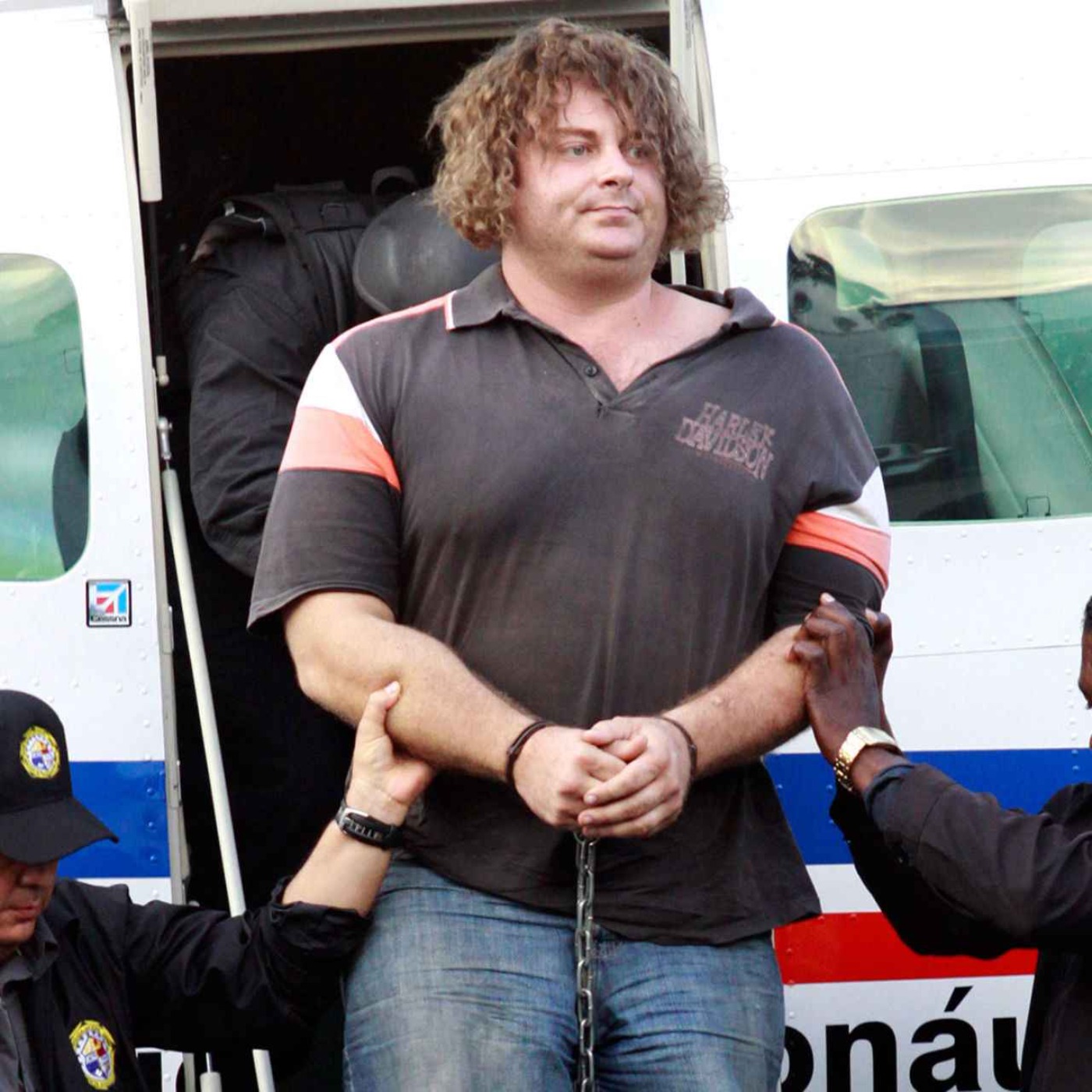
But of course it was. And Bill's crimes would come to an end in July of 2010 when he was captured and eventually found himself inside one of the Western hemisphere's most dangerous prisons, which, of course, is where he is relaying this story from now with the podcast. One minute remaining. I'm very used to having interviews with incarcerated men and women interrupted due to issues with the prisons. Everything from storms knocking out phone systems, prisons going into lockdown because of gang fights and riots, and even one person I've spoken to being stabbed and being relocated to another facility. And I'll be honest, because Bill has his own mobile phone, I figured we would probably be fine with our interview. Until one morning I woke up to a message. It said that he, along with 13 others, had been taken from their cells and placed in a punishment wing, an area of the prison with four huge welded steel cages that are open to the elements. He says within the punishment block, he's unable to get much phone signal and is unsure at this stage when he might be moved again. Up until this point, Bill has been recording his story and sending me audio files via WhatsApp. With his lack of signal, unfortunately, we can't do this. So at this point in the story, I'm going to have to jump back to Bill and I's first initial interview that was done over the phone. So as a word of warning, the audio quality does take a slight downturn as Bill talks me through his. His last moments of freedom and his eventual capture.
- [10:55]
William Holbert aka Wild Bill
So when I finally got busted. The Panamanian de Jota called me and said, hey, man, they've just issued a warrant for your arrest. And the D HOTA is like the American FBI. I worked with the Panamanian de Jota. I paid them, and they helped me a lot when I was trying to find somebody or trying to do. I mean, like, they're so corrupt. The government here is so corrupt, it's gone corrupt. You can't imagine it in your home listening to this. Whoever you are, wherever you are in the First World, you can't imagine how corrupt it really is here in hell. And so they called me and said, hey, Bill, you gotta run because they're gonna come and arrest you tomorrow. And so I did. I went back to Costa Rica, and it's a little bitty mountain town that I know, and I stayed there for about three weeks. And on sometime during the third week, I turned the television on in my little cabin and I saw my own face looking back at me. El Salvajevil. Wild Bill. Thousands of people dead because of Wild Bill. Like, thousands. Like, shit, you know, like what? And so I ran, buried myself in the Nicaraguan jungle. While I was in the Nicaraguan jungle, buried, literally, like hiding. The Nicaraguan military moved into where I was because they had a scuffle with Costa Rica. The Costa Ricans and the Nicaraguans were fighting over an island in the river. And I was on that island, and they moved in to take the island, and I was on the island and they took me to Managua. So they took me to Managua. I was in Managua for maybe, I don't know how long it was, man, to be honest with you. Because they tortured me there. Literally, like Soviet style torture the Nicaraguans. Like everything is Soviet era, including their tactics. And they tortured me there trying to get me to sign a piece of paper saying that I had killed a whole bunch of people in Nicaragua. I'd never even been to Nicaragua except on vacation. I went to Nicaragua a couple times on vacation, but I never killed anybody in Nicaragua. They were trying to get me to say I killed people in Nicaragua in 1999, you know, when I was 20 years old. Like, what the fuck, man? I never even left the States yet. So when that didn't work, they shipped me back to Panama, put me on a plane with the Panamanian authorities who completely treated me differently, and I arrived there to do the famous pertwalk.
- [13:04]
Jack Lawrence
Yeah,
- [13:06]
William Holbert aka Wild Bill
I know, man. I did this walk in front of every news camera. I hadn't bathed in two weeks. I've been for however long it was in Nicaragua, I don't really know because they put had me in a dark room and I couldn't tell day from night, but I hadn't bathed in two weeks, I hadn't eaten three days. I was fat in the worst clothing. And they take me down off this plane. And so then there's every single news agency in the world. So the BBC, the abc, Telemetro, Telemundo, everything from Latin America, everything in the United States, everything from Europe was there.
- [13:37]
Jack Lawrence
Bill indeed made international and national headlines across the United States and South America. They were America's most wanted fugitives.
- [13:44]
William Holbert aka Wild Bill
That is until Monday.
- [13:46]
Jack Lawrence
A couple who lived in Asheville is
- [13:47]
William Holbert aka Wild Bill
being detained in Nicaragua, accused in a string of killings in three different countries.
- [13:52]
Jack Lawrence
They're also facing a laundry list of charges in the US from from stolen
- [13:55]
William Holbert aka Wild Bill
cars to a high speed chase and fraud. William Adolfo Cortes Ruiz, alias Wild Bill.
- [14:06]
Podcast Advertiser/Host
Authorities have dubbed him Wild Bill, but
- [14:08]
Jack Lawrence
for the first time in years, they have him right where they want him, in handcuffs. His real name is believed to be William Holbert.
- [14:15]
Podcast Advertiser/Host
According to international officials, their MO was
- [14:17]
William Holbert aka Wild Bill
to find property for sale, kill the rightful owners and move in.
- [14:25]
Jack Lawrence
Vision of him and his partner at the time shackled and surrounded by men with machine guns and balaclavas loading him into the back of a pickup truck. The scenes are quite chaotic. There's people everywhere, men with cameras, more law enforcement, guns everywhere surrounding the truck as he is driven off to be placed in front of more cameras at a press conference. From there, he's driven to an airfield where again he is flanked by men with machine guns and balaclavas as they walk him to a small plane to be flown back to Panama. Once back in Panama, Bill is taken in front of the prosecutor that will be working on his case and he would confess to all murders, including he's accused of. But he's quick to make sure his friends in the cartel don't think he's about to turn informant.
- [15:24]
William Holbert aka Wild Bill
I went to the Fiscaliana, which is the district attorney's office, prosecutor's office, and they asked me what I did. I said I killed everybody. Everybody you want that you accuse me of? It's true that I killed them and I did it for money. And I confess completely. And then they wanted me to like rattle my friends. And I'm like, y', all, y', all, I'm not gonna protect me. They'll kill me. Like I'm saying I did it all because of me, because I wanted to, not because anybody else wanted to. And that pissed off the district attorney to no end because I wouldn't cooperate. But I did cooperate, didn't I? Because I said I did it all. I confessed. So they sent me to prison. And the first thing that I did was send copy of my statement to all the boys from the cartel. Because I know they're like people in prison waiting to kill me, you know, when I get there. Because they're qualified. You know, like this thing really blew up. Huge scandal. And so I sent the copies. I'm like, I took the blame for everything. I didn't say anything about y'. All. Leave me the fuck alone. I'm not asking you for any help. I'm not asking for nothing. I'll figure it out on my own. And to this day, that's what I did. And it's all worked out pretty good.
- [16:36]
Jack Lawrence
It's tax season, and at Lifelock, we
- [16:39]
William Holbert aka Wild Bill
know you're tired of numbers, but here's a big one you need to hear. Billions. That's the amount of money and refunds the IRS has flagged for possible identity fraud. Now here's another big number. 100 million. That's how many data points LifeLock monitors every second. If your identity is stolen, we'll fix it. Guaranteed. One last big number. Save up to 40% your first year. Visit lifelock.com specialoffer for the threats you can't control. Terms apply.
- [17:07]
Jack Lawrence
So good, so good, so good.
- [17:09]
William Holbert aka Wild Bill
Newspring arrivals are at Nordstrom Rack stores now. Get ready to save big with up to 60% off. Rag and bone, Marc Jacobs, free people and more.
- [17:19]
Jack Lawrence
How did I not know Rack has Adidas?
- [17:21]
William Holbert aka Wild Bill
Because there's always something new. Join the Nordy Club to unlock exclusive discounts. Shop new arrivals first and more. Plus, buy online and pick up at your favorite Rack store for free. Great brands, great prices. That's why you Rack.
- [17:39]
Jack Lawrence
I'm sure you can imagine prisons in Panama are not like prisons in the western world of Australia, the United States or the uk. In these prisons, money can pretty much buy you anything you want and make your stay just that little more comfortable. And that's exactly what Bill says life started out like for him.
- [17:58]
William Holbert aka Wild Bill
But prison in Panama isn't like prison in the first world. Prison in Panama, if you got cash, is pretty damn good. And I lived really good for like nine years. I ate food in the street every day. From outside, I ate like, you know, whatever I wanted to eat. You know, you want McDonald's, you want pizza, you want like some home cooked food, soup, whatever. I just called out and they bring it to me. I had the best job. I was elected as inmate representative to the, to the David Public Prison, which doesn't exist anymore. Back in those days it did and I had free reign. So there was anything I couldn't do, I just couldn't leave. I had a key to my own cell. I left my cell at five o' clock in the morning. I came back and locked myself in at 11 o' clock when I was tired. I had a conjugal visit from outside every week.
- [18:37]
Jack Lawrence
This nice lifestyle that Bill was leading would come to an abrupt end in 2018 when Bill says that he decided to try and bring attention to the plight of the poor prisoners inside the facility, ones without money who get treated horrendously. Part of this attention would come in the form of an interview. An interview that would in one sense cause serious issues for him, but also send him down a new path.
- [19:04]
William Holbert aka Wild Bill
I stood up for the poor prisoners in the prison where I was because they were so mistreated by the authorities in Panama. Like there were rich prisoners like me treated so well and the fourth prisoner was treated so bad. So I stood up for them and had a lawyer to fight for them and do a few things and even stood up for them on the inside, the prison and the Panama. And then this chick from the Daily Mirror in Great Britain called me and asked me to do an interview with her. And I was so excited about it. And so I did this interview with her that was supposed to be about how the poor people are being mistreated in Panama. And she promised me that she would never show my face on camera so the Panama authorities wouldn't get angry with me. And she did exactly what she promised she wouldn't do. And she made the interview about how many privileges and how I was eating well and you know, and how I had access to firearms on the inside of the prison and shit like that. And you can see on that video, she does me a video phone call and she has somebody on the side, standing on the side recording her doing it. So I can't see her recording it. She promised me she wouldn't show it. And the Pamen authorities flipped the fuck out. And then they had the vehicle that they needed to break it off of my ass. And they did like bad. They sent me who I am now in Sector C, which is a soft torture facility ran by the most elite police in the Republic of Panama. So here I've been for three and a half years inside this hell where I live. I lost everything. I lost all my money, lost all my power and I was a defeated man. I thought about killing myself. And I did something that I never would have done anywhere else if I didn't, you know, nowhere. And I prayed and asked God to help me, what do I need to do? And God spoke to me. But, and don't get me wrong, I'm not insane. God didn't say, hey, Bill, you know, this is what you ought to do. He didn't say it like that, but like my own heart. God said, you need to be doing something for something other than yourself. Look how fucking miserable you are, Bill. Aren't you miserable? Aren't you tired? Like here you are, ready to die when you're so tired, don't you want to do something with somebody else? And so I started a program here. I opened a church. I mean, it's a church in the sense that I believe in God and I believe in Jesus Christ. That's not the general message of my church. The general message of my church or the church that I administer for God is that you don't have to be a gang member. You can stump that shit. You got these kids, right? They come into this place and they don't know anything except the gang life. They've never known anything else. They were born into it. Their mother was a prostitute, a drug addict prostitute. And they for since the time they're three years old, it's the only thing they've ever known. And they never went to school. They don't even know how to read and write. Are they going to grow up to be doctors and lawyers, Jack? I ask you? Of course not. Yeah. And so who helps? Who helps them? Nobody. So we started a program here teaching them to read, teaching them to write, Trying to show them and give them the self esteem that's necessary to do something else. You don't have to live this life. You don't have to die. When you're 30 years old, man, nobody has to kill you or you don't have to get a 50 year prison sentence and die in prison. You don't have to do that. You can get out of jail and do something else. So that's what I'm doing with my life. Now.
- [22:10]
Jack Lawrence
You've said already that it's one of the most dangerous prisons around. Like how often is there a shooting or something in the prison?
- [22:16]
William Holbert aka Wild Bill
Well, they killed somebody. They killed two police officers and two inmates. Maybe a week and a half ago, two weeks ago. And what a shitstorm that's been. When I say kill, I'm talking about guns here. It's difficult to explain. We don't have time to even talk about it. But the street gangs run everything inside prisons here. There's no control on the inside of the prison by the authorities whatsoever. The control is the cops are on the outside with M16s and heavy machine guns. You cross the line, they kill you. In this prison alone, there's 14,000 people, man. I mean, it's just. You're just thrown in there. And I'm in the worst section of it. I'm in the deepest hell of that section. And that's where I have my church. If you don't believe in the law of attraction, if you don't believe in, like, the law of mind, the law of gratitude, which we were already talking about, you can look at me and say, I'm in the middle of all this bullshit as a foreigner and nobody's trying to kill me. I'm doing well. Why? Because I'm. I'm serving my fellow man. And they like, even the bad guys respect that shit. So that if you can learn anything from this, you know, this podcast, learn that.
- [23:16]
Jack Lawrence
So from the very beginning, Bill has always stated that he would never talk about the people that he killed, nor how it happened, because essentially he says that the stories, talking about them and reliving them gives him nightmares.
- [23:29]
William Holbert aka Wild Bill
I don't want to talk about individual murders. I'm not going to because I think it's disrespectful. Not only that, it gives me nightmares when I talk about it. I'm not shitting you. I sleep so good at night, dude, that I don't like thinking back about that shit. I mean, that's. I was that man who did those things, but I'm not anymore, you know, I don't have that in me anymore. I'll talk about the lifestyle, but I'm not going to talk about the individual murders because the one, there's too many to talk about. But back in those days, I. I look at myself as if I was a weapon. I'm a gun, you know, I would tell bullshit things like that to myself. I would say things like that that are not true. I say I'm a gun. I'm not. It's not me that's killing them. If I don't kill them, somebody else will. And that may or may not be true, but it didn't alleviate me with guilt. I tried to alleviate. Get the guilt myself.
- [24:11]
Jack Lawrence
So Bill says that he's a changed man. He looks back on his past self with almost Disgust at the person that he was. He has regret, even says he has nightmares about the people he killed. So why, why did he do it? Was it purely just greed? You told me that, you know, the first gentleman you killed was a self defense situation. So when the, when it came to the time to being asked to do it for cash, what goes through your head in that situation? Are you purely just thinking about the money and not the actual act itself?
- [24:44]
William Holbert aka Wild Bill
Yeah, definitely about the money. I mean, I'll tell you something. A lot of people in this profession like it, enjoy it. I didn't like it at all. It was a terrible, horrible, nerve wracking thing to kill somebody else. And like, you know, like a lot of guys like that whole get off on the whole, you're gonna die, you're gonna die. Ha ha ha. You know, that for me is like horrific. I wouldn't do that to anybody else. I wouldn't want somebody to do that to me. So like, the whole idea of killing somebody was like. And even up until the very end was not pleasant. It was very unpleasant. I was just so morally shot, so morally gone. My morals were such shit that it allowed me to do it because it was cash. I mean, I was making really good money and so. But when I killed people, I did it without nobody ever. In the history of my hitter career, I never killed anybody that knew they were going to die before they died they were alive. On second detonation, nobody even ever saw it coming. I'm not going to talk about method, but, but I mean that's, that's, that's how I did it. And the reason I did it wasn't to be humanitarian. It was because I'm a coward myself. And, and the whole idea of it was just icky, you know, oh God, I have to kill this bastard. But I get a lot of money so I can get laid and have fun and do mad shit on the beach. So that was basically the mindset back in those days. It's a real, like a real piece of shit as a person, I promise.
- [26:08]
Jack Lawrence
The other thing I find interesting about this entire situation is Bill has killed multiple people. He has been called a serial killer. Now from what we know and understand about serial killers or these people that commit these crimes is they lack empathy. They have no emotion towards the people that they kill. Hence why they're able to commit these types of crimes. It's what separates them from people who would never think or dream of killing someone for money, let alone any other reason. But Bill says he does not like to be called a serial killer?
- [26:44]
William Holbert aka Wild Bill
No. And I detest that when they call me a serial killer because I think of somebody like Ted Bundy that murdered women for sexual gratification or something because he's sick. I'm not sick. There's nothing wrong with me. Other than the fact they had really weak morals and made bad decision. Another thing. You better be scared. Listen to this. But whoever you are out there listening, you better be afraid, because this could be you. I'm normal, man. I took a psychological exam. They said that I scored a little bit on the narcissist scale, but, like, not enough to be called a narcissist. And I don't have any personality disorders. And so if you fuck up and you concentrate, that's nothing. I preach. I preach three things. The law of the harvest, the law of the mind, and the law of gratitude. The law of the harvest is the things that you do today are going to come back to you later than you do them, more than you do them. So if you act like an asshole, all that shit's gonna come back to you. It did to me. My life's some shit, absolute shit. I'm living a nightmare right now. Inside the prison. They have prisoners have guns and they kill each other. Inside here, this is a fucking nightmare. And that's what we talk about that on Life in Hell. On Life Inside hell on my YouTube channel. The law of gratitude says, if you go, like we talked about earlier, you go through your day thinking, hey, things are going to be okay. And, you know, everything's going to be okay, well, then it will be. And it really will not literally change the way that you see things. But then the law of the mind says whatever you think about is what you become. That's true. So you better be careful about the decisions you make. Because I didn't wake up one morning saying, I'm going to be a contract killer. It didn't happen that way. It was one bad decision after another. Deeper and deeper down into hell. And you better be afraid. You better think about the shit you're doing right now. If you're sitting on the couch right now, listen to this. And you're fucking around on your wife, think about that family that you could lose. Concentrate on your wife. If you're sitting on the couch right now and you're stealing money out of the till, you're stealing money out of the cash register at work, stop doing that shit because you're gonna go to fucking jail. I mean, little bitty mistakes, man. Little bitty mistakes Are the mistakes that make us walk down this path and fall into the hole where I am. And deep down in here, there are demons, man. I mean, there are demons that are 19 years old, walking around with guns, shooting each other. You don't want to be here.
- [28:54]
Jack Lawrence
So while Bill is incarcerated and will be for a very long time, he, however, does hope at some point to get back to America. And that is what he's in the process of trying to do. What does the rest of your life look like?
- [29:09]
William Holbert aka Wild Bill
Well, I got a 46 year sentence, but here in Panama, you only do 2/3 of your time. But I'm trying to get back to the United States right now. The United States has a prisoner transfer program. You got to be accepted. And so I've been in prison here 13 years. I was arrested in July of 2010, shipped back. I was shipped back to Panama in July of 2002. Anyway, if I can get back to the States, I'm gonna try to sort my shit out to get out of prison. I think I can. Here in Panama, it's gonna be really difficult to get out of prison because of no law. The authorities hate my ass. And so there's a certain hatred that goes along with being an American here. Not without reason. I mean, the Americans invaded here in 2000, in 1980, 1990, and kill a whole bunch of Panamanians. So, I mean, that's one thing.
- [29:48]
Jack Lawrence
At the beginning of this story, Bill told us where it all went wrong for him. He says when his marriage broke down. And funnily enough, he says if he could go back in time, he would repair that marriage to avoid everything that has happened.
- [30:05]
William Holbert aka Wild Bill
Happiest I've ever been was when I was a young kid living back in North Carolina with my family. And if I had known then, well, I knew I would have done everything possible to save my marriage and raised my kids. And I didn't do any of those things. And I'm paying an enormous price for it, I assure you.
- [30:23]
Jack Lawrence
This is the story of Wild Bill, a man who was wanted and has now been captured for crimes that he openly admits he committed. Coming up, however, I speak to a man who is still currently wanted by the FBI after he took what he thought would just be a fun, bizarre trip to North Korea.
- [30:46]
William Holbert aka Wild Bill
And they said, look, next stage, they'll take you to the interrogation. In the interrogation, make sure that you reject the extradition, because they will try and convince you because it's less work for them to accept it, at which point they'll put you straight on a plane to the US and bye bye
- [31:01]
Jack Lawrence
next time Unwanted I'm a wanderer of
- [31:05]
William Holbert aka Wild Bill
the soul before the end I plan
- [31:08]
Jack Lawrence
to behold But I know how to lose myself along the way
- [31:16]
William Holbert aka Wild Bill
what's gone
- [31:17]
Jack Lawrence
is gone what's past is past Let me leave what belongs in the past.
- [31:34]
William Holbert aka Wild Bill
The problem with radio is we can't show you our new box packed with a KFC snacker, five nuggets, fries and a drink for just $7. So you'll just have to trust us when we say the crispy golden fried breading will make your mouth water. You'll have to trust us when we say this is a ridiculous amount of chicken for such a small price. And you'll have to really trust us when we insist that yes, it really is only $7. $7 box feast from KFC. Trust us, it's finger licking.
- [32:01]
Podcast Advertiser/Host
Good Prices and participation may vary. Tax tips and fees extra.
- [32:06]
William Holbert aka Wild Bill
ACAST powers the World's best Podcasts.
- [32:09]
Jack Lawrence
Here's a show that we recommend.
- [32:13]
William Holbert aka Wild Bill
Hey, it's Christy and I'm Kelly.
- [32:16]
Jack Lawrence
You might remember us as the OG Partners in Crime from Dance Moms.
- [32:19]
William Holbert aka Wild Bill
Well, this is Back to the Bar,
- [32:21]
Podcast Advertiser/Host
the podcast where we drag out every insane, chaotic and iconic moment from the show.
- [32:26]
William Holbert aka Wild Bill
We're spilling the tea, calling out all the BS and sharing stuff you definitely
- [32:30]
Jack Lawrence
didn't see on tv.
- [32:32]
William Holbert aka Wild Bill
New episodes drop every week and yes,
- [32:34]
Podcast Advertiser/Host
we're laughing through the drama for once.
- [32:37]
Jack Lawrence
Follow grab a drink and join us
- [32:39]
William Holbert aka Wild Bill
as we go back to the bar.
- [32:43]
Jack Lawrence
ACAST helps creators launch, grow and monetize their podcasts everywhere.
- [32:49]
William Holbert aka Wild Bill
Acast.com.