Loading summary
Transcript144 lines
- [00:02]
Jamie Barber
ACAST powers the world's best podcasts. Here's a show that we recommend.
- [00:11]
Jameela Jamil
What if you laughed all through your commute? Or if you heard the funniest story while at the gym? Well, now you can. I'm Jameela Jamil and guests on my new podcast, Wrong Turns share their most mortifying and hilarious disaster stories. I'm talking people like Mae Martin, Bob the Drag Queen, Catherine Ryan, Jake Johnson, Margaret Cho, Simon Pegg, Penn Badgle, and so many more. So listen wherever you get your podcast. Wrong Turns where dignity goes to die.
- [00:41]
Jamie Barber
Acast helps creators launch, grow and monetize their podcasts everywhere. Acast.com Close your eyes.
- [00:50]
Liberty Mutual / Monday.com Advertiser
Focus. Listen to work getting done with Monday.com Relax as AI does the manual work. While your teams are aligned on a single source of truth, Feel the sensation of an AI work platform. So flexible and intuitive it feels like it was built just for you. Notice you're limitless. Now open your eyes. Go to Monday.com start for free. And finally breathe. Liberty Mutual customizes your car and home insurance. And now we're customizing this rush hour ad to keep you calm, which could help your driving. And science says therapy is great for a healthy mindset. So enjoy this 14 second session on us. I think you've done everything right and absolutely nothing wrong. In fact, anything that hasn't gone your way could probably be blamed on your father not being emotionally available because his father wasn't emotionally available and so on. And now that you're calm and healing, you're probably driving better, too.
- [01:46]
Julian Mokins
Liberty. Liberty.
- [01:47]
Jamie Barber
Liberty.
- [01:48]
Julian Mokins
Liberty.
- [01:53]
Jamie Barber
Subaru. Well, the first thing that happens is my arm started going numb. And then the world begins to tunnel in a little bit and gets a little slow. So I wandered outside to get some fresh air. And as I'm standing there, more of the crew are coming out saying that they don't feel well and they don't feel well. So they loaded us into vans and they drove us to a small hospital. And for some reason, someone had a guitar. And one of the crew members takes the oxygen mask off, sits up on the gurney and goes, you know, we need a conga line. And we did a conga line around the emergency room for maybe like 10 minutes. And then that's when everyone sort of realized we're not going to die. This may be okay.
- [02:47]
Julian Mokins
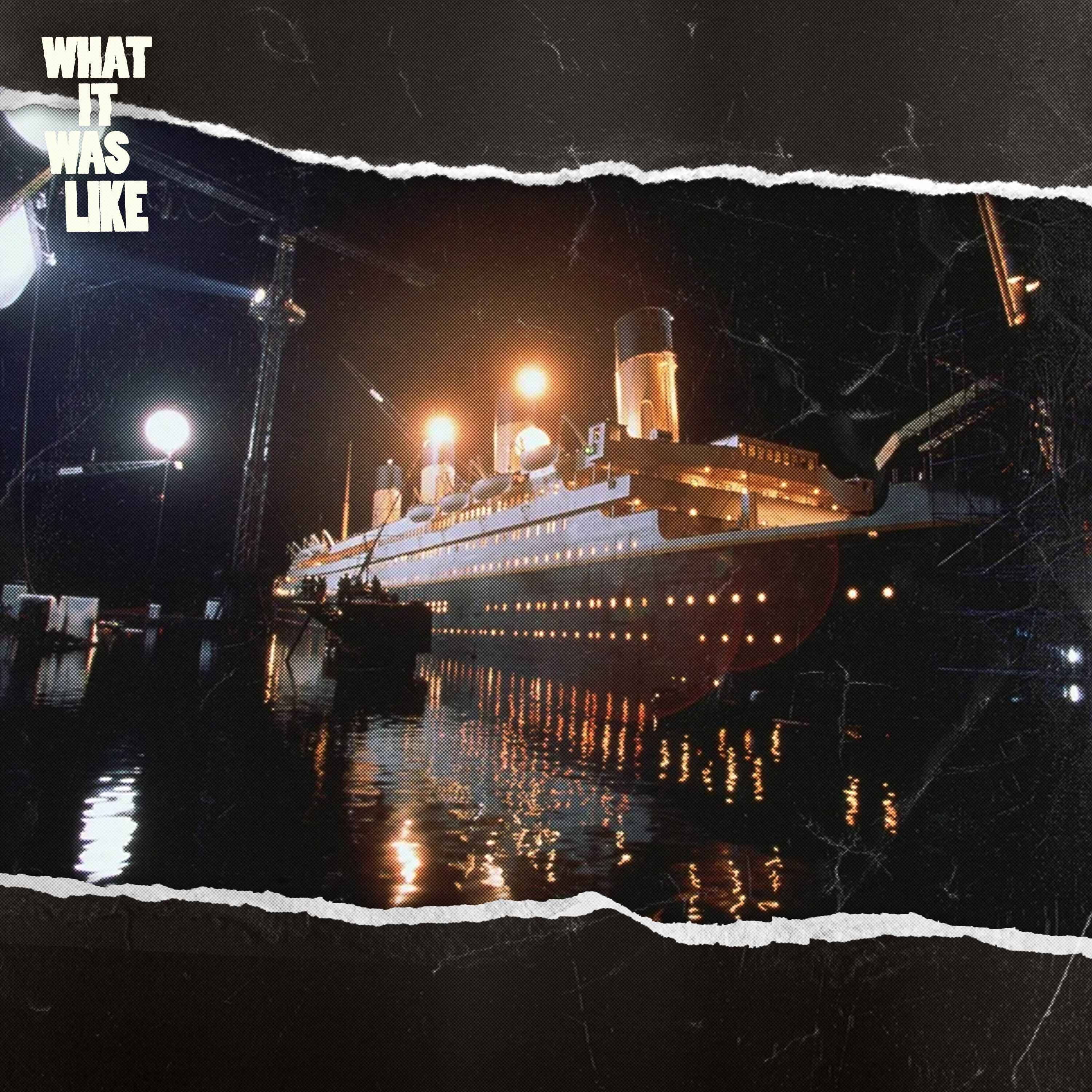
Hey, I'm Julian Mokins, and you're listening to what It Was like, the show that asks people who have lived through big dramatic events what it was like. Hey, everyone, welcome back. So it's the start of the Easter weekend here in Australia, which means that a lot of you are about to take some time off. I'm going to do the same. So we're going to run something from the archives. And this is one of my all time favorite episodes because it's about one of my all time favorite movies, Titanic. Now, you probably remember Titanic in terms of Leo and how it was like a big hit at the time. It was actually the highest grossing film ever made. But what most people don't know is that Hollywood executives had actually expected Titanic to be a massive flop. The first problem was that the movie was just really expensive. It was originally budgeted at 125 million, but it blew way past that to just over $200 million, making it the most expensive movie ever made. And actually studio executives at 20th Century Fox were apparently panicking. And from their perspective, you know, I get it. This was not a film based on pre existing ip. It was not a sequel. This was a three hour long period drama with a depressing ending. And everyone was convinced that it was going to be a flop and their jobs were on the line and it could potentially even sink the studio. So that was the background. And on the set things weren't a lot better. Kate Winslet later described the whole thing as an ordeal. At one point she said she was genuinely frightened of the director, James Cameron, who was known for his explosive temper. At one stage, she says that she nearly drowned, but she felt too intimidated to complain. But now, none of this is the craziest part, because early in the shoot, somebody spiked the crew's food with a powerful hallucinogenic drug called angel dust, or PCP. And around 40 cast and crew members suddenly started hallucinating. People were running around the set completely out of their minds. And eventually many of them were rushed to hospital. So that's the story that we're gonna be zooming in on today. And my guest is a man by the name of Jamie Barber, and he was a first assistant camera operator on Titanic. He actually worked closely with a renowned cinematographer named Caleb Deschanel. You might know him via his famous daughter Zoe. And Jamie was there the whole way as this incident unfolded. So let's get into it. Here is Jamie Barber on what it was like working on Titanic. And the night the crew had their clam chowder spiked with pcp. Jamie, welcome to the show.
- [05:41]
Jamie Barber
Thank you. Glad to be here.
- [05:43]
Julian Mokins
So, in kind of quick broad brushstrokes, tell me about how you got into the film business.
- [05:49]
Jamie Barber
Well, my father was the vice president of Panavision. So I grew up around the film business my whole life. So then I decided I would go work on commercials. I did some non union horror films for a few years and then I started work as a film loader on two movies and then I became a focus puller and my career just took off. And then I was Caleb Deschanel's assistant and camera operator for 15 years.
- [06:18]
Julian Mokins
Fantastic. And tell me about the moment that you first saw the Titanic script.
- [06:25]
Jamie Barber
It was so Caleb had gotten the job to shoot Titanic and so production had sent the, sent the script over to us and you start reading it and realize that this was an incredible script and it was going to be a hit. I mean we all knew going in that this was going to be a big movie and that we were working on something that was definitely going to make some money.
- [06:47]
Julian Mokins
How did you know it was going to be a hit? Because here's the thing, James Cameron was famous for sort of sci fi. He'd done Terminator, Aliens, these are big action movies. This was the first time he'd sort of turned his hand to period dramas.
- [07:00]
Jamie Barber
Right. It's funny because Jim, he does understand human emotions and, and the human going through the human process. It doesn't matter if it's a period piece or a sci fi or whatever, the human story is still the human story. And Jim is a really good storyteller.
- [07:19]
Julian Mokins
I've heard that James Cameron's a pretty hard directive to work for in some ways.
- [07:24]
Jamie Barber
When you're in prep and you're going to dinner and we're all hanging out together. Jim is fantastic, he's very funny, tells great stories, really gregarious human being and very interesting. When you start shooting, it's Jim movie, Jim's movie and Jim's movie only. He's the man. All decisions have to go through him. And Caleb in the visual aspect is pretty strong willed as well. So that's where we, we began to feel that there was going to be
- [07:52]
Julian Mokins
some disruption, bit of tension.
- [07:55]
Jamie Barber
Oh boy, was there tension.
- [07:57]
Julian Mokins
So talk me through the catering company and how did it all go down
- [08:01]
Jamie Barber
so well we were, we were finishing up shooting in Nova Scotia and we were our last night of shooting so we were shooting at night and we broke at midnight and it was our last dinner in Nova Scotia so we had this big seafood fest and it was great. There was lobster, you know, oysters and there was seafood chowder. It was really, really good food. So we broke for dinner at midnight and at 1 o' clock in the morning my Canadian trainee Started not feeling very well. We called the medic over, and they thought it was some sort of allergic reaction, maybe to the shellfish. So he was run off to the hospital. I went in to talk to Caleb and to talk to Jim Cameron and tell him that my Canadian trainee was having issues, and we would be down a crew member, and they left. And in hindsight, in retrospect, what I heard was that Jim had gone into the bathroom, put his finger down his throat because he had started not feeling well. And then he was trying to induce vomiting to so that whatever was in his system would be out. So I was talking to Caleb, and all of a sudden, at that time, I started feeling a little strange.
- [09:10]
Julian Mokins
When you say strange, what do you mean?
- [09:12]
Jamie Barber
Well, the first thing that happens is my arm started going numb. And then the world begins to tunnel in a little bit and gets a little slow. Like, when you start walking, you feel like you're walking a little bit in slow motion. And I said, you know, I don't feel all that great. I'm going outside to get some fresh air. So I wandered outside to get some fresh air. And as I'm standing there, we're on a dock now outside the warehouse, more of the crew are coming out saying that they don't feel well and they don't feel well. And eventually, Josh comes out, and he's standing on the tailgate of a truck, and he says, okay, the crew that doesn't feel well, I want on one side. The crew that feels okay, I want on the other side, so that we can divide you up and find out how big this problem is. And as he's talking, more of the people that are on the good side that feel okay are moving over to the bad side. And finally it came to the point where one of the wardrobe people go, oh, my God, I'm becoming bad crew, and moved over to the bad side of us. So they loaded us into vans and they drove us to a small hospital in Dartmouth because they knew that there was something wrong with us. And I'll never forget it. Our transportation, the driver who was driving our van, we pull into the parking lot, and he puts it in park, and he goes, we just made it. And I go, are you okay? He goes, no. I started feeling bad about two miles back. We just got here in time. So we get checked in. The emergency room is, like, panicking because there's, like, 40 people coming in. They put us in, and the doctor starts to diagnose us. And the diagnosis was that we had the only common Denominator for everybody was that we had all had the seafood chowder. And so he diagnosed us with paralytic shellfish poisoning, which can be terminal.
- [11:04]
Julian Mokins
What is that?
- [11:05]
Jamie Barber
It's a certain self. Shellfish eat plankton that's got a neurotoxin in it. And then you eat the plant, you eat the shellfish that's got the plankton with the neurotoxin, and you absorb the neurotoxin in it. I think the first thing it does is it stops your. It stops your breathing so very bad. Yeah. No, you're. We're. We're told that some of us are going to die.
- [11:26]
Julian Mokins
They told you that? The, the staff said not all of you are going to walk out tonight.
- [11:31]
Jamie Barber
Yeah, they said, you know, we're worried that some of you are, because this can be, this can be fatal, that some of you will have a problem, you know, will not make it. That's when they started. They set up phones for us and allowed us to call back to, to wherever we were from because there wasn't that many of us from California. There was a few, you know, a lot of Canadians.
- [11:51]
Julian Mokins
So were you terrified at this point? I mean, how were you?
- [11:54]
Jamie Barber
Oh, no, it was pretty panicking. I mean, I told, I got on the. I called my wife and told her to put the kids on the phone. I had two daughters and they were very little. I told her to wake them up and get them on the phone, and I told them I loved them and told them goodbye.
- [12:05]
Julian Mokins
Oh, my God.
- [12:06]
Jamie Barber
Talked to my wife.
- [12:07]
Julian Mokins
What did, what did your wife say?
- [12:09]
Jamie Barber
She goes, what? You know, what's going on? What? And I said, there's something wrong. And we've been diagnosed with paralytic shellfish poisoning and some of us may not make it till the morning. And she's like, okay. Now, she and I met on a movie called Kindergarten Cop, so she was in the film business. And our. Her cousin was post production at Fox. So she called her cousin, you know, tried to get information from them that was more clear than what my information was. It was crazy. Jimmy Miro, our camera operator and Steadicam operator, he thought he was having a heart attack. So he was on an EKG machine. It was pretty tense.
- [12:52]
Julian Mokins
And I'd just like to point out here that if you've taken some drugs and you're getting high, everyone talks about the setting. You know, the last thing you need is a doctor saying, hey, you know how you're sort of hallucinating a little bit and feeling a bit weird, you might die. That is the absolute last thing you need in that headspace.
- [13:08]
Jamie Barber
And it's the. It's funny because the symptoms that we were exhibiting at the beginning, the numbness and the tunneling in and the slowness is all signs of a neurotoxin as well.
- [13:19]
Julian Mokins
Really.
- [13:19]
Jamie Barber
So, yeah, that wasn't real. That was masking the fact that there was something else going on. And also, you're in an emergency room. So it's overhead fluorescent lights, it's really bright, it's linoleum floors, these orange plastic chairs. And you're. I mean, I can go ahead and. And. And spoiler alert the story and tell you. We had ingested angel pcp, angel dust. But so one of the things that angel dust causes is massive paranoia because we noticed that none of us, first, none of us like to be alone. And the other one other thing that was happening was we were paranoid. When we were alone and waiting for the doctor to examine you, you like, all of a sudden people would come out of the examine room and want to stay around more people because they were paranoid that being by themselves. So it was later that when we were told it was PCP and that causes paranoia, that it at least explained our sort of bizarre behavior. So now when we realized that we were not dying and we were living the. One of the last camera assistants to come into the. Into the emergency room was Devereaux, who was a Canadian. Really fun guy, dreads. Really interesting. And he came in and he had stayed at the studio because he thought he was okay. And then he started having delayed reactions. So they rushed into the emergency room, and he gets there, and for some reason, someone had a guitar, and I don't. Still don't know where it appeared from. And he. One of the. One of the crew members was playing guitar, and Devereaux gets. Takes the oxygen mask off, sits up on the gurney and goes, you know, we need a conga line. And. And the guitarist started playing some Caribbean music. And we did a conga line around the emergency room for maybe like, five, ten minutes. And then that's when everyone sort of realized, okay, it's not paralytic shellfish poisoning. We're not going to die. This may be okay. And then the real fun started when they realized that it was some sort of poison in our system. And to counteract poison, they give you liquid charcoal. And so they gave all of us liquid charcoal. Within this narrow window, they pulled up with this cart, a trolley full of containers of liquid charcoal, and you. They put a straw in it, and you drink It. Well, the problem is that if you drink liquid charcoal, it adheres to whatever poisons in your system and then your body evacuates it. You get the runs, you get diarrhea, and you give it to 40 people all at the same time. There's not enough bathrooms in that hospital. I was sitting on a toilet. Someone was. Else was on a sink, and someone's sitting on a trash can. It. There wasn't one. When we left, there wasn't one piece of white porcelain. It was all gray from just. It was horrible.
- [16:26]
Julian Mokins
This is pandemonium.
- [16:27]
Jamie Barber
Oh, no. It was completely crazy. And then our main producer, John Landau, he had been in a. In the plane flying back from Los Angeles and he finally caught up to us and he was like the only stable one of the group because it was everybody. I mean, it was Cameron, it was Caleb, it was the production manager who was, you know, the highest of the production people. Until Landau got there. We were, they were all. We were all in the same state.
- [16:52]
Julian Mokins
I'm curious because, you know, you were saying before that when James Cameron's on a shoot, you know, he's the master of that domain. So in this situation, he's really lost control.
- [17:01]
Jamie Barber
Oh, no, there was, There was no. He was in the. He was by himself, literally not taking any control at all at this situation. He was in the same boat we all were. He was just trying to live and be and make it, make it through as long as he could.
- [17:14]
Julian Mokins
Did he participate in the conga line?
- [17:16]
Liberty Mutual / Monday.com Advertiser
No.
- [17:17]
Julian Mokins
I'm curious, what was his response?
- [17:19]
Jamie Barber
Oh, he was. He was laughing. He was next to the. He was with the. The guy playing guitar. He was right near him. And then there was other people like Caleb and the production manager were discussing how we really knew we were screwed up, was discussing big circle, little circle, you know, what you can control and what you can't control.
- [17:39]
Julian Mokins
You're doing deep and meaningful philosophical conversations.
- [17:42]
Jamie Barber
Oh, yeah, yeah, because you're hiring a kite. And then someone remembered passing an A and W root beer place. And all of a sudden, through the crew, they talked about root beer floats. And the next thing you know, everyone wanted root beer floats. So the. John Landau got someone else in production and they opened up the fast food place and they brought us all root beer floats.
- [18:06]
Julian Mokins
Oof. How was it?
- [18:08]
Jamie Barber
It was great because, I mean, when you're completely out of your mind, you're sitting there sipping on a root beer float going, this is the best root beer float I've ever had, man. Yeah, yeah.
- [18:16]
Julian Mokins
And you get all emotional, you're like,
- [18:18]
Jamie Barber
oh, my God, everyone did. It was, yeah, I love. I love you, dude. And it was funny because one of the. One of the crew members had come in, and when we were first. First having the. Having the issues, when we knew that we weren't feeling well, he came in and when we're standing out at the dock, he goes, are you okay? And I said, no, I'm not okay. I feel really weird. And he goes, I feel really weird too. And then he looked at me and he goes, he goes, I'm up. And I go, that's it, I'm up. And I go. I go. I looked at him, I go, what drugs have you taken? And he goes, well, I've taken this, this, and this and this, and it's none of those. And he goes, you. And I said, well, I've taken all of those, and I've taken this, this, and this, and it's none of those either. I think it was like maybe six weeks later when it was all over, that we got the message from the studio that they had had tested the food and it had come out. It was pcp. That's when. When I got that notice, I immediately called it Angel Dust. Dude.
- [19:13]
Julian Mokins
It was the one thing I haven't tried.
- [19:15]
Jamie Barber
No, no, neither one of us had ever tried it. But I will tell you one thing. The seafood chowder was fantastic. So Angel Dust must be a really good cooking condiment besides being, you know, an animal tranquilizer, because that was the best seafood chatter I've ever had. But how crazy, how crazy the filmmaking world is. We literally once, like eight hours had passed, and they all said, you know, you're not going to die. It's something else. It's all wearing off. They stood at the door and they said, we still got to finish shooting tomorrow. You know, we got to be back in Los Angeles. Take your turnaround. And we're going to work tomorrow. We're going to work tonight. And this was like 8 in the morning, and they wanted us back at like eight at night. And we just like, no, we've just been in a hospital. We've been drugged. This is crazy.
- [20:04]
Julian Mokins
You had to say goodbye to your children, and then they wanted you to work the next night.
- [20:08]
Jamie Barber
And we did. We worked. We worked the next night. We moved from there to Mexico. And by the time we got to Mexico, Caleb had left the picture. And so I realized that when Caleb left, I was not going to stay on the movie as my only friend being Jim Cameron, because eventually that's going to. That's Going to bite you in the ass.
- [20:30]
Julian Mokins
Yeah. He reminds me of. In some ways, there's a sort of Elon Musk quality to him. You know, he's a bit of a polymath. He's across every aspect of the film from writing a script with a compelling narrative arc to, as you're saying, just like the real nuts and bolts of cameras and the mechanics of the thing.
- [20:47]
Jamie Barber
Oh, no, he's. He's very much involved with everything. And he is one of the first ones to tell most of the crew that he could do their job because he came up through the crew ranks. I mean, he came up through the art department and he.
- [20:57]
Julian Mokins
So he can.
- [20:58]
Jamie Barber
He's been hard crew. So he was happy to tell just about everybody that he could do their job. I was lucky enough that when he told me, you know, he started to have that conversation with me, and I go, I'm happy to let you try.
- [21:09]
Julian Mokins
Yeah.
- [21:10]
Jamie Barber
You know, as a focus puller. Go ahead, dude, give it a shot.
- [21:14]
Julian Mokins
The shoot was punishing. You know, it was. It was hard.
- [21:18]
Jamie Barber
It was very hard. And it. It. I know that when they got down to Mexico, it got very punishing, especially when we got to the point of sinking the ship. You know, it definitely became. I know there were a lot of injuries, and the ship was, you know, in pieces and it. On the gimbals and stuff like that. So they could only do so much, and it was going way over budget.
- [21:39]
Julian Mokins
Yeah.
- [21:40]
Jamie Barber
But one of the reasons that you also do it in Mexico is you're not constrained by some of the rules that you're constrained by doing it in the United States and in Hollywood.
- [21:48]
Julian Mokins
Yeah, totally. You can burn through crew members, you can do stuff.
- [21:51]
Jamie Barber
All sorts of stuff that, like, I. I was lucky enough I did a movie called Master and Commander of the Far side of the World. I was one of the camera operators. And in that movie, they. To escape from the French ship, the Asheron, they. They row the boat into a fog bank.
- [22:06]
Julian Mokins
Yeah.
- [22:07]
Jamie Barber
So to make a fog bank here in. In the United States, it requires, you know, special stuff then. And it can't be. It has to be water based. It can't be caustic in Mexico, Diesel fuel and tires.
- [22:23]
Julian Mokins
Oh, God.
- [22:24]
Jamie Barber
But it creates a much better fog bank. We. The wind shifted on us at lunch in Master Commander, and literally we fogged in from Rosarita up to Tiwan. Wow.
- [22:34]
Julian Mokins
All right. So it's a hard shoot. It's a bit of a mess in Halifax, and yet when the movie comes out, it was one of the first Movies to gross billions. Not millions, but billions.
- [22:44]
Jamie Barber
Yeah. No, it's. You have to. Jim's. You know, the visual effects were fantastic. Jim did an amazing job. The editing was good, the story was great, and the acting was fabulous. You had some great actors. You know, Leo is brilliant. I had worked with Leo before when he was just little on a thing called this Boy's Life with him and Bobby De Niro. And so, you know, we all knew. And that was one of the reasons you were willing to put up with some of the environment that you were in and things that were going on was because you knew that you were making a movie that was going to be a hit.
- [23:17]
Julian Mokins
So when it came out, it was all worth it because the film had been such a masterpiece.
- [23:21]
Jamie Barber
I only felt that it was worth it because I was alive.
- [23:26]
Julian Mokins
If you'd been dead, not so worth it.
- [23:29]
Jamie Barber
If people had died during that part of it, then, no, it would not have been worth it. But because you find out that in almost every big movie that you do, there is some. Some experience that you go through that is crazy. That is just the film business. And while you're going through it, you're miserable and you hate it, but as soon as it's done, you come away and you go, well, I got a really good story now. But as long as you live, you know, as we have always said, as long as we live through it, you know, because it's. I mean, once that makes filmmaking interesting is to go do things that are really hard and really stressful on your system and.
- [24:06]
Julian Mokins
Yeah.
- [24:07]
Jamie Barber
And all. Everything that goes with it. So you do walk away at the end, if it's good, you walk away going, okay, that was worth going through. I'd do it again. Now, I promised myself I wouldn't work with Jim again, but that's another story.
- [24:24]
Julian Mokins
Hey, we're going to take a quick ad break, but stick around because we'll be back with more what it was like Now. I think at some point, most of us have had the thought, I should get a therapist. And then a lot of us don't. Not because of any stigma. I actually think we're moving past that, but just because getting started feels hard. Certainly that was my experience. Between figuring out insurance and finding the right therapist, it just felt like a lot of effort. But I gotta say, Ruler makes getting started really easy. They partner with over 100 insurance plans, so the chances are that they probably take yours, which brings the average cost of a session down to around $15. And that's because using the benefits that you're already paying for, and they match you with a therapist who specializes in what you're dealing with. So there's no searching for the right therapist, there's no getting on a wait list. It all just works. Thousands of people are already using Ruler to get affordable, high quality therapy that's actually covered by insurance. So visit ruler.com waslike to get started and after you sign up, you'll be asked how you heard about them. So please support the show and let them know that we sent you. That's Rular r u l a.com waslike because you deserve mental health care that works with you and not against your budget.
- [25:53]
Jamie Barber
ACAST powers the world's best podcasts. Here's a show that we recommend.
- [26:02]
Jameela Jamil
What if you laughed all through your commute? Or if you heard the funniest story while at the gym? Well, now you can I'm Jameela Jamil and guests on my new podcast Wrong Turns share their most mortifying and hilarious disaster stories. I'm talking people like Mae Martin, Bob the Drag Queen, Katherine Ryan, Jake Johnson, Margaret Cho, Simon Pegg, Penn Badgley, and so many more. So listen wherever you get your podcast. Wrong Turns where dignity goes to die
- [26:32]
Jamie Barber
ACAST helps creators launch, grow and monetize their podcasts everywhere.
- [26:38]
Liberty Mutual / Monday.com Advertiser
Acast.com Liberty Mutual customizes your car and home insurance. And now we're customizing this rush hour ad to keep you calm, which could help your driving. And science says therapy is great for a healthy mindset. So enjoy this 14 second session on us. I think you've done everything right and absolutely nothing wrong. In fact, anything that hasn't gone your way could probably be blamed on your father not being emotionally available because his father wasn't emotionally available, and so on. And now that you're calm and healing, you're probably driving better too.
- [27:07]
Julian Mokins
Liberty. Liberty.
- [27:08]
Jamie Barber
Liberty.
- [27:09]
Julian Mokins
Liberty.
- [27:10]
Jamie Barber
Say hello to Samantha. Hi there.
- [27:13]
Julian Mokins
Samantha built a SaaS platform that helps
- [27:15]
Jamie Barber
small businesses manage their workflow.
- [27:17]
Liberty Mutual / Monday.com Advertiser
But she needed a smarter way to reach decision makers.
- [27:19]
Jameela Jamil
That's where ACAST came in.
- [27:21]
Jamie Barber
They helped me produce a professional audio ad which played to business owners and ops leads using their audience attributes targeting tools.
- [27:27]
Jameela Jamil
Suddenly, my platform was showing up in
- [27:29]
Jamie Barber
the ears of the exact people I needed to reach. Now that's streamlined marketing.
- [27:33]
Liberty Mutual / Monday.com Advertiser
Samantha, what's your tip for scaling smart?
- [27:35]
Jameela Jamil
Solve a real problem and make sure
- [27:38]
Jamie Barber
the right people hear about it. Promote your business with podcast ads on Acast.
- [27:42]
Liberty Mutual / Monday.com Advertiser
Get started at Go acast.com advertise.
- [27:53]
Julian Mokins
So who put the PCP in the Clam Charter? Was Someone ever arrested and why'd they do it?
- [27:58]
Jamie Barber
No, there was no one. We understand there was no one ever arrested. The thought was that there had been. So the crew, what we. What we understand, we were coming in one night, we'd been shooting and we ran out of daylight. We were coming back into. Into port and the craft service guy, because we. There's a craft service gentleman who makes sure that you have food and water and things like that that the caterer doesn't take care of, just snacks and things that we do. So he was smoking a joint and Jim Cameron caught him and had him fired. So he came by that day to pick up his paycheck and had stopped by and talked because he was friends with the caterers and talked to the caterers, talked to the crew, and then left. The next day, when we were after our adventure and we were going. Getting ready to go to work, he ran into one of the crew members outside the hotel in. In Halifax and asked him how their trip was the night before.
- [29:00]
Julian Mokins
I'd say that's rather damning.
- [29:02]
Jamie Barber
That was really damning. And we. I don't know why the Canadian police, why he wasn't arrested, but because at one point we thought he was arrested and then, you know, like 40 counts of attempted murder or whatever. But.
- [29:15]
Julian Mokins
Yeah, yeah. Were you pissed off at him? You know, if you had a moment with him, what would you say?
- [29:19]
Jamie Barber
Oh, no, I. There wouldn't be a lot of talking because it was. It was. I don't. Having. Having had to make that phone call was heartbreaking. I never, ever, ever wanted to have that. To be in that position of, you know, having to say goodbye to my children.
- [29:36]
Julian Mokins
Yeah, that's. That's awful. I mean, I think. I think I was attracted to this story because. Because everything's big about this story. You know, it's. It's like the. One of the world's biggest blockbusters. It's a big shoot, and then in the middle of all of this, you have this big, weird drug experience. But what I'm learning talking to you is that actually it was kind of terrify. You wish it hadn't happened.
- [29:57]
Jamie Barber
Oh, no, we all wish it hadn't happened because it's, you know, you never want to go through that. You never want to. Maybe if we. If we had worked out, if it had been worked out quickly that we were actually on a drug that wasn't going to kill us. Because also, that's the other thing about PCP is the amount of PCP you have to ingest to make it to kill you is huge.
- [30:18]
Julian Mokins
Okay. So you were pretty safe.
- [30:20]
Jamie Barber
Yeah, it's a very.
- [30:21]
Liberty Mutual / Monday.com Advertiser
It's.
- [30:21]
Jamie Barber
You're just going to be high. In hindsight, if we had known that we were just high, then you embrace the high and you go with it. But the fact that you don't know that you're high and you're experiencing it and that they've told you that there's a good possibility you will die, it's a drug. That mindset's important.
- [30:39]
Julian Mokins
Yeah.
- [30:39]
Jamie Barber
So once it, Once you put you into that mindset, you're going to travel, you're going to go down that rabbit hole. That's the problem with it. Again, if we had, you know, bunch of filmmakers had definitely done some drugs, so we, it would have been fine, would have been happy to go through it.
- [30:55]
Julian Mokins
I heard, I heard actually that Bill Paxton smoked some joints to, to take the edge off.
- [31:00]
Jamie Barber
Well, when Billy, God rest his soul, when he was alive, I, I never participated in that with him. We had conversations about things that we had done, but we never ever. We never actually smoked any weed together because I did. I also, I did. Next of Kenwood. Billy as well.
- [31:17]
Julian Mokins
Oh, yeah. Nice, nice. I really just have one question left. And that is. So you retired from the film business now and you had a long career.
- [31:28]
Jamie Barber
Very.
- [31:28]
Julian Mokins
How does this rank in terms of like crazy, arduous film business experiences? How does this one rank?
- [31:36]
Jamie Barber
It's right up there with one of my best stories.
- [31:39]
Julian Mokins
Not just one of your best stories through work, but one of your best sort of life stories.
- [31:44]
Jamie Barber
Yeah. Oh, yeah. Well, I mean, going through that adventure, I mean, people just don't understand how crazy those. That moment was when it shifted over. And all of a sudden we were told, you know, 15 minutes ago we were dying. And the next thing you know you're doing a conga line through the hospital and then you've got the run. You know, it just, it became things. But we, you know, you have to. Through a career of 40 years of doing crazy stuff and it's fun. Yeah, you do, you do stuff. But that Titanic was definitely up there. The list of things that you definitely, you know, it was worth going through it, but it was a pain in the ass.
- [32:23]
Julian Mokins
Did. My understanding is that some of the execs had a word to the crew afterwards and was like, look, guys, let's keep a lid on this. You know, Were there any sort of NDAs or anything you had to sign? No, no, no.
- [32:34]
Jamie Barber
But maybe after. Maybe after I'd left, but no. Yeah, yeah. I think it was because it was in Canada and it wasn't like here. And I think they probably did try to suppress it as much as they could.
- [32:46]
Julian Mokins
Yeah.
- [32:46]
Jamie Barber
Yeah.
- [32:47]
Julian Mokins
Well, I mean, I know that James Cameron's spoken about it lots. There was a CBS thing I saw not too long ago where he was talking about it. He recommended that people don't try pcp. He said it was a bit of a shit drug.
- [32:57]
Jamie Barber
It's not the most fun, but as a cooking condiment, it may be really good.
- [33:05]
Julian Mokins
So that's what we learned.
- [33:07]
Jamie Barber
Yes.
- [33:08]
Julian Mokins
All right, Jamie, well, I'll let you go. And thank you so much.
- [33:11]
Jamie Barber
Well, thank you and it was a pleasure.
- [33:16]
Julian Mokins
Hey, thanks for listening. Now, we've got a subscriber episode out this week, and it's a heavy one, but for a good reason. So I've been thinking that the world is feeling pretty chaotic right now, you know, again, there's a new war. AI is coming for your job even more than it was before, and everything is just kind of shifting all at once. But I have this theory that I want to share with you because I think every era can feel a bit like this. You know, it doesn't matter what period you're living in, what decade you're in, there's always a few worrying things happening and the future is always uncertain. But I don't think we have to panic. I actually think it's all going to be okay. And the other night, I was looking at some random years. You know, I was trying to look for a particularly hectic period that we've since forgotten about, just to test my own hypothesis. And I landed on 2001. Now, yes, there was nine, 11. But then just a month later, something else happened. And this bit, this second part of 2001, has been almost completely forgotten about. So letters containing white powder started showing up in various letterboxes around America. So various politicians and journalists started contracting anthrax and they started dying. And in total, five people died and 17 were infected. And to this day, we don't fully know what happened. No one ever went to jail. It was kind of left unresolved. So in this week's subscriber episode, I'm speaking to a journalist who reported on the front lines of those attacks like he was the guy. So we're going to revisit this case not. Not as a mystery, but just as a reminder that things have always been intense, but eventually they'll feel like a piece of history that most people can't even remember. So I'm going to leave you. On that note, have a great weekend.
- [35:19]
Liberty Mutual / Monday.com Advertiser
Liberty Mutual customizes your car and home insurance. And now we're customizing this rush hour ad to keep you calm, which could help your driving. And science says therapy is great for a healthy mindset, so enjoy this 14 second session on us. I think you've done everything right and absolutely nothing wrong. In fact, anything that hasn't gone your way could probably be blamed on your father not being emotionally available because his father wasn't emotionally available, and so on. And now that you're calm and healing, you're probably driving better too.
- [35:46]
Julian Mokins
Liberty. Liberty.
- [35:47]
Jamie Barber
Liberty.
- [35:48]
Julian Mokins
Liberty.
- [35:51]
Jamie Barber
ACAST powers the world's best podcasts. Here's the show that we recommend. Hi, I'm Pace Case. And I'm Bachelor Clues.
- [36:02]
Julian Mokins
We host Game of Roses, the world's
- [36:04]
Jamie Barber
best reality TV podcast. We're covering every show on reality TV at the highest level possible.
- [36:10]
Julian Mokins
We analyze the Bachelor, Love is Blind, Perfect Match, Vanderpump, and anything else you find yourself watching with wine and popcorn.
- [36:16]
Jamie Barber
We break down errors, highlight plays, MVPs, and all the competitive elements that make reality TV a sport. And we interview superstar players like Bachelorette Kaitlyn Bristow and Big Brother champion Taylor Hale. If you want to know so much about reality reality TV, you can turn
- [36:30]
Julian Mokins
any casual conversation into a PhD level dissertation.
- [36:34]
Jamie Barber
You definitely want to check out Game of Roses. ACAST helps creators launch, grow and monetize their podcasts everywhere. Acast. Com.