Loading summary
Transcript197 lines
- [00:01]
Verizon Ad Voice
Popsicles, sprinklers, a cool breeze. Talk about refreshing. You know what else is refreshing this summer? A brand new phone with Verizon. Yep. Get a new phone on any plan with select phone. Trade in in MyPlan and lock down a low price for three years on any plan with MyPlan. This is a deal for everyone whether you're a new or existing customer. Swing by Verizon today for our best phone deals. 3 year price guarantee applies to then current base monthly rate only. Additional terms and conditions apply for all offers.
- [00:30]
John Rusnak
Did I talk too much? Can't I just let it go?
- [00:39]
BetterHelp Ad Voice
Take a breath. You're not alone. Let's talk about what's going on. Counseling helps you sort through the noise with qualified professionals. And online therapy makes it convenient. See if it's for you. Visit betterhelp.com randompodcast for 10% off your first month of online therapy and let life feel free.
- [00:59]
John Rusnak
Better.
- [01:02]
Julian Morgans
ACAST powers the world's best podcasts. Here's a show that we recommend.
- [01:11]
John Rusnak
This area was sort of a shark tank for predators. Not just the Green River Killer, but.
- [01:17]
Verizon Ad Voice
Others in who took Misty Copsey? I'm investigating the disappearance of a 14 year old girl who vanished from the Washington State Fair in 1992.
- [01:28]
John Rusnak
How? Why? She was so sweet and so young. What happened to her?
- [01:35]
Verizon Ad Voice
Listen to who took Misty Copsey?
- [01:38]
Julian Morgans
Wherever you get your podcasts, ACAST helps.
- [01:42]
Verizon Ad Voice
Creators launch, grow and monetize their podcasts everywhere.
- [01:47]
Julian Morgans
Acast.com.
- [01:53]
John Rusnak
Super real I'm sitting at the trading desk and my, I get blood all over my shirt because I'm doing so much coke and my nose is bleeding in the office, you know, and he's like, come on man, we gotta talk. Like, what's going on? You gotta stop this. Like, are you okay? Like, are you okay? Emotionally, mentally, like, what the heck's going on? Why are you taking all these huge positions? You know, and you know, this is one of the problems is anybody that actually really cared about me, I used to push away because I didn't want, I just didn't, I didn't want the retribution. You know, I didn't want, I didn't want their judgment. And I couldn't see clearly that they were, they cared about me and were trying to help me.
- [02:37]
Julian Morgans
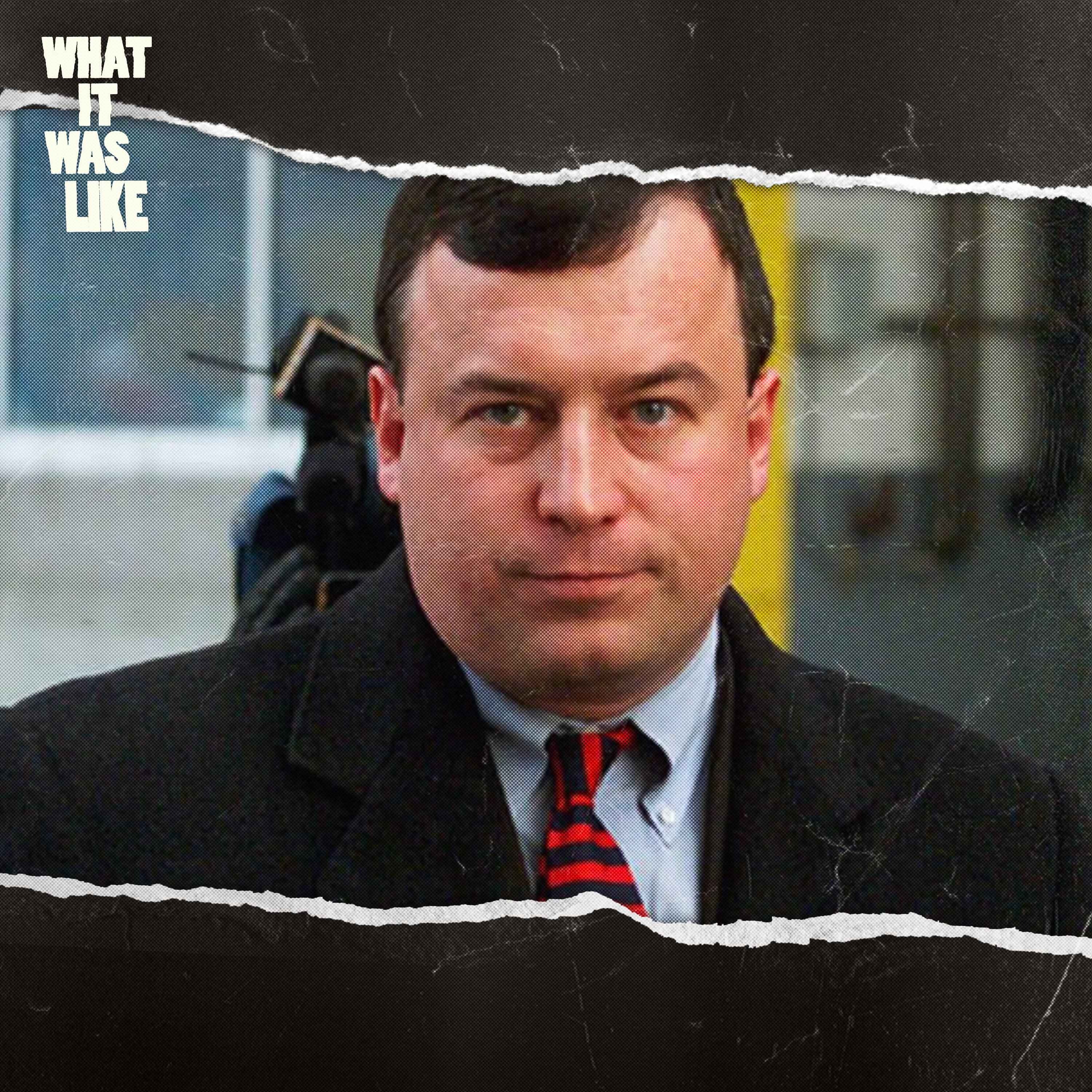
Hey, I'm Julian Morgans and you're listening to what It Was like the show that asks people who have lived through big dramatic events what it was like. Hey, welcome back. You know what my favorite kind of interview is? I think it's when we get to hear from the bad guy. So most weeks on this show, we get to hear from survivors or bystanders. A lot of the time, we get to hear from cops. They're kind of the three buckets of. Of guests that we have. But every now and then, I sit down with a person who is at the center of the mess. You know, they're the antagonist. And for me, it's those conversations that are always the most surprising and often the most illuminating. Now, today, we're going to run one of those stories. I've actually known this guy for quite a few years. So his name's John Rusnak. And him and I have known each other since probably 2018, 2019. I interviewed him a long time ago when I was at Vice, and we've stayed in contact since. And he's a significant guy because he committed one of the biggest cases of bank fraud in US history. And it all started in the 1990s when he was a rising star at Allied Irish bank, and he was running their foreign currency trading desk. And at first, he was doing an amazing job. He was making them millions of dollars. They were really happy. So they gave him a really long leash. He had very little oversight, and he spiraled deeper into running these really risky trades that. That eventually cost the bank nearly $700 million. And when the scheme collapsed in 2001, John was sentenced to seven and a half years in prison. Now, on the surface, this sounds like a story of greed. You know, you hear these kind of stories about white collar crime, and you're like, oh, that guy was just motivated by greed. He's a greedy bastard. That's what the problem is. But. But I think what makes John's story so interesting is to hear about what was happening inside his head. He was really stressed. He wasn't sleeping, and he had this feeling of impending doom the whole time. And not just that, but he was being really driven by this sense of inadequacy. It was this sense that he could never be quite enough. And it's what motivated him to keep doubling down and doubling down and doubling down until it all blew up. So I think on the surface, this is a story about power and money and addiction. But really, beneath all of that, it's a story about loneliness. It's really interesting stuff. And I. And I hope you enjoy this as much as I did. Here is my conversation with John Rosnak. Hey, John. Welcome to the show.
- [05:26]
John Rusnak
Thanks for having me.
- [05:28]
Julian Morgans
The pleasure's all mine. It's. It's nice to see you. It's been a couple of years.
- [05:33]
John Rusnak
It's been more than a couple.
- [05:34]
Julian Morgans
Yeah, it's been a long couple of years. But you're looking good, you know. You mean working out?
- [05:41]
John Rusnak
Yeah. Hit the gym most mornings? Yeah.
- [05:44]
Julian Morgans
Yeah. Well, I'm here to drag you back to probably a bit of an unhealthier period in your life. Apologies, apologies for doing that. But I guess, you know, let's start kind of at the beginning. I want to start, you know, earlier in your upbringing. So tell me, tell me about where you grew up. You know, like, what'd your parents do?
- [06:02]
John Rusnak
Well, I, I, I lived in a working class neighborhood outside of Philadelphia that was racially diverse and, and bad schools. You know, definitely not affluent and definitely not any sense of where I would be going or what I'd be doing. Like, I didn't even, I didn't even think about going to college until I had this. I had someone mentor me in high school that said, look, you're getting all these good grades. Like, you're smart. You got to go to college. Can't go work at the steel mill. And so I did, I got a scholarship to go to school. And, and I went to, like, the most white bread, waspy private school in America called Bucknell University, where I just did not fit in at all. But it was the beginning of me trying to fake it and fit in. And it's really one of the problems that led me astray, this deep sense of unworthiness that caused me to, you know, when I had to go out and buy penny loafers and a reptile and a blue blazer because I want to look like everybody else, you know, where I was way more comfortable in my Flyers hat and my jeans and Eagles jersey, you know?
- [07:20]
Julian Morgans
Yeah, yeah, yeah. So who, I mean, you're making it sound as though like the big shot was never really you on the inside. You were, you were someone else. So I guess, which makes me wonder, like, who, who do you think you kind of were actually really in your, in your younger years?
- [07:38]
John Rusnak
Well, I mean, I think I wasn't who I purported to be, but I fooled a lot of people. I mean, people thought that I was, I knew exactly what I was doing, and they took me very seriously, and I pushed a lot of people around, and it worked actually very well. I hate to say that, but, like, intimidation and anger really, really are transformative in a workplace, especially in the 80s and 90s. So you know who I was really? I guess I was like her little kid. It didn't feel that, didn't really feel like I had a lot of value. So I had to, I had to create that value. And working on Wall street, making a lot of money like that, just. Man, if you, if, if you want to pretend to be somebody you're not, that's a perfect place for it.
- [08:19]
Julian Morgans
Yeah, yeah, I can imagine. I mean, I've seen, you know, I've seen these movies, Wall Street. I've seen the Wolf of Wall Street. You know, it looks like a rush. It makes, it, makes it look fun.
- [08:31]
John Rusnak
Well, it's, it's, it's definitely empty, but, but it does have its, its pleasures. I mean, you know, it's this immediate gratification culture, right? So, like every day on the exchange floor, your profit loss was printed out and everybody saw it. And the guy whose name was first on that P and L statement, which is usually me, it was the big dog, you know, So I did what I wanted all the time. I did not take other people's feelings into consideration, and I just got exactly what I wanted or I thought I wanted.
- [09:05]
Julian Morgans
So. So as a kid, I understand you're pretty good at maths. You know, that was something that you could do, something you felt pretty confident in. How did that take you to Wall Street?
- [09:16]
John Rusnak
Well, you know, I wanted to be a computer science major, but when I went to college, there was no such thing, So I ended up being a math major. I started to love math models. And just the whole world had to say, like, if, if you're a carpenter and you have a hammer, everything looks like a nail. Like, to me, everything was a math model that had to be solved. And I started watching futures movements and stock movements and even sort of just pattern recognition. I don't know if you've ever heard of this or something called the Fibonacci principles that are like. They were in that silly Dan Brown book. I can't remember what it's called right now.
- [09:53]
Julian Morgans
Yeah, that's where I've heard it. Yeah. I was like, yeah, Fibonacci. I must know. I must be good at Wall street stuff because I've heard that.
- [09:59]
John Rusnak
Yeah. So everything's, everything's about pattern recognition in the markets. And it was something that I could really easily identify quicker than most and say, the markets for the quick and the dead. So, like, if you could think on your feet and see a pattern beginning to form and then follow that pattern before it's fully developed, and you're going to make a lot of money for sure. And I was quite good at my job until, until I just went way Overboard with the drugs and alcohol. That's what really screwed everything up.
- [10:34]
Julian Morgans
Yeah, well, let's take it one step at a time. So tell me about, I mean, I understand you got your job on a trading floor because you were helping them to program the computers and this was what, like the early 90s?
- [10:47]
John Rusnak
Like 85, I think 1985.
- [10:51]
Julian Morgans
Okay, okay, just run me through that.
- [10:55]
John Rusnak
Well, I had a friend whose father was like one of the few successful people in our neighborhood who was a vice president of bank. I didn't even know anybody was a vice president. The only person who was the vice president was the vice president of the United States. I had no idea about corporate hierarchy. And he gave me a job in their newly formed technology unit, which was just three people, me and two other guys. So I set up some training software and helped him help teach them how to use the computers. Then when I came back the following year, they wanted me to come work in the training department. I told them no. I told them I'd rather, I would prefer to work in operations because that's where my, I thought my skills would lie. But luckily I had some guy smack me upside the head and tell me like, you're coming to work with us, man, don't even say that. Like you have. I, I didn't have any idea about how much money they were making and what, you know, their lives were like until, until they explained it to me. And then once I got on the trading floor, it was just non stop. We had a 24 hour trading operation in Philadelphia, London and Hong Kong. And I got to travel over the world and, and live in different places and work really hard and. Until I finally moved to New York in like the, I don't know, early 90s.
- [12:13]
Julian Morgans
Yeah. Yeah. So tell me about your first week on a trading floor. That must have been kind of exciting, right?
- [12:18]
John Rusnak
It was, yeah, it was really exciting and it was stressful for a lot of people, but I really didn't stress over it. So it just seemed very natural to me. And I got to run my own book fairly quickly and just had a lot of, a lot of freedom to do what I wanted. You know, when I finally got onto a proprietary trading desk in New York, like I didn't have any job responsibilities and I just sat around and did whatever I wanted all the time. And we had, we had offices in, in Sydney back then and I used to run like our night desk, which ran the same time as, as the Sydney hours. So I used to go over there and see those guys and they were Huge partiers. And the New Zealand guys were even crazier.
- [13:05]
Julian Morgans
What do you mean by huge partiers? I mean, I'm again, I'm just imagining Wolf of Wall Street.
- [13:11]
John Rusnak
Yeah. I mean, just ludicrous amount of drugs and women and things like that. I, I always stayed away from the women. I really love my wife, she's awesome. So that's one thing I managed to stay out of. But I mean, the drugs and the alcohol and just a wasteful spending was. I mean, it's the prodigal son. It doesn't even compare.
- [13:30]
Julian Morgans
So can you, I mean, give me, give me a snapshot of that because I see, I see this stuff in movies, but like, how do you, how do you merge some kind of work culture with just debauchery like that? What? Like give me your average Friday. What would it look like?
- [13:43]
John Rusnak
Well, when we lived in New York, it's like I'd work until. I'd work until like six or seven o' clock at night and then we'd go out and start drinking and then, and then we'd eventually end up at dinner somewhere at a club and you know, back, like I could be down at the Village eating dinner at like one o' clock in the morning because New York's always open. You know, it's not the same nowadays, but, but, you know, tied that in with just an incredible amount of drinking, a lot of cocaine. Um, and, and just this, this sense of privilege that you like, deserve to live that way. You know, it was, it's really, really kind of filthy, to be honest with you. But.
- [14:20]
Julian Morgans
Yeah, yeah. What, what did cocaine do for you personally? Why were you attracted to it?
- [14:26]
John Rusnak
I mean, it's. I, I'm pretty sure it's the devil incarnate, man. It's like it does everything you want it to do. It was, we were going crazy binges, you know, where I wouldn't sleep and I just trade all night. And I, I remember I put a, I had a, a Bloomberg machine put in my house so I could stay up all night and trade because the markets were always open and the guys on the Asian shift love me. They love having me trade all night with them because they were up working and I was just jamming it out from home and I don't know, it was ridiculous.
- [15:01]
Julian Morgans
I remember you once describing cocaine as. There's a movie. Was it Limitless or something?
- [15:07]
John Rusnak
Yeah, I mean, that's a decent movie if you get a chance to watch it, where this guy starts taking. And it's tied into the financial markets. As well. He starts to take this drug that gives him insight into how markets move and makes him very intelligent. Now, I don't think cocaine makes you intelligent, but it makes you feel like you're intelligent. And if you're in a job where you have to make very fast decisions, then coke works really well. I mean, it does keep you hyped up until there's a. Until it's gone. So, you know, they say, like, a gas and a break. Like, I need to. I need to have coke and alcohol. Start, start and finish. Start and stop, you know.
- [15:46]
Julian Morgans
Can I just ask, how much in, like, the first year of working on a trading floor, how much money were you making?
- [15:53]
John Rusnak
I mean, enough to do. Enough to be totally liquid, you know, to do whatever I wanted. I don't really know. I think my wife would be unhappy with me if I started to share how much money we had made at one point. That's right. But I remember the first bonus I got. I just remember a call, and I was like, you're not. I just. I try not to swear anymore, but I just. On the phone with her, like, you're not going to fucking believe what they just gave me as a bonus this year. And she's like, okay, that's great. Like, we should quit our jobs. Like, okay, great. So I go into my boss, say, like, I'm quitting. I'm going to Africa because my wife wanted to go on a safari. So he's like, you're not quitting your job. Like, you're my best guy. You can't quit. And I'm like, well, I just told you I'm quitting. What do you mean? He's like, no, here's what you do. Take a month off, Go to Africa. I bought a house in Connecticut. I bought a new car, and we went away for a month. And then I came back and started trading again. And the problem with money, they say money's not the root of all evil, it's the love of money. Right. Is the root of all evil. So this sense that there was never enough, like, I could be content now not making a lot of money. But then, no matter how much I made, I was never content. I always wanted to make more. And that drove me into, you know, some really bad decisions.
- [17:13]
Julian Morgans
Yeah, yeah, yeah. I've never had the opportunity to be, like, buying houses and cars and, you know, anything I want. But I can imagine. I can imagine that once you're on that ride, it's pretty addictive. Said before that your boss called you his best Guy. So, so like what were you doing that made you the best at that time?
- [17:38]
John Rusnak
I mean, this is before I came down to Maryland and got into all that trouble. But like when I was working in New York, I was fearless, you know, and I was very, so I was like I said in a way I was faking it. But on the trading floor I was very self confident and I'd make, I could just make swift decisions and stick with them. And yeah, the market is really focused by influence you have on other people. So there was this guy named Jack. It was really funny. Everybody knew him in the trading market. Whatever he did, everybody else wanted to do it. So he got up one day, he's reading Time magazine, some article about Japan and he's like, that's it, I'm selling the yen. This is a disaster. So he stands up in his chair, goes, everybody calls everybody. You call around the different banks and get prices in the dollar against the yen or use computers to contact people. Everybody out and just pay them, pay them, just keep buying it, buy it, buy it. And the whole room's in an absolute panic because he's screaming at the top of his lungs, buying every single dollar you can get in sight and short in the yen. And then the news gets out that it's him, so other people start following. It becomes like this self fulfilling prophecy. So then he, he leaves, he goes to the bar to get drunk. Like he has this huge position on it and he leaves and I can walk over his desk and the article he's reading is from like six months ago. You know, it's like no relevance at all. It's just that he, he had the power of, to influence people in a big way. And when you have really self confidence and you influence people, it becomes a self fulfilling prophecy. Especially if you know who the big funds are and what they're doing and how you interact with them. So there was always, there was always a reason for us to try to meet people.
- [19:24]
Julian Morgans
Yeah, yeah, yeah, yeah. It's interesting. So, so if we're looking at this story through a lens of, of ego or arrogance or pride or whatever you want to call it, it sounds like a, like a feedback loop. It's a very reinforcing thing because, because you do a little bit, you're doing well, it gives you a bit of confidence and you do a bit better because you're a bit more confident. And then the market has this feedback sort of mechanism in it where confidence. So I can like it's a slippery slope.
- [19:52]
John Rusnak
Yeah.
- [19:52]
Julian Morgans
What do you what are your thoughts on that?
- [19:54]
John Rusnak
I mean, that being said, there's. There are a lot of really decent guys that work in the financial markets. They're Christian or. Or faithful guys or, you know, guys who have families and. And do things ethically incorrect. So it's not everybody. There's a lot of us, but there are normal people who work in the financial markets and. And conduct themselves like adults. Just none of the guys I worked with.
- [20:19]
Julian Morgans
Yeah, I guess I'm not critiquing the people in the financial markets. I'm simply saying that temptation must have always been there.
- [20:28]
John Rusnak
Yeah, I mean, it's very similar temptation to gambling. And, I mean, I used to love to gamble. Holy cow. That was like. I mean, I was gambling for work all day, and then we'd go to Vegas and gamble like crazy and stay up for days, you know, and I don't. I just couldn't get enough, you know, that was. I was never on sensory overload. Like, whatever I was doing, I needed more, you know, So I couldn't. I couldn't satisfy that desire for risk. And risk, even when you're losing money, is very exciting. I mean, it sort of feeds you.
- [21:03]
Julian Morgans
You know, Were you unusual on the trading floor, or were you just the one who happened to come undone or. But, like, was this sort of behavior being mirrored all around you?
- [21:16]
John Rusnak
Well, you know, I made a lot of bets on things that didn't work out, but I made a lot of bets on things that worked out very well. The. The. The thing that started this downward spiral was a mis. An accident. It was. It was a trade that got put in incorrectly. And because I went out that night, instead of staying in and checking everything, I didn't catch it for a couple days. And by the time I caught it, it was a tremendous loss. I mean, not nearly what I lost in total, but I started. I think I've said this to you before, the drunken in Atlantic City. Who bets $500 on red, and then it comes up black. So he bets $1,000, and then it comes up black again. So he bets ten grand, and then all of a sudden that comes up black again. So he bets on black, and it comes up red. So it became this sort of irresponsible, sort of unholy doubling up of bets to try to make it was just a really bad idea. And then combining all that guilt and shame over the mistake with drugs and alcohol made my life unmanageable, and my life had become unmanageable, But I just didn't. I didn't want to own up to it. I don't want to face it, you know?
- [22:29]
Julian Morgans
Was it a conscious decision to not own up to this mistake, or were you just kind of on autopilot by that point?
- [22:35]
John Rusnak
No, it was a. Yeah, it was definitely a conscious decision. I had my whole identity tied up. And being a trader, like, that's what made me feel like I was smart. It made me feel like I, I, you know, especially when I moved down here. Baltimore, like, this is private schools and country clubs down here, man. It's like, I mean, it's a. It's a weird place to live. I mean, there's, like, a lot of cool places in the city that are. That are sort of vibrant and diverse and stuff, but there's all these white neighborhoods that are just like, all these rich guys. We were lawyers, doctors, or Indian chiefs, and. And they all had identity in what they did and what country club they belonged to and what private school they sent their kids to. And my whole identity was tied up in being a traitor and, like, pushing that in people's faces, you know? I mean, the guys used to call me Big Splash. That was my nickname.
- [23:22]
Julian Morgans
So that's kind of a cool nickname. I like, I like it.
- [23:24]
John Rusnak
I thought so at the time. It seemed like a good idea. Right. I didn't mean to make that big of a splash, though. Yeah, you might have been splashed. Yeah, I could have been like, just Minor Splash would have been better.
- [23:37]
Julian Morgans
Yeah, that's right.
- [23:37]
John Rusnak
But, yeah, I mean, I definitely decided that then I was going to fix it, that I was going to figure it out and that I was going to make it back. And, you know, that's never a good idea. And I still do it sometimes with my own trading account on much smaller amounts. You know, it's like I was. I was super long in Netflix shares the other day, like, with a bunch of options, like, really leveraged up. And it wasn't millions of dollars or they don't mean it like that, but it was. It was an amount of money there was, you know, somewhat significant to us in our retirement coming up, and I. I just started to get whacked on it. I'm like, that's it. I gotta buy more of this stuff. And I finally said. I called my AA sponsor, like, I think I'm losing it. He said, just sell everything. All right, well, I'm gonna wait a little while. The options expire in, like, five hours. So I waited, and the market just exploded. And, like, I. I honestly, I felt like I made a million dollars and I didn't make a million dollars. I didn't really make that much money at all. But to me it was a lot of money and it was, it's, it was sort of fed into that all those old, that old hey look, I'm good at this, you know and like that makes me a good person and let me see if I can get more adrenaline rush from that. So but luckily I got a great sponsor in aa. He tells me to shut up a lot. So.
- [24:54]
Julian Morgans
Here we're going to pause here for a quick ad break but stick around because we're going to come right back for more what it was like.
- [25:06]
Verizon Ad Voice
Popsicles, sprinklers, a cool breeze. Talk about refreshing. You know what else is refreshing this summer? A brand new phone with Verizon. Yep. Get a new phone on any plan with Select Phone. Trade in and MyPlan and lock down a low price for three years on any plan with MyPlan. This is a deal for everyone, whether you're a new or existing customer. Swing by Verizon today for our best phone deals. 3 year price guarantee applies to then current base monthly rate only. Additional terms and conditions apply for all offers.
- [25:36]
Julian Morgans
G' Day America.
- [25:37]
John Rusnak
It's Tony and Ryan from the Tony and Ryan podcast from Down Under. Today we want to talk to you about Boost Mobile, the newest 5G network in the country offering reliable nationwide coverage.
- [25:47]
BetterHelp Ad Voice
Backed by a 30 day money back guarantee.
- [25:49]
John Rusnak
Love your service or get your money back, no questions asked. Boost Mobile's unlimited plans started just 25amonth.
- [25:56]
Julian Morgans
And will never increase in price.
- [25:58]
John Rusnak
The Boost Mobile network, together with their roaming partners, covers 99% of the US.
- [26:03]
Julian Morgans
Population 5G speeds not available in all areas. Visit the nearest Boost Mobile or BoostMobile.com After 30 gigabytes, speeds may slow. 25 per month with active Boost Unlimited plan.
- [26:14]
John Rusnak
Cancel within 30 days for a refund.
- [26:16]
Julian Morgans
Of service fees, activation and phone payments not refunded.
- [26:20]
John Rusnak
Did I talk too much? Can't I just let it go? Wish I would stop?
- [26:26]
BetterHelp Ad Voice
Take a breath. You're not alone. Counseling helps you sort through the noise with qualified professionals. Get matched with a therapist online based on your unique needs and get help with everyday struggles like anxiety or managing tough emotions. Visit betterhelp.com randompodcast for 10% off your first month of online therapy and let life feel better. When you think about businesses that are selling through the roof. Sure you think about a great product, a cool brand and brilliant marketing. But an often overlooked secret is actually the businesses behind the business making selling simple for millions of businesses. That business is Shopify. Nobody does selling better than Shopify. They're the home of the number one checkout on the planet and the not so secret shop pay that boosts conversions up to 50%, meaning way less carts going abandoned and way more sales happening. Businesses that sell more sell on Shopify. Upgrade your business and get the same checkout allbirds and skims use. Sign up for your $1 per month trial period at shopify.com startselling all lowercase go to shopify.com/start selling to upgrade your selling today. Shopify.com start selling.
- [27:55]
Julian Morgans
So back. Back to the story. So you. You. You tried to double down on your losses, right? You're trying to claw back this money you've lost. I think you said it was worth 25 mil.
- [28:05]
John Rusnak
It's about that. Yeah. I don't want to get too specific because you just never know when this stuff pops up again in court. There's people still suing each other over the whole thing, so.
- [28:16]
Julian Morgans
Okay, all right, but. But let's say you lost a fair bit of money, and that must have been the start of a pretty stressful time.
- [28:25]
John Rusnak
Yeah, it was. It was very stressful. I mean, there's nothing more damaging than keeping a secret or a lie, you know? You know, it's like I try not to lie anymore, and it's like it makes life a lot easier. I don't have to keep covered by tracks, you know? Not that I don't lie. Everybody. Yeah, everybody. Everybody lies in time, though. Yeah. But. But, like, it's a whole lot easier, like, trying to balance that out and make that money back at the same time. I had to hide everything and. And the terrible things I had to do to hide the problems. A lot of intimidation, you know, a lot of stability.
- [29:04]
Julian Morgans
Tell me about that. Because, Because I'm guessing there was a whole lot of, you know, oversight and. And checks and balances. How did you. How did you get past. How did you hide your losses past the people trying to. Trying to look over your shoulder?
- [29:17]
John Rusnak
Well, I mean, the. The. The problem is that if the people that oversee you both for, like, you know, risk control and also for management oversight, if they profit from your trading, like, directly profit from your trading, then there's always a reason to look away. And. And that's really what happened. And when it got so bad, then no one wanted to face up to it. So, you know, I had pretty senior executives come to me and say, like, you got to shut this down. And I'm like, I'm not shutting it down. You forget about it. It's not. We're not shutting it down. Like, I don't know. I don't know what you want to do. Like, if you want to call the FBI, go for it, because they're going to fire you first. So, you know, if you want to, go ahead, but I'm not shutting it down. We're going to keep going.
- [30:08]
Julian Morgans
So this sounds like you were pretty sure in your own abilities to turn this around, or was it more desperation?
- [30:15]
John Rusnak
It was, yeah, it was desperation. Yeah. It was stupidity. It was. It was misplaced. A misplaced belief that. That I could fix it and just never works out, you know?
- [30:27]
Julian Morgans
And was. Was this the first time in your life that you kind of experimented with intimidation? And, like, you don't. You don't strike me as, like, a bully.
- [30:34]
John Rusnak
This.
- [30:35]
Julian Morgans
This sounds like it would have been a new experience for you.
- [30:38]
John Rusnak
Well, I mean, the problem with the financial markets in the 80s and 90s is that in New York especially, that was before Giuliani cracked down on the mob. So all the Italian guys wanted to be investment bankers, and all the investment bankers wanted to be mobsters. So it's like we're just hanging out with these guys all the time. It was like a. It was a crazy situation, you know? Like, I'm 25 years old, working on Wall street, carrying a gun. I mean, what the heck is that about, you know?
- [31:06]
Julian Morgans
Were you carrying a gun?
- [31:07]
John Rusnak
Ah, stupid. Yeah, not that I ever really wanted to shoot anybody. What are you doing with it? I mean, I mean, all my guys had guns, so, you know, I don't know, dude. It's. It's. It's widespread stupidity that just grows and grows and grows, you know? And as you start to think things are normal, you lose sight of the fact that they're ridiculous, you know? Like, probably the only person I was going to shoot would be myself, you know? I've never been to a gun range, for heaven's sakes, you know?
- [31:37]
Julian Morgans
Did you ever actually. Did you shoot the gun? Did you ever, like, take off any, like, Coke cans on the roof or anything?
- [31:43]
John Rusnak
Yeah, yeah, we shot it. We shot. I didn't shoot it at anybody. I didn't. I didn't really want to. I just. I don't know. I just liked feeling. I liked the feel of. Of having it, you know, and. And the sort of potential for intimidation with it. No, I didn't really use it that way, but I had a bunch of friends who were just straight thugs, you know, and, like, they would do anything for me, those guys. None of Those guys testified against me. All my. All my, you know, white bread, WASPy guys all testified against me at the drop of a hat, you know, but those Italian guys, they don't, you know, it was the joke used to say, it's like, you know, never rattle your friends and always keep your mouth shut. You know, so. And that's really the way it was. I mean, those guys were really good to me. And actually they were good to me when I was locked up too, because they knew I didn't want to be around them anymore. Well, not that I didn't want to be around them, but I promised my wife I was going to just not get any closer to those guys. And don't get me wrong, I'm not telling you I was John Gotti. I wasn't. I was just tangentially involved, you know, but. But they knew I didn't. I wanted to hang out with the Christian guys when I was in jail, but they'd always check in on me. Somebody come up to me if I went to a new place to go. Hey, Johnny, how you doing? Joe says hello. He says you're gonna hang out with the Christian guys, but if you need anything, you just let us know. Like, you know, you got no problems here. Yeah, it was really. It was actually nice. I got a lot of good meals too.
- [33:06]
Julian Morgans
All right. Okay, so how did you take 25 mil in losses and just like inflate it? Like, what was happening over the next few months?
- [33:17]
John Rusnak
I just kept borrowing more money. You know, it's like I was in the fed funds market barring like 6, 700 a day, 600, 600 or $700 million a day, which is like market moving stuff, you know, that everybody knew there was something wrong because I had this massive hole in my balance sheet that I needed to fund, and it just couldn't be mistaken. It's not like, you know, the perception here in the media was that I was like this lone wolf and nobody knew what was going on. And there was no way to know because I was like this super angry genius who fooled everybody. But, like, you can't borrow $700 million a day and not have anybody know that, you know, wow.
- [33:57]
Julian Morgans
So really this was like a symptomatic thing of the culture of the trading world. I mean, at a guess, how many people. I don't want you to name any names or, like, do any snitching whatsoever, but like, at a guess, how many people do you think had to be sort of willfully looking away?
- [34:17]
John Rusnak
Almost everybody. I worked on it on an open trading floor and I was trading like a billion dollars at a time, you know, like, you know, every and everybody could see how angry I was and all the bad stuff I was doing at work and like, you know, throw my phone breaking, breaking screens, just telling people just to, just telling people off all the time. And like, it's pretty easy to see what kind of position somebody has on, right? Be like, if you and I went to the casino and, you know, you look down at the casino and I've got a hundred grand on the table. Like, well, you know, there's something going on, right? Like there's something, there's something wrong here, right? Because this guy tells you he's a, you know, chaplain in the jail, but he's got 100 grand on the table. Who did I steal that from, you know? Or what am I doing incorrectly? So, so my thought is that, and I do take personal responsibility for the fact that I did this and it was my fault, but there were people all around me who knew that things were, were out of whack.
- [35:16]
Julian Morgans
You were, you were like a source of amusement for them or they were worried about getting in trouble if they dobbed you in or like, what was their motivation for staying quiet?
- [35:28]
John Rusnak
I mean, a lot of. I, we used to take a lot of people out with us, you know, so, like, it was nothing for us to, you know, for us to take half the room out to dinner or out to play golf or on like some sort of junkie trip to New York or wherever we were going. Like, so people benefited from that. And it was. Not everybody was using drugs, but a big drinking culture. It was an Irish bank. So, you know, the drinking was a big deal, so people benefited from it. And then they didn't really understand. So like, I don't think they wanted to call me out, you know, because I don't think they thought they could prove it. Maybe. I don't know. I, I can't say. I, I can't. I, I can't. I don't have a lot of insight into what they were thinking.
- [36:11]
Julian Morgans
Did you have anyone during that period who came up to you and said, hey, John, what's, what's going on? Let's. Let's just close the door and have a, have a real heart to heart here.
- [36:19]
John Rusnak
Yeah, I mean, I mean, I had one of the guys that purported to be a buddy of mine. Like, I'm sitting at the trading desk and my, I got blood all over my shirt because I'm doing so much coke and my Nose is bleeding in the office, you know, and he's like, come on, man, we gotta talk. Like, what's going on? You gotta stop this. Like, are you okay? Like, are you okay? Emotionally, mentally? Like, what the heck's going on? Why are you taking all these huge positions? You know? And, you know, this is. The. One of the problems is that anybody that actually really cared about me, I used to push away because I didn't want. I just didn't. I didn't want the retribution, you know, I didn't want. I didn't want their judgment. And I couldn't see clearly that they were. They cared about me and were trying to help me.
- [37:04]
Julian Morgans
If you'd taken the drugs out of the equation here, do you think you would have been more open? Open to this kind of suggestion or people reaching out?
- [37:16]
John Rusnak
Probably, yeah. I'd say because it blurs your thought process, you know, And I just don't really like the person I am when I'm drinking and using. So it did drive me deeper into isolation.
- [37:33]
Julian Morgans
Yeah, I guess I'm just trying to get a hand on what you were thinking at this time. Like, where's your head at? Like, it just seems. It just seems like you're on this kamikaze ride to the. To the bottom, and I just can't see that. I can't see that you believed that it was going to be okay either.
- [37:53]
John Rusnak
I don't know. My thinking was really distorted. I did actually think it would probably work out, you know, I mean, if I was. I mean, the last couple of months, I was sure it wasn't going to work out. Christmas? Yeah.
- [38:04]
Julian Morgans
Yeah. I mean, tell me when, when, when you really hit rock bottom.
- [38:08]
John Rusnak
Yeah, I mean, it was. It was Christmas. We used to go to New York at Christmas time all the time. My wife liked being up there. I had limitless amount of people who wanted to take me out and give me a limo and, you know, like, screw around the city for as long as I wanted. And my favorite restaurant is a place called Il Molino's in. In. It's in the village, kind of Lower east side. Village. Yeah. Fantastic. Italian.
- [38:36]
Julian Morgans
Yeah.
- [38:37]
John Rusnak
Like, sounds nice. Lofter fra diablo and grappa and. And all the. All the criminals ate there, so.
- [38:46]
Julian Morgans
Perfect.
- [38:47]
John Rusnak
Yeah, it was really good. So anyway, so I was there and like, I was there with one of my brokers and my wife, and I've just been drinking all day and it was snowing outside and like, it should have been this beautiful day in New York, you know, we didn't have the Kids with us. So we were, you know, we could have had a nice romantic weekend and we could. Everything could have been great, you know, but it just went the absolute the other way. Like, I'm sitting in front of my wife, just totally drunk, acting like an idiot, talking to these guys about volatility, prices in the markets and the fumo retracement numbers and all. Whatever you want to call. I used to be in this thing called chaos theory that you could make. You could find pattern and chaos, and I would just go off on stupid stuff like that. And I know our wife's looking at me like, he's in. This guy's insane. Like, what?
- [39:33]
Julian Morgans
No, I know.
- [39:33]
John Rusnak
Where's the guy married?
- [39:35]
Julian Morgans
Chaos theory is very, very interesting. You know, there's sort of like the interplay between fractals and chaos theory and sort of this whole, like, it's very Joe Rogan world of, like, nerdy bro shit. In this moment at this restaurant, what were you. What were your losses at that time? And were you, like, what was your position in the market? Like, give me that side of the story.
- [39:58]
John Rusnak
I was ridiculously short of dollar yen. I had been buying, put options on the. On the. The yen and just doubling down and doubling down and doubling down. And the market was going crazy at the dinner. Like, I used to carry around a. I can't remember what we even called them. They were like little clickers, you know, before the Internet, it's kind of like a pager, but it had stock and futures prices that updated on it automatically. And it was a pager, too. So I'm like, sitting at the table looking at this stupid thing like, every two seconds. I was like, what are you doing? Can't you put that thing down? Like, no, I can't. You know, the market is flying, and I've got a huge position, and I was just obsessed by it, you know.
- [40:46]
Julian Morgans
And. And you were watching in real time as you were what, you were sort of like close to $700 million in the hole.
- [40:55]
John Rusnak
Something like that. Yeah.
- [40:57]
Julian Morgans
What does that. What does that feel like? Can you do your very best to describe that feeling?
- [41:03]
John Rusnak
I mean. I mean, just think about the dumbest thing you ever did, and then that becomes something that everybody knows about, you know, I mean, we're. We're blessed in a lot of ways. Like, you know, over the years, like, even when I've struggled with my sobriety, like, usually people don't know, you know, But I now I'm transparent about it. But 20 years ago, I wasn't transparent about it, and, and you just get this sense of like, you've done, you've done something so egregious, I didn't realize what the consequences were going to be, to be honest with you. I mean, I knew it was a big problem, but I thought the bank would be so embarrassed by it. They just hide it and let it go, you know, but they really couldn't. It was too much. Too many people in the market knew about it.
- [41:51]
Julian Morgans
Okay. And, and so did you tell your wife this night, like this sort of Christmas dinner night?
- [41:56]
John Rusnak
No, I didn't, I didn't tell her for a long time. But, you know, that being said, like, hanging out with a bunch of criminals all the time and I'm never home. And when I am home, I'm raging, you know, so it was, it was pretty clear to a lot of people that, that I was on a really negative path.
- [42:15]
Julian Morgans
How long, so this, this period here that you're describing where you were just like, really on your knees, how long was this period in total?
- [42:25]
John Rusnak
It was like the last two. Two months or so? Yeah, about two months.
- [42:30]
Julian Morgans
How were you sleeping during this period?
- [42:33]
John Rusnak
I wasn't sleeping. I didn't sleep. I just. Up all the time and. Yeah, no, I mean, it's just, it's a, you know, reality is, is tough to take a bite of sometimes. You know, you don't really want to. You know, like I said, I had, I had defined myself as this, this trader, this successful guy. People had to be nice to me because they needed me and, you know, to actually admit that failing was terrible. But once it was done, holy cow, it was great. Like, when I finally confessed and put it all out on the table, I felt like this weight lifted off my shoulders, you know?
- [43:12]
Julian Morgans
Okay, so take me to the period in which you came clean. Like, how did that start? What got the ball rolling?
- [43:23]
John Rusnak
You know, it's like I, I just didn't perceive the problem to be as large as it really was. You know, I went to one of my buddies who's a lawyer, and I started telling them what was wrong. And then I needed somebody to help me negotiate with the FBI. And he's like, John, I, I, I don't, there's not even any way that I can, I can't, I can't help you with this. It's too big. Like, this is going to be like a national media story. Like, I can't handle it. So he, he connects me with a guy down here. David Irwin was my lawyer. And he's really good. He was an Ex prosecutor. And he just knew everybody and he took me in and I. First thing I told the guys was, look, like I'm totally content to wrap myself out. I'll tell you everything I did and I'll accept responsibility for that. And I did get time off my sentence for acceptance, responsibility. But don't ask me about anybody else. Like you can. I don't. You know, you could figure that out if you want, but you're not going to get that from me. But I just said that deeply ingrained in me. And, and I'm glad I did that. Like, I wanted to take responsibility for my own actions, but I didn't want to drag other people down with me.
- [44:25]
Julian Morgans
And, and what was the catalyst? Because I understand you eventually came clean to your wife. Like that was the, that was the first step in this, this kind of journey.
- [44:34]
John Rusnak
Right.
- [44:35]
Julian Morgans
Can you tell me about that? What was the catalyst?
- [44:36]
John Rusnak
Yeah, it's like, look, we got to get out of town. Like this thing's gonna break and I got some problems, so blow the car up. You know, I'm walking around with a ton of cash in my pocket and, you know, load the car up, take the pictures and take the kids and let's get out of here, you know.
- [44:53]
Julian Morgans
And were you planning to flee originally?
- [44:57]
John Rusnak
No, I wasn't. I just wanted to take the heat off for a couple days, you know, I just didn't want to. I didn't want to have to. I, I didn't want to have to deal with it until I was ready to deal with it. So it's just, I was just away for like three days. I came back and like, you know, Irish Public Radio, Irish Times, New York Times, Wall Street Journal are all like on my front porch.
- [45:21]
Julian Morgans
How did they find out while you were away?
- [45:27]
John Rusnak
So once the. I had been talking to my lawyer and he had arranged with the FBI for me to talk to them. And once the bank found out that I took it to the FBI, then they went public with it, so. Which was like a self defense mechanism, I suppose. So like it was in all the papers like the next morning.
- [45:47]
Julian Morgans
Okay. Okay, so we've got this chronology sort of inside out a little bit. So. So first you went to your lawyer. The lawyer was like, this is huge. Kicked you over to his friend and you went to the FBI, and then you went away for the weekend with your wife and with the kids.
- [46:03]
John Rusnak
No, I didn't, I didn't actually speak to them. I just had. My lawyer was speaking to them while I was away. I didn't speak to him. Like, they actually called me like, you know, like, we know where you are. Okay, fair enough. You know where I am. I know where I am as well. I mean, some hotel in Delaware, you know, and like this is where, you know, they said, well, do you want to talk to us? And I said, well, I had, you know, I have a lawyer and he's representing me. So like, he said he would be in touch. I think he already has been. And they were like, well, we can't talk to you anymore if you tell us you have a lawyer. So. So I had to wait until that was over. They weren't, you know, they knew it wasn't going anywhere. So it's not like they. This is one of the things about the, One of the real basic unfairness I see in the penal system nowadays, in the legal system is because I was white and affluent, they. They treated me with kid gloves like I was a jerk. And like, you know, they, if, if that had been like. And frankly, just talking about race guy, if that had been some black kid on the streets of Baltimore, like dealing $500 worth of heroin, he'd been j. He'd been locked up right away. Right? But it's a, the, the whole system is. It's a mess.
- [47:13]
Julian Morgans
Hey, it's time for a quick ad break here, but please don't go anywhere. Stick around, cuz we'll be right back.
- [47:26]
Verizon Ad Voice
Popsicles, sprinklers, a cool breeze. Talk about refreshing. You know what else is refreshing?
- [47:32]
John Rusnak
This.
- [47:33]
Verizon Ad Voice
A brand new phone with Verizon. Yep. Get a new phone on any plan with select phone. Trade in and MyPlan and lock down a low price for three years on any plan with MyPlan. This is a deal for everyone, whether you're a new or existing customer. Swing by Verizon today for our best phone deals. 3 year price guarantee applies to then current base monthly rate only additional terms and conditions apply for all offers.
- [47:56]
John Rusnak
Did I talk too much? Can't I just let it go? I wish I would stop. I wish I was thinking so much.
- [48:02]
BetterHelp Ad Voice
Take a breath. You're not alone. Counseling helps you sort through the noise with qualified professionals. Get matched with a therapist online based on your unique needs and get help with everyday struggles like anxiety or managing tough emotions. Visit betterhelp.com randompodcast for 10% off your first month of online therapy and let life feel better.
- [48:31]
Julian Morgans
I'm guessing while you're away, I'm guessing you talk to your wife about this and I'd love to hear that story.
- [48:40]
John Rusnak
You know, in a Lot of ways, it was a relief to her, right, Because I was so angry and upset that it seemed to her like I didn't want to be with her. You know, it was actually. It was the Super Bowl, I think it was the Rams won the super bowl that year. And we were watching the game, and then we went to the bar and just started talking a little bit. Like, we had to leave the bar because it's like, it's such a. Such a big conversation. Like, I didn't want anyone to overhear that. You know, like, you don't want to be sitting in a bar and telling somebody that, you know, the FBI is looking for you. So. So, yeah, so I just sort of came clean to her, and. And then she said, well, okay, at least now I know why you've been like this. You know, it's not that. It's not that you hate me. It's just that you're out of control, you know? And she. And one of the things, you know, it's really not good to have your wife as your accountability partner. Like, you need to have guys to be your accountability partners. But one thing she did say to me was, like, as long as you're going to take responsibility for this, I'm going to stay with you, because I know that God hates divorce, so I won't leave you. All our friends, when this came out, all our friends were telling her to leave me, you know, straight away, and she's like, I'll stick with you, but you got to accept responsibility. The two things was, you got to accept responsibility. You got to stop hanging out with those Italian guys. So. All right, fair enough. I can do both of those. I think I'll have to break it to him gently, though.
- [50:02]
Julian Morgans
Do you. I mean, this is a personal question, but do you think that she still loved you at that point?
- [50:10]
John Rusnak
No, I think. I think probably not. I think she knew that God hated divorce, so she didn't want to divorce me. I think she had to fall back in love with me and that you can't solve things like that with an apology. And it's one of the things we say in AA all the time. Like, it's saying you're sorry is pointless. You know, like, you have to make a living. Amends is what we call it. Like, a living amends. Like, I'm a different person. This is how I live my life now, not how I used to live it. So it took a long time. And then obviously, when I went to jail, like, things got a lot better really quickly as I realized that I could be fine in jail. You know, the whole lie about violence and rape and things like that in jail is just not true. It's not true. There's, you know, there's honor among Steve, so to speak, you know, so why don't you treat everybody with respect, mind your own business and, and you know, just keep it moving, so to speak. And what I realized was that the guys I was locked up with were. There was a massive dichotomy. Like all the white guys went to the Catholic services and I wanted to go to Pentecostal services. So I went to the Pentecostal service with all the black guys and like, they were a lot more fun to hang out with and they were good to me too. They really. There's a lot more, I think there's a lot more grace and mercy in the black culture than there areas in the white culture. So. So it was pretty cool. And then, you know, then obviously I was working out every day and losing a lot of weight and my wife knew that I was taking my faith really seriously and I was writing her letters every day and letters to the kids and stuff. So she started to see a pretty big change in me pretty quickly. But you know, it's going to be a long time. I ended up doing five and a half years. You know, it's like that's not, it's not six months, you know. And I could have done more than that, to be honest with you. I'm surprised. I actually, I got sentenced right before the Enron guys got sentenced. If you remember back then, that was a big.
- [52:00]
Julian Morgans
Yeah, that was huge.
- [52:01]
John Rusnak
That was the marker that was like remarking prison sentences for white collar criminals. Those guys got 25 years. One of the guys offed himself, but they got 25 years and that like, if I had been sentenced after that, I probably would have. Would have received 25 years too because it sort of reset the guideline for sentencing.
- [52:21]
Julian Morgans
Yeah, there was a bit of a sort of anti capitalist zeitgeist thing going on that time. I remember Michael Moore documentaries were a big deal at that moment. And he was, you know, he was angry.
- [52:34]
John Rusnak
I rightfully so it's not, I mean it's. Listen, it's not capitalism when, when it's oligarchy, you know, it's just not, it's not. I'm a big fan of capitalism. I'm just not a big fan of, of doing what I did or what, how people handle their finances, you know.
- [52:49]
Julian Morgans
Do you remember the day that you were arrested?
- [52:52]
John Rusnak
I wasn't really arrested, to be honest with you. Like, I did. I did have to go to a court hearing, and. And I just remember them saying to me, like, okay, we're going to go down and go before the judge. I was in the FBI's office. They're like, all right, well, listen, you're in our custody now, and you'll get a day's credit for this when you go to jail. So, like, so I'm walking around, joking around, and we show up at the, you know, the. The. The place that's outside the courtroom, and I got a suit on. And the guy, the officer behind the. Behind the counter said, all right, which one of you guys is the bank robber? And I pointed at one of the FBI guys. It's him. Him, you know, and it's like, no, no, it's not. It's like, all right, I'm just kidding, man. I'm just kidding. Relax. You know? But again, it's like, it was like people's perception of me because I was in a suit tie and looked like I was educated, like that maybe I wasn't really that bad of a guy, you know?
- [53:46]
Julian Morgans
Yeah.
- [53:47]
John Rusnak
And.
- [53:47]
Julian Morgans
And do you remember walking into the prison for the first time? What did that feel like?
- [53:53]
John Rusnak
Yeah, yeah, that was. I just didn't know what to expect, you know, I mean, I talked to a lot of guys, you know, I talked to a lot of my buddies and who had been in before, and. But, you know, they lived a whole different life inside because they run a lot of those jails. And so I knew my experience was going to be a little bit different, but the first place I went was Fort Dixon, New Jersey, which is a federal correctional institution in Southern Jersey. And it's just staffed by a bunch of Brooklyn kids, you know, who smuggle stuff in all the time. And it took me just a couple days to figure out that it wasn't going to be all that bad. I did get moved around a lot, and I got sent from one side of the. The. The one there was two compounds on east and a west side, and I got moved over the west side because I was being transferred. And then they lost my paperwork. That's one thing in jail, like, you gotta have your paperwork, you know, because especially if you're a white guy, like, you gotta show that you're not a pedophile and you didn't testify. So, like, that's my first cell. He told me it was like, take your paperwork, your legal paperwork, and leave it on top of your locker if anybody wants to Read it. They can read it. And no one's gonna read it because you have it in the, in the open. So there is always. I mean, those are the two things you really can't do when you're in jail. You know, you can't. You can't be in for a sex offense and you can't. You can't testify against people. Those are the only things that really put you at risk.
- [55:20]
Julian Morgans
They're the rules. Yeah, I feel like. I feel like embezzlement in, in the context of a. Of a jail is almost like a cool crime. Like, you. You'd get a fair bit of leeway from the other guys because you're like, yeah, $700 million. That's a big number. Was it. Was it like that?
- [55:37]
John Rusnak
It was a little bit. You know, I have this picture of my buddies that I hung out with during my Bible study, and the guys were laughing at me because, you know, you take all these, like, thug pictures where it was going like that, you know, And I have this picture. I remember the guy saying, look at you, man. Like, you got dirty sneakers on and, like, prison clothes. Like, we're all the ones all dressed up for this thing. Like, you know, you got all this money. You don't care. I'm like, I don't care. I really don't care. You know, I'm not trying to impress anybody in jail. So, yeah, I got scuffed up sneakers and from working out. And you didn't care? I didn't care.
- [56:13]
Julian Morgans
That's interesting. How long do you think it took you to shed your previous identity? Like, like the. This transformation from. From this Wall street big shot with the house and the, you know, all this stuff to just like you've gone through this period of public disgrace and you become someone else. How long did that take? And you know, what was that experience like?
- [56:36]
John Rusnak
I mean, it was shed for me, like, the weight. I lost, like, almost 100 pounds when I was in jail, you know, and I put it on, some of it back on, unfortunately, when I got out, but. But, like, it was the same thing. Like, it all happened very quickly. There were some guys that I met, they were inside that were just super dirt bags. There used to be a company called First Jersey Securities. Like, it was run by this guy, Robert Brennan, and he was in 4Dix with me. And like, I mean, I. The guy was so arrogant. It was out of control, you know, And I started to quickly feel like that's not who I want to be anymore. Like, if you're in Prison. And you're still arrogant. Like, you're really not facing up to the reality of the situation. Right? You're not owning. You're not owning anything. You know, you got to own it. So. So it happened really quickly. And, like, the faith bit helped quite a lot. You know, like, I just read the Bible like crazy and going to every single worship service I could go to and working out all the time. And it's weird. I mean, I know. I know it seems kind of crazy, but in a lot of ways, there were a lot of good things happening. Obviously. Deprivation of contact with my family was the worst part of it for sure, not seeing my kids and stuff. But. But. But there were still good things happening. I made a lot of really good friends. Many of them I still keep in touch with.
- [57:55]
Julian Morgans
How did you feel about being in the public eye? Because up until this point, you know, you'd been largely invisible. And then suddenly the national press took a huge interest in your story. Yeah, what was that?
- [58:06]
John Rusnak
Like, it was weird. I mean, they. The. The angle they took on, it was like, here's this nice white guy who's on the school board and on the charity board and sends his kids to private school, but he leads this double life, you know, like, they didn't really know me. They didn't know me at all. Like, if they had known me, they wouldn't have printed that in the papers, you know, because it wasn't true. I mean, I was raging all over town. Like, I definitely had been thrown out of most decent restaurants and clubs in town. So.
- [58:39]
Julian Morgans
Was. Was. I mean, what was the hardest part of this process? You're. You're actually making it sound as though like this public disgrace was kind of good. Like it was redemptive. But. But was there any part of it that you really struggled with?
- [58:50]
John Rusnak
Well, I didn't, like, I didn't like the way it affected my family and my wife. You know, that was. That was a big problem. The day I was sentenced, my wife was out of town, and I had to drop the kids off at a friend's house to babysit them. And then it's like, listen, don't let the kids watch tv. I'm gonna be on TV today for the sentencing, you know, So I felt so bad for the lady who watched the kids. She. She. She was like, crying when I came to pick the kids up. I'm like, don't worry. It' right? It's fine. Let me just have the kids and I'm going to get out of here. So. So there Was some. There was some condemnation of my wife, as if she had played some sort of role in it, which she didn't, or that she was too stupid to leave me or, you know, none of that's true, obviously, but I didn't really like that. I don't know. I'm kind of an introvert, so I don't really. I don't really go out that much anymore.
- [59:40]
Julian Morgans
And you said. You said earlier that you had to win back the love from your wife. How did you do that?
- [59:49]
John Rusnak
Well, I said it's a. It's. I would. We were in the. In the AA program. We call it a living amends. Right. By being a different person. There's nothing I could say even now, like, you know, I can't make up for the mistakes I've made, whether they've been around this criminal effort or about my drug and alcohol use or. Or just. Just all the dastardly things I did that didn't regard her at all. I can't make up for those things. I'm never gonna be able to change them. And I'm sure a lot of them she doesn't forget, you know, which still, even to this day, like, makes her somewhat distrustful of me. But. But just by being a different person is the only way I could really make. I could make a difference.
- [60:30]
Julian Morgans
So it sounds like you left prison, what, after five years? You finished your sentence, and it sounds like you were.
- [60:37]
John Rusnak
Yeah, five and a half years. Yeah. I mean, and like, you know, recovery and life change is not linear. You know, Like, I haven't been. I've been home for, oh, I don't know, about 20 years, but it's not. It's not like. It's not like everything went perfectly straight. You know, there have been a lot of ups and downs, a lot of mistakes, you know, especially as I try to navigate back into the business world like that. Really. I definitely had people come up to me and say, like, you're doing it again. You know, like, I started building these zips, dry cleaners, and I started to make a decent amount of money again, you know, and I started to have. I had six of them at one point. And, like, I started to think, like, okay, well, maybe I'm not a Wall street guy, but now I'm going to be this huge retail guy, and I'm going to let everybody know that I'm smart enough to make money doing this stuff. So I did get checked. I had some good friends who checked me on that. Don't do that. So we actually The Zips turned out to be a great thing because the joke is we only hire. We only hire felons and recovering addicts, including myself. So, like, I had hired a bunch of guys from halfway houses or coming out of jail and worked with a lot of. A lot of my buddies who were in parachurch ministries to sort of recruit guys to work. And I want to tell you, man, it's like, you give a guy an opportunity who's coming out of jail to work hard and be successful and have more than just like a. A, you know, hourly wage, but, like, an actual chance to. To earn a position in a career. Like, the loyalty is out of control. It's, like, kind of loyal you don't get from other people in the. You know, in the markets. So, anyway, yeah, it was good stuff. It was really good stuff, you know, And.
- [62:24]
Julian Morgans
And so after this was the, like, dry cleaning, do you say, or was it like laundry Laundromats?
- [62:30]
John Rusnak
Yeah, I was. It was called Zips Dry Cleaners. It's like a $99 dry cleaner, you know, and.
- [62:35]
Julian Morgans
Okay.
- [62:35]
John Rusnak
And I. I opened some restaurants and did a couple different things because I couldn't. I'm not employable, you know, I can't have a regular job. Can't go back into T. Rowe Price and try to work there, you know, So I always had to sort of make my own way. But really, the thing was that really changed, that really got me back on the right path was when I decided to leave all that stuff behind and. And run uncuffed. You know, I mean, it's. I was on the board, and I was a volunteer, and they put together a committee to try to replace the executive director because he didn't want to do it anymore. Like, well, here's this job that doesn't pay very much, really doesn't have a lot of respect, and is a major pain in the neck. Like, there's not a whole lot of people out there that want to do it. And I just. I just got the sense that God was calling me. I was on a retreat with some of my middle school boys, and I just felt like God calling me into the ministry. So. So I did it, you know, and. And it's been a beautiful thing. I mean, I. I can't tell you. Like, I. I'm not trying to say we're some huge organization, but, you know, you've seen on our website, there's a lot of people involved and a lot of people being affected. So if you can slip in a little. A little reference to uncuff ministries.org I love to have people look at that website and subscribe to our blog and hear some of the stories and the videos.
- [63:55]
Julian Morgans
Okay, so can you just. Just because I know we've talked about uncaft, but can, but like, what is it? Can you just describe it? Give me like the, just the, the elevator pitch. So we, we're clear on what it is?
- [64:04]
John Rusnak
Yeah, sure. It's a, it's a, a Christian ministry that serves people who are Christian or not, doesn't matter. It serves people that are locked up. The focus is on juveniles, the people that are mentally ill, and the people that are drug addled. So those are our three areas of focus. And what we're doing is we're going inside to build enduring relationships with men and women and boys and girls. The typical jail ministry is like getting people to say the sinner's prayer, give them a King James Bible, and that's it. Check them off the list. This is more like, I want to get to know somebody. Like if a guy gets 20 years, I want to stay in touch with him while he's locked up. If he goes home, I want to stay in touch with him as he gets a job and finishes his education. And it's about building these enduring relationships and then telling the story as well. I really am. I feel like I'm on a shaky bridge between two disparate populations. So on one hand, we're mentoring to a lot of kids who are locked up or a lot of guys who are in drug and alcohol treatment, but we're also ministering to this sort of affluent exurbian population of white guys who, who don't really understand the pain. And they don't. They have a lot of preconceived notions about my guys, you know, like I, you know, I, I have a golf tournament every year at my club to raise money for it. And like I said, like, we're not gonna bring any of those criminals there. I'm like, dude, I'm a criminal. Like, you let me in this club like I'm a felon, for heaven's sakes. Like, you know, don't be so quick to judge people, you know, and yeah, I am bringing them, so get used to it.
- [65:43]
Julian Morgans
I mean, I think, yeah, I love the way that you're doing this. Your story is inspiring on so many levels. Just your ability to self reflect is unique. You've totally changed your identity, world, your list of priorities for you personally. And I think it feels to me like it's all a product of Your ability to self reflect, which is pretty rare.
- [66:06]
John Rusnak
Yeah, I mean, it's. Dude, I didn't give you that Bible for no reason, man. Like, you got to read that thing. It's. It's about my faith. It's about faith. It really is. It's like. It's life changing. It's life altering, you know? And like, I. I can't. I can't do anything. I can't do anything without my faith. You know, when. When I. When I slip and, like, don't go to church enough or stop going to Bible study or start to depend on myself, like, I can feel it so quickly. It's so easy to have it slip away, you know?
- [66:37]
Julian Morgans
So what. What is it about you that makes you vulnerable to. To this kind of like, to. To slipping up in this kind of way? Like, what. What is the. What's the need that. That life sometimes doesn't satisfy that makes you vulnerable to temptation like this?
- [66:56]
John Rusnak
Well, you know, it's like a lot of people want to call addiction, you know, an illness, and people push back against that really hard. But I think there's a component to it. Like, a buddy of mine said, like, well, if you're allergic to cats, it's not your fault you're allergic to cats. And then just very crudely and say, but it is your job to keep the cat off your lap, you know, like, so, like, all right, yeah, maybe I do have an illness with this stuff and a propensity to commit sin, but it's my responsibility to not do that stuff. I got to keep the cat. The cat off my lap at all times. And so.
- [67:28]
Julian Morgans
So what. Is your cat. Is your. Is your cat risk taking?
- [67:36]
John Rusnak
It's just, I. I just have a really deeply ingrained sense of lack of worth, which is funny because I do tell a good story and people think I have everything put together, you know, but I don't, you know, and acquire the night a lot of times where I feel. I feel deeply unworthy.
- [67:59]
Julian Morgans
John, thanks for. Thanks for saying that, mate. I. You know, I feel you. Sometimes I think all of us, especially like 4:00am you know, you wake up and you're like, what the. Who am I kidding? You know, like that. I think that feeling is really universal. So, hey, thanks for. Thanks for being able to say it.
- [68:18]
John Rusnak
Thanks for giving me the opportunity.
- [68:21]
Julian Morgans
Thanks for telling me your story. John.
- [68:23]
John Rusnak
I've.
- [68:23]
Julian Morgans
I've really loved our time together. I. I really love what you're doing. I'd love.
- [68:28]
John Rusnak
Visit me in Baltimore. I'll take you to an A meeting and church.
- [68:32]
Julian Morgans
Okay. Okay. I'll take you out to dinner.
- [68:35]
John Rusnak
Okay. That's right. There we go. Yeah, we have forced baptisms on Sunday nights, so, you know. Just kidding.
- [68:42]
Julian Morgans
Sounds electric. Today's episode was produced by Rachel Tuffery. Ellie Dickey is our intern. Jimmy Saunders did our theme music. Our cover art is by Rich Akers. And this whole thing has been a super ill production.
- [69:17]
Verizon Ad Voice
Popsicles, sprinklers, a cool breeze. Talk about refreshing. You know what else is refreshing this summer? A brand new phone with Verizon. Yep. Get a new phone on any plan with select phone. Trade in in MyPlan and lock down a low price for three years on any plan with MyPlan. This is a deal for everyone whether you're a new or existing customer. Swing by Verizon today for our best phone deals. 3 year price guarantee applies to then current based monthly rate only. Additional terms and conditions apply for all offers.
- [69:48]
Julian Morgans
ACAST powers the world's best podcasts. Here's a show that we recommend.
- [69:57]
John Rusnak
This area was sort of a shark tank for predators. Not just the Green River Killer, but.
- [70:02]
Verizon Ad Voice
Others in who took Misty Copsey? I'm investigating the disappearance of a 14 year old girl who vanished from the Washington State Fair in 1992.
- [70:14]
John Rusnak
How? Why? She was so sweet and so young. What happened to her?
- [70:21]
Verizon Ad Voice
Listen to who took Misty Copsey?
- [70:24]
Julian Morgans
Wherever you get your podcasts, ACAST helps.
- [70:28]
Verizon Ad Voice
Creators launch, grow and monetize their podcasts everywhere.
- [70:33]
John Rusnak
Acest.
- [70:34]
Julian Morgans
Com.