Loading summary
Transcript213 lines
- [00:00]
Podcast Advertiser
Jennifer Lawrence and Robert Pattinson star in Die My Love, a ferocious portrait of a woman engulfed by love and madness. Lawrence and Pattinson play a passionate couple who, after moving to an isolated house in the country, find their relationship unraveling following the birth of their first child. Vanity Fair hails Lawrence's performance as astonishing, and time calls it the kind of performance you go to the movies for. From director Lynne Ramsey. Die My Love is Only in theaters November 7th.
- [00:26]
Julian Morgans
Rated R. Hey, listeners, meet Russell. Hey. Russell just launched a fitness app, and he needed to get the word out to busy professionals looking to stay fit.
- [00:35]
Craig Robeson
So I turned to acast. I used their smart recommendations feature to easily find shows that talk about health and fitness.
- [00:42]
Julian Morgans
Booking sponsorships through their platform was a breeze. And just like that, my app was.
- [00:46]
Craig Robeson
In their ears during their morning run.
- [00:48]
Julian Morgans
Sounds like a smart move, Russell.
- [00:50]
Craig Robeson
How's business looking now?
- [00:51]
Julian Morgans
Sweat is pouring, and so are the installs. Spread the word about your business with podcast ads on Acast. Start today at go.acast.com advertise.
- [01:07]
Craig Robeson
Superu. One of the guys that I work with, he went home at the end of his day, and so he sits down in his easy chair and the television is on, and it's the Dating Game.
- [01:23]
Julian Morgans
Yes.
- [01:23]
Craig Robeson
And he hears Jim Lang. Come on. He says, now, let me tell you a little bit about your date. He's a photographer. He's a skydiver. Meet your date, Rodney Alcala. And the guy that we just got all excited about as a potential suspect is on television.
- [01:42]
Julian Morgans
He's the guy.
- [01:43]
Craig Robeson
And, yeah, how he got the name the Dating Game Killer, of course.
- [01:48]
Julian Morgans
I mean, I also just. I certainly believe in, like, the idiocy of enormous ego like that. Like, Rodney Ocala, at this point, he's committed serial homicide, and he's still got the ego to appear on a dating show on national tv. I mean, that's just so crazy.
- [02:04]
Craig Robeson
Yeah.
- [02:05]
Julian Morgans
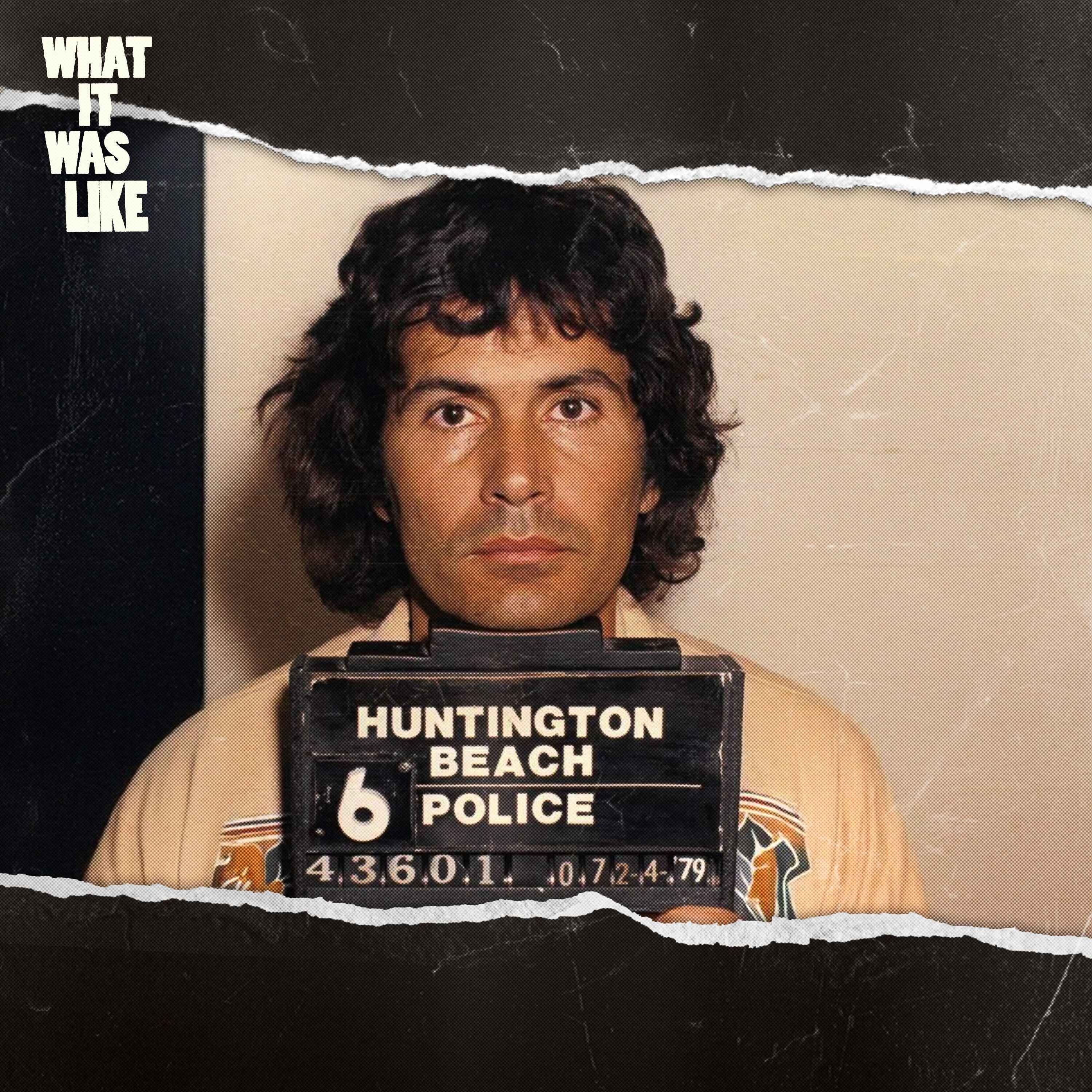
Hey, I'm Julian Morgans, and you're listening to what It Was like, the show that asks people who have lived through big, dramatic events what it was like. Foreigners. Welcome back. Today we're looking at the case of serial killer Rodney Alcala. And some of you might know that name from the Netflix film the Dating Game Killer. He's the guy who, in the middle of a killing spree in 1978, actually went on a TV game show called the Dating Game, and he somehow won. That's a very wild detail in this story. But I actually came to this story from a different angle because a few years ago, I stumbled across a series of photos released by the Huntington Beach Police Department. And there were dozens of portraits. We're talking like 50, 60, maybe 100. And they were mostly of women, all taken in the 1970s. And these photos were. They were kind of beautiful, but eerie. There's women on beaches, in public parks, just walking down the street. They're all wearing just the most ultra 1970s outfits. You know, like long, straight blonde hair, very California, very 1970s. And across each portrait, they all have a similar kind of expression. They're like these really watery kind of smiles. Like, like they're smiling. You know, they want to be posing for a photo, but. But with this look that. That says they don't really want to be in the photo. And as it turned out, the photographer was not the kind of guy you'd want taking photos of you. The photos were discovered in Rodney Alcala's storage locker not long before his arrest, but they were never publicly released until his third trial in 2010. And ever since then, the police have been receiving tips about the identity of the people in these photos. And most of them are still alive. But as you'll hear today, at least one of them has been confirmed murdered. Actually, just on that. In this week's subscriber only episode, I'm talking with the prosecutor who ordered that the photos be released. Like I said before, this was in 2010 during Alcala's third trial. And the prosecutor was kind of like, hey, we've got all of these photos of all of these people who potentially, as far as we know, might be victims. We should publicly release these things to find out who's still around and who had sort of near miss experiences with Rodney Alcala. And we should try to find out if. If some of these women in some of these photos are dead. So they released the photos and they had lots of women coming forward to identify themselves, but they also had lots of women who haven't. And we're going to talk about what my guest learned and the stories that he heard after taking these photos public. But anyway, back to Alcala. I think his story is fascinating just because he seems to be so purely evil. In some ways, his case bucks the typical serial killer psychological profile in the sense that he wasn't from a broken family. His dad had left when he was young, but his mother seemed pretty stable, and he lived at home with his mom and his two siblings. And his oldest brother was actually a pretty upstanding public servant. Elcala was also quite handsome in a rodenty, very 70s kind of way. And he also reportedly had an IQ of 135, which is significantly above the average. But behind all that, he was one of the most prolific predators of the era, with eight confirmed victims and possibly over a hundred more. And my guest today is the man who finally brought him down. He's a judge now, but back in the late 70s, Craig Robeson was a young detective in Huntington beach, and he was assigned to the case of a missing 12 year old girl. And this missing person case eventually led him to Rodney Alcala. This is a story about just some good old fashioned detective work, but it's got some. Some really exciting, wild moments of serendipity thrown in. And it's really about how a small team in a city of 7 million people managed to find a killer. So I hope you enjoy my conversation with Craig Robeson. Hey, Craig. Welcome to the show.
- [06:30]
Craig Robeson
Thank you. Good morning.
- [06:32]
Julian Morgans
Good afternoon. So let's, let's start. Let's start with 1978. Can you tell me a little bit about. About you, what was happening in your life at that time?
- [06:47]
Craig Robeson
1978, I was a law student, and so I worked full time and went to law school that night and on the weekends. And In February of 79, I sat for the bar exam in California. And when I reported back to work on March 1, they moved me to the detective bureau.
- [07:07]
Julian Morgans
Okay.
- [07:07]
Craig Robeson
And I was a detective just like that.
- [07:11]
Julian Morgans
So had you always wanted to be in the police force?
- [07:16]
Craig Robeson
I never really knew what I wanted to do. When I grew up, I knew I should go to college. I was the oldest of my siblings. And so when I got out of high school, didn't really have a direction I wanted to go. So I went to the local community college, figuring that eventually I would probably transfer to another school. And the college that I was going to, the community college, they had a program where they trained law enforcement officers. I discovered that the city of Huntington beach had a police cadet student worker program. And that was a raise for me from $1.70 an hour pumping gas to $2.10 an hour. And I felt like I was in the tall cotton. So I applied for that job and I got it. So when I turned 21, I applied at Huntington beach police department, and they hired me in 1972.
- [08:12]
Julian Morgans
Wow. Okay. So being a police officer in the 1970s, I would have thought that was a pretty interesting job. California in the 1970s, it really was, you know, sort of the hippie movement. But then you also had. There was a lot of serial killer cases. You know, can you just sort of tell me about The. The culture and the mood at the time.
- [08:30]
Craig Robeson
If I remember, the department when I started was maybe 140, 150 officers, and I'm sure it's probably double that now. The city's really grown a lot. And law enforcement has changed over the years. I mean, there were no body worn cameras when I was a police officer. We didn't have the Internet. There was no DNA technology. There was no fax machines. If you wanted something, you had to drive and pick it up. And so there was more shoe leather, I guess you could say, involved in police work, you know.
- [09:03]
Julian Morgans
Yeah. So take me to the day that Rodney Alcala first came into your life. How did that day start?
- [09:13]
Craig Robeson
Well, Robin Samsoe was reported as a missing child by her parents or mom. Evening of June 20th. I wasn't at work when the call came in. And so the first thing they try to do is eliminate the possibility that she's run away from home.
- [09:30]
Julian Morgans
How old was she?
- [09:33]
Craig Robeson
12 years old.
- [09:33]
Julian Morgans
Okay. And what had happened?
- [09:37]
Craig Robeson
She had been down at the beach. She had a little friend named Bridget, Bridget Wolvert was her name. And they were down at the beach at 14th street in Huntington Beach. Bridget's mom lived in an apartment with Bridget about a block and a half from the ocean. And so Robin was over at her house and had gone down to the beach with Bridget. And they were just hanging out at the beach, sunning themselves. And this man in civilian clothes, which is not common for the beach. I mean, you see people at the beach, they're wearing beach attire. And this guy had on a shirt and pants and hard shoes and was carrying a camera. And he went up and he was talking to these two girls. There was a woman who knew Bridget because she was a neighbor, and she was there with her children. And she saw this guy talking to him. And so she walked over and said, hey, what's going on? And he did a flip like that and just took off walking with his camera and himself and walked in the opposite direction. And so it was after that they decided to go back to Bridget's house. Robin was taking ballet courses, and she, her mom didn't have a lot of money. She had a sister and two brothers and single mom. And so Robin would answer telephones in exchange for lessons. And so she had to get to the ballet studio. And so they went back to Bridget's place. And Bridget let her borrow her bicycle, which was a 10 speed bike common back in those days, Schwinn bike. And the handlebars had been turned up like rams horns. Wow.
- [11:27]
Julian Morgans
Big 1970s bike.
- [11:30]
Craig Robeson
Yeah. And. And that was the last time that anybody saw Robin Samsoe was when she left on that bike, Tim. So one of the interesting things about the conversation he was having with Robin and Bridget, he explained that he was in a photography class and that he could win a prize if he could get the best picture of two girls on the beach. And the camera was Rodney's introduction to a lot of women. That was a way to sort of engage with people and kind of assess the likelihood of their victimhood, I suppose. Yeah. And so that's what was going on when this other woman came up and. And he turned around, left. But he did take some pictures of them before she intervened. So anyway, she left Bridget's apartment on the bicycle, heading for the ballet studio, which was not that far, and she never made it.
- [12:27]
Julian Morgans
Do we know what happened along the way?
- [12:30]
Craig Robeson
I can tell you what I think happened. I mean, I think that by the time she got going on the bicycle and knowing that she was going to be late, I think Rodney Ocala had made it back to his car, wherever he was parked and driving, and encountered her on the bicycle. And now he's not a stranger. She's already spoken with him once, and he said, well, I can give you a ride. You know, we'll throw the bike in the back of the car. And I think that's what happened. I think that's how he got her into the vehicle. And she never got released. So this is the late 70s. There were not a lot of women involved in law enforcement or the fire services. And this testimony came out at trial. There was a woman named Dana Crappa. Dana was with the firefighting service up in the foothills above Los Angeles. And when she testified at trial for the first time, she told the story that I always felt like I knew was there. But she was on her way to work. And this road up in the hills above Los Angeles is very serpentine. There were some 270 degree turns, and she was coming up on her way to work. And as she's coming into this curve over on her left, she sees this guy and this blonde girl, he's kind of pushing her toward the bushes. And she, in her initial statements, she didn't tell us that, but in her testimony at trial, she said that he turned and he looked right through me and she didn't stop and didn't do the right thing. Which, as a firefighter, you know, you rely on courage of the people that are next to you fighting fires to save your bacon potentially. And you need to have credibility in your community if you're doing that. And by not stopping and doing the right thing. She knew what it would mean in her community if she was found out.
- [14:44]
Julian Morgans
So initially she didn't bring it up.
- [14:46]
Craig Robeson
She didn't bring it up. So she kept going to work. And you have to get to the top of this set of hills where her fire station was. And she worked there for five days. And then on her way back home after her five days up there, she's coming down and she decided to stop at this turnout where she had seen this just to convince herself that nothing bad had happened. And there's a pathway and she's walking up the pathway and she can smell the death. And she comes around the corner and it's getting dark and there is what's left of Robin Samsoe. And she had stab wounds in her chest. And of course the animals had ravaged this body already and dragged it out from where I believe she was murdered. And, and so she was horrified and she left and still didn't call anybody and went home. So we didn't even know that she was a witness. What we did, once we discovered Robin Samsoe's body, what happened was the animals, as they ravage it and consume the body and they drag it, it's all downhill from where she was. And so it eventually gets down close to where people are going to see it and they see a skull and skeletal remains. And so LA Sheriff's Department went and recovered this body and thought it was probably just a drug overdose and somebody dumped the body there. And they didn't, didn't do a real thorough job of checking things out. And so the body goes to the coroner's office in Los Angeles. And this is over the July 4th weekend and it's summer and it's hot up there. And knowing that that was their frame of mind, the coroner finally called them and said, hey, that body that you found up in Sierra Madre is actually a 10 to 12 year old female. So they started looking through the teletypes. Teletypes were common means of communication between law enforcement agencies for criminal histories and information about crimes in an area that you might have some information on. And so we looked at those oftentimes and that's how we got notified that, hey, we think that, you know, you might want to come and look at this, might be your missing girl. And so of course it was. We got dental records and went up there and it was Robin Samsoe. And so we Went back up to where this body was recovered. And so I took a bunch of police cadets and a few detectives up there with me. And we started from where the cars were parked. We started walking up the hill. And it undulates, and it's difficult to get through. There's vegetation and overgrowth, but. But we recovered part of her index finger. Another detective named Keith Nail and I ended up in front of this huge bush. It looked like, if you can imagine, like an umbrella. And it had little leaves on it. You couldn't see into it because of the vegetation, but you could crawl up underneath and it would open up. And we got up under there, and there was a blue and yellow deck shoe that had Robin plus Robert on it. There was a boy named Robert that she liked. And you could smell death. That's where she was murdered, I think. And her body slowly decayed in the heat, which drew the attention of the animals, of course. And where all of these leaves were, there was what looked like spider webs, but it wasn't spiderwebs. It was human hair. And as her body decayed and her hair sloughed off, it got combined with the fluids from her body and matted into this. These leaves. Wow. And was there when the criminals picked it up with the forceps and picked it up. And it was this entire head of hair that belonged to this little girl when she was alive.
- [19:08]
Julian Morgans
That's horrible.
- [19:08]
Craig Robeson
And there was. It was. There was a knife there. Cane cut was the brand with a K K a N E K u T. And there was enough human blood on it to determine that it was actually human blood. We later had bloodhounds come up and search to see if there was anything that we missed. And they found a beach towel on the other side of the road that he probably just threw out of the window as he was driving down the hill. And if you take a knife with blood on it. Right. And you wipe the knife and the towel had the impression of the knife that we found. And when we searched his mother's house, he lived with his mother and stepfather. She had cane cut knives in her kitchen. Interesting fact. I mean, we couldn't say that that knife came from her kitchen. But there's a thing in the law called circumstantial evidence. And that's just one of the circumstances that you look at and you say, hmm, that's interesting.
- [20:14]
Julian Morgans
Yeah. So Robin wasn't his first victim. Right. But in terms of the case landing on your desk, this was your first interaction with Rodney Alcala. You know, you're Looking into this, what's your next first step to try to figure out what's happened?
- [20:30]
Craig Robeson
Well, the first thing I did was interview her friend Bridget. And so just imagine you've got this 12 year old girl whose friend disappears and is worried. Now you've got these peace officers in an interview room with you that are talking to you about this case. Actually, I think I talked her at home first and then we brought her down to the department. But she was terrified and it's hard for her to trust. But anyway, we set up a line because we didn't have a 24, 7 detective bureau. It's still small, beach city. And so we set up a line where people could call in and leave tips. And so we had somebody that would harvest those every Monday and morning and go through them. One of the people that called us was a real estate guy who happened to live in Huntington Beach. But back in the 60s he lived in Los and worked in Los Angeles. And he was on his way to work and as he's driving, he stopped and he sees this car, this girl walking, carrying her lunch pail with her Mary Janes and bobby socks and, you know, little dress. And she's walking to school, obviously. And this guy has pulled up and he's blocked the crosswalk and he's talking to her through the window of his car. And he thinks, boy, that's weird. So he goes up and makes a U turn and by the time he gets back, the girl is sitting in the back seat of the car. And he drives off and this guy follows him and it's Rodney Alcal, of course. And he takes her to his apartment and he convinces her to go inside. And this guy sees this guy take this little girl into his apartment. So he sprints to find the nearest cell phone and calls the lapd. And they show up and there's two officers. One goes to the front, one goes to the back. And the guy in the front is pounding on the door. And next to the door there's a little glass panel. Used to be popular. You have these slatted glass windows that you could open for circulation or close. There's a curtain. And so Rodney Alcala pulls the curtain aside, he's naked, and this guy is demanding entry. And he says, let me get a towel, I just got out of the shower. And so he's trying to kick the door in. Officer in the back hears him trying to kick the door in. So he runs around to the front and Rodney gets out the back and they find this little girl, Tali Shapiro on his kitchen floor, bleeding from a head wound. Bleeding from her vagina. And she's got this metal bar across her throat, and they think that she's dead, but they pick the bar up, and when they do, it opens her airway. She takes deep breaths, and so she survives.
- [23:37]
Julian Morgans
Wow.
- [23:39]
Craig Robeson
Actually met her two at the third trial. She testified at his third trial.
- [23:45]
Julian Morgans
But how is she doing later in life?
- [23:49]
Craig Robeson
I didn't have a long conversation with her, and I don't think she knew who I was, but I was just glad to see that she was alive.
- [23:58]
Julian Morgans
Yeah.
- [24:00]
Craig Robeson
Yeah, that makes sense.
- [24:02]
Julian Morgans
Well, no, absolutely.
- [24:04]
Craig Robeson
So that real estate guy called in, and he said, hey, I had this encounter with this man back in 1968, and you might want to think about him. So that was the first Rodney Alcala radar. Yeah, that's how he came on. So we had another call from a guy who was Rodney's parole officer. He called in, said, yeah, I supervise this guy on parole. He's a photographer. You know, the physical description sounds about right. You might want to look at him. And then we had a really excellent police sketch artist. When I worked at Huntington Beach Police Department. Her name was Marilyn Droves, and she would sit with crime victims and was able to pull information out of them and put on paper a face. And she had some amazing outcomes. Anyway, she put together a rendering of this guy who we didn't know at the time, and so we published that in the newspaper. Has anybody seen this man? And it turns out that there was a guy who worked for the city of Hunting beach that surveyed the bike path along the coast. And he saw Rodney Ocala walking by and thought, well, that's kind of weird. You know, he's. He's got his camera. He's got civilian clothing on. This is the beach. Yeah. So we had a description from him as well. But this artist rendering that we had, we put out in a newspaper. And we got a call back from the parole officer, second call. And he'd seen the photo in the newspaper, and he said, that's Rodney Alcala.
- [25:51]
Julian Morgans
Wow.
- [25:52]
Craig Robeson
And so we ran a rap sheet. He had common back in the day, kind of an afro hairstyle in the 70s. And turns out he was out on bail for a rape case down in Riverside county, which is the county that's south of us. And so I wanted to get his booking photo. And so the only way to get it back in those days, get in your car, you drive to Riverside. So I drove down and got a black and white copy of his booking photo. And if you hold that next to the artist rendering, it's the guy. Wow, that's amazing. So it really was pretty amazing.
- [26:43]
Julian Morgans
Hey, we're going to pause here for a quick, quick ad break, but stick around because we're going to come right back for more. What it was like.
- [26:55]
Podcast Advertiser
Why does every recipe I try need 18 ingredients, including a jar of something.
- [26:59]
Craig Robeson
Paste I'll never use again but will sit in my fridge for nine months?
- [27:02]
Podcast Advertiser
I just want dinner in the oven fast. That's why I love Blue Apron's new one Pan, Assemble and Bake meals. They send you fresh ingredients that are already chopped. All you do is pour, put it all together and bake.
- [27:13]
Craig Robeson
That's it.
- [27:14]
Podcast Advertiser
No chopping, no weird leftovers. Just delicious, easy to make meals. Get 20% off your first two orders with code apron20.
- [27:21]
Craig Robeson
Terms and conditions apply.
- [27:23]
Podcast Advertiser
Visit blueapron.com terms for more. Jennifer Lawrence and Robert Pattinson star in Die My Love, a ferocious portrait of a woman engulfed by love and madness. Lawrence and Pattinson play a passionate couple who, after moving to an isolated house in the country, find their relationship unraveling following the birth of their first child. Vanity Fair hails Lawrence's performance as astonishing and Time calls it the kind of performance you go to the movies for. From director Lynne Ramsey, Die My Love is Only in theaters November 7th.
- [27:51]
Julian Morgans
Rated R. Want to upskill and one of the most effective ad channels out there With Acast Ads Academy, you can learn everything you need to plan and run podcast advertising campaigns completely free. Whether you're new to audio or ready to sharpen your skills, our self paced courses fit your schedule and finish with an recognized certification. So if you want to grow your expertise and stand out in a competitive industry, head to go.acast.com academy.
- [28:29]
Craig Robeson
I drove back to the department. It was in the afternoon and I still remember when I got there being excited about what I thought was a match. The booking photos circulated around amongst the detectives that were helping me on the case. And one of the guys that I work with, he went home at the end of his day and he lived pretty close to the department. So he sits down in his easy chair and he opens the newspaper and the television is on his wife. He's married to the sketch artist, coincidentally, but his wife is got the TV on and it's the Dating Game.
- [29:09]
Julian Morgans
Yes.
- [29:10]
Craig Robeson
And so Art is reading the newspaper and he hears Jim Lang. Come on, he says. Now let me tell you a little bit about your date. He's a photographer, he's a skydiver, he's this, he's. That is the other thing. Meet your date, Rodney Alcala. And he puts, what a news realign. And the guy that we just got all excited about as a potential suspect is on television. And I mean, if you believe in divine guidance, you know, that's sort of like the finger of God coming down and pointing. You're on the right track with this guy, is the guy. And, yeah, how he got the name the Dating Game Killer, of course, I.
- [30:01]
Julian Morgans
Mean, I also just. I certainly believe in, like, the idiocy of enormous ego like that. Like Rodney Ocala at this point, he's committed serial homicide, and he's still got the ego to appear on a dating show on national tv. I mean, that's just so crazy.
- [30:17]
Craig Robeson
Yeah. And so I brought Bridget Wilford down and I said, we got a copy of the tape from the show, and I sat her in a room with her mom, and I said, I want you to watch this and tell me if you see anybody that, you know, we didn't have the audio on, as I recall, but when she saw his picture and he didn't have an afro in the Dating Game show, but she saw his picture, and you could see this little girl tense up. It was. It was astonishing. I mean, that was the guy as far as she was concerned.
- [31:01]
Julian Morgans
And could I ask you how you felt, how did you feel when you saw the video, when you saw the tape of the Dating Game and you saw this guy? What sort of emotions did that incite for you?
- [31:15]
Craig Robeson
I don't remember having any emotions about it. I just, you know, it was. It was kind of like the investigation was such. So broad. We had 600 tips, you know, or so of things to look at. People would say, oh, I think I saw this girl on a bike. And we go out and interview that person. And. And there was just so much going on. It was hard to really remember the personal feelings I had about that other than I was really excited to think, you know, this guy is certainly a suspect. And so what we did is I sent a couple of detectives up to this area called Chantry Flats. It's what they call it. It's in the hills up above Sierra Madre. And we set up a roadblock. And people that were going up and people. People that were coming down, they would stop the car and they would say, hey, you know, we're with Huntington Beach Police Department. You know, this is what's going on. We're the murder investigation. And we had by then a picture of his car, we had his booking photo, and we had a picture of Robin Samsoe and a poster, and that's where we first encountered forest stranger, Dana Krappa. Because she was working out. You know, the firemen are always working out. Right. She'd run down the hill, apparently, and she was running up the hill, and.
- [32:33]
Julian Morgans
Jeez.
- [32:34]
Craig Robeson
So these two detectives stopped her and interviewed her and showed her the drawing that we had. And she said. Yeah, she said, I saw that car up here. And over the course of the interview, they figured out it was June 21st. And she said it was at this location, which is a different pull out further up the road. But my theory about that is that, of course, at that point, she certainly knew what had happened and what she didn't do.
- [33:04]
Julian Morgans
Yeah.
- [33:05]
Craig Robeson
And she was trying to help in a way that she could without getting too involved.
- [33:10]
Julian Morgans
Yeah.
- [33:11]
Craig Robeson
So they stayed there until they were done for the day, and then they drove up to the fire station at the top of the hill because they wanted to get more in depth interview with her. And like I was saying, there weren't a lot of female firefighters or female police officers. When I was in law enforcement. She was the only female up there. And they didn't have a separate women's locker room. You know, it was. So when Dana wanted to take a shower after her workout, they had to clear out of the locker room, and she would be in there by herself. And that's where the. That's where she was when they got there. And so the officers waited outside for her to come out. And of course, there's some hooting going on from her co workers. There's a lot of that in law enforcement and I'm sure in the fire.
- [33:59]
Julian Morgans
Departments, and particularly in the 1970s.
- [34:03]
Craig Robeson
Yes, particularly then. So when she came out, she was hopping mad, according to the guys that interviewed her. And she, I think, figured at that point in time I might have called too much attention to myself by telling them what I told them. And when they were pressing her for details, she didn't want anything to do with it. Okay. And that's how that relationship with Dana Krappa started. And I ended up becoming her handler. Basically. We re interviewed her again. Trying to draw information out of her was like pulling teeth.
- [34:36]
Julian Morgans
That's so frustrating.
- [34:38]
Craig Robeson
Yeah, it was frustrating, but I knew that there was more to the story that she was not telling us.
- [34:46]
Julian Morgans
Yeah.
- [34:46]
Craig Robeson
And just intuitively, just intuition, I guess. You know, when you talk to a lot of people, which. One of the benefits of being in law enforcement, you encounter people in all circles and all kinds of circumstances. And you get better at developing that sixth sense, I think. But I knew that there was more to the story. And she had my phone number. We didn't have cell phones at the time, but she would call me at work, and I knew it was her, but she would just call me and not say anything, and. And I know she felt guilty. Yeah. You know, I. I should have stopped. You know, what would have happened? Maybe he would have killed her, too. There's no way to know. But I know that she was overwhelmed with guilt. And she would call, and I would talk to her. I said, dana, you know, talk to me. Tell me what's going on. I mean, I know you have more to tell me. I just, you know, let me know. She would call me at home, you know, and my wife at the time would be annoyed I was getting phone calls at home from someone else. But it. It was just a real struggle to get her. And dribs and drabs, more of the story would come out. And then finally, when she testified in the first trial, actually. And if you saw this woman testify, there's no way that you wouldn't believe that she didn't see what she said she saw. I mean, as the examination of her went on, there'd be a question asked. She was sitting in the witness chair. I'm going to back up a little bit here. And she had her hands folded in her lap, and she would just rock like this. Wow. And the jurors were just locked in on this woman and hanging on her every word.
- [36:40]
Julian Morgans
Yeah.
- [36:41]
Craig Robeson
And now we have a term, post traumatic stress disorder. Ptsd. I'm sure that that's what we were seeing.
- [36:49]
Julian Morgans
And.
- [36:50]
Craig Robeson
Yeah. In this woman. And I don't know whatever happened to her, she didn't testify in the second or third trial. I hope she's well, but. Yeah, it was real hard to watch. Yeah.
- [37:03]
Julian Morgans
But it sounds like it really tore me.
- [37:05]
Craig Robeson
Oh, it did. It would tear anybody up.
- [37:08]
Julian Morgans
Yeah. I feel for her.
- [37:09]
Craig Robeson
How could it not? How could it not? And so that's how Rodney came on the radar. It was witnesses and then developing the evidence to get a search warrant.
- [37:21]
Julian Morgans
What were you. What were you going to search? I mean, how do you find him?
- [37:24]
Craig Robeson
Well, we figured out, you know, once. Once we got his record from Riverside and saw that he was out on bail, it's easy to figure out where his home address is. He was living with his mother and stepfather in Monterey park. And we had set up of narcotics detectives in Huntington beach, and they set up on him, and they would follow him because we were pretty serious about wanting to get a warrant. And they didn't follow him at night. You know, they'd put him to bed, and then they'd come home and go to bed and get up there first thing in the morning to see where he was going. And he was going to the beach in Santa Monica and, you know, with his camera and walking around and speaking to women.
- [38:07]
Julian Morgans
And so being a predator was like a full time job for him. He wasn't doing anything else.
- [38:12]
Craig Robeson
Yeah, it was his full time job. Jeez. And. And so they went up there one morning and his car was gone and stayed gone for several days. And we thought, oh, God, we've lost him. Yeah, you know, he's. Because, you know, the pictures are coming on there. There's local press they're following pretty closely. And. And the picture of the artist rendering in the. In the newspaper. It's interesting because as soon as the afro showed up in the artist rendering, he went and got his hair styled.
- [38:44]
Julian Morgans
Oh, wow.
- [38:45]
Craig Robeson
So anyway, he did show up back at the house and he had. His car was a little. It was a Datsun. It's like a little station wagon, blacked out windows. And he had one of those little U haul trailers, a personal size U haul trailers that was attached to the back of his Datsun. We know now in hindsight what he did is he put all of his stuff into this U Haul and he drove to Seattle and parked his stuff in a storage locker up in King County. Seattle?
- [39:20]
Julian Morgans
Why Seattle?
- [39:21]
Craig Robeson
Well, he told his family and his girlfriend that he was going to Dallas to open a photography studio. And so he faked right and went left. Okay, and who was it was up in Seattle back in the 70s. Ted Bundy, the Green River Killer. There's a lot of open space up there. And he would have fit right into that neighborhood, in my view. Okay, so when we served the search warrant on his mother's home, found the cane cut knives, most of his stuff was gone because he put it up in storage. Once we were legally in the house, even though we didn't have an arrest warrant, we did arrest him and brought him down to the police station in Huntington beach and set him in an interview room and interviewed him for, I don't know, 40 minutes or so, other officers conducted the search of the house. And when you execute a search warrant, you know, you're authorized to take things that are ascribed in the warrant or stuff that is clearly illegal to possess. And there was a receipt on the desk that had something to do with Seattle. And My sergeant at the time, he wrote down the information, but he didn't take it. And we went back to the police department and cataloging the stuff that they found. And we're doing the interview, his mom and his sister showed up at the police department and wanted to talk to him. Okay. And ordinarily we wouldn't do that, but we thought he didn't give us much information in our interview. But the interview rooms that we have, there's doors on two sides. And so we stationed a detective on either side of the interview room, let his mom and sister speak to him, and they spoke in Spanish. What they didn't realize is that the telephone sitting on the desk in the interview room is actually a microphone, of course. And so we recorded it.
- [41:16]
Julian Morgans
Yeah.
- [41:17]
Craig Robeson
And this is going to sound funny in California, but we didn't any Spanish speakers. One of our lieutenants spoke a little bit of Spanish, and he listened to this tape to try to develop information, but they were whispering so softly that a lot of what they said you couldn't decipher.
- [41:37]
Julian Morgans
Okay.
- [41:37]
Craig Robeson
But he said, I did hear them talking about Seattle. And when my sergeant heard that, he said, I saw something about Seattle. And I wrote it down. And so got on the phone and called Safeguard Mini Storage in King County, Seattle, and said, hey, have you got a storage locker up there in the name of Rodney Alcala? Yeah, he was just up here. You know, we rented him a storage locker. It's lockers, whatever the number was. And yeah, he was just here the other day.
- [42:14]
Julian Morgans
Wow.
- [42:15]
Craig Robeson
And so called up the sheriff's department or city police in Seattle and had them go out and they put their lock on the storage locker until we could get there. And so I got dressed. I had a sergeant that went with me. We flew up to Seattle, met with the prosecutor. I still remember this guy. He had a Smith Corona typewriter. And I'm sitting in his office, and he's typing out the affidavit for the search warrant live right there with me sitting in the office. Wow. And I looked at his affidavit, and I thought, you know, could we add a few things? So I had him add stuff. We went to a judge, and he signed the warrant. We went out and opened the storage locker. And, you know, it's like, as a child, you always think of pirate stories and buried treasure. I mean, it was like a treasure chest, you know, getting to open one finally, that was relevant to this investigation. And seeing the boxes with all of the binders in it and, you know, photos, I mean, that's what we were looking for. That was what we were hoping to find because we knew that he had taken photographs of these two girls.
- [43:25]
Julian Morgans
What, thousands of photos? Like, give me some scale.
- [43:28]
Craig Robeson
Oh, I would say hundreds. I'm sure there was probably over a thousand. But, you know, page after page, she had these cellophane pages with the little slides tucked into them. And so with each page, there was probably 25 or 30 photos, and notebook after notebook after notebook. And we found some videos, too, of him when he was back in New York. They were pornographic, but it was predominantly women and girls. I mean, he'd go to a playground, and there'd be, you know, little girls are practicing their somersaults, or their was a gym class or something in the park, and he'd be snapping photos of these what were children. And then he had pictures of adult women, too. And I'm sure some of the women were people that women that he'd been in relationship with, just by the nature of the photographs that he was taking. And others were people that will never identify, you know, women that may or might even have known that their pictures were being taken. And there was a motorcycle in there, which is an interesting side story, but it was in pieces, and it was kind of leaking a little bit of oil. But we knew that he had taken photos of Robin Samsoe and Bridget Wolvert.
- [44:48]
Julian Morgans
Wow.
- [44:48]
Craig Robeson
And so we thought, okay, we're taking all of these. And one of the things that I did see was this little red and yellow purse was maybe this big, had a zipper on it. And you open it, and it had jewelry in it. And I knew what it was as soon as I saw it. So we left it there. I went back. Back to court. I got another search warrant to go back and pick up the pouch of jewelry, because I'd worked enough sex cases to know these guys often keep mementos.
- [45:23]
Julian Morgans
Yeah.
- [45:24]
Craig Robeson
So we got all the jewelry. Come back to Orange County. We get all of the photos. Printed in this little package of jewelry is a set of gold ball earrings. It was pretty small, but if you look at them closely, you can see that there used to be something else attached to each of the gold balls. If you've ever used a pair of wire cutters to cut a wire or a coat hanger or something like that, and you see how it pinches the metal, and you get, like, a sharp edge. Look like that. Okay. And so we. We took a big photo of all of this jewelry on a black backing and went to Robin's mother and said, do you Recognize any of these items of jewelry? And she's looking at. She said, you know, I had a pair of gold ball earrings, and Robin had pierced ears, and she was always in my jewelry. Let me go look. And so she goes and looks, and she can't find them. And I said, was there anything unusual about these earrings? She said, yeah, when I bought them, she had an afro hairstyle, too. And back in the day, people had those picks that they would pick the hair to kind of fluff it up. And she said, I was picking my hair. I had the earrings on. And she said, I caught this little dangle that was on the. On the gold ball. And she says, and I broke it off. Wow. So she said, I took my nail cutter. She had acrylic nails. They look like little wire cutters. And she trimmed that off of each of the earrings. And if there's another pair of earrings in California that look like that, I'd be surprised. I don't think.
- [47:15]
Julian Morgans
Yeah, that's.
- [47:16]
Craig Robeson
I mean, I think he took those earrings.
- [47:18]
Julian Morgans
That is compelling.
- [47:19]
Craig Robeson
From Robin Samsoe's body. And we didn't have DNA technology at that time, but those earrings were a big piece of evidence at his first trial and every trial, actually.
- [47:33]
Julian Morgans
Can we just zoom in on where your head was at at this point? Because, I mean, it's kind of clear that you're dealing with a. With a serial killer, really. He's got all of these photos of women. There's this bag of jewelry, all these mementos, you know, multiple pieces of jewelry from multiple women. It's kind of clear what this guy's up to. How did you feel about it?
- [47:54]
Craig Robeson
That's what I thought. He was the guy. And this is the only murder.
- [47:58]
Julian Morgans
Yeah.
- [47:59]
Craig Robeson
And interesting. Fast forward 30 years later, before his third trial, DNA Technologies has come online. The prosecutor in the third trial sent that bag of jewelry to the lab, and he said, I want everything swabbed for DNA. One of the other pieces of jewelry had DNA. DNA from one of the Los Angeles county murder victims on it. And so that paints a picture of everything else that's in that bag. Right? I mean, that's what that is. Those are his trinkets, the little things that he has that he takes with him so that he can still possess these people that he's murdered. Is that kind of an odd way?
- [48:45]
Julian Morgans
Is that the answer that he gave you, or is that sort of your.
- [48:48]
Craig Robeson
Psychological understanding of it? He never gave us any answers. He never confessed to anything. I think his ego wouldn't let him do that. And so we get those earrings, we come back, we show them to mom. Mom tells us the story. We start printing these photographs, and there are hundreds of them. There's a photograph of a girl wearing a bikini on roller skates. And there's a series of about four or five pictures, as I recall. And one of the things that I didn't know about photography, but I learned is that if you take off the little cardboard backing from the negatives that are part of these slides, there'll be a number. It'll be the number of the picture that was on the roll.
- [49:37]
Julian Morgans
Really?
- [49:37]
Craig Robeson
Okay. Yeah. And so this girl was in a series on the roll of film that these slides were from. She was like 29, 30, 31, 32. Okay. We never found 34, 35, and 36. But the interesting thing about this girl is her name was Lorraine Wirtz. She was 16 years old, very well developed. 16 year old. That's I'm sure why he stopped and was taking her picture. In the background behind her is a gate that, for the backyard of this home that has a red anchor on it. And for those of us that worked patrol in Huntington beach and this area, I knew exactly where that gate was.
- [50:31]
Julian Morgans
Wow.
- [50:32]
Craig Robeson
Was in Sunset Beach.
- [50:33]
Julian Morgans
Okay.
- [50:34]
Craig Robeson
Sunset beach is the next beach north of Huntington Beach. And so we cropped the picture and just put her face in the newspaper and said, does anybody know this girl? And we get a call from her mother. Oh, my God, that's my daughter. You know, what's going on? And so we said, well, we'd like to come and interview her. And gave her some background. And so she lived in Long beach at the time. So I drove to Long beach with another detective and asked her. I said, now, this is a picture of you. She said, yeah, I was skating with my friend Patty and we were down at Sunset beach, and this man came up to us and he said, I'm in a photography class. I can win a prize if I get the best photo of a girl on skates. Does that sound familiar? She couldn't remember what day it was that she was at the beach, but she did remember. It's the only day that summer that I went to Sunset beach and I was with my friend Patti Elmendorf. And so we call up Patti Elmendorf, we go over and interview her. Patty had a month by month calendar on her wall. And over her summer, she would keep track of. Of what she did during the summer by writing it on this calendar. Cute. June 20th. So he was in Sunset beach just before he got to Huntington Beach.
- [52:04]
Julian Morgans
So he'd spoken to these girls just before he came into your neighborhood.
- [52:08]
Craig Robeson
He was just. Yeah, he was on the prowl. Yeah. And I've always thought that he has pictures of Bridget, Wilbur and Robin Samsoe. Because we never found 33, 34, 35, 36 on that series.
- [52:28]
Julian Morgans
Hey, it's time for a quick ad break here. But please don't go anywhere. Stick around. Cause we'll be right back.
- [52:37]
Podcast Advertiser
Jennifer Lawrence and Robert Pattinson star in Die My Love, a ferocious portrait of a woman engulfed by love and madness. Lawrence and Pattinson play a passionate couple who, after moving to an isolated house in the country, find their relationship unraveling following the birth of their first child. Vanity Fair hails Lawrence's performance as astonishing and Time calls it the kind of performance you go to the movies for. From director Lynn Ramsey. Die My Love is Only in theaters November 7th. Rated R.
- [53:11]
Julian Morgans
Were there other photos of victims that he killed in the stash that you found?
- [53:17]
Craig Robeson
The motorcycle that was up there on. There was a series of photos that we got. And it was a woman who was sitting astride that motorcycle posing for a photograph like this. She was wearing pink top Levi's and flip flops. And her left foot, her pinky toe was rolled over like this. It was a birth defect. Okay. You could see that in the photograph because the sandals that she was wearing. After the third trial, the prosecutor pushed out all of those photos onto the Internet. There was a Wyoming detective in some small county in Wyoming, and he's flipping through the photos on his computer and he says, hey, I know this place. We recovered a body there back in the 70s. And it turns out that they were able to develop an identity of this girl. Her sister was able to identify her because of the birth defect. And she disappeared. And they found her intact skeleton, her pink top, her Levi's, her flip flops. And she was six months pregnant. So there was a skeleton of fetus. And they went and interviewed Rodney up at Corcoran State Prison. By then he was in a hospital setting because his health was declining. And the detectives from Wyoming, there was a Huntington beach guy there as well, put these photos in front of him. And in a kind of a odd, creepy way, he. He traced his finger over this woman in the photograph as he's looking at it. And they asked him if he had murdered her. And he said, she was alive when I left her. And they believe they gave him credit for that murder in Wyoming, but they never prosecuted him because he was in such poor health.
- [55:21]
Julian Morgans
And that murder would have never come out had it not been for the public release of all of the photos in 2010 or something.
- [55:28]
Craig Robeson
Yeah.
- [55:29]
Julian Morgans
Wow.
- [55:29]
Craig Robeson
Yeah, it was after the third trial, so that was 2011 or 2012. Right, right. Can we.
- [55:36]
Julian Morgans
Can we take a moment to zoom in on. On these photos? Because for me, this is a really interesting part of this case because the photos are good. I look at them and I. And there's a sort of haunting beauty to them. You know, he had an eye for. For a beautiful girl, and he had. Certainly had a good sense of composition. And technically they're pretty good. Could I just get your sort of 2 cents on. You know, you look at these photos and what goes through your mind? How do you feel?
- [56:03]
Craig Robeson
Are they still alive? It's haunting to me, knowing what I knew about him at that point in time. And you just wonder, what is the story for each of these girls, these women? And I'm sure that. That there are plenty of them in there that. That we'll never know how many he actually killed. Yeah. We had a woman who called in on the tip line who said, I. I was a student at UCLA in the 60s, and I dated Rodney Alcala. She said, we rode on his motorcycle and we parked and walked across campus to this event. And. And then on our way back, he got really weird on me and he says, you know, I could rape you if I wanted to. And she said, oh, Rodney, you know, knock that off. That's. That's not funny. Why would you say something like that? And he said, no, really. He said, I could rape you if I wanted to. I've raped six women and murdered three. And that was in 1966. And if you know that and you look back across the history of what we do know, that was a statement. Those crimes have never been solved.
- [57:18]
Julian Morgans
So. Yes. So you're suggesting that there's a lot of unsolved murders here that he probably did.
- [57:25]
Craig Robeson
I. I think there are, yeah.
- [57:29]
Julian Morgans
All right. So was it June 20 or July 20?
- [57:33]
Craig Robeson
June 20. So June 20.
- [57:35]
Julian Morgans
So June 20. I had a timeline on this. And. And what do you do next?
- [57:39]
Craig Robeson
That was. That was the day she disappeared. He was arrested on July 23.
- [57:46]
Julian Morgans
Can you tell me about the arrest?
- [57:49]
Craig Robeson
Yeah, it was the day he was supposed to leave for Seattle, but we just didn't know that. And seven o'. Clock. Warrants have to be served between 7am and 10pm unless there's some emergency. But at seven o', clock, we knocked on the door and his mother answered, and we told her who we were and went in and secured the place. And Rodney was still in bed, so I got him out of the rack. Me and another guy, another detective, got him dressed, put him in the car, and drove him to the police department. And was he cooperative? Yeah. I mean, what would he do? There were probably eight or 10 cops there. You know, he wasn't going anywhere. He's Radio Alcala's not a guy who's going to give somebody like you or me a problem. He's not. He's not that guy. But if he gets you one on one and you're a female and you can be overpowered, yeah, he's that guy. So he didn't give us any trouble. He had some obvious questions, but we wanted to wait till we got to the interview room so we could record the conversation, which we did.
- [59:11]
Julian Morgans
And I'm curious, did. Was his mother cooperative? You know, like the accusation against your son is something like this. What is she doing?
- [59:22]
Craig Robeson
His mother was cooperative for the short period of time that I was there. She did attend his court proceedings in 1980, but she was always polite. He had a younger sister who was a little aggressive. We went back the next day to recover the Seattle Mini storage receipt. We got a search warrant to go back and get that. And. And it was gone. And I think his sister got rid of it for him.
- [59:59]
Julian Morgans
Loyalty.
- [60:00]
Craig Robeson
Yeah. Because, you know, they chatted about stuff that we couldn't comprehend. Quality of the recording was so, so bad.
- [60:12]
Julian Morgans
Okay, but you got him back to the police station, and what happened?
- [60:15]
Craig Robeson
Got him back to the police station, interviewed him. You know, he. He didn't really give us anything that was valuable. His mom and sister had come down, they had bailed him out. His mom had bailed him out in Riverside on that rape case down there. The young lady on the Riverside rape case was a teenager, a runaway that he picked up on the street somewhere. And she actually spent a couple of nights at his mother's house in his room, slept with him. And they went down to Riverside county in a remote area, and he was taking pictures of her, naked pictures on a blanket. And the boonies, he had a stand with his camera on it and had some kind of a long thing that had a plunger on the end of it so he could take pictures with him in the photos. So there are pictures of her by herself, and then there are pictures of him having sex with this girl. And you can see him holding the plunger. So he's able to activate the camera to take pictures. And at some point in Time during this consensual event, it became non consensual. And he choked her and beat her and bit her in the breast so hard that he punctured the skin. Ow. And she told, you know, she was scared of dying and she told him that, you know, it's the greatest sex that she ever had and, you know, really looking forward to continuing the relationship. And for some reason, he didn't kill her. He put her back in the car when this was all over with and they were coming back towards home, and he stopped for gasoline. And as soon as he stopped the car and got out, she flew out of the car and started screaming. The police get called. And you know, those are the kind of cases where it typically would be a one on one in a courtroom setting. And she's got her own credibility issues because she's a runaway and she's probably lied to a lot of people over the course of her young life. But you had before and after pictures that he had taken.
- [62:35]
Julian Morgans
Ah, yeah, right.
- [62:36]
Craig Robeson
And so he. He was being prosecuted there and got booked and mom bailed him out. And yeah, he went to jail and got out. It's later in Orange County Jail. You know, he. When he was in jail, we had some people that were. There were snitches in the jail that. That claimed to have talked to people frequently. And sometimes they have and sometimes they haven't. But they used one of those guys in his first trial that claimed to have been a cellmate or a cell next to him and talked about it. And what's interesting about the bike, we always wondered what happened to the bike. And this informant said that he told him that he had dropped the bike off at a thrift store. So we drove the most direct route that we could figure from looking at the map to get from where we recovered Robin's body to his mother's house. And as we're coming down the hill, we come to this big intersection and we're stopped at a red light. And I look ahead and there's this nondescript building with a gigantic sign that says thrift store. And so we stop and we go in and we talk to the manager and we say, hey, we're looking for this yellow Schwinn bike that had the ram horn kind of handlebars, Right?
- [64:09]
Julian Morgans
This is Robin. Robin Samso is black.
- [64:12]
Craig Robeson
This is Bridget Wilford's bike that she let Robin ride. And he said, yeah, you know, we came in one morning and there was a bike leaning up against the door. We just figured it was A donation. And we cleaned it up and sold it. But they couldn't figure out who they sold it to. So we could run further with that. But it was one of the things that that informant said. Right. That we could verify.
- [64:40]
Julian Morgans
Yeah.
- [64:41]
Craig Robeson
And which made the rest of his testimony credible.
- [64:46]
Julian Morgans
Yeah. But yeah, over the course of questioning Rodney, how did he behave? What was his body language?
- [64:56]
Craig Robeson
He was closed, you know, he was guarded. He didn't. He didn't want to give us anything. His ego wouldn't let him confess to anything like that. If you look back and you think about it now, he'd gotten away with so many murders already.
- [65:11]
Julian Morgans
Yeah.
- [65:12]
Craig Robeson
You know that this little beach town in Orange county, they weren't going to crack this case. And I think that's what stuck in his craw over all the years was, you know, he had murders committed in Los Angeles, he had murder in Wyoming, murders in New York. Never been tagged with any of it. And to have some little department lock him up and keep him in custody and convict him of murder, I think really was hard for him. But interestingly, in his last trial, they changed the law in California in the early 90s, so that if you had murders committed part in one county and murders in an adjoining county, with the consent of the district attorneys in each county, you could prosecute them in one county or the other.
- [66:14]
Julian Morgans
Yep.
- [66:14]
Craig Robeson
And so that's how all of those cases from LA came down to Orange county and were prosecuted at the same time. Okay. And. And through all of that testimony of those five murders, he didn't ask any questions. He was representing himself in the last trial. I don't know if you knew that, but he didn't have a lawyer. His lawyer that he had, that was appointed by the court, he went on vacation in the Caribbean and he drowned. And so Rodney felt like he could just do it himself. And so he. And in the United States, if you want to be your own lawyer, we have to let you do it.
- [67:02]
Julian Morgans
And how did he go to your. To your eyes?
- [67:06]
Craig Robeson
Well, I didn't sit through the third trial. I did testify, but clearly he didn't do a very good job. The only witnesses that he had quite questions for were witnesses in the Huntington beach case. These other witnesses, all the scientific evidence there were bite mark testimony by an expert because he had bite marks that he'd left on some of these other victims. The DNA testimony, he didn't care about that at all. He didn't ask any questions of those witnesses, only the Huntington beach case.
- [67:40]
Julian Morgans
What does that say to you?
- [67:43]
Craig Robeson
That that really pissed him off that.
- [67:47]
Julian Morgans
Yeah.
- [67:47]
Craig Robeson
That we caught him.
- [67:48]
Julian Morgans
Yeah.
- [67:49]
Craig Robeson
I kept him in jail for all those years and yeah, I think that was hard for him.
- [67:57]
Julian Morgans
Yeah.
- [67:58]
Craig Robeson
Because he. He read his own press. You know, they talked about his high IQ and, And what a smart guy he was. But, you know, all of his time and effort, for the most part, was directed at hunting predatory behavior. And I think that, you know, he devoted so much time to one aspect that he was deficient in a lot of the others. There are interesting things that happened along the way and the story. I mean, I was in court when we used to have high school students come for a day in court and they'd come into a courtroom if there was an interesting trial and sit down and observe the proceedings. And of course, a murder trial is one where all the students want to come and watch. It was a pretty small courtroom and I can remember the judge and the witnesses and the lawyers that they are. I'm sitting at the council table and I get to watch the jurors and I get to watch Rodney. And this class of high school students came in and sat in the back two rows. And it was a small courtroom, probably maybe room for 40 or 50 people. And he turned and he watched each one of these young girls walk into the courtroom. And he was staring at him. Wow. And it was almost like a lion watching a herd of gazelles coming in.
- [69:39]
Julian Morgans
Yeah.
- [69:40]
Craig Robeson
And I was watching him, and then I looked at the jury. And the jury was watching him, watching them.
- [69:48]
Julian Morgans
Yeah, I'm sure.
- [69:49]
Craig Robeson
And they were horrified.
- [69:50]
Julian Morgans
Yeah.
- [69:51]
Craig Robeson
You know, you could see they'd heard enough evidence about this case and about the sky at that point that, you know, oh my God, look at him.
- [70:04]
Julian Morgans
And it's interesting that he wasn't. Didn't have enough sort of self awareness to. To pretend like he wasn't perving on all these kids.
- [70:13]
Craig Robeson
Yeah, that's. He didn't have that self awareness.
- [70:18]
Julian Morgans
Yeah. He wasn't even embarrassed. He was just like, no, I'm just gonna look at them.
- [70:23]
Craig Robeson
Yeah. And. Yeah, but he was, you know, one on one with a young woman of dark space. He was a brutal, brutal guy. There was a. Most of these women that he murdered, he. He would wrap their neck with an article of clothing or pantyhose or something like that, and he would take them down to the point where they were losing consciousness, and then he would let them come back so he could continue to abuse them and take them down again. It was like he got to murder them several times. That was horrific. That's so Twisted what he did to these people that he murdered. And they suffered terribly. And yeah, he was a very bad man and I don't know what happened to him. Yeah, some people are just born broken and maybe he's that guy. There's. When he got out of prison after the Tali Shapiro event, he went up and visited his sister, he had a second sister who was older than him, who was an associate professor, kind of a part time professor at Cal State Hayward. And while he was up there, there was a woman in her neighborhood that disappeared, that they found dead. And she was seen with a man that fit his description before she disappeared. And, and they believe that he was that guy that, that murdered her. I mean, there's.
- [72:24]
Julian Morgans
He just couldn't get enough, could he? But, I mean, it was thanks to you and the team that he never got out of prison. You know, he was, he was arrested in what, 78. And was, was never a free man ever again until his death. But, you know, having worked on this case, having I guess, seen a lot of evil, a lot of really bad human behavior through your life, what have you learned about. About evil, about this kind of human capacity to hurt others?
- [72:55]
Craig Robeson
Well, it makes you really protective of your children when they're young.
- [72:58]
Julian Morgans
Yeah.
- [72:59]
Craig Robeson
And, and even when they're not young, you worry about them all the time. But I think that's true of every parent. I mean, you're always going to worry about your kids, their health, you know, their standard of living, everything about them. You worry about it. And then they have grandkids and you worry about them too. But you know, my kids used to comment about, oh, dad, you know, you're so worried all the time about stuff like that, you know, but they'd never seen it. Yeah, I'm glad that they'd never seen anything like that. But there's good in people too. You know, I'm not, I'm not. Well, I guess you'd say Debbie Downer, but I'm a. Not a Donnie Downer, you know. You know, I, I see the good in people and, and I work with a lot of people over the years, really good people that do hard work and thank God for them. Yeah, so.
- [74:10]
Julian Morgans
Yeah, absolutely. So what is this, this experience in your life? What has this meant for you personally doing this case?
- [74:19]
Craig Robeson
I don't know. I guess of all of the things that I've done in my career, I'd say that's probably the career case. That's the case that. I mean, I've done a lot of trial work. I See, I work in a settlement court right now, so I see a lot of felony cases and work to try to settle them before trial. But this was personal, you know, I mean, this is the one. If you sit quietly with another detective in an area that you both know, this is where this girl died. Yeah. This is where she was murdered and waiting for them to come and collect the evidence. And Keith and I never talked. We didn't speak. It was just sitting there with our thoughts and just imagining the horror of that. It's personal.
- [75:17]
Julian Morgans
Yeah.
- [75:17]
Craig Robeson
You know, it becomes personal because you're personally involved. Yeah. But I. I take a certain amount of satisfaction of knowing that he was never able to do that to anybody else.
- [75:33]
Julian Morgans
Yeah. Yeah.
- [75:34]
Craig Robeson
You know, did I save lives? Probably.
- [75:38]
Julian Morgans
Probably.
- [75:39]
Craig Robeson
I'll never know.
- [75:41]
Julian Morgans
You must have. You must. If he. All day, every day, he was going out trying to find women to kill. You did. Do you still find yourself thinking about the case all these years later?
- [75:50]
Craig Robeson
Over the years, you got a hold of Steve Mack. Mack was a policeman when I was there, but he later became a crime against person Detective. I would get inquiries about, you know, TV shows, 48 Hours and other shows that did stories about this case. But in California, judges are not permitted to talk about cases that are pending.
- [76:26]
Julian Morgans
Yeah.
- [76:26]
Craig Robeson
It's an ethical thing. Yeah. And. And so until he died, I never really felt free, like I could have an interview like this, and I always just turned him down. So I don't think about it a lot anymore. I think that, you know, I've done all that I needed to do over the years to make sure that the case survived and that he saw justice. And that's fulfilling in a way. Yeah. But, yeah, I mean, this is a case that I can still remember names of people that were involved in this from over 40 years ago, because I lived it. Yeah. And. And so, yeah, I mean, there are other things I remember about my career and different cases, but not like this one.
- [77:27]
Julian Morgans
Yeah.
- [77:27]
Craig Robeson
My memory about this is burned into my brain.
- [77:32]
Julian Morgans
Well, Craig, thanks so much for sharing it with me.
- [77:36]
Craig Robeson
You're welcome. And all the credit for his arrest. I think Robin Samsoe. Yeah. She should get the credit, because what she gave in order to catch this guy was the ultimate price that she paid. And. Yeah.
- [78:10]
Julian Morgans
Yeah, yeah. It's horrible, isn't.
- [78:13]
Craig Robeson
Is?
- [78:14]
Julian Morgans
I have a little daughter, and I. I saw a photo of. Of Robin's face. You know, she had her whole life ahead of her, and it just kills me she did.
- [78:24]
Craig Robeson
And it's funny, because her. Her mom had had a tough life. And it was tough on the kids to lose a sister, of course, but, you know, they were crammed into this apartment, and it's a hard life. And the boys had had some difficulties as juveniles, but Robin was, everybody said, was like the bright light, you know, who kept the family together and was always excited about new stuff and just the apple of her mom's eye, you know, and it was really hard for her mother in particular, you know.
- [79:15]
Julian Morgans
Oh, that's hot right here.
- [79:18]
Craig Robeson
Yeah, it is. It's heartbreaking. Yeah. There's a statue of her down by the pier in Huntington Beach.
- [79:23]
Julian Morgans
That's good.
- [79:24]
Craig Robeson
And the school that she attended, they planted a tree that was about this big when they planted it. And I go by there once in a while, and it's grown a lot.
- [79:38]
Julian Morgans
That's great. Thank you so much, Craig. This has been amazing.
- [79:43]
Craig Robeson
It's been nice to meet you, and thanks.
- [79:46]
Julian Morgans
Hey, just a little epilogue before we finish. Rodney Alcala died in prison in 2021 at the age of 77 after decades on death row. His legal journey was long and winding and chaotic. Three trials, three death sentences, and multiple appeals. And each time, evidence mounted against him, including new DNA links to additional murders across the United States. As you heard, he even acted as his own attorney during his 2010 trial. And as we've established a few times through the episode, police released his cache of photos to the public that same year, hoping to identify more victims. And just a quick plug in this week's subscriber only episode. I'm talking with a guy named Matt Murphy who was the Orange county prosecutor who led that 2010 photo release. And we're talking about what the public responses was like, how many of the people in those images in that storage facility were eventually identified, and what it revealed about the scale of Alcala's crimes. I think it's genuinely really. I'm not just saying it because I made it, but it's a fascinating follow up today's episode. So if you're a subscriber, you can hear that right now. And if you're not a subscriber, well, you know what to do. What It Was like is produced by Rachel Tuffrey. This episode was edited by Ellie Dickey, who also does our research. Our cover art is by Rich Akers. Our theme music was produced by Jimmy Saunders. And this whole thing has been a super real production.
- [81:33]
Podcast Advertiser
Jennifer Lawrence and Robert Pattinson star in Die My Love, a ferocious portrait of a woman engulfed by love and madness. Lawrence and Pattinson play a passionate couple who, after moving to an isolated house in the country, find their relationship unraveling following the birth of their first child. Vanity Fair hails Lawrence's performance as astonishing, and Time calls it the kind of performance you go to the movies for. From director Lynne Ramsey, Die My Love Is Only in theaters November 7th. Rated.