Loading summary
Transcript201 lines
- [00:00]
Advertisement Voice
A better help ad.
- [00:02]
Julian Morgans
Hold on one second.
- [00:06]
Advertisement Voice
I just need to. What if you had a room where no one interrupts, no notifications, no expectations, just space to talk with BetterHelp Therapy happens in a space that's yours. Visit betterhelp.com randompodcast for 10% off your first month of online therapy.
- [00:32]
Quo Ad Voice
Running a business means juggling a lot of moving parts. And when your communication tools can't keep up, things start to slip. Missed calls, slow replies, scattered conversations. They're not just frustrating, they're lost opportunities and revenue left on the table. That's where Quo comes in. Spelled Q, U, O. Quo is the 1 rated business phone system on G2, trusted by over 90,000 businesses. One shared business number for calls and texts. So every conversation stays visible, organized and accountable. It works from an app or computer. You can keep your existing number, add teammates and sync your CRM, letting you scale without adding complexity. And with built in AI, Quo logs calls, summarizes conversations and flags next steps even after hours. Stop missing customers. Stop leaving revenue on the table. Try quo free and get 20% off your first six months@quo.com tech. That's quo.com tech quo. No missed calls, no missed customers.
- [01:41]
Advertisement Voice
Mom, can you tell me a story? Sure. Once upon a time, a mom needed a new car. Was she brave? She was tired mostly. But she went to Carvana.com and found a great car at a great price. No secret treasure map required. Did you have to find a dragon? Nope. She bought it 100% online from her bed, actually.
- [01:58]
Julian Morgans
Was it scary?
- [01:59]
Advertisement Voice
Honey, it was as unscary as car buying could be. Did the car have a sunroof? It did, actually. Okay, good story. Car buying you'll want to tell stories about. Buy your car today on car. Delivery fees may apply.
- [02:15]
Gordon Drage
Super real.
- [02:20]
Julian Morgans
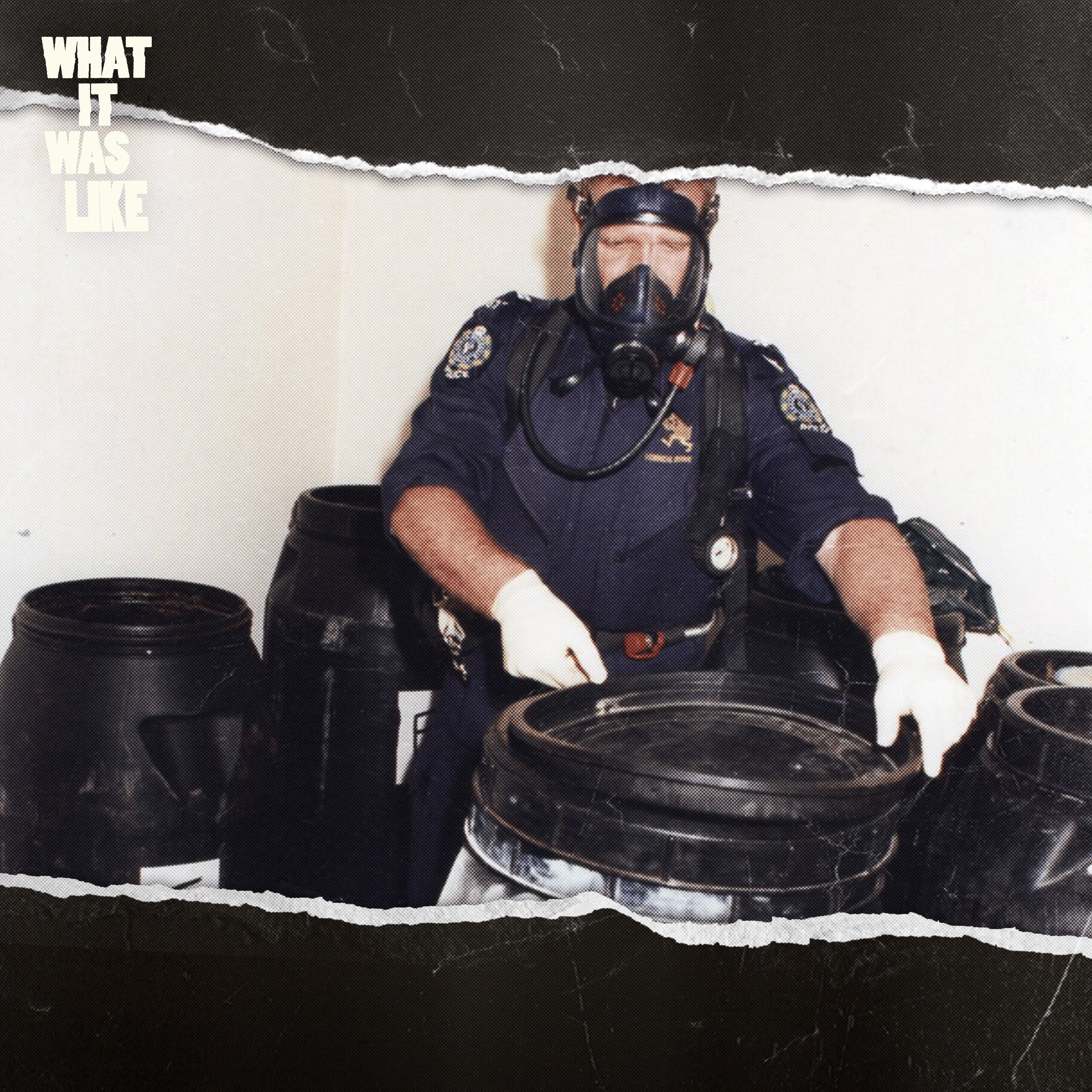
Hey, friends. So we're doing a rerun this week and for a good reason. So a case that we covered in 2023 is suddenly back in the news here in Australia. What you're about to hear is an interview with ex policeman Gordon Drage. In 1999, Gordon walked into a disused bank vault in Snowtown, South Australia, and he stumbled upon several barrels containing dismembered bodies. What he'd found was the work of a serial killer and kind of mini cult leader named John Bunting, who'd led three accomplices to murder vulnerable people across South Australia for a lot of the previous decade. This was the Snowtown murders and it's one of the most infamous cases in Australian criminal history. And now here's why it's back in the news. So James Velasquez, who was the youngest of the four killers, he was actually 18 at the time. He's just been approved for parole Now. A review commissioner has blocked his release, but the parole board has appealed to the South Australian Supreme Court. So James's fate is kind of being argued out as we speak. Now, for what it's worth, I actually think Velazquez should be paroled because if you dig into his case, you'll find that he was a pretty damaged, impressionable teenager when all this went down and he was basically coerced into participating. He provided a lot of the evidence against the others, which is why he received a lesser sentence and is now up for parole. To be clear, John Bunting was. He was kind of the brains behind the operation and he's going to be in prison forever along with his two. I see Robert Wagner. But James, I don't know. I think he should be out. Last thing before we get into it, we're running a little feedback session for our subscribers. So if you're a subscriber at the end of this episode or just now, if you want, head to the show notes, scroll to the bottom and click the link. It'll take you to this short form where you can ask us anything. You can ask us about the show, you can ask us about us, you can ask us about the meaning of life, whatever you want. Or you can suggest a story that you'd like us to cover. Just, we want to bring you the stories that you really want to hear. And if you're a subscriber, this is something that we can give back to you in thanks for your support for us. So jump in, tell us what you want to hear. Let's get into it. Here is. I discovered Snowtown's bodies and barrels. Hey, I'm Julian Morgans and you're listening to what It Was like, the show that asks people who have lived through big dramatic events what it was like. Hey, and welcome back. Between August of 92 and May of 1999, a guy named John Bunting and his two youngest sidekicks, Robert Wagner and James Velasakis, murdered a total of 12 people, mostly in the northern suburbs of Adelaide. And they stored their victims bodies in plastic barrels in a disused bank in the rural town of Snowtown. And in some ways, the group had the dynamics of like a miniature cult. John Bunting, he was the leader and he seemed to hold a really strong psychological control over his friends. So the story really gets started in 1991 and that's when Bunting moved to a house in Salisbury, north in South Australia. And he befriended his neighbor, that's Robert Wagner, who was five years younger. And he also started dating a woman named Elizabeth Harvey and befriended her son, James Vlasakis. And the two younger men started hanging around with Bunting and just sort of absorbing his worldview. Finally, it was 1989. Between them, they'd killed 12 people. And they had 12 bodies scattered across the state of South Australia and mostly buried in shallow graves. Now, the more I look into this case, the more it strikes me just how coldly calculating Bunting was. He was completely psychopathic, but he was also highly organized and able to create and execute a plan.
- [06:26]
Gordon Drage
Plan.
- [06:27]
Julian Morgans
So this arbitrary scattering of graves would, to him, it would have seemed like a bit of a liability. And Bunting wanted something with a bit more long term security. So In January of 99, he rented an empty bank building in Snowtown primarily as a. As a place to store human remains. Bunting and his accomplices collected up the remains of their victims, chopped them up into smaller bits and sort of jammed them all into plastic barrels, and then moved them into the bank safe. And that's where today's guest comes into the picture. We're talking to a former police officer named Gordon Drage. And Gordon was the very first person to discover that Snowtown's old bank vault was full of bodies. And what I find just truly wild about this story is that Gordon had no idea what he was walking into. He went along thinking it would be like a two hour job, tops, and, you know, he'd be home for dinner and then he just accidentally walked into this DIY storage facility for one of Australia's most twisted serial killers. And I'm interested to know what that's like. And Gordon was kind enough to meet me at a studio near his home on the Gold coast and tell me all about it. So now I bring you Gordon Drage. Gordon, welcome to the show.
- [07:45]
Gordon Drage
Thank you very much. It's a pleasure to be here.
- [07:48]
Julian Morgans
Let's go back to 1999. Let's just start with. Tell me a bit about what you were doing at that time, what was happening in your life.
- [07:58]
Gordon Drage
Okay. I was working for the South Australian Police. I was a senior constable in charge of the. Well, obviously only officer doing the forensic section at Kadena. Okay.
- [08:09]
Julian Morgans
And you were how old at that time?
- [08:12]
Gordon Drage
Equipment of Mass 36 at that stage. Yeah.
- [08:14]
Julian Morgans
And my understanding is you are the guy who was taking photos of crime scenes.
- [08:19]
Gordon Drage
Yes, Yeah, I was the. The CSI guy. For one of the better term CSI guy. The CSI guy? Yeah, we take photos, we go to crime scenes, do fingerprinting and, and collect hairs and fibers and bloods and things like that.
- [08:31]
Julian Morgans
Put it into little sandwich bags.
- [08:32]
Gordon Drage
Yeah, all that stuff. Yeah. So CSI guys probably these just description. Okay.
- [08:37]
Julian Morgans
All right. So tell me about the day that you were called to Snowtown.
- [08:43]
Gordon Drage
Right, I was. It was the 20th of May, 1999. I was actually driven across the Clare Valley doing a job. So I got this beautiful drive across to the country into the Brosso Valley. Was looking at the remains of a car body. I've been asked to go and identify that. So I was actually out doing. Just about finished that job when my phone rang. It was one of the sergeants from. One of the senior sergeants from the Adelaide forensic office asking what I was doing for the day. And he said, well, if you're available, I'd like you to go to Snowtown.
- [09:15]
Julian Morgans
What did you think the job was going to be?
- [09:17]
Gordon Drage
Well, the job was supposed to. I didn't know much about the job at all other than was I available? I said, yes, I could. And when I got there, there was a couple of detectives. There was a tow truck out the front of the police station, which is unusual. And they said, do you know anything about the job? And I said, well, no. So they handed me a piece of paper, an A4 piece of paper. And the top half of the page had a series of names on it. And the bottom half had a lot of property items, things like televisions and fans and lounge suites and stuff like that. And they said the top half of the list is all the people that are missing people, missing persons. And the bottom half of the list is property we know is missing from their houses and their accommodation. And they said there's a house over the road where one of our main suspects has got his car.
- [10:02]
Julian Morgans
Did this stand out to you when you saw this A four page of all these missing people? Did there was, did this seem unusual at all?
- [10:09]
Gordon Drage
Yeah, it was, it was a bit unusual. So many missing people and all this equipment and. And then they said, oh, we think they're all linked. We think all the missing people are linked together. I said, okay. And they said we've. We know that one of our suspects has, has driven his car to this house across the road. So they said, we're seizing the car, which is why the tow truck was there. And we want to photograph and videotape inside and outside the house looking specifically for these property items on the bottom of the list.
- [10:36]
Julian Morgans
So you weren't there for bodies, you were there for effectively stolen goods in an investigation involving missing people.
- [10:44]
Gordon Drage
Yep.
- [10:44]
Julian Morgans
It's all pretty, pretty innocent at this point.
- [10:46]
Gordon Drage
Absolutely. That's all it should have been. It was, was going to be like a two hour job. That's what I'd factored in. It was probably going to take two hours to do it. So it was very simple.
- [10:55]
Julian Morgans
And you had no idea that there were, there were detectives in Adelaide who'd been working on this case for, for quite a long time?
- [11:01]
Gordon Drage
No, but by the time I got there and we, as the job unfolded, I'd learned that yes, there'd been, surprisingly enough, a junior detective I'd worked with in my uniform days, in early days, in my early part of my career, I'd worked with this fellow and he had then moved on to go on to be a detective. And he picked up one of these missing person files and he picked up a couple of the files over a period of months and he realized at one point that he was talking to the very same people for these missing people. He was, their associates were all very, all similar. So he then went to his bosses and said, I think there's some connections here. So he kept badgering his bosses and in the end that, he told me that they, they said, look, we think if you think there's something in it, go to Major Crime and, and tell them what you've got. So that's what he did. He went up to the Major Crime office in Adelaide and said, here's what I, here's what I know about these people. This is what I'm working on. So then they started to have a bit of a look and put a bit more, a few more resources into it. And that led to some surveillance on these, some of the parties and, and that's how they found the car up at Snowtown.
- [12:04]
Julian Morgans
Okay. Okay. And these guys were basically just surreptitiously murdering sort of down and out lost people in the northern suburbs of Adelaide. And they'd put the bodies in a bank vault in Snowtown. All right, so let's, let's, let's fast forward. So you were in Snowtown, you were about to take some photos. You thought it was going to take two hours. Walk me through it.
- [12:26]
Gordon Drage
Okay, so we've gone to the house, we've started taking the photos and doing the videos. There's one, one detective from Kadena at my office and there was two that came up from Adelaide, so probably three, maybe four detectives and myself. And, and there was Bronwyn, the other forensic lass who came up from, from Adelaide. So that they were just talking to the owner of this house and like they do not, not a formal interview but you're just talking, keeping him, keeping it friendly and what do you know and those sorts of things. And during that conversation he had said, oh yeah, well John, I do know John Bunting. He bought that car he drove, that's his car, that's a four wheel drive that was in the driveway, the remains of one. And he said, yeah, he drove it up here. It was full of, full of barrels with smelly stuff in it. And they went, oh that's interesting. What do you mean? And he said, well he said, he came, he said they smell like dead cats. He said what have you got in these things? He said, you don't want to know. He said. So I didn't ask anymore. Really? Yeah, that's what they said.
- [13:20]
Julian Morgans
I would have asked.
- [13:21]
Gordon Drage
Yeah, I would have asked. As innocent as that. It was apparently and to this day he's never been charged so I have no reason to doubt his version. I think he was just a simple country, country fella who was fairly trusting and probably didn't know his mate was doing sorts of things.
- [13:35]
Julian Morgans
Okay, sure.
- [13:35]
Gordon Drage
So then they said well where are these barrels now? And he said oh they're over the, they're over the bank. He said, he said I rent that. He said I do my, do my repairs and stuff there. And they said well how do we get in there? He said I'll give you the key. So he pulled the key of his pocket and hand him to hand him the key.
- [13:53]
Julian Morgans
So you, you were in the house while this conversation was going on? You weren't, you weren't actually a party to this conversation?
- [13:58]
Gordon Drage
No, no, I'm still in the house doing my thing and doing my videos and photos and stuff and recording all that. So then they've called me back, then they've told me that story and I've gone, okay. So we went around the corner to the bank and then we found our way into the back in the back through the back gate and then we got the key and it went inside door. So we opened the side door and that opened immediately into the, the kitchen of the old, the bank building. Before we've gone in the door we could smell what we thought was going to be cannabis. We thought, well it smells like marijuana. This is distinct sort of smell outside the back door. Yeah, I think it turned out to be just the plants in the garden. I still to this Day. Don't know what plants they were, but they had this distinct cannabisy marijuana smell to them. Okay. So we've gone in and we're sort of in the back of our minds, we're thinking these drums will be full of, you know, fertilized water or something. It'll just be full of stinky, like a bong water or something.
- [14:46]
Julian Morgans
Worm juice.
- [14:47]
Gordon Drage
Worm juice, yeah. So we're not. Still not thinking bodies, but nothing, nothing like that.
- [14:51]
Julian Morgans
I know. This is also innocent. Yeah. So coming in, smelling the flowers in the garden.
- [14:56]
Gordon Drage
Yeah. So we've gone in and we've walked. I've videotaped. And as you've gone in, there's a can of air freshener on the sink in the kitchen. And you go through and there's a couple of those little air wiki things stuck in the PowerPoints and giving off a bit of a smell. So it didn't smell badly at all. And I just videotaped and we took some still photographs of some of that stuff. And then we could see the vault. We pull on the door. Nothing happened. So we. Then I got hold of the tumbler and the tumbler was spinning very freely. That's not working. But the handle on the actual.
- [15:28]
Julian Morgans
Right, this is. So this is the lock mechanism on the bank vault door.
- [15:32]
Gordon Drage
Yes.
- [15:32]
Julian Morgans
Okay.
- [15:33]
Gordon Drage
Yeah, that. The number tumbler thing. Three left and right. And those things. So that was just spinning freely. There was talk of thermal lances and oxy cutting gear. And I'm just horrified. There's a forensic off or something. Oh, no. Heat, flame, smoke. No, this is.
- [15:47]
Julian Morgans
This is not really mess up your scene.
- [15:49]
Gordon Drage
Horrendous. So nobody really knew what to do. So I'm saying, well, it's lunch time. So then we stopped. I did the fingerprinting and then. And then. So while I was waiting, Brom was having her lunch because she bought a lunch with her. And I. I was. I thought, well, I've got nothing to lose. So I've then got this piece of wire and I've stuck it through this very large keyhole. And I could sort of see, you know, poking around and I've got my hand just resting on this little silver handle and I'm poking around. And then suddenly the hand was just falling on the weight of my hand. And I thought, oh, gosh, we're in. So I then stop. Okay, we're in saying, grab the video. And then we. Greg opened the door and then it was just a complete wall of black plastic and sticky tape.
- [16:34]
Julian Morgans
Right, right. He'd. He'd. Walt it off. He'd sealed up the vault with black plastic.
- [16:39]
Gordon Drage
Yeah. So inside the door frame is he had sticky taped this black plastic sheeting all around the sides, the bottom, the top, and had a vertical slit in the middle which was also taped up. And we still got no smell. We're thinking when we sell this black plastic, we've gone, it's going to be drugs. We're expecting to be white on the inside and it'll be where the lighting is and stuff, where they reflect it. So then we've Sony's then pulled the, the sticky tape down while I've got the video running. And immediately then he could smell it. He said, it's not, it's not dope, it's not. Not drugs. We could smell.
- [17:14]
Julian Morgans
Could you smell it?
- [17:15]
Gordon Drage
Yeah, shortly after I could smell it, yeah. That was the accurate smell of it. So you weren't decomposing body, you weren't
- [17:20]
Julian Morgans
even in the room yet?
- [17:21]
Gordon Drage
No, no, it was.
- [17:22]
Julian Morgans
You just unsealed the plastic?
- [17:24]
Gordon Drage
Yeah, the smell came out fairly rapidly. Still wasn't overpowering, but it was definitely the smell of, you know, decomposing matter.
- [17:31]
Julian Morgans
Did you recognize it?
- [17:32]
Gordon Drage
Oh, yeah.
- [17:33]
Julian Morgans
You knew.
- [17:33]
Gordon Drage
Yeah, it was definitely a meat. Decomposing meat or body smell. I'd seen plenty of those in my career.
- [17:40]
Julian Morgans
When you got hit with that smell, how did you feel?
- [17:44]
Gordon Drage
I think we thought straight away, I thought, well, this is suddenly, this has now gone from a straightforward photo and video job to possibly something far more sinister, knowing we've got a number of missing people.
- [17:55]
Julian Morgans
So tell me about stepping through into the room.
- [17:59]
Gordon Drage
Initially, I just put the camera in, had a look around because it was very dark, so we had to use a torch. So a torch in one hand, video camera in the other. And we could see we had a number of barrels and there was a green lounge chair, standard up on it, standing up on its ends and stuff. And I remember distinctly a green lounge sweep was one of the items that we'd been looking for on the bottom half of that sheet earlier in the day. Okay, so there's our lounge sweep. And inside, once you get past the plastic, I can see sets of knives sitting on top of the upended lounge suite. There's several boxes of plastic gloves, there's rubber gloves turned inside out, there's a saw, there's handcuffs and, and these sorts of things and belts and stuff. Okay, this is, this is looking really bad now. So we've then pretty much stopped and had to obviously call in reinforcements. People have gone, phone the other detectives and everyone's on the phone to their respective bosses at their sections back in Adelaide, saying, hey, we've just got this. This is. This job's just turned to stuff we need. As in an army of people.
- [18:59]
Julian Morgans
You knew, you guys knew that this. This had really gone weird. It had taken a very unexpected turn.
- [19:05]
Gordon Drage
Very much. Yeah, yeah, it was. It was actually surreal to think that what started off was just a straightforward photographic video job in relation to some missing people. Yeah. Has now suddenly gone to this thing where we've got sores, handcuffs, the smell of rotting flesh and rotting humans. So we've then rung Adelaide and said, hey, we've got this, we need to send more people up. And then the debate happened. A few hours later, some of their senior detectives come up from the major crimers, like the homicide squad. They've come up and then the debate's gone on. Well, we still don't know what we're dealing with. No, we don't. We found three 5 litre drums of hydrochloric acid sitting on top of the upended sofa.
- [19:53]
Julian Morgans
That's ominous.
- [19:54]
Gordon Drage
Yeah, So I thought, interesting. We worked out they were empty, so the assumption was, well, how. How dangerous would that be to us in confined spaces like a vault and things? So calls were made to the forensic chemistry people. They said, you know, in a confined space, it could be quite overpowering. The debate that then went on about, can we bring one of the barrels out, can we chip it out on the front lawn? Because. But at this stage we still haven't confirmed we've actually got bodies there. We got a very strong suspicion, but we haven't actually done that. So in the end I said, look, I'm. I'm qualified in breathing apparatus. I had previously been a volunteer firefighter and stuff, so I'd been trained in the ba. Stuff that the fire brigade people use. The mask and the cylinder on your back. I said, if you can get me one of those from the local volunteer fire service, I can open those barrels and we can see what's in them.
- [20:43]
Julian Morgans
Crack open a barrel.
- [20:45]
Gordon Drage
So that's what. That's what happened. So he handed him this kit. So he's brought it back to me. So I've turned it on, put it on. Because this is all happening whilst we're on the opposite corner of the bank is the pub. Is the Snowtown pub.
- [20:58]
Julian Morgans
Okay, this is.
- [20:59]
Gordon Drage
So we're trying to keep this on
- [21:00]
Julian Morgans
the funny kind of twist here.
- [21:02]
Gordon Drage
Yeah, we're trying to keep it on the. Very much on the low down without everybody knowing the last Thing we needed was a media circus to turn up.
- [21:08]
Julian Morgans
Were there people at the front of the pub, you know, holding their pints or whatever and watching?
- [21:12]
Gordon Drage
Not at the early stage, but by the afternoon, like late afternoon, they've all knocked off from work. So, yeah, there was a lot of activity at the pub.
- [21:18]
Julian Morgans
I would have watched.
- [21:19]
Gordon Drage
Yeah, well, I guess we're lucky that most of us had unmarked cars.
- [21:24]
Julian Morgans
So you're putting on this protective gear. Did you have any trepidation?
- [21:29]
Gordon Drage
Probably a little bit on what I see, on what I was going to see. So I undid the first barrel and it's plastic.
- [21:36]
Julian Morgans
It's got like a screw lid.
- [21:37]
Gordon Drage
Yeah, big screw lid on the top. So the barrels before they ended up at Snowtown, those barrels actually used for storing olives. Olive barrels. So I've taken this and I've had to carefully. I've got my gloves on, so I'm carefully prizing off this rubber ring. And the first one I've opened, I can see the remains of a somewhat mummified human foot and a bit of an ankle, I thought, and there's some other gloves and things in there. So, okay, that's what we had. So then.
- [22:03]
Julian Morgans
So let's just freeze frame on that for a minute. I mean, what sort of effect did that? Did you get a bit of a chill up your spine or what happened?
- [22:12]
Gordon Drage
I think immediately I'm in shock. Oh, my God. Like there's this human foot and it's poking. I can see the sole of the foot. So the rest of the body, presumably is upside down, head first in this barrel and all I can see is a foot and everything sort of. There's dirt and plastic and stuff in there. So I thought, well, that's. That's horrendous. There's at least a body. So that's confirmed our suspicions. So we've justified everything we're doing from here on in. Yeah, we've now got at least a body.
- [22:42]
Julian Morgans
What does a. What does a human body immersed in hydrochloric acid look like?
- [22:49]
Gordon Drage
Well, that one. Well, actually, that one wasn't in hydrochloric acid, as it turned out. There was only one barrel that had the acid in it. That was the last one. So that was a hydrochloric acid is really just a bleach. It's like a poor chlorine. So, yeah, there was very pale skin. But the barrel I had was quite dry and as I moved around a few more of the barrels, I eventually took the lids off all of them. It became apparent that a couple of those bodies had been exhumed. There was soil and bits and pieces on them. Okay, right, interesting.
- [23:17]
Julian Morgans
Hey, we're just going to stop here for a quick ad break, but stick around. We'll be right back with more what It Was like. So I like to talk about therapy on this show, and I think that's just because I really believe in it. About a year ago, I went through this period where everything was feeling hard and I knew I should see a therapist. But even just taking that first step felt overwhelming. And I think that's pretty common. You know, finding someone who actually specializes in what you need and who takes your insurance, that can feel hard just in itself. But Ruler is different. So they work with over 120 insurance plans, so they probably take yours, bringing the average copay down to around $15 a session. So you just end up using the benefits that you've already got. And instead of matching you with whoever's free, Ruler pairs you with a therapist who actually specializes in what you're dealing with. So it just cuts out the searching. There's no wait lists and appointments can be as soon as tomorrow. Thousands of people are already using Ruler to get affordable, high quality therapy that's actually covered by insurance. So visit ruler.com waslike to get started. That's ruler r u l a.com/was like because you deserve mental health care that works with you and not against your budget.
- [24:52]
Advertisement Voice
Now more people than ever can bring in their bill for a better deal at Verizon. Got AT&T or T Mobile? We got you Xfinity or Spectrum.
- [24:58]
Gordon Drage
You too.
- [24:59]
Advertisement Voice
So tell your friends, your family, your quirky neighbor Jeff, grab your megaphone and yell it from the rooftop. Get a better deal at Verizon because chances are anyone in shouting distance is included. Bring in your at&t t Mobile, Xfinity or Spectrum bill and we'll give you a better deal on the best network Come by Verizon today. Best Network based on RootMetric's best overall mobile network performance US 2nd/2025 all rights reserved. Must provide recent Consumer Mobile Bill in the name of the person redeeming the deal. Additional terms, conditions and restrictions apply. Instacart makes grocery shopping easier, and just because you're not doing the shopping yourself doesn't mean you don't care how it's done. With Instacart, Shopper notes, you can get particular about what you want right in the app. Like rotisserie chicken that's extra crispy steak with marbling the Romans would have loved and Lettuce you'd actually pick yourself. Just leave a note for your shopper so that they can get it right for you without having to ask. That way you can get groceries just how you like. Download the Instacart app and shop today.
- [25:52]
Quo Ad Voice
If you've looked into using AI for customer support, you've probably noticed most existing solutions are off the shelf and don't quite fit your company's needs. Or it's a great custom solution, but it takes forever to launch. Decagon gives you the best of both worlds. Decagon helps companies create personalized concierge style customer experiences with AI agents across chat, email, voice and SMS. They're available 24, 7, feel natural to talk to and can resolve customer requests on their own. So businesses can keep up with requests without losing their personal touch. Decagon helps power millions of conversations every day. Ready to transform your customer support? Go to Decagon AI Bizacast to get a personalized demo and see what Decagon can do for your team. Check Decagon out at Decagon AI Bizacast. That's Decagon AI Bizacast.
- [27:01]
Gordon Drage
Okay, so.
- [27:01]
Julian Morgans
So you opened them all up. I'm guessing that you would have seen hands, feet, heads.
- [27:07]
Gordon Drage
No heads, mostly hands like feet and arms and bits of leg. Because when they got them back to the mortuary, it turned out in eventually that we had six barrels, but there were actually eight bodies there. So they had cut all these bodies up and were putting bits and pieces in. So some barrels, when they laid them out the mortuary, some barrels had, you know, three arms and one torso and two legs.
- [27:31]
Julian Morgans
And are there, I mean, it's what, 24 years since this happened? Are there any images of this that stick with you? And I guess if I imagine myself in that situation, you know, like a little bit of nail polish on a foot would really get to me. Or like a tattoo, you know, like signs of humanity, Little bits of individualism would stick with me.
- [27:52]
Gordon Drage
Yeah, there was certainly, I could see there were some tattoos and bits and pieces which from a forensic perspective, you think, okay, well that's useful because we can use the tattoos usually to identify people and confirm identity, but some of them had been been dead for longer than others. So you had different states of decay within the barrels.
- [28:11]
Julian Morgans
Okay, so you, by this point, you'd spend most of the day in this, in this bank vault, which is kind of like ground zero for really one of the most horrific crimes in Australian history. What sort of effect does that have on you when you're in a place, an environment like that, you know, I imagine it had a bit of an atmosphere.
- [28:30]
Gordon Drage
Oh, certainly there's this. You start to go through the whole thing. These poor people, what have they endured? Knowing that there are sores there, handcuffs, there was a. Electrical cabling and stuff that was set up. Probably you could see that perhaps being tortured and things like that. And as it all unfolded down the track, that's exactly what had happened. And the wallet. And the wallet inside the door frame was the last victim. We didn't even know. He wasn't even on the list.
- [28:58]
Julian Morgans
Oh, really?
- [28:59]
Gordon Drage
He wasn't even missing at that stage. It was just. We had the wallet, there's the name. So then I went make some inquiries and thought, yeah, well, he's from down that area too. And he'd been lured there only a night or two before on the guise of buying a computer.
- [29:13]
Julian Morgans
That's right. I remember this is one of the final scenes in. In Snowtown, the movie. He's. He's this sort of just seemingly nice guy who shows up wanting to buy a computer. Kill him in the. In the bank vault. Tell me about the smell. I'm really curious because in my. In my experience, smells stay with me. You know, like years later I find myself just. I'll get a like tiny little whiff of something that's reminiscent of the past and it all comes flooding back. Can you describe that smell? And if it stayed with you, it
- [29:40]
Gordon Drage
certainly stays with you. I mean, I guess any police or any emergency services person who has smelt death, you never. You'll never forget that smell. But it's. It's very much like if you leave. Leave a piece of meat outside in the house, you know, think of a steak or piece of pork, a bit of chicken even leave it on your kitchen bench longer than you should, or leave it outside, then go to it. Oh, look at that. Once the maggots and stuff are sort of getting interested in it, it's at that stage, it's that smell of that sort of thing.
- [30:10]
Julian Morgans
It's the same smell.
- [30:11]
Gordon Drage
It's very much the same smell.
- [30:12]
Julian Morgans
Okay, so. So the acid hadn't really altered the smell. It was essentially just rotting meat.
- [30:16]
Gordon Drage
Now that probably the one had the least amount of smell bearing in mind, I've got breathing gear on, so I can't smell anything. Which whole idea of it was to protect me from. From sucking up any acids that might be there. The one that probably smelled the least was one that had the most fluid, which was barrel f. Last one we did which was. Had that, I think they had Elizabeth Hayden's body in was a white skinned leg that was soaking in hydrochloric acid. So the other. Yeah, and so the smell wasn't horrendous because it's been, it's encapsulated in the water. But all the other stuff had smelled.
- [30:51]
Julian Morgans
What was the, what was the mood amongst the team? You know, were people excited to be on a big case or was it this?
- [30:57]
Gordon Drage
No. Well, I remember detectives are generally thinking, oh, there's so much work to do we're going to do now. And to their credit, you know, they're, they're focusing. Okay, we need to keep a media lid on this. This is going to be massive. Clearly we've, we've uncovered a much bigger thing, excitement from the young detective because he's, he's now been completely cleared of all the other senior detectives in my office that were making fun of me and saying there's nothing in this.
- [31:23]
Julian Morgans
Oh yeah, yeah, I've now been completely validation.
- [31:25]
Gordon Drage
Yeah, absolutely validated. So he was sort of half pleased that whilst he realized there's now an enormous amount of work and we've got a number of dead people and we've got relatives that are going to be grieving. So most of your excitement is not on that. It's then focusing on they were going to get their surveillance people, recall them, get them out of their beds, put them back on the job. You need to go follow these people again. We all know what they're doing. We need to keep, keep it quiet from the media. So, I mean, when I got to Snowtown, I got the police station about 11:30, it was 2 o' clock the following morning. When I actually got home, it was
- [32:04]
Julian Morgans
2 o' clock in the morning.
- [32:04]
Gordon Drage
2 o' clock in the morning. And I've. Because I absolutely wrecked by the end of the day we, we've moved the barrels out and things. We put them into a trailer and one of the detectives, we put them into a cage trailer. He drove them that night to the mortuary in Adelaide under the COVID of darkness, hopefully. Then they've done the media release in the morning once the surveillance were in place.
- [32:24]
Julian Morgans
So they went public with it pretty quick.
- [32:26]
Gordon Drage
Yeah, they had to because it was on the bank. And when they went public, then the crooks, they tend to run around a bit like ants. Then they got a bit panic. Oh, they've got this, they've got that and so off they go. And that allowed the surveillance people then to follow them and watch what they were Doing dumping of clothes and things like that.
- [32:43]
Julian Morgans
I'm curious to know how you felt. So. So a couple of things. First of all, the drive home alone after that at 2 in the morning.
- [32:51]
Gordon Drage
Yeah.
- [32:51]
Julian Morgans
What was that like?
- [32:54]
Gordon Drage
Well, because it's country, South Australia. The road between Snowtown and Kadena is partly. Was unsealed back in those days.
- [33:01]
Julian Morgans
Yeah.
- [33:01]
Gordon Drage
So I'm trying, I'm trying to stay awake. It's dark. I'm looking for kangaroos. So I don't have, I don't have a kangaroo proof car. I'm very tired. I know I absolutely stink because whilst we're at the bank, other people said, can you just stand. I was having to stand upwind of them or downwind of them because the, the smell was coming off my clothes in my uniform. So I didn't want to bring that in my house. So I remember stripping off my undies on the back porch of my house right then going in, having a shower and going to bed.
- [33:27]
Julian Morgans
And had you called your wife? You know, was she.
- [33:29]
Gordon Drage
I'd called her weirdly enough. I'd called her about one o' clock, I think and said I'm tied up at this job.
- [33:36]
Julian Morgans
She had tell her what was happening.
- [33:38]
Gordon Drage
Oh, well, I just told him I've got this job at Snowtown. We're gonna do some photos and stuff because this is before the bodies.
- [33:42]
Julian Morgans
Right?
- [33:43]
Gordon Drage
Okay. Yeah. I think I have probably rang her again later on, said, okay, now we've got this body, so I don't know when I'm gonna be home.
- [33:47]
Julian Morgans
Was she kind of like, oh well, I've already made you dinner, or was it kind of more like, oh my God, a serial killer?
- [33:52]
Gordon Drage
Oh no, I think it was more. Yeah, that's okay. Yeah, thanks for letting me know. I won't make dinner for you.
- [33:57]
Julian Morgans
Right, this. Yeah, I guess for you. You know, you're a seasoned cop, so it's part of the job.
- [34:03]
Gordon Drage
Yeah, well, she would have got used to that. I mean, you still go home, you say what happened and sometimes they don't want to know all the details because, you know, it's just, it's too horrific. And you do get this little sort of empathy with them. You have to think, what did these people go through? You know, how what sort of evil human does this to another human, first of all? And what were they feeling? How were they feeling? Having electric electrical probes, you know, put on their body and turned up and, and this is all come out later. But you think that just the person that then cuts somebody up with a literally With a timber, just a handsaw, starts cutting them up just crudely and shoving them in a barrel.
- [34:43]
Julian Morgans
Were you dealing with these kind of thoughts in the days after, especially that night?
- [34:49]
Gordon Drage
Definitely, yeah. I mean, it's mentally, I think Bronwyn, as I understand it, she was, because it was one of her fairly early jobs, murder wise. And I remember she spent a lot of the afternoon just saying, I can't believe my body count's just gone from, from zero to like six. And I spent a lot of time trying to calm her. It's okay, we'll work through this together, you know, one step at a time. I was concerned with Brom when I rang the following day. So look, I'm really worried about her. She was really quite overdrawn over, overruled by the whole thing. Keep an eye on her. So at that stage their response was then to get her involved for the next three or four days or weeks with all the other matters involving the job.
- [35:31]
Julian Morgans
Why?
- [35:32]
Gordon Drage
Well, I don't know. It's no surprise.
- [35:34]
Julian Morgans
It seems counterintuitive, like she's, she's not coping with this. We're worried about it. Oh yeah, let's throw all the admin in the tail end and give her
- [35:42]
Gordon Drage
all these other follow up inquiries and the rest of it. And then she got to learn more about the matter and the torture. But you know, again, this is, I guess, 1999. We've moved most police services lived a long way. I'd like to think that won't happen again in the current environment. But yeah, mental health is a big issue for, particularly for forensic officers and a lot of police depending where they work. Yeah, it's a stressful job I, I
- [36:03]
Julian Morgans
want to get into. So the other thing about 1999 is that it was kind of a long time ago now and just the phrase serial killer, it's much more in the, in the public lexicon. You know, Netflix is full of it. You can't listen to a podcast without a serial killer cropping up somewhere. Just, just public awareness of this, this psychology is, is probably much more prevalent than it was in nineteen nine. So, so I'm wondering, you know, how soon did you guys start talking about a serial killer? Or was it, or was it kind of like, oh, that's a bit sensational, that's a bit American, that doesn't happen here. Or very quickly, was it like, no, that's what we're dealing with.
- [36:45]
Gordon Drage
That's an interesting question. I don't know that the term serial killer came up at all. And the Whole time we're at Snowtown.
- [36:53]
Julian Morgans
Well, we knew because we had serial bodies.
- [36:56]
Gordon Drage
Yeah, we did have serial bodies, but the serial killing thing, maybe that was a media thing, but we just knew there was a lot of bodies and they were all connected. We now know clearly it was a serial killing. But I can't recall anyone saying, hey, this is serial killing. We knew they were connected and we knew that, you know, there was going to be a lot of, a massive amount of work being done to try and identify them and link them all together. But wasn't maybe because we thought, I guess, you know, we had, well, at that stage we thought we had six. Turned out we had eight bodies there. But by the time they've linked them all together and found these other associates and other missing people, they got charged with 14 murders. I mean that's, that's a serial killer.
- [37:34]
Julian Morgans
That's a serial killer.
- [37:35]
Gordon Drage
Yeah. And by then you've got over the whole period of time, over about four or five year period, you know, there's 14 people. It's horrendous.
- [37:43]
Julian Morgans
I guess this case continued the, the tail end of this went for months, possibly years afterwards. Were you involved in that? You know, what, what role did you play?
- [37:52]
Gordon Drage
I didn't have a lot of. I went back the following day and when I got home at 2 o' clock in the morning, so I had a little bit of involvement there. But the, the rest of the follow ups were all around the suburbs of Adelaide and areas like that. So that didn't involve me as much.
- [38:04]
Julian Morgans
Did you ever meet or see in the courtroom maybe John Bunting?
- [38:08]
Gordon Drage
Yes, only when I gave evidence in court and they were sitting in the witness box.
- [38:11]
Julian Morgans
So tell me about your impression of looking at John Bunting. What did you see?
- [38:17]
Gordon Drage
He was sitting, just calmly looking at the court and I don't even think he watched me come into the courtroom. I didn't want to look at him and have that eye to eye thing. But I've glanced at him as I walked past and he just had this sort of steer. I mean the man's a psychopath. I have no doubt, no doubt, no doubt he's a psychopath. So I didn't want to make too much eye contact with him. It's just, it's evil. But it was like he had no emotion. I didn't, didn't seem to see any emotion. Other people, you think they'd be worried and nervous. He just sat there.
- [38:47]
Julian Morgans
It was like he was just watching TV or something.
- [38:49]
Gordon Drage
He might as well have been watching TV across The courtroom.
- [38:53]
Julian Morgans
Did he look. Did he look unusual? You know, if you passed him in the street, would he have caught your eye for any reason?
- [38:58]
Gordon Drage
No, no, he's very unassuming looking. Sort of like really very ordinary looking looking fella. Apart from being in these prison. Prison colors. But yeah, he was. He was just ordinary.
- [39:10]
Julian Morgans
Did you feel any anger towards him, looking at him?
- [39:12]
Gordon Drage
No, not. Not anger. I felt more for the victims. I thought, you know, you're just evil. Because he. I mean, he wasn't to know. But I'd actually worked with the last victim's father I had worked with before I joined the police many years ago at a factory.
- [39:28]
Julian Morgans
Really?
- [39:28]
Gordon Drage
Holden's.
- [39:29]
Julian Morgans
Yeah, Just this sort of quirk of serendipity.
- [39:32]
Gordon Drage
Yeah. You talked about the six degrees of separation when, you know, Marcus Johnson worked at General Motors, Holden's with me. And my. Was going to be my wife eventually. We had this. He was what we call the oiler. His job was to go around and he would oil the machines and make sure they always level all the presses and things like that. So he would move around and we'd have chats to him. And I had no idea. I hadn't seen him for 20 years. Where it was 10 years, I suppose 12 years.
- [40:03]
Julian Morgans
So. So that made it real for you? That made it personal?
- [40:05]
Gordon Drage
Yeah, I guess it sort of did. And it was his son. Was. Was the last one. He was. His wallet we found in there.
- [40:11]
Julian Morgans
That was. He was the guy looking to buy a computer.
- [40:13]
Gordon Drage
Yeah. Marcus was. Was his dad. I didn't. I didn't know him, but I saw him. He can't forget his face. But yeah, it was his job. And I saw. I couldn't believe I know that man.
- [40:24]
Julian Morgans
Yeah, yeah, yeah. It really strikes me in this case. All right, so it's famous because there were all these bodies and barrels. That's. That's fairly memorable. But. But the thing that I think has really stuck with me through reading about it is, is just what a. What a sad collection of lonely, vulnerable people were targeted by John Bunting. Like people who were just luckless. They'd somehow been born into horrible, abusive families. They had no lucky breaks after that. They'd fallen into the trap of this predator and been brutally murdered. Like that was their lives. And that had just been. That happened over and over again. You know, 14 people had had that experience. And to me, that is the defining aspect of this case. Just how it's got a real snapshot of just kind of the saddest parts of Australian society.
- [41:12]
Gordon Drage
It is. I Mean, as I understand it, the, the first couple of victims were, were killed because Bunting had decided that in their view, these people were homosexual or transgender and they were, therefore they were going to be pedophiles. But they also worked out that if they, these people still get paid there, you can be a missing person and you still get paid the. Your Social Security benefits and things. So it became then a way of them grabbing money. There's, there's footage of them going to ATMs with other people's bank cards.
- [41:43]
Julian Morgans
And so it became a job and sort of became a career slowly of sorts.
- [41:47]
Gordon Drage
Yeah, an income for a source of income. One day rang up, there was a public appeal and said, oh, you know, we're looking for, I think it was one of the women we're looking for this, this lady. And a fellow rang Missing Persons Bureau in Adelaide and said, oh, I know, I know her. She's not missing. She's just in Tasmania on a holiday and she doesn't want the family to know, you know that, but she's okay. So then they've done the checks on her bank and sure enough there's bank transactions, ATMs and stuff in Tasmania. So they've made notes on the file to that effect. Case closed. God. That caller was John Bunting, is that right? Yeah. And he knew because they've been down in Tassie using her money. He was a pretty clever guy in some ways. Yes.
- [42:30]
Julian Morgans
Like renting a bank vault, you know, just that knowledge that like a bank vault is going to be designed to sort of retain a smell and to seal it up with plastic and stuff. This is. He's thought this through pretty carefully.
- [42:42]
Gordon Drage
Yeah, he has thought that through. I mean, bearing in mind he was the other fellow who rented the house that owned the bank. But how he knows this fellow, I won't name him, but how he knows the house occupant, I don't know. But to know that he had the house. Snowtown, it's, it's almost perfect. You know, Snowtown's a little sleepy town. Nothing much happens at Snowtown. It warrants two police officers simply because it's a big area. They've got a lot of farming land. Yes.
- [43:08]
Julian Morgans
God, I feel a bit sorry for the, the tourism authority of Snowtown. You know, they're, they're trying to bring people to their town and like most of these murders didn't even happen in Snowtown. And forever the town's going to be synonymous with this awful case.
- [43:23]
Gordon Drage
Very much so. Yeah, they, they struggled early on because somebody even put a souvenir shop into the actual bank, I believe at one point, which I think upset a lot of the locals because they were selling plastic, little plastic barrel key rings like that. They try and milk the milk, the whole thing. But yeah, the locals certainly weren't happy about it, but it put them on the map, probably for the wrong reasons. I think the biggest thing I ever did at Snowtown before that was a. A coach crashed on the outskirts of Snowtown several years before.
- [43:51]
Julian Morgans
When you say coach, I'm thinking almost like a horse and buggy.
- [43:55]
Gordon Drage
As in a bus, sorry, interstate. Like a Greyhound bus.
- [43:58]
Julian Morgans
Cobb and Co. No. Hey, we're just going to stop here for a quick ad break, but stick around. We'll be right back with more what it was like. This is a probably, I assume, a big case in your career, but you know, you've been in the police force for a long time. So we sort of touched on mental health with some of your colleagues before. I mean, how did it, how did it affect you personally?
- [44:41]
Gordon Drage
I think eventually I have since been diagnosed with ptsd. Down the track I had this number of other things going on, you know, not just work life, but work life, domestic life. At the time. I have, I call it my falling out of the tree moment when I sort of fell off the branch and I got laid up for a couple of weeks. But good psychologist and back into work again. I didn't want it to end my career. I was too young, didn't want it to finish. So I worked hard to try and get myself through that. Do those things and put your hand up. Recognize when you're not traveling well.
- [45:15]
Julian Morgans
Yeah. And do you feel like this experience at Snowtown was a catalyst for this?
- [45:21]
Gordon Drage
It certainly wouldn't have helped, but I can't say it's a catalyst for it. I guess with PTSD often it's very much a cumulative thing. It's not a one off incident. And for me it was, you know, 20, 30 years of, of just dealing with dead people and stuff like that. When I finished up recently, I actually did some stats and I worked at. I'd actually seen over a hundred murdered people in my career. Really just murdered people, not just. Not those who may just collapse at home for natural causes or they have mishaps, they have drug overdoses, the suicides and things like that. But yeah, over 100 murdered people I've seen in my career. And we start. You think, Gordon, that's a lot of people. I've got every reason to be a little bit Loopy.
- [46:03]
Julian Morgans
Oh, mate, seriously, if I saw one murdered person, that'd be it. Take the, the rest of the year off. So the movie came out a few years ago. I think it was 2011 and it was, I don't know, it was kind of a big deal. There was, it was a controversial movie. Some people said it was one of the best sort of Australian crime movies ever. It was, you know, it provoked a reaction. I'm wondering if it meant anything in particular to you.
- [46:29]
Gordon Drage
I, I did see it because I thought I need to see it and I, I say to people, as I will now, you know, it was a hard watch, it was very graphic. But it was also, from what I understand, it was very accurate for what I'd heard during the trial and the things we'd seen. The evil that's portrayed in that movie is, is pretty much what it was. These were just evil people that were torturing people and had no regard for human life whatsoever.
- [46:52]
Julian Morgans
I mean, tell me about, tell me about evil. What have you learned about evil in all your years?
- [46:57]
Gordon Drage
Well, evil, evil manifests itself in sometimes the most unexpected people. You said what caused them to do that? I think a lot of the time, a lot of the murders I've been involved in, whether domestic related husbands and wives and things, it often seems to be the case that the motivation is to stop them having a drama with family courts and divorce courts and things like that. Of course, invariably it just leads into even more dramas because they end up in, in prison.
- [47:28]
Julian Morgans
Yeah, you skip the divorce court and just go straight to the magistrate, straight to prison.
- [47:32]
Gordon Drage
And you've then you've effectively orphaned your children. You know, you've got some issues with custody. It's a busy, busy area for police to be in. But to, you know, it's actually killing your spouse to, to try and maintain custody, it's counterproductive because, you know, you're just going to orphan those children effectively. Yeah, you're, you're going to jail. Your partner has been killed. If you've killed them, who wins from that? No one.
- [47:58]
Julian Morgans
Yeah, yeah. A little while ago now, I spoke to a woman who, she was an American lawyer and, and she was a specialist in basically telling the story of the people who were on death row. She, her job was to just sort of defend them and provide a sort of counterargument to them as a sort of cold blooded psychopath. So that was her job. Anyway, at the end of the conversation she had a really interesting take on murder and she sort of talked about the banality of Evil, the way that evil sort of shows up in sometimes the most boring, unassuming people. And it's like you say there's this thing where you almost want to skip all the hassle of getting a divorce. You mean that's such a, sort of a boring, kind of a middle of the road motivation to kill someone, but it leads to such a dramatic outcome. Yeah. I mean, you might know this phrase, the banality of evil. Do you have any thoughts on that?
- [48:54]
Gordon Drage
I haven't come across that term before, but yeah, that's probably a very good description of it. Now that you've got people that you think you walk past them in the street and you think that's not a killer. You know, people say to me, what's a murderer look like? What's a killer like? Well, they look like you and I, they just an average more than often. Sometimes they're accidental. A split second of panic and stuff like that. I mean, you have to look at the American situation, I suppose, with their, their firearms laws. How many people in that split second year get shot and they're killed? Thankfully in Australia, generally, if you're going to get shot and killed by your, by your spouse or something, there's some level of premeditation with that because you've got to source the firearms.
- [49:37]
Julian Morgans
It's really hard to get a gun.
- [49:38]
Gordon Drage
Yeah. And they're not lying around loaded on top of the fridge or in the standard pillow. Yeah. Where the Americans have them.
- [49:44]
Julian Morgans
Has, has this stuff affected your view of humanity?
- [49:50]
Gordon Drage
No, I still think the average human is good and can be trusted. Even though, you know, a lot of police will probably say no, that's not there. Everyone's bad. You certainly. I've become hyper vigilant. I think all police do. I find my wife knows when we go to a restaurant, sit down, she'll know which side of the table I prefer to sit on, which side's up. Well, so I can see who's coming in the door and stuff like that. I don't like, just. It's just a really weird thing. I mean, I'm hoping now that I'm no longer in the police, I'll be able to grow out of that and I'll become, you know. But these are the sort of things if you spend your more than half my life doing.
- [50:26]
Julian Morgans
Yeah, yeah, yeah. I think I really just got one more question. Now you've been in the police force for a long time, you've really had front row seats to what these kind of crimes do to people, what they do to families. I mean, how does that make you feel? Do you feel like the average person doesn't quite comprehend the gravity of this stuff?
- [50:46]
Gordon Drage
It's not something that's gonna. I'm not gonna go home tonight and not sleep or anything like that. I've got past all those things. You certainly have. I don't have nightmares as such anymore. But again good psychologists will help you with all those sorts of things. So if there are any police or emergency services, people that are listening then please put your hand up. Don't be afraid to say I'm not traveling that well. It's perfectly normal. It is normal to recognize that what you do is not normal. And if you're not feeling quite right then go and get some help and, and it's not career any. I'm living proof, you know, I've had another. Jeez, I wonder happened. I'm living proof that you can have a, like a full on mental episode. I was breaking down in tears, I was crying, I was gibbering wreck. I didn't know what was happening to me. I was terrified. No such thing. Full on nervous breakdown as such I'll call it. I've got to, you know, took myself home, was still crying, went to the doctors, they put me in a separate room thankfully because I just couldn't get an appointment with the doctor. So I need some. Something was going wrong with me so. And I'm living proof you can continue on in the same career, in the same job doing what I was doing because I said I want to come back. I think I lost maybe three weeks in total and it hasn't, it hasn't, didn't, didn't completely stop my career. I still went on, did other things or kept doing the same things. So people who were saying no, you can't speak up if you're not well because you know it'll finish your career, it'll kick you out. That's not true. It doesn't have to be that way.
- [52:16]
Julian Morgans
I think that's, that's a really important message. Gordon, thanks so much for talking with me today.
- [52:21]
Gordon Drage
It's a pleasure, Julian, thank you.
- [52:25]
Julian Morgans
If you've enjoyed today's episode and you're thinking, hey, I've got a story that's pretty cool. Something that could work for this show. You know, something interesting but surprising. Surprising, a little bit unique, please get in touch. Hit me up. I'm always looking for story suggestions or feedback or you know, whatever you got. I'm Julian Morgans on Instagram and Morgan's Julian on X. And you know what? We'd love you to follow the show. You know the follow button on whatever your podcast app is? Just press that. We'll be eternally grateful. And if you're on Apple Podcasts, please leave us a review. Just a Just a simple five stars should do it. You don't even have to overthink it. Today's episode was produced by Rachel Tuffrey. It was edited and mixed by Nicholas Feliciano. Jimmy Saunders did our theme music, our cover art is by Naomi Lee Beveridge, and this whole thing has been a super real production.
- [53:38]
Gordon Drage
Acast powers the World's best podcasts. Here's a show that we recommend if you've ever dreamed of quitting your job to take your Side hustle full time, listen up. This is Nikayla Matthews Akome, host of side Hustle Pro, a podcast that helps you build and grow from passion project to profitable business. Every week you'll hear from guests just like you who wanted to start a business on the side. You can't run a side Hustle. You can't run a business. They share real tips and so I started connecting with all these people on LinkedIn and I saw Target supplier diversity was having office hours. Real advice.
- [54:13]
Advertisement Voice
Procrastination is the easiest form of resistance
- [54:17]
Gordon Drage
and the actual strategies they use to to turn their side hustle into their main hustle. Getting back in touch with your tangible cash and sitting down and learning to give your money a job like it changes something. Check out side Hustle Pro every week on your favorite podcast app and YouTube. Acast helps creators launch, grow and monetize their podcasts everywhere.
- [54:42]
Advertisement Voice
Acast.com now more people than ever can bring in their bill for a better deal at Verizon. Got AT&T or T Mobile. We got you Xfinity or Spectrum.
- [54:50]
Gordon Drage
You too.
- [54:50]
Advertisement Voice
So tell your friends, friends, your family, your quirky neighbor Jeff. Grab your megaphone and yell it from the rooftop. Get a better deal at Verizon because chances are anyone in shouting distance is included. Bring in your at&t t Mobile, Xfinity or Spectrum bill and we'll give you a better deal on the best network. Come by Verizon today. Best network based on root metrics Best overall Mobile Network Performance US Second Half 2025 all rights reserved. Must provide recent consumer Mobile bill in the name of the person redeeming the deal. Additional terms, conditions and restrictions apply.