Loading summary
Transcript118 lines
- [00:00]
Verizon Representative
Now at Verizon, we have some big news for your peace of mind. For all our customers, existing and new, we're locking in low prices for three years guaranteed on MyPlan and MyHome. That's future youe peace of mind and everyone can save on a brand new phone on MyPlan. When you trade in any phone from one of our top brands, that's new phone peace of mind. Because at Verizon, whether you're already a customer or you're just joining us, we got you. Visit Verizon today. Price guarantee applies to then current base monthly rate. Additional terms and conditions apply for all offers.
- [00:31]
BetterHelp Representative
BetterHelp Online Therapy bought this 30 second ad to remind you right now, wherever you are, to unclench your jaw, relax your shoulders, take a deep breath in and out. Feels better, right? That's 15 seconds of self care. Imagine what you could do with more. Visit betterhelp.com randompodcast for 10% off your first month of therapy. No pressure, just help. But for now, just relax. This summer, Instacart is bringing back your favorites from 1999 with prices from 1999. That means 90s prices on juice pouches that ought to be respected, 90s prices on box Mac and cheese, and 90s prices on ham, cheese and cracker lunches. Enjoy all those throwbacks and more at throwback prices only through Instacart. $4.72 maximum discount per $10 of eligible items. Limit one offer per order. Expires September 5th while supplies last discount based on CPI comparison.
- [01:50]
Paul Templer
I turn my canoe and I'm paddling towards Evans.
- [01:53]
Julian Morgans
I'm like, hey there.
- [01:55]
Paul Templer
He's like, oh, come on. And I look over and it's like, oi, yoi. This torpedo is coming in towards me. And I. I know what that is. It's a hippo charging in towards me. I turn around, I lean over. I'm like stretching as far as I can. He's stretching as far as he can. And as our fingers almost touch the water between us, just like it erupted, everything went dark and quiet. I could feel like this pressure, like really crushing down on my lower back. And I'm trying to get around it. And I'm struggling to break free and I can't. I knew where I was. I was from my waist up, head first down a hippo's throat.
- [02:39]
Julian Morgans
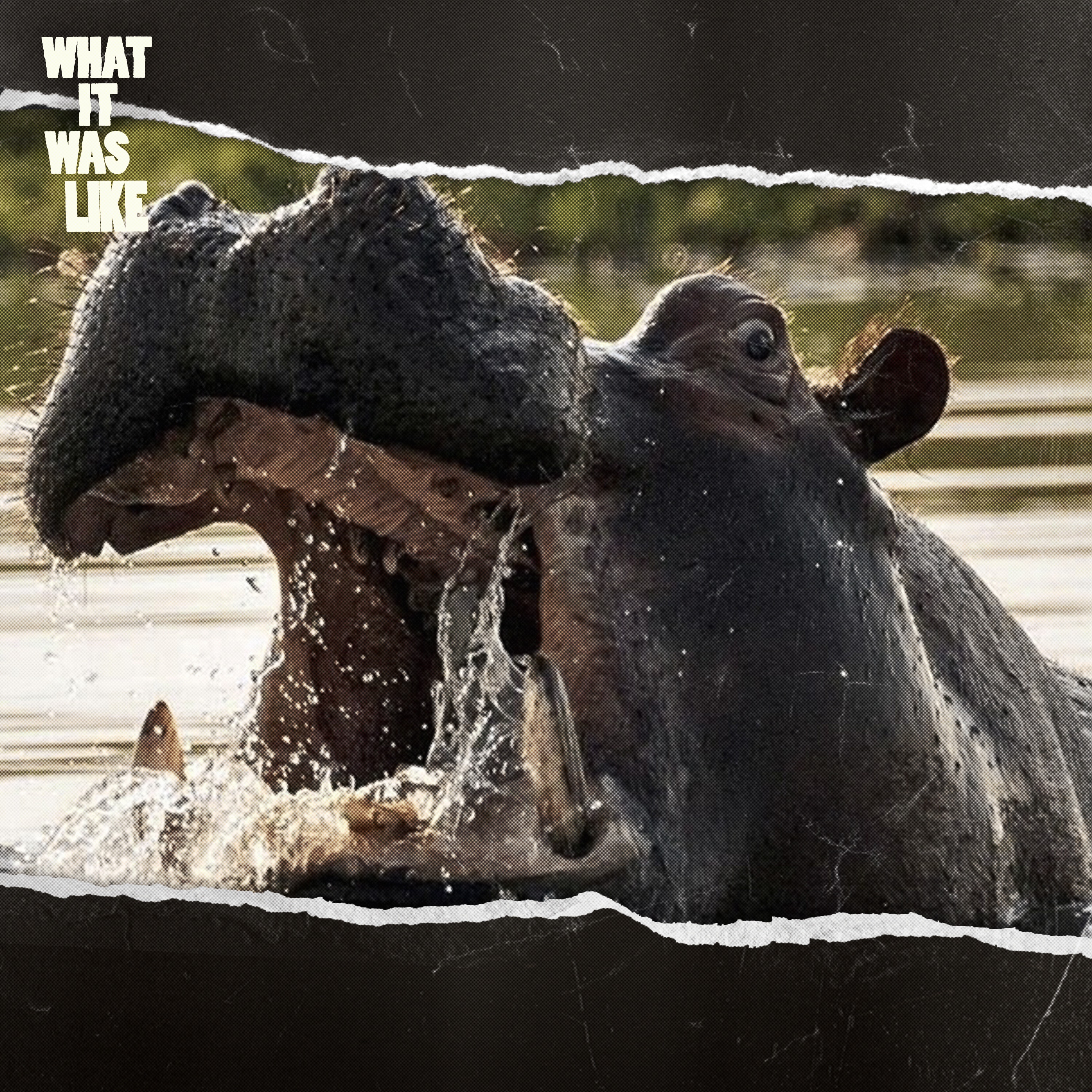
Hey, I'm Julian Morgans and you're listening to what It Was like, the show that asks people who have lived through big dramatic events what it was like. The other day I came across this List of the deadliest animals in the world by the number of human deaths that they cause every year. Now, I probably expected to see the usual suspects, you know, sharks, tigers, I don't know, maybe spiders at the top. But actually, I was way off at number one, the world's most deadly animal to humans, mosquitoes. As any medical professional who's listening to this probably already knows, mosquitoes are the deadliest because they kill about a million people every year just by spreading diseases like malaria. And then coming in at number two, snakes, with about 100,000 deaths every year. And then number three, dogs, with around 30,000 deaths. But then the list got kind of strange or certainly surprising. How's this? Freshwater snails kill more people than tigers every year, mostly via something called snail fever. And then there's tapeworms and something called assassin bugs. They're all in there. Tigers and sharks, they're not even in the top 10. Neither are spiders. But then here's what got me. At number 10, we have the hippopotamus, because hippos kill around 500 people every year around the world, and that's way more than lions, tigers, wolves, or spiders. And this really made me stop because, like, you know, hippos, they're just kind of. They're kind of goofy. How can something so completely dorky be so murderous, be so dangerous? And it was Googling that question that led me to the story of today's guest, Paul Templer. So Paul was a tour guide on the Zambezi river in his 20s, and he was running kayaking trips near Victoria Falls. And one day he encountered a particularly aggressive hippopotamus, and it almost killed him. And I think Paul's story is. Well, for my money, it's incredible. And it's not just because of the slimy physical horror of it all, but because how clearly he remembers every detail. The smell of the hippo's breath and the sensation of time slowing down. But he also talks about how the experience changed him in some deeply personal, surprising ways. So I'm really glad I stumbled upon this deadly animal list, and I'm even more glad that I found Paul. And so with that, here he is, Paul Templer. Hey, Paul, welcome to the show.
- [05:27]
Paul Templer
Hey, Julian, thanks for inviting me.
- [05:29]
Julian Morgans
Thanks for joining me. All right, so let's start with a bit of background on who you are and where you grew up.
- [05:35]
Paul Templer
Sure. I grew up in Africa. When I was born, the country I grew up in was called Rhodesia. There was kind of a civil war going on there. And then by the time I Finished with my education. It was called Zimbabwe and incredible place, great outdoors. As a little kid surrounded by wild animals and army guys, it was idyllic. And spent time in Europe, Asia, Middle east and served with the British army for a while and ultimately ended up back home. I think Africa was in my blood and it was the safari industry that beckoned me. I just loved the great outdoors and found out I could make a pretty good living taking people out on safari.
- [06:25]
Julian Morgans
So, you know, obviously anyone who's listening to this knows that you get eaten by a hippopotamus. So I feel like there's no great surprise here. But I guess I just want to establish a bit of context here. You know, these are big animals, sort of African animals are sort of known for being exotic and sometimes dangerous. You know, people get mauled by tigers and lions. Were you ever afraid running these tours?
- [06:50]
Paul Templer
Sure, there were moments. I'd run safaris for about six years commercially, and in that time I've been absolutely terrified on occasion. I'd been attacked by hippo, charged by elephant, charged by lion. I'd been, one day I was in a kayak, a little one man canoe, and I'd been attacked by a really large crocodile that had me in its mouth and was like shaking me around. I was in my canoe, but he was shaking me in my canoe around like we were a toy in a Christmas cracker. So sure, there had been moments of terror, but there was also, I really have to give the way we were trained as guides. By the time you got out to take clients on safari, they had established that you knew what you were doing. And so I'm not being all blase. It was kind of part of the territory and we'd been trained really well is the only thing I can probably attribute it to.
- [08:04]
Julian Morgans
Okay, okay. And I think most people are unaware that hippos are pretty dangerous. They're territorial, they're sort of fierce animals. Can you tell me a bit about that?
- [08:16]
Paul Templer
Yeah, the thing with hippos, a lot of this is just, well, if you figure out a fully grown bull hippo might grow to be 15ft long, maybe 5ft tall, and weigh up to say 8,000 pounds. I remember I used to drive a Land Rover and that would make a fully grown bull hippo about the same length and weigh about twice what my Land Rover did. So that gives you some idea of how solid they can be. So when they bite down on you, nothing good typically happens. And this style of attack, when they attack, because they've got those big tusks and those teeth inside is, they're just going to destroy. So it's just crush and crush and crush and destroy. So typically if you're a human being, typically a subsistence fisherman, um, you, you don't fare so well. They also usually share the water with crocodiles. So that's a added little degree of difficulty.
- [09:24]
Julian Morgans
Yeah, just a bit of icing on the cake. Okay. All right, so. So take me to the day, take me to the safari that you got attacked. How did it start?
- [09:34]
Paul Templer
Actually, that day started. I wasn't supposed to be on safari. There was a pride of lion that had been eating some of the local villages and I was supposed to be doing some problem anim and it was a little bit of a logistical snafu, so that got pushed back. And a mate of mine who was supposed to be leading a safari that afternoon had come down with malaria. So the trip he was taking was called the Royal Drift. I mean, this was seriously one of the coolest safaris. It's three, four hours in the afternoon, it's late afternoon. You're in these 16 or so foot long Canadian style canoes. They're just open canoes, three seaters, front seat, middle seat, back seat, and you drift down the Zambezi towards Victoria Falls. You have the mist above Victoria Falls ahead of you and you're just drifting and paddling into the sunset and it's just spectacular. In front of the guide, there's a paddler slash guide. At the back, there's a cooler box full of cocktails and snacks and the clients literally just sit there and you hand them trays of snacks and cocktails and you paddle along and pass. Pretty much on that trip, I've seen everything from leopards to lions, to cheetah to kudu, impala, buffalo, elephant, hippocry. There's just prolific wildlife down there and bird life and it's just incredible. And so that it wasn't a stretch for me to say, no worries man, I'll go run that safari for you. And so I was the guide in charge and I had three apprentice guides with me that day. When I say that it's three guys who are really close to getting their licenses and to get their licenses you have to do a certain number of hours and help out on trips. These guys were all real experienced and great guys. We'd known each other for years and had six clients. So there was some folks from Germany, a couple from Germany and two couples, Air France, Air crew. And it was just a perfect afternoon. So I hopped in the one Canoe with the two German clients. The other two canoes had two of the other paddlers, a chap called Ben and another one called Evans. And then a friend of mine, a very good friend of mine, Mike, was coming along as the safety kayaker. He had this little. We used to call it his crocodile bait kayak. He had this little kayak, and his job was to come down and make sure we were all okay, okay. And everything seemed to be going the way it was supposed to be going. We got on the water, we got to see some wildlife. I remember one point we came across this pot of hippo, and they were just sitting there, wallowing in the shallows, and we sat and we chatted about them, and we got about as close as I wanted to get. Didn't want to get too close. Obviously, there was a pod there where the moms. There were a couple of young hippos. There was a mom and a young one on the side. We could see. See an old male to one side. So I could see their structure, and I wanted to give them a wide berth. And so I led the way, and I said, okay, everyone, follow me, because have you spent much time on the water, like kayaking and canoeing?
- [13:17]
Julian Morgans
I've done some kayaking, yeah. I have, yeah.
- [13:20]
Paul Templer
So you know how you can see the way the water breaks where it's shallow and where it's deep and all of that good stuff. So I was following the shallow water because I knew hippos couldn't get beneath us on the shallow water. And I got to this narrow channel. Thanks. I was trying, man. I got to this narrow channel, and it was like. It was just kind of like it could have been from a movie set. There were the reeds and the birds and the mist and the sunset, and it was just spectacular. And I turned to make sure everyone was where they were supposed to be. And sure enough, Ben, one of the guides with his clients, was right behind me, and Mac was next to him in his little red crocodile baits kayak. But the third canoe, the one with Evans, had dropped back a bit, and I don't know what happened. Maybe he missed his angle or the current caught him, or. I have no idea. But he was trying to make his way across. So I thought, okay, give him a second and relax. And as I put my paddle down to just soak in the ambiance, there was just this. This crash. Unfortunately, I knew exactly what that sound. Was. Having been around, it was the sound of a hippo hitting a canoe. And I turned just in Time to see Evans's canoe up in the air with a hippo underneath the back of it and Evan's the paddler flying through the air. It's not good. It's not good at all. Particularly since there was this female hippo and a calf nearby. Now, the very last thing I wanted was him drifting into her and the baby, because that wasn't going to end well. Fortunately, when his canoe landed, it landed upright. So the team I was with were awesome. They were experienced to the degree that I trusted them. So the one guy, Ben, get everyone to the rocks. There was a cluster of rocks nearby. Didn't have time to drop my clients off because Evans, the fellow in the river, was drifting towards the female and the calf. And I was a little confused because I couldn't see the hippo that had hit him. And typically when a female has a calf, everyone stays away, at least from all the males. Anyway, I turn my canoe and I'm paddling towards Evans. I'm like, hang in there. He's like, oh, come on. And I see, if you've ever seen in those old movies, when there's like a torpedo coming towards a boat. And I look over and it's like, oi, Yoyo. This torpedo is coming in towards me. And I know what that is. It's hippo charging in towards me. But I also know, not my first rodeo, that if I slap the blade of my paddle on the river, it's really loud underwater, and that's going to turn the hippo around. So I do that. Wave dissipates. I'm like, that worked. So I get closer to him. He's starting to panic. I turn around, I lean over. I'm like, stretching as far as I can. He's stretching as far as he can. And as our fingers almost touch the water between us, just like it erupted, and everything went dark and quiet. I went from stretching to, whoa, what's going on? And a few long seconds ticked by, and I was trying to figure out what was going on, and I couldn't. Slowed things down a little bit. I think that was largely thanks to army training. And, okay, from my waist up, I wasn't dry, but I wasn't wet either, not like my legs were. And I could feel. Feel, like this pressure, like, really crushing down on my lower back. So I'm pinned inside something and I'm trying to get around it, and I'm struggling to break free, and I can't. But I managed to get one hand free and feeling around, I just felt the Bristles on the hippo's snout. So at least now I knew where I was. I was from my waist up, head first down a hippo's throat. Oh God. Yeah. I think maybe the weirdest part of that is my first reaction I can remember. It is as if it had just happened, was relief. Like I was terrified that I was up to my waist down a croc's throat. And crocs scare the heck out of me. They really scare me. And there was this relief, like, okay, I'm in a hippo, not good, but at least I'm not inside of a crocodile. And I think as. I mean, I'm not saying it was a rational thought, but.
- [18:34]
Julian Morgans
Like, if you had to choose one, fairly piss poor options on the table at this point.
- [18:41]
Paul Templer
Hands down, piss poor options. But then my mind clears and I'm like, I gotta get out of here. So I'm kind of wiggling around and I guess I must have been wedged on his throat just uncomfortably enough that the hippo started to gag a little bit and like, and open his mouth. And I managed to grab hold of the plus, pull myself out. And I burst to the surface, sucked in a lung full of fresh air. And I come face to face with Evans trying to rescue. I'm like, we gotta get out of here. Turn, and I start swimming. And my spidey senses kick in after a few strokes and I turn and I look back and he's not going anywhere. I mean, just I think terror and panic had kicked in. His eyes were like saucers and he was starting to flail as he was struggling to stay afloat. So I turned and swam back for him. And when someone's starting to drown, it's a bit tricky. Like it gets quite sporty there, like when you're trying to like get in position and not get drowned too, or get eaten by the hippo that's still under there. But I managed to get behind him and was just moving in for the classic lifesavers hold wing. I'm hit from below once again. I'm up to my waist down the hippo's throat. But this time I'm feet first. So now I'm like. And I've got my.357 Magnum revolver with me just in case something like this happens. But the hippo is just like thrashing me all around. I didn't even come close to grabbing hold of my gun. In fact, all I really accomplished during that phase was to not drown, really. It was like he gets. Throws me out and I Come to the surface again. And I look around and I think, no, Evans. So I figure Mac or Ben must have come to rescue him whilst I'm distracting the hippo there. But I know I got to get Arika. So I'm swindling along and I'm making pretty good progress, and I come up for a stroke and I look over and I just see the monster charging in towards me with his mouth wide open. And, like, it was a direct hit. And his tusk goes through my torso and through my side. And now I'm like, my knees down or outside one side of his mouth, and my head and shoulders and arms are outside the other. And now he's going berserk. Now he's in, like, let's destroy you mode. And he's just thrashing, thrashing. I remember one point, he threw me up into the air and I did this, like, oh, twist. And fell back into his mouth. And I can still hear the pop because when he caught me, bit down so hard, I thought he was going to chomp me in half. I was like, oop. One of the clients said it was just like. It's cliched, but it was like watching a vicious dog trying to rip apart a rag doll.
- [21:53]
Julian Morgans
Yeah, yeah, yeah.
- [21:55]
Paul Templer
I think for me, thank goodness, the way the brain works. Neurochemistry at its finest. Everything was just slowing down. Everything went into slow motion. And so when we went underwater, I would just hold my breath, and when we were on the surface, I'd suck in air. And I figured out that if I held onto the tusk, then my flesh didn't tear so much when he was, like, shaking me around.
- [22:22]
Julian Morgans
Geez, that is a hell of a discovery to make mid frenzy. Like, you're developing sort of survival strategies on the fly here. And this is a really intense situation, right?
- [22:34]
Paul Templer
And biology's kicking in, thank goodness. There's all sorts of adrenaline and everything else kicking in. Everything's slowing. We're working our way through it again, I think in a large part thanks to my training in the army, my training as a guide, life beforehand. Anyway, the hippo decides, okay, that's it, we're done. And so he dives for deep water. Enough of this porpoising around, and then just sits at the bottom of the river. And this leads to, I'm going to say, quite possibly the most surreal moment of my life to date, because I'm lying at the bottom of the river. I'm lying wedged inside this hippo's mouth. His tusks are boring through me and I'm staring up and I can see the different hues of green and yellow and I can see the sunlight shimmering on the water surface there. And I remember thinking, I wonder who can hold their breath the longest and just being very matter of fact and then watching as my blood was just mingling with the water and thinking, huh, Am I going to bleed to death or am I going to drown?
- [23:52]
Julian Morgans
Hey, we're just going to stop here for a quick outbreak. But. But stick around. We'll be right back with more what it was like.
- [24:07]
Verizon Representative
Now at Verizon, we have some big news for your peace of mind. For all our customers, existing and new, we're locking in low prices for three years guaranteed on my plan and my home. That's future, you peace of mind and everyone can save on a brand new phone. On MyPlan. When you trade in any phone from one of our top brands, that's new phone peace of mind. Because at Verizon, whether you're already a customer or you're just joining us, we got you. Visit Verizon today. Price guarantee applies to then current base monthly rate. Additional terms and conditions apply for all offers.
- [24:37]
BetterHelp Representative
BetterHelp Online Therapy bought this 30 second ad to remind you right now wherever you are, to unclench your jaw, relax your shoulders, take a deep breath in and out. Feels better, right? That's 15 seconds of self care. Imagine what you could do with more. Visit betterhelp.com randompodcast for 10% off your first month of therapy. No pressure, just help. But for now, just relax.
- [25:18]
Experian Representative
You know how we all have that one friend we go to with all our financial questions? Well, meet Experian, your bff as in big financial friend. I'm telling you, Experian is going to be your go to app when it comes to taking control of your finances. Experian not only has a bunch of ways to help you save, but lets you check your FICO score. Matches you with credit cards and a bunch more things you'd expect from a big financial friend. Just just download the Experian app and get started for free. Trust me, you'll be up to speed with this BFF in no time. Based on FICO Score 8 model offers an approval not guaranteed. Terms applied, offers not available in all states. See experian.com for details.
- [25:56]
BetterHelp Representative
Thanks for selling your car to Carvana. Here's your check.
- [25:59]
Paul Templer
Whoa.
- [25:59]
Julian Morgans
When did I get here?
- [26:00]
Paul Templer
What do you mean? I swear it was just moments ago.
- [26:02]
Julian Morgans
That I accepted a great offer from Carvana online.
- [26:05]
Paul Templer
I must have time traveled to the future. It was just moments ago. We do same day pickup.
- [26:09]
BetterHelp Representative
Here's your check for that great offer.
- [26:11]
Paul Templer
It is the future. It's. It's the present.
- [26:14]
BetterHelp Representative
And just the convenience of Carvana.
- [26:16]
Paul Templer
Sorry to blow your mind.
- [26:17]
Julian Morgans
It's all good.
- [26:18]
Paul Templer
Happens all the time.
- [26:20]
BetterHelp Representative
Sell your car.
- [26:21]
Paul Templer
The convenient way to Carvana.
- [26:24]
BetterHelp Representative
Pickup times may vary and fees may apply.
- [26:33]
Paul Templer
And there was no fight left in me. I was done punching, scratching, and the hippo surged towards the surface, flung me out again. This time, when I came to the surface, I looked, and my friend Mike, I was telling you about a little earlier, just showing incredible courage, risked his life in his little red Crocodile Bay kayak. He came, like, paddling in and I was able to grab a hold of the handle on the boat's nose. And then as the hippo came up and started going for us, Matt, for all he was worth, paddled and was able to drag me to the rocks where the clients were and helped me, pull me up onto the rocks. And the hippo couldn't climb up onto the rocks. So we had some relative safety for a moment. Got there, I was like, looked across the clients and I'm like, all right, folks, stay calm. Everything's gonna be okay.
- [27:43]
Julian Morgans
So clearly not true.
- [27:45]
Paul Templer
So clearly not true. They just all stood there and stared at me with this like, dead man walking look in their eyes, having just watched what had happened. But kind of, again, adrenaline was kicking in. 1, 2, 3, 4, 5, 6. So kind of all the clients were still there. Could see Mac, could see Ben Evans. Where's Evans? And Mac just said, he's gone, mate. He's gone. And from what Max said and the way he said it, I knew that it wasn't good, that Evans was probably dead. Um, so I found myself starting to get a little antsy and kind of tried to slow stuff down again. Remembered, okay, slow things down, slow things down. What's. Get rid of the drama. What's going on? And so the facts were there we were. I had six clients and. And then there were three of us on my team left. We had two canoes, one kayak and one paddle left between us. My radio, first aid kit and gun was all gone. We were perched on a cluster of rocks in the middle of the crocodile infested Zambezi river with the angry hippos still sitting there. He was just sitting there doing that thing they do when they show off with their mouth, the threat display, like. And he was just sitting there mocking us. And it was almost dusk, so I knew it would be dark. Soon. And it would be quite a while before anyone missed us and longer before they started looking for us. And by then, it would be dark, and so really didn't want to run with that option. And then, as if things weren't hairy enough, I made the mistake of looking at myself and. Ugh, I was a mess.
- [29:56]
Julian Morgans
What was happening?
- [30:00]
Paul Templer
Well, from on my left side, from my elbow up, I could just see bone in every direction you can imagine. The arm had been crushed to a pulp, and from the elbow down, they call it D glove. The bone had been crushed in more places than I could count, and most of the skin had been ripped off. So said to Meg, okay, roll down my sleeve and button it up. Let's see if we can keep it attached. There wasn't much blood coming over. The artery had, in fact, sealed itself, which was nothing short of a miracle. The other shoulder. I'd had tusks going through both shoulders. My left foot looked like someone had tried to beat a hole through it with a hammer. And all told, there was something like 38 major bite wounds on me. I started talking to Mike, and as I spoke with my words, blood started, like, frothing and bubbling out of my mouth. And we knew right away that one of the hippo's tusks had punctured my lungs. And I had a tension pneumothorax. So Mac rolled me over and he was like, sure, I could see a bit of a lung through a hole in your back. So this was really smart. He got a Saran Wrap from a tray of snacks, and he used that to seal the wound. It was magnificent. It did the trick. It stopped my lung from collapsing and me from D. Wow. And then he tore up. He's still a little miffed about this. He had this really cool brand new green safari shirt, and he ended up tearing it into thin strips, and he did what he could to seal some of the wounds, and he managed to put me back together again as best he could. Whilst he was doing that gave me a chance to think about our situation. And I knew that we needed to get moving. So I got said to Magma. I need you to stay here with the clients. And Ben, I need you to you guys to load me into the canoe. We're going to go. We're going to follow the current and we're going to look for Evans because I thought he could still be alive. And maybe he's in the same shape I'm in. So if he is, we need to find him. And if we can't Find him. We need to get a medevac to get everyone off the island, off the rocks, because it being dark, with everything that was out there, that wasn't going to go so well. And I expected Ben to say no, particularly because this hippo is still sitting there doing its like. But, I mean, in line with Mike's bravery, Ben just, like, nodded. He's like, sure. So they loaded me into the canoe, and Mike still makes fun of me a little bit. I'm like, Mac, keep everyone safe. We'll have a rescue team out here as soon as we can. And he was like, no worries. To a Mac, please tell my family I'm sorry and that I love them. I mean, I was like, seriously pathetic. And he was like, nah, mate, you tell them yourself, right? And just ease the canoe out into the current. And.
- [33:35]
Julian Morgans
I think you're forgiven for having a moment of being, you know, you're a little sentimental. You're allowed to do that after you've survived a hippo attack, right?
- [33:46]
Paul Templer
Anyway, so my job at that point is to try and keep an eye out for Evans, but along with Ben. But really, I didn't do a real good job at that. The hippo bumped the canoe a few times. Didn't tip us, fortunately. But I knew that if he did, I didn't have anything left. I couldn't fight. I knew I was done. If we went over and I'm laying in the bottom of the canoe. Ben's paddling. He's looking. We're following the current. He's looking for Evans. And I can just see blood and water filling the canoe. And I can feel this pain kind of starting to raise up, and terror starting to raise up, and it's building to this crescendo. And then there's this moment. I guess I've looked into it. Some say it was just the body can only handle so much pain and terror, and then it shuts down. I like to think of it as a profoundly spiritual moment, because I had this moment when I went from pain and terror to just complete peace. And in that moment, it was this moment of indescribable peace and the realization that I was at a fork in the road and it was my moment of choice. Do I go or do I stay? Do I close my eyes and drift off, or do I fight my way through this and stick around? I remember lying there and I was like, I'm going to stick around. And as soon as I made that choice, that moment, the pain came back. It was so intense that I thought it was going to kill me. I thought I was going to die. And then when I didn't, I wished that I would have. But by that stage, there was no going back. We made it to the shore. Unfortunately, we didn't find Evans on that paddle and talk about. So up to this point it's been a really bad day at the office. Okay. Yeah. And. But then things start for me at any rate, things start twirling like there was a middle kill air rescue team with an army shock trauma specialist surgeon with them on an exercise right nearby. And they came across and stabilized me.
- [36:29]
Julian Morgans
Wait. And this was just luck that they happened to be there.
- [36:32]
Verizon Representative
Sure.
- [36:32]
Paul Templer
Luck. They were on an exercise, on a training exercise. And because of all my head, neck, spinal injuries and the time of day it was and where we were, they couldn't medevac me by air. But we got a vehicle, an ambulance, and it was about an eight hour drive from where I was to the hospital. I ended up getting seeing a surgeon who could help me in a day of things that sucked, that truly sucked. Because of my head, neck and spinal injuries. They couldn't give me any painkillers and they also needed to keep me awake. So that's a really bad combination after you've been eaten by hippo for eight hours on a road trip.
- [37:26]
Julian Morgans
Can imagine. Eight hours.
- [37:29]
Paul Templer
Yeah. Yeah. We went to, there was a little hospital nearby. We went there first and they were like, nope, this is, this, we cannot help you.
- [37:39]
Julian Morgans
It's beyond our pay grade.
- [37:41]
Paul Templer
Yep. And so yeah, I made it to, to the hospital in a town called Bulawayo. And there was an incredible doctor there who. This was just a weird way to end up what had been a weird day. So they, I get to the, the hospital and they wheeled me right in and they wheeled me into the operating room and they leave me there and I'm lying underneath. I can. These bright lights and I can hear people talking about what's going on. And I can hear things like the mess, those arms are barely still attached. That left leg's horrible. He's going to lose at least a limb or two. And I'm hearing all this talk about bits and pieces coming off and I can feel myself starting to panic a little bit. And the doc comes along and he goes, hi, Paul, my name is Dr. Nube and that's a good Matabele name. I don't remember this, but he told me that apparently I just looked up at him and I said to him, doc, I know that you're going to do what you got to do. But what do you say you take a minimalist approach, huh?
- [39:06]
Julian Morgans
That's a good line.
- [39:07]
Paul Templer
He said he looked at me and he was like, what the hell? Because he had looked at what was there. And this is the only reason I mentioned this part of the story is so he had shown up there and I was a hot mess and he didn't think I was going to live. He admitted that, like I'd lost so much blood, I was incompatible with life and I had all these injuries and I was. He. He really didn't think I was going to live. He thought the chance of it was take off both arms and one leg and then make if he's lucky and. But he said he saw something and he, he actually said, I, I know we're going to keep this clean language, but he said you were kind of a cocky chap. And he's like, why not? If you're gonna fight, that's half the challenge. Let's try it. So he said he went with the way more complicated surgery, ended up being a really long surgery and he took off the absolute minimum. He had to go back in and take more off a couple days later. And I got gas gangrene. So it became a way more comple. Complex case. But a month or so later when I left hospital, I left with one arm and two legs, which had I not said, doc, take the minimalist approach, wouldn't have happened.
- [40:38]
Julian Morgans
Hey, we're just going to stop here for a quick ad break, but stick around. We'll be right back with more what it was like.
- [40:52]
Verizon Representative
Now at Verizon, we have some big news for your peace of mind. For all our customers, existing and new, we're locking in low prices for three years guaranteed on MyPlan and my home. That's future you peace of mind and everyone can save on a brand new phone on MyPlan when you trade in any phone from one of our top brands, that's new phone peace of mind. Because at Verizon, whether you're already a customer or you're just joining us, we got you visit Verizon today. Price guarantee applies to then current base monthly rate. Additional terms and conditions apply for all offers.
- [41:22]
BetterHelp Representative
BetterHelp Online Therapy bought this 30 second ad to remind you right now, wherever you are, to unclench your jaw, relax your shoulders, take a deep breath in and out. Feels better, right? That's 15 seconds of self care. Imagine what you could do with more. Visit betterhelp.com randompodcast for 10% off your first month of therapy. No pressure, just help. But for now, just. Just relax.
- [42:12]
Paul Templer
Just a footnote to him. He was pretty. He was really cool. I know this may be a surprise to you. I wasn't a great patient. I was a little emotional, a little frustrated.
- [42:22]
Julian Morgans
Yeah, I can picture it.
- [42:23]
Paul Templer
And I was. I was at this. At this hospital, and there were a bunch of nuns there, and when I would get particularly grumpy, they would wheel me out into a courtyard in a. In a wheelchair. And if you just look at the physics on what it's like, if you got one arm and one leg and you're in a wheelchair, no matter how angry you are, you're not going far. That's true.
- [42:44]
Julian Morgans
You can just wheel yourself around in circles for a while, right?
- [42:49]
Paul Templer
And so I had just done that, and they put me back to settle me down, and he came up and he said, paul, you just got to remember this, man. You're the sum of your choices. You're exactly who, what, and where you choose to be in life. And I remember looking at him and thinking, that's really easy for you to say, Doc. You're not the one lying here with, like, bits and pieces missing. But I guess I knew he was right. I just wasn't ready yet to be responsible for my choices.
- [43:24]
Julian Morgans
That is a good description of how people end up, you know, you're the sum of your choices. I haven't heard it said so simply before, and it's really true. Okay, well, there's a few things I'm curious about here, and I guess I don't know why this struck me, but I'd like to know. Do hippopotamuses have bad breath?
- [43:46]
Paul Templer
Actually, they do. So, fun fact, because I'd been asked, what does hippo breath smell like? And I'm like, but, eh isn't really a description. So I have a son, and we used to make stink bombs out of eggs. So you bury them in the back of the yard, they get good and rotten, and those become stink bombs.
- [44:18]
Julian Morgans
Yep.
- [44:19]
Paul Templer
And one day he broke one open, and the smell of it hit me. And fun fact about ptsd, one of the. One of the key activators is the sense of smell. That smell took me straight back to the hippo's throat. That is exactly what a hippo's breath smells like. Rotten egg.
- [44:40]
Julian Morgans
What do they eat?
- [44:43]
Paul Templer
This one's. This one's interesting. There's been a lot of research. People think. Think that they're omnivore. They just sit and eat the stuff on the side of the river, but that's not true. Under stressful situations, they've been known to chase lions off kills and eat meat. Typically, though, they prefer to eat on and around the river.
- [45:08]
Julian Morgans
Vegetation.
- [45:09]
Paul Templer
That's the nyep there. Sure.
- [45:12]
Julian Morgans
Just breeds and foliage and whatever. Yeah, yeah, okay. I mean, they sort of sound a bit like scavengers really. Yeah, yeah, yeah. Okay. So, I mean, I don't know, getting, getting, getting your head wedged down a hippotamist's throat. You're like, you're pretty, you're kind of close to the stomach there. At that point, did you feel it any. In any danger of getting swallowed? Was that a threat?
- [45:38]
Paul Templer
Didn't cross my mind, honestly. But, but there was a lot going on and most of it not that rational relief. Slow things down and survive. It was very much. What I do remember is the majority of it was forward focused and survival focused. There was, you know, time, Time distorts when it's going on. There were a few moments when the hippo was. I remember particularly one point we were fighting in the river and he bit and I was watching him bite and crush my arm. And the power of this beast. I would try and I tried punching, I tried stretching, I tried elbowing. Nothing I did had any effect on him whatsoever. And I remember at one point, like, really kind of bottling it. Like, oh, my God, I don't know how much more of this I could take. Like, this is truly sucking. And I don't know if I can keep fighting. Fortunately, that transitioned. I don't know how or why. It must have been some kind of neurochemical must have kicked in. But there were a few moments there where it was pretty overwhelming.
- [47:11]
Julian Morgans
Yeah, yeah, yeah. It's interesting, I think, how in a life and death situation, the sort of mental transition from, ah, this is fine, I can handle this, like just a bad day at the office, that kind of vibe, to a sense of like, oh, this is out of my control. I could be in deep trouble here.
- [47:29]
Paul Templer
Yeah, yeah.
- [47:31]
Julian Morgans
It's like a little switch.
- [47:33]
Paul Templer
It really is. And it was. I've spent the next 20, 30 years looking at optimal performance and looking at the brain and everything. And the more we know, the less we know. But I think when I look at it, people go, oh, gosh, Paul, that was really brave. You went to try to save your friend and I say, thank you. But it was an instinctive, instinctual reaction. There was no, oh, should I, shouldn't I? It was, he needs help, go take care of it. And then it was survive the attack, do what it does to survive the attack. Responsible for clients do what it does to take care of the clients. So I think it's just the way brains get wired. Right?
- [48:27]
Julian Morgans
Yeah, yeah, yeah. So you mentioned that you've had a bit of PTSD from this event. How does. Like, how did that show up in the years after?
- [48:38]
Paul Templer
So right afterwards. So about three days after the attack, they found Evans's body and there wasn't a scratch on him. Apparently he drowned. And you know what? In my mind, I had gone through what had happened on the river that day so many times, and I knew there was an accident and that it wasn't my fault. I think, fortunately, 100 times out of 100, I would have chosen the same route and done the same thing. But that didn't stop me from feeling guilty. I had been responsible for the clients and for my team and now Evans was dead. And so there was a lot of guilt and anger and frustration. And then there was also. I'd lost my arm. So it turns out to be. Financially, it had wiped me out. It was a challenge with. Because I had voluntarily gone into harm's way, the impact that had on insurance and what have you. So it became quite an expensive foray.
- [49:57]
Julian Morgans
As in your insurance company didn't pay and it was your fault.
- [50:03]
Paul Templer
A version of that, yeah. After a lot of back and forth, we kind of found some middle ground, but that was the essence of the story for quite a while. Where I was fortunate, though, is that camaraderie. I told you about the community. There is where there was a delta between what the medical insurance, et cetera, would pay and what I was liable for. They really jumped in and did fundraisers and helped take care of me and my bills and also of Evans family to some degree. And so there was that. But, you know, I couldn't play the games that I wanted to play. I couldn't be out on safari with my mates. And I felt quite sorry for myself. Fortunately, people didn't really let me go too far. I got some really good friends. Jack Daniels, Johnny Walker and Jose Cuevo. I thought that would be the best.
- [51:05]
Julian Morgans
I know those guys.
- [51:09]
Paul Templer
We became very firm mates, but it turned up. But that wasn't really much of a solution.
- [51:16]
Julian Morgans
How many years did you spend hanging out before you decided they weren't the crowd?
- [51:22]
Paul Templer
Well, about. It's been about 26 years since I've had a drink, so about four years. Four years. So I did some field research. Okay.
- [51:34]
Julian Morgans
Yeah, yeah. Well, congratulations on the years since.
- [51:39]
Paul Templer
Yeah, thanks. But, yeah, so it didn't do well. And I just felt sorry for myself. And I would. Yeah, I played the victim for a while. And fortunately, though, between my mom and my friends, they weren't going to let me do that. So they gave me a few months of grace. And then that river Oz attacked on the Zambezi had never been canoed from source to sea. Lots of people had tried to do it, but no one had succeeded. And I'd always dreamt of it. And sitting around the pub at night, we'd all spoken about how magnificent it would be. And one day I thought, why not? Sure, I had lost one arm, but that just made things a little more interesting. So I got a kayak pedal so I could paddle a kayak again with one arm and put together a team. And about two years after my hippo attack, it took us three months to paddle almost 1600 miles. We completed the fullest descent of the Zambezi source to sea. We had a little asterisk. There were some rather nasty warlords in a country called Angola that was in the middle of. It was out of hand. They forced us to skip a stretch of river there.
- [53:08]
Julian Morgans
Seems reasonable.
- [53:09]
Paul Templer
Yeah. But, yeah, we managed to make it. We avoid. We had drownings, close encounters with wildlife. We avoided landmines. It was one of the most heavily landmined areas at the time. At the end, we got arrested under suspicion. We were mercenaries or spies. I mean, there was. It was a three month. It was. It was quite an adventure. But you asked about ptsd, that journey. I'd set off starting thinking I was going to prove that I was bulletproof, and I think it actually did the exact opposite. It. It was more like, actually, you know what, you got some limitations. Time to embrace them and. Okay, yeah.
- [53:55]
Julian Morgans
And is that a fair description of where you're at these days, that you feel comfortable in your limitations?
- [54:05]
Paul Templer
I think I feel comfortable in the limitations of one arm, which equals. I feel comfortable asking for help if I need it. But it's certainly. It certainly hasn't prevented me from living a life just as full of as the life I would have lived otherwise.
- [54:32]
Julian Morgans
Yeah, yeah, yeah, yeah. And the tourists that you're originally leading on safari, you know, how did they cope? I imagine they were pretty affected as well.
- [54:45]
Paul Templer
They were. They were. I still am in touch with some of them, but one in particular had a really hard time. She had a complete. I don't want to say. I don't know what the correct term for a nervous breakdown is, but it really struck her hard.
- [55:06]
Julian Morgans
Okay.
- [55:09]
Paul Templer
Yeah, it was. I mean, the Clients did great. They really did. I mean, that's way more than anyone could have asked for. And.
- [55:19]
Julian Morgans
Yeah. I'm assuming that you spoke to that woman who had a nervous breakdown and you sort of assured her that it's okay.
- [55:26]
Paul Templer
I did not. But that was based on a request that I leave. Leave that be. And I reached out and did the. Hey, I'm fine. I'm good. But, you know. Okay. Okay.
- [55:45]
Julian Morgans
So. So what's happening in your life these days? Because I understand you're still a pretty adventurous kind of guy.
- [55:52]
Paul Templer
And.
- [55:53]
Julian Morgans
And I want to know, like, did this incident have. It doesn't seem to have slowed you down. It doesn't seem to have removed your taste for. For a safari. And why not?
- [56:05]
Paul Templer
Why not? Right. Right. No, I think what it did is it. So when I did that expedition, when I led, really opened my eyes. I was really fortunate. I had friends, I had resources. I lost an arm. I was able to get the medical care, but there were a lot of kids at the time and a lot of adults, too. Landmines were quite a scourge at the time. There were a lot of people standing on landmines and losing limbs, and they weren't getting the support. I teamed up with someone in the States, and we set up a Nonprofit organization in 1999. 98. 99. And it was ostensibly for putting limbs on kids, providing prosthesis, and actually did great. We kicked off a bunch of programs and supplied a lot of prosthesis to a lot of landmine victims and a lot of kids in need. And then as the years have evolved, that foundation has continued to grow, and we deal. Our main focus at the moment is dealing with chronically and terminally ill kids with special needs and their families and helping them to live. And then when it's time for the kids to die, if it goes that way, for them to die with dignity. So we've put together a bunch of programs. Okay.
- [57:40]
Julian Morgans
Do you think you'd be involved in charity work like this had it not been for your own brush with death?
- [57:47]
Paul Templer
No, I don't think so. I think I would have been tangentially. I would have been the guy who put 10 bucks in the bucket at Christmas, but wouldn't have. Certainly wouldn't have established the foundation and the programs that we've got. It's my hobby, but it's really rewarding.
- [58:09]
Julian Morgans
And it's a great hobby that's far more useful than you just playing golf or some other nonsense like that.
- [58:17]
Paul Templer
Right. So we have it. If any of your listeners are interested. Templarfoundation.org they can check it out. My next little fun adventure is the Gobi march in Mongolia. That's going to be 250km. So the way we run this, it's self sufficient, so you have all your food and everything on your back. And day one you run a marathon, day two, you run a marathon, day three, you run a double marathon. Then day five a marathon, day six, a marathon. And day seven, whatever distance is left to cover. So you get to meet yourself.
- [58:58]
Julian Morgans
Yeah, yeah, okay. But if so this is probably my last question. And that is like, it feels to me like you kind of already have met yourself. Like you escape the jaws of a hippopotamus. You really know who you are after that and what you're like in a crisis and what you're like in a moment where you could die. And I'm wondering how that sort of self knowledge, just how that's affected you. You're obviously now connected to charity. What is it with, with a sort of near death experience that's sort of making you embrace life like that or maybe even sort of embrace death a little bit like that.
- [59:43]
Paul Templer
So in the tightest package I can. So when I had my run in with the hippo, I came across to the States, got married, set up the foundation, and then started trying to build the American dream. This life, the wife, the kids, the picket fence, the successful businesses and da da da da da da. And I got to. Was able to do that in a large part because of what I had learned through the hippo and a certain identity, reputation, whatever you want to call it. And I thought I had nailed this. Life happens and then you get to choose what happens next. Think when the doctor told me about being the sum of your choices. But then I had a kind of a really icky Day in February 2017, went to see a bunch of doctors, wasn't feeling so good. And it turns out cancer in France, all sorts of pathogens and bacteria and amoeba and flukes had come and everything from like my brain to my lungs to my liver to the list just went on and on and on. And western medicine didn't really know where to go. So I did what most people do in that situation. I got my affairs in order as best I could. And then I thought I gotta go get healed. And so first place, you never find an atheist in a foxhole. So I went to Jerusalem and I went and spent some time with what I think is God. And then I went to the Himalayas. I was blessed a Friend of mine took me to meet with Karma Palma and then we checked up into the Himalayas and just really looked for healing. And I was trying to figure this whole thing out. And this is a long way of answering your question, because from there I ended up in the Amazon with another friend of mine took me to a shaman in the middle of the Amazon in the Madidi with the black jaguars, and we did healing there. And after all of that, I ended up back in the States at the New York center of Innovative Medicine. And I went into treatment for about a year. And at the end of that, after telling me how sick I was, they were able to tell me that I was healthy again. But here's the thing. When I was in Israel, in Jerusalem, or when I was in Nepal, in Kathmandu and up in the Himalayas, or when I was in the Amazon or in the Madidi, I'd been looking for healing. But they had given me instead this prescription for life. They all use different words, but it was at its essence exactly the same. It was be grateful, be kind, and do the next right thing. And when they kept saying that, I thought, really, you gotta give me a little more grateful kind, next right thing. But then they all talked about how what happens from a neurochemical point of view, there's this thing called psychoneuroimmunology, when you produce in gratitude what it does to your body and opens up space for healing. And how when you're kind, it produces dhea, which is the bliss hormone, which reduces cortisol and alters gene expression. And how when you do the next right thing, you don't have to swing for the bleachers, you just do the next right thing that's in front of you and you do it again and again. And how that regulates dopamine in your system and how if you really recurrently build that as a practice, good things happen to you, your body starts healing. And I'm not saying that was it alone, but that opened up the space for healing. And so then I thought, whoa, I've got this cracked. This is fantastic. I've got this prescription for life. And then as soon as I got well again, came out into the world and life is good. And then Covid arrived. And a couple of months, about two months into Covid, my 15 year old daughter died. And it was like, come on, sorry, this life happens. And then you get to choose what happens next. It's getting a little old. But this goes back to your question about the foundation and doing things to help other people is the prescription for life that they taught me in Israel and in the Himalayas and in the, in the Amazon. That's the tool I took. Because if, if I'm grateful, kind next right thing, then I got a shot at being the person who my daughter thought I was. And I get a chance to show up as the person I kind of want to be. I don't know. It seems like a prescription for life.
- [64:44]
Julian Morgans
Wow, Paul, that was a. You just nailed the ending. That was, that was an incredible encapsulation of this journey and it's like a pretty useful takeaway. I'm going to think about that for a long time.
- [64:58]
Paul Templer
Thank you. Thank you. And thanks for reaching out. I've really enjoyed the conversation. I really appreciate you giving me a chance to talk about this a little bit.
- [65:10]
Julian Morgans
No, thanks so much for coming on the show. This is, it's been a wild story.
- [65:15]
Paul Templer
Thanks, I appreciate it.
- [65:20]
Julian Morgans
Hey, thanks for listening to today's free episode. We've got another episode, a bonus episode for subscribers. And if that's not you, if you're not a subscriber, then, well, why not? So I've been looking into the P. Diddy legal case and I found a woman who attended a lot of Diddy's white parties in the late 90s and early 2000s. And she's going to give us a sort of insider look at that world. You know, what were those parties really like? What was that scene like? And why did this whole thing have such an intense allure for people? And just sort of, we're going to just use this little bonus episode to break down some of the secrecy, some of the power in Diddy world. You know, what was going on there. That's the bonus episode for subscribers this week. And today's episode was produced by Rachel Tuffery. It was mixed by Jimmy Saunders, who also did our theme music. Ellie Dickey is our intern. And this whole thing has been a super real production.
- [66:23]
Paul Templer
Foreign.
- [66:32]
Verizon Representative
Now at Verizon, we have some big news for your peace of mind. For all our customers, existing and new, we're locking in low prices for three years guaranteed on my plan and my home. That's future you peace of mind and everyone can save on a brand new phone on MyPlan. When you trade in any phone from one of our top brands, that's new phone peace of mind. Because at Verizon, whether you're already a customer or you're just joining us, we got you visit Verizon today. Price guarantee applies to then current base monthly rate. Additional terms and conditions apply for all offers.
- [67:02]
Experian Representative
You know how we all have that one friend we go to with all our financial questions? Well, meet Experian, your bff, as in Big Financial Friend. I'm telling you, Experian is going to be your Go to app when it comes to taking control of your finances. Experian not only has a bunch of ways to help you save, but lets you check your FICO score. Matches you with credit cards and a bunch more things you'd expect from a big financial friend. Just download the Experian app and get started for free. Trust me, you'll be up to speed with this BFF in no time. Based on FICO Score 8 model offers an approval not guaranteed Terms apply. Offers not available in all states. See experian.com for details.