Loading summary
Transcript254 lines
- [00:01]
Rick Hogg
Reggie, I just sold my car online. Let's go, Grandpa. Wait, you did? Yep, On Carvana. Just put in the license plate, answered a few questions, got an offer in minutes. Easier than setting up that new digital picture frame. You don't say. Yeah, they're even picking it up tomorrow. Talk about fast.
- [00:18]
Julian Morgans
Wow.
- [00:18]
Rick Hogg
Way to go. So, about that picture frame. Ah, forget about it. Until Carvana makes one, I'm not interested.
- [00:25]
Narrator/Advertiser
Car selling made easy on Carvana. Pickup fees may apply.
- [00:34]
Rick Hogg
Super real. I lopped up at my work one morning. There's a whole lot of police cars and Australian Federal police cars. I thought, oh, something's happening over at the block of flats over, over there. Because they had a bit of trouble from time to time. Three of them came up walking to me and had a warrant with my name on it or search warrant. So at that stage, I realized that the geek was up.
- [01:00]
Julian Morgans
And how did you feel?
- [01:02]
Rick Hogg
Yeah, I felt a bit sick at that stage. Yeah.
- [01:07]
Julian Morgans
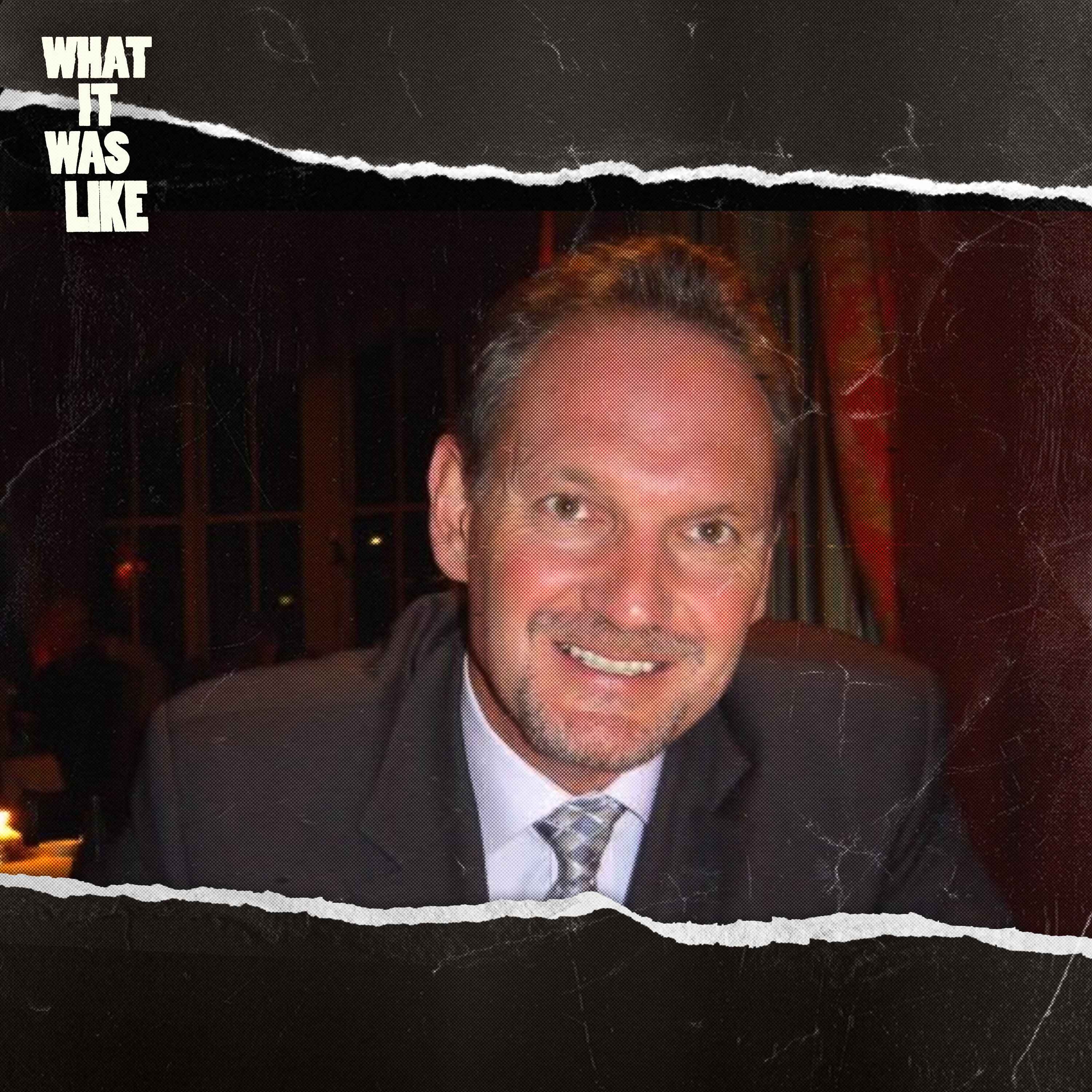
Hey, I'm Julian Morgans, and you're listening to what It Was like, the show that asks people who have lived through big dramatic events what it was like. Foreigners, friends, family. If you happen to have tuned in. Welcome back. So today's episode is all about tax. And that came about because I was doing my tax return this week and I was just hating it. So I'm pretty bad at keeping records and I'm very bad at maths, and I'm also very deeply impatient just when I'm bad at something. And this is just the most brutal combination of non skills to try to achieve anything with. Also, my tax return's really late, so I'm. I don't know, I'm a bit worried about that. I'm probably getting fined anyway. While I was slogging through this, I caught myself having this daydream. I was thinking about what if I could just find an accountant who could minimize my tax. And you know, not like in some cute we saved you 75 cents, you know, now here's a bill for $500 kind of way. But. But like, actually saved me some money. And basically, like, really what I'm asking myself is here, how would I go about finding a dodgy accountant? Like a creative accountant? And then I remembered something. So about a year ago, a tax accountant who had spent some time in prison slid into my Instagram DMs and he had a story that he wanted to tell. And suddenly my little tax time fantasy collided with a much bigger question that I was far more interested in. And it's basically this. What's it like to be an accountant who cheats the system? And that's the question that I'm asking to today's guest, Rick Hogg. Rick, or his real name is actually Richard. He's a Melbourne accountant who built exactly the kind of life that I'd been daydreaming about. He helped clients to slash their tax bills, and he lived large. And then it all unraveled. He lost friends, he went bankrupt, and he spent a few years in prison. But what I love about Rick is just how straight up he is. You know, he's an accountant. So it's all pretty black and white. It's all clear cut. This isn't some boastful crime story. It's reflective and it's pretty honest about the cost of white collar crime. And I think it's also nice to hear an Australian white collar crime story. And Rick came over to my house. I've got a studio at home. And it was nice to sit down with him and enjoy the pleasure of his company. So really, this is a cautionary tale for anyone who's ever stared at their tax return, like me, and thought to themselves, God, surely there's a better way. I hope you enjoy my conversation with Rick Hogg. Hey, Rick, welcome to the show.
- [04:04]
Rick Hogg
Thanks, Julian.
- [04:06]
Julian Morgans
So give me a little bit of background. Where did you grow up? Paint the picture for me.
- [04:11]
Rick Hogg
Okay, look, from 0 to 10, I lived at Bonny Doon, which is a country town near Mount Bulla, near Mansfield. Came back to Melbourne, ended up going to a grammar school. And then I ended up. They sent me for a job. It was a job in an accounting office. I was good with figures and I got the job.
- [04:30]
Julian Morgans
So you were always good at maths as a child?
- [04:33]
Rick Hogg
Always good to figures? Yeah, yeah, look, I enjoyed it. I was good. I like to learn. And the place that I started, they had three partners, and I got passed between the three partners, so I got a good understanding of a whole lot of different taxes aspects.
- [04:48]
Julian Morgans
Okay, so tell me about the first client that you ever broke the rules for. How did this come about?
- [04:54]
Rick Hogg
Essentially, I had a client come to me who wanted to make. Wanted me to explore pushing the boundaries. And I thought, sure, why not?
- [05:03]
Julian Morgans
Can I just ask, how did this client approach this conversation? Because, you know, I've. I've been to accountants before and I'm kind of in my head. I'm like, geez, you know, feel free to get a bit creative with this one if you want to. But just my own sense of decorum stops me from saying that. How did this client phrase this to you?
- [05:21]
Rick Hogg
He didn't have any qualms. He was a new client to me. Just came in and just said, rick, I want to push the boundaries. I'll pay you to explore that for me. So I did. And I spoke to a couple of other accountants. One accountant put me onto this lawyer who was based in South Melbourne. He told me what he could do. So I tried, went back to my client, told him this is what I found, and we tried it and it worked for him. He was happy. I was happy because I got a commission out of that as well.
- [05:50]
Julian Morgans
So a few things I want to explore there. Were you nervous to start talking to other people? You know, if you don't know really what to do, how to break the rules, and you go to this other, other lawyer, were you nervous? Were you kind of like, keep this on low down? How did you approach it?
- [06:02]
Rick Hogg
Not at all. It was all very, very open. And I was just really wanting to. To see what other accountants were doing to minimize tax.
- [06:10]
Julian Morgans
Okay. I suspect the method used was pretty dense, pretty incomprehensible to the average person like me. But please, just like I'm a, you know, 12 year old, try to explain it to me.
- [06:20]
Rick Hogg
Yeah, look, there was a lot of paperwork involved with it, but essentially, if you're a client of mine, your income was 150,000. Didn't want to pay tax on 150,000. I would create expenses of 100,000, be it advertising, marketing, purchases, whatever fit the bill for your particular business that you're in. So therefore, your income's gone from 150 down to 50,000. Because if I've created 100,000 expenses, you would pay tax on 50, which looked good with the tax man, you're still paying something. And then you would give me money for creating those expenses.
- [06:56]
Julian Morgans
Okay. Did you find this nerve wracking at all?
- [07:00]
Rick Hogg
Didn't find it nerve wracking. I probably found it a bit exciting because it was sort of beating the tax man and it was giving my clients what they wanted.
- [07:09]
Julian Morgans
Okay, do you feel, or did you feel at the time any particular loyalty to the ato?
- [07:15]
Rick Hogg
No. Look, I think the ATO were deemed as the enemy. And anybody. You're always trying to beat the enemy.
- [07:23]
Julian Morgans
Yeah. And just to be clear, for anyone overseas, the ATO is the Australian tax office. All right, so you sorted this one client out, they walked away happy. How did this become a repeat offense?
- [07:36]
Rick Hogg
Well, I thought, well, if it worked for him, why wouldn't it work for some of my Other clients. So some of my clients that were making good, good incomes, I would offer them to do the, what I would call tax minimization. If they wanted to do it, fine. If they didn't want to do it, that was fine.
- [07:52]
Julian Morgans
Did you tell them, look, this is technically illegal and if you get in trouble, I get in trouble too? You know, like, what was the, how did you phrase this?
- [08:00]
Rick Hogg
Look, I always told them that there was things could go wrong. If it was ever investigated, then there might be some problems. They could potentially go. The ATO could go back three years is what I thought. Seven years is what I think they ended up doing. And I just warned them that, yeah, it could go pear shaped.
- [08:17]
Julian Morgans
Okay, and so you're cooking the books for a long time. And did your income ramp up substantially through this period?
- [08:26]
Rick Hogg
Yeah, it did, you know, but whatever comes in, you spend. So I had oodles of money and we'd go on once in a lifetime holidays twice a year, spending $250,000 each time. I'd go shopping maybe at Boss in Collins street and spend 20 grand on clothes at a time. You know, just get a whole lot of suits. Same for my wife. She'd get a whole lot of dresses and I had a nice watch, I bought nice cars. I was gambling, so I lost a fair bit of money gambling.
- [09:02]
Julian Morgans
What was your income?
- [09:03]
Rick Hogg
My annual income on my tax returns would have showed about $100,000.
- [09:09]
Julian Morgans
And at a guess, what was your real annual income?
- [09:13]
Rick Hogg
About a million.
- [09:14]
Julian Morgans
Okay, and how did your wife at the time feel about all this?
- [09:17]
Rick Hogg
My wife never knew about it. No, the guy was already doing this by the time she'd come around.
- [09:25]
Julian Morgans
Okay, so you, you were, you know, you had the nice watch and the nice cars and stuff by the time.
- [09:30]
Rick Hogg
She showed up, had all the toys. Yeah.
- [09:32]
Julian Morgans
You talk about this in such a matter of fact way. It was just sort of like, oh, it happened. And then I suddenly had money and then I didn't really boast about it. I think I would have behaved very differently. I think I would have. I think I would have lived a very decadent, hedonistic life and struggled to not boast about it. That's. They're my shortcomings.
- [09:52]
Rick Hogg
Yeah, well. Well, I didn't want to boast about it and I didn't want to throw it in anybody's face. It was just more I was enjoying what I was doing.
- [10:01]
Julian Morgans
And I understand that you met a lot of celebrities during this period. Can you, can you drop some names for me?
- [10:06]
Rick Hogg
Yeah, look, I think. Well, I'LL start with the biggest name of name, Oprah. We were in holidaying in South Africa. We're in Joburg, staying at the Saxon, just a magnificent complex. Oprah was there opening some schools for the, for the, for the kids there. Also as part of. Wasn't her entourage, but also there was Samuel Lawrence, Mary J. Bly, Jamie Foxx.
- [10:34]
Julian Morgans
So just by virtue of staying at a five star hotel, you get access to celebrities.
- [10:38]
Rick Hogg
If that, well, this, that the Saxony did.
- [10:40]
Julian Morgans
Okay.
- [10:41]
Rick Hogg
When we go to New York, we'd stay at Bobby De Niro's place, which was just an amazing hotel one time and he was celebrating my wife's birthday actually is why we were staying at this place. And. But they, the staff came and warned us that there was gonna be other people arriving, was there gonna be a problem? So in walks like the Olsen twins, Harvey Keitel, Bradley Cooper, all these people. So we're having our party and they're having their party.
- [11:06]
Julian Morgans
Okay, did you, and you sort of mixed with those, did you go up and say hi? Well, that's it.
- [11:10]
Rick Hogg
And I was a bit disappointed because I was chatting to Bradley Cooper this, this particular night, the very next day where I'm in the lift and I'm coming down and Bradley Cooper's in the, in the lift. He ignored me.
- [11:21]
Julian Morgans
So I thought, okay, did you have a, so you had a really in depth, good conversation with him?
- [11:27]
Rick Hogg
Clearly not.
- [11:28]
Julian Morgans
What did you talk to him about?
- [11:30]
Rick Hogg
I don't know. I can't even remember what I talked to him.
- [11:33]
Julian Morgans
Yeah, just the weather and, you know, what he'd been up to.
- [11:35]
Rick Hogg
I think it was just, you know, what, what are you guys doing here? And I think it was like, it's my wife's 50th or something like that.
- [11:41]
Julian Morgans
Did you get a selfie?
- [11:42]
Rick Hogg
No.
- [11:43]
Julian Morgans
Did you get any selfies from any of these people?
- [11:46]
Rick Hogg
My wife. It was funny. The Olsen twins were behind us and she goes, she went to one of the Olsen twins. Can you take a photo? And I think they were expecting her to take a photo of them, but then she asked them to take a photo of us.
- [12:02]
Julian Morgans
So you didn't get a photo with the Olsen twins?
- [12:05]
Rick Hogg
Not a story, though.
- [12:06]
Julian Morgans
That seems like an oversight, but it makes a cute story. Okay. And during all of this you were sleeping just fine?
- [12:13]
Rick Hogg
Absolutely, yeah.
- [12:14]
Julian Morgans
You weren't, you weren't worried that the, the taxman was creeping up behind you?
- [12:18]
Rick Hogg
Yeah, look, I was mindful and, and worried that maybe something might go pear shaped, go wrong. But no, I wasn't losing any, any sleep over at night.
- [12:29]
Julian Morgans
You were never trying to siphon some of your earnings off overseas in case it all went pear shaped for a rainy day?
- [12:36]
Rick Hogg
No, but I was paying off mortgages. But no, I didn't have a nest egg hidden away anywhere.
- [12:42]
Julian Morgans
Did you develop any vices during this time?
- [12:45]
Rick Hogg
For my gambling and, and my love for. For women. So I would quite often visit the. I would call them affectionately. Renters.
- [12:55]
Julian Morgans
Renters.
- [12:57]
Rick Hogg
You rent them for an hour.
- [12:58]
Julian Morgans
As in sex workers?
- [13:00]
Rick Hogg
As in sex workers.
- [13:01]
Julian Morgans
Okay. And drugs. Whenever you think trade some.
- [13:04]
Rick Hogg
Never my thing. Not interested. I like, I like to drink. My, my drink of choice would be crystal champagne, which is quite expensive.
- [13:12]
Julian Morgans
That's an expensive drink. Yes. Okay.
- [13:14]
Rick Hogg
And.
- [13:15]
Julian Morgans
And did you anticipate that one day you'd come undone?
- [13:18]
Rick Hogg
Always thought I'd it would come undone one day, yes. Was always worried that it would at all come tumbling down like the house of cards.
- [13:27]
Julian Morgans
And so why did you not plan for that?
- [13:34]
Rick Hogg
I don't know. Stupidity. I thought that what I was doing in the way I was doing it was clever enough that I was not going to get caught.
- [13:42]
Julian Morgans
And so how did it come undone?
- [13:45]
Rick Hogg
It came undone. One of my clients who wanted to get some retirement advice, which was something that I didn't offer, he went to another accountant, told the accountant what I was doing to minimize his tax. That accountant didn't like what I was doing to minimise his tax. So he wrote a six page letter to the ATO Australian Taxation Office explaining in great detail what I was doing to minimize his tax.
- [14:10]
Julian Morgans
So hold on. This other client of yours effectively snitched on you. Did you give people a bit of a heads up, hey, don't tell other people about how I minimize your tax or that wasn't part of your process?
- [14:22]
Rick Hogg
Wasn't part of my process, no.
- [14:24]
Julian Morgans
Okay, so this, this other client, this client that you had, were they aware that they were possibly throwing you under the bus?
- [14:31]
Rick Hogg
Look, I think he was. He just went to the accountant, the Eller accountant, and just openly told him what I was doing to minimise his tax. I don't think he was thinking there was anything wrong with that. I think he just thought that a lot of accountants offered what I was doing for him.
- [14:46]
Julian Morgans
Wow, that seems really naive.
- [14:50]
Rick Hogg
Maybe this new accountant that doing the financial planning called me and then I, I spoke to him about. I spoke to my client about it.
- [14:59]
Julian Morgans
Okay, and when the accountant called you, what tone did they use?
- [15:05]
Rick Hogg
They were wanting to know what I was doing.
- [15:07]
Julian Morgans
Yeah. Like accusatory.
- [15:09]
Rick Hogg
Yeah. And. And I didn't disclose to them What I was doing, I just told him that was between my client and myself.
- [15:16]
Julian Morgans
Okay, okay. So how did it escalate?
- [15:19]
Rick Hogg
So the ato, they got that letter. Nothing happened at that stage. The client that I'd. That went to this new accountant, he tried to sue me for $330,000, saying that if I didn't pay him, then he would go to the ato.
- [15:36]
Julian Morgans
What. What was his logic there?
- [15:38]
Rick Hogg
Well, it's blackmail. Essentially.
- [15:40]
Julian Morgans
It was blackmail. Right.
- [15:41]
Rick Hogg
So essentially, I ended up giving him 155,000, but he'd already been to the ATO. So then soon after that, I lobbed up at my work one morning. There's a whole lot of police cars and Australian Federal police cars. I thought, oh, something's happening over at the block of flats over over there. Because they had a bit of trouble from time to time. Three of them came up walking to me and had a warrant with my name on it or search warrant. And. And the very first name on that warrant was this particular client. So at that stage, I realized that the geek was up.
- [16:14]
Julian Morgans
And how did you feel?
- [16:16]
Rick Hogg
Yeah, I felt a bit sick at that stage. Yeah.
- [16:21]
Julian Morgans
And what did you do?
- [16:23]
Rick Hogg
Well, then we've gone inside, I've called a lawyer. He told me, yeah, they can do whatever they want. Just let them be cooperative with them.
- [16:33]
Julian Morgans
Did you call your wife?
- [16:35]
Rick Hogg
My wife and I, we'd actually split up two weeks before that. Oh. Having said that, she actually did call me because at the same time as my office was being raided, where she was living was also raided.
- [16:49]
Julian Morgans
Oh, really? Was she angry at you?
- [16:51]
Rick Hogg
Yeah, she was. She was angry.
- [16:53]
Julian Morgans
Okay. And how did you feel about this former client of yours who had dobbed you in?
- [16:59]
Rick Hogg
Look, I'd loved actually to sit down with him and just find out why. Why he did it, because, yes, it affected me, but it also affected a lot of my. A lot of my clients. And the other reason I say that is because in my mind, he would have been up for a hell of a lot of tax and in to the tune of about 700, 750,000 is what I. I calculated. And I don't know how he would have been able to. To pay. That would have hurt him a lot. And as I said, it hurt a lot of other clients as well.
- [17:30]
Julian Morgans
Okay, so when you say it hurt other. Other clients, what happened? How did this unravel?
- [17:35]
Rick Hogg
So. So then when the. When the. They've come with the search warrant, with the list of clients, they've grabbed all those files, then they've started looking into what I did to minimise those people's tax. And it was fairly obvious. You could see it in the. In the tax returns or the profit and losses. And they could see. So then they started investigating each of those clients. They went back six years, and I don't know if maybe I reduced your tax for 30,000 for a year. Multiply that by six, all of a sudden they're up for $180,000. That puts a lot of pressure on anybody.
- [18:09]
Julian Morgans
How did these former clients respond?
- [18:13]
Rick Hogg
Look, they were angry. A lot of them told me they weren't aware of what I was doing and that it could be. Could come undone. And I get that because a lot of the time I think that they were just purely looking at me minimizing their tax and not me saying to them, there could be problems with this. That could be. We could get into trouble.
- [18:32]
Julian Morgans
I mean, how clearly did you spell it out? What I'm doing is illegal. Did most people know?
- [18:39]
Rick Hogg
I wouldn't have said that it was illegal to them. I would have said to them that I'm pushing the boundaries. Pushing the boundaries. And, yeah, if it gets investigated, I will try and get us all out of it, but it could be problems. And if the worst case comes, you're going to be up for a fair bit of tax.
- [19:00]
Julian Morgans
Okay. And at the time, they were all okay with this.
- [19:03]
Rick Hogg
Yeah, because they don't hear that. They only hear that, yes, this is what I'm going to pay in tax.
- [19:07]
Julian Morgans
Okay. So they think when you're giving them the warning, they're thinking, oh, well, that's a hypothetical maybe situation in the future, possibly. So therefore I'm not going to worry about it.
- [19:18]
Rick Hogg
Correct. Look, I think, and I hate to say it this way, but I think it's their own greed as well that took over.
- [19:24]
Julian Morgans
Okay. So most people knew that you were pushing the rules. They understood that.
- [19:29]
Rick Hogg
Okay, well, I would have warned them, but I think that they got to be careful there because they. They can't be seen to be complicit in what I'm doing. So they would obviously not say probably that I warned them. And I get that, because that could open up a can of worms for them that they don't want.
- [19:46]
Julian Morgans
But it seems like later everyone cried foul. Like, there's a lot of. I've got. I've got my phone here. So there's a lot of articles that came out during this period, and this is sort of 2017, 2018. So I've got this ABC News article, and the headline is no justice at all. How 50 victims of tax fraudster Richard Hogg got lumped with big ATO debts. I mean, this is the opening sentence. Sandy McFarlane is one of a number of people that fell prey to former Melbourne tax agent Richard Hogg. I mean, fell prey is a sentence that really paints you as a predator.
- [20:26]
Rick Hogg
Yeah.
- [20:27]
Julian Morgans
What do you say to that?
- [20:29]
Rick Hogg
Look, Sandy was the only client that stood up against me in court.
- [20:35]
Julian Morgans
Say more about that.
- [20:36]
Rick Hogg
Don't want to say too much about Sandy because there was different things that happened with. With Sandy, including her sending a letter to me whilst I was in. In prison. On a similar lines to what happened with the guy at the start.
- [20:52]
Julian Morgans
Sandy also had a shot at blackmail.
- [20:55]
Rick Hogg
Don't want to say that.
- [20:56]
Julian Morgans
Fair enough. Okay.
- [20:58]
Rick Hogg
But it was interesting because the prison officials actually got it and asked me, did they want to do something? Did I want to do something about it?
- [21:05]
Julian Morgans
Oh, okay. Sandy sounds like not your favorite client.
- [21:11]
Rick Hogg
I don't have a problem with Sandy. Sandy clearly has a problem with me. I don't have a problem with anybody.
- [21:15]
Julian Morgans
Okay, but the broader picture here is that it seems to me that most people knew somewhat that you were pushing the rules, but then as soon as the whole thing fell apart, you were the one left holding the bag.
- [21:29]
Rick Hogg
Correct. And again, going back to that article that you're talking about, whether I think the premise of that article is more about the assets that I had were taken as proceeds of crime as opposed to go back and pay the victims of my crimes.
- [21:44]
Julian Morgans
Okay, so you weren't able to pain because the victims, they were. It was the tax department that was forcing these people to pay back the tax that you'd minimized. So that's what made them victims. And you were unable to reimburse them because you had all your stuff taken off you.
- [22:01]
Rick Hogg
I became a bankrupt in the end. Yeah. Everything was taken. Yeah.
- [22:04]
Julian Morgans
Okay. Okay. So what happened next after the raid, after, you know, you're getting in trouble at this point, what happened?
- [22:14]
Rick Hogg
Nothing seemed to happen for a while, so I ended up contacting a friend of mine who was a QC at the time. This QC recommended another lawyer for me to go see, a little bit older than me, which I did. I went and saw him, told him my story. He goes, okay, Rick, if you stay with me, this will all be over by the time you're 60. I was 56 at that time, so he was my man.
- [22:36]
Julian Morgans
Okay, and what was the strategy then to try to minimise your sentence?
- [22:42]
Rick Hogg
Strategy then was just to plead guilty, no contest. It still took just under a year with My lawyer pushing for them to charge me. So here I am walking around in the, the community. I know I'm guilty, everybody else knows I'm guilty, but I'm still just carrying on, still playing my, my basketball, my, whatever.
- [23:02]
Julian Morgans
That must have been a surreal time.
- [23:05]
Rick Hogg
Look, it was, it wasn't nice I, at any, at any stage. And I'm not after any sympathy here, Julie, but any, any stage. I was just waiting to get the, the phone call to say, rick, we're going to charge you. And virtually anytime my, my mobile rang, I'd jump, you know, because I'm just, I was nervous. Actually broke out in a, like a nervous rash across my, across my stomach.
- [23:28]
Julian Morgans
Okay, and how was your sleep during that period?
- [23:31]
Rick Hogg
Sleep was shit at that stage. I ended up going on to forget the name of it, but something to help you with my nerves and to help sleep.
- [23:40]
Julian Morgans
Hey, we're going to take a quick ad break but stick around because we'll be back with more what it was like. So I'm always happy to talk about therapy on this show because I really believe in it. For example, a few months ago I went through a stretch where everything was feeling hard and I knew I should see a therapist. Everyone was like, you should see a therapist. But even just taking that first step felt overwhelming. And I think that's pretty common. Finding someone who actually specializes in what you need and who takes your insurance, that can feel like a whole job in itself. And that's where Ruler comes in. So Ruler is a healthcare company and they just make therapy easier because they partner with over 100 insurance plans, which brings the average cost of a session down to around $15. So you're just using the benefits that you've already got. And signing up is really simple too. You share your goals and your preferences and they match you with a therapist who specializes in exactly what. What you're looking for. No wait lists. The whole thing just works. Thousands of people are already using Ruler to get affordable, high quality therapy that's actually covered by insurance. So visit ruler.com waslike to get started and after you sign up, you'll be asked how you heard about Ruler. So please support our show and let them know that we sent you. That's R u l a.com was like because you deserve mental health care that works with you and not against your budget.
- [25:17]
Rick Hogg
Hey, Sal.
- [25:17]
Julian Morgans
Hank. What's going on? We haven't worked a case in years.
- [25:21]
Rick Hogg
I just bought my car at Carvana and it was so easy.
- [25:23]
Julian Morgans
Too easy.
- [25:24]
Rick Hogg
Think something's up. You tell Me, they got thousands of options, found a great car at a great price, and it got delivered the next day.
- [25:33]
Julian Morgans
It sounds like Carvana just makes it easy to buy your car, Hank.
- [25:37]
Rick Hogg
Yeah, you're right. Case closed.
- [25:40]
Narrator/Advertiser
Buy your car today on Carvana. Delivery fees may apply. This is the new Weight Watchers, built for real life and real results, no matter what mode you're in. Maddie went all in for her big day and lost 33 pounds. Emily lost 85 pounds and hit her goal while still living her life. Weight Watchers gave me the tools and I feel amazing. Join the millions of members and lose weight. With the number one doctor recommended weight loss program. I'm able to live my life and still hit my goals. Lose more. @weightwatchers.com we interrupt this program to bring you an important Wayfair message. Wayfair's got style tips for every home. This is Stiles McKenzie helping you make those rooms sing. Today's style tip. When it comes to making a statement, treat bold patterns like neutrals. Go wild. Like an untamed animal print area rug under a rustic farmhouse table. From wayfair.com this has been your Wayfair style tip to keep those interiors superior.
- [26:43]
Julian Morgans
Wayfair.
- [26:44]
Narrator/Advertiser
Every style, Every home.
- [26:52]
Julian Morgans
How did your friends and family respond? Because this is a bit of a fall from grace.
- [26:56]
Rick Hogg
Look, my family were unbelievably supportive, as were my majority of my friends. But then there were some that didn't want to be associated with me anymore. And I get that. And I remember going into a bar, having a drink. Some friends of mine were there. They got up and walked out. I can't do anything about that.
- [27:19]
Julian Morgans
How did you feel about that?
- [27:20]
Rick Hogg
Disappointed. Because they were good friends. Yeah.
- [27:23]
Julian Morgans
Did you feel like you'd misjudged them as friends in the first place?
- [27:26]
Rick Hogg
No, I get it because it's just they didn't want to be associated with me anymore.
- [27:32]
Julian Morgans
I think I'd have been like, all right, well, get out of here then.
- [27:35]
Rick Hogg
No.
- [27:36]
Julian Morgans
Yeah. Okay. So take me to the day that you were officially sentenced.
- [27:42]
Rick Hogg
After about a month in. In prison, went to court. But the. The day before I went to prison, my judge had suicided. So I didn't. Didn't get to face the judge at that stage.
- [27:54]
Julian Morgans
Wow.
- [27:55]
Rick Hogg
And at that point in time, I wasn't going to get sentenced for another six months, which meant that I had to stay in the heart of prison. So the maximum security, which is not something that I was really looking forward to, and as much as I really wanted to get out of jail, at that point in time, I realized that I was there because I wanted to get the clock ticking, Julian. I wanted every ounce of everything in me wanted to get out of that courtroom then and just go home with my family and friends. But I said, let me think about it. Overnight I did. Called my lawyer the next day and said, no, look, I'll stay here and let's see what happens. Julian, I have to say, as an aside, if I had have got out at that point in time, there's no way knowing that I could have gone back to jail and put myself through that again. I reckon I would have suicided myself.
- [28:43]
Julian Morgans
Why?
- [28:44]
Rick Hogg
It's just too tough going through. The way you get treated. Just. It was just too hard on the. On the body. You just. You just become a number. The only friends you have, a prisoners, and really they're not to be trusted, I guess nor was I. And it was just a situation that I just couldn't. Couldn't have endured again.
- [29:10]
Julian Morgans
Yeah. Did you ever see anyone getting really badly hurt or killed?
- [29:15]
Rick Hogg
Yes, I saw people get beaten up. Was involved with three suicides in my time there. Yeah, well, once I saw all them, but one of them, a guy jumped, landed head first. Another guy hung himself, which is a bit hard to do, and another guy overdosed.
- [29:35]
Julian Morgans
And are these tragedies, these deaths treated like tragedies in prison, or is it just sort of part of the course?
- [29:42]
Rick Hogg
Look, I think it happens a lot. I. I believe that the prisons actually get fined if there's a suicide, really. But it could just be urban myth, but I believe that's the case. The first guy that that suicided had cancer. And he announced to the guys one night playing cards that he was going to die, die in prison. Of which the guys gave him the usual sympathy and continued on playing their card game the very next day. This guy, Cheech was his name, or what we called him as. He was on the phone speaking. He was Ukrainian. He was speaking in a different language. He was quite agitated, which is something that he wouldn't normally do. He ended up hanging up quite abruptly on the phone receiver. I saw him walk off, headed towards his cell, but he didn't go into his cell. He went up two flights of stairs. He had a gray beret. He had tortoise shell glasses. Took them off, stood up on the handrail, put his arms by his side, fell forward like a pin, landed on his head.
- [30:43]
Julian Morgans
God, that would have been hard to watch.
- [30:45]
Rick Hogg
Yeah.
- [30:45]
Julian Morgans
Hard to hear.
- [30:47]
Rick Hogg
Well, the sound of his head on the concrete floor.
- [30:50]
Julian Morgans
Yeah.
- [30:51]
Rick Hogg
Now I Have to say that the good part of that is that they did an investigation into that and someone like him that would need treatment in the future will get it.
- [31:02]
Julian Morgans
Okay, that's, that's really sad. That's a, that's a really awful thing. I know that you've talked about the camaraderie in prison, so, so you made some friends.
- [31:13]
Rick Hogg
Yeah, look at as much as you can have friends in prison. And most people will, will help you out. If you're polite to them and respectful to them, then. Then you're fine. If you try to be fake or something that, that you're not, then they, you won't survive in prison.
- [31:30]
Julian Morgans
Yeah, there's a real hierarchy. I mean, as we all know. I know this just from watching TV shows, but where did you fit in on that hierarchy?
- [31:39]
Rick Hogg
Look, I was a bit lucky because if you're old, then you get respect. If your sentence is three years, then you get respect or longer, you get respect. So I don't know where that all stems from, but it's just the, the code that they have.
- [31:54]
Julian Morgans
Okay. And you, you know, financial crime, I imagine is kind of cool in prison as opposed to pedophilia.
- [32:01]
Rick Hogg
Well, well, correct. And a lot of people, again, I would tell. Tell them my crime, which was against the, the ato. The ATO people thought that was good, you know, and they, they were interested in my story and they wanted me to be their accountant.
- [32:17]
Julian Morgans
Everyone. I imagine you get that a lot, actually.
- [32:18]
Rick Hogg
In fact, I did tax returns for some of the staff, all the guards and all that sort of stuff too.
- [32:23]
Julian Morgans
Did you, did you get them some good returns?
- [32:27]
Rick Hogg
Maybe I just helped them out. Yeah.
- [32:29]
Julian Morgans
Yeah. That's nice. That's nice. Do you get that just in general in your life? You know, people you meet, are they kind of like, ah, yeah, Rick, you want it?
- [32:36]
Rick Hogg
Yeah. A lot of people still want me to help them, even now. Yeah.
- [32:38]
Julian Morgans
And what do you say to them?
- [32:40]
Rick Hogg
I'll help them. I'll show them different. Different things. A bit more cautious with a. Not as blase as what I would be before, but now I'm more within the rules. Just tell them this is, this is what you can do.
- [32:54]
Julian Morgans
Okay. So how long were you in prison? In total?
- [32:58]
Rick Hogg
11001134 days in total.
- [33:01]
Julian Morgans
Did you feel every one of those days?
- [33:04]
Rick Hogg
Yeah, you do it just. Look, the, the days go slow, but the years go quick. And I know that sounds funny, but it's just. Yeah. The way it is.
- [33:12]
Julian Morgans
Yeah. No, that makes perfect sense. I mean, I find routine of any type is exactly like that.
- [33:18]
Rick Hogg
Every 11 days was 1% of my sentence. So the accountant in me was doing it by numbers.
- [33:24]
Julian Morgans
Okay, I like that. Okay. And tell me about the day that you were finally released.
- [33:29]
Rick Hogg
The day I was finally released. Well, I thought I was going to be released at the day before I was released, I got called to the governor's office, of which I thought, yep, I'm getting the pep talk. Good luck, Rick. Stay out of trouble. Hopefully never see you again. But I was handed a letter which said that my parole had been deferred by a month with no explanation.
- [33:51]
Julian Morgans
What happened?
- [33:53]
Rick Hogg
Well, I don't know what happened. I can surmise what happened, but essentially at that point in time I just cried. My canteen account had been put back to zero. My phone account had been put back to zero. My runners, I'd given them away. Any clothes or clock radios or CDs, food, anything that was valuable to someone else, I'd trade it. Well, not trade it. I'd given to them so they could trade. As I said at that point in time, I cried in the governor's office. They gave me a phone so I could call my sister. My sister and my sister in law were already on their way to pick me up the next day. They were at Bonny Doon at that, at that stage, which is because I was a Beechworth facility at that, that particular point in time. And I just told them that, no, don't come and get me.
- [34:40]
Julian Morgans
Yeah, yeah. It must have been devastating.
- [34:42]
Rick Hogg
As I said, I cried. Yeah, it was unbelievable.
- [34:45]
Julian Morgans
Okay.
- [34:45]
Rick Hogg
No explanation was given. Yeah.
- [34:48]
Julian Morgans
But you finally got out eventually. I've. I've often wondered about this. I. I think. Tell me if I'm wrong, but I think it must be a bit of a rebirth getting out of prison.
- [34:58]
Rick Hogg
Look at what. Look again, in my circumstances, a little bit different because I wasn't convinced that I was getting out until I was actually out in the out. And so when I did get out, yeah, I was quite relieved. Great to see my, my brother and, and sister. Great to put on normal clothes again as opposed to the prison greens that I've been wearing for the previous three years. Driving from Beechworth back to, back to Melbourne, I remember just looking at all the trees and looking at everything and just taking in everything that I'd seen millions of times before but just taken for granted. But actually now looking at them and seeing them and almost feeling everything that was around me.
- [35:41]
Julian Morgans
Was that a beautiful moment?
- [35:43]
Rick Hogg
Yeah, well, it was hard to get used to. It was just. It was freedom. Freedom again. I Remember, even my sister had had my, my phone and she turned it on and a lot of people were calling me in that and. But I'd forgotten how to use the phone. I've let a phone would ring, I'd press the button and I'd, I'd hang up on someone, you know, just because I was out of touch, I'd lost how to do it.
- [36:06]
Julian Morgans
I don't think that's a no great loss. Phones are not.
- [36:10]
Rick Hogg
One of the good things about being in prison is you don't have a mobile and you don't have access to the Internet. So. I didn't have any emails either, so.
- [36:18]
Julian Morgans
Wow.
- [36:18]
Rick Hogg
I was probably addicted both to my phone and to, to the Internet prior.
- [36:22]
Julian Morgans
Yeah, yeah, I can imagine. That sounds like a tranquil existence to me. I mean lots, all that time to read books as well, you know, I.
- [36:30]
Rick Hogg
Read, read lots of books. I got, got right into a writer that I'd never read before, Lee Child. So the, the Jack Reacher series.
- [36:38]
Julian Morgans
Yeah.
- [36:39]
Rick Hogg
And now as soon as his book comes out to you, buy it straight away.
- [36:43]
Julian Morgans
Yeah, yeah. And so, I mean, you've been out of prison now for quite a while.
- [36:48]
Rick Hogg
Been out of prison? Yeah, five years now.
- [36:50]
Julian Morgans
Five years. Okay. And does that feel. When you look at that point in your life, how do you feel about it?
- [36:57]
Rick Hogg
Look, it's still something that's always going to be with me and, and I'm very open about my, my prison experience and that I've been to prison. I'm more. I'm mindful of how other people are going to react with me. So if I'm meeting you, and probably I'm getting not, not doing it as often, but if I'm meeting you for the first time, I would disclose to you that I'd been to prison just in case you might have an issue with it. So I'm mindful of other people. I'm more mindful. I'm more mindful of people in general.
- [37:30]
Julian Morgans
Now, how do most people perceive it or take it?
- [37:33]
Rick Hogg
Some are shocked. Some react in a. In a way that surprises me sometimes. I just say just to see how people react as well.
- [37:42]
Julian Morgans
Yeah, yeah. And in your period as a dodgy accountant, how do you feel about that now.
- [37:50]
Rick Hogg
Reflecting back on it? Look, it's clearly I shouldn't have done it. I was doing the. Doing the wrong thing, got caught up in it, was making too much money. Yeah. I got sucked in by it and just kept doing it.
- [38:05]
Julian Morgans
Do you miss having money?
- [38:09]
Rick Hogg
Nah. Look, again, I've been there, done that, and it's the same thing with these people ask me about travel. You know, do you want to go travel anywhere? Yeah, no, I've been there, done that. I've. I get on Facebook and see that Jillian's now going to Mexico or done something. But, yeah, that's good. I've been there.
- [38:29]
Julian Morgans
You know, if you were to do it all again, let's say that you just fell into a time machine and, and you found yourself in the middle of this thing, how would you do it differently?
- [38:40]
Rick Hogg
How would I do it differently? I would have put in safeguards that the money that I got wasn't just pissed up against the wall and that wouldn't. Couldn't have been caught.
- [38:52]
Julian Morgans
I guess what I'm saying is, you know, is there a version of this where you never got caught?
- [38:56]
Rick Hogg
I think you're always going to get caught.
- [38:59]
Julian Morgans
Do you feel like you wronged society?
- [39:02]
Rick Hogg
Never really looked at it from that point of view, but I think the obvious answer is yes, but I was never mindful of that.
- [39:09]
Julian Morgans
Well, I mean, some sort of government spokesperson, you know, some sort of Department of Justice media advisor would be like, yes, Richard Hogg is wrong in society. But I mean, from my perspective, you kind of just did what everyone's sort of tempted to do.
- [39:24]
Rick Hogg
Yeah.
- [39:24]
Julian Morgans
Would you, Would you agree with that?
- [39:26]
Rick Hogg
Yeah, Look, I did the wrong thing, but it was a game and. Yeah, and it was, it was a fun game. Yeah.
- [39:33]
Julian Morgans
So, I mean, you seem remorseful, but I'm, I'm just. I won't unpack. Which part of it you regret.
- [39:39]
Rick Hogg
Look, my biggest regrets, like I was trying to. The hard thing, was that my clients that were doing what I was doing to minimize their tax, not all of them had told their spouses what was going on. Also, they're up for considerable financial pain because they've got to pay all the tax that they. They didn't pay. That puts further pressure on their relationship with their. Their spouse, with their kids. So it's what I call the, the ripple effect of, of what I did. I'm not proud of that. And the other things I'm not proud of is, you know, my staff and my family, you know, the people would pick on them thinking that they knew what was going on, none of them knew what I was doing. I was just doing this totally, you know, all but all by myself. And I, I do regret, absolutely regret that now.
- [40:28]
Julian Morgans
You, you came to me, you know, you hit me up on Instagram, you said, hey, I'd like to share my story. And yes. And so I'm Curious. What? Why. Why are you so forthcoming with your story?
- [40:39]
Rick Hogg
Look, I listened to one of your. Your podcasts and I listen to a lot of your podcasts. Was the one about the girl in New York, and I. You put a line in there about you don't get an opportunity or something, or you don't speak to many fraudsters that are willing to tell their story. Me, I'm an open book. So I'm happy to. To share what I can. Other things that I do. I've got a business called White Collar Turns Green. I don't know. Did you see that?
- [41:07]
Julian Morgans
Yeah, that's where I got your phone number.
- [41:08]
Rick Hogg
Okay. I thought that might have been the case, but White Collar Turns Green is essentially helping. A white collar worker like me ends up going to prisons wearing the prison greens, making all the mistakes that I did. So there's a lot of people that go to prison for. For the first time that I don't want them to make those. Those same mistakes.
- [41:28]
Julian Morgans
Okay, so you're prepping white collar criminals to handle prison better.
- [41:31]
Rick Hogg
Yeah.
- [41:32]
Julian Morgans
So when you look back at your life and your experiences, what do you think you've learned.
- [41:38]
Rick Hogg
Now? I've learned now just to appreciate the smaller things, the simple things in life. Bangers and mash, you know, walking. I do a lot of walking now, getting a coffee. You know, before my. My life was always on the go. I had to get here, had to get there quickly. Whereas now, ah, what's that? You know, I'll take in things, or I'll still heading in that direction, but I might get sidetracked to that direction.
- [42:06]
Julian Morgans
Yeah, that's nice. You don't need to be earning a million dollars a year to enjoy Bangers and Mash. Well, Rick, I've really enjoyed this. Thank you so much for being so forthcoming with your story. Thanks for thinking about it. And you know, like I said, I've been reading about cases like this for a long time and never had an opportunity to really, just, especially in Australian, you know, you hear about these. These are all these American stories, but this is, you know, we live in the same city, so it's been an absolute pleasure to talk to you.
- [42:33]
Rick Hogg
Thanks, Julian.
- [42:34]
Julian Morgans
Thank you. What It Was like is produced by Rachel Tuffrey. This episode was edited by Ellie Dickey, who also does our research. Our cover art is by Rich Akers. Our theme music was produced by Jimmy Saunders. And this whole thing has been a super real production.
- [42:59]
Rick Hogg
Sam.