Loading summary
Transcript223 lines
- [00:00]
Advertiser
When everything is moving all at once, your workforce, your tech stack, your business, you don't need more tools, you need one solution. That's why Paylocity built a single platform to connect hr, finance and IT with AI driven insights and automated workflows that simplify the complex and power what's next. Because when everything comes together in one place, growth comes easy experience. One place for all your HCM needs. Start now at paylocity.com 1 a lot of supplement brands chase trends, but if you're serious about your health, we know research backed science is what actually moves the needle. Momentous works with the best brains in human science to create every formula and every batch is made of pure ingredients tested for safety and does not contain fillers. So you get the best long term results possible. Creatine isn't just for muscle gains, it's essential daily fuel for your brain, body and long term performance. Momentous Creapure Creatine is backed by leading performance experts like Dr. Andrew Huberman and Dr. Stacey Sims. Sourced exclusively in Germany, Creapure sets the gold standard for creatine, delivering the purest form creatine monohydrate that's rigorously washed and never cut with fillers. With over 2,000 five star reviews, over 112,000 customers have seen the results firsthand with Momentous. The fundamentals are done right. Right now, Momentous is offering our listeners up to 35% off your first subscription order with promo code Acast. Go to livemomentous.com and use promo code Acast for up to 35% off your first Subscription Order. That's livemomentous.com promo code Acast did I talk too much?
- [01:38]
Patrick Brower
Can't I just let it go? Thank you so much.
- [01:43]
Advertiser
Take a breath, you're not alone. Counseling helps you sort through the noise with qualified professionals. Get matched with a therapist online based on your unique needs and get help with everyday struggles like anxiety or managing tough emotions. Visit betterhelp.com randompodcast for 10% off your first month of online therapy and let life feel better. Subaru.
- [02:16]
Patrick Brower
Well, the main sensation that I remember at the time was the ground was rumbling. I mean it was literally rumbling from the weight of this thing. And you could sort of hear the tread squeaking. You know, it was loud, just loud. Diesel engines roaring. And then all of a sudden it takes a right turn. I'm thinking, oh no, you know, what's he going to do now? And bam, he just slams into the wall. And it's just this cascade of noise and glass and rubble and dust and everything else. Well, at that point, we ran out the back, but literally, the building was falling down around us. And my first thought was, what did I write that made somebody this angry?
- [02:54]
Julian Morgan
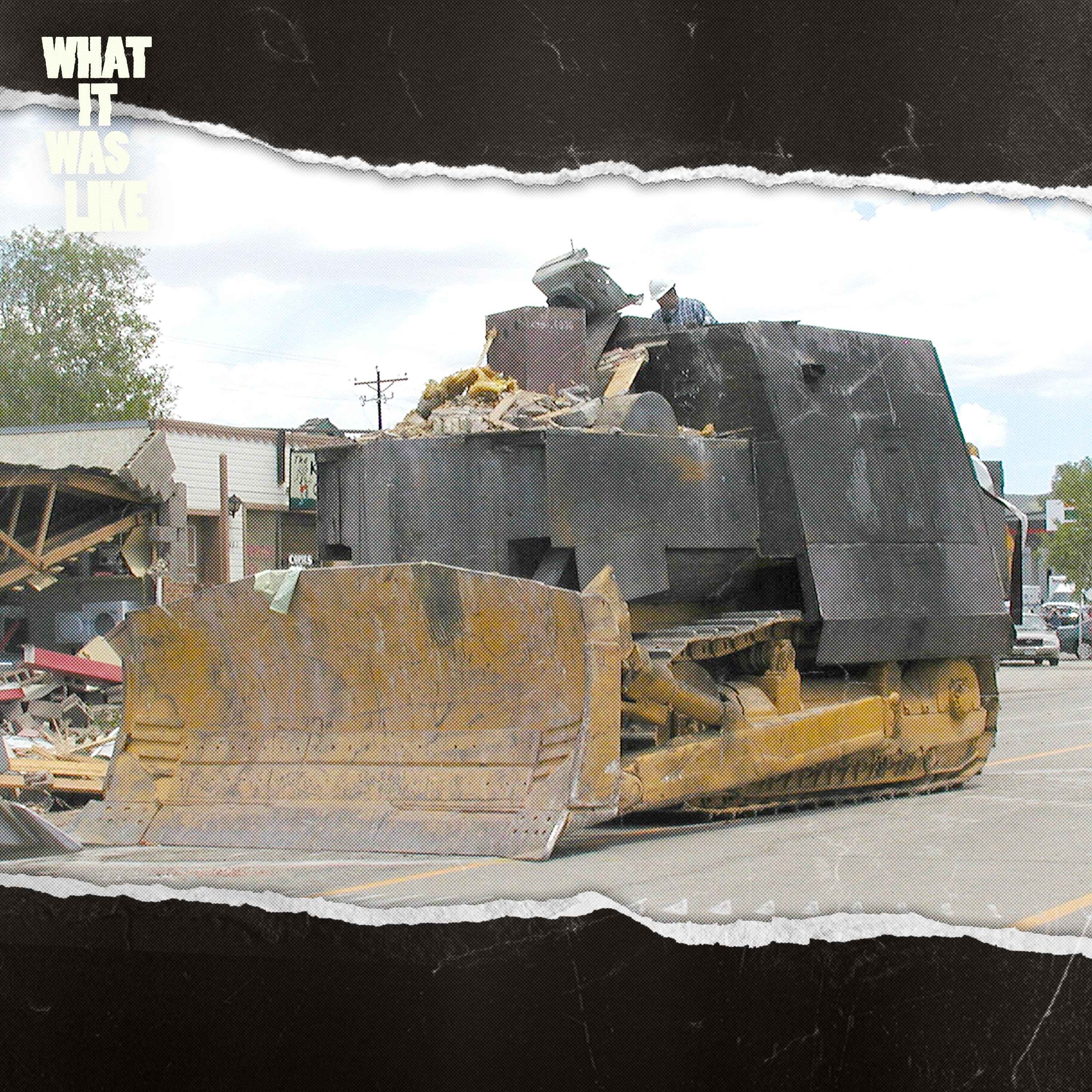
Hey, I'm Julian Morgan, and you're listening to what it was like, the show that asks people who have lived through big dramatic events what it was like. Hey, welcome back. So this week, we're talking about revenge. Our bonus episode this week is a lighter, personal story about revenge from my own life. But today's main story, this one, this is about the darker side. It's about the kind of revenge that gets labeled domestic terrorism. And today's story takes us back 22 years. It takes us back to June 4, 2004, to a little town in the Colorado Rockies called Granby, where a man named Marvin Haymeier emerged from a shed on his property driving this massive bulldozer that he'd transformed into an armored tank. So he'd spent about six months working on this thing, and he'd welded all of these layers of steel and concrete all over the cockpit so that it had become bulletproof. And then he'd mounted three guns, all facing in different directions, kind of like a battleship. And then he went on this rampage and just tried his very best to destroy the town. So he raised the town hall, and he drove a hole through the local newspaper office. And then he spent a while shooting at a propane storage facility and tried to blow it up. And then later, he died by suicide with his own gun when he got stuck inside a building and couldn't reverse out. Later, the media referred to this event as the Killdozer rampage, even though by some miracle, no one got killed. Now, the big obvious question is, why? Why did you do it? And in his mind, the mind of Marvin Heymayer, it was all about revenge. Marvin seemed to believe that the town had wronged him over and over again. Initially, when he first moved in in the early 90s, it was over a sewer connection the local council refused to pay for. And then it turned into a disagreement about bringing legalized gambling into the town. And then it was about 13 subsequent years of just small town politics that Marvin believed conspired against him. Now, you're going to hear more about these grievances today. And I know that they're probably going to sound mundane, but. But for Marvin, they justified destroying the town. But I think what's interesting here is that the Killdozer story, it's not. It's not just about one man's anger I think it taps into something that's deeper in American culture, and that's the mythology of the lone wolf standing up to authority. And it's this theme that has just been in America's psyche for decades, probably hundreds of years, and it runs from Lee Harvey oswald to Timothy McVeigh to the Unabomber to just countless other modern extremists. And we're going to get those reflections and hear the story from a man who was right in the middle of all of it. My guest today is Patrick Brower, and he's a longtime resident of Granby, and he's the editor of the local paper, which, as I said, was one of the buildings that Marvin targeted. Patrick was there when the killdozer came crashing through his newsroom and he escaped out the back. And he's been trying ever since to kind of correct the story because it's been hijacked and twisted by anti government and far right groups online into kind of a story of Marvin, this persecuted outsider who was just standing up for what he believed in. Anyway, I think this is a chilling but, I don't know, kind of often surprisingly funny story, but one that I think illuminates the wilder, darker aspects of America's national character. So let's get into it. Here is my conversation with Patrick Brower. Hey, Patrick. Welcome to the show.
- [06:49]
Patrick Brower
Hi, Julian. It's good to be here.
- [06:51]
Julian Morgan
It's very good to be here. All right, so I want to start with a bit of scene setting. How would you describe the town of Granby?
- [07:02]
Patrick Brower
Well, Granby is an evolving town. When I first moved here in 79, it was mainly a service town with a lot of gas stations, repair stations, a few retail stores. Not as touristy as, say, the ski area towns further east or the summer resort town, Grand Lake, which is at the gateway to Rocky Mountain national park to the north. So there's a real strong Western flavor. There's real working ranches right here just outside of Granby. So, yeah, there's. There's cowboys here, and then there's ski instructors. The technical classification for Granby is resort rural.
- [07:44]
Julian Morgan
Okay, good name.
- [07:45]
Patrick Brower
Yeah.
- [07:46]
Julian Morgan
And what, what drew you to Granby in the first place?
- [07:50]
Patrick Brower
I came here for a job. I'm a journalist, and I came here and took a job as a reporter and photographer at the Sky High News, which was the leading weekly newspaper at the time in Granby.
- [08:03]
Julian Morgan
Okay, so tell me about when Marvin Heymayer first came into your life. Do you remember first meeting him?
- [08:11]
Patrick Brower
Yes, I remember first meeting him after he had Purchased a property. And he wanted me to do a little story about his new business that he was going to open. He's a muffler mechanic. And I went down there and met him, introduced myself to him, and we had kind of set up a time to do an interview. And he wanted to do some advertising in the newspaper. Okay. But the problem was that, you know, every time I'd go down there to either talk to him about the interview or get some ads or what have you, he was never there. So his schedule was erratic.
- [08:48]
Julian Morgan
And he wasn't calling you to say, hey, I'm gonna be at the shop between this window. Come on down. He was just sort of hoping that you'd catch him.
- [08:55]
Patrick Brower
Right. And that's the way it was. And then when I finally did get there, he was angry, saying, you know, why didn't you do this story? And all that stuff? And I said, well, Marv, I've been trying to catch you, and we keep missing, but why don't we do this? I'll give you some free advertising to make up for that. That's how I first met Marv. And he actually was pretty decent after that.
- [09:17]
Julian Morgan
I just want to establish Marv as a bit of a character here. So can you give us a description? You know, what did he look like? What was his body language?
- [09:27]
Patrick Brower
Well, Marv was a big guy. He's like 6ft, 3 inches tall. He wasn't fat. He was pretty slim, healthy looking, actually. Short hair. But, you know, I don't know if I ever saw Marv when he wasn't wearing a pair of coveralls. Like he was at work all the time. And he had this sort of taciturn intensity about him that if you were to talk to him and pose a question or make a point, he would be very quiet for a second or two or four or five, and then suddenly, you know, say something. Usually not overly verbose, but to the point. You know, he seemed like the ideal muffler mechanic kind of guy.
- [10:12]
Julian Morgan
I don't know what that means, but if I had to guess, yeah, the guy that you just described sounds right, but. But what I'm hearing is that you first met him when he was feeling like you'd kind of ripped him off. Like. Like his. His approach to that miscommunication was that like you're taking the piss. He's tried his very best and now you need to make up for it, which I guess I'm extrapolating here, but that was. That was. In the end, that was his whole feeling about the town, not just you.
- [10:39]
Patrick Brower
Yeah, I mean, there's other. There's many people who dealt with Marv over the years that as soon as they had any little subtle disagreement, usually about payment for something or getting paid back for something, he would get sort of sullen and a little bit angry and basically never talk to them again.
- [10:58]
Julian Morgan
Yeah, great.
- [10:58]
Patrick Brower
You know, I can count five names like that, you know, right off the top of my head. But, yeah, he was kind of. Especially when it comes to sort of financial and money things, he was very temperamental.
- [11:12]
Julian Morgan
Did he ever strike you as dangerous?
- [11:15]
Patrick Brower
Not at that time, no. I suspect that he was capable of, you know, brooding about issues and letting you know that he was upset about something. He definitely was that way, but I never sensed him as dangerous.
- [11:28]
Julian Morgan
Okay. And he moved in in the early 90s, and the Killdozer rampage was 2004. So I guess there's almost, what, 15 years, there's a 15 year chronology there of him just getting bogged down in various disputes with the town. I mean, did you get a sense that the tension was ratcheting up, that he was becoming more erratic or. I don't know. How do you think about that time now?
- [11:52]
Patrick Brower
Well, what came about was, so Marv bought that two acre parcel, but in the course of the next three or four years, he kept trying to sell that property because he knew they were going to try to put in a concrete plant nearby next door.
- [12:05]
Julian Morgan
Okay.
- [12:06]
Patrick Brower
Marv, at that point launched a. A very public and persistent campaign to protest every move they made. And at one point it looked like he was going to stop it, but I think he pushed it too far. And by the time of the last meeting, Marv was the only one there. And he could just tell by the tone of the town board and all that that he was not going to get his way, that they were going to approve the project, which they did. And that was the moment where I think Marv actually decided he was going to do something to get back at the town. So it was somewhere in that point that I think he went off the deep end. And that was where he began, I think, planning to build the dozer, tell you the truth, because he had actually spoken to people and said, what if I just bulldoze this whole damn town? You know, he told his girlfriend that, you know, she asked him, well, why do you have this bulldozer here? Said, I think I'm just going to bulldoze this whole town. And that's when she told him, marv, you need to get out of Here, you need to leave. You know, what good would that do? Anyway, wait, wait, wait.
- [13:09]
Julian Morgan
Hold on, hold on. So he actually bought the bulldozer. It's an enormous bulldozer and he had it sitting around for quite a long time. And people saw it and talked to him about it.
- [13:19]
Patrick Brower
Yeah, he bought this Komatsu Bulldozer. It's a 65 ton bulldozer. He bought it at an auction in California and had it trucked out to Granby. And it sat in the yard where he had his muffler shop for probably nine months before. He then drove it into the shed on his property that he had in the meantime sold. And get this, he actually did sell his property for a very high price. A little over $400,000 he got for it. Once he got that property sold, he leased back metal shed that he had built on the building and drove the dozer into that shed. And that's where he worked on the dozer on his own old property that he was leasing back.
- [14:02]
Julian Morgan
Okay, so he actually, he won. He sold the property like he'd always dreamed. But then by the.
- [14:07]
Patrick Brower
He got it sold for a good price. But he, I think, was too far down the road at that point.
- [14:13]
Julian Morgan
Yeah, yeah, yeah, yeah. Before we go any further, I just gotta share my own personal feelings about him. Just largely because I'm curious whether you agree, but I've known people like this through my own life. You know these people who just have an endless capacity for self pity, they're always feeling like a victim while simultaneously trying to get one over you.
- [14:32]
Patrick Brower
That's my feeling too. I think that Marv really dwelled on what he didn't get rather than on what he had.
- [14:40]
Julian Morgan
Yeah, so. All right, so take me back to that shed on his property.
- [14:45]
Advertiser
You.
- [14:45]
Julian Morgan
He's kind of barricaded himself in and he's building this so called killdozer. Can you just give me a bit of detail on that? What's happening unbeknownst to the rest of the town?
- [14:56]
Patrick Brower
So he sells his property. He has sold most of his snowmobiles, most of his equipment. He drove the bulldozer into this metal building shed. He says that it just barely fit, which he thinks was a sign from God that it meant to happen. It was meant to happen. And he parks it in there and starts working on building this killdozer, this tank. He's literally building a tank out of this Komatsu bulldozer. He almost gets caught when the new owners of the property had to do an insurance inspection and the guys came in There to look and look around, just to look at the property. And they saw Marv was doing weird stuff to this dozer. And he says, oh, I'm doing experimental work for operating bulldozers in cold temperatures at high elevations. And I'm doing modifications on this thing. So that's what I'm doing to this. And he thought he was going to get caught, but that's the story he told them. So they didn't think anything of it after they left. Then he built a wall of pallets so that if someone went into the other side of the building, they couldn't really see what he was doing. He put a little sleeping area in there. He had a cot, he had a cooking stove. And he would spend many nights in there working on the dozer. He put surveillance cameras outside the building so he could see if anybody was coming. And he basically, for that, certainly nine months, devoted his life to. Well, it would have been six months to building that tank. And it was no easy task.
- [16:29]
Julian Morgan
Yeah, six months. Six months is a long time. Why did it take? I mean, you see photos of this thing. It's just like a whole lot of welded steel around it. Why did it take six months?
- [16:38]
Patrick Brower
Well, it's. It's more than you think. So he welded a layer of half inch steel all the way around the cab. Then he built a ledge beneath that and then welded another layer of steel around it so that there's a gap between the two layers of steel. And then he proceeded to pour concrete in between the two layers of steel. So you have steel concrete 4 to 5 inches, some places 6. Then another layer of steel. And then in some of the more vulnerable areas, he actually welded another plate of steel to the outside of the dozer. And then he also was careful enough in his welding that he put in four shooting ports or embouchures where he could stick a rifle barrel out and basically shoot a rifle from outside the dozer while being protected inside the dozer, Inside the tank. Wow.
- [17:35]
Julian Morgan
It was an actual tank?
- [17:37]
Patrick Brower
Yes. He built remote viewing cameras into the armor outside the tank. So he had two or three monitors inside the dozer and he had five cameras mounted outside so he could. Because there were no windows on the armor. And on the top he had built an air conditioning unit so that he would get some ventilation, but it was still the steel, concrete, steel construction. And he had sliding doors that he built in above the embouchure so if he wanted, he could look out. But he had Flexan, which is bulletproof plexiglass, in those little viewing ports so that if someone was shooting at them, they, the bullets would theoretically be stopped. He had a 30 caliber rifle mounted in the front. It would have been the right side. He had a.223 semi automatic rifle mounted. And in the back he had a.50 caliber sniper rifle mounted. And there was another embouchure that he had built on the left side of the cab. But he never put a weapon in there. So he, you know, he was out to shoot at things.
- [18:48]
Julian Morgan
Yeah. You're not kidding. The ingenuity to design and construct something like that. What a waste of brilliance.
- [18:55]
Patrick Brower
Yeah, like I said, he was no dummy. No, he had certain mechanical and intellectual abilities. But I think he let his own paranoia, his own conspiracy mindset just push him to do this grand gesture. And I do think, and you can hear it in his tapes, he says, you know, people are going to hear about what I did and some are going to think I'm wrong and some are going to think I'm right. But you know, I was doing this because God told me to do it. He built it up as, yeah, this is my ultimate contribution to life in the world. I'm going to show those people and I'll either be a hero or a villain, but so be it.
- [19:39]
Julian Morgan
Hey, we're gonna take a quick ad break, but stick around because we'll be back with more what it was like.
- [19:50]
Casey
Hi, I'm Casey, host of the Casefile podcast. Today I want to talk to you about Boost Mobile offering reliable nationwide coverage backed by a 30 day money back guarantee. Love your service or get your money back, no questions asked. With Boost Mobile, you get nationwide coverage and fast network speeds at a fraction of the price. Why pay more for the same great service? Unlimited plans start at just $25 a month and you won't be sacrificing coverage to save. So why wait? Start saving with Boost today. The Boost Mobile network together with their Roaming partners covers 99% of the US population. 5G speeds not available in all areas. Visit your nearest Boost Mobile store or find us online@boostmobile.com money back guarantee. Try boostmobile risk free for 30 days. If you don't like us, you get your money back. Requires port in and autopay. Customers who cancel within 30 days of activation will have Boost service fees refunded, activation fees if applicable and phone payments will not be refunded.
- [21:11]
Julian Morgan
Monday Sidekick the AI agent that knows you and your business, thinks ahead and takes action task at anything seriously. Monday Sidekick AI you'll love to use.
- [21:23]
Advertiser
Start a Free trial today on Monday.com.
- [21:27]
Most security systems react after a break in begins. That's too late. Simplisafe is different. It's proactive. Active guard Outdoor protection uses AI powered cameras to spot suspicious activity before criminals get inside. Live monitoring agents can see, speak to and scare off intruders in real time, quickly calling police if needed. To get 50% off your new system, go to SimpliSafe.com podcast. That's SimpliSafe.com podcast for 50% off. There's no safe like SimpliSafe.
- [21:56]
Julian Morgan
Hey, Ryan Reynolds here from Mint Mobile.
- [21:58]
Patrick Brower
Now I don't know if you've heard.
- [21:59]
Julian Morgan
But Mint's Premium Wireless is $15 a month. But I'd like to offer one other perk.
- [22:05]
Patrick Brower
We have no stores.
- [22:09]
Julian Morgan
That means no small talk.
- [22:11]
Patrick Brower
Crazy weather we're having.
- [22:12]
Julian Morgan
No it's not. It's just weather. It is an introvert's dream. Give it a try@mintmobile.com Switch upfront payment.
- [22:20]
Advertiser
Of $45 per three month plan. $15 per month equivalent required. New customer offer first three months only, then full price plan options available, taxes and fees extra. 6 Mint mobile.com.
- [22:33]
Julian Morgan
Take me to June 4th of 2004. How did that day start?
- [22:39]
Patrick Brower
So June 4th began as, you know, an early summer day in Granby. The police get a call from a woman working in his old muffler shop, which is now a trash company because the people that bought his property owned a trash company. And the woman called and said, there's something going on down here. There's a guy driving around, looks like a tank driving right through my yard and I don't know what it is and you know, you better look into it. And so, you know, they sort of wondered what the heck could it be. Well, by the time they got down there, he was already destroying a large concrete forming building. You know, we're talking about a building that's like, you know, 150ft long and 70ft wide where they form large concrete structures. And he was just driving into it. He'd go in six feet, knock it down until the whole ceiling caved in. He was smart enough not to go all the way into it so that he wouldn't get trapped and he destroyed that building. And then he proceeded over right next door to the concrete batch plant and, and started trying to destroy that. But in the meantime, Cody, the owner had been alerted that something weird was going on. Cody drove over in his loader and started to try to stop him. And first thing Cody did was he grabbed a handgun from one of his employees and walked up to the dozer and fired at it, Shot at it one time.
- [24:03]
Julian Morgan
Brave, brave.
- [24:06]
Patrick Brower
I'm not so sure he was aware there were guns sticking out, you know, but he fired at it. And of course that didn't do a thing to the dozer. A firearm is useless against that machine. And when that didn't do any good, some of the other workers there tried to cram bars and steel into the treads to try to stop the dozer. None of that worked. It just crunched them into pieces. And then the dozer started getting serious about tearing up the building. So Cody jumped back into his front end loader and rammed the dozer several times trying to stop him. Cody claims he lifted up one side of the treads in doing that. But that's when it got Marv angry. And then Marv started shooting at the front end loader. And I personally counted nine puncture rounds in the bed of this front end loader. You know, it's steel, 2 inches thick in points. And the rounds that he was firing completely pierced the the dozer blade. It's a miracle Cody didn't get hit. I have photos of where the rounds went through. They did pierce the bed of the front end loader. So he shot at Cody, didn't kill him. Cody was knocked out from the next time. He slammed into the dozer and then he kind of recovered. By then the dozer was smashing up the building. And in that period, also, a state trooper had pulled up. Dave Batura started walking toward the dozer. All sudden he hears five quick rounds fired off in succession. All went over his head. That was the 50, I'm convinced, because the 50 had only a five round clip in it magazine. And that's when the state trooper quickly turned around and went back to his vehicle and grabbed a long rifle to try to figure out what he's going to do about this thing. So people tell you that Marv didn't really want to hurt anybody and he just wanted to damage property. And I don't think that you can really believe that. Even though he didn't kill anybody, he could have easily killed Cody, could have easily killed that state trooper. And then he had another shooting incident when he was going around the side of the batch plant. Sergeant Rich Garner I think he fired some rounds at it with either a long rifle or a pistol, and Marv didn't like it. And then Marv fired several rounds at him with the 30 which was in the front of the dozer. And then he's still smashing up this big concrete batch plant. I mean, it's a large building and he's doing the same old. Drives in a few feet, backs out. Drives in a few feet, backs out. Then there were some state troopers hiding behind some of the stacks of highway barriers on the other side. And they were occasionally taking a shot at the dozer. They didn't really know what to do. Yeah, yeah.
- [26:47]
Julian Morgan
What'd he do?
- [26:47]
Patrick Brower
And you know, Marv then drove the dozer full speed over to where those concrete barriers were and knocked. Knocked him over. Now, those guys luckily ran away just before he hit them. But these are thousand pound concrete barriers stacked on each other that if they'd fallen on one of these guys would have. Probably would have killed.
- [27:02]
Julian Morgan
Oh, yeah.
- [27:02]
Patrick Brower
Severely injured. Yeah. And then he. He left and ran over a vehicle of the sheriff's department. Totally smashed it, turned it into a pancake.
- [27:10]
Julian Morgan
Wow.
- [27:11]
Patrick Brower
Started proceeding toward the town. And in the meantime, people are sort of, you know, shooting at it but not really knowing what to do. And this is when the Grand County Undersheriff Glenn Traynor says, well, I'm gonna figure out what to do. And he tries to figure out how to climb up on the top of the thing to see if he can't get. Maybe shoot around into the inside or figure out how to get into the thing through a hatch or whatever.
- [27:34]
Julian Morgan
I read about this guy, he was described as riding it like a steel bronco, which I thought was a nice line.
- [27:40]
Patrick Brower
Yeah, yeah. He got. What happened is he. Marv had put grease on some of the sides of the dozer so you couldn't just scramble up, but he had figured out a way to scramble up on the back where the scraper was. There was a big metal hook in the back of the dozer and with that structure on the back, he was able to figure a way to get up on top. And he started shooting into what was the. Looked like an air conditioning unit. Then a fellow policeman tossed him a few stun grenades or smoke grenades that he tried to drop down into the exhaust. Because the exhaust pipes were up on the top of the cab. They didn't do anything. Then that other guy came back and tried to shoot into what looked like some of the. Where the cameras were.
- [28:25]
Julian Morgan
Yeah.
- [28:26]
Patrick Brower
Didn't have any effect at all. And by this time, Marv was destroying the building. At Mountain Parks Electric, there's photos of the dozer slamming into the building with Glenn Trainor up on the top trying to figure out, you know, what the heck, what do I do up here? You Know, I'm not getting anywhere.
- [28:43]
Julian Morgan
I mean, this story sort of borders on comical, you know, like, it's like an action story. It's pretty adventurous. But then there's parts of it I'm like, that is a very funny image in my head. But at the same time, you know, he's trying to kill people. It's the tragedy and comedy are in equal measure.
- [29:01]
Patrick Brower
Yeah, it's. I will have to tell you that because it just trundled along so slowly, impervious to everything. It was sort of like a slow motion disaster movie. And you could see the cops running up on the side trying to figure out what to do. And Marv goes a little bit further east on Highway 40 and smashes up Maple Street Builders building there. Completely smashes the building. He was mad at the owner of that, George, because George refused to sign the second petition he wanted him to sign against the concrete plant.
- [29:35]
Julian Morgan
Okay.
- [29:35]
Patrick Brower
That's all we can figure that he was mad at George about. He was the owner of Maple Street Builders.
- [29:40]
Julian Morgan
So all of these buildings that he smashed up so far, they're related in some way to his. His little wars that he's waged through throughout the past.
- [29:49]
Patrick Brower
His war about. Yeah, the concrete plant.
- [29:52]
Julian Morgan
Okay.
- [29:53]
Patrick Brower
Yeah.
- [29:53]
Julian Morgan
Okay.
- [29:55]
Patrick Brower
And so then he goes to the town hall, which is another probably 10 minute drive in the dozer at the town hall. That's where Glenn jumps off. And Marv proceeds to completely destroy the town hall, Giving special attention to the building that was the hearing room where several of the hearings took place, where he was, you know, didn't get his way. And in the meantime, he's smashing up police cars, Totally tears up a kid's playground in the back. Interesting to note that as he was approaching the town hall, there were five kids in the town hall, in the library, in the basement, and a reading group. And literally two minutes before Marv hit that building, people pulled up there and got kids loaded into cars and drove them out of that library. It wasn't, you know, a minute or two later that Marv started destroying that building, smashing it to pieces. You know, he had no way of knowing if those kids were in there.
- [30:52]
Julian Morgan
No.
- [30:53]
Patrick Brower
And he completely destroyed the town hall. And they had gotten out just minutes before. Jeez.
- [30:59]
Julian Morgan
Yeah. It's a total disregard for human life. I mean, you'd argue that his targets were buildings, but he didn't. He didn't care if there was some collateral human lives lost.
- [31:07]
Advertiser
Yeah.
- [31:09]
Patrick Brower
That's my feeling is that he was indifferent about people.
- [31:12]
Julian Morgan
Yeah. So by the point that he was Tearing up the town hall. How far are we into this thing? Is it like an hour past or a couple of hours?
- [31:20]
Patrick Brower
I'd say it's an hour in, at that point, okay, maybe 45 minutes to an hour. And one of the things that had happened is that when he was tearing down the batch plant, big, huge pieces of concrete were falling down from the building and they had bent the barrel on the semi automatic.223, which he had on the right side of the dozer. So in my opinion, of course, this is just speculation, that was his most effective killing weapon because he had full range of motion with it. He could have gone high, low, left or right. Whereas the.50 on the back and the 30 in the front both had limited, lower visibility for shooting because the cab was further back from where the structure of the dozer was. So he couldn't shoot really low with those weapons. Right.
- [32:06]
Julian Morgan
Okay.
- [32:07]
Patrick Brower
And that comes up later on in the rampage. But at that point I'm convinced that the barrel was bent. And when they took it all apart, they found a spent round in the chamber of the.223. So maybe because of that he didn't shoot anybody.
- [32:24]
Julian Morgan
He was trying to, and it got stuck in the barrel.
- [32:28]
Patrick Brower
Right. And then he went from there to the town hall to what was then called Colorado Savings and Loan, and smashed up the corner of the building right where the office was, where a woman that had been on the town board four years earlier used to work. He smashed up that, you know, totally destroyed the front of the building, tries to knock over a traffic light, then gets on Main street and heads toward the sky. High news, our building.
- [32:53]
Julian Morgan
Okay.
- [32:54]
Patrick Brower
But on the way, he knocked over a few trees and lampposts as he's going down the highway. And I specifically remember going out of my office because at this point, I'm going to cover this thing.
- [33:04]
Julian Morgan
Yeah.
- [33:05]
Patrick Brower
Looking down the highway.
- [33:06]
Julian Morgan
Yeah. What were you doing?
- [33:06]
Patrick Brower
Seeing him coming down the road.
- [33:08]
Julian Morgan
So, like that morning, what were you doing? You were just at the office?
- [33:12]
Patrick Brower
I was at the office, you know, doing office work. I think I went out on a few calls, doing some editing, you know, just sitting in the office with the staff. Friday was kind of a slow day usually, but then suddenly we get a phone call that says, you must evacuate. There's something going on down in the western part of town. And everybody get out right now. So it was a 911 reverse call. And so of course we all got, what the heck's going on? You know, and they didn't really know at that point. But they told everybody to leave. And I decided to stay with one of my editors from Winter Park, Harry Williamson. But everybody else left. And at the same time, my home, they got. My wife got a phone call saying, get out of the house. You're in danger. They must have figured out that it was Marv by then and that he had a list. Of course, that freaked her out, but. So I'm staying in the building.
- [34:01]
Julian Morgan
Sorry, a list? Tell me about the list. What do you mean?
- [34:04]
Patrick Brower
Well, Marv had written down two lists. There was no description with it. It's just a list of people and. Or businesses. There were two pieces of paper, and they were clearly people he had come to dislike. Or maybe they were. It was his revenge list. I made both lists, so I'm the only person that got on there twice. But he had, like, you know, Judge Doucet on their judge. He was the judge that ruled against him in the district court case. He had the Thompson family on there. He had former friends who he had become enemies with on that list. He had the Catholic Church on there. He had a variety of businesses on the list, but it was mostly names of people.
- [34:46]
Julian Morgan
Okay.
- [34:47]
Patrick Brower
And we figured it was his hit list.
- [34:48]
Julian Morgan
Yeah, it sounds like a hit list.
- [34:50]
Patrick Brower
But he had written that list. And they found those lists in his house up in Grand Lake. When they figured out that it was Marv, they went to his house to see what the heck's going on, and they found those lists up there.
- [35:02]
Julian Morgan
Okay, were they, like, displayed prominently on a kitchen table or something?
- [35:05]
Patrick Brower
I think they were just sitting on a counter maybe. I don't think he had, like, said, look at this. Interestingly enough, he had also written sort of a manifesto of sorts on pieces of cardboard and paper that he had in the building where he had built the dozer.
- [35:23]
Julian Morgan
Right?
- [35:23]
Patrick Brower
And those were left, you know, displayed prominently in the building. So they. They went to where he drove out of. And here was this stuff. Like, you know, if Cody had only bought the property at me at the price I offered, if the town had not, you know, met in secret meetings and tried to screw me, if the judge had admitted his conflict of interest, if only I was able to develop my property the way it was, just a long list of, you know, complaints, then I wouldn't have had to be so unreasonable. That was his phrase. I wouldn't have had to be so unreasonable. Right.
- [35:57]
Julian Morgan
Okay, look, what you made me do. This is the most classic self sabotaging mode of thought, right? So you're at the newspaper offices and you get this call and what happens next?
- [36:10]
Patrick Brower
Well, then all of a sudden, cops start coming into the building, using our phones to call and say, what do we do? What do we do? The dozer is heading down the highway toward our plant, toward the newspaper. And they said, well, get out. And the cops said, get out of here. You know, what are you doing in here? And, well, we decided to stay because we didn't know that he was going to turn on our building. So I went out, took a photo of the dozer coming down the highway, then went back in just to observe him drive by, you know, and lo and behold, when he gets in front of our building, he took a right turn and slammed into the building. And completely, you know, he told us our building. If I had tripped, I'd be dead right now. Because he, you know, he would come in and back out, come in and back out, and the whole building's falling down around us.
- [36:52]
Julian Morgan
Just slow this down for me. Like, when you're watching this happen, how did you feel and what did you see?
- [37:00]
Patrick Brower
Well, the main sensation that I remember at the time was the ground was rumbling. I mean, it was literally rumbling from the weight of this thing. And you could sort of hear the tread squeaking. You know, it was loud. Just loud. Diesel engines roaring. The treads were. You could hear the tread squeaking. And then all of a sudden, it takes a right turn. I'm thinking, oh, no, you know, what's he going to do now? And bam. He just slams into the wall. And it's just this cascade of noise and glass and rubble and dust and everything else. Well, at that point, we did do what the cop said, and we ran out the back. But literally, the building was falling down around us as we ran out the back. And my first thought was, you know, what have we. You know, did. What did I write that made somebody this angry? You know?
- [37:48]
Julian Morgan
Right. Because you didn't.
- [37:49]
Patrick Brower
And I thought it was like, you know, somebody. I'd written a crime article about somebody who'd been arrested for drunk driving. Who knows?
- [37:55]
Julian Morgan
You know, you didn't know it was Marv at that stage?
- [37:58]
Patrick Brower
Not at that point. But we quickly figured it out. So I run out the side, I'm hearing whistling noises and the percussion of gunfire. And I said, I gotta get out of here, you know, because at this point, Marv wasn't shooting, but the cops were shooting at him.
- [38:14]
Julian Morgan
Right.
- [38:15]
Patrick Brower
And so there were rounds going all over the place. You know, I could have easily been hit by a, you know, a friendly fire. But you mentioned how comical it was. I Remember stepping out the side door, just watching this thing slowly destroy our business, kind of laughing like, this is absurd. This is slow motion absurdity. You know, there is that angle. There is that aspect of this.
- [38:39]
Julian Morgan
Yeah, yeah.
- [38:40]
Patrick Brower
Just slowly trundling through town, destroying it. Can this really be? How absurd is this? You know?
- [38:46]
Julian Morgan
Yeah, destruction usually happens fast. And when it happens slowly, there's something a bit elephant to ask about it. You're like, this is odd.
- [38:55]
Patrick Brower
So, yeah. So then I run down to the railroad tracks behind our business and there's people there hiding behind railroad cars, listening to the radio. And the local radio station was broadcasting a blow by blow account of the rampage. And that's where it became clear that it was Marv. And they actually had a woman on there who knew Marv with was saying, you know, oh, Marv's a good guy. He's just a teddy bear. You know, he wouldn't hurt anybody. And here he is destroying the town.
- [39:23]
Julian Morgan
How did you feel when you heard it was Marv?
- [39:27]
Patrick Brower
I said, well, that makes sense. And I immediately ran home and got my wife and child out of there and drove away from my house thinking, I'm never going to see it whole again because it's only an eighth of a mile to my house from where the office was.
- [39:41]
Julian Morgan
And Marv knew where you lived?
- [39:43]
Patrick Brower
Oh, yeah, he knew where I lived. So then he just went on and continued with his rampage after he destroyed the newspaper, totaled. He went and attacked basically the Thompson family. So he went after all the property of theirs that he knew about and tipped over trucks and stuff. And then he went to the Thompson family house, which was right next to all that, and completely totaled. That Thelma, the mother, remember Dick, had died a year before this, the mayor. But Thelma, his wife and the mother of the children was still there, and she had to be roused out of a nap to get out of the house. You know, maybe a half hour before he got there, he completely destroyed their house. And it was at that point where he had his first. Well, his second fight. Clark Branstadter, the county road and bridge superintendent, grabbed a big scraper from the nearby job they were doing and tried to stop Marv. Now, a scraper's a great big long thing. They're big and heavy, but nowhere near as heavy as that bulldozer. And so they had a battle there. He was trying to stop Marvin with this machine, but it got a flat tire and got jackknifed and Clark had to jump out and run away. And then Marv parked the dozer for just, like, I think, 10 minutes at most. And I think he knew it was overheating, so he was maybe giving it a chance to cool down.
- [41:04]
Julian Morgan
Yeah, he's been going for a while at this point.
- [41:07]
Patrick Brower
Yeah. And then he got it going again and goes down this little depression to the independent propane yard, which is a great big bulk propane plant where they store large tanks of propane gas. And keep in mind here, this is right at the edge Of a residential neighborhood, Right next to a senior living facility. Marv drives down there and parks the dozer in such a way that he can shoot at the propane tanks, but he then opens fire on the propane tanks. But because of that, remember I told you he couldn't get the rifles low enough? So he starts shooting the.50 caliber rifle. And this is all on video. You can see it. He's shooting at the tanks, but he's hitting his own armor because he can't angle the dozer down enough. So that he has a clear line of fire at the tanks.
- [41:58]
Julian Morgan
That is so lucky.
- [41:59]
Patrick Brower
He doesn't know whether he hit the tanks or not, but he also did shoot two or three electrical transformers that were located right there. And I think his intention was to puncture the propane tank with a round and then have sparks from the electrical transformers, Ignite the escaping gas, and then create an explosion or conflagration or whatever. And after he fails in that task, he then drives the dozer back up and out, has another battle with a scraper going up the hill to get out of this business community where they had, you know, the gas company and a lumber yard. He once again defeats the scraper, no problem. And then goes back out onto Highway 40. And as he's getting ready to destroy the gambles building, you can see a big plume of gas. It's not really gas. It's fumes. You know, he overheated. He blew his main cooling hose. But he still has enough time to completely destroy the gambles building. And methodically smashes up the front, Then plows down the side and then gets stuck and can't go anymore. I think the main reason he got stuck Is because he was overheated. A lot of people say it's because he got stuck in this little basement, but he could have maneuvered out if he had the power. When they took the thing apart, the engine was white. You know, he was driving it way hot.
- [43:14]
Julian Morgan
Yeah. Yeah.
- [43:15]
Patrick Brower
About five to ten minutes after the dozer became stationary and the engine was off, they heard the retort of what sounded like a firearm. And that's when Marv killed himself.
- [43:26]
Julian Morgan
So he knew it was over.
- [43:28]
Patrick Brower
He knew, yeah. And that was the end of the rampage. Although I have to tell you, the second rampage began right then. And the second rampage is the tons and tons of misinformation and vigilante glorification. A lot of people call him the last great American folk hero. The narrative began immediately, even though this was before the time of social media. It was the time of web pages though. And it just spread like wildfire that this guy had done this. And of course it had been on TV and national TV and all this stuff. So the word was spreading, you know, around the world actually that this had happened. And it was in that period, that 12 hour period after the rampage that the Killdozer name first began being used. Kind of jokingly, you know, people, tongue in cheek. Oh, it's the Killdozer. Ha ha ha. Killdozer was the name of a movie, early 70s B level movie about a bulldozer that got struck by Martian lightning and was obsessed and was attacking people. You know, so it became a sensation pretty quickly. And there was one guy that put together, I think it was called no bullshit news or no common sense news or something. A guy out of Arizona immediately started writing on his webpage. It was just a bunch of unfactual stuff about Marv the rampage, what had happened, and his. He was posting this stuff two days after the event and it was getting picked up by anybody that was trying to search and it was just full of lies. You know, the town denied him an easement to his property and he took the law into his own hands. That never happened. You know, he. He claimed that there were no weapons inside the dozer or on the dozer and that really the police had shot him and made it look like a suicide that could not possibly have happened. He claimed that he made up all these BS stories. I was the subject of typical establishment journalist against the common man fighting against government. And he took government side and what a jer. And Brower was a yellow journalist. I mean it just goes on and on, all this defamatory, mostly false stuff, but which ultimately got picked up and became part of the narrative that became very popular online.
- [45:49]
Julian Morgan
Hey, we're going to take a quick ad break, but stick around because we'll be back with more what it was like.
- [45:59]
Advertiser
You walk in tired and hungry, one bad dinner away from losing it. You don't like to cook, you don't want more takeout, you just want something good. That's why there's Dish by Blue Apron. Pre made meals with at least 20 grams of protein and no artificial flavors or colors. From fridge to fork in five minutes or less. Keep the flavor. Ditch the subscription. Get 20% off your first two orders with code APRON20. Terms and conditions apply. Visit blueapron.com terms for more. From building timelines to assigning the right people and even spotting risks across dozens of projects, Monday Sidekick knows your business, thinks ahead and takes action. One click on the star and consider it done.
- [46:51]
Patrick Brower
And I owe it all to you.
- [46:55]
Advertiser
Try Monday Sidekick AI you'll love to use on Monday.com.
- [47:06]
Julian Morgan
You mentioned the tapes before. How did they come into the picture and what were they?
- [47:12]
Patrick Brower
He had recorded tapes in late March and early April. I think it was the year he did the rampage. So six weeks before the rampage, he recorded him in his cabin up in Grand Lake. And he says that one of his friends says, oh, don't do tape, don't do videotapes, just do tapes. So somebody knew he was at least making tapes about what he was angry about. And it's just as he just spills his guts about all the wrongs that were done to him, justifying what he was going to do.
- [47:40]
Julian Morgan
And these were found by the police.
- [47:44]
Patrick Brower
They were cassette tapes. And he had mailed them to his brother, okay, who lived in South Dakota, and his brother turned him over to the police, okay. But that was done, you know, after Marv must have mailed him the day or two days before the rampage or whatever. And that's how the police got their hands on it. And then they held on to the tapes until September, so four months. And then they released them to the public. And, you know, we listened to them, wrote a whole bunch of articles about them. But, you know, the headline on our first story was God made me do it.
- [48:20]
Julian Morgan
That is such a.
- [48:20]
Patrick Brower
That was the essence of the tapes.
- [48:22]
Julian Morgan
That is such a uniquely American approach to vengeance or to this sort of libertarian flavor of violence. It's God plus. Yeah, it's like I'm hearing overtones of Timothy McVeigh, you know, the Oklahoma Bomber, really similar mindset.
- [48:43]
Patrick Brower
There's, I think there's a strong element of that. It's just that I don't think it was. He wasn't at least that we could ever find connected to the Patriots, connected to the Boogie Boys, connected to any of these groups. But he definitely espoused those kind of beliefs. And like I said, he begins his tape by saying, I'm an American Patriot. And that's Code.
- [49:06]
Julian Morgan
Yeah, yeah, that's right.
- [49:08]
Patrick Brower
That sort of survivalist, you know, free firearms, do what you can without government code.
- [49:15]
Julian Morgan
That's right. When someone says, I'm an American patriot, I can set up a Pinterest mood board or like a starter kit with all of the things that you believe in, all of the things that you align yourself with based on that one sentence, I know I've got the full picture. I mean, it's that movie that's just recently come out. One Battle After Another is kind of a study of this character type.
- [49:39]
Patrick Brower
Yeah, I like that movie. I just saw it.
- [49:42]
Julian Morgan
I'm. I'm actually yet to see it, but I'm pretty excited.
- [49:46]
Patrick Brower
But so the real crime of this is that, I mean, I've stopped responding to letters to me, I've stopped responding to things on YouTube. I've stopped going to all the. The Facebook pages that are, you know, Marv, he's a great guy. He's our hero. I mean, I've tried to say, you know, well, you know, that, you know, they didn't really take an easement. And he never did have sewer, and they didn't take sewer away from him. And, you know, and you try to factually address it and you just get shouted down. You know, it's, you know, the virtual online shouting down where no one's going to hear what maybe doesn't lend this hero mythology to Marvin, maybe, like my friend Martin Smith wrote in an article he did for LA Times Magazine, Marv was a hero without a cause. I mean, when you consider what he thinks the wrongs were to him. Not that big of a deal.
- [50:46]
Julian Morgan
Yeah.
- [50:47]
Patrick Brower
And he did get his money. He did. You know, he could have left Grant county with a million dollars in his pocket. He didn't.
- [50:58]
Julian Morgan
When you first saw this playing out online and when you first saw this playing out in the local community grandizing Marv as this American hero, did it feel new to you at the time?
- [51:08]
Patrick Brower
Oh, I knew the moment when I was running home from watching what he was doing in town that I was probably on the wrong side of this narrative.
- [51:17]
Julian Morgan
Right. Okay.
- [51:18]
Patrick Brower
We spent weeks after the thing just trying to clarify that Marv actually fired his weapons because people were writing tons of letters to the editors. Right. Saying he didn't want to hurt anybody. He was just out to damage the property of people that he felt had wronged him. I was so buried with just trying to keep the business running. You know, we had three weekly papers and a daily, and we had to keep them going. He destroyed our press room. We couldn't use it. So it was a scramble to find a way to get the papers out. We never did miss an addition. So I was buried with that while also becoming increasingly aware that there was this rhetorical battle going on, that Marv is a hero.
- [52:00]
Julian Morgan
It's really frustrating.
- [52:02]
Patrick Brower
Part of the problem was that Ronald Reagan died the day after the rampage. So this rampage went off the front pages of newspapers newscasts the very next day. So there wasn't this normal time for the news to kind of filter out what was really going on and what were the facts and what wasn't. It kind of got pushed to the inside and was not that important in the eyes of national media. But it's a big story on social media now.
- [52:28]
Julian Morgan
Yeah, it's back.
- [52:29]
Patrick Brower
Yeah, it's incredible. It's really amazing.
- [52:32]
Julian Morgan
Well, tell me about that. Because I only heard about this story, I'd say, six months ago, and I'm suddenly seeing memes and all sorts of Internet stuff about the Killdozer.
- [52:41]
Patrick Brower
Well, so it sort of fell off the radar. There were stories following up on it. There were little documentaries done on various TV stations off and on over the years. But one of the things that happened recently was there's a YouTube channel called Whistlin Diesel. And the channel is basically devoted toward driving cars really fast and destroying them, driving trucks really fast and watching them burn up, you know, doing fun things with mechanical stuff. The guy has 6 or 7 million subscribers. He decided he was going to take on the Killdozer as a topic for his YouTube channel. And he went out to California and bought a Komatsu D350A355A or whatever, and drove it back through Granby, parked it on the main street in Granby, this was January a year ago, and parked it right in front of the Gambles building that had been destroyed, right in front of the newspaper building. Let it sit there. He walked around town and tried to interview people. You know, what do you think of Marvin the Killdozer? And he's not really a journalist, he's just a sensationalist, you know? Yeah, yeah. I mean, it generated tons of traffic on his site. Suddenly people are talking about the Killdozer again. The guy has a big mouthpiece out there. We.
- [53:57]
Julian Morgan
I mean, how did the. How did the town receive not just this, but how did the town grieve this thing? I mean, it sounds like a big portion of the town was pretty smashed up afterwards. In the months and years afterwards, how did people talk about it and feel about it?
- [54:10]
Patrick Brower
Well, quietly because people knew that half the people you would bring up to or try to talk to about the event would say, well, you deserved it. Wow, you screwed Marv. And the other half would say, well, we're really sorry, but you know, good luck trying to rebuild. Then you get these people that say Marv is a great guy and Grampy was the armpit of the county and he was basically just doing urban revitalization. And what a good thing Marv really did. Some people thought they should have kept the killdozer and put it into a building in the town park and charged people to come in and look at it. Some people thought they should have put it on a pedestal outside the town and let people marvel at it. And there was a big fight over that. And so they.
- [54:53]
Julian Morgan
What'd they do to it?
- [54:55]
Patrick Brower
Well, they. They parked it in a yard over near Granby and two welders volunteered to basically disassemble all the armor, take off all the concrete, they disassembled it and then chopped it into pieces and took it down to Denver and it was all recycled or what have you.
- [55:13]
Julian Morgan
So when you imagine Marv in those hours when he was taking apart the town, how do you picture him? Like, where do you think his mental state was at in those hours? Do you think he was angry or was he sort of cold and methodical or how do you picture him?
- [55:29]
Patrick Brower
I think he was sad and resigned. Yeah, I don't think he was cheering. I think he was pitying himself to the point of being sad about it. And I've thought about this a lot because I think Marv was really the victim of his own conspiracy theories.
- [55:48]
Julian Morgan
That's interesting.
- [55:49]
Patrick Brower
He victimized himself, he pitied himself, he made up all these, you know, he was actually very clever with the dramatic tropes that are out there of the vigilante coming back and saving the town that's been corrupted. You know, I mean, he had videotapes in his little sleeping shed inside the. Where he was building the dozer. Like of a lot of these revenge movies. Sylvester Stallone, you know, going out in Vietnam and saving the. Trying to save the guys that would. The POW MIAs. Geez.
- [56:23]
Julian Morgan
I mean, again, I'm hearing Timothy McVeigh, you know, he committed the Oklahoma City bombing because he was trying to get revenge for Waco. It's this misplaced sense of justice or what revenge looks like.
- [56:37]
Patrick Brower
Yeah, it's amazing.
- [56:39]
Julian Morgan
Yeah, yeah, it's amazing. Humans are amazing. You know, the human capacity for self pity is amazing. So the town is. It sounds like you're all pretty open about it, you know, like it's. It's not a dirty secret.
- [56:54]
Patrick Brower
Oh, no. How could it? You know, it's not a dirty secret.
- [56:57]
Julian Morgan
Yeah, yeah. Or it's not like there are people who are just like, don't talk about it. You know, we should be famous for other stuff. We're famous for snow or, you know, mountain resorts.
- [57:06]
Patrick Brower
Right?
- [57:07]
Julian Morgan
Yeah. And how do you feel about that?
- [57:10]
Patrick Brower
It's not the greatest big story to have because I think we're still in some extent losing the rhetorical battle that Marv is the last great American folk hero. And I have to tell you, when most people just hear it encapsulated, that's what they think and they like it. They latch onto it. Whereas the. Well, the town didn't really treat him that bad and he went through the zoning process and da, da, da, da, da. People's eyes glaze over when they hear the facts. And so the spectacular nature of what he did, the fact that he claimed it was government and, you know, small town politics that screwed him, that has an incredible allure to the American imagination.
- [57:55]
Julian Morgan
Yeah.
- [57:56]
Patrick Brower
I almost feel like if I sometimes I talk to people and tell them all that and you can tell, they leave thinking I'm full of it.
- [58:04]
Julian Morgan
That's a shame. It's a real shame.
- [58:07]
Patrick Brower
But I think that's the nature of America right now. We're in the post truth era. Truth doesn't matter. You can lecture people about the facts all you want, and if it doesn't fit their preconceived notion of what they like, what they feel good about, then it's like I said, their eyes glaze over, they don't accept it. I think it's happening more and more and, you know, I think it's largely because social media, the algorithms we have, it's just this self confirming tirade of the news that you like and not the news that is maybe unpleasant, but you should read.
- [58:45]
Julian Morgan
Yeah, you don't.
- [58:46]
Patrick Brower
They don't read it. They don't see the stuff they don't agree with. They just don't see it.
- [58:52]
Julian Morgan
I mean, I'm not an American. You clearly are. So I can ask you, do you feel like this kind of narrative about Marv as like a misunderstood hero, is that kind of thinking an essential part of the American character? Is there something about that story that's always been there?
- [59:12]
Patrick Brower
It goes all the way back to the first Western movies. Yes, it's the underdog who is misunderstood by either law enforcement or society in general. Has to fight against the forces that be. To create justice. I mean, we could just start rattling off movies.
- [59:32]
Julian Morgan
Yeah, absolutely.
- [59:33]
Patrick Brower
And it's throughout American literature, even. Not popular literature, even some serious literature. It's a big part of it. It's a big part of it. Why? How I think our current president can say, well, you know, they. They shouldn't have prosecuted me. I didn't do anything wrong. It's the system picking on me.
- [59:49]
Julian Morgan
Yeah.
- [59:49]
Patrick Brower
You know, woe is me, but I'm gonna. I'm gonna clean up this. This society and I'm gonna make it right. And it's extremely powerful.
- [60:05]
Julian Morgan
Yeah, yeah, yeah. Would you say that the mythology around the killdozer through this lens, this kind of like libertarian American folk hero lens, has that. Has that grown in the years since.
- [60:17]
Patrick Brower
Yeah. Oh, yeah, Yeah. I think there's more of that thinking because people have gotten more siloed off.
- [60:23]
Julian Morgan
Yeah.
- [60:24]
Patrick Brower
They're more in their own realm of thinking like that than I think you were 30 years ago, even 20 years ago, when maybe all you looked at when it came to media or the Internet or your social media, maybe not all of it was just what you agree with. Now I think people see mostly just what they agree with, and it pushes these emotional buttons. And, I mean, I see it with my own biases. You know, if I go to my Google News feed and keep looking at stories about the economy is going to collapse within the next week, my Google News feed is filled with more and more stories written by economists or whatever saying, yeah, you know, the stock market's going to crash, or there's this and that. Wrong. Whereas I'm sure that if I put in, gee, the economy's great and it's going to grow like crazy. I would see more stories that say that.
- [61:18]
Julian Morgan
Yeah.
- [61:19]
Patrick Brower
Just based on the algorithm saying, well, this guy likes positive economic news. Feed it to him, you know.
- [61:24]
Julian Morgan
Yeah, yeah, yeah.
- [61:26]
Patrick Brower
And we're. We're in that. And I hate to say it, we're with AI. It's just worse. It's just even more.
- [61:33]
Julian Morgan
Yeah.
- [61:33]
Patrick Brower
That way.
- [61:35]
Julian Morgan
Yeah.
- [61:35]
Patrick Brower
I see it in what I do.
- [61:37]
Julian Morgan
You know, I mean, it sounds to me like Marv was a victim too, in his own sort of 2004 way. You know, he was surrounding himself with VHS tapes of his. Of his favorite, sort of like American cowboy heroes, and working in complete isolation in his shed, plotting his. His big revenge.
- [61:55]
Patrick Brower
It's.
- [61:56]
Julian Morgan
It's.
- [61:56]
Patrick Brower
Yeah, yeah, it's.
- [61:59]
Julian Morgan
Well, Patrick, this has been absolutely fascinating, so I can't thank you enough for your time.
- [62:04]
Patrick Brower
Sure.
- [62:05]
Julian Morgan
Julian, you've been incredible. Thank you.
- [62:07]
Patrick Brower
Thank you.
- [62:08]
Julian Morgan
If you've enjoyed this story and you've enjoyed hearing from Patrick, you should absolutely order his book online. It's called the True Story of the Colorado Bulldozer Rampage. It's a great read. Patrick's clearly been a journalist for a long time because he compiles the information in a really accessible, really moreish way. You'll just want to tear through this book. I highly recommend it. It's on Amazon, it's on Goodreads, all the usual places. That's the True Story of the Colorado Bulldozer Rampage. What It Was like is produced by Rachel Tuffery. This episode was edited by Ellie Dickey, who also does our research. Our cover art is by Rich Akers. Our theme music was produced by Jimmy Saunders, and this whole thing has been a super real production.
- [63:10]
Patrick Brower
If you're a maintenance supervisor at a manufacturing facility and your machinery isn't working right, Grainger knows you need to understand what's wrong as soon as possible. So when a conveyor motor falters, Grainger offers diagnostic tools like calibration kits and multimeters to help you identify and fix the problem. With Grainger, you can be confident you have everything you need to keep your facility running smoothly. Call 1-800-GRAINGER click granger.com or just stop by Grainger for the ones who get it done.
- [63:40]
Advertiser
Hey, I'm Paige desorbo and I'm always thinking about underwear. I'm Hannah Berner and I'm also thinking about underwear, but I prefer full coverage. I like to call them my granny panties. Actually, I never think about underwear. That's the magic of Tommy John.
- [63:54]
Patrick Brower
Same.
- [63:54]
Advertiser
They're so light and so comfy.
- [63:56]
Julian Morgan
And if it's not comfortable, I'm not wearing it.
- [63:58]
Advertiser
And the bras? Soft, supportive and actually breathable.
- [64:02]
Patrick Brower
Yes.
- [64:02]
Advertiser
Lord knows the girls need to breathe. Also, I need my PJs to breathe and be buttery, soft and stretchy enough for my dramatic tossing and turning at night. That's why I live in my Tommy John pajamas. Plus they're so cute because they fit perfectly. Put yourself on to Tommy John. Upgrade your drawer with Tommy John. Save 25% for a limited time at tommyjohn.com comfort See site for details.