Loading summary
Transcript149 lines
- [00:00]
BetterHelp
BetterHelp online therapy bought this 30 second ad to remind you right now, wherever you are, to unclench your jaw, relax your shoulders, take a deep breath in and out. Feels better, right? That's 15 seconds of self care. Imagine what you could do with more. Visit betterhelp.com randompodcast for 10% off your first month of therapy. No pressure, just help. But for now, just relax.
- [00:42]
Monday.com
Breaking up is never easy, but saying goodbye to your old clunky work tools, well, that's easy. Just repeat after me. It's not me, it's definitely you, you rigid, unfriendly software. It's time to freshen things up with Monday.com, the first work platform you'll love to use. With stunning dashboards, customizable templates, and built in AI that actually works. Switching to a new work platform has never felt this good, so move on to Monday.com.
- [01:14]
Acast
Acast powers the world's best podcasts. Here's a show that we recommend.
- [01:21]
Indoma Kinsu
What's up everybody? I'm Indoma Kinsu, super bowl champ and investor throughout my NFL career. When I wasn't sacking your favorite quarterback, I was networking with some of the sharpest business minds in the world. Now I'm bringing those conversations to you on no Free Lunch, a podcast from the Athletic and the New York Times. On the show, I talk to experts and athletes to find out how the most successful people in sports and business are growing their wealth and and how we can learn from their example. No Free Lunch drops Tuesdays and Thursdays. Find it on YouTube and wherever you get your podcasts.
- [02:00]
Acast
ACAST helps creators launch, grow, and monetize their podcasts everywhere. Acast.com Super Real there were other people there who unfortunately weren't fully clothed at all and they unfortunately died of hypothermia very early on, I remember, and I got used to people dying on the life raft. Just their eyes would start to roll, then they'd start throwing themselves around the life raft and then they'd just drop either overboard or just sink. And every so often you'd have the wave come over the top of you, which you used to strip every ounce of warmth you had left in you out of you. So you were just frozen down again pretty quickly and it took everything.
- [02:55]
Julian Morgans
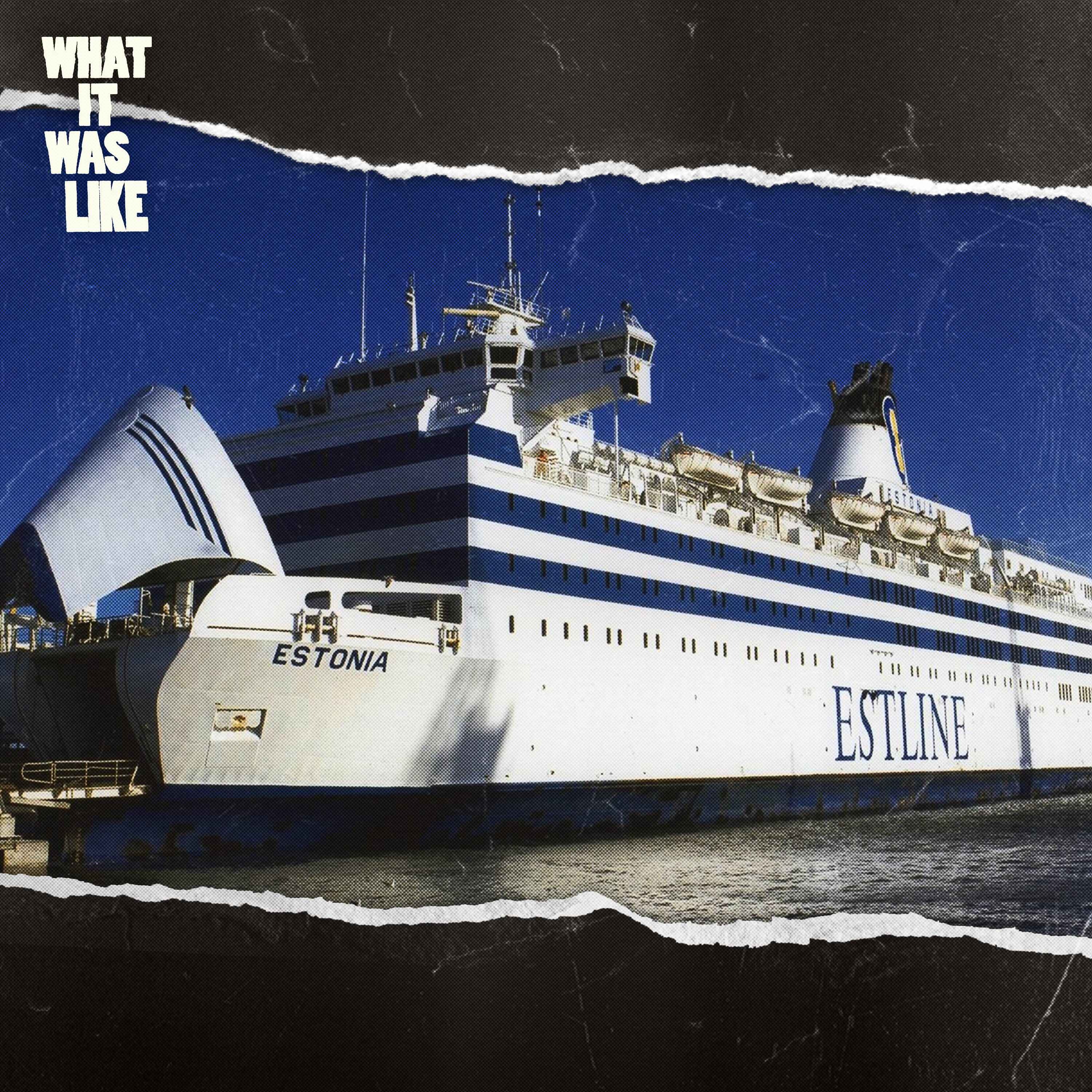
Hey, I'm Julian Morgans, and you're listening to what It Was like, the show that asks people who have lived through big dramatic events what it was like. So the other day somebody asked me what my favorite type of story is, and I think the answer is pretty simple. I just love stories about ordinary people who get stuck in extraordinary situations. And I think that's because I'm always trying to put myself in the story. I'm always asking myself, what would I do in this situation? And today's episode, I. I think it's one of the most gripping examples of this dynamic. So you've heard shipwreck stories on this show before, but for my money, this one is the most harrowing. It's the story of the Ms. Estonia, which was a massive luxury ferry that sank in the Baltic Sea on September 28, 1994, killing 852 people. That's out of 989 who got on board. So the fatality rate was basically 9 out of 10. This was one of the worst maritime disasters in modern history, yet surprisingly, not many people know about it outside of Europe. And I think what makes the story so intense isn't just the scale of the tragedy, it's how fast it all happened. So the ship was plowing through pretty rough seas, and a mechanical failure allowed the front of the ship, the bow, to basically open up during a storm. It was supposed to be like this. This big door that allowed cars to drive in and out. Anyway, it's. It opened up while it was at sea, and immediately the ship filled with water. And within around half an hour, the Estonia was gone. And in that time, there was total chaos. Survivors later spoke about witnessing a complete breakdown of law and order as almost a thousand total strangers tried to survive. And that's what today's episode is really about. Survival. What do humans do when the rules vanish and the clock is ticking? Who escapes and why? I also think this story is fascinating for what it reveals about human behavior, because when the ship started tilting, when it started to capsize, all of the stairways and the hallways inside the ship, they were inverted, and they got turned into vertical shafts. And at that point, the ship's interior became this pretty forbidding obstacle course. People had to climb and crawl up from the bowels of the ship, often over the top of each other, to survive. And those who stopped to put on clothes, or those who helped their families, or those who even just stopped off and helped strangers, they didn't make it. And so most survivors tended to be alone. They also tended to be male. And across the board, they were all physically agile. And in some ways, today's guest is the archetypal survivor. Paul Barney is a landscape architect and a horticulturalist from reading in the UK. And in 1994, he was 35 years old, and he was returning from a weekend trip to Estonia and he was just trying to get back to Sweden to collect his van and he ended up in one of the deadliest maritime disasters of all time. But he survived. Now, I first spoke to Paul back in 2019 when I was just working on my previous podcast, which was called Extremes. And I wanted to revisit his story because it's still one of the most electrifying accounts that I've ever heard. I know that's probably a big sentence, but I guarantee this one, this one's going to stay with you. But the big question as you listen to this today is could you survive something like this? Would you be fast enough? Would you be decisive enough? Could you make just enough right decisions in a short amount of time with almost no information and stay alive? Let's find out. So now I bring you Paul Barney. Hey, Paul, welcome to the show.
- [07:02]
Acast
Yeah, thanks. Yeah, great to be here.
- [07:06]
Julian Morgans
So what were you doing in estonia back in 1994?
- [07:12]
Acast
So 1994 saw an interesting development. I'd already started up my main business that I'm continuing with today. And I applied. In 1993 I applied for a travel fellowship from Winston Churchill Memorial Trust. And they give funds or grants for people to travel the world and look at particular subjects of interest. And the trust sponsored people. Well, sponsored me particularly to look at these various aspects of energy use and production.
- [07:55]
Julian Morgans
Okay.
- [07:57]
Acast
So 1994 I went over for a conference and then I went back to travel and look at all these different projects going on around mainly Sweden. And that also involved going to Norway and Estonia. And it was a fantastic, very relaxed trip on the way over. Uneventful and uneventful. Absolutely.
- [08:24]
Julian Morgans
And then you spent a fairly relaxed and I'm guessing enjoyable weekend in Tallinn.
- [08:29]
Acast
I had a great few days, yeah.
- [08:31]
Julian Morgans
Okay, so the night of your return journey to Sweden, getting to the port, you know, seeing the ship, can you describe the ship for me?
- [08:41]
Acast
It was a very interesting evening, heading down to the port. So it was a bit chaotic because in those days there was sort of booze cruises between Finland and Tallinn. So you had, it was, there was a lot of drunk people basically in the departure area. So I tried to escape away from that and boarded the Estonia quite early. Now I didn't really notice anything unusual. I mean it was a massive ship. I mean it still is and it's sitting at the bottom of the sea. But it was, it was quite a sight to see it in port. I mean it is a big ferry, a full on size liner really.
- [09:22]
Julian Morgans
So I'VE heard the Estonia described as like this luxury ferry which sort of insinuates that it's kind of this beautiful, you know, cruise liner esque ship. But in the photos that I've seen, it's this big, sort of blocky kind of a hulk. Can you just describe your impressions of it?
- [09:39]
Acast
I wouldn't, I wouldn't call it beautiful. It's not a thing of great beauty. And I did, I did struggle to find my way around it when I got on, but that had always been an issue from the way on the trip out there. I'm very good at getting a sense of direction, but I just couldn't get my head around the layout. It's not an easy layout of a ship to get used to. I'm used to ships as well. I mean, I'm sailors and I can get, get around. But the Estonia was a bit of a. Bit of a quandary. It never really made sense.
- [10:10]
Julian Morgans
Bit of a rabbit warren.
- [10:11]
Acast
Yeah, very much so. So there's two interesting things about those early stages was the. The first one was to go. I decided because I traveled and slept in the restaurant on the way over, I hadn't booked a cabin. I went and decided, look, I'm going to book a cabin. So I went up to the reservations desk and tried to book something and they said that they did have a place but for some reason I changed my mind at the very last moment. I decided not to take one of these cabins down below the car deck and that probably saved my life, but it was a major decision. Just at the split moment at the end I said, no, I'll go back to where I was on the way over.
- [10:55]
Julian Morgans
Yeah, okay.
- [10:56]
Acast
Which was quite bizarre. And then I made my way out onto the bow deck right at the front of the ship and sat there. That was quite a long way. That was quite peaceful and away from all the noisy port. I was just sort of reflecting on my whole trip, you know, the whole. And then deciding that, well, that's a bit strange. Nothing, nothing really untoward, you know, it was fairly straightforward. It wasn't a great adventure. Somehow I think I sort of reflected in that respect. Wow. Which was a bit bizarre really, considering what happened in the next few hours.
- [11:33]
Julian Morgans
Yeah, it's like you were feeling a bit underwhelmed. You know, you went over there and you're like. It was okay.
- [11:39]
Acast
Well, I do travel the world and I've been up lots of mountains and traveled into jungles and been big on great big trips and it was slightly underwhelming yeah, in that respect.
- [11:51]
Julian Morgans
Okay. And so tell me about. They pull up the, the ropes and the, the ship engines roar and you go out to sea. Talk me through that.
- [12:01]
Acast
Yeah, the, the boat, the ship would have set off. I think it set off roughly on time. It was quite quiet and eventless, really. It wasn't. There was no sort of impending doom or anything. I didn't really notice much. I was just ready for a fairly standard 14 hour trip across the Baltic.
- [12:22]
Julian Morgans
And so what did you do with your 14 hours? You know, did you go and eat some dinner or did you talk to some of the other passengers?
- [12:28]
Acast
So I would have made my way to the Admiral Admiral bar. That's where I'd met a few and chatted to a few people on the way over, which was quite interesting. And there was an evangelical. On the way over. I'd met a evangelical group of Lutherans and they'd spent the time. A young couple had spent their time trying to convert me to Christianity, interestingly which I enjoyed the conversation. I didn't find it unpleasant. It was reasonably good banter. And I did meet them again. They're on their return leg as well. So I met them very friendly, talked to them, and then we resumed the conversation in the bar about my pending conversion to Christianity. Oh, they're attempted.
- [13:18]
Julian Morgans
Yeah, yeah, yeah. I mean, upon reflection, you might have been a bit more tempted. You might, you know, knowing what you know now, you might be like, yeah, I'm ready to accept Jesus as my Lord and Savior.
- [13:29]
Acast
Well, I think I left them with the. Said that leave. Unfortunately they didn't make. They didn't survive, which was very sad. But the, the conversation had gone. I'd left them and said, you've got to leave a little room for doubt as they went to bed. I think that's what I left them with, is that you should leave little room for doubt that Jesus won't save you. So it was a bit, a bit poignant, I suppose.
- [14:01]
Julian Morgans
Yeah. Geez. And you survived and they died? I don't know. I don't know. I don't know, Paul. I'm not sure what we can learn from that.
- [14:07]
Acast
I'm not sure what we can learn. You can't rely on if you're going to survive. I wasn't looking, I think I wasn't looking for Jesus to save me, if you like. So I realized it was up to, up to me.
- [14:20]
Julian Morgans
Yeah, yeah, yeah, okay. And, and so I understand you went in and after you'd spent some time in the pub, you, you went Upstairs, Is that right?
- [14:29]
Acast
So I'd slept in the, in the restaurant on the way, which was quite a few decks above the. Above the car deck, so it's quite high up in the ship. I'd slept there the. On the way over and that's where I'd headed back. I'd left. I put all my bags and. And my luggage into one of the big lockers, including some preserved sausage and a really good bottle of whiskey, which is still there. I believe the whiskey will have aged a bit. Yeah. But I made my way up to the. After the pub. So just to put this in context, the pub was. I had half a pint of Guinness or something like that, so it was a very small amount of alcohol. And then decided that the weather started to get rough and things were starting to rock and roll a bit. So I decided that at that point I wanted to go and find where I was going to sleep that night and make sure I was comfortable because it wasn't going to be a good. A good night. I realized because of the weather. I think it must have been around about 11 o' clock at night, something like that.
- [15:43]
Julian Morgans
Okay. And this was an empty restaurant with. I'm guessing you're up high. So you can kind of see out the portholes into the, out of the ocean.
- [15:50]
Acast
Yeah, you can see out. They had a big promenade deck out back of the restaurant and then you had the portholes and it was, it was dark, obviously it was dark outside that stage. So there was no. The weather. There was no sky. It was pretty cloudy.
- [16:06]
Julian Morgans
Okay.
- [16:07]
Acast
And so, yeah, so I bedded down, effectively bedded down. And did notice that there was some other people had bedded down as well in the restaurant as well. So I wasn't alone, effectively.
- [16:19]
Julian Morgans
Okay. And just spend a moment just describing the weather, I mean, imagining the ships going up and down in the swell and there's probably a bit of whistle from the wind.
- [16:30]
Acast
I mean, the ship was rolling, listing. Well, it wasn't listing, it was rolling slightly port and starboard. It wasn't. So it wasn't immediately rough. I've been in worse seas, effectively. Okay. I managed to put my arms down the side of the benching to stabilize. I did remember having to stabilize myself to stop being rolled off the bench. So I did have my arms down the side of the bench so I could sleep. And that was it. I went to sleep. And then, and then I was woken abruptly about 1 o' clock in the morning.
- [17:11]
Julian Morgans
Hey, this bit of music means it's time for an ad break. But Please don't go anywhere. We'll be right back. History doesn't just shape us, but it helps us to understand the present. The American Scandal podcast brings to life some of the biggest controversies in US History, and it takes you deep into the heart of America's dark side. And it'll leave you wondering, how did this happen? And what can we learn? The latest season, Ruby Ridge Standoff explores an event that sowed the seeds for the rise of the modern radical right. So in 1992, in a remote corner of Idaho, federal law enforcement agents surrounded a small cabin. Their target? Randy Weaver, a survivalist who was living off the grid to wait out the apocalypse. And he was wanted on a simple weapons charge. But the situation escalated into a tragic and deadly standoff. Ruby Ridge has since become a rallying cry for those who are opposed to government overreach, and it's fueled decades of distrust and violent anti government sentiment. Follow American Scandal on the Wondery app or just wherever you get your podcasts. You can binge all episodes of American Scandals. Ruby Ridge Standoff early and ad free right now on Wondery.
- [18:30]
Acast
Listen up. You can get the new iPhone 16e with Apple Intelligence for just 49.99 when you switch to Boost Mobile. We pulled so many all nighters to give you this deal. And hey, stop messing with the mic.
- [18:44]
Julian Morgans
I'm just helping this catch people's attention.
- [18:46]
Acast
This is a great deal. Exactly. So it doesn't need all that. Fine. Head to your nearest Boost mobile store right now.
- [18:56]
Julian Morgans
Visit your nearest Boost Mobile store for full offer details. Apple Intelligence requires iOS 18.1 or later. Restrictions apply.
- [19:00]
BetterHelp
Better Help Online therapy bought this 30 second ad to remind you right now, wherever you are, to unclench your jaw, relax your shoulders, take a deep breath in and out. Feels better, right? That's 15 seconds of self care. Imagine what you could do with more. Visit betterhelp.com randompodcast for 10% off your first month of therapy. No pressure, just help. But for now, just relax.
- [19:42]
Monday.com
Breaking up is never easy, but saying goodbye to your old clunky work tools, well, that's easy. Just repeat after me. It's not me, it's definitely you, you rigid, unfriendly software. It's time to freshen things up with Monday.com, the first work platform you'll love to use. With stunning dashboards, customizable templates, and built in AI that actually works. Switching to a new work platform has never felt this good. So move on to Monday.com.
- [20:20]
Julian Morgans
And what woke you up?
- [20:22]
Acast
So it was this. Well, well Documented bang, effectively metallic bang woke me up and I said that did alarm me. I didn't really understand what it was. So having traveled on ships and everything, I had an understanding generally of things. So I knew this was out of the norm for definite and that alerted me. And then I realized that the ship at that stage when I'd woken up was at a permanent list about 5 degrees, which again seemed very out of the ordinary to me. This is a massive liner, massive ferry and it had a tilt on it. Now that was not normal. And so that's when I started. The alarm bell started going in my head.
- [21:10]
Julian Morgans
How much time do you think passed between you hearing the bang and you waking up and realising there was a list? Like is this 20 seconds or a few minutes?
- [21:19]
Acast
This is seconds.
- [21:20]
Julian Morgans
Yeah, that's an immediate list.
- [21:21]
Acast
It is, it's quite. Yeah. I mean the interesting thing is that that waking up and the list being there were simultaneous in my mind as from. I mean I wasn't awake for that long to degree. I mean the ship, the ship sank in about half an hour pretty much. So. God, that, that was very early on, that this immediate list, that this, that I noticed the list and, and that being out of the ordinary.
- [21:52]
Julian Morgans
Okay, so when you say that alarm bells started to ring, you know, what do you do? How do you respond to that?
- [21:58]
Acast
So the alarm bell's in my head. This is, there's no.
- [22:01]
Julian Morgans
Yeah, yeah, yeah.
- [22:03]
Acast
At this stage there was nothing, nothing from the ship. I needed to gather information. So I did realize that I needed to work out where I was properly and what was going on. And I went. First thing I did was to go on an information gathering, walk to the promenade deck and have a look outside, see what the hell was going on. So I did move to that and then I opened the promenade doors at the back, at the back of the restaurant onto the promenade deck. And then it was like a full on raging gale that it was, it was serious. And that was something that I, I didn't fancy going out into for sure. And then I realized that I'd have put my clothes on at that stage with my boots. And then I realized that there's absolutely no way if this ship is going down, that I'd need my boots. So I put my boots on and took my boots off again because they definitely weren't going to help me in any form whatsoever. Wow. And at that very moment there was one other guy standing at the promenade deck. So the ship was, was, was increasing its list at this point and I'd Made my way, gathered a few things and then made my way back to the promenade. The doors, these massive doors on the promenade deck and waited there because as the list got worse, being in this doorway meant was quite a good space that I could actually move around as the ship started to.
- [23:43]
Julian Morgans
Right. Because you could, you could wedge yourself inside this rectangle and, you know, gave you sort of three dimensions to brace yourself against.
- [23:51]
Acast
Yeah. Because basically the whole. You have no reference to her where horizon or what is level for a start. So your brain doesn't even know.
- [24:00]
Julian Morgans
Yeah.
- [24:01]
Acast
So there was an announcement in Estonian saying it's an emergency. And I asked this Estonian, who's also in the door with me, how long would we survive in the water? He said, four minutes. And I remember saying, oh, blimey, I don't fancy that. Jeez.
- [24:20]
Julian Morgans
How are the other people in the restaurant responding? Because I'm imagining everyone's awake by this time.
- [24:24]
Acast
Oh, sure, there had to be. So most people were frozen. They were just frozen and not doing anything. I remember saying to the Estonian guy, why don't they do anything? Why don't they do something? And he said to me, just don't think about it. So that's his response, just don't think about it. I mean, we couldn't do anything. There was a girl sleeping nearby to where I was and she'd already fled into the ship at that point.
- [24:53]
Julian Morgans
Okay, so you went to bed sort of near some woman that you noticed, and when she woke up, she decided to go deeper into the ship.
- [25:01]
Acast
She did indeed, yes. Yeah, yeah. And I'll come back to her later. But the other thing was I'd started to be cut up when the list had increased. There's lots of ashtrays and glass had been flying around. I remember actually being lacerated, my hands being lacerated with glass. Strangely, as I'd made my way back to the promenade deck for the second time.
- [25:30]
Julian Morgans
Really?
- [25:30]
Acast
The promenade deck doors. Yeah.
- [25:34]
Julian Morgans
So the floor is just kind of awash with crockery and. And ashtrays.
- [25:39]
Acast
Yeah. Tables and chairs. Chairs going. Yeah. So it was. It wasn't a great. But I managed to clamber back to the. To this doorway. And I remember actually at this, at some point seeing the water coming in to the other side of the restaurant. So that was not a great. But the interesting thing about orientation was that the fact that I'd been in this door with this standing guy. And so it's this rectangle and you're moving your way. If you're spread eagled, you're moving way around this door frame. And then at one point, one of the doors fell off completely because obviously it reached beyond where the hinges had worked. They fall off vertically. Doors fall off hinges vertically due to gravity. This fell off sideways and my brain then immediately caught up with what said, hang on, that can't be right, I can't be seeing that correctly. And then suddenly my brain caught up. I remember thinking my brain caught up. That fell off straight down. That didn't fall off sideways. So suddenly I'd got some idea of the horizon in my head at that point.
- [26:54]
Julian Morgans
Okay.
- [26:57]
Acast
So I'd suddenly got some orientation and then I looked out and of course the lights had gone out on the ship at this stage, so it was dark. So suddenly I started to become acclimatized to the light coming from outside. And then the moon had started to appear behind clouds, so there was a little bit of light and you can get some silhouettes. And the Estonian guy and me, we made our way onto the promenade deck when this door fell off. And because there's no life rafts or anything like that at all available, we'd been looking for. I'd been looking for them. Certainly I don't know about him. But across the promenade deck, which had now turned into a massive slipway. So you can imagine the deck, a big deck out the bat of the ship. And suddenly now it was about 45 beyond 60 degrees and that was a slipway straight into the sea. So the Estonian who'd I asked how long you can survive in the water? He. We both knew that it was only one life belt. And he suddenly jumped across this slipway, grabbed the life belt and then got. Then a wave. Immediately he did that. A wave came over the stern of the ship and just washed him away, completely gone. That was it. I never, I've never heard he might have survived, but I've never heard his survival tale. So sadly, I probably don't think he did survive.
- [28:20]
Julian Morgans
Oh God.
- [28:21]
Acast
Especially without a life raft kind of thing.
- [28:23]
Julian Morgans
Let's. Let's just pause. There's a few things I just want to explore. First of all, this is a ship full of, full of a lot of people. I'm wondering, did you get any sense of what was happening in all of the decks below, you know, by the sound? Was there the sound of people screaming or what was happening in the sort of the humanity around you?
- [28:46]
Acast
So I had avoided at all costs going into the ship, deeper into the ship, which I didn't know my way around. And I'd felt really not at ease with the orientation at all. As you said, it was a rabbit warren. I did not want to go into that rabbit warren. I just thought that that was the last thing I should do and stayed well away. And then basically it was quite quiet where I was. We're at the stern of the ship. It wasn't chaos, it wasn't screaming, it wasn't madness. That came later.
- [29:19]
Julian Morgans
And the other thing I'm wondering about is, I'm guessing that you'd never been in a sort of life or death moment like this before. Can you just tell me about how you were feeling?
- [29:30]
Acast
How was I feeling at that state? How was I feeling emotionally during this? So I was incredibly angry, I remember saying. So as a matter of fact, I would. I was going back to God again. So I would have been blaspheming quite seriously in that Promenade doorway. I was really angry at that point. I was so angry that I could see my life was going to be ended and I hadn't finished with it and it was really, really pissing me off. Wow. That I. I've just reached the prime of my life. 35. And now I was going to be snuffed out in the middle of the night. And that made me incredibly angry.
- [30:10]
Julian Morgans
That is such an interesting reflection on your essential personality. I feel like people really discover who they are in a moment like this and you discover that. You don't resort to panic or anxiety or submission. Your response is anger.
- [30:30]
Acast
Well, I wouldn't say it was useful. I'm not sure. It might have well been useful. It certainly drove me on. But that point, I mean, there's various different phases I went through, through this whole experiences. But at that point. So the first point is waking up, information gathering, realizing that I was. My life was in danger and getting very angry about it because I wasn't able to do anything. I was frustrated. There was no life vests, no life jackets, no life rafts. I was frustrated at this and being stuck in this position and not being able to save my own life. So that's the point I was at until the moon came out and suddenly I saw the stairway ladder to my survival. So this ladder work was all the pipe work which was on the ceiling of the Promenade deck. So. Oh, right. But that's it. I'm just straight up. I'm out of there. I climbed. So I climbed up this. Up effectively, what was the ceiling, which had a series of pipe work and suddenly found myself out of a portal and on the side of the side of the ship. So this was the side of the ship and it was horizontal at this point.
- [31:51]
Julian Morgans
Wow. So literally the side of the ship. Like I'm picturing the side of an enormous ship, sort of like a giant surfboard laying down in the ocean.
- [31:59]
Acast
Yes, it felt like a surfboard. It was. There wasn't a great deal of the ship above, above the water at this point. It was on its side lying flat in the water. So effectively the side of the ship was level at that point. I could actually move around on it. And there was a sudden incredible change from anger to revelation. Yes, fantastic. Yeah, I was, I was. It was a fantastic moment to. To have escaped and that all that pressure of release, I'd have escaped. You know, I got out, it was fantastic. It was amazing. And then I had all the. The present I was in my socks actually straight and had the presence of mind at that point to say to actually look at this situation, look at this scene and say, wow, I'll never see this. I mean it's unbelievable scene with the moon coming out behind the clouds and lighting up the whole thing and seeing this enormous ship. And I thought of all the places in the world, this is unbelievable to be. Stand here and realize where it is. You're not going to see this again. Yeah, it was bizarre to have that sort of time and then suddenly it became a relief. It was just such a relief to be out. But that was very short lived effectively because I realized there was still a lot to do so I was on and I was the wrong end of the ship. So effectively I'd seen lots of life rafts already in the water at this stage, bobbing around with the little lights in the. In the sea, around, around the ship and at the other end of the ship. So this is 150 meters long at the other end. Way at the other end was some still lights and I could see. So I, I decided that was my mission to make my way, see if I could find a lifeboat at the other end of the ship. So I made my way gingerly down, really fearing the black holes in the ship that I didn't just disappear back into this enormous sarcophagus and end up back in the same position. So I was really quite worried about moving down the ship. But the waves had already started and the wind was. Was quite tremendous at that point. But luckily it wasn't enough to. To wash me over off the ship. And then I got into the. I managed to join a group of people who are launching one of the last life rafts to be launched off the off the ship. And suddenly I just joined a group and suddenly we all's hands, we all helped to push this inflatable life raft into the sea. It wasn't too difficult because the ship was so close to the waterline. We were at the waterline effectively and a few of us. I think I jumped in as it was launched. I jumped in and there was another chap in there who had already jumped in, which had made it difficult to launch. But we hit the water and immediately it turned upside down. It got the waves just turned it upside down. So then I was stuck inside, upside down inside. And I had to swim down and out of the entrance and back onto the surface and hold onto the outside of the life raft.
- [35:24]
Julian Morgans
Oh, God. Do you remember the water being cold?
- [35:27]
Acast
Absolutely, yeah, it was freezing. I mean, the shock. So I would then get shock. Quite quickly. I could recognize shock. I'd already had experienced shock in my life before. So I recognized what was happening to me, that I was going into shock and that I needed to try and try and control that. But it took a while to get over the shock. But in the meantime, not only being shocked, it was suddenly. You talked about chaos and shouting and screaming. There was. There was lots of people shouting. There was lots of people. It was like, as I've described, a human soup. There was just. Everybody was in the water shouting, screaming, life rafts everywhere. And it was just like chaos, big waves. It was total chaos. And then we had to get people onto this life raft, upside down life raft. So we were pulling people on. I was in the water to start off with, helping people out, pushing them up. And then eventually we all got on from around the life raft and we got 16 people, belonged to the life raft.
- [36:38]
Julian Morgans
That's an amazing effort. I mean, that's a pretty collaborative effort. Were you guys sort of working pretty well together? It sounds like you weren't. The people who got into this life raft weren't that panicked.
- [36:50]
Acast
They were in shock, a lot of them. If you're not in panicking, panic is probably quite a good response at that stage because shock is so debilitating. It's like trying to think through mud effectively. Shock. So shock doesn't help anybody survive. It just. I might be wrong, but the way I felt shock was that it just debilitates your thinking, your ability to think, which is really quite tricky. You need to be able to think in a survival situation. You need to be able to think clearly and make the right decisions. So I was sort of. I was battling with the shock as well as trying to make the right decisions about how we're gonna survive this.
- [37:35]
Julian Morgans
You said before that you were very careful to control the shock. How do you do that?
- [37:41]
Acast
So I was on the life raft for a total about six and a half hours, something like that. It's either six and a half or five and a half. I can never remember the time zones were. But either way it was long enough. Three, three hours. Yeah. I split it into two effectively. One, I was in shock, one, I was hypothermic. So I had basically decided to control my, the shock which I realized so you. It's really shallow breathing, terrible shallow breathing which was really again debilitating. And I managed to, to use some yoga effectively breathing techniques to slow my heart rate down, to slow my breathing down. Just try and calm, calm myself down. And gradually I could feel as though my thoughts and everything was starting to become clear again and I could start to think properly and that really helped me to get through and start to function better.
- [38:44]
Julian Morgans
Wow, it's amazing you could do that.
- [38:47]
Acast
I think you're just drawing on all your resources, aren't you? You're just drawing on everything, every law you're learnt resources to try and understand what's going on and hope and look for the next. Everything was just a step to look for the next stage of survival effectively. Everything I did was a sort of calculated decision to survive effectively.
- [39:12]
Julian Morgans
Hey, we're going to pause here for a quick ad break but stick around because we're going to come right back for more what it was like. So take me to this life raft. You're in there with 16 other people.
- [39:34]
Acast
So we had people at the beginning of the trip were pretty distressed still. So there was lots of, lots of people still distressed. But the one girl who I was trying to calm down and tell her everything was going to be okay so she was with me on the side of the life raft. There were other people there who unfortunately weren't fully clothed at all. So people just, I think a couple in underpants and some very scantily dressed people and they unfortunately died of hypothermia very early on I remember and I got used to people dying on the life raft just going through a hypothermic so their eyes would start to roll then they'd start throwing themselves around the life raft and then they'd just drop to the either overboard or just sink in the water in the life raft. Because this was an upside down paddling pool effectively it wasn't a proper life raft with the Roof, which everyone else had. We just had a sort of wallowing, paddling, full of people. And. And every so often you'd have the wave come over the top of you, which you used to strip every ounce of warmth you had left in you out of you. So you were just frozen down again pretty quickly, and it took everything. Luckily, I'd. I'd still got a. I'd. One of my most important things that I put on was my woolen sweater, which obviously doesn't work, but an Anders fleece over the top of that. And the woolen sweater kept an air layer underneath my fleece, which I believe helped me to keep some core body temperature going.
- [41:14]
Julian Morgans
Bit of insulation.
- [41:15]
Acast
It was a degree of insulation. It wasn't much, but it was enough just to help. Yeah, for sure.
- [41:21]
Julian Morgans
Did you find it traumatizing seeing people die around you?
- [41:25]
Acast
You can't let that happen. If you start taking that on board, you're a garner as well, I think. You just can't. You can't get emotionally involved in that because that's a death knell to your own survival.
- [41:40]
Julian Morgans
It's interesting how you, you know, you weren't in the military or anything. You're sort of a novice at this survival stuff, but it seems to me that you're just making all the right choices at all the right moments. You know, you take off your shoes, you put on. You put on some woolen jumper, you. You make sure you're close to an exit. You know, you don't fall down a porthole when you're. When you're trying to walk down this. This invert. And plus you've got some yoga training, which gave you an edge. It was kind of like you just accidentally primed for this.
- [42:12]
Acast
I don't know. I think it's better. But that's not. It's life experience, isn't it? I think so. What I'd had experienced in my life before had all come to benefit. This particular scenario, the enjoyment of the outdoors, the enjoyment of sailing, the enjoyment being able to think for myself and make my own decisions, were all very important part of my survival. I didn't go through any specific survival training in my life, but I had chosen various pastimes which did help me to put all those survival techniques together, if that makes sense.
- [42:57]
Julian Morgans
Does make sense. Okay, so, you know, how did this life raft situation play out?
- [43:04]
Acast
The life raft was. It's a black time, and the chronology of it really is a little unclear to me, but various events are left ingrained for sure. So I was with this girl, I think she was a crew member, we don't really know her name, but was suffering from hypothermia already. And then we got. Then a massive wave just tore me. Tore me out of the life raft. I think I was the only one to. Not sure, but I was the only one to literally be torn out. And I was holding on by one. One piece of rope off the side of the life raft. And I just remember that's my darkest moment. And I still think that that's the darkest moment in my life is that sense of complete aloneness completely at the end of your tether, literally. But everyone's in shock and they can't help you. And no one was really prepared to almost bring me back on board. I had to climb back on board myself because everyone around was in shock. I hadn't got a life jacket at this point. I then got myself back in, tied myself to the life raft, decided that I had to tie myself to the life raft to stop actually the danger of being torn away from it. I mean, there's no land anywhere near. I had to tie myself. So I tied myself with. With a little bit of rope to the life raft and. And then finally found my hands were frozen like lumps of ice effectively. And. And there was conversation in the life raft. There was people who. Saying that they did see hella helicopters and ships. There were lights of helicopters and ships. You didn't want ships to come near you because they'd cheer you up. And helicopters were just miles away. And one guy who we call Mr. Positive kept on saying, oh, they're coming for us now. They're coming for us now. He kept raising his hopes and then they were dashed. Raising his hopes, then they were dashed. And he'd let himself become emotionally involved in thinking that he was gonna be. That we were going to be saved. And then finally he ran out of emotional energy and he went quiet. So I won't go into every detail of the life raft, but the hypothermia was beginning to take its toll. But I knew I had to wait till light. I knew that we were not going to be saved until daylight. I knew that that's what I had to get to. I had to get to daylight. And so as the dawn came up, then hope again rose within me that I. That we were going to be saved. Unfortunately, I. The. The girl I've been helping had. Had perished by that stage. She'd been torn away from me and I couldn't. I was completely tied to life raft. I couldn't get her from the other part of the. And I was. There was a sort of a dead zone. I was in the dead zone and everyone else in the life raft who was still alive was in the other part of the life raft. And I was tethered to one bit where I couldn't get to anybody. And gradually one of the saddest moments in the trip was a young lad who. It was still door. It was dawn, there was hope to be survived. And I tried to keep him out. He was fading and I just tried to keep him out of the water and I just hadn't got any strength. I just literally couldn't keep. Because if you come unconscious, then you're gone. He'd become unconscious, but I couldn't actually physically keep him out of the water any longer. I was pretty much close to the. My. I mean, I was pretty pretty close to death at that point. I think. I think I'd have another 15 minutes when the first helicopter came. And then of course, your hopes rise again. And I was so desperate with the waste, the utter waste and desperation of this, this young lad dying. That really, really upset me. That, that was just total desperation. But then the helicopter came and then we had seven of us left at that point. And the helicopter came and everyone's hopes raised and then he sent down a frogman and then all hell broke loose. The number seven, the seventh survivor at that point then grappled with the frogman and it was all over him. And the frogman was panicking and the. The helicopter seemed to be panicking. The wind was like Force 9, Force 10. I mean, it was severe. And then suddenly the helicopter disappeared with the frogman and this guy attached to him. Then this guy just dropped off from the frogman halfway up and he just dropped into the sea and disappeared.
- [47:50]
Julian Morgans
And then helicopter disappeared after everything else, you know, witnessing this last just like pointless tragedy, that's really heartbreaking.
- [48:00]
Acast
It was total demoral paralyzation to have that helicopter leave us when we. We were so desperate at that time and completely. I was so cold. I didn't feel it. So you don't. I just didn't feel it. He didn't feel cold. I just felt total wanted to go to sleep. You just want to put your head down on the side of the life raft and fall asleep. Falling asleep is instant death in that situation. So I knew that I just had to avoid that. Then out of the blue, out of the blue, literally another helicopter came in, saw us set the frogmen down and they were like a Crack. Unbelievable. Fantastic, efficient crew. And the frogman, Thorbjorn, as I later known. Found out his name was Incredible. And he started winching people up. I think a few of us. I was the last to go and then we were all safe and sound on the. On the helicopter, which was immense. Yeah.
- [49:00]
Julian Morgans
Did you go to sleep or what? What does the human body do when you. When you're out of that situation and. And safe.
- [49:09]
Acast
The last thing they'd let you do is fall asleep because your body's terrible chance of shutting down. I was kept. But. But my. My body went into total cramp, actually. I mean, I just was in absolute agony from cramp. I'm incredibly happy, but in agony. So the complete. So I had the doctor. I had a very nice doctor who was massaging my. My legs at the time and just kept trying to get the circulation going in my legs because I've been. I found out later that I've been using all my muscle tissues oxygen. So you break it, you're breaking down the protein in your muscles and that releases lots of protein into your bloodstream, which is quite dangerous.
- [50:03]
Julian Morgans
Okay, that's interesting.
- [50:05]
Acast
There's the only bit of video actually from the whole rescue is. Well, the only video of survivors is us in that helicopter being. And I'm saying I'm lucky to be alive, which was probably very true.
- [50:19]
Julian Morgans
Very true. Yeah. Not probably and definitely. And so just briefly take me through the recovery process. I'm guessing you went to hospital.
- [50:30]
Acast
So an hour's helicopter ride to a little Finnish island called Holland, which is halfway between Finland and Sweden. I was. Then they measured my core body temperature, which was down to 28, I believe, which was ridiculously low. And so they rushed me straight onto intensive care where I was sat on and had warm intravenous plasma pumped into my veins. And you could line the. I could lie in the bed and watch my core body temperature come. Start to go up from behind me again. They wouldn't let you sleep.
- [51:11]
Julian Morgans
Yeah, yeah, but that must have been satisfying.
- [51:13]
Acast
Yeah, it was. Yeah, it was, it was. It was great to be in that. In that care, that sense of care. There is this incredible dangerous moment where you alleviate. You've taken. I'd taken responsibility for everything, for myself up to the helicopter. You then release responsibility to the crew, to the doctors. And that's an incredible dangerous point when you do that. And that's when my body. That's when my body decided it didn't need to do anything anymore to survive. That's when I cramped up and became Immobile. Oh, wow. So the moment you make the mental decision that you aren't responsible and it's up to other people now, then your body kicked in.
- [51:57]
Julian Morgans
Isn't it interesting, this interplay between psychology and physiology to survive? It's. Yeah, the psychology part of it is so, so vital.
- [52:09]
Acast
You've got to have hope. If you haven't got. And that's what keeps you alive. And I think that's reiterated a lot in survival documentary, what stories and everything is that if you've got hope that. That has an incredible ability to keep you going. As soon as you lose hope or the idea that you can survive, then you don't. So just the idea of the hope and the possibility of survival within you will keep you going and physically. And that will take you to incredible physical limits, I believe so. I mean, where. When you listen to some of these terrifying tales, people's ability to keep going physically because they have hope, when other people would fall away when they hadn't got. Got that, the possibility of survival in their heads.
- [53:00]
Julian Morgans
How long were you in hospital for?
- [53:02]
Acast
Three days. Okay, okay, Three days. Yeah. So that was. I was the only one who kept in. I was really. There was a few of us, but I was kept on intensive care on a drip longer than other people because I'd gotten. I'd obviously got colder and they were really worried about my kidneys. So they kept me on a drip in intensive care and all I wanted to do was be with the others, be with the other survivors. Incredible bond suddenly between, at that point, between you and the other survivors. And that sort of. You just wanted to be with them and that was really important. They did do this terrifying. They did a post. They had a sort of debriefing which was a farce in the hospital. And then we also had to deal with the media, these pernicious media types. No, I actually decided that I wanted to. I hadn't communicated with my family, so it was really important for me to go because the hospital were fending off the media. I wanted to. I said, look, I've got to speak to Radio 4, I've got to speak to BBC Radio 4 because I know my family would be listening. And that's. So I did my first interview with Radio 4 for lunchtime so I could convey something because of course, this is pre. There was no mobile phones. 94. Well, there was, but not. I didn't. Certainly didn't have.
- [54:46]
Julian Morgans
And it wouldn't have survived that ordeal. Yeah. Okay. So in the months after this disaster, were you angry so this is quite.
- [54:56]
Acast
An important period as to what happens to you after an event like this. So I was in shock, effectively. This is another period of shock. I read. I now recognize the period of shock after. And it's a surreal period. There's various strange things which happened to me for the six months after this. So it was like a whirlwind of media and trying to work out what went wrong. So you're on sort of a roller coaster, if you like, of lots of things going on. Lots of things suddenly been thrown on the newspapers in the telly, suddenly being from a normal Berkshire lad just building gardens to being thrown in front of the national television and on all over newspapers, being recognized in the street. So that incredible change and then trying to come to terms with what actually happened and then trying to actually deal with this. As you say, first of all, there was a period of survivor's guilt as well, which is well documented. But the anger that you talked about, the anger was one day very, very angry, the next day after surviving effectively. So you do feel. That was actually in the hospital where I had that anger, but it didn't last that long.
- [56:32]
Julian Morgans
And that was anger at the shipping company or just at the situation or what?
- [56:39]
Acast
I don't think you can actually pinpoint where that anger is directed at. It was just this incredible sense of anger because, sorry, you had this. The first thing, of course, you feel incredible amazement at being alive. So that's the first day. And then, then you have the anger about what had actually been put through effectively.
- [57:02]
Julian Morgans
I mean, I know that this experience hasn't made you more religious just based on the. On the way you were describing those Lutherans, but. But has it made you more spiritual?
- [57:11]
Acast
Oh, definitely, yes. Yeah, for sure, yeah, yeah, yeah.
- [57:15]
Julian Morgans
Tell me more about that.
- [57:16]
Acast
Yeah, I think you've got. You've got to, you know, I meditate. I have meditated for a few years, that's for sure. So certainly. And that helps you get through difficult times and it makes you very aware of yourself and it. And it brings positivity, that's for sure. Certainly.
- [57:36]
Julian Morgans
Do you think the. This advantage has changed you forever?
- [57:41]
Acast
Yes, I did suffer ptsd, yes, for sure. And that after that six months. Well, that's sort of avoiding the question. Did it change me forever? I think you're evolving anyway, aren't you? Everyone evolves. Obviously. That event had a massive effect on me for many years and left its scars. And it's getting over those scars and trying to heal effectively and trying to not let PTSD or From that rule your life. It was always a sense that I'd got to try and get back to myself before I let this thing destroy me, you know?
- [58:27]
Julian Morgans
Yeah, yeah, yeah.
- [58:29]
Acast
That was always my. That was always my banner. That was, I've got to try and get back to the person that I was before. And I don't know whether I succeeded. I don't think I did. But. But you evolve, and that whole process is an evolution which is fruitful. I still think it. I have no idea what my life would be like if that hadn't happened to me. So it's very hard.
- [58:55]
Julian Morgans
Yeah, yeah, of course. Yeah. It's almost like this event, which had nothing to do with you in some ways became a part of you, you know, it became part of your identity. I read once that a lot more men survived than women, particularly single men. And in some ways, you're the sort of archetypal survivor. You know, you. You were traveling alone, you're a guy, you're. You're physically fit. I'm wondering if you'd. If you'd heard that and if you had any thoughts on it.
- [59:25]
Acast
Oh, well, I didn't. I have spoken to quite a few survival experts, and I was the top end, I suppose, of the most survivors between the age of 25 and 35.
- [59:35]
Julian Morgans
Right.
- [59:36]
Acast
There was. There was extremes either way, I think, but. So I was. If you're younger than 25, you don't have the mental ability to. And if you're over 35, you didn't have the physical ability to survive. So that. That's. That's the way he put it. Wow. So luckily I was still physically fit enough to keep. Keep going, even though my core body temperature was down to 28, which. Which I should have been. I should have been unconscious, you see. So that was the. But I avoided being unconscious. If I'd gone unconscious, I wouldn't have been rescued. They weren't picking up people. They weren't picking up people who are unconscious.
- [60:17]
Julian Morgans
Yeah, well, that makes. That makes sense. No, I think. I think the insinuation was that sort of young, single men were more likely to get out because you're not burdened by sort of like, carrying children or carrying baggage or, you know, like, families stood a bad chance, like. And I think it's an interesting reflection just on the way that you're telling this story. You're, you know, you went to sleep alone, you're able to make choices all on your own. It just seems to confirm this thing that I was reading about.
- [60:44]
Acast
I don't I don't. I think that that's fairly obvious, really, isn't it? I mean, you can't, if you are. Have it, being a family man, you can't ever imagine leaving your family in that scenario. You've got to be with them, you've got to try and help them, so you're not going to be. The chances of survival have got to be greatly diminished, haven't they? I just don't think you can make the instantaneous decisions you need to if you've got a whole family with you you're trying to.
- [61:14]
Julian Morgans
To.
- [61:15]
Acast
To. To bring to safety.
- [61:17]
Julian Morgans
Yeah, yeah, yeah. No, I think it makes perfect sense as well. Yeah. It's a sort of. It's obvious, but also interesting. It flies in the face of what we're told about empathy.
- [61:26]
Acast
Yeah, No, I think it's. Well, you can. I think the important thing is that to make your family, I would say, a nefarious situation, make your family, even though it's almost lighthearted, make your family aware of where the life jackets are, where the lifeboats are, where we'd need to meet up if we were separated, if there's something went wrong. I always show my family where the lifeboats are and where we would meet if we're going on a ferry, even though it's a small trip.
- [61:54]
Julian Morgans
Yeah, yeah. If I'd been through the. The Estonia, I would absolutely take note of where the nearest exit is at all times. I really just have one last question, and that is, when you boil this all down, what have you learned? You know, has it made life somehow more precious? Or is there some sort of broader, some broad philosophical lesson here for you?
- [62:20]
Acast
Well, is it as though I've. I've. I've had a lot of extra life I wouldn't have had. And it has just make it. It does make it more. It does make it more precious. And you do value. And I think one of the important things is you can't. You don't deal with trivia lightly. That's been the drawback. You can't ever. Nothing can be the same. You can't. People complaining about Minuti. It's really hard to get your head around when you. When you've been through something terrible and people are complaining about whether that there's flies or there's too many flies in the kitchen or there's too many flies around or something not that consequential. And really, people being really upset at things which aren't. Don't have that severe consequences. I find very. I have trouble having any empathy with that, because I know what it's like to be in really bad, extreme position where your life is on the line. You can't really empathize with people complaining about my new Thai. It's not a place I can go. And then. So you do realize that everything could be taken away at any moment. And it's important to be, not to trivialize or underestimate, you know, that what a fantastic thing we have in being alive at this very moment.
- [63:53]
Julian Morgans
I love that poll. I think that's simultaneously very wise and also quite amusing. You know, you've got less time for now. I. I can see why that would be true.
- [64:07]
Acast
Fair enough. Yeah.
- [64:08]
Julian Morgans
Thanks so much for telling me this story. It's. It's crazy. It's a really horrifying story, and I'm. I'm glad you survived.
- [64:16]
Acast
Thank you very much, Julian. It's a pleasure to talk to you again.
- [64:19]
Julian Morgans
The pleasures. Pleasure's all mine. Today's episode was produced by Rachel Tuffery. It was mixed by J. Jimmy Saunders, who also did our theme music. Our cover art is by Rich Akers. Ellie Dickey is our intern. And this whole thing has been a super real production.
- [64:51]
Ezcator
You know that thing called AI Supposed to make the workplace super efficient? Well, there's something di Delicious intelligence. It's tech that helps make work efficient and yummy. Leading the DI Revolution. Ezcator, a workplace food platform that connects you to tons of favorite restaurants with tools to save time and stay on budget. Need tacos for 20? Falafel for 40. A variety of vegan breakfast sandwiches. Now that's a tasty prompt. Join the DI Revolution. Order now at EasyCator.com.
- [65:23]
Acast
Acast powers the world's best podcasts. Here's a show that we recommend.
- [65:30]
Julian Morgans
Hey, we're the Adam Wild and Jack Show. You can find us wherever you get your podcasts every Wednesday. And Jax, we talk about what? Well, we're just two best pals talking about pop culture dating and also exposing.
- [65:41]
Acast
Each other's deepest, darkest secrets.
- [65:43]
Julian Morgans
And if you've ever been ghosted, we have a little segment called Left on Red where we call the person who ghosted you and say, hey, why'd you do that? And usually it leads to some pretty.
- [65:51]
Acast
Embarrassing and explosive things. Yeah. Yeah.
- [65:53]
Julian Morgans
So check out the Adam Wild and Jack show, available every Wednesday. Wherever you get your podcasts.
- [66:01]
Acast
Acast helps creators launch, grow and monetize their podcasts everywhere. Acast.com.