Loading summary
Transcript65 lines
- [00:00]
Grow Therapy Announcer
Was January supposed to be your big fresh start? Well, sometimes the pressure to fix everything at once just can leave you feeling stuck. Grow Therapy makes it easier to reset at your own pace. With therapy that's covered by insurance and built around your life, you can search by what matters like insurance, specialty, identity or availability and get started in as little as two days. And if something comes up, you can Cancel up to 24 hours in advance at no cost. Whatever challenges you're facing facing Grow Therapy is here to help. Grow accepts over 100 insurance plans, including Medicaid in some states. Sessions average about $21 with insurance and some pay as little as $0 depending on their plan. Visit growththerapy.com acast to get started. That's growththerapy.com acast growththerapy.com acast availability and coverage vary by state and insurance plan.
- [01:02]
Sarah (Founder of Olive and June)
Hi, it's Sarah. I'm the founder of Olive and June and can I tell you the one thing that always makes my day better? A fresh manicure. But who has the time or the money to go to the salon every week? That's why we created the Olive and June Gel Mani system. It gives you that same mani that you get at a salon for so much less. It comes with everything you need. A pro level lamp, salon grade tools. Our damage free gel polish that lasts up to 21 days. All you do is prep, paint, cure and you're good to go. And the best part? It's super easy and so affordable. Each mani breaks down to $2. So let's skip that $80 salon appointment and get the salon quality look at home for so much less. And on your schedule. Head to oliveandjune.com DIYGEL20 and use code DIYGEL20 for 20% off your first Gel Mani system. That's oliveanjune.com DIYGEL 20 code DIY GEL20 for 20% off your 1st Gel Mani.
- [01:59]
Sleep Number Announcer
System why choose a Sleep number Smart bed Can I make softer?
- [02:03]
Quo Business Phone System Announcer
Can I make my sight firmer? Can we sleep cooler?
- [02:07]
Sleep Number Announcer
Sleep number does that cools up to eight times faster and lets you choose your ideal comfort on either side. Your Sleep number setting Enjoy personalized comfort for better sleep night after night. And now during our President's day sale, take 50% off our limited edition bed plus free premium delivery with any bed and base ends Monday only at a Sleep number store or sleepnumber.com.
- [02:34]
Douglas Robertson
Super real. We were 200 miles west of Galapagos Islands. We'd been attacked by killer whales. They'd sunk the boat. By some miracle we'd managed to get off the boat, onto the raft and we had the dinghy. We're all alive. We had some limited food, and so it was that we made promises to each other that we would try to stay alive, that we would look for a rescue ship and that we would not eat each other.
- [03:10]
Julian Morgans (Podcast Host)
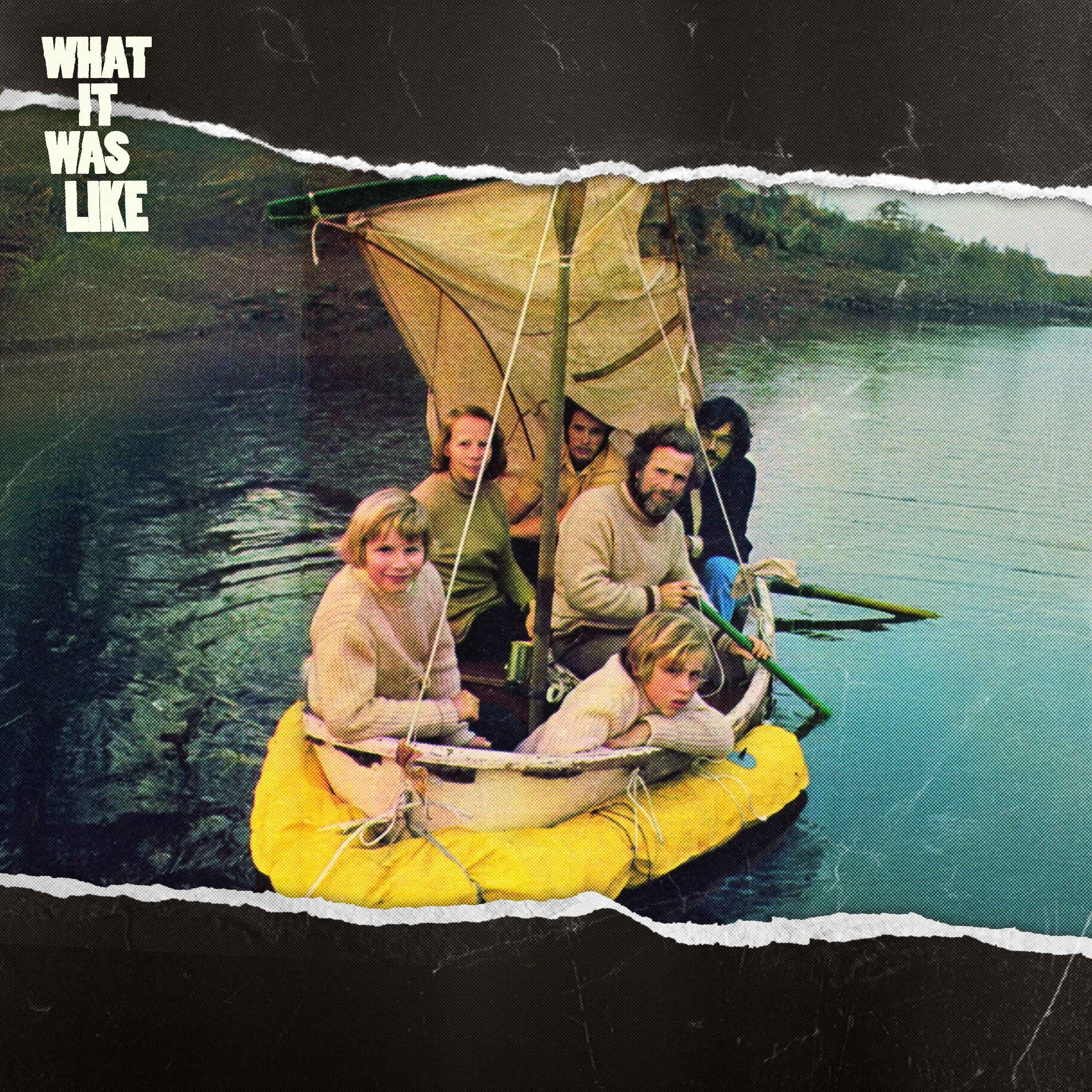
Hey, I'm Julian Morgans and you're listening to what It Was like, the show that asks people who have lived through big dramatic events what it Was Like. Hello. This week I'm bringing you a classic adventure story. This story has all the trappings of Robinson Crusoe or the Swiss Family Robinson. And actually, my guest's last name is Robertson, so it's really a case of life imitating art. Today I'm speaking with a man named Douglas Robertson. And When Douglas was 18, his father, who was a former Merchant Navy officer turned dairy farmer, decided that farm life wasn't enough. So they sold the farm and they bought a wooden yacht called the Lucette. And on the 27th of January, 1971, they set sail around the world. And for nearly two years, it was idyllic. And then, 17 months into the voyage, in the Pacific Ocean, near the Galapagos Islands, a pod of killer whales rammed their boat and sank it. And what followed was 38 days adrift. sea, they had hardly any food and just a few cans of water. And there were six family members crammed into this tiny inflatable dinghy. But somehow, through just ingenuity, positivity and some basic knowledge of celestial navigation, they survived. So I think this is a story about endurance and problem solving. And it's all told by an English gentleman with a very, very calming voice. So here he is, Douglas Robertson. Hey, Douglas. Welcome to the show.
- [04:59]
Douglas Robertson
Thank you for having me.
- [05:01]
Julian Morgans (Podcast Host)
So let's start this story by setting up your background. Can you tell me a little bit about your parents and your childhood?
- [05:09]
Douglas Robertson
Yeah. So I'm from the UK and I was born in England. My father was a sea captain and my mum was a special fevers nurse. And they bought a farm in the middle of England in the Pennines. It was a hill farm. Jumping now to 1968, there was the Round the World Yacht race. And we always used to meet up on Sunday mornings in the family bed with my mum and dad and swap stories. There were four of us kids by then and Dougal was talking about this around the World yacht race and how tough it would be. And it was my younger brother Neil who said, well, Daddy's a sailor, why don't we sail around the world. And somehow that captured Dougal's imagination and he thought, well, why not? The children are all at the right ages to sell up, buy a yacht and sail around the world. Wow.
- [06:11]
Julian Morgans (Podcast Host)
And so is that what happened?
- [06:13]
Douglas Robertson
Well, two years later, there we were in Falmouth harbour. The farm's been sold, the yacht's been acquired, and we're preparing to set sail. And we. It wasn't well planned. I've just got to say that, looking back, and we did meet an Icelandic family in Falmouth who were doing the same thing. So we sort of made a plan that we would hook up at different ports and stay in touch, because don't forget, there was no radio communication and there was no rescue. Search and rescue operations available. Deep sea. And we were going deep sea. And so started our voyage. 1971, January, in the teeth of a storm. Dougal never even so much as trained us how to steer the boat or pull the sails up or take the sails down. And I just can't imagine why he didn't do that. And I always remember my very first lesson on the wheel. The wind was blowing about 4, 6, and of course, I was terrified. The water was coming over the bow and hitting me in the face and. And it was cold and stinging and. And I was holding the wheel as tight as I possibly could. And Dougal's saying, no, you don't steer like that, you steer like this, you know? So, on the job, training, Dougal called it, but it was. It was a bit of a nightmare for all of us and we had a very, very. A baptism of fire.
- [07:41]
Julian Morgans (Podcast Host)
Okay, well, let's. Let's just pause here for a sec, because there's a few things I need to understand. First of all is the nature of your father. He sounds like a bit of a fly by the seat of his pants kind of guy. Just set him up for me. Like, who is Dougal?
- [07:57]
Douglas Robertson
Well, he's my dad and I love him and I thank him every day of my life for what he event, you know, eventually did to take us on this amazing trip around the world and. But he was always a bit of a rebel, and even the very conservative farming community that we were brought up in called him a rebel. But he was the man who got things done. He got the new roads put in, he got the water laid down at the school. He was a man of great determination. He had been in the Merchant Navy during the war and he'd been shipwrecked, attacked and sank, and he lost family members there. He had a Hatred for the Japanese people that weak as children couldn't understand.
- [08:45]
Julian Morgans (Podcast Host)
Can you tell me a little bit about your mother? She must have been an equally brave woman.
- [08:49]
Douglas Robertson
Yeah. Silent hero, my mum, she was strong minded woman. And I take my hat off to my mum for agreeing to do it because a lot of women would not. They would have said, well, you know, you go and do it and send us a postcard, you know, I'm not coming with you and I'm certainly not going to put the children through this. And the twins, they were only 11 when, when they set off, they were still had their toys with them and with my mum, she was forever in support of Dougal and, you know, obviously that was vital later on.
- [09:24]
Julian Morgans (Podcast Host)
Yeah, yeah, well, vital from the start, you know.
- [09:27]
Douglas Robertson
Yeah, from the start. Really? Yes, yeah, yeah.
- [09:30]
Julian Morgans (Podcast Host)
Okay, so. So tell me about the. I don't know, the next stage, you know, you set off from Lisbon. What happened?
- [09:37]
Douglas Robertson
We'd met this Icelandic family and we struck up a great friendship, a lasting friendship with them. Siggy, the Icelandic father, who was also a sea captain, same as Dougal, gave us one of his life rafts. And Dougal would not accept it, but he said, dougal, I'm not giving it to you, I'm giving it to Linda for the sake of her children. And a phrase that I've remembered for the rest of my life. It's better to have it, not need it, than need it and not have it. And that sold it for Dougal. He thought, well, okay, and he begrudgingly accepted the gift of this life raft, which of course sat on our coach roof as insurance.
- [10:21]
Julian Morgans (Podcast Host)
Yeah, yeah.
- [10:22]
Douglas Robertson
We had a great trip up through the Caribbean and we were on a sailing yacht. So we hopped from islands to Islands and 1972, now we, we've left the Caribbean behind, we've got into the Pacific Ocean, we've sailed through the doldrums. And on one particular day, a very large baleen whale tried to make love to the boat, swam up alongside it and rubbed its body up against the boat. Terrified us. It's bigger than the yacht. It was about 10 foot longer than the yacht and it blew this blowhole. You know, they blow air out through their blowhole and the smell is putrid, like putrid Brussels sprouts. So strong and just completely overwhelming this gas that, you know, and we thought then that we must look like a whale from underneath the water because of that whale has clearly made a mistake. And when the Lucette wasn't interested, the yacht was not interested in the advances of the Whale. The whale just swam off, left us.
- [11:32]
Julian Morgans (Podcast Host)
So did that moment with the whale feel like a little taste of something to come?
- [11:37]
Douglas Robertson
Well, we just thought that we must look like a whale from under the water. We didn't attribute any more than that to it. And as I say, we went on then to the Galapagos Islands themselves, and we cruised them for three weeks. And on the very last night, we met a PhD student from East Germany. Her name was Dagmar. And she said there were whales around the Galapagos Islands, but they never attacked yachts. And the assumption that they would is just absurd. Whales never attack yachts, she said.
- [12:14]
Julian Morgans (Podcast Host)
Did she give a reason?
- [12:16]
Douglas Robertson
Well, I don't think she knew. I think it was just her opinion. And, well, I mean, the reason she gave was that whales are gentle creatures. She hadn't thought about killer whales, of course, that her words were to ring loudly in my ears a couple of days later. And so we're moving now to June 15th, ten o'clock in the morning. And of course, the events of the next few seconds were to change our lives forever, because from nowhere, bang, bang, bang, we were hit by killer whales. We didn't know there were killer whales when they first hit us, and they surfaced immediately afterwards, and one of them had its head split wide open and blood pouring into the sea. And I knew whales don't damage themselves on purpose. This had been a mistake. I thought back to that big baleen whale, how he had mistaken us for another whale for the mating, and now here. Why couldn't the killer whales mistake us for the eating? So the yacht jarred and was lifted from the sea. We're only talking a foot or so, but she was bodily lifted and dropped back down into the sea. She'd been hit three times. And I said, dad, what's happened? Because I hadn't seen the whales behind me yet. He says, I don't know. Where's this water coming from? And it was coming in quickly and he was already up to his ankles in water. And then I heard this big slosh behind me and I saw the whales, the one with his head cut open. And I looked back down below and said, dougal, dad, there's whales outside. Whales. And Dougal was still concerned. He was up to his knees in water now and he was concerned about how trying to. He'd lifted the floorboards up and you could see blue sea through the bottom of the boat. He said, we're sinking. I mean, this was just took such a lot to take in, you know. And he said, Abandon ship. And of course, as a petulant teenager, I was 18 years old, I looked at him and said, abandon ship, Dougal. I said, abandon ship to where? I said, we're in the middle of the Pacific Ocean here. It's not Miami Marina, you know, I said. He said, get the life raft over the side and prepare to abandon ship. Well, I couldn't believe this. I thought, you know, this. This isn't happening. This is a dream. I'm having a dream and I'm going to wake up in a minute and the dream will be over and everything will be all right. So what I'll do is I'll go forward and I'll take the sails down and by the time I've taken the sails down, I'll wake up and everything will be all right. So that's what I did, and I went forward. I mean, the boat's sinking quickly now, rapidly, and I'm taking the sails down. And Dougal appeared on the deck. He says, what are you doing? I said, I'm taking the sails down, Dan. He said, get the life raft over the side. Well, I was a big, strong guy and this life raft was £80 at least, and it was underneath the dinghy. So I got the dinghy out, I put the oars in the dinghy, I put the dinghy over the side, lashed it to the rail and I lifted the life raft up. One lift, and through a sequence of errors, we managed to abandon the lucid before she went down. I threw the raft over the side and pulled in the rope to. That would inflate it, and I forgot to untie it from the. From the Lucette, and that's bad. But it was. Saved our lives, the actuality. So before I could pull the entire rope in, I was washed off the foredeck and over the side. And I thought, this is how I'm going to die. Those killer whales are going to eat us and this is it. So you can imagine, not only are we dealing with abandoning the. The Lucette, we're contemplating our. Certainly I was contemplating the end of my life at the same time. And the Lucette stayed upright. Thank God. Dougal. My mum got the twins over the side into the dinghy. But Robin, who was the student that we picked up in Panama, you know, only landlubbers know how to do this, how to sink a dinghy. He put his foot on the gunnel of the dinghy and pushed it under the sea and it filled it with seawater. So it was. It was just floating at the surface, full of water. And Dougal had the presence of mind to tie the dinghy to the raft, which was half inflated. And the life raft is made to inflate in Arctic temperatures, so it's got too much CO2 in it for the tropics. And so it was venting off this excess CO2, which I didn't understand, it was. I could just see CO2 blasting out of the raft. So I tried to fix it with. And my mother appeared swimming alongside in a nightie, and I said, mother, I need to stop this leak. Have you got something I can use? And she gave me an orange that she'd picked up from the. From the. Floating around. And I was thinking to myself, how the hell am I going to fix this leak with this orange? You know, I mean, it was an absurd thought, but the raft was still tied to the Lucette. And as the Lucette went down, it held the raft close to the wreck site. I can't emphasize how important that was because we could all swim. The wind was quite strong, it would have blown the raft away, but we were actually able to swim to the raft. And then, because Dougal had tied the dinghy to the raft, which was sunk, it acted as a sea anchor and still held the raft in the area of where the Lucetta immediately sank, allowing us all to board the raft. And within two minutes, it was all over. From the moment of the strike by the killer whales to us sitting in a life raft, looking at each other and in shock. That's the only word to describe it. And my mother, who was a devout Christian, said, let's say the Lord's Prayer. And, you know, my dad was an atheist and he didn't believe in God and. And I was an atheist too, because I wanted to be like my dad, you know, But I changed my mind. I changed my mind in that moment, you know, Dougal said, I'm not going to say the Lord's Prayer. I don't believe in God. I'm not going to say the Lord's Prayer. And I thought, how can you be so bloody hard at a time like this? I said, dad, say the Lord's Prayer, so we might need God very shortly. He said, douglas, don't you think that if there was a God and I prayed to him, he would know that I was only just praying to him because I thought I was going to die and it wouldn't count anyway? And I thought, good God, Dougal, I can't deal with this argument right now. You know, I said the Lord's Prayer along With my mother and I picked up some things that were floating by that were to become invaluable. My mother's sewing basket that had things in it like sewing needles, fish hooks, fishing line, pencil. The pilot book for the Caribbean. I know you're going to say, well, what use was that? But it was extremely useful because it had a chart in it that covered the area where we were actually shipwrecked in. And from that we were able to make a map that showed us where we were. And from that we were able to navigate and make a plan. The sail, the genoa sail, was hooked to the fishing line. I pulled the fishing line in, and on the end of it was this massive sail with a wire, luff wire, which we used as a tow rope between the raft and the dinghy. But we thought as we sat there, we. We sort of assembled what possessions we had. There was a. A little food box inside the raft that was stowed in the raft. There was. There were. I think it was 18 cans of water, fresh water, thank God. But there were six of us. And we thought, well, we're not going to live very long on that. So my mother said to Dougal, dougal, tell us if we're going to die, is this it? And Dougal thought for a minute, and somehow a plan came to him. We were all alive and we did have some food, and somehow, maybe if we could catch fish and catch rainwater, somehow, maybe we could get back to the Galapagos Islands, which were only 200 miles away. And so he stirred some feeling within his family that we should be better to die trying than to sit quietly and fade away. We must try, at least try to survive. So we resolved together as a family that Robin, Robin, who is a stranger, he would be part of our family. We would treat him as our family. And so it was that we made oaths to each other that we would try to stay alive, that we would look for a rescue ship, and that we would not eat each other if it came to it, we would not eat each other, but we would die quietly together. So we made those three promises to each other. And whilst I smile now at the thought of that, at the time, it was extremely comforting indeed. But coming back to the plan now, what do we do next? Well, The Galapagosans are 200 miles away. Now, Dougal, my dad was a very fearsome character. You did what you were told to do when you were told to do it, else you got a good slap around the ear or a good hiding or. And he had Hands like stones, you know. And I was a bit scared of him, to be honest with you. I was 18, 18 and a half by then, still scared of him. And he said. He said, douglas, we'll bail the dinghy out somehow. You take half the food and water and you row to the Galapagos Islands and raise the alarm. I was not a brightest academic, but I came up with some pretty good academic stuff right there and then I said to him, dougal, I said, we've got enough food and water for 10 days. If I take half, that'll probably last me 20 days. I've got to row 200 miles to an island I can't see. I said, the current's two knots, that's 50 miles a day. I've got to row 50 miles before I even move an inch. I said, I'm not going to make it, dad, and I'd rather die here with you than us all die out there alone. And for the first time in his life, he looked at me and he thought. And he said, I'm sorry, Douglas, I should never have asked you, should never have put that pressure on you. But thank God I came up with something, a reason not to do it. So, no, we can't go back to the Galapagos. What about if we go with the wind and current, then? Well, 2,000 miles away lay the Marquesas and we might miss them completely, said dad. We. We came through the Doldrums and it rained all the time. Do you remember? It rained for a week. It rained non stop. I said, there's water in the Doldrums. If we can sail from here to the Doldrums, get water, then we can decide what to do. We can live for three days without water. We can live for 30 days without food. Food is not important. Water is vital. Water is our priority. So we ruled out the trip back to the Galapagos, we ruled out the trip forwards to the Marquesas, and it left only the most ridiculous plan of all, which was to sail to the middle of the Pacific Ocean, collect water and with water. This was Dougal's bit. We would then sail to America. That would be our plan.
- [25:32]
Julian Morgans (Podcast Host)
Hey, we're going to take a quick ad break, but stick around because we'll be back with more. What it was like.
- [25:46]
Grow Therapy Announcer
Was January supposed to be your big fresh start? Well, sometimes the pressure to fix everything at once just can leave you feeling stuck. Grow therapy makes it easier to reset at your own pace. With therapy that's covered by insurance and built around your life. You can search by what matters like insurance, specialty, identity or availability and get started in as little as two days. And if something comes up, you can Cancel up to 24 hours in advance at no cost. Whatever challenges you're facing, Grow Therapy is here to help. Grow accepts over 100 insurance plans, including Medicaid in some states. Sessions average about $21 with insurance, and some pay as little as $0 depending on their plan. Visit GrowTherapy.com Acast to get started. That's GrowTherapy.com Acast GrowTherapy.com Acast availability and coverage vary by state and insurance plan.
- [26:47]
Sleep Number Announcer
Why choose a Sleep number Smart Bed Can I make my site softer?
- [26:51]
Quo Business Phone System Announcer
Can I make my site firmer? Can we sleep cooler?
- [26:55]
Sleep Number Announcer
Sleep number does that cools up to eight times faster and lets you choose your ideal comfort on either side your Sleep number setting Enjoy personalized comfort for better sleep night after night. And now during our President's day sale takes 50% off our limited edition bed plus free premium delivery with any bed and base ends Monday only at a Sleep number store or sleepnumber.com.
- [27:20]
Quo Business Phone System Announcer
Are you still running your business? With one creaky old phone system, missing calls, losing track of messages, and scrambling to keep up with your team, it's time to break up with the past and say hello to Kuo. Kuo is the number one business phone system with 4.7 stars across 3,000 reviews on G2. Quo brings all your business phone calls and texts into one app for your team. No more juggling devices or being tied to a landline. Quo's built in AI logs calls, creates summaries, automates follow ups, and can even answer and route calls. So you never miss an opportunity. Whether you're a solo operator or leading a growing team, HUO keeps you connected and helps you deliver standout customer experiences. Join over 90,000 businesses using Quo and see why it's the one business phone system for customer satisfaction. Level up your workflow with quo. Get started free plus get 20% off your first six months at quo.com business that's quo spelled q u o.com business and if you have existing numbers with another service, quo will port them over for free. Quo no missed calls, no missed customers.
- [28:31]
Douglas Robertson
Carvana is so easy. Just a click and we've got ourselves a car. See so many cars. That's a clicktastic inventory.
- [28:39]
Quo Business Phone System Announcer
And check out the financing options, payments.
- [28:42]
Douglas Robertson
To fit our budget.
- [28:42]
Quo Business Phone System Announcer
I mean, that's Clickonomics 101 delivery to our door.
- [28:46]
Sleep Number Announcer
Just a hop, skip and a click.
- [28:48]
Douglas Robertson
Away and bought no better feeling than when everything just clicks.
- [28:55]
Sleep Number Announcer
Buy your car today on Carvana.
- [28:58]
Douglas Robertson
Delivery fees may apply.
- [29:06]
Julian Morgans (Podcast Host)
I mean, you've got a plan. It's a logical plan, but how did it feel on the inside?
- [29:13]
Douglas Robertson
Terrible. Terrible. Yeah. I died every night. Was reborn every morning. I never thought we would make it. I just. It just seems impossible, you know, Come the night, I bailed the blooming dinghy out. We had a box, the box the gas containers were contained in, it had four holes in the corners. But with it, from lying with my dad holding my legs, I bailed out the dinghy and got the dinghy back afloat. And Dougal had torn the luff wire off the genoa sail. And we made clothes out of the sale because we had no clothes, you know, And. And the clothes we did have just dropped off us in two days. We were. We were naked within two days. So we came up with this plan to attach the dinghy to the raft and tow the raft with the dinghy, because we could actually steer the dinghy. We. We assembled this contraption, if you like, of the raft where we lived, the dinghy, which was our tugboat. And from there we would try to catch fish. And so we set sail. We set sail. And it's amazing how much you know that you. You think you don't know, but you really do know. We knew the sun rises in the east and sets in the west. We knew the swells, the trade winds were coming out the southeast, so therefore we were sailing to the north. And we knew that the doldrums were 4 degrees north of the equator. Right. What speed can we do? Well, the current is running at about one knot. If we can sail at one knot, it's 50 miles a day, 400 miles. Eight days. Good God, we could be in the doldrums in eight days. Let's get going. The days went very slowly, of course, and some things that you don't expect. The fish, the little fish used to come and hide under the raft, and the big fish used to come and get them, and when they bit them, they bit into the raft and made lots of small punctures in the raft. And the raft kept deflating. And then there's another thing called diurnal variation, which is where the pressure, the air pressure at night drops and in the daytime expands. So what happened is the raft would deflate automatically in the evenings and be so tight, tightly inflated by the noontime. And this wears the raft out from the inside, so to speak. So we had fish biting us from the Outside, and every now and then, a turtle would pop his head up, and I said to Dougal, you know, I've been reading a book, just before we sang, called south by Java Head by Alistair Maclean. It's a fictional novel. And I said to Dougal, I said, you know, Dad, I read in a book that you can eat turtles. I didn't tell him it was a fiction book. I just said it was a book. And so Dougal and I were sort of thinking how we might catch these beasts because they're quite large and heavy, you know, and I assured him that we could live, we could drink the blood of these turtles because that's what they did in Alistair Maclean's novel, you know. Of course, I had no evidence whatsoever that that was true. Anyway, so in those first few days, a turtle came along and. And I. I hit it on the head with a paddle and I remember blood pouring into its eyes and. And it swam away. And. And I said, I thought to myself, what's the point of swimming away? You're going to die anyway, you know. But, of course, this is getting used to wildlife. I said, dad, you know, these turtles want their life, even though they may only be living for another minute or two. And if they swim away, we can't eat them. We have got to catch them. We have to hunt them and catch them. We can't just wait for them to come up and just hope that will give us their lives. They won't. We have to take their lives from them. And the next one, the next turtle that came along, I. I pulled it straight out of the water because I was. Well, I work very strong young man. I was. I always remember the flippers. I don't know if you know what a turtle's like to hold a turtle, but they're very sharp flippers. Bone. They're made of bone. And it started sort of karate chopping my forearms with the. With its flippers, and its beak was pecking like this, you know, and I was trying to keep the beak away, and I couldn't hold it anymore, and I threw the turtle into the dinghy, into the raft where all the other. The others were. And they all jumped to the sides of a. Of the raft like. Like chickens in a hen house, where the fox jumps in, you know, and. And Dougal picks the turtle up and throws the turtle out through the other end of the raft and off it swims, you know. So that was two turtles that we'd failed with, you know, and along comes turtle number three. And I. I managed to wrap it up in a rope and so that its flippers couldn't work. Dougal got in the dinghy and hauled it onto the dinghy and we cut its throat and red blood poured out. And Dougal captured it into a. Into a cup where. It's a bailing cup. It was the baler for the raft, you know. And he says, I'm going to try the blood, Douglas. And I thought, my God, I hope it doesn't kill him, you know, Should I tell him now that it was only a novel, you know, a fiction book? It wasn't. It wasn't a sort of survival manual, you know. He had a taste of the blood and he said, it's wonderful. It's not salty. He said, we can drink this. If we can catch turtles, we can drink their blood and survive on that. And then we found the turtles were red meat. And Dougal. Dougal came constantly, worked on plans of how to butcher these. We were farmers. We'd butchered animals on the farm. We had a knife. Dougal had thrown a knife into the dinghy. We were able to get the meat off the turtle and the fat. And another turtle came along and another one, and they started to visit us. And we found out later that this was a mating behavior. When they meet in the middle of the ocean, they check each other out and, you know, if it's a male and a female and they're in the mood, they mate. We caught turtles. A dolphin jumped into the dinghy one night. We caught that. It rained on the sixth day, and also on the sixth day, maybe the most profound moment in a way, because the raft was leaking by now. And when you're sitting in a soft rubber raft, your body displaces its own weight in water. So although the water was only a couple of inches deep in the raft, because our bodies made big bumps, if you like, in the bottom, it. The water was up to our chest. We were cold, and this. This water caused boils to erupt on our bodies, like a hundred. Everybody was covered in balls. And so what. What remained of our clothes, we had to take off to. To stop the salt buildup that was causing these boils. And we were also getting something else called immersion fud, which was if you have a bath, if you bathe for a long time, your hands and feet become white and crossled. And it's like that, but on steroids. So it cuts the blood supply off your hands and feet and they sting. So we had this immersion fud. We had these boils. We couldn't sleep because we were up to our chests and water. And, you know, you asked how my mother, what was my mother like? Well, this is what my mother was like. There was one dry spot in that raft and that was on the central thwart. It was enough space for one person to lie, and then you had to get back in the water and let somebody else have an hour's sleep. That was our rule. And she often gave up her turn to allow myself and the two boys to sleep an hour longer on that central thwart. Only a mother would do that, and only a mother who loved her children with a great connection would do that. And, you know, of course, at the time, I didn't think about it because I wanted an extra hour on the thwart, but I think about it now. Yeah, and the sacrifices that she. She made even then, you know, we had a jar of water. We. We decanted the water from the tins into the jar and we were allowed to take one mouthful and pass it on. And my dad noticed that my mother wasn't actually. She just put the jar to her mouth, but wouldn't take any water. And Dougal said, why aren't you drinking? And she said, I don't need water. Which, of course, is ridiculous. We all need water. She said, the twins can have mine. And Dougal said, if you don't. If you do not drink water, then I am not going to eat food. And Linda sort of looked at him and realized that it's a Mexican standoff, that we couldn't work without our leader and we couldn't. We couldn't live without our mother. They were both equally important, one to look after us and want to lead us back to safety. So my mother resolved that she would drink. It was guilt, I suppose, you know, I mean, they were watching their own children die in front of them. That was what was happening here. We're in a very precarious state. But on the sixth day, a ship appeared and we thought, my God, it's over. We are going to be saved. Two hand flares, three parachute flares. The ship was called the Stratcook. She sailed within about a mile. And a half of us never saw us. No, it was one of the toughest moments. I mean, we were so looking forward to being rescued, to being an end to this. And now there was to be no end. And Dougal came back onto the raft from. From the dinghy and I looked at him and said, dad, we cannot survive 75 days in this raft. We can't do it. Man. He said, we will. When? If the raft sinks. Because the raft itself was getting very fragile now. He said, then we'll take to the. Just the dinghy and we'll sail the dinghy. We'll catch food. We'll get reserves of food and reserves of water. We'll make containers out of the things we have around us, and we will make it. And we will say a word every day. A password for the day. Survival. We must renew our vows every day. Survival. The password for today is survival. Say it. Say it. Survival. You know? Yeah, I don't want to say survival. Yeah. We said survival every day.
- [40:53]
Julian Morgans (Podcast Host)
Yeah.
- [40:54]
Douglas Robertson
We were six days in, you know, the weather was the same, but I think it was that night or the night after, I noticed the clouds had changed and. And I woke my dad up and said, dad, you know, the clouds look different in the sky and the wind had changed, the direction of the wind had changed slightly. And he said, a change in the wind is a change in the weather. I said, does that mean it'll rain, dad? He said, I'm not a prophet, Douglas, but a change in the wind is a change in the weather. And it hasn't rained yet. Well, we had hope. We had hope. So anyway, come now. The eighth day, and the wind had changed and the clouds had changed, but it hadn't started to rain. But it was on the night of the 10th day that I was looking northward. I was on watch, looking for that rescue ship that never came. And I saw something that was familiar to me. It was the North Star. So again, I woke Dougal up. You know, he was never, never sorry to be woken with good news. And I said, dougal, I said, I can see the North Star, Luke. It's seven degrees about above the horizon. You can only see the North Star in the northern hemisphere and it's 7 degrees. We must be 7 degrees north. We've come from 2 degrees south. We're well past the area where the Dolrums are supposed to be. Well, this was good news and bad news. It was good news because we knew we had sailed to the north some 500 miles. But where are the doldrums? And where is the water that we were supposed to be collecting to get us back to America? You know, our 75 day plan? Well, the next day was bright sunlight and the day after that, and we were beginning to think that this plan that sounded so great on paper, so to speak, was actually just a dream and it was going to become a nightmare as the water ran out. Anyway, that night it rained and it rained and it rained and we didn't dare complain. It was cold, we were shivering, but my God, water. And we caught as much water as we could. So it was a great day, a great day. We topped up every container we had. A few days later, the raft just deteriorated beyond repair. The floor dropped out of it. On the 17th day, we had to abandon the raft and we released the raft, what was left of it, into the Pacific. You know, the Indians gave thanks to the buffalo that they killed for giving their lives to help them survive. We said goodbye to that raft because it had saved our lives and our Icelandic friends had saved our lives, but it had done its job and it was still with us. We cut it up into bits and we made a flotation chamber around the dinghy and we made a water container out of the central thwart that my mum had let us lie on. And all six of us piled into this dinghy. It's a three man dinghy, by the way. And for the next leg of our remarkable voyage, we had 4 inches of freeboard so that the dinghy was 4 inches out of the sea. Not very much, but we had a baler and we'd got another cup from somewhere and if water came in, we'd bail it out. And little were we to know the rains that were to come, it rained so heavily that it filled the dinghy with water, you know, I mean, we had to bail the rainwater out. And I remember one night we got caught in the worst thunderstorm I've ever seen in my life. Lightning coming down into the sea around us. The smell, the smell of like explosive cordite from the lightning. I said, dad, you know this bloody lightning is going to hit us and kill us all and nobody will know what happened to the Robertsons were actually electrocuted. Not eaten by whales or drowned at sea. But so, you know, we were living in the elements and we were catching fish, we were catching turtles, we hadn't gone to the toilet yet. We. I'm making it sound a bit grandiose, but we had maybe three mouthfuls of food a day. We had maybe five sips of water a day each and that was our rations. But we had the North Star nerve. And we knew from that map that we found of the Caribbean in my mother's sewing basket, we knew that the current was washing us towards the American coast at one knot. It's 25 miles a day if we did nothing, we did 25 miles. How long is that going to take? Another 30 or 40 days. If we can survive another. Bloody hell. It was 75 days not long ago. If we can survive 35 days, we'll hit the shipping lanes. We're bound to get picked up there. And if we miss the shipping lanes, the American coast is right behind it. 40 days and, you know, we started to get the idea that we might just pull this off if we could just stay alive. We only had the dinghy, and the days went by. We caught a shark. We killed the shark. I mean, it's tremendous effort. I remember cutting, cutting its head off, and the damn thing bit me with its head, just its head. And. But it. But. But it had no power behind its jaws, but it cut. I can still, to this day, still see the teeth marks on the back of my hand.
- [47:10]
Julian Morgans (Podcast Host)
Hey, we're going to take a quick ad break, but stick around because we'll be back with more what it was like.
- [47:20]
Fin AI Customer Service Announcer
AI is transforming customer service. It's real and it works. And with fin, we've built the number one AI agent for customer service. We're seeing lots of cases where it's solving up to 90% of real queries for real businesses. This includes the real world, complex stuff like issuing a refund or canceling an order. And we also see it when FIN goes up against competitors. It's top of all the performance benchmarks, top of the G2 leaderboard. And if you're not happy, we'll refund you up to a million dollars, which I think says it all. Check it out for yourself at fin.
- [47:49]
Sleep Number Announcer
AI, why choose a sleep number? Smart bed. Can I make my site softer?
- [47:53]
Quo Business Phone System Announcer
Can I make my site firmer? Can we sleep cooler?
- [47:57]
Sleep Number Announcer
Sleep number does that cools up to eight times faster and lets you choose your ideal comfort on either side. Your sleep number setting. Enjoy personalized comfort for better sleep night after night. And now, during our president's day sale, take 50% off our limited edition bed, plus free premium delivery with any bed and base ends Monday only at a sleep number store or sleep number dot com.
- [48:27]
Douglas Robertson
We sat in the rain, cold, shivering, singing to keep warm, God save the Queen, Beethoven's ninth Symphony. You name it, we sang it.
- [48:40]
Julian Morgans (Podcast Host)
How do you sing Beethoven's Night?
- [48:43]
Douglas Robertson
When you hum it, you hum it loudly, right? The key being loudly. We sang because it vibrated our bodies. Don't forget we had no clothes on, so we had these little capes we made out of the raft to keep the rain off us. And the rain was freezing cold because it was dropping from like 40,000ft up in the. In the atmosphere, you know. And we knew we were getting closer. And I was to start rowing. I was a very good rower. I had to put the oars in the dinghy. And we thought, you know what, we could add 25 miles a day just rowing. So 25 miles a day, 25 miles off the current, 50 miles a day. How far have we got to go? You know, and we thought, when we get home, you know what, we'll open a cafe that serves food. We're never going to be far away from food again for the rest of our lives. And, you know, I hear many of these stories, survival stories on tv, but I can tell you there's only one thing survivors talk about, and that is food. From the beginning of the day till the end of the day, I spent half an hour describing a baked bean to my brother, you know, because the texture, the taste, the opening of the can in great detail, because that's how hunger affects you. You have these visions of food. And on another night, when it was. We didn't have much water, I had this vision appear before me of a fresh fruit salad. And it was in. In, you know, honeydew melon. Sort of emptied the honeydew melon and used that as the dish and put all these sort of fruits inside and ice cream. And I said that. And then, dad, the last bit, you eat it. I'd woken him from his sleep to tell him this, and he said, thank you, Douglas, thank you for sharing that, you know, because it was just such a magnificent vision, you know, A couple of years later, when we were invited to a special dinner in Bristol, they actually served that suite up as a sort of a memoriam to that vision, you know, in the. In. In the Pacific. But anyway, we had learned to come to terms with our environment, as Dougal called it, the Savage Sea. We were surviving the Savage Sea. That took no prisoners. Dougal constantly worked at tools. He made tools. Some failed spectacularly, some of them worked well with just bits of wood and bits of hooks and things from the sewing basket. And it was now the 38th day. We'd been at sea six and a half weeks. Wow. We were still alive. I don't know how the hell we were still alive, but we were still alive. And we were looking at each other. And Dougal sitting on the central floor and carried on talking about Dougal's Kitchen. That was the name of our cafe, Dougal's Kitchen, that we were going to open when we got home, he says, you know, I think we might get a wine license for Dougal's kitchen, he said, because it would be nice to have a glass of wine with. And we talked about, you know, glasses of wine for the next half an hour or so. And that's when he says, there's a ship over there. I said, dad, did you say there's a ship over there? He said, yes, there's a bloody ship over there. Right, okay, get the sewing basket. It's like we'd forgotten what we were doing here. You know, we took the sail down and we had two flares left in the sewing basket, hand flares. And Dougal held up the flare. The ship was coming quite close. It's a fishing boat, Japanese fishing boat. Dougal said, get the other flare. Get the second flare. Said, it's the last one, dad. It's the last flare we've got. It doesn't matter. It's now or never. And we lit the second flare and the wind had dropped, and the flux from the flare was dropping down on his hand, burning his hand, and he was shaking it, shaking the flare. And in the end, he couldn't hold it any longer, and he threw the flare into the sea, up in an arc, and that was the bit the Japanese saw. And, you know, last year, I had the benefit of having a reunion with the captain of that ship in Japan, and I was able to ask him why it was that he didn't come straight to us. Because they altered course another 20 degrees now, but they were still going to sail past us by about half a mile. But then they altered course straight for us, and we knew they'd seen us and that they were going to pick us up. The captain told me that when he saw us, he thought we were pirates. He said, I couldn't think of any other reason why somebody would be out there in a small boat. So we. We decided to come a little bit closer and look at you through the binoculars. He said, the lookout saw a woman and two children. And he said, I knew then you couldn't be pirates. He says, I came full speed ahead to get you. Well, I can tell you, I was sitting on that dinghy and the Japanese were looking at us, lining the rail, and they threw this dirty, smelly rope in our direction. And I caught it and I held it and I looked at this rope. I thought, this rope is not of our world. This rope is from another world that we used to belong to, and now we're going to rejoin that world. Wow. I mean, it was a great moment. Our lives had been handed back to us, but then suddenly snapped back to Life again, the situation. We're not out of this yet. There are sharks in the water around us. We've got to get out of the dinghy onto the Tokamaru itself, the Japanese ship. I held onto the rope and they pulled us alongside. And my mother, of course, she said, douglas, I've saved your T shirt. She said, get dressed for getting rescued. Only a mother. Only a mother. I mean, I had no underpants on, but I had a T shirt on, you know what I mean? And, of course, the Japs were all there with their cameras, taking pictures, and I thought, I hope none of those damn pictures come out because I haven't got any trousers, any pants on, you know. And they hauled us on board. My God, were we happy we had survived this ordeal. We were hungry, we had no strength. And they were trying to decide what to do with the dinghy. They were going to sink it. And Dougal said, no, no, no, please don't sink the dinghy. And the Japanese captain said, why don't you want us to sink the dinghy? But something reached out to the captain and the crew hauled the dinghy on board and we brought the dinghy home with us. And the dinghy today is in the National Maritime Museum in Falmouth. If any of your listeners ever get to the uk, it's the centerpiece of their museum. It's the most valued artifact they have, they say. But our ordeal was over. It was 4 o' clock in the afternoon on the 38th day. We'd sailed over 750 miles and, you know, we were only six days off the coast, that American coast that we'd set out for, we would have made it in another week. And in a strange twist of fate, Dougal was later to say, if for no other reason, the trip around the world had enabled him to forgive the Japanese for what had happened in 1942. And Trincomalee, he'd lost his first family and here they'd given him his second family back. But as had Dougal and Linda, who, without them sticking to their duty as parents and putting the lives of their children first, even Dougal was later to say it would have been so easy just to give up, because it was such hard work to survive. Well, four days later, we landed in Panama City and the world press were there. We'd sold our farm for £8,250. That's how much a farm was worth in those days. And the News of the world offered Dougal £10,000. So the value of the farm, yeah, for his Story.
- [57:48]
Grow Therapy Announcer
Wow.
- [57:49]
Douglas Robertson
And we thought, well, we've made it, you know, we'll be able to recoup our money. And to our amazement, Dougal said, no, I'm not going to accept £10,000. I'm going to write a book. We thought he was crazy, but, I mean, this was Dougal all over, wasn't it, you know? Well, he did write a book. It became a worldwide bestseller called Survive the Savage Sea. It was on top of the New York Times best selling list for 12 weeks consecutively. And with the proceeds of that, he. He bought another farm and he bought a yacht. He never worked again for the rest of his life. Wow. And then I wrote a book myself called the Last Voyage of the Lucerne. They tell different stories.
- [58:38]
Julian Morgans (Podcast Host)
Well, thank you so much, Douglas. You told that beautifully. And I also have to point out that you told the story fondly. I mean, a lot of people would describe an ordeal like that as completely traumatizing, but you seem.
- [58:53]
Douglas Robertson
It was traumatizing. It was traumatizing, but. Yeah, but there isn't a day that goes by when I don't thank him, thank Dougal for what he did, for having the courage to sell the farm and take us around the world. It changed my life completely, obviously. I mean, my parents aren't with us anymore, and I myself, I'm 71. I. I'm the last person that can tell this story, you know, so it's been a pleasure to share it with you.
- [59:21]
Julian Morgans (Podcast Host)
Well, Douglas, I can't thank you enough. It was an amazing ride and you. You took me there. I felt like I was right there. I was experiencing the boils in the midday sun and it was. It was uncomfortable, but glorious nonetheless.
- [59:36]
Douglas Robertson
So.
- [59:36]
Julian Morgans (Podcast Host)
So thanks so much for walking me through it.
- [59:39]
Douglas Robertson
It's been a pleasure.
- [59:43]
Julian Morgans (Podcast Host)
That was Douglas Robertson, and if you'd like to go deeper into his story, I recommend the books that he mentioned in the episode. Douglas's account is called the Last Voyage of the Lucette, and his father's earlier book, published in 1973, is called Survive the Savage Sea. And both of them are great reads. And if you ever find yourself in Cornwall, you should actually go and see the original dinghy at the National Maritime Museum. It's the small inflatable boat that carried six people across the Pacific for 38 days. I haven't seen it, but I looked at a photo of it. It looks uncomfortable. Thanks for listening. I'll see you next week. What It Was like is produced by Rachel Tuffery. This episode was edited by Ellie Dickey, who also does our research. Our cover art is by Rich Akers, our theme music was produced by Jimmy Saunders and this whole thing has been a super real production.
- [60:49]
Quo Business Phone System Announcer
Activecampaign is the marketing automation platform built for big swings and big dreams. Generate ideas in seconds, import your brand increase, create full campaigns with simple prompts. Get started for free@activecampaign.com.
- [61:06]
Douglas Robertson
Acast Powers the world's best podcasts. Here's a show that we recommend.
- [61:14]
Brooke Devard (Naked Beauty Host)
Hello hello, it's Brooke Devard from Naked Beauty. Join me each week for unfiltered discussion about beauty trends, self care, journeys, wellness tips, and the products we absolutely love and cannot get enough of. If you are a skincare obsessive and you spend 20 plus minutes on your skincare routine, this podcast is for you. Or if you're a newbie at the beginning of your skincare journey, you'll love this podcast as well. Because we go so much deeper than beauty, I talk to incredible and inspiring people from across industries about their relationship with beauty. You'll also hear from skincare experts. We break down lots of myths in the beauty industry. If this sounds like your thing, search for Naked Beauty on your podcast app and listen along. I hope you'll join us.
- [61:57]
Douglas Robertson
ACAST helps creators launch, grow and monetize their podcasts everywhere. Acast.com.