Loading summary
Transcript81 lines
- [00:00]
Sarah
Hi, it's Sarah. I'm the founder of Olive and June. And can I tell you the one thing that always makes my day better? A fresh manicure. But who has the time or the money to go to the salon every week? That's why we created the Olive and June gel mani system. It gives you that same mani that you get at a salon for so much less. It comes with everything you need. A pro level lamp, salon grade tools, our damage free gel polish that lasts up to 21 days. All you do is prep, paint, cure and you're good to go. And the best part, it's super easy and so affordable. Each mani breaks down to $2. So let's skip that $80 salon appointment and get the salon quality look at home for so much less. And on your schedule, head to OliveAndJune.com DIYgel20 and use code DIYgel20 for 20% off your first Gel Mani system. That's OliveAnJune.com DIYgel20 code DIYgel20 for 20% OFF your first Gel Mani system.
- [00:58]
Factor Meals Advertiser
Exhausted from spending half your night? Factor eliminates the stress with chef crafted fully prepared meals delivered to your door fresh, never frozen, ready in two minutes. Factor delivers zero cooking, zero stress. Just heat and eat over 100 dietitian approved options weekly with no refined sugars, artificial sweeteners or refined seed oils. Right now go to FactorMeals.com easy50off and use code easy50OFF for 50% off and free breakfast for a year. That's FactorMeals.com/easy50OFF and use code easy50OFF.
- [01:37]
Elise Hu
Hey, it's Elise Hu from the podcast Forever 35 where every week we talk about how we best take care of ourselves and the different ways self care can look for everyone. But taking care of yourself is key, no matter who you are. So if you are struggling with hot flashes, noticing brain fog or increased fatigue, dealing with some restless nights, maybe know that it's not just you and it's not just aging. It could be hormonal. And that's why Alloy exists. To make sure you get the care you actually need from menopause expert doctors wherever you are. No waiting rooms, no pharmacy lines, just real menopause solutions delivered straight to you. 95% of women feel better in just two weeks. Visit myalloi.com that's M-Y-A L L O Y.com and don't forget to use code Forever35. That's Forever35 for $20 off your first order. Alloy is here to Help you feel like yourself again.
- [02:42]
Connie Geldridge
And I could see him laughing, and his face went gnarly. I like ropey. And his eyes were like two big black marbles. They were the ugliest things I ever seen. And I thought, I am looking at a demon here. This is not even human.
- [03:03]
Julian Morgans
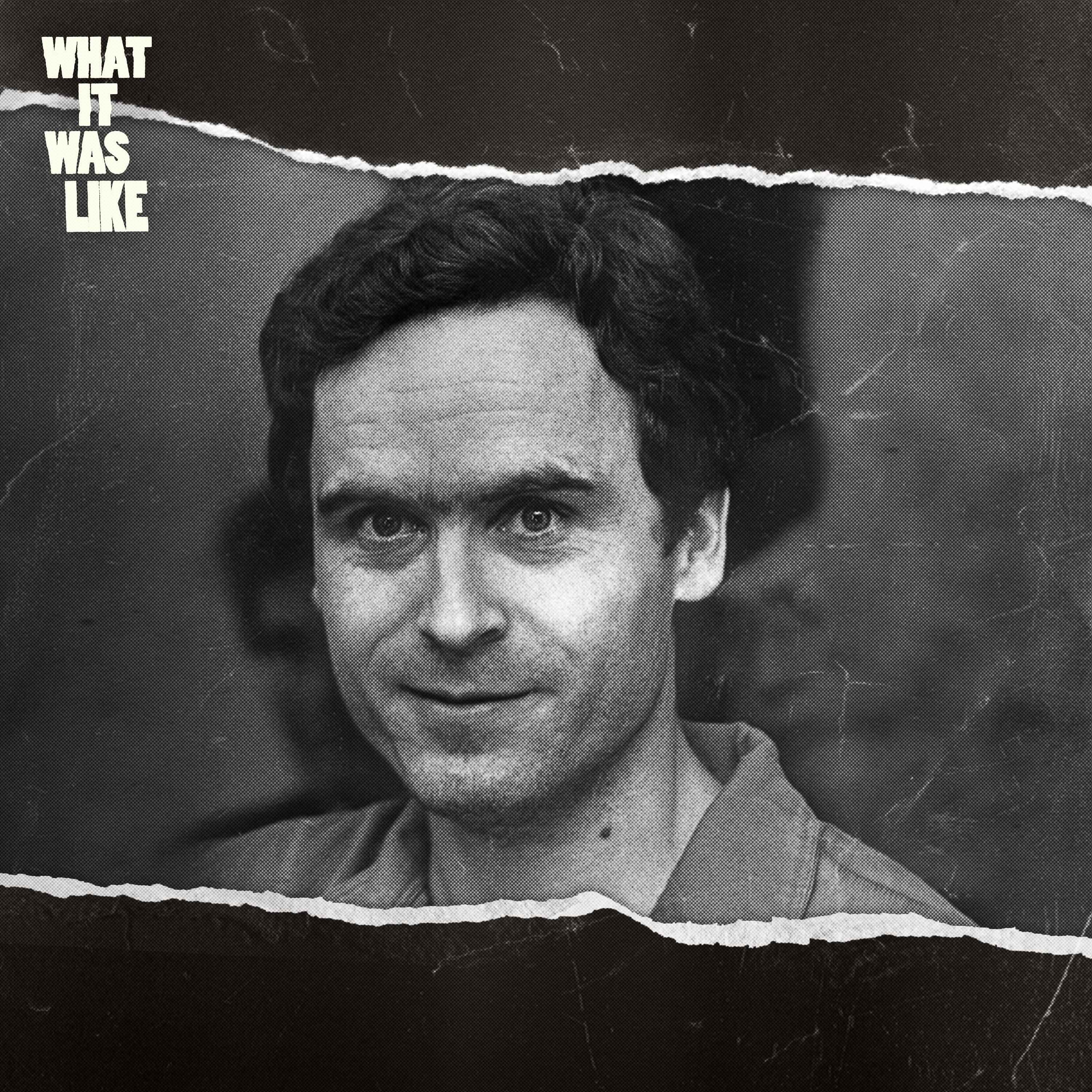
Hey, I'm Julian Morgans, and you're listening to what It Was like, the show that asks people who have lived through big dramatic events what it was like. Hey, everyone. Welcome back. Today's episode is one that I've wanted to do for a long time. We're gonna finally tackle Ted Bundy, and I'm gonna speak with a woman named Connie Geldridge, who, at the age of 14 years old, met a young man at a lake in Washington state. And he introduced himself as Theodore Bundy. And what followed wasn't murder. It wasn't sexual assault. On the surface, it wasn't even especially violent. But it was terrifying, and it was very revealing because Connie Goldrich describes an encounter that sounds a little bit like a schoolyard intimidation, like a very dangerous, sadistic game that some teenage boys play where the goal is really just to humiliate or to frighten. And I think most of us have experienced something like that in high school or maybe. Maybe younger. And I think for most of us, those moments fizzle out. You know, you take a few punches, you pick yourself up, and then you get away. You avoid the kid. You move on. But for Connie, it felt like she was like a bird getting played with by a cat. And it became clear to her that this young man wasn't just playing around. He was kind of testing something. He was pushing boundaries. He was very hungry for control and maybe. Maybe even something else that he wasn't yet aware of, because this was before he became a serial killer. This story takes place in 1967, and at that point, no one knew the name Ted Bundy. According to the courts, his first known serial murders wouldn't begin until the 1970s. And he was outwardly a very, you know, handsome sort of upstanding young man. But because of that timeline, Connie has faced years of criticism. Some people claim that her story just simply can't be true, that Bundy hadn't yet been kind of radicalized. But after spending an hour and a half talking to Connie and listening to her story and seeing her eyes, I've got to completely disagree. I believe Connie 100%. I found Connie to be a very thoughtful, specific narrator, and she's very clearly deeply affected by what happened. And if her account is true, and like I say, I'm absolutely sure it is. Then I think it offers a rare glimpse into Ted Bundy before the headlines, before the body count, and really even before the FBI fully understood what serial homicide even was. But I also think this is a story about trauma, about what happens when something really frightening occurs in adolescence and then just kind of echoes through the decades. So I think this is a really interesting one. I think this is an important one. And here is Connie Gelderidge to tell it. Hey, Connie, welcome to the show.
- [06:08]
Connie Geldridge
Thank you. It's good to be here.
- [06:11]
Julian Morgans
So let's go back in time to when you're a teenager. Can you tell me a little bit about your life? You know, where did you grow up and what was your childhood like?
- [06:21]
Connie Geldridge
My childhood was pretty ugly as far as parents go and family life, because I always got the feeling my parents didn't want kids. My father had a drinking problem. He didn't like to work. My mother was like a child. She liked to play and just stay outside and she didn't like to cook. I mean, just. It was just a nightmare house. There was six of us living in 800 square feet, two bedrooms and one bathroom. It wasn't a pleasant place to grow.
- [06:59]
Julian Morgans
That sounds like a really tough childhood.
- [07:01]
Connie Geldridge
I'm.
- [07:01]
Julian Morgans
I'm sorry to hear that.
- [07:02]
Connie Geldridge
You know, it is what it is. But one thing we, like my mom liked to do was go camping, hunting, fishing and swimming. And so that's what we did. We didn't have much money, so it was make your own fun.
- [07:21]
Julian Morgans
Yeah. So take me to the day that you met Ted Bundy. How did that day start?
- [07:26]
Connie Geldridge
Well, that was in 1967. I was 14 years old. And my mom said, we're going to the lake. I said I didn't want to because it was late August. Everybody's getting ready for school. There's no people at the lakes. I mean, even though it's warm out, it was just school time. And I was like, well, forgot to go. I gotta go. So. So I had a hand me down beautiful two piece swimsuit from my cousin. And I thought, I'm going to wear that today, you know, But I was like 14 and I had the bra, all that. I. I was like, wanted to be my Barbie. And I put it on and wrapped a towel around myself and off to the lake. And we get there and I dropped the towel. My mom just started screeching these horrible words at me. What are you. You're trying to pick up boys? You're some kind of. I don't know what I can say on here, but words I had never heard before. And I was pretty stunned, and I started to cry. She's like, just get away from me type attitude. And so I just started walking around the lake. I kept going and going and going and going. And then I see a tree, and it's growing out of the middle of the beach. And I thought, you know, I'm just going to go sit under that tree and maybe cry it out. I don't know. So I sat down and there was a floating dock out out there in the water, and there was nobody at that lake. It was just us. So after a little bit, I hear rustling in the woods behind me. And I thought it was a deer or whatever, but you better turn around. It could be a bear, you know. So I turned around and I looked, and there was a man coming out of the woods. I thought, well, that's very odd. And he had a pair of shorts on, no shirt, some kind of sandals. And he had a yellow whistle like, plastic whistle around his neck, tied with a boot lace. I. I remember that vividly. And so he goes down, looks up and down the. You know, the lake. And I'm like, what is this guy doing? And then he comes towards me and he said, hi, I'm the. I'm the lifeguard. Like, there's no lifeguards here. This is a parks department. And I said, when did they hire lifeguards? And he goes, we're new. They just hired us. Too many drownings. There's. Nobody ever comes to this lake. There's no drownings. And he's like, what's your name? And I said, connie. And he said, hi, I'm Ted. And I said, ted. I said, you know, what's Ted short for? I don't know any Teds. And he said, my name's. It's Theodore. And I thought to myself, I said, theodore. And I laughed like, I'm 14 years old. So I giggled. You have to remember, I'm only one year older than Kimberly Leach, the last girl he killed. So I was he Theodore. And he goes, you think that's funny? My last name's Bundy. And I went, ted Bundy. You made that up, you know. And I just couldn't stop laughing. And every time he would, like, poke fun at me or whatever, I would say, stop it. Theodore Bundy. That's how I remembered his name, because I kept saying it and I kept laughing at it, and I kept telling him he made it up.
- [11:24]
Julian Morgans
I mean, Ted Bundy was famous for being kind of charming and good looking. Like in this moment. Did you think that he was charming and good looking?
- [11:35]
Connie Geldridge
I was 14 years old, so I mean, I wasn't looking at like a good looking 14 year old or 15 year old. I was looking at an older man. That he wasn't bad looking. But I, you know what I mean, Wasn't somebody I'd be attracted to. I was home playing with Barbie. But he was, in the beginning he was quite charming.
- [11:56]
Julian Morgans
But you didn't get a bad read on him. Like he didn't seem to have this like negative aura or bad energy around him.
- [12:03]
Connie Geldridge
Not at first. At first he just, well, there was like red flags going up because there are no lifeguards at that lake and he's wearing that stupid plastic whistle and he's like wandering around like, yeah, I'm getting a weird vibe yet I'm, I'm not afraid of method point at all. So after a while he, I'm laughing at his name, but he starts to become a little darker and darker. But he kind of sits down or kneels down in front of me and he's like right in my face, exceeding my boundary. And he was like asking me millions of questions. I, you know, how old are you? What do you do? Do you go to school? What school? You know, what do your parents do for a living? What do you do for fun? Do you have a boyfriend? I mean, just on and on, you know, I, he was. And he never stopped smiling, smirking or grinning the whole time. He's like a person you meet at a party. Jerry. I don't know if you've ever met somebody that just wouldn't leave you alone and just got in your personal space. And he, he was the weirdo that stuck out in the crowd. That's the vibe I got from him. And then it eventually got worse. So I'm starting to get the creepy vibes. I said, I'm gonna head back to my room. My mother is, who was way, way on the other side of the lake. And he said, nah. He goes, why don't you go swimming? And I said, I don't want to go swimming. And he's like, oh, I'm the lifeguard. You know, I, I've got to do my, you know, earn my money today type attitude. And it just went back and forth. And I said, I just want to go back to my mom. And that's me. Started to get a little creepier. He started to go from authoritarian type person. Then he started acting like a 14 year old so he's the lifeguard now. He's like, my equal, I guess. Then he's like, now get up, get up, get up. Let's go swimming. Let's go swim. So he grabbed me by the arm, and he raked his fingernails down my arm, you know, like, took skin off. And I said, please go away from me. Just leave me alone. Let me go back to my mother. And this goes on for a while. So finally I get up, and we're both out on the beach in the sand, and he's toying with me at this point, and he's, like, holding his arms out so I can't get by him. He's tripping me, he's kicking me, he's grabbing me, he's raking me. He's everything. So finally I agreed to go in the water, and I said I would swim out to that floating dock if he left me alone after that, and I could go back to my mom. And he said, yeah, you can go back to your mother, but you have to go swimming first. So I got in the water ankle deep. I really did not want to go swimming. He starts splashing me, just drowning me. And then I'm completely soaked. So I finally just started to head out to the dock. And so I'm swimming, swimming, swimming, swimming, and he passes me swimming. He went right past me, like we were in a race. And he gets to the ladder, and he turns around and sits on the rung of the ladder. And I tried to hold on to the ladder, and he would. He was kicking me in the face and just, you know, just kicking, kicking, kicking at me. He wouldn't let me up. But there. That dock was huge. It was really high. I mean, I had to reach way up with my fingertips to get to the top. It was a. More of a fishing lake, not a swimmer's lake. So I realized he's not going to let me up. I can't. I'm thinking I don't have enough energy to. To get back. I've been fighting this guy for about two hours at this point. So I went to the right side of the dock looking for something to grab onto. And I put my fingers on the very top of the dock. And he had gotten up, and he was stomping on my fingers with his. The heel of his foot. And I thought, what's going on? I. You know, this guy's. Something's wrong. And I went to the back of the dock. There was nothing there either. So when I looked up, I seen him, and he is looking Down. He's on his stomach now. I said, help. You know, what are you doing? I thought you were a lifeguard. And he goes, I am a lifeguard here. And he reached down, and so I reached my arm up, and he. Instead, he bypasses my arm and grabs me by my hair. And I'm going, oh, my God, I am in serious trouble here. And he started screaming at me. He said, I'm a good lifeguard. See, I saved your life today. And I'm like, what? And he plunged me under the water. And I'm under the water for almost a minute. I. I was losing. I had nothing. And he pulled me back out, and I can't scream. My mother's way too far away. He's totally in my face. I kept trying to say, help me, but he was rambling on again about how he had saved my life as the lifeguard. And he punched me back under the water, and there I stayed. And it was just. Time was just tick, tick, and I'm. And it wasn't all that deep under the water. I was only a few inches, but he had, like, pulled my head back. And I could see him laughing. And his face went gnarly. I like ropey. And his eyes were like two big black marbles. They were the ugliest things I ever seen. And I could see his teeth, because he was hanging down, were all gnarly. And I thought, I am looking at a demon here. This is not even human, and I'm dying. I know it. But I think to myself, I had went to summer camp earlier, and they say, when in doubt, played dead. And I thought, maybe if he thinks that he drowned me, he'll just let go and leave. So what I did was I. I threw my. I had my. I was trying to peel his fingers out of my hair, but I just let go all of a sudden and went limp and just like. And I just, like, opened my eyes and looked up at him and my legs, and he didn't let go. He was just laughing and laughing and laughing. And my. My legs floated up and I. I had just about given up. And I thought I might be able to get out of this if I just can go down. So I suddenly grabbed under the dock and shoved with everything I had down. He wasn't stopping the laughing. When I pushed myself down from that dock, he ripped a big wad of my hair out. I mean, I had to pull out of his grasp, but by that time, I had no oxygen left at all. And I kept thinking, you could do this. You can do this. You just got to get up underneath of the dock where there's an air pocket. You can do it. But I keep sinking. I'm sinking and sinking. I don't know how deep the lake is up there. I know it's way over my head. And I'm down about probably 8ft and all of a sudden my feet hit the bottom of the lake. I don't have anything oxygen left to get back. What I did was I flipped my left foot. One foot, not even both. I didn't have the energy. And I. My, my chest gets tight when I talk about this. And I flipped my foot so I would propel me upward. That's all I could hope for, that I could make it to the surface. And I kind of angled myself towards the dock. If I could just get there, I could get air. If I could just get there. Just hang in con. I had nothing. Things like my lungs were on fire. Tunnel vision started to set in. Fear. And I got under the dock and after I got some air, I screamed my head off. And I hear him running across the dock. And then there was a crack where the ladder was because that was facing the beach. And I seen him swim really fast to the beach. He picked up whatever he brought with him, ran back into the woods and left. But I knew it because kept calling him Theodore Bundy. My mom wouldn't take me to the police. She actually called me a liar even though I had scratches. I was black and blue all over. Even my hands were black and blue. My fingers. She wouldn't help. Nobody listens. Here I am, 58 years later talking about this because it lives inside you.
- [21:59]
Julian Morgans
Hey, we're going to take a quick ad break, but stick around because we'll be back with more what it was like.
- [22:09]
Factor Meals Advertiser
Exhausted from spending half your night cooking. Factor eliminates the stress with chef crafted, fully prepared meals delivered to your door fresh, never Frozen, ready in two minutes. Factor delivers zero cooking, zero stress. Just heat and eat. Over 100 dietitian approved options weekly with no refined sugars, artificial sweeteners or refined seed oils. Right now go to FactorMeals.com Easy50OFF and use code Easy50OFF for 50 off and free breakfast for a year. That's Factor meals.com Easy50OFF and use Code Easy50OFF.
- [22:49]
Elise Hu
Hey, it's Elise Hu from the podcast Forever 35 where every week we talk about how we best take care of ourselves and the different ways self care can look for everyone. But taking care of yourself is key, no matter who you are. So if you are struggling with hot flashes, noticing brain fog or increased fatigue, dealing with some restless nights, maybe know that it's not just you and it's not just aging. It could be hormonal. And that's why Alloy exists, to make sure you get the care you actually need from menopause expert doctors wherever you are. No waiting rooms, no pharmacy lines. Just real menopause solutions delivered straight to you. 95% of women feel better in just two weeks. Visit myalloy.com that's my a L L O. And don't forget to use code. Forever35. That's Forever35 for $20 off your first order. Alaway is here to help you feel like yourself again.
- [23:43]
Strawberry Me Advertiser
Let's be completely honest. Are you happy with your job? The fact is, a huge number of people can't say yes to that. Too many of us are stuck in a job we've outgrown or one we never really wanted in the first place. But we stick it out and we give reasons. Like what if the next move is worse? And I've put years into this place, and maybe the most common one. Isn't everyone miserable at work? But there's a difference between reasons for staying and excuses for not leaving. It's time to get unstuck. It's time for Strawberry Me. They match you with a certified career coach who helps you get from where you are to where you want to be, either at your existing job or by helping you find a new one. Your coach helps clarify your goals, creates a plan, and keeps you accountable along the way. Go to Strawberry Me Career and get 50% off your first coaching session. That's Strawberry Me Career influencer marketing isn't
- [24:38]
Julian Morgans
what it used to be. We're shifting from reach to resonance, from impressions to impact. It's no longer about how many people see your content, it's how deeply you connect with them. And nothing creates that connection quite like podcasts. Acasts podcast Pulse 2025 report reveals how podcast creators are redefining influence through resonance, multiplatform fandoms and their ability to shape culture. So if you're a marketer who's tired of vanity metrics and looking for meaningful
- [25:05]
Connie Geldridge
results, podcasts are where you need to be.
- [25:07]
Julian Morgans
Download the full research free@podcastpulse2025.com. So I mean, that night, what state were you in when you got back to your. To your mum?
- [25:23]
Connie Geldridge
What happened was her, my younger brother and sister. They had been building a sandcastle and they were just didn't even ask where I was. And I said, mom. And I was crying. I said, some guy just trying to drown me tried to kill me. And I'm like, look, look, look, you know? And she's like, how dare you? I told you not to wear that outfit, you little. Whatever. And she told my brother and sister to get in the car. We had to go home because I ruined all the fun. And I kept going, mom, I need to go to the police. I need to tell somebody. Somebody's got to know there's a guy out there trying to kill people, you know? And she just said, absolutely not. Get in the car. I was grounded for a week and everything.
- [26:10]
Julian Morgans
God, it's wild that that was your mom's reaction. Just. That sounds like so much of her own baggage.
- [26:16]
Connie Geldridge
Yeah, she had her own demons. She just passed away in June. She was 94. Right up to the end, she was just the same person. She was quite evil. Bitter moments
- [26:31]
Elise Hu
and.
- [26:31]
Julian Morgans
And then how did you process this story over? I don't know. You're still so young. You're 14. Right. So over the next 10 years, just through your early 20s, where did this. In your mind?
- [26:43]
Connie Geldridge
Well, what happens is you. You just kind of pack it away and internalize it, and you don't try to think about it. I never went swimming again. To this day, I don't swim. I mean, I'll wade in the water or something else. I just didn't have anybody to talk to about it, you know?
- [27:06]
Julian Morgans
So, I mean, this was kind of the era as well. This was the 1970s, when, I guess people talking about their traumas was. Was less socially acceptable and people just bottled it up.
- [27:18]
Connie Geldridge
Yeah, you bottle it up and there wasn't anybody to tell. I just had to keep it to myself. Like, I. Then after the first 10, 20 years go by, I still have to keep it to myself. Who. Who am I going to tell? Got married a couple times. Told the husbands. They were like, oh, wow, that's terrible. But nobody asks any questions. So by the. My husband broke his neck in 1986, and I think. Did they execute Bundy in 89?
- [27:51]
Julian Morgans
Yeah, that sounds right to me.
- [27:52]
Connie Geldridge
Okay. See, I didn't even know he had become a serial killer, because by 1986, my husband was paralyzed from the neck down. So I had two kids, I had two jobs, and a quadriplegic husband from the neck down, and I had my hands full. I wasn't watching the news or paying attention to the serial killers down in Florida or wherever he was at the time. So he was literally already Dead. By the time I started to have problems with dreams, I could. I kept dreaming I could swim underwater. I would be under the water and I would. It's kind of weird. I would gasp for air. And then I, wow, I can swim. I can breathe underwater, and the fish are flying. And it was starting to bother me. Was it very often? Maybe once a month or two. But I was like, why would I have a dream like that? And then I would ask my friends, have you ever dreamt that you could swim underwater? And they all said no. All of them. And I thought, why am I having. And then, oh, because that guy tried to drown me back in 1967. But I did know he was a serial killer by then. Ted Bundy.
- [29:11]
Julian Morgans
Do you remember the light globe moment when you first saw or heard the name Theodore Bundy or Ted Bundy years later?
- [29:22]
Connie Geldridge
I would hear it, like, probably heard it during his trial, but it was going in one ear and out the other. Like I said, you know, paralyzed husband, two kids, two jobs. But when I read it in Anne Rule's book, you know, somehow reading it in black and white, and I kept going, where have I heard that Theodore Bundy? I'm from Washington State, and this is where it happened. And I. I just gasped. I was like, oh, my God. He was the one that tried to kill me in 1967. The problem with that was there is nothing, almost zero out there that says he hurt anybody prior to 1974. And I knew what happened to me happened when I was 14. And that made it 1967. It was in August. It was still hot, and I couldn't match it. I couldn't match the dates. And so I would go, I know it's him. And I go, no, it probably isn't, because this happened earlier than 74. And then I'd forget about it for a year or two. And then I'd go back to, I know it's him. I absolutely know it's him. Nope, can't match the dates. And that's what held me back, I think probably from talking a lot earlier than I did. So I wrote to Ann Rule, the one that wrote the Stranger Beside Me, and she contacted me right away, and she was like, tell me more. You know, So I told her what I'm telling you, and she asked me where at lake. And I told her, and she asked me a lot of questions about what did he look like, color his hair? She kept asking me about his molecular. And I didn't remember it. I. I don't remember seeing them All. I don't know why, but other than that, everything was spot on. So she said, I absolutely agree that you were a victim of Ted Bundy and that he had killed a little girl back in 1961 in this area. Well, in Tacoma. So I started to question what happened between 1961 and 1974, because you never ever hear about what he did in the 60s and early 70s. Prior to 1974. It was just like he woke up out of bed one day and he started killing people in 1974. And I was pretty stunned by that. So I started to do a little research on him. I don't know a lot about him. I still don't know a lot about him. I know he was the one. I. I could pick him out of a lineup. And that was another thing. When they would say Ted Bundy on tv, it kind of went in one ear and out the other because I kept calling him Theodore Bundy. Theodore Theater. Theater. I just kept shoving it to the far back in my brain. I mean, I had a lot of. I had to work, I had a paralyzed husband. I had kids. I couldn't think about Bundy, but I think Bundy thought about me when I kept having those underwater dreams. And so I wanted to cure myself. I've got to get rid of these dreams. And after I talked to Ann Rule, the dreams went away. Never had another one ever since. And that was mid-90s, late-90s. What happened now after that was every time I'm watching tv, I'm watching a video, I'm reading a book, I'm reading an article. Ted Bunny's in it. He has become more popular to this day than he ever was back in 74 or in the 70s. So that was really bothering me. And that's what made me do the first podcast I did, because I want people to know this guy was a stone cold killer. He was not your friend. He was not anybody to worship.
- [33:35]
Elise Hu
He.
- [33:36]
Connie Geldridge
He just wanted to see me die under that water. And. And he was just laughing and makes my blood run cold. So,
- [33:50]
Julian Morgans
I mean, in some ways, you've watched serial killers go from completely unknown. It sounds to me like when this happened to you in the late 60s, like no one had any curiosity, let alone knowledge about this kind of pathology. And then you've watched it go all the way. And now. Now there's sort of this true crime thing. It's like this huge industrial complex. You know, it just produces billions of dollars every year. What do you think of that?
- [34:16]
Connie Geldridge
I. It disgusts me. It really Disgusts me. He's got fan clubs out there. I found out he had fan clubs out there. But I, I'm angry. I just. Everything is Bundy, Bundy, Bundy. He's like the catch word for everything, you know, any. Any kind of evil in the world. We say Ted Bundy and it's just gotten more and more more popular and it just makes a hero out of him. And I kind of wish they didn't kill him. I would have wished that they would have, I don't know, tortured him until they got more of the women back that he killed. There's a lot of women missing out here in Washington, Oregon, Idaho, all out here. But other than that, I'm glad he's gone. But it doesn't. Even though he's gone, you never forget that it was a. One of the most traumatic days of your life. And yet, you know, you don't forget ever, what that man tried to do to you that day. And then you have distrust for people, and then you go back, you have survivor's guilt. What if I would have went to the police? What if my mom would have been like a real mom, took me to the police station, let me put down the word. Theodore Bundy tried to drown me. It would have been on file somewhere. When they started looking for him in the 70s, they were trying. His name was coming up in their database, but they were dismissing it. Oh, he's a good guy's attorneys. This, that if they would have checked out here with the police, the police could have said, yeah, he tried to drown this girl on this date. But I know that all those girls died and they kept on dying all the way to Florida. Could I have helped that? Maybe, maybe not. But it does kind of give you this. How did I survive? Why me? Why me? Why not those beautiful girls out at Lake Sammamish? Or that little girl, Kimberly Leach, out in Florida? Why me and what do I have to drag this burden around, you know? But every time I talk about gets a little bit easier to deal with. So the first podcast helped me a lot. The second one a lot more, and maybe this one will help me even more.
- [36:55]
Julian Morgans
Do you talk about it to, to try to work through what happened to you?
- [36:59]
Connie Geldridge
Yeah, it's part of my therapy because of my family life, my. My parents. Okay, I'm just going to come out. My dad used to hold us hostage at gunpoint. He come home from the bar three o' clock in the morning, the bars close at two. He could manage it before three, drag us all out of bed on a school night, sit us around the kitchen table and point guns at us.
- [37:28]
Julian Morgans
Jeez.
- [37:29]
Connie Geldridge
Yeah, so that's the life I came from. So I had a lot of trauma in my life prior to me and Ted Bundy. Lucky me, you know, what are the odds? Anyway?
- [37:44]
Julian Morgans
So maybe a good broader question then is that if you've had front row seats to so many horrible people, what insights have you drawn? You know, like, do you have some ideas about what's driving this kind of stuff?
- [37:58]
Connie Geldridge
I wish I knew. I don't. I'm almost a hermit at this stage of my life because I see so much evil. You can look a person in the eye and absolutely tell if they have a good heart or not. You can see the. The demons in them. There are demons in this world, and they are out there and they are ready to hurt you. I. I realize it's more like. Like narcissistic personality meets psychopath. You know, it's a varying degrees. Either they have one, both, or all of them. Or.
- [38:40]
Julian Morgans
I mean, I think so much of the media stuff that we get about Ted Bundy is an effort to understand him. I think there's this implicit idea that if we just analyze him enough and rehash enough sort of true crime documentaries, that one day he will make sense. But you've met him. You. You actually have looked into his eyes. So what. What did you understand about him?
- [39:05]
Connie Geldridge
Well, I think that the press is junk fluff stories. It makes. They make him a heroine out of. This guy is junk. But what I seen in him, unearthly is the only word that comes to mind. I can't even come up with words to describe it. I don't even think there are any. When his eyes, everything went black. Every. It looked like he had two big black marbles instead of eyes. And you just look at somebody who looks like that and you're like, what planet am I on? He was like, in my face. A lot of people ask me, why didn't I scream? I couldn't. I would have screamed right in his mouth, literally. And he was like this all the. All the time, no matter where I was.
- [40:02]
Sarah
So.
- [40:03]
Connie Geldridge
Plus, I was a kid. I didn't know, you know, I. I knew my mother was angry with me. She wouldn't have looked up anyway. And. Sorry, I. I don't know who hurt me more that day, Ted Bundy or my mother. And I'm being straight up honest with you, because she tore me down for days. You know, where do you go? There's nowhere to run in your mind or to hide.
- [40:37]
Julian Morgans
Yeah, that's right. Yeah. It must have felt like you had no safe space. You know, there was, you go to the lake, someone tries to kill you.
- [40:47]
Connie Geldridge
Right. So I could run to the devil over here or Satan over there. I mean, that's what it was like. I had nowhere to go. So you just withdraw, go inward and say to yourself, you know, let this, let this be a life lesson and get away from these people. If you see somebody you don't trust, just leave. If they don't feel normal to you, get away, get away, get away.
- [41:25]
Julian Morgans
Hey, we're going to take a quick ad break, but stick around because we'll be back with more what it was like.
- [41:37]
Elise Hu
Hey, it's Elise Hu from the podcast Forever 35, where every week we talk about how we best take care of ourselves and the different ways self care can look for everyone. But taking care of yourself is key, no matter who you are. So if you are struggling with hot flashes, noticing brain fog or increased fatigue, dealing with some restlessness, nights, maybe know that it's not just you and it's not just aging. It could be hormonal. And that's why Alloy exists, to make sure you get the care you actually need from menopause expert doctors wherever you are. No waiting rooms, no pharmacy lines, just real menopause solutions delivered straight to you. 95% of women feel better in just two weeks. Visit myalloy.com that's M Y A L L O Y.com and don't forget to use code Forever35. That's Forever35. For $20 off your first order, Alloy is here to help you feel like yourself again.
- [42:30]
Factor Meals Advertiser
Exhausted from spending half your night cooking. Factor eliminates the stress with chef crafted, fully prepared meals delivered to your door fresh, never frozen, ready in two minutes. Factor delivers zero cooking, zero stress. Just heat and eat over 100 dietitian approved options weekly with no refined sugars, artificial sweeteners, or refined seed oils. Right now go to factor meals.com easy50off and use code easy50OFF for 50% off and free breakfast for a year. That's factor meals.com easy50OFF and use code easy50OFF.
- [43:15]
Connie Geldridge
I don't really have a an explanation of what it was like to meet Ted Bundy. It was like evil personified. You felt it right from the moment he came out of those trees in the bushes. You knew right away you don't want to be around this guy. But you don't know why. Because he's charming. He's Asking polite questions, but he's right in your face doing it. And he thought everything was funny. He really did. He had a smile on his face constantly. If not a grin, a full grin, or then a laugh that was just something you'd hear at a haunted house and hysterically laugh every time he hurt me. Definitely a sadist.
- [44:08]
Julian Morgans
How did this event shape the way that you became a mother?
- [44:13]
Connie Geldridge
Oh, you were more protective. I was a different kind of mother than my mother was, that's for sure. Always made sure that I never changed my phone number for 30 years, you know, so they always have it and stuff like that. I still do that. Very. Just afraid because it's such a bad world out there. I don't know if that makes sense, but you don't move very often. Even though I love to get out of this cold weather, I'll stay here because that's where my kids know I am.
- [44:49]
Julian Morgans
That makes sense. Something else I wanted to talk about with you was that Ted Bundy was obviously not the only serial killer operating in the Pacific northwest in the 1970s.
- [45:02]
Connie Geldridge
We have a lot of.
- [45:03]
Julian Morgans
You guys have got a lot of serial killers. Can I just hear your thoughts on that?
- [45:10]
Connie Geldridge
I. I think it's the terrain. It's the mountains, it's the woods. There's a lot of places they can hide bodies and think they can get away with it. Like the Green river killer, for instance. He got away with it. For decades, we've had every. Every serial killer's. The stories that I've heard on quite a few is that everyone has made their round trip through Washington. I don't know, is it the climate? Is it the dreariness? Is it the rain?
- [45:42]
Julian Morgans
It's all pretty bizarre, isn't it? I mean, I've spent some time in Washington, and it's beautiful, beautiful state. You know, the forests are amazing, the mountains are amazing, but there is a spookiness there. The drizzle and I mean, even just like the culture, the sort of the art, you know, the music. The music's always pretty heavy. Yeah. There's a sort of heaviness in that environment. I don't know where it comes from.
- [46:06]
Connie Geldridge
I don't know either, but I agree with you. Yeah, A weird culture here. You can visit a medicine man or a doctor. You. I was thinking about the other day about, well, we've got Bigfoot and we've got the gum wall. We have a wall in Seattle where they just poke gum. Everybody comes in and sticks gum everywhere. It's like, what is wrong with this
- [46:28]
Elise Hu
place,
- [46:30]
Connie Geldridge
you know, you're right. It's weird. I'm glad you've been here, though, to see it for yourself.
- [46:37]
Julian Morgans
Yeah, I mean, I liked it. I thought it was beautiful. So you keep saying that this is a bad world. I'm guessing that events like this have really colored your perception of humanity. And I just want to hear a little bit more about that. I mean, do you. Do you see some cause for hope?
- [46:57]
Connie Geldridge
That's a tough question to answer. I always believe that there are more good people than bad people. Maybe we can cure some of this mental illness, but I think we got to find out what's causing it first, right? I'm kind of curious what you think. Do you have any idea what could save society from people like this?
- [47:23]
Julian Morgans
I've got one pet theory. I think we've all got a much better hope of understanding each other if we talk to each other a lot more thoroughly. Like, I'm hearing in your story, just so many instances where people weren't curious about each other. Like, your mum didn't ask you, oh, tell me more about that. Or in years later, you told your husband about this event and he didn't really ask questions either. I just think if we all empathize with each other better, we can solve some problems. But in order to do that, you've got to. Got to be curious. You've got to be able to communicate effectively.
- [47:58]
Connie Geldridge
I agree. I think that's a awesome way to think about it. I think we need to talk more.
- [48:04]
Julian Morgans
Yeah, absolutely. Yeah. But I think there was a real cultural value in 1967 to, you know, just to suck it up, not. Not talk about your problems.
- [48:13]
Connie Geldridge
Yeah, that's true. That is true. You know, you could come in with half your arm hanging off and they go, put a band aid on it and go outside, but that's just the way people were back in the 50s and the 60s when I grew up.
- [48:28]
Julian Morgans
Yeah. Hey, look, I really just got one last question. I. And that is I want to know what you learned from all this personally.
- [48:39]
Connie Geldridge
Not to trust strangers. Sometimes don't even trust your own family. I. I really have a lack of trust. I do. Anybody that you meet could have the ability to take your life at any minute without remorse, and there was no remorse. I. I would think about him cackling and laughing, over my dead body. That scares me at night.
- [49:09]
Julian Morgans
Well, Connie, thank you so much for telling me your story. Thanks for telling me about how your world view has been shaped by. By this trauma. And yeah, just thanks for sharing it with me. It means a lot to me.
- [49:22]
Connie Geldridge
You're welcome.
- [49:25]
Julian Morgans
What It Was like is produced by Rachel Tuffery. This episode was edited by Ellie Dickey, who also does our research. Our cover art is by Rich Akers. Our theme music was produced by Jimmy Saunders and this whole thing has been a super real production.
- [49:43]
Connie Geldridge
Super real.
- [49:49]
Elise Hu
Hey, it's Elise Hu from the podcast Forever 35 where every week we talk about how we best take care of ourselves and the different ways self care can look for everyone. But taking care of yourself is key, no matter who you are. So if you are struggling with hot flashes, noticing brain fog or increased fatigue, dealing with some restless nights, maybe know that it's not just you and it's not just aging. It could be hormonal. And that's why Alloy exists, to make sure you get the care you actually need from menopause expert doctors wherever you are. No waiting rooms, no pharmacy lines, just real menopause solutions delivered straight to you. 95% of women feel better in just two weeks. Visit myalloid.com that's M Y A L L O and don't forget to use code FOREVER35. That's Forever35 for $20 off your first order, Alaway is here to help you feel like yourself again, exhausted from spending
- [50:44]
Factor Meals Advertiser
half your night cooking. Factor eliminates the stress with chef crafted fully prepared meals delivered to your door. Fresh, never frozen, ready in two minutes. Factor delivers zero cooking, zero stress. Just heat and eat over 100 dietitian approved options weekly with no refined sugars, artificial sweeteners or refined seed oils. Right now go to FactorMeals.com easy50off and use code easy50OFF for 50% off and free breakfast for a year. That's FactorMeals.com easy50OFF and use code easy50OFF.