Loading summary
Transcript83 lines
- [00:00]
Orderly Meds Advertiser
Summer is here, which means we all want to look and feel our best. A GLP1 may be right for you. Visit orderlymeds.com to learn more about which GLP1 you could be eligible for. Getting started is fast, easy, and happens virtually through telemedicine from licensed professionals. Check it out for yourself. Go to orderlymeds.com podcast that's orderlymeds.com podcast taking care of yourself feels great. Compounded medications are not FDA approved, eligibility required and determined by a licensed provider. Individual results may vary. See website for details.
- [00:34]
Joe McCormick
ACAST powers the world's best podcasts. Here's a show that we recommend.
- [00:41]
Max Rushton
Hello American podcast listeners. Max Rushton here from the Guardian Football Weekly, which I think you should give a listen. It is good. It comes out three times a week and the podcast delivers you analysis, news, both the good and the bad from the Beautiful Game and maybe even the occasional laugh. He's angry about everything.
- [00:55]
Joe McCormick
He doesn't have a great poker face, does he? I would like to play cards with Bruno Fernandes.
- [01:04]
Max Rushton
You can listen to the Guardian Football Weekly wherever you get your podcasts. Hopefully see you soon.
- [01:12]
Joe McCormick
ACAST helps creators launch, grow and monetize their podcasts everywhere.
- [01:18]
CFA Institute Representative
Acast.com when finance professionals need trusted insight, they turn to CFA Institute. Now, as private markets become essential to modern portfolios, we bring the same commitment to ethics, education and professional excellence that has defined our work for over 75 years. With professional certificates, a new private markets pathway in the CFA program, the latest research, and more, we are helping professionals build deeper knowledge and stronger judgment in a complex field. Visit cfa institute@cfainstitute.org to learn more.
- [01:56]
Joe McCormick
Super real. So we went into this thatch roof room where there was probably a dozen or more people lying on mats, all sick with suspected Ebola. And so my colleague was holding a lantern, which is all I had for light, and I was trying to take blood samples from these people. And there was one old lady, very high fever, delirious, and so I had already stuck the needle in her and her arm, she jumped and it jumped out and stuck me in my thumb. So that was not good. That was a bad thing to happen. And I thought, okay, all right, what am I going to do?
- [02:39]
Julian Morgans
Hey, I'm Julian Morgans, and you're listening to what It Was like, the show that asks people who have lived through big, dramatic events what it was like.
- [02:52]
CFA Institute Representative
Foreign.
- [02:59]
Julian Morgans
Hey, and welcome back. This week we're looking at viruses. As you probably know, there's been an outbreak of a particularly nightmarish virus in Africa at the moment, the Ebola virus, and it's spreading through the Democratic Republic of the Congo and Uganda. So I wanted to look at viruses this week and next week, both the scientific side and the cultural side. So this week we're talking about Ebola, and next week we're looking at the 1980s AIDS epidemic. And I know what some of you are thinking. Some of you are probably thinking, oh, my God, viruses. Like, do we really have to? And I get it. You probably maxed out your virus curiosity in 2020, and I completely understand that. But if you'll indulge me for just one moment, because I think viruses are very, very interesting. And they're interesting because, well, for me, they raise questions about what it means to be alive, as well as this thing about, like, where did we all come from? So to illustrate that, I've got two facts for you. Here's the first one, and I think many of you probably know this already. So viruses aren't alive in their traditional sense. Not like bacteria, which is way more recognizably alive. You know, bacteria eat food, they excrete waste. Viruses don't do any of that. They're just little packets of code. They don't eat, they don't sleep, they don't have sex. They can't even reproduce by themselves. So they hijack the cells of other living organisms to do that. For them, their whole purpose in life just seems to be reproduction. That's it. Which, if you take a bleak view of humanity, is kind of similar to us. This brings me to my second fact. So the Ebola virus, the HIV virus, and human beings all evolved out of the same patch of Africa. This is the Congo Basin, which my guest calls the cradle of biology. And he says that we all kind of wriggled out of the same bit of forest. And that says something very interesting about how connected we all are. Viruses and humans, just life in general. It's all very diverse, yet it's joined at the hip. Now, I'm talking about this like I'm some kind of biologist. Like, I know what I'm talking about. I don't really. I learned all of this from my guest, Joseph McCormick, who goes by the name Joe. He identified Ebola when it first emerged in 1976, and now he's going to take us along on that journey. So here he is. Hey, Joe. Welcome to the show.
- [05:30]
Joe McCormick
Thank you. Good to be here.
- [05:33]
Julian Morgans
So do you want to start by giving me a little bit of background on what you do?
- [05:39]
Joe McCormick
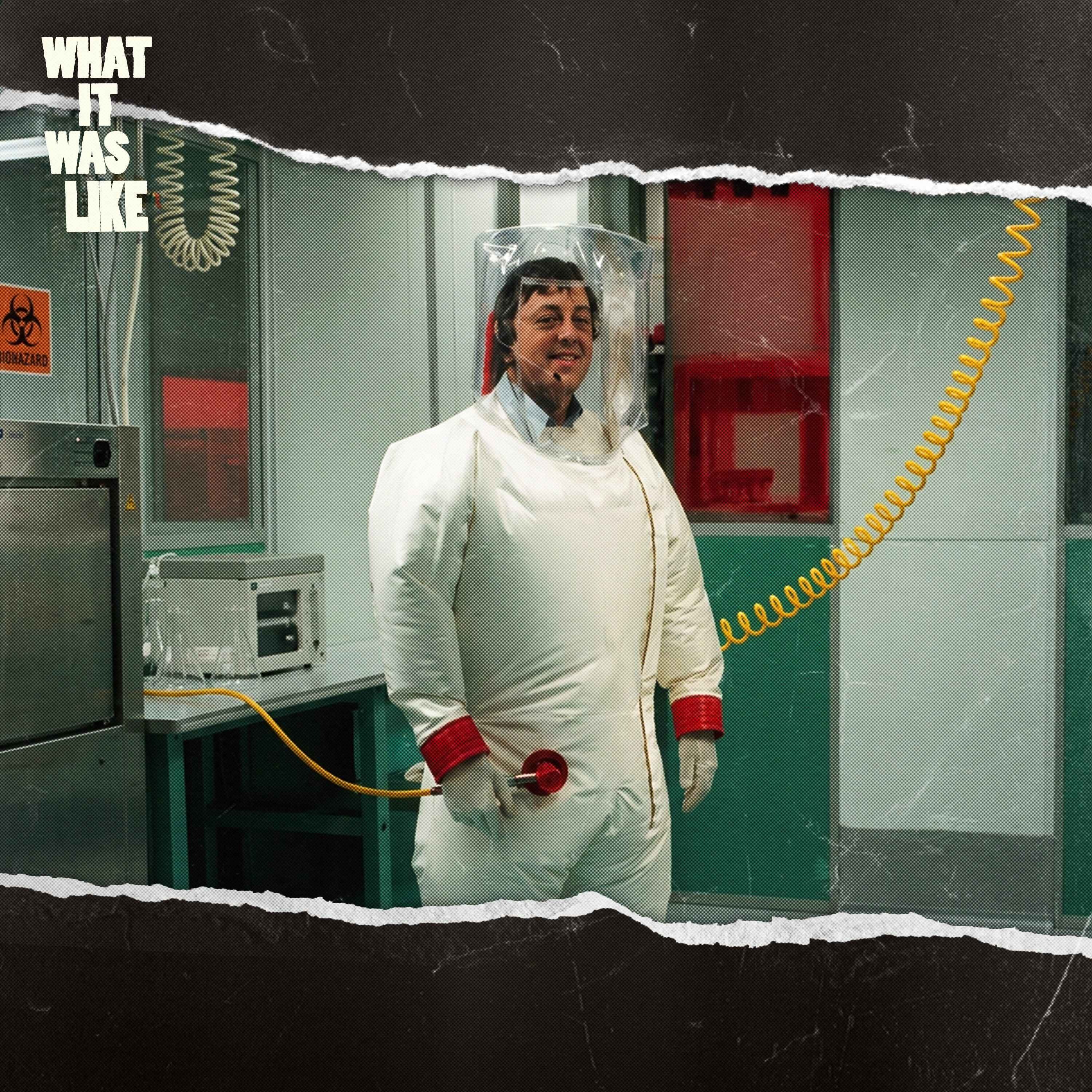
So I'm Joe McCormick. I'm a physician scientist. I have spent most of my time as a combination of researcher, adventurer and other things. Right now, I'm the James H. Steel professor of Epidemiology at the School of Public Health at the University of Texas Health Science center in Houston.
- [06:01]
Julian Morgans
So as you just heard, Joe is an expert in viruses. And in 1976, he was working in West Africa when he started hearing reports of people getting sick in the Congo.
- [06:11]
Joe McCormick
In those days, we had telex, we did not have Internet. And so I got a telex saying that there is this outbreak of unknown disease that's resulting in pretty high mortality would appear, although we had very sketchy information at that time. So they asked me to come to Congo, bring my portable isolator, and help to investigate the outbreak.
- [06:39]
Julian Morgans
Joe didn't know this, but he was being sent to study the world's first Ebola outbreak. The virus didn't yet have a name, and they didn't even know how it spread. They just knew that it was killing almost everyone who got it. So Joe caught a military plane to the village of Yambuku in the Democratic Republic of the Congo. And the pilot told him he'd have just two minutes to get off the plane.
- [07:01]
Joe McCormick
All they did was shove people out of the plane and took right off. The air Force guys were nowhere. They knew all about this epidemic, and they were terrified even of landing an airplane in this place.
- [07:14]
Julian Morgans
So it's a fairly nerve wracking experience where you skid.
- [07:18]
Joe McCormick
Yep. One of the people from cdc, after the disease was described, he was on an airplane to start to help, to investigate it. And he said, I'm not having any part to do with this. I'm going back to the US Now.
- [07:33]
Julian Morgans
I started this episode by describing Ebola as a nightmare virus, and it really is. So let me elaborate. Doctors actually describe Ebola's symptoms in two phases. There's the dry symptoms and there's the wet symptoms. So when someone gets first exposed, the virus causes fever and a headache, and that's the dry phase. And then they start throwing up and they get diarrhea, and that's the start of the wet symptoms. But then things get worse as blood vessels burst. Patients bleed internally, and they get these bloody splotches under the skin. And in really bad cases, blood starts oozing from their eyes, their nose, and their gums. Finally, organs fail and death ensues. And with that in mind, I think Joe was pretty brave going in. And his mission was to figure out where this thing had come from and how it Spread. And his first stop was the local hospital.
- [08:26]
Joe McCormick
I hesitate sometimes call it a hospital. It was a clinic with some. With some hospital beds. But any case, what we learned was that a number of people had come there for prenatal care, things like that. But everybody got a vitamin B injection, and that clearly was the engine. And you can imagine. So a woman goes. She's pregnant, she goes to the clinic to get her prenatal. She gets an injection, she feels fine, she goes home, and suddenly she gets sick three or four days later. And for those who got injections, the incubation period is like three or four days, really fast, because they probably got a big load of virus. And so they would get sick, and then family members would take care of them. And Ebola, that's where we learned that Ebola does not transmit by aerosol. It's not Covid. You have to have close contact with somebody who's ill to catch Ebola from somebody else. And so what happened was they would go to their. Obviously back to their village after they got their injection, get sick, people would take care of them. And so the caretakers got sick, and then they transmitted to other people. And that's person to person transmission.
- [09:42]
Julian Morgans
Can I ask, what was the fatality rate at that time?
- [09:45]
Joe McCormick
Okay, so the mortality rate was about 85%. However, the mortality rate in people who had injections was 100%. Absolutely 100%.
- [10:01]
Julian Morgans
Joe was told by hospital staff that the outbreak started when a man came in with a bad fever. Now, malaria is about as common as a cold in Central Africa, so they assumed that that's what it was. They gave him a shot of chloroquine and they sent him on his way. But they didn't sterilise the needle afterwards. And so it got used to give prenatal shots. And that seemed to solve the mystery of how the epidemic got started, as well as how it spread. And Joe actually thought that the outbreak was going to burn itself out pretty quickly until he heard that it had somehow leapt about 700 km north into South Sudan.
- [10:33]
Joe McCormick
Now, in the meantime, we heard about some potential cases in southern Sudan. And so that started to raise a lot of questions about what was really going on.
- [10:45]
Julian Morgans
The question was, how had this virus got so far north so quickly? I mean, it seemed unlikely that anyone had traveled. These are very isolated villages in the forest, in the savannah, and there's just dirt tracks connecting them, which left only one other option, that the virus spread some other way, maybe in the air, maybe in the water. And Joe knew that he'd have to get on the road to find out what was happening. And like I say, there were no main roads. It's all dirt tracks.
- [11:14]
Joe McCormick
And I had a Land Rover, a local driver and a 50 gallon drum of diesel fuel. And my job was to figure out how to get to Southern Sudan. The US Embassy said, hey doc, we have some K rations back from 1945 that were given to us after World War II. We can give you a few boxes of those. Well, what do K rations have? They have tins of peanut butter, they have Spam, they have some kind of cheese, they have cigarettes, chocolate. That was. So I took those along with me in case we had trouble getting food in this part of the world. I had people, kids coming up to the Land Rover and, and pressing their noses up to the Land Rover window, looking at this white guy. They'd never seen a white person in their life. You know, what on earth is this?
- [12:10]
Julian Morgans
This all happened 50 years ago, but I think Joe makes it sound like it was more like a hundred years ago. You know, imagine visiting a place that has no main roads, no food along the way, and people who had never even seen an American tourist, not even on tv. And Joe tells me that this was Central Africa in the 1970s, but it's actually changed a lot. And that is important because this change, this urbanization is actually how Ebola and HIV escaped into the world. And we're going to get into that later. It's pretty interesting stuff. But what's important right now is that Joe and his driver spent two weeks bought bumping along these muddy tracks and they hardly saw anyone the whole way.
- [12:51]
Joe McCormick
We saw in the two weeks or so that I was traveling up into Sudan, two vehicles. One was a local, a small Volkswagen that was belonged to a local Italian mission. And another one was a broken down truck that had been sitting there for like three months. That's it. That's all we saw.
- [13:09]
Julian Morgans
For Joe, this was turning into a serious mystery because without traffic, how was the virus spreading? To find out, he got to the Sudanese town of Nizara and headed to the local hospital. And this is where things got really tense.
- [13:25]
Joe McCormick
So we went into this thatch roof room where there was a mud wall room where there were probably a dozen or more people lying on mats, all sick with suspected Ebola. And so my colleague was holding a lantern, which is all I had for light. And I was trying to take blood samples from these people. So there was one old lady, really very high fever, delirious, and usually I'm exceedingly Careful with this. But somehow I was holding her arm and she, she jumped. And so I had already stuck the needle in her arm, she jumped and it jumped out and stuck me in my thumb. And you know, I've already told you what happened in Congo when that. So that was not good, that was a bad thing to happen. And I thought, okay, all right, what am I going to do? All right. So, well, first thing I did was take all those blood samples into another little room, another mud wall, thatch roof, house with a room where there was a wooden table and I could connect up my hand centrifuge. So I was up until like 4 o' clock in the morning doing all of that, wondering whether I was, had infected myself with Ebola when I stuck my thumb, but figuring there's no point in my just stopping what I'm doing and start to wring my hands because, you know, I wasn't going to be able to do anything about it. And I need to get this stuff back. So I decided, okay, if I get sick, they will come and get me. A CDC will come and get me and we'll take our chances and whatever. If I don't get sick, I'm just wasting everybody's time and nothing will get done here because they don't have any expertise. So I, needless to say, I checked on this woman very carefully over the next few days and fortunately she recovered. And she had, and I did have. One of the things that we had with us was a microscope and a way material that we could look for antibodies to Ebola. So I assiduously checked her clinically and checked her antibodies for Ebola. She never developed antibodies to Ebola. So I said, hey, I'm home free. I'm all right. In the meantime, my colleagues at undp, which there was a small group of most of the Europeans, UNDP in that area, had supplied me with a bottle of scotch so I could numb my anxiety a little bit with some scotch.
- [16:12]
Julian Morgans
Joe survived this close brush with Ebola, but it also established that this species of Ebola in South Sudan was completely separate from the one in Congo. There were actually two different outbreaks, each with their own different patient zero. And both had just happened to pop up at exactly the same time.
- [16:31]
Joe McCormick
And it was interesting, Julian, because when I got back to Yambuku, I said to my colleagues, okay guys, these are two separate outbreaks. They're not the same. And they all scoffed and said, ah, you just didn't find how it got there. Well, they had no clue what I went through to get from one area to the other. I've already described it to you. There's no way in hell it that this virus got through three tribes of people down to up or down either way. And so I insisted. Well, later on when we actually did the molecular studies of the different viruses, they're two slightly related but otherwise different virus. Viruses are different and now we know they're from different different ecological niches.
- [17:24]
Julian Morgans
We're about to take a break, but let's just do a very quick recap on where we're up to. So Joe has discovered that the virus spreads via infected body fluids, but he's also discovered that two biologically distinct outbreaks have occurred at the same time, which seems unlikely. It's kind of like two planes taking off from the same airport and then crashing for totally unrelated reasons. Pretty unlikely, right? But there was actually a hidden correlation between the two outbreaks. That and more when we come back.
- [18:03]
Orderly Meds Advertiser
Summer is here, which means we all want to look and feel our best. A GLP1 may be right for you. Visit orderlymeds.com to learn more about which GLP1 you could be eligible. Eligible for Getting started is fast, easy, and happens virtually through telemedicine from licensed professionals. Check it out for yourself. Go to orderlymeds.com podcast that's orderlymeds.com podcast taking care of yourself feels great. Compounded medications are not FDA approved. Eligibility required and determined by a licensed provider. Individual results may vary. See website for details.
- [18:34]
CFA Institute Representative
When finance professionals need trusted insight, they turn to CFA Institute. Now, as private markets become essential to modern portfolios, we bring the same commitment to ethics, education and professional excellence that has defined our work for over 75 years. With professional certificates, a new private markets pathway in the CFA program, the latest research, and more, we are helping professionals build deeper knowledge and stronger judgment in a complex field. Visit cfa institute@cfainstitute.org to learn more.
- [19:06]
Acast Advertiser
Do you keep hearing podcast ads like this one, for example, but always wonder how you actually get involved with them for your own brand or organization? Well, it's easier than you think. We're acast and we give you the platform to do it all yourself. Browse thousands of popular podcasts, choose the shows that match your perfect audience, set your budget, and launch. And if you want a hand, our podcast specialists are there to help you launch with confidence. This is podcast advertising without barriers. Get started@acast.com advertise.
- [19:46]
Julian Morgans
Welcome back. So Joe has just gone on this big journey through Central Africa to learn about Ebola, and he's just established that there's two different outbreaks happening in Congo and Sudan. But he actually says that all Ebola outbreaks start with the same animal, bats.
- [20:02]
Joe McCormick
Okay. From fruit bats or other, other types of bats. Yeah. And it's very interesting because the. There was. We were told when we went to Sudan that the index case worked at what was called the cotton factory. There was an old cotton factory in that area in Anzara in Sudan that was still functional. And they were, they were taking cotton and making cloth out of it. And it turns out there were lots and lots of bats in the, up in the, the roof of the cotton factory. And it made us wonder at the time, and I wrote that actually later on whether this was a bat virus. But we didn't have a way at that time when we were in there, I had no, no way to take tissue to catch the bats. Take tissue, put it in a way in liquid nitrogen or something that would have preserved it. Later on, it was our colleagues in Gabon who first really started to. Well, there are a couple of things that happened that made it clear that it seemed to be bats. One is that there's a guy in South Africa who decided he was going to do a Noah's Ark study of Ebola. He took every. And South Africa has a quite sophisticated level four laboratory. So he was able to put every. All kinds of animals, including bats, into the laboratory safely and then inject them with Ebola virus. This was later on. And it was the bats who seemed to. To be able to replicate the virus and they didn't seem to get that. That ill. So that was a clue, but it wasn't proof by any means that that's where it came from. But it was our colleagues who, French colleagues in Gabon who then did some of the early work that showed that bats were probably the. And now it's not. It's much clearer. Even this new, this new virus in East Congo is again a separate virus.
- [22:19]
Julian Morgans
It's not the Sudan virus as in it's re. Emerged from some kind of bat population,
- [22:27]
Joe McCormick
from a human, from a bat. And then. Well, typically what clearly happened, and it happened almost certainly in West Africa with that huge outbreak in2014. The first case we know about was a child, but it had been apparently in contact with a, with a fruit bat. And so we think so. And also this was known to cause disease in chimpanzees and in prime. In primates. There was an outbreak in Ivory coast with several deaths of chimpanzees from Ebola virus and Working with our colleagues in Gabon, there was a village where the villagers had found an ill, quite ill chimpanzee. And they dragged it to the village because people in Africa ate primates. So they brought it into the village, chopped it up, and there ended up being 34 cases of Ebola in 20 some deaths in that particular outbreak in Gabon. So, you know, these things started to accumulate over time, and it took a lot of effort to actually find. I mean, you could isolate a lot of bats and not find Ebola virus. So there was a lot of work that went on to try to figure this out.
- [23:55]
Julian Morgans
Another interesting thing that Joe told me was just how old Ebola is. So the virus first evolved millions of years ago, and it's been quietly living in various bat populations throughout Africa, unbeknownst to us. And then in the 1970s, as the human population expanded and bat habitats shrank, more people started interacting with bats. But urbanization isn't just squeezing a bowler out of the woodwork. Other viruses are popping up too, and most notably hiv. In fact, Joe was the first person to do a study of HIV where it had originated in Africa.
- [24:30]
Joe McCormick
When HIV came up, and I, I got a call, I was back at CDC running the high security laboratory, you know, one with a spacesuit, all the stuff, you know. And a Belgian colleague told me about some cases of this lymphadenopathy syndrome. This is 1983, early 1983, cases of this lymphadenopathy syndrome that came from Congo. And I thought, huh, that's crazy. I know Congo pretty well. And 99.999% of the people would never be able to get on an airplane, go to Belgium for anything sick or anything else. So, I mean, it's just. They're just too poor. There's no way. So I thought, wow, there's something going on that we need to investigate. And so we organized to go to Kinshasa to see what was going on. And that turned out to be the first investigation in Africa of hiv. We were able to find cases at Mamaema Hospital, at Ngaliema Hospital. Sound familiar? Same places. We'd seen the Ebola cases when they isolated the virus. And we were able to send them some specimens from, from our outbreak. And sure enough, we had a. We had a small number of people with that had. We had five out of 600. Yeah, about five out of 600 people that had antibody. So the question then was arose, hmm, how can we learn anything about the natural history of HIV? By going back 10 years later and looking at the same population that had the Ebola epidemic up in Yambuku. Examine people, get blood samples, and bring them back and see what had happened. So in the blood samples from 1976, the prevalence of HIV based on antibodies was 0.8%, less than 1%. By 1986, the pres. The prevalence in. In Kinshasa was roughly 4%. The prevalence among sex workers in a village on the Congo river was about 10%. It was socialization and creation of cities and the total change in behavior that really propelled this epidemic. And that was my point. We actually published that in the New England Journal of Medicine.
- [27:35]
Max Rushton
Wow.
- [27:35]
Julian Morgans
Okay, let's drill into that for a minute. So. So what you're saying is that the way that people were living in this region was shifting over those 10 years?
- [27:42]
Orderly Meds Advertiser
Absolutely.
- [27:43]
Joe McCormick
They're going to that. Places like Kinshasa. Yeah.
- [27:46]
Julian Morgans
And that is what caused AIDS to sort of bubble up out of this, you know, out of this region and take over the world, I guess.
- [27:55]
Joe McCormick
Yes, exactly.
- [27:57]
Julian Morgans
Did you catch all that? That was a little complicated. But basically, Ebola and HIV both sprang out of the same patch of African jungle through the 70s and 80s, because people were living differently. They started clustering in towns and cities carrying with them novel pathogens. And that's how HIV got out of the forests and into the world.
- [28:16]
Joe McCormick
And it wasn't epidemic. It was not a pandemic until you get to the big cities. Lisala was already a city of many thousands of people, and Kinshasa was over a million people. And, you know, the French, a lot of women would. Would migrate to Kinshasa, and because of the poverty they would engage in, they were called the dose Bureau of the. By the. By many of the French men because there was a lot of sexual contact. And. And that's, you know, that's what happened. And in our developed countries, we had bath houses, for heaven's sakes. Those were the places where the transmission was occurring early on. And those didn't occur in my little town in Indiana, I can tell you. They occurred in Los Angeles and New York and, you know, places like that. Yeah, yeah.
- [29:12]
Julian Morgans
So are you telling me that the HIV virus and the Ebola virus emerged from this, from the same little patch in Africa?
- [29:21]
Joe McCormick
Yes.
- [29:23]
Julian Morgans
So why.
- [29:24]
Acast Advertiser
What.
- [29:24]
Julian Morgans
What is it about this area?
- [29:25]
Joe McCormick
I. I call Africa the cradle of biology. It's the region of human beings. There's a fascinating study that was done among bushmen in South Africa about. This was published in Nature about four years or five years ago, where they did some sequencing of human DNA From Bushmen, there was more variation, more diversity among those Bushmen of DNA than in DNA and all the rest of the people in the world. So that's just a little tidbit of the kind of things that you think about when you think about Africa and its role in evolution and biological evolution. Probably Hepatitis C virus also originated in Africa.
- [30:21]
Julian Morgans
So, I mean, this might be a hard sort of existential question to answer, but what is it with, with Africa that produces so much, you know, genetic diversity and biology?
- [30:36]
Joe McCormick
Well, for one thing, it's. It was a very tropical. It was a diverse, diverse continent. South Africa being a little more moderate, but a huge central area that was incredibly tropical. And so you had everything happening there. I mean, you have so many species of different animals in Africa that it's just mind blowing. And they develop because they could get a. You could get an evolutionary change in a small area and that evolutionary change could develop around itself. And so you suddenly had a different species of bat or rodent or whatever it was from, you know, 10 miles away or 20 miles away because it was isolated and very, very biologically active. So. So, yeah, I think that's really the explanation. And it still remains a place of incredible diversity, genetic diversity, but also diversity of biologically diverse in terms of its species and almost every kind of, whether it's plants or animals or you name it, it's just an incredible place.
- [31:59]
Julian Morgans
We're going to take a quick ad break, but when I come back, we're talking about the latest Ebola outbreak that's ravaging the Democratic Republic of the Congo once more.
- [32:12]
CFA Institute Representative
Summer smells like summer road trips, ocean breezes and long evenings under the stars. It's a feeling you want to hold onto. Restore your sense of place. With Pura's new summer fragrance collection, we've captured the magic of the season in clean premium scents that transform your home into your favorite destination. Discover the art of scentscaping and bring the summer in. Visit pura.com to explore the collection. When finance professionals need trusted insight, they turn to CFA Institute. Now, as private markets become essential to modern portfolios, we bring the same commitment to ethics, education and professional excellence that has defined our work for over 75 years. With professional certificates, a new private markets pathway in the CFA programme, the latest research and more, we are helping professionals build deeper knowledge, knowledge and stronger judgment in a complex field. Visit cfa institute@cfainstitute.org to learn more.
- [33:15]
Julian Morgans
Hey, welcome back. So we're basically doing this episode because Ebola is back in the news in May of this Year, the World Health Organization declared a public health emergency of international concern for this outbreak that's now infected at time of recording 1,780 people and killed more than 600 people across the Democratic Republic of the Congo and Uganda. Now this is a very steep curve in a very short amount of time. So I asked Joe whether he thinks this outbreak is going to be as big as the one in 2014. This, this was the record setting outbreak which at the time killed over 11,000 people.
- [33:51]
Joe McCormick
Oh, I think it could be. Look, this, this is very close to where I taught school. It's not very far at all. In fact, I went through one of part of that area where it's occurring. I went through there when I took the Land Rover up to Southern Sudan. So yeah, it is incredibly remote, really poor. And it's a place because it has gold and diamonds and other resources where there's been fighting, as I'm sure you're aware, for years between the Rwandans and the Congolese and different Congolese groups and all this. Of course the government there is corrupt as everything. So it's, it's a mess. It's poor for the most part. It's under terrible stress from all the fighting that goes on about gold and resources. And if you look at the pictures of the town of the city, you can see that, you know, it's like most, most African cities of that size. It's not that big, but it's several thousand people. I mean it's just set up for the transmission of like this because one, people are poorly educated, they don't really understand, they often don't even believe that this is a virus. They don't believe anything anybody says. And so, and so not taking care of one of their family members, for example, who is ill would never be, that would not be acceptable. So it's a perfect storm for continued transmission and I fear that it's just going to continue. So, and of course our government has pulled all, all of USAID out of that area, all the hospitals that were supported by USAID for the most part. So they have no resources, who never has had the resources to be able to manage this. Doctors Without Borders is there and they're very experienced and very good. But to try to stop this is going to be a herculean task, in my opinion.
- [36:03]
Julian Morgans
I mean, let's pull on that thread a little further. I'm curious how much of a threat you regard viruses to be to just humanity in general. You know, of all of the things that are gonna end Civilization. Do you think viruses are a candidate?
- [36:19]
Joe McCormick
They are a candidate, absolutely. I think they're not as much a candidate as I might have thought of earlier because of the technology we have and the speed with which we can do things. The big game changer here was mRNA. That was a game changer because. And you know, kudos to the two people that won the Nobel Prize. They understood right away that they had in their hands and they've been working on this for 20 years, trying to make vaccines for. For cancer really is what they were interested in. But when they saw this, they said, wow, we can make a vaccine here in literally in weeks. And I think that's the point now, which I am a little bit hesitant to say, oh, you know, vaccine, virus, but if we had a virus like HIV that spread by aerosol, where no matter what you do, it could be problematic. And if it doesn't respond now, what do we have with HIV? Despite the promise of Bob Gallo and the U.S. government in 19, what, 85, when the virus was isolated, we'll have a vaccine in two years. Didn't quite work out that way. That was 40 years ago. And we still don't have a vaccine because this virus is treacherous. Same thing for hepatitis C. So from that standpoint, having a vaccine is not necessarily going to be the perfect, but the combination we have now of a quick vaccine for certain types of virus, but also the ability now to test very rapidly molecules against viral that treat viruses, which is now what we have for hiv, I think that reduces the risk substantially compared to what it was even. Even 10 years ago. But I still think. And the one that still worries me is flu, because it transmits so well and, you know, it could outrun all of our technologies. And that, I think is still extremely worrisome. Who knows what's going to emerge out of the forests or the laboratories of, you know, of the world.
- [38:45]
Julian Morgans
I've got one last question for you, Joe, and it's pretty open. It's just. What would you like our listeners to take away from this conversation? What would you like the average person to know about viruses?
- [38:59]
Joe McCormick
I think that I would like to know how incredibly diverse they are, how actually little we know about them, because there are far more viruses out there that don't cause Ebola, like disease or flu, like disease or Covid like disease. And yet they could be doing something quite profound and we don't know. And so they are unbelievably diverse and we still have a lot to learn. And so what I think people need to Understand why it's so important that we keep our scientific programs and that we continue to nurture them and get our young people to get engaged in science, because it's through that that we are going to understand. But the point is there are an awful lot of viruses that we don't know anything about, and we need to understand those. Just like there are a lot of other things we don't understand in the world that we should. And what better way to use our resources, our human resources, our economic resources, intellectual resources than to better understand our world and the, and, and our role in it and the role of all of the biology that we see around us. To me, that is a major, major goal. And, you know, our government is failing on every point.
- [40:31]
Julian Morgans
Yeah, I'd have to agree.
- [40:33]
Joe McCormick
Yeah.
- [40:34]
Julian Morgans
As an, as an outsider looking in, it looks bleak.
- [40:38]
Joe McCormick
It's horrible. Yeah, you're right. And I'm old enough, you know, if they want to come after me and say, oh, you said it was. Yeah, okay. Yeah, I did. Because you. Because it's horrible. Yeah.
- [40:49]
Julian Morgans
Well, Joe, thanks so much for coming on the show and telling me your story.
- [40:53]
Joe McCormick
It is always a pleasure to tell you about my adventures. So thank you for the opportunity.
- [40:59]
Julian Morgans
You've had a lot of them and it's, it's really been fascinating. Yeah. I can't thank you enough.
- [41:04]
Joe McCormick
Thank you.
- [41:05]
Julian Morgans
Thanks for listening to today's episode. If you want more stories from Joe, I highly recommend checking out his book, co authored with his wife, level four Virus Hunters of the cdc. We'll link out in the show notes. And now, if you're a subscriber, stick around because we're about to give you a taste of next week's episode. So we've taken a pretty scientific approach to unpacking Ebola in this episode, but next week we're going to look at the cultural impact of HIV during the 1980s. And I'm speaking with a writer named Mark S. King. Some of you might know his blog, My Fabulous Disease. And he moved to LA in 1981 as a young gay man and then basically lived through an apocalypse. He watched as the city's gay clubs fell quiet as people died. And he describes his own experience of being diagnosed HIV positive in 1985. He survived miraculously. He's really one of the very few survivors from this period. And this is a heart wrenching but really beautiful episode. And subscribers can listen to a half hour anecdote pulled out of that episode right now. And for the rest of you, I'll see you with that story next week. Hope you enjoy your weekend. Thanks for tuning in.
- [42:32]
Acast Advertiser
On the under $3 menu at McDonald's, a McChicken is $2 because when you're craving a McChicken you deserve a McChicken. And now that McChicken is just $2 with McValue limit time only, prices and participation may vary. Prices may be higher for delivery.
- [42:50]
Joe McCormick
ACAST powers the world's best podcasts. Here's a show that we recommend.
- [42:57]
Max Rushton
Hello American podcast listeners. Max Rushton here from the Guardian Football Weekly, which I think you should give a listen. It is good. It comes out three times a week and the podcast delivers you analysis, news, both the good and the bad from the Beautiful Game and maybe even the occasional laugh. He's angry about everything.
- [43:11]
Joe McCormick
He doesn't have a great poker face, does he? I would like to play cards with Bruno Fernandez.
- [43:19]
Max Rushton
You can listen to the Guardian Football Weekly wherever you get your podcasts. Hopefully see you soon.
- [43:28]
Joe McCormick
ACAST helps creators launch, grow and monetize their podcasts everywhere. Acast.com.