Loading summary
Transcript120 lines
- [00:00]
Julian Morgans
Hey, what it was like listeners. Did you know that every week we release a whole other episode just for subscribers? Not just that, but subscribers get ad free episodes and access to the whole back catalog. You know, it's a good time. It's great. So if you're already a subscriber, thank you. Thanks for supporting the show. And for those who haven't subscribed yet, well, what are you doing? Not only will you get access to some great content, but you'll also be helping us to dig into the really hard stories that that blow your mind. So please hit subscribe on Apple or Spotify and join the club. You'll love it.
- [00:39]
Grainger Advertiser
If you're the purchasing manager at a.
- [00:41]
Verizon Advertiser
Manufacturing plant, you know having a trusted.
- [00:44]
Grainger Advertiser
Partner makes all the difference.
- [00:46]
Verizon Advertiser
That's why hands down, you count on.
- [00:48]
Grainger Advertiser
Grainger for auto reordering. With on time restocks, your team will.
- [00:52]
Verizon Advertiser
Have the cut resistant gloves they need at the start of their shift and you can end your day knowing they've.
- [00:57]
Grainger Advertiser
Got safety well in hand. Call 1-800-GRAINGER Click grainger.com or just stop by Grainger for the ones who get it done.
- [01:09]
Verizon Advertiser
This holiday, Verizon is giving you incredible gifts and savings you'll enjoy all year. When you Switch, you'll get four new iPhone 17 Pros. No trade in needed. That's right, get four lines for just $25 a line and the amazing iPhone 17 Pro for everyone. Save big this holiday. Visit Verizon $20 monthly promo credits applied to account over 35 months with a new line on unlimited welcome in times of congestion. Unlimited 5G and 4G LTE may be temporarily slower than other traffic domestic data roaming at 2G speeds. Additional terms apply for phone offer. See verizon.com for details.
- [01:39]
Chris Capps
So good, so good, so good.
- [01:41]
Nordstrom Rack Advertiser
Get ready cause Clear the Rack is on at your Nordstrom Rack store now through Thursday, January 1st. Find incredible deals on Wear now styles on sale for even less at Nordstrom rack. Take an extra 25 off red tag clearance throughout the store from brands like Rag and Bone, Madewell, Adidas and more. All sales final the best stuff goes fast, so shop this sale at Nordstrom Rack today. Please see Nordstrom rack.com or ask a store associate for details.
- [02:16]
Chris Capps
Subaru. Loneliness is being stranded, hungry and frostbitten cold in a vast white frozen arctic wilderness. Frantically waving your arms in an attempt to attract the attention of a pilot flying low, only to have the sound of his engine fade into the sounds of your slowly recovering heartbeats and the return of that empty, desolate numbness to the cold, deep pit of your stomach. And I'll tell you that from reading the diary, his handwriting just turns into a scrawl at the end. And that was the last entry.
- [02:59]
Julian Morgans
Hey, I'm Julian Morgans, and you're listening to what It Was like, the show that asks people who have lived through big dramatic events what it was like. So a few weeks ago, we did a story about a hermit, a guy who lived in the Australian bush for 10 years. And it was through doing that story that led me to today's story. And today's story is about a young man named Karl McCon, who in 1981, ventured into the wilds of Alaska to go find himself and connect with nature. But he never made it out. And he was expecting a friend, good friend of his named Rory. And this guy owned a plane to come pick him up. But the two men totally misunderstood each other. And so Carl's friend Rory never showed up. And that, to me, is why this story is interesting. It's the tragedy that makes it interesting, because Carl never wanted to escape society or to do anything particularly dangerous. He was just. Just a regular guy, kind of like me, I guess, who just wanted to spend a summer in nature, which kind of appeals to me, too. But he also failed to clearly communicate his plans, which is something I struggle with. And so Rory never collected him in his plane. And Carl was stranded miles from anywhere up near the Arctic Circle as his supplies ran out and the cold set in. And finally, Carl used his last round to shoot himself. So, yeah, I think it's the tragedy and the miscommunication that makes this story interesting, but it also just speaks to some stuff that I think I resonate with personally. And I find it also interesting because it fits in with this broader mythology about the wilderness. You know, I think collectively, humans are still intrigued and a little bit scared by the idea of wilderness. It's why we all watch Survivor. It's also why Alone has been such a popular TV show. And also, I mentioned this a few weeks ago when I was last talking about hermits. But. But this mythology of Alaska is. It's. It's big. You know, it's Jack London. It's. It's into the Wild. You remember that film from 2007. It was actually based on a true story of a guy named Christopher McCandless who tried to do exactly the same thing as Karl McCann. He also decided to unshackle himself from society and go and live in the forest amongst the bears. And, you know, he ended up starving to Death. But unlike those stories, Karl McCann has been almost completely forgotten. But he kept a diary so we can follow his experience blow by blow. When rescuers eventually found his body, his journal got transcribed by a local journalist named Chris Capps from the Fairbanks Daily News Miner. And she's kept her copy of that journal, that transcribed journal ever since. Hey, Chris. Welcome to the show.
- [06:00]
Chris Capps
Thank you. Happy to be here. Far away in Fairbanks, Alaska.
- [06:05]
Julian Morgans
So I want to start with a bit of background. What was happening in your life when this story appeared?
- [06:12]
Chris Capps
Well, this story, when I first came to Alaska, I got a job as editor of the Kodiak Daily Mirror. That's an island off the coast of Alaska. And eventually, two years later, made my way to Fairbanks. And that's the paper I've been connected with ever since. And my first position there was as the police court crime reporter. So I would go to the police station, pick up reports of what happened the night before, go to the Alaska state troopers, do the same. But in the courthouse, I always stopped by the coroner's office just to see if they had any bodies that I should know about or would be interested in. And on this one particular day, they said, oh, yeah, we have this one guy who died. He left a diary. I said, really? Can I see it? Well, you have to get permission from the family. So I did, and they wouldn't let me take it out of the coroner's office. So I sat down, I read it. It's about a hundred pages long. And when I was done, I thought, if I could write a story that people feel the way I feel right now, this is going to be a great story because it was just a oh, my gosh feeling at the end because it does not have a happy ending.
- [07:24]
Julian Morgans
Tell me more about that response. What was it about this story that stood out to you?
- [07:28]
Chris Capps
Because he did it to himself. He had spent time in the wilderness of Alaska, like the previous year, I think, in the Brooks Range. And this one, he just wasn't careful, and he did not make arrangements to be picked up. He thought he had, but he hadn't. And he's a really good writer. These hundred pages of him documenting eight months of realizing he is stuck in the wilderness and could die. It's very powerful. It's very emotional, and I'm a fast typer. I retyped a big chunk of that diary so that I could write about it, take portions of it with me.
- [08:14]
Julian Morgans
So that's how Chris first heard about this man named Karl McCann. And now throughout this app, I'm Going to get Chris to read sections from the diary. So can you set this up for me? Like, who was Carl? Did you ever meet him personally? Who was he?
- [08:29]
Chris Capps
You know, I think he was a blue collar guy. He loved the wilderness. According to his own diary, he said he made some mistakes in his life and he regretted those. In fact, one of the things he left was a letter to the irs. If you can imagine, he's starving to death. He writes a letter to the IRS going, I have to confess I haven't been paying my taxes and I owe you a lot of money, but I don't have it right now. But as soon as I get back, I promise you I'm going to make this right. Who thinks about the IRS when they're starving to death, you know?
- [09:06]
Julian Morgans
Yeah, yeah. I mean, he was obviously repentant at that point.
- [09:09]
Chris Capps
Yeah. And trying to make things right, you know. You know, apologizing to his family for not being a better son. He's actually buried in Fairbanks, you know, in cemetery here. I think he was close with his father for sure. And he was doing the old finding himself. You know, people go into the wilderness to be alone, to consider their lives. I think that's what he was doing.
- [09:38]
Julian Morgans
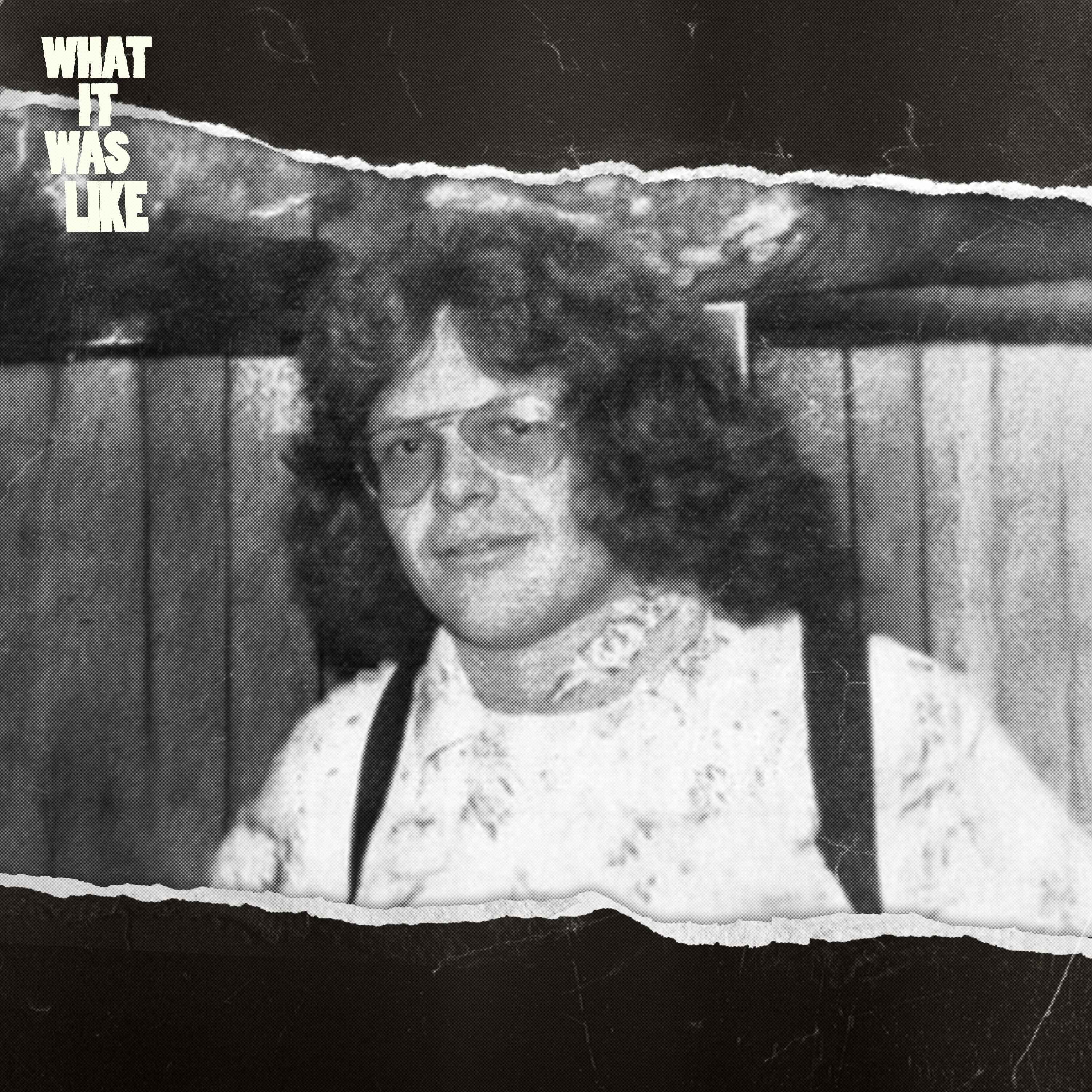
There's a photo of Carl on his Wikipedia page, and he's got big hair and big glasses and this big grin, and he looks fun. He looks like someone that I could be friends with. He looks very easy going. And the plan was to spend his summer out there, and then, like I said, to have his friend Rory Cruikshank pick him up in late August. And Rory was a local pilot, but it seemed that Carl had told him about his plan when they were out drinking. And somehow Carl had the impression that they'd agreed on a date for Rory to fly out to this lake up north and rendezvous with Carl before the winter set in. That was Carl's understanding of the conversation. But as Rory would later explain, he thought that he'd said, I can't do it. He said, I'd told him I was going to be working. So both men walked away from this conversation with completely different perceptions of. Of what had just been agreed upon. And that was obviously a giant mistake. In March of 1981, Karl McCun hired a Bush pilot, meaning basically a charter pilot who flies into remote areas. And he hired this guy to drop him off at an unnamed lake. And he took half a ton of provisions, so mostly beans and rice, a couple of rifles, a shotgun, 500 rolls of film, and some camping gear. And from what we can see in his diary his first few months were tranquil, but, I don't know, kind of boring. And as Chris highlights, he mostly just writes about food.
- [11:06]
Chris Capps
The beans and rice are pretty starchy and a lot of it stays and clogs the system. Besides, I haven't had much physical activity lately. With this damn weather, I'm bored shitless. Am sick of looking through the same books all the time. I especially don't like reading about food. I sure have been having some food fantasies lately. Repeatedly dreaming. Daydreaming about my first shopping spree at Market Basket. That was the grocery store in Fairbanks at the time. Hitting the bakery, milk cooler, fruit section, ice cream, peanut butter and jelly, chocolate. I'm sure I'll be puking before I hit the checkout counter. Or arrested for eating before paying. And then he says I'm down to my last a lot of things. Five gallons of beans, rice, onion, vitamins, toilet paper, parsley, garlic, salt and toothpaste. Plenty of matches though, and a lot of film. And here's the first time he says Rory should be coming soon. And that's the friend that he thought was going to pick him up. But he didn't come.
- [12:09]
Julian Morgans
This is the pivotal screw up in the whole thing was that he said to Rory, come get me. And Rory said, no, I'm busy. Like what, what, what do you take from that? How did that misunderstanding come about?
- [12:20]
Chris Capps
He shouldn't have gone. He should have made better plans. And plus, the spot where he was was in a valley that had no game. And the pilot who dropped him off really tried to convince him to not stay there, to go somewhere else. That was at least on a regular flight plan. Airlines. So that if something did go wrong, perhaps he'd have a chance of signaling them. Yeah, he was 50 miles from any regularly scheduled air traffic lane.
- [12:50]
Julian Morgans
Have you ever been out there?
- [12:52]
Chris Capps
I've been to Fort Yukon, but not in the surrounding area. There's not much there except a lot of tundra. Nothing as far as the eye can see. Rolling hills, lakes, no trails. Yeah, not much there.
- [13:06]
Julian Morgans
I mean, it sounds. It doesn't sound very pretty.
- [13:09]
Chris Capps
I think pretty depends on what you're looking for. It depends on your perspective. I think that's what Carl was looking for. Just vast emptiness. So he could just think about himself and what he wanted to do after.
- [13:23]
Julian Morgans
Not adequately communicating his return plans. Carl's second big mistake came at the end of summer. It was sometime in August and he stood by the lake throwing boxes of ammunition into the water. And he thought that Rory his friend, the pilot, was going to show up in his plane very soon and land on the lake, so he wouldn't need all of this unused ammunition. And of course, as we said earlier, Carl hasn't specified a time, just in his mind. He thought they'd both agreed on a date, but he assumed that Rory would probably arrive at some point during the day. But as the sun began to dip towards the horizon, Carl started to get nervous. This is the Arctic Circle, right? So during summer, the sun stays up for nearly 24 hours a day. And if it was setting, it meant that midnight was approaching and Rory hadn't shown up and there was no way to contact him. And now Carl has just thrown all of his shotgun cartridges into the lake. He's got a handful left. But. But why has he done this? It seems crazy, right? Why would you do that? Well, he explains in the diary, he.
- [14:27]
Chris Capps
Says, I keep thinking of all the shotgun shells I threw away about two months ago. Had five boxes. And when I keep seeing them sitting there, I felt rather silly for having brought so many. I felt like a warmonger. So I threw them all away into the lake, except for about a dozen real bright. Who would have known I might need them just to keep from starving? Another of my great moves. Yeah, it's hard to imagine.
- [14:55]
Julian Morgans
Yeah, it's a really mystifying decision. Like, it's also littering. You know, you go out into this pristine environment and just decide to litter in the lake.
- [15:04]
Chris Capps
That's smart. And that might have been the critical decision that doomed him. Well, that contributed. Not being arranged to be picked up was not too smart.
- [15:16]
Julian Morgans
You can hear that. Chris takes a bit of a dim view of Carl's organization on this trip. She thinks the whole thing's a tragedy, yes, but. But it's one that could have been easily avoided. And actually, she takes the same view of Christopher McCandless, the guy who lived in a school bus and whose story was turned into. Into the wild. McCandless actually died 10 years after McCann, like I'd said earlier, but. But Chris reported that story, too.
- [15:39]
Chris Capps
I wrote about a lot of people in the wilderness over the time I've been here in Alaska. And yes, I did jump on it. You know, the reaction to that story has been kind of like it was with the diary. People who lived outside Alaska were just heartbroken for this poor guy. People who live in Alaska were more critical, thinking he did this to himself. He wasn't careful. You can't push the envelope in Alaska. It doesn't work. You oftentimes are not saved. That happened to McCandless and that happened to Carl McCann. It's a sad lesson to learn.
- [16:16]
Julian Morgans
Yeah. You said before that there have been lots of people who have gone off into the bush for some sort of self discovery experience.
- [16:24]
Chris Capps
Yeah.
- [16:25]
Julian Morgans
Can you give me a sense of that? Like how many people? Like one a year or like how often does this, does this sort of thing happen?
- [16:31]
Chris Capps
At least once a year, probably more. I don't think as many since we have satellite phones recently, because we have satellite phones and new technology, but in the 80s it happened a lot.
- [16:44]
Julian Morgans
Why is Alaska this sort of ground zero for the self discovery journey?
- [16:49]
Chris Capps
Oh, always it's the sexy draw. It's vast and it's beautiful and you can go to places. There's no civilization. You can test yourself if you want, or you can. There's wilderness right outside of cities. You don't have to go far. I think there's people who have never experienced wilderness. And it's pretty. It does offer time for reflection. Like you can't believe that you're in a place that, I don't know, you're responsible for yourself.
- [17:22]
Julian Morgans
Carl was kind of responsible for himself, but he wasn't doing a great job. Throwing most of his ammunition into the lake was the second pretty silly thing he did. But there's actually another example, another final screw up. And this came sometime in September just as the weather was getting colder. And this was really the nail in the coffin.
- [17:42]
Chris Capps
His friends in Fairbanks were a little concerned about him and so they asked Alaska state troopers to check on him. And troopers said, yeah, we could do that. So they got in an airplane. And Carl documents all of this in his diary. He hears a plane and he goes, great, they're here. And the plane makes two passes and Carl waves to him with his arm up. And then just once. And then he goes inside his tent to pack up all his stuff. The plane leaves. And then he's sitting there with his gear all ready to go and wondering, where's the plane? I wonder what's going on. Then he pulls out his hunting license out of his back pocket and discovers he has given the everything's fine sign. All is well. And of course he's like, I can't believe I did that.
- [18:35]
Julian Morgans
Did you catch that? Chris told it pretty fast, so I'll just repeat it. Carl casually started walking back to his tent thinking, oh, they've seen me. He started packing up and the plane flew over the trees and disappeared into the distance. And Carl assumed, hey, they must have seen me. They're going to send help. But they never came back. And later, Carl's thinking about this. He's like, why didn't they come back? And then he remembers that his hunting license has a chart of various distress signals printed on the back. So he has a look and he's going down through the list and he realizes that when he'd waved his arm in the air, almost like cheering with one arm, like pumping one arm up and down, he'd accidentally given the sign for all okay, do not wait. And here's what he wrote in his journal. It's certainly my fault I'm here now. I really feel like a klutz. Probably another five months before another plane passes over. End quote. Now, I read that and I just shake my head because why wouldn't you wave both arms around frantically. Why wouldn't you make it really clear that you're desperate? And I mean, look, I'm, I'm kind of a relaxed guy. My friends would probably say that. But this just feels like a whole other level of relaxed. This is like relaxed bordering on belly functional. So, yeah, I kind of feel Chris, you know, Chris says, like, this could have all been avoided and I definitely have a lot of time for that. But still, still the story is sad, I think. And I think that's highlighted in this little poem or like this little siloquay that Carl wrote on his experience of extreme loneliness.
- [20:05]
Chris Capps
Loneliness is being stranded, hungry and frostbitten cold in a vast white frozen arctic wilderness. Standing in the middle of a lake, frantically waving your arms in an attempt to attract the attention of a pilot flying low and certainly close enough to see you, only to have the sound of his engine fade into the sounds of your slowly recovering heartbeats, the settling of your anxious, erratic breathing and that ever present ringing in your ears. And the return of that empty, desolate numbness to the cold, deep pit of your stomach. And then he signed his name in cursive. So that's pretty. You can imagine reading this from beginning to end for the first time. Drained. You're just drained.
- [20:58]
Julian Morgans
Hey, we're going to take a quick ad break, but stick around because we'll be back with more what it was like.
- [21:08]
Nordstrom Rack Advertiser
So here's the thing with homemade meals. Eating them is great, but all the chopping and measuring and cleanup, not so much. With new one pan assemble and bake meals from Blue Apron, you get all the flavor of homemade meals with a fraction of the work. Just assemble the pre chopped ingredients, bake in the oven and enjoy shop, assemble and bake@blueapron.com get 50% off your first two orders with code apron50. Terms and conditions apply. Visit blueapron.com terms for more. Did you know Tide has been upgraded to provide an even better clean in cold water. Tide is specifically designed to fight any stain you throw at it. Even in cold butter. Yep. Chocolate ice cream. Sure thing. Barbecue sauce. Tide's got you covered. You don't need to use warm water. Additionally, Tide pods let you confidently fight tough stains with new coldzyme technology. Just remember, if it's gotta be clean, it's gotta be Tide.
- [22:06]
Chris Capps
Hey, Ryan Reynolds here wishing you a.
- [22:08]
Julian Morgans
Very happy half off holiday because right.
- [22:11]
Chris Capps
Now Mint Mobile is offering you the gift of 50 off unlimited. To be clear, that's half price, not half the service. Mint is still premium unlimited wireless for a great price. So that means half day.
- [22:26]
Julian Morgans
Yeah.
- [22:26]
Chris Capps
Give it a try@mintmobile.com switch upfront payment.
- [22:30]
Verizon Advertiser
$45 for three month plan equivalent to $15 per month required new customer offer for first three months only. Speed Flow Hacker 35 gigabytes of networks.
- [22:34]
Nordstrom Rack Advertiser
Busy taxes and fees extra.
- [22:35]
Grainger Advertiser
See mint mobile.com a lot of supplement brands chase trends. But if you're serious about your health, we know research backed science is what actually moves the needle. Momentous works with the best brains in human science to create every formula. And every batch is made of pure ingredients tested for safety and does not contain fillers. So you get the best long term results possible. Creatine isn't just for muscle gains. It's essential daily fuel for your brain, body and long term performance. Momentous Creapure Creatine is backed by leading performance experts like Dr. Andrew Huberman and Dr. Stacey Sims. Sourced exclusively in Germany, Creapure sets the gold standard for creatine, delivering the purest form creatine monohydrate hydrate that's rigorously washed and never cut with fillers. With over 2,000 five star reviews, over 112,000 customers have seen the results firsthand. With Momentous, the fundamentals are done, right? Right now Momentous is offering our listeners up to 35% off your first subscription order with promo code Acast. Go to livemomentous.com and use promo code Acast for up to 35% off your first Subscription Order. That's livemomentous.com promo code Acast.
- [23:49]
Chris Capps
So as it got colder, he decided to remove the floor of his wall tent and use the logs for firewood. So and then he kind of dug a hole in the ground, put a tarp over the Top just to try to be warmer as it got colder. This will enable me to keep things much warmer. Should I be here that long. I don't know how long it'll take me. But I'm sure I'll sleep on the ground one night at least. He spends a lot of time snaring. And sometimes fox beat him to the snare and steal his rabbits. And that pisses him off. The lake plays quite a tune in the evenings lately. The water is constantly dropping and the ice sags and bends and bows. In doing so it makes a hollow echoing sound that is quite similar to a swimming and panting moose. Keeps me wondering. Today I had two snares broken off. Broken off at my number one snare. But I did snare one. It plus the two hind legs of a fox. Left me a day's meal. Can't cry. But I do wish snaring would pick up again. However, my prayers are for moose. He said the temperature is about 25 degrees. I'm worried about food, clothing and shelter are good enough for me to survive. And there's plenty of water. After this meal I'll only have four rabbits left. I'm getting more than worried. To be honest. I'm starting to be a bit scared. I felt confident that by now I'd have secured either some big game or been sighted by a plane I'm riding by. The light cast from the porthole on the stove. Have managed so far not to use candles or my weak bit of emergency blazolight. It's amazing what you can do without when you don't have it. And he says fox is quite edible. And then he starts kind of giving a farewell to his family. Wish I'd been a better son to you. You deserve more than what I've given. And starts telling him what property he has at a cabin in Fairbanks. He prays a little bit. That comes out more and more at the end. I'm frightened. My end is near. That must seem obvious. I've been thinking a lot about the Lord. Funny how that happens at a time like this. I've never prayed so much in my life. To be honest, I don't believe my prayers deserve answering. But I can't stop hoping that they are. Well, it said that freezing is the best way to go. I hope I'm asleep though. If things get too miserable. I've always got. And then in capital letters a bullet around. But I think I'm too chicken for that. Besides, that may be the only sin I've never committed. I say maybe Because I can't remember all ten commandments. Isn't this miserable? And I want God to answer my prayers. Good luck to me. Straight to hell. Wish the IRS would fly out here and arrest me. Wouldn't that be something? He always has this faint sense of humor which makes him so real. That's part of why this is so powerful.
- [26:48]
Julian Morgans
Yeah, yeah.
- [26:50]
Chris Capps
I don't understand why they haven't sent help since I'm so long overdue. They knew I wanted to canoe out by September and surely they know I don't have a canoe. So much for friends. I just wish I had been a better son and been able to express and convey some love to mom. You so this is meaning his dad and the girls don't know what was or is wrong with me. Surely something mental and deep seated. So a lot of introspection going on.
- [27:19]
Julian Morgans
Yeah, I don't know. It sounds to me like he's giving up. Like he's kind of like alright, well this might be the end.
- [27:26]
Chris Capps
I've had the chills upon awakening for the past three days. Could just be from moisture around the inside bag, but whatever it is, it's most uncomfortable. My frostbitten hand is back to normal size but the fingertips are numb and tender where the blisters are. I can't take much more of this. Have never seen so many blood vessels on my arms and legs. Am sure getting scared. Skinny. Can't stop hoping and straining my ears for the sound of an airplane. Also moose. Same chance either one can't stop thinking about using the bullet either. Who the hell wants to suffer through like this? But then again, I sure want a peanut butter and jelly sandwich and some of Jan's cheesecake again. I just hope that if my time comes out here that I'm asleep in my bag. Perhaps I can make a decent meal for a wolf. Certainly the voles will be at me in no time. He's got a.22 rifle with him and he tells his dad to tell his friend Mike. Tell Mike his.22 went off twice with the safety on. Also misfired twice. But that could have been a couple of faulty shells. However, both times they fired on the second try. And then God please help me. It's getting harder and harder to believe that at one time on this trip I had 5 gallons of rice, 15 gallons of flour, 10 gallons of beans or even a caribou or a stash of nearly 20 rabbits. Or that I shot a wormy moose. Should have eaten it anyway. He did. He did shoot a moose earlier and it went bad, filled with worms.
- [29:05]
Julian Morgans
Damn.
- [29:06]
Chris Capps
And I say I should have eaten it anyway. In some countries it would probably have been a delicacy. And then calling out to friends and I don't know who they are. Please realize I'm in trouble. My letter told you I wanted to be back in September. It probably also led you to believe I had planes and people buzzing around all the time. I'm worried shitless.
- [29:26]
Julian Morgans
The poor guy.
- [29:28]
Chris Capps
They started getting the chills. Constantly cold. His eyes are watering a lot and his nose runs like a faucet. I'm walking a lot slower, stumbling more and stopping to rest more often. Don't feel all that healthy. Never been this skinny in my life. Food fantasies persist and I'm just amazed that he is cognizant enough to record all this, you know, Obviously knowing someone is going to read it eventually, whether he's there or not. I'm shivering like an epileptic and started a fire and almost passed out. Been a long, long time since I had a fainting spell like that. Used to have them a lot but always kept it to myself for some reason. Even blacked out at the wheel once, but was lucky enough to have someone along whom I was able to warn to grab the wheel. I'm tired, hungry, weak, depressed, unenthusiastic, and I'm starting not to care to live. Can't stop thinking about doing myself in. Everything seems like it'll be okay when the fire's going and I'm warm even though I'm hungry as hell. But when I'm cold and shivering and feeling helpless and miserable, I just want to end it. He ate a handful of rose hips with a lot of water and then said, I realize I'm feeling sorry for myself. Who wouldn't? Don't seem to have much enthusiasm for getting out of the sleeping bag in the morning. Doesn't seem like there's much to get up for. A little hope for a rabbit or two and a crying desire to hear an airplane approach. He's talking about his moose snares. Maybe he'll check them tomorrow. But he said he gets tired of checking them every day and then feeling so bummed since they're empty and with no tracks anywhere. It's weird to feel on death threshold. I just can't believe he wrote all that, translated all those feelings, you know. Was he writing for himself or for whoever was going to read it? Dear God, when is it going to end? One way or the other. I keep telling myself, hang in there, man. Somebody will fly over But I'm beginning to believe I'm just lying to myself. I'm cold, miserable, and very tired of this existence. If I could just stay warm and eat enough to satisfy my hunger. At least enough to keep up my strength. Got out of the sack later than ever before. The sun was down when I finally crawled out. Had only enough time to check my snares. Useless. And cut four small birches. Couldn't cut them up, however, and they're only about 4 inches in diameter. So I ended up cutting some of my valuable, valuable dry spruce. God, please show me some mercy. I dearly and desperately need your help. I've never been so scared in my life. Yet what can a person do? It's so tempting to squeeze the trigger just to keep from suffering anymore. But not yet. Mom and dad, should it come to that. I want you to know I didn't do it to hurt you or anyone else I may love. I swear it's only a painkiller. And on this night, all he had to eat was a handful of rose hips and a few palms full of ground red pepper. I just have. I've always had the strong visual of him licking these spices off his palm.
- [32:45]
Julian Morgans
Yeah, that's a rough meal.
- [32:48]
Chris Capps
Being here was a very beautiful experience until Rory never showed up. Make sure that they tell about this on the Fairbanks local news. That they don't forget to mention his connection with my shortcomings. I want Fairbanks to at least know about his act. But I suppose after I'm dead and gone, it won't bring me back or matter much. And of course I should rightly forgive him. The scene is getting ugly. If a plane doesn't fly around on a day like this. It was apparently a nice day. I'm afraid there's not much hope of it happening at all. Some Thanksgiving. I suppose I should be thankful at being alive. But it doesn't seem to mean a hell of a lot. If you're not comfortable and able to say, smile about something. Please get me out of this. Please send me help. So that was November.
- [33:39]
Julian Morgans
So that's a similar time. Like we're recording this in early December. So that's a similar time of year in terms of temperature to what we're in now. I mean, what's the. What's the weather like there at the moment? How would you feel if you spent a night in a tent?
- [33:54]
Chris Capps
Currently it's about 20 degrees above zero, but it's about to drop. We're due to have a snowstorm midweek, and then temperatures will probably drop to 20 below zero.
- [34:03]
Julian Morgans
Okay.
- [34:04]
Chris Capps
I think once it hits 30 below, then it hurts to breathe. So you have to have something over your mouth and your nose and it's. Your hands get cold very quickly. It's hard to be dexterous at all. Yeah, you don't want to be out without the proper gear for sure.
- [34:22]
Julian Morgans
For Carl in his tent, 30 below zero, day after day, it must have seemed like there was just no way out. He briefly toyed with hiking to Fort Yukon, which is this little village about 75 miles away, or 120 kilometers. But he decided it was too cold and he'd get frostbite. I don't know. Personally, I've tried it. I just think it's better to roll the dice than to face definite death in a tent. But he didn't go out, and so he spent his final days wrapped in his sleeping bag inside his tent. Hey, we're going to take a quick ad break, but stick around because we'll be back with more what it was like.
- [35:07]
Verizon Advertiser
This holiday, Verizon is giving you incredible gifts and savings you'll enjoy all year. When you Switch, you'll get four new iPhone 17 Pros. No trade in needed. That's right, get four lines for just $25 a line. And the amazing iPhone 17 Pro for everyone. Save big this holiday. Visit Verizon today. $20 monthly promo credits applied to account over 35 months with a new line on unlimited welcome. In times of congestion, unlimited 5G and 4G LTE may be temporarily slower than other traffic domestic data roaming at 2G speeds. Additional terms apply for phone offer. See verizon.com for details.
- [35:37]
Nordstrom Rack Advertiser
You know what's wild? Most people are still overpaying for car insurance just because it's a pain to switch. That's why there's Jerry. Jerry's the only app that compares rates from over 50 insurance in minutes and helps you switch fast. With no spam calls or hidden fees. Drivers who save with Jerry could save over $1,300 a year. Before you renew your car insurance policy, do yourself a favor, download the Jerry app or head to Jerry AI Acast.
- [36:11]
Julian Morgans
Do you want to keep reading some of the last passages or some of the last pages?
- [36:15]
Chris Capps
Yeah. He wrote a letter to his mother and I didn't include this in my story because I just felt it was so personal. But he talks about how great her soup is. Chicken and potato salad. I wish to God I could have come to be the son I know you and dad must have hoped and dreamed of. It's really A terrible thing that our family doesn't know each other. But maybe it's just me. I want you and dad to live long and fruitful lives. And apparently he never met Corey. So I don't know if that's a brother or. I can't remember his connection. But he hopes Corey will develop into that which I somehow could not. I'm sorry it had to end this way for me. I know it's weak and sinful. But I pray that you, the family, and God will forgive me and understand. I just didn't have it in me to go on like this anymore. Please forgive me. I hope no one finds me in time to spoil your Christmas. And I think he was found in February of that next year. And he did shoot himself and kill himself.
- [37:20]
Julian Morgans
Is there a final entry?
- [37:22]
Chris Capps
Yeah. Don't think I can hold out much longer and don't seem to care. Need to hear a plane. Keep dreaming of food. Mostly peanut butter cheesecake and banana pudding with vanilla wafers like Mommy's to make chocolate milk and ice cream. Also of mousse. Some combo, huh? But I don't feel hungry. Just tired and weary and very dull like. And empty. Hollow in the gut. Mom, dad, Carmen, Linda. Corey, I love you. God, please help my family understand. And please forgive me. Dear Lord, humbly I beg of Thee. Amen. And that was the last entry. And I'll tell you that from reading the diary. His handwriting just turns into a scrawl at the end.
- [38:07]
Julian Morgans
Meanwhile, back in Fairbanks, one of the reasons that people weren't too concerned about Carl Is that a rumour had started up that he was actually back and he was working in another town. Chris actually read me this part of her original article. Just to explain this whole thing.
- [38:21]
Chris Capps
A rumor surfaced that Carl was back and was working in Paxson, which is a little community a few hours south of Fairbanks. And at the inquest, this friend said that was unfortunate that that rumor happened because it diffused our concern. Friends never confirmed that he really was at Paxson. And after the first of the year, they became concerned again because no one had seen him. So on January 19, they asked troopers if they would check again. And I don't know if you want to hear this now, but this is the sad conclusion. It was 46 degrees below zero.
- [39:03]
Julian Morgans
That's cold.
- [39:04]
Chris Capps
It's very cold. They landed on the frozen lake. And on February 2nd, the trooper reached the camp. No sign of life. The tent was zipped shut. He cut through the frozen canvas and found McCann lying on his homemade bed. He was dead. Of course the friends felt bad, you know, Rory said, I feel bad about it. I wish everybody would have taken a little more preparation on both ends, but nobody's really sure what was going on. I feel bad we hadn't gotten it together individually or collectively. Placing blame now, he said, is not a real rewarding mental exercise. There was no definite person in charge of getting Carl out, he said. And then at a memorial service, he said, it's like a volleyball game when the score is tied 15 to 15. The ball sails over the net and lands in the middle of everybody. And everyone says afterwards, oh, I should have gotten it. I know nobody meant for this to happen. He said, nobody wanted it to happen. I really wish we could go back in time. So there were a lot of balls being juggled that fell apart. And I know as a result, I know one adventurer who said he always hands the pilot a map and a big X where the pickup point is and a date. Because there are many stories of. Well, I shouldn't say many. There are some stories of pilots in the middle of Thanksgiving dinner who go, oh, geez, I forgot all about that guy. You know, I better go pick him up. I'm a few days late.
- [40:44]
Julian Morgans
So from this diary, Chris put together a five part story that ran in the Fairbanks Daily News minor over a week in early 1982. And she says that the article immediately became the talk of the town.
- [40:57]
Chris Capps
Everyone had had to put their own two cents into it. And it's a small town, so a lot of readers knew a lot of these people. So yeah, it was immediate, immediate interest, for sure.
- [41:10]
Julian Morgans
Would you say it's been one of your most positively received articles in your career?
- [41:15]
Chris Capps
Mm, yeah. And one of the most interesting and for me, most personally satisfying to be able to write it. For sure. I was on a career panel with some 8th graders last week and they said, is there any one story that you'll never forget? And it was this one for sure. After all these years.
- [41:33]
Julian Morgans
Wow.
- [41:35]
Chris Capps
I mean, I'm lucky. I get to write a lot of really interesting stories.
- [41:40]
Julian Morgans
Yeah, yeah, yeah.
- [41:41]
Chris Capps
You know, I got so many letters after this story. People wanted to name mountains after Karl Macan. I know that everyone was, as usually happens when you're trying to share a story, friends, family, they want you to understand the person you're writing about, and so they're happy to share their opinions. This story got so much sudden coverage. Eventually those people were like, I'm not talking to anybody. And they pulled back like, I couldn't talk to Rory after A certain period of time, because too many people were. And they were all people from outside Alaska.
- [42:20]
Julian Morgans
Yeah.
- [42:21]
Chris Capps
You know, and Laskas didn't want to talk to them.
- [42:24]
Julian Morgans
Yeah, yeah, yeah, that makes sense. Is Rory still alive?
- [42:29]
Chris Capps
I don't think he is, no.
- [42:32]
Julian Morgans
Okay.
- [42:33]
Chris Capps
But nobody wrote a book about this, you know, there was no vehicle for it to move on. His family owns the diary, so I don't know what they're doing with it. Which is why I. When you first contacted me, I went, I can't believe he knows about the Karl McGahn story.
- [42:49]
Julian Morgans
Yeah, yeah. It's on Wikipedia.
- [42:51]
Chris Capps
I thought, oh, if it's the bus, I'm not doing this.
- [42:54]
Julian Morgans
Yeah, yeah. But it sounds to me like Alaska is just this magnet for all of the lunatics, the dreamers from the United States.
- [43:02]
Chris Capps
We call them End of the Roaders.
- [43:04]
Julian Morgans
Yeah.
- [43:05]
Chris Capps
Yeah. I once interviewed a woman, Woman from Kentucky, who had to be rescued after she. She put herself and two little kids in a raft on a river up on the north slope. Had to be rescued, but she just wanted her children to live in the wild with the animals, like Walt Disney.
- [43:25]
Julian Morgans
What?
- [43:26]
Chris Capps
I just have the hardest time going, are you nuts?
- [43:28]
Julian Morgans
Oh, that is so sad. Oh, my God.
- [43:31]
Chris Capps
But it used to happen a lot. People just have no conception of how to be safe up here.
- [43:37]
Julian Morgans
For Chris, that's kind of the moral of the whole story. She thinks that if you're looking for an outdoors experience, that's fine, but don't be an idiot about it. And she's kind of tough in that way, but then I guess she's been living in Alaska for 45 years, and I haven't still. I feel sorry for Carl, and so does she, but with a limit.
- [43:57]
Chris Capps
If you're going to plan an adventure like that by yourself, make sure someone knows, because it's not going to just all work out. That doesn't happen in Alaska. Tell someone where you are and don't figure your friend will just figure out that he needs to pick you up, you know, make sure you have firm commitments. Yeah, yeah. I don't know. Just. Alaska is not an easy place for people who don't plan ahead.
- [44:29]
Julian Morgans
Yeah.
- [44:30]
Chris Capps
Because there's plenty of adventure stories that people are successful. But. Yeah, this was a sad one.
- [44:35]
Julian Morgans
This is extremely sad.
- [44:37]
Chris Capps
Just because he recorded everything. And for me, being able to see his handwriting just added to the emotion of. It turned into a scrawl. Truly. But I felt like he was talking to me, and so I think that's how readers felt when they read the story.
- [44:56]
Julian Morgans
Yeah. Well, look, thank you so much for digging up your transcripts and for making time to talk with me tonight. It's been enthralling. It's been really interesting.
- [45:05]
Chris Capps
Well, thanks for asking. I don't mind talking about this story because I think it's an important one.
- [45:15]
Julian Morgans
So that's the story of Karl Macan. And I think the reason that I keep circling back to stories like this, hermits, survivalists, people who just disappear into the wilderness. It's. It's kind of personal. It's personal because I love camping. I grew up outdoors thanks to my dad, really. He always was the guy, the mentor of our family who showed us about how to light fires and how to set up a tent. And at one point in his youth, actually in his early 20s, he actually spent an entire summer living in the bush. Kind of like a. Like a decaf version of hermit life. And that's why in our subscriber episode this week, I'm going to talk to my dad and him and I are going to talk about why places like Alaska exert such a powerful pull on certain people. But he's also going to talk about his own sort of Christopher McCandless out in the woods experience. He had a pretty interesting time. So please join my dad and I for a conversation about the psychology of escape, solitude and the dangerous magnetism of the wild. What It Was like is produced by Rachel Tuffrey. This episode was edited by Ellie Dickey, who also does our research. Our cover art is by Rich Akers. Our theme music was produced by Jimmy Saunders and this whole thing has been a super real production. Foreign.
- [46:53]
Verizon Advertiser
This holiday, Verizon is giving you incredible gifts and savings you'll enjoy all year. When you Switch, you'll get four new iPhone 17 Pros. No trade in needed. That's right, get four lines for just 25 a line. And the amazing iPhone 17 Pro for everyone. Save big this holiday. Visit Verizon today. $20 monthly promo credits applied to account over 35 months with a new line on unlimited welcome. In times of congestion, unlimited 5G and 4G LTE may be temporarily slower than other traffic. Domestic Data roaming at 2G speeds. Additional terms apply for phone offer. See verizon.com for details.
- [47:23]
Chris Capps
So good, so good, so good.
- [47:26]
Nordstrom Rack Advertiser
Just in thousands of winter arrivals at your Nordstrom rack store, save up to 70% on coats, slippers and cashmere from Kate Spade New York, Vince Ugg, Levi's and more. Check out these boots.
- [47:39]
Chris Capps
They've got the best gifts. My holiday shopping hack.
- [47:42]
Nordstrom Rack Advertiser
Join the Nordiclobe get an extra 5% off every rack purchase with your Nordstrom credit card. Plus buy it online and pick it up in store the same day for free. Big gifts, big perks. That's why you rack.