Loading summary
Transcript111 lines
- [00:00]
Verizon Representative
Now at Verizon we have some big news for your peace of mind. For all our customers, existing and new, we're locking in low prices for three years guaranteed on MyPlan and my home. That's future you peace of mind and everyone can save on a brand new phone on MyPlan when you trade in any phone from one of our top brands, that's new phone peace of mind. Because at Verizon, whether you're already a customer or you're just joining us, we got you. Visit Verizon today. Price guarantee applies to then current base monthly rate. Additional terms and conditions apply for all offers.
- [00:31]
BetterHelp Representative
BetterHelp Online Therapy bought this 30 second ad to remind you right now, wherever you are, to unclench your jaw, relax your shoulders, take a deep breath in and out. Feels better, right? That's 15 seconds of self care. Imagine what you could do with more visit betterhelp.com randompodcast for 10% off your first month of therapy. No pressure, just help. But for now, just relax.
- [01:12]
Experian Representative
You know how we all have that one friend we go to with all our financial questions? Well, meet Experian, your bff. As in Big financial friend. I'm telling you, Experian is gonna be your go to app when it comes to taking control of your finances. Experian not only has a bunch ways to help you save, but lets you check your FICO score. Matches you with credit cards and a bunch more things you'd expect from a big financial friend. Just download the Experian app and get started for free. Trust me, you'll be up to speed with this BFF in no time. Based on FICO Score 8 model offers an approval not guaranteed. Terms apply. Offers not available in all states. See experian.com for details.
- [01:54]
BetterHelp Representative
Super real.
- [01:57]
Julian Morgans
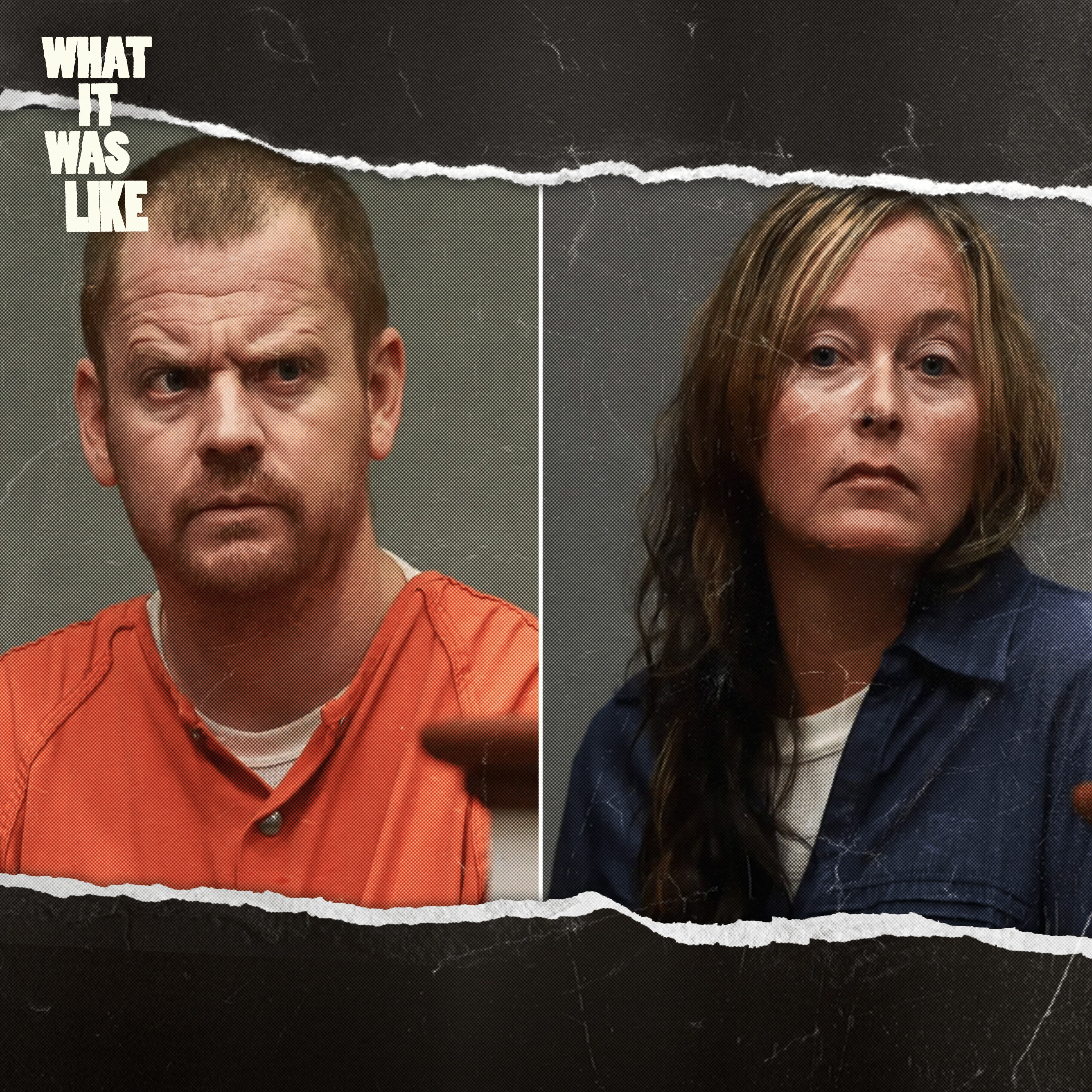
Hey listeners, this week I've been sick. You can probably hear it in my voice. So we won't have a new episode for you this week and we won't have a bonus episode for subscribers this week. But we are going to bring you this absolute classic, one of my favorite all time episodes of what it was like from 2022. It's this one about a couple of arsonists who fall in love and then ultimately get in a lot of trouble. I hope you enjoy it. Hey, I'm Julian Morgans and you're listening to what It Was like, the show that asks people who have lived through big dramatic events what it Was like. Today's story takes us to Accomac county in rural Virginia. I want you to imagine this thin peninsula of land Protruding from the Atlantic coast. It's like this little finger of farmland with the state of Maryland to the north, Virginia beaches down the south, and then there's water on both sides and then there's just this one highway down the middle and there's lots of abandoned houses. The area is full of abandoned houses because Accomac used to be the richest rural county in the US but now it's poor. So it's dotted with hundreds, probably thousands of abandoned farmhouses. And our story takes place in 2012, 10 years ago when these farmhouses started burning down. It started on November 12th when a total of seven fires were reported in a 24 hour period. And then it didn't stop. Over the next five months, there were almost 80 fires deliberately lit across the county. Most of them were empty buildings, but there was also a billboard, there was a pile of tyres. Now, it was a really weird crime. It was a spooky, seemingly random, senseless crime because none of these things were ensured. Setting fire to them didn't make anyone richer. And in almost all of the cases there was no one home. So like there was no one killed or injured. So there was no clear revenge motive. It was just an arson spree without a purpose. And the community was kind of spooked. If you hunt around Facebook, you can still find a few community groups from this period. They were set up by locals, like terrified locals who wanted to discuss what was happening. And it was basically people talking about various conspiracy theories. Lots of people thought the government was setting fire to the houses from drones. A few people saw a kind of religious end of days element to it. There was at least one vigilante group set up to keep watch on abandoned houses that might become targets. They called themselves the East Shore Arsonist Hunters, but they never caught anyone. And every week there'd be a few new fires and no trace of a suspect. Until finally the police made an arrest. And they didn't arrest some deranged pyromaniac. Like it wasn't just some crazy individual. They actually, they arrested a well known local couple, like just a couple that everyone knew. This was Charlie Smith, who had an auto paint shop, and his partner Tonya Bundik, who ran a clothing store out of the same building. And the story that emerged was that these two were kind of having relationship problems and serial arson was just their way of letting off steam. They'd go driving at night and usually Tonya would drive and Charlie would sit in the passenger seat and Tonya would find a target and she'd tell Charlie, look, see that house over there? Let's burn it. And Charlie would leap out of the car and set the place on fire, and. And then they'd drive off. And that was just. That was just their thing. Now, I heard this story. I heard this story a few years ago, and I just. I've always wanted to know more like. Like, obviously it's a crazy crime, but. But how do you get to that point where you've graduated from arguments, like just relationship arguments, to just burning down houses? Like, I feel like even if I did burn down a house, like, even if I was just in some failing, terrible relationship, and, you know, we'd burn down a house to let off some steam, I feel like I'd immediately regret it. I'd be like, oh, my God, the long arm of the law is going to get us. I'm terrified. So then how the hell do you end up doing it again? How the hell do you end up doing another one and another one and another one? And then how do you get to almost 80 houses? And I just really wanted to find out. So I contacted Charlie, and thanks to the Virginia Department of Corrections, you can call prisoners. If you're a fan of the show, you'll remember that I actually spoke to the guy who murdered Michael Jordan's dad. And this was a similar deal. I called him up at the prison. Same sort of principle. So slowly, maybe over, like the last year, Charlie and I have become friends. And he's agreed to tell me his story, like, the whole story, from how he and Tonya met to how they fell in love to how they started burning down houses. And to be clear, I contacted Tonya too, and I asked for her side of the story, but she refused. So we're only hearing from Charlie, and I'm just highlighting that because, let's be honest, almost no one in the world gives an objective evaluation of their ex partner. Especially when you both went to jail.
- [07:08]
Charlie Smith
Right.
- [07:08]
Julian Morgans
So I just want to highlight that we should take Charlie's assessments of Tonya with maybe a grain of salt. So without further ado, here is Charlie Smith.
- [07:29]
Charlie Smith
This call is from a correction facility and is subject to monitoring and recording. Thank you for using gtl. Hello?
- [07:37]
Julian Morgans
Hey, Charlie. Good morning to you.
- [07:39]
Charlie Smith
Yep, good morning.
- [07:41]
Julian Morgans
How are you doing today?
- [07:42]
Charlie Smith
I'm okay. I normally I'm up before now, but I woke up late today.
- [07:46]
Julian Morgans
So Charlie, he grew up in Accomac county and he had a bit of a bad boy reputation. He had a daughter from a previous relationship, and he had spent his youth kind of in and out of prison. He'd developed an addiction to crack cocaine pretty young. So he'd been busted for theft, tried to support his habit. At one stage, he was forging checks. Obviously, that didn't work out so well. So by the time he met Tonia, everyone knew that he was kind of a bit rough around the edges. But he really fell for Tonya, and he resolved to live a life on the straight and narrow. And it worked. I think they got to a point where Tonya trusted him, Tonya respected him to some degree. And they moved in together. And at first, for the first month or two, it was nice.
- [08:35]
Charlie Smith
When I first moved in, it was actually really kind of sweet because we got along really good, laughing and joking and. And I think we were both happy that we had some money.
- [08:50]
Julian Morgans
Charlie and Tonya lived in Tonya's small house together with her two kids. And Charlie tells me there's not much to do in Accomac County. So over those first few months, when they were really in love and getting to know each other, they had this thing that they liked to do, which was maybe a little bit cute. They used to go to Walmart and they'd go to the toy section with the kids, and they'd just mess around with the toys, and they'd pull funny faces at the other customers. And I like this vision. Like, this is these two serial arsonists whose relationship started messing around with the kids, with toys. It's kind of cute. And, I don't know, there's something universal about this. Can you tell me about the first time that she said, I love you?
- [09:33]
Charlie Smith
The first time she said it was actually. She sent me this text. There's one of these, like, weird texts where it was a whole bunch of eyes and a whole bunch of loves and then a whole bunch of you.
- [09:47]
Julian Morgans
And how did you feel when you got that text?
- [09:50]
Charlie Smith
I'm actually really excited because I thought for once in my life I'd actually found somebody that I'd actually work out with and maybe meet the one goal in my life that I always wanted come true. That was being part of a. Have my own family.
- [10:08]
Julian Morgans
Would you describe yourself as romantic?
- [10:12]
Charlie Smith
I always wanted to fall in love since I was little. I mean, I can remember being a kid and my mother even had pictures of me that I had, like, traced out of color and looks like these two people, like, kissing with a big heart in the background. And I'm talking about the age of four or five, but I do stuff like that because I don't know, to me, Being a part of family and being in love and having your own family was just like the biggest goal in life. You know, that's what I always wanted.
- [10:43]
Julian Morgans
Despite this, Charlie says that the relationship was far from perfect. Even after they were living together, Tonia always insisted that they couldn't tell anyone that they were a couple. He tells me that she always wanted him to park his truck behind the house so that no one could see it. For whatever reason, she was just a bit embarrassed to be seen with him, which, you know, that kind of sucks. And that created some problems. There were some jealousy issues on top of that. And Charlie says he began to suffer from erectile dysfunction, which Tonya took personally.
- [11:15]
Charlie Smith
She kept telling me that it didn't make no damn sense because here she was, this beautiful woman. Even if I didn't like her, I should still be able to have sex with her. And she was too good looking. She could do bad on her own. She could go screw any guy. So I literally just got to the point that I wouldn't even speak. I would go days without speaking. So. Which I think she really hated that. I must say, she hated that worse than arguing.
- [11:46]
Julian Morgans
Charlie says that Tonya was also in a pretty bad place. One of her sons had a learning difficulty and she pulled him out of school to look after him herself. And it was about this time, a little bit over a year into their relationship, that they started going out driving at night.
- [12:01]
Charlie Smith
Sometimes we'd ride around and just talk about what was going on and, you know, it seemed to do her some good.
- [12:09]
Julian Morgans
And then one night, they're out driving and something happened, something that changed everything about their relationship.
- [12:17]
Charlie Smith
We had to be riding around this back room one night and out of the blue she stopped the car and told me to get out and burn this house down. And I was like, huh? She's like, yeah, burn this house down. Whoa.
- [12:32]
Julian Morgans
Okay, let's. Let's slow this one down. Can you set the scene for me? What did. What did the house look like?
- [12:40]
Charlie Smith
It was his own beat up two story home that sat like in the middle of the. Of a field with grass growing all up and trash all over the place. And I mean, hell, the grass came up almost too much shoulders or weeds or bushes, whatever it was.
- [12:59]
Julian Morgans
They drove past and Charlie thought she was joking, but then she circled back and pulled over and she told him to get out and burn the house down.
- [13:08]
Charlie Smith
I got out and I was like, what the hell? I kind of walked up to the house and I can't remember. It's been so Long now, I think I walked inside the house, but I had no intention of burning the place at all. And next thing I know, she called me and wanted to know if I had done it. And I'm still kind of thinking this might be a joke. And I told her, yeah, I'd done it, which I actually had never done nothing. And I got in the car when she stopped to pick me up, and it was weird. She went from, like, being sad into being like. Like, the weight was lifted off over shoulder. So she was like, somehow some weren't happy.
- [13:51]
Julian Morgans
Charlie says Tonya was happy because she thought that he'd actually lit the place on fire. But when they drove past, she was annoyed to discover that he'd lied to her. So she stopped the car.
- [14:00]
Charlie Smith
She said, leave it to a man to do a woman's work. And she got out of the car and told me to drive down the street and come back. And I really still didn't totally believe it, but I drove her car down the street, and when I came back, there were freaking flame shooting down the back of this place like you wouldn't even believe. I was like, oh, my God.
- [14:24]
Julian Morgans
Can you just grab the file?
- [14:25]
Charlie Smith
Well, I believe she said it on the back porch. And, I mean, it was literally just flames shooting up. They weren't fully engulfed, but the back porch went up pretty quick, and that was fully engulfed. But she jumped back in the car, and she was just laughing, and, I mean, it was like she didn't have a problem in the world.
- [14:45]
Julian Morgans
And how did you feel in that moment?
- [14:47]
Charlie Smith
I can't stand it. There was a lot of. There was fear there, but it wasn't fear of the fire. It was just fear of. I can't believe this just happened. What the hell?
- [14:55]
Julian Morgans
So what did you do?
- [14:58]
Charlie Smith
Basically, when she got in the car, I just hit the gas and home we went.
- [15:05]
Julian Morgans
What was the mood like on the way home?
- [15:07]
Charlie Smith
She was just like a chatterbox after that. But I just remember thinking to myself, what the hell have I got myself into?
- [15:16]
Julian Morgans
I asked Charlie if he'd ever seen another indication that Tonya was into lighting fires, like, if there was any history of pyromania there. And he said that actually, maybe there was.
- [15:27]
Charlie Smith
You know what? That's kind of weird. Nobody's ever asked me that. And I just kind of thought about that. You asked me that question. We did have a burn barrel behind our house, and she did used to do some really stupid stuff with it and thought that it was the greatest thing in the world because she would take, like, Hairspray and aerosol cans and throw in these burn bill barrels just to watch these damn things blow up. That's weird because I never, I never talked about that until just now.
- [15:58]
Julian Morgans
The day after that first house fire, Charlie said that he went to work like always and then when he got home, they went out driving again. They lit several more houses on fire that night and the local papers claimed that it was a total of seven houses over 24 hours. But when I asked Charlie about this, when I asked for a specific number, he kind of gets a bit cagey and he, he says it was less than that. He says that he can't properly remember the details.
- [16:23]
Charlie Smith
I can't recall the fires right after that without seeing some paperwork or something like that. I mean, if I seen pictures of the houses, I'd be able to tell you word for word. But I do remember there was like two or three houses sitting on fire that following night.
- [16:40]
Julian Morgans
He says that they went out the night after that too. And for the first time in months, there were less flights. They felt closer. Tonya was a little bit calmer and as they did it more, a little routine developed.
- [16:52]
Charlie Smith
We went out driving because that was a normal thing, and she would just tell me to stop and that's when she would burned down this place or that place or set this or that on fire. I actually beginning, although I was driving in the beginning, I refused to have any parts of it, although it had gotten to the point that I was afraid she was going to end up killing somebody. And that sort of how I originally started getting involved because it would happen. She'd pick out where she was going to burn. And then I got so nervous because she was just going in there late in the place. All I could think there was going to be a homeless person in there and she weren't going to check. So it basically worked out. In the beginning I would actually go in search the house and then she'd go in later and burn it.
- [17:41]
Julian Morgans
We're going to take a quick ad break here and we'll be right back with more what it was like.
- [17:51]
Charlie Smith
Foreign.
- [17:58]
Verizon Representative
Hi, I'm Adam Grant, host of the podcast Work Life. For over 20 years, Paylocity has been simplifying work with innovative solutions that teams love. Like on demand payment, which offers employees access to wages prior to payday. Flexible time tracking features which enable staff to clock in and out through their mobile device and and numerous other cutting edge solutions that simplify collaboration across hr, finance and it. Learn more about how Paylocity can help streamline Work and enhance business outcomes for your organization@paylocity.com simplified now at Verizon we have some big news for your peace of mind for all our customers, existing and new, we're locking in low prices for three years guaranteed on MyPlan and MyHome. That's future you peace of mind and everyone can save on a brand new phone on MyPlan when you trade in any phone from one of our top brands, that's new phone peace of mind. Because at Verizon, whether you're already a customer or you're just joining us, we got you. Visit Verizon today. Price guarantee applies to then current base monthly rate. Additional terms and conditions apply for all offers.
- [19:01]
BetterHelp Representative
BetterHelp Online Therapy bought this 30 second ad to remind you right now, wherever you are, to unclench your jaw, relax your shoulders, take a deep breath in and out. Feels better, right? That's 15 seconds of self care. Imagine what you could do with more visit betterhelp.com randompodcast for 10% off your first month of therapy. No pressure, just help. But for now, just relax.
- [19:43]
Experian Representative
You know how we all have that one friend we go to with all our financial questions? Well, meet Experian, your bff. As in big financial friend. I'm telling you, Experian is gonna be your go to app when it comes to taking control of your finances. Experian not only has a bunch of ways to help you save, but lets you check your FICO score. Matches you with credit cards and a bunch more things you'd expect from a big financial friend. Just download the Experian app and get started for free. Trust you'll be up to speed with this BFF in no time. Based on FICO Score 8 model offers an approval not guaranteed Terms apply. Offers not available in all states. See experian.com for details.
- [20:33]
Julian Morgans
Charlie, I got to ask the big question here, and I think that is, it's why, like you're framing this in a way that suggests you didn't enjoy it. So then why did she enjoy it? Did you ever ask her just like, hey, why are we doing this?
- [20:50]
Charlie Smith
I honestly can't remember if I asked her why we were doing this or not. Because that's actually the Everybody always asks me the same question. It's like I tell everybody. It's like if I had one question I could have asked her, she had to answer honestly. It'd be why did we do it? Because I don't know. Reasoning behind why we did it. Because all I can do is guess. To me it didn't make sense. I remember her telling me, basically, it was just harmless fun, for real. And they were all old, abandoned, rundown houses anyway.
- [21:24]
Julian Morgans
Do you think that there was anything in her past that made her want to do this?
- [21:29]
Charlie Smith
There's a chance that she had an abusive childhood. I think she was abused as far as being beaten all the time by her father. But I could be wrong about that.
- [21:39]
Julian Morgans
At this point, Charlie actually admitted that he knew that Tonya set her childhood home on fire, but he thought it was an accident. He said that it was always her job to empty her dad's ashtrays. And one day there was a smoldering cigarette in the ashtray, and it set the bin on fire, which set the house on fire. And he says that her dad beat her up pretty bad for that. But she never really told Charlie the full story.
- [22:02]
Charlie Smith
I never was able to figure that out about her because she started telling me stuff, and then it was like she'd go quiet instead of telling the whole story. She said that nothing happened, but I was never sure about that.
- [22:19]
Julian Morgans
Can you tell me more about how this became normal in your house? Like. Like, walk me through it. So I'm assuming that you'd get home from work and then you guys would. Would go out.
- [22:30]
Charlie Smith
Yeah, that is basically how I went down. I just come home from work and she'd want to go out riding to get a break from the kids. And that's how it always started.
- [22:39]
Julian Morgans
So she'd just say, let's go burn some houses.
- [22:42]
Charlie Smith
Yeah, eventually. I mean, not in the very beginning any. I remember it, but eventually, yeah, we're going to burn a house down. But then it turned out to be a pretty normal thing on her burning something down.
- [22:57]
Julian Morgans
I said earlier that they burned down nearly 80 buildings, but the official number is like 76, or maybe it's 77. It's a little bit unclear because some of the fires went out. They didn't actually catch on properly, and a lot of the things weren't actually buildings. But all through this period, the single biggest fire that Charlie and Tonya lit was in an old motel called the Whispering Pines. And it was kind of a big deal because the Whispering Pines was like a bit of a local historical site in the 1950s and 60s. It was this amazing motel with these neon signs out the front. And it was a favorite stop for families Traveling along Route 13 between New York heading to Florida for a vacation. And it used to have a AAA rated restaurant attached to it, too. But by 2013, the place was derelict. And Charlie says it was actually the first target that he picked himself.
- [23:48]
Charlie Smith
It was supposed to be like my grand finale before her grand finale. It was supposed to be to basically close to the end of what was going on. And it used to be one of the most beautiful hotels I think anywhere because presidents had actually stayed there back in the past. It was like one of the top dollar hotels around. But you know, over time, like everything, it just fell to pieces and nobody ever did nothing with it and turned into basically a big crack house.
- [24:19]
Julian Morgans
So how did you do it?
- [24:22]
Charlie Smith
There's a little side road right in front of it that goes to the highway. Basically she parked there and I went across there and went behind the place and I went in through the back door where the restaurant used to be. And I basically went in there and I went to the back and there was like hundreds of old mattresses stacked up against the wall. Basically I just took my lighter and I lit one of those mattresses and I took off running, running and got there and away we went.
- [25:00]
Julian Morgans
Did you ever feel bad burning down a historical building?
- [25:03]
Charlie Smith
I guess there was some sentimental value to some people, but I'll be honest, I don't know that I really thought about that part. I was just. I felt bad that we were actually doing it, period.
- [25:15]
Julian Morgans
So, alright, let's. Let's talk about the biggest question through all of this. If you say it was all Tonya's idea, why did you go along with it?
- [25:25]
Charlie Smith
I don't know. I think deep down somewhere inside of me I still had feelings for her and I knew she was going through a lot and I wanted to help and I don't know, a lot of nights I'd sit there and talk to her about how it needed to stop because, you know, the kids were going to be the one that suffered. We were going to end up in prison. And I don't know, I just thought I could help her and I don't know, I was just an idiot. I can't tell you nothing other than I was an idiot.
- [25:54]
Julian Morgans
So would you say that it became normal? Like, did you lose track of just how weird this all was?
- [26:01]
Charlie Smith
I can't say it was normal because I hated what we were doing. And I mean, it's like when I first met her, I think I weighed 185 pounds. And I was so stressed out by one of everything that was going on. I actually, by the time I was locked up, I was only like 150, 155 pounds. Because I really got to the point that I Couldn't eat. And when I did eat, I could hardly hold anything down because I was just so stressed out that it was driving me crazy.
- [26:33]
Julian Morgans
Why didn't you just leave the relationship?
- [26:35]
Charlie Smith
I actually thought about leaving quite a few times, But I don't know. I think deep down I still thought maybe I could help her, get her away from that. And I don't know. Like I said, I had gotten attached to the children also. I just. I don't know. I kind of felt like I'd be leaving them behind.
- [26:57]
Julian Morgans
Can you tell me about the media? Because I understand that after a few months of lighting fires, the media spotlight was. Was really on you.
- [27:05]
Charlie Smith
Well, I guess when it came to the spotlight, like I said, we're from a small net community. It was more talk at first than it was in the media. Don't get me wrong, it was in the media, but the talk is what got me because everybody was talking about us.
- [27:22]
Julian Morgans
Yeah, you've mentioned the talking before. Can you tell me about some of the weird rumors that were going around?
- [27:28]
Charlie Smith
There was all kinds of crazy stories flying around. At that time, they thought that. I think the last part of the Bible is Revelations, if I remember right. They thought it was. A lot of people thought it was. The religious people thought it was the end of time and fire was just sprouting up. There was ghosts, and. I mean, I'm lucky I didn't get caught whenever I was talking about it, because it was just one situation. I always changed the subject because I actually have friends that I almost admitted all this to one night.
- [28:03]
Julian Morgans
What happened?
- [28:04]
Charlie Smith
We were all standing there talking, and they were talking about. They actually got talking about Tanya, about, excuse me for what I'm gonna say, but they told me I needed to lead that because my whole life and the type of person I was and completely just turned upside down. And that's when all of a sudden, I can't remember exactly what was said, but they said something. And I was like, if you only knew what this had me doing. By then, they were actually talking about the fires. And as soon as I said that, I just stopped talking. And they were like, what are you talking about? And they never put two and two together. And once I was locked up, I ended up getting in touch with them again. They were like, dude, that day out there at our shop, and you said this, you were getting ready to tell us, weren't you? And I was like, yeah, that's exactly what I was getting ready to do.
- [28:52]
Julian Morgans
As I said at the start of the show, the arson spree went for about five months. And Charlie said that through this time, the police presence was really ramped up. Like, there was state troopers there. The whole thing was like a big police circus. And it just became harder and harder to find an abandoned building that wasn't being staked out by the cops. And that's how finally Charlie was captured setting fire to a house on a hunting camera that had been set up by the police.
- [29:18]
Charlie Smith
I guess the police have set up hunting cameras or something there. And they actually got, like, a dark figure, which they actually thought it was a woman, but it was actually one of the ones that I lit on fire.
- [29:31]
Julian Morgans
Why did they think you were a woman?
- [29:33]
Charlie Smith
I think they thought it was a woman because we actually used to wear, like, black hoodies. And, like her, she wouldn't. But I always wore a black nomex face mask to cover my whole face up, except for my arms. And basically what I would do was I'd probably put on, like, six or seven different shirts underneath my hoodie. So that way I look like I was even bigger than what I was. And I guess they thought a woman. Thought it was a woman because it kind of looked like. I guess why I had so many shirts on. It looked like almost like I had boobs.
- [30:10]
Julian Morgans
Were you annoyed to hear that you'd been caught on camera?
- [30:12]
Charlie Smith
Oh, no. I just like the old saying goes, if you go to the barbershop long enough, eventually you can get a haircut. There was no if hands or busting my moon. And I was actually kind of looking forward to it, just going ahead and getting locked up. But, no, I knew we were going to jail.
- [30:29]
Julian Morgans
Why is that?
- [30:30]
Charlie Smith
Why? Because somebody was going to end up getting hurt, and I was sick and tired of it and just wanted to go to jail.
- [30:35]
Julian Morgans
Finally, on April Fool's Day 2013, Charlie and Tonya got arrested. They tried to set fire to a house that was staked out by the police, and they were handcuffed on the spot. Charlie, can you tell me about the night that you got arrested?
- [30:50]
Charlie Smith
The night we got called, we had actually gone birthday shopping for the kids, and we ended up in an argument. Basically, she told me to make it up to her for arguing, that she wanted me to burn down the house. So we went and got coffee, got gas in the car, and we started riding around, and there was a house there. And she told me that she wanted me to burn that house down. And I'd actually told her, and I can't say how, but I'd heard rumor that that house was staked out and I told her that. She basically told me that she was the brains of this operation. And while we weren't locked up, I just kind of snickered and said, okay. Didn't let me out. She let me out and I lit it. And I called her and told her to pick me up. And I jumped in the vehicle. We turned left on the highway, and I don't even think we made the full turn before cops come out of the woodworks. There were blue lights everywhere. And she basically looked at me and had the nerve to say, what's going on? And I don't know why. I guess I hide a lot of my emotion with laughter. And I just busted out laughing. I think it's the first time I ever customer, I was like, we're going to prison, bitch. See you. And got out of the car with my hands up.
- [32:19]
Julian Morgans
Were you scared?
- [32:21]
Charlie Smith
Hell, no, I weren't scared. I mean, I didn't like the fact that I was going to prison, but I was. It's weird. I actually felt relieved. I don't know, I just felt like a big burden was lifted off of my shoulders that I didn't have to worry about. No way I was getting hurt. I didn't have to worry about the fire department getting hurt. I was more worried now about, you know, how this was going to look on my family and. Because I come from a really good family and, you know, I've let them down so many times in the past that I don't know. And then my daughter, you know, thinking about not really seeing her because she's a strong point in my life, which I basically kept her away from me the whole time all this stuff was going on.
- [33:07]
Julian Morgans
So how did they handcuff you?
- [33:09]
Charlie Smith
I actually laid down. As soon as I got with my hands up, I went straight to the ground. I'm not stupid. I knew they'd be mad.
- [33:18]
Julian Morgans
Charlie and Tonya were arrested, driven to separate police stations and interrogated. Eventually, Charlie pleaded guilty to 67 counts of arson. They went to court and were both found guilty, and they've been in prison ever since.
- [33:32]
Charlie Smith
I ended up with 15 years in prison. After everything went down, the case, I ended up with 15 years.
- [33:38]
Julian Morgans
How did you feel when that sentence was handed down?
- [33:41]
Charlie Smith
I actually felt relieved because I didn't actually think I was actually coming home from prison. I thought they were going to give me, like, so much time on each charge and run them separate and that I just weren't ever coming home from prison. As much as I hate doing 15 years, I actually feel like in a lot of ways it was a blessing. And. I don't know, as much as I hate prison and don't like being here, I think this gave me a lot of time to think and grow.
- [34:12]
Julian Morgans
I mean, you've told me that the relationship basically ended when you guys were arrested, but did you ever talk to Tonya again?
- [34:20]
Charlie Smith
There were some phone calls while she was out on bond. I don't know. I'll be honest. I really just rather not talk about none of that. I'm pretty sure how I felt about her, I'll be honest. As far as it being in the relationship, that relationship was over before. Not long after it got started, we were just together. It was weird because although I think I was over and I was glad the relationship was basically over, but I don't know, I'm one of these ones. I don't like being alone. So I guess I kind of still miss being with actually someone as stupid as that might sound.
- [34:59]
Julian Morgans
So it's been 10 years since this all happened. When you look back at the whole thing, how do you feel?
- [35:08]
Charlie Smith
Probably the same way I did back then. I feel ashamed of what I've done. I felt like I wasn't much of a man because I should have stepped up and basically told her to go to hell. And I didn't. I don't know, I felt like I should have been more of a man. You know, I do accept responsibility for my actions, you know, and I'm very sorry that they happened. And, you know, hopefully one of these days somebody will see my story and maybe they'll keep them from doing something stupid like I done.
- [35:48]
Julian Morgans
I just want to say at this point that I'm aware I've provided this platform for Charlie to tell his story. And his story is really critical of his ex partner. He basically blames her for coming up with the idea and then kind of pushing him into it. And he makes it sound as though he didn't really have a choice or that she somehow manipulated his world to such an extent where he kind of just had to do it. So I just want to say that I'm aware of this, but I've decided to run this story anyway just because. Well, first of all, it's a pretty wild story. And second, because, I don't know, I just kind of. I'm gonna be honest here. I like Charlie. He's pretty straight up. You know, he's self reflective. He admits his own flaws. I've interviewed a lot of criminals or people who have been in trouble with the law before, and they're usually a pretty slimy bunch. You know, they really try to excuse themselves, and they've come up with 10,000 reasons why it was actually someone else who's responsible. And, you know, Charlie doesn't do that. He's just straight up like, I lit the fire. I should have been stronger. I'm an idiot. I find that kind of endearing. And that actually takes me to Charlie's motivation for doing this whole thing. Why did he want to tell me his story via a phone call for me to put in a podcast? Well, the answer is that he wants to get some pen pals. So he actually asked me if he could include his postal details at some point in this show so that listeners, if you want to. If you'd like to, you're welcome to. To send Charlie a letter. So, you know, here he is. Here's. Here's what he says.
- [37:22]
Charlie Smith
Okay. I guess one of the things I wanted to say that if anybody has any questions for me, or maybe they just want to be friends, because Lord knows it's hard to keep friends in prison, feel free to contact me, which there's. Then you can write me a letter, which you can write me at Charles Smith, 1043252 KMCC, P.O. box 860, Oakwood, O A K W O O D, VA 24631. So if you got any questions or just want to be friends, feel free to contact me.
- [38:06]
Julian Morgans
Thanks, Charlie. And I think we're going to finish here. But is there one last thing that you'd like anyone listening to take home from this?
- [38:16]
Charlie Smith
I guess if anybody takes anything away from my story and said, if you're letting someone else lead your life basically like I did, I'm telling you now, it's not worth it. You need to think for yourself. Or if you're in a bad relationship, you need to get out of that bad relationship and, you know, be yourself and find real happiness and not do stuff that other people want you to do just because they want you to do it. You need to only do things because you want to do it. And if you're thinking about committing a crime, don't do it. It ain't worth it. I'm telling you now, the whole prison life sucks. I mean, it's just horrible. I mean, just, you know, if you're thinking about doing something stupid, don't do it. Think twice. If you think life's bad, try to find something positive to concentrate on, you know, because life is worth it.
- [39:21]
Julian Morgans
I just want to Finish off by acknowledging that I first heard about this story via a book by the American journalist and author Monica Hess. She wrote an incredible 2017 book on the case called American Fire, Love, Arson, and Life in a Vanishing Land. It's a great read and it's got all these amazing details that we didn't have time for today. So I'd highly recommend go to Amazon, go to Goodreads, whatever it is, just get yourself a copy of this book. Buy it. Also, if you've enjoyed this show, my show, you should rate it. Both Apple and Spotify have got this like star rating system. If you just scroll down a bit, you'll see there's five stars. You can punch in whatever you think that the show is worth. Give us five stars. Of course, four and a half if you're feeling less than generous. Whatever you think is fair and right, I'll take it. Thank you very much. If you've enjoyed today's episode and you're thinking, hey, I've got a story that's kind of similar or, you know, certainly something that's interesting, please get in touch. I'd love to hear your story suggestions. I just like hearing a bit of feedback. I'm Julian Morgans on Instagram or Morgan's Julian on Twitter, assuming Twitter survives. And we'd love to hear from you. Today's episode was produced by Rachel Tuffery. It was edited and mixed by Jimmy Saunders, who also did our theme music. Our cover art is by Naomi Lee Beveridge. And this whole thing has been a super real production.
- [41:00]
Experian Representative
You know how we all have that one friend we go to with all our financial questions? Well, meet Experian, your bff, as in big Financial Friend. I'm telling you, Experian is going to be your go to app when it comes to taking control of your finances. Experian not only has a bunch of ways to help you save, but lets you check your FICO score. Matches you with credit cards and a bunch more things you'd expect from a big financial friend. Just download the Experian app and get started for free. Trust me, you'll be up to speed with this BFF in no time. Based on FICO Score 8 model offers an approval not guaranteed. Terms apply. Offers not available in all states. See experian.com for details.
- [41:38]
Julian Morgans
When it comes to delivering flowers for life's special occasions, trust the name that's been setting the standard for nearly 50 years. 1-800-flowers.com from breathtaking bouquets to one of a kind arrangements. 1-800-flowers is your authority on quality blooms. Always fresh, always stunning, always delivered with care. And right now, for a limited time.
- [41:57]
BetterHelp Representative
You can save up to 40% off.
- [41:59]
Julian Morgans
Your bouquet and make someone's day. Save up to 40% off today at 1-800-flowers.com acast. That's 1-800-flowers.
- [42:07]
BetterHelp Representative
Com acast.