Loading summary
Transcript73 lines
- [00:00]
Julian Morgans
Hey, what it was like listeners. Did you know that every week we release a whole other episode just for subscribers? Not just that, but subscribers get ad free episodes and access to the whole back catalog. You know, it's a good time. It's great. So if you're already a subscriber, thank you. Thanks for supporting the show. And for those who haven't subscribed yet. Well, what are you doing? Not only will you get access to some great content, but you'll also be helping us to dig into the really hard stories that that blow your mind. So please hit subscribe on Apple or Spotify and join the club. You'll love it.
- [00:39]
Earnin Advertiser
You know what's faster than your paycheck? Literally everything. It's time to get your pay up to speed. With Earn in, you can access your pay as you work. Instead of waiting days and weeks for a paycheck, get up to $150 a day with a max of $750 between paydays. No interest, no credit checks and no mandatory fees. Because I mean, hey, it's your money. Download the Earnin app now to get it and join millions of people making any day payday. That's E A R N I N. Earnin is not a bank. Access limits are based on your earnings and risk factors available in select states. Expedited transfers available for fee terms and restrictions apply. Visit Earnin.com for full details.
- [01:10]
American Red Cross Announcer
This holiday season, millions of families will pack their bags, load up the car, and head off for a family vacation. But not every trip is going to be somewhere fun. The American Red Cross responds to about 7,000 emergencies during the holiday season alone. From home fires to natural disasters, providing families a safe place to go when the unthinkable happens. But they can't do it without your support. Please donate@redcross.org.
- [01:42]
Julian Morgans
So imagine this. You're standing on the beach when you notice something strange. The horizon just doesn't look right at first. All you can see is a thin white line. But the line starts to rise up and you realize it's not the horizon at all. It's actually a 30 foot tall wall of water and it's racing straight towards you. What would you do on the day after Christmas? In 2004, a 9.1 magnitude earthquake hit off the coast of Indonesia, triggering a devastating tsunami. It struck Thailand without any warning. No alarms, no cell phone alerts, no evacuation. It in this season of against the Odds experience one of the deadliest natural disasters in history. Through the perspectives of those who did everything they could to Survive. Follow against the Odds on the Wondery app or wherever you get your podcasts and you can binge all episodes of against the Odds Tsunami in Thailand early and ad free right now on Wondery.
- [02:45]
Thomas Hargrove
Super Real. Those seven women died after I contacted the Gary Police Department. I had even sent registered letters to the mayor of Gary and the police chief saying, look, we're about to publish a story saying, you've got an active serial killer. Please talk to us. And we got nothing from that. And so these women died after I published a story saying there was an active serial killer in Derry.
- [03:20]
Julian Morgans
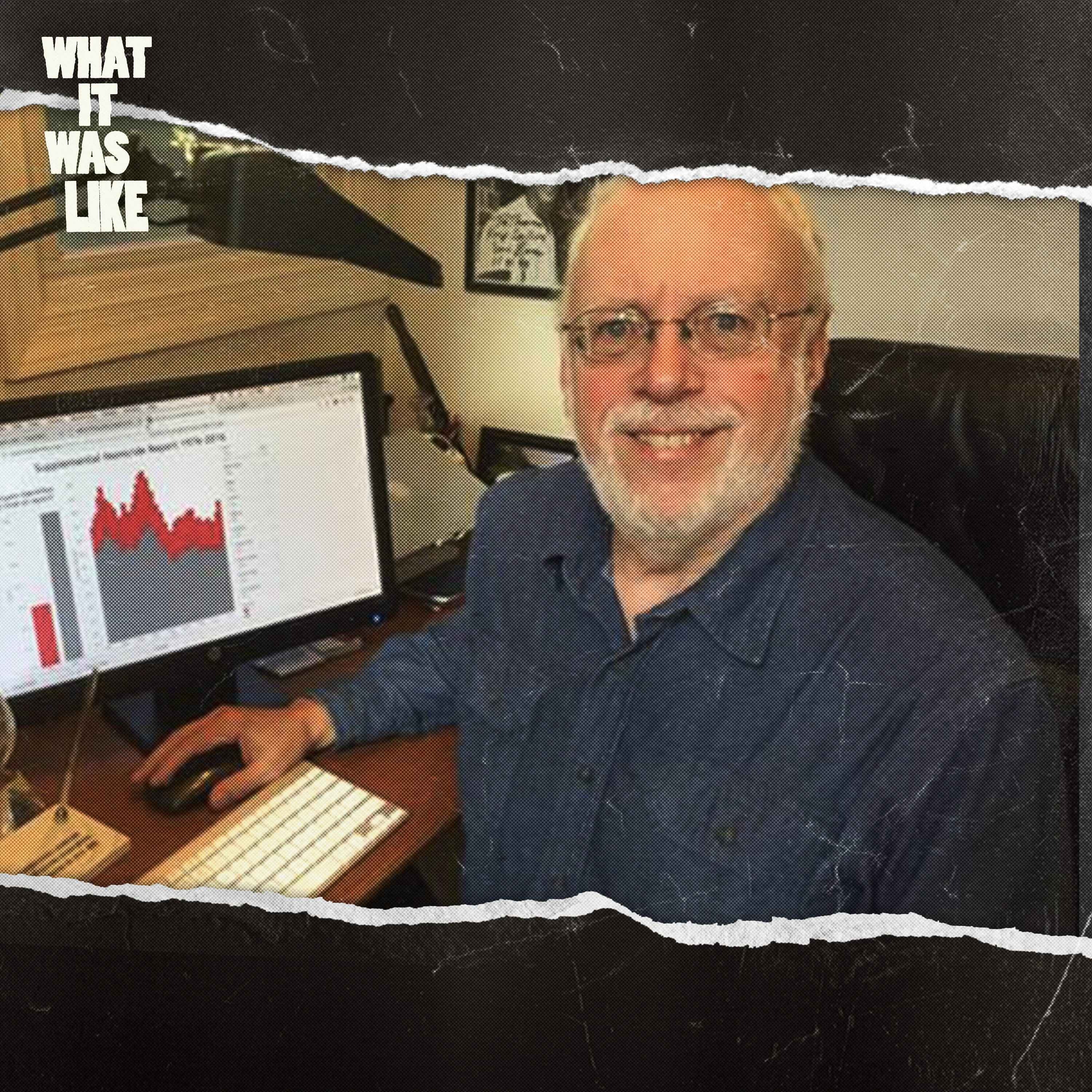
Hey, I'm Julian Morgans, and you're listening to what It Was like, the show that asks people who have lived through big dramatic events what it was like. So I'm going through this phase at the moment where I'm a little obsessed with efficiency. I keep catching myself thinking things like, could I streamline this? Could AI take over this task? Could an algorithm improve this process? I think it's basically because I run a podcast business, so I'm a total slave to deadlines. But I think it's also because I've managed to stitch ChatGPT into most parts of my working life and I'm not really sure where that stops. How much can I automate? Could I automate all of it? I don't know. Anyway, this train of thought, it's reminded me of a story that I first came across a few years ago, and it combines two of the things that I'm very into at the moment, true crime and efficiency. Today's episode is about a man named Thomas Hargrove, who in 2010 built a mathematical model, basically an algorithm, that analyzed open source FBI data on on murders across the United States. And its purpose was simple, but really quite powerful. It was to spot patterns that humans missed. So, for example, if women of a similar age were being killed in the same way, in the same area, within the same time frame, the algorithm flags it and it becomes a tool for detecting places where a serial killer might be active. Thomas launched this thing more than a decade ago, and almost immediately it identified a cluster of murders in the town of Gary, Indiana. And Thomas was so convinced that he reached out to authorities. But as you'll hear, having the evidence doesn't always mean that lives get saved. And that is what I find so fascinating about Thomas's story. The logic of maths just strips away all of the magical thinking. It forces us to look at the world as it is, not just as we assume it to be. And in doing that, the model has surfaced hints of serial killers from decades past who were never caught or just never even recognized. So today we're going to dive into how this model works, what it's revealed, and why humans so often miss what the numbers can see. And just before we jump in, a small note for subscribers. We don't have a bonus subscriber only episode this week. Apologies for that, but we're incredibly grateful for your support. And we're going to be back next week with something very juicy just for you. Okay, let's get into this week's story. Here is Thomas Hargrove. Hey, Thomas. Welcome to the show.
- [06:16]
Thomas Hargrove
Thank you for having me.
- [06:18]
Julian Morgans
Thanks for joining me. Let's start with a bit of information on you, a bit of background. I understand you were once an investigative journalist.
- [06:26]
Thomas Hargrove
Yeah, for 37 years I was a reporter. It started out in Alabama. My first job was at the Birmingham Post Herald in central Alabama. I started out as a cop shop reporter. And then I must have really angered someone because they made me the White House correspondent. And I gotta tell you, the White House job is like the worst job in the universe. You go where they tell you to go. You stand where they tell you to stand. And it's a terribly controlled beat. And then I went back to my bureau chief and said, look, put me back on investigative work. And he said, fine, fine. And for years I'd been asking, whining to my bosses, let me do a project looking at unsolved murder because I think it might be possible to teach a computer how to spot previously unrecognized serial murders.
- [07:21]
Julian Morgans
What was your light bulb moment there? Like you're talking about it now as though you've had this idea for a while. But take me back to the moment where you had this insight.
- [07:29]
Thomas Hargrove
So the light bulb moment was quite a while ago when I was still a police reporter in Birmingham, Alabama, in the late 70s. At that time were the Atlanta child murders, and someone was serially killing young African American boys and African American girls, mostly boys. And the Atlanta Police Department was roundly criticized for not recognizing the pattern sooner. And I learned that criminologists have a term for this. It's called linkage blindness. If cases are linked by having the same killer, that linkage frequently goes missed because of how we investigate murder in America. That prompted me to think, well, maybe there's something that a journalist could do to try to fix what does seem to be pretty broken. And when I was back in Washington, now we're moving closer to the present. I did a project looking at the optional crime of prostitution. So I contacted the database library at the University of Missouri and said, I need the most recent copy you have of the FBI's Uniform Crime Report, but at no extra charge. They included something that I'd never seen before called the supplemental homicide report. It was row after row of individual murders. It had the age, race, sex, ethnicity of every murder victim. And I don't know where these thoughts came from, but that was literally a light bulb going off. This first time I ever saw the supplemental homicide report, I asked myself, remembering the Atlanta child murders, would it be possible to teach a computer to spot otherwise unrecognized serial killings? At that time, we had 185,000 murders. We've gone way beyond that since. But back then, that seemed like an impossibly complete data set. And that was what we started playing with to see if it was possible to spot serial murders.
- [09:45]
Julian Morgans
Okay, okay, So I just want to clarify a few things. So when you say 185,000, that's not an annual tally, right? That's.
- [09:52]
Thomas Hargrove
Oh, no, that data set covered the years 2008 going back to 1980. So a 28 year period.
- [10:04]
Julian Morgans
Okay. And at this point, you're seeing this more as a potential story for the newspaper. You know, where's your head at in terms of the motivation behind the project at this point?
- [10:15]
Thomas Hargrove
As an investigative reporter, I frequently had as my goal to change the world. In fact, a lot of us have that as a goal, because to be a good investigative reporter, you have to have a sense of outrage. And the world should not be this way. And there's no reason why it is this way. We can change it. And so journalists are kind of social revolutionaries. They want to make change. I wanted fewer babies to die. That's why I spent a year and a half studying dead babies. And I want fewer people to be murdered by serial killers. And so that's why I spent more than a year looking at unsolved murder in the United States.
- [11:00]
Julian Morgans
Okay, all right, so you get this data set of what, 28 years, and now you need to build this algorithm. What's the first step?
- [11:11]
Thomas Hargrove
The first step is to identify what success would look like. And so we used as our teacher the Green River Killer. Gary Ridgeway was convicted of murdering 48 women and girls. They weren't all adults at the time. This was 2010. At the time, we knew he was active in Seattle in the late 70s, early 80s. And so what success would look like would be when the computer would tell us, without any other prompting, something God awful is going on in Seattle in the 1970s and 80s. And the university of Missouri, which has a very good journalism school, started sending me interns who wanted to work at no cost. And they gave me an intern that summer. And so she and I spent many, many, many hours finding 100 things that do not work. And as I was driving Liz Lucas, the intern, to the airport, I told her, liz, what might work is a technique called cluster analysis. Instead of looking at the data as a whole, we're going to turn the data into thousands of subgroups and then see if there's some way to identify serial murder that way. That worked beautifully when we did that. That something awful was happening in the Seattle area popped up right away, just as clear as a bell. The algorithm was going red alert over more than 50 murders in which women were found to have been killed by other or type unknown weapons. And so we thought we were onto something. But what was also odd, the Green River Killer, the worst known killer in American history. That cluster only came in third place. In first place were 77 handgun murders of women in Los Angeles. And so we started testing, we looked at the clusters and started calling local police. And could you look at these murders and tell me, is there a chance they could be serial? And so I did that to the public information office for the Los Angeles Police Department. I told them what we were about. I sent an email with those 77 murders in it. I called a few hours later, and the public information officer, when I asked, is there a chance these could be serial? He laughed and said, what, Are you kidding? It's like we had a convention here. I said, a convention of what? He said, of serial killers. We had five separate totally independent guys who were murdering women with handguns. They did not know about each other. They just liked shooting women over and over again. And we got them all. But it took longer than most of these cases are showing up as unsolved because it took us years to figure out what was going on and to catch him. So they went and reported it as unknown. But yeah, almost every one of these is the victim of a serial killer. And as I say, it's like we had a convention. We were off to the races. There was a method that was clearly detecting known serial murders that were not necessarily known to the public. It was not known at the time that they had a serial convention in Los Angeles. Finally, the Los Angeles Times did a story that as just a pure random event, five separate serial killers were active in the southern Los Angeles precincts. And they Were all caught eventually. So it was. Anyway, the technique was working. Yeah.
- [15:11]
Julian Morgans
I mean, proofing it out on la, that's really encouraging. You know, that must have felt good. You're like, yeah, we've done it. But also how horrible you've just stumbled into this thing that hadn't been in the papers yet. 5. Five Guys Killing Women with handguns all at the same time. That's. That's a tragedy.
- [15:27]
Thomas Hargrove
Well, to me, God forgive me, but to me, they were just lines on a spreadsheet. And I was trying to develop a mathematical procedure. That's what an algorithm is, a series of mathematical steps that produces a solution. It was a very intellectual exercise. I've never really been touched by murder personally. It allowed me to be fairly removed emotionally and to take on this problem as an intellectual exercise. And that's pretty much the way I did.
- [16:04]
Julian Morgans
Okay, all right, so this is now 2008ish. And you've built this algorithm that seems to work. It's identified these two clusters in LA and Seattle. And what do you do next?
- [16:17]
Thomas Hargrove
So now we were sitting on something like 160 separate clusters where there were a large number of homicides in which there was a very low clearance rate. We couldn't begin to look at all 160. So we picked some of the top groups, the really big clusters, of course, we picked. And I think, as you know, one of the clusters we picked, it looked like a group of 15 strangled women in Gary, Indiana. And we also found a similar cluster of African American women who were murdered in Youngstown, Ohio, a similar size, about 15. And so first I called the Youngstown, Ohio office and talked to the chief of detectives. They're a very nice young man. I left a voicemail saying what we were about, and we would be grateful if you would look at a spreadsheet. I'm about to email you. And so again, I waited a few hours and I called back, and this time the chief of detectives picked up the phone and he said, I don't get voicemails like that very often. And so I went down to my detectives, I went to the squad room for the detectives, and we had a little powwow. And they told me something I did not know. He was a young guy. He was about in his late 20s. And his older detectives said, in the 1990s, yeah, we were pretty damn sure we were up against a serial killer. We never got him, but it just. They just looked one after the other, like the exact same M.O. the same kind of victim. We really thought we had One. And then for some reason, he stopped, and we don't know why. And so the chief of detectives said, because of your phone call, we're going to see what we can do. He was grateful for the phone call, and he really thought he had a shot at clearing a serial case. We had a similar situation in Gary, Indiana, with again, about 15 victims who were strangled. We sent the spreadsheet again to the Gary police department and asked, could these be serial? And the public information officer phoned back and said, Mr. Hargrove, I've checked with our detectives. There are no unsolved serial murders in Gary, Indiana. Logically, that's an impossible statement to make. There are no unsolved serial murders in Gary, Indiana. Immediately, red alerts were going up for me. And so I started building out the data. I put names to each victim and narratives to what they were. It turned out that Most of those 15 women were sex workers. That was another red alert. Serial killers have a preference for sex workers because to quote a Dallas detective, you got to pity the poor serial killer. What other kind of woman will get into your panel van with you alone?
- [19:34]
Julian Morgans
And.
- [19:37]
Thomas Hargrove
Anyway, serial killers have a predilection for sex workers because they're easy targets. And also they often go unsolved because these are marginal women. So I had names and narratives, and increasingly, the more I looked, the more serial this group looked. And that's when the public information officer stopped taking my calls or answering my emails. And it just went on and on for months.
- [20:11]
Julian Morgans
Was this guy angry or did he seem frustrated on the phone? Like, what was the reception then?
- [20:16]
Thomas Hargrove
I cannot speak to people who don't talk to me, and so I can't give you a description of what was going on. I suspect that I was a nuisance, that an active serial killer is not the kind of news we want to make.
- [20:30]
Julian Morgans
So you were coming up against their pride. I mean, was this an ego thing? For the people working in law enforcement.
- [20:36]
Thomas Hargrove
In Gary, Indiana, there is a well known, a well documented phenomenon for police to be reluctant to consider the possibility of serial murder. Because if a case is. If cases are linked as being serial, then the detectives are under a microscope. The mayor wants a daily briefing on how's that serial case going. It becomes hellish. It's perfectly understandable why there'd be a reluctance. But there are police departments, good police departments that will take up that immediately if there's a chance it's serial. They'll tell people because that's what you're supposed to do. It was not happening In Gary, we were, we were a few weeks out from publishing. I was still absolutely convinced that those 15 strangulation victims were not killed by 15 separate men. And the good news was I contacted the Lake County Coroner's office with the same request and they came back immediately and said, yeah, we've been wondering about this for a while. We think there's something going on. In fact, they told me about three other women also strangled who were not in the FBI data. And so we added those. So now we had 18, but they took up an investigation. But they hit the same dead wall when trying to have a conversation with Gary detectives. So we published, in 2010, we published a series of stories. They did really well, they won awards. It was very nice. And then I went on to other work. And in 2014, a television production company called me and said, have you heard about Gary, Indiana? And I said, what are you talking about? They had made an arrest of a man named Darren Dion Vaughn. He spells his name Van, but he pronounces it Vaughn. And he had killed a 19 year old sex worker and left her body in the bathtub of a Motel 6 in suburb adjacent to Gary, Indiana. And they caught him immediately. They were able to go through the phone logs of the sex worker and find out who had been communicating with her just before her death. They were able to get him to pick up the phone and talk. And anyway, they were able to get him to show up someplace and they arrested him right off. And as sometimes happens with these guys, he confessed right away. He decided it was up. I've had a good run, but I don't think I want to spend the rest of my life in jail. I want the death penalty. And so would you be interested in knowing about six other women I just recently killed in Gary, Indiana? And so the Hammond, this was in Hammond, Indiana. And the Hammond police detectives called into Gary and said, we're coming in. And they found in abandoned buildings and under debris in very derelict neighborhoods, they found six previously unknown murder victims who were all strangled. And he gave a narrative to each one, why he did it, under what circumstances. And so they charged him with seven accounts of murder. He definitely was guilty. Those seven women died after I contacted the Gary Police Department. I had even sent registered letters to the mayor of Gary and the police chief saying, look, we're about to publish a story saying, you've got an active serial killer, please talk to us. And we got nothing from that. But that small consolation to me because I knew that these were serial and I had failed to convince. Maybe if I'd gone to the president of the city council, maybe if I'd started talking to neighborhood association presidents, maybe if there was something else I had done, I could have gotten the fire lit to start looking for Mr. Vaughn. It is what it is. And so these women died after I published a story saying there was an active serial killer in Gary.
- [25:00]
Julian Morgans
Thomas. That's heartbreaking. Did you ever hear back from any of those police officers or anyone in government? You know, did they ever give you any acknowledgment that you'd tried?
- [25:10]
Thomas Hargrove
No. The short answer is no. When this story broke, there was a three paragraph news item in the local paper in Gary in which detectives told the police reporter that they were blindsided. They had. They're reading that Tom Hargrove in Washington is saying that he was aware there was a serial killer four years ago. And they said that's just not true. And I then started producing letters and emails showing who I contacted. And I had the registered letter because we had to pay for it. I had copies of the registered mail to the mayor and the police chief. So I guess that made me feel a little better. But to deny that I had tried for months to. To get the Gary police department to look into those murders as possibly being serial, to deny that is beyond me. And I don't know if I'm angry at them or angry at me.
- [26:10]
Julian Morgans
I'm angry at them. They sound like the most incompetent police department in the country. Maybe even worse than incompetent, just in the way.
- [26:19]
Thomas Hargrove
Well, they are broke. They don't have the necessary resources. Gary, Indiana is fiscally challenged. They don't have a tax base. They have a hard time paying their employees pension funds. They have a hard time running the schools. I mean, they're broke, but they still should have done something, at least made an attempt.
- [26:45]
Julian Morgans
Hey, we're going to take a quick ad break, but stick around because we'll be back with more what it was like. So imagine this. You're standing on the beach when you notice something strange. The horizon just doesn't look right at first. All you can see is a thin white line. But the line starts to rise up and you realize it's not the horizon at all. It's actually a 30 foot tall wall of water and it's racing straight towards you. What would you do? On the day after Christmas in 2004, a 9.1 magnitude earthquake hit off the coast of Indonesia, triggering a devastating tsunami. It struck Thailand without any warning. No alarms, no cell phone alerts. No evacuation in this season of against the Odds, experience one of the deadliest natural disasters in history through the perspectives of those who did everything they could to survive. Follow against the Odds on the Wondery app or wherever you get your podcasts and you can binge all episodes of against the Odds Tsunami in Thailand early and ad free right now on Wondery.
- [27:57]
Thomas Hargrove
Oh, the car from Carvana's here. Well, will you look at that. It's exactly what I ordered. Like, precisely. It would be crazy if there were any catches. But there aren't, right? Right. Because that's how car buying should be with Carvana.
- [28:13]
American Red Cross Announcer
You get the car you want, choose.
- [28:15]
Thomas Hargrove
Delivery or pickup and a week to.
- [28:17]
Earnin Advertiser
Love it or return it.
- [28:18]
Julian Morgans
Buy your car today with Carvana.
- [28:21]
Thomas Hargrove
Delivery or pickup fees may apply. Limitations and exclusions may apply. See our seven day return policy@carvana.com this.
- [28:27]
American Red Cross Announcer
Holiday season, millions of families will pack their bags, load up the car and head off for a family vacation. But not every trip is going to be somewhere fun. The American Red Cross responds to about 7,000 emergencies during the holiday season alone, from home fires to natural disasters, providing families a safe place to go when the unthinkable happens. But they can't do it without your support. Please donate@redcross.org get it together this holiday season and make gifting easy with Pura's Black Friday. Sales take up to 30% off site wide, including beautifully curated gift sets for everyone on your list. Sleek and modern diffusers for home and car and premium long lasting single scents that make the perfect stocking stuffers. Less time shopping, more time enjoying. For a limited time only@pura.com.
- [29:33]
Julian Morgans
Do you think about that? Do you sometimes sort of dwell on the things you should have done or could have done?
- [29:39]
Thomas Hargrove
Sometimes I, I tried to be, to quote David Copperfield, I tried to be the hero of my narrative. So I tried to dwell on things I did okay in life. But yeah, seven women died after and probably a good deal more. By the way, there's a whole lot more to this story that you might want to ask about, but there were seven women who died in Gary, Indiana and Hammond, Indiana next door who died after I contacted local authorities to say there was a serial killer.
- [30:12]
Julian Morgans
What do you mean that there's a whole lot more to this story?
- [30:16]
Thomas Hargrove
So this didn't come out until a podcaster contacted me saying he wanted to look into the Gary story. And I said, oh, that's a great idea. I haven't had time. I went on after retiring to form a nonprofit called the Murder Accountability Project. And I was on to all other kinds of projects, but I said, that's a great idea. In fact, you ought to see if you can FOIA, use the Freedom of Information Act. FOIA, the transcripts of the interviews they had with Mr. Vaughn after they arrested him. And he said, yeah, that's a great idea. And so he, he did just that. And then he called me back and said, wow, that was a great idea. And here's what we're hearing. What happened was Darren Dion van told police, yes, I've been at this for years and years and years. I've been killing almost every place I've ever lived. And when I'm here in Gary, Indiana, where I grew up, I'm living with my brother's family. And when I get a killing urge, I don't want to hurt anyone in my family. So I'll go out and find someone local or hop on a bus and then hop on a train. That's the way he described. In fact, you can see this, this confession video on our website@murderdata.com I'll hop on a bus, I'll hop on a train, and I'll go into Illinois. And I've killed way more people in Illinois than I have in Indiana. But I don't want to go into those murders and because I don't want there to be a fight over who gets to execute me. So I'm just going to talk about the cases I've done here. But I killed way more people in Illinois. When he says Illinois, he's talking about Chicago. The other part of the story is the algorithm had been signaling red alert for several years, that something God awful seemed to be happening in Chicago. There were 51 strangulation murders of women whose bodies were found in abandoned buildings, empty alleyways, garbage bins across the south and western neighborhoods of Chicago. And the pattern seemed to start in 2001 and go through 2018. And we think that Mr. Vaughn is responsible for the majority of those unsolved murders. If, if true, and if his other claims are true, then Darren Dion Vaughn is in the running to be the third worst serial killer in American history. And he's been hiding his light under a bushel. He's in prison for the rest of his life for only killing seven. And we are convinced that seven is not the right number.
- [33:25]
Julian Morgans
That is wild. I mean, just generally, that is wild. But also for you personally, having just built this thing and sort of unleashing it, seeing what it can do, you know, you've suddenly brought these really dark events into your own life. So you retired, right. And you started doing this on a more consistent basis. Tell me about setting up the Murder Accountability Project.
- [33:50]
Thomas Hargrove
So while I was in the newsroom, still right before I retired in 2015, I just, on my own, made the data available, the data from the murder project that we did back in 2010. I just put the data out there because I thought it was useful. I created a very searchable system so that anyone could be an armchair detective looking at murders in their community to see if there were patterns that might be important. I just did that, and I didn't advertise it in any way, and increasingly, people were using it. We had one armchair detective who detected a. What he thought was a serial killer in upstate New York. And he was right. There was a serial killer who was never caught, who died. But that was a really interesting story, and that was one of the last stories I did before I retired about this layman who was just playing with the data and thought he saw something that didn't look right in upstate New York, New York.
- [34:55]
Julian Morgans
Tell me the story. What happened?
- [34:57]
Thomas Hargrove
Well, it was a guy named John White who was suspected of. Of murdering women. African American women, primarily. It was outside of Niagara, New York. The police suspected him, but they were never able to prove it. They had had a previous serial killer that they resolved and caught, and his cases were different. But there were an ongoing series of murders of black women who were not resolved. And they increasingly believe that this might be the. The work of a serial killer. They observed a pickup truck in one of the areas where a woman's body had been dumped, a guy named John White. And he immediately fell under suspicion. And police, they contacted the. The state police and asked for advice on how to interview this guy. And the state police sent a. An expert in. And they looked at the squad room and said, no, no, no, no, no, this won't do. This won't do. You need something that just screams highly efficient police. And they said, this is our squad room. No, it's not good enough. So they built a Hollywood set and they. They put up on all of the walls the body recovery sites for all of these victims that they thought John White was responsible for. And once the expert signed off saying, yep, yep, you got it. Now go ahead and bring him in. They. They converted a whole empty floor into a model police department just for one interview. And they brought John White in, and they worked him for 12 hours. He did. He never asked for a lawyer. He never demanded or was Outraged. He caught on right away that they were accusing him of multiple murders. He never said, I didn't do it. Not once did he say, I didn't do it. But he also never said, I did do it. And the detectives tried everything. He was a very religious guy, believe it or not, despite the ten Commandments, thou shalt not murder. But he was a very religious guy. And so the detectives got on their knees with him and they would pray with John White, saying, dear Lord, let justice be done for these poor women. And it did not work. And so they had to let him go. He never confessed. He never denied, but he never confessed. And their plan was to interview him again, off and on, over time. Classic detective strategies. And he died. He had a coronary. The police went screaming to the hospital. Detective ran into the emergency room, hoping to get a deathbed confession. But he died. And that was the end of it. The public never knew about this. Why would you go publicly saying there was a, by the way, there was another serial killer active who was killing black women. Why would they do that? So they didn't. And so our armchair detective contacted me. And so I started talking to detectives. And I think they were glad they could tell the story finally. And they just spilled open. It was some of the detail about that set they had to create. They really enjoyed telling the story. But you can find it online. But it was an interesting, interesting event. It proves the idea that if people are given access to data and just play with the data, sometimes very good things can happen.
- [38:38]
Julian Morgans
How many of these kind of hotspots have you seen around the country? Around the US it depends on what.
- [38:45]
Thomas Hargrove
Period of time you look at. The algorithm is influenced by time. And you can set the calendar. Do I want to look over a two year period? Do I want to look over a 50 year period? You get different results according to how you set the settings there. But there are hundreds of clusters that look suspicious. Many of them are serial killers and many of them are not. The algorithm is not able to perfectly predict. And so we've never been sued. Thank God we have lawsuit insurance. But no one's ever sued us for speculating that a series of murders might be serial.
- [39:26]
Julian Morgans
How many times have you guys gone to various police departments around the country? I mean, is this like an annual event or is it just every now and then?
- [39:35]
Thomas Hargrove
It's every now and then. Again. We're all volunteer. We had several conversations with Long island police about the Long island serial killer Lisk, but it would be every now and then simply because we're overwhelmed. And again, I can't stress this too much. We're nerds and our primary focus is on gathering data. We're trying to allocate limited resources in the wisest way we can. And yet we still still look at murder. So Long island, the long. The algorithm had been signaling red alert for years that there's something suspicious going on on Long Island. And it wasn't until the Gilgo beach murders happened. Four women were dug up on Gilgo beach along Long Island's north shore, I believe. And two years later, another six, another seven were dug up again on Gilgo beach, but in another locale. And I gave a presentation to the Mid Atlantic Homicide Investigators association, and I showed them the data on a big, big screen and I showed what the, the Long island serial murders look like. And I said, you know, if I had teleported back in time to the year before the first Gilgo beach victims were discovered, and I did that, I set the time to that period. I said, look at all those red unsolved murders. I would have said, you probably got a serial killer. You almost certainly got a serial killer. Because every time we see a pattern like this, it's usually serial. And they nodded and said, we're aware they made an arrest in the case and they're trying to prosecute, but they've got nowhere near all the murders that the killer is responsible for. It's a much, much, much larger cluster than has ever been acknowledged except Newsday. So I had a colleague on New York's Newsday newspaper, a very good investigative tabloid, and I worked with them over a two year period to get them to publish a story, and they did. And they ended up with far more cases than even I thought. They said, there are 123 suspicious murders of women whose bodies were discovered out of doors. And these could be part of the series. I agree with that. But I thought the number was closer to 60, 70, something like that. But that's the advantage of having the newspaper morgue in your. In your office, and you could go over all of the cases with a magnifying glass and see patterns.
- [42:26]
Julian Morgans
With all your interaction with law enforcement since the guys in Gary, Indiana, do you find that police are usually pretty cooperative or is there sort of. Is it a mixed bag?
- [42:38]
Thomas Hargrove
They're pretty cooperative. I actually think homicide detectives are a very decent group. In fact, if you go to conventions, they have meetings all the time where they share notes and investigative techniques. And every time I've given a presentation before them, they eat it up. And they want to hang around after the lecture and call it. They want to call up their own data and see what it looks like in a broader pattern. I have to say, homicide detectives are very decent people.
- [43:11]
Julian Morgans
I mean, we've obviously been talking about the United States throughout this entire conversation. But I'm curious about the applicability of this algorithm overseas, particularly Australia. Here I am, we've got serial killers here in Australia and I'm wondering, could we use this thing you've built here in Australia?
- [43:27]
Thomas Hargrove
You could if you had access to the data and you don't. So I've had conversations with journalists from Australia and you don't have a public data set like the Uniform Crime Report. That was always meant to be a tool for scholars so that academics could understand what the grand patterns are in murder. That's why it was created, but it was made public. And this ability for the public to get its hands on individual case information is incredibly empowering. And I'm not aware of its equivalent in any other Western nation.
- [44:15]
Julian Morgans
Really.
- [44:16]
Thomas Hargrove
That's a problem? Yeah. What is even weirder is again, we do a terrible job. We don't make the Uniform Crime Report mandatory, so entire states don't report data to it, but we get them to report to us using the Freedom of Information Act. That having been said, we're way ahead of everybody else because we do have this data set in Canada. There is an internal document file that police can access, but they don't make it available. They certainly don't make it available to the press. I'm, I am aware that there are only summary reports in Australia. If that's changed. The last time I looked was four or five years ago. But I've yet to have an excited Aussie journalist saying, hey, we just got data, show me how to use it. And I'd be happy to, but that call has never come in yet. If I were murdered, I would want my murder to be as public as possible. I want the whole world to know that Tom Margrau is murdered. And it's fine with me if you want to publish that. I was blue eyed, no hair, weighed 180 pounds. I mean, that's fine with me just as long as you get all the details out there because I want the guy caught. And so why governments do this is a mystery to me because I can't imagine there being a lot of pushback on making murder data public. I mean, it is public. I mean, press could do this. You just need someone to methodically gather data and put it into a database. Anybody could do it, but it's a problem because nobody is.
- [45:54]
Julian Morgans
Yeah, well, AI could do it. How is AI changing what you're doing?
- [46:00]
Thomas Hargrove
So we. I tried AI against the possibility that there were smarter ways to look for serial killers than our algorithm. And so I tried it. The AI system seemed to be producing fewer false negatives and fewer false positives. It still was producing them, but fewer. And so that seemed very hopeful. However, what the hell happened? The problem that science has with artificial intelligence, it's a widely commented problem that AI is a black box, that you don't know what happened inside there. And that's a problem. Not only that, but some AI systems will produce different results according to how you run it. You run, you. You give it a data, a data set. You tell it to shake and stir and see what you get, and then you do it again a minute later and you get different results. It is annoying and it is in violation of basic scientific principles. So I found it challenging. And I ain't alone. This is a common criticism of artificial intelligence.
- [47:23]
Julian Morgans
I'm curious about active serial killers right now. You know, according to the data that you're looking at, can you see any hotspots that, to your eyes look pretty suspicious?
- [47:37]
Thomas Hargrove
Yeah, there are some places we'd like to look at. Not many, because if you look at, if you look at the algorithm results over time, you'll see that the number of suspicious circles decline over time, so that the recent murders are less likely to be producing suspicious clusters than are the older murders. There had to have been a serial killer active in Salt Lake city in the 1970s. You can see it just as clear as a bell. Never been published. Maybe somebody sometime will do that. But in terms of recent, highly suspicious murder clusters that we have the resources to investigate. No, there aren't. I don't have any. And I wouldn't tell you if I did. If I haven't had that conversation with local police yet or.
- [48:29]
Julian Morgans
I mean, just. Just by looking at the map, I'm looking at it, and it seems like Florida has a couple of pretty suspicious recent circles around it.
- [48:38]
Thomas Hargrove
Yeah, just.
- [48:38]
Julian Morgans
I mean, can you just tell me, just give me your sort of off the cuff thoughts on that.
- [48:42]
Thomas Hargrove
So some of this is reporting errors in the case of Alabama. It's really bad data in Alabama, so that there are cities where it looks like most murders are serial. They're not. It's just that they didn't know how to properly report data. There is an elevated number of suspicious clusters in North Carolina. We don't know why? So, yes. Are there clusters that could be active serial killers? Yes. Are there serial killers who were never caught? Absolutely. Famously, I have said that there are probably at least 2000 murders that were not recognized as being serial killers.
- [49:25]
Julian Morgans
That's huge. It's enormous, isn't it?
- [49:28]
Thomas Hargrove
Yeah.
- [49:28]
Julian Morgans
Okay, last thing. How can listeners help you out?
- [49:33]
Thomas Hargrove
By going to murderdata.org, play with the data. You can do this anywhere in the world. We hope every day folk will go in and play with the data and we hope that gets replicated in other nations. Canada also has a master list of case information that they do not make public, and they really should. England does, and they don't really make it available to anyone. I'm sure Germany and France have similar systems. None of these nations make this kind of information available and it's a real problem.
- [50:08]
Julian Morgans
Well, Thomas, thank you so much for sharing your story with me and we'll put your various links in the show notes and yeah, it's just this has been fascinating.
- [50:18]
Thomas Hargrove
Okay, thanks. Anyone wants to give a donation? We do have a few expenses. Again, nobody gets paid, but we have to pay for software and the costs of incorporation. I mean, there are a few expenses. The trickle of money that comes in is pretty much able to solve it. We'd like to be able to hire an executive director someday. That's not going to happen anytime soon, but sooner or later we want this to become a professional organization rather than a hobby.
- [50:50]
Julian Morgans
What It Was like is produced by Rachel Tuffrey. This episode was edited by Ellie Dickey, who also does our research. Our cover art is by Rich Akers. Our theme music was produced by Jimmy Saunders. And this whole thing has been a super real production. So imagine this. You're standing on the beach when you notice something strange. The horizon just doesn't look right at first. All you can see is a thin white line. But the line starts to rise up and you realize it's not the horizon at all. It's actually a 30 foot tall wall of water and it's racing straight towards you. What would you do on the day after Christmas? In 2004, a 9.1 magnitude earthquake hit off the coast of Indonesia, triggering a devastating tsunami. It struck Thailand without any warning. No alarms, no cell phone alerts, no evacuation. In this season of against the Odds, experience one of the deadliest natural disasters in history through the perspectives of those who did everything they could to survive. Follow against the Odds on the Wondery app or wherever you get your podcasts. And you can binge all episodes of against the odds. Tsunami in Thailand early and ad free right now on Wondery.
- [52:21]
American Red Cross Announcer
This holiday season, millions of families will pack their bags, load up the car, and head off for a family vacation. But not every trip is going to be somewhere fun. The American Red Cross responds to about 7,000 emergencies during the holiday season alone, from home fires to natural disasters, providing families a safe place to go when the unthinkable happens. But they can't do it without your support. Please donate@redcross.org.