Loading summary
Transcript64 lines
- [00:00]
A
Close your eyes. Listen to Monday.com feel the sensation of an AI work platform, so flexible and intuitive, it feels like it was built just for you. Now open your eyes. Go to Monday.comstart for free and finally breathe.
- [00:17]
B
ACAST powers the world's best podcasts. Here's a show that we recommend. Christian Bale was preparing for his role in American Psycho, dressing the part, hitting the gym for the first time in his life, even getting his teeth redone. There was just one problem. He didn't actually have the part. Leonardo DiCaprio did. Listen to our podcast what Went Wrong? Every week as we unearth the chaos behind Hollywood's biggest movie flops and most shocking successes. Available wherever you get your podcasts, Acast helps creators launch, grow and monetize their podcasts everywhere. Acast.com.
- [01:08]
A
Super real. It seemed awfully well organized. You know, if you were to say it was a military operation, the efficiency, like the degree of discipline in how they sort of swam and attacked, swam and attacked, swam and attacked. It was phenomenal. You know, it was.
- [01:30]
B
It's a bit spooky.
- [01:31]
A
It's very spooky because I have no doubt they knew exactly what they were doing. I think they know that a rudder steers a boat, and they know that once they break the rudder that the boat then is. Is at their mercy. And the water was coming in at a reasonable rate enough that I went, oh, shit, now we're in trouble.
- [01:50]
B
Hey, I'm Julian Morgans, and you're listening to what It Was like, the show that asks people who have lived through big, dramatic events what it was like. Hey, welcome back. So for the last five years, something very strange has been happening along the coast of Spain and Portugal. There's this pod of orcas, also known as killer whales, that have been attacking boats. And they nearly always start by targeting the rudder. They chew and they headbutt it until the steering fails. And then in some rare cases, they keep going until the boat sinks. Between 2020 and 2020, four orcas damaged around 250 vessels, and they sank at least five. That was the last official telly that I could find, but the number has almost certainly gone up since. And the thing is that experts really don't know why this is happening. They think that it's a fad, but they're not sure because. Yes, let's just zoom in on that for a moment. Orcas enjoy cultural fads just like humans do. So, as an example, orcas along the Pacific Northwest coast have been previously observed balancing dead fish on their Heads and kind of wearing them around like hats. And this was a fad that lasted just a summer, maybe two, and then it fizzled out. But this boat vandalization thing has been going on for five, potentially six years this year, which makes it the most enduring whale fad that we've ever observed. And it's almost April getting into the European summer, so we're about to find out if they're still doing it. But there's been no sign of slowing down over the last few summers, so we can assume they are. And that made me think that we should do an episode on this, which brings me to my guest today. I'm speaking with a British yachtsman named Robert Powell, and in the summer of 2024, his boat was sunk by a group of orcas. It took them about two hours, and Rob watched as five whales took turns headbutting his rudder, methodically disabling it before taking on the keel. And eventually they cracked a hole in the hull and the boat sank to the bottom. And in this conversation, Rob's going to walk us through what he experienced, the kind of eerie behavior that he saw, and how his crew reacted as the boat went down. And then for subscribers this week, I'm going to have a chat with an ORCA expert named Dr. Naomi Rose. She's going to tell us what she thinks is motivating these attacks and why she's worried that some of the attacking orcas may have actually disappeared. I think this is a strange story. It's a little spooky at times, and it's this perplexing glimpse into the internal lives of these huge, highly intelligent animals. So let's get into it. Here is my guest, Robert Powell. Hey, Rob. Welcome to the show.
- [04:44]
A
Yeah. Good morning, Julian. Good morning, my end. Good evening, your end.
- [04:48]
B
Good morning, indeed. So I guess, in all honesty, I'm not sure where this story starts for you. I'm assuming it starts with the purchase of a yacht.
- [04:57]
A
Yeah, absolutely. I bought one in England. And the first thought was, I'm not having this boat in England. I'm going to take it somewhere warm. And I just come back from holiday in Portugal, so I thought, I'm going to sail it down to Portugal. And I looked to get a skipper, a commercial skipper. So I found a lovely guy, old Polish chap, who's an old man of the sea and been sailing all his life. And one of the first things he said to me was, we're gonna have to take precautions against orcas. And I looked at him and I thought he Was mad. I thought, sorry, what orcas? I said, a, what's an orca? And B, what sort of precautions? He said, it's killer whales. They're sinking boats down the Spanish or Portuguese coast. I said, I've never heard of this. He said, very few people have. He said, I've not been unlucky enough to encounter yet, but I check the reports whenever I sail that way. And. Well, he sailed the entire Spanish and Portuguese coastline at about 20 meters from the coastline, depth wise, because there's a popular thought process that says that the killer whales won't go in to water at less than 20 meters, which has since been proved to not be the case. So it. As beautiful as it was sailing that close to the coast, because obviously you can see every bay and the cities on the way. So it's a very enjoyable process.
- [06:22]
B
Okay, it sounds really nice. I mean, it sounds like the first part of this journey was fun and relaxed, so. So take me to the first sign of trouble. How did this come about?
- [06:32]
A
So there was a little bit of a warning, if you like. I heard a lot of chatter on the marine radio from what I believe to be Portuguese fishing boats. Am I allowed to swear, please? All I could hear on the radio is get these black fish away from me. Black, white fish in a Portuguese accent. I'd love to be able to do the Portuguese accident, but it was, it was continuous for about two hours. And it wasn't just one boat, there were two or three boats.
- [07:00]
B
That is wild. I mean, it just. It seems to me that this is not a freak occurrence. This sounds like it's happening all the time.
- [07:07]
A
I. It's very much played down, Julian, especially in that part of the world. Portugal and Spain obviously rely on the tourist trade. The southern coast of Portugal is pretty much where any boat that crosses the Atlantic, their first port of call on mainland Europe will be on that coastline or on the Spanish coastline. So whether they're worried it will. It will affect trade, I don't know how official that is, but it does seem that they seem very reluctant to report on it. They discuss it in sort of marine science terms. You know, there's marine biologists and marine scientists and they have conferences and they discuss it, but no one seems to be clear on what the cause of this is, why they're doing it. But so, yeah, so back to that night, I got the boat back to Portugal, and it was the following year where I tried to do the same, that I run into problems.
- [08:09]
B
So not only is this widespread and happening frequently, but it's got a long time scale to it as well. You know, it's, it's reoccurring every year. It's not like there's a pot of whales that sort of do this thing for a short period of time and they get sick of it. You're coming back a whole year later and having it the same problem all over again.
- [08:26]
A
Oh yeah, absolutely. So, I mean the first time was, was 20, 22 when I brought my boat over and we're now looking at the summer of 24. And before I took this trip, the first thing I did was I checked the activity of the orcas because I'm aware that they're around and there are a number of websites. They flag what they call orca interactions. Not every orca interaction ends up in a boat being sunk, but most of them do have damage to their rudders. The orca are particularly good at disabling the steering mechanism on a boat. Could just be that it's one of the few bits that sticks, sticks out on a boat. But it was, yeah. When? Summer of 24. By this time, I don't know how many interactions there'd been, but I believe it was something in the region of 5 or 600 and almost none of them reported on, which is a very, very strange thing outside the, the websites and the science reports and you know, there was very, very little coverage. It just seemed a bit strange to me. There are different types of orca by the way, and these are Iberian orca, only found off the coast of Iberia, Spain and Portugal. And the Iberian orca, normally as June, July comes, they follow the tuna, so it's not unusual for the occurrences to move up the coast as sort of July goes on. So know, I thought probably, probably safe to go now. And, and I followed the exact route that I followed the year before. Let's hope for the best. I taken some precautions. I bought fireworks, firecrackers, what they call depredation pingers, which is what they use on fishing nets to keep the orcas off the, off the farm fish. As far as I was concerned, I was fully armed. I wasn't particularly well crewed. One of my crew had broken his ankle and fallen off a ladder the day before, so he was unable to fly out and join me. I had an Italian guy and I went and collected a homeless guy from the next door town who was an English guy who I've sat and had coffee with many times and said, how'd you fancy somewhere to stay for, for a couple of months? We're going to sail around the Greek islands and, and when we get you, get you back to, to Portugal, I'll get you an apartment for a month or two and to see if I can help you get a job. So he was like, yeah, fantastic.
- [10:52]
B
That's very nice of you.
- [10:54]
A
Well, it was very nice of me. Yeah.
- [10:56]
B
The luckiest homeless guy I've ever heard of.
- [10:58]
A
Well he was up until this point. But wait, wait for the rest of the story, Julian. It, it doesn't end that way for him. Poor chap. He. He had admitted to mention at this stage as well that he couldn't swim. So. Right. That was a bit of a limiting factor later on anyway, we'll come to that. So we set sail. I wanted to sail in the evening because I wanted to hit the orca area during daylight. So I timed it that we left about 8 or 9 o' clock in the evening and sailed through the night. And I noticed more fishing boats than I think I've ever seen in my life. And, and I think that plays a part somewhere in this orca story and the sheer amount of fishing that we do in certain areas and the sheer amount of fish that we take out of the ocean. Not wanting to, you know, apportion any kind of blame in any area, but I think it's a contributing factor anyway. I'm not educated. It's purely a hunch and an opinion.
- [11:59]
B
No, no, it's an interesting little detail.
- [12:01]
A
Yeah, yeah, absolutely. And so come the morning we hit a bit of a storm. Nothing, nothing major and sort of mid, mid late afternoon the storm died down. The boat had taken a little bit of a bash in. The anchor had got loose so I had to do a few bits and bobs boat and I thought, well, I could probably get a bit of a nap now because I hadn't slept much through the night or, or during the day. So I lay down on the, on, on the deck for a, for a sleep and let the, the homeless chap, we'll call him James because I don't like calling him homeless chap. So we let James take the wheel, which he was happy doing and had something to eat and had a nap and the next thing I know was just a big bang on the boat and it felt like we'd hit a rock or some, some. An immovable object, you know, it was, it was a really big bang and, and then I kind of, because I was sort of dozy looked around, I thought how could we have hit something? We're about 8 miles, 10 miles offshore. There's nothing here, there's nothing on the charts. And. And then I thought, well, maybe it's a submerged tree or a shipping container. There's all kinds of things, you know, sail around in the ocean. And I looked over the side and I just couldn't see anything. I said, james, I said, what on earth was that? He said, I have no idea. And then bang, it came again and it was definitely at the back of the boat when I thought, God, that's, that's weird. And I lent over the back of the boat and I could see two black shapes in the wake and they were taking it in turns to sort of go underneath the boat. And what they were doing was they were grabbing the rudder in their teeth and kind of throwing their whole body weight and they were shaking it. And the noise that I'd heard, I believe now, was their teeth. As they kind of were trying to pull this rudder off, their teeth were scraping, scraping. And it was a noise of their teeth sort of scraping along the sort of fiberglass of the rudder. Wow. But these things were fairly big. I mean, I'd say 2 to 2 to 3 meters, which I've later been told would probably equate to a, about a five year old or six year old killer whale. And there were two of them. So I said to James, let go of the steering wheel, whatever you do, because if they hit that rudder while you're holding the wheel, there's a very good chance the force will force the wheel to dislocate your shoulder or you can break your arm or something. He had no problem doing them and he was absolutely terrified. And the other crew member was still trying to sleep. He came up a few minutes later and goes, oh, God, what's all the noise about? I was afraid, we've got some company, we've got some walkers. So at this point, I then started going through the defense mechanisms that I had on, on board and I threw in the depredation fingers and they just bobbed around in the water.
- [14:52]
B
How do they work? What, what are they supposed to do?
- [14:54]
A
They're battery operated things that emit a very powerful sonar signal which the manufacturers tell you will frighten off anything, including killer whales, but made no difference at all. I tried slowing down, speeding up, switch the engine off, switch the engine on, went in reverse, went forwards. When Cyrus tried, tried everything and they were not giving up. They just kept coming at the rudder and coming at the rudder, always at
- [15:21]
B
the rudder and just two of them,
- [15:22]
A
always at the rudder and two of them. And then a Third one came. It was about a third again, the size of the two, which I've later led to believe as a juvenile. So the three of them, they, they swam in a little, little pod, if you like. One would come to the front, grab the rudder, the other two would sit behind. And so this stage I thought, I get the fireworks out. So I got the fireworks out. I fired those at them, got the firecrackers, fired those at them, and nothing seemed to make a difference. You know, the marine biologists said, well, did they then get agitated or anything? No, they just seemed incredibly organized. They had, they had their little routine and their, you know, their formation, if you like. And nothing that I did seemed to, seemed to change that. Even when I tried reversing the boat or doing other things, the three of them just stuck together and continued going at the rudder. So to me it was fairly obvious it was only a matter of time that they'd break the rudder. What I didn't then know, but hoped was that if they did break the rudder, that they'd then clear off and, and go and find something else to do. James at this stage was holding on, sitting on the seat, holding on, praying to God for dear life. And my other crew member, I told him to start getting life rusts and, and dinghies ready just in case that we might need to launch.
- [16:49]
B
How were you feeling? Were you, were you sort of optimistic or were you feeling anxious?
- [16:54]
A
I wasn't feeling overly anxious at this stage. I was racking my brains, thinking of things I could do to try to put them off. And all this time I was heading towards the coast. I turned the boat in towards the coast, thinking, if I can just keep getting closer and keep getting closer, sooner or later I'm going to get to the 20 meter mark. And I was in probably, I don't know, about 50, 60 meters of water. So I was in quite deep water and I was quite a long way out. And the rudder attack lasted probably about an hour till they broke it. Whether it's the age of my boat, it had a solid fiberglass rudder. And a lot of the rudders that I've seen that they've broken seem to be made of a lot lighter material than mine. And not only did it not snap, but the, the bearings where it goes inside the boat also stayed intact. And I'd seen on other boats where they managed to pull the rudder out of its housing and that leaves a hole then into the back of the boat. So there was a concern whilst they're yanking the rudder that they were going to pull it out and leave a hole in the back of the boat. So I went down on regular intervals to check whether we had any water ingress at the back of the boat, and there was no sign of it. I'd also called the Spanish coast guard on, on the radio and just said, look, I'm on. I'm under attack with Hawker, you know, and it. I wasn't at that stage in Mayday, which is in fear of your life, or what they call pan, pan, which is pan, French for broken media boats disabled and broken. So they were basically, wait until your pan or, or you're taking on water, you know, don't come back to us. I imagine that they were probably having their paella or something at that stage. In all seriousness, what would they be able to do at that stage? Yeah, yeah, yeah. There was nothing they could do, so. So I was actually okay with that. And I just thought, you know what, these things probably will get bored and go away. Which had been the story on a lot of the. Both the orca interactions that I'd read. They didn't. They kept going. They broke the rudder. And once I realized, I just saw the, the wheel of the boat spinning, and I thought, it's not. If it's spinning like that, it can't be attached to the rudder anymore. So they'd broken the cable that attaches the wheel to the, the rudder. And I don't know what level of force it would need to break a steel cable, but I, I'd imagine it would need to be fairly, fairly strong, but they'd. So they succeed. And at that stage, I was going around in, in circles and I, I was about to go down a radio for more help, and then I noticed two more fully grown orcas sitting, sitting at about 15, 20 meters off the boat. And whether they, they'd been there all the time, I wouldn't know, you know, if they were under the water, I didn't notice them. I was too focused on the ones that were, were damaging the boat. So there were five in, in total, and the rudder was broken and it started to go around in circles. All five of the killer whales then started to circle as well. And I thought, Christ, this looks ominous.
- [20:02]
B
Hey, we're going to take a quick ad break, but stick around because we'll be back with more what it was like.
- [20:14]
A
Podcast advertising works. And with Acast Ads Academy, you'll learn exactly how our free on demand courses are built from more than a decade of podcasting experience, giving you practical tools to create campaigns that drive results. Complete the course and you'll earn a certification that proves your skills in one of the fastest growing channels in media. Get started today at go.acast.com forward/academy. Yeah, and I was just about to go down and radio for help and the first one came rushing and it hit the rudder again. It was one of the, one of the small ones. And I thought, Jesus, why are you still hitting my boat? It's like, have you not done enough? And then in come the second one. So I went down to radio and as I was radioing I felt something hit the keel and whatever it was, it hit the keel. And the keel's the bit of a sailing boat that sits under the water to keep it, stop it from capsuling and, and it's 2 meters. So that's a fair bit of boat and it's attached to the masts. But when you feel that get hit, there's some serious force in the middle of the boat. So at this stage I told the Coast Guard that I was, the boat was disabled and was Pan. Pan had my location. I'd also put out the call to the shipping lanes as well. So because I was, I could see the, the commercial shipping lanes. I was that close. This place called Tarifa, which is just before Gibraltar. So, you know, I'd nearly made it, which was quite frustrating. So I was, I was now probably an hour and a, over an hour into the attack, they've broken that, they're circling me one by one, they're swimming into the boat. And the Coast Guard said, you know, can you please check your boat all over, see if you're taking on any water. So I had to check all the bilges underneath the floors to see if any, if there are any cracks or any damages. And I couldn't find anything. So I went back up and I told my, my crew, just get the, get the lifeboat launched. And he said, you think they'll go away? And I said, well, no, I don't actually. I think if they were going to go away, they'd have gone away by now. I was watching them circling and normally when it's a dolphin or something like that swimming near your boat, they turn on their side and they look at you. They're very aware of humans on a boat, dolphins definitely. And I've seen killer whales do it. Not once did these fish turn on their sides. They, it was like they had a job to do and they weren't interested in who was on board or if, you know, or anything like that. They were just interested in doing what they were doing. And it seemed awfully well organized. You know, if you were to say it was, you know, a military operation, the efficiency and, like, the degree of discipline in how they sort of swam and attacked, swam and attacked, swam and attacked. It was phenomenal. You know, it was.
- [23:08]
B
It's a bit spooky.
- [23:10]
A
It's very spooky because I have no doubt they knew exactly what they were doing. I think they know that a rudder steers a boat, and they know that once they break the rudder, that the boat then is at their mercy. And it was probably. We're probably an hour and a half, maybe a bit longer, coming up towards an hour and three quarters into the attack. And I was doing one of my water checks, and I saw water coming in from the galley of the boat inside, which is right in the middle of the boat. So they'd. They'd hit it at its weak points and they'd crack the hull. I mean, I have no idea what. What damage they did to it, because you couldn't see it's below the water line. And the water was coming in at a reasonable, you know, a reasonable rate enough that I went, oh, now we're in trouble. Straight back onto the radio, back onto the Coast Guard. And I said, yeah, we're taking on water. We're sinking. And they were like, we've got a. We've got a boat on its way out to you. It's going to be around 20 minutes. And I said, no problem. We're getting the life raft. And they said, under no circumstances getting the life raft. Do not get in the life raft. And I went, okay, all right. And they said, you know, stay on the highest part of your boat. And when I'm thinking, I'll stay there for as long as I can and just hope someone gets here before we sink.
- [24:34]
B
Why did they say, don't get on a life raft? What's their concern?
- [24:37]
A
I don't know. I mean, a life. That. The life rafts are pretty flimsy things. And I imagine their concern is that the killer whales or turn their attention to the life raft and. And start knocking that around. You know, I. I don't know whether that. See, this is one of the difficult things here, Julius. I don't know how much previous experience these guys have got with. With orca, but my feeling is they've got a lot, an awful lot. And. And that's born out when they. When. When the Coast Guard arrive, one of the crew members said, you're the sixth one this week. What? I'm the sixth one this week. He went, yeah, three sunk, three not sunk. I went, wow. Wow. So on that little stretch of water, you know, they. I was a bit shocked by that. I was like, wow. Okay, this. Let's.
- [25:31]
B
Let's just pause here for a minute because. Because I came to this story believing it was a fairly unusual, freakish event. And. And the more I'm hearing you tell it, the more I'm getting the sense that it's actually that there's a. There's a little bit of a cover up here. Like the Spanish authorities are not forthcoming about what a widespread issue this has become.
- [25:51]
A
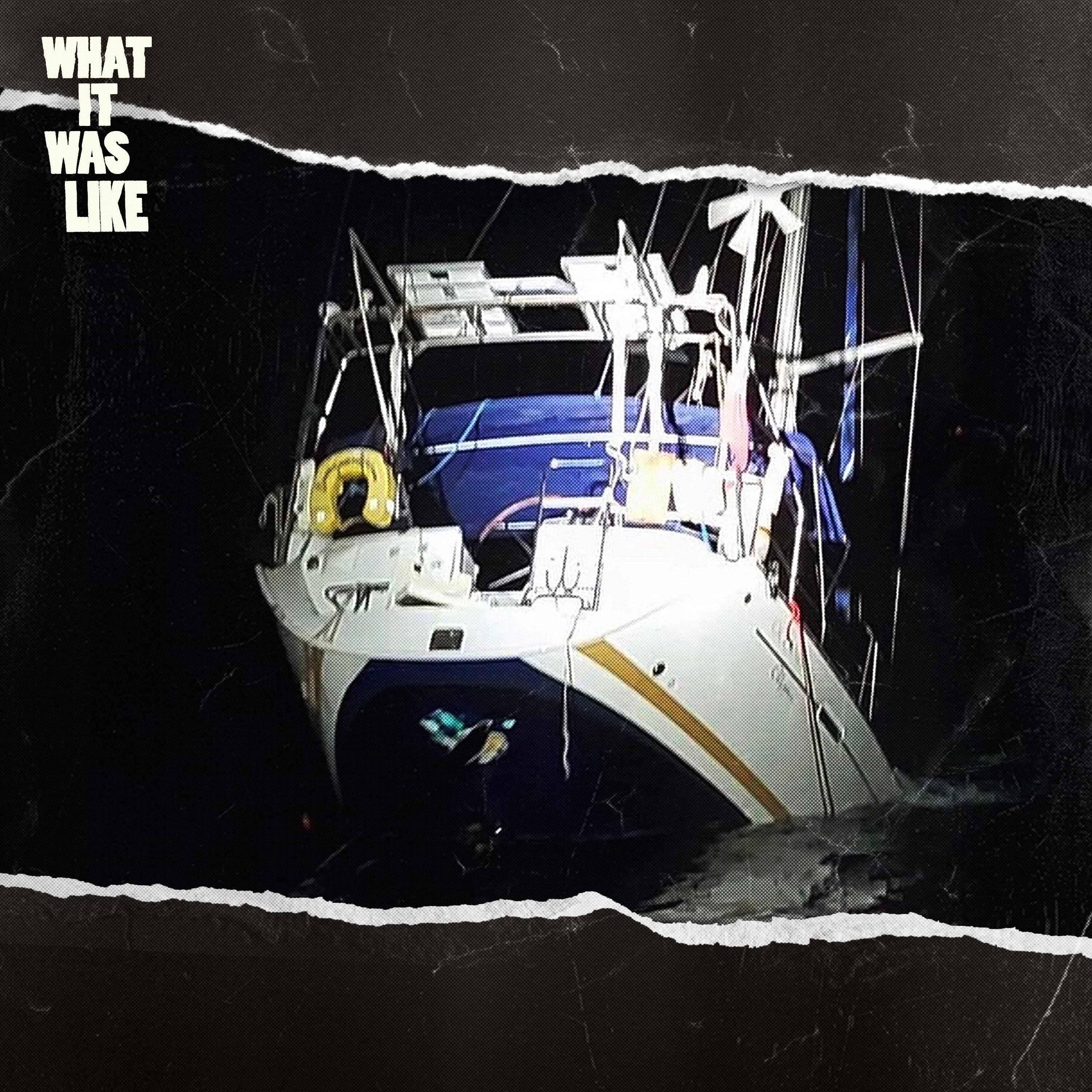
No, I don't think they are. And why that is, I don't know. And that. That sets alarm bells off, I think, with. With quite a few people. Because it's. What. Why what? You know, why are you so careful about not. Not getting this out? And my story only came out because the salvage team that rescued me put a photograph on their website of my boat sinking, and Southwestern News in the uk, which is a news agency, happened to see the picture and contact me. And, I mean, it went viral. I was on Good Morning America. I was on ITV News in the uk. I was in every newspaper. And, yeah, the pictures are very dramatic. Yeah. Say the least of. Of your boat sinking. And I mean, at this stage, I. My biggest concern at this stage was my crew, especially James, you know, he was absolutely terrified. And it. I've never seen anybody as scared as he was, but I can. You know, when you can't swim and you're on a boat that's just been attacked by killer whales and he's sinking, I would say that's probably about as frightening as. As life can. Life can get, you know? Yeah, I didn't feel frightened at that stage, partly because I was too busy doing everything in the moment, if you know what I mean. And at this stage, part of what I wanted to do was to try to rescue some of the. Some of my stuff from downstairs. My other crew member had managed to get a bag with some stuff. I went down and the floor had all lifted because it's wooden and was floating around. And I was very concerned that I'd get my foot stuck in some of the pipe work and stuff that runs underneath the floor. It was 2, 3ft deep in water. So I literally grabbed my. Grab what was at the captain's table, which is right by the stairs, which is my passport, my phone and a few other bits and bobs and Chucked them in a waterproof bag. But I didn't dare go any further into the boat because there was every chance I'd get, you know, get stuck and, and go down with her. And I didn't want to do that. And again, my concern, my concern, my biggest concern was James and, you know, just trying to be like, yeah, it's going to be okay. It's going to be okay. They come in, they're coming, they're coming. My other crew member was fabulous. He's Italian guy and he, he was so unfazed by the whole thing. You know, he was, he really was called. As. Called as a cucumber. And, you know, it could be a little bit scary when you've got killer whales banging, banging the boat. And they didn't stop, you know, they, they just kept going. I kept going. For sake, can you give it a rest? You know, can you just stop for a minute? Because it was like, it really was like a military exercise, a light bang, you know, swim around, swim around, bang. Swim around, swim around, bang. And you're like, come on, you've done your damage. Now off home, you know, Then I suppose their attitude was, we are at home. This is our home and it's not yours, you know, so she, she'd taken on so much water by now that the front of the boat, if you have seen the pictures, you'll see the pictures of the front of the boats just sort of sitting above, above the water. It got dark by this stage, so we were in the dark. The whole thing had lasted over two hours. And the maritime rescue, Spanish maritime rescue from Tarifa came alongside and the captain said, can I board your boat? And I'm like, if you want, if you want. Do you mind if we, if we get the guys off first, you know? And James was off and he was like, oh, thank for that. Oh, my God. Thank, thank you, God. Thank you, God. You know, he's like, he's crying, you know, and he's. Can't believe he's been saved. Italian guys, like, just watching everything with interest. And this is when this guy says, this is the sixth one this week. And I'm like, interesting. Anyway, the captain came on and he goes, we're gonna have a look if we can save you a boat. And I went, yeah, all right. And he took one look down the hatch. He went, no, just a big bucket of water. Yeah, absolutely. And it's, you know, it's a 40 foot sailing boat. So, yeah, so we said, I'm going to cut a Loose and we have to stay until she sinks. And I said, okay, fair enough. That's. You got to do what you got to do. I think it's probably about. Somewhere about 10 minutes it took, and it was very much like the Titanic. The bow went in first, then the stern raises up out of the water. And then you could see the. The damage to the rudder where they'd been chewing it and trying to rip it out. And, I mean, you see great big white teeth marks on it and what have you. I mean, quite distinctive. But just as she went down, I went, oh, God, there goes my boat. And James says, rob. And I said, what? He said, my bag was on there. And I was like, your bag? He went, yeah, my bag. Everything he had in the world. And just as I was about to feel really sorry for myself, losing my boat, you know, it dawns on you that I haven't lost everything. I've lost about. He's lost everything. Every. Everything he had. You know, all his clothes, all his bits and bobs and stuff. And that was quite tragic. But it did me. It was good for me in a way, and if you understand what I mean, because I kind of thought, he's lost. And it took my mind off of me and. Me and the other crew member, we gave him what we had.
- [31:15]
B
Yeah.
- [31:16]
A
Some money and what have you. And we did help him when we got him back to Portugal and he did get. We got him in a hostel and he did get himself a job. So he's a happy ending for him. Yeah, yeah, absolutely. But not a happy ending for the boat.
- [31:31]
B
Hey, we're going to take a quick ad break, but stick around because we'll be back with more what it was like.
- [31:41]
A
Influencer marketing isn't what it used to be.
- [31:43]
B
We're shifting from reach to resonance, from impressions to impact. It's no longer about how many people
- [31:49]
A
see your content, it's how deeply you connect with them. And nothing creates that connection quite like podcasts. Acast's podcast Pulse 2025 report reveals how podcast creators are redefining influence through resonance multi platform fandoms and their ability to shape culture. So if you're a marketer who's tired
- [32:07]
B
of vanity metrics and looking for meaningful
- [32:09]
A
results, podcasts are where you need to be. Download the full research free at podcastpulse2025.com.
- [32:24]
B
Yeah, it's a sad ending for the boat. Can I ask, was it. Was it insured?
- [32:28]
A
It was insured, yeah.
- [32:30]
B
Thank you.
- [32:30]
A
Yeah, it was. She's now 50 meters under the water somewhere on the straight to Gibraltar. The salvage vessel took us to the mainland and a local police took it from there, and they helped us find a hotel. And, yeah, they were. They were very good, the Spanish police. They also were not at all surprised or shocked by this. Well, just that it was happening all the time. And. Yeah, so that's definitely a, you know, something that's worth. That's worth investigating is kind of, how's this happening all the time? And I think one of the big problems here, Jude, is no one has a clue what to do about it. And the marine biologists mostly seem to think that the killer whales are playing. It's learned behavior. They know it's learned behavior. They know that the. The first killer whale to do it, they call her Gladys White Gladys. They believe she was hit by a fishing boat and injured, and she's. She was teaching the younger members of the pod to do this. Whether I was victim to her pod or not, I don't know. What I do know is the killer whale pods stick together for life. So the children, the grandchildren, you know, they all hang out together. And. But there's 40, I think 40, something like 45 Iberian orca. There's not a huge number of them. And I believe that the scientists reckon that it's more than half of them are now doing this. So it's gone from pod to pod, and they're. And they're going for all kinds of boats. You know, at one stage, it was mono. It was mono hull. Now they seem to quite readily go for catamarans. I've heard recently they've started attacking bigger boats, commercial vessels. How much truth there is in this, I don't know. But I, I do believe that they're going for a bigger variety of boat than simply mono holes, you know, which kind of, I think, to a certain extent rules out this idea that they think it's a whale or they think it's a seal or. You know, I don't believe that's the case. And I. I think the idea of playing is barking up the right tree in that when animals teach the young, their offspring to hunt, it looks like play. And I. But I. I felt that was hunting. I thought they hunted that boat and. And they sank it knowing what they. Knowing what they were doing. And.
- [35:07]
B
Yeah, I mean, it feels to me like there are two motivational reasons for this. It's either fun, it's playing, or there's some kind of revenge thing happening here.
- [35:21]
A
Well, I think we've got to be careful on the revenge thing, I mean, the UK press afterwards, certain versions of it, labeled me as a billionaire yacht owner who got what he deserved, you know, and she's not. Not helpful. I'm not a billionaire. The boat was. The base was worth a hundred thousand, which was my inheritance from my father when he died. So it's not kind of like, you know, they kind of got the wrong. They got the wrong guy there. I'm certainly not a billionaire and.
- [35:51]
B
Sure.
- [35:52]
A
And I, and I don't think, I don't think that it was any kind of revenge. I mean, I've researched this a lot since and I've spoken to a lot of people, some top marine biologists. So I, I don't quite get the idea of revenge, but I do wonder whether we have become such a nuisance to them that they are getting a little bit fed up with the whole thing. You know, what do I mean by that? I mean, the amount of marine traffic that runs through that area is, you know, including fishing, far more than sort of leisure boats. And the electronic devices that we carry on these boats now. I mean, I had radar, sonar, Bluetooth, Starlink, traditional WI fi. I mean, these are, you know, vhf. These are all different frequency communication devices. You know, you. You've got that. That may play a part, may not play a part. I don't know, the fact that the waters are so heavily fished, I think plays a part as well. You know, this all came about after Covid. It all started the year after Covid. So whether there'd been a peaceful period of time in these waters where the fish had kind of got used to having their water back to themselves, and all of a sudden we're, we're pestering them or bothering them again. It certainly felt a little bit like that. You know, I mean, I think the
- [37:20]
B
thing that attracts me to this story, you know, globally speaking, we treat animals abysmally. And yes, I can't think of an example where animals have cracked the shits with us and staged some sort of rebellion. Except for this. This is the one example I can think where they're sort of fighting back a bit. And I'm wondering if, am I joining the doctor Is, is there a correlation between the way we treat animals and this happening? Or is. Am I just speculating? Is that imagined?
- [37:48]
A
Well, I don't know. I mean, people said to me, you know, well, what are we going to do about this? Me in particular, what are you going to do about this? And, well, I bought another boat, but I didn't buy a Sailing boat. And I bought a boat that's. It's got engines and things. So if I do drive through their territory, if you like, because it is their territory, it's not mine, I can go at a fast enough speed that they're unlikely to be able to do in theory. Not saying they can't, but then you've also got this idea of if this was a farmer's field and there was a big bull in there, would I hop over the fence and run through the field? Probably, probably not. You know, and we run the gauntlet and whether we're at 20 meters depth or 40 meters depths, it doesn't seem to make a difference. We're in their kind of patch and they don't like it, or they certainly don't seem to like it. So, yeah, it could be playing. They could think, this is a giant beach ball, let's bang it around a little bit. But you think, would you do that for two hours? You know, and in the way that they did it, it was too, it was too precise, it was too orchestrated in my, you know, in, in my opinion. And it reminded me of wolves. If you ever watch wolves hunt, you know, they surround something and one, one at a time, they go in while the other wolves are, you know, stopping the, the prey escaping. And it felt, it did feel like that, that they were stopping me getting away or they felt like they were.
- [39:23]
B
Did it feel malicious? I mean, did it feel angry?
- [39:27]
A
No, no, it didn't. If it felt calculated, you know, not angry, it felt methodical and calculated because I wasn't scared of them as, as animals, you know, and like I said, they didn't even give me eye contact, whereas normally I'd expect them, you know, some kind. And then I'd have been scared. I think if it rolled on its side and flashed its teeth at me or one of them would flash their teeth, then I might. That would have. That would have got the heart racing a bit. But. But they didn't. They just seemed hell bent on doing what they were doing, which was the boat, you know. Yeah.
- [40:03]
B
Wow. I know that you're not a representative of the government or an expert in this field, but where do you see this going? Just from what you've been reading and looking at, where does this seem to be tracking?
- [40:14]
A
I'm concerned about their interactions with fishing boats. It's one thing when you're attacking a sailing boat and someone's on holiday, and it's another thing when you start messing with human beings livelihoods. And I would be very Concerned that if the interactions become too much with the fishing boats, the fishing boats might want to do something about it because their attitude towards these orcas is not, we're in their territory, we're interfering with them. It's very much, we're doing our job and they're interfering with us. And as many humans in history have done, when something interferes with them, they try to get rid of them, you know, especially if they're considered to be dangerous to humans. And, yeah, that, that, that's, that's a really big concern.
- [40:59]
B
Okay. I'm kind of curious to sort of wrap this up with your best guess about what's happening. I mean, just have a crack at it. If you had some money on the line and you had to sort of wager about the, the motivation here, and how do you think you'd describe this?
- [41:15]
A
I think we've stolen their food. I think we nicked their food. I think that if you look at animals and an animal's behavior, what are the biggest triggers? Same with human beings. If you want to see a real change in behavior, then take the food away. And I think we've overfished the waters. I might be wrong. I'm not an expert, but that's my, my hunch and it makes sense.
- [41:35]
B
Wow. I, I came into this interested and I'm leaving enthralled.
- [41:41]
A
Absolutely. Well, good. And the more people who show an interest in it, the more likely some kind of resolution to this is likely to be found, you know? Yeah.
- [41:51]
B
Although I don't know what that would be. I mean, I'm a bit of an environmentalist, so my instinct is just like, let's just, just stop fishing those waters for a bit. Just let these guys eat.
- [41:59]
A
Yeah, likewise. I mean, I would be the same. But again, money's going to come into play. That's, you know, it's always the case, isn't it? Yeah.
- [42:08]
B
Well, Rob, thanks so much for making the time to talk me through this. It's been absolutely amazing, absolute pleasure. So that was Rob, and I know I asked him a few times, several versions of why is this happening? But let's face it, Rob is a recreational yachtsman and he's not a whale expert. So for subscribers this week, I'm speaking with Dr. Naomi Rose, who is one of the world's leading marine mammal scientists, and she's been following this story since it first emerged in 2020. And she's got these fascinating insights into whale psychology. She tells me a lot more about whale fads and the kinds of socially complex lives that they like lead. And she also told me about how it's mostly kid whales and their mothers that have been attacking boats off the Iberian coast, so for some reason adult males haven't been participating, and she's got some theories on that too. It's really an interesting chat, so go and have a listen or subscribe if you haven't already. Thanks for listening and I'll see you again next week. What It Was like is produced by Rachel Tuffery. This episode was edited by Ellie Dickey, who also does our research. Our cover art is by Rich Akers. Our theme music was produced by Jimmy Saunders and this whole thing has been a super real production. ACAST powers the World's best podcasts. Here's a show that we recommend. Christian Bale was preparing for his role in American Psycho, dressing the part, hitting the gym for the first time in his life, even getting his teeth redone. There was just one problem. He didn't actually have the part. Leonardo DiCaprio did. Listen to our podcast what Went Wrong? Every week as we unearth the chaos behind Hollywood's biggest movie flops and most shocking successes. Available wherever you get your podcasts, ACAST helps creators launch, grow and monetize their podcasts everywhere. Acast.com.