Loading summary
Transcript55 lines
- [00:00]
Julian Morgans
Hey what it was like listeners. Did you know that every week we release a whole other episode just for subscribers? Not just that, but subscribers get ad free episodes and access to the whole back catalog. You know it's a good time, it's great. So if you're already a subscriber, thank you. Thanks for supporting the show and for those who haven't subscribed yet. Well, what are you doing? Not only will you get access to some great content, but you'll also be helping us to dig into the really hard stories that that blow your mind. So please hit subscribe on Apple or Spotify and join the club. You'll love it.
- [00:39]
Sponsor/Advertiser Voice
A lot of supplement brands chase trends, but if you're serious about your health, we know research backed science is what actually moves the needle. Momentous works with the best brains in human science to create every formula and every batch is made of pure ingredients to tested for safety and does not contain fillers so you get the best long term results possible. Creatine isn't just for muscle gains. It's essential daily fuel for your brain, body and long term performance. Momentous Creapure Creatine is backed by leading performance experts like Dr. Andrew Huberman and Dr. Stacey Sims. Sourced exclusively in Germany, Creapure sets the gold standard for creatine, delivering the purest form creatine monohydrate that's rigorously washed and and never cut with fillers. With over 2,000 five star reviews, over 112,000 customers have seen the results firsthand with Momentous. The fundamentals are done right. Right now, Momentous is offering our listeners up to 35% off your first subscription order. With promo code Acast. Go to livemomentous.com and use promo code Acast for up to 35% off your first Subscription Order. That's livemomentous.com promo code Acast Did I talk too much?
- [01:47]
Dr. William Sachs
Can't I just let it go?
- [01:48]
Sponsor/Advertiser Voice
I wish I would stop thinking so much. Take a breath. You're not alone. Counseling helps you sort through the noise with qualified professionals. Get matched with a therapist online based on your unique needs and get help with everyday struggles like anxiety or managing tough emotions. Visit betterhelp.com randompodcast for 10% off your first month of online therapy and let life feel free.
- [02:13]
Dr. Aideen Harney
Better.
- [02:17]
Julian Morgans
So imagine this. You're standing on the beach when you notice something strange. The horizon just doesn't look right at first. All you can see is a thin white line. But the line starts to rise up and you realize it's not the horizon at all. It's actually a 30 foot tall wall of water and it's racing straight towards you. What would you do? On the day after Christmas? In 2004, a 9.1 magnitude earthquake hit off the coast of Indonesia, triggering a devastating tsunami. It struck Thailand without any warning. No alarms, no cell phone alerts, no evacuation. In this season of against the Odds, experience one of the deadliest natural disasters in history through the perspectives of those who did everything they could to survive. Follow against the Odds on the Wondery app or wherever you get your podcasts and you can binge all episodes of against the Odds Tsunami in Thailand early and ad free right now on Wondery Plus.
- [03:23]
Dr. William Sachs
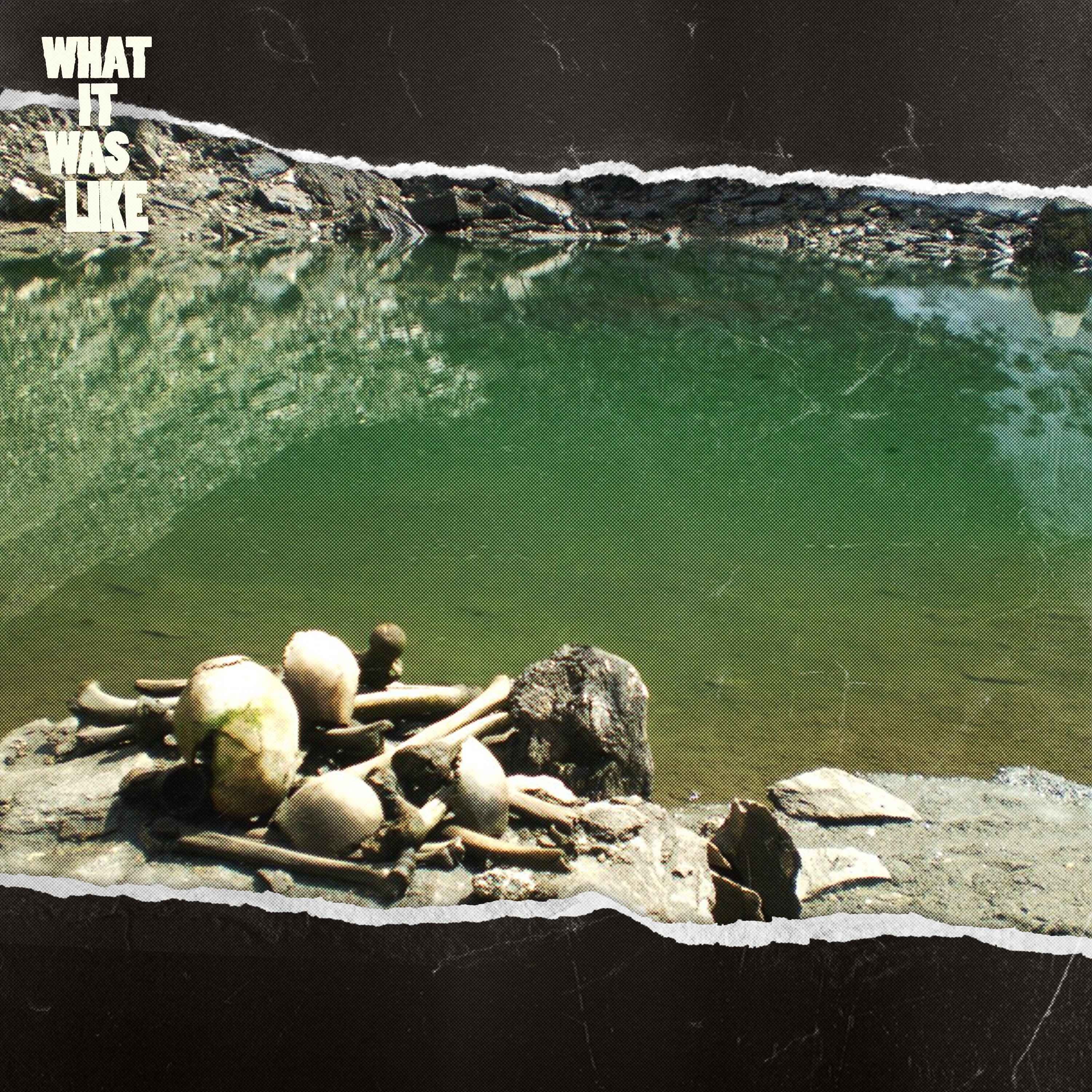
Then you get to this shallow little pond, maybe 30 meters across, 40 meters across, not more than that. The snow had melted and there was a lot of mud and there were a lot of bones you couldn't take a step without walking on. Bones, really. It was quite striking. Bones, cloth, things that people had carried with them, shoes, sandals. It was really something. What is the origin of the bones of Rukun? What is the answer to this mystery?
- [03:52]
Julian Morgans
Hey, I'm Julian Morgans, and you're listening to what It Was like, the show that asks people who have lived through big dramatic events what it was like. Hey, welcome back. Today's story is a mystery, and I've got to say, it's probably in my top five, maybe even top three favorite mysteries ever. However, I have to admit it, if you're the kind of person who likes your mysteries tied up in a bow by the end, then, yeah, maybe you're not going to like this one because this one doesn't really get resolved at the end. Like, we learn a lot along the way, but then it's kind of just a weird thing that shouldn't exist. Yet it does exist, and we don't know why. You'll see what I mean. So this is the story of a tiny lake. It's a little pond, really, and it's high up in the Indian Himalayas where between 300 and 700 skeletons have been found. And the bodies are old, they're centuries old at least, and nobody knows why they're there. Was this the site of some ancient massacre? Or was this an army that got lost in the mountains and starved? Or is this a mass grave for the victims of some forgotten epidemic? Or is it just something else entirely? We don't know. And there's a lot of debate about what we're looking at now. It's called Roopkund Lake, and It sits more than 5,000 metres above sea level and it's so remote that even today it takes days, usually around four or five days of trekking just to get there. And in the west, we didn't really know about this place until 1942, when a British forest ranger stumbled upon this lake surrounded by human bones, and he took the findings back to the authorities. Now, at the time, this was the middle of World War II, and they were worried that this had been an attempted Japanese invasion across the Himalayas into India. But testing ruled that out because the bones turned out to be far older. So later expeditions in the 1950s brought back some samples and they used some really early carbon dating techniques to put the bones at being somewhere between 500 and 1,000 years old. But the question still remained about who were these people and how had they died there. And generally speaking, that's how things stood until 2019, when modern DNA testing uncovered something that made the mystery even more mysterious, because it turned out that not all of the skeletons were from the same time or even from the same place. So some of them dated back to about 900 AD, and, and those ones were of Southern Asian origin, meaning the Indian subcontinent, basically. But other bones, about a third of the bones, they seem to be much newer. They were from around the 1800s, maybe the 1700s, and their DNA was traced back to the Mediterranean and specifically the island of Crete in Greece. So what were a group of Greek travelers doing in an obscure high altitude lake in India? How did they die there? And why had they traveled so far just to lay down alongside a whole bunch of other people who died a thousand years earlier? So, to help make sense of this, I'm speaking with two guests. First, I'm speaking with Dr. William Sachs, who is an American anthropologist who lives in Germany and teaches at Heidelberg University. And he was one of the first Westerners to trek to roopkund in the 1970s, where he studied the folklore around it. And later in the episode, you'll hear from one of the scientists behind the 2019 genetic study that really complicated our understanding of this place. And, subscribers, you're going to be able to hear the full interview with this geneticist in this week's subscriber only episode. But let's start at the beginning with William Sachs and his journey to this strange frozen graveyard. Hey, William, welcome to the show.
- [08:01]
Dr. William Sachs
Hello. Thanks for inviting me.
- [08:04]
Julian Morgans
So take me back to the. The 1970s. What brought you to India? Can you sort of set the scene for me?
- [08:12]
Dr. William Sachs
Yeah, I was an undergraduate in Seattle, Washington, and I had an interest in going to India. I found a really good program. And one of the things the students have to do is have a research project. And one of the reasons I was going in the first place was to go trekking in the Himalayas. I was really interested in the big mountains. I wanted to see them. So I was reading all I could about the Himalayas, and in the library I found this dusty old book. And it described this amazing place. It said there was a Lake at 15,000ft in the Himalayas surrounded by human bones. And I thought, wow, I have to see that place. And I did. Actually. I showed up in India in September, and I met a guy called KS Fonia. He was a local politician, a very charming, highly educated man. And told him I wanted to go there. And he said, you shouldn't go there, you'll die. It's too cold, too late in the year. But I wanted to do anyway. I had a good friend called Ron Hess. So we took the bus and began walking because we knew where the route was and trying to find somebody, a high altitude guide who could lead us. We got to a village called Juan, and we met, and nobody wanted to go. It was too late and too cold. And this fellow there called Himit Singh said he would take us. He was a real mountain man. You know, in those days, people wore all homespun woolen clothes, and he actually had made his own snowshoes out of birch bark and stuff. I mean, everything was sort of handmade. It's not like that anymore. But this was 1977, and, yeah, himit Singh took us up there. It's a very high, long, difficult walk. Normally one does that in three days. We did it in one day. We went up to the lake. It was surrounded by snow and ice. We didn't see many bones that time, a few skulls. But it was getting late and the snow was coming, and we got stuck in a blizzard and we couldn't find him at Singh. It was pretty scary. And we kept on going. We went all the way back down. And then I was so sick from this. Doing three days of high altitude in one. I guess maybe I had altitude sickness too, that I laid in this little hut in the mountains for 48 hours and then went back to him at Singh's house and laid in his house for a few days before I could even walk out of there. And then we walked out, and that was the crazy thing to do, but we did it. And then I began investigating about the lake. And it lasted me years and years. I did that. For years. It's still ongoing. I still have questions about it and theories and some unanswered questions. So it's been a big part of my life for a long, long time.
- [11:02]
Julian Morgans
Can you describe the lake to me? What does it look like when you're there?
- [11:06]
Dr. William Sachs
It's a shallow pond, but it's surrounded by cliffs on about. On three sides. So on all sides of these very, very steep cliffs. I think it's an old. It's an old volcanic crater, probably. I'm not a geologist, I'm not sure, but it kind of has that look. It must be. So it's steep cliffs on three sides, but you can walk up to it and it's not so difficult to reach. Then you get to this shallow little pond. It's about, well, I don't know, maybe 30 meters across, 40 meters across, not more than that. And when I went there the first time, it was all snow and ice. When I went there making the film with National Geographic in 2003, the snow had melted and there was a lot of mud and there were a lot of bones. We couldn't take a step without walking on bones. In 2003, I think there had been a landslide in the mud had kind of been churned up around this somehow. So we really. It was quite striking. Bones, cloth, things that they built, people had carried with them. Shoes, sandals. It was really something.
- [12:16]
Julian Morgans
The mental image of a tiny little pond as you described it, full of skeletons or sort of surrounded by skeletons. You know, they would have just looked like the site of a massacre. You know, it's a bit of a tragedy.
- [12:29]
Dr. William Sachs
It's a tragedy, exactly the word that you use. This was really a human tragedy. Hundreds of people died, presumably thousands of kilometers away from their place of origin. Nobody heard of them again, nobody knew how they died. Probably it's all. It was a really great human tragedy. Yeah, you're right.
- [12:47]
Julian Morgans
Do we know anything about the ages? As in, like, is there a mix of children and adults or the sort of the gender ratio? What do we know about the party?
- [12:59]
Dr. William Sachs
The paleopathologists talk quite a bit about that. And, yeah, there were women, children, young, old, quite a range of people, which kind of totally took the. Invalidated the theory that they might have been a party of warriors. And in any case, no weapons were found. Children and children were, along with the people. My colleagues, the paleopathologists pointed out that typically soldiers, bones have marks. You know, they get knocked around a lot. And so you have broken legs and wounds, not from guns in those days, but from Spears and knives, so forth, so you can recognize the soldier's body. They said, no, none of that. These were obviously people who had a more safe and secure life.
- [13:47]
Julian Morgans
Why are the bones still there? You know, they seem to be preserved. Like there's sort of not enough oxygen up there or something. What's with that?
- [13:53]
Dr. William Sachs
Yeah, well, you'd not get many germs and bacteria up there. So they do. And often they're covered by ice. It's a bit of a problem. You know, there is an ethical issue that of us even taking those bones. I mean, these are the bones of dead people. I should think a ritual should have been done for those bones. You know, presumably they're Hindus. You should do a proper Hindu ritual. These are kind of sensitive objects. But when tourists go up there and take a skull home without showing it the proper respect, or when they rearrange the bones into piles, as they do, if you go there now, you'll find a little, small, little pyramid of bones here and another one there, and they put a skull on top. And I think, you know, I'm sorry that people weren't able to regulate this a little bit more. And people should just have good enough sense to leave them alone. I mean, for one thing, it's dangerous. You bring back bones from a thigh. Who knows, maybe they had a disease. I mean, you don't really want to touch those things or they. Them. Back when we were up there with the scientists, they were very careful with gloves and plastic and making sure they had no contact. So it's kind of dangerous and difficult, and I wish that people took more care in preventing tourists from taking them away.
- [15:11]
Julian Morgans
Is it an eerie place?
- [15:15]
Dr. William Sachs
It's kind of dirty. It always surprised me. For me, the big story really is the pilgrimage of the Goddess, which goes right past the lake. And of course, the story of the bones is connected with that. And I always kind of wondered, gee, it's polluted. You know, it's all those dead people there. I mean, it's very unholy, and yet it's part of this holy journey. And I think when the pilgrims go up there, they kind of, you know, they fold their hands and say a prayer for the dead people and try to be respectful to them, but it's not central that then they go on to a much holier place higher up. And the lake, it's just. It's kind of. Kind of horrible because of so much death because of all those bones. Not a place you'd want to camp out.
- [15:55]
Julian Morgans
Okay, so tell me about this pilgrimage you say that it's sort of really connected. How so?
- [16:04]
Dr. William Sachs
Well, there are two things going on. The story about the bones is that they were discovered by 1942 by a forester who kind of an English forester who worked for the colonial government. And he saw these bones and was really interested. He hadn't heard anything about them. The anthropologist Majumdar from Nakano University, he had a theory. He actually went up there and did an expedition in the 50s, brought some bones back and had them tested. So all these questions about where they came from, but the local people know where they came from. The local people sing about it, they have stories about it. And the story is connected with this pilgrimage. So the idea is that the goddess of the region is called Nanda Devi, and that's the also the name of the highest mountain in India, which is very close. And people think of her as a daughter of the mountains. So the story about the bones is that once it's a kind of myth, right? But it's a myth which turns out to have some real historical evidence. That's what's so fascinating about it. So the story is she's up there on the mountaintop with her friends, I don't know, gathering flowers, dancing, whatever, with her girlfriends. And she looks way down in India, down close to Mumbai, down in western India, 2,000 km away, and she says, ah, my sister lives down there, I should go and visit her. I haven't seen her for a long time. So she goes down to visit her sister, who's the queen of this place. And the queen and the king look up and see this goddess coming down to them out of the sky and say, oh geez, look at her. When we invite her, she doesn't come. And now she's coming unannounced. Oh dear, now we have to show her some hospitality. They're not happy. They're not happy that she comes and she can sense this. And so she curses them. She curses them and they get blood in their rice and maggots in their bread and you know, everything's topsy turvy. And the buffaloes give birth to cows and the cows to buffaloes and everything is wrong. So, oh, what are we going to do now? They go to the astrologer and the astrologer tells them, you've been cursed by this goddess and the only way you're going to get rid of the curse is you have to do the pilgrimage up to Roopkund and beyond. And only if you go all the way up there will you be Freed from this curse. So the king and his queen and his whole royal entourage makes this. How far? I think it's about 2,000 kilometers. It's a long way. They take this long journey and they go up to the lake and then they meet with a tragedy. Why did they meet with a tragedy? Because the rule is that women may not accompany this pilgrimage. It's a very patriarchal thing, you know, even though it's all about the whole cult is about women in women's place. Still on this pilgrimage, women are not allowed to go. But the king ignores the rule and he takes his wife with him and he even takes his dancing girls and it makes them dance in the snow for his entertainment. And the wife is pregnant and she gives birth to a daughter. And the blood of childbirth is very polluting. This makes the goddess angry. And she sends down a storm of iron like hail and kills them all on the shores of Roopkund. So that's the story that's told and sung by people. In my dissertation I did the translation of this thing and then they contacted me and, and the bones were sent to the USA, to the University of Michigan in the 60s. They were radiocarbon dated then. And the. The result was that they were from roughly about the 10th century. And that was the last really scientific thing that was done. So then I was contacted by National Geographic in 2003 to make this film and they wanted to make another scientific expedition. So we got local academics, we got biologists and botanists and geologists and all this scientific team to go up to Rubkun, get some bones and bring them back and analyze them again. And the story was, what is the origin of the bones of Rukun? What is the answer to this mystery? Well, it wasn't really a mystery. The people know. The people remember, they had the story. The story had been kind of confirmed by the, by the radiocarbon dating. But anyway, we got the bones, we took them back, we sent them to Oxford to be analyzed with the most current methods. And we had a couple of really interesting guys from Deccan College, really top notch scientists. They call themselves paleopathologists, which means they specialize in determining the cause of death of ancient bones. The Oxford radiocarbon study and the paleopathologists from Dekin College all more or less confirmed the story or the basic facts of the story. Of course they're not going to confirm that it was a goddess or there was a curse, but it showed very convincingly that this was a group of people who came in the 9th or the 10th century, there were two groups they could recognize two groups. One was taller and healthier and genetically related. In other words, perhaps the king and his family. And the second group, who were smaller and shorter, like Himalayan people are, because to adapt to the Himalayas, Himalayan people tend to be a bit shorter. They even had the marks on their shoulders from carrying loads. You could see so pretty clearly two groups, presumably one group of the royal patrons who hired local porters to carry things out. So it wasn't an army, because women and children were along and there were no weapons. It wasn't a trading party because their clothing was totally inappropriate. They had just sandals and thin cotton clothing. And the really amazing thing, what really sort of blows my mind, is that many of them had indentations in their skulls which showed that they had been struck by hard objects. Now, this is what the song says, that they died in a storm of iron, like hail. And believe me, in the high Himalayas, you get hailstones the size of golf balls are even bigger. And people do die. A friend of mine, the father of a friend of mine died in a hailstone at a much lower elevation. So these freakish storms do occur. And so all of these, all of these facts come together to pretty much support the story that in the 9th or 10th century, a group of royal pilgrims and their guides perished in a storm at Rupgun. Of course, you can't prove all these religious aspects, that it was a goddess who cursed them and so forth. And I thought that was pretty interesting because I'm an anthropologist and I'm really interested in local people's ideas and their stories. And there you go. The local people's memory was pretty accurate, and it pretty much was borne out by our data. And then what happened again was in 2019, suddenly there's a new people who have a brand new set of bones. They did not disconfirm anything we said at all. They said, all of that's true enough. But there's also another group of bones. And they found 17 skeletons which they claim by their analysis come from the Mediterranean, from somewhere around the island of Crete. Now, this throws a monkey wrench into everybody. Well, it doesn't throw a monkey wrench. As I said, our conclusions stand. But where did this other group come from? Nobody has a clue. There is no plausible story for this at all. I think they got the wrong bones. Nobody actually went there and picked up the bones and brought them back like we did. They went to the anthropological survey in Kolkata and got a box of bones and analyzed them. I think they got the wrong bones. Because there's no plausible reason at all why a group from the Mediterranean would be up there. No historian from the region can even begin to think how could that be possible? Nobody. I've talked to a dozen people about this who are local experts. No one can even dream of a plausible story for this. And if 17 or 18 or 20, 30 people were killed up there, people would know. This place is way up beyond the populated area, right? It's very high. But down below, those villagers know if anyone goes up there doing anything people know about is they would remember nothing. So that's a puzzle where the. Where that group came from. And I'm very skeptical about that stuff.
- [24:55]
Julian Morgans
I'm feeling like that's a pretty compelling argument, William, but still, let's interrogate it just a little bit. First of all, have you received any pushback from the team that put together this study in 2019 that found bones from the Mediterranean? Have they received your criticism and pushed back on you?
- [25:14]
Dr. William Sachs
No, they haven't. I haven't. Sort of. I haven't taken the time to write to them. I've been interviewed a few times, and my opinion has popped up in a couple of articles. I would like to say it louder. I'm glad to say that here because it. What bothers me about this story is I think it's so interesting how the. The folk memory has been confirmed by modern science and by this radiocarbon. That's really interesting to me. It all fits together. And the fact that we have a new group of skeletons, which is anomalous, that's really interesting. And maybe I've missed something. And maybe a bunch of people from Crete managed to make their way up to 15,000ft in the Himalayas and died for some reason in the late 19th century without anyone ever hearing a word about them. Seems pretty unlikely to me, but could be.
- [26:06]
Julian Morgans
So I'm going to speak to a member of the team that. That did the 2019 study. I'm going to speak to one of these guys later in the week. I was wondering if you had a message that you'd like me to pass on.
- [26:18]
Dr. William Sachs
Yeah, well, stay in touch. It's a very interesting new result. It's as I say, nobody, no one can come up with any plausible story. How the heck. Or why were people from the Eastern Mediterranean up there? You're dealing just with probabilities, but the Probabilities are late 19th century. Late 19th century, a group of people from the Mediterranean up here and dying. How is. Do we have any historical hypotheses? About how that's possible. And how precisely were the bones obtained? That's not clear to me. I'd like to know that. I think somebody got the box.
- [27:05]
Julian Morgans
Okay, so that was Dr. William Sachs. And as you just heard, he's skeptical. He doesn't believe there's any plausible reason why a group of Greeks would have trekked into the Indian Himalayas a couple of hundred years ago without any of the locals noticing. But I couldn't let that sit. I'm curious, too. So we're going to take a quick ad break here, but when we come back, I'm speaking to one of the geneticists who actually worked on that 2019 study that made this discovery in the first place. So stay with us. This episode is brought to you by Ruler, the online mental health provider. So, recently I was going through a bit of a rough patch. My girlfriend was away for a couple of months. I was moving house, and it just felt like I was trying to juggle a few too many things all at once. And I kind of just wanted to talk it through with someone. You know, I wanted a therapist and I didn't know where to start. And that's what's so good about online therapy. That's what's so good about Ruler. They don't require a GP referral. You don't have to shop around trying to find the right person. You just go online, you answer a few quick questions, and they match you with someone who really fits what you need. So if you haven't done therapy before, Ruler makes that first step just so easy. They've got more than 15,000 licensed therapists. They're all vetted. And so it's not on you to go and find someone. And you know what? Therapy works. It just does. So if you've been thinking about starting therapy or getting back into it, Ruler, that's R U L A. It's a really simple, affordable way to do it. Thousands have already trusted Ruler to support them on their journey towards improved mental health and overall wellbeing. So head on over to ruler.com whatitwaslike and get started today. And also after you sign up, they ask you where you heard about them. So please support our show and. And tell them that our show sent you. Go to rula, that's r u l a.comwhatitwaslike and take that first step towards better mental health. Today, you deserve quality care from someone who cares. That's ruler.com.
- [29:11]
Sponsor/Advertiser Voice
This holiday, Verizon is helping you bundle up incredible gifts and savings. You'll get the Latest phone with a new line on my plan and a brand new smartwatch and tablet. No trade in needed even on our lowest price plan. That's two gifts for your family and one for you. Or two for you and one for someone else. Or three gifts for you and only you. Either way, you save big on three amazing gifts at Verizon, all on the best 5G network. Visit Verizon today. Rankings based on rootmetric Truth score report dated 1 2025. Your results may vary. Service plan required for watch and tablet. Additional terms apply. The holidays are coming and I've got a Boost Mobile gift just for you. Aww. For me, Anna? Yes, Anna, you deserve a gift. The Boost Mobile unlimited plan is just $10 a month for the first two months. Then $25 a month forever with unlimited data, talk and text. It's a gift. Thanks, Anna. Anytime, Anna.
- [30:00]
The holidays are here and the best gift is for you.
- [30:03]
Julian Morgans
Offer valid@boostmobile.com after your first two months.
- [30:06]
Sponsor/Advertiser Voice
You'Ll pay $25 a month unless you.
- [30:08]
Dr. William Sachs
Go online or call to cancel.
- [30:09]
Sponsor/Advertiser Voice
Requires autopay.
- [30:11]
Did you know Tide has been upgraded to provide an even better clean in cold water? Tide is specifically designed to fight any stain you throw at it. Even in cold butter. Yep. Chocolate ice cream. Sure thing. Barbecue sauce. Tide's got you covered. You don't need to use warm water. Additionally, Tide pods let you confidently fight tough stains with new coldzyme technology. Just remember, if it's gotta be clean, it's gotta be Tide.
- [30:46]
Julian Morgans
Welcome back. So, as we heard, anthropologist William Sachs has some doubts about the DNA results from Roopkund Lake. To get another perspective, I've spoken with Dr. Aideen Harney, who is one of the scientists involved in that 2019 study. And Aideen is a specialist in ancient DNA, and she's a lecturer in human evolutionary biology at Harvard University. She's also a population geneticist and is currently using massive genetic databases, including data from companies like 23andMe, to trace links between modern humans and ancient populations. It's really, really fascinating stuff, but I put William's criticisms to her just to see how she defends her own study and its conclusions. Now, to be clear, what you're about to hear here is just an extract of our conversation. But for anyone who's keen on a deeper dive into Aideen's fascinating work, the full thing is available for subscribers only. Hey, Adene. Welcome to the show.
- [31:43]
Dr. Aideen Harney
Hi. Thanks for having me.
- [31:45]
Julian Morgans
So, let's talk about Lake Roopkund. How did you first come to studying this Lake.
- [31:53]
Dr. Aideen Harney
Yeah. So I actually just was kind of asked if I wanted to join this project. So I was familiar with Roopkund, probably in the same way that anyone who has already heard of it is familiar. Pops up. I think these, these viral news stories every few years. Have you heard of this? You know, interesting lake full of skeletons. And I jumped at the chance because it just sounded, you know, really interesting to, to be involved. So it's a, it's a big team effort. I kind of came in later. But. But, you know, among all of our co authors, people have been involved in this project for decades.
- [32:29]
Julian Morgans
Okay. So obviously it's the Crete, it's the Mediterranean factor here that seems the most baffling. So the plausible answer, according to this anthropologist that I spoke to, William Sachs, was that there must be some sort of bones mix up at the, the bone storage facility where your colleagues got their samples. His, his take on it was like, look, this is not that complicated. It's a religious event that happens every 12 years and they go right past this lake. And it's been going for hundreds and hundreds of years. And that explains why there's all these bones. And, and as for these Mediterranean bones. And his take on it was, you guys should look through your records and you'll find that someone accidentally mislabeled the bones at the bone shop or something to that effect. And I'm really eager to get your rebuttal to that.
- [33:17]
Dr. Aideen Harney
Yeah, I'm really surprised to hear that that's the conclusion. Not because that's a crazy suggestion. That's definitely something that we thought about. Has there been any sort of mix up? But I can say we keep meticulous records at the Reich lab. There was definitely no mix up on that end. And also there was really no reason why there would be a collection of Greek bones at the Anthropological Survey of India, as far as I know. So I think just logistically it would have been very difficult for that mix up to happen. But the other reason why I'm kind of surprised that he's the person who came up with this conclusion is actually it was his analysis that made us feel kind of most confident that this was actually real. Because there have been, I think, two separate expeditions to Roopkund. One is, so there's two collections of Roopkund remains. One is with Lucknow University. The other is with the Anthropological Survey of India. And I think our analysis, we analyzed the Anthropological Survey of India data. I believe Dr. Sachs analyzed the Lucknow collection. But most of what I know about his study comes from a Nat Geo documentary. It was never actually published. So it's hard to kind of investigate the claims that his team made. But in that documentary and in that study that they did, what they found is based on the osteology. So based on the morphology of the bones, the shape of the bones that they were analyzing, they concluded that there was two distinct groups at Roopkund. One is kind of a shorter, stockier group of individuals, and the other is kind of a much taller group of individuals. They even said, you know, taller than you would ever see, kind of in India in general. So their conclusion was that there were two groups of individuals, and one, you know, one group was from South Asia, one group was foreign. And so that's kind of exactly consistent with what we found. I think it's just surprising that the group of people who were foreign were coming from so far away. But that was, you know, a separate analysis. I believe it was done on a separate set of skeletal remains that was coming up with the same conclusion. So for me, that's actually the most compelling piece of evidence that suggests that what we found is real. And that is, you know, going through our emails, when we reached out to our collaborators to tell them what we found, they actually said that's actually consistent entirely with what we've seen from our other analyses.
- [35:56]
Julian Morgans
Okay, that is compelling. I'm feeling compelled. Yeah. So another point that he brought up was that if this group of Greek refugees or migrants or whatever had shown up in the Himalayas a couple hundred years ago, that that story would have remained in the folklore or would have been passed down through the generations. Like we'd have some sort of historical anthropological evidence or record of that happening. And it seems like there's nothing. I mean, I know that anthropology isn't your particular wheelhouse, but do you have any take on that?
- [36:35]
Dr. Aideen Harney
Yeah, I mean, I think. I mean, I think that that is true in the sense that I would imagine that there is some record somewhere, But I think that that doesn't necessarily mean that it's going to be easily on hand. So I'm hopeful that there is a record some and that we will stumble upon it eventually. But also, I think that, you know, part of this as well. I told you that it's around the 19th century, but the radiocarbon dating isn't very specific at this time period. So we really don't know exactly, you know, when in history we're supposed to be looking. Are we supposed to be looking, you know, start of the 1800s, the start of the 1700s. Are we looking, you know, closer to the start of the 1900s? So it's not that there's a space specific time point in mind that we can go and really thoroughly investigate and ask people about. So I think it's quite likely that there could be some record. But I also think that both in terms of written records and in terms of what gets passed on in kind of living memory, some events do get passed on for a long period of time and other things get forgotten. And it's really hard to know how much we're actually forgetting. So the mystery continues, but I'm optimistic we'll figure it out at some point.
- [37:53]
Julian Morgans
The mystery really continues. It's a serious mystery. What have you learned through all this?
- [38:02]
Dr. Aideen Harney
You know, I think what this story always tells shows me is how much we're able to learn about people, about the past, using just DNA. You know, this was a site that was really interesting because archaeologically there's. There's not a lot to study. We don't have, you know, some great civilization that you can go and excavate the houses and, you know, look at the pots that they were using. This is a site that has very little information. You know, they didn't have a lot of stuff with them that remained to study. So this was. Was kind of a really exciting challenge for a geneticist because you're saying really all we have at this point is, you know, the genetics and, you know, biomolecular analyses in general. And what can you tell us about the past? You know, and I thought we were going to be able to kind of tie up this mystery with a neat little bow. And instead, we kind of opened the doors to so many more questions. But I think it is just a great reminder of the power of DNA to kind of teach us about the past, about something totally unexpected. And hopefully it's kind of an optimistic story where we can continue to use DNA and other approaches to learn about the past.
- [39:13]
Julian Morgans
Great.
- [39:14]
Sponsor/Advertiser Voice
Great.
- [39:14]
Julian Morgans
Well, thank you so much. This has been fascinating.
- [39:17]
Dr. Aideen Harney
Yeah, this is great.
- [39:21]
Julian Morgans
Before we wrap up, I just wanted to throw in a little epilogue here, because I really want to tell you what I think. After weighing up the opinions that I've heard from both of the people on this show today, I've kind of come to the conclusion that both of them are right, because I think William's theory makes sense. Most of the skeletons belong to a pilgrimage or royal procession that was wiped out in a hailstorm over a thousand years ago. I think. I think that that feels right, but I don't think that necessarily means that Aideen is wrong. Centuries later, a smaller group of travelers somehow ended up in the same lake and possibly met the same fate. And yeah, I know it's unlikely we're still coming up against that essential problem. Why are a bunch of Greeks in India and I don't know, like clearly none of us know. But here's what I keep coming back to. The fact that this lake full of bones exists at all is an anomaly. It's statistically unlikely that this lake exists, and yet it does. So therefore we are faced with only unlikely hypotheses about how it came to be. It didn't come to be via something that was probable. Otherwise the whole thing would have been probable and therefore unremarkable, and we wouldn't be talking about it. So however you cut it, we're dealing in things that are probably unlikely to have happened, and I think you just got to choose which unlikely things were more likely, if that makes sense. Now, Aideen gave me some more context in our full interview, which which is available right now for subscribers. It's our subscriber only episode for this week and I think you should listen to it. It's really interesting and we hear a lot more. So subscribers, go and check out that episode. And for the rest of you, thanks for listening. I'll see you again next.
- [41:27]
Sponsor/Advertiser Voice
AI agents are everywhere, automating tasks and making decisions at machine speed.
- [41:33]
Dr. William Sachs
But agents make mistakes. Just one rogue agent can do big damage before you even notice.
- [41:41]
Sponsor/Advertiser Voice
Rubrik Agent Cloud is the only platform that helps you monitor agents, set guardrails, and rewind mistakes so you can unleash agents, not risk. Accelerate your AI transformation@rubrik.com that's R U.
- [41:55]
Dr. William Sachs
B R-I K.com if you're a custodial.
- [41:59]
Sponsor/Advertiser Voice
Supervisor at a local high school, you know that cleanliness is key and that the best place to get cleaning supplies is from Grainger. Grainger helps you stay fully stocked on the products you trust, from paper towels and disinfectants to floor scrubbers. Plus, you can rely on Grainger for easy reordering, so you never run out of what you need. Call 1-800-GRAINGER Click grainger.com or just stop by Grainger for the ones who get it done.