Loading summary
Transcript147 lines
- [00:00]
Paylocity Representative
When your workforce, tech stack and business needs are evolving all at once, you need HCM software that moves just as fast. That's why paylocity builds what's Next, providing innovative and simplified solutions for clients to tackle the real challenges they face every day. From AI driven insights to automated workflows across hr, finance and it, Paylocity's platform doesn't just keep up, it leads. It's time to simplify complexity, drive results and move forward together. Start now@paylocity.com simplified ready to level up.
- [00:31]
Quince Representative
Your everyday Quince makes premium essentials without the premium price tag. From quality clothing and stylish accessories to travel staples and high end home goods, Quince has it all. And by partnering directly with top artisans and ethical factories, Quince delivers high quality at half the cost of similar brands. Shop elevated essentials without the markup at Quince. Go to quince.comlevelup for free shipping and 365 day returns. Quince.comlevelup out here, it's not only the.
- [01:02]
Paylocity Representative
Amazing views, but the way time stretches out a little longer and how the breeze hits just right at the summit. With Alltrails, you can discover nature's best with over 450,000 trails around the world. Download the free app today.
- [01:20]
Sugra Ahmed
Subaru I was in what I felt like was a space, a plane that was above the universes, above existence, above what we know through science that exists. I felt the presence of God right behind me. To say behind feels like it's too far. I'm really up close on my left hand side. Wow. Like we were. Like we were one. But there was also distinction.
- [01:59]
Julian Morgans
Okay.
- [02:00]
Sugra Ahmed
And it reminded me afterwards, when I was trying to make meaning from all of this, that in the Quran, God says, I am closer to you than your jugular vein.
- [02:15]
Julian Morgans
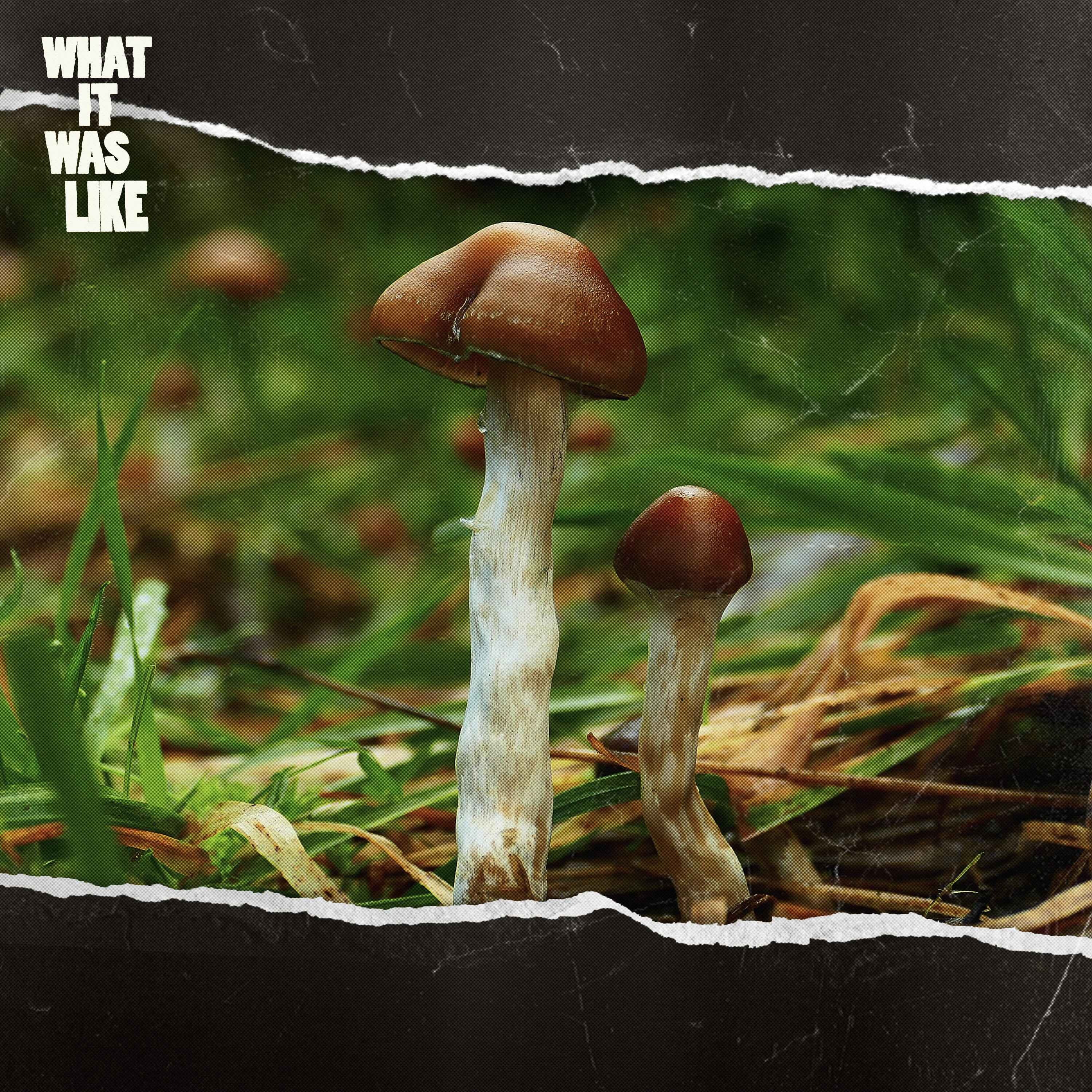
Hey, I'm Julian Morgans and you're listening to what It Was like, the show that asks people who have lived through big dramatic events what it was like. Hey, welcome back. I've got a flag before I start today's episode that when I recorded this I had a terrible cold. You're going to hear on my half of the interview that I'm really like nasally and all blocked up and it's, you know, maybe it's a little off putting. So I apologize in advance. But on the upside, my guest is fascinating and she sounds great. So about 10 years ago, two researchers at John Hopkins University launched a pretty unusual experiment. They wanted to see what would happen if you gave psychedelic drugs, specifically psilocybin, which is the active drug in magic mushrooms to religious leaders. Their idea, it was to explore whether psychedelics could deepen the spiritual lives of people who already have pretty deep spiritual lives. So they put out calls in various religious publications, and they ended up recruiting over 30 religious leaders from across a couple of faiths. They got Catholic priests, rabbis, a Muslim, and a Zen Buddhist. And each participant took part in a controlled, high dose psychedelic session, complete with eye masks and headphones, you know, just to get the mood right. And most of the participants described something really profound. 96% of them rated their first encounter with psilocybin as being among the top five most spiritually significant experiences of their lives. As one rabbi said, I now realize that my very breath is God. And I know all of this because of an article that appeared in the New Yorker by the reporter and author, Michael Pollan. Check it out if you can. It's a really interesting read. So I read this, and I just wanted to know more. And I think the reason is that, you know, I'm very interested in the big questions about the meaning of life and the and the great beyond. But I'm always a bit sauce on the people who want to talk about that stuff, because, honestly, it's usually just like my mate who went to Burning man or some friend of mine who had an ayahuasca trip and then went shut up about it. But the people in this experiment, they've made organized religion their lives, and that tends to come with a bit more social conservatism. So I feel like their insights aren't just thinly veiled ads for drug taking. In fact, my guest today, she's a devout Muslim, which is a religion that bars its followers from drinking, let alone taking magic mushrooms. So I feel like that lends her insights on the meaning of life and drugs just a bit more weight. On the show today, I'm speaking with a woman named Sugra Ahmed, and she's a prominent voice in the British Muslim community. She's a trustee of the Interfaith Network UK and she's a former chair of the Islamic Society of Britain. She was one of the religious leaders who took psilocybin in this study. And we're going to discuss how it changed her and her understanding of what religion should be. So I hope you enjoy my conversation with Sughra Ahmed.
- [05:25]
Hey, Sugra, welcome to the show.
- [05:27]
Sugra Ahmed
Hi. Thank you for having me.
- [05:30]
Julian Morgans
Thanks for joining me. Okay, can you tell me about the day that you first saw an advertisement that was recruiting volunteers for this study?
- [05:42]
Sugra Ahmed
So how I heard about this clinical trial was a very good friend of mine had some kind of newsletter or in some ways saw the advert. And it was for religious leaders or religious professionals who were psychedelically naive to participate in a clinical trial at Johns Hopkins and NYU on the east coast of the United States of America. Now, the friend I trust very much. And so when they reached out and explained that this is brilliant opportunity, my immediate reaction for some time was, don't be ridiculous.
- [06:23]
Julian Morgans
This is not brilliant.
- [06:24]
Sugra Ahmed
This is just not how we roll. I was, you know, I'm a woman, I was in a role of a religious leader. And I know how difficult that is for women in my community and in other faith communities. I mean, patriarchy is still alive and kicking when it comes to organized religion and wider society too, I am sure.
- [06:48]
Julian Morgans
What were you doing career wise at that time?
- [06:53]
Sugra Ahmed
At the time of the study, I was living in California in a place called Palo Alto because I was working at Stanford University as associate Dean for religious life. And prior to that I had been on a fellowship at Yale. And prior to that, pretty much all of my life had been in England in the United Kingdom. And so when this opportunity came along, I thought, well, I've worked really hard to get to where I am. I've worked my way up in the Muslim community also. And before leaving, I was elected to lead a Muslim organization called the Islamic Society of Britain. And I was the first woman ever to be elected to lead one of our organizations here, Muslim organizations in the uk. So I felt like doing something like that might pull up the bridge from behind me for, for other women, that was a concern. And I also thought, well, it's drugs, isn't it? So how do I square this circle? Because in the Quran it's clearly stated that you do not veil your mind with these substances, including alcohol actually, which was common practice for early Muslims to be drinking wine particularly. And so the Quran in different stages forbade that and said that I don't want you to come to me with your mind veiled. I want you to come with a clear mind. So I felt like there was something in what my friend was saying repeatedly to say that, you know, just, just, just trust me that I've had this experience and I'm telling you something different to what you think. That then led to him introducing me to somebody who is, is very learned when it comes to Islamic theology. And we had long conversations, the three of us, for quite some time about the fact that ultimately the conclusions that we came to is that plant medicine and in this case psilocybin particularly mushrooms, unveil the mind. They clear your mind, they diminish all the veils between you and yourself that you have built in order to survive in the world. So if you experience trauma or if you've experienced anything that has been quite challenging, that you have learnt your body, your mind, your spirit has learned to survive. And I'm open to the fact that I need healing, I need that growth. There are probably not many women involved in this trial. There are probably not many brown women involved, and I bet there isn't a single Muslim involved. And so for those reasons, I wanted to be at the table. I wanted that when this clinical trial was over and the studies were published and this was going to be groundbreaking because it was the only study of its kind in the world, that people who looked and sounded like me would feel like they were represented in some small, tiny way and therefore could take that scientific trial, that clinical trial, and build on it if they wanted to.
- [09:53]
Julian Morgans
So how did you sign up for the study?
- [09:57]
Sugra Ahmed
So my friend was kind enough to call up the administrators of the study and say, look, I found somebody. And I wonder whether it's too late, because they'd closed the study, I think, pretty much, or about to close it. And the scientists became very excited because, yeah, it was true. There were no other Muslims participating. They had Christians of various different flavors, different kinds. They had Jewish people, some of whom were rabbis, and they had very few, but some Buddhists, and that was it. So we were missing Hindus, Sikhs, Jains, Baha', Is, Zoroastrians, Muslims. We were missing a whole bunch of people and also other types of Christianity, Judaism, Islam, Hinduism. I mean, there's a lot that could go on here. And I think for me, the really important thing is that this is one study, one trial. I'm curious about how other trials can build on this and make it even more inclusive. So when he called them up, they got very excited and they contacted me and said, if you're interested, we need to move fast. And there are a ton of psychometric tests that we need to do on you, physical tests, to make sure that you actually are fit as a candidate. And we just need to check that you are psychedelically naive. So you've never consumed this substance before and got not really much about it, all of which was true. And I think within a couple of months, I was good to go.
- [11:25]
Julian Morgans
What were the tests? I'm curious.
- [11:28]
Sugra Ahmed
Oh, Julian. I mean, the person who took the tests, who asked me the questions probably knows more about my life than most people in the world because they're pretty intense, they're pretty intrusive. I mean, they really, they want to get a sense of your, you know, your family history. And they go quite far back several generations. And they want to be clear that there are no mental health issues. There's certainly nothing like bipolar disorder and other kinds of associated disorders because these substances can run the risk of exacerbating those conditions. And so they have to make sure that you are mentally as well as physically fit. And they would ask questions about your own sort of mental health history and make sure that, you know. Yeah, you might, you might have some depressive episodes. I mean, tell me somebody who doesn't in the modern world. But so long as you're not sort of. This is not a study about treatment resistant depression, for example. Right. So there's some caveats that they have to ensure you meet in order to be able to participate.
- [12:31]
Julian Morgans
Okay, so take me through to the day of the test. How did it start for you?
- [12:38]
Sugra Ahmed
So there were gazillions of questionnaires. So on the one hand I was sitting with Mary, who would ask me all of these, who do all these psychometric tests on me, but then I was given an iPad. I mean, I spent days doing this stuff. In total, you do it before, you do it immediately after your doses, you do it for some time after each dose. We have two doses. So in total, you're spending days doing this stuff. So. So after my conversations with Mary, I would be given an iPad and just sit there for ages, flicking through question after question after question after question. And in those, they were trying to get a sense of my spirituality, whether I had experienced sort of ineffable moments in my life before, whether I had felt that I'd experienced a presence with God before. So spirit. So really trying to sort of get to the bottom of the fact that what we're trying to test for here is when we give religious leaders mushrooms in a controlled environment and they have these phenomenal experiences. Actually, before they take these mushrooms, we want to know whether they've had phenomenal experiences before.
- [13:50]
Julian Morgans
We should leverage these very insightful questions. Have you, have you had some of these experiences?
- [14:00]
Sugra Ahmed
So the substances are mind altering. And when you think about mind altering, you can expand that to experiences where you don't actually take a substance. So whirling, for example, is a mind altering experience. Right. Whirling dervishes. That's exactly what they're experiencing. They're not with us when they are in the act of whirling. They are with God. They are with the spiritual force that they believe created them. If we think about, in Arabic, it's called dhikr, and dhikr means the repeated remembrance of God.
- [14:35]
Julian Morgans
Sorry, sorry. Whirling. What am I imagining? Whirling.
- [14:39]
Sugra Ahmed
So whirling dervishes are. It's a Sufi tradition that comes from Turkey, as far as I know. And they are often women and men who dress in these long flowy robes and then they, they twirl around and around and around. And there's a rhythm to it, there's a science to it in terms of how they turn. And they do this for a prolonged period of time and they're in communion with God.
- [15:05]
Julian Morgans
Okay.
- [15:06]
Sugra Ahmed
It's beautiful to watch. I have felt something move in my spirit. As I observe, as I bear witness, it becomes transcendental.
- [15:17]
Julian Morgans
Yeah, yeah.
- [15:18]
Sugra Ahmed
And so that becomes mind altering. And it's the same with dhikr, the remembrance of God. A whole bunch of things that in different religious traditions you can experience a sense of being on a different plane where the things that we think matter in our day to day no longer matter. And our mind is completely and utterly focused on the one or more focal points of our life. It clears your mind and tells you what is really important for you. So whirling vicar, and what I'm describing right now, these are all pre clinical trial experiences.
- [16:01]
Julian Morgans
Okay, sure.
- [16:02]
Sugra Ahmed
So when they're asking me, have you had any mind altering experiences? I can say yes. Yes, because of these three examples. So. But in the clinical trial it was a whole different thing.
- [16:16]
Julian Morgans
Okay.
- [16:18]
Sugra Ahmed
So we had two doses. In my case, I could only speak for myself. So in my case I had what would be considered high doses. And so I was given. We're in Johns Hopkins University, which is also a hospital, but we're in this like building that looks like your typical messy kind of, you know, a bit beaten up kind of office environment. And then you walk into, and then you walk into this room and it's. There's bookshelves everywhere and there's a sofa and there's like soft lighting, there's lamps everywhere. Oh, there's pictures on the wall. There's like rugs on the floor with lots of different kinds of patterns. And a lot of clinical trials have.
- [17:03]
Julian Morgans
Happened in this room, you know, famous ones.
- [17:07]
Sugra Ahmed
Right. And so for me it was okay, this looks kind of like a living room almost. So not too different from most people's homes in some way, shape or form. So there's a comfort factor in there. And so I walked in and it was first thing in the morning. And I would start with the scientists. And there was something quite sort of. There was a kind of a silence, silency vibe going on in the room. Nobody was talking too much. Everything was nice and calm and nice and chill. And then I asked if they would allow me to perform my own very short prayers because I felt the study. And this was quite a strong conversation between me and some of the scientists over a prolonged period of time. But I felt the study didn't really see me as. I mean, this was supposed to be for religious leaders. There was nothing Islam or Muslim like about this study in any way, shape, or form. So the playlist was not any kind of, like, traditional music that I would think throw a couple of these tracks in, it would really help me out. The setting, the environment was nothing Muslim like or Islamic like in that space. There was nobody in the. In the teens that were doing this study that would understand my faith, I felt. And so, I mean, I'm quite an open person. And so I regularly shared this with the scientists that, you know, I'm not comfortable entirely. I know I'm taking a risk for myself. I'm putting myself in one of the most vulnerable situations of my life. And I'm hoping that, you know, how to hold me despite not understanding my tradition or where I'm from or any. Any of my cultural kind of, like, vibes. And I will do it anyway. But I need you to understand that that stuff is important. So if you ever have the opportunity to do this again, like, please don't rinse and repeat. You know, take a minute and do the work that is needed to make it inclusive. Because they were advertising for religious leaders. They didn't say Christian and Jewish religious leaders or just Christian, even religious leaders. Right. They want to relish leaders of different kinds. So, like, there were some tracks from Hindu traditions in there, but they didn't have any Hindu candidates. So for me, it was like, well, hang on. You needed to really, like, really built out this mixtape, if you like, so that everybody would find themselves in it at some point. So there were some shortcomings, and I tried to compensate for those by saying, would you mind if I offered my prayers beforehand? And they were very gracious. They gave me a couple of minutes, and that really helped me because I was on my own in this. I didn't tell. I mean, I told my friend who introduced me to the study, but I didn't really tell anybody else that I was doing this.
- [19:50]
Julian Morgans
Didn't tell your parents.
- [19:51]
Sugra Ahmed
I definitely didn't tell my family and Julian, I'm on the other side of the world almost. Right. Like, they're all here in rainy England and I'm over there in sunny Palo Alto or in this case, Baltimore. And I just didn't want to freak them out. I didn't want to scare them that, you know, is she going to be all right? Because it took me a while to understand psychedelics and to feel assured. How am I going to explain it to them?
- [20:19]
Julian Morgans
It'd be very hard. Were you nervous?
- [20:21]
Sugra Ahmed
I was scared. I was petrified.
- [20:24]
Julian Morgans
Yeah, I would have been. It sounds like quite a lonely experience.
- [20:31]
Sugra Ahmed
I think the only thing that would come that combated that for me was Mary, who I really, like, developed a strong connection with. She did my psych test and I would look out for her every time I had to go into the building or into the offices for something, thinking she's my sort of grounding. And she's. And she really is even today. And then a couple of other people who were involved in the study were also, for me, I felt like they saw me and I wasn't just a candidate in a trial. And I think for the scientists, it's just the nature of the work that they do, that despite how incredibly lovely and kind that they might be, they're still scientists. So they don't see you or at least they don't make you feel. I didn't feel that I was seen as a whole person. So there were definitely huge limitations and it was really, really scary and it was quite a lonely experience. But there were these. These two or three people, the two women particularly, and then also a gentleman that I felt a closeness to. I felt like they might not understand what I'm saying, but they will do their level best to try, and they'll ask me the right questions to help themselves, help them understand. I can't ask for more than that, really.
- [21:48]
Julian Morgans
Hey, we're just going to stop here for a quick ad break, but stick around. We'll be right back with more what it was like.
- [22:02]
Paylocity Representative
We all belong outside. We're drawn to nature, whether it's the recorded sounds of the ocean we doze off to or the succulents that adorn our homes. Nature makes all of our lives, well, better. Despite all this, we often go about our busy lives removed from it. But the outdoors is closer than we realize. With alltrails, you can discover trails nearby and explore confidently with offline maps and on trail navigation. Download the free app today.
- [22:32]
Quince Representative
Ready to level up your everyday Quince makes premium essentials without the premium price tag. From quality clothing and stylish accessories to travel staples and high end home goods, Quince has it all. And by partnering directly with top artisans and ethical factories, Quince delivers high quality at half the cost of similar brands. Shop elevated Essentials without the markup at quince. Go to quint.com level up for free shipping and 365 day returns.
- [23:00]
Paige
Quint.comlevelup this is Paige, the co host of Giggly Squad. I use Uber Eats for everything and I feel like people forget that you can truly order anything, especially living in New York City. It's why I love it. You can get Chinese food at any time of night, but it's not just for food. I I order from CVS all the time. I'm always ordering from the grocery store. If a friend stops over, I have to order champagne. I also have this thing that whenever I travel, if I'm ever in a hotel room, I never feel like I'm missing something because I'll just Uber Eats it. The amount of times I've had to Uber eats hair items like hairspray, deodorant, you name it, I've ordered it on Uber Eats. You can get grocery alcohol everyday essentials in addition to restaurants and food you love. So in other words, get almost any anything with Uber Eats. Order now for alcohol. You must be legal drinking age. Please enjoy responsibly. Product availability varies by region. See app for details.
- [24:03]
Quince Representative
Have you ever wondered how your body naturally repairs and rejuvenates itself? It all comes down to your stem cells. Your body's built in repair system that renews tissue, restores balance and helps you feel your best. But by age 30, you have up to 90% fewer stem cells in circulation. That's where Stem Regen comes in. Founded by stem cell scientist and pioneer Christian Dropo, Stem Regen products are designed to support your body's natural repair system by using science backed plant based extracts, just two capsules of STEM regen releases an average of 10 million of your own stem cells into your body. No injections, just two capsules empower your body to rejuvenate from within. Whether you're focused on recovery, longevity or just overall wellness, Stem Regen can help release more of your health, more life and more of the best version of you. Try it now at Stemregen Co and use code pod15 for 15% off your first order. That's stem regen codepod15.
- [25:08]
Julian Morgans
Okay, okay. So after you'd said some prayers, what happened next?
- [25:12]
Sugra Ahmed
So then I was offered this capsule in what looked like a goblet.
- [25:22]
Julian Morgans
Melodramatic kind of.
- [25:24]
Sugra Ahmed
I think there was, for me, the way I perceived it, there was a sacredness to it, but there was a. This is a precious thing that you're about to do. This is an important thing that you're about to do. And we want to try and honor that in the small ways that we possibly can. So I was given this capsule. I ingested it with some water. And, Julian. I have this thing whenever I take tablets, and I feel like they're stuck in my throat. And.
- [25:50]
Julian Morgans
Yeah, I get that.
- [25:52]
Sugra Ahmed
They gave me a couple of grapes, so. And I was like, no, it's still stuck there. And I think it was a psychological thing because after about 30 minutes when I'm still saying, no, it's still stuck there, then suddenly I'm like, oh, I feel quite relaxed. That's what I thought. Something's happening.
- [26:10]
Julian Morgans
No, it's dropped.
- [26:11]
Sugra Ahmed
It's dropped and probably dropped about 20 minutes ago. And then I was given an eye mask to wear over my eyes so that it could be as much of an internal experience as possible. I was given these huge, clunky headphones. I mean, a bit like the ones that I'm wearing here today. And I was asked to lie on the sofa and basically just roll with it. Right. Like, this is you meeting yourself now. That's how I understand it in hindsight. But at the time, I was scared, thinking, you know, I've heard the guy, the guys. But the scientists help me understand that if you see something that is difficult, remember to move in and through. And I'm thinking, what on earth is that? Even if I see some monster, how am I going to move into.
- [26:55]
Julian Morgans
What does that even mean?
- [26:56]
Sugra Ahmed
Why am I not going to run in the opposite direction?
- [26:59]
Julian Morgans
Yeah, yeah.
- [27:00]
Sugra Ahmed
But they try to help me understand that if I did run in the opposite direction, chances are I would probably get stuck emotionally. Like, this thing has appeared to me because it's me moving through my own trauma. So don't block it. And also, we're here to help you, but try to be as vocal as you possibly can. I'm not really that vocal, you know, when I'm in meditation or when I'm in communion with God, I'm not really a very vocal person, so you have to kind of trust that it'll all work out. But that's the kind of prep notes that they tried to give me before I took this thing, and then during. So I was lying there, mask is on, and I couldn't Quite get to a comfortable place with the headphones. I wanted to lie on my side and they were kind of hurting me and so I had to insist that I was going to take these things off. But there was. The playlist was playing in the room. There had speakers in the room so I could still hear the music loud and clear. But it's just that my poor guides were also having to hear that for the whole day. Whilst I knew that having the Muslim.
- [28:05]
Julian Morgans
What was the music?
- [28:07]
Sugra Ahmed
It was mainly Eurocentric Christian. Okay, so it was like Bach and a lot of music like that high church music. It was special and it belonged to a certain kind of tradition and there's a reverence and a respect for that. But I guess the playlists are designed to take you on these highs and these lows, you know, like your emotions are going to move up and down as you, as you kind of meander through your life, through that whole day. You're lying on the sofa the whole day and then the music is supposed to gently carry you, maybe not so gently sometimes, but carry you through what you're experiencing so that you know, you keep moving forward, as it were. So yeah, I had music on in the room and lay there the rest of the day having the most often ineffable but mind blowing experiences of my life.
- [29:10]
Julian Morgans
Okay, well take me through it. What was some of the first stuff that you witnessed?
- [29:19]
Sugra Ahmed
I don't think I'll be able to remember in any kind of chronological order, but there were two themes. So for my first dose the theme was love. And I'll go into that in a second. For the second dose, the theme was that the center of all creation is the womb. Now apparently these are not unusual kind of conclusions that people draw from these kinds of experiences, but the love theme was essentially a message, a learning that helped me to really understand a deep visceral level. Because you've got to remember these experiences. We feel those who take these, these medicines in this way. We feel that these are real experiences that we're committed. I know that that was my real life. It wasn't a dream that I was having. So if in that experience I experience, I have a visceral feeling now that feeling is going to stay with me for the rest of my life. And so in this case the visceral feeling or the experience was that love is the heart, is the primary brain and we have this kind of cerebral way of looking at the world that centers this head brain in a way that doesn't serve us as sentient beings. And if we are to progress in a way that, in a way that helps us all to flourish, and that's not just human beings, that's all of creation. That if we are to flourish and if we are to thrive, actually we need to make the head brain our secondary or tertiary brain. And it's the heart that needs to be our primary brain and probably even the gut to be the secondary brain, if anything. And so for me, I think encountering loved ones in that, in that state, one by one, and really connecting with their hearts, my heart to their heart, I had this kind of really powerful experience where I felt like I knew what was in their heart and what their hearts had to carry as they moved through this world, as they moved through life. Those hearts, through no fault of their own, were heavy with pain and with trauma. Some of it ancestral trauma from generations and generations and generations ago. Some of it things that had happened to them while they were, you know, fetuses when they were born, when they were children, as they were growing up, no fault of their own. But now they had to carry this darkness, this weightiness. And honestly, Julian, I was in just complete and utter awe that they couldn't even get out of bed in the morning, let alone live a life. And if I use that to extrapolate what human beings are carrying and the way in which they are having to move through the world despite their circumstances, despite what they're having to put up with, consciously or otherwise, it's a wonder that we can even get up and do conversations, have conversations like this, right, about stuff that really, really matters. But really what? Religion in its truest form. I'm not talking about organized religion and the structures and all of that that comes with it. I don't have too much time for that. But the, the, but the, the essence of what, what we are asked to do in this world and how we are asked to be is not that complicated. It's hard, it's. It's not easy to be, you know, to be soft hearted, to be, to be doing the work that purifies your heart, purifies your soul. These are really tough things to do because they require long term commitment. That work is never done. It's a lifetime's journey. Stuff happened to me. What do you want me to do? Walk around telling everybody that I love them? No, of course not. But to be able to tell yourself as a starter that you love yourself and to genuinely feel that and mean that and that you love yourself for all that is good about you and that you Will work on yourself, on the things that are not so good about you. That's your commitment to yourself. And then to feel the ripple effect of that. To go out to your family, to your neighbors, to your friends, to your colleagues, to, you know, all the way to world leaders. People you will never meet, people who live in the slums in India, elsewhere. Right. Like to really feel a deep sense of love, kindness, compassion for all of existence to such a degree that your values, your ethics, your moral compass are affected by them.
- [34:06]
Julian Morgans
Wow.
- [34:07]
Sugra Ahmed
That's the nub of it all for me. In my first dose, that was the heart of it. And it took for me to encounter the people I love most, my own immediate family, and to realize, my God, how on earth are you living?
- [34:22]
Julian Morgans
Yeah. And did you experience this as almost like a montage sequence of various people that you love in your life coming to you, to you? And you sort of saw their hearts, you understood their pain?
- [34:38]
Sugra Ahmed
Yeah, yeah, yeah, I did. I was in what I felt like was a space, a plane that was above the universe is above existence, above what we know through science that exists. And there was soft kind of, you know, you have tube lighting, but these were giant tubes with soft hues of pinks, yellows, blues, greens. And they were this. In this expansive space, they were the circumference. They were the thing that was sort of. That was the edge of this space. And these, these soft, beautiful lights were emanating into the space. And I felt the presence of God right behind me. To say behind feels like it's too far. I mean, really, really up close on my left hand side.
- [35:34]
Julian Morgans
Wow.
- [35:35]
Sugra Ahmed
Super close. Like we were. Like we were one, but there was also distinction.
- [35:42]
Julian Morgans
Okay.
- [35:42]
Sugra Ahmed
And it reminded me afterwards, when I was trying to make meaning from all of this, that in the Quran, God says, I am closer to you than your jugular vein.
- [35:56]
Julian Morgans
Okay.
- [35:57]
Sugra Ahmed
And it took me the air, which is quite an emotional thing for me because I've read that, I've thought I understood that, but to understand it now is a completely different experience.
- [36:11]
Julian Morgans
Yeah, I mean, it's a big phrase, but what is that physical experience like, you know, to actually encounter that as an experience? That would be. Yeah, I can see how that'd be world changing.
- [36:26]
Sugra Ahmed
And then it becomes ineffable because how do you put words to these things? And so whilst I had this presence, my. Each individual family member sort of appeared in front of me, and I would place my hand on their heart, and my heart would connect with theirs from a distance, and then they'd get closer And I'd put my hand on their heart, and then with each one, they wouldn't just disappear. They would remain in the background. And then the next one would come closer or I would draw closer to them. And so it was like a montage. Absolutely.
- [37:01]
Julian Morgans
When this ended, when the sort of the lights came up again, you know, you must have been pretty shaken.
- [37:12]
Sugra Ahmed
To be honest with you, I was a little bit gutted that it was over.
- [37:20]
Julian Morgans
Yeah, I can imagine.
- [37:21]
Sugra Ahmed
It's such a phenomenal thing where you don't want to be distracted from it for even a second. Um, but the guys that I had were fantastic in that they gently sort of helped me to, you know, sit back up again. And your body suddenly and your mind then realizes, okay, so, wow, that was. That was. That is what happens when you take a high dose of mushrooms and, you know, you're. You're kind of in this environment, this controlled setting. So there was a. There was an. You know, there's an awesomeness, but in the true sense of the word, awesome. Because we use awesome all the time, right?
- [37:57]
Julian Morgans
Yeah, we just throw it around. All the.
- [37:59]
Sugra Ahmed
But in the true sense of the word, there was a sense of awesomeness for what I had just had the privilege of experiencing. It was phenomenal. And they helped me to understand that, A, that was all normal, B, I had been well throughout. So just to give me that confidence that everything was fine, and C, that it's clear that you have some phenomenal experiences by some of the words that you were saying and some of the. You know, I cried a lot in both experiences, and I think that's a purification. I cried for. It felt like hours. But you've got no sense of time. Time doesn't matter in this space.
- [38:44]
Julian Morgans
Right.
- [38:45]
Sugra Ahmed
And then I was lucky enough to leave that place and go have dinner with my friend and not have to say very much if I didn't want to and just try and sort of like. I mean, it's an exhausting experience to try and get some energy back because you're lying on a sofa, but on the inside you are. Have. You are on the roller coaster of your life.
- [39:10]
Julian Morgans
Yes.
- [39:11]
Sugra Ahmed
And so you're exhausted afterwards, and it takes a few days to recover. And then the next morning and, you know, had a good night's sleep, and the next morning came back, and that's when I was asked to write down what I remembered from my experience. So I had a pen and paper in a quiet room, and, you know, we were often so used to tapping away at keyboards. It's like Are you sure you don't have a spare laptop anywhere? I'd be much faster, yeah, yeah. If I was given a pen and paper and I sat there and wrote pages of pages as much as my fingers and my wrist would allow me to wrote it all out and then gave it to them. I have a copy of that, which I'm now really grateful that they made me do that because I can't obviously remember with the kind of clarity that I would have had at the time.
- [39:59]
Julian Morgans
Okay, did you suddenly feel, because I know that you were psychedelically naive as you described it, did you suddenly feel sold on the virtues of psychedelics?
- [40:13]
Sugra Ahmed
Oh, good question. No, I had a phenomenal experience. I had a mind blowing, life changing experience. I would not switch it out for anything. And at the same time, I am deeply aware that first of all, psychedelics are not for everyone. Like, I was lucky that I was in a clinical trial and therefore their responsibility was to take care of me. A lot of people might experience this stuff underground and that's scary, that's frightening to think that you might have some kind of mental health issue that you might not even be aware of. But in the absence of proper care and advocacy, you might make things worse for yourself than better. So there's that. Then there's also that not everybody will need plant medicine. Not everybody will need to be purging with ayahuasca somewhere in, you know, on the outskirts of some rainforest in South America. It may be that you are looking for healing, you are looking for growth, you are looking for support, for help, but actually all you need is talk therapy for, you know, the next 12 months or five years. Right? So I don't think that plant medicine is for everybody, but I also think that it's not just about ingesting the medicine. I think a really good experience starts from the moment you decide that this might be for you, that you're curious about it. Those conversations that you have, your experience has already started. And then figuring out, well, what are my intentions for this? Am I going in for healing? Am I going in for growth? Do I think as a spiritual or religious person that this is going to be my fast track way to meeting God? I think not like setting your intentions and making sure that they are pure, that they are good, is really an important part of your experience. So then the easy part for the guide or the facilitator is to actually sit with you whilst you have the medicine. And then the difficult work really begins when you come out of it. Then it's the Making meaning session. So, you know, having deep conversations with your therapist about what happened to you and how do you reconcile that life altering experience that was true with the day to day world that you move in. So I've had this phenomenal experience around love, but I come out of there and the world is still the same. I'm the one that's moved. And so how do I now have conversations? Like, you have to learn to meet people where they are at no matter how much you feel that they deserve more compassion or they deserve more understanding because you know, these things need to sync together to be able to work. So and then coming back to England on holidays, on trips and meeting my family and trying my hardest not to shower them with so much love because number one, this thing has changed my life. I adore them. Yes, right. I like the first thing I wanted to do was call my mother after all of that had happened and the team that I had to say to me, just take a minute, just take a few days, don't call just now because what you want to share right now is going to be radically different from what you want to share in a few days to just give it a minute. Right. Understandable. Also, don't make any life changing decisions within the first six months of taking this.
- [43:38]
Julian Morgans
Right.
- [43:40]
Sugra Ahmed
And then the other thing is that, you know, when I did meet my family and there was a realization, it was devastating that at one point I remember touching my sister's back as she bent down to pick up something. I think I was about to go past her and she flinched and it scared me that she flinched.
- [44:02]
Julian Morgans
What did that mean to you?
- [44:04]
Sugra Ahmed
That her body, her mind, her spirit was not in a place where she was open to love and affection, but it's that survival mode. Right. Like she just had a baby, life was really rough for her at the time and that she, instead of leaning into that sense of touch from a loved one, she in a millisecond had decided without even knowing that that was not something that she could accept in that moment. And that made me cry. I mean, I had to leave to cry. But that's what I mean about integrating, making meaning of these experiences. That you have to still operate in the world, but you have to do it in a way that is true to the experience that you've had is TR to you, but it's also true to the people around you.
- [44:58]
Julian Morgans
Hey, we're just going to stop here for a quick ad break, but stick around, we'll be right back with more what it was like.
- [45:16]
Paylocity Representative
Out Here it's not only the amazing views, but the way time stretches out a little longer, how laughter bellows louder among friends, and how the breeze hits just right at the summit. With Alltrails, you can discover and experience the best of nature. With over 450,000 trails worldwide and navigation right at your fingertips. Find your outside with Alltrails. Download the free app today and find your next outdoor adventure.
- [45:43]
Paige
Did you know adults 60+ lose more.
- [45:46]
Sugra Ahmed
Than $60 billion each year to financial exploitation? Greenlight's new Family Shield plan empowers you to monitor your accounts for suspicious activity, protect yourself with up to $1 million identity theft coverage, and reassure loved ones that you're safe with location sharing and place alerts. Get peace of mind today@greenlight.com protect that's greenlight.com protect.
- [46:17]
Julian Morgans
Okay, so what I was going to say was your second experiment, your second dose, and you were talking about the womb. What was that about?
- [46:29]
Sugra Ahmed
In my second dose came to a point of complete and utter reverence. Reverence for anybody who carried a womb. Obviously, we know women to carry wombs, and some of them will conceive and some of them will have children, and others will do some or none of those things through either choice or because that's the medical situation that they find themselves in. So I have, I do know people who struggle with their wounds and, you know, far too many women have so many difficulties when it comes to their menstrual cycle and the pain that they have to endure every month from being a young girl all the way into, you know, beyond menopause, kind of. You know, if you think about what women have to go through, it's horrific. And sadly, we know little to nothing about it scientifically. And so there's not a lot that we can do. So women do what women do best, sadly, but they still have to. And that is cope is what this is gonna do to the rest of our lives. And so in my experience, in my second dose, I had this awesome reverence for anybody who experienced pregnancy and giving birth. And I saw the womb as a center of all, all birth, birthing of any kind. And so for me, God became the womb.
- [48:09]
Julian Morgans
Wow.
- [48:10]
Sugra Ahmed
And now in, in Islam, in Arabic, God has what we call 99 names. So these are names that God has given to us through the Quran that, that help us to understand God's characteristics. Right. So they are names like in English, they will be the most, just the most kind, the most compassionate, the all seeing, the all aware, the first, the last, all of those and many, many More. My favorite, by the way, is Ya Latif, which is the most gentle. And that just moves me on the inside in a way that I cannot explain. So the womb is strongly associated with mercy and with God, all one and the same thing in this vision for me, in this. In this dosing experience for me in my trip. And so that then leads me to think about my young brother who died as a young boy. And I haven't thought about him for a long time. I certainly haven't felt a presence with him. And that was very, very moving. I thought about my mom, who has conceived many times and given birth, has had 10 children.
- [49:25]
Julian Morgans
Wow.
- [49:26]
Sugra Ahmed
Has lost three.
- [49:27]
Julian Morgans
Wow.
- [49:29]
Sugra Ahmed
And has probably experienced miscarriages that she doesn't talk about. Yeah, I know my nan, her mom experienced miscarriages because she talked about them to me. So the womb becomes this really huge, iconic theme. It's everything. It's all of existence. Without the womb of any kind of womb, we would not be here. Not just human beings, but a blade of grass has a type of womb. It gives birth to something, and that gives birth to something, and that gives birth to something, a flower, the bee that's intermingling with the flower, and then that goes on to give birth to something else. And then at some stage, we get honey from that. So this cycle of birthing comes from this womb. And I then saw two of my sisters, so we're four sisters and two have children. And so I saw both of them and I just fell at their feet out of sheer, I don't know, respect just doesn't seem to cut it. I don't know what the word is, but just dumbfoundedness that these, in this case, women would do this sincere, the beginning of human time began and continue to do this, rarely complain about it, you know, at least not on a national or global scale. We don't seem to have, you know, countrywide debates and discussions about the art of giving birth and how. How complicated and how difficult and that women lose their lives giving. Right. But quite. We're quite quiet about this in a really eerie sort of way now. It feels for me, after my experience. And so my sisters are, in my vision, completely sort of nonchalance, because it's no big deal. Women have been doing this since the beginning of time. The womb has been in action since the beginning of time. And so what is the big deal that I gave birth? What is the big deal that I had complications? What is the big deal that I had a premature baby that thankfully survived and is still like well, and with us today, what's the big deal that, you know, my mom gave birth to 10 babies? Yeah, it is a big deal. It's a bloody big deal.
- [51:56]
Julian Morgans
Yeah, yeah.
- [51:57]
Sugra Ahmed
And it needs to be treated as such. And so in this spiritual. Through the spiritual lens, I felt that they were the embodiment of God on earth.
- [52:11]
Julian Morgans
Mothers, Mothers in general or your sisters and your mother as well.
- [52:15]
Sugra Ahmed
Women. Women in general, including women who have to endure hysterectomies, who cannot conceive, who choose not to conceive. We're all related. We're all in deep, deep connection through this thing called the womb.
- [52:32]
Julian Morgans
Yeah. Wow. It's. I mean, it makes sense. There's, you know, there's this sort of. Most religions are fairly patriarchal.
- [52:42]
Sugra Ahmed
And when you think about patriarchy and religion, it becomes very difficult to align these things because in many religions it's explained away, I feel, by the fact that, well, that is a woman's purpose. I beg to differ, my friend. I beg to differ. Many of us choose not to have children. Many of us cannot have children. Many of us have children because we are forced to. It's not a choice. And many of us who are lucky enough to be in healthy relationships at the time of conceiving and giving birth will still find that it's one hell of an ordeal, even with all the support in the world. So I don't see that as women's primary purpose, that we are just here to give birth and we are here to procreate and we are here to make sure that, you know, the human race continues for as long as it possibly can. I think women have purpose and meaning in their lives that is far beyond that, and they do that anyway. So I think patriarchy for me has been a real sort of leveler in terms of between men and women. And we're not even talking about, you know, non binary people, but just in terms of women and men who are cisgendered. That women have so much power and so much agency, they literally give birth to the human race. That the leveler is patriarchy. For men to sort of say, well, I am just as important. No, no, no, hang on. I am more important because I now have agency over you. I decide how you live your life, I decide what choices you make. And I'm speaking in extremely general terms. I know that there are many, many, many exceptions to this. But when it comes to religion and patriarchy, we're often sort of women are left on the sidelines and yet expected to be more devoted and More worshipful and almost blindly worshipful than their male counterparts.
- [54:52]
Julian Morgans
Yeah. Somehow more pure. More devoted.
- [54:55]
Sugra Ahmed
Yeah, that's it. That's the word. Pure. Pure. And then there's cultures, like, I mean, all sorts of different kinds of cultures, so it would be silly to name any, but there are cultures that say, well, the women are our. You know, in Arabic and Punjabi, there's a word called izat. They're our respect. The woman never asked for this label to be put on her, but if she steps a foot out of line, as it were, whatever the lines are the box that is drawn for her, then she is the reason that we all lose our respect in the eyes of other people who are also upholding this bizarre system of izzat. And you can translate that to probably every culture in the world.
- [55:36]
Julian Morgans
Yeah.
- [55:37]
Sugra Ahmed
As soon as she's born, these expectations are put upon her. And in some cultures that she's even buried. She's killed at birth and she's buried.
- [55:48]
Julian Morgans
Yeah. Yeah.
- [55:50]
Sugra Ahmed
So there's a lot that I think is in my background, the background noise of my life, whether it's literature or whether it was music or whether it was just rebelliousness or whether it was, you know, a sermon that I heard that was, quite frankly, just pants, that these things have come together. And when I say that the medicine removes the veils between you and you, you get to the core of who you really are. And so as a result. That's right. And as a result, Julian, I have such a low tolerance now for misogyny and patriarchy. Like, I just can't even tolerate a little bit. And I think that's how. That's how I needed to be long before the medicine. Then that part of me is true and it's real and it's responding to a world and a set of systems that seek to make me feel invisible but useful when it comes to these other things. And the fact that I chose not to have children will betide you, you know that, like, you are not conforming to type. So I feel like that's the Sagar that I met in that trip, and I am so very, very grateful for her.
- [57:07]
Julian Morgans
Yeah. Wow. I guess the other thing that I'm hearing here is that maybe this trip wasn't very good for your belief in organized religion.
- [57:23]
Sugra Ahmed
Possibly. Possibly. I think when organized religion is. And to me, maybe I'm not saying this will be like this, it will be like this for everybody, but to me, it is so obviously patriarchal and not throwing the baby out in the bathwater. I am Lucky enough, fortunate enough to have studied Islam on my own terms for myself. I am lucky enough to have sat at the feet of scholars for many, many, many years in discussion and debate about all sorts of things that will help me to understand that. Ah, I see who, I see where I am. I'm a believer in contextualized theology. So I'm a believer in the theology that makes sense today. And how do we contextualize for our time and our moment today? I am not somebody who is literal about the text. I'm not somebody who will take a teaching and then realize that it doesn't really apply, not just to my life, but all the people that I know in the modern world and accept it anyway. That's not who I am. So if organized religion is all of those things and similar, then that's not for me. And at the same time, I am in deep, deep adoration and respect for God. I believe that I was created by God and that I'm here to fulfill a purpose. I still don't know what that purpose is. I try and figure that out every day that I wake up. So what am I going to do today? How do I live a life with purpose? What is the meaning of my life?
- [59:01]
Julian Morgans
Same, same.
- [59:02]
Sugra Ahmed
I think that's life and I think that's it. That's the heart of it. If you can just interrogate those questions and give yourself enough grace to know that you won't always get it right. And if you get it, if you get close to right at least once in your lifetime, then that is a life well worth living. Okay, keep it simple.
- [59:22]
Julian Morgans
Keep it simple. I like it. So at the start of this conversation, I asked you to describe God as, you know, when you were younger, like, what was your vision of God? Now that you've gone through these experiences, where do you land? What is your vision of God?
- [59:40]
Sugra Ahmed
Now that is a brilliant question. Is not the God that I envisioned as a kid? That's why that description makes me laugh, because it was. But that was so real at the time. I was petrified by God back then. And today I am completely and utterly in love with God. I feel a sense of deep respect and awe of God. I don't believe God is reduced to gender binary kind of language or sort of, you know, our human minds are limited and are unable to understand the enormity of God. And what my experiences and my tradition also teaches me is that God is above all these things that you can come up with. The human mind cannot conceive of God fully.
- [60:44]
Julian Morgans
Yeah, okay.
- [60:45]
Sugra Ahmed
And so there's a mystery to God, and that's the space for faith. That's the space where that's interesting. I get to believe anyway. I just don't have to carry all the stuff that we've just talked about with me as part of that belief. And so that makes for a more complicated life on planet Earth, especially with my coreligionists of every kind of religion. Lots of men from the Jewish community, Christian communities, Hindus, Sikh and so on, will try and tell me how to behave as a good Muslim woman. They're not just men from my own or women and men from my own community, but men, particularly from other communities. As I move through religious leadership roles, as I move through leadership, just generally, especially in the field of interface, over most of my adult life, I've been told by men from other religions that a good Muslim woman behaves in this way. And it's all the. It's all the tropes, of course. Right? It's all the tropes that, you know, you. You do not raise your voice and, you know, you smile politely, and you always make sure that you're there to make a cup of tea for somebody or offer them a glass of water.
- [61:54]
Julian Morgans
Particularly a man.
- [61:56]
Sugra Ahmed
Exactly. Now, if I'm at a business meeting, just like you're at the same business meeting, why. Why am I being treated in that way? And so I've. I've learned through experience to become. I don't think resilient is the right word anymore. It certainly was before my trips, but now it's, you know, just sort of above that a little bit. I still get angry. I still get frustrated sometimes. And then I remind myself about my own agency, my own power, my own authenticity in this world and how that's my superpower. Then I try and remain committed to that as much as I possibly can.
- [62:33]
Julian Morgans
I think that's, you know, that's good. That's probably about the most you can do.
- [62:38]
Sugra Ahmed
And that's my commitment to myself, and that's my commitment to God. And there's nothing more than that.
- [62:44]
Julian Morgans
Yeah. What about your vision for an afterlife now? Has that changed at all?
- [62:52]
Sugra Ahmed
It has changed. I joke about the pearly gates and things like that because I think that religious texts serve our human imaginations in a way that feels a little like you can visualize something and therefore you can aspire towards it. I think that's what text does. I think. I'm not saying that I'm there. This is forever an aspiration, but I think there are greats who have come before us. Like in my tradition, a lady called Rabi al Basri. We all know of Maulana Rumi, you know, the Muslim Sufi poet and saint and many other saints, women and men who have tried to help us understand that to barter with God is probably not the best relationship to say, oh, God, please help me out here and if you do, I promise I'll never do that again kind of situation. Right. Like we might do that as kids and finding.
- [63:54]
Julian Morgans
Yeah, we've all done that.
- [63:55]
Sugra Ahmed
But as you become spiritually more enlightened, the purpose of loving God is for the sake of loving God, loving yourself for the sake of loving yourself and nothing more. That you are worthy of that kind of deep, true love.
- [64:17]
Julian Morgans
Yes.
- [64:18]
Sugra Ahmed
I think there's something about being able to love God without feeling pushed to negotiate that. I will pray to you, I will bow down to you. I will worship you. If you eradicate a hunger, or if you do this, or if you do that, or if you do that, then I will bow down. I don't think that's the kind of relationship with God that we should be aiming for. I think the aspiration should be that the love and relationship you have with the divine is over and above anything that is happening in this world right now.
- [64:54]
Julian Morgans
Yeah, I completely agree.
- [64:56]
Sugra Ahmed
I also think that's a tough one.
- [64:59]
Julian Morgans
Yeah, yeah, it's tough. But I think God is this sort of giant benevolent force that, you know, created the universe. Would view a simple bartering job as being pretty pretty, two dimensional, pretty like really, that's. That's what you think I want.
- [65:16]
Sugra Ahmed
And then also that religion, or at least in the way that we've talked about it today, it's forever an aspiration. And an aspiration is something that is rarely realized in its truest extent. So you spend your life aspiring towards being a better version of yourself. And I think that that, that is a roadmap that I set for myself that every single day I will try. Some days I might just hang my coat and say, I'm done. I can't do this anymore because of whatever reason does it matter? But other days I'll sort of actively try and engage with the world, despite the way in which it. It presents itself. I'll actively try and develop my relationship with God, despite the sort of sadness that I feel about the situations that, you know, are on our socials or mainstream media or our podcasts or whatever, wherever we're finding that information. We. We don't lose our sense of hope, but we also give ourselves Enough grace to know that every day will not be the same. Right. And that perfection is not what we're after here.
- [66:23]
Julian Morgans
No, that's right. No, perfection. Perfection's often tied in with religion or theology and it's a bad, bad thing to aim for. I think I just have one or two last questions, really. My first is that to anyone who might be listening to this, who comes from a relatively conservative religious background, do you have any advice or any sort of words of wisdom that you could offer them on psilocybin?
- [66:59]
Sugra Ahmed
Religious traditions, Islam included, have long standing relationships with plant medicine. So I left a voice note for a friend who comes from a very traditional kind of culture, Muslim culture, and you know, she said, sugar, what are you doing these days with your life? Like, fill me in, catch me up. And so I left a voice note saying, well, you know, I do a couple of years consultancy to try and pay the bills. But actually what I'm really excited about and like, hold onto your seat is this thing that I'm developing called Rouhani. Rouhani is a program of work that is around plant medicine. And you know, I tried to use as base language as possible so that I didn't scare her. And so plant medicine is used for healing, whether it's trauma or other kinds of healing. Spiritual healing too, because a lot of us have really tough religious experiences when we're growing up. You know, tough enough to make us want to turn away from that theology because it's harrowing and punishing. And so as you move through some of these things, I think just being curious and not being closed off to things, I think that's part of our purpose for being on earth. You know, in the Quran, God says, I created you into nations and tribes so that you may come to know each other. So there's diversity there by design, right? And so when we think about plant medicine and we think about Islam and we think about Muslim cultures, this is not new to us. There are stories of saints who have gone long before us, where there's a story of one saint where he was in his garden and a stranger came upon him. And these stories are told with such few words. And you want to know more, but anyway, this is as far as I know. And a stranger came into the garden and he offered the stranger some something from his garden. I think it was grapes, maybe it was something else. And as a reciprocal act, the stranger held his hand open, like he pulled out something from his bag and he offered it. And the saint opened his hand wide. This sponge cake like thing was placed in the palm of his hand and it said that it was covered in oil, so it was greasy and he ingested it, he ate it and he had a mind altering experience. These are not new things for us. It's just that these stories are not commonplace in our day to day. In our vernacular, they are not there. So part of the work of Rouhani in the future, I'm really hopeful is that, you know, somebody gets to do a PhD on this stuff, right? And then gets to publish that into a book and then you've got a baseline about psychedelic experiences in Islam and Muslim cultures. And we're not still talking about the fact that drugs really sughra in Islam drugs, are they? Okay, because that's our starting position today. And I get that, I get that in my own community that is a starting position. But I would love for there to be some work that helps really sort of open this out.
- [69:58]
Julian Morgans
Okay, so do you see the work that you're doing as like, are you kind of like John Hopkins in this situation where you are organizing distribution of psilocybin, psilocybin or are you, or are you simply sort of like archiving historical experiences and you know, what exactly are you doing?
- [70:20]
Sugra Ahmed
The way that I see my work through Rouhani is that we're a collective of people who are trying to understand our own meaning from our own experiences, how we're making meaning from that, and at the same time trying to share with our own and wider communities about some of the things that you and I have talked about here today. We're trying to help people understand that, you know, rather than have in adverse reaction to the word psilocybin or psychedelics even, what if we just remained open and curious to hearing somebody out and talking about it? Where would that take us? But does not mean to say that you are going to be ingesting psilocybin, but it does mean, say that the hundreds of thousands of people who are doing this all around the world, the rest of us might just be in a position if we educate ourselves where we can meet them, where they're at and say, how can I help you? I also think religious leadership needs to get with the program, as it were, because I think this thing is just going to grow and grow and turning our faces away from it or really having pejorative opinions about it without too much knowledge is difficult for all of us. So I'm really, really pleased that there is a Shia religious leader in Iran called Grand Ayatollah Rouhani. And he issued a fatwa several years ago, which means a religious edict to say that psychedelics are permissible in Islam. Is that right? Yeah. And, you know, who even knows about that? Nobody seems to know about that. And the story is. The story is that, you know, he was approached by somebody to say that this should be, you know, this should be interrogated. It should be understood by our scholarship. And he decided that he would undertake that journey and spent years learning about these substances and their histories and where they come from and what they mean to different people in different communities, and also what the intention and purpose is. So he's very clear that this is for the purpose of mental health and being unwell. It's like a medicine that's being prescribed to you and in those contexts. So this is not about going on a rave or something like that, you know, out in the desert?
- [72:23]
Julian Morgans
No. Well, look, this has been absolutely fantastic. This has been so interesting. And thank you for taking me on this journey. It's a personal journey. You've really let me into your life, so. So thank you.
- [72:39]
Sugra Ahmed
It's really generous and like a brilliant facilitator, like a brilliant guide. You've asked me interesting questions in a way that is very friendly and very open, and I really appreciate that. It's been a pleasure talking to Julian.
- [72:53]
Julian Morgans
You'll remember that Sugara actually talked about this new organization that she's trying to build, so it's called Rouhani and she specializes in education, building communities, and creating spiritually, culturally sensitive programming around psychedelics. It's really interesting stuff and you should check it out. That is Rouhani. Spirit R U H A N I spirit.org thanks for listening.
- [73:21]
Drug Stories. They're really the flavor of the week.
- [73:23]
Here at what it was like. Because, hey, if you're a subscriber, I've got another drug story for you. This is a drug story that you probably haven't heard, though. We're looking at how Tasmania was a secret key player in the rise of America's opioid crisis. So a lot of the morphine that ended up in American OxyContin was actually grown in Tasmania. And Tassie farmers were receiving luxury cars to incentivize big crops. I think it's quite a surprising, unsettling story and you should listen to it. Today's episode was produced by Rachel Tuffery. It was mixed by Jimmy Saunders, who also did our theme music. Our cover art is by Rich Akers. Ellie Dickey is our intern. And this whole thing has been a super real production.
- [74:19]
Quince Representative
Quince believes that quality products shouldn't be a luxury. Whether It's a breathable 100% European linen shirt or effortless stretch cotton pants, all of their high end top quality pieces are about half the cost of similar brands. Yes, really. By working directly with top artisans and cutting out the middlemen, Quince gives you luxury pieces without the markup. Get the high end goods you deserve@quinte.com upgrade for free shipping and 365 day returns.
- [74:47]
Paige
This is Paige, the co host of Giggly Squad. I use Uber Eats for everything and I feel like people forget that you can truly order anything, especially living in New York City. It's why I love it. You can get Chinese food at any time of night, but it's not just for food. I order from CVS all the time. I'm always ordering from the grocery store. If a friend stops over, I have to order champagne. I also have this thing that whenever I travel, if I'm ever in a hotel room, I never feel like I'm missing something because I'll just Uber Eats it. The amount of times I've had to Uber Eats hair items like hairspray, deodorant, you name it, I've ordered it. On Uber Eats, you can get grocery alcohol everyday essentials in addition to restaurants and food you love. So in other words, get almost anything with Uber Eats. Order now for alcohol. You must be legal drinking age. Please enjoy responsibly. Product availability varies by region. See app for details.